• #rsisb
    Roll No.240
    Story No.20
    Foundation Level

    # The Evolution Paradox: Bridging Theories of Life with Divine Design

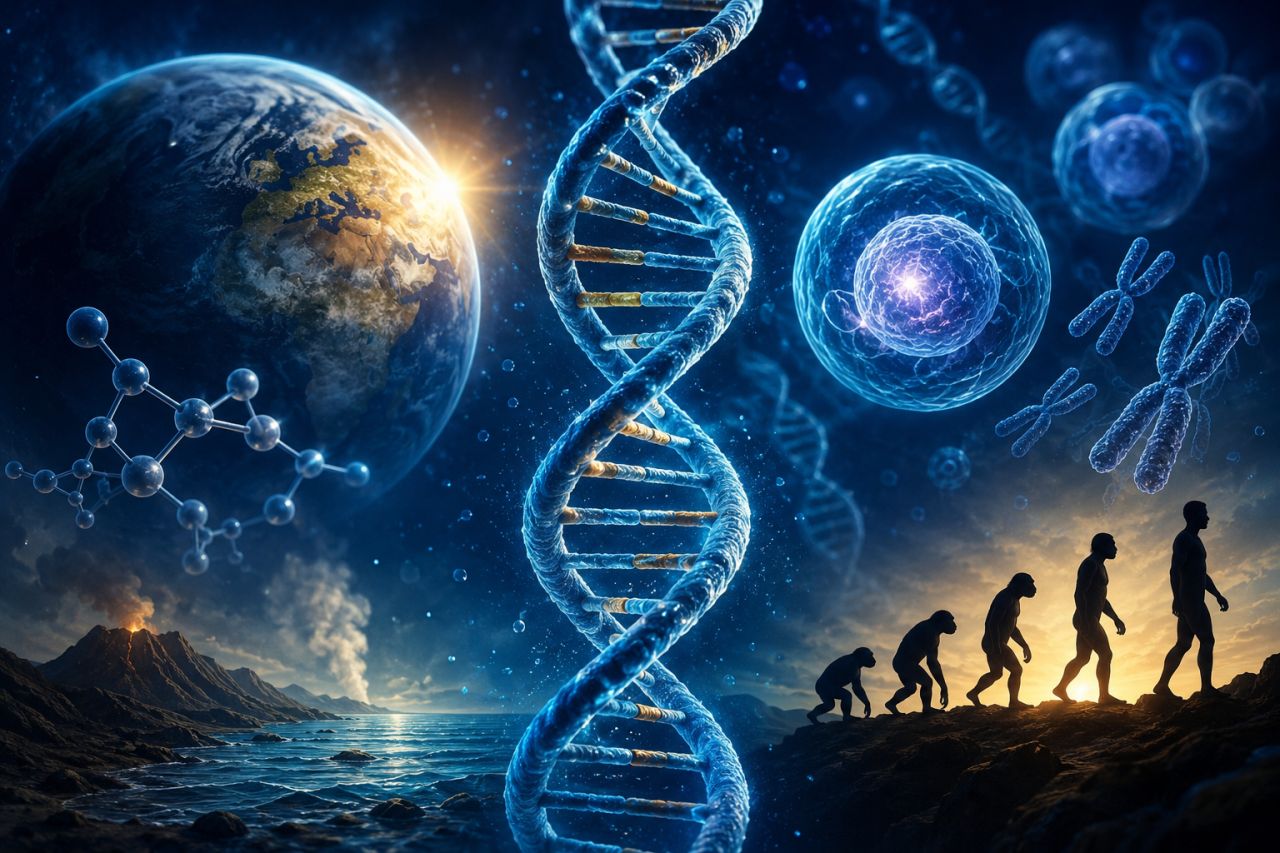
    The relationship between **evolution** and **divine design** has long been one of humanity's most fascinating and thought-provoking discussions. While evolutionary biology explains how living organisms have changed and diversified over billions of years through natural processes such as mutation, natural selection, and genetic variation, many religious traditions view life as the result of a purposeful and intelligent Creator. Rather than seeing these perspectives as necessarily incompatible, many scholars, scientists, and people of faith explore ways they can coexist.

    Evolution provides a scientific framework for understanding the development of life based on observable evidence from fossils, genetics, comparative anatomy, and ecology. It seeks to explain *how* biological diversity emerged and continues to change over time. Divine design, on the other hand, addresses questions of *purpose*, *meaning*, and *ultimate origin*—questions that science alone is not designed to answer.

    The "evolution paradox" arises because these perspectives often focus on different kinds of questions. Science investigates natural mechanisms through observation, experimentation, and evidence, while faith explores spiritual beliefs, morality, and humanity's relationship with the Creator. Many individuals embrace both scientific discoveries and religious faith, believing that natural laws themselves may reflect an intentional design behind the universe.

    Modern genetics has revealed remarkable complexity within DNA, strengthening our understanding of evolution while also inspiring philosophical and theological reflection about the origin of life and the fine-tuned nature of the universe. These discoveries encourage respectful dialogue between science and religion rather than unnecessary conflict.

    Ultimately, exploring the relationship between evolution and divine design reminds us that curiosity, critical thinking, and respectful discussion are essential in the pursuit of knowledge. Whether one approaches life's origins through scientific inquiry, religious belief, or a combination of both, the search for truth continues to inspire wonder, humility, and a deeper appreciation for the complexity and beauty of existence.

    **#Evolution #DivineDesign #Science #Faith #Biology #Genetics #OriginOfLife #CriticalThinking #Education #Philosophy #Theology #ScientificDiscovery #Knowledge #Learning #Wonder**

    Rehan School Islamabad Campus
    Asma Shaheen EducationWali
    Irum Asim
    Saima Happinesswali
    #rsisb Roll No.240 Story No.20 Foundation Level # ๐ŸŒ๐Ÿงฌ The Evolution Paradox: Bridging Theories of Life with Divine Design The relationship between **evolution** and **divine design** has long been one of humanity's most fascinating and thought-provoking discussions. While evolutionary biology explains how living organisms have changed and diversified over billions of years through natural processes such as mutation, natural selection, and genetic variation, many religious traditions view life as the result of a purposeful and intelligent Creator. Rather than seeing these perspectives as necessarily incompatible, many scholars, scientists, and people of faith explore ways they can coexist. Evolution provides a scientific framework for understanding the development of life based on observable evidence from fossils, genetics, comparative anatomy, and ecology. It seeks to explain *how* biological diversity emerged and continues to change over time. Divine design, on the other hand, addresses questions of *purpose*, *meaning*, and *ultimate origin*—questions that science alone is not designed to answer. The "evolution paradox" arises because these perspectives often focus on different kinds of questions. Science investigates natural mechanisms through observation, experimentation, and evidence, while faith explores spiritual beliefs, morality, and humanity's relationship with the Creator. Many individuals embrace both scientific discoveries and religious faith, believing that natural laws themselves may reflect an intentional design behind the universe. Modern genetics has revealed remarkable complexity within DNA, strengthening our understanding of evolution while also inspiring philosophical and theological reflection about the origin of life and the fine-tuned nature of the universe. These discoveries encourage respectful dialogue between science and religion rather than unnecessary conflict. Ultimately, exploring the relationship between evolution and divine design reminds us that curiosity, critical thinking, and respectful discussion are essential in the pursuit of knowledge. Whether one approaches life's origins through scientific inquiry, religious belief, or a combination of both, the search for truth continues to inspire wonder, humility, and a deeper appreciation for the complexity and beauty of existence. **#Evolution #DivineDesign #Science #Faith #Biology #Genetics #OriginOfLife #CriticalThinking #Education #Philosophy #Theology #ScientificDiscovery #Knowledge #Learning #Wonder** ๐ŸŒ๐Ÿงฌ๐Ÿ“–โœจ Rehan School Islamabad Campus Asma Shaheen EducationWali Irum Asim Saima Happinesswali
    0 Reacties 0 aandelen 28 Views
  • #rsisb
    Roll No.240
    Story No.19
    Foundation Level

    # The Blueprint of Existence: Unraveling DNA and the Origins of Life

    DNA, or **Deoxyribonucleic Acid**, is often called the **blueprint of life** because it contains the genetic instructions that guide the growth, development, and functioning of every living organism. From the tiniest bacteria to the largest mammals, DNA carries the information that determines how living things are built, how they reproduce, and how traits are passed from one generation to the next. Understanding DNA has revolutionized biology, medicine, agriculture, and forensic science, helping scientists unlock the mysteries of life itself.

    The origins of life remain one of science's greatest questions. Researchers believe that billions of years ago, simple molecules on the early Earth gradually combined through natural chemical processes to form more complex compounds. Over immense periods of time, these molecules eventually developed the ability to replicate and evolve, leading to the first primitive forms of life. While many details are still being explored, scientific evidence suggests that DNA became the primary storage system for genetic information as life evolved.

    Every cell in the human body contains DNA organized into chromosomes, with thousands of genes carrying instructions for producing proteins. These proteins perform countless essential functions, from building tissues and organs to regulating metabolism and supporting the immune system. Even small changes in DNA can influence physical characteristics, health, and susceptibility to certain diseases, making genetics one of the most important fields in modern science.

    The study of DNA has transformed healthcare through genetic testing, personalized medicine, gene therapy, and disease prevention. It has also helped solve criminal investigations through DNA fingerprinting, improved crop production through genetic engineering, and deepened our understanding of evolution by revealing the shared ancestry of all living organisms.

    As scientists continue exploring genetics and the origins of life, new discoveries are reshaping our understanding of biology and opening exciting possibilities for the future. By unraveling the secrets hidden within DNA, humanity moves closer to understanding not only where life came from but also how we can improve health, protect biodiversity, and advance scientific knowledge for generations to come.

    **#DNA #Genetics #Biology #Science #OriginOfLife #MolecularBiology #Evolution #GeneticResearch #LifeSciences #STEM #Education #ScientificDiscovery #Innovation #Learning #FutureOfScience**

    Rehan School Islamabad Campus
    Asma Shaheen EducationWali
    Irum Asim
    Saima Happinesswali
    #rsisb Roll No.240 Story No.19 Foundation Level # ๐Ÿงฌ The Blueprint of Existence: Unraveling DNA and the Origins of Life DNA, or **Deoxyribonucleic Acid**, is often called the **blueprint of life** because it contains the genetic instructions that guide the growth, development, and functioning of every living organism. From the tiniest bacteria to the largest mammals, DNA carries the information that determines how living things are built, how they reproduce, and how traits are passed from one generation to the next. Understanding DNA has revolutionized biology, medicine, agriculture, and forensic science, helping scientists unlock the mysteries of life itself. The origins of life remain one of science's greatest questions. Researchers believe that billions of years ago, simple molecules on the early Earth gradually combined through natural chemical processes to form more complex compounds. Over immense periods of time, these molecules eventually developed the ability to replicate and evolve, leading to the first primitive forms of life. While many details are still being explored, scientific evidence suggests that DNA became the primary storage system for genetic information as life evolved. Every cell in the human body contains DNA organized into chromosomes, with thousands of genes carrying instructions for producing proteins. These proteins perform countless essential functions, from building tissues and organs to regulating metabolism and supporting the immune system. Even small changes in DNA can influence physical characteristics, health, and susceptibility to certain diseases, making genetics one of the most important fields in modern science. The study of DNA has transformed healthcare through genetic testing, personalized medicine, gene therapy, and disease prevention. It has also helped solve criminal investigations through DNA fingerprinting, improved crop production through genetic engineering, and deepened our understanding of evolution by revealing the shared ancestry of all living organisms. As scientists continue exploring genetics and the origins of life, new discoveries are reshaping our understanding of biology and opening exciting possibilities for the future. By unraveling the secrets hidden within DNA, humanity moves closer to understanding not only where life came from but also how we can improve health, protect biodiversity, and advance scientific knowledge for generations to come. **#DNA #Genetics #Biology #Science #OriginOfLife #MolecularBiology #Evolution #GeneticResearch #LifeSciences #STEM #Education #ScientificDiscovery #Innovation #Learning #FutureOfScience** ๐Ÿงฌ๐Ÿ”ฌ๐ŸŒ๐Ÿ“šโœจ Rehan School Islamabad Campus Asma Shaheen EducationWali Irum Asim Saima Happinesswali
    0 Reacties 0 aandelen 139 Views
  • #rsisb
    RollNo.247
    Foundation Level
    Periodic Table: The Language of Science

    The Periodic Table is often called the language of science because it organizes all known chemical elements into a clear and meaningful system. Developed from the groundbreaking work of Dmitri Mendeleev, the periodic table helps scientists, students, engineers, and researchers understand the properties and behaviour of every element. From the oxygen we breathe to the gold in jewellery and the silicon inside computers , every element has its own place and purpose.

    Each element is represented by a unique symbol, atomic number, and atomic mass, making it easier to study and compare their characteristics. The rows, called periods, and the columns, called groups, reveal patterns that allow scientists to predict how elements react with one another. This organised structure has become one of the most important tools in chemistry and modern science.

    The periodic table is more than just a chart hanging on a classroom wall—it is a map of the building blocks of the universe. It helps us understand everything from stars and planets to medicines, clean energy, electronics, and everyday materials. Whether creating life-saving drugs , designing stronger buildings , developing renewable energy , or exploring space , the periodic table plays a vital role in scientific discovery.

    Learning the periodic table strengthens critical thinking, improves problem-solving skills, and opens the door to understanding chemistry in a simple and logical way. Every element tells a story about nature, innovation, and the incredible world around us.

    The more we explore the periodic table, the more we appreciate the beauty, order, and endless possibilities of science. Let curiosity guide you, because every great scientific discovery begins with a single question.

    #PeriodicTable #Chemistry #Science #STEM #Education #Learning #ChemicalElements #AtomicStructure #ScienceEducation #ScientificDiscovery #Physics #Biology #Innovation #Research #Knowledge #Students #Teachers #FutureScientists #ScienceFacts #ExploreScience
    #rsisb RollNo.247 Foundation Level ๐Ÿงช Periodic Table: The Language of Science ๐ŸŒโš›๏ธ The Periodic Table is often called the language of science because it organizes all known chemical elements into a clear and meaningful system. ๐Ÿ“šโš›๏ธ Developed from the groundbreaking work of Dmitri Mendeleev, the periodic table helps scientists, students, engineers, and researchers understand the properties and behaviour of every element. From the oxygen we breathe ๐ŸŒฌ๏ธ to the gold in jewellery ๐Ÿ’ and the silicon inside computers ๐Ÿ’ป, every element has its own place and purpose. Each element is represented by a unique symbol, atomic number, and atomic mass, making it easier to study and compare their characteristics. The rows, called periods, and the columns, called groups, reveal patterns that allow scientists to predict how elements react with one another. ๐Ÿ”ฌโœจ This organised structure has become one of the most important tools in chemistry and modern science. The periodic table is more than just a chart hanging on a classroom wall—it is a map of the building blocks of the universe. ๐ŸŒŒ It helps us understand everything from stars and planets to medicines, clean energy, electronics, and everyday materials. Whether creating life-saving drugs ๐Ÿ’Š, designing stronger buildings ๐Ÿ—๏ธ, developing renewable energy โšก, or exploring space ๐Ÿš€, the periodic table plays a vital role in scientific discovery. Learning the periodic table strengthens critical thinking, improves problem-solving skills, and opens the door to understanding chemistry in a simple and logical way. Every element tells a story about nature, innovation, and the incredible world around us. ๐ŸŒฑ๐Ÿ” The more we explore the periodic table, the more we appreciate the beauty, order, and endless possibilities of science. Let curiosity guide you, because every great scientific discovery begins with a single question. ๐ŸŒŸ๐Ÿง  #PeriodicTable #Chemistry #Science #STEM #Education #Learning #ChemicalElements #AtomicStructure #ScienceEducation #ScientificDiscovery #Physics #Biology #Innovation #Research #Knowledge #Students #Teachers #FutureScientists #ScienceFacts #ExploreScience
    0 Reacties 0 aandelen 6709 Views
  • #rsisb
    Roll No.190
    Image With Chatgpt
    Foundation Level

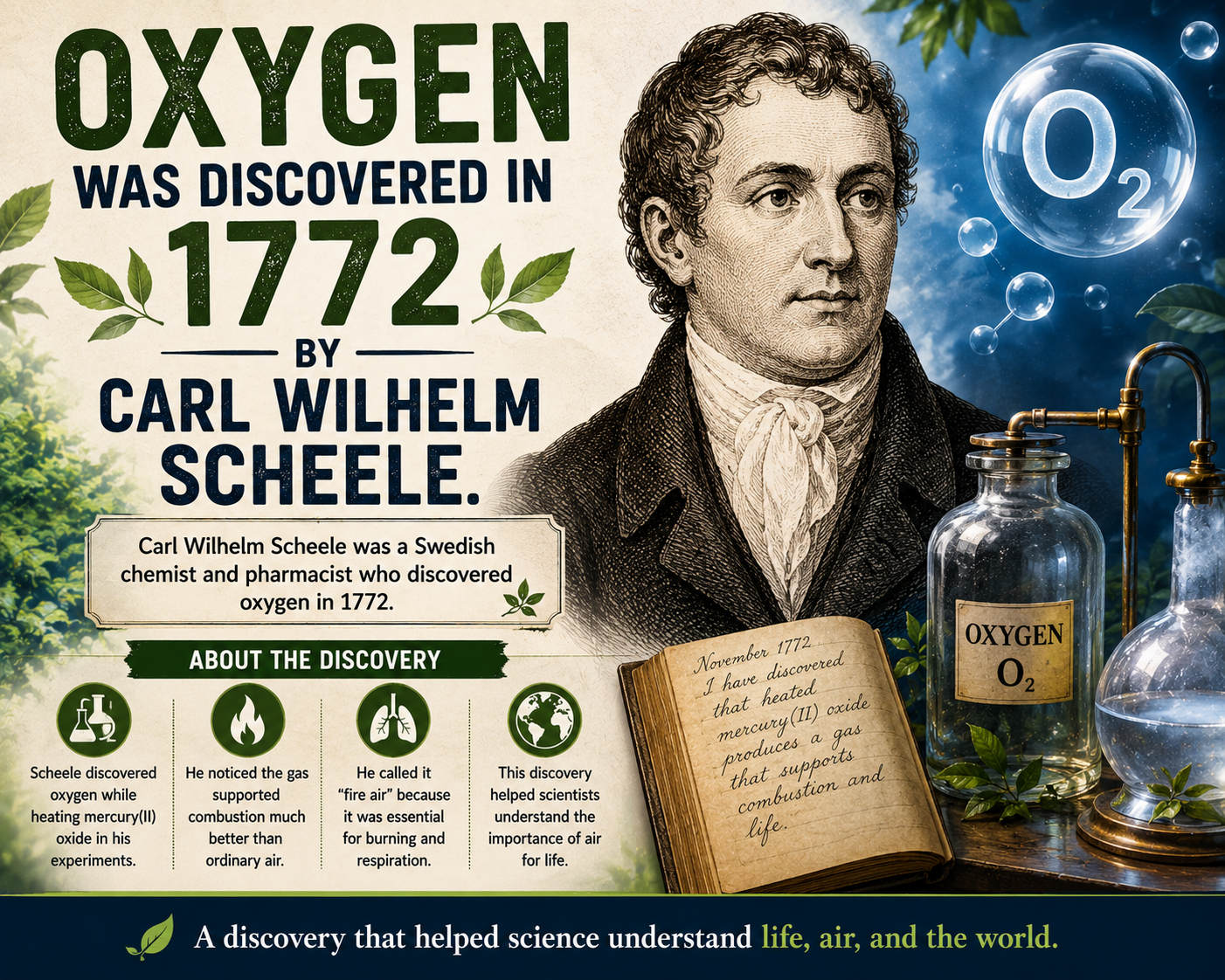
    “Oxygen was discovered in 1772 by Carl Wilhelm Scheele.”
    Idea 1: The Discovery Moment

    Show Carl Wilhelm Scheele in an old 18th-century laboratory surrounded by glass bottles, test tubes, candles, and handwritten notes. A glowing cloud of oxygen rises from a glass container, with “1772” shining in the background.

    Idea 2: The Invisible Gas

    Show a scientist holding an empty-looking glass jar. Around the jar, add glowing symbols of breathing, fire, plants, and life to show that oxygen is invisible but essential.

    Idea 3: History to Modern Science

    Create a timeline:

    1772 → Oxygen Discovery → Modern Science → Life on Earth

    Idea 4: Oxygen and Life

    Show a historical scientist on one side and a modern world on the other: forests , animals , humans , fire , and a space mission .

    Best AI Picture Prompt

    “A cinematic educational science poster showing Carl Wilhelm Scheele in an 18th-century laboratory in 1772, surrounded by vintage glass bottles, chemical equipment, candles, and handwritten scientific notes, a subtle glowing symbol representing oxygen emerging from a glass container, historical atmosphere, scientific discovery theme, dramatic warm lighting, realistic, highly detailed, inspirational, with the title ‘OXYGEN DISCOVERED IN 1772’ and ‘CARL WILHELM SCHEELE’.”

    Caption:
    A discovery that changed science forever!
    #Oxygen #ScienceHistory #CarlWilhelmScheele #Chemistry #ScientificDiscovery #ScienceFacts #LearnScience
    #rsisb Roll No.190 Image With Chatgpt Foundation Level ๐Ÿงช๐Ÿ’จ “Oxygen was discovered in 1772 by Carl Wilhelm Scheele.” ๐Ÿ–ผ๏ธ Idea 1: The Discovery Moment ๐Ÿ”ฌโœจ Show Carl Wilhelm Scheele in an old 18th-century laboratory surrounded by glass bottles, test tubes, candles, and handwritten notes. A glowing cloud of oxygen rises from a glass container, with “1772” shining in the background. ๐Ÿ–ผ๏ธ Idea 2: The Invisible Gas ๐Ÿ’จ๐Ÿ” Show a scientist holding an empty-looking glass jar. Around the jar, add glowing symbols of breathing, fire, plants, and life to show that oxygen is invisible but essential. ๐ŸŒฑ๐Ÿ”ฅ๐Ÿซ ๐Ÿ–ผ๏ธ Idea 3: History to Modern Science โณโžก๏ธ๐Ÿ”ฌ Create a timeline: 1772 ๐Ÿงช → Oxygen Discovery ๐Ÿ’จ → Modern Science ๐Ÿš€ → Life on Earth ๐ŸŒ ๐Ÿ–ผ๏ธ Idea 4: Oxygen and Life ๐ŸŒ๐ŸŒฟ Show a historical scientist on one side and a modern world on the other: forests ๐ŸŒณ, animals ๐Ÿ˜, humans ๐Ÿซ, fire ๐Ÿ”ฅ, and a space mission ๐Ÿš€. ๐ŸŽจ Best AI Picture Prompt “A cinematic educational science poster showing Carl Wilhelm Scheele in an 18th-century laboratory in 1772, surrounded by vintage glass bottles, chemical equipment, candles, and handwritten scientific notes, a subtle glowing symbol representing oxygen emerging from a glass container, historical atmosphere, scientific discovery theme, dramatic warm lighting, realistic, highly detailed, inspirational, with the title ‘OXYGEN DISCOVERED IN 1772’ and ‘CARL WILHELM SCHEELE’.” ๐Ÿ”ฌ๐Ÿ’จโœจ Caption: ๐Ÿงชโœจ A discovery that changed science forever! ๐Ÿ’จ๐ŸŒ #Oxygen #ScienceHistory #CarlWilhelmScheele #Chemistry #ScientificDiscovery #ScienceFacts #LearnScience ๐Ÿ”ฌ๐ŸŒŸ
    0 Reacties 0 aandelen 4835 Views
  • #rsisb
    Roll No 242
    Story Post 16
    Foundation level
    **Peering Inside: The Role of Dissections in Understanding Life**
    Every living organism has an incredible story hidden beneath the surface. Through dissections, students and researchers gain a deeper understanding of anatomy, organ systems, and the amazing complexity of life. By carefully observing real biological structures, we develop scientific thinking, critical observation skills, and a greater appreciation for how living beings function.
    Dissections are not just about exploring anatomy—they inspire curiosity, encourage hands-on learning, and help connect classroom knowledge with the real world. Every discovery brings us one step closer to understanding the wonders of life and the science that shapes our world.
    **#Hashtags**
    #Biology #Science #Dissection #Anatomy #LifeSciences #STEM #MedicalEducation #Learning #Education #ScientificDiscovery #FutureScientists #HandsOnLearning #Curiosity #Knowledge #RehanSchool #ExploreScience
    @Asma Shaheen EducationWali
    @Saima Happinesswali
    @Irum Asim
    #rsisb Roll No 242 Story Post 16 Foundation level ๐Ÿงฌ๐Ÿ”ฌ **Peering Inside: The Role of Dissections in Understanding Life** ๐Ÿ”ฌ๐Ÿงฌ Every living organism has an incredible story hidden beneath the surface. ๐ŸŒฑ๐Ÿซ€ Through dissections, students and researchers gain a deeper understanding of anatomy, organ systems, and the amazing complexity of life. By carefully observing real biological structures, we develop scientific thinking, critical observation skills, and a greater appreciation for how living beings function. ๐Ÿง โœจ Dissections are not just about exploring anatomy—they inspire curiosity, encourage hands-on learning, and help connect classroom knowledge with the real world. Every discovery brings us one step closer to understanding the wonders of life and the science that shapes our world. ๐ŸŒ๐Ÿ“š๐Ÿ” **#Hashtags** #Biology ๐Ÿงฌ #Science ๐Ÿ”ฌ #Dissection ๐Ÿซ€ #Anatomy ๐Ÿฆด #LifeSciences ๐ŸŒฟ #STEM ๐Ÿš€ #MedicalEducation ๐Ÿฉบ #Learning ๐Ÿ“– #Education ๐ŸŽ“ #ScientificDiscovery ๐Ÿ” #FutureScientists ๐ŸŒŸ #HandsOnLearning โœ‹ #Curiosity ๐Ÿ’ก #Knowledge ๐Ÿ“š #RehanSchool โค๏ธ #ExploreScience ๐ŸŒ @Asma Shaheen EducationWali @Saima Happinesswali @Irum Asim
    0 Reacties 0 aandelen 5164 Views
  • #rsisb
    Roll no. 253
    StoryPost no.09
    Foundation level
    ## **Periodic Table: The Language of Science**

    The **Periodic Table** is one of the greatest achievements in science, organizing all known chemical elements into a systematic chart based on their atomic structure and properties. It serves as a universal language for scientists, helping them understand how elements behave, interact, and combine to form everything around us—from the air we breathe and the water we drink to the stars in the universe and the technology we use every day. By studying the periodic table, students gain a deeper understanding of chemistry, discover patterns among elements, and learn how scientific knowledge drives innovation in medicine, engineering, environmental science, and space exploration. It is the foundation of chemistry and a powerful tool for exploring the building blocks of our world.

    ** Key Lesson:** *The Periodic Table organizes the elements of nature, helping us understand the composition of matter and the science behind the world around us.*

    ** Hashtags:**
    #PeriodicTable #Chemistry #Science #STEM #Education #ChemicalElements #AtomicStructure #Learning #ScientificDiscovery #Innovation #ScienceEducation #Matter #Elements #RehanSchool #FutureScientists
    Asma Shaheen EducationWali
    Irum Asim
    Saima Happinesswali
    #rsisb Roll no. 253 StoryPost no.09 Foundation level ## ๐Ÿงชโš›๏ธ **Periodic Table: The Language of Science** The **Periodic Table** is one of the greatest achievements in science, organizing all known chemical elements into a systematic chart based on their atomic structure and properties. It serves as a universal language for scientists, helping them understand how elements behave, interact, and combine to form everything around us—from the air we breathe and the water we drink to the stars in the universe and the technology we use every day. By studying the periodic table, students gain a deeper understanding of chemistry, discover patterns among elements, and learn how scientific knowledge drives innovation in medicine, engineering, environmental science, and space exploration. It is the foundation of chemistry and a powerful tool for exploring the building blocks of our world. ๐ŸŒ๐Ÿ”ฌโœจ **๐Ÿ“š Key Lesson:** *The Periodic Table organizes the elements of nature, helping us understand the composition of matter and the science behind the world around us.* **๐Ÿท๏ธ Hashtags:** #PeriodicTable #Chemistry #Science #STEM #Education #ChemicalElements #AtomicStructure #Learning #ScientificDiscovery #Innovation #ScienceEducation #Matter #Elements #RehanSchool #FutureScientists โš›๏ธ๐Ÿงช๐ŸŒ Asma Shaheen EducationWali Irum Asim Saima Happinesswali
    0 Reacties 0 aandelen 6554 Views
  • #rsisb
    Roll no. 253
    Story Post no. 08
    Foundation level
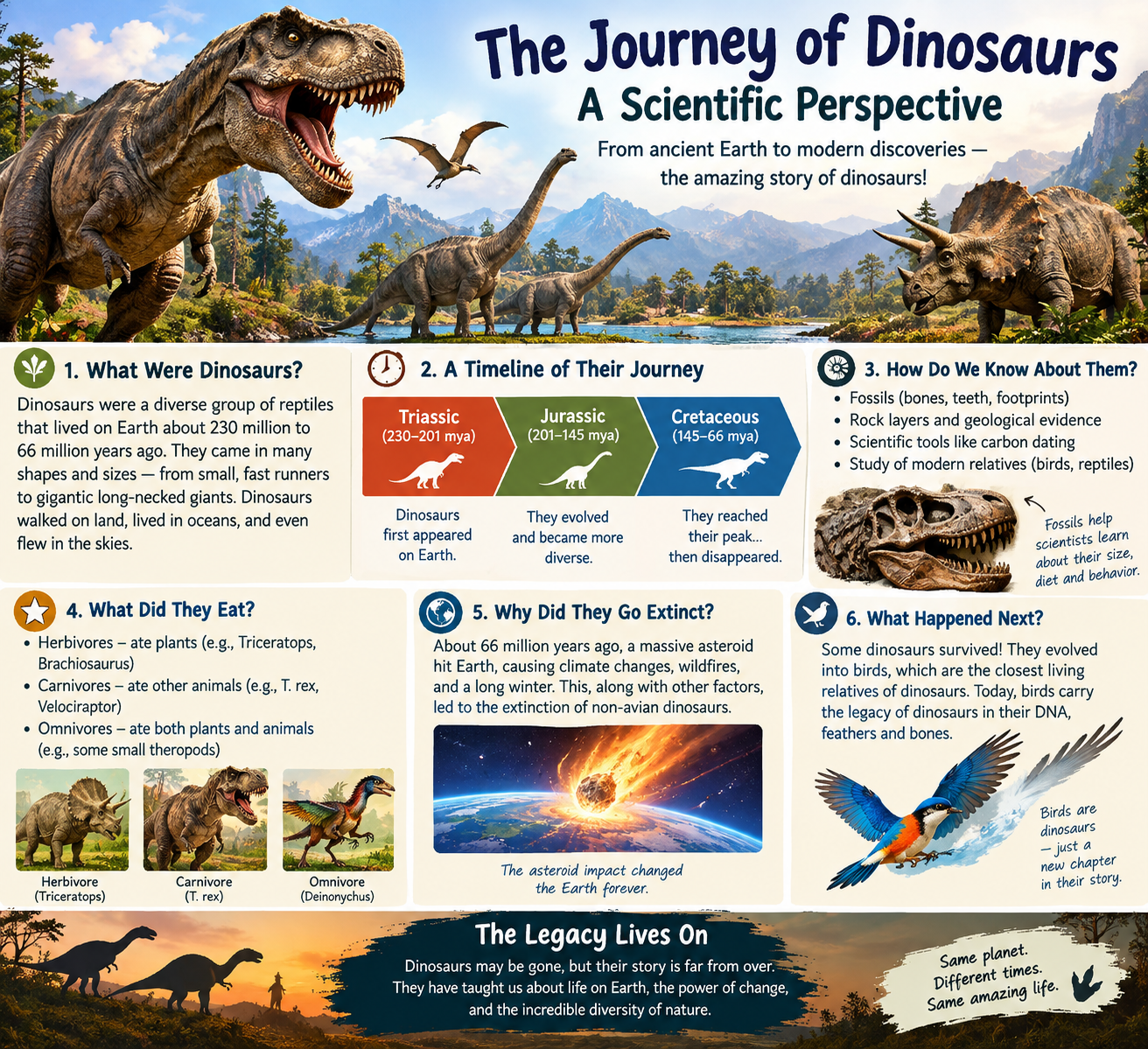
    ## The Journey of Dinosaurs: A Scientific Perspective
    Dinosaurs were extraordinary creatures that lived on Earth for more than 160 million years, dominating a wide variety of environments during the Triassic, Jurassic, and Cretaceous periods. Through the study of fossils, footprints, eggs, and bones, scientists have uncovered valuable information about how dinosaurs lived, evolved, and eventually became extinct around 66 million years ago. Modern technology and scientific research continue to reveal fascinating discoveries, helping us understand the connection between ancient dinosaurs and today's birds. Exploring the journey of dinosaurs inspires curiosity, encourages scientific thinking, and reminds us of the ever-changing history of life on our planet.
    ** Key Lesson:** *Fossils and scientific research help us uncover the history of dinosaurs and deepen our understanding of Earth's incredible past.*
    ** Tags:**
    #Dinosaurs #Paleontology #Science #Fossils #EarthHistory #Jurassic #Cretaceous #Triassic #STEM #Education #Learning #ScientificDiscovery #NaturalHistory #Biology #RehanSchool
    Asma Shaheen EducationWali
    Saima Happinesswali
    Irum Asim
    #rsisb Roll no. 253 Story Post no. 08 Foundation level ## ๐Ÿฆ–๐ŸŒ The Journey of Dinosaurs: A Scientific Perspective Dinosaurs were extraordinary creatures that lived on Earth for more than 160 million years, dominating a wide variety of environments during the Triassic, Jurassic, and Cretaceous periods. Through the study of fossils, footprints, eggs, and bones, scientists have uncovered valuable information about how dinosaurs lived, evolved, and eventually became extinct around 66 million years ago. Modern technology and scientific research continue to reveal fascinating discoveries, helping us understand the connection between ancient dinosaurs and today's birds. Exploring the journey of dinosaurs inspires curiosity, encourages scientific thinking, and reminds us of the ever-changing history of life on our planet. ๐Ÿ”ฌ๐Ÿฆด๐ŸŒŽ **๐Ÿ“š Key Lesson:** *Fossils and scientific research help us uncover the history of dinosaurs and deepen our understanding of Earth's incredible past.* **๐Ÿท๏ธ Tags:** #Dinosaurs #Paleontology #Science #Fossils #EarthHistory #Jurassic #Cretaceous #Triassic #STEM #Education #Learning #ScientificDiscovery #NaturalHistory #Biology #RehanSchool ๐Ÿฆ•๐Ÿ”ฌ๐ŸŒ Asma Shaheen EducationWali Saima Happinesswali Irum Asim
    0 Reacties 0 aandelen 4256 Views
  • #rsisb
    Roll no. 253
    Story Post no.07
    Foundation level
    ## The Mystery of Life: Exploring the World of Cells

    Cells are the tiny building blocks of all living organisms, forming the foundation of life on Earth. Although they are too small to be seen with the naked eye, cells perform essential functions such as producing energy, transporting nutrients, fighting diseases, and enabling growth and reproduction. From the smallest bacteria to the largest animals and plants, every living thing depends on cells to survive. Exploring the fascinating world of cells helps us understand how our bodies work, how life develops, and how scientific discoveries continue to improve medicine, health, and our understanding of nature.

    ** Key Lesson:** *Cells are the basic units of life, and understanding them helps us unlock the mysteries of living organisms.*

    ** Tags:**
    #Cells #Biology #Science #STEM #Education #LifeScience #Microscope #HumanBody #PlantCells #AnimalCells #CellBiology #Learning #ScientificDiscovery #ScienceEducation #RehanSchool

    Asma Shaheen EducationWali
    Irum Asim
    Saima Happinesswali
    #rsisb Roll no. 253 Story Post no.07 Foundation level ## ๐Ÿ”ฌ๐Ÿงฌ The Mystery of Life: Exploring the World of Cells Cells are the tiny building blocks of all living organisms, forming the foundation of life on Earth. Although they are too small to be seen with the naked eye, cells perform essential functions such as producing energy, transporting nutrients, fighting diseases, and enabling growth and reproduction. From the smallest bacteria to the largest animals and plants, every living thing depends on cells to survive. Exploring the fascinating world of cells helps us understand how our bodies work, how life develops, and how scientific discoveries continue to improve medicine, health, and our understanding of nature. ๐ŸŒโœจ **๐Ÿ“š Key Lesson:** *Cells are the basic units of life, and understanding them helps us unlock the mysteries of living organisms.* **๐Ÿท๏ธ Tags:** #Cells #Biology #Science #STEM #Education #LifeScience #Microscope #HumanBody #PlantCells #AnimalCells #CellBiology #Learning #ScientificDiscovery #ScienceEducation #RehanSchool ๐Ÿ”ฌ๐Ÿงซ๐ŸŒฑ Asma Shaheen EducationWali Irum Asim Saima Happinesswali
    0 Reacties 0 aandelen 2958 Views
  • #rsisb
    RollNo.244
    Story Post
    Foundation Level
    **The Quran and Science: A Bond of Knowledge**

    The Quran encourages people to observe, reflect, and seek knowledge about the world around them. Throughout history, many Muslim scholars have been inspired by its call to explore nature, leading to important contributions in fields such as astronomy, medicine, mathematics, and chemistry.

    While science explains **how** the natural world works through observation and evidence, the Quran inspires many believers to appreciate the wisdom, order, and beauty of creation. Together, they encourage curiosity, learning, and the pursuit of knowledge with humility and purpose.

    *"And say, 'My Lord, increase me in knowledge.'"* — **Quran 20:114**

    #Quran #Science #Knowledge #Learning #Education #STEM #Islam #Curiosity #ScientificDiscovery #RehanSchool
    #rsisb RollNo.244 Story Post Foundation Level ๐Ÿ“–โœจ **The Quran and Science: A Bond of Knowledge** ๐ŸŒ๐Ÿ”ฌ The Quran encourages people to observe, reflect, and seek knowledge about the world around them. Throughout history, many Muslim scholars have been inspired by its call to explore nature, leading to important contributions in fields such as astronomy, medicine, mathematics, and chemistry. ๐ŸŒ™๐Ÿงฌ๐Ÿ“š While science explains **how** the natural world works through observation and evidence, the Quran inspires many believers to appreciate the wisdom, order, and beauty of creation. Together, they encourage curiosity, learning, and the pursuit of knowledge with humility and purpose. ๐ŸŒŸ ๐Ÿ’ก *"And say, 'My Lord, increase me in knowledge.'"* — **Quran 20:114** #Quran #Science #Knowledge #Learning #Education #STEM #Islam #Curiosity #ScientificDiscovery #RehanSchool
    0 Reacties 0 aandelen 1404 Views
  • #rsisb
    Roll No.214
    foundation level
    Story post no. 7
    Here's a caption with emojis for your topic:
    **Periodic Table: The Language of Science**
    The periodic table is more than just a chart—it's the foundation of chemistry and the key to understanding the building blocks of our universe. From the air we breathe to the technology we use every day , every element has a unique role in shaping our world.
    Keep exploring, stay curious, and discover the amazing world of science—one element at a time!
    **Every element tells a story, and together they create the language of science.**
    #PeriodicTable #Science #Chemistry #STEM #Education #Learning #Elements #ScientificDiscovery #ScienceFacts #Innovation #Knowledge #Students #FutureScientists #ExploreScience #ScienceLovers
    #rsisb Roll No.214 foundation level Story post no. 7 Here's a caption with emojis for your topic: ๐Ÿงชโš›๏ธ **Periodic Table: The Language of Science** ๐ŸŒโœจ The periodic table is more than just a chart—it's the foundation of chemistry and the key to understanding the building blocks of our universe. ๐ŸŒŒ From the air we breathe ๐ŸŒฌ๏ธ to the technology we use every day ๐Ÿ“ฑ, every element has a unique role in shaping our world. ๐ŸŒŸ ๐Ÿ“š Keep exploring, stay curious, and discover the amazing world of science—one element at a time! ๐Ÿ”ฌ๐Ÿ’ก ๐Ÿงฌโšก **Every element tells a story, and together they create the language of science.** ๐ŸŒˆโœจ #PeriodicTable #Science #Chemistry #STEM #Education #Learning #Elements #ScientificDiscovery #ScienceFacts #Innovation #Knowledge #Students #FutureScientists #ExploreScience #ScienceLovers ๐Ÿงช๐Ÿ”ฌ๐ŸŒ
    0 Reacties 0 aandelen 2719 Views
Zoekresultaten