• Accl Foundation Level ( Rehan School Urdu Bazar Campus )
    Day :42 Song ( The Human Body: A Marvel of Creation )
    Roll No : 17
    Syeda Umaima Editing Wali
    Foundation Level
    Accl Task
    ---
    Welcome To My Human Body! | The Human Body Song For Kids | Learn Body Parts With Fun!
    Welcome to my Human Body!
    Hello little friends! Are you ready to go on a super fun adventure inside our amazing Human Body?
    In this cute and catchy Human Body Element Song, we will learn all the important parts of our body – one by one – with music, colours, and fun animations!
    From our head to our toes, every part has a special job! Let's sing, dance, and learn together!
    In This Song, You Will Learn About:
    Skeleton & Bones – That keep us strong and standing tall!
    Heart – That beats every second and keeps us alive!
    Brain – Our super smart computer that helps us think, learn & remember!
    Lungs – That help us breathe in fresh air!
    Eyes – To see this beautiful world!
    Lips & Mouth – To smile, talk, eat & sing!
    🩷 Stomach – That helps us digest our yummy food!
    ‍ Hair – That makes us look cute and beautiful!
    Smile – Because a smile makes everything better!
    This song is perfect for kids, toddlers, preschoolers, and students who want to learn body parts in English in a very easy and fun way!
    Sing along, point to your body parts, and learn with us!
    Let's Sing Together:
    This is my heart, it goes beat beat beat!
    This is my brain, it helps me think!
    These are my lungs, I breathe in and out!
    This is my stomach, it loves yummy food! 🩷
    Welcome to my Human Body – It's amazing!
    About This Video:
    A fun 1:32 minute educational song with colourful animations, sweet music, and easy words to learn Human Body parts! Perfect for home learning, school, and classroom fun!
    If you loved this song, don't forget to LIKE , COMMENT , SHARE , and SUBSCRIBE for more fun learning songs!
    Tell me in the comments: Which is your favourite body part? Mine is Heart!
    Keep smiling, keep learning, and keep singing with us!
    #HumanBodySong #WelcomeToMyHumanBody #BodyParts #LearnBodyParts #KidsSongs #HumanBodyForKids #EducationalSong #ElementSong #Heart #Brain #Lungs #Skeleton #KidsLearning #FunLearning #NurseryRhymes #PreschoolLearning #BodyPartsSong
    Accl Foundation Level ( Rehan School Urdu Bazar Campus ) Day :42 Song ( The Human Body: A Marvel of Creation ) Roll No : 17 Syeda Umaima Editing Wali Foundation Level Accl Task --- 🫀 Welcome To My Human Body! | The Human Body Song For Kids | Learn Body Parts With Fun! 🎶✨ Welcome to my Human Body! 🥰💖 Hello little friends! 👋 Are you ready to go on a super fun adventure inside our amazing Human Body? 🚀✨ In this cute and catchy Human Body Element Song, we will learn all the important parts of our body – one by one – with music, colours, and fun animations! 🎵🌈 From our head to our toes, every part has a special job! Let's sing, dance, and learn together! 💃🕺 ✨ In This Song, You Will Learn About: 💀 Skeleton & Bones – That keep us strong and standing tall! 🫀 Heart – That beats every second and keeps us alive! ❤️ 🧠 Brain – Our super smart computer that helps us think, learn & remember! 💡 🫁 Lungs – That help us breathe in fresh air! 🌬️ 👀 Eyes – To see this beautiful world! 👀🌍 👄 Lips & Mouth – To smile, talk, eat & sing! 😁🎤 🩷 Stomach – That helps us digest our yummy food! 🍎🍌 💇‍♀️ Hair – That makes us look cute and beautiful! ✨ 😊 Smile – Because a smile makes everything better! 🥰 This song is perfect for kids, toddlers, preschoolers, and students who want to learn body parts in English in a very easy and fun way! 🎓🌍 Sing along, point to your body parts, and learn with us! 🎶👇 🎵 Let's Sing Together: This is my heart, it goes beat beat beat! ❤️ This is my brain, it helps me think! 🧠 These are my lungs, I breathe in and out! 🫁 This is my stomach, it loves yummy food! 🩷 Welcome to my Human Body – It's amazing! ✨ ⏱️ About This Video: A fun 1:32 minute educational song with colourful animations, sweet music, and easy words to learn Human Body parts! Perfect for home learning, school, and classroom fun! 🏫🏠 If you loved this song, don't forget to LIKE 👍, COMMENT 💬, SHARE 🔄, and SUBSCRIBE 🔔 for more fun learning songs! Tell me in the comments: Which is your favourite body part? 😍👇 Mine is Heart! 🫀❤️ Keep smiling, keep learning, and keep singing with us! 🎶💖 #HumanBodySong #WelcomeToMyHumanBody #BodyParts #LearnBodyParts #KidsSongs #HumanBodyForKids #EducationalSong #ElementSong #Heart #Brain #Lungs #Skeleton #KidsLearning #FunLearning #NurseryRhymes #PreschoolLearning #BodyPartsSong
    0 التعليقات 0 المشاركات 1406 مشاهدة 8
  • accl task
    day 69
    week 3
    task: story post 69
    topic:Acids and Bases: The Balance of Nature
    Title: Acids and Bases: The Balance of Nature

    One afternoon, a curious student named Ayan entered the chemistry laboratory.

    On the table were several ordinary substances: lemon juice, vinegar, baking soda, soap, and pure water.

    Ayan looked at them and asked his teacher,

    “How can such different substances all be part of the same scientific system?”

    His teacher smiled.

    “Because many of them can be understood through the chemistry of acids, bases, and balance.”

    Ayan became curious.

    The World of Acids

    The teacher first placed a small amount of lemon juice on the table.

    “Lemon juice contains citric acid,” she explained.

    Acids are substances that, in water, increase the concentration of hydrogen ions (H⁺). Many acids have a sour taste, although scientists never identify an unknown chemical by tasting it.

    Ayan had seen acids in everyday life without realizing it.

    Vinegar contains acetic acid.

    The stomach naturally contains hydrochloric acid, which helps with digestion.

    Even some fruits contain naturally occurring acids.

    Ayan began to understand that the word “acid” did not always mean something dangerous.

    Discovering Bases

    Next, the teacher showed him a solution of baking soda.

    “This behaves as a base in water,” she said.

    Bases generally increase the concentration of hydroxide ions or accept hydrogen ions, depending on the chemical definition being used.

    Many basic substances are found around us.

    Some cleaning products are basic.

    Soap solutions are often basic.

    Certain minerals and compounds in nature can also behave as bases.

    Ayan realized that acids and bases were not simply opposites in a textbook.

    They were part of everyday chemistry.

    The pH Scale

    The teacher then drew a colorful scale on the board.

    It was the pH scale.

    “pH helps us describe how acidic or basic an aqueous solution is,” she explained.

    At about pH 7, a solution is considered neutral under standard conditions, such as pure water at around room temperature.

    Values below 7 are generally acidic.

    Values above 7 are generally basic.

    Ayan looked at the scale with fascination.

    The numbers seemed simple, but they represented important chemical differences.

    The teacher added:

    “The pH scale is logarithmic. A change of one pH unit represents a tenfold change in hydrogen-ion concentration.”

    Ayan suddenly realized that even a small numerical change could represent a significant chemical difference.

    When Acids and Bases Meet

    Then the teacher performed an experiment.

    She carefully combined an acid with a base.

    The two substances reacted.

    In many common acid-base reactions, the products include water and a salt. This type of reaction is often called neutralization.

    Ayan watched as the chemistry changed before his eyes.

    “So acids and bases can balance each other?” he asked.

    “In the right conditions, yes,” his teacher replied.

    “But neutralization does not always mean the final mixture has exactly pH 7. The result depends on the substances and their amounts.”

    Ayan nodded.

    Chemistry was more precise than he had imagined.

    Balance in Nature

    The teacher then showed Ayan pictures of lakes, soil, oceans, and living organisms.

    “Acid-base balance is important in nature too.”

    Soil chemistry can influence how nutrients are available to plants.

    The pH of freshwater can affect aquatic organisms.

    Ocean chemistry is also changing as the ocean absorbs carbon dioxide from the atmosphere, which leads to ocean acidification.

    This does not mean the ocean suddenly becomes a strong acid.

    Instead, its seawater chemistry shifts toward greater acidity, with important consequences for organisms that build shells or skeletons from calcium carbonate.

    Ayan began to see that chemistry was connected to the entire environment.

    Balance Inside the Human Body

    The teacher then explained that acid-base balance is also essential inside the human body.

    Blood normally stays within a narrow pH range.

    The body uses several systems—including the lungs and kidneys—to help regulate this balance.

    The lungs influence carbon dioxide levels, while the kidneys help regulate acids and bases over longer periods.

    Ayan was amazed.

    “Even our bodies have their own chemical balancing systems?”

    “Exactly,” said his teacher.

    The Power of Buffers

    There was one final concept.

    The teacher added:

    “Some solutions contain buffers.”

    Buffers help resist large changes in pH when relatively small amounts of acid or base are added.

    Ayan learned that buffer systems are important in chemistry, biology, medicine, and many natural environments.

    They help keep chemical conditions within useful ranges.

    The Lesson of Balance

    As the lesson ended, Ayan looked again at the bottles on the laboratory table.

    Lemon juice.

    Vinegar.

    Baking soda.

    Water.

    They seemed ordinary.

    But behind each substance was a world of chemical reactions, ions, and equilibrium.

    Ayan finally understood the lesson.

    Acids and bases are not simply about “strong” and “weak” chemicals.

    They are part of a larger story about chemical balance.

    From a laboratory experiment to soil, oceans, and living organisms, acid-base chemistry helps explain how many systems behave.

    Final Thought

    Nature depends on balance.

    Too much of one chemical condition can change an entire system, while the right balance can help maintain stability.

    Acids and bases teach us an important scientific lesson:9 sometimes, understanding two different forces interact is the key to understanding the system as a when
    accl task day 69 week 3 task: story post 69 topic:Acids and Bases: The Balance of Nature Title: 🧪 Acids and Bases: The Balance of Nature One afternoon, a curious student named Ayan entered the chemistry laboratory. On the table were several ordinary substances: lemon juice, vinegar, baking soda, soap, and pure water. Ayan looked at them and asked his teacher, “How can such different substances all be part of the same scientific system?” His teacher smiled. “Because many of them can be understood through the chemistry of acids, bases, and balance.” Ayan became curious. 🍋 The World of Acids The teacher first placed a small amount of lemon juice on the table. “Lemon juice contains citric acid,” she explained. Acids are substances that, in water, increase the concentration of hydrogen ions (H⁺). Many acids have a sour taste, although scientists never identify an unknown chemical by tasting it. Ayan had seen acids in everyday life without realizing it. Vinegar contains acetic acid. The stomach naturally contains hydrochloric acid, which helps with digestion. Even some fruits contain naturally occurring acids. Ayan began to understand that the word “acid” did not always mean something dangerous. 🧼 Discovering Bases Next, the teacher showed him a solution of baking soda. “This behaves as a base in water,” she said. Bases generally increase the concentration of hydroxide ions or accept hydrogen ions, depending on the chemical definition being used. Many basic substances are found around us. Some cleaning products are basic. Soap solutions are often basic. Certain minerals and compounds in nature can also behave as bases. Ayan realized that acids and bases were not simply opposites in a textbook. They were part of everyday chemistry. 🌈 The pH Scale The teacher then drew a colorful scale on the board. It was the pH scale. “pH helps us describe how acidic or basic an aqueous solution is,” she explained. At about pH 7, a solution is considered neutral under standard conditions, such as pure water at around room temperature. Values below 7 are generally acidic. Values above 7 are generally basic. Ayan looked at the scale with fascination. The numbers seemed simple, but they represented important chemical differences. The teacher added: “The pH scale is logarithmic. A change of one pH unit represents a tenfold change in hydrogen-ion concentration.” Ayan suddenly realized that even a small numerical change could represent a significant chemical difference. ⚖️ When Acids and Bases Meet Then the teacher performed an experiment. She carefully combined an acid with a base. The two substances reacted. In many common acid-base reactions, the products include water and a salt. This type of reaction is often called neutralization. Ayan watched as the chemistry changed before his eyes. “So acids and bases can balance each other?” he asked. “In the right conditions, yes,” his teacher replied. “But neutralization does not always mean the final mixture has exactly pH 7. The result depends on the substances and their amounts.” Ayan nodded. Chemistry was more precise than he had imagined. 🌱 Balance in Nature The teacher then showed Ayan pictures of lakes, soil, oceans, and living organisms. “Acid-base balance is important in nature too.” Soil chemistry can influence how nutrients are available to plants. The pH of freshwater can affect aquatic organisms. Ocean chemistry is also changing as the ocean absorbs carbon dioxide from the atmosphere, which leads to ocean acidification. This does not mean the ocean suddenly becomes a strong acid. Instead, its seawater chemistry shifts toward greater acidity, with important consequences for organisms that build shells or skeletons from calcium carbonate. Ayan began to see that chemistry was connected to the entire environment. 🧬 Balance Inside the Human Body The teacher then explained that acid-base balance is also essential inside the human body. Blood normally stays within a narrow pH range. The body uses several systems—including the lungs and kidneys—to help regulate this balance. The lungs influence carbon dioxide levels, while the kidneys help regulate acids and bases over longer periods. Ayan was amazed. “Even our bodies have their own chemical balancing systems?” “Exactly,” said his teacher. 🔬 The Power of Buffers There was one final concept. The teacher added: “Some solutions contain buffers.” Buffers help resist large changes in pH when relatively small amounts of acid or base are added. Ayan learned that buffer systems are important in chemistry, biology, medicine, and many natural environments. They help keep chemical conditions within useful ranges. 🌍 The Lesson of Balance As the lesson ended, Ayan looked again at the bottles on the laboratory table. Lemon juice. Vinegar. Baking soda. Water. They seemed ordinary. But behind each substance was a world of chemical reactions, ions, and equilibrium. Ayan finally understood the lesson. Acids and bases are not simply about “strong” and “weak” chemicals. They are part of a larger story about chemical balance. From a laboratory experiment to soil, oceans, and living organisms, acid-base chemistry helps explain how many systems behave. ⚗️ Final Thought Nature depends on balance. Too much of one chemical condition can change an entire system, while the right balance can help maintain stability. Acids and bases teach us an important scientific lesson:9 sometimes, understanding two different forces interact is the key to understanding the system as a when
    0 التعليقات 0 المشاركات 4666 مشاهدة
  • #rsisb
    Roll no.247
    song .5
    Foundation level

    **The Human Body: A Marvel of Creation**

    The human body is one of the most fascinating and complex systems in the natural world. From the tiny cells that build our tissues to the powerful organs that keep us alive, every part of the body has an important role to play.

    **The brain** helps us think, learn, remember, communicate, and understand the world around us.
    **The heart** continuously pumps blood throughout the body, delivering oxygen and nutrients to cells.
    **The lungs** allow us to breathe and exchange oxygen and carbon dioxide.
    **The blood** transports oxygen, nutrients, hormones, and other essential substances.
    **The skeleton** provides structure and protects important organs, while **muscles** help us move and perform everyday activities.

    At the microscopic level, billions of cells work together in an incredible network. Cells form tissues, tissues form organs, and organs work together as interconnected systems. The body constantly maintains balance through processes such as temperature regulation, digestion, breathing, circulation, and immune responses.

    What makes the human body especially remarkable is its ability to adapt, repair, learn, and respond to its environment. Every heartbeat, breath, movement, and thought represents a complex interaction between biological systems.

    Studying the human body teaches us not only about anatomy and biology but also about the importance of health, nutrition, exercise, rest, hygiene, and taking care of ourselves.

    **The Human Body: A Marvel of Creation** reminds us that science can reveal the amazing complexity of life. Every cell has a story, every organ has a purpose, and every system contributes to the extraordinary experience of being alive.

    #TheHumanBody #MarvelOfCreation #HumanAnatomy #Biology #Science #HumanBodyScience #AnatomyAndPhysiology #Cells #Brain #Heart #Lungs #HumanHealth #ScienceEducation #Learning #ExploreScience #BiologyEducation #AmazingScience #LifeScience #Knowledge #Education #DiscoverSc ience #ScienceIsAmazing
    #rsisb Roll no.247 song .5 Foundation level 🧬✨ **The Human Body: A Marvel of Creation** 🫀🧠 The human body is one of the most fascinating and complex systems in the natural world. From the tiny cells that build our tissues to the powerful organs that keep us alive, every part of the body has an important role to play. 🌍🔬 🧠 **The brain** helps us think, learn, remember, communicate, and understand the world around us. ❤️ **The heart** continuously pumps blood throughout the body, delivering oxygen and nutrients to cells. 🫁 **The lungs** allow us to breathe and exchange oxygen and carbon dioxide. 🩸 **The blood** transports oxygen, nutrients, hormones, and other essential substances. 🦴 **The skeleton** provides structure and protects important organs, while **muscles** help us move and perform everyday activities. 💪 At the microscopic level, billions of cells work together in an incredible network. 🧫✨ Cells form tissues, tissues form organs, and organs work together as interconnected systems. The body constantly maintains balance through processes such as temperature regulation, digestion, breathing, circulation, and immune responses. ⚙️🌡️ What makes the human body especially remarkable is its ability to adapt, repair, learn, and respond to its environment. Every heartbeat, breath, movement, and thought represents a complex interaction between biological systems. 🔬💫 Studying the human body teaches us not only about anatomy and biology but also about the importance of health, nutrition, exercise, rest, hygiene, and taking care of ourselves. 📚🥗💧😴 🌟 **The Human Body: A Marvel of Creation** reminds us that science can reveal the amazing complexity of life. Every cell has a story, every organ has a purpose, and every system contributes to the extraordinary experience of being alive. 🧬❤️🌎 #TheHumanBody #MarvelOfCreation #HumanAnatomy #Biology #Science #HumanBodyScience #AnatomyAndPhysiology #Cells #Brain #Heart #Lungs #HumanHealth #ScienceEducation #Learning #ExploreScience #BiologyEducation #AmazingScience #LifeScience #Knowledge #Education #DiscoverSc ience #ScienceIsAmazing 🧬🔬🧠❤️🫁🦴💪🌍✨
    0 التعليقات 0 المشاركات 5959 مشاهدة 4
  • #rsisb
    Roll No.269
    Foundation Level
    Story Post No.18

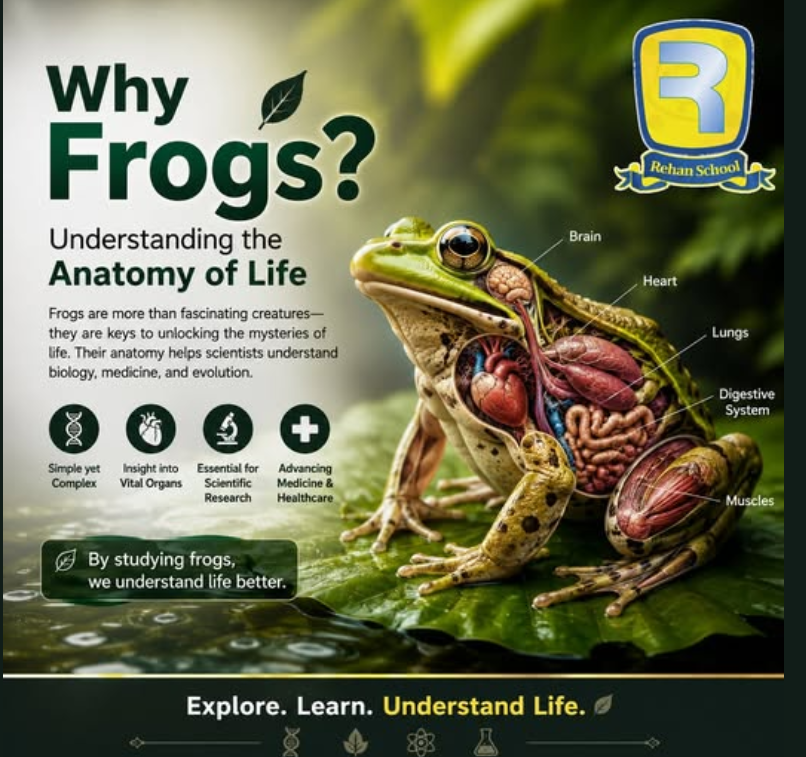
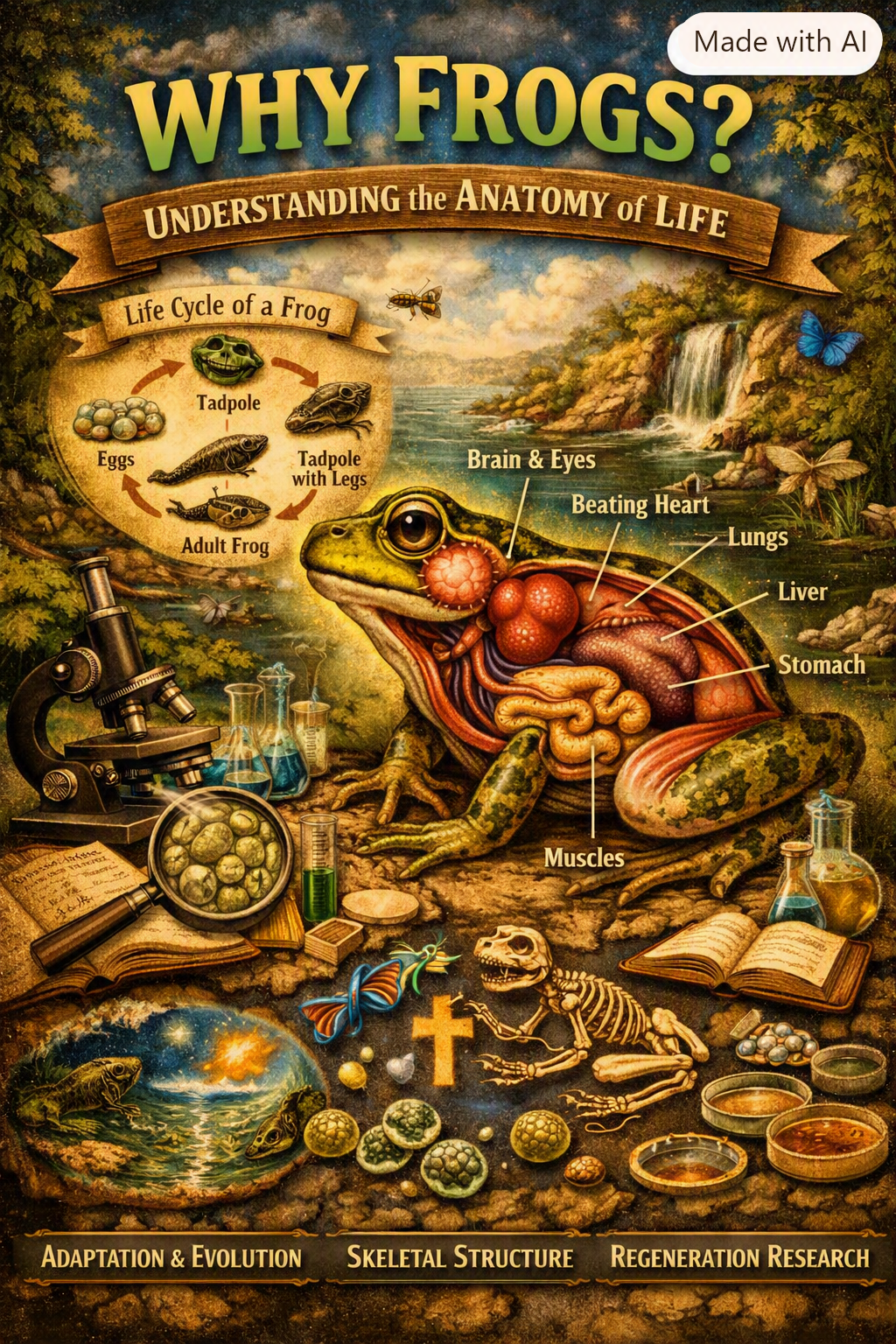
    ## Why Frogs? Understanding the Anatomy of Life

    Have you ever wondered why **frogs are so important for understanding life and biology?** In this video, we explore **“Why Frogs? Understanding the Anatomy of Life”** and discover how these fascinating amphibians help us learn about the structure and functions of living organisms.

    We’ll explore the **anatomy of a frog**, including its major organs, body systems, skeleton, muscles, skin, and unique adaptations. Frogs provide an interesting way to understand important biological concepts such as **respiration, circulation, digestion, movement, and reproduction**.

    From their ability to live both in water and on land to their remarkable life cycle, frogs offer valuable insights into **adaptation, ecosystems, and biodiversity**.

    Join us on this educational journey and discover how studying one small amphibian can help us better understand the **amazing complexity of life**!

    **Learn • Explore • Discover • Understand**

    ### Hashtags

    #Frogs #Anatomy #Biology #LifeScience #AnimalScience #Amphibians #HumanBiology #Science #Nature #Ecosystems #Biodiversity #Education #STEM #ScienceLearning #ExploreBiology
    #rsisb Roll No.269 Foundation Level Story Post No.18 ## 🐸🔬 Why Frogs? Understanding the Anatomy of Life Have you ever wondered why **frogs are so important for understanding life and biology?** 🤔🐸 In this video, we explore **“Why Frogs? Understanding the Anatomy of Life”** and discover how these fascinating amphibians help us learn about the structure and functions of living organisms. We’ll explore the **anatomy of a frog**, including its major organs, body systems, skeleton, muscles, skin, and unique adaptations. 🦴🫀🫁 Frogs provide an interesting way to understand important biological concepts such as **respiration, circulation, digestion, movement, and reproduction**. 🌱🔬 From their ability to live both in water and on land to their remarkable life cycle, frogs offer valuable insights into **adaptation, ecosystems, and biodiversity**. 🌊🌿 Join us on this educational journey and discover how studying one small amphibian can help us better understand the **amazing complexity of life**! 🌍✨ 🎓 **Learn • Explore • Discover • Understand** ### 🔖 Hashtags #Frogs 🐸 #Anatomy 🔬 #Biology 🧬 #LifeScience 🌱 #AnimalScience #Amphibians 🌊 #HumanBiology #Science 📚 #Nature 🌿 #Ecosystems 🌍 #Biodiversity 🐸 #Education 🎓 #STEM 🚀 #ScienceLearning #ExploreBiology ✨
    0 التعليقات 0 المشاركات 3080 مشاهدة
  • #rsisb
    Roll no.239
    Foundation Level


    Frogs are often studied in biology because their bodies provide a clear way to understand **basic animal anatomy and physiology**. Their organs and organ systems are relatively easy to observe, while still showing many of the same fundamental structures found in other vertebrates.

    ### What Can Frogs Teach Us?

    * **Heart:** A frog’s three-chambered heart demonstrates how blood circulates through the body.
    * **Lungs and skin:** Frogs breathe through both their lungs and moist skin, showing different methods of gas exchange.
    * **Digestive system:** Their digestive organs demonstrate how food is broken down and nutrients are absorbed.
    * **Muscles and skeleton:** Powerful hind-leg muscles and a specialized skeleton explain how frogs jump and move.
    * **Nervous system:** The brain, spinal cord, and nerves coordinate movement and responses.
    * **Kidneys:** These organs help remove waste and maintain the body's internal balance.

    genui{"biology_anatomy_physiology":{"type_id":"BLOOD_CIRCULATION","locale_override":"en-US"}}

    ### **Why Are Frogs Important in Biology?**

    Frogs are useful study organisms because their anatomy helps students connect **structure with function**. By examining how different organs work together, we can better understand a central idea of biology: **life depends on coordinated systems working as one whole organism.**

    In short, studying a frog is not simply about studying one animal—it is a way to explore the **anatomy, physiology, adaptation, and organization of life itself**.
    #rsisb Roll no.239 Foundation Level Frogs are often studied in biology because their bodies provide a clear way to understand **basic animal anatomy and physiology**. Their organs and organ systems are relatively easy to observe, while still showing many of the same fundamental structures found in other vertebrates. ### 🐸 What Can Frogs Teach Us? * **Heart:** A frog’s three-chambered heart demonstrates how blood circulates through the body. * **Lungs and skin:** Frogs breathe through both their lungs and moist skin, showing different methods of gas exchange. * **Digestive system:** Their digestive organs demonstrate how food is broken down and nutrients are absorbed. * **Muscles and skeleton:** Powerful hind-leg muscles and a specialized skeleton explain how frogs jump and move. * **Nervous system:** The brain, spinal cord, and nerves coordinate movement and responses. * **Kidneys:** These organs help remove waste and maintain the body's internal balance. genui{"biology_anatomy_physiology":{"type_id":"BLOOD_CIRCULATION","locale_override":"en-US"}} ### **Why Are Frogs Important in Biology?** Frogs are useful study organisms because their anatomy helps students connect **structure with function**. By examining how different organs work together, we can better understand a central idea of biology: **life depends on coordinated systems working as one whole organism.** In short, studying a frog is not simply about studying one animal—it is a way to explore the **anatomy, physiology, adaptation, and organization of life itself**.
    0 التعليقات 0 المشاركات 4012 مشاهدة
  • PHP Web Developer
    iCT (Information system) (PVT) urgently looking for Talented, Sharp mind; intelligent individual Male/Female candidates. We offer you a basic salary. It is an excellent opportunity for those who want career growth with a fast growing company. Fresh candidates can also apply.
    Experience:
    Experience in HTMLS, CSS, Java Script.
    Experience in CMS ( Magneto, Joomla, Word press Templates, Frame Work)
    Experience in PHP development
    Knowledge & Skills
    - Basic Knowledge of Adobe Photoshop.
    - Custom Website Design
    - HTML5/CSS3
    - PSD to HTML/HTML5/CSS3 Convert
    - PSD to Word Press Convert and Customization
    - Ecommerce Theme Development
    - Responsive Web Design and Development
    - Cross browser Compatibility
    - Responsive website (Media Query, Twitter, Bootstrap, Skeleton)
    Note Portfolio Must Attached & Resume
    basit@ictsystems.com.pk
    PHP Web Developer iCT (Information system) (PVT) urgently looking for Talented, Sharp mind; intelligent individual Male/Female candidates. We offer you a basic salary. It is an excellent opportunity for those who want career growth with a fast growing company. Fresh candidates can also apply. Experience: Experience in HTMLS, CSS, Java Script. Experience in CMS ( Magneto, Joomla, Word press Templates, Frame Work) Experience in PHP development Knowledge & Skills - Basic Knowledge of Adobe Photoshop. - Custom Website Design - HTML5/CSS3 - PSD to HTML/HTML5/CSS3 Convert - PSD to Word Press Convert and Customization - Ecommerce Theme Development - Responsive Web Design and Development - Cross browser Compatibility - Responsive website (Media Query, Twitter, Bootstrap, Skeleton) Note Portfolio Must Attached & Resume basit@ictsystems.com.pk
    0 التعليقات 0 المشاركات 4906 مشاهدة
  • ** ACCl Task 36 – Day 48: The Journey of Dinosaurs: A Scientific Perspective **

    I have successfully completed my thirty-sixth ACCl task titled **“The Journey of Dinosaurs: A Scientific Perspective”** .
    This task helped me explore how **dinosaurs lived, evolved, and disappeared**, deepening my understanding of Earth’s ancient history and the science of evolution .

    Part I: The Rise of Argentumdraco The world was the Mesozoic Era, a sprawling, humid greenhouse, and in the heart of what would one day be the Patagonia desert, the first Argentumdraco ("Silver Dragon") hatched. It was the early Late Cretaceous period, about 95 million years ago. Argentumdraco magnificens was a magnificent specimen of the Titanosauria, a subclass of the long-necked, plant-eating Sauropods.Unlike its ancient, bulkier ancestors, the Argentumdraco possessed a relatively slender frame, a long, flexible neck used to graze on the canopy's highest cycads and conifers, and skin that, when wet, shimmered with a faint, silvery-green iridescence—hence its name. Its feet, like those of all sauropods, were columnar, built for supporting its $60$-ton mass across the moist floodplain.The young Argentumdraco, who the paleontologists of the future would affectionately nickname "Ares," grew fast. His life was a constant, slow-motion migration, following the seasonal blooms of vegetation and avoiding the razor-toothed gaze of the massive Giganotosaurus that patrolled the forests. For millions of years, the species thrived. They were the undisputed, slow-moving monarchs of their ecosystem, a testament to evolutionary success.Part II: The Shadow of Chicxulub Then, $66$ million years ago, the environment began to subtly shift. Volcanic activity had been increasing across the globe—the Deccan Traps were pouring out vast sheets of lava and gas—straining the atmosphere. Ares, now old and scarred, felt the dryness in the air and the increasing scarcity of his preferred equatorial ferns.The true cataclysm, however, came in the form of a blinding flash from above. A massive asteroid, estimated to be $10$ kilometers wide, hurtled into the shallow waters of the Yucatán Peninsula, near what is now Chicxulub.The immediate effects were devastating: an immense shockwave, tsunamis, and a fiery blast that ignited global wildfires. But it was the aftermath that truly sealed the fate of the dinosaurs. The impact hurled colossal amounts of dust, soot, and sulfur aerosols into the stratosphere, blocking out the sun and plunging the Earth into years of "impact winter."Ares and his herd, thousands of miles away, did not die in the blast. They died of starvation. As the darkness persisted, photosynthesis failed. The massive ferns and conifers withered. Ares's immense bulk, once an advantage in warding off predators, became a metabolic liability. His $60$-ton body simply required too much energy from a world that had none left to give. Ares was among the last of his kind, his final resting place a muddy riverbed, an end not of violence, but of slow, cold inevitability.Part III: The Legacy of a Bone For $66$ million years, Ares's fossilized skeleton lay undisturbed. The continents drifted, the climate cooled, and new life—the small, resilient mammals that had scurried in the dinosaurs' shadow—inherited the Earth.Then, in the 21st century, a team of paleontologists, using geological mapping and seismic surveys, unearthed Ares's massive femur. It was enormous, a pale, petrified column of calcium and time.The scientists named the site "The Silver Bed." Through painstaking excavation and laboratory analysis, they didn't just find a skeleton; they reconstructed a story.CT scans revealed lines of arrested growth, like tree rings, detailing Ares's rapid juvenile growth rate.Geochemical analysis of the rock surrounding the bones confirmed the precise dating—$95.2 \pm 0.4$ million years ago.The unique pelvic structure was analyzed, helping to refine the evolutionary tree of sauropods.Ares, the Argentumdraco, became a key piece of the puzzle, a Type Specimen illustrating the magnificence of the dinosaurian world and the fragility of even the greatest life forms against a cosmic event.The scientists realized that while the asteroid wiped out all non-avian dinosaurs, it didn't truly end the dinosaur journey. The small, feathered theropods—birds—survived. The robin on your windowsill and the mighty Argentumdraco share an ancient, unbroken lineage.Ares’s bone now rests in a museum, a silent, monumental testament to a biological empire that spanned $165$ million years. It is a scientific narrative written in stone: the ultimate power of evolution, the devastating force of extinction, and the endless cycle of life on a tumultuous planet.
    **📘 ACCl Task 36 – Day 48: The Journey of Dinosaurs: A Scientific Perspective 🦖** I have successfully completed my thirty-sixth ACCl task titled **“The Journey of Dinosaurs: A Scientific Perspective”** 🌍. This task helped me explore how **dinosaurs lived, evolved, and disappeared**, deepening my understanding of Earth’s ancient history and the science of evolution 🔬✨. Part I: The Rise of Argentumdraco 🌍The world was the Mesozoic Era, a sprawling, humid greenhouse, and in the heart of what would one day be the Patagonia desert, the first Argentumdraco ("Silver Dragon") hatched. It was the early Late Cretaceous period, about 95 million years ago. Argentumdraco magnificens was a magnificent specimen of the Titanosauria, a subclass of the long-necked, plant-eating Sauropods.Unlike its ancient, bulkier ancestors, the Argentumdraco possessed a relatively slender frame, a long, flexible neck used to graze on the canopy's highest cycads and conifers, and skin that, when wet, shimmered with a faint, silvery-green iridescence—hence its name. Its feet, like those of all sauropods, were columnar, built for supporting its $60$-ton mass across the moist floodplain.The young Argentumdraco, who the paleontologists of the future would affectionately nickname "Ares," grew fast. His life was a constant, slow-motion migration, following the seasonal blooms of vegetation and avoiding the razor-toothed gaze of the massive Giganotosaurus that patrolled the forests. For millions of years, the species thrived. They were the undisputed, slow-moving monarchs of their ecosystem, a testament to evolutionary success.Part II: The Shadow of Chicxulub 🔥Then, $66$ million years ago, the environment began to subtly shift. Volcanic activity had been increasing across the globe—the Deccan Traps were pouring out vast sheets of lava and gas—straining the atmosphere. Ares, now old and scarred, felt the dryness in the air and the increasing scarcity of his preferred equatorial ferns.The true cataclysm, however, came in the form of a blinding flash from above. A massive asteroid, estimated to be $10$ kilometers wide, hurtled into the shallow waters of the Yucatán Peninsula, near what is now Chicxulub.The immediate effects were devastating: an immense shockwave, tsunamis, and a fiery blast that ignited global wildfires. But it was the aftermath that truly sealed the fate of the dinosaurs. The impact hurled colossal amounts of dust, soot, and sulfur aerosols into the stratosphere, blocking out the sun and plunging the Earth into years of "impact winter."Ares and his herd, thousands of miles away, did not die in the blast. They died of starvation. As the darkness persisted, photosynthesis failed. The massive ferns and conifers withered. Ares's immense bulk, once an advantage in warding off predators, became a metabolic liability. His $60$-ton body simply required too much energy from a world that had none left to give. Ares was among the last of his kind, his final resting place a muddy riverbed, an end not of violence, but of slow, cold inevitability.Part III: The Legacy of a Bone 🦴For $66$ million years, Ares's fossilized skeleton lay undisturbed. The continents drifted, the climate cooled, and new life—the small, resilient mammals that had scurried in the dinosaurs' shadow—inherited the Earth.Then, in the 21st century, a team of paleontologists, using geological mapping and seismic surveys, unearthed Ares's massive femur. It was enormous, a pale, petrified column of calcium and time.The scientists named the site "The Silver Bed." Through painstaking excavation and laboratory analysis, they didn't just find a skeleton; they reconstructed a story.CT scans revealed lines of arrested growth, like tree rings, detailing Ares's rapid juvenile growth rate.Geochemical analysis of the rock surrounding the bones confirmed the precise dating—$95.2 \pm 0.4$ million years ago.The unique pelvic structure was analyzed, helping to refine the evolutionary tree of sauropods.Ares, the Argentumdraco, became a key piece of the puzzle, a Type Specimen illustrating the magnificence of the dinosaurian world and the fragility of even the greatest life forms against a cosmic event.The scientists realized that while the asteroid wiped out all non-avian dinosaurs, it didn't truly end the dinosaur journey. The small, feathered theropods—birds—survived. The robin on your windowsill and the mighty Argentumdraco share an ancient, unbroken lineage.Ares’s bone now rests in a museum, a silent, monumental testament to a biological empire that spanned $165$ million years. It is a scientific narrative written in stone: the ultimate power of evolution, the devastating force of extinction, and the endless cycle of life on a tumultuous planet.
    0 التعليقات 0 المشاركات 2477 مشاهدة