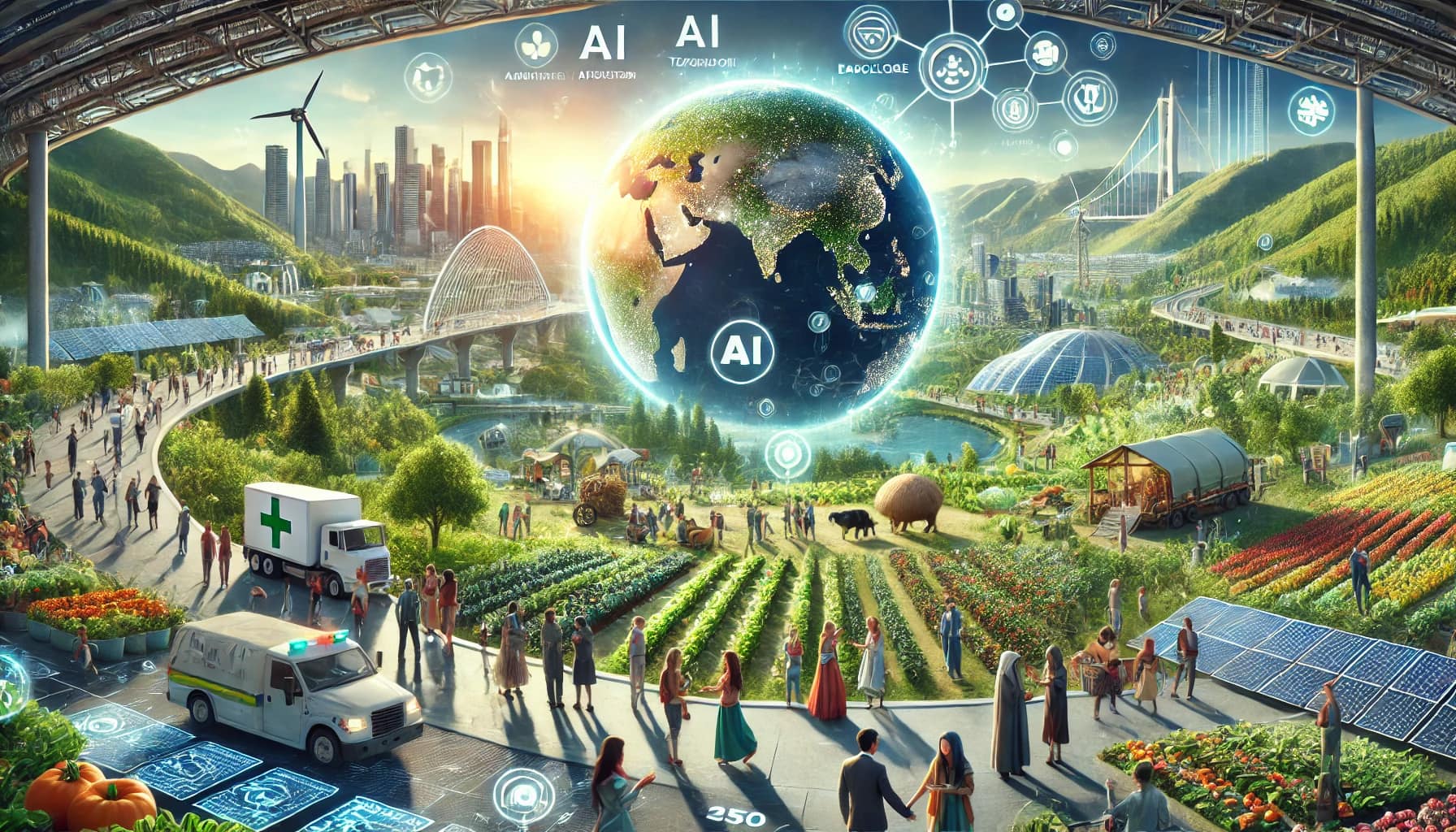
A Positive Timeline for Earth: Using AI to Achieve Universal Prosperity, Zero War, and Zero Hunger
2024–2030: Laying the Foundation for AI-Driven Global Transformation
1. 2024:
• Global AI Collaboration: A global treaty signed by major nations and tech companies to use AI for universal human welfare.
• Establishment of the Global AI Alliance (GAIA) to oversee and regulate the ethical use of AI.
• AI begins optimizing food distribution networks, reducing food waste by 30%.
2. 2025:
• Deployment of AI systems for precision agriculture, doubling crop yields in developing countries.
• Universal Basic Income (UBI) pilot programs powered by AI-driven global wealth redistribution begin in select regions.
• AI-enabled conflict resolution systems begin mediating in war zones, leading to peace agreements in 3 major regions.
3. 2026:
• AI-powered education platforms provide free, high-quality, multilingual education to 500 million children.
• UBI of $100/month implemented in 20% of the world’s population, funded by AI-optimized global taxation.
• Global Hunger Index drops by 50% as AI logistics deliver surplus food to undernourished areas.
4. 2027:
• AI-optimized healthcare systems reduce preventable diseases by 40%.
• Solar-powered AI-driven desalination plants provide clean drinking water to 1 billion people.
• AI-powered predictive diplomacy prevents conflicts in 5 major regions, marking a 20% reduction in global violence.
5. 2028–2030:
• Universal Basic Income of $500/month for every adult globally, funded by AI-driven automation of wealth creation.
• AI ensures zero hunger globally by coordinating food production, storage, and equitable distribution.
• Global Peace Accord signed, with AI-driven monitoring ensuring compliance and transparency.
2031–2040: Scaling AI for Universal Prosperity
1. 2031–2035:
• AI-driven circular economies drastically reduce resource waste and environmental damage.
• UBI increases to $750/month globally as automation and AI optimize industries and create surplus wealth.
• AI monitors climate change, resulting in a 60% reduction in global emissions through coordinated global action.
• AI-enabled education eliminates illiteracy worldwide, with virtual classrooms tailored to every learner’s needs.
2. 2036:
• World Hunger officially eradicated as AI-coordinated systems ensure sufficient, equitable food production and delivery.
• AI-driven conflict prevention systems eliminate the last remaining armed conflicts, achieving zero war globally.
• AI democratically oversees global governance systems, ensuring transparency and equity for all nations.
3. 2037–2040:
• UBI reaches $1,000/month for every person worldwide, funded by an AI-managed global wealth fund derived from automated industries, trade efficiencies, and equitable taxation.
• AI-driven medical breakthroughs cure major diseases, leading to a 20-year increase in global life expectancy.
• AI ensures renewable energy powers 100% of global infrastructure, making energy universally accessible and affordable.
2041–2050: A Fully Transformed Global Society
1. 2041–2045:
• AI-coordinated resource sharing eliminates poverty completely.
• Collaborative AI systems create breakthroughs in space exploration, enabling off-Earth resource extraction to support global prosperity.
• AI-driven governance systems are adopted worldwide, ensuring fair and efficient management of global resources and conflicts.
2. 2046–2050:
• Humanity transitions to a post-scarcity society, with AI ensuring that basic needs (food, water, shelter, education, healthcare) are universally met without financial barriers.
• UBI increases beyond $1,000/month, allowing people to pursue creative and meaningful endeavors without economic stress.
• Global happiness index reaches unprecedented levels as AI ensures equity, peace, and prosperity for all.
Key Achievements by 2050
• Universal Basic Income: $1,000/month for every global citizen, powered by AI-driven wealth creation and equitable redistribution.
• Zero Hunger: AI optimizes agriculture, distribution, and eliminates waste, ensuring food for all.
• Zero War: Predictive AI systems and global peace accords prevent and resolve conflicts.
• Universal Education: AI delivers free, tailored education, ensuring everyone has access to knowledge.
• Healthcare for All: AI-powered systems provide affordable, personalized, and preventive healthcare.
• Environmental Sustainability: AI ensures renewable energy powers the planet, achieving carbon neutrality and reversing climate damage.
This vision relies on global collaboration, ethical AI use, and a shared commitment to equity and peace. By harnessing AI responsibly, we can transform Earth into a prosperous, peaceful, and sustainable home for all humanity.
#GlobalUtopia #FutureEarth2050 #AIForGood #UniversalProsperity #ZeroHunger #ZeroWar #SustainableFuture #GreenEnergy #PeacefulPlanet #EqualityForAll #SmartCities #InnovativeWorld #UBIForAll #AIInnovation #GlobalUnityA Positive Timeline for Earth: Using AI to Achieve Universal Prosperity, Zero War, and Zero Hunger
2024–2030: Laying the Foundation for AI-Driven Global Transformation
1. 2024:
• Global AI Collaboration: A global treaty signed by major nations and tech companies to use AI for universal human welfare.
• Establishment of the Global AI Alliance (GAIA) to oversee and regulate the ethical use of AI.
• AI begins optimizing food distribution networks, reducing food waste by 30%.
2. 2025:
• Deployment of AI systems for precision agriculture, doubling crop yields in developing countries.
• Universal Basic Income (UBI) pilot programs powered by AI-driven global wealth redistribution begin in select regions.
• AI-enabled conflict resolution systems begin mediating in war zones, leading to peace agreements in 3 major regions.
3. 2026:
• AI-powered education platforms provide free, high-quality, multilingual education to 500 million children.
• UBI of $100/month implemented in 20% of the world’s population, funded by AI-optimized global taxation.
• Global Hunger Index drops by 50% as AI logistics deliver surplus food to undernourished areas.
4. 2027:
• AI-optimized healthcare systems reduce preventable diseases by 40%.
• Solar-powered AI-driven desalination plants provide clean drinking water to 1 billion people.
• AI-powered predictive diplomacy prevents conflicts in 5 major regions, marking a 20% reduction in global violence.
5. 2028–2030:
• Universal Basic Income of $500/month for every adult globally, funded by AI-driven automation of wealth creation.
• AI ensures zero hunger globally by coordinating food production, storage, and equitable distribution.
• Global Peace Accord signed, with AI-driven monitoring ensuring compliance and transparency.
2031–2040: Scaling AI for Universal Prosperity
1. 2031–2035:
• AI-driven circular economies drastically reduce resource waste and environmental damage.
• UBI increases to $750/month globally as automation and AI optimize industries and create surplus wealth.
• AI monitors climate change, resulting in a 60% reduction in global emissions through coordinated global action.
• AI-enabled education eliminates illiteracy worldwide, with virtual classrooms tailored to every learner’s needs.
2. 2036:
• World Hunger officially eradicated as AI-coordinated systems ensure sufficient, equitable food production and delivery.
• AI-driven conflict prevention systems eliminate the last remaining armed conflicts, achieving zero war globally.
• AI democratically oversees global governance systems, ensuring transparency and equity for all nations.
3. 2037–2040:
• UBI reaches $1,000/month for every person worldwide, funded by an AI-managed global wealth fund derived from automated industries, trade efficiencies, and equitable taxation.
• AI-driven medical breakthroughs cure major diseases, leading to a 20-year increase in global life expectancy.
• AI ensures renewable energy powers 100% of global infrastructure, making energy universally accessible and affordable.
2041–2050: A Fully Transformed Global Society
1. 2041–2045:
• AI-coordinated resource sharing eliminates poverty completely.
• Collaborative AI systems create breakthroughs in space exploration, enabling off-Earth resource extraction to support global prosperity.
• AI-driven governance systems are adopted worldwide, ensuring fair and efficient management of global resources and conflicts.
2. 2046–2050:
• Humanity transitions to a post-scarcity society, with AI ensuring that basic needs (food, water, shelter, education, healthcare) are universally met without financial barriers.
• UBI increases beyond $1,000/month, allowing people to pursue creative and meaningful endeavors without economic stress.
• Global happiness index reaches unprecedented levels as AI ensures equity, peace, and prosperity for all.
Key Achievements by 2050
• Universal Basic Income: $1,000/month for every global citizen, powered by AI-driven wealth creation and equitable redistribution.
• Zero Hunger: AI optimizes agriculture, distribution, and eliminates waste, ensuring food for all.
• Zero War: Predictive AI systems and global peace accords prevent and resolve conflicts.
• Universal Education: AI delivers free, tailored education, ensuring everyone has access to knowledge.
• Healthcare for All: AI-powered systems provide affordable, personalized, and preventive healthcare.
• Environmental Sustainability: AI ensures renewable energy powers the planet, achieving carbon neutrality and reversing climate damage.
This vision relies on global collaboration, ethical AI use, and a shared commitment to equity and peace. By harnessing AI responsibly, we can transform Earth into a prosperous, peaceful, and sustainable home for all humanity.
#GlobalUtopia #FutureEarth2050 #AIForGood #UniversalProsperity #ZeroHunger #ZeroWar #SustainableFuture #GreenEnergy #PeacefulPlanet #EqualityForAll #SmartCities #InnovativeWorld #UBIForAll #AIInnovation #GlobalUnity