• ACCL Day 146

    Story: The Ethics and Education of Animal Dissections
    (Narrator POV)

    The classroom was quieter than usual. The students sat in a circle around the table where the dissection kits were placed. It wasn’t fear that filled the room—
    it was responsibility.

    As the narrator of their journey, I could feel the weight of the moment. Today wasn’t just another science lesson. It was a lesson about choices, respect, and ethics.

    Their mentor, Sir Imran, stepped forward and said calmly,
    “Before we learn how things work, we must understand why we study them—and what respect truly means.”

    Aaliya raised her hand.
    “Sir… do we really need to dissect animals to learn?”
    The question hung in the air, honest and thoughtful.

    Sir Imran smiled gently.
    “That’s exactly what today is about.”

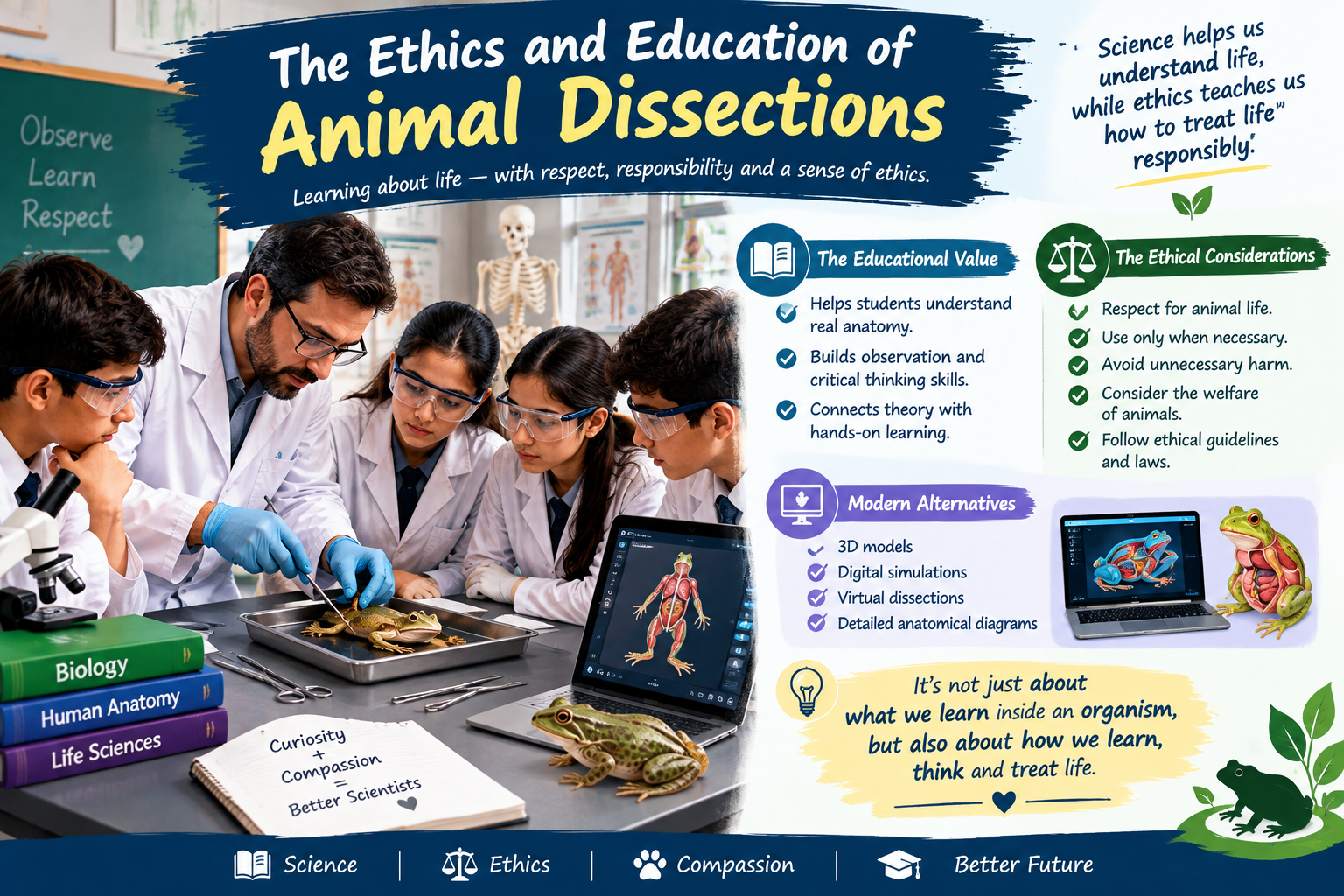
    He explained how dissections, when done ethically, teach students about anatomy, structure, and life—but also teach compassion.
    He reminded them that scientists aren’t just seekers of knowledge; they are guardians of life.

    The students listened deeply.

    To reinforce the lesson, he opened a digital 3D model on the screen.
    “Before touching anything real,” he said, “we study virtually. We learn respectfully. We decide responsibly.”

    Only then, after understanding the ethics, did the students approach the specimen.
    Not with excitement—
    but with purpose.

    Their movements were slow and careful.
    They spoke quietly, sharing observations.
    They treated the process not as an experiment, but as a responsibility.

    For the first time, they understood that education isn’t only about knowledge—
    it’s about values.

    As the session ended, the students closed their kits with new awareness. They walked out not just smarter, but wiser… understanding that science is not only about learning life’s mechanisms, but respecting the life that makes it possible.

    And that was the true lesson of the day.
    ACCL Day 146 🌟 Story: The Ethics and Education of Animal Dissections (Narrator POV) The classroom was quieter than usual. The students sat in a circle around the table where the dissection kits were placed. It wasn’t fear that filled the room— it was responsibility. As the narrator of their journey, I could feel the weight of the moment. Today wasn’t just another science lesson. It was a lesson about choices, respect, and ethics. Their mentor, Sir Imran, stepped forward and said calmly, “Before we learn how things work, we must understand why we study them—and what respect truly means.” Aaliya raised her hand. “Sir… do we really need to dissect animals to learn?” The question hung in the air, honest and thoughtful. Sir Imran smiled gently. “That’s exactly what today is about.” He explained how dissections, when done ethically, teach students about anatomy, structure, and life—but also teach compassion. He reminded them that scientists aren’t just seekers of knowledge; they are guardians of life. The students listened deeply. To reinforce the lesson, he opened a digital 3D model on the screen. “Before touching anything real,” he said, “we study virtually. We learn respectfully. We decide responsibly.” Only then, after understanding the ethics, did the students approach the specimen. Not with excitement— but with purpose. Their movements were slow and careful. They spoke quietly, sharing observations. They treated the process not as an experiment, but as a responsibility. For the first time, they understood that education isn’t only about knowledge— it’s about values. As the session ended, the students closed their kits with new awareness. They walked out not just smarter, but wiser… understanding that science is not only about learning life’s mechanisms, but respecting the life that makes it possible. And that was the true lesson of the day.
    0 Kommentare 0 Anteile 230 Ansichten
  • #rsisb
    Roll No 253
    Foundation Level
    Song 13
    **SCIENCE AND FAITH: A HARMONIOUS COMPARISON | EXPLORING KNOWLEDGE, WONDER, AND BELIEF**
    What happens when the search for scientific knowledge meets the human desire to understand life's deeper meaning? Can curiosity and faith exist side by side?
    **“Science and Faith: A Harmonious Comparison”** is a thoughtful musical journey exploring two important dimensions of human experience: our effort to understand **how the natural world works** and our search for **meaning, purpose, and spiritual understanding**.
    Science invites us to observe, investigate, experiment, and test explanations against evidence. Through mathematics, biology, chemistry, and physics, it helps us uncover the remarkable processes that shape our universe.
    Faith, for many people, offers spiritual guidance, moral principles, hope, and a framework for reflecting on life's purpose. It can inspire compassion, gratitude, humility, and a sense of responsibility toward others.
    **This song explores:**
    **The pursuit of knowledge** — asking questions, investigating evidence, and discovering how nature works.
    **The wonder of the universe** — appreciating the complexity of stars, galaxies, living organisms, and the natural world.
    **Faith and spirituality** — reflecting on belief, purpose, hope, and humanity's search for meaning.
    **Critical thinking** — learning to distinguish scientific evidence, philosophical arguments, and personal convictions.
    **Ethics and responsibility** — considering how knowledge can be used wisely and compassionately.
    **Dialogue and understanding** — encouraging respectful conversations between people with different perspectives.
    **Humility and curiosity** — recognizing how much there is still to learn about ourselves and the world.
    Science and faith do not answer every question in the same way. Science investigates questions about the natural world through observation and evidence, while faith often addresses spiritual beliefs, values, and questions of ultimate meaning. Some people see harmony between them; others understand their relationship differently.
    Rather than presenting them as enemies, this song invites listeners to approach the conversation with **an open mind, intellectual honesty, and mutual respect**.
    The universe inspires scientific questions.
    The search for meaning inspires deep reflection.
    Knowledge encourages discovery.
    Faith can inspire hope and compassion.
    At the heart of this journey is a simple message: **we can explore difficult questions without losing our respect for one another.**
    Through reflective melodies and powerful imagery, *“Science and Faith: A Harmonious Comparison”* celebrates the human desire to learn, understand, question, and find meaning in a world full of wonder.
    **Seek knowledge.**
    **Think deeply.**
    **Respect belief.**
    **Keep curiosity and compassion alive.**
    **Because meaningful conversations begin not with fear of different ideas, but with the courage to explore them.**
    #ScienceAndFaith #Science #Faith #KnowledgeAndWisdom #Philosophy #Spirituality #CriticalThinking #ScientificDiscovery #Humanity #Education #RespectAndUnderstanding #Universe #EducationalMusic #ScienceEducation #MeaningOfLife
    Asma Shaheen EducationWali
    Saima Empowerment Wali
    Mishaal TrainingWali
    #rsisb Roll No 253 Foundation Level Song 13 🔬 **SCIENCE AND FAITH: A HARMONIOUS COMPARISON | EXPLORING KNOWLEDGE, WONDER, AND BELIEF** 🌌✨ What happens when the search for scientific knowledge meets the human desire to understand life's deeper meaning? Can curiosity and faith exist side by side? 🤔📚 **“Science and Faith: A Harmonious Comparison”** is a thoughtful musical journey exploring two important dimensions of human experience: our effort to understand **how the natural world works** and our search for **meaning, purpose, and spiritual understanding**. 🎵🤲 Science invites us to observe, investigate, experiment, and test explanations against evidence. Through mathematics, biology, chemistry, and physics, it helps us uncover the remarkable processes that shape our universe. 🔬⚛️🧬 Faith, for many people, offers spiritual guidance, moral principles, hope, and a framework for reflecting on life's purpose. It can inspire compassion, gratitude, humility, and a sense of responsibility toward others. ❤️🕊️ 🎬 **This song explores:** 🔬 **The pursuit of knowledge** — asking questions, investigating evidence, and discovering how nature works. 🌌 **The wonder of the universe** — appreciating the complexity of stars, galaxies, living organisms, and the natural world. 🤲 **Faith and spirituality** — reflecting on belief, purpose, hope, and humanity's search for meaning. 🧠 **Critical thinking** — learning to distinguish scientific evidence, philosophical arguments, and personal convictions. ❤️ **Ethics and responsibility** — considering how knowledge can be used wisely and compassionately. 📚 **Dialogue and understanding** — encouraging respectful conversations between people with different perspectives. 🌱 **Humility and curiosity** — recognizing how much there is still to learn about ourselves and the world. Science and faith do not answer every question in the same way. Science investigates questions about the natural world through observation and evidence, while faith often addresses spiritual beliefs, values, and questions of ultimate meaning. Some people see harmony between them; others understand their relationship differently. Rather than presenting them as enemies, this song invites listeners to approach the conversation with **an open mind, intellectual honesty, and mutual respect**. ✨ The universe inspires scientific questions. 🌌 The search for meaning inspires deep reflection. 🤔 Knowledge encourages discovery. 🔬 Faith can inspire hope and compassion. 🤲❤️ At the heart of this journey is a simple message: **we can explore difficult questions without losing our respect for one another.** 🎵 Through reflective melodies and powerful imagery, *“Science and Faith: A Harmonious Comparison”* celebrates the human desire to learn, understand, question, and find meaning in a world full of wonder. 🔬 **Seek knowledge.** 🧠 **Think deeply.** 🤲 **Respect belief.** ❤️ **Keep curiosity and compassion alive.** ✨ **Because meaningful conversations begin not with fear of different ideas, but with the courage to explore them.** #ScienceAndFaith #Science #Faith #KnowledgeAndWisdom #Philosophy #Spirituality #CriticalThinking #ScientificDiscovery #Humanity #Education #RespectAndUnderstanding #Universe #EducationalMusic #ScienceEducation #MeaningOfLife 🔬🌌🤲✨ Asma Shaheen EducationWali Saima Empowerment Wali Mishaal TrainingWali
    0 Kommentare 0 Anteile 2113 Ansichten 4
  • #rsisb
    Roll no.279
    story post no.21
    Foundation Level
    **The Ethics and Education of Animal Dissections**
    In a science classroom, students gathered around their teacher for an important lesson about how living organisms are structured and how their bodies work. ‍ The topic was **animal dissection**, a traditional method that has helped students understand anatomy through direct scientific observation.
    The teacher explained that science is not only about discovering new information—it is also about **responsibility, respect, and ethical thinking**. Students learned that when animals are used for educational purposes, their use should be carefully considered, and unnecessary harm should always be avoided.
    Some students were curious about how organs and body systems are connected. Others wondered whether there were alternative ways to learn anatomy without using animals. This led to an interesting classroom discussion about modern educational tools such as **3D models, digital simulations, virtual dissections, and detailed anatomical diagrams**.
    The students discovered that there is no single answer to every ethical question. Instead, responsible science requires people to ask thoughtful questions: **Is the activity necessary? Is there a safer alternative? Does it provide meaningful educational value?**
    By the end of the lesson, the students understood that learning biology is not simply about looking inside an organism—it is also about developing **curiosity, compassion, critical thinking, and respect for life**.
    The classroom became more than a place to study anatomy. It became a place where students learned how **science and ethics can work together**.
    **Science helps us understand life, while ethics teaches us how to treat life responsibly.**
    #AnimalDissection #ScienceEducation #Biology #Ethics #AnimalWelfare #ScienceAndEthics #Learning #Education #CriticalThinking #BiologyStudents #ScienceClass #Anatomy #ResponsibleScience #StudentLearning #RespectForLife
    Asma Shaheen EducationWali
    Saima Empowerment Wali
    Irum Asim Leadershipwali
    #rsisb Roll no.279 story post no.21 Foundation Level 🧬🔬 **The Ethics and Education of Animal Dissections** 🐸📚 In a science classroom, students gathered around their teacher for an important lesson about how living organisms are structured and how their bodies work. 🧑‍🏫🔬 The topic was **animal dissection**, a traditional method that has helped students understand anatomy through direct scientific observation. 📖🧠 The teacher explained that science is not only about discovering new information—it is also about **responsibility, respect, and ethical thinking**. 🌱⚖️ Students learned that when animals are used for educational purposes, their use should be carefully considered, and unnecessary harm should always be avoided. ❤️🐾 Some students were curious about how organs and body systems are connected. Others wondered whether there were alternative ways to learn anatomy without using animals. 💭🔍 This led to an interesting classroom discussion about modern educational tools such as **3D models, digital simulations, virtual dissections, and detailed anatomical diagrams**. 💻🧩 The students discovered that there is no single answer to every ethical question. Instead, responsible science requires people to ask thoughtful questions: **Is the activity necessary? Is there a safer alternative? Does it provide meaningful educational value?** 🤔⚖️ By the end of the lesson, the students understood that learning biology is not simply about looking inside an organism—it is also about developing **curiosity, compassion, critical thinking, and respect for life**. 🌍❤️🧠 The classroom became more than a place to study anatomy. It became a place where students learned how **science and ethics can work together**. 🔬🤝⚖️ ✨ **Science helps us understand life, while ethics teaches us how to treat life responsibly.** 🌱🐾📚 #AnimalDissection #ScienceEducation #Biology #Ethics #AnimalWelfare #ScienceAndEthics #Learning #Education #CriticalThinking #BiologyStudents #ScienceClass #Anatomy #ResponsibleScience #StudentLearning #RespectForLife 🔬🧬📚🐾⚖️🌱✨ Asma Shaheen EducationWali Saima Empowerment Wali Irum Asim Leadershipwali
    0 Kommentare 0 Anteile 876 Ansichten
  • Mohsin RS F8
    Story post NO:17
    roll NO:13
    Class: Foundation Level
    Made by Me

    The Ethics and Education of Animal Dissections

    Animal dissections have been used in science education for many years as a way to help students understand anatomy, biological structures, and how different body systems work together. By studying organisms directly, students can connect what they read in textbooks with real biological structures. Dissections can make lessons more meaningful by allowing learners to observe organs, tissues, and their relationships in a practical setting.

    However, animal dissection is not only a scientific or educational topic; it also raises important ethical questions. Animals are living beings, and their use in education should always be approached with respect, care, and responsibility. Students and teachers should understand why a specimen is being used and ensure that the activity has a genuine educational purpose. Ethical education encourages students to think about both the value of scientific knowledge and the responsibility humans have toward other living organisms.

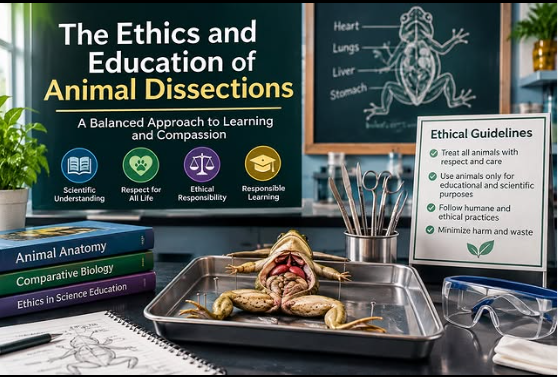
    A responsible approach to dissection includes following appropriate safety and ethical guidelines. Specimens should be obtained through approved and humane sources, handled carefully, and used only when they provide meaningful educational value. Teachers should also explain the purpose of the activity before beginning and create an environment where students can ask questions or express concerns respectfully.

    Education is ultimately about developing knowledge as well as character. Learning anatomy through dissection can teach students about the complexity of life, but it can also encourage appreciation for living organisms. When carried out responsibly, the experience can promote scientific curiosity, careful observation, critical thinking, and respect for life.

    Modern education can also consider alternatives such as detailed anatomical models, digital simulations, videos, diagrams, and virtual dissection programs. These methods can provide valuable learning experiences while reducing the need for physical specimens in some situations.
    Mohsin RS F8 🎓✨ Story post NO:17 roll NO:13 Class: Foundation Level 📚 Made by Me 💻🚀 The Ethics and Education of Animal Dissections Animal dissections have been used in science education for many years as a way to help students understand anatomy, biological structures, and how different body systems work together. By studying organisms directly, students can connect what they read in textbooks with real biological structures. Dissections can make lessons more meaningful by allowing learners to observe organs, tissues, and their relationships in a practical setting. However, animal dissection is not only a scientific or educational topic; it also raises important ethical questions. Animals are living beings, and their use in education should always be approached with respect, care, and responsibility. Students and teachers should understand why a specimen is being used and ensure that the activity has a genuine educational purpose. Ethical education encourages students to think about both the value of scientific knowledge and the responsibility humans have toward other living organisms. A responsible approach to dissection includes following appropriate safety and ethical guidelines. Specimens should be obtained through approved and humane sources, handled carefully, and used only when they provide meaningful educational value. Teachers should also explain the purpose of the activity before beginning and create an environment where students can ask questions or express concerns respectfully. Education is ultimately about developing knowledge as well as character. Learning anatomy through dissection can teach students about the complexity of life, but it can also encourage appreciation for living organisms. When carried out responsibly, the experience can promote scientific curiosity, careful observation, critical thinking, and respect for life. Modern education can also consider alternatives such as detailed anatomical models, digital simulations, videos, diagrams, and virtual dissection programs. These methods can provide valuable learning experiences while reducing the need for physical specimens in some situations.
    0 Kommentare 0 Anteile 1002 Ansichten
  • #rsisb
    Roll no.239
    Miss Zoya no.6
    Foundation Level

    Artificial Intelligence (AI) is a powerful technology that enables computers and machines to perform tasks that usually require human intelligence. AI can learn from data, recognize patterns, understand language, answer questions, solve problems, and help people make decisions.

    AI is now used in many areas, including **education, healthcare, science, smartphones, robotics, transportation, business, and entertainment**. Students can use AI to learn new topics, practice skills, generate ideas, and understand difficult concepts.

    The 100 AI questions explore important topics such as **how AI works, Machine Learning, robots, AI in education, AI and humans, healthcare, safety, ethics, and the future of technology**.

    AI has many benefits, but it can also make mistakes and should be used responsibly. We should always check important information and use AI as a helpful tool rather than depending on it completely.

    **Key Message:** AI can help us learn, create, and solve problems. By using it wisely, safely, and responsibly, we can make technology useful for a better future.

    #AI #ArtificialIntelligence #Technology #Education #MachineLearning #Robotics #Innovation #FutureOfTechnology #Students #DigitalLearning

    #rsisb Roll no.239 Miss Zoya no.6 Foundation Level Artificial Intelligence (AI) is a powerful technology that enables computers and machines to perform tasks that usually require human intelligence. AI can learn from data, recognize patterns, understand language, answer questions, solve problems, and help people make decisions. AI is now used in many areas, including **education, healthcare, science, smartphones, robotics, transportation, business, and entertainment**. Students can use AI to learn new topics, practice skills, generate ideas, and understand difficult concepts. The 100 AI questions explore important topics such as **how AI works, Machine Learning, robots, AI in education, AI and humans, healthcare, safety, ethics, and the future of technology**. AI has many benefits, but it can also make mistakes and should be used responsibly. We should always check important information and use AI as a helpful tool rather than depending on it completely. 🌟 **Key Message:** AI can help us learn, create, and solve problems. By using it wisely, safely, and responsibly, we can make technology useful for a better future. #AI #ArtificialIntelligence #Technology #Education #MachineLearning #Robotics #Innovation #FutureOfTechnology #Students #DigitalLearning 🤖💻🌍✨
    0 Kommentare 0 Anteile 947 Ansichten 4
  • #rsisb
    Roll no.239
    Miss Zoya no.3
    Foundation Level

    **Human beings are one of the most remarkable parts of life on Earth.** Humans have the ability to think, learn, communicate, create, imagine, and solve problems. They can develop knowledge through education and experience and use that knowledge to improve their lives and the world around them.

    The **human body** is a complex system made up of many organs and body systems that work together. The brain helps humans think, remember, learn, and control the body. The heart pumps blood throughout the body, while the lungs help provide oxygen. Bones provide structure and support, muscles allow movement, and the nervous system helps control and coordinate many body functions.

    Humans also have **emotions and feelings**. People can experience happiness, sadness, fear, anger, love, excitement, and many other emotions. Understanding emotions is important because they influence how people communicate, make decisions, and interact with others.

    ### Learning and Intelligence

    Humans have a remarkable ability to learn. Children learn language, numbers, social skills, and many other things as they grow. Education helps people develop knowledge and skills, while experience teaches them how to deal with challenges and make better decisions.

    Humans can also use **creativity and imagination** to create art, music, literature, inventions, and new technologies. This ability to imagine new possibilities has played an important role in the development of human civilization.

    ### Health and Well-Being

    Good health is essential for a healthy and productive life. Humans need nutritious food, clean water, oxygen, enough sleep, physical activity, and a safe environment. Regular exercise can help keep the body strong, while healthy habits can support overall well-being.

    Mental and emotional well-being are also important. People need positive relationships, support, relaxation, and opportunities to express their feelings.

    ### ‍‍‍ Human Relationships

    Humans are social beings. Families, friends, classmates, teachers, colleagues, and communities all play important roles in people's lives. Communication and cooperation help people build strong relationships

    ### Humans and Technology

    Technology has become an important part of modern human life. Computers, smartphones, the internet, robotics, and artificial intelligence help people communicate, learn, work, and solve problems.

    Artificial intelligence can assist humans in many areas, but human judgment, responsibility, creativity, and ethical thinking remain extremely important. Technology should be used wisely and responsibly to benefit society.

    ### Humans and the Environment

    Humans depend on Earth for air, water, food, energy, and natural resources. Protecting the environment is therefore an important responsibility.

    Pollution, climate change, deforestation, and the loss of biodiversity can affect human life and other living organisms. People can help protect the planet by reducing waste, saving water and energy, recycling, planting trees, and using resources responsibly.

    ### The Future of Humanity

    The future of humanity will depend on the choices people make today. Education, science, technology, cooperation, peace, and responsible decision-making can help create a better future.

    Humans may continue to explore space, develop new medical treatments, create advanced technologies, and discover new ways to solve global problems. However, progress should always be balanced with ethics, safety, equality, and respect for life.

    ### **Conclusion**

    The study of humans is a broad and fascinating topic that includes the **human body, brain, emotions, health, learning, relationships, society, technology, and the future**.

    Understanding ourselves can help us become healthier, kinder, more responsible, and more thoughtful people. It can also teach us to respect others, appreciate differences, protect our planet, and work together to solve problems.

    **Key Message:**

    > **Human beings have the ability to learn, create, care, and make a difference. By using knowledge wisely and treating others with respect, humans can help build a healthier, kinder, and better world.**
    #rsisb Roll no.239 Miss Zoya no.3 Foundation Level **Human beings are one of the most remarkable parts of life on Earth.** Humans have the ability to think, learn, communicate, create, imagine, and solve problems. They can develop knowledge through education and experience and use that knowledge to improve their lives and the world around them. The **human body** is a complex system made up of many organs and body systems that work together. The brain helps humans think, remember, learn, and control the body. The heart pumps blood throughout the body, while the lungs help provide oxygen. Bones provide structure and support, muscles allow movement, and the nervous system helps control and coordinate many body functions. Humans also have **emotions and feelings**. People can experience happiness, sadness, fear, anger, love, excitement, and many other emotions. Understanding emotions is important because they influence how people communicate, make decisions, and interact with others. ### 🧠 Learning and Intelligence Humans have a remarkable ability to learn. Children learn language, numbers, social skills, and many other things as they grow. Education helps people develop knowledge and skills, while experience teaches them how to deal with challenges and make better decisions. Humans can also use **creativity and imagination** to create art, music, literature, inventions, and new technologies. This ability to imagine new possibilities has played an important role in the development of human civilization. ### ❤️ Health and Well-Being Good health is essential for a healthy and productive life. Humans need nutritious food, clean water, oxygen, enough sleep, physical activity, and a safe environment. Regular exercise can help keep the body strong, while healthy habits can support overall well-being. Mental and emotional well-being are also important. People need positive relationships, support, relaxation, and opportunities to express their feelings. ### 👨‍👩‍👧‍👦 Human Relationships Humans are social beings. Families, friends, classmates, teachers, colleagues, and communities all play important roles in people's lives. Communication and cooperation help people build strong relationships ### 💻 Humans and Technology Technology has become an important part of modern human life. Computers, smartphones, the internet, robotics, and artificial intelligence help people communicate, learn, work, and solve problems. Artificial intelligence can assist humans in many areas, but human judgment, responsibility, creativity, and ethical thinking remain extremely important. Technology should be used wisely and responsibly to benefit society. ### 🌱 Humans and the Environment Humans depend on Earth for air, water, food, energy, and natural resources. Protecting the environment is therefore an important responsibility. Pollution, climate change, deforestation, and the loss of biodiversity can affect human life and other living organisms. People can help protect the planet by reducing waste, saving water and energy, recycling, planting trees, and using resources responsibly. ### 🚀 The Future of Humanity The future of humanity will depend on the choices people make today. Education, science, technology, cooperation, peace, and responsible decision-making can help create a better future. Humans may continue to explore space, develop new medical treatments, create advanced technologies, and discover new ways to solve global problems. However, progress should always be balanced with ethics, safety, equality, and respect for life. ### **Conclusion** The study of humans is a broad and fascinating topic that includes the **human body, brain, emotions, health, learning, relationships, society, technology, and the future**. Understanding ourselves can help us become healthier, kinder, more responsible, and more thoughtful people. It can also teach us to respect others, appreciate differences, protect our planet, and work together to solve problems. **Key Message:** > **Human beings have the ability to learn, create, care, and make a difference. By using knowledge wisely and treating others with respect, humans can help build a healthier, kinder, and better world.**
    0 Kommentare 0 Anteile 1964 Ansichten 5
  • #rsisb
    Roll no.239
    Miss Zoya no.1
    Foundation Level

    **Artificial Intelligence (AI)** is a powerful technology that enables computers and machines to perform tasks that normally require human intelligence. AI can help machines understand information, recognize patterns, answer questions, solve problems, learn from data, and support people in many different areas.

    This topic explores **100 questions about AI**, including what artificial intelligence is, how it works, machine learning, robots, education, healthcare, science, daily life, safety, ethics, and the future of technology.

    AI can help students learn new subjects, improve their skills, create ideas, analyze information, and understand complex topics. However, it is also important to use AI **responsibly, safely, and honestly** and to check important information before trusting it.

    **Key Message:** AI is a powerful tool that can make our lives easier and help us learn—but the way we use it determines how beneficial it can be.

    #AI #ArtificialIntelligence #Technology #Education #MachineLearning #Robotics #FutureTechnology #DigitalLearning #Science #Students
    #rsisb Roll no.239 Miss Zoya no.1 Foundation Level **Artificial Intelligence (AI)** is a powerful technology that enables computers and machines to perform tasks that normally require human intelligence. AI can help machines understand information, recognize patterns, answer questions, solve problems, learn from data, and support people in many different areas. This topic explores **100 questions about AI**, including what artificial intelligence is, how it works, machine learning, robots, education, healthcare, science, daily life, safety, ethics, and the future of technology. AI can help students learn new subjects, improve their skills, create ideas, analyze information, and understand complex topics. However, it is also important to use AI **responsibly, safely, and honestly** and to check important information before trusting it. 🌟 **Key Message:** AI is a powerful tool that can make our lives easier and help us learn—but the way we use it determines how beneficial it can be. #AI #ArtificialIntelligence #Technology #Education #MachineLearning #Robotics #FutureTechnology #DigitalLearning #Science #Students 🤖💻🌍✨
    0 Kommentare 0 Anteile 1202 Ansichten 2
  • RSIF8
    Roll no: 99
    Story post no: 22
    Story topic: The Ethics and Education of Animal Dissections
    Animal dissections have long been used in biology education to help students understand anatomy and the functions of different body systems. They provide an opportunity to observe biological structures directly and connect theoretical knowledge with practical learning.
    However, dissections also raise important ethical questions about animal welfare, respect for living organisms, and the responsible use of animals in education. Modern biology education encourages students to consider these ethical responsibilities while exploring alternative methods such as digital simulations and models.
    By balancing scientific learning with ethical awareness, we can develop a deeper understanding of both biology and our responsibility toward living organisms.
    #AnimalDissection #Biology #Anatomy #AnimalEthics #LifeScience #ScienceEducation #BiologyEducation #STEM #LearnBiology #Education
    RSIF8 Roll no: 99 Story post no: 22 Story topic: The Ethics and Education of Animal Dissections Animal dissections have long been used in biology education to help students understand anatomy and the functions of different body systems. They provide an opportunity to observe biological structures directly and connect theoretical knowledge with practical learning. However, dissections also raise important ethical questions about animal welfare, respect for living organisms, and the responsible use of animals in education. Modern biology education encourages students to consider these ethical responsibilities while exploring alternative methods such as digital simulations and models. By balancing scientific learning with ethical awareness, we can develop a deeper understanding of both biology and our responsibility toward living organisms. #AnimalDissection #Biology #Anatomy #AnimalEthics #LifeScience #ScienceEducation #BiologyEducation #STEM #LearnBiology #Education
    0 Kommentare 0 Anteile 1655 Ansichten
  • #rsisb Roll No.240 Tedx Talk No.1 Level One In this talk, Alan Winfield explores the fascinating world of robotics and asks an important question: How can we build robots that behave safely, responsibly, and ethically? 🤖💡 The talk helps us understand that creating intelligent robots is not only about technology and programming. It is also about safety, responsibility, human values, trust, and the impact of robots on society. 🌟 This topic gives us an opportunity to think about the future of artificial intelligence and robotics, and how humans can develop technology in a responsible way. 🚀🧠 Watching and reviewing this talk helped me learn that the future of robotics requires both technical knowledge and ethical thinking. 📚✨ #EthicalRobots #AlanWinfield #Robotics #ArtificialIntelligence #AI #Technology #FutureOfRobotics #Ethics #Learning #Education #Innovation #ResponsibleTechnology #ScienceAndTechnology 🤖⚖️🌍 Rehan School Islamabad Campus Asma Shaheen EducationWali Irum Asim Leadershipwali Saima Empowerment Wali https://www.facebook.com/share/v/1DCELYNeBn/
    0 Kommentare 0 Anteile 1783 Ansichten
  • #rsisb
    Roll No 253
    Foundation Level
    Story Post 22
    # The Ethics and Education of Animal Dissections

    ## Balancing Knowledge, Compassion, and Scientific Progress

    Animal dissections have long been used to help students understand anatomy, physiology, and the remarkable complexity of living organisms.

    But dissection is more than a scientific technique.

    It also raises an important question:

    ### **How can we learn about life while treating life with respect?**

    Understanding both the educational value and the ethical considerations surrounding dissections allows us to approach biology with greater knowledge, responsibility, and compassion.

    ---

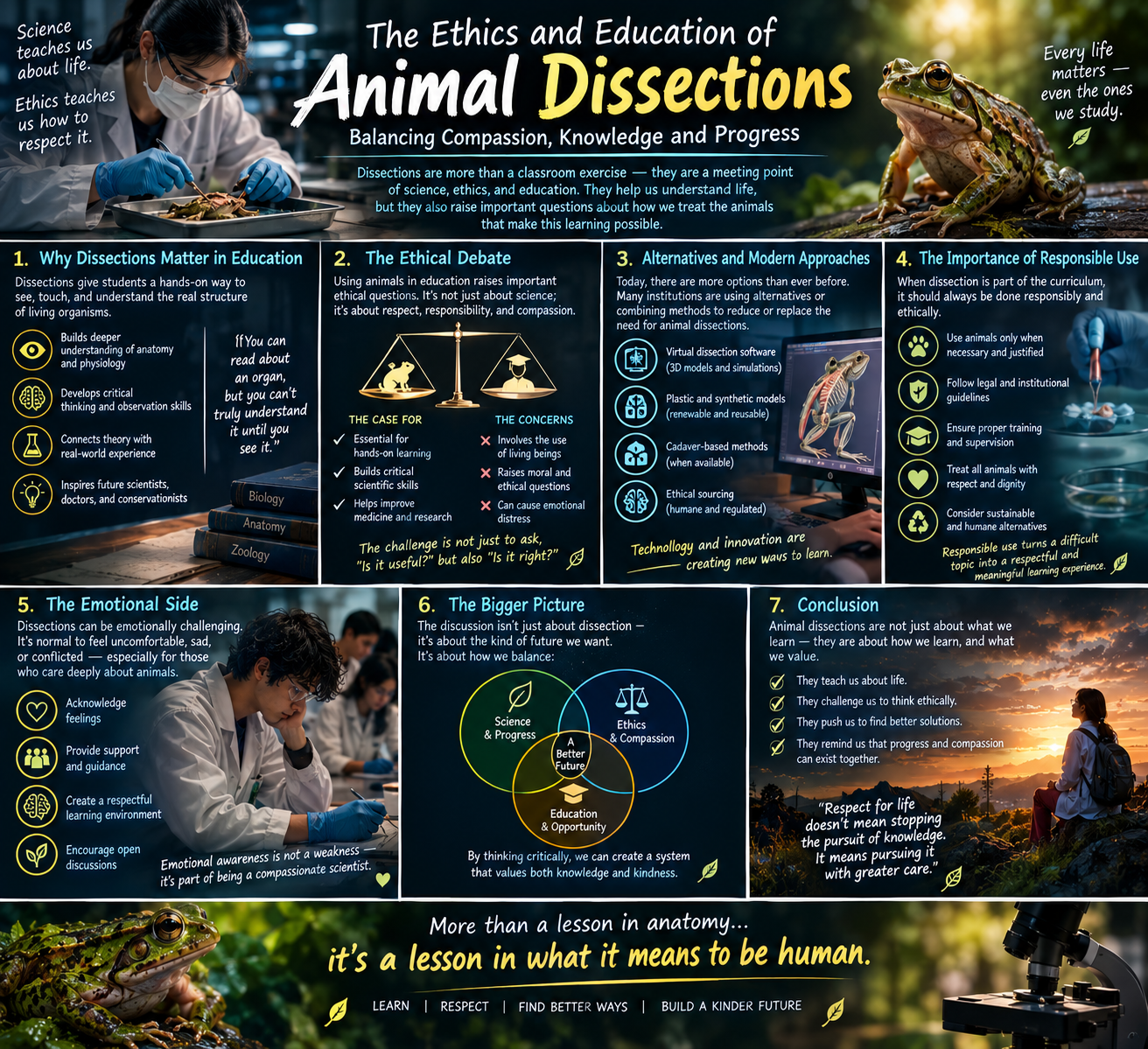
    ## 1. Why Dissections Matter in Education

    Dissections can provide students with a direct way to explore biological structures that are difficult to fully understand through diagrams or textbooks alone.

    They can help learners:

    Observe real anatomy
    Develop critical thinking
    Understand organ relationships
    Connect theory with physical structures
    Build curiosity about living systems

    Instead of simply memorizing the location of an organ, students can investigate how structures are positioned and connected.

    ### **It turns biological concepts into something tangible.**

    ---

    ## 2. The Ethical Debate

    Using animals for education creates a genuine ethical discussion.

    On one side, supporters may point to the educational benefits of direct anatomical study.

    On the other, concerns include:

    The use of living organisms
    Animal welfare
    Moral responsibility
    Whether alternatives can provide similar educational value

    The central question isn't simply:

    **“Is it useful?”**

    It is also:

    ### **“Is it justified, and can the same learning goals be achieved another way?”**

    Considering both questions encourages students to think scientifically **and ethically**.

    ---

    ## 3. Alternatives and Modern Approaches

    Technology has created new ways to study anatomy without always relying on traditional dissection.

    Modern educational approaches can include:

    Virtual dissection software
    3D anatomical models
    Synthetic or plastic models
    Interactive simulations
    Microscopic analysis
    High-quality anatomical imagery

    These tools can allow students to explore structures repeatedly, change viewpoints, and investigate complex systems in ways that may be difficult with a physical specimen.

    ### **Technology is creating new possibilities for learning.**

    ---

    ## 4. The Importance of Responsible Use

    When animal specimens are used for education or research, responsibility is essential.

    Important principles include:

    Following relevant laws and institutional guidelines
    Providing proper training and supervision
    Using animals only when scientifically or educationally justified
    Treating specimens respectfully
    Considering sustainable and humane alternatives

    Responsible scientific education isn't simply about obtaining knowledge.

    It is about **how that knowledge is obtained.**

    ---

    ## 5. The Emotional Side

    Dissection can affect students differently.

    Some may feel fascinated by anatomy.
    Others may feel uncomfortable.
    Some may experience sadness or conflict because they care deeply about animals.

    These reactions shouldn't automatically be dismissed.

    A respectful educational environment can encourage students to:

    Acknowledge their emotions
    Discuss concerns openly
    Support one another
    Maintain scientific curiosity
    Develop compassion

    ### **Emotional awareness can be part of becoming a responsible scientist.**

    ---

    # 6. The Bigger Picture

    The debate surrounding animal dissection isn't simply about choosing **science or compassion**.

    It is about finding ways for:

    **Scientific progress**
    **Ethical responsibility**
    **Education**
    **Compassion**

    to coexist.

    The goal is to create learning environments where students can develop strong scientific knowledge while also thinking carefully about the consequences of scientific practices.

    ### **Knowledge and compassion don't have to be opposites.**

    ---

    ## 7. What Dissections Can Teach Us

    When conducted appropriately, anatomical study can teach lessons that extend beyond individual organs.

    It can teach us about:

    The complexity of life
    Biological organization
    Interconnected systems
    Evolution and adaptation
    Scientific observation
    Ethical decision-making

    A specimen can become more than an anatomy lesson.

    It can become an opportunity to ask **how we learn, why we learn, and what responsibilities come with knowledge.**

    ---

    # 8. The Real Question

    Perhaps the deepest question isn't simply:

    **“Should animals be dissected?”**

    It is:

    How can we improve biological education?
    How can we reduce unnecessary harm?
    Which alternatives can provide meaningful learning?
    How should scientists balance discovery with responsibility?
    How can future generations learn with greater compassion?

    These questions don't have to end scientific exploration.

    They can make scientific exploration **more thoughtful.**

    ---

    # The Bigger Lesson

    Animal dissections can teach us about anatomy—but the discussion surrounding them can teach us something even larger.

    ### **Science teaches us how life works.**

    ### **Ethics asks us how we should treat it.**

    ### **Education gives us the opportunity to understand both.**

    The future of science isn't only about discovering more.

    It's also about learning to discover **responsibly.**

    So when we look inside an organism to understand its anatomy, we should also look beyond the specimen and consider the larger picture:

    **Respect life.**
    **Pursue knowledge.**
    **Think critically.**
    **Explore better alternatives.**
    **Build a more compassionate future.**

    ## **More than a lesson in anatomy—it's a lesson in what it means to learn responsibly.**


    Asma Shaheen EducationWali
    Saima Empowerment Wali
    Mishaal TrainingWali
    #rsisb Roll No 253 Foundation Level Story Post 22 # 🐸🔬 The Ethics and Education of Animal Dissections ## 🌿⚖️ Balancing Knowledge, Compassion, and Scientific Progress Animal dissections have long been used to help students understand anatomy, physiology, and the remarkable complexity of living organisms. 🧬🫀🔬 But dissection is more than a scientific technique. It also raises an important question: ### **How can we learn about life while treating life with respect?** 🐾❤️ Understanding both the educational value and the ethical considerations surrounding dissections allows us to approach biology with greater knowledge, responsibility, and compassion. --- ## 🎓🔬 1. Why Dissections Matter in Education Dissections can provide students with a direct way to explore biological structures that are difficult to fully understand through diagrams or textbooks alone. 📚➡️🔬 They can help learners: 👁️ Observe real anatomy 🧠 Develop critical thinking 🫀 Understand organ relationships 🔬 Connect theory with physical structures 🌱 Build curiosity about living systems Instead of simply memorizing the location of an organ, students can investigate how structures are positioned and connected. ### **It turns biological concepts into something tangible.** ✨ --- ## ⚖️🐾 2. The Ethical Debate Using animals for education creates a genuine ethical discussion. On one side, supporters may point to the educational benefits of direct anatomical study. 🎓🔬 On the other, concerns include: 🐾 The use of living organisms ❤️ Animal welfare 🧠 Moral responsibility 🌱 Whether alternatives can provide similar educational value The central question isn't simply: **“Is it useful?”** It is also: ### **“Is it justified, and can the same learning goals be achieved another way?”** ⚖️ Considering both questions encourages students to think scientifically **and ethically**. --- ## 💻🧬 3. Alternatives and Modern Approaches Technology has created new ways to study anatomy without always relying on traditional dissection. 🚀🔬 Modern educational approaches can include: 💻 Virtual dissection software 🧊 3D anatomical models 🧫 Synthetic or plastic models 🖥️ Interactive simulations 🔬 Microscopic analysis 📚 High-quality anatomical imagery These tools can allow students to explore structures repeatedly, change viewpoints, and investigate complex systems in ways that may be difficult with a physical specimen. ### **Technology is creating new possibilities for learning.** 💡🌍 --- ## 🧤🐸 4. The Importance of Responsible Use When animal specimens are used for education or research, responsibility is essential. ⚖️🔬 Important principles include: 📜 Following relevant laws and institutional guidelines 🎓 Providing proper training and supervision 🐾 Using animals only when scientifically or educationally justified ❤️ Treating specimens respectfully ♻️ Considering sustainable and humane alternatives Responsible scientific education isn't simply about obtaining knowledge. It is about **how that knowledge is obtained.** --- ## 💭❤️ 5. The Emotional Side Dissection can affect students differently. Some may feel fascinated by anatomy. 🔬 Others may feel uncomfortable. 😟 Some may experience sadness or conflict because they care deeply about animals. 🐾❤️ These reactions shouldn't automatically be dismissed. A respectful educational environment can encourage students to: 🧠 Acknowledge their emotions 💬 Discuss concerns openly 🤝 Support one another 🔬 Maintain scientific curiosity ❤️ Develop compassion ### **Emotional awareness can be part of becoming a responsible scientist.** --- # 🌍⚖️ 6. The Bigger Picture The debate surrounding animal dissection isn't simply about choosing **science or compassion**. It is about finding ways for: 🔬 **Scientific progress** ⚖️ **Ethical responsibility** 🎓 **Education** ❤️ **Compassion** to coexist. The goal is to create learning environments where students can develop strong scientific knowledge while also thinking carefully about the consequences of scientific practices. ### **Knowledge and compassion don't have to be opposites.** 🌱✨ --- ## 🧬📚 7. What Dissections Can Teach Us When conducted appropriately, anatomical study can teach lessons that extend beyond individual organs. It can teach us about: 🫀 The complexity of life 🧬 Biological organization 🔗 Interconnected systems 🌱 Evolution and adaptation 🔬 Scientific observation ⚖️ Ethical decision-making A specimen can become more than an anatomy lesson. It can become an opportunity to ask **how we learn, why we learn, and what responsibilities come with knowledge.** 🧠✨ --- # 🌅🌎 8. The Real Question Perhaps the deepest question isn't simply: **“Should animals be dissected?”** It is: ❓ How can we improve biological education? ❓ How can we reduce unnecessary harm? ❓ Which alternatives can provide meaningful learning? ❓ How should scientists balance discovery with responsibility? ❓ How can future generations learn with greater compassion? These questions don't have to end scientific exploration. They can make scientific exploration **more thoughtful.** 🔬❤️ --- # 🐸💚 The Bigger Lesson Animal dissections can teach us about anatomy—but the discussion surrounding them can teach us something even larger. ### **Science teaches us how life works.** 🔬 ### **Ethics asks us how we should treat it.** ⚖️ ### **Education gives us the opportunity to understand both.** 🎓 The future of science isn't only about discovering more. It's also about learning to discover **responsibly.** 🌍🧬 So when we look inside an organism to understand its anatomy, we should also look beyond the specimen and consider the larger picture: 🐾 **Respect life.** 🔬 **Pursue knowledge.** 🧠 **Think critically.** 💡 **Explore better alternatives.** 🌱 **Build a more compassionate future.** ## ✨ **More than a lesson in anatomy—it's a lesson in what it means to learn responsibly.** 🐸🔬❤️ Asma Shaheen EducationWali Saima Empowerment Wali Mishaal TrainingWali

    0 Kommentare 0 Anteile 3218 Ansichten
Suchergebnis