



• #rsisb
    Roll No. 183
    Image With Chatgpt No. 22
    Foundation Level

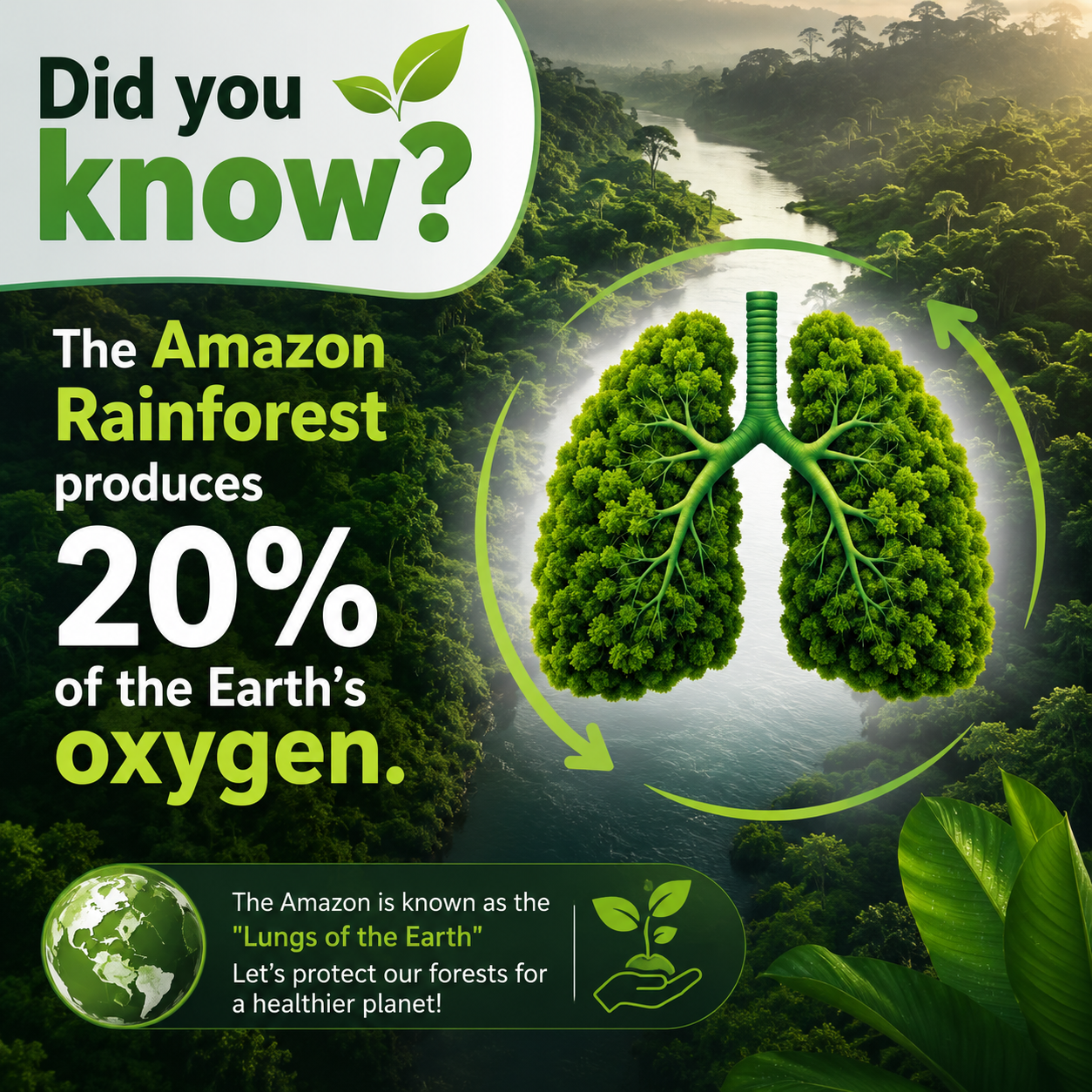
    **Did You Know?**

    The **Amazon Rainforest** is often called the **"Lungs of the Earth"** because it plays a vital role in our planet's ecosystem. While a popular claim says it produces **20% of the Earth's oxygen**, the reality is more nuanced—although the Amazon generates a great deal of oxygen through photosynthesis, it also uses much of that oxygen through the respiration of plants and other living organisms. Even so, it remains one of the world's most important ecosystems, helping regulate climate, store vast amounts of carbon, and provide a home for millions of plant and animal species.

    Protecting the Amazon means protecting biodiversity, supporting Indigenous communities, and helping maintain a healthier planet for future generations. Every small action we take to care for nature makes a difference. Let's spread awareness and inspire others to value and protect our forests!

    **Nature is our greatest treasure—let's protect it together!**

    #AmazonRainforest #DidYouKnow #NatureFacts #SaveTheAmazon #ProtectNature #ClimateAction #GoGreen #Earth #Environment #Rainforest #Wildlife #Biodiversity #Sustainability #EcoFriendly #NatureLovers #PlanetEarth #GreenFuture #Forest #Conservation #LearnSomethingNew

    Malik Lehrasib Awan
    Irum Asim

    #rsisb Roll No. 183 Image With Chatgpt No. 22 Foundation Level 🌿🌎 **Did You Know?** 🌎🌿 The **Amazon Rainforest** is often called the **"Lungs of the Earth"** because it plays a vital role in our planet's ecosystem. 🌳💚 While a popular claim says it produces **20% of the Earth's oxygen**, the reality is more nuanced—although the Amazon generates a great deal of oxygen through photosynthesis, it also uses much of that oxygen through the respiration of plants and other living organisms. 🌱🍃 Even so, it remains one of the world's most important ecosystems, helping regulate climate, store vast amounts of carbon, and provide a home for millions of plant and animal species. 🦜🐒🌺 Protecting the Amazon means protecting biodiversity, supporting Indigenous communities, and helping maintain a healthier planet for future generations. Every small action we take to care for nature makes a difference. 🌍💙 Let's spread awareness and inspire others to value and protect our forests! 🌿✨ 💚 **Nature is our greatest treasure—let's protect it together!** 🌎🌱 #AmazonRainforest #DidYouKnow #NatureFacts #SaveTheAmazon #ProtectNature #ClimateAction #GoGreen #Earth #Environment #Rainforest #Wildlife #Biodiversity #Sustainability #EcoFriendly #NatureLovers #PlanetEarth #GreenFuture #Forest #Conservation #LearnSomethingNew 🌿🌎🍃💚✨ Malik Lehrasib Awan Irum Asim
    0 تبصرے 0 شیئرز 9672 ویوز
  • Here is a list of the purpose of life according to the top 20 major world religions:

    1. Christianity: To glorify God and to enjoy Him forever.

    2. Islam: To worship Allah and live in accordance with His commandments.

    3. Hinduism: To attain liberation from the cycle of birth and death.

    4. Buddhism: To end suffering and attain enlightenment.

    5. Judaism: To follow the commandments of God and fulfill ones role in the world.

    6. Sikhism: To attain union with God and live a life of service and devotion.

    7. Taoism: To live in harmony with the Tao and the ultimate reality.

    8. Confucianism: To cultivate virtue, wisdom, and moral character, and to serve ones family, community, and the world.

    9. Jainism: To attain liberation from the cycle of birth and death and live a life of non-violence, compassion, and spiritual discipline.

    10. Shinto: To live a life of devotion to the kami and maintain a harmonious relationship with nature and the world.

    11. Buddhism (Theravada): To attain enlightenment and liberation from the cycle of birth and death.

    12. Buddhism (Mahayana): To attain enlightenment and to help others attain enlightenment as well.

    13. Zoroastrianism: To live a life of good thoughts, good words, and good deeds, and to attain ultimate union with God.

    14. Bahai: To recognize the oneness of humanity and to work for the betterment of the world.

    15. Hinduism (Vaishnavism): To attain union with the deity Vishnu and to live a life of devotion and service.

    16. Hinduism (Shaivism): To attain union with the deity Shiva and to live a life of devotion and self-realization.

    17. Hinduism (Shaktism): To attain union with the deity Shakti and to live a life of devotion and empowerment.

    18. Indigenous religions: To maintain a harmonious relationship with the natural world and to fulfill ones role in the community.

    19. Spiritualism: To develop a personal relationship with a higher power and to live a life of purpose and meaning.

    20. New Age spirituality: To attain spiritual growth and self-realization, and to live a life in harmony with the universe.

    Please note that these are generalizations and that the beliefs and practices of individuals within each religion may vary.
    Here is a list of the purpose of life according to the top 20 major world religions: 1. Christianity: To glorify God and to enjoy Him forever. 2. Islam: To worship Allah and live in accordance with His commandments. 3. Hinduism: To attain liberation from the cycle of birth and death. 4. Buddhism: To end suffering and attain enlightenment. 5. Judaism: To follow the commandments of God and fulfill one's role in the world. 6. Sikhism: To attain union with God and live a life of service and devotion. 7. Taoism: To live in harmony with the Tao and the ultimate reality. 8. Confucianism: To cultivate virtue, wisdom, and moral character, and to serve one's family, community, and the world. 9. Jainism: To attain liberation from the cycle of birth and death and live a life of non-violence, compassion, and spiritual discipline. 10. Shinto: To live a life of devotion to the kami and maintain a harmonious relationship with nature and the world. 11. Buddhism (Theravada): To attain enlightenment and liberation from the cycle of birth and death. 12. Buddhism (Mahayana): To attain enlightenment and to help others attain enlightenment as well. 13. Zoroastrianism: To live a life of good thoughts, good words, and good deeds, and to attain ultimate union with God. 14. Baha'i: To recognize the oneness of humanity and to work for the betterment of the world. 15. Hinduism (Vaishnavism): To attain union with the deity Vishnu and to live a life of devotion and service. 16. Hinduism (Shaivism): To attain union with the deity Shiva and to live a life of devotion and self-realization. 17. Hinduism (Shaktism): To attain union with the deity Shakti and to live a life of devotion and empowerment. 18. Indigenous religions: To maintain a harmonious relationship with the natural world and to fulfill one's role in the community. 19. Spiritualism: To develop a personal relationship with a higher power and to live a life of purpose and meaning. 20. New Age spirituality: To attain spiritual growth and self-realization, and to live a life in harmony with the universe. Please note that these are generalizations and that the beliefs and practices of individuals within each religion may vary.
    0 تبصرے 0 شیئرز 1340 ویوز
  • Attention video creators:

    Make these videos and earn from ad revenue on facebook and YouTube

    Assuming that each of the 48 videos receives 1 million views, and using the rough estimates provided earlier ($2,000 per 1 million views for both YouTube and Facebook), heres a potential breakdown of your income:

    YouTube:
    48 videos x $2,000 per video = $96,000
    Facebook:
    48 videos x $2,000 per video = $96,000
    Combined income from both platforms:
    $96,000 (YouTube) + $96,000 (Facebook) = $192,000

    Please note that these are rough estimates based on average CPM values and can vary significantly depending on various factors such as audience demographics, content quality, ad placements, and platform policies. Actual earnings may be higher or lower than the estimated amounts.

    Rehan:
    I want to make 48 videos that would get me 5 million views each, each video will be 60 second long, language will be english, audience will be people around the planet, sun will be create desire to make a new friend online in pakistan

    Chatgpt:
    Discover the Hidden Beauty of Pakistan in Just 60 Seconds
    Meet the Friendliest Faces of Pakistan Online
    Unlock the Secrets of Pakistans Rich Cultural Heritage
    Explore Pakistans Majestic Mountains in One Minute
    Taste the Flavors of Pakistan: A Culinary Adventure Awaits
    Experience the True Essence of Pakistani Hospitality
    A Glimpse into Pakistans Vibrant Street Food Scene
    Witness the Serenity of Pakistans Pristine Valleys
    Travel the Karakoram Highway: The Eighth Wonder of the World
    Trekking in Pakistan: The Ultimate Adventure for Nature Lovers
    The Magic of Pakistans UNESCO World Heritage Sites
    The Timeless Charm of Lahore: Pakistans Cultural Capital
    Savor the Aroma of Pakistani Tea Culture
    Meet Pakistans Incredible Wildlife in 60 Seconds
    Dive into the History of the Indus Valley Civilization
    Explore the Ancient Cities of Mohenjo-Daro and Harappa
    Unveil the Mughal Magnificence of Pakistans Architecture
    One Minute Adventure: Paragliding in Pakistan
    The Mesmerizing World of Sufi Music in Pakistan
    A Quick Tour of Pakistans Breathtaking Beaches
    Pakistans Extraordinary Desert Landscapes in a Minute
    The Spectacular Snow Leopard: Pakistans Elusive Treasure
    Celebrate Pakistans Festivals: A Colorful Minute
    A Minute with the Incredible Artisans of Pakistan
    Experience Pakistans Folk Music: A Harmonious Journey
    The Unexplored Gems of Pakistan: Hidden Wonders in 60 Seconds
    Balochistan: The Mysterious Beauty of Pakistans Largest Province
    The Enchanting World of Pakistani Cinema in One Minute
    Fairy Meadows: A Minute in Pakistans Heavenly Paradise
    Sindbads Journey: Sailing Along the Coast of Pakistan
    Pakistans Great Outdoors: Camping Under the Stars
    One Minute with Pakistans Inspiring Women
    The Legendary K2: Conquer the Worlds Second Highest Peak
    Nanga Parbat: A Minute with the Killer Mountain
    Unravel the Mysteries of Pakistans Haunted Places
    The Golden Sands of Pakistan: Discover the Thar Desert
    A Minute of Magic: The Art of Truck Painting in Pakistan
    The Spiritual Retreat of Pakistan: Sufi Shrines and Festivals
    One Minute with the Kalash: Pakistans Unique Indigenous Tribe
    A Taste of Karachi: The Food Capital of Pakistan
    The Storied Silk Road: A Minute in Pakistans Ancient Trade Route
    The Khyber Pass: A One-Minute Journey Through History
    A Minute in the Life of a Pakistani Farmer
    Experience the Serene Beauty of Skardu Valley in 60 Seconds
    A Glimpse into Pakistans Emerging Fashion Scene
    The Miraculous Hunza Valley: A One-Minute Trip to Shangri-La
    The Swat Valley: A Minute in the Switzerland of the East
    Discover the Stunning Alpine Lakes of Pakistan in 60 Seconds
    These one-liner titles aim to pique the interest of a global audience, showcasing various aspects of Pakistans culture, nature, history, and people while encouraging viewers to make friends online with locals from the country.

    Rehan:
    Now tell me top 4 you think will get most facebook and YouTube views

    Chatgpt: Discover the Hidden Beauty of Pakistan in Just 60 Seconds: This title plays on the curiosity of viewers to explore lesser-known breathtaking landscapes and tourist spots, which would likely attract a large audience seeking travel inspiration and natural wonders.
    Meet the Friendliest Faces of Pakistan Online: By focusing on the warmth and hospitality of the Pakistani people, this title encourages viewers to connect with locals and make friends online, fostering cross-cultural connections and understanding.
    Taste the Flavors of Pakistan: A Culinary Adventure Awaits: Food is a universally appealing subject that transcends cultural barriers, and a video showcasing the diverse and mouth-watering Pakistani cuisine would likely garner significant interest from food lovers around the world.
    The Magic of Pakistans UNESCO World Heritage Sites: The allure of world-renowned historical and cultural landmarks is irresistible for many viewers, and this title promises a quick glimpse of the countrys most iconic and awe-inspiring sites, likely attracting a wide audience of history and travel enthusiasts.
    Attention video creators: Make these videos and earn from ad revenue on facebook and YouTube Assuming that each of the 48 videos receives 1 million views, and using the rough estimates provided earlier ($2,000 per 1 million views for both YouTube and Facebook), here's a potential breakdown of your income: YouTube: 48 videos x $2,000 per video = $96,000 Facebook: 48 videos x $2,000 per video = $96,000 Combined income from both platforms: $96,000 (YouTube) + $96,000 (Facebook) = $192,000 Please note that these are rough estimates based on average CPM values and can vary significantly depending on various factors such as audience demographics, content quality, ad placements, and platform policies. Actual earnings may be higher or lower than the estimated amounts. Rehan: I want to make 48 videos that would get me 5 million views each, each video will be 60 second long, language will be english, audience will be people around the planet, sun will be create desire to make a new friend online in pakistan Chatgpt: Discover the Hidden Beauty of Pakistan in Just 60 Seconds Meet the Friendliest Faces of Pakistan Online Unlock the Secrets of Pakistan's Rich Cultural Heritage Explore Pakistan's Majestic Mountains in One Minute Taste the Flavors of Pakistan: A Culinary Adventure Awaits Experience the True Essence of Pakistani Hospitality A Glimpse into Pakistan's Vibrant Street Food Scene Witness the Serenity of Pakistan's Pristine Valleys Travel the Karakoram Highway: The Eighth Wonder of the World Trekking in Pakistan: The Ultimate Adventure for Nature Lovers The Magic of Pakistan's UNESCO World Heritage Sites The Timeless Charm of Lahore: Pakistan's Cultural Capital Savor the Aroma of Pakistani Tea Culture Meet Pakistan's Incredible Wildlife in 60 Seconds Dive into the History of the Indus Valley Civilization Explore the Ancient Cities of Mohenjo-Daro and Harappa Unveil the Mughal Magnificence of Pakistan's Architecture One Minute Adventure: Paragliding in Pakistan The Mesmerizing World of Sufi Music in Pakistan A Quick Tour of Pakistan's Breathtaking Beaches Pakistan's Extraordinary Desert Landscapes in a Minute The Spectacular Snow Leopard: Pakistan's Elusive Treasure Celebrate Pakistan's Festivals: A Colorful Minute A Minute with the Incredible Artisans of Pakistan Experience Pakistan's Folk Music: A Harmonious Journey The Unexplored Gems of Pakistan: Hidden Wonders in 60 Seconds Balochistan: The Mysterious Beauty of Pakistan's Largest Province The Enchanting World of Pakistani Cinema in One Minute Fairy Meadows: A Minute in Pakistan's Heavenly Paradise Sindbad's Journey: Sailing Along the Coast of Pakistan Pakistan's Great Outdoors: Camping Under the Stars One Minute with Pakistan's Inspiring Women The Legendary K2: Conquer the World's Second Highest Peak Nanga Parbat: A Minute with the Killer Mountain Unravel the Mysteries of Pakistan's Haunted Places The Golden Sands of Pakistan: Discover the Thar Desert A Minute of Magic: The Art of Truck Painting in Pakistan The Spiritual Retreat of Pakistan: Sufi Shrines and Festivals One Minute with the Kalash: Pakistan's Unique Indigenous Tribe A Taste of Karachi: The Food Capital of Pakistan The Storied Silk Road: A Minute in Pakistan's Ancient Trade Route The Khyber Pass: A One-Minute Journey Through History A Minute in the Life of a Pakistani Farmer Experience the Serene Beauty of Skardu Valley in 60 Seconds A Glimpse into Pakistan's Emerging Fashion Scene The Miraculous Hunza Valley: A One-Minute Trip to Shangri-La The Swat Valley: A Minute in the Switzerland of the East Discover the Stunning Alpine Lakes of Pakistan in 60 Seconds These one-liner titles aim to pique the interest of a global audience, showcasing various aspects of Pakistan's culture, nature, history, and people while encouraging viewers to make friends online with locals from the country. Rehan: Now tell me top 4 you think will get most facebook and YouTube views Chatgpt: Discover the Hidden Beauty of Pakistan in Just 60 Seconds: This title plays on the curiosity of viewers to explore lesser-known breathtaking landscapes and tourist spots, which would likely attract a large audience seeking travel inspiration and natural wonders. Meet the Friendliest Faces of Pakistan Online: By focusing on the warmth and hospitality of the Pakistani people, this title encourages viewers to connect with locals and make friends online, fostering cross-cultural connections and understanding. Taste the Flavors of Pakistan: A Culinary Adventure Awaits: Food is a universally appealing subject that transcends cultural barriers, and a video showcasing the diverse and mouth-watering Pakistani cuisine would likely garner significant interest from food lovers around the world. The Magic of Pakistan's UNESCO World Heritage Sites: The allure of world-renowned historical and cultural landmarks is irresistible for many viewers, and this title promises a quick glimpse of the country's most iconic and awe-inspiring sites, likely attracting a wide audience of history and travel enthusiasts.
    0 تبصرے 0 شیئرز 3837 ویوز
  • Here are 10 more places that start with the letter "X":

    1. Xiamen, China - A coastal city known for its picturesque beaches and colonial architecture.
    2. Xining, China - A city located on the Tibetan Plateau, known for its unique culture and stunning landscapes.
    3. Xanten, Germany - A historic town with Roman roots, featuring well-preserved archaeological sites.
    4. Xieng Khouang, Laos - A province known for its intriguing Plain of Jars, an ancient archaeological site.
    5. Xitang, China - An ancient water town famous for its well-preserved traditional buildings and canals.
    6. Xuzhou, China - A city with a rich history and numerous historical sites, including the famous Han Dynasty terracotta warriors.
    7. Xinyang, China - A city in Henan province with a long history and cultural heritage.
    8. Xaló (Jalón), Spain - A charming village located in the Alicante region, known for its wine and stunning countryside.
    9. Xela (Quetzaltenango), Guatemala - The second-largest city in Guatemala, surrounded by volcanoes and known for its indigenous culture.
    10. Xylokastro, Greece - A coastal town in the Corinthia region, popular for its beautiful beaches and natural surroundings.

    I hope you find these places intriguing! Let me know if theres anything else youd like to know.
    Here are 10 more places that start with the letter "X": 1. Xiamen, China - A coastal city known for its picturesque beaches and colonial architecture. 2. Xining, China - A city located on the Tibetan Plateau, known for its unique culture and stunning landscapes. 3. Xanten, Germany - A historic town with Roman roots, featuring well-preserved archaeological sites. 4. Xieng Khouang, Laos - A province known for its intriguing Plain of Jars, an ancient archaeological site. 5. Xitang, China - An ancient water town famous for its well-preserved traditional buildings and canals. 6. Xuzhou, China - A city with a rich history and numerous historical sites, including the famous Han Dynasty terracotta warriors. 7. Xinyang, China - A city in Henan province with a long history and cultural heritage. 8. Xaló (Jalón), Spain - A charming village located in the Alicante region, known for its wine and stunning countryside. 9. Xela (Quetzaltenango), Guatemala - The second-largest city in Guatemala, surrounded by volcanoes and known for its indigenous culture. 10. Xylokastro, Greece - A coastal town in the Corinthia region, popular for its beautiful beaches and natural surroundings. I hope you find these places intriguing! Let me know if there's anything else you'd like to know.
    0 تبصرے 0 شیئرز 1205 ویوز
  • Before the time of Moses (Musa in Islamic tradition), a variety of religious beliefs and practices existed in the regions surrounding what is now known as Israel and Palestine, as well as in broader ancient Mesopotamia, Egypt, and the Levant. Some of the prominent religions and belief systems included:

    1. **Ancient Egyptian Religion**:
    - A complex system of polytheistic beliefs and rituals integral to ancient Egyptian society. Gods and goddesses represented aspects of nature or society, and practices included temple rituals, festivals, and rites related to the afterlife.

    2. **Mesopotamian Religion**:
    - In ancient Mesopotamia (modern-day Iraq and Syria), a rich pantheon of gods and goddesses was worshipped. Deities like Anu, Enlil, and Ishtar were central figures. Religion was deeply integrated into daily life, governance, and the cosmoss understanding.

    3. **Canaanite Religion**:
    - In the Levant, including areas of modern-day Israel, Lebanon, and Syria, the Canaanite religion was practiced. It was polytheistic with gods like El, Baal, and Asherah. The Canaanite religion influenced and was influenced by neighboring cultures.

    4. **Anatolian Religions**:
    - In ancient Anatolia (modern-day Turkey), various indigenous religions were practiced, often involving worship of nature deities and mother goddesses.

    5. **Sumerian Religion**:
    - One of the earliest known religions, practiced in ancient Sumer (southern Mesopotamia). It included a pantheon of gods who were believed to control all aspects of the natural world and society.

    6. **Akkadian and Babylonian Religion**:
    - As cultures and empires evolved in Mesopotamia, so did their religious beliefs. Notable deities included Marduk, who rose to prominence in Babylon.

    These ancient religions were typically polytheistic, involving the worship of multiple gods and goddesses associated with natural elements, celestial bodies, and human activities. They often included elaborate myths, rituals, and temple ceremonies. The arrival of monotheistic religions, such as Judaism with figures like Moses, marked a significant shift in religious thought and practice in the region and beyond.
    Before the time of Moses (Musa in Islamic tradition), a variety of religious beliefs and practices existed in the regions surrounding what is now known as Israel and Palestine, as well as in broader ancient Mesopotamia, Egypt, and the Levant. Some of the prominent religions and belief systems included: 1. **Ancient Egyptian Religion**: - A complex system of polytheistic beliefs and rituals integral to ancient Egyptian society. Gods and goddesses represented aspects of nature or society, and practices included temple rituals, festivals, and rites related to the afterlife. 2. **Mesopotamian Religion**: - In ancient Mesopotamia (modern-day Iraq and Syria), a rich pantheon of gods and goddesses was worshipped. Deities like Anu, Enlil, and Ishtar were central figures. Religion was deeply integrated into daily life, governance, and the cosmos's understanding. 3. **Canaanite Religion**: - In the Levant, including areas of modern-day Israel, Lebanon, and Syria, the Canaanite religion was practiced. It was polytheistic with gods like El, Baal, and Asherah. The Canaanite religion influenced and was influenced by neighboring cultures. 4. **Anatolian Religions**: - In ancient Anatolia (modern-day Turkey), various indigenous religions were practiced, often involving worship of nature deities and mother goddesses. 5. **Sumerian Religion**: - One of the earliest known religions, practiced in ancient Sumer (southern Mesopotamia). It included a pantheon of gods who were believed to control all aspects of the natural world and society. 6. **Akkadian and Babylonian Religion**: - As cultures and empires evolved in Mesopotamia, so did their religious beliefs. Notable deities included Marduk, who rose to prominence in Babylon. These ancient religions were typically polytheistic, involving the worship of multiple gods and goddesses associated with natural elements, celestial bodies, and human activities. They often included elaborate myths, rituals, and temple ceremonies. The arrival of monotheistic religions, such as Judaism with figures like Moses, marked a significant shift in religious thought and practice in the region and beyond.
    0 تبصرے 0 شیئرز 1065 ویوز
  • The association of the term "Hindu" with a specific religion is a relatively recent development in historical terms, and it has indeed been influenced by various factors, including colonial administrative practices like the British census system in India.

    ### Historical Context:

    1. **Geographical Term**:
    - Originally, as mentioned earlier, the term "Hindu" was a geographical designation. It referred to the people living in the region of the Indian subcontinent, particularly beyond the River Indus (Sindhu in Sanskrit).
    - The term was used by Persians, Greeks (who referred to the region as "Indos"), and later by Islamic invaders to describe the people of the region, regardless of their specific religious practices.

    2. **Pre-Islamic Usage**:
    - Before the arrival of Islam in India, the term "Hindu" did not signify a particular religious identity. The people in the Indian subcontinent followed a variety of spiritual and religious practices, including Vedic traditions, Buddhism, Jainism, and various local and tribal faiths, without a single overarching identity as "Hindus."

    3. **Islamic Influence**:
    - With the advent of Islamic rule in parts of India from the 12th century onwards, the term "Hindu" began to be used more broadly to distinguish the local population who followed indigenous religious practices from those who followed Islam.
    - Even then, "Hindu" was a term used more by outsiders (especially Muslim rulers and travelers) rather than by the people themselves.

    ### Colonial Influence:

    1. **British Colonial Administration**:
    - During the British colonial period, particularly in the 19th century, the term "Hindu" began to be more rigidly associated with a religious identity. This was partly a result of the British census system and the need to categorize the diverse population of India.
    - The British administrators sought to classify the population of India for governance purposes, and in doing so, they formalized and sometimes oversimplified the diverse social, cultural, and religious practices under broad labels like "Hindu," "Muslim," "Sikh," etc.

    2. **Census and Classification**:
    - The first comprehensive census in British India, conducted in 1871, played a significant role in shaping religious identities. People were asked to identify themselves as belonging to a particular religion, leading to the classification of the majority of the indigenous population under the label "Hindu."
    - This census system, combined with the British legal and administrative framework, gradually reinforced the idea of Hinduism as a distinct, unified religion, similar to the way Christianity or Islam was understood.

    ### Modern Usage:

    - **Religion**:
    - By the late 19th and early 20th centuries, "Hinduism" had come to be recognized as a formal religious identity, encompassing a wide range of beliefs, practices, and philosophies that originated in the Indian subcontinent.
    - Hindu reform movements, like those led by Swami Vivekananda and others, further contributed to defining and promoting Hinduism as a coherent religious tradition.

    ### Conclusion:

    The term "Hindu" transitioned from a geographical and cultural descriptor to a religious identity largely through historical processes influenced by external rulers, colonial administration, and the need for census and legal categorization. The British census system played a key role in this shift, as it required the population to be classified into distinct religious groups, leading to the formalization of Hinduism as a religion.
    The association of the term "Hindu" with a specific religion is a relatively recent development in historical terms, and it has indeed been influenced by various factors, including colonial administrative practices like the British census system in India. ### Historical Context: 1. **Geographical Term**: - Originally, as mentioned earlier, the term "Hindu" was a geographical designation. It referred to the people living in the region of the Indian subcontinent, particularly beyond the River Indus (Sindhu in Sanskrit). - The term was used by Persians, Greeks (who referred to the region as "Indos"), and later by Islamic invaders to describe the people of the region, regardless of their specific religious practices. 2. **Pre-Islamic Usage**: - Before the arrival of Islam in India, the term "Hindu" did not signify a particular religious identity. The people in the Indian subcontinent followed a variety of spiritual and religious practices, including Vedic traditions, Buddhism, Jainism, and various local and tribal faiths, without a single overarching identity as "Hindus." 3. **Islamic Influence**: - With the advent of Islamic rule in parts of India from the 12th century onwards, the term "Hindu" began to be used more broadly to distinguish the local population who followed indigenous religious practices from those who followed Islam. - Even then, "Hindu" was a term used more by outsiders (especially Muslim rulers and travelers) rather than by the people themselves. ### Colonial Influence: 1. **British Colonial Administration**: - During the British colonial period, particularly in the 19th century, the term "Hindu" began to be more rigidly associated with a religious identity. This was partly a result of the British census system and the need to categorize the diverse population of India. - The British administrators sought to classify the population of India for governance purposes, and in doing so, they formalized and sometimes oversimplified the diverse social, cultural, and religious practices under broad labels like "Hindu," "Muslim," "Sikh," etc. 2. **Census and Classification**: - The first comprehensive census in British India, conducted in 1871, played a significant role in shaping religious identities. People were asked to identify themselves as belonging to a particular religion, leading to the classification of the majority of the indigenous population under the label "Hindu." - This census system, combined with the British legal and administrative framework, gradually reinforced the idea of Hinduism as a distinct, unified religion, similar to the way Christianity or Islam was understood. ### Modern Usage: - **Religion**: - By the late 19th and early 20th centuries, "Hinduism" had come to be recognized as a formal religious identity, encompassing a wide range of beliefs, practices, and philosophies that originated in the Indian subcontinent. - Hindu reform movements, like those led by Swami Vivekananda and others, further contributed to defining and promoting Hinduism as a coherent religious tradition. ### Conclusion: The term "Hindu" transitioned from a geographical and cultural descriptor to a religious identity largely through historical processes influenced by external rulers, colonial administration, and the need for census and legal categorization. The British census system played a key role in this shift, as it required the population to be classified into distinct religious groups, leading to the formalization of Hinduism as a religion.
    0 تبصرے 0 شیئرز 297 ویوز
  • The coldest city in the world !

    Yakutia, also known as the Sakha Republic, is a vast and sparsely populated region in northeastern Siberia, Russia. It is the largest subnational governing body in the world, covering an area of approximately 3.1 million square kilometers (1.2 million square miles), which is roughly the size of India. Here are some key points about Yakutia:

    1. Geography

    • Yakutia is located in northeastern Russia and is part of the Siberian Federal District.
    • It is characterized by extreme climatic conditions, including one of the coldest inhabited places on Earth, Oymyakon, where temperatures can drop below -60°C (-76°F).
    • The region is dominated by taiga (boreal forests), tundra, and permafrost, with large rivers like the Lena, Yana, and Indigirka running through it.

    2. Population

    • Despite its large size, Yakutia has a population of just over 950,000 people, making it one of the least densely populated areas in the world.
    • The majority of the population resides in the capital city, Yakutsk, which is the coldest city in the world.

    3. Ethnic Composition

    • The region is home to the Yakuts (Sakha people), a Turkic ethnic group, along with Russians, Ukrainians, and other indigenous peoples such as the Evenks and Evens.
    • The Sakha language, alongside Russian, is an official language of the republic.

    4. Economy

    • Yakutia is rich in natural resources, including diamonds, gold, coal, and natural gas. It is one of the world’s largest diamond producers.
    • The challenging climate and remote location make resource extraction difficult and expensive.
    • Traditional livelihoods, such as reindeer herding, fishing, and hunting, are still practiced by indigenous communities.

    5. Culture

    • Yakutia has a rich cultural heritage, with traditional music, throat singing, and crafts playing significant roles in its identity.
    • Festivals like Ysyakh, a Yakutian New Year celebration held during the summer solstice, highlight the region’s customs and traditions.
    • The Sakha people have a strong connection to nature and spirituality, often reflected in their art and literature.

    6. Tourism

    • Yakutia is a destination for adventure tourism, attracting visitors interested in its breathtaking landscapes, such as the Lena Pillars (a UNESCO World Heritage Site), and its unique climate.
    • Winter tourism offers experiences like ice fishing, dog sledding, and exploring permafrost caves.

    7. Challenges

    • The extreme climate and remote location pose significant challenges to infrastructure, transportation, and daily life.
    • Melting permafrost due to climate change is affecting buildings, roads, and ecosystems in the region.
    The coldest city in the world ! Yakutia, also known as the Sakha Republic, is a vast and sparsely populated region in northeastern Siberia, Russia. It is the largest subnational governing body in the world, covering an area of approximately 3.1 million square kilometers (1.2 million square miles), which is roughly the size of India. Here are some key points about Yakutia: 1. Geography • Yakutia is located in northeastern Russia and is part of the Siberian Federal District. • It is characterized by extreme climatic conditions, including one of the coldest inhabited places on Earth, Oymyakon, where temperatures can drop below -60°C (-76°F). • The region is dominated by taiga (boreal forests), tundra, and permafrost, with large rivers like the Lena, Yana, and Indigirka running through it. 2. Population • Despite its large size, Yakutia has a population of just over 950,000 people, making it one of the least densely populated areas in the world. • The majority of the population resides in the capital city, Yakutsk, which is the coldest city in the world. 3. Ethnic Composition • The region is home to the Yakuts (Sakha people), a Turkic ethnic group, along with Russians, Ukrainians, and other indigenous peoples such as the Evenks and Evens. • The Sakha language, alongside Russian, is an official language of the republic. 4. Economy • Yakutia is rich in natural resources, including diamonds, gold, coal, and natural gas. It is one of the world’s largest diamond producers. • The challenging climate and remote location make resource extraction difficult and expensive. • Traditional livelihoods, such as reindeer herding, fishing, and hunting, are still practiced by indigenous communities. 5. Culture • Yakutia has a rich cultural heritage, with traditional music, throat singing, and crafts playing significant roles in its identity. • Festivals like Ysyakh, a Yakutian New Year celebration held during the summer solstice, highlight the region’s customs and traditions. • The Sakha people have a strong connection to nature and spirituality, often reflected in their art and literature. 6. Tourism • Yakutia is a destination for adventure tourism, attracting visitors interested in its breathtaking landscapes, such as the Lena Pillars (a UNESCO World Heritage Site), and its unique climate. • Winter tourism offers experiences like ice fishing, dog sledding, and exploring permafrost caves. 7. Challenges • The extreme climate and remote location pose significant challenges to infrastructure, transportation, and daily life. • Melting permafrost due to climate change is affecting buildings, roads, and ecosystems in the region.
    0 تبصرے 0 شیئرز 860 ویوز
  • Easiest country in the world to migrate to ! Paraguay

    Paraguay, a landlocked country in South America, is often overlooked but offers many benefits to migrants, especially those seeking permanent residency with a straightforward process. Here’s a detailed overview of Paraguay:

    Geography and Climate

    • Location: Paraguay is bordered by Argentina, Brazil, and Bolivia. Its central location makes it a key part of South America.
    • Capital: Asunción.
    • Climate: Subtropical to tropical climate with warm, humid summers and mild winters. The country experiences significant rainfall, especially in the eastern regions.

    Key Benefits of Moving to Paraguay

    1. Ease of Residency:
    • Paraguay offers one of the simplest pathways to permanent residency in the world.
    • You can apply for permanent residency with minimal requirements, such as proof of income or a $5,000 deposit in a Paraguayan bank.
    2. Cost of Living:
    • Paraguay is one of the most affordable countries in South America.
    • Housing, food, transportation, and utilities are very inexpensive compared to Western countries.
    3. Peaceful Lifestyle:
    • Paraguay is known for its relaxed and slow-paced lifestyle, ideal for retirees or those seeking a peaceful environment.
    4. Tax Benefits:
    • Paraguay has a territorial tax system, meaning you’re only taxed on income earned within the country. Foreign income is tax-free.
    • The corporate tax rate is also low, making it attractive to entrepreneurs.
    5. Natural Beauty:
    • Paraguay has diverse landscapes, from the lush rainforests of the east to the arid Chaco region in the west.
    • The Paraguay River divides the country and offers opportunities for boating and fishing.
    6. Residency as a Path to Citizenship:
    • After three years of residency, you can apply for Paraguayan citizenship, which grants you visa-free travel to over 140 countries.

    Residency in Paraguay

    a. Permanent Residency Requirements:

    • A valid passport.
    • A clean criminal record.
    • Proof of economic solvency (such as a $5,000 deposit in a Paraguayan bank).
    • A medical certificate.
    • Apostilled documents, including birth certificate and marriage certificate (if applicable).

    b. Process:

    1. Enter Paraguay on a tourist visa (if required for your nationality).
    2. Open a bank account in Paraguay and deposit $5,000.
    3. Submit all required documents to the immigration office in Asunción.
    4. Wait for approval, which usually takes 2-3 months.
    5. Once approved, you’ll receive your permanent residency card.

    Living in Paraguay

    1. Cost of Living:

    • Rent for a one-bedroom apartment in the city center: $200–$400.
    • Monthly groceries: $150–$200.
    • Transportation (buses and taxis): Extremely affordable, with bus fares around $0.40.

    2. Language:

    • The official languages are Spanish and Guaraní. Learning basic Spanish is essential for integration, as English is not widely spoken.

    3. Healthcare:

    • Public healthcare is free but can be basic. Many expats prefer private healthcare, which is affordable and of good quality.

    4. Safety:

    • Paraguay is generally safe, but petty theft can occur in urban areas. Rural regions are peaceful and welcoming.

    Economy and Opportunities

    • Paraguay has a growing economy, with agriculture being the dominant sector (soybeans, beef, and corn).
    • There are opportunities for entrepreneurs in agriculture, renewable energy, and trade.
    • The government offers incentives for foreign investors, particularly in the Free Trade Zone.

    Culture and Society

    • Paraguay has a rich cultural heritage blending indigenous Guaraní and Spanish influences.
    • Music, especially harp and guitar-based folk music, is a vital part of Paraguayan culture.
    • Popular dishes include sopa paraguaya (a type of cornbread) and asado (barbecue).

    Challenges

    1. Bureaucracy:
    • Paperwork and processes can sometimes be slow and require patience.
    2. Language Barrier:
    • Non-Spanish speakers may find it challenging to communicate and integrate initially.
    3. Limited Public Infrastructure:
    • While the cost of living is low, public services such as roads and utilities may not meet Western standards.

    Who Should Consider Paraguay?

    • Retirees: Those seeking a peaceful and affordable lifestyle.
    • Digital Nomads: Paraguay’s territorial tax system is a major draw for those earning income abroad.
    • Entrepreneurs: The low cost of doing business and growing economy offer many opportunities.
    • Investors: Real estate and agriculture provide lucrative options.
    Easiest country in the world to migrate to ! Paraguay 🇵🇾 Paraguay, a landlocked country in South America, is often overlooked but offers many benefits to migrants, especially those seeking permanent residency with a straightforward process. Here’s a detailed overview of Paraguay: Geography and Climate • Location: Paraguay is bordered by Argentina, Brazil, and Bolivia. Its central location makes it a key part of South America. • Capital: Asunción. • Climate: Subtropical to tropical climate with warm, humid summers and mild winters. The country experiences significant rainfall, especially in the eastern regions. Key Benefits of Moving to Paraguay 1. Ease of Residency: • Paraguay offers one of the simplest pathways to permanent residency in the world. • You can apply for permanent residency with minimal requirements, such as proof of income or a $5,000 deposit in a Paraguayan bank. 2. Cost of Living: • Paraguay is one of the most affordable countries in South America. • Housing, food, transportation, and utilities are very inexpensive compared to Western countries. 3. Peaceful Lifestyle: • Paraguay is known for its relaxed and slow-paced lifestyle, ideal for retirees or those seeking a peaceful environment. 4. Tax Benefits: • Paraguay has a territorial tax system, meaning you’re only taxed on income earned within the country. Foreign income is tax-free. • The corporate tax rate is also low, making it attractive to entrepreneurs. 5. Natural Beauty: • Paraguay has diverse landscapes, from the lush rainforests of the east to the arid Chaco region in the west. • The Paraguay River divides the country and offers opportunities for boating and fishing. 6. Residency as a Path to Citizenship: • After three years of residency, you can apply for Paraguayan citizenship, which grants you visa-free travel to over 140 countries. Residency in Paraguay a. Permanent Residency Requirements: • A valid passport. • A clean criminal record. • Proof of economic solvency (such as a $5,000 deposit in a Paraguayan bank). • A medical certificate. • Apostilled documents, including birth certificate and marriage certificate (if applicable). b. Process: 1. Enter Paraguay on a tourist visa (if required for your nationality). 2. Open a bank account in Paraguay and deposit $5,000. 3. Submit all required documents to the immigration office in Asunción. 4. Wait for approval, which usually takes 2-3 months. 5. Once approved, you’ll receive your permanent residency card. Living in Paraguay 1. Cost of Living: • Rent for a one-bedroom apartment in the city center: $200–$400. • Monthly groceries: $150–$200. • Transportation (buses and taxis): Extremely affordable, with bus fares around $0.40. 2. Language: • The official languages are Spanish and Guaraní. Learning basic Spanish is essential for integration, as English is not widely spoken. 3. Healthcare: • Public healthcare is free but can be basic. Many expats prefer private healthcare, which is affordable and of good quality. 4. Safety: • Paraguay is generally safe, but petty theft can occur in urban areas. Rural regions are peaceful and welcoming. Economy and Opportunities • Paraguay has a growing economy, with agriculture being the dominant sector (soybeans, beef, and corn). • There are opportunities for entrepreneurs in agriculture, renewable energy, and trade. • The government offers incentives for foreign investors, particularly in the Free Trade Zone. Culture and Society • Paraguay has a rich cultural heritage blending indigenous Guaraní and Spanish influences. • Music, especially harp and guitar-based folk music, is a vital part of Paraguayan culture. • Popular dishes include sopa paraguaya (a type of cornbread) and asado (barbecue). Challenges 1. Bureaucracy: • Paperwork and processes can sometimes be slow and require patience. 2. Language Barrier: • Non-Spanish speakers may find it challenging to communicate and integrate initially. 3. Limited Public Infrastructure: • While the cost of living is low, public services such as roads and utilities may not meet Western standards. Who Should Consider Paraguay? • Retirees: Those seeking a peaceful and affordable lifestyle. • Digital Nomads: Paraguay’s territorial tax system is a major draw for those earning income abroad. • Entrepreneurs: The low cost of doing business and growing economy offer many opportunities. • Investors: Real estate and agriculture provide lucrative options.
    0 تبصرے 0 شیئرز 1272 ویوز
  • The origin of the Pashtun people, also known as Pathans or Afghans, is complex and rooted in ancient history, blending mythology, linguistic analysis, genetic studies, and historical accounts. The Pashtuns are an ethnolinguistic group primarily found in Afghanistan and Pakistan, with smaller populations in India and the Middle East.

    Theories on Pashtun Origins:
    1. Iranian Origin Theory (Most Widely Accepted):
    • Pashtuns are believed to be descendants of ancient Iranian tribes who migrated into the region of modern-day Afghanistan and Pakistan around 1500 BCE.
    • Their language, Pashto, belongs to the Eastern Iranian branch of the Indo-Iranian languages, which connects them linguistically to other Iranian peoples like the Persians, Baloch, and Kurds.
    • This theory is supported by cultural, linguistic, and historical evidence linking Pashtuns to the broader Iranian plateau.
    2. Indo-Aryan Connection:
    • Some scholars suggest Pashtuns are linked to the Indo-Aryan migration that took place around 2000-1500 BCE. This migration brought Indo-Aryan-speaking tribes into the Indian subcontinent and Iranian plateau.
    • Pashtuns might represent a mixture of ancient Indo-Aryans and indigenous peoples of the region.
    3. Semitic/Israelite Theory (Mythological):
    • A popular but unsubstantiated theory within Pashtun folklore claims they are descendants of the lost tribes of Israel (specifically the Tribe of Benjamin).
    • According to this legend, they migrated to the region after being exiled from Israel in 721 BCE by the Assyrian Empire.
    • This theory is largely based on oral traditions and some cultural practices that resemble ancient Israelite customs, but there is no concrete historical or genetic evidence supporting it.
    4. Greco-Bactrian Influence:
    • During the time of Alexander the Great’s conquests (4th century BCE) and the subsequent Greco-Bactrian kingdoms, the region inhabited by Pashtuns experienced significant Hellenistic influence.
    • Some historians suggest that Pashtuns may be partially descended from Greek settlers who intermixed with the local population, though this influence would be minor.
    5. Indigenous Tribal Roots:
    • Pashtuns might be the descendants of the ancient Gandhara and Ariana civilizations that thrived in the region thousands of years ago.
    • Archaeological evidence from the Indus Valley Civilization and surrounding regions shows the long-term human habitation of the areas now inhabited by Pashtuns.

    Cultural and Historical Milestones:
    1. Ancient References:
    • Ancient texts, such as the Rigveda (1500 BCE) and Persian inscriptions, describe the people of the region now occupied by Pashtuns, though the exact identity of Pashtuns is debated.
    2. Pashtunwali:
    • Pashtuns follow a unique code of honor known as Pashtunwali, which emphasizes hospitality, courage, and revenge. It reflects their distinct cultural and social evolution over millennia.
    3. Medieval Era:
    • Pashtuns are first clearly identified as an ethnic group during the Islamic conquests in the 7th-8th centuries CE, where they converted to Islam and began playing key roles in regional politics.
    • They gained prominence during the rule of the Delhi Sultanate and the Mughal Empire, especially under rulers like Sher Shah Suri, a Pashtun emperor.

    Genetic Studies:
    • Modern genetic studies show Pashtuns are closely related to other Iranian peoples but also have significant genetic contributions from South Asia and Central Asia, reflecting the region’s history as a crossroads for migrations and invasions.

    Summary:

    The Pashtuns likely emerged as a distinct group through a mixture of Iranian, Indo-Aryan, and local indigenous elements, with possible influences from Semitic and Greek settlers. They have inhabited the region for millennia, preserving a unique identity shaped by language, culture, and historical interactions.
    The origin of the Pashtun people, also known as Pathans or Afghans, is complex and rooted in ancient history, blending mythology, linguistic analysis, genetic studies, and historical accounts. The Pashtuns are an ethnolinguistic group primarily found in Afghanistan and Pakistan, with smaller populations in India and the Middle East. Theories on Pashtun Origins: 1. Iranian Origin Theory (Most Widely Accepted): • Pashtuns are believed to be descendants of ancient Iranian tribes who migrated into the region of modern-day Afghanistan and Pakistan around 1500 BCE. • Their language, Pashto, belongs to the Eastern Iranian branch of the Indo-Iranian languages, which connects them linguistically to other Iranian peoples like the Persians, Baloch, and Kurds. • This theory is supported by cultural, linguistic, and historical evidence linking Pashtuns to the broader Iranian plateau. 2. Indo-Aryan Connection: • Some scholars suggest Pashtuns are linked to the Indo-Aryan migration that took place around 2000-1500 BCE. This migration brought Indo-Aryan-speaking tribes into the Indian subcontinent and Iranian plateau. • Pashtuns might represent a mixture of ancient Indo-Aryans and indigenous peoples of the region. 3. Semitic/Israelite Theory (Mythological): • A popular but unsubstantiated theory within Pashtun folklore claims they are descendants of the lost tribes of Israel (specifically the Tribe of Benjamin). • According to this legend, they migrated to the region after being exiled from Israel in 721 BCE by the Assyrian Empire. • This theory is largely based on oral traditions and some cultural practices that resemble ancient Israelite customs, but there is no concrete historical or genetic evidence supporting it. 4. Greco-Bactrian Influence: • During the time of Alexander the Great’s conquests (4th century BCE) and the subsequent Greco-Bactrian kingdoms, the region inhabited by Pashtuns experienced significant Hellenistic influence. • Some historians suggest that Pashtuns may be partially descended from Greek settlers who intermixed with the local population, though this influence would be minor. 5. Indigenous Tribal Roots: • Pashtuns might be the descendants of the ancient Gandhara and Ariana civilizations that thrived in the region thousands of years ago. • Archaeological evidence from the Indus Valley Civilization and surrounding regions shows the long-term human habitation of the areas now inhabited by Pashtuns. Cultural and Historical Milestones: 1. Ancient References: • Ancient texts, such as the Rigveda (1500 BCE) and Persian inscriptions, describe the people of the region now occupied by Pashtuns, though the exact identity of Pashtuns is debated. 2. Pashtunwali: • Pashtuns follow a unique code of honor known as Pashtunwali, which emphasizes hospitality, courage, and revenge. It reflects their distinct cultural and social evolution over millennia. 3. Medieval Era: • Pashtuns are first clearly identified as an ethnic group during the Islamic conquests in the 7th-8th centuries CE, where they converted to Islam and began playing key roles in regional politics. • They gained prominence during the rule of the Delhi Sultanate and the Mughal Empire, especially under rulers like Sher Shah Suri, a Pashtun emperor. Genetic Studies: • Modern genetic studies show Pashtuns are closely related to other Iranian peoples but also have significant genetic contributions from South Asia and Central Asia, reflecting the region’s history as a crossroads for migrations and invasions. Summary: The Pashtuns likely emerged as a distinct group through a mixture of Iranian, Indo-Aryan, and local indigenous elements, with possible influences from Semitic and Greek settlers. They have inhabited the region for millennia, preserving a unique identity shaped by language, culture, and historical interactions.
    0 تبصرے 0 شیئرز 955 ویوز
  • A Century of Genocide: Humanity’s Darkest Moments

    ⸻

    Introduction

    In the past 120 years, despite progress in science and technology, humanity has repeatedly fallen into cycles of mass violence and extermination. Genocide — the intentional destruction of a people — has occurred not in some distant past, but in our own modern era.

    This essay is a reflection on the major genocides of the last century, told not to assign blame, but to honor the victims, learn the lessons, and never forget the cost of hatred.

    ⸻

    1. The Forgotten Desert Genocide (1904–1908)

    In southern Africa, tens of thousands of people from local tribes were driven into the desert, deprived of food and water, and killed. This marked one of the first genocides of the 20th century — a brutal act of colonial cruelty.

    ⸻

    2. The Armenian Tragedy (1915–1923)

    Over a million people were killed or forced to march to their deaths during a time of global war and empire collapse. It was one of the earliest large-scale exterminations based on identity, now widely recognized as genocide.

    ⸻

    3. The Holocaust (1941–1945)

    Millions of people — including six million Jews — were systematically exterminated across Europe during World War II. Others targeted included the Roma community, people with disabilities, and many who were simply different or unwanted by the regime in power. This remains one of the darkest chapters in human history.

    ⸻

    4. Maya Community Massacres (1960s–1996)

    During internal conflict, entire indigenous communities were targeted and destroyed over decades. Hundreds of villages were lost, and hundreds of thousands of civilians killed — often unarmed and defenseless.

    ⸻

    5. Mass Atrocities in South Asia (1971)

    A political crisis and civil conflict led to widespread violence against civilians, students, intellectuals, and entire communities. Up to three million people were killed, and millions more displaced in a brutal and brief conflict.

    ⸻

    6. The Cambodian Killing Fields (1975–1979)

    In an attempt to create a radical new society, nearly two million people perished. Victims included scholars, teachers, doctors, and ordinary citizens. Mass graves, known as the “killing fields,” are silent witnesses to the horror.

    ⸻

    7. Campaign Against an Ethnic Group (1986–1989)

    A planned military operation targeted a specific ethnic group, leading to tens of thousands of deaths. Entire villages were destroyed. It is remembered for its use of brutal tactics and mass disappearances.

    ⸻

    8. Bosnian Massacres (1992–1995)

    During a complex conflict, thousands of men and boys from a single community were executed. Many others were displaced, women abused, and towns erased. The events are widely acknowledged as genocide.

    ⸻

    9. Rwandan Genocide (1994)

    In just 100 days, nearly one million people were killed in one of the fastest genocides in modern history. The violence unfolded while the world watched and failed to intervene.

    ⸻

    10. Darfur Crisis (2003–Present)

    Armed groups and militias were used to target specific communities. Villages were burned, food supplies cut, and people displaced. Hundreds of thousands have died in a conflict that still simmers today.

    ⸻

    11. The Tragedy of the Yazidi People (2014–2017)

    A peaceful religious minority was attacked with extreme violence. Thousands were killed, many women and girls enslaved, and children taken. The goal was to eliminate a unique culture and faith.

    ⸻

    12. Persecution of the Rohingya (2016–Present)

    An entire population was pushed out of their homeland. Homes were burned, families separated, and thousands killed. Over 700,000 people fled to other countries to survive.

    ⸻

    ⸻

    13. Tigray Conflict (2020–2022)

    Civilians in a regional conflict zone faced extreme hardship, including starvation, sexual violence, and mass killings. The war’s true toll remains unknown, but humanitarian agencies estimate hundreds of thousands may have died.

    ⸻

    Conclusion: Remembering the Victims, Changing the Future

    These tragedies are not just stories from history — they are warnings. Genocide begins not with violence, but with hate speech, dehumanization, and silence.

    To stop it, we must:
    • Educate our children about the past.
    • Speak up when any group is targeted or blamed.
    • Build societies that protect the weak, not punish them.

    Let us not only say “Never Again” — let us live it.
    🩸 A Century of Genocide: Humanity’s Darkest Moments ⸻ 🌍 Introduction In the past 120 years, despite progress in science and technology, humanity has repeatedly fallen into cycles of mass violence and extermination. Genocide — the intentional destruction of a people — has occurred not in some distant past, but in our own modern era. This essay is a reflection on the major genocides of the last century, told not to assign blame, but to honor the victims, learn the lessons, and never forget the cost of hatred. ⸻ 🧨 1. The Forgotten Desert Genocide (1904–1908) In southern Africa, tens of thousands of people from local tribes were driven into the desert, deprived of food and water, and killed. This marked one of the first genocides of the 20th century — a brutal act of colonial cruelty. ⸻ 🔥 2. The Armenian Tragedy (1915–1923) Over a million people were killed or forced to march to their deaths during a time of global war and empire collapse. It was one of the earliest large-scale exterminations based on identity, now widely recognized as genocide. ⸻ 🕍 3. The Holocaust (1941–1945) Millions of people — including six million Jews — were systematically exterminated across Europe during World War II. Others targeted included the Roma community, people with disabilities, and many who were simply different or unwanted by the regime in power. This remains one of the darkest chapters in human history. ⸻ 🪖 4. Maya Community Massacres (1960s–1996) During internal conflict, entire indigenous communities were targeted and destroyed over decades. Hundreds of villages were lost, and hundreds of thousands of civilians killed — often unarmed and defenseless. ⸻ 🇧🇩 5. Mass Atrocities in South Asia (1971) A political crisis and civil conflict led to widespread violence against civilians, students, intellectuals, and entire communities. Up to three million people were killed, and millions more displaced in a brutal and brief conflict. ⸻ ⚰️ 6. The Cambodian Killing Fields (1975–1979) In an attempt to create a radical new society, nearly two million people perished. Victims included scholars, teachers, doctors, and ordinary citizens. Mass graves, known as the “killing fields,” are silent witnesses to the horror. ⸻ 🌑 7. Campaign Against an Ethnic Group (1986–1989) A planned military operation targeted a specific ethnic group, leading to tens of thousands of deaths. Entire villages were destroyed. It is remembered for its use of brutal tactics and mass disappearances. ⸻ 💔 8. Bosnian Massacres (1992–1995) During a complex conflict, thousands of men and boys from a single community were executed. Many others were displaced, women abused, and towns erased. The events are widely acknowledged as genocide. ⸻ 🩸 9. Rwandan Genocide (1994) In just 100 days, nearly one million people were killed in one of the fastest genocides in modern history. The violence unfolded while the world watched and failed to intervene. ⸻ 🏜️ 10. Darfur Crisis (2003–Present) Armed groups and militias were used to target specific communities. Villages were burned, food supplies cut, and people displaced. Hundreds of thousands have died in a conflict that still simmers today. ⸻ 🕯️ 11. The Tragedy of the Yazidi People (2014–2017) A peaceful religious minority was attacked with extreme violence. Thousands were killed, many women and girls enslaved, and children taken. The goal was to eliminate a unique culture and faith. ⸻ 🛶 12. Persecution of the Rohingya (2016–Present) An entire population was pushed out of their homeland. Homes were burned, families separated, and thousands killed. Over 700,000 people fled to other countries to survive. ⸻ ⸻ 🔥 13. Tigray Conflict (2020–2022) Civilians in a regional conflict zone faced extreme hardship, including starvation, sexual violence, and mass killings. The war’s true toll remains unknown, but humanitarian agencies estimate hundreds of thousands may have died. ⸻ 🧠 Conclusion: Remembering the Victims, Changing the Future These tragedies are not just stories from history — they are warnings. Genocide begins not with violence, but with hate speech, dehumanization, and silence. To stop it, we must: • Educate our children about the past. • Speak up when any group is targeted or blamed. • Build societies that protect the weak, not punish them. Let us not only say “Never Again” — let us live it.
    0 تبصرے 0 شیئرز 481 ویوز
More Results