• RSIF8
    Roll no.49
    Coding task no.28
    Coding task topic:CNN Clone (Functional, Web-Based, 3 days).

    **Coding Task — CNN Clone (Functional, Web-Based)**

    I completed a functional **news website clone project** inspired by modern online news platforms. The goal of this project was to understand how a professional news website is structured and how different pages, categories, articles, and navigation work together to create a smooth user experience.

    **Homepage:**

    The website includes a clean homepage with featured news stories, headlines, images, and different news sections. Visitors can quickly explore the latest and most important stories from the main page.

    **News Categories:**

    The project includes multiple categories so users can easily navigate between different types of news, such as World, Technology, Sports, Business, Entertainment, and more.

    **Article Pages:**

    Each news story has its own article page containing the headline, image, article content, and additional information. This makes the website feel like a complete news platform rather than just a static homepage.

    **Dynamic Navigation:**

    Navigation links are connected so users can move between the homepage, categories, and individual articles smoothly. The project focuses on making the website interactive and easy to explore.

    **What I Learned:**

    Through this project, I practiced website structure, HTML, CSS, JavaScript, responsive design, navigation, reusable components, and organizing content into different pages. It also helped me understand how real-world news websites can be planned and developed.

    The completed project is uploaded to GitHub along with a **README.md** file containing project information, features, and instructions.

    This project was a great opportunity to improve my web-development skills and learn how to build a functional, user-friendly news website from scratch.

    #rehancodingwithai #CodingTask #CNNClone #WebDevelopment #HTML #CSS #JavaScript #GitHub #Coding #Programming #WebDesign #FrontendDevelopment #ResponsiveDesign #NewsWebsite #LearningToCode #StudentProject #Tech #ComputerScience
    RSIF8 Roll no.49 Coding task no.28 Coding task topic:CNN Clone (Functional, Web-Based, 3 days). πŸ“°πŸ’» **Coding Task — CNN Clone (Functional, Web-Based)** πŸš€ I completed a functional **news website clone project** inspired by modern online news platforms. The goal of this project was to understand how a professional news website is structured and how different pages, categories, articles, and navigation work together to create a smooth user experience. 🏠 **Homepage:** The website includes a clean homepage with featured news stories, headlines, images, and different news sections. Visitors can quickly explore the latest and most important stories from the main page. πŸ—‚οΈ **News Categories:** The project includes multiple categories so users can easily navigate between different types of news, such as World, Technology, Sports, Business, Entertainment, and more. πŸ“– **Article Pages:** Each news story has its own article page containing the headline, image, article content, and additional information. This makes the website feel like a complete news platform rather than just a static homepage. πŸ”— **Dynamic Navigation:** Navigation links are connected so users can move between the homepage, categories, and individual articles smoothly. The project focuses on making the website interactive and easy to explore. πŸ’‘ **What I Learned:** Through this project, I practiced website structure, HTML, CSS, JavaScript, responsive design, navigation, reusable components, and organizing content into different pages. It also helped me understand how real-world news websites can be planned and developed. The completed project is uploaded to GitHub along with a **README.md** file containing project information, features, and instructions. This project was a great opportunity to improve my web-development skills and learn how to build a functional, user-friendly news website from scratch. πŸš€πŸ’» #rehancodingwithai #CodingTask #CNNClone #WebDevelopment #HTML #CSS #JavaScript #GitHub #Coding #Programming #WebDesign #FrontendDevelopment #ResponsiveDesign #NewsWebsite #LearningToCode #StudentProject #Tech #ComputerScience
    0 Comments 0 Shares 100 Views
  • RSIF8
    Roll no:14
    story no:24
    story topic:The Nature of Light: Exploring Waves and Particles

    **The Nature of Light: Exploring Waves and Particles**

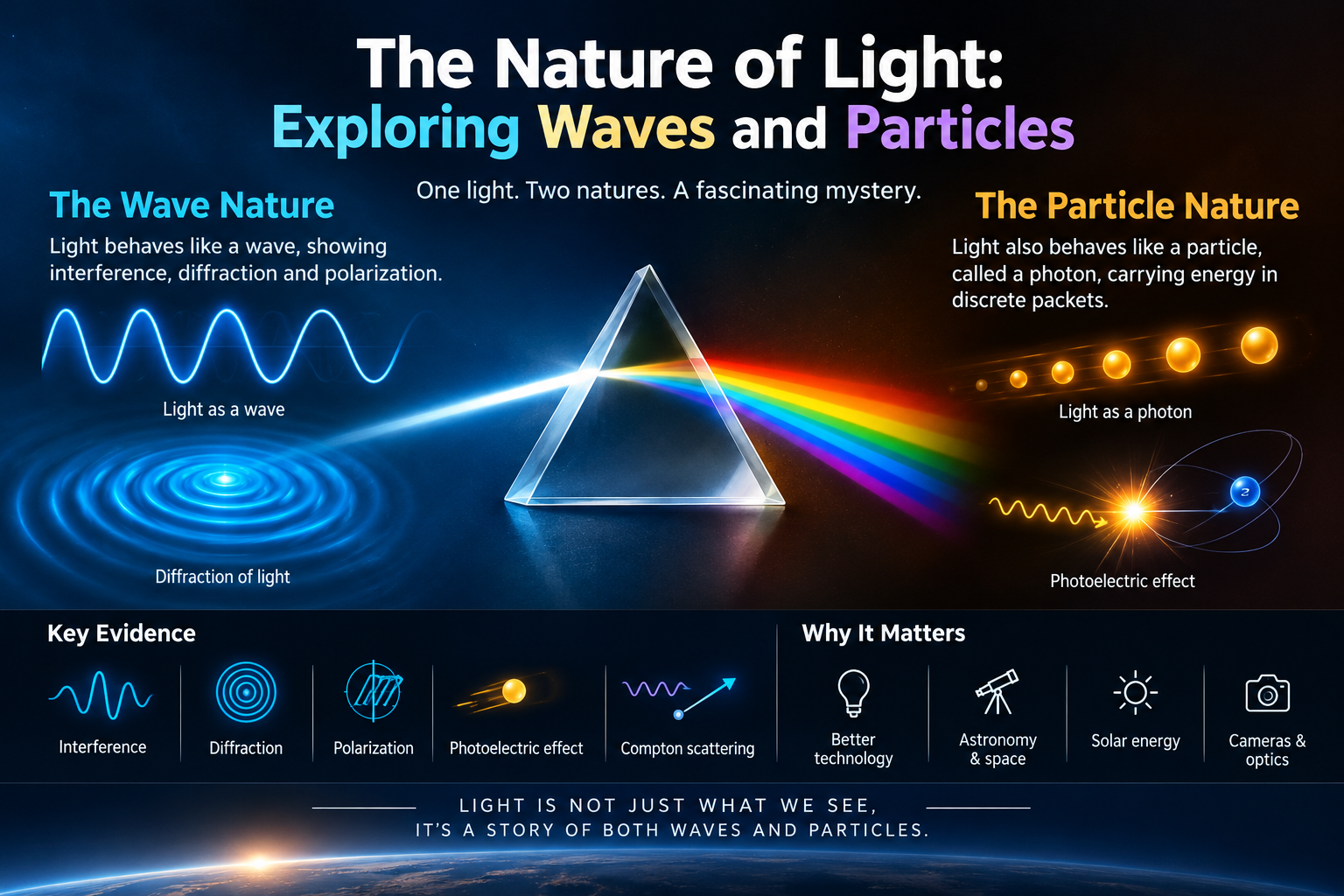
    Have you ever wondered what light really is? How does sunlight travel across millions of kilometers through space, how do rainbows form, and how can light behave like both a wave and a particle? The nature of light is one of the most fascinating topics in physics, revealing the extraordinary connection between the visible world and the mysterious laws of quantum mechanics. From the light that illuminates our homes to the distant stars shining in the universe, light plays an essential role in understanding the world around us.

    **1. The Wave Nature of Light **

    For many years, scientists have studied light as a wave because it demonstrates important wave-like properties. Light can undergo interference, diffraction, and polarization. Interference occurs when light waves overlap and combine, producing patterns of brightness and darkness. Diffraction happens when light spreads around an obstacle or passes through a narrow opening. Polarization describes the orientation of light's oscillations and helps us understand how light interacts with different materials.

    These properties demonstrate that the wave model is essential for explaining many optical phenomena. From colorful patterns created by thin films to the operation of polarized sunglasses, the wave nature of light has many applications in everyday life and modern technology.

    **2. The Particle Nature of Light **

    Light also behaves in ways that reveal its particle nature. In quantum physics, light energy is exchanged in discrete packets called **photons**. Each photon carries energy determined by its frequency, described by the equation **E = hf**, where E represents energy, h is Planck's constant, and f is frequency.

    The photoelectric effect provides important evidence for this particle nature. When light of a suitable frequency strikes certain materials, it can release electrons from their surfaces. This phenomenon helped scientists understand that light energy is transferred in individual quanta rather than always behaving like a continuous wave.

    Another important example is Compton scattering, in which photons exchange energy and momentum with electrons. These discoveries transformed our understanding of light and helped establish the foundations of quantum physics.

    **3. Wave-Particle Duality: Two Sides of Light**

    One of the most remarkable discoveries in science is that light cannot be fully explained by treating it only as a classical wave or only as a classical particle. Its behavior depends on the physical process being investigated and how it is measured. This concept is known as **wave-particle duality**.

    Experiments involving interference reveal wave-like patterns, while experiments involving photon detection show that light energy is detected in discrete units. Quantum mechanics brings these observations together into a more complete description of nature. Rather than being an ordinary wave or a tiny classical object, light is a quantum phenomenon with properties that challenge our everyday intuition.

    **4. How Do We Discover the Secrets of Light?**

    Scientists use carefully designed experiments to explore the behavior of light. Prisms separate white light into different colors, optical instruments measure its properties, and advanced detectors record individual photons. Interference experiments reveal patterns that cannot be explained by simple particle models, while photoelectric experiments demonstrate the importance of quantized energy.

    The work of scientists such as Isaac Newton, Thomas Young, Max Planck, Albert Einstein, and Arthur Compton helped build our modern understanding of light. Their discoveries show how scientific knowledge develops through observation, experimentation, mathematical reasoning, and new ideas.

    **5. Why Is the Nature of Light Important?**

    Understanding light is essential to many technologies that shape modern life. Lasers are used in medicine, manufacturing, and scientific research. Fiber-optic cables transmit information across the world using pulses of light. Solar panels convert light energy into electrical energy, while cameras and telescopes help us capture images and explore distant objects in space.

    The principles of light are also important in astronomy, microscopy, optical communication, quantum technologies, and the study of the universe. By investigating how light behaves, scientists can examine distant galaxies, study the structure of matter, and develop new tools that improve our understanding of nature.

    **6. Light: Connecting Science and the Universe**

    Light is much more than what allows us to see. It carries information about distant stars, reveals the composition of celestial objects, and provides clues about the physical processes occurring throughout the cosmos. By analyzing the light received from distant galaxies, astronomers can learn about their temperatures, chemical compositions, and motion.

    At the smallest scales, the study of photons helps scientists investigate the quantum world and understand how energy interacts with matter. From the smallest laboratory experiments to the largest astronomical observations, light connects different areas of science in extraordinary ways.

    **Conclusion: The Extraordinary Mystery of Light**

    The study of light demonstrates how nature can be far more complex than it first appears. Its wave-like properties explain interference, diffraction, and polarization, while its particle-like properties help explain the photoelectric effect and Compton scattering. Together, these discoveries form an important part of our modern understanding of physics.

    Learning about wave-particle duality encourages us to question assumptions, explore scientific evidence, and appreciate the discoveries that continue to expand human knowledge. Every beam of sunlight, every shining star, and every photon detected by a scientific instrument reminds us that there is still much to discover about the universe.

    **Light Is More Than What We See—It Is a Window into the Fundamental Nature of Reality!**

    If you enjoyed this science topic, share it with others and continue exploring the fascinating world of physics. Stay curious, keep asking questions, and never stop learning!

    #NatureOfLight #WaveParticleDuality #Physics #QuantumPhysics #ScienceEducation #Photons #LightWaves #PhotoelectricEffect #ComptonScattering #Optics #Astronomy #ScientificDiscoveries #STEMEducation #LearnPhysics #ScienceExplained #EducationalContent #WavesAndParticles
    RSIF8 Roll no:14 story no:24 story topic:The Nature of Light: Exploring Waves and Particles 🌟 **The Nature of Light: Exploring Waves and Particles** πŸŒˆπŸ”¬ Have you ever wondered what light really is? How does sunlight travel across millions of kilometers through space, how do rainbows form, and how can light behave like both a wave and a particle? The nature of light is one of the most fascinating topics in physics, revealing the extraordinary connection between the visible world and the mysterious laws of quantum mechanics. From the light that illuminates our homes to the distant stars shining in the universe, light plays an essential role in understanding the world around us. 🌍✨ πŸ’‘ **1. The Wave Nature of Light 🌊** For many years, scientists have studied light as a wave because it demonstrates important wave-like properties. Light can undergo interference, diffraction, and polarization. Interference occurs when light waves overlap and combine, producing patterns of brightness and darkness. Diffraction happens when light spreads around an obstacle or passes through a narrow opening. Polarization describes the orientation of light's oscillations and helps us understand how light interacts with different materials. These properties demonstrate that the wave model is essential for explaining many optical phenomena. From colorful patterns created by thin films to the operation of polarized sunglasses, the wave nature of light has many applications in everyday life and modern technology. βš›οΈ **2. The Particle Nature of Light ✨** Light also behaves in ways that reveal its particle nature. In quantum physics, light energy is exchanged in discrete packets called **photons**. Each photon carries energy determined by its frequency, described by the equation **E = hf**, where E represents energy, h is Planck's constant, and f is frequency. The photoelectric effect provides important evidence for this particle nature. When light of a suitable frequency strikes certain materials, it can release electrons from their surfaces. This phenomenon helped scientists understand that light energy is transferred in individual quanta rather than always behaving like a continuous wave. Another important example is Compton scattering, in which photons exchange energy and momentum with electrons. These discoveries transformed our understanding of light and helped establish the foundations of quantum physics. πŸ”¬ **3. Wave-Particle Duality: Two Sides of Light** One of the most remarkable discoveries in science is that light cannot be fully explained by treating it only as a classical wave or only as a classical particle. Its behavior depends on the physical process being investigated and how it is measured. This concept is known as **wave-particle duality**. Experiments involving interference reveal wave-like patterns, while experiments involving photon detection show that light energy is detected in discrete units. Quantum mechanics brings these observations together into a more complete description of nature. Rather than being an ordinary wave or a tiny classical object, light is a quantum phenomenon with properties that challenge our everyday intuition. 🌈 **4. How Do We Discover the Secrets of Light?** Scientists use carefully designed experiments to explore the behavior of light. Prisms separate white light into different colors, optical instruments measure its properties, and advanced detectors record individual photons. Interference experiments reveal patterns that cannot be explained by simple particle models, while photoelectric experiments demonstrate the importance of quantized energy. The work of scientists such as Isaac Newton, Thomas Young, Max Planck, Albert Einstein, and Arthur Compton helped build our modern understanding of light. Their discoveries show how scientific knowledge develops through observation, experimentation, mathematical reasoning, and new ideas. πŸš€ **5. Why Is the Nature of Light Important?** Understanding light is essential to many technologies that shape modern life. Lasers are used in medicine, manufacturing, and scientific research. Fiber-optic cables transmit information across the world using pulses of light. Solar panels convert light energy into electrical energy, while cameras and telescopes help us capture images and explore distant objects in space. The principles of light are also important in astronomy, microscopy, optical communication, quantum technologies, and the study of the universe. By investigating how light behaves, scientists can examine distant galaxies, study the structure of matter, and develop new tools that improve our understanding of nature. 🌍 **6. Light: Connecting Science and the Universe** Light is much more than what allows us to see. It carries information about distant stars, reveals the composition of celestial objects, and provides clues about the physical processes occurring throughout the cosmos. By analyzing the light received from distant galaxies, astronomers can learn about their temperatures, chemical compositions, and motion. At the smallest scales, the study of photons helps scientists investigate the quantum world and understand how energy interacts with matter. From the smallest laboratory experiments to the largest astronomical observations, light connects different areas of science in extraordinary ways. πŸ’« **Conclusion: The Extraordinary Mystery of Light** The study of light demonstrates how nature can be far more complex than it first appears. Its wave-like properties explain interference, diffraction, and polarization, while its particle-like properties help explain the photoelectric effect and Compton scattering. Together, these discoveries form an important part of our modern understanding of physics. Learning about wave-particle duality encourages us to question assumptions, explore scientific evidence, and appreciate the discoveries that continue to expand human knowledge. Every beam of sunlight, every shining star, and every photon detected by a scientific instrument reminds us that there is still much to discover about the universe. ✨ **Light Is More Than What We See—It Is a Window into the Fundamental Nature of Reality!** πŸ”­πŸŒŒ πŸ‘ If you enjoyed this science topic, share it with others and continue exploring the fascinating world of physics. Stay curious, keep asking questions, and never stop learning! #NatureOfLight #WaveParticleDuality #Physics #QuantumPhysics #ScienceEducation #Photons #LightWaves #PhotoelectricEffect #ComptonScattering #Optics #Astronomy #ScientificDiscoveries #STEMEducation #LearnPhysics #ScienceExplained #EducationalContent #WavesAndParticles πŸŒˆπŸ”¬πŸš€
    0 Comments 0 Shares 1057 Views
  • ,RSIF8
    ROLL NO 60
    ZOYA 4
    ARABIC LERNING
    # Learn Arabic in Four Days | Arabic Learning for Beginners
    Welcome to our **4-Day Arabic Learning Course!**
    In this course, you will learn basic Arabic step by step in just four days. This video series is designed for beginners who want to improve their Arabic vocabulary, pronunciation, and speaking skills.
    **Day 1:** Learn Arabic letters and greetings.
    **Day 2:** Learn common Arabic words and their meanings.
    **Day 3:** Practice everyday Arabic sentences and conversations.
    **Day 4:** Review what you have learned and practice speaking Arabic with confidence.
    Whether you are learning Arabic for education, travel, communication, or personal development, this course will help you build a strong foundation.
    Watch all four lessons, practice every day, and enjoy learning the beautiful Arabic language!
    **Don't forget to Like, Share, and Subscribe** for more educational videos and language-learning lessons.
    #LearnArabic #ArabicLearning #ArabicForBeginners #LearnArabicIn4Days #ArabicLanguage #DailyArabic #LearnLanguages See less
    ,RSIF8 ROLL NO 60 ZOYA 4 ARABIC LERNING # Learn Arabic in Four Days | Arabic Learning for Beginners Welcome to our **4-Day Arabic Learning Course!** 🌟 In this course, you will learn basic Arabic step by step in just four days. This video series is designed for beginners who want to improve their Arabic vocabulary, pronunciation, and speaking skills. πŸ“š **Day 1:** Learn Arabic letters and greetings. πŸ“š **Day 2:** Learn common Arabic words and their meanings. πŸ“š **Day 3:** Practice everyday Arabic sentences and conversations. πŸ“š **Day 4:** Review what you have learned and practice speaking Arabic with confidence. Whether you are learning Arabic for education, travel, communication, or personal development, this course will help you build a strong foundation. ✨ Watch all four lessons, practice every day, and enjoy learning the beautiful Arabic language! **Don't forget to Like, Share, and Subscribe** for more educational videos and language-learning lessons. #LearnArabic #ArabicLearning #ArabicForBeginners #LearnArabicIn4Days #ArabicLanguage #DailyArabic #LearnLanguages See less
    0 Comments 0 Shares 423 Views 6
  • RSIF8
    ROLL NO 60
    ZOYA 4
    ENGLISH LERNING
    # Learn English in 4 Days | Easy English Learning for Beginners
    Welcome to our English Learning Series!
    Do you want to speak English confidently? In this 4-day course, you will learn basic English words, useful sentences, everyday conversations, and simple speaking skills.
    **Day 1:** Learn basic English words and greetings, such as Hello, Hi, Good Morning, and How are you?
    **Day 2:** Learn daily-use English sentences for home, school, and everyday life.
    **Day 3:** Practice simple English conversations and learn how to ask and answer questions.
    **Day 4:** Improve your speaking skills with common phrases, pronunciation, and real-life conversations.
    Our goal is to make learning English easy, fun, and enjoyable for everyone. Practice every day, build your vocabulary, and speak English with confidence!
    Like the video, share it with your friends, and subscribe to our channel for more English learning videos.
    **#EnglishLearning #LearnEnglish #EnglishForBeginners #SpokenEnglish #DailyUseEnglish #EnglishSpeaking #BasicEnglish** See less
    RSIF8 ROLL NO 60 ZOYA 4 ENGLISH LERNING # Learn English in 4 Days | Easy English Learning for Beginners Welcome to our English Learning Series! πŸŽ“ Do you want to speak English confidently? In this 4-day course, you will learn basic English words, useful sentences, everyday conversations, and simple speaking skills. πŸ“š **Day 1:** Learn basic English words and greetings, such as Hello, Hi, Good Morning, and How are you? πŸ“š **Day 2:** Learn daily-use English sentences for home, school, and everyday life. πŸ“š **Day 3:** Practice simple English conversations and learn how to ask and answer questions. πŸ“š **Day 4:** Improve your speaking skills with common phrases, pronunciation, and real-life conversations. Our goal is to make learning English easy, fun, and enjoyable for everyone. Practice every day, build your vocabulary, and speak English with confidence! πŸ‘ Like the video, share it with your friends, and subscribe to our channel for more English learning videos. **#EnglishLearning #LearnEnglish #EnglishForBeginners #SpokenEnglish #DailyUseEnglish #EnglishSpeaking #BasicEnglish** See less
    0 Comments 0 Shares 535 Views 1
  • RSIF8
    Roll no:14
    story no:24
    story topic:The Force Behind Motion: Understanding Newton’s Laws

    **The Force Behind Motion: Understanding Newton’s Laws**

    Welcome to the fascinating world of physics, where forces, motion, and energy work together to explain how our universe operates! In this educational journey, we explore **Newton’s Three Laws of Motion**, some of the most important principles in science that help us understand why objects move, how they change speed, and how forces affect everything around us. From a simple falling apple to a speeding car and a powerful rocket launching into space, Newton’s laws are everywhere in our daily lives!

    **1. Newton’s First Law — The Law of Inertia**

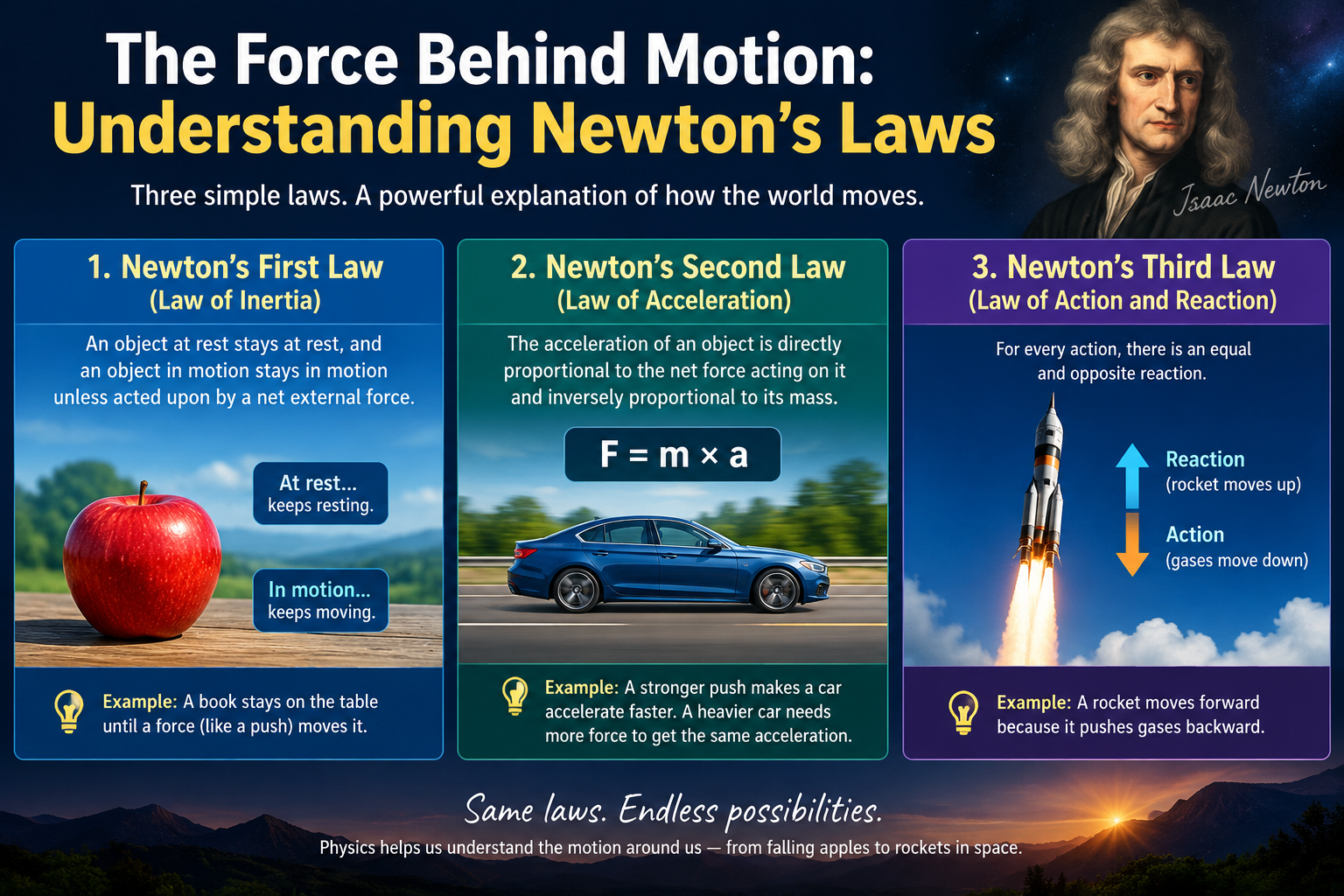
    Newton’s First Law states that an object at rest remains at rest, and an object in motion continues moving at a constant speed in a straight line unless acted upon by an unbalanced external force. This principle explains why a book stays on a table until someone moves it and why passengers tend to move forward when a moving car suddenly stops. Inertia is the natural tendency of objects to resist changes in their state of motion.

    **2. Newton’s Second Law — The Law of Acceleration**

    Newton’s Second Law explains how force, mass, and acceleration are connected. The greater the net force applied to an object, the greater its acceleration. However, a heavier object requires more force than a lighter object to achieve the same acceleration. This relationship is expressed through the famous formula **F = m × a**, where F represents force, m represents mass, and a represents acceleration. This law helps engineers design vehicles, machines, and countless other technologies.

    **3. Newton’s Third Law — The Law of Action and Reaction**

    Newton’s Third Law states that for every action, there is an equal and opposite reaction. Whenever one object exerts a force on another, the second object exerts an equal force in the opposite direction. This principle explains how rockets move forward by pushing exhaust gases backward, how swimmers move through water, and how we walk by pushing against the ground. It reveals the incredible relationship between forces acting on interacting objects.

    **Why Are Newton’s Laws Important?**

    Newton’s laws are essential for understanding the physical world. They help scientists explain motion, engineers develop safer vehicles, athletes improve their performance, and space agencies calculate the movements of spacecraft. These principles are used in transportation, construction, robotics, aviation, sports science, and space exploration. By understanding these laws, students can develop stronger scientific thinking and see how classroom physics connects to real-life experiences.

    **Explore the Science Behind Everyday Motion!**

    Physics is more than formulas and equations; it is a way to understand the world around us. Every moving bicycle, bouncing ball, accelerating car, and launching rocket demonstrates the fascinating principles of force and motion. Learning Newton’s laws opens the door to deeper discoveries in science, technology, engineering, and mathematics.

    Join us on this exciting journey to discover how simple scientific principles explain some of the most extraordinary movements in our universe. Keep asking questions, stay curious, and never stop exploring the wonders of science!

    **Learn the Laws. Understand the Forces. Discover the Science of Motion!**

    Like, share, and follow for more educational content, fascinating science topics, and easy-to-understand explanations that make learning enjoyable!

    #NewtonsLaws #ForceAndMotion #Physics #ScienceEducation #IsaacNewton #LawOfInertia #Acceleration #ActionAndReaction #PhysicsExplained #ScienceFacts #STEMEducation #EducationalVideos #LearnScience #ScientificDiscoveries #SpaceExploration #KnowledgeIsPower
    RSIF8 Roll no:14 story no:24 story topic:The Force Behind Motion: Understanding Newton’s Laws πŸš€ **The Force Behind Motion: Understanding Newton’s Laws** πŸŒπŸ”¬ Welcome to the fascinating world of physics, where forces, motion, and energy work together to explain how our universe operates! 🌌 In this educational journey, we explore **Newton’s Three Laws of Motion**, some of the most important principles in science that help us understand why objects move, how they change speed, and how forces affect everything around us. From a simple falling apple to a speeding car and a powerful rocket launching into space, Newton’s laws are everywhere in our daily lives! πŸŽπŸš—πŸš€ πŸ“˜ **1. Newton’s First Law — The Law of Inertia** Newton’s First Law states that an object at rest remains at rest, and an object in motion continues moving at a constant speed in a straight line unless acted upon by an unbalanced external force. This principle explains why a book stays on a table until someone moves it and why passengers tend to move forward when a moving car suddenly stops. Inertia is the natural tendency of objects to resist changes in their state of motion. ⚑ **2. Newton’s Second Law — The Law of Acceleration** Newton’s Second Law explains how force, mass, and acceleration are connected. The greater the net force applied to an object, the greater its acceleration. However, a heavier object requires more force than a lighter object to achieve the same acceleration. This relationship is expressed through the famous formula **F = m × a**, where F represents force, m represents mass, and a represents acceleration. This law helps engineers design vehicles, machines, and countless other technologies. 🌟 **3. Newton’s Third Law — The Law of Action and Reaction** Newton’s Third Law states that for every action, there is an equal and opposite reaction. Whenever one object exerts a force on another, the second object exerts an equal force in the opposite direction. This principle explains how rockets move forward by pushing exhaust gases backward, how swimmers move through water, and how we walk by pushing against the ground. It reveals the incredible relationship between forces acting on interacting objects. πŸ” **Why Are Newton’s Laws Important?** Newton’s laws are essential for understanding the physical world. They help scientists explain motion, engineers develop safer vehicles, athletes improve their performance, and space agencies calculate the movements of spacecraft. These principles are used in transportation, construction, robotics, aviation, sports science, and space exploration. By understanding these laws, students can develop stronger scientific thinking and see how classroom physics connects to real-life experiences. πŸ’‘ **Explore the Science Behind Everyday Motion!** Physics is more than formulas and equations; it is a way to understand the world around us. Every moving bicycle, bouncing ball, accelerating car, and launching rocket demonstrates the fascinating principles of force and motion. Learning Newton’s laws opens the door to deeper discoveries in science, technology, engineering, and mathematics. Join us on this exciting journey to discover how simple scientific principles explain some of the most extraordinary movements in our universe. Keep asking questions, stay curious, and never stop exploring the wonders of science! 🌍✨ 🎯 **Learn the Laws. Understand the Forces. Discover the Science of Motion!** πŸ‘ Like, share, and follow for more educational content, fascinating science topics, and easy-to-understand explanations that make learning enjoyable! #NewtonsLaws #ForceAndMotion #Physics #ScienceEducation #IsaacNewton #LawOfInertia #Acceleration #ActionAndReaction #PhysicsExplained #ScienceFacts #STEMEducation #EducationalVideos #LearnScience #ScientificDiscoveries #SpaceExploration #KnowledgeIsPower πŸš€πŸ“š
    0 Comments 0 Shares 828 Views
  • RSIF8
    Roll no 03
    Canva post no 53
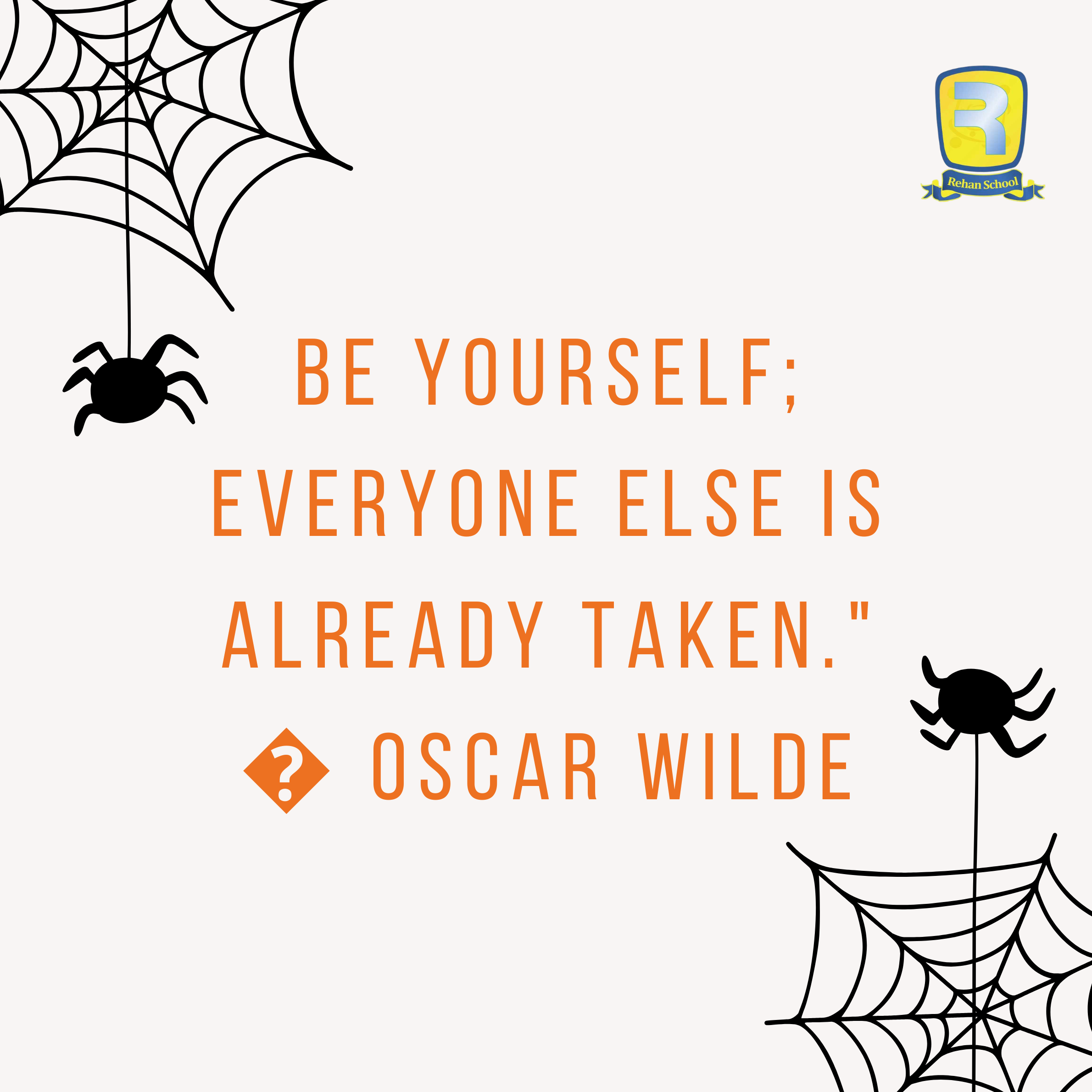
    Canva post topic Be yourself; everyone else is already taken." οΏ½ Oscar Wilde
    Being yourself is one of the most beautiful things you can do in life. This inspiring quote by Oscar Wilde reminds us that we don't need to copy others or change who we are just to fit in. Everyone has unique qualities, talents, and dreams that make them special. Embrace your individuality, celebrate your strengths, and never be afraid to show the world your true self. Remember, you don't have to be like everyone else to be amazing. Stay confident, follow your own path, and let your uniqueness shine brightly. The world needs the real you, not a copy of someone else!

    #BeYourself #OscarWilde #SelfLove #BelieveInYourself #StayUnique #PositiveMindset #SelfConfidence #PersonalGrowth #MotivationDaily #InspirationalQuotes #LoveYourself #BeAuthentic #CanvaPost
    RSIF8 Roll no 03 Canva post no 53 Canva post topic Be yourself; everyone else is already taken." οΏ½ Oscar Wilde βœ¨πŸ’– Being yourself is one of the most beautiful things you can do in life. This inspiring quote by Oscar Wilde reminds us that we don't need to copy others or change who we are just to fit in. 🌸🌟 Everyone has unique qualities, talents, and dreams that make them special. Embrace your individuality, celebrate your strengths, and never be afraid to show the world your true self. πŸ’«πŸŒˆ Remember, you don't have to be like everyone else to be amazing. Stay confident, follow your own path, and let your uniqueness shine brightly. ❀️✨ The world needs the real you, not a copy of someone else! πŸŒ·πŸ¦‹ #BeYourself #OscarWilde #SelfLove #BelieveInYourself #StayUnique #PositiveMindset #SelfConfidence #PersonalGrowth #MotivationDaily #InspirationalQuotes #LoveYourself #BeAuthentic #CanvaPost πŸ’–πŸŒŸπŸ¦‹
    0 Comments 0 Shares 537 Views
  • RSIF8
    ROLL NO 77
    STORY POST NO 45
    STORY TOPIC Cell City: Exploring the Organelles' Roles".

    **Cell City: Exploring the Organelles' Roles! **

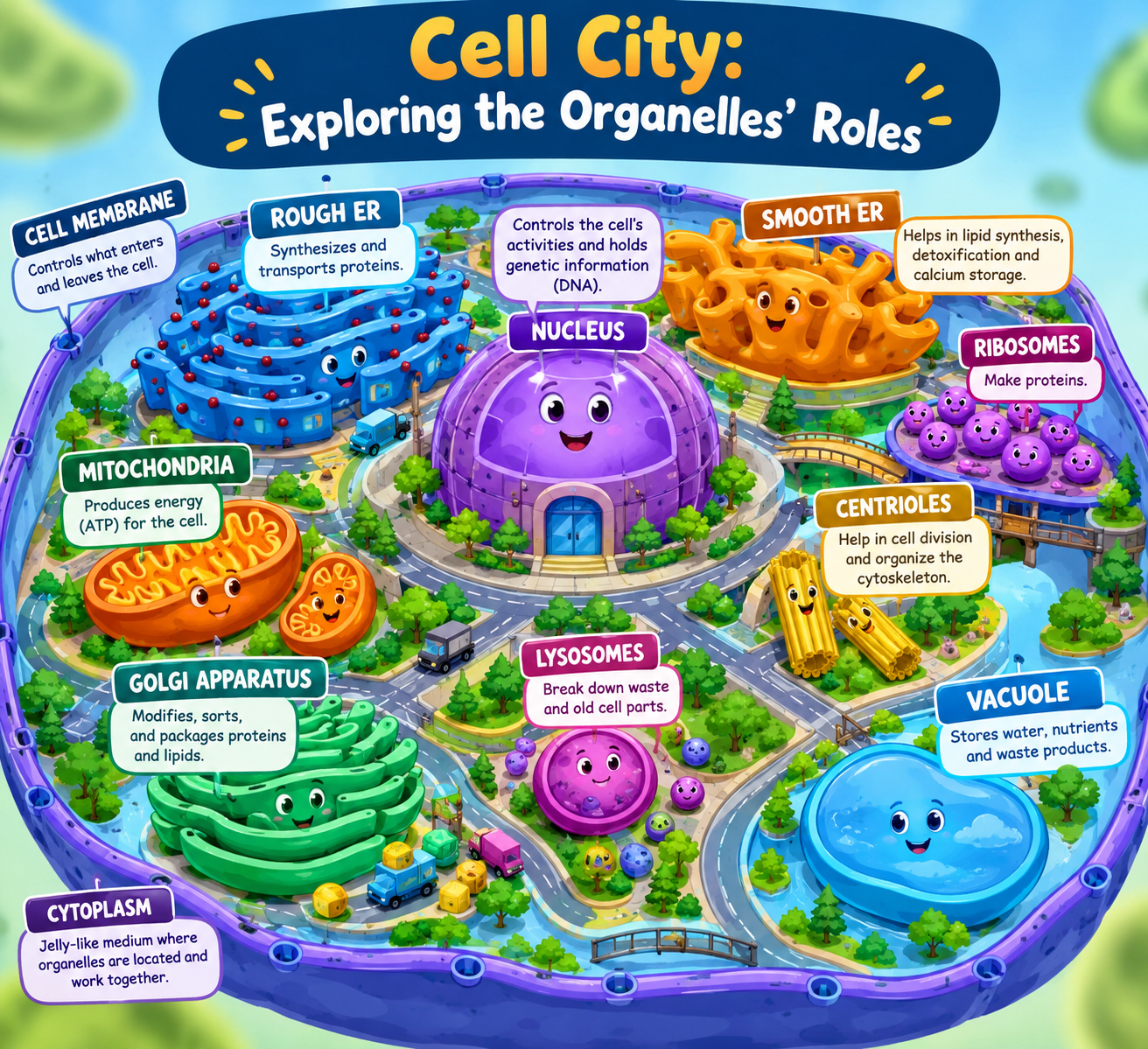
    Welcome to Cell City, where every organelle has an important job! From the nucleus, which controls cell activities, to the mitochondria, which provide energy, every tiny part works together to keep the cell alive and functioning.

    Discover the amazing world inside a cell and learn how these microscopic structures work like a well-organized city!

    **Learn Science, Explore Life, and Discover the Wonders of Biology!**

    #CellCity #CellBiology #Organelles #ScienceEducation #Biology #LearnWithFun #EducationalContent #ScienceLovers #ExploreAndLearn #KnowledgeIsPower
    RSIF8 ROLL NO 77 STORY POST NO 45 STORY TOPIC Cell City: Exploring the Organelles' Roles". πŸ™οΈπŸ”¬ **Cell City: Exploring the Organelles' Roles! 🧬✨** Welcome to Cell City, where every organelle has an important job! πŸ™οΈπŸ§« From the nucleus, which controls cell activities, to the mitochondria, which provide energy, every tiny part works together to keep the cell alive and functioning. βš‘πŸ”‹ 🌱 Discover the amazing world inside a cell and learn how these microscopic structures work like a well-organized city! πŸš€πŸ” πŸ’‘ **Learn Science, Explore Life, and Discover the Wonders of Biology!** πŸ§ͺ🌍 #CellCity #CellBiology #Organelles #ScienceEducation #Biology #LearnWithFun #EducationalContent #ScienceLovers #ExploreAndLearn #KnowledgeIsPower πŸ§¬πŸ”¬πŸ“šβœ¨
    0 Comments 0 Shares 256 Views
  • RSIF8
    Roll no: 86
    Image ChatGPT no: 2
    Image ChatGPT Topic: **Make a Post on ChatGPT** **Quote:** *"Every expert was once a beginner."*

    In this task, I used **ChatGPT** to create a motivational social media post featuring the quote **"Every expert was once a beginner."** I shared this post on **Facebook, YouTube, LinkedIn, Instagram, and TikTok**.

    This quote reminds us that every successful person started with little or no experience. No one becomes an expert overnight. With dedication, practice, patience, and continuous learning, anyone can develop new skills and achieve success.

    Creating this post helped me improve my creativity, digital communication, and content creation skills. It also inspired me to never give up, keep learning, and believe that every small step leads to a bigger achievement.

    Overall, this activity motivated me to stay consistent, embrace new challenges, and use technology like ChatGPT to create meaningful and inspiring content.

    #ChatGPT #Motivation #EveryExpertWasOnceABeginner #Learning #Education #DigitalSkills #ContentCreation #StudentLearning #RSIF8
    RSIF8 Roll no: 86 Image ChatGPT no: 2 Image ChatGPT Topic: **Make a Post on ChatGPT** πŸ€–βœ¨**Quote:** *"Every expert was once a beginner."* πŸŒ±πŸš€ In this task, I used **ChatGPT** to create a motivational social media post featuring the quote **"Every expert was once a beginner."** I shared this post on **Facebook, YouTube, LinkedIn, Instagram, and TikTok**. πŸ“±πŸŒ This quote reminds us that every successful person started with little or no experience. No one becomes an expert overnight. With dedication, practice, patience, and continuous learning, anyone can develop new skills and achieve success. πŸ’‘πŸ“š Creating this post helped me improve my creativity, digital communication, and content creation skills. It also inspired me to never give up, keep learning, and believe that every small step leads to a bigger achievement. 🌟✨ Overall, this activity motivated me to stay consistent, embrace new challenges, and use technology like ChatGPT to create meaningful and inspiring content. πŸš€πŸ˜Š #ChatGPT #Motivation #EveryExpertWasOnceABeginner #Learning #Education #DigitalSkills #ContentCreation #StudentLearning #RSIF8 πŸ€–πŸ“šπŸŒŸβœ¨
    0 Comments 0 Shares 349 Views
  • Language Learning Class 16 | Learning 5 Languages with Mrs Zoya πŸ‡ΉπŸ‡³

    Assalam-o-Alaikum, everyone!

    Welcome to Language Learning Class 16 with Muhammad Mujeeb Asif!

    I'm continuing my journey of learning five languages with AI and Mrs Zoya at https://mrszoya.com/.

    Today's language-learning journey:
    Turkish — everyday vocabulary and useful expressions.
    Arabic — common words and daily conversations.
    Chinese — Mandarin phrases and practical communication.
    Japanese — everyday expressions and pronunciation.
    English — speaking practice and vocabulary building.

    Five languages, five minutes each, and 25 minutes of learning!

    Every class is another opportunity to improve my pronunciation, listening skills, vocabulary, and confidence.

    Which language would you like to learn? Comment below!

    Mrs Zoya: https://mrszoya.com/

    WhatsApp: 03001040381

    Keep learning, keep practicing, and never stop improving!

    #LanguageLearning #LanguageClass16 #MrsZoya #LearnWithAI #LearnTurkish #LearnArabic #LearnChinese #LearnJapanese #LearnEnglish #LanguagePractice #LearningJourney #SpeakingPractice #FiveLanguages #MujeebAsif #DailyLearning #Multilingual #Education #SelfImprovement #StudyWithMe #NeverStopLearning
    🌍 Language Learning Class 16 | Learning 5 Languages with Mrs Zoya πŸ‡ΉπŸ‡·πŸ‡ΈπŸ‡¦πŸ‡¨πŸ‡³πŸ‡―πŸ‡΅πŸ‡¬πŸ‡§ Assalam-o-Alaikum, everyone! 🌍❀️ Welcome to Language Learning Class 16 with Muhammad Mujeeb Asif! I'm continuing my journey of learning five languages with AI and Mrs Zoya at https://mrszoya.com/. πŸ“š Today's language-learning journey: πŸ‡ΉπŸ‡· Turkish — everyday vocabulary and useful expressions. πŸ‡ΈπŸ‡¦ Arabic — common words and daily conversations. πŸ‡¨πŸ‡³ Chinese — Mandarin phrases and practical communication. πŸ‡―πŸ‡΅ Japanese — everyday expressions and pronunciation. πŸ‡¬πŸ‡§ English — speaking practice and vocabulary building. ⏱️ Five languages, five minutes each, and 25 minutes of learning! Every class is another opportunity to improve my pronunciation, listening skills, vocabulary, and confidence. πŸ’¬ Which language would you like to learn? Comment below! Mrs Zoya: https://mrszoya.com/ WhatsApp: 03001040381 Keep learning, keep practicing, and never stop improving! ❀️ #LanguageLearning #LanguageClass16 #MrsZoya #LearnWithAI #LearnTurkish #LearnArabic #LearnChinese #LearnJapanese #LearnEnglish #LanguagePractice #LearningJourney #SpeakingPractice #FiveLanguages #MujeebAsif #DailyLearning #Multilingual #Education #SelfImprovement #StudyWithMe #NeverStopLearning
    0 Comments 0 Shares 603 Views 7
  • RSIF8
    ROL NO 60
    TASK 22
    CALL ANNIE 2
    # "Okay" – The Story Behind the World’s Favorite Word (5 min)
    Have you ever wondered where the word **“Okay”** came from and why people around the world use it every day?
    In this video, we explore the fascinating history of one of the most popular words in the English language. Discover how “Okay” became a universal expression used to show agreement, understanding, acceptance, and much more.
    From everyday conversations to text messages, phone calls, movies, and classrooms, the word “Okay” has become an essential part of modern communication. Learn interesting facts about its origins, meanings, pronunciation, and usage through simple English explanations.
    Whether you are a student, an English learner, or simply curious about the history of words, this five-minute video will help you improve your vocabulary and understand English in a fun and easy way.
    **In this video, you will learn:**
    - The origin and history of the word “Okay”
    - What “Okay” really means
    - How to use “Okay” in everyday conversations
    - The difference between “OK” and “Okay”
    - Interesting facts about this famous word
    If you enjoy learning English, please **LIKE, SHARE, and SUBSCRIBE** for more interesting English
    RSIF8 ROL NO 60 TASK 22 CALL ANNIE 2 # "Okay" – The Story Behind the World’s Favorite Word (5 min) Have you ever wondered where the word **“Okay”** came from and why people around the world use it every day? 🌍 In this video, we explore the fascinating history of one of the most popular words in the English language. Discover how “Okay” became a universal expression used to show agreement, understanding, acceptance, and much more. From everyday conversations to text messages, phone calls, movies, and classrooms, the word “Okay” has become an essential part of modern communication. Learn interesting facts about its origins, meanings, pronunciation, and usage through simple English explanations. Whether you are a student, an English learner, or simply curious about the history of words, this five-minute video will help you improve your vocabulary and understand English in a fun and easy way. **In this video, you will learn:** - The origin and history of the word “Okay” - What “Okay” really means - How to use “Okay” in everyday conversations - The difference between “OK” and “Okay” - Interesting facts about this famous word πŸ‘ If you enjoy learning English, please **LIKE, SHARE, and SUBSCRIBE** for more interesting English
    0 Comments 0 Shares 278 Views 3
More Results