• #rsisb Roll No.240 Song No.19 Foundation Level Science and Faith: A Harmonious Comparison is an interesting topic that explores how science and faith can be understood side by side. Science helps us learn about the natural world through observation, questions, experiments, evidence, and careful study. Faith, on the other hand, can give people a sense of meaning, hope, values, and spiritual direction. Science encourages us to ask questions such as: How does the universe work? How do plants grow? How does the human body function? Why do natural events happen? Scientists look for answers by studying evidence and testing ideas. Faith often focuses on deeper questions about life, purpose, morality, hope, and our relationship with the Creator. For many people, faith provides guidance in making good choices and encourages qualities such as honesty, kindness, patience, responsibility, and compassion. Science and faith may use different methods and answer different kinds of questions. Science mainly investigates things that can be observed and tested, while faith often deals with spiritual and philosophical questions that cannot always be examined through scientific experiments. This topic does not simply ask us to choose science or faith. Instead, it encourages respectful understanding. We can appreciate the achievements of science while also recognizing the importance that faith and spiritual values have for many people. Science has helped humanity develop medicines, technology, communication, transportation, and many other useful discoveries. Faith can inspire people to use knowledge responsibly, care for others, seek justice, and work for a better world. The most important lesson is that learning should be connected with wisdom and responsibility. Knowledge gives us the ability to understand and create, while values can help guide how we use that knowledge. Science and Faith: A Harmonious Comparison encourages students to remain curious, think carefully, respect different perspectives, and continue learning. By discussing science and faith with an open mind, we can better understand both the world around us and the questions that give life meaning. 🔬 Science gives us knowledge. 🌍 Science helps us understand the natural world. 💡 Faith can provide meaning and guidance. ❤️ Values encourage us to use knowledge responsibly. ✨ Respectful dialogue helps us learn from different perspectives. #ScienceAndFaith #Science #Faith #Knowledge #Education #Learning #ScienceEducation #Wisdom #Harmony #StudentLearning #ScienceAndReligion #Understanding #KnowledgeAndValuesForALifetime Rehan School Islamabad Campus Asma Shaheen EducationWali Irum Asim Saima Happinesswali https://www.facebook.com/reel/952153931261271/
    WWW.FACEBOOK.COM
    Facebook
    #rsisb Roll No.240 Song No.19 Foundation Level Science and Faith: A Harmonious Comparison is an interesting topic that explores how science and faith can be understood side by side. Science helps us...
    0 Commentarii 0 Distribuiri 2395 Views
  • #rsisb
    Roll No.269
    Foundation Level
    Story Post No.11

    Here’s a respectful, educational YouTube description for your topic:

    **The Quran and Science: A Bond of Knowledge**

    How do faith, knowledge, and scientific exploration connect? In this video, we explore **“The Quran and Science: A Bond of Knowledge”**, a thought-provoking topic that looks at the relationship between the teachings and reflections found in the Quran and humanity’s pursuit of understanding the natural world.

    The Quran encourages people to **observe, reflect, learn, and think deeply about creation**. From the vastness of the universe to the complexity of life and the wonders of nature , the world around us inspires curiosity and learning.

    In this video, we discuss how some Quranic passages have been connected by modern readers to scientific ideas, while also recognizing that **religious scripture and modern science have different purposes and methods**. Science develops explanations through observation, testing, and evidence, while the Quran provides spiritual, moral, and reflective guidance.

    **In This Video, You’ll Explore:**
    The importance of knowledge in Islam
    The Quran’s encouragement to observe nature
    Reflections on the universe and creation
    The relationship between faith and scientific curiosity
    Why learning and asking questions matter
    How science helps us understand the natural world

    This video invites viewers to think, learn, and appreciate both the **beauty of creation and the importance of seeking knowledge**.

    Whether you are interested in science, history, religion, or philosophy, this discussion offers an opportunity to explore an important question: **How can curiosity and knowledge help us better understand the world around us?**

    **Like, Share & Subscribe** for more educational and thought-provoking videos!

    **What do you think about the relationship between faith, knowledge, and science? Share your thoughts in the comments!**

    #QuranAndScience #IslamicKnowledge #Science #Knowledge #Quran #Education #FaithAndScience #Learning #IslamicStudies #ScienceAndReligion #Nature #Universe #Curiosity #KnowledgeIsPower
    #rsisb Roll No.269 Foundation Level Story Post No.11 Here’s a respectful, educational YouTube description for your topic: 📖🔬 **The Quran and Science: A Bond of Knowledge** 🌙✨ How do faith, knowledge, and scientific exploration connect? 🤔 In this video, we explore **“The Quran and Science: A Bond of Knowledge”**, a thought-provoking topic that looks at the relationship between the teachings and reflections found in the Quran and humanity’s pursuit of understanding the natural world. 🌍📚 The Quran encourages people to **observe, reflect, learn, and think deeply about creation**. 🌌🌿 From the vastness of the universe ⭐ to the complexity of life 🧬 and the wonders of nature 🌱, the world around us inspires curiosity and learning. In this video, we discuss how some Quranic passages have been connected by modern readers to scientific ideas, while also recognizing that **religious scripture and modern science have different purposes and methods**. Science develops explanations through observation, testing, and evidence, while the Quran provides spiritual, moral, and reflective guidance. 🧠🔬📖 🌟 **In This Video, You’ll Explore:** 🔹 The importance of knowledge in Islam 📚 🔹 The Quran’s encouragement to observe nature 🌿 🔹 Reflections on the universe and creation 🌌 🔹 The relationship between faith and scientific curiosity 🔬 🔹 Why learning and asking questions matter 🧠 🔹 How science helps us understand the natural world 🌍 ✨ This video invites viewers to think, learn, and appreciate both the **beauty of creation and the importance of seeking knowledge**. 🎓 Whether you are interested in science, history, religion, or philosophy, this discussion offers an opportunity to explore an important question: **How can curiosity and knowledge help us better understand the world around us?** 🌍💡 👍 **Like, Share & Subscribe** for more educational and thought-provoking videos! 🔔📖 💬 **What do you think about the relationship between faith, knowledge, and science? Share your thoughts in the comments!** #QuranAndScience 📖🔬 #IslamicKnowledge 🌙 #Science 🔬 #Knowledge 📚 #Quran 📖 #Education 🎓 #FaithAndScience 🌍 #Learning 🧠 #IslamicStudies 🌙 #ScienceAndReligion 💡 #Nature 🌿 #Universe 🌌 #Curiosity 🔍 #KnowledgeIsPower 📚
    0 Commentarii 0 Distribuiri 3427 Views
  • #rsisb
    roll no.247
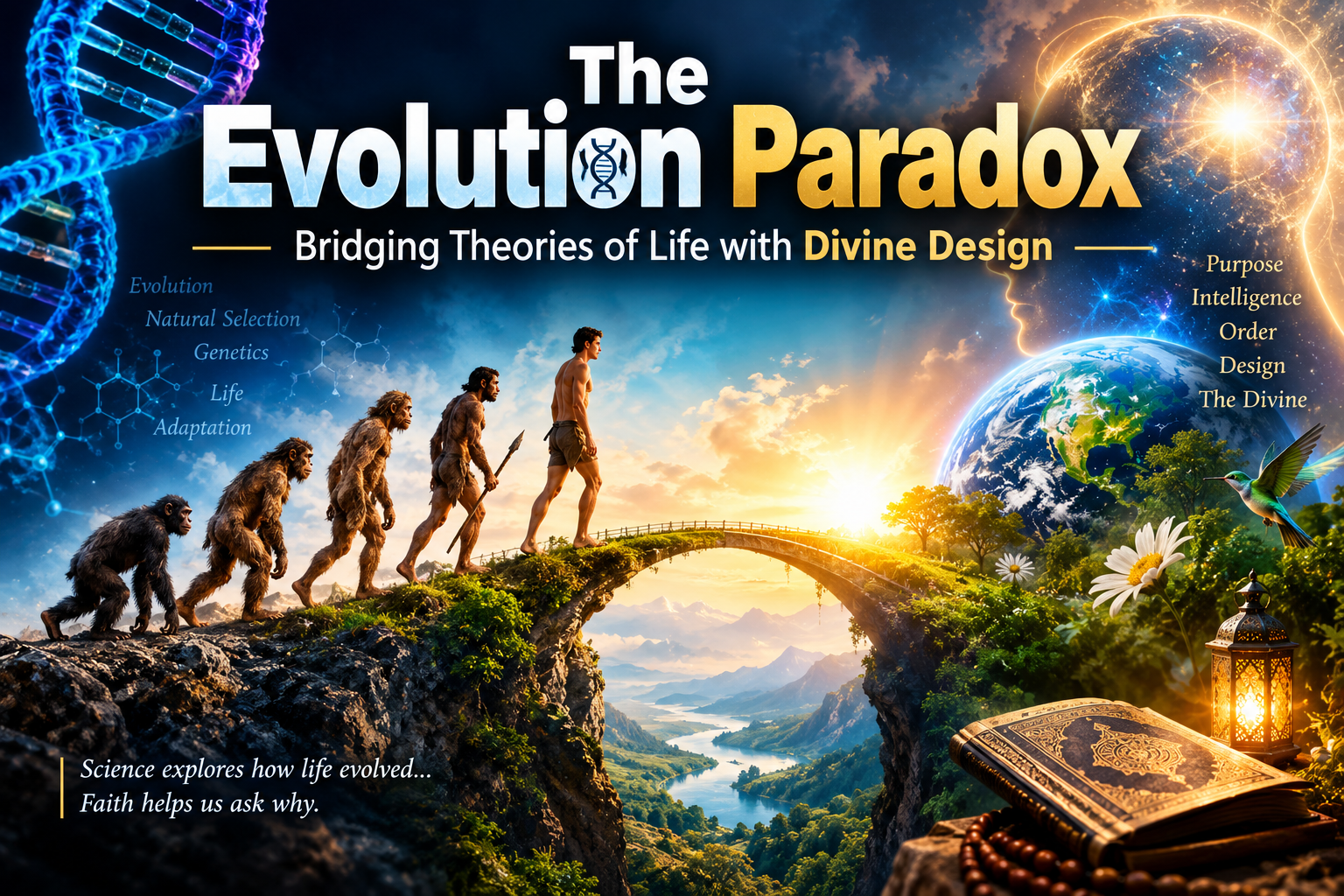
    Foundation level # The Evolution Paradox: Bridging Theories of Life with Divine Design

    The story of life is one of the greatest mysteries ever explored by humanity. From the smallest living cell to the incredible diversity of plants, animals, and human beings, nature presents a fascinating journey filled with questions about **origins, adaptation, complexity, and purpose**.

    **“The Evolution Paradox: Bridging Theories of Life with Divine Design”** explores the thought-provoking relationship between scientific ideas about evolution and philosophical or religious perspectives about creation and divine purpose. Rather than treating these subjects as simple opposites, this topic invites us to think deeply about how different ways of understanding the universe can raise meaningful questions about the same extraordinary reality.

    Evolutionary theory provides a scientific framework for explaining how populations of living organisms change across generations and how biodiversity develops over vast periods of time. Fossils, genetics, comparative anatomy, and observations of living organisms all contribute to our understanding of life's history.

    At the same time, many people look beyond scientific mechanisms and ask questions about **meaning, purpose, consciousness, and why the universe exists at all**. These questions belong not only to laboratories but also to philosophy, theology, and human reflection.

    The fascinating “paradox” arises when we consider how a natural process can be studied scientifically while questions about ultimate purpose remain philosophical or theological. For some people, evolutionary processes and belief in divine creation can coexist: evolution may describe **how biological change occurs**, while faith addresses questions of **meaning and ultimate purpose**.

    This discussion encourages curiosity rather than conflict. It reminds us that science seeks evidence-based explanations for the natural world, while philosophy and religion often explore broader questions about existence and meaning.

    Whether you approach the subject as a scientist, student, philosopher, or person of faith, the study of life encourages one powerful habit: **keep asking questions.** The more we discover about DNA, cells, ecosystems, fossils, and the history of life, the more fascinating the natural world becomes.

    **Life is not only a subject to study—it is a mystery that inspires us to learn, question, discover, and reflect.**

    Let this journey encourage thoughtful conversations between **science, philosophy, and faith**, while respecting the different perspectives people hold.

    #EvolutionParadox #Evolution #DivineDesign #OriginsOfLife #ScienceAndFaith #Biology #Genetics #DNA #LifeScience #NaturalWorld #Science #Philosophy #Theology #Creation #Biodiversity #HumanOrigins #Fossils #Nature #Discovery #Curiosity #Knowledge #Education #CriticalThinking #ExploreScience #MysteriesOfLife #Universe #LifeOnEarth #ScienceEducation #FaithAndScience #DeepQuestions
    #rsisb roll no.247 Foundation level # 🌍🧬 The Evolution Paradox: Bridging Theories of Life with Divine Design ✨🙏 The story of life is one of the greatest mysteries ever explored by humanity. 🌱🔬 From the smallest living cell to the incredible diversity of plants, animals, and human beings, nature presents a fascinating journey filled with questions about **origins, adaptation, complexity, and purpose**. 🧬🌎 **“The Evolution Paradox: Bridging Theories of Life with Divine Design”** explores the thought-provoking relationship between scientific ideas about evolution and philosophical or religious perspectives about creation and divine purpose. 🔬📖✨ Rather than treating these subjects as simple opposites, this topic invites us to think deeply about how different ways of understanding the universe can raise meaningful questions about the same extraordinary reality. 🌌💭 Evolutionary theory provides a scientific framework for explaining how populations of living organisms change across generations and how biodiversity develops over vast periods of time. 🧬🌿 Fossils, genetics, comparative anatomy, and observations of living organisms all contribute to our understanding of life's history. 🔎🦴 At the same time, many people look beyond scientific mechanisms and ask questions about **meaning, purpose, consciousness, and why the universe exists at all**. 🙏🌌 These questions belong not only to laboratories but also to philosophy, theology, and human reflection. 📚💡 The fascinating “paradox” arises when we consider how a natural process can be studied scientifically while questions about ultimate purpose remain philosophical or theological. 🤔✨ For some people, evolutionary processes and belief in divine creation can coexist: evolution may describe **how biological change occurs**, while faith addresses questions of **meaning and ultimate purpose**. 🌱🙏 This discussion encourages curiosity rather than conflict. It reminds us that science seeks evidence-based explanations for the natural world, while philosophy and religion often explore broader questions about existence and meaning. 🔬📖🌍 Whether you approach the subject as a scientist, student, philosopher, or person of faith, the study of life encourages one powerful habit: **keep asking questions.** ❓🧠✨ The more we discover about DNA, cells, ecosystems, fossils, and the history of life, the more fascinating the natural world becomes. 🧬🔬🌿 🌟 **Life is not only a subject to study—it is a mystery that inspires us to learn, question, discover, and reflect.** 🌟 Let this journey encourage thoughtful conversations between **science, philosophy, and faith**, while respecting the different perspectives people hold. 🤝🌎💫 #EvolutionParadox #Evolution #DivineDesign #OriginsOfLife #ScienceAndFaith #Biology #Genetics #DNA #LifeScience #NaturalWorld #Science #Philosophy #Theology #Creation #Biodiversity #HumanOrigins #Fossils #Nature #Discovery #Curiosity #Knowledge #Education #CriticalThinking #ExploreScience #MysteriesOfLife #Universe #LifeOnEarth #ScienceEducation #FaithAndScience #DeepQuestions 🧬🌍🔬
    0 Commentarii 0 Distribuiri 5338 Views
  • #rsisb
    Roll No.240
    Story No.20
    Foundation Level

    # The Evolution Paradox: Bridging Theories of Life with Divine Design

    The relationship between **evolution** and **divine design** has long been one of humanity's most fascinating and thought-provoking discussions. While evolutionary biology explains how living organisms have changed and diversified over billions of years through natural processes such as mutation, natural selection, and genetic variation, many religious traditions view life as the result of a purposeful and intelligent Creator. Rather than seeing these perspectives as necessarily incompatible, many scholars, scientists, and people of faith explore ways they can coexist.

    Evolution provides a scientific framework for understanding the development of life based on observable evidence from fossils, genetics, comparative anatomy, and ecology. It seeks to explain *how* biological diversity emerged and continues to change over time. Divine design, on the other hand, addresses questions of *purpose*, *meaning*, and *ultimate origin*—questions that science alone is not designed to answer.

    The "evolution paradox" arises because these perspectives often focus on different kinds of questions. Science investigates natural mechanisms through observation, experimentation, and evidence, while faith explores spiritual beliefs, morality, and humanity's relationship with the Creator. Many individuals embrace both scientific discoveries and religious faith, believing that natural laws themselves may reflect an intentional design behind the universe.

    Modern genetics has revealed remarkable complexity within DNA, strengthening our understanding of evolution while also inspiring philosophical and theological reflection about the origin of life and the fine-tuned nature of the universe. These discoveries encourage respectful dialogue between science and religion rather than unnecessary conflict.

    Ultimately, exploring the relationship between evolution and divine design reminds us that curiosity, critical thinking, and respectful discussion are essential in the pursuit of knowledge. Whether one approaches life's origins through scientific inquiry, religious belief, or a combination of both, the search for truth continues to inspire wonder, humility, and a deeper appreciation for the complexity and beauty of existence.

    **#Evolution #DivineDesign #Science #Faith #Biology #Genetics #OriginOfLife #CriticalThinking #Education #Philosophy #Theology #ScientificDiscovery #Knowledge #Learning #Wonder**

    Rehan School Islamabad Campus
    Asma Shaheen EducationWali
    Irum Asim
    Saima Happinesswali
    #rsisb Roll No.240 Story No.20 Foundation Level # 🌍🧬 The Evolution Paradox: Bridging Theories of Life with Divine Design The relationship between **evolution** and **divine design** has long been one of humanity's most fascinating and thought-provoking discussions. While evolutionary biology explains how living organisms have changed and diversified over billions of years through natural processes such as mutation, natural selection, and genetic variation, many religious traditions view life as the result of a purposeful and intelligent Creator. Rather than seeing these perspectives as necessarily incompatible, many scholars, scientists, and people of faith explore ways they can coexist. Evolution provides a scientific framework for understanding the development of life based on observable evidence from fossils, genetics, comparative anatomy, and ecology. It seeks to explain *how* biological diversity emerged and continues to change over time. Divine design, on the other hand, addresses questions of *purpose*, *meaning*, and *ultimate origin*—questions that science alone is not designed to answer. The "evolution paradox" arises because these perspectives often focus on different kinds of questions. Science investigates natural mechanisms through observation, experimentation, and evidence, while faith explores spiritual beliefs, morality, and humanity's relationship with the Creator. Many individuals embrace both scientific discoveries and religious faith, believing that natural laws themselves may reflect an intentional design behind the universe. Modern genetics has revealed remarkable complexity within DNA, strengthening our understanding of evolution while also inspiring philosophical and theological reflection about the origin of life and the fine-tuned nature of the universe. These discoveries encourage respectful dialogue between science and religion rather than unnecessary conflict. Ultimately, exploring the relationship between evolution and divine design reminds us that curiosity, critical thinking, and respectful discussion are essential in the pursuit of knowledge. Whether one approaches life's origins through scientific inquiry, religious belief, or a combination of both, the search for truth continues to inspire wonder, humility, and a deeper appreciation for the complexity and beauty of existence. **#Evolution #DivineDesign #Science #Faith #Biology #Genetics #OriginOfLife #CriticalThinking #Education #Philosophy #Theology #ScientificDiscovery #Knowledge #Learning #Wonder** 🌍🧬📖✨ Rehan School Islamabad Campus Asma Shaheen EducationWali Irum Asim Saima Happinesswali
    0 Commentarii 0 Distribuiri 5304 Views
  • #rsisb
    Roll No.247
    Call Aine 5
    Foundation Level

    "Thank You" – The Etymology of Gratitude (5 Min)

    Have you ever stopped to think about the words "Thank You"? These two simple words carry centuries of history, culture, and heartfelt emotion. Although we say them every day, their origin tells a fascinating story about how humans have expressed appreciation throughout history.

    The English word "thank" comes from the Old English word þanc (thanc), which meant "thought," "gratitude," or "good feeling." In ancient times, expressing thanks wasn't just about being polite—it was a way of recognizing kindness, strengthening relationships, and showing respect. Over time, the phrase "Thank You" evolved into one of the most meaningful expressions in the English language.

    Gratitude is a universal language that crosses cultures, religions, and generations. Whether someone helps you with a small favor or changes your life in a big way, saying "Thank You" acknowledges their kindness and reminds them that their actions matter.

    Scientific studies have even shown that practicing gratitude can improve mental health, reduce stress, strengthen friendships, and increase happiness. A sincere "Thank You" can brighten someone's day, build trust, and create lasting positive connections.

    Across the world, every language has its own beautiful way of expressing gratitude:

    English: Thank You
    French: Merci
    Spanish: Gracias
    Italian: Grazie
    German: Danke
    Urdu: Shukriya (شکریہ)

    No matter how it's spoken, the message remains the same: "I appreciate you."

    So the next time you say "Thank You," remember that you're using a phrase with a rich history that has connected people for hundreds of years. A few simple words can spread kindness, inspire generosity, and make the world a little brighter—one expression of gratitude at a time.

    Never underestimate the power of saying "Thank You." It costs nothing, but it can mean everything.
    #rsisb Roll No.247 Call Aine 5 Foundation Level 🌟 "Thank You" – The Etymology of Gratitude (5 Min) 🙏💖 Have you ever stopped to think about the words "Thank You"? 🤔 These two simple words carry centuries of history, culture, and heartfelt emotion. Although we say them every day, their origin tells a fascinating story about how humans have expressed appreciation throughout history. The English word "thank" comes from the Old English word þanc (thanc), which meant "thought," "gratitude," or "good feeling." In ancient times, expressing thanks wasn't just about being polite—it was a way of recognizing kindness, strengthening relationships, and showing respect. Over time, the phrase "Thank You" evolved into one of the most meaningful expressions in the English language. Gratitude is a universal language that crosses cultures, religions, and generations. Whether someone helps you with a small favor or changes your life in a big way, saying "Thank You" acknowledges their kindness and reminds them that their actions matter. ❤️ Scientific studies have even shown that practicing gratitude can improve mental health, reduce stress, strengthen friendships, and increase happiness. 😊 A sincere "Thank You" can brighten someone's day, build trust, and create lasting positive connections. Across the world, every language has its own beautiful way of expressing gratitude: 🇬🇧 English: Thank You 🇫🇷 French: Merci 🇪🇸 Spanish: Gracias 🇮🇹 Italian: Grazie 🇩🇪 German: Danke 🇵🇰 Urdu: Shukriya (شکریہ) No matter how it's spoken, the message remains the same: "I appreciate you." 🌍💝 So the next time you say "Thank You," remember that you're using a phrase with a rich history that has connected people for hundreds of years. A few simple words can spread kindness, inspire generosity, and make the world a little brighter—one expression of gratitude at a time. 🌟 💬 Never underestimate the power of saying "Thank You." It costs nothing, but it can mean everything.
    0 Commentarii 0 Distribuiri 2810 Views 15
  • There can be peace on earth if most people start following the root of their religions.

    A Buddhist monk I met today said this.
    There can be peace on earth if most people start following the root of their religions. A Buddhist monk I met today said this.
    0 Commentarii 0 Distribuiri 1237 Views
  • Reminder: pls recite surah kahf and send durood on prophet sallalho alhi wasallam as it is recommended to do this on friday. Also please pray and work as guided by our religion for peace and prosperity in Ummat e Muslimah.
    Reminder: pls recite surah kahf and send durood on prophet sallalho alhi wasallam as it is recommended to do this on friday. Also please pray and work as guided by our religion for peace and prosperity in Ummat e Muslimah.
    0 Commentarii 0 Distribuiri 1668 Views
  • Rehan, To be honest,... when I read comments to your postings, it seems to me that some educated people sound so backwards and ignorant?!? Do they really believe that all other opinions and religions are not worthy and have no value? Are they really so "closed minded" to think that every word attributed to Islam is holy and can not be questioned? Do they really believe that every beautiful phrase and "feel good" commentary is exclusive to Islam? There are beautiful values and beliefs in nearly all of the world philosophies and religions....... with very little difference between them. As I say,...."If God is a JUST God,... there are many paths to the same source". People,.... be open minded, respectful, and do not feel the need to dominate.... otherwise, youve got it all wrong.

    Kenneth Rabin
    Rehan, To be honest,... when I read comments to your postings, it seems to me that some educated people sound so backwards and ignorant?!? Do they really believe that all other opinions and religions are not worthy and have no value? Are they really so "closed minded" to think that every word attributed to Islam is holy and can not be questioned? Do they really believe that every beautiful phrase and "feel good" commentary is exclusive to Islam? There are beautiful values and beliefs in nearly all of the world philosophies and religions....... with very little difference between them. As I say,...."If God is a JUST God,... there are many paths to the same source". People,.... be open minded, respectful, and do not feel the need to dominate.... otherwise, you've got it all wrong. Kenneth Rabin
    0 Commentarii 0 Distribuiri 1644 Views
  • Dreams :) They are easy to see, but hard to make into reality, Finally on my way to Córdoba, Spain and meet with the Mayor of Cordoba and see how we can work together to make the Replica of the Mosque of Qurtubah Masjid and the Church of Qurtuba in Pakistan and use it to build bridges between countries and religions.
    Dreams :) They are easy to see, but hard to make into reality, Finally on my way to Córdoba, Spain and meet with the Mayor of Cordoba and see how we can work together to make the Replica of the Mosque of Qurtubah Masjid and the Church of Qurtuba in Pakistan and use it to build bridges between countries and religions.
    0 Commentarii 0 Distribuiri 965 Views
  • I am an Indian and a Hindu, and i apologize to anyone whom my fellow countrymen or coreligionists have hurt.

    https://www.facebook.com/sannisth.soni
    I am an Indian and a Hindu, and i apologize to anyone whom my fellow countrymen or coreligionists have hurt. https://www.facebook.com/sannisth.soni
    0 Commentarii 0 Distribuiri 928 Views
Sponsorizeaza Paginile