• RSIF8
    ROLL NO:13
    CLASS: FOUNDATION LEVEL
    CODING TASK NO:12

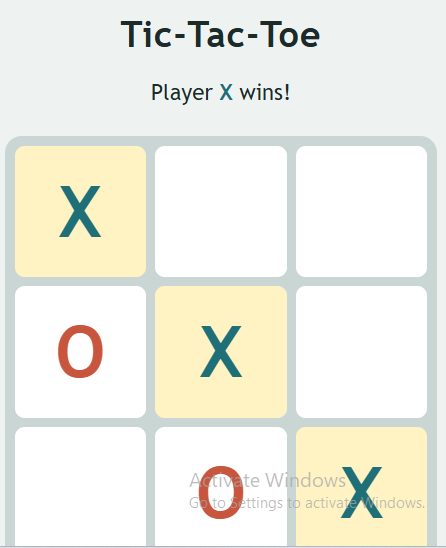
    This is a two-player Tic-Tac-Toe game in one HTML file. Two people share the same screen and take turns clicking squares on a 3×3 grid. Player X always goes first in the first round. The game announces whose turn it is, ends as soon as someone wins or the board fills up, and keeps a running score across rounds.

    HTML structure

    The page has five parts:

    A title (<h1>).
    A status line that shows whose turn it is or who won. It is marked aria-live="polite", so screen readers announce each change.
    An empty <div id="board">, which JavaScript fills with nine buttons.
    A score area with three counters: X wins, draws and O wins.
    A “New game” button.

    The cells are real <button> elements rather than plain divs, so they work with the keyboard (Tab to move, Enter or Space to play) and with screen readers.

    CSS styling
    Board layout: CSS Grid with three equal columns builds the board. The board is min(90vw, 360px) wide and square, so it fits small phone screens and doesn’t grow too large on desktop.
    Colors: All colors are CSS variables on :root. X is teal and O is a warm orange-red, so the two players are easy to tell apart. The page also has a dark theme that follows the device’s light or dark setting.
    Cell states: Cells change background on hover. The winning three cells turn pale yellow. Cells are disabled once filled, and a visible focus outline helps keyboard users.
    Sizing: The X and O symbols scale with the screen using clamp(), so they stay readable on any device.
    JavaScript logic

    1. Winning lines. The LINES array lists the eight ways to win. The cells are numbered 0 to 8 from the top-left, row by row:

    Rows: 0-1-2, 3-4-5, 6-7-8
    Columns: 0-3-6, 1-4-7, 2-5-8
    Diagonals: 0-4-8 and 2-4-6

    2. Setup. A loop creates the nine buttons, gives each an accessible label (“Cell 1” to “Cell 9”) and attaches a click handler that calls play(i).

    3. newGame(). It resets the board array to nine empty slots, clears the cells, re-enables them and shows whose turn it is. It also alternates who starts, so X starts the first round, O the second, and so on. This keeps the game fair over many rounds.
    RSIF8 ROLL NO:13 CLASS: FOUNDATION LEVEL CODING TASK NO:12 This is a two-player Tic-Tac-Toe game in one HTML file. Two people share the same screen and take turns clicking squares on a 3×3 grid. Player X always goes first in the first round. The game announces whose turn it is, ends as soon as someone wins or the board fills up, and keeps a running score across rounds. HTML structure The page has five parts: A title (<h1>). A status line that shows whose turn it is or who won. It is marked aria-live="polite", so screen readers announce each change. An empty <div id="board">, which JavaScript fills with nine buttons. A score area with three counters: X wins, draws and O wins. A “New game” button. The cells are real <button> elements rather than plain divs, so they work with the keyboard (Tab to move, Enter or Space to play) and with screen readers. CSS styling Board layout: CSS Grid with three equal columns builds the board. The board is min(90vw, 360px) wide and square, so it fits small phone screens and doesn’t grow too large on desktop. Colors: All colors are CSS variables on :root. X is teal and O is a warm orange-red, so the two players are easy to tell apart. The page also has a dark theme that follows the device’s light or dark setting. Cell states: Cells change background on hover. The winning three cells turn pale yellow. Cells are disabled once filled, and a visible focus outline helps keyboard users. Sizing: The X and O symbols scale with the screen using clamp(), so they stay readable on any device. JavaScript logic 1. Winning lines. The LINES array lists the eight ways to win. The cells are numbered 0 to 8 from the top-left, row by row: Rows: 0-1-2, 3-4-5, 6-7-8 Columns: 0-3-6, 1-4-7, 2-5-8 Diagonals: 0-4-8 and 2-4-6 2. Setup. A loop creates the nine buttons, gives each an accessible label (“Cell 1” to “Cell 9”) and attaches a click handler that calls play(i). 3. newGame(). It resets the board array to nine empty slots, clears the cells, re-enables them and shows whose turn it is. It also alternates who starts, so X starts the first round, O the second, and so on. This keeps the game fair over many rounds.
    0 Comments 0 Shares 644 Views
  • RSIF8
    Roll no:14
    song no:16
    song topic:The Magic of Algebra: Solving Problems

    The Magic of Algebra: Solving Problems

    Welcome to **The Magic of Algebra: Solving Problems**, an exciting journey into the world of mathematics, where numbers, symbols, and equations come together to solve mysteries! Algebra is more than just numbers and formulas; it is a powerful way of thinking that helps us understand patterns, solve problems, and discover hidden answers.

    In this educational adventure, we explore the basic concepts of algebra, including variables, expressions, equations, addition, subtraction, multiplication, and division. Learn how to find the value of unknown numbers, understand mathematical relationships, and solve equations step by step. Each problem gives us a new opportunity to think logically, improve our skills, and build confidence in mathematics.

    *Why Is Algebra Important?*

    Algebra helps students develop logical thinking, problem-solving abilities, and analytical skills. It is useful not only in mathematics but also in science, technology, engineering, economics, and everyday life. From calculating expenses to understanding scientific formulas, algebra makes complicated problems easier to solve.

    *What Will You Learn?*
    Understand variables such as X and Y.
    Learn how to solve simple algebraic equations.
    Explore mathematical expressions and patterns.
    Develop logical thinking and problem-solving skills.
    Build confidence and make mathematics more enjoyable.

    Remember, every difficult problem becomes easier when you break it into small steps. Keep practicing, stay curious, and discover the magic hidden inside every equation!

    Like, share, and subscribe for more educational content that makes learning mathematics fun, simple, and inspiring!

    #Algebra #Mathematics #SolvingProblems #LearnMath #MathEducation #AlgebraForBeginners #Education #LogicalThinking #StudyMotivation #MathIsFun
    RSIF8 Roll no:14 song no:16 song topic:The Magic of Algebra: Solving Problems โœจ The Magic of Algebra: Solving Problems โž—๐Ÿ“š Welcome to **The Magic of Algebra: Solving Problems**, an exciting journey into the world of mathematics, where numbers, symbols, and equations come together to solve mysteries! ๐Ÿ”ข๐Ÿงฎ Algebra is more than just numbers and formulas; it is a powerful way of thinking that helps us understand patterns, solve problems, and discover hidden answers. In this educational adventure, we explore the basic concepts of algebra, including variables, expressions, equations, addition, subtraction, multiplication, and division. Learn how to find the value of unknown numbers, understand mathematical relationships, and solve equations step by step. Each problem gives us a new opportunity to think logically, improve our skills, and build confidence in mathematics. ๐ŸŒŸ *Why Is Algebra Important?* Algebra helps students develop logical thinking, problem-solving abilities, and analytical skills. It is useful not only in mathematics but also in science, technology, engineering, economics, and everyday life. From calculating expenses to understanding scientific formulas, algebra makes complicated problems easier to solve. ๐ŸŽฏ *What Will You Learn?* Understand variables such as X and Y. Learn how to solve simple algebraic equations. Explore mathematical expressions and patterns. Develop logical thinking and problem-solving skills. Build confidence and make mathematics more enjoyable. Remember, every difficult problem becomes easier when you break it into small steps. Keep practicing, stay curious, and discover the magic hidden inside every equation! ๐Ÿš€ ๐Ÿ‘ Like, share, and subscribe for more educational content that makes learning mathematics fun, simple, and inspiring! #Algebra #Mathematics #SolvingProblems #LearnMath #MathEducation #AlgebraForBeginners #Education #LogicalThinking #StudyMotivation #MathIsFun
    0 Comments 0 Shares 1321 Views 6

  • **Roll No: 2**

    **Batch: 14**

    **Book: ACCL**

    **Task No: 143**

    ## Flashcard App — Coding Task

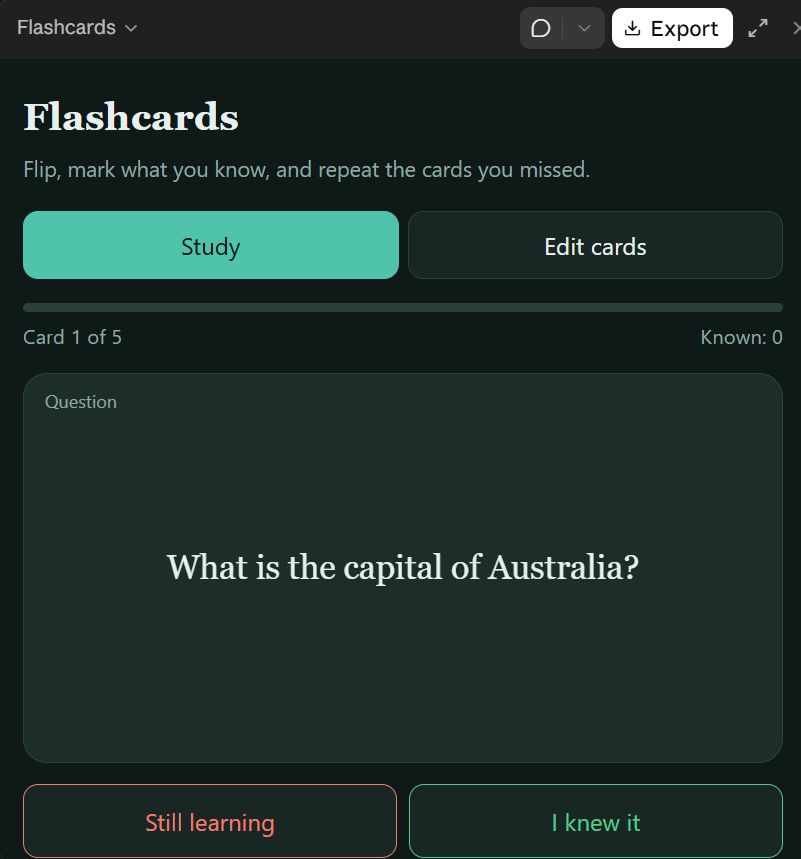
    Today’s task is to develop a **Flashcard App** that makes learning, revision, and memorization more interactive and effective. The application will allow users to create digital flashcards with questions on one side and answers on the other, helping them review important information whenever they need it. Users will be able to reveal answers, move between cards, and organize study material for different subjects and topics. The app can also include features such as adding new cards, deleting unwanted cards, and tracking learning progress. Through this coding project, I will practice programming concepts such as variables, functions, data storage, user interaction, and conditional statements while developing my logical thinking and problem-solving skills. This task will demonstrate how technology can support education by turning ordinary revision into an organized, engaging, and convenient learning experience.

    #Batch14 #Task143 #ACCL #FlashcardApp #CodingTask #Programming #AppDevelopment #DigitalLearning #StudyTools #EducationTechnology #ProblemSolving #LearningByDoing #ComputerScience #DailyTask
    ๐Ÿ‘ค **Roll No: 2** ๐Ÿ“š **Batch: 14** ๐Ÿ“– **Book: ACCL** ๐ŸŽฏ **Task No: 143** ## ๐Ÿ’ป Flashcard App — Coding Task ๐Ÿง ๐Ÿ“š Today’s task is to develop a **Flashcard App** that makes learning, revision, and memorization more interactive and effective. ๐Ÿ’ก The application will allow users to create digital flashcards with questions on one side and answers on the other, helping them review important information whenever they need it. ๐Ÿ”„ Users will be able to reveal answers, move between cards, and organize study material for different subjects and topics. The app can also include features such as adding new cards, deleting unwanted cards, and tracking learning progress. ๐Ÿš€ Through this coding project, I will practice programming concepts such as variables, functions, data storage, user interaction, and conditional statements while developing my logical thinking and problem-solving skills. This task will demonstrate how technology can support education by turning ordinary revision into an organized, engaging, and convenient learning experience. โœจ #Batch14 #Task143 #ACCL #FlashcardApp #CodingTask #Programming #AppDevelopment #DigitalLearning #StudyTools #EducationTechnology #ProblemSolving #LearningByDoing #ComputerScience #DailyTask
    0 Comments 0 Shares 3534 Views

  • **Roll No: 2**

    **Batch: 14**

    **Book: ACCL**

    **Task No: 139**

    ## Why Do We Experiment? The Search for Truth in Biology

    Today’s task explores the importance of experimentation in biology and how scientists use evidence to understand the mysteries of life. Experiments help researchers investigate questions about living organisms, test scientific ideas, and discover how biological processes work. By observing nature, developing hypotheses, changing specific variables, and analyzing results, scientists can distinguish reliable evidence from assumptions. This topic will help me understand why fair testing, accurate observations, repeated experiments, and honest reporting are essential for trustworthy scientific discoveries. It will also highlight how biological experiments contribute to our knowledge of cells, genetics, ecosystems, and human health. Through this activity, I aim to strengthen my critical-thinking skills, develop scientific curiosity, and appreciate how the search for truth requires patience, careful investigation, and an open mind.

    #Batch14 #Task139 #ACCL #WhyDoWeExperiment #Biology #ScientificResearch #SearchForTruth #ScientificMethod #Experimentation #LifeScience #CriticalThinking #Discovery #ScienceEducation #DailyTask
    ๐Ÿ‘ค **Roll No: 2** ๐Ÿ“š **Batch: 14** ๐Ÿ“– **Book: ACCL** ๐ŸŽฏ **Task No: 139** ## ๐Ÿ”ฌ Why Do We Experiment? The Search for Truth in Biology ๐Ÿงฌ Today’s task explores the importance of experimentation in biology and how scientists use evidence to understand the mysteries of life. ๐ŸŒฑ Experiments help researchers investigate questions about living organisms, test scientific ideas, and discover how biological processes work. By observing nature, developing hypotheses, changing specific variables, and analyzing results, scientists can distinguish reliable evidence from assumptions. ๐Ÿงช This topic will help me understand why fair testing, accurate observations, repeated experiments, and honest reporting are essential for trustworthy scientific discoveries. ๐Ÿ“Š It will also highlight how biological experiments contribute to our knowledge of cells, genetics, ecosystems, and human health. Through this activity, I aim to strengthen my critical-thinking skills, develop scientific curiosity, and appreciate how the search for truth requires patience, careful investigation, and an open mind. ๐ŸŒโœจ #Batch14 #Task139 #ACCL #WhyDoWeExperiment #Biology #ScientificResearch #SearchForTruth #ScientificMethod #Experimentation #LifeScience #CriticalThinking #Discovery #ScienceEducation #DailyTask
    0 Comments 0 Shares 3667 Views
  • **Roll No: 2**
    **Batch: 14**
    **Book: ACCL**
    **Task No: 138**

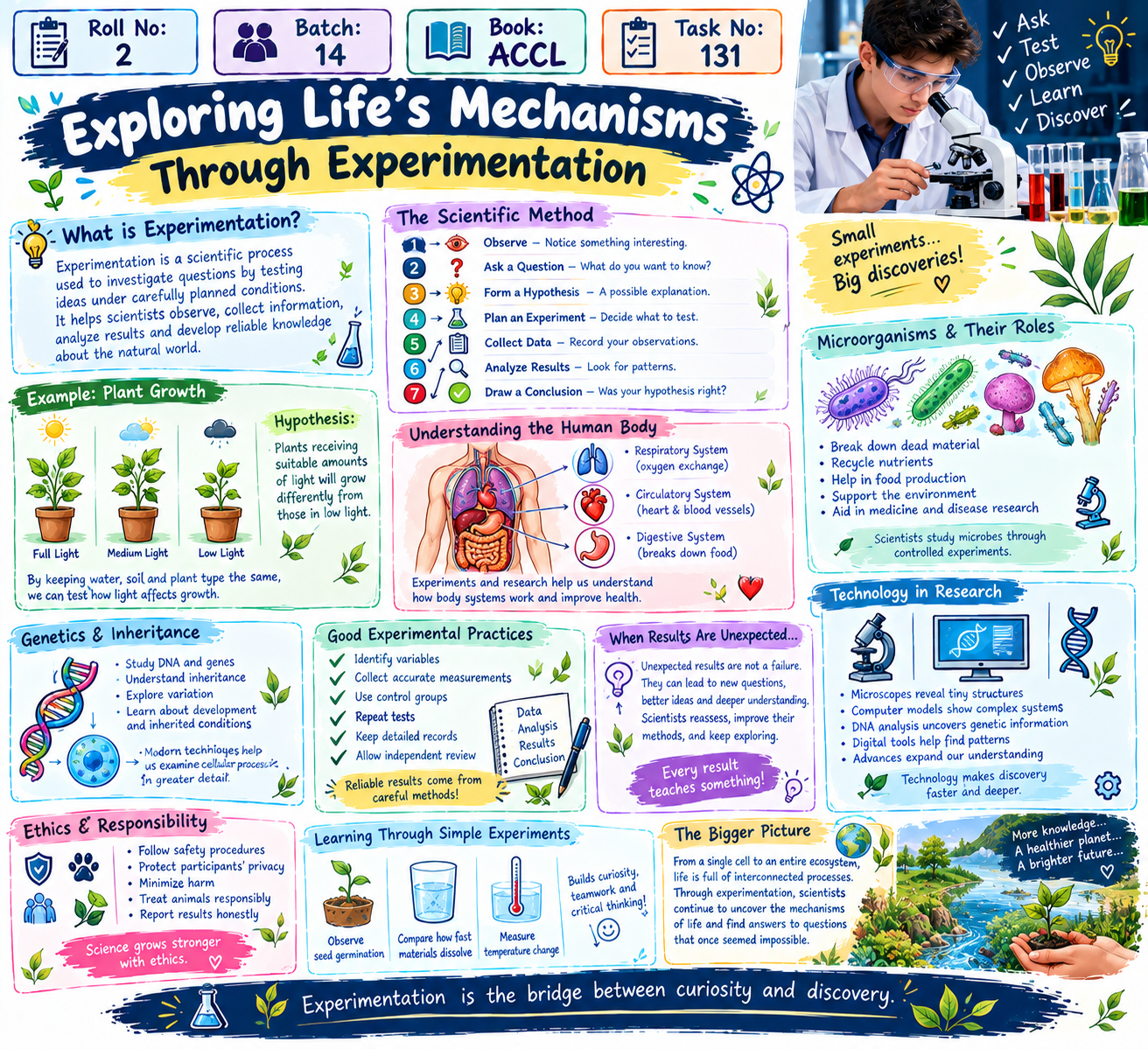
    # Exploring Life’s Mechanisms Through Experimentation

    Have you ever wondered how scientists discover the secrets of life? From understanding how plants grow to investigating how the human heart works, science helps us explore the processes that make living organisms function. Behind many important discoveries lies a powerful method called **experimentation**, which allows scientists to test ideas, observe results, and develop a deeper understanding of the natural world.

    **Experimentation is a scientific process used to investigate questions by testing ideas under carefully planned conditions.** Scientists begin by observing something interesting, asking a question, and developing a hypothesis—a possible explanation that can be tested. They then design an experiment, collect information, and analyze the results to determine whether the evidence supports their original idea. This process helps turn curiosity into reliable scientific knowledge.

    One fascinating example is the study of plant growth. Imagine a student who wants to discover whether the amount of light affects how quickly a plant grows. The student forms a hypothesis that plants receiving suitable amounts of light will grow differently from plants kept in low-light conditions. By keeping factors such as water, soil, and plant type consistent, the student can compare the results and investigate the role of light in plant development.

    Experimentation is also essential for understanding the human body. Scientists investigate how the heart circulates blood, how the lungs exchange gases, and how the digestive system processes food. Through carefully designed studies, medical imaging, laboratory tests, and other research methods, scientists learn how body systems work together to maintain health. Their findings can contribute to improved medical treatments and a better understanding of human biology.

    Another important field is microbiology, the study of microscopic organisms. Many bacteria and fungi play beneficial roles in nature, including breaking down dead material and recycling nutrients. Scientists use controlled experiments to investigate how these organisms respond to different environmental conditions. Such research can help improve food production, develop medicines, understand infectious diseases, and protect ecosystems.

    Experiments also help researchers understand genetics and the mechanisms of inheritance. By studying DNA, genes, and the characteristics of organisms across generations, scientists investigate how biological information is passed on and how variations arise. Modern techniques allow researchers to explore cellular processes in greater detail, helping them understand development, inherited conditions, and the relationships among different forms of life.

    A successful experiment requires more than simply observing what happens. Scientists must identify the variables they are studying, collect accurate measurements, and repeat tests when appropriate. They often use control groups for comparison and record their observations carefully. Repeating experiments helps determine whether a result is consistent, while independent review allows other researchers to examine the methods and evaluate the conclusions. These practices make scientific findings more trustworthy.

    Sometimes experiments produce unexpected results. Instead of treating an unexpected outcome as a failure, scientists use it as an opportunity to ask new questions. They may reconsider their hypothesis, improve their experimental design, or investigate another possible explanation. Scientific progress often happens through this cycle of questioning, testing, learning, and refining ideas. Every result can contribute something valuable when it is interpreted carefully.

    Technology has made biological experimentation more advanced than ever before. Microscopes reveal structures too small to see with the naked eye, computer models help researchers understand complicated systems, and DNA analysis allows scientists to investigate genetic information. Digital tools can also help organize large amounts of data and identify patterns that might otherwise be difficult to notice. These innovations continue to expand our understanding of living organisms.

    However, scientific experimentation must always be guided by responsibility and ethics. Researchers should follow safety procedures, protect participants' privacy, minimize harm, and treat animals responsibly. Experiments involving people or animals require appropriate ethical review and safeguards. Scientists must also report results honestly, even when the findings do not match their expectations. Reliable science depends on both accurate evidence and responsible behavior.

    Experimentation connects classroom learning with real-world discoveries. Students can explore scientific ideas through safe activities, such as observing seed germination, comparing how quickly different materials dissolve in water, or measuring changes in temperature. These activities encourage curiosity, careful observation, teamwork, and critical thinking. They also show that science is not just a collection of facts to memorize; it is an ongoing process of discovery.

    As we explore life's mechanisms, we begin to understand how countless processes work together to support living organisms. From the activity inside a single cell to the interactions among species in an ecosystem, each discovery reveals another part of nature's complexity. Through experimentation, scientists continue to investigate these connections and search for answers to questions that once seemed impossible to solve.

    **Experimentation is the bridge between curiosity and discovery. By asking thoughtful questions, testing ideas fairly, and learning from evidence, we can uncover the mechanisms of life and use scientific knowledge to improve human health, protect the environment, and build a brighter future. **

    \#Experimentation #Biology #ScientificMethod #LifeSciences #ScientificDiscovery #Research #ACCL #Batch14 #Task131
    **Roll No: 2** **Batch: 14** **Book: ACCL** **Task No: 138** # ๐Ÿ”ฌ๐Ÿงช Exploring Life’s Mechanisms Through Experimentation ๐ŸŒฑ๐Ÿงฌ Have you ever wondered how scientists discover the secrets of life? ๐ŸŒ From understanding how plants grow to investigating how the human heart works, science helps us explore the processes that make living organisms function. Behind many important discoveries lies a powerful method called **experimentation**, which allows scientists to test ideas, observe results, and develop a deeper understanding of the natural world. ๐Ÿ”โœจ **Experimentation is a scientific process used to investigate questions by testing ideas under carefully planned conditions.** ๐Ÿงช Scientists begin by observing something interesting, asking a question, and developing a hypothesis—a possible explanation that can be tested. They then design an experiment, collect information, and analyze the results to determine whether the evidence supports their original idea. This process helps turn curiosity into reliable scientific knowledge. ๐Ÿ“š๐Ÿ’ก One fascinating example is the study of plant growth. ๐ŸŒฑ Imagine a student who wants to discover whether the amount of light affects how quickly a plant grows. The student forms a hypothesis that plants receiving suitable amounts of light will grow differently from plants kept in low-light conditions. By keeping factors such as water, soil, and plant type consistent, the student can compare the results and investigate the role of light in plant development. โ˜€๏ธ๐ŸŒฟ Experimentation is also essential for understanding the human body. โค๏ธ Scientists investigate how the heart circulates blood, how the lungs exchange gases, and how the digestive system processes food. Through carefully designed studies, medical imaging, laboratory tests, and other research methods, scientists learn how body systems work together to maintain health. Their findings can contribute to improved medical treatments and a better understanding of human biology. ๐Ÿซ๐Ÿง  Another important field is microbiology, the study of microscopic organisms. ๐Ÿฆ  Many bacteria and fungi play beneficial roles in nature, including breaking down dead material and recycling nutrients. Scientists use controlled experiments to investigate how these organisms respond to different environmental conditions. Such research can help improve food production, develop medicines, understand infectious diseases, and protect ecosystems. ๐Ÿ”ฌ๐ŸŒ Experiments also help researchers understand genetics and the mechanisms of inheritance. ๐Ÿงฌ By studying DNA, genes, and the characteristics of organisms across generations, scientists investigate how biological information is passed on and how variations arise. Modern techniques allow researchers to explore cellular processes in greater detail, helping them understand development, inherited conditions, and the relationships among different forms of life. ๐ŸŒฑ๐Ÿ” A successful experiment requires more than simply observing what happens. Scientists must identify the variables they are studying, collect accurate measurements, and repeat tests when appropriate. ๐Ÿ“ They often use control groups for comparison and record their observations carefully. Repeating experiments helps determine whether a result is consistent, while independent review allows other researchers to examine the methods and evaluate the conclusions. These practices make scientific findings more trustworthy. ๐Ÿ“Š๐Ÿ“ Sometimes experiments produce unexpected results. ๐Ÿค” Instead of treating an unexpected outcome as a failure, scientists use it as an opportunity to ask new questions. They may reconsider their hypothesis, improve their experimental design, or investigate another possible explanation. Scientific progress often happens through this cycle of questioning, testing, learning, and refining ideas. Every result can contribute something valuable when it is interpreted carefully. ๐Ÿ’ก๐Ÿ”„ Technology has made biological experimentation more advanced than ever before. ๐Ÿค–๐Ÿ”ฌ Microscopes reveal structures too small to see with the naked eye, computer models help researchers understand complicated systems, and DNA analysis allows scientists to investigate genetic information. Digital tools can also help organize large amounts of data and identify patterns that might otherwise be difficult to notice. These innovations continue to expand our understanding of living organisms. ๐Ÿ’ป๐Ÿงฌ However, scientific experimentation must always be guided by responsibility and ethics. ๐Ÿ’š Researchers should follow safety procedures, protect participants' privacy, minimize harm, and treat animals responsibly. Experiments involving people or animals require appropriate ethical review and safeguards. Scientists must also report results honestly, even when the findings do not match their expectations. Reliable science depends on both accurate evidence and responsible behavior. โš–๏ธ๐ŸŒฟ Experimentation connects classroom learning with real-world discoveries. ๐Ÿซ Students can explore scientific ideas through safe activities, such as observing seed germination, comparing how quickly different materials dissolve in water, or measuring changes in temperature. These activities encourage curiosity, careful observation, teamwork, and critical thinking. They also show that science is not just a collection of facts to memorize; it is an ongoing process of discovery. ๐ŸŒˆ๐Ÿงช As we explore life's mechanisms, we begin to understand how countless processes work together to support living organisms. From the activity inside a single cell to the interactions among species in an ecosystem, each discovery reveals another part of nature's complexity. Through experimentation, scientists continue to investigate these connections and search for answers to questions that once seemed impossible to solve. ๐ŸŒŽ๐Ÿฆ‹๐Ÿ”ฌ **Experimentation is the bridge between curiosity and discovery. By asking thoughtful questions, testing ideas fairly, and learning from evidence, we can uncover the mechanisms of life and use scientific knowledge to improve human health, protect the environment, and build a brighter future. ๐Ÿ”ฌ๐Ÿงฌ๐ŸŒ๐Ÿ’š** \#Experimentation #Biology #ScientificMethod #LifeSciences #ScientificDiscovery #Research #ACCL #Batch14 #Task131 ๐Ÿงช๐Ÿ”ฌ๐ŸŒฑ
    0 Comments 0 Shares 5895 Views
  • RSi F8
    Roll NO:13
    Task NO:180
    Class: Foundation Level
    Made by Me

    Prime Number Checker — Description

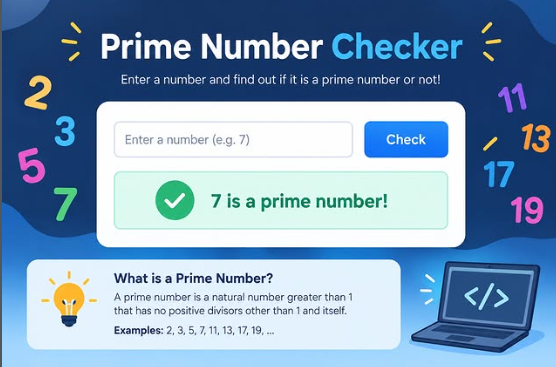
    Prime Number Checker is a simple and useful programming project designed to help users quickly determine whether a given number is a prime number or not. Prime numbers are natural numbers greater than 1 that have exactly two positive factors: 1 and the number itself. Some common examples of prime numbers are 2, 3, 5, 7, 11, 13, 17, 19, and 23.

    This project provides an easy-to-use interface where the user can enter any number into an input field and click the “Check” button. The program then analyzes the entered number and displays a clear result, telling the user whether the number is prime or not. This makes the project useful for students who are learning about mathematics, logical thinking, algorithms, and programming fundamentals.

    Behind the simple interface, the program uses a logical process to check whether the number can be divided evenly by any number other than 1 and itself. If no such divisor exists, the number is identified as a prime number. If the number has another divisor, it is considered a composite number. The project can also handle special cases such as numbers less than or equal to 1, which are not considered prime numbers.

    The Prime Number Checker is a great beginner-friendly project because it combines HTML, CSS, and JavaScript to create an interactive web application. HTML can be used to structure the page, CSS can make the interface attractive and responsive, and JavaScript can perform the actual prime-number calculation.

    Creating this project also helps learners understand important programming concepts such as variables, functions, conditional statements, loops, user input, mathematical operations, and displaying dynamic results. It demonstrates how a mathematical idea can be converted into a working computer program.

    Overall, the Prime Number Checker is a small but meaningful coding project that makes learning programming more interesting and practical. It shows how simple algorithms can solve everyday computational problems while giving beginners valuable hands-on experience in building interactive application
    RSi F8 ๐ŸŽ“โœจ Roll NO:13 Task NO:180 Class: Foundation Level ๐Ÿ“š Made by Me ๐Ÿ’ป๐Ÿš€ Prime Number Checker — Description Prime Number Checker is a simple and useful programming project designed to help users quickly determine whether a given number is a prime number or not. Prime numbers are natural numbers greater than 1 that have exactly two positive factors: 1 and the number itself. Some common examples of prime numbers are 2, 3, 5, 7, 11, 13, 17, 19, and 23. This project provides an easy-to-use interface where the user can enter any number into an input field and click the “Check” button. The program then analyzes the entered number and displays a clear result, telling the user whether the number is prime or not. This makes the project useful for students who are learning about mathematics, logical thinking, algorithms, and programming fundamentals. Behind the simple interface, the program uses a logical process to check whether the number can be divided evenly by any number other than 1 and itself. If no such divisor exists, the number is identified as a prime number. If the number has another divisor, it is considered a composite number. The project can also handle special cases such as numbers less than or equal to 1, which are not considered prime numbers. The Prime Number Checker is a great beginner-friendly project because it combines HTML, CSS, and JavaScript to create an interactive web application. HTML can be used to structure the page, CSS can make the interface attractive and responsive, and JavaScript can perform the actual prime-number calculation. Creating this project also helps learners understand important programming concepts such as variables, functions, conditional statements, loops, user input, mathematical operations, and displaying dynamic results. It demonstrates how a mathematical idea can be converted into a working computer program. Overall, the Prime Number Checker is a small but meaningful coding project that makes learning programming more interesting and practical. It shows how simple algorithms can solve everyday computational problems while giving beginners valuable hands-on experience in building interactive application
    0 Comments 0 Shares 1173 Views

  • **Roll No: 2**

    **Batch: 14**

    **Book: ACCL**

    **Task No: 134**

    ## BMI Calculator

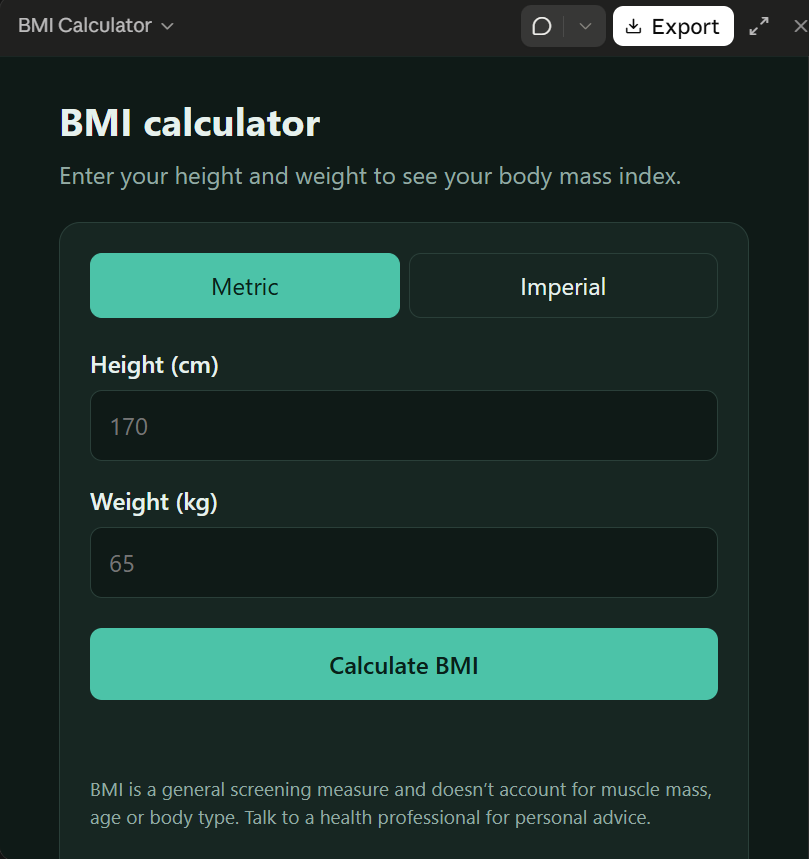
    Today’s task is to develop a **Body Mass Index (BMI) Calculator** that demonstrates how a simple computer program can perform calculations using user input. The calculator will allow users to enter their height and weight and calculate BMI using a mathematical formula. This project will help improve programming skills, logical thinking, and understanding of basic formulas, variables, input handling, and output formatting. It can also display the calculated result clearly and explain that BMI is a general screening measure, not a complete assessment of a person’s health. Through this task, I will gain practical experience in creating a useful application while strengthening my problem-solving abilities and learning how mathematics can be applied in technology.

    #Batch14 #Task134 #ACCL #BMICalculator #Coding #Programming #PythonProject #HealthTechnology #Mathematics #ProblemSolving #Learning #DigitalSkills #DailyTask
    ๐Ÿ‘ค **Roll No: 2** ๐Ÿ“š **Batch: 14** ๐Ÿ“– **Book: ACCL** ๐ŸŽฏ **Task No: 134** ## ๐Ÿ’ป BMI Calculator ๐Ÿ“Š Today’s task is to develop a **Body Mass Index (BMI) Calculator** that demonstrates how a simple computer program can perform calculations using user input. ๐Ÿ–ฅ๏ธ The calculator will allow users to enter their height and weight and calculate BMI using a mathematical formula. โž— This project will help improve programming skills, logical thinking, and understanding of basic formulas, variables, input handling, and output formatting. ๐Ÿš€ It can also display the calculated result clearly and explain that BMI is a general screening measure, not a complete assessment of a person’s health. ๐ŸŒŸ Through this task, I will gain practical experience in creating a useful application while strengthening my problem-solving abilities and learning how mathematics can be applied in technology. #Batch14 #Task134 #ACCL #BMICalculator #Coding #Programming #PythonProject #HealthTechnology #Mathematics #ProblemSolving #Learning #DigitalSkills #DailyTask
    0 Comments 0 Shares 2458 Views
  • Mohsin RSi F8
    Roll NO:13
    Coding Task NO:16
    Class: Foundation Level
    Made by Me

    BMI Calculator – A Simple Coding Project

    Today, I completed a BMI Calculator coding task as part of my learning journey. This project helped me understand how a simple web application can take user input, perform a calculation, and display the result instantly.

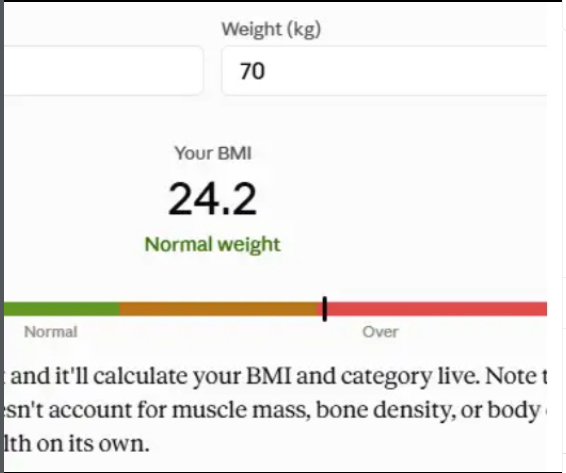
    The BMI Calculator allows the user to enter their weight in kilograms and height in centimeters. After clicking the Calculate BMI button, the program converts the height into meters and uses the BMI formula to calculate the result.

    The basic formula is:

    BMI = Weight (kg) ÷ Height² (m)

    This project was a great way to practice important programming concepts such as HTML, CSS, JavaScript, user input, variables, mathematical calculations, functions, conditions, and displaying results on a webpage.

    I also added a Reset button, which makes it easy to clear the previous information and try the calculator again. The design is simple and user-friendly so that anyone can understand how to use it.

    While working on this project, I learned that coding is not only about writing lines of code. It is also about understanding a problem, creating a logical solution, testing the program, and improving the user experience.

    This task also helped me improve my confidence in JavaScript because the calculator needs to take the information entered by the user, calculate the BMI, and show the result dynamically without refreshing the page.

    Overall, creating the BMI Calculator was a useful and interesting learning experience. It gave me more practice with web development and helped me understand how HTML, CSS, and JavaScript work together to create an interactive application.

    I am excited to continue learning more coding skills and build more useful projects in the future. Every small project is another step toward becoming a better programmer.

    Task Completed
    Project: BMI Calculator
    Calculation: BMI
    Technologies: HTML, CSS & JavaScript
    User Input: Weight & Height
    Feature: Reset Button
    Skills Practiced: Logic, Functions, Conditions & Web Development

    #RSF8 #Storypost112 #BMICalculator #CodingP
    Mohsin RSi F8 ๐ŸŽ“โœจ Roll NO:13 Coding Task NO:16 Class: Foundation Level ๐Ÿ“š Made by Me ๐Ÿ’ป๐Ÿš€ โš–๏ธ BMI Calculator – A Simple Coding Project ๐Ÿ’ปโœจ Today, I completed a BMI Calculator coding task as part of my learning journey. This project helped me understand how a simple web application can take user input, perform a calculation, and display the result instantly. The BMI Calculator allows the user to enter their weight in kilograms and height in centimeters. After clicking the Calculate BMI button, the program converts the height into meters and uses the BMI formula to calculate the result. The basic formula is: BMI = Weight (kg) ÷ Height² (m) This project was a great way to practice important programming concepts such as HTML, CSS, JavaScript, user input, variables, mathematical calculations, functions, conditions, and displaying results on a webpage. I also added a Reset button, which makes it easy to clear the previous information and try the calculator again. The design is simple and user-friendly so that anyone can understand how to use it. While working on this project, I learned that coding is not only about writing lines of code. It is also about understanding a problem, creating a logical solution, testing the program, and improving the user experience. This task also helped me improve my confidence in JavaScript because the calculator needs to take the information entered by the user, calculate the BMI, and show the result dynamically without refreshing the page. Overall, creating the BMI Calculator was a useful and interesting learning experience. ๐Ÿš€ It gave me more practice with web development and helped me understand how HTML, CSS, and JavaScript work together to create an interactive application. I am excited to continue learning more coding skills and build more useful projects in the future. Every small project is another step toward becoming a better programmer. ๐Ÿ’ป๐Ÿ“š๐ŸŒŸ Task Completed โœ… ๐Ÿ’ป Project: BMI Calculator ๐Ÿงฎ Calculation: BMI ๐ŸŒ Technologies: HTML, CSS & JavaScript ๐Ÿ”ข User Input: Weight & Height ๐Ÿ”„ Feature: Reset Button ๐Ÿ“š Skills Practiced: Logic, Functions, Conditions & Web Development #RSF8๐ŸŽ“โœจ #Storypost112 #BMICalculator #CodingP
    0 Comments 0 Shares 2233 Views


  • Mohsin RS F8
    Coding Task NO:12
    Class: Foundation Level
    Made by Me

    — Password Generator

    A Password Generator is a useful and practical coding project designed to create strong and random passwords quickly. In today’s digital world, we use passwords for social media accounts, email, websites, applications, and many other online services. Using weak or easily guessed passwords can put accounts at risk, so learning how a password generator works is a great way to understand both programming and basic cybersecurity concepts.

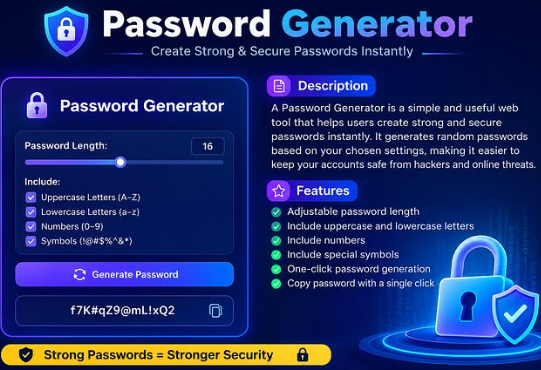
    The main purpose of this project is to allow the user to generate a password according to their preferred settings. The generator can include uppercase letters, lowercase letters, numbers, and special characters. By combining different types of characters, the program can create passwords that are much harder to guess than simple words or predictable patterns.

    This project can be created using HTML, CSS, and JavaScript. HTML is used to build the structure of the interface, such as the password display, length selector, checkboxes, and generate button. CSS is used to make the application attractive, organized, and easy to use. JavaScript handles the main functionality by selecting characters randomly and creating a new password whenever the user clicks the Generate Password button.

    One of the most useful features of this project is adjustable password length. Users can choose how long they want the generated password to be. The project can also provide options for uppercase letters, lowercase letters, numbers, and symbols. This makes the generator flexible and allows users to create different types of passwords based on their needs.

    Another helpful feature is the copy button. After a password is generated, the user can copy it with a single click instead of manually selecting and typing it. This makes the application faster and more convenient to use.

    Building a Password Generator is also a great way to practice important JavaScript concepts. While creating this project, students can learn about variables, functions, arrays, random selection, loops, conditional statements, event listeners, and DOM manipulation.
    Mohsin RS F8 ๐ŸŽ“โœจ Coding Task NO:12 Class: Foundation Level ๐Ÿ“š Made by Me ๐Ÿ’ป๐Ÿš€ — Password Generator ๐Ÿ”๐Ÿ’ป A Password Generator is a useful and practical coding project designed to create strong and random passwords quickly. In today’s digital world, we use passwords for social media accounts, email, websites, applications, and many other online services. Using weak or easily guessed passwords can put accounts at risk, so learning how a password generator works is a great way to understand both programming and basic cybersecurity concepts. The main purpose of this project is to allow the user to generate a password according to their preferred settings. The generator can include uppercase letters, lowercase letters, numbers, and special characters. By combining different types of characters, the program can create passwords that are much harder to guess than simple words or predictable patterns. This project can be created using HTML, CSS, and JavaScript. HTML is used to build the structure of the interface, such as the password display, length selector, checkboxes, and generate button. CSS is used to make the application attractive, organized, and easy to use. JavaScript handles the main functionality by selecting characters randomly and creating a new password whenever the user clicks the Generate Password button. One of the most useful features of this project is adjustable password length. Users can choose how long they want the generated password to be. The project can also provide options for uppercase letters, lowercase letters, numbers, and symbols. This makes the generator flexible and allows users to create different types of passwords based on their needs. Another helpful feature is the copy button. After a password is generated, the user can copy it with a single click instead of manually selecting and typing it. This makes the application faster and more convenient to use. Building a Password Generator is also a great way to practice important JavaScript concepts. While creating this project, students can learn about variables, functions, arrays, random selection, loops, conditional statements, event listeners, and DOM manipulation.
    0 Comments 0 Shares 1326 Views


  • Be the first to
    Mohsin RS F8
    Coding Task NO:11
    Class: Foundation Level
    Made by Me

    Rock, Paper, Scissors Game — Long Description

    The Rock, Paper, Scissors Game is a simple, interactive, and entertaining web-based game created using HTML, CSS, and JavaScript. The main purpose of this project is to demonstrate how basic web technologies can be combined to create an interactive game with buttons, animations, game logic, score tracking, and real-time results.

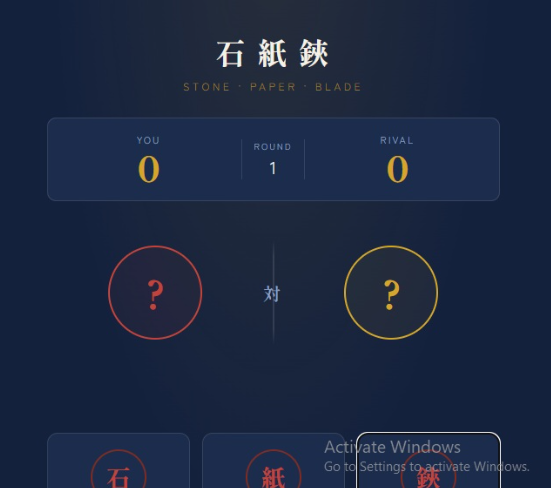
    In this game, the player competes against the computer by choosing one of three options: Rock, Paper, or Scissors. After the player makes a selection, the computer automatically chooses one of the three options. JavaScript then compares both choices and determines the winner according to the classic rules of the game.

    The rules are very simple: Rock beats Scissors, Scissors beats Paper, and Paper beats Rock. If both the player and computer choose the same option, the round ends in a draw. The result is displayed immediately so that the player can easily understand what happened in that round.

    The project also focuses on creating a clean and attractive user interface. HTML provides the structure of the game, including the title, buttons, score area, player and computer choices, and result section. CSS is used to make the interface visually appealing by adding colors, spacing, rounded buttons, backgrounds, transitions, and responsive design. The goal is to make the game easy to understand and enjoyable to play on different screen sizes.

    The most important part of the project is the JavaScript game logic. JavaScript detects which button the player clicks, generates a random choice for the computer, compares the two choices, and updates the game result and scores. This demonstrates important programming concepts such as variables, functions, conditional statements, random number generation, event handling, and DOM manipulation.

    The game can also help beginners understand how websites can respond to user actions. Instead of simply displaying static information, the page reacts whenever the player selects Rock, Paper, or Scissors. The score can be updated after every round, allowing the player to continue
    Be the first to Mohsin RS F8 ๐ŸŽ“โœจ Coding Task NO:11 Class: Foundation Level ๐Ÿ“š Made by Me ๐Ÿ’ป๐Ÿš€ Rock, Paper, Scissors Game — Long Description The Rock, Paper, Scissors Game is a simple, interactive, and entertaining web-based game created using HTML, CSS, and JavaScript. The main purpose of this project is to demonstrate how basic web technologies can be combined to create an interactive game with buttons, animations, game logic, score tracking, and real-time results. In this game, the player competes against the computer by choosing one of three options: ๐Ÿชจ Rock, ๐Ÿ“„ Paper, or โœ‚๏ธ Scissors. After the player makes a selection, the computer automatically chooses one of the three options. JavaScript then compares both choices and determines the winner according to the classic rules of the game. The rules are very simple: Rock beats Scissors, Scissors beats Paper, and Paper beats Rock. If both the player and computer choose the same option, the round ends in a draw. The result is displayed immediately so that the player can easily understand what happened in that round. The project also focuses on creating a clean and attractive user interface. HTML provides the structure of the game, including the title, buttons, score area, player and computer choices, and result section. CSS is used to make the interface visually appealing by adding colors, spacing, rounded buttons, backgrounds, transitions, and responsive design. The goal is to make the game easy to understand and enjoyable to play on different screen sizes. The most important part of the project is the JavaScript game logic. JavaScript detects which button the player clicks, generates a random choice for the computer, compares the two choices, and updates the game result and scores. This demonstrates important programming concepts such as variables, functions, conditional statements, random number generation, event handling, and DOM manipulation. The game can also help beginners understand how websites can respond to user actions. Instead of simply displaying static information, the page reacts whenever the player selects Rock, Paper, or Scissors. The score can be updated after every round, allowing the player to continue
    0 Comments 0 Shares 1044 Views
More Results