• Mohsin #RSF8
    #Storypost8
    Class: Foundation level
    Made by Me
    rool no:13

    ## ** Story Post Title: Acids and Bases: The Balance of Nature**

    **Acids and Bases: The Balance of Nature**

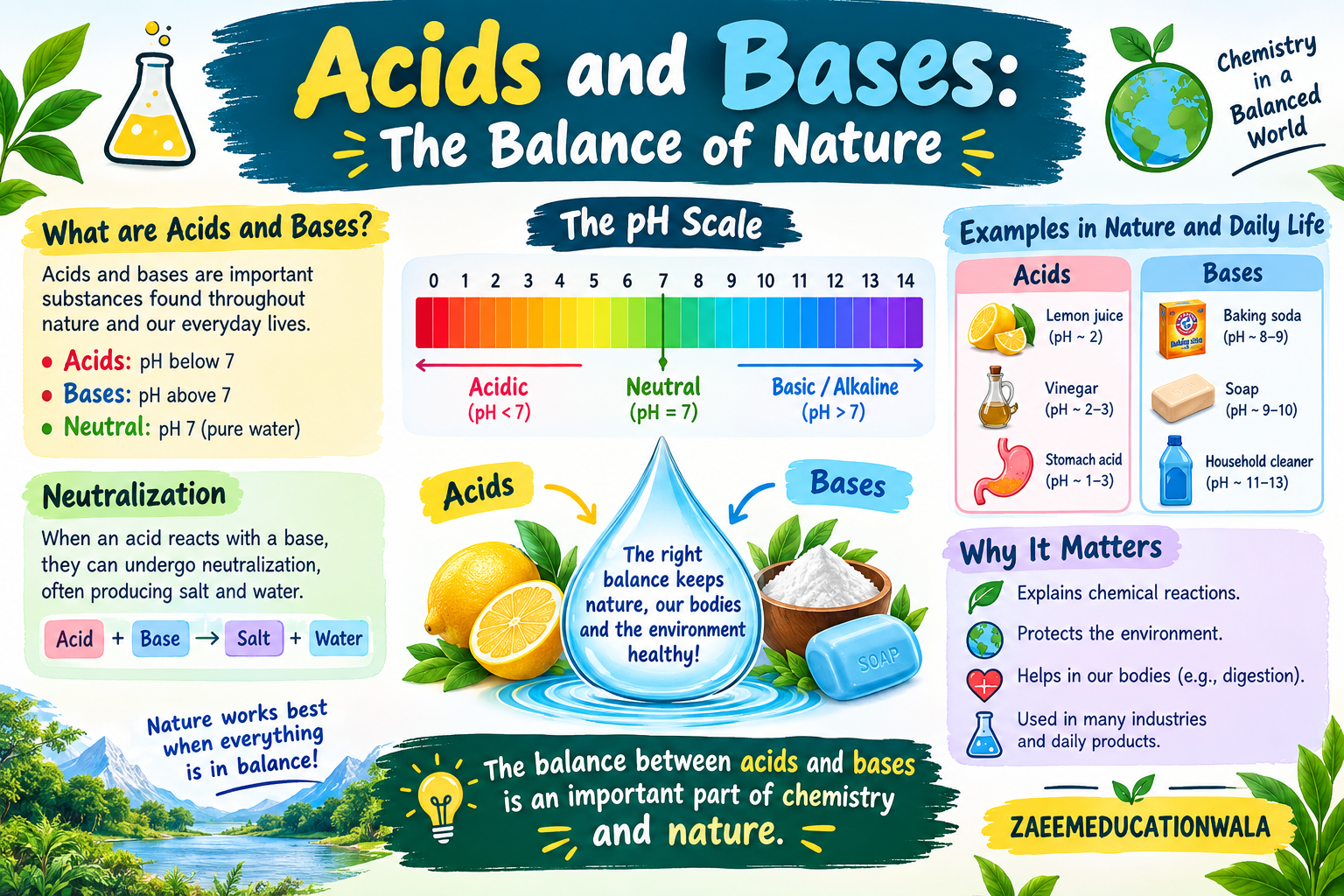
    Nature is built on balance, and one of the most fascinating examples of this balance is the relationship between **acids and bases**. Although they have opposite properties, both are essential for life on Earth. From the food we eat to the water we drink, from the soil that grows our crops to the blood flowing through our bodies, acids and bases work together to maintain harmony in the natural world.

    Acids are substances that release hydrogen ions and often have a sour taste, while bases release hydroxide ions and are usually bitter or slippery to the touch. When an acid and a base react, they form **salt and water**, a process called **neutralization**. This reaction helps maintain stability in many natural and industrial processes.

    Our bodies also depend on this delicate balance. For example, human blood maintains a nearly constant pH level, allowing organs to function properly. Even a small change in this balance can affect our health. In nature, rainwater, oceans, rivers, and soil all rely on the correct pH to support plants, animals, and aquatic life.

    Acids and bases are not just laboratory chemicals—they are part of our everyday lives. Lemon juice, vinegar, oranges, baking soda, toothpaste, soap, and many household products all demonstrate the amazing role these substances play in our daily routines.

    Learning about acids and bases helps us understand how science explains the world around us. It teaches us that balance is not only important in chemistry but also in life itself. Just as nature thrives through harmony, we too can achieve success by maintaining balance in our thoughts, actions, and decisions.

    **Science shows us that every reaction has a purpose, and every balance creates a stronger, healthier world. Keep learning, stay curious, and discover the wonders hidden in everyday life!**

    #Science #Chemistry #AcidsAndBases #BalanceOfNature #LearningEveryDay #Education #STEM #Nature #Curiosity #Knowledge #RSF8
    Mohsin #RSF8🎓✨ #Storypost8 Class: Foundation level 📚 Made by Me 💻🚀 rool no:13 ## **📖 Story Post Title: Acids and Bases: The Balance of Nature** 🧪🌿 **Acids and Bases: The Balance of Nature** 🌿🧪 Nature is built on balance, and one of the most fascinating examples of this balance is the relationship between **acids and bases**. Although they have opposite properties, both are essential for life on Earth. From the food we eat to the water we drink, from the soil that grows our crops to the blood flowing through our bodies, acids and bases work together to maintain harmony in the natural world. Acids are substances that release hydrogen ions and often have a sour taste, while bases release hydroxide ions and are usually bitter or slippery to the touch. When an acid and a base react, they form **salt and water**, a process called **neutralization**. This reaction helps maintain stability in many natural and industrial processes. Our bodies also depend on this delicate balance. For example, human blood maintains a nearly constant pH level, allowing organs to function properly. Even a small change in this balance can affect our health. In nature, rainwater, oceans, rivers, and soil all rely on the correct pH to support plants, animals, and aquatic life. Acids and bases are not just laboratory chemicals—they are part of our everyday lives. Lemon juice, vinegar, oranges, baking soda, toothpaste, soap, and many household products all demonstrate the amazing role these substances play in our daily routines. Learning about acids and bases helps us understand how science explains the world around us. It teaches us that balance is not only important in chemistry but also in life itself. Just as nature thrives through harmony, we too can achieve success by maintaining balance in our thoughts, actions, and decisions. 🌍 **Science shows us that every reaction has a purpose, and every balance creates a stronger, healthier world. Keep learning, stay curious, and discover the wonders hidden in everyday life!** 🔬✨ #Science #Chemistry #AcidsAndBases #BalanceOfNature #LearningEveryDay #Education #STEM #Nature #Curiosity #Knowledge #RSF8🎓✨
    0 Comments 0 Shares 267 Views
  • Mango ? vinegar ! Yummmy ! Why does Pakistan ?? not make this ? #addvalue

    It?s being retailed at 33 euro per liter or 5725 rupees per liter !

    #mango #vinegar Rehan Mango ? ?
    Mango ? vinegar ! Yummmy ! Why does Pakistan ?? not make this ? #addvalue It?s being retailed at 33 euro per liter or 5725 rupees per liter ! #mango #vinegar Rehan Mango ? ?
    0 Comments 0 Shares 192 Views
  • RSIF8
    Roll no 13
    Story Post No 11
    Story Post Topic **Acids and Bases: The Balance of Nature**

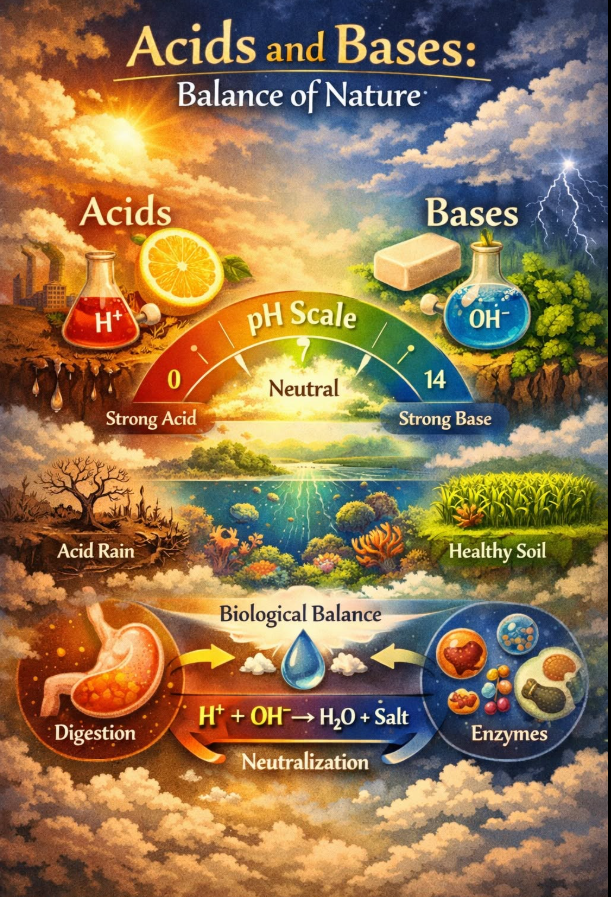
    Acids and bases are an important part of chemistry and everyday life. From lemon juice and vinegar to soap, baking soda, soil, oceans, and even our bodies, acids and bases are everywhere around us.

    This topic explores the **pH scale**, the difference between acids and bases, and how chemical balance affects nature and living organisms. Learn how acids and bases support digestion, plant growth, chemical reactions, medicine, technology, and healthy ecosystems.

    Understanding pH helps us see how even small changes in chemical balance can have a big impact on life and the environment.

    **Learn about chemistry, discover the science of balance, and explore how acids and bases shape our world!**

    #AcidsAndBases #Chemistry #PHScale #Science #ChemicalBalance #ScienceEducation #ChemistryLovers #STEM #Nature #Environment #Education #ScienceFacts
    RSIF8 Roll no 13 Story Post No 11 Story Post Topic 🧪 **Acids and Bases: The Balance of Nature** 🌿⚗️ Acids and bases are an important part of chemistry and everyday life. From lemon juice and vinegar to soap, baking soda, soil, oceans, and even our bodies, acids and bases are everywhere around us. This topic explores the **pH scale**, the difference between acids and bases, and how chemical balance affects nature and living organisms. Learn how acids and bases support digestion, plant growth, chemical reactions, medicine, technology, and healthy ecosystems. 🌍 Understanding pH helps us see how even small changes in chemical balance can have a big impact on life and the environment. ✨ **Learn about chemistry, discover the science of balance, and explore how acids and bases shape our world!** #AcidsAndBases #Chemistry #PHScale #Science #ChemicalBalance #ScienceEducation #ChemistryLovers #STEM #Nature #Environment #Education #ScienceFacts
    0 Comments 0 Shares 703 Views
  • accl task
    day 69
    week 3
    task: story post 69
    topic:Acids and Bases: The Balance of Nature
    Title: Acids and Bases: The Balance of Nature

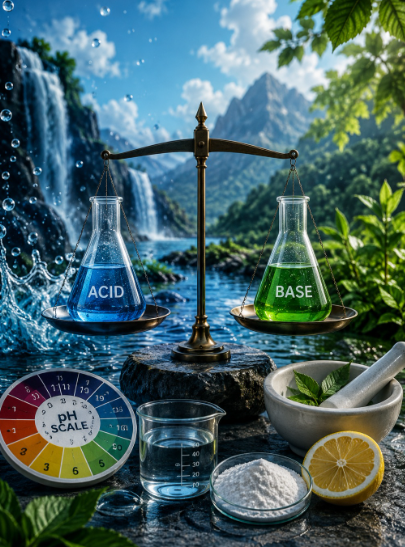
    One afternoon, a curious student named Ayan entered the chemistry laboratory.

    On the table were several ordinary substances: lemon juice, vinegar, baking soda, soap, and pure water.

    Ayan looked at them and asked his teacher,

    “How can such different substances all be part of the same scientific system?”

    His teacher smiled.

    “Because many of them can be understood through the chemistry of acids, bases, and balance.”

    Ayan became curious.

    The World of Acids

    The teacher first placed a small amount of lemon juice on the table.

    “Lemon juice contains citric acid,” she explained.

    Acids are substances that, in water, increase the concentration of hydrogen ions (H⁺). Many acids have a sour taste, although scientists never identify an unknown chemical by tasting it.

    Ayan had seen acids in everyday life without realizing it.

    Vinegar contains acetic acid.

    The stomach naturally contains hydrochloric acid, which helps with digestion.

    Even some fruits contain naturally occurring acids.

    Ayan began to understand that the word “acid” did not always mean something dangerous.

    Discovering Bases

    Next, the teacher showed him a solution of baking soda.

    “This behaves as a base in water,” she said.

    Bases generally increase the concentration of hydroxide ions or accept hydrogen ions, depending on the chemical definition being used.

    Many basic substances are found around us.

    Some cleaning products are basic.

    Soap solutions are often basic.

    Certain minerals and compounds in nature can also behave as bases.

    Ayan realized that acids and bases were not simply opposites in a textbook.

    They were part of everyday chemistry.

    The pH Scale

    The teacher then drew a colorful scale on the board.

    It was the pH scale.

    “pH helps us describe how acidic or basic an aqueous solution is,” she explained.

    At about pH 7, a solution is considered neutral under standard conditions, such as pure water at around room temperature.

    Values below 7 are generally acidic.

    Values above 7 are generally basic.

    Ayan looked at the scale with fascination.

    The numbers seemed simple, but they represented important chemical differences.

    The teacher added:

    “The pH scale is logarithmic. A change of one pH unit represents a tenfold change in hydrogen-ion concentration.”

    Ayan suddenly realized that even a small numerical change could represent a significant chemical difference.

    When Acids and Bases Meet

    Then the teacher performed an experiment.

    She carefully combined an acid with a base.

    The two substances reacted.

    In many common acid-base reactions, the products include water and a salt. This type of reaction is often called neutralization.

    Ayan watched as the chemistry changed before his eyes.

    “So acids and bases can balance each other?” he asked.

    “In the right conditions, yes,” his teacher replied.

    “But neutralization does not always mean the final mixture has exactly pH 7. The result depends on the substances and their amounts.”

    Ayan nodded.

    Chemistry was more precise than he had imagined.

    Balance in Nature

    The teacher then showed Ayan pictures of lakes, soil, oceans, and living organisms.

    “Acid-base balance is important in nature too.”

    Soil chemistry can influence how nutrients are available to plants.

    The pH of freshwater can affect aquatic organisms.

    Ocean chemistry is also changing as the ocean absorbs carbon dioxide from the atmosphere, which leads to ocean acidification.

    This does not mean the ocean suddenly becomes a strong acid.

    Instead, its seawater chemistry shifts toward greater acidity, with important consequences for organisms that build shells or skeletons from calcium carbonate.

    Ayan began to see that chemistry was connected to the entire environment.

    Balance Inside the Human Body

    The teacher then explained that acid-base balance is also essential inside the human body.

    Blood normally stays within a narrow pH range.

    The body uses several systems—including the lungs and kidneys—to help regulate this balance.

    The lungs influence carbon dioxide levels, while the kidneys help regulate acids and bases over longer periods.

    Ayan was amazed.

    “Even our bodies have their own chemical balancing systems?”

    “Exactly,” said his teacher.

    The Power of Buffers

    There was one final concept.

    The teacher added:

    “Some solutions contain buffers.”

    Buffers help resist large changes in pH when relatively small amounts of acid or base are added.

    Ayan learned that buffer systems are important in chemistry, biology, medicine, and many natural environments.

    They help keep chemical conditions within useful ranges.

    The Lesson of Balance

    As the lesson ended, Ayan looked again at the bottles on the laboratory table.

    Lemon juice.

    Vinegar.

    Baking soda.

    Water.

    They seemed ordinary.

    But behind each substance was a world of chemical reactions, ions, and equilibrium.

    Ayan finally understood the lesson.

    Acids and bases are not simply about “strong” and “weak” chemicals.

    They are part of a larger story about chemical balance.

    From a laboratory experiment to soil, oceans, and living organisms, acid-base chemistry helps explain how many systems behave.

    Final Thought

    Nature depends on balance.

    Too much of one chemical condition can change an entire system, while the right balance can help maintain stability.

    Acids and bases teach us an important scientific lesson:9 sometimes, understanding two different forces interact is the key to understanding the system as a when
    accl task day 69 week 3 task: story post 69 topic:Acids and Bases: The Balance of Nature Title: 🧪 Acids and Bases: The Balance of Nature One afternoon, a curious student named Ayan entered the chemistry laboratory. On the table were several ordinary substances: lemon juice, vinegar, baking soda, soap, and pure water. Ayan looked at them and asked his teacher, “How can such different substances all be part of the same scientific system?” His teacher smiled. “Because many of them can be understood through the chemistry of acids, bases, and balance.” Ayan became curious. 🍋 The World of Acids The teacher first placed a small amount of lemon juice on the table. “Lemon juice contains citric acid,” she explained. Acids are substances that, in water, increase the concentration of hydrogen ions (H⁺). Many acids have a sour taste, although scientists never identify an unknown chemical by tasting it. Ayan had seen acids in everyday life without realizing it. Vinegar contains acetic acid. The stomach naturally contains hydrochloric acid, which helps with digestion. Even some fruits contain naturally occurring acids. Ayan began to understand that the word “acid” did not always mean something dangerous. 🧼 Discovering Bases Next, the teacher showed him a solution of baking soda. “This behaves as a base in water,” she said. Bases generally increase the concentration of hydroxide ions or accept hydrogen ions, depending on the chemical definition being used. Many basic substances are found around us. Some cleaning products are basic. Soap solutions are often basic. Certain minerals and compounds in nature can also behave as bases. Ayan realized that acids and bases were not simply opposites in a textbook. They were part of everyday chemistry. 🌈 The pH Scale The teacher then drew a colorful scale on the board. It was the pH scale. “pH helps us describe how acidic or basic an aqueous solution is,” she explained. At about pH 7, a solution is considered neutral under standard conditions, such as pure water at around room temperature. Values below 7 are generally acidic. Values above 7 are generally basic. Ayan looked at the scale with fascination. The numbers seemed simple, but they represented important chemical differences. The teacher added: “The pH scale is logarithmic. A change of one pH unit represents a tenfold change in hydrogen-ion concentration.” Ayan suddenly realized that even a small numerical change could represent a significant chemical difference. ⚖️ When Acids and Bases Meet Then the teacher performed an experiment. She carefully combined an acid with a base. The two substances reacted. In many common acid-base reactions, the products include water and a salt. This type of reaction is often called neutralization. Ayan watched as the chemistry changed before his eyes. “So acids and bases can balance each other?” he asked. “In the right conditions, yes,” his teacher replied. “But neutralization does not always mean the final mixture has exactly pH 7. The result depends on the substances and their amounts.” Ayan nodded. Chemistry was more precise than he had imagined. 🌱 Balance in Nature The teacher then showed Ayan pictures of lakes, soil, oceans, and living organisms. “Acid-base balance is important in nature too.” Soil chemistry can influence how nutrients are available to plants. The pH of freshwater can affect aquatic organisms. Ocean chemistry is also changing as the ocean absorbs carbon dioxide from the atmosphere, which leads to ocean acidification. This does not mean the ocean suddenly becomes a strong acid. Instead, its seawater chemistry shifts toward greater acidity, with important consequences for organisms that build shells or skeletons from calcium carbonate. Ayan began to see that chemistry was connected to the entire environment. 🧬 Balance Inside the Human Body The teacher then explained that acid-base balance is also essential inside the human body. Blood normally stays within a narrow pH range. The body uses several systems—including the lungs and kidneys—to help regulate this balance. The lungs influence carbon dioxide levels, while the kidneys help regulate acids and bases over longer periods. Ayan was amazed. “Even our bodies have their own chemical balancing systems?” “Exactly,” said his teacher. 🔬 The Power of Buffers There was one final concept. The teacher added: “Some solutions contain buffers.” Buffers help resist large changes in pH when relatively small amounts of acid or base are added. Ayan learned that buffer systems are important in chemistry, biology, medicine, and many natural environments. They help keep chemical conditions within useful ranges. 🌍 The Lesson of Balance As the lesson ended, Ayan looked again at the bottles on the laboratory table. Lemon juice. Vinegar. Baking soda. Water. They seemed ordinary. But behind each substance was a world of chemical reactions, ions, and equilibrium. Ayan finally understood the lesson. Acids and bases are not simply about “strong” and “weak” chemicals. They are part of a larger story about chemical balance. From a laboratory experiment to soil, oceans, and living organisms, acid-base chemistry helps explain how many systems behave. ⚗️ Final Thought Nature depends on balance. Too much of one chemical condition can change an entire system, while the right balance can help maintain stability. Acids and bases teach us an important scientific lesson:9 sometimes, understanding two different forces interact is the key to understanding the system as a when
    0 Comments 0 Shares 2758 Views
  • Day:-69
    rollno:-006
    foundation level
    Story Post
    Acids and Bases: The Balance of Nature

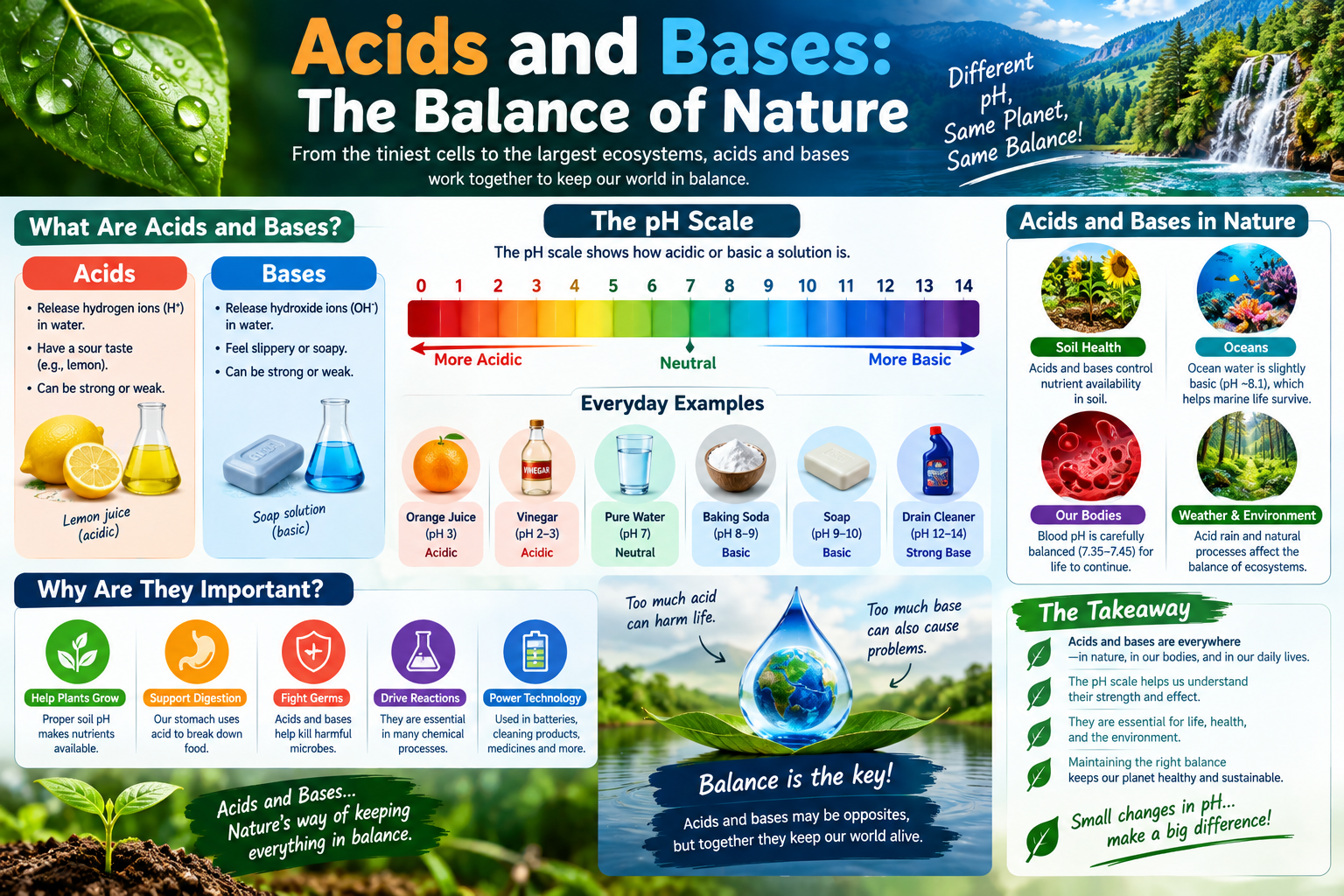
    Acids and bases are important substances found throughout nature and our everyday lives. Acids generally have a pH below 7, while bases have a pH above 7; a neutral substance, such as pure water, has a pH of 7.

    From lemon juice and vinegar to baking soda and soap, acids and bases are all around us. When an acid reacts with a base, they can undergo neutralization, often producing salt and water.

    Understanding acids, bases, and the pH scale helps us explain chemical reactions, protect the environment, and understand many processes in our bodies and daily lives.

    Key Message:
    The balance between acids and bases is an important part of chemistry and nature.

    #AcidsAndBases #Chemistry #Science #PHScale #Neutralization #STEM #ScienceEducation #ChemistryLearning #Nature #ZaeemEducationWala
    Day:-69 rollno:-006 foundation level 📖 Story Post 🧪 Acids and Bases: The Balance of Nature Acids and bases are important substances found throughout nature and our everyday lives. Acids generally have a pH below 7, while bases have a pH above 7; a neutral substance, such as pure water, has a pH of 7. From lemon juice and vinegar to baking soda and soap, acids and bases are all around us. When an acid reacts with a base, they can undergo neutralization, often producing salt and water. Understanding acids, bases, and the pH scale helps us explain chemical reactions, protect the environment, and understand many processes in our bodies and daily lives. 🔬 Key Message: The balance between acids and bases is an important part of chemistry and nature. #AcidsAndBases #Chemistry #Science #PHScale #Neutralization #STEM #ScienceEducation #ChemistryLearning #Nature #ZaeemEducationWala
    0 Comments 0 Shares 1248 Views
  • #rsisb
    Roll no.239
    Foundation Level
    **Acids and bases** are two important types of substances that play a major role in chemistry and in the natural world. Acids are generally known for their sour properties, while bases often have a bitter taste and slippery feel.
    The strength of an acid or base can be described using the **pH scale**, which ranges from 0 to 14. A pH below 7 is acidic, 7 is neutral, and above 7 is basic.
    Acids and bases are found everywhere—from **lemon juice and vinegar to soap, soil, oceans, and our bodies**. They also interact through a process called **neutralization**, where an acid and a base react to form products such as salt and water.
    Understanding acids and bases helps us appreciate the delicate **chemical balance of nature** and their importance in everyday life.
    #rsisb Roll no.239 Foundation Level **Acids and bases** are two important types of substances that play a major role in chemistry and in the natural world. Acids are generally known for their sour properties, while bases often have a bitter taste and slippery feel. The strength of an acid or base can be described using the **pH scale**, which ranges from 0 to 14. A pH below 7 is acidic, 7 is neutral, and above 7 is basic. Acids and bases are found everywhere—from **lemon juice and vinegar to soap, soil, oceans, and our bodies**. They also interact through a process called **neutralization**, where an acid and a base react to form products such as salt and water. Understanding acids and bases helps us appreciate the delicate **chemical balance of nature** and their importance in everyday life.
    0 Comments 0 Shares 1235 Views
  • To naturally enhance your body’s scent, focusing on cleanliness, diet, and lifestyle habits is key. Here are several natural ways to improve your body smell:

    1. Hydration

    • Drinking enough water helps flush toxins from your body, which can reduce any unpleasant odors and enhance a clean, fresh scent.

    2. Diet

    • Fresh Fruits and Vegetables: Incorporate more fruits like citrus (oranges, lemons) and leafy greens into your diet. These foods help your body stay alkaline, which can improve your natural scent.
    • Herbs and Spices: Include herbs like mint, basil, and parsley that can act as natural deodorants. Avoid strong-smelling foods like garlic and onions if you want a mild body odor.
    • Probiotics: Foods like yogurt, kefir, and kombucha can support your gut health, which can influence your natural body odor.
    • Chlorophyll-rich foods: Foods like spinach, parsley, and wheatgrass contain chlorophyll, which helps neutralize body odor.

    3. Exercise and Sweat Detox

    • Regular exercise helps your body expel toxins through sweat, and over time, as your body detoxifies, your natural scent becomes more pleasant.
    • After exercising, always shower to remove bacteria and sweat buildup that can cause odor.

    4. Personal Hygiene

    • Regular Bathing: Daily showers with natural, mild soaps can help maintain a neutral or mild scent.
    • Exfoliation: Exfoliating your skin removes dead cells, allowing your natural oils to keep your skin smelling fresh.
    • Avoid Harsh Chemicals: Overuse of artificial soaps, perfumes, and deodorants can mask or alter your natural scent. Stick to natural or mild products when possible.

    5. Essential Oils

    • You can lightly apply natural essential oils like lavender, sandalwood, or rose directly to your pulse points. These oils mix with your skin’s natural oils and enhance your body smell without overpowering it.

    6. Healthy Fats

    • Include good fats like those found in nuts, seeds, avocado, and olive oil. These fats are essential for healthy skin, and skin health plays a role in how your body naturally smells.

    7. Clothing

    • Wear breathable, natural fabrics like cotton or linen. Synthetic fabrics can trap sweat and bacteria, which can lead to body odor.
    • Washing your clothes with mild detergents or natural alternatives like vinegar or baking soda can prevent any artificial smells from building up.

    8. Stress Management

    • Stress can cause the body to release hormones that affect your sweat and scent. Managing stress through techniques like meditation, yoga, or deep breathing can improve your overall smell.

    9. Sleep

    • Quality sleep is essential for your body to repair and detoxify, which can influence how you smell. Lack of sleep can lead to hormonal imbalances that may cause unpleasant odors.

    10. Rose Petals or Saffron Consumption

    • Consuming rose petal jam or saffron in your diet can help improve your internal fragrance, as these have natural aromatic properties.

    By incorporating these practices into your lifestyle, you can enhance your natural body scent, making it more pleasant and noticeable without relying on artificial fragrances.
    To naturally enhance your body’s scent, focusing on cleanliness, diet, and lifestyle habits is key. Here are several natural ways to improve your body smell: 1. Hydration • Drinking enough water helps flush toxins from your body, which can reduce any unpleasant odors and enhance a clean, fresh scent. 2. Diet • Fresh Fruits and Vegetables: Incorporate more fruits like citrus (oranges, lemons) and leafy greens into your diet. These foods help your body stay alkaline, which can improve your natural scent. • Herbs and Spices: Include herbs like mint, basil, and parsley that can act as natural deodorants. Avoid strong-smelling foods like garlic and onions if you want a mild body odor. • Probiotics: Foods like yogurt, kefir, and kombucha can support your gut health, which can influence your natural body odor. • Chlorophyll-rich foods: Foods like spinach, parsley, and wheatgrass contain chlorophyll, which helps neutralize body odor. 3. Exercise and Sweat Detox • Regular exercise helps your body expel toxins through sweat, and over time, as your body detoxifies, your natural scent becomes more pleasant. • After exercising, always shower to remove bacteria and sweat buildup that can cause odor. 4. Personal Hygiene • Regular Bathing: Daily showers with natural, mild soaps can help maintain a neutral or mild scent. • Exfoliation: Exfoliating your skin removes dead cells, allowing your natural oils to keep your skin smelling fresh. • Avoid Harsh Chemicals: Overuse of artificial soaps, perfumes, and deodorants can mask or alter your natural scent. Stick to natural or mild products when possible. 5. Essential Oils • You can lightly apply natural essential oils like lavender, sandalwood, or rose directly to your pulse points. These oils mix with your skin’s natural oils and enhance your body smell without overpowering it. 6. Healthy Fats • Include good fats like those found in nuts, seeds, avocado, and olive oil. These fats are essential for healthy skin, and skin health plays a role in how your body naturally smells. 7. Clothing • Wear breathable, natural fabrics like cotton or linen. Synthetic fabrics can trap sweat and bacteria, which can lead to body odor. • Washing your clothes with mild detergents or natural alternatives like vinegar or baking soda can prevent any artificial smells from building up. 8. Stress Management • Stress can cause the body to release hormones that affect your sweat and scent. Managing stress through techniques like meditation, yoga, or deep breathing can improve your overall smell. 9. Sleep • Quality sleep is essential for your body to repair and detoxify, which can influence how you smell. Lack of sleep can lead to hormonal imbalances that may cause unpleasant odors. 10. Rose Petals or Saffron Consumption • Consuming rose petal jam or saffron in your diet can help improve your internal fragrance, as these have natural aromatic properties. By incorporating these practices into your lifestyle, you can enhance your natural body scent, making it more pleasant and noticeable without relying on artificial fragrances.
    0 Comments 0 Shares 1228 Views
  • Here are several effective techniques for cleaning and improving the air quality in your space:

    1. Houseplants

    • Certain plants naturally purify the air by absorbing toxins and releasing oxygen.
    • Best plants:
    • Snake Plant
    • Peace Lily
    • Spider Plant
    • Aloe Vera
    • Bamboo Palm
    • Tip: Keep 1-2 plants per 100 square feet for optimal air purification.

    2. Air Purifiers

    • Use high-quality air purifiers with HEPA filters to remove:
    • Dust
    • Pollen
    • Pet dander
    • Smoke
    • Look for models with activated carbon filters to eliminate odors and VOCs (volatile organic compounds).

    3. Essential Oils and Diffusers

    • Certain essential oils have antimicrobial properties and freshen the air naturally:
    • Tea tree oil
    • Eucalyptus oil
    • Lavender oil
    • Use a diffuser or place a few drops on cotton balls near vents.

    4. Regular Cleaning

    • Dust and vacuum often to reduce pollutants like pet hair, dirt, and dust mites.
    • Use a vacuum with a HEPA filter.
    • Wash curtains, rugs, and bedding frequently.

    5. Ventilation

    • Open windows regularly to allow fresh air to circulate (if the outdoor air quality is good).
    • Use exhaust fans in kitchens and bathrooms to remove moisture and pollutants.

    6. Salt Lamps

    • Himalayan salt lamps are believed to emit negative ions, which may improve air quality by reducing allergens, dust, and pollutants.

    7. Activated Charcoal

    • Place activated charcoal in bowls or air-purifying bags around your home to absorb odors and toxins.

    8. Beeswax Candles

    • Burn natural beeswax candles instead of paraffin ones. Beeswax candles release negative ions that bind to pollutants, cleaning the air.

    9. Baking Soda

    • Place bowls of baking soda in problem areas to absorb odors and improve air freshness.

    10. Dehumidifiers

    • High humidity promotes mold and mildew growth. Dehumidifiers keep humidity levels between 30-50%, reducing allergens.

    11. Avoid Synthetic Air Fresheners

    • Commercial sprays and plug-ins often release chemicals. Opt for natural alternatives like:
    • Boiling citrus peels or herbs like rosemary and cinnamon.
    • Vinegar in open bowls to absorb strong odors.

    12. Keep Pets Groomed

    • Regularly groom and bathe pets to minimize fur and dander in the air.

    13. Control Mold Growth

    • Clean damp areas regularly and use vinegar or hydrogen peroxide to prevent mold.

    14. Use Green Cleaning Products

    • Avoid chemical-based cleaning agents; instead, use natural alternatives like vinegar, baking soda, and castile soap.

    15. Regular Air Duct Maintenance

    • Clean HVAC and AC filters every 1-3 months to reduce circulating dust and debris.

    These techniques, when combined, can significantly improve indoor air quality, making your home healthier and fresher.
    Here are several effective techniques for cleaning and improving the air quality in your space: 1. Houseplants • Certain plants naturally purify the air by absorbing toxins and releasing oxygen. • Best plants: • Snake Plant • Peace Lily • Spider Plant • Aloe Vera • Bamboo Palm • Tip: Keep 1-2 plants per 100 square feet for optimal air purification. 2. Air Purifiers • Use high-quality air purifiers with HEPA filters to remove: • Dust • Pollen • Pet dander • Smoke • Look for models with activated carbon filters to eliminate odors and VOCs (volatile organic compounds). 3. Essential Oils and Diffusers • Certain essential oils have antimicrobial properties and freshen the air naturally: • Tea tree oil • Eucalyptus oil • Lavender oil • Use a diffuser or place a few drops on cotton balls near vents. 4. Regular Cleaning • Dust and vacuum often to reduce pollutants like pet hair, dirt, and dust mites. • Use a vacuum with a HEPA filter. • Wash curtains, rugs, and bedding frequently. 5. Ventilation • Open windows regularly to allow fresh air to circulate (if the outdoor air quality is good). • Use exhaust fans in kitchens and bathrooms to remove moisture and pollutants. 6. Salt Lamps • Himalayan salt lamps are believed to emit negative ions, which may improve air quality by reducing allergens, dust, and pollutants. 7. Activated Charcoal • Place activated charcoal in bowls or air-purifying bags around your home to absorb odors and toxins. 8. Beeswax Candles • Burn natural beeswax candles instead of paraffin ones. Beeswax candles release negative ions that bind to pollutants, cleaning the air. 9. Baking Soda • Place bowls of baking soda in problem areas to absorb odors and improve air freshness. 10. Dehumidifiers • High humidity promotes mold and mildew growth. Dehumidifiers keep humidity levels between 30-50%, reducing allergens. 11. Avoid Synthetic Air Fresheners • Commercial sprays and plug-ins often release chemicals. Opt for natural alternatives like: • Boiling citrus peels or herbs like rosemary and cinnamon. • Vinegar in open bowls to absorb strong odors. 12. Keep Pets Groomed • Regularly groom and bathe pets to minimize fur and dander in the air. 13. Control Mold Growth • Clean damp areas regularly and use vinegar or hydrogen peroxide to prevent mold. 14. Use Green Cleaning Products • Avoid chemical-based cleaning agents; instead, use natural alternatives like vinegar, baking soda, and castile soap. 15. Regular Air Duct Maintenance • Clean HVAC and AC filters every 1-3 months to reduce circulating dust and debris. These techniques, when combined, can significantly improve indoor air quality, making your home healthier and fresher.
    0 Comments 0 Shares 637 Views
  • Let Me Introduce You to a New Word: RISH

    By Rehan Allahwala – 2025

    Language is humanity’s mirror.
    It grows when we grow.
    Every century, new inventions, ideas, and emotions enter our world — and with them, new words.
    Once there was no “bread,” only baked grain.
    No “pasta,” only boiled dough.
    No “internet,” no “emoji,” no “podcast.”
    Each new word begins when someone notices that something exists — but doesn’t yet have a name.

    And so, in 2025, I noticed something missing.

    Half of humanity eats rice every single day.
    We have biryani, pulao, paella, nasi goreng, risotto, jollof, bibimbap, khao pad, arroz con pollo, sushi, kheer — hundreds of unique dishes, across every culture and continent.
    But there is no single English word that means “a dish made from rice.”

    We say rice dish or rice meal — but that’s not language, that’s description.
    We don’t call bread “wheat food,” or pasta “flour shapes.”
    Why should rice, the foundation of billions of lives, not have its own universal identity?

    So, let me introduce you to a new word:

    ⸻

    RISH (noun)

    Pronunciation: /rɪʃ/ — rhymes with wish
    Plural: Rishes
    Adjective: Rishy (relating to rice)
    Etymology: Modern English blend of rice + dish
    Coined by: Rehan Allahwala (2025)

    Definition:

    Any prepared dish whose primary ingredient is rice — cooked, seasoned, or combined with other ingredients.

    Examples:
    • “Biryani is my favorite rish.”
    • “Paella, nasi goreng, and risotto are all world-famous rishes.”
    • “Every region has its own rish — some spicy, some sweet, all comforting.”

    ⸻

    What is a Rish?

    A rish is any food that turns rice from a grain into a meal —
    a dish created through human imagination, culture, and taste.

    Examples of Rishes of the World:
    • Biryani (Pakistan/India) – a layered, spiced rish with meat or vegetables
    • Pulao / Pilaf (Persia, Turkey, South Asia) – a savory rish cooked in broth
    • Paella (Spain) – saffron rish with seafood or chicken
    • Khao Pad (Thailand) – fried rish with eggs and herbs
    • Nasi Goreng (Indonesia) – sweet-spicy fried rish
    • Risotto (Italy) – creamy rish with stock and cheese
    • Bibimbap (Korea) – a mixed rish topped with vegetables and egg
    • Jollof Rice (West Africa) – tomato and chili-based rish
    • Arroz con Pollo (Latin America) – chicken rish
    • Kheer (South Asia) – sweet milk-based rish
    • Sushi (Japan) – vinegared rish served cold with seafood

    Every one of these is different — yet they all belong to one family: the Rishes of our planet.

    ⸻

    Why the world needs this word

    Because we are now global citizens.
    Our languages, foods, and cultures are merging faster than ever before.
    We watch Japanese shows while eating Pakistani biryani in London and read African recipes on Instagram from Brazil.

    But our language hasn’t caught up.
    We lack the vocabulary to describe this global unity of culture.

    Creating the word Rish gives the world a new linguistic category —
    a way to recognize and celebrate all rice-based dishes together.
    It expands our horizon, gives writers and chefs a new word,
    and gives English — the world’s bridge language — the ability to talk about food as a shared human experience.

    We can now say:

    “Bread unites the West. Pasta defines Italy. Curry speaks for the subcontinent. And Rish belongs to all of us.”

    And astonishingly, this beautiful, short, four-letter word — RISH —
    was still available.
    It does not exist in the Oxford, Cambridge, or Merriam-Webster dictionaries as a noun.
    It was a completely empty space in language, waiting to be filled.
    And now, it has meaning, heart, and global purpose.

    ⸻

    Proposed Oxford Dictionary Entry

    Rish /rɪʃ/
    noun

    Definition:
    Any prepared dish made primarily from rice; a rice-based meal of any cultural origin.

    Examples:
    “Biryani and paella are famous rishes.”
    “A simple vegetable rish can be found in almost every country.”

    Etymology:
    Coined 2025 by Rehan Allahwala, from rice + dish.

    Plural: rishes
    Adjective: rishy (relating to or characteristic of rice).

    Cultural Note:
    Represents the global unity of rice-based cuisines across Asia, Africa, and the Americas — the food of more than half of humanity.

    ⸻

    Why naming matters

    When we name something, we give it identity.
    We bring it into human consciousness.
    By creating a word for a concept, we invite thought, respect, and creativity around it.

    Bread became a symbol of civilization.
    Pasta became a symbol of Italy.
    Taco became a symbol of Mexico.

    Now, Rish becomes the symbol of unity — a word that connects the rice bowls of Karachi, Kyoto, Kampala, and California.
    It’s not just food anymore; it’s a bridge between cultures.

    ⸻

    Closing Thoughts

    Language shapes how we think, and food shapes how we live.
    When we expand language, we expand the mind.
    When we give rice a word of its own, we honor billions who depend on it.

    The future belongs to global citizens — people who share meals, knowledge, and kindness across borders.
    Rish is a small step toward that shared vocabulary of humanity.

    From today, let’s not just eat rice dishes.
    Let’s eat Rish.
    Let Me Introduce You to a New Word: RISH By Rehan Allahwala – 2025 Language is humanity’s mirror. It grows when we grow. Every century, new inventions, ideas, and emotions enter our world — and with them, new words. Once there was no “bread,” only baked grain. No “pasta,” only boiled dough. No “internet,” no “emoji,” no “podcast.” Each new word begins when someone notices that something exists — but doesn’t yet have a name. And so, in 2025, I noticed something missing. Half of humanity eats rice every single day. We have biryani, pulao, paella, nasi goreng, risotto, jollof, bibimbap, khao pad, arroz con pollo, sushi, kheer — hundreds of unique dishes, across every culture and continent. But there is no single English word that means “a dish made from rice.” We say rice dish or rice meal — but that’s not language, that’s description. We don’t call bread “wheat food,” or pasta “flour shapes.” Why should rice, the foundation of billions of lives, not have its own universal identity? So, let me introduce you to a new word: ⸻ 🪶 RISH (noun) Pronunciation: /rɪʃ/ — rhymes with wish Plural: Rishes Adjective: Rishy (relating to rice) Etymology: Modern English blend of rice + dish Coined by: Rehan Allahwala (2025) Definition: Any prepared dish whose primary ingredient is rice — cooked, seasoned, or combined with other ingredients. Examples: • “Biryani is my favorite rish.” • “Paella, nasi goreng, and risotto are all world-famous rishes.” • “Every region has its own rish — some spicy, some sweet, all comforting.” ⸻ 🌾 What is a Rish? A rish is any food that turns rice from a grain into a meal — a dish created through human imagination, culture, and taste. Examples of Rishes of the World: • Biryani (Pakistan/India) – a layered, spiced rish with meat or vegetables • Pulao / Pilaf (Persia, Turkey, South Asia) – a savory rish cooked in broth • Paella (Spain) – saffron rish with seafood or chicken • Khao Pad (Thailand) – fried rish with eggs and herbs • Nasi Goreng (Indonesia) – sweet-spicy fried rish • Risotto (Italy) – creamy rish with stock and cheese • Bibimbap (Korea) – a mixed rish topped with vegetables and egg • Jollof Rice (West Africa) – tomato and chili-based rish • Arroz con Pollo (Latin America) – chicken rish • Kheer (South Asia) – sweet milk-based rish • Sushi (Japan) – vinegared rish served cold with seafood Every one of these is different — yet they all belong to one family: the Rishes of our planet. ⸻ 🌍 Why the world needs this word Because we are now global citizens. Our languages, foods, and cultures are merging faster than ever before. We watch Japanese shows while eating Pakistani biryani in London and read African recipes on Instagram from Brazil. But our language hasn’t caught up. We lack the vocabulary to describe this global unity of culture. Creating the word Rish gives the world a new linguistic category — a way to recognize and celebrate all rice-based dishes together. It expands our horizon, gives writers and chefs a new word, and gives English — the world’s bridge language — the ability to talk about food as a shared human experience. We can now say: “Bread unites the West. Pasta defines Italy. Curry speaks for the subcontinent. And Rish belongs to all of us.” And astonishingly, this beautiful, short, four-letter word — RISH — was still available. It does not exist in the Oxford, Cambridge, or Merriam-Webster dictionaries as a noun. It was a completely empty space in language, waiting to be filled. And now, it has meaning, heart, and global purpose. ⸻ 📘 Proposed Oxford Dictionary Entry Rish /rɪʃ/ noun Definition: Any prepared dish made primarily from rice; a rice-based meal of any cultural origin. Examples: “Biryani and paella are famous rishes.” “A simple vegetable rish can be found in almost every country.” Etymology: Coined 2025 by Rehan Allahwala, from rice + dish. Plural: rishes Adjective: rishy (relating to or characteristic of rice). Cultural Note: Represents the global unity of rice-based cuisines across Asia, Africa, and the Americas — the food of more than half of humanity. ⸻ 💡 Why naming matters When we name something, we give it identity. We bring it into human consciousness. By creating a word for a concept, we invite thought, respect, and creativity around it. Bread became a symbol of civilization. Pasta became a symbol of Italy. Taco became a symbol of Mexico. Now, Rish becomes the symbol of unity — a word that connects the rice bowls of Karachi, Kyoto, Kampala, and California. It’s not just food anymore; it’s a bridge between cultures. ⸻ 🪴 Closing Thoughts Language shapes how we think, and food shapes how we live. When we expand language, we expand the mind. When we give rice a word of its own, we honor billions who depend on it. The future belongs to global citizens — people who share meals, knowledge, and kindness across borders. Rish is a small step toward that shared vocabulary of humanity. From today, let’s not just eat rice dishes. Let’s eat Rish.
    0 Comments 0 Shares 1658 Views
  • The Origin Story of Ketchup — A Story Essay

    Long before the world dipped French fries in ketchup…
    long before burgers dripped with red sauce…

    There was no tomato in ketchup at all.

    The true story begins 2,500 years ago, deep in Asia.

    ⸻

    Chapter 1 — The Sauce of the Sea (China, 300 BCE)

    Along the coastline of ancient China, fishermen fermented:
    • Fish
    • Salt
    • Water
    • Sometimes seaweed

    They called this dark, salty liquid:

    “鮭汁” (Ke-tsiap)

    Pronounced kay-chap.
    It meant “fish brine” or “fish sauce.”

    It was powerful, sharp, and full of umami — the perfect seasoning.
    Sailors loved it, traders carried it, and soon it spread along the shipping routes of Asia.

    ⸻

    Chapter 2 — The Journey to Southeast Asia

    Ke-tsiap traveled to:
    • Malaysia
    • Indonesia
    • Singapore
    • The Philippines

    Local people copied it.

    In Malay it became:

    “Kecap” or “Kicap”

    This word still exists today — the origin of our modern “ketchup.”

    But still — no tomato yet.

    ⸻

    Chapter 3 — The British Discover the Magic (1600s)

    British sailors visiting Asia tasted kecap and loved it.

    They brought the idea back to England.

    But Britain had no Asian fish sauce, so they improvised and created their own versions:
    • Mushroom ketchup
    • Walnut ketchup
    • Oyster ketchup
    • Anchovy ketchup

    Ketchup at this time looked brown, not red.
    It was used in soups, gravies, and meat pies — more like soy sauce than today’s ketchup.

    For over 150 years, ketchup was a brown, savory British sauce.

    ⸻

    Chapter 4 — The Tomato Arrives (1800s, America)

    Tomatoes reached America from Europe.
    People were still unsure — were tomatoes poisonous or safe?

    Then American cooks did something bold:

    They made tomato ketchup.

    The earliest printed recipe appears around 1812 by scientist James Mease.
    He called tomatoes “love apples” and mixed them with:
    • Vinegar
    • Salt
    • Spices

    This new red ketchup was bright, sweet, and tangy.
    Americans loved it instantly.

    Tomato ketchup pushed aside every other version.

    ⸻

    Chapter 5 — Heinz and the Birth of Modern Ketchup (1876)

    This is the real turning point.

    Henry J. Heinz created the ketchup we know today:
    • Thick
    • Smooth
    • Bright red
    • Sweet
    • Shelf-stable

    He added distilled vinegar and removed all artificial preservatives.
    His glass bottle with the number 57 became iconic.

    From that moment, ketchup transformed from a homemade sauce to a global kitchen essential.

    ⸻

    Chapter 6 — Ketchup Conquers the World

    By the 1900s:
    • Hamburgers
    • Hot dogs
    • Fries
    • Fried chicken
    • Eggs
    • Shawarma
    • Samosas
    • Pakoras
    • Parathas

    All got baptized in ketchup.

    India made spicy ketchup.
    Pakistan made chili-garlic ketchup.
    Japan made omurice ketchup.
    The world made a thousand versions — but all of them trace back to:

    A Chinese fermented fish sauce.

    ⸻

    The Journey in One Line

    A salty Chinese fish sauce became a British mushroom sauce…
    which became an American tomato sauce…
    which became ketchup, the world’s favorite icon.
    🍅 The Origin Story of Ketchup — A Story Essay Long before the world dipped French fries in ketchup… long before burgers dripped with red sauce… There was no tomato in ketchup at all. The true story begins 2,500 years ago, deep in Asia. ⸻ 🌊 Chapter 1 — The Sauce of the Sea (China, 300 BCE) Along the coastline of ancient China, fishermen fermented: • Fish • Salt • Water • Sometimes seaweed They called this dark, salty liquid: “鮭汁” (Ke-tsiap) Pronounced kay-chap. It meant “fish brine” or “fish sauce.” It was powerful, sharp, and full of umami — the perfect seasoning. Sailors loved it, traders carried it, and soon it spread along the shipping routes of Asia. ⸻ 🛶 Chapter 2 — The Journey to Southeast Asia Ke-tsiap traveled to: • Malaysia • Indonesia • Singapore • The Philippines Local people copied it. In Malay it became: “Kecap” or “Kicap” This word still exists today — the origin of our modern “ketchup.” But still — no tomato yet. ⸻ 🚢 Chapter 3 — The British Discover the Magic (1600s) British sailors visiting Asia tasted kecap and loved it. They brought the idea back to England. But Britain had no Asian fish sauce, so they improvised and created their own versions: • Mushroom ketchup • Walnut ketchup • Oyster ketchup • Anchovy ketchup Ketchup at this time looked brown, not red. It was used in soups, gravies, and meat pies — more like soy sauce than today’s ketchup. For over 150 years, ketchup was a brown, savory British sauce. ⸻ 🍅 Chapter 4 — The Tomato Arrives (1800s, America) Tomatoes reached America from Europe. People were still unsure — were tomatoes poisonous or safe? Then American cooks did something bold: They made tomato ketchup. The earliest printed recipe appears around 1812 by scientist James Mease. He called tomatoes “love apples” and mixed them with: • Vinegar • Salt • Spices This new red ketchup was bright, sweet, and tangy. Americans loved it instantly. Tomato ketchup pushed aside every other version. ⸻ 🏭 Chapter 5 — Heinz and the Birth of Modern Ketchup (1876) This is the real turning point. Henry J. Heinz created the ketchup we know today: • Thick • Smooth • Bright red • Sweet • Shelf-stable He added distilled vinegar and removed all artificial preservatives. His glass bottle with the number 57 became iconic. From that moment, ketchup transformed from a homemade sauce to a global kitchen essential. ⸻ 🌍 Chapter 6 — Ketchup Conquers the World By the 1900s: • Hamburgers • Hot dogs • Fries • Fried chicken • Eggs • Shawarma • Samosas • Pakoras • Parathas All got baptized in ketchup. India made spicy ketchup. Pakistan made chili-garlic ketchup. Japan made omurice ketchup. The world made a thousand versions — but all of them trace back to: A Chinese fermented fish sauce. ⸻ 🍅 The Journey in One Line A salty Chinese fish sauce became a British mushroom sauce… which became an American tomato sauce… which became ketchup, the world’s favorite icon.
    0 Comments 0 Shares 2006 Views
More Results