• #rsisb
    Roll no.239
    Foundation Level


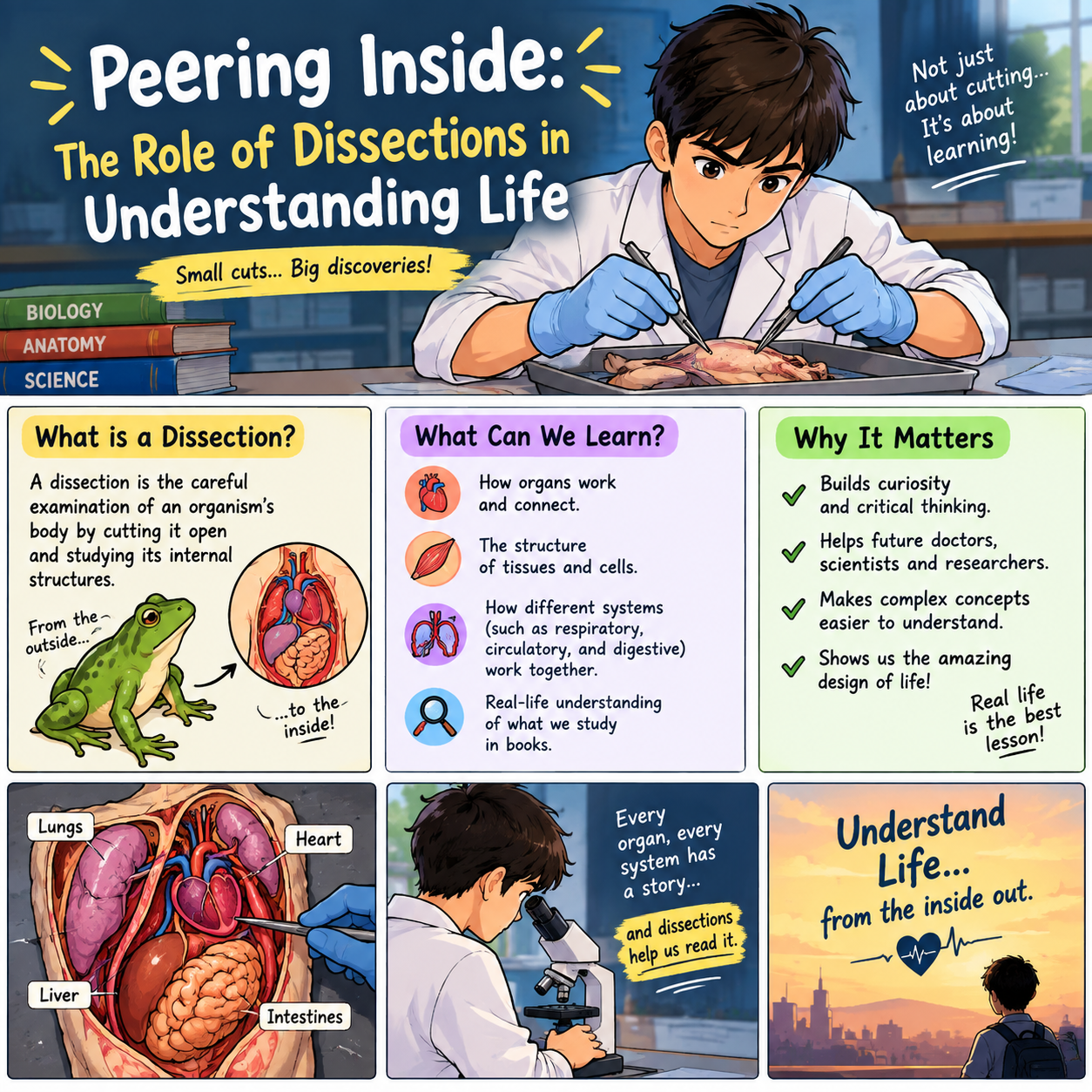
    **Dissection** is an important method used in biology to understand the internal structure of living organisms. By carefully examining organs, tissues, and body systems, students and scientists can learn how different parts of an organism are arranged and how they work together.

    Dissections provide a practical experience that books and diagrams cannot always provide. For example, studying a frog dissection can help students understand the **heart, lungs, liver, stomach, intestines, and other organs** in their natural positions. This hands-on learning can make biological concepts easier to understand and remember.

    Dissection also plays a role in **medical education and scientific research**. It has helped humans develop a deeper understanding of anatomy, disease, and the relationships between different body systems.

    However, dissections should always be performed responsibly, following **ethical guidelines, safety procedures, and respect for living organisms**. Modern alternatives, such as digital simulations and 3D anatomical models, can also provide valuable learning experiences.

    Overall, dissections help us **“peer inside” life** and transform biological knowledge from something we simply read about into something we can observe and understand more clearly.
    #rsisb Roll no.239 Foundation Level **Dissection** is an important method used in biology to understand the internal structure of living organisms. By carefully examining organs, tissues, and body systems, students and scientists can learn how different parts of an organism are arranged and how they work together. Dissections provide a practical experience that books and diagrams cannot always provide. For example, studying a frog dissection can help students understand the **heart, lungs, liver, stomach, intestines, and other organs** in their natural positions. This hands-on learning can make biological concepts easier to understand and remember. Dissection also plays a role in **medical education and scientific research**. It has helped humans develop a deeper understanding of anatomy, disease, and the relationships between different body systems. However, dissections should always be performed responsibly, following **ethical guidelines, safety procedures, and respect for living organisms**. Modern alternatives, such as digital simulations and 3D anatomical models, can also provide valuable learning experiences. Overall, dissections help us **“peer inside” life** and transform biological knowledge from something we simply read about into something we can observe and understand more clearly.
    0 Commentaires 0 Parts 39 Vue
  • #rsisb
    Roll no.239
    Foundation Level


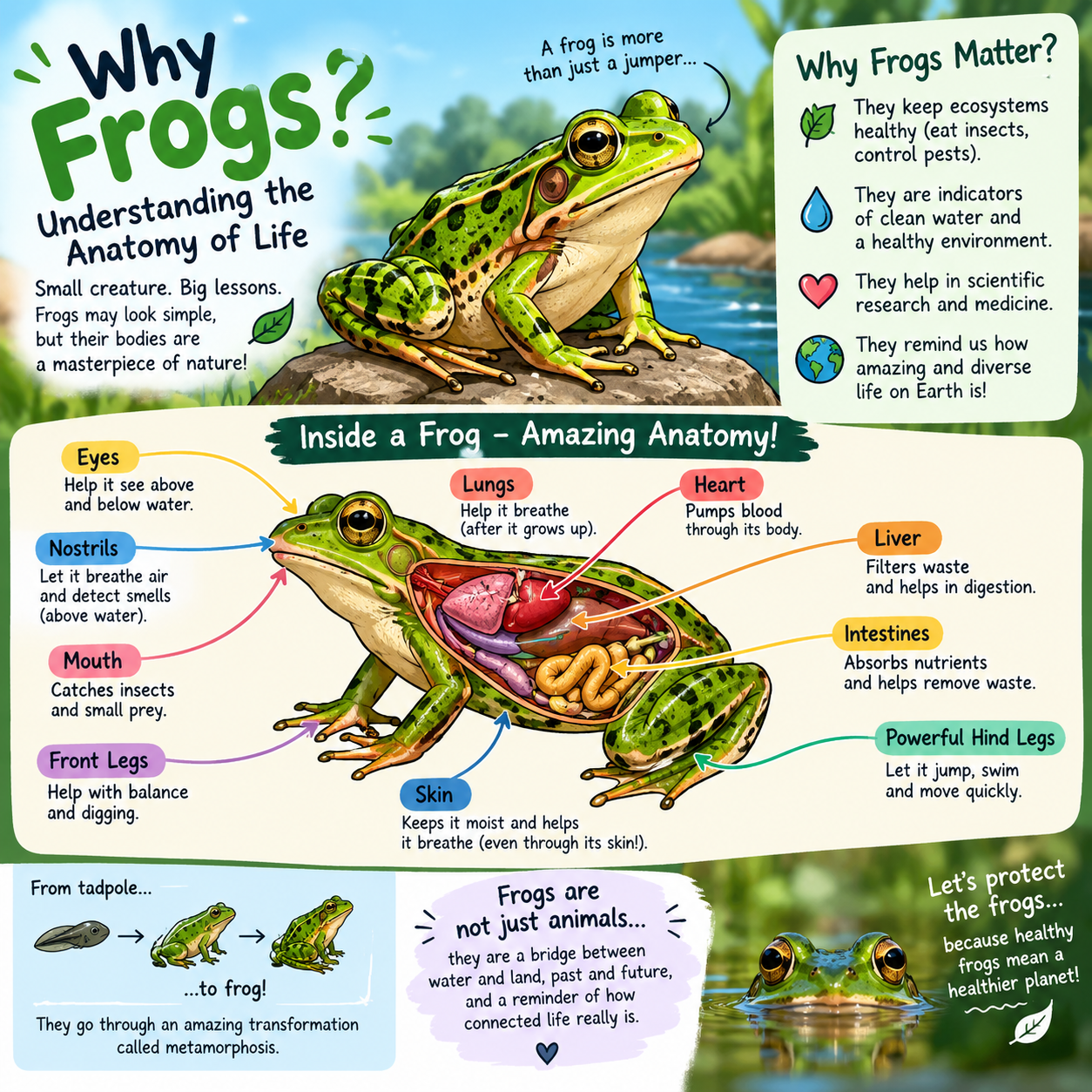
    Frogs are often studied in biology because their bodies provide a clear way to understand **basic animal anatomy and physiology**. Their organs and organ systems are relatively easy to observe, while still showing many of the same fundamental structures found in other vertebrates.

    ### What Can Frogs Teach Us?

    * **Heart:** A frog’s three-chambered heart demonstrates how blood circulates through the body.
    * **Lungs and skin:** Frogs breathe through both their lungs and moist skin, showing different methods of gas exchange.
    * **Digestive system:** Their digestive organs demonstrate how food is broken down and nutrients are absorbed.
    * **Muscles and skeleton:** Powerful hind-leg muscles and a specialized skeleton explain how frogs jump and move.
    * **Nervous system:** The brain, spinal cord, and nerves coordinate movement and responses.
    * **Kidneys:** These organs help remove waste and maintain the body's internal balance.

    genui{"biology_anatomy_physiology":{"type_id":"BLOOD_CIRCULATION","locale_override":"en-US"}}

    ### **Why Are Frogs Important in Biology?**

    Frogs are useful study organisms because their anatomy helps students connect **structure with function**. By examining how different organs work together, we can better understand a central idea of biology: **life depends on coordinated systems working as one whole organism.**

    In short, studying a frog is not simply about studying one animal—it is a way to explore the **anatomy, physiology, adaptation, and organization of life itself**.
    #rsisb Roll no.239 Foundation Level Frogs are often studied in biology because their bodies provide a clear way to understand **basic animal anatomy and physiology**. Their organs and organ systems are relatively easy to observe, while still showing many of the same fundamental structures found in other vertebrates. ### 🐸 What Can Frogs Teach Us? * **Heart:** A frog’s three-chambered heart demonstrates how blood circulates through the body. * **Lungs and skin:** Frogs breathe through both their lungs and moist skin, showing different methods of gas exchange. * **Digestive system:** Their digestive organs demonstrate how food is broken down and nutrients are absorbed. * **Muscles and skeleton:** Powerful hind-leg muscles and a specialized skeleton explain how frogs jump and move. * **Nervous system:** The brain, spinal cord, and nerves coordinate movement and responses. * **Kidneys:** These organs help remove waste and maintain the body's internal balance. genui{"biology_anatomy_physiology":{"type_id":"BLOOD_CIRCULATION","locale_override":"en-US"}} ### **Why Are Frogs Important in Biology?** Frogs are useful study organisms because their anatomy helps students connect **structure with function**. By examining how different organs work together, we can better understand a central idea of biology: **life depends on coordinated systems working as one whole organism.** In short, studying a frog is not simply about studying one animal—it is a way to explore the **anatomy, physiology, adaptation, and organization of life itself**.
    0 Commentaires 0 Parts 54 Vue
  • #rsisb
    Roll No.240
    Story No.17
    Foundation level

    ### **The Ethics and Education of Animal Dissections**

    Animal dissection has long been an important part of biology and medical education, helping students understand anatomy, physiology, and the complex structures of living organisms. By examining real biological specimens, learners gain hands-on experience that strengthens their observation, critical thinking, and scientific investigation skills. For many years, dissections have played a significant role in preparing future doctors, veterinarians, scientists, and researchers by providing practical knowledge that complements classroom learning.

    At the same time, animal dissections raise important ethical questions about animal welfare, responsible scientific practice, and the balance between educational benefits and respect for living creatures. Modern education encourages students to consider these ethical perspectives while learning about science. Many schools and universities now offer alternatives such as virtual dissections, 3D anatomical models, computer simulations, and interactive digital laboratories. These innovative tools provide effective learning experiences while reducing the need for animal specimens in many educational settings.

    Understanding the ethics of animal dissection helps students develop not only scientific knowledge but also compassion, responsibility, and respect for life. By combining ethical awareness with scientific inquiry, educators can inspire future generations to pursue discovery in ways that are both innovative and humane. This balanced approach promotes critical thinking, responsible decision-making, and a deeper appreciation for the relationship between science, education, and the living world.

    **#AnimalDissection #Biology #ScienceEducation #Ethics #STEM #BiologyLab #Anatomy #LifeSciences #ScientificLearning #AnimalWelfare #Education #MedicalScience #CriticalThinking #Research #Science **

    Rehan School Islamabad Campus
    Asma Shaheen EducationWali
    Irum Asim
    Saima Happinesswali
    #rsisb Roll No.240 Story No.17 Foundation level ### **The Ethics and Education of Animal Dissections** Animal dissection has long been an important part of biology and medical education, helping students understand anatomy, physiology, and the complex structures of living organisms. By examining real biological specimens, learners gain hands-on experience that strengthens their observation, critical thinking, and scientific investigation skills. For many years, dissections have played a significant role in preparing future doctors, veterinarians, scientists, and researchers by providing practical knowledge that complements classroom learning. At the same time, animal dissections raise important ethical questions about animal welfare, responsible scientific practice, and the balance between educational benefits and respect for living creatures. Modern education encourages students to consider these ethical perspectives while learning about science. Many schools and universities now offer alternatives such as virtual dissections, 3D anatomical models, computer simulations, and interactive digital laboratories. These innovative tools provide effective learning experiences while reducing the need for animal specimens in many educational settings. Understanding the ethics of animal dissection helps students develop not only scientific knowledge but also compassion, responsibility, and respect for life. By combining ethical awareness with scientific inquiry, educators can inspire future generations to pursue discovery in ways that are both innovative and humane. This balanced approach promotes critical thinking, responsible decision-making, and a deeper appreciation for the relationship between science, education, and the living world. **#AnimalDissection #Biology #ScienceEducation #Ethics #STEM #BiologyLab #Anatomy #LifeSciences #ScientificLearning #AnimalWelfare #Education #MedicalScience #CriticalThinking #Research #Science 🌿🔬🧬🐸📚** Rehan School Islamabad Campus Asma Shaheen EducationWali Irum Asim Saima Happinesswali
    0 Commentaires 0 Parts 424 Vue
  • #rsisb
    Roll No.240
    Story No.22
    Foundation Level

    ### **Peering Inside: The Role of Dissections in Understanding Life – Description**

    **Peering Inside: The Role of Dissections in Understanding Life** explores how dissections help scientists, doctors, and students uncover the hidden structures of living organisms. By carefully studying internal anatomy, researchers gain a deeper understanding of how organs, tissues, and body systems work together.

    Through dissection, we can discover the complexity of life, improve medical knowledge, and develop better treatments for diseases. It connects observation with scientific discovery and allows learners to explore the amazing design and organization of living things.

    This journey highlights the importance of anatomy, research, and ethical scientific practices in understanding the mysteries of life.

    Discover how looking inside helps us understand the incredible story of life from within.

    #Dissection #Anatomy #Biology #ScienceEducation #UnderstandingLife #HumanBody #MedicalScience #BiologyLearning #ScientificDiscovery

    Rehan School Islamabad Campus
    Asma Shaheen EducationWali
    Irum Asim
    Saima Happinesswali
    #rsisb Roll No.240 Story No.22 Foundation Level ### 🔬 **Peering Inside: The Role of Dissections in Understanding Life – Description** ✨ 🧬 **Peering Inside: The Role of Dissections in Understanding Life** explores how dissections help scientists, doctors, and students uncover the hidden structures of living organisms. By carefully studying internal anatomy, researchers gain a deeper understanding of how organs, tissues, and body systems work together. 🔍 Through dissection, we can discover the complexity of life, improve medical knowledge, and develop better treatments for diseases. It connects observation with scientific discovery and allows learners to explore the amazing design and organization of living things. 🧪 This journey highlights the importance of anatomy, research, and ethical scientific practices in understanding the mysteries of life. 🌱 Discover how looking inside helps us understand the incredible story of life from within. #Dissection #Anatomy #Biology #ScienceEducation #UnderstandingLife #HumanBody #MedicalScience #BiologyLearning #ScientificDiscovery 🔬🧬✨ Rehan School Islamabad Campus Asma Shaheen EducationWali Irum Asim Saima Happinesswali
    0 Commentaires 0 Parts 273 Vue
  • #rsisb
    Roll No.240
    Story No.22
    Foundation Level

    ### **Peering Inside: The Role of Dissections in Understanding Life – Description**

    **Peering Inside: The Role of Dissections in Understanding Life** explores how dissections help scientists, doctors, and students uncover the hidden structures of living organisms. By carefully studying internal anatomy, researchers gain a deeper understanding of how organs, tissues, and body systems work together.

    Through dissection, we can discover the complexity of life, improve medical knowledge, and develop better treatments for diseases. It connects observation with scientific discovery and allows learners to explore the amazing design and organization of living things.

    This journey highlights the importance of anatomy, research, and ethical scientific practices in understanding the mysteries of life.

    Discover how looking inside helps us understand the incredible story of life from within.

    #Dissection #Anatomy #Biology #ScienceEducation #UnderstandingLife #HumanBody #MedicalScience #BiologyLearning #ScientificDiscovery

    Rehan School Islamabad Campus
    Asma Shaheen EducationWali
    Irum Asim
    Saima Happinesswali
    #rsisb Roll No.240 Story No.22 Foundation Level ### 🔬 **Peering Inside: The Role of Dissections in Understanding Life – Description** ✨ 🧬 **Peering Inside: The Role of Dissections in Understanding Life** explores how dissections help scientists, doctors, and students uncover the hidden structures of living organisms. By carefully studying internal anatomy, researchers gain a deeper understanding of how organs, tissues, and body systems work together. 🔍 Through dissection, we can discover the complexity of life, improve medical knowledge, and develop better treatments for diseases. It connects observation with scientific discovery and allows learners to explore the amazing design and organization of living things. 🧪 This journey highlights the importance of anatomy, research, and ethical scientific practices in understanding the mysteries of life. 🌱 Discover how looking inside helps us understand the incredible story of life from within. #Dissection #Anatomy #Biology #ScienceEducation #UnderstandingLife #HumanBody #MedicalScience #BiologyLearning #ScientificDiscovery 🔬🧬✨ Rehan School Islamabad Campus Asma Shaheen EducationWali Irum Asim Saima Happinesswali
    0 Commentaires 0 Parts 259 Vue
  • #rsisb
    Roll No.240
    Story No.20
    Foundation Level

    # The Evolution Paradox: Bridging Theories of Life with Divine Design

    The relationship between **evolution** and **divine design** has long been one of humanity's most fascinating and thought-provoking discussions. While evolutionary biology explains how living organisms have changed and diversified over billions of years through natural processes such as mutation, natural selection, and genetic variation, many religious traditions view life as the result of a purposeful and intelligent Creator. Rather than seeing these perspectives as necessarily incompatible, many scholars, scientists, and people of faith explore ways they can coexist.

    Evolution provides a scientific framework for understanding the development of life based on observable evidence from fossils, genetics, comparative anatomy, and ecology. It seeks to explain *how* biological diversity emerged and continues to change over time. Divine design, on the other hand, addresses questions of *purpose*, *meaning*, and *ultimate origin*—questions that science alone is not designed to answer.

    The "evolution paradox" arises because these perspectives often focus on different kinds of questions. Science investigates natural mechanisms through observation, experimentation, and evidence, while faith explores spiritual beliefs, morality, and humanity's relationship with the Creator. Many individuals embrace both scientific discoveries and religious faith, believing that natural laws themselves may reflect an intentional design behind the universe.

    Modern genetics has revealed remarkable complexity within DNA, strengthening our understanding of evolution while also inspiring philosophical and theological reflection about the origin of life and the fine-tuned nature of the universe. These discoveries encourage respectful dialogue between science and religion rather than unnecessary conflict.

    Ultimately, exploring the relationship between evolution and divine design reminds us that curiosity, critical thinking, and respectful discussion are essential in the pursuit of knowledge. Whether one approaches life's origins through scientific inquiry, religious belief, or a combination of both, the search for truth continues to inspire wonder, humility, and a deeper appreciation for the complexity and beauty of existence.

    **#Evolution #DivineDesign #Science #Faith #Biology #Genetics #OriginOfLife #CriticalThinking #Education #Philosophy #Theology #ScientificDiscovery #Knowledge #Learning #Wonder**

    Rehan School Islamabad Campus
    Asma Shaheen EducationWali
    Irum Asim
    Saima Happinesswali
    #rsisb Roll No.240 Story No.20 Foundation Level # 🌍🧬 The Evolution Paradox: Bridging Theories of Life with Divine Design The relationship between **evolution** and **divine design** has long been one of humanity's most fascinating and thought-provoking discussions. While evolutionary biology explains how living organisms have changed and diversified over billions of years through natural processes such as mutation, natural selection, and genetic variation, many religious traditions view life as the result of a purposeful and intelligent Creator. Rather than seeing these perspectives as necessarily incompatible, many scholars, scientists, and people of faith explore ways they can coexist. Evolution provides a scientific framework for understanding the development of life based on observable evidence from fossils, genetics, comparative anatomy, and ecology. It seeks to explain *how* biological diversity emerged and continues to change over time. Divine design, on the other hand, addresses questions of *purpose*, *meaning*, and *ultimate origin*—questions that science alone is not designed to answer. The "evolution paradox" arises because these perspectives often focus on different kinds of questions. Science investigates natural mechanisms through observation, experimentation, and evidence, while faith explores spiritual beliefs, morality, and humanity's relationship with the Creator. Many individuals embrace both scientific discoveries and religious faith, believing that natural laws themselves may reflect an intentional design behind the universe. Modern genetics has revealed remarkable complexity within DNA, strengthening our understanding of evolution while also inspiring philosophical and theological reflection about the origin of life and the fine-tuned nature of the universe. These discoveries encourage respectful dialogue between science and religion rather than unnecessary conflict. Ultimately, exploring the relationship between evolution and divine design reminds us that curiosity, critical thinking, and respectful discussion are essential in the pursuit of knowledge. Whether one approaches life's origins through scientific inquiry, religious belief, or a combination of both, the search for truth continues to inspire wonder, humility, and a deeper appreciation for the complexity and beauty of existence. **#Evolution #DivineDesign #Science #Faith #Biology #Genetics #OriginOfLife #CriticalThinking #Education #Philosophy #Theology #ScientificDiscovery #Knowledge #Learning #Wonder** 🌍🧬📖✨ Rehan School Islamabad Campus Asma Shaheen EducationWali Irum Asim Saima Happinesswali
    0 Commentaires 0 Parts 311 Vue
  • Day 126: Dissecting Frogs: A Gateway to Human Anatomy
    Day 126: Dissecting Frogs: A Gateway to Human Anatomy
    0 Commentaires 0 Parts 74 Vue 0
  • Learning Through Layers: The Importance of Animal Anatomy Studies
    Learning Through Layers: The Importance of Animal Anatomy Studies
    0 Commentaires 0 Parts 73 Vue 0
  • Day 126: Dissecting Frogs – A Gateway to Human Anatomy

    Today, we explored the fascinating world of biology through frog dissection — an essential step toward understanding human anatomy. By studying the internal structure of a frog, we learned how similar many of its organs are to ours, such as the heart, lungs, liver, and stomach.

    This hands-on activity helped us understand how different systems — digestive, respiratory, and circulatory — work together to sustain life. It was an exciting yet educational experience that connected theory with real-life biology.

    Dissecting a frog not only deepened our scientific knowledge but also sparked curiosity about the complex design of living organisms. Truly, it was a day of learning, observation, and appreciation for the wonders of life!
    Day 126: Dissecting Frogs – A Gateway to Human Anatomy 🐸🔬 Today, we explored the fascinating world of biology through frog dissection — an essential step toward understanding human anatomy. By studying the internal structure of a frog, we learned how similar many of its organs are to ours, such as the heart, lungs, liver, and stomach. This hands-on activity helped us understand how different systems — digestive, respiratory, and circulatory — work together to sustain life. It was an exciting yet educational experience that connected theory with real-life biology. Dissecting a frog not only deepened our scientific knowledge but also sparked curiosity about the complex design of living organisms. Truly, it was a day of learning, observation, and appreciation for the wonders of life! 🌿✨
    0 Commentaires 0 Parts 267 Vue 0
  • #rsisb
    Roll No.186
    Story post 17
    July 20 2026
    Foundation Level

    ## Why Frogs? Understanding the Anatomy of Life

    Frogs are fascinating creatures that help us understand how living organisms are built and function. Their anatomy reveals the incredible design of organs, muscles, bones, and body systems that work together to support life. From their powerful legs for jumping to their unique respiratory and circulatory systems, frogs provide valuable insights into biology, evolution, and human anatomy. Exploring frog anatomy helps students and science enthusiasts appreciate the complexity and beauty of life while deepening their understanding of the natural world.

    #FrogAnatomy #Biology #LifeScience #ScienceEducation #STEM #Nature #Learning #Anatomy #Wildlife #BiologyFacts #ScienceLovers #Education #ExploreScience #Knowledge #Curiosity

    Asma Shaheen EducationWali
    Saima Happinesswali
    Irum Asim
    #rsisb Roll No.186 Story post 17 July 20 2026 Foundation Level ## 🐸 Why Frogs? Understanding the Anatomy of Life 🔬 🐸 Frogs are fascinating creatures that help us understand how living organisms are built and function. Their anatomy reveals the incredible design of organs, muscles, bones, and body systems that work together to support life. 🌿 From their powerful legs for jumping to their unique respiratory and circulatory systems, frogs provide valuable insights into biology, evolution, and human anatomy. 📚 Exploring frog anatomy helps students and science enthusiasts appreciate the complexity and beauty of life while deepening their understanding of the natural world. 🌍✨ #FrogAnatomy #Biology #LifeScience #ScienceEducation #STEM #Nature #Learning #Anatomy #Wildlife #BiologyFacts #ScienceLovers #Education #ExploreScience #Knowledge #Curiosity 🐸🔬🌿 Asma Shaheen EducationWali Saima Happinesswali Irum Asim
    0 Commentaires 0 Parts 3442 Vue
Plus de résultats