#rsisb
Roll no.247
song .25
Foundation level
**Learning Through Layers: The Importance of Animal Anatomy Studies**
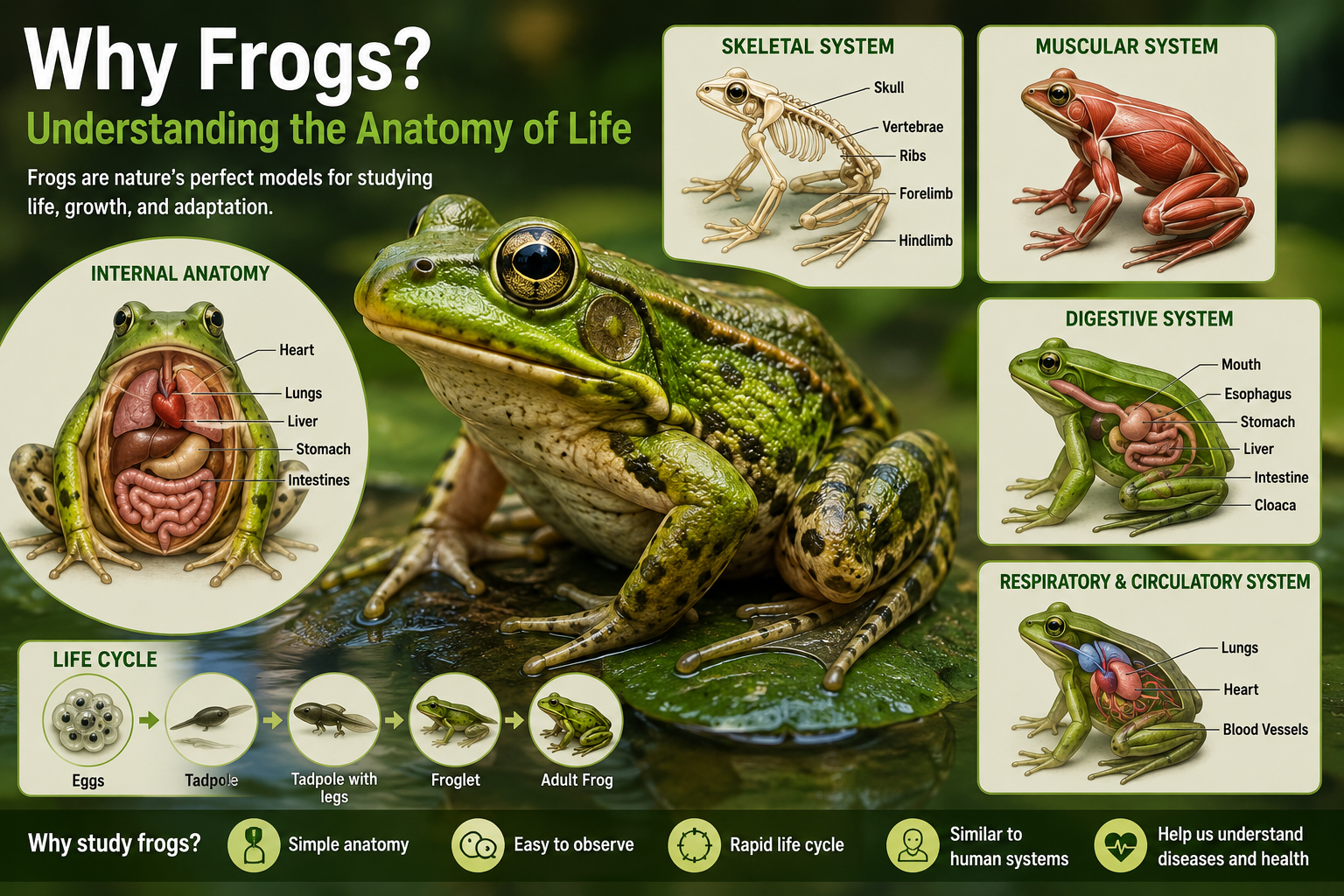
Animal anatomy is a fascinating field that helps us understand how living organisms are built, how their body systems work, and how different parts work together to support life. From the smallest bones and muscles to complex organs and body systems, studying anatomy gives us a deeper appreciation of the incredible organization found in living creatures.
**Learning Through Layers** means exploring the body step by step. By studying structures from the outside to the inside, students can understand how muscles, bones, organs, tissues, and other systems are connected. Each layer reveals something new and helps turn scientific ideas into a clearer picture.
Animal anatomy studies are also important because they develop observation, critical thinking, and scientific reasoning. Students learn to identify structures, compare different animals, ask questions, and understand how body structures relate to their functions.
Comparing the anatomy of different animals can also teach us about adaptation and diversity. Animals may have different body shapes and structures because they live in different environments and have different ways of surviving. This makes anatomy an exciting bridge between **biology, evolution, ecology, and the study of life itself.**
Most importantly, anatomy encourages curiosity. Instead of simply memorizing names, learners can ask: **Why is this structure shaped this way? What does it do? How does it work with other parts of the body?** These questions transform learning into exploration.
Studying animal anatomy reminds us that every living creature has a remarkable internal design. Through careful observation, scientific study, and responsible learning, we can better understand the diversity and complexity of life around us.
**Explore. Observe. Question. Discover. Learn through every layer of life!**
#AnimalAnatomy #AnatomyStudies #Biology #ScienceLearning #LearningThroughLayers #AnimalScience #LifeScience #BiologyStudents #ScienceEducation #EducationalJourney #ExploreScience #ScientificLearning #Curiosity #CriticalThinking #Observation #NatureAndScience #AnimalBiology #STEMEducation #LearningIsFun #DiscoverScience #KnowledgeIsPower #ScienceExploration
Roll no.247
song .25
Foundation level
**Learning Through Layers: The Importance of Animal Anatomy Studies**
Animal anatomy is a fascinating field that helps us understand how living organisms are built, how their body systems work, and how different parts work together to support life. From the smallest bones and muscles to complex organs and body systems, studying anatomy gives us a deeper appreciation of the incredible organization found in living creatures.
**Learning Through Layers** means exploring the body step by step. By studying structures from the outside to the inside, students can understand how muscles, bones, organs, tissues, and other systems are connected. Each layer reveals something new and helps turn scientific ideas into a clearer picture.
Animal anatomy studies are also important because they develop observation, critical thinking, and scientific reasoning. Students learn to identify structures, compare different animals, ask questions, and understand how body structures relate to their functions.
Comparing the anatomy of different animals can also teach us about adaptation and diversity. Animals may have different body shapes and structures because they live in different environments and have different ways of surviving. This makes anatomy an exciting bridge between **biology, evolution, ecology, and the study of life itself.**
Most importantly, anatomy encourages curiosity. Instead of simply memorizing names, learners can ask: **Why is this structure shaped this way? What does it do? How does it work with other parts of the body?** These questions transform learning into exploration.
Studying animal anatomy reminds us that every living creature has a remarkable internal design. Through careful observation, scientific study, and responsible learning, we can better understand the diversity and complexity of life around us.
**Explore. Observe. Question. Discover. Learn through every layer of life!**
#AnimalAnatomy #AnatomyStudies #Biology #ScienceLearning #LearningThroughLayers #AnimalScience #LifeScience #BiologyStudents #ScienceEducation #EducationalJourney #ExploreScience #ScientificLearning #Curiosity #CriticalThinking #Observation #NatureAndScience #AnimalBiology #STEMEducation #LearningIsFun #DiscoverScience #KnowledgeIsPower #ScienceExploration
#rsisb
Roll no.247
song .25
Foundation level
🐾🔬 **Learning Through Layers: The Importance of Animal Anatomy Studies** 🧬📚
Animal anatomy is a fascinating field that helps us understand how living organisms are built, how their body systems work, and how different parts work together to support life. 🌍❤️ From the smallest bones and muscles to complex organs and body systems, studying anatomy gives us a deeper appreciation of the incredible organization found in living creatures. 🦴🫀🫁
🔍 **Learning Through Layers** means exploring the body step by step. By studying structures from the outside to the inside, students can understand how muscles, bones, organs, tissues, and other systems are connected. Each layer reveals something new and helps turn scientific ideas into a clearer picture. 🧠✨
📖 Animal anatomy studies are also important because they develop observation, critical thinking, and scientific reasoning. Students learn to identify structures, compare different animals, ask questions, and understand how body structures relate to their functions. 🐕🐈🦅🐸
🌱 Comparing the anatomy of different animals can also teach us about adaptation and diversity. Animals may have different body shapes and structures because they live in different environments and have different ways of surviving. This makes anatomy an exciting bridge between **biology, evolution, ecology, and the study of life itself.** 🌎🔬
💡 Most importantly, anatomy encourages curiosity. Instead of simply memorizing names, learners can ask: **Why is this structure shaped this way? What does it do? How does it work with other parts of the body?** These questions transform learning into exploration. 🚀📚
🐾🔬 Studying animal anatomy reminds us that every living creature has a remarkable internal design. Through careful observation, scientific study, and responsible learning, we can better understand the diversity and complexity of life around us. 🌟🧬
✨ **Explore. Observe. Question. Discover. Learn through every layer of life!** 📚🔍🐾
#AnimalAnatomy #AnatomyStudies #Biology #ScienceLearning #LearningThroughLayers #AnimalScience #LifeScience #BiologyStudents #ScienceEducation #EducationalJourney #ExploreScience #ScientificLearning #Curiosity #CriticalThinking #Observation #NatureAndScience #AnimalBiology #STEMEducation #LearningIsFun #DiscoverScience #KnowledgeIsPower #ScienceExploration 🐾🔬🧬📚🌍✨
0 تبصرے
0 شیئرز
3874 ویوز
5