• RSIF8
    Roll no.49
    Documentary no.03
    Documentary Topic:The Birth of “Scientist” — From Philosophy to Modern Terminology

    Have you ever wondered how the word “scientist” came into existence? This documentary explores the fascinating journey of the word, from the time when people who studied nature were known as natural philosophers to the modern era of scientific research and discovery.

    The word “scientist” was introduced by William Whewell in the nineteenth century, with its early use dating back to 1834. As knowledge expanded and different fields of study developed, the term became widely accepted to describe people who investigate the natural world through observation, experiments, and evidence.

    Through this documentary, I explore how science evolved into specialized fields such as physics, chemistry, biology, and astronomy. It highlights the importance of curiosity, critical thinking, and scientific discoveries in shaping our modern world.

    This journey reminds us that every great discovery begins with a question and a desire to understand the world around us. Science continues to inspire innovation and open new doors to knowledge!

    #BirthOfScientist #HistoryOfScience #Documentary #WilliamWhewell #ScientificDiscoveries #ScienceAndTechnology #NaturalPhilosophy #KnowledgeAndInnovation #EducationalLearning #ClassFoundation #RSf8
    RSIF8 Roll no.49 Documentary no.03 Documentary Topic:The Birth of “Scientist” — From Philosophy to Modern Terminology πŸ“šβœ¨ Have you ever wondered how the word “scientist” came into existence? πŸŒπŸ’‘ This documentary explores the fascinating journey of the word, from the time when people who studied nature were known as natural philosophers to the modern era of scientific research and discovery. The word “scientist” was introduced by William Whewell in the nineteenth century, with its early use dating back to 1834. As knowledge expanded and different fields of study developed, the term became widely accepted to describe people who investigate the natural world through observation, experiments, and evidence. πŸ§ͺπŸ”­ Through this documentary, I explore how science evolved into specialized fields such as physics, chemistry, biology, and astronomy. It highlights the importance of curiosity, critical thinking, and scientific discoveries in shaping our modern world. πŸš€πŸŒŸ This journey reminds us that every great discovery begins with a question and a desire to understand the world around us. Science continues to inspire innovation and open new doors to knowledge! πŸŒŽπŸ” #BirthOfScientist #HistoryOfScience #Documentary #WilliamWhewell #ScientificDiscoveries #ScienceAndTechnology #NaturalPhilosophy #KnowledgeAndInnovation #EducationalLearning #ClassFoundation #RSf8
    0 Reacties 0 aandelen 964 Views 3
  • #RSFI8
    Roll No: 64
    Class: Foundation Level
    Muhammad ibrahim Acctounting wala
    Documentary task no 12
    Documentary task topic "The Birth of 'Scientist': From Philosophy to Modern Terminology". Share on all platforms.
    Post on the platforms you have and paste those links (at least one required):
    The Birth of “Scientist”: From Philosophy to Modern Terminology**
    Have you ever wondered where the word *scientist* came from? Science has a fascinating history that connects ancient philosophy, human curiosity, and modern discoveries!

    In the past, people who explored nature and knowledge were often called philosophers or natural philosophers. The word **“scientist”** was proposed by William Whewell in 1833 and became more widely used during the 19th century.

    **What I Learned:**
    - Philosophy helped shape early scientific thinking.
    - Scientific knowledge developed through observation, experiments, and reasoning.
    - The word “scientist” gave a shared name to people working in different scientific fields.
    - Modern science continues to help us understand the universe and improve our lives.

    **My Key Takeaway:** Every great discovery begins with curiosity, questions, and a desire to learn! Never stop asking questions or exploring the world around you.

    **Share, Learn & Inspire!**
    I’m sharing this educational post on my social media platforms to spread knowledge and encourage everyone to explore the amazing history of science.

    Like | Comment | Share | Keep Learning!
    #HistoryOfScience #Scientist #ScienceHistory #Philosophy #ScientificDiscovery #Education #Knowledge #Curiosity #ScienceAndTechnology #LearningEveryDay #STEM #RehanSchool #Facebook #Instagram #YouTube #TikTok #LinkedIn
    #RSFI8 Roll No: 64πŸ“ Class: Foundation Level Muhammad ibrahim Acctounting wala Documentary task no 12 Documentary task topic "The Birth of 'Scientist': From Philosophy to Modern Terminology". Share on all platforms. Post on the platforms you have and paste those links (at least one required): The Birth of “Scientist”: From Philosophy to Modern Terminology** Have you ever wondered where the word *scientist* came from? πŸ€”πŸ“š Science has a fascinating history that connects ancient philosophy, human curiosity, and modern discoveries! πŸš€πŸ’‘ In the past, people who explored nature and knowledge were often called philosophers or natural philosophers. The word **“scientist”** was proposed by William Whewell in 1833 and became more widely used during the 19th century. πŸ“–πŸ” 🌟 **What I Learned:** - 🧠 Philosophy helped shape early scientific thinking. - πŸ”¬ Scientific knowledge developed through observation, experiments, and reasoning. - πŸ’‘ The word “scientist” gave a shared name to people working in different scientific fields. - 🌍 Modern science continues to help us understand the universe and improve our lives. 🎯 **My Key Takeaway:** Every great discovery begins with curiosity, questions, and a desire to learn! Never stop asking questions or exploring the world around you. πŸŒˆπŸ”­ πŸ“± **Share, Learn & Inspire!** ❀️✨ I’m sharing this educational post on my social media platforms to spread knowledge and encourage everyone to explore the amazing history of science. πŸŒπŸ“š πŸ‘ Like | πŸ’¬ Comment | πŸ”„ Share | ⭐ Keep Learning! #HistoryOfScience #Scientist #ScienceHistory #Philosophy #ScientificDiscovery #Education #Knowledge #Curiosity #ScienceAndTechnology #LearningEveryDay #STEM #RehanSchool #Facebook #Instagram #YouTube #TikTok #LinkedIn πŸ”¬πŸ§ͺ✨
    0 Reacties 0 aandelen 744 Views 6
  • RSIF8
    Roll no:14
    story no:23
    story topic:The Ethics and Education of Animal Dissections

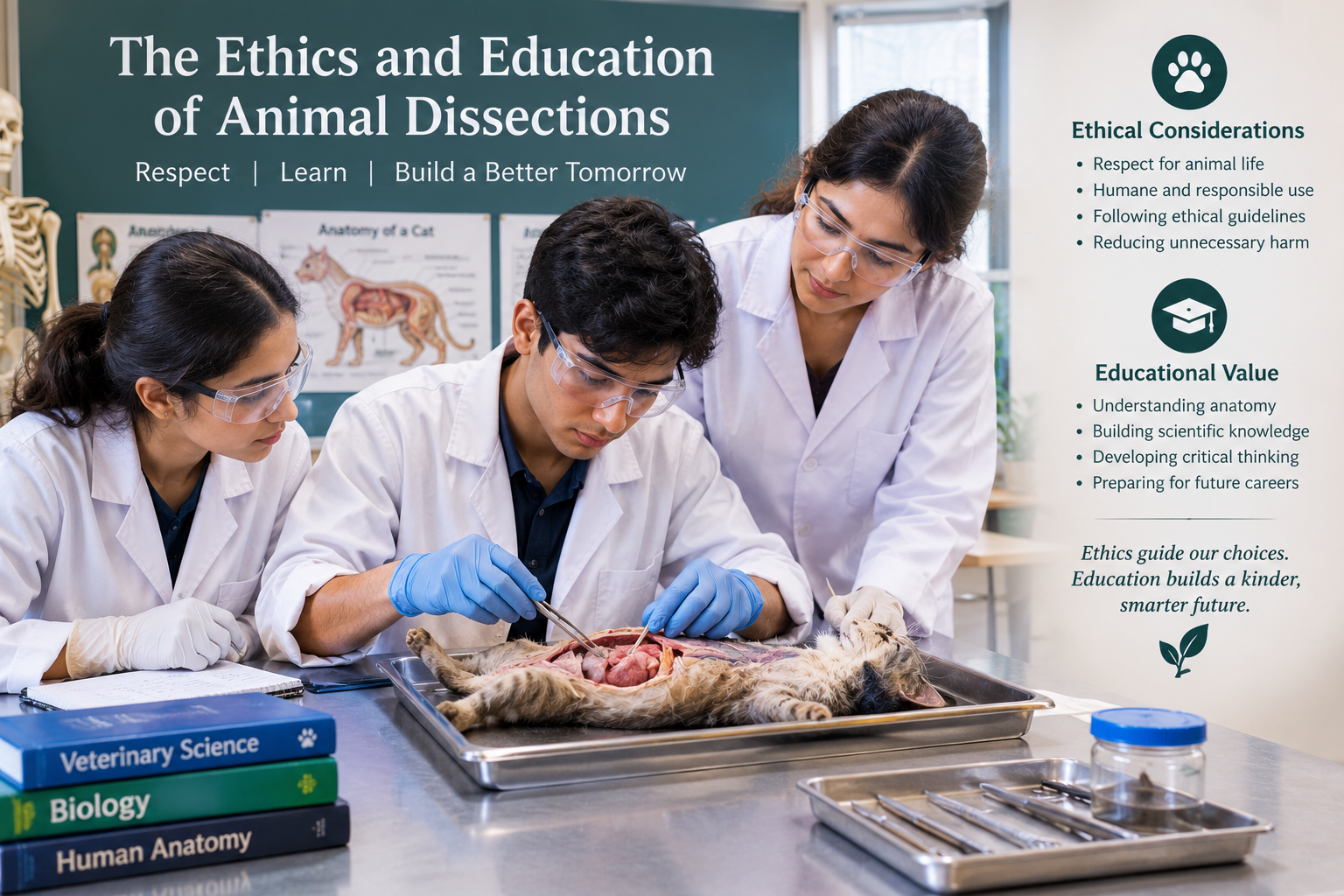
    # The Ethics and Education of Animal Dissections

    Welcome to an exploration of science, learning, and ethical responsibility! **“The Ethics and Education of Animal Dissections”** examines the role of animal dissection in biological education and highlights the importance of balancing scientific knowledge with respect for animal life.

    Animal dissection has traditionally been used to help students understand the structure and function of organs, tissues, and body systems. Through guided observation and practical learning, students can develop a deeper understanding of anatomy, improve their scientific thinking, and explore how different biological systems work together.

    However, scientific education also involves important ethical questions. Students and educators must consider animal welfare, responsible specimen use, and ways to reduce unnecessary harm. Modern educational approaches increasingly include virtual dissections, 3D anatomical models, videos, and interactive simulations as valuable alternatives that can support effective learning.

    ## Key Topics Covered

    - Understanding animal anatomy and biological systems
    - Exploring the educational purpose of animal dissections
    - Respecting animal welfare and ethical responsibilities
    - Developing scientific knowledge and critical-thinking skills
    - Discovering virtual dissections and alternative learning methods
    - Encouraging responsible and compassionate scientific research

    ## Why Is This Topic Important?

    Understanding the ethics of animal dissection encourages students to think critically about how scientific knowledge is gained. It teaches the importance of balancing educational benefits with compassion, responsibility, and respect for living organisms.

    **Science is not only about discovering how life works; it is also about making thoughtful, ethical choices in the pursuit of knowledge.**

    Join us in exploring how education, scientific discovery, and animal welfare can work together to create a more responsible future!

    #AnimalDissection #AnimalAnatomy #ScienceEducation #Bioethics #AnimalWelfare #Biology #EthicalScience #VirtualDissection #ScientificLearning #VeterinaryScience #EducationAndEthics
    RSIF8 Roll no:14 story no:23 story topic:The Ethics and Education of Animal Dissections # πŸ”¬ The Ethics and Education of Animal Dissections 🐾 Welcome to an exploration of science, learning, and ethical responsibility! **“The Ethics and Education of Animal Dissections”** examines the role of animal dissection in biological education and highlights the importance of balancing scientific knowledge with respect for animal life. πŸ§¬πŸ“š Animal dissection has traditionally been used to help students understand the structure and function of organs, tissues, and body systems. Through guided observation and practical learning, students can develop a deeper understanding of anatomy, improve their scientific thinking, and explore how different biological systems work together. However, scientific education also involves important ethical questions. Students and educators must consider animal welfare, responsible specimen use, and ways to reduce unnecessary harm. Modern educational approaches increasingly include virtual dissections, 3D anatomical models, videos, and interactive simulations as valuable alternatives that can support effective learning. πŸŒ±πŸ’» ## 🌟 Key Topics Covered - πŸ”¬ Understanding animal anatomy and biological systems - 🐾 Exploring the educational purpose of animal dissections - ❀️ Respecting animal welfare and ethical responsibilities - πŸ“š Developing scientific knowledge and critical-thinking skills - πŸ’» Discovering virtual dissections and alternative learning methods - 🌍 Encouraging responsible and compassionate scientific research ## 🎯 Why Is This Topic Important? Understanding the ethics of animal dissection encourages students to think critically about how scientific knowledge is gained. It teaches the importance of balancing educational benefits with compassion, responsibility, and respect for living organisms. ✨ **Science is not only about discovering how life works; it is also about making thoughtful, ethical choices in the pursuit of knowledge.** Join us in exploring how education, scientific discovery, and animal welfare can work together to create a more responsible future! #AnimalDissection #AnimalAnatomy #ScienceEducation #Bioethics #AnimalWelfare #Biology #EthicalScience #VirtualDissection #ScientificLearning #VeterinaryScience #EducationAndEthics
    0 Reacties 0 aandelen 1436 Views
  • RSIF8
    Roll no:14
    story no:22
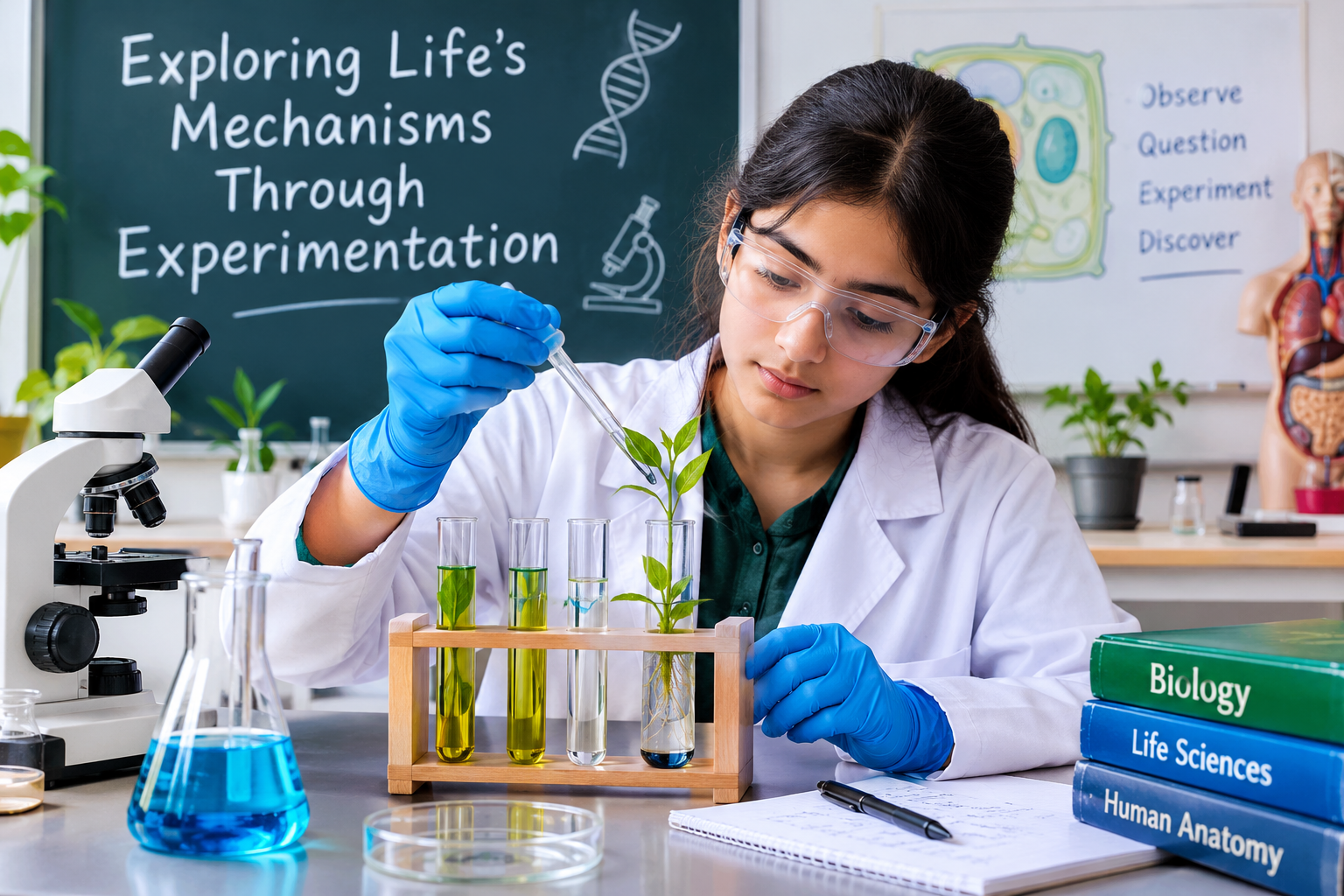
    story post topic:Exploring Life’s Mechanisms Through Experimentation
    # Exploring Life’s Mechanisms Through Experimentation

    Welcome to the fascinating world of scientific discovery, where curiosity meets experimentation and every observation brings us closer to understanding the mysteries of life! **“Exploring Life’s Mechanisms Through Experimentation”** highlights the importance of practical experiments in understanding how living organisms function, grow, and interact with their environments.

    Through hands-on activities, laboratory experiments, microscopes, and scientific observations, students can explore the amazing processes that take place inside living things. From examining plant growth and studying cells to understanding biological systems, experimentation helps transform scientific theories into meaningful discoveries.

    **Key Topics Covered:**
    - Understanding the structure and functions of living organisms
    - Exploring cells, DNA, and biological processes
    - Investigating plant growth and environmental factors
    - Learning through experiments and scientific observations
    - Developing critical thinking and problem-solving skills
    - Discovering how living organisms interact with their surroundings

    **Why Is Experimentation Important?**

    Scientific experimentation allows learners to ask questions, test ideas, analyze results, and develop evidence-based conclusions. It encourages creativity, patience, and curiosity while helping students understand the principles of biology and life sciences.

    Whether you are a student, science enthusiast, or aspiring researcher, exploring life's mechanisms through experimentation opens the door to new knowledge and exciting discoveries. Every experiment is an opportunity to learn something new about the incredible world around us!

    **Observe, experiment, discover, and explore the science of life—because every great discovery begins with a question!**

    #Biology #ScienceExperiments #LifeSciences #ScientificDiscovery #BiologyLab #LearningThroughExperimentation #STEMEducation #ScienceLearning #CellBiology #NatureAndScience #EducationalContent #ExploreScience
    RSIF8 Roll no:14 story no:22 story post topic:Exploring Life’s Mechanisms Through Experimentation # πŸ”¬ Exploring Life’s Mechanisms Through Experimentation 🧬 Welcome to the fascinating world of scientific discovery, where curiosity meets experimentation and every observation brings us closer to understanding the mysteries of life! πŸŒ±πŸ” **“Exploring Life’s Mechanisms Through Experimentation”** highlights the importance of practical experiments in understanding how living organisms function, grow, and interact with their environments. Through hands-on activities, laboratory experiments, microscopes, and scientific observations, students can explore the amazing processes that take place inside living things. From examining plant growth and studying cells to understanding biological systems, experimentation helps transform scientific theories into meaningful discoveries. πŸ§ͺ🌿 πŸ’‘ **Key Topics Covered:** - πŸ”¬ Understanding the structure and functions of living organisms - 🧬 Exploring cells, DNA, and biological processes - 🌱 Investigating plant growth and environmental factors - πŸ§ͺ Learning through experiments and scientific observations - πŸ“š Developing critical thinking and problem-solving skills - 🌍 Discovering how living organisms interact with their surroundings 🎯 **Why Is Experimentation Important?** Scientific experimentation allows learners to ask questions, test ideas, analyze results, and develop evidence-based conclusions. It encourages creativity, patience, and curiosity while helping students understand the principles of biology and life sciences. 🌟 Whether you are a student, science enthusiast, or aspiring researcher, exploring life's mechanisms through experimentation opens the door to new knowledge and exciting discoveries. Every experiment is an opportunity to learn something new about the incredible world around us! ✨ **Observe, experiment, discover, and explore the science of life—because every great discovery begins with a question!** #Biology #ScienceExperiments #LifeSciences #ScientificDiscovery #BiologyLab #LearningThroughExperimentation #STEMEducation #ScienceLearning #CellBiology #NatureAndScience #EducationalContent #ExploreScience
    0 Reacties 0 aandelen 1365 Views
  • Foundation level
    Roll no 13
    story post
    Day 48
    Rehan school urdu bazar campas

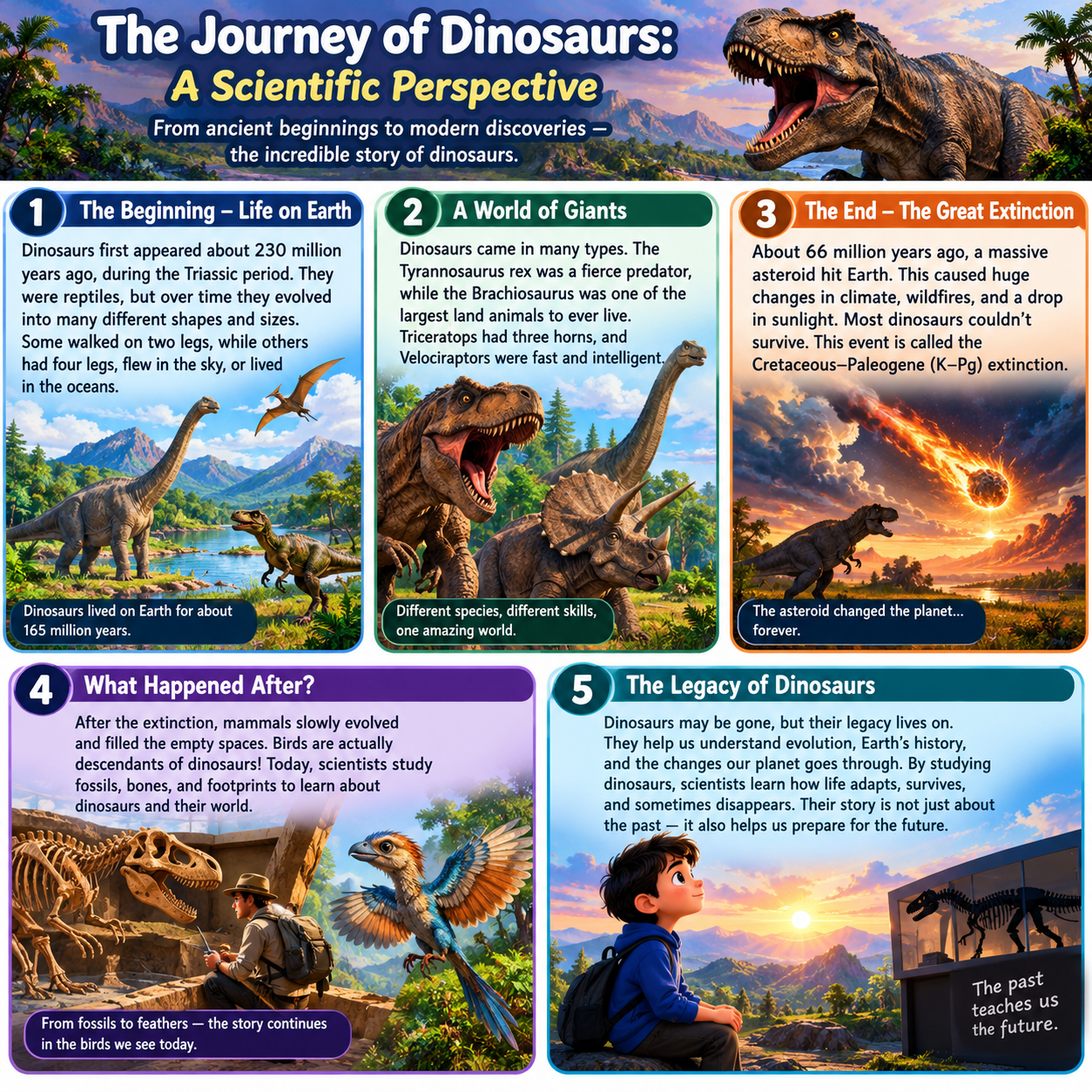
    Millions of years ago, long before humans appeared on Earth, dinosaurs lived in a world filled with dense forests, flowing rivers, towering mountains, and vast open lands. Dinosaurs first appeared about 230 million years ago during the Triassic Period. Over millions of years, they evolved into many different shapes and sizes. Some were small and quick, while others grew into enormous creatures that dominated the land. Their fascinating journey became one of the most remarkable chapters in the history of life on Earth.

    As time passed, dinosaurs spread across different environments and developed unique ways of surviving. The mighty Tyrannosaurus rex became famous for its powerful jaws and sharp teeth, while the enormous Brachiosaurus used its long neck to reach vegetation high above the ground. The Triceratops had three horns and a large bony shield around its head. Some dinosaurs hunted other animals, while many survived by eating plants. Each species played a different role in its environment, creating a complex and fascinating prehistoric world.

    However, approximately 66 million years ago, a massive asteroid struck Earth near what is now Mexico. The impact triggered enormous environmental changes, sending dust and debris into the atmosphere and disrupting ecosystems around the world. Plants struggled to survive, food sources disappeared, and many species became extinct. This event marked the end of the age of non-avian dinosaurs. Yet, not every dinosaur lineage vanished. Some feathered dinosaurs survived through evolution, eventually giving rise to the birds we see in our world today.

    Millions of years later, scientists began uncovering the hidden secrets of these ancient creatures through fossils buried deep within the Earth. Paleontologists discovered dinosaur bones, teeth, eggs, and footprints that provided clues about their appearance, behavior, and habitats. Using modern technology, including computer imaging and advanced scientific techniques, researchers can now reconstruct how many dinosaurs may have looked and lived. Every fossil discovery adds another piece to the puzzle, helping u
    1m
    Foundation level Roll no 13 story post Day 48 Rehan school urdu bazar campas Millions of years ago, long before humans appeared on Earth, dinosaurs lived in a world filled with dense forests, flowing rivers, towering mountains, and vast open lands. Dinosaurs first appeared about 230 million years ago during the Triassic Period. Over millions of years, they evolved into many different shapes and sizes. Some were small and quick, while others grew into enormous creatures that dominated the land. Their fascinating journey became one of the most remarkable chapters in the history of life on Earth. As time passed, dinosaurs spread across different environments and developed unique ways of surviving. The mighty Tyrannosaurus rex became famous for its powerful jaws and sharp teeth, while the enormous Brachiosaurus used its long neck to reach vegetation high above the ground. The Triceratops had three horns and a large bony shield around its head. Some dinosaurs hunted other animals, while many survived by eating plants. Each species played a different role in its environment, creating a complex and fascinating prehistoric world. However, approximately 66 million years ago, a massive asteroid struck Earth near what is now Mexico. The impact triggered enormous environmental changes, sending dust and debris into the atmosphere and disrupting ecosystems around the world. Plants struggled to survive, food sources disappeared, and many species became extinct. This event marked the end of the age of non-avian dinosaurs. Yet, not every dinosaur lineage vanished. Some feathered dinosaurs survived through evolution, eventually giving rise to the birds we see in our world today. Millions of years later, scientists began uncovering the hidden secrets of these ancient creatures through fossils buried deep within the Earth. Paleontologists discovered dinosaur bones, teeth, eggs, and footprints that provided clues about their appearance, behavior, and habitats. Using modern technology, including computer imaging and advanced scientific techniques, researchers can now reconstruct how many dinosaurs may have looked and lived. Every fossil discovery adds another piece to the puzzle, helping u 1m
    0 Reacties 0 aandelen 996 Views
  • RSIF8
    Roll no:09
    Story post no: 15
    Story post topic: "The Blueprint of Existence: Unraveling DNA and the Origins of Life".

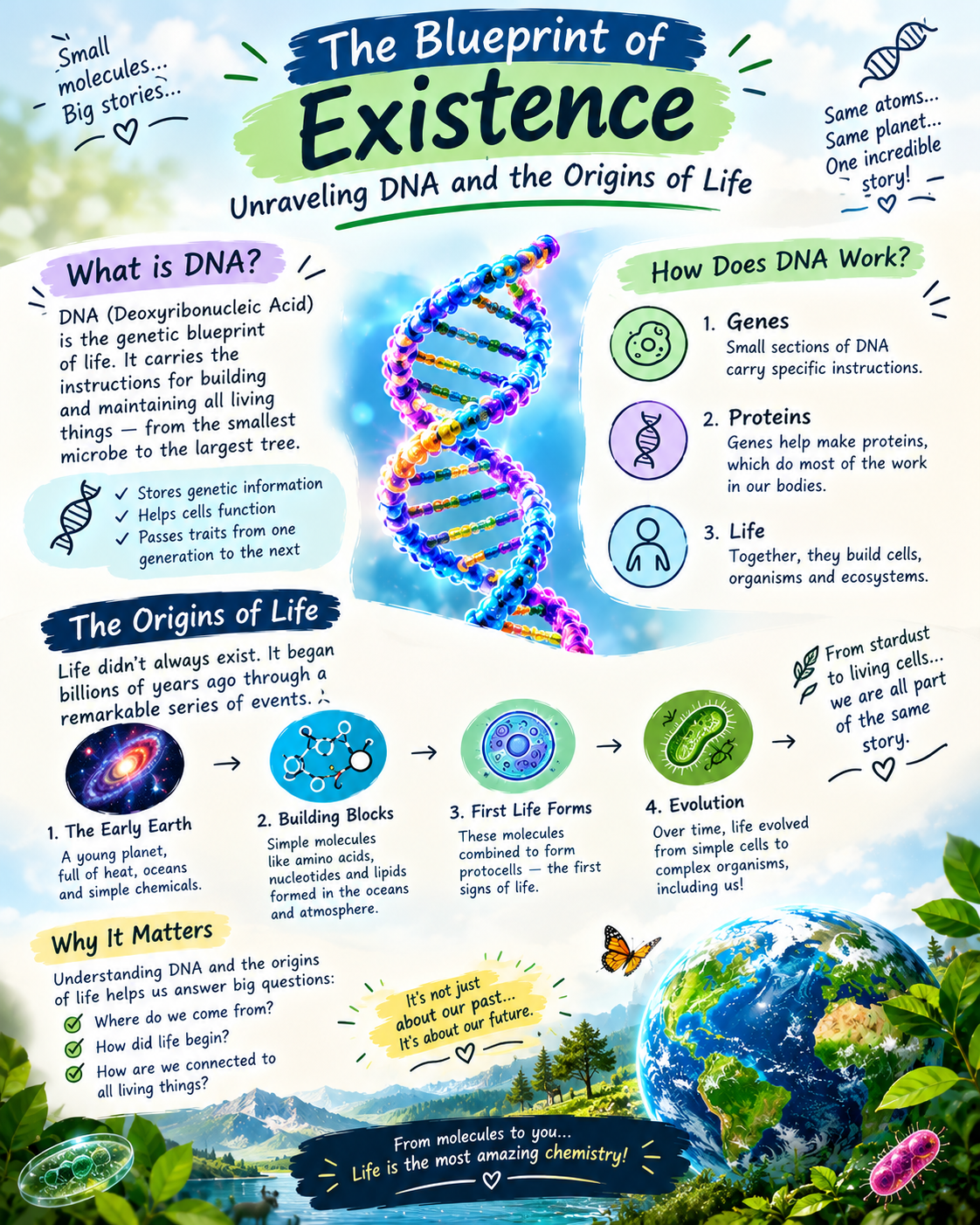
    **The Blueprint of Existence: Unraveling DNA and the Origins of Life**

    Have you ever wondered what makes every living thing unique? The answer lies in DNA — the amazing molecule that carries the genetic instructions for life!

    From tiny cells to enormous trees , DNA helps living organisms grow, function, and pass traits from one generation to the next. Scientists study the origins of life to understand how simple molecules may have eventually led to the incredible diversity of life on Earth.

    Every discovery brings us closer to understanding our past, our connections, and the mysteries of existence.

    **From molecules to living beings, life is one of nature’s most fascinating stories!**

    #DNA #OriginsOfLife #Science #Biology #Genetics #MolecularBiology #ScientificDiscovery #LifeOnEarth #ScienceEducation #ExploreScience #NatureAndScience #STEM #KnowledgeIsPower #AmazingScience
    RSIF8 Roll no:09 Story post no: 15 Story post topic: "The Blueprint of Existence: Unraveling DNA and the Origins of Life". 🧬✨ **The Blueprint of Existence: Unraveling DNA and the Origins of Life** πŸŒπŸ”¬ Have you ever wondered what makes every living thing unique? πŸ€”πŸŒ± The answer lies in DNA — the amazing molecule that carries the genetic instructions for life! πŸ’šπŸ§¬ From tiny cells to enormous trees 🌳, DNA helps living organisms grow, function, and pass traits from one generation to the next. Scientists study the origins of life to understand how simple molecules may have eventually led to the incredible diversity of life on Earth. πŸŒŽπŸ’« πŸ” Every discovery brings us closer to understanding our past, our connections, and the mysteries of existence. πŸ’™ **From molecules to living beings, life is one of nature’s most fascinating stories!** 🧬🌱✨ #DNA #OriginsOfLife #Science #Biology #Genetics #MolecularBiology #ScientificDiscovery #LifeOnEarth #ScienceEducation #ExploreScience #NatureAndScience #STEM #KnowledgeIsPower #AmazingScience πŸ§¬πŸ”¬πŸŒπŸ’šβœ¨
    0 Reacties 0 aandelen 941 Views
  • RSIF8
    Roll no 49
    Song no.30
    Song topic:Geography Adventures: Mapping Our World

    Our world is full of amazing places, beautiful landscapes, and fascinating natural wonders! From towering mountains and flowing rivers to vast oceans, deserts, and bustling cities, geography helps us explore and understand the planet we call home.

    Through this educational song/poem created with Suno.ai, I explore the exciting world of geography in a fun, creative, and memorable way. It highlights maps, continents, countries, directions, and the incredible diversity of Earth's environments and cultures.

    Let's begin our geography adventure, discover new places, and learn more about our wonderful world!

    #GeographyAdventures #MappingOurWorld #SunoAI #Geography #ExploreTheWorld #ContinentsAndOceans #EducationalSong #CreativeLearning #WorldDiscovery #ClassFoundation #RSf8
    RSIF8 Roll no 49 Song no.30 Song topic:Geography Adventures: Mapping Our World πŸ—ΊοΈβœ¨ Our world is full of amazing places, beautiful landscapes, and fascinating natural wonders! From towering mountains and flowing rivers to vast oceans, deserts, and bustling cities, geography helps us explore and understand the planet we call home. πŸ”οΈπŸŒŠπŸœοΈ Through this educational song/poem created with Suno.ai, I explore the exciting world of geography in a fun, creative, and memorable way. πŸŽ΅πŸ“š It highlights maps, continents, countries, directions, and the incredible diversity of Earth's environments and cultures. Let's begin our geography adventure, discover new places, and learn more about our wonderful world! πŸŒŽπŸ’š #GeographyAdventures #MappingOurWorld #SunoAI #Geography #ExploreTheWorld #ContinentsAndOceans #EducationalSong #CreativeLearning #WorldDiscovery #ClassFoundation #RSf8
    0 Reacties 0 aandelen 1677 Views 1
  • RSIF8
    Roll no:14
    story no:21
    story topic:Peering Inside: The Role of Dissections in Understanding Life
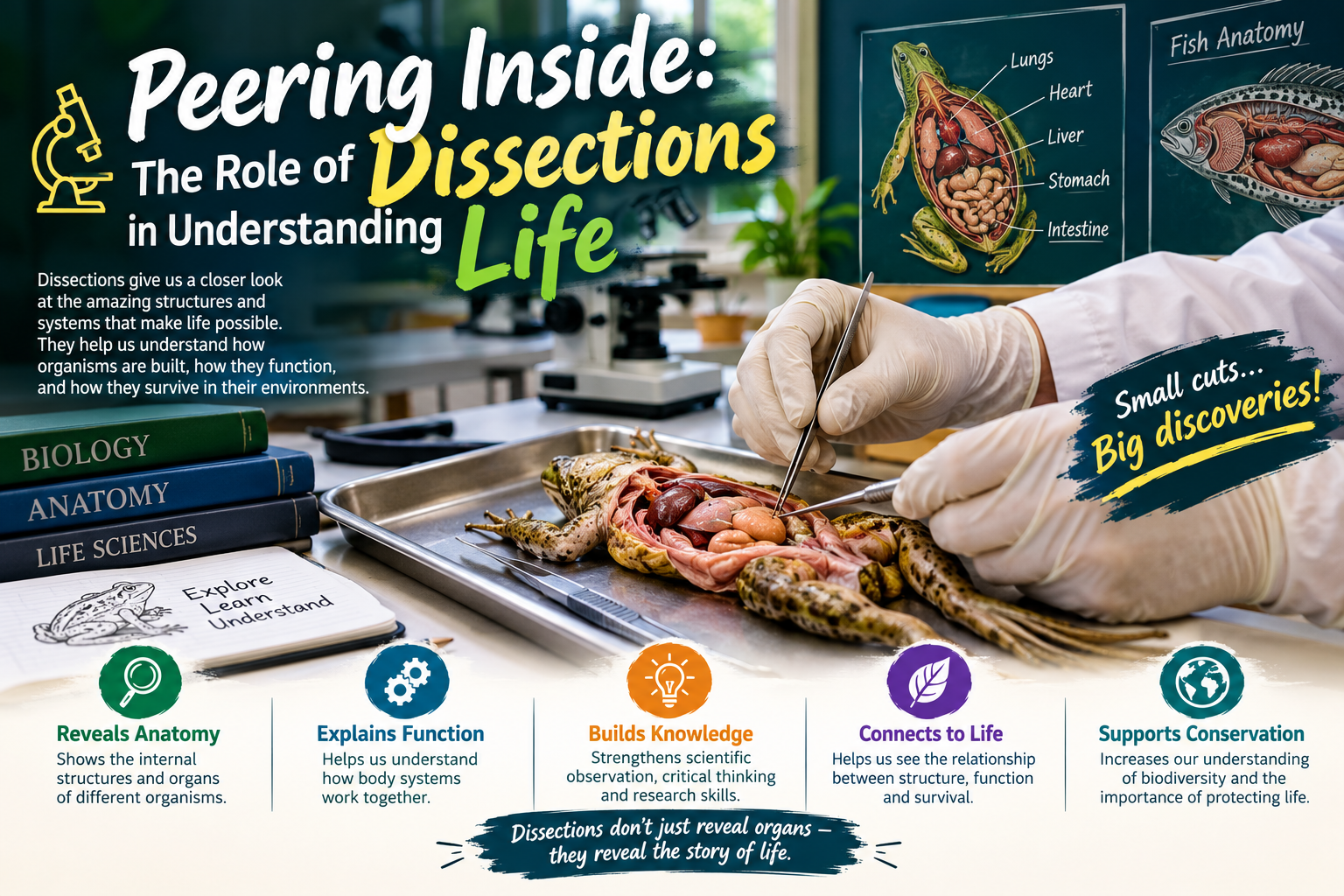
    # Peering Inside: The Role of Dissections in Understanding Life

    Discover the fascinating world of biology through **“Peering Inside: The Role of Dissections in Understanding Life.”** This educational topic explores how dissection helps scientists and students understand the internal structures of living organisms and uncover the amazing systems that make life possible.

    Dissection is an important scientific method that allows researchers to examine organs, tissues, and body structures to learn how different parts of an organism work together. By studying anatomy, we can better understand the relationship between structure and function, how body systems support survival, and how different species are adapted to their environments.

    **What Will You Learn?**

    - **Understanding Anatomy:** Discover the internal structures and organs of living organisms.
    - **Structure and Function:** Learn how different organs work together to support life.
    - **Exploring Organisms:** Understand the similarities and differences between various species.
    - **Scientific Investigation:** Develop observation, analytical thinking, and research skills.
    - **Biodiversity and Conservation:** Explore how anatomical knowledge contributes to understanding and protecting living things.
    - **Educational Importance:** Discover how dissection supports biology, medicine, and scientific learning.

    Dissection has contributed greatly to our understanding of the human body and other organisms. Today, scientists and educators can also use anatomical models, digital simulations, and virtual dissection tools to explore biological structures. Responsible scientific study emphasizes ethical practices, safety, and respect for living things.

    **Conclusion:** Dissection is more than the study of internal organs; it is a window into the complexity, organization, and wonder of life. By exploring anatomy, we gain valuable knowledge about how organisms function, survive, and interact with the world around them.

    **“Dissections don't just reveal organs — they reveal the story of life!”**

    #PeeringInside #Dissection #Anatomy #Biology #LifeSciences #ScienceEducation #ScientificDiscovery #HumanAnatomy #AnimalBiology #Biodiversity #LearningThroughScience #EducationalContent #ExploreLife
    RSIF8 Roll no:14 story no:21 story topic:Peering Inside: The Role of Dissections in Understanding Life # πŸ”¬ Peering Inside: The Role of Dissections in Understanding Life 🧬 Discover the fascinating world of biology through **“Peering Inside: The Role of Dissections in Understanding Life.”** This educational topic explores how dissection helps scientists and students understand the internal structures of living organisms and uncover the amazing systems that make life possible. 🌿✨ Dissection is an important scientific method that allows researchers to examine organs, tissues, and body structures to learn how different parts of an organism work together. By studying anatomy, we can better understand the relationship between structure and function, how body systems support survival, and how different species are adapted to their environments. πŸ” **What Will You Learn?** - πŸ«€ **Understanding Anatomy:** Discover the internal structures and organs of living organisms. - 🧠 **Structure and Function:** Learn how different organs work together to support life. - 🐸 **Exploring Organisms:** Understand the similarities and differences between various species. - πŸ”¬ **Scientific Investigation:** Develop observation, analytical thinking, and research skills. - 🌍 **Biodiversity and Conservation:** Explore how anatomical knowledge contributes to understanding and protecting living things. - πŸ“š **Educational Importance:** Discover how dissection supports biology, medicine, and scientific learning. Dissection has contributed greatly to our understanding of the human body and other organisms. Today, scientists and educators can also use anatomical models, digital simulations, and virtual dissection tools to explore biological structures. Responsible scientific study emphasizes ethical practices, safety, and respect for living things. πŸ’š ✨ **Conclusion:** Dissection is more than the study of internal organs; it is a window into the complexity, organization, and wonder of life. By exploring anatomy, we gain valuable knowledge about how organisms function, survive, and interact with the world around them. **“Dissections don't just reveal organs — they reveal the story of life!”** πŸŒ±πŸ”¬ #PeeringInside #Dissection #Anatomy #Biology #LifeSciences #ScienceEducation #ScientificDiscovery #HumanAnatomy #AnimalBiology #Biodiversity #LearningThroughScience #EducationalContent #ExploreLife
    0 Reacties 0 aandelen 1605 Views
  • Rsif8
    Roll No 30
    Post No 230
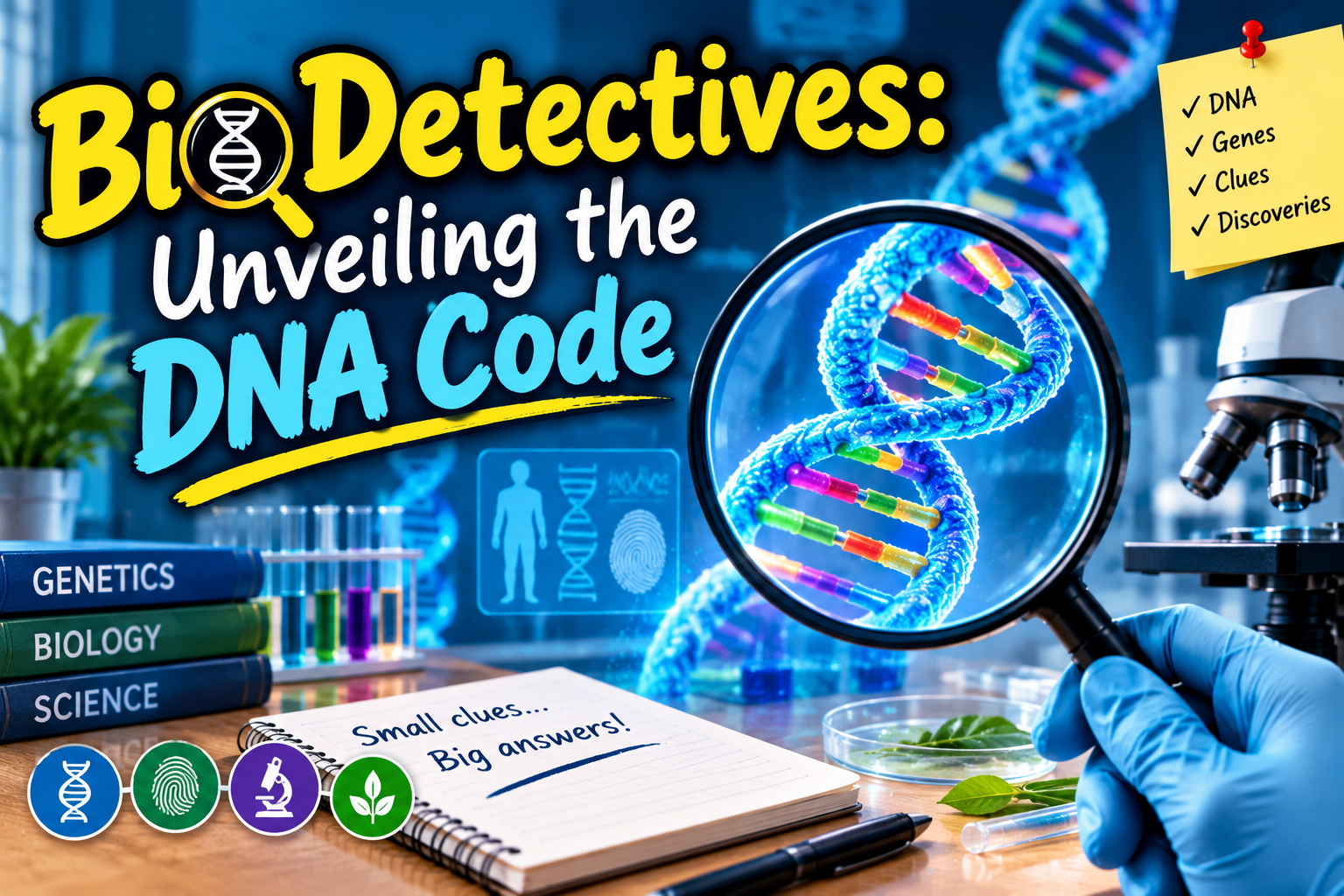
    **Bio Detectives: Unveiling the DNA Code!**

    Welcome to the fascinating world of DNA and science! In this video, we explore the secrets of DNA, genes, and the amazing code inside living things. Discover how scientists use clues, microscopes, and scientific research to understand DNA and learn more about life.

    **What will you discover?**
    - What is DNA?
    - What are genes?
    - How do scientists study DNA?
    - What secrets can DNA reveal?
    - How does science help us understand living things?

    Join this exciting journey of discovery and become a bio detective with us!

    Like, Comment, Share, and Subscribe for more interesting science and educational videos.

    #BioDetectives #DNA #Genetics #Science #Biology #DNACode #ScienceForKids #EducationalVideos #LearningIsFun
    Rsif8 Roll No 30 Post No 230 πŸ§¬πŸ” **Bio Detectives: Unveiling the DNA Code!** Welcome to the fascinating world of DNA and science! In this video, we explore the secrets of DNA, genes, and the amazing code inside living things. Discover how scientists use clues, microscopes, and scientific research to understand DNA and learn more about life. πŸ”¬ **What will you discover?** - What is DNA? - What are genes? - How do scientists study DNA? - What secrets can DNA reveal? - How does science help us understand living things? Join this exciting journey of discovery and become a bio detective with us! πŸ§ͺ🧬 πŸ‘ Like, πŸ’¬ Comment, πŸ”„ Share, and πŸ”” Subscribe for more interesting science and educational videos. #BioDetectives #DNA #Genetics #Science #Biology #DNACode #ScienceForKids #EducationalVideos #LearningIsFun
    0 Reacties 0 aandelen 700 Views
  • RSIF8
    ROLL NO:92
    STORY POST NO:37
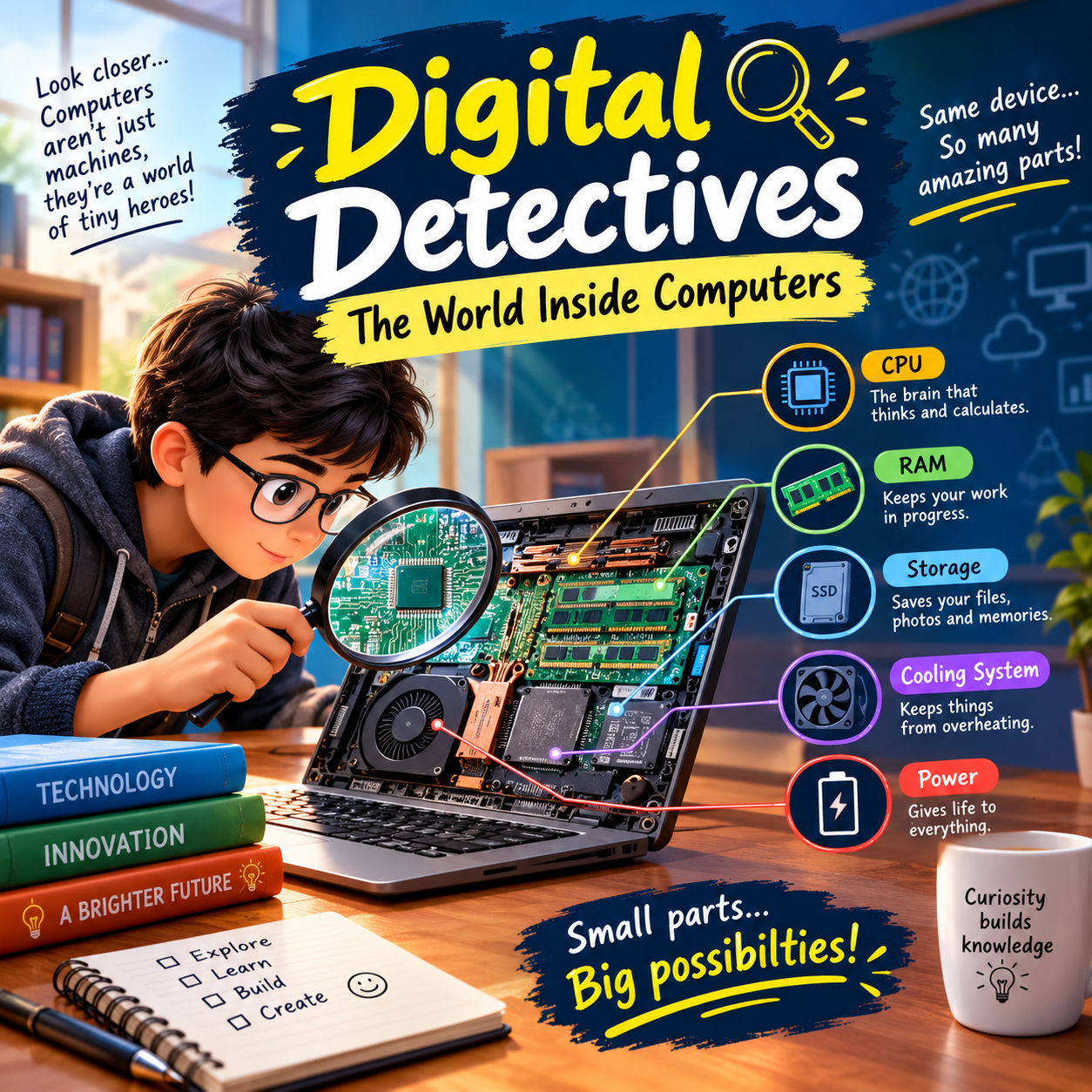
    TOPIC:**Digital Detectives: The World Inside Computers **

    Step into the fascinating world of computers! Discover how computers work, explore the secrets of digital technology, and learn how the internet connects people around the world. From coding and software to data and cybersecurity, every digital discovery opens the door to new possibilities.

    Let's become digital detectives and explore the amazing technology that shapes our modern world!

    #DigitalDetectives #WorldOfComputers #DigitalTechnology #ComputerScience #Coding #CyberSecurity #LearnAndExplore #TechEducation #DigitalWorld #AI
    RSIF8 ROLL NO:92 STORY POST NO:37 TOPIC:**Digital Detectives: The World Inside Computers πŸ’»πŸ”** Step into the fascinating world of computers! 🌐✨ Discover how computers work, explore the secrets of digital technology, and learn how the internet connects people around the world. From coding and software to data and cybersecurity, every digital discovery opens the door to new possibilities. πŸš€ Let's become digital detectives and explore the amazing technology that shapes our modern world! #DigitalDetectives #WorldOfComputers #DigitalTechnology #ComputerScience #Coding #CyberSecurity #LearnAndExplore #TechEducation #DigitalWorld #AI
    0 Reacties 0 aandelen 739 Views
Zoekresultaten