• #rsisb
    Roll no.239
    Foundation Level


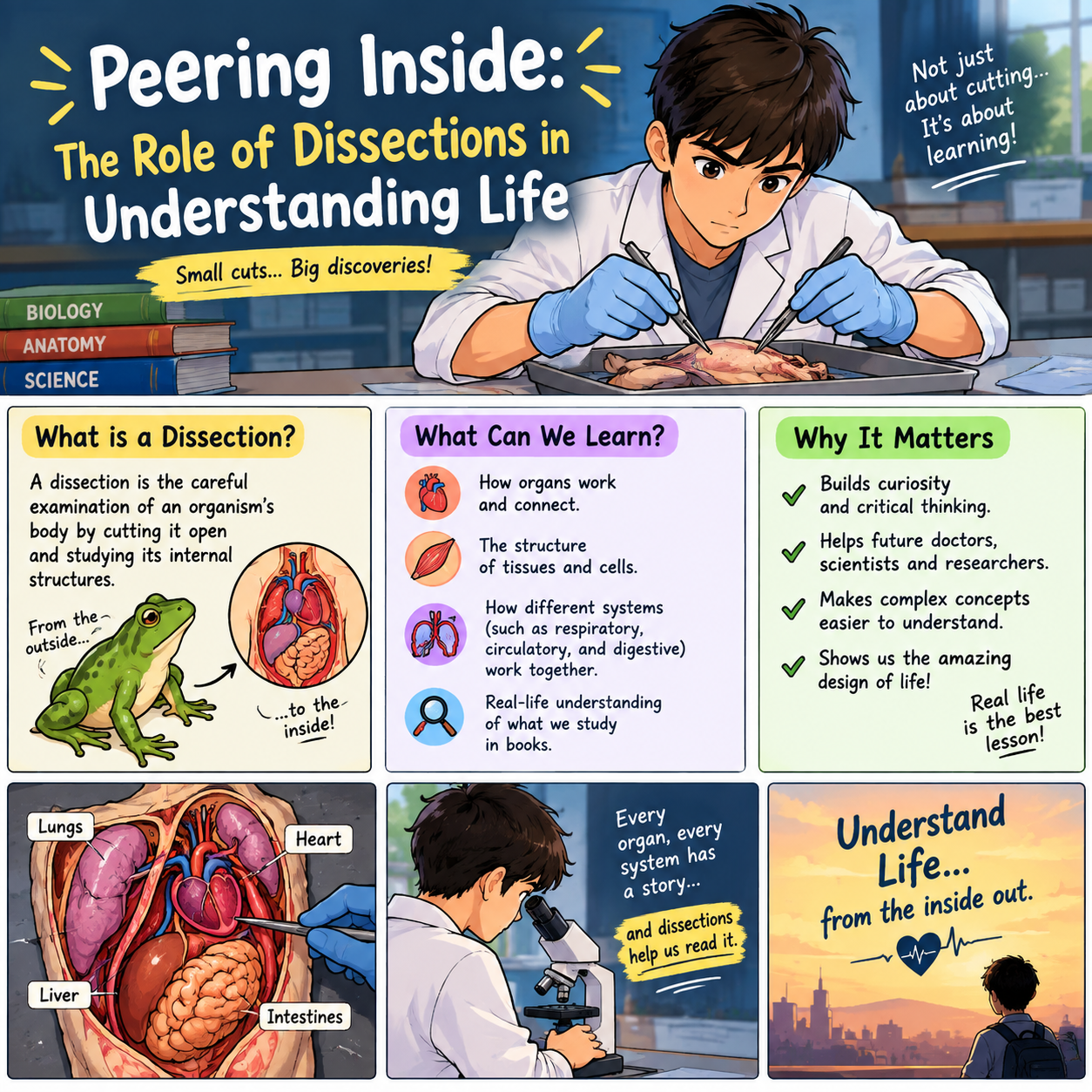
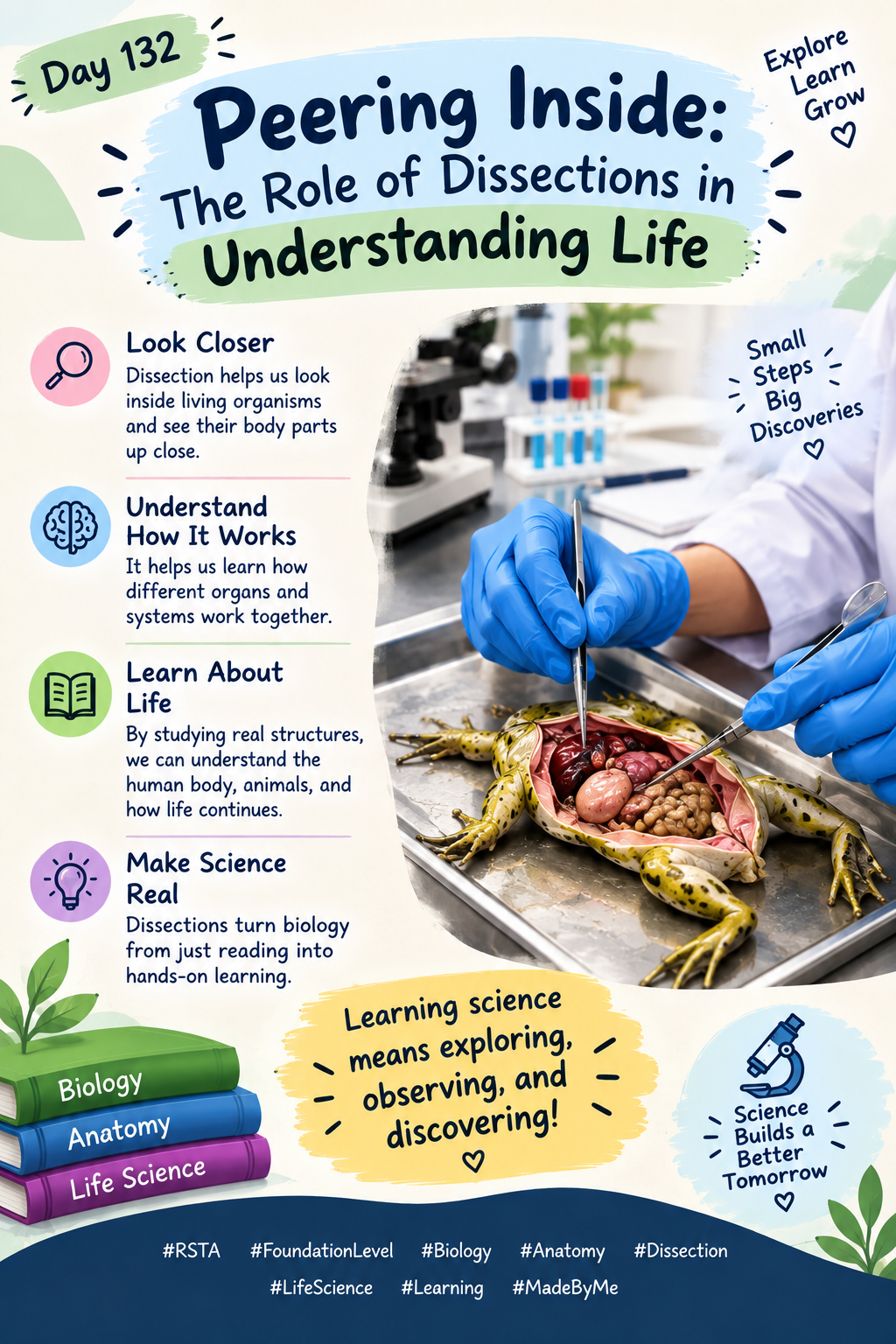
    **Dissection** is an important method used in biology to understand the internal structure of living organisms. By carefully examining organs, tissues, and body systems, students and scientists can learn how different parts of an organism are arranged and how they work together.

    Dissections provide a practical experience that books and diagrams cannot always provide. For example, studying a frog dissection can help students understand the **heart, lungs, liver, stomach, intestines, and other organs** in their natural positions. This hands-on learning can make biological concepts easier to understand and remember.

    Dissection also plays a role in **medical education and scientific research**. It has helped humans develop a deeper understanding of anatomy, disease, and the relationships between different body systems.

    However, dissections should always be performed responsibly, following **ethical guidelines, safety procedures, and respect for living organisms**. Modern alternatives, such as digital simulations and 3D anatomical models, can also provide valuable learning experiences.

    Overall, dissections help us **“peer inside” life** and transform biological knowledge from something we simply read about into something we can observe and understand more clearly.
    #rsisb Roll no.239 Foundation Level **Dissection** is an important method used in biology to understand the internal structure of living organisms. By carefully examining organs, tissues, and body systems, students and scientists can learn how different parts of an organism are arranged and how they work together. Dissections provide a practical experience that books and diagrams cannot always provide. For example, studying a frog dissection can help students understand the **heart, lungs, liver, stomach, intestines, and other organs** in their natural positions. This hands-on learning can make biological concepts easier to understand and remember. Dissection also plays a role in **medical education and scientific research**. It has helped humans develop a deeper understanding of anatomy, disease, and the relationships between different body systems. However, dissections should always be performed responsibly, following **ethical guidelines, safety procedures, and respect for living organisms**. Modern alternatives, such as digital simulations and 3D anatomical models, can also provide valuable learning experiences. Overall, dissections help us **“peer inside” life** and transform biological knowledge from something we simply read about into something we can observe and understand more clearly.
    0 Comments 0 Shares 226 Views
  • #rsisb
    Roll No.240
    Story No.17
    Foundation level

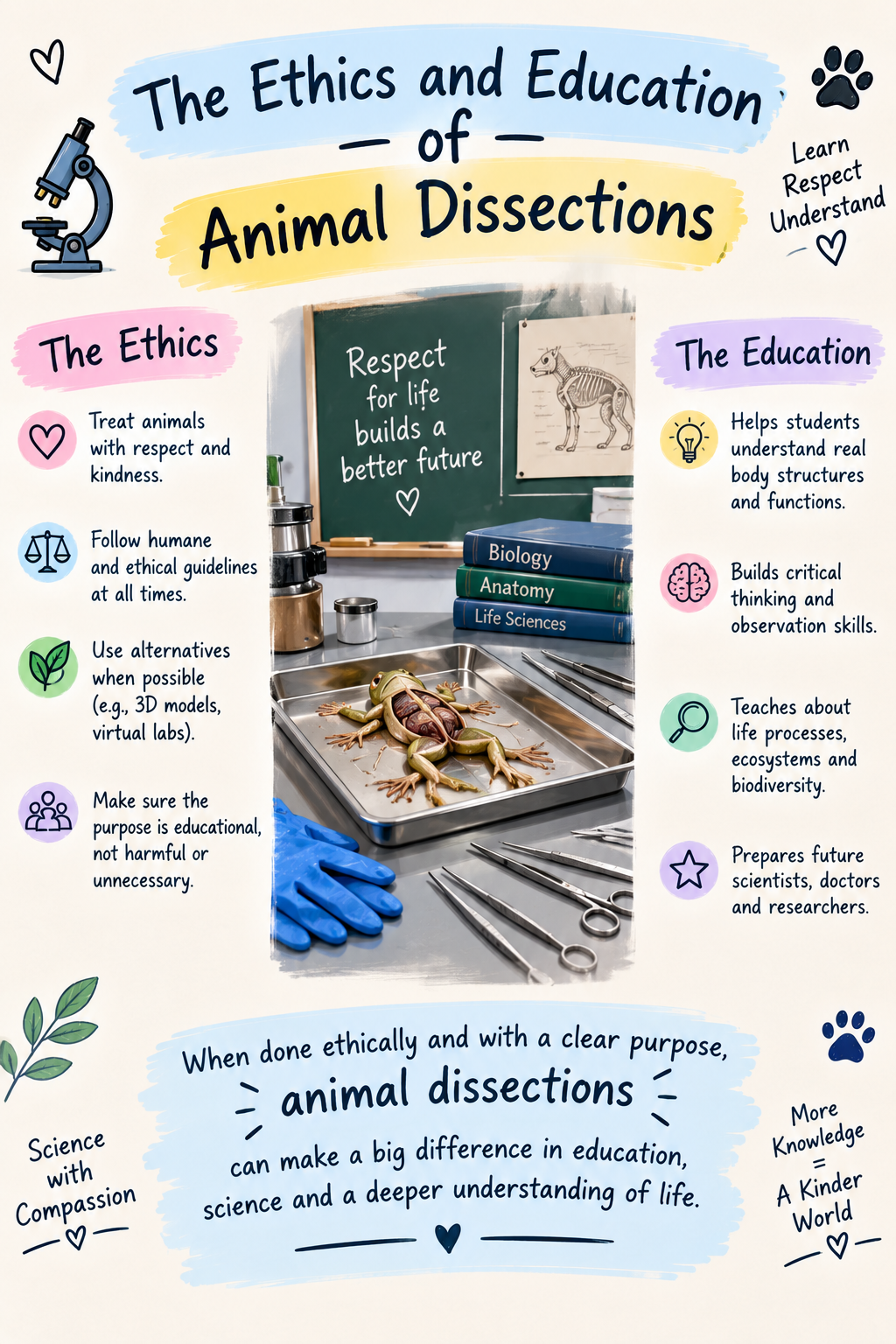
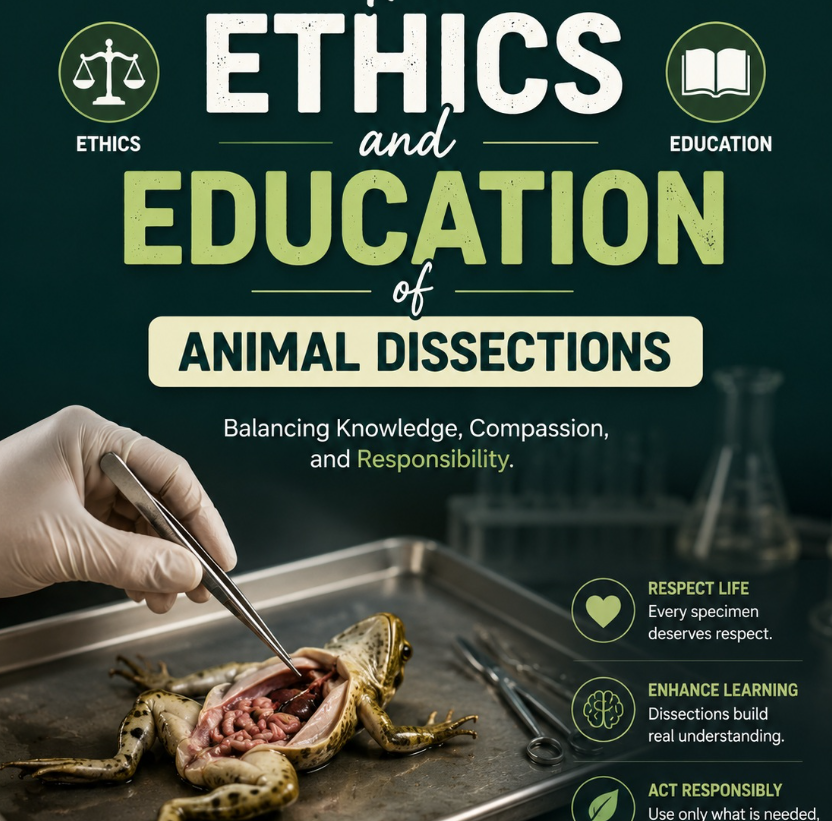
    ### **The Ethics and Education of Animal Dissections**

    Animal dissection has long been an important part of biology and medical education, helping students understand anatomy, physiology, and the complex structures of living organisms. By examining real biological specimens, learners gain hands-on experience that strengthens their observation, critical thinking, and scientific investigation skills. For many years, dissections have played a significant role in preparing future doctors, veterinarians, scientists, and researchers by providing practical knowledge that complements classroom learning.

    At the same time, animal dissections raise important ethical questions about animal welfare, responsible scientific practice, and the balance between educational benefits and respect for living creatures. Modern education encourages students to consider these ethical perspectives while learning about science. Many schools and universities now offer alternatives such as virtual dissections, 3D anatomical models, computer simulations, and interactive digital laboratories. These innovative tools provide effective learning experiences while reducing the need for animal specimens in many educational settings.

    Understanding the ethics of animal dissection helps students develop not only scientific knowledge but also compassion, responsibility, and respect for life. By combining ethical awareness with scientific inquiry, educators can inspire future generations to pursue discovery in ways that are both innovative and humane. This balanced approach promotes critical thinking, responsible decision-making, and a deeper appreciation for the relationship between science, education, and the living world.

    **#AnimalDissection #Biology #ScienceEducation #Ethics #STEM #BiologyLab #Anatomy #LifeSciences #ScientificLearning #AnimalWelfare #Education #MedicalScience #CriticalThinking #Research #Science **

    Rehan School Islamabad Campus
    Asma Shaheen EducationWali
    Irum Asim
    Saima Happinesswali
    #rsisb Roll No.240 Story No.17 Foundation level ### **The Ethics and Education of Animal Dissections** Animal dissection has long been an important part of biology and medical education, helping students understand anatomy, physiology, and the complex structures of living organisms. By examining real biological specimens, learners gain hands-on experience that strengthens their observation, critical thinking, and scientific investigation skills. For many years, dissections have played a significant role in preparing future doctors, veterinarians, scientists, and researchers by providing practical knowledge that complements classroom learning. At the same time, animal dissections raise important ethical questions about animal welfare, responsible scientific practice, and the balance between educational benefits and respect for living creatures. Modern education encourages students to consider these ethical perspectives while learning about science. Many schools and universities now offer alternatives such as virtual dissections, 3D anatomical models, computer simulations, and interactive digital laboratories. These innovative tools provide effective learning experiences while reducing the need for animal specimens in many educational settings. Understanding the ethics of animal dissection helps students develop not only scientific knowledge but also compassion, responsibility, and respect for life. By combining ethical awareness with scientific inquiry, educators can inspire future generations to pursue discovery in ways that are both innovative and humane. This balanced approach promotes critical thinking, responsible decision-making, and a deeper appreciation for the relationship between science, education, and the living world. **#AnimalDissection #Biology #ScienceEducation #Ethics #STEM #BiologyLab #Anatomy #LifeSciences #ScientificLearning #AnimalWelfare #Education #MedicalScience #CriticalThinking #Research #Science πŸŒΏπŸ”¬πŸ§¬πŸΈπŸ“š** Rehan School Islamabad Campus Asma Shaheen EducationWali Irum Asim Saima Happinesswali
    0 Comments 0 Shares 1002 Views
  • #rsisb
    Roll No.240
    Story No.22
    Foundation Level

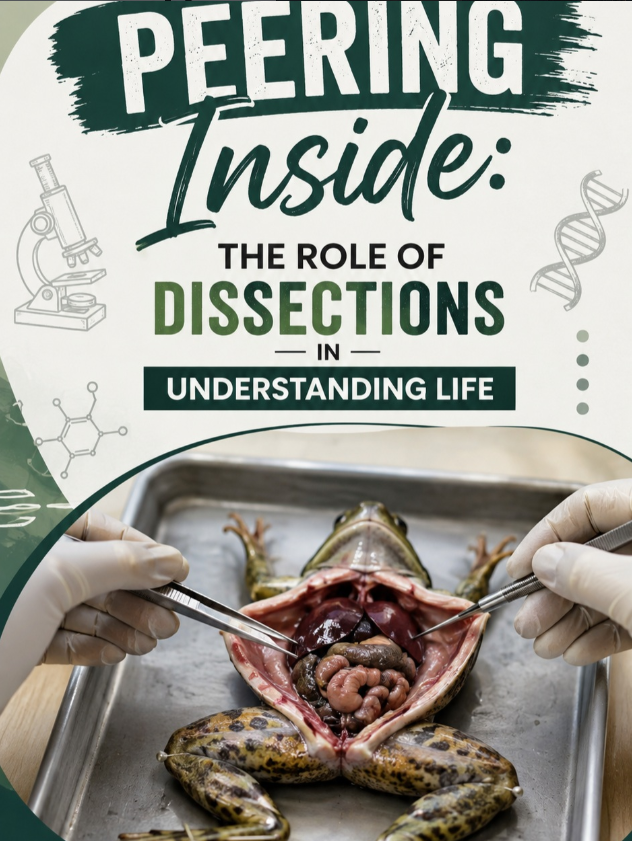
    ### **Peering Inside: The Role of Dissections in Understanding Life – Description**

    **Peering Inside: The Role of Dissections in Understanding Life** explores how dissections help scientists, doctors, and students uncover the hidden structures of living organisms. By carefully studying internal anatomy, researchers gain a deeper understanding of how organs, tissues, and body systems work together.

    Through dissection, we can discover the complexity of life, improve medical knowledge, and develop better treatments for diseases. It connects observation with scientific discovery and allows learners to explore the amazing design and organization of living things.

    This journey highlights the importance of anatomy, research, and ethical scientific practices in understanding the mysteries of life.

    Discover how looking inside helps us understand the incredible story of life from within.

    #Dissection #Anatomy #Biology #ScienceEducation #UnderstandingLife #HumanBody #MedicalScience #BiologyLearning #ScientificDiscovery

    Rehan School Islamabad Campus
    Asma Shaheen EducationWali
    Irum Asim
    Saima Happinesswali
    #rsisb Roll No.240 Story No.22 Foundation Level ### πŸ”¬ **Peering Inside: The Role of Dissections in Understanding Life – Description** ✨ 🧬 **Peering Inside: The Role of Dissections in Understanding Life** explores how dissections help scientists, doctors, and students uncover the hidden structures of living organisms. By carefully studying internal anatomy, researchers gain a deeper understanding of how organs, tissues, and body systems work together. πŸ” Through dissection, we can discover the complexity of life, improve medical knowledge, and develop better treatments for diseases. It connects observation with scientific discovery and allows learners to explore the amazing design and organization of living things. πŸ§ͺ This journey highlights the importance of anatomy, research, and ethical scientific practices in understanding the mysteries of life. 🌱 Discover how looking inside helps us understand the incredible story of life from within. #Dissection #Anatomy #Biology #ScienceEducation #UnderstandingLife #HumanBody #MedicalScience #BiologyLearning #ScientificDiscovery πŸ”¬πŸ§¬βœ¨ Rehan School Islamabad Campus Asma Shaheen EducationWali Irum Asim Saima Happinesswali
    0 Comments 0 Shares 632 Views
  • #rsisb
    Roll No.240
    Story No.22
    Foundation Level

    ### **Peering Inside: The Role of Dissections in Understanding Life – Description**

    **Peering Inside: The Role of Dissections in Understanding Life** explores how dissections help scientists, doctors, and students uncover the hidden structures of living organisms. By carefully studying internal anatomy, researchers gain a deeper understanding of how organs, tissues, and body systems work together.

    Through dissection, we can discover the complexity of life, improve medical knowledge, and develop better treatments for diseases. It connects observation with scientific discovery and allows learners to explore the amazing design and organization of living things.

    This journey highlights the importance of anatomy, research, and ethical scientific practices in understanding the mysteries of life.

    Discover how looking inside helps us understand the incredible story of life from within.

    #Dissection #Anatomy #Biology #ScienceEducation #UnderstandingLife #HumanBody #MedicalScience #BiologyLearning #ScientificDiscovery

    Rehan School Islamabad Campus
    Asma Shaheen EducationWali
    Irum Asim
    Saima Happinesswali
    #rsisb Roll No.240 Story No.22 Foundation Level ### πŸ”¬ **Peering Inside: The Role of Dissections in Understanding Life – Description** ✨ 🧬 **Peering Inside: The Role of Dissections in Understanding Life** explores how dissections help scientists, doctors, and students uncover the hidden structures of living organisms. By carefully studying internal anatomy, researchers gain a deeper understanding of how organs, tissues, and body systems work together. πŸ” Through dissection, we can discover the complexity of life, improve medical knowledge, and develop better treatments for diseases. It connects observation with scientific discovery and allows learners to explore the amazing design and organization of living things. πŸ§ͺ This journey highlights the importance of anatomy, research, and ethical scientific practices in understanding the mysteries of life. 🌱 Discover how looking inside helps us understand the incredible story of life from within. #Dissection #Anatomy #Biology #ScienceEducation #UnderstandingLife #HumanBody #MedicalScience #BiologyLearning #ScientificDiscovery πŸ”¬πŸ§¬βœ¨ Rehan School Islamabad Campus Asma Shaheen EducationWali Irum Asim Saima Happinesswali
    0 Comments 0 Shares 616 Views
  • Day 126: Dissecting Frogs – A Gateway to Human Anatomy

    Today, we explored the fascinating world of biology through frog dissection — an essential step toward understanding human anatomy. By studying the internal structure of a frog, we learned how similar many of its organs are to ours, such as the heart, lungs, liver, and stomach.

    This hands-on activity helped us understand how different systems — digestive, respiratory, and circulatory — work together to sustain life. It was an exciting yet educational experience that connected theory with real-life biology.

    Dissecting a frog not only deepened our scientific knowledge but also sparked curiosity about the complex design of living organisms. Truly, it was a day of learning, observation, and appreciation for the wonders of life!
    Day 126: Dissecting Frogs – A Gateway to Human Anatomy πŸΈπŸ”¬ Today, we explored the fascinating world of biology through frog dissection — an essential step toward understanding human anatomy. By studying the internal structure of a frog, we learned how similar many of its organs are to ours, such as the heart, lungs, liver, and stomach. This hands-on activity helped us understand how different systems — digestive, respiratory, and circulatory — work together to sustain life. It was an exciting yet educational experience that connected theory with real-life biology. Dissecting a frog not only deepened our scientific knowledge but also sparked curiosity about the complex design of living organisms. Truly, it was a day of learning, observation, and appreciation for the wonders of life! 🌿✨
    0 Comments 0 Shares 313 Views 0
  • #rsisb
    Roll No 242
    Story Post 16
    Foundation level
    **Peering Inside: The Role of Dissections in Understanding Life**
    Every living organism has an incredible story hidden beneath the surface. Through dissections, students and researchers gain a deeper understanding of anatomy, organ systems, and the amazing complexity of life. By carefully observing real biological structures, we develop scientific thinking, critical observation skills, and a greater appreciation for how living beings function.
    Dissections are not just about exploring anatomy—they inspire curiosity, encourage hands-on learning, and help connect classroom knowledge with the real world. Every discovery brings us one step closer to understanding the wonders of life and the science that shapes our world.
    **#Hashtags**
    #Biology #Science #Dissection #Anatomy #LifeSciences #STEM #MedicalEducation #Learning #Education #ScientificDiscovery #FutureScientists #HandsOnLearning #Curiosity #Knowledge #RehanSchool #ExploreScience
    @Asma Shaheen EducationWali
    @Saima Happinesswali
    @Irum Asim
    #rsisb Roll No 242 Story Post 16 Foundation level πŸ§¬πŸ”¬ **Peering Inside: The Role of Dissections in Understanding Life** πŸ”¬πŸ§¬ Every living organism has an incredible story hidden beneath the surface. πŸŒ±πŸ«€ Through dissections, students and researchers gain a deeper understanding of anatomy, organ systems, and the amazing complexity of life. By carefully observing real biological structures, we develop scientific thinking, critical observation skills, and a greater appreciation for how living beings function. 🧠✨ Dissections are not just about exploring anatomy—they inspire curiosity, encourage hands-on learning, and help connect classroom knowledge with the real world. Every discovery brings us one step closer to understanding the wonders of life and the science that shapes our world. πŸŒπŸ“šπŸ” **#Hashtags** #Biology 🧬 #Science πŸ”¬ #Dissection πŸ«€ #Anatomy 🦴 #LifeSciences 🌿 #STEM πŸš€ #MedicalEducation 🩺 #Learning πŸ“– #Education πŸŽ“ #ScientificDiscovery πŸ” #FutureScientists 🌟 #HandsOnLearning βœ‹ #Curiosity πŸ’‘ #Knowledge πŸ“š #RehanSchool ❀️ #ExploreScience 🌍 @Asma Shaheen EducationWali @Saima Happinesswali @Irum Asim
    0 Comments 0 Shares 5326 Views
  • Day 126: Dissecting Frogs – A Gateway to Human Anatomy

    Today, we explored the fascinating world of biology through frog dissection — an essential step toward understanding human anatomy. By studying the internal structure of a frog, we learned how similar many of its organs are to ours, such as the heart, lungs, liver, and stomach.

    This hands-on activity helped us understand how different systems — digestive, respiratory, and circulatory — work together to sustain life. It was an exciting yet educational experience that connected theory with real-life biology.

    Dissecting a frog not only deepened our scientific knowledge but also sparked curiosity about the complex design of living organisms. Truly, it was a day of learning, observation, and appreciation for the wonders of life!
    Day 126: Dissecting Frogs – A Gateway to Human Anatomy πŸΈπŸ”¬ Today, we explored the fascinating world of biology through frog dissection — an essential step toward understanding human anatomy. By studying the internal structure of a frog, we learned how similar many of its organs are to ours, such as the heart, lungs, liver, and stomach. This hands-on activity helped us understand how different systems — digestive, respiratory, and circulatory — work together to sustain life. It was an exciting yet educational experience that connected theory with real-life biology. Dissecting a frog not only deepened our scientific knowledge but also sparked curiosity about the complex design of living organisms. Truly, it was a day of learning, observation, and appreciation for the wonders of life! 🌿✨
    0 Comments 0 Shares 489 Views 0
  • ACCL Day 146

    Story: The Ethics and Education of Animal Dissections
    (Narrator POV)

    The classroom was quieter than usual. The students sat in a circle around the table where the dissection kits were placed. It wasnt fear that filled the room—
    it was responsibility.

    As the narrator of their journey, I could feel the weight of the moment. Today wasnt just another science lesson. It was a lesson about choices, respect, and ethics.

    Their mentor, Sir Imran, stepped forward and said calmly,
    "Before we learn how things work, we must understand why we study them—and what respect truly means."

    Aaliya raised her hand.
    "Sir… do we really need to dissect animals to learn?"
    The question hung in the air, honest and thoughtful.

    Sir Imran smiled gently.
    "Thats exactly what today is about."

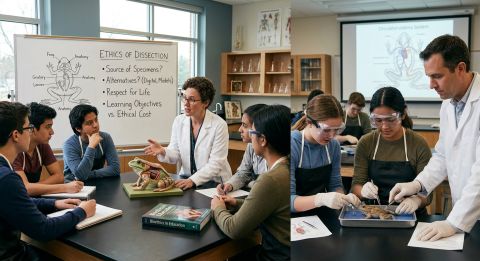
    He explained how dissections, when done ethically, teach students about anatomy, structure, and life—but also teach compassion.
    He reminded them that scientists arent just seekers of knowledge; they are guardians of life.

    The students listened deeply.

    To reinforce the lesson, he opened a digital 3D model on the screen.
    "Before touching anything real," he said, "we study virtually. We learn respectfully. We decide responsibly."

    Only then, after understanding the ethics, did the students approach the specimen.
    Not with excitement—
    but with purpose.

    Their movements were slow and careful.
    They spoke quietly, sharing observations.
    They treated the process not as an experiment, but as a responsibility.

    For the first time, they understood that education isnt only about knowledge—
    its about values.

    As the session ended, the students closed their kits with new awareness. They walked out not just smarter, but wiser… understanding that science is not only about learning lifes mechanisms, but respecting the life that makes it possible.

    And that was the true lesson of the day.
    ACCL Day 146 🌟 Story: The Ethics and Education of Animal Dissections (Narrator POV) The classroom was quieter than usual. The students sat in a circle around the table where the dissection kits were placed. It wasn't fear that filled the room— it was responsibility. As the narrator of their journey, I could feel the weight of the moment. Today wasn't just another science lesson. It was a lesson about choices, respect, and ethics. Their mentor, Sir Imran, stepped forward and said calmly, "Before we learn how things work, we must understand why we study them—and what respect truly means." Aaliya raised her hand. "Sir… do we really need to dissect animals to learn?" The question hung in the air, honest and thoughtful. Sir Imran smiled gently. "That's exactly what today is about." He explained how dissections, when done ethically, teach students about anatomy, structure, and life—but also teach compassion. He reminded them that scientists aren't just seekers of knowledge; they are guardians of life. The students listened deeply. To reinforce the lesson, he opened a digital 3D model on the screen. "Before touching anything real," he said, "we study virtually. We learn respectfully. We decide responsibly." Only then, after understanding the ethics, did the students approach the specimen. Not with excitement— but with purpose. Their movements were slow and careful. They spoke quietly, sharing observations. They treated the process not as an experiment, but as a responsibility. For the first time, they understood that education isn't only about knowledge— it's about values. As the session ended, the students closed their kits with new awareness. They walked out not just smarter, but wiser… understanding that science is not only about learning life's mechanisms, but respecting the life that makes it possible. And that was the true lesson of the day.
    0 Comments 0 Shares 607 Views
  • #rsisb
    Roll No.190
    Story Post No.39
    Foundation Level

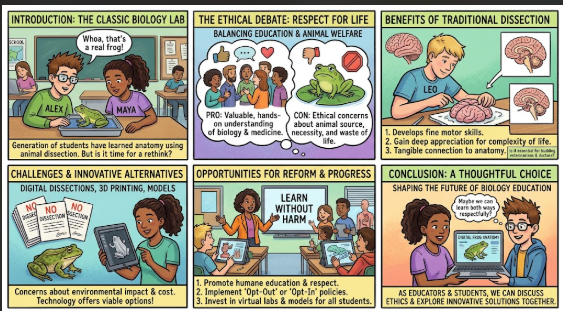
    What Animal Dissection Involves
    Educational purpose: Students dissect frogs, fetal pigs, or rats to learn anatomy and physiology.

    Skill development: Builds fine motor skills, hand-eye coordination, and scientific observation.

    Historical roots: Practice dates back to ancient Greece and became common in schools by the 1920s.

    Ethical Concerns
    Animal welfare: Millions of animals are used annually, raising questions about humane treatment.

    Alternatives: Virtual dissections and 3D models offer cruelty-free learning options.

    Student choice: In many regions, students can opt out and request alternative assignments.

    Pros vs Cons
    Pros Cons
    Real specimens provide deeper learning Animal sourcing often considered inhumane
    Encourages careers in science & medicine Not required by most curricula
    Develops motor skills & lab confidence Effective digital alternatives exist
    Tangible connection to biology concepts Environmental impact of specimen use


    Modern Alternatives
    Virtual dissection software: Interactive 3D models of frogs, pigs, and human anatomy.

    Synthetic models: Plastic or silicone replicas allow repeated practice.

    Augmented reality: AR apps overlay anatomical structures on real-world objects.


    Would you like me to dive deeper into the ethical arguments or explore the latest alternatives being adopted in schools worldwide?

    The Ethics and Education of Animal Dissections give me deas\
    Here are some thoughtful ideas for exploring The Ethics and Education of Animal Dissections — perfect for essays, presentations, or classroom debates.

    Core Discussion Themes
    Moral responsibility: Should schools prioritize compassion over tradition when teaching biology?

    Educational value: Does hands-on dissection truly deepen understanding compared to digital alternatives?

    Student consent: Should participation be voluntary, respecting personal beliefs?

    Alternatives in education: Explore virtual labs, 3D models, and augmented reality dissections.

    Project or Essay Ideas
    Idea Focus Area Goal
    Ethical Debate Compare utilitarian vs. animal rights perspectives Encourage critical thinking
    Curriculum Reform Assess how schools can modernize biology teaching Promote humane education
    Student Survey Gather opinions on dissection experiences Measure ethical awareness
    Tech Integration Evaluate virtual dissection tools Highlight innovation in learning


    Broader Reflections
    Environmental impact: Consider how specimen sourcing affects ecosystems.

    Cultural perspectives: Different societies view animal use in education differently.

    Future of biology education: Imagine classrooms where empathy and technology coexist.

    Would you like me to help you outline a short essay or design a classroom debate plan around this topic?
    #rsisb Roll No.190 Story Post No.39 Foundation Level πŸ§ͺ What Animal Dissection Involves Educational purpose: Students dissect frogs, fetal pigs, or rats to learn anatomy and physiology. Skill development: Builds fine motor skills, hand-eye coordination, and scientific observation. Historical roots: Practice dates back to ancient Greece and became common in schools by the 1920s. βš–οΈ Ethical Concerns Animal welfare: Millions of animals are used annually, raising questions about humane treatment. Alternatives: Virtual dissections and 3D models offer cruelty-free learning options. Student choice: In many regions, students can opt out and request alternative assignments. βœ… Pros vs ❌ Cons Pros Cons Real specimens provide deeper learning Animal sourcing often considered inhumane Encourages careers in science & medicine Not required by most curricula Develops motor skills & lab confidence Effective digital alternatives exist Tangible connection to biology concepts Environmental impact of specimen use 🌍 Modern Alternatives Virtual dissection software: Interactive 3D models of frogs, pigs, and human anatomy. Synthetic models: Plastic or silicone replicas allow repeated practice. Augmented reality: AR apps overlay anatomical structures on real-world objects. Would you like me to dive deeper into the ethical arguments or explore the latest alternatives being adopted in schools worldwide? The Ethics and Education of Animal Dissections give me deas\ Here are some thoughtful ideas for exploring The Ethics and Education of Animal Dissections — perfect for essays, presentations, or classroom debates. 🧠 Core Discussion Themes Moral responsibility: Should schools prioritize compassion over tradition when teaching biology? Educational value: Does hands-on dissection truly deepen understanding compared to digital alternatives? Student consent: Should participation be voluntary, respecting personal beliefs? Alternatives in education: Explore virtual labs, 3D models, and augmented reality dissections. πŸ§ͺ Project or Essay Ideas Idea Focus Area Goal Ethical Debate Compare utilitarian vs. animal rights perspectives Encourage critical thinking Curriculum Reform Assess how schools can modernize biology teaching Promote humane education Student Survey Gather opinions on dissection experiences Measure ethical awareness Tech Integration Evaluate virtual dissection tools Highlight innovation in learning 🌍 Broader Reflections Environmental impact: Consider how specimen sourcing affects ecosystems. Cultural perspectives: Different societies view animal use in education differently. Future of biology education: Imagine classrooms where empathy and technology coexist. Would you like me to help you outline a short essay or design a classroom debate plan around this topic?
    0 Comments 0 Shares 6991 Views
  • #rsisb
    Roll No.190
    Story Post No.38
    Foundation Level

    Peering Inside: The Role of Dissections in Understanding Life

    Dissection has played a vital role in helping scientists, students, and researchers understand how living organisms function. By carefully examining the internal structures of animals and plants, we gain a deeper appreciation for the complexity and beauty of life.

    Through dissections, learners can observe organs, tissues, and body systems firsthand, turning textbook diagrams into real-world understanding. This hands-on experience helps reveal how different parts of an organism work together to support survival, growth, and reproduction. From studying the circulatory system to exploring the digestive tract, dissections provide valuable insights into biology and anatomy.

    Dissections have also contributed to major scientific discoveries and advances in medicine. Understanding anatomy has helped doctors develop treatments, perform surgeries, and improve healthcare for people around the world.

    At the same time, modern science encourages ethical practices and respect for living organisms. Many educational programs now combine traditional dissections with digital simulations and 3D models, giving students multiple ways to learn about anatomy while promoting responsible scientific study.

    The study of life is a journey of curiosity and discovery. By looking beneath the surface, we can better understand the intricate systems that make life possible and develop a greater respect for the natural world around us.

    Explore. Learn. Discover.
    Science begins with curiosity.
    Understanding life starts from within.

    #Biology #Science #Dissection #Anatomy #LifeScience #Education #STEM #Learning #ScientificDiscovery #Research #MedicalScience #Curiosity #Nature #Students #BiologyClass #AnatomyStudy #ScienceEducation #Knowledge #LearningJourney #ExploreScience
    #rsisb Roll No.190 Story Post No.38 Foundation Level 🧬 Peering Inside: The Role of Dissections in Understanding Life πŸΈπŸ”¬ Dissection has played a vital role in helping scientists, students, and researchers understand how living organisms function. By carefully examining the internal structures of animals and plants, we gain a deeper appreciation for the complexity and beauty of life. 🌿✨ Through dissections, learners can observe organs, tissues, and body systems firsthand, turning textbook diagrams into real-world understanding. πŸ“šπŸ” This hands-on experience helps reveal how different parts of an organism work together to support survival, growth, and reproduction. From studying the circulatory system to exploring the digestive tract, dissections provide valuable insights into biology and anatomy. ❀️🫁🧠 Dissections have also contributed to major scientific discoveries and advances in medicine. Understanding anatomy has helped doctors develop treatments, perform surgeries, and improve healthcare for people around the world. πŸ₯βš•οΈ At the same time, modern science encourages ethical practices and respect for living organisms. Many educational programs now combine traditional dissections with digital simulations and 3D models, giving students multiple ways to learn about anatomy while promoting responsible scientific study. πŸ’»πŸŒŽ The study of life is a journey of curiosity and discovery. By looking beneath the surface, we can better understand the intricate systems that make life possible and develop a greater respect for the natural world around us. πŸŒπŸ”¬πŸŒ± ✨ Explore. Learn. Discover. ✨ Science begins with curiosity. ✨ Understanding life starts from within. #Biology #Science #Dissection #Anatomy #LifeScience #Education #STEM #Learning #ScientificDiscovery #Research #MedicalScience #Curiosity #Nature #Students #BiologyClass #AnatomyStudy #ScienceEducation #Knowledge #LearningJourney #ExploreScience πŸ§¬πŸ”¬πŸ“šπŸŒΏπŸΈπŸ§ β€οΈπŸŒβœ¨
    0 Comments 0 Shares 6985 Views
More Results