• **Foundation Level** **Day 132** **story post** **Roll Number: 005**


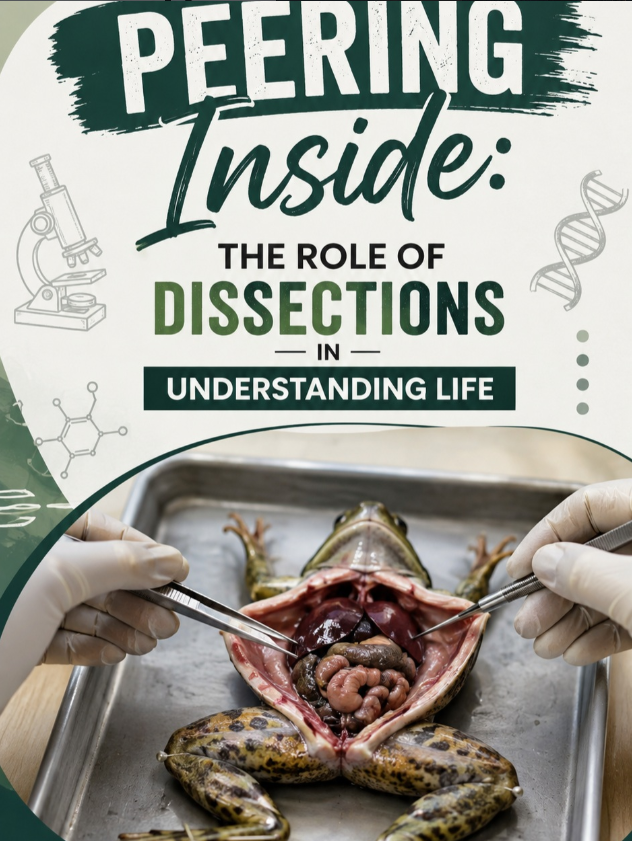
    Peering Inside: The Role of Dissections in Understanding Life

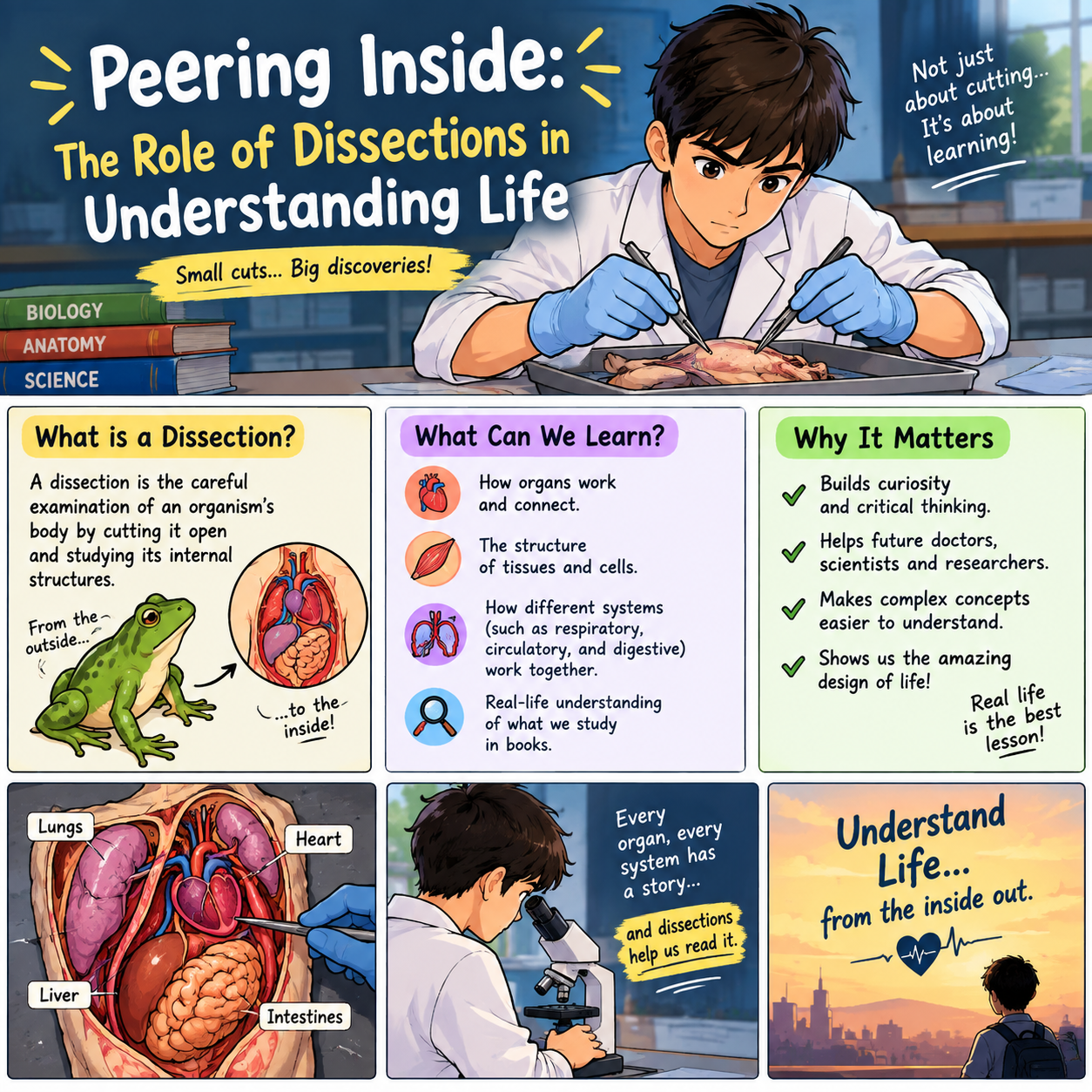
    What can we learn by looking beyond the surface? Dissections give students a hands-on way to explore organs, tissues, body systems, and the amazing structures that make life work.

    Through careful observation and experimentation, science becomes more than something we read in books—it becomes something we can understand from the inside out!

    Learn. Explore. Discover. Understand life!

    #Biology #Science #Dissection #Anatomy #LifeScience #Learning #Education #ScienceExperiment #ExploreScience #InstagramEducation
    **Foundation Level** **Day 132** **story post** **Roll Number: 005** 🔬 Peering Inside: The Role of Dissections in Understanding Life 🧬 What can we learn by looking beyond the surface? Dissections give students a hands-on way to explore organs, tissues, body systems, and the amazing structures that make life work. 🫀🫁 Through careful observation and experimentation, science becomes more than something we read in books—it becomes something we can understand from the inside out! 🌱🔍 Learn. Explore. Discover. Understand life! 🧪✨ #Biology #Science #Dissection #Anatomy #LifeScience #Learning #Education #ScienceExperiment #ExploreScience #InstagramEducation
    0 Комментарии 0 Поделились 808 Просмотры

  • #rsisb
    Roll no.239
    Song no .27
    Foundation Level

    **Dissecting Frogs: A Gateway to Human Anatomy** explores how studying frog anatomy can help students understand the basic organization and functions of vertebrate bodies. By observing organs and body systems, students can learn important concepts about structures such as the **heart, lungs, digestive system, and reproductive organs**.

    Frog dissection has traditionally been used in biology education to develop skills in **anatomical observation, scientific investigation, and understanding body systems**. It can also provide a useful foundation for comparing vertebrate anatomy with human anatomy while recognizing important differences between species.

    #FrogDissection #HumanAnatomy #Biology #Anatomy #ScienceEducation #LifeScience #Learning #Science
    #rsisb Roll no.239 Song no .27 Foundation Level **Dissecting Frogs: A Gateway to Human Anatomy** explores how studying frog anatomy can help students understand the basic organization and functions of vertebrate bodies. 🧬📚 By observing organs and body systems, students can learn important concepts about structures such as the **heart, lungs, digestive system, and reproductive organs**. Frog dissection has traditionally been used in biology education to develop skills in **anatomical observation, scientific investigation, and understanding body systems**. It can also provide a useful foundation for comparing vertebrate anatomy with human anatomy while recognizing important differences between species. 🔬🫀 #FrogDissection #HumanAnatomy #Biology #Anatomy #ScienceEducation #LifeScience #Learning #Science 🔬🐸🧬
    0 Комментарии 0 Поделились 764 Просмотры 4
  • #RSTA
    #Task : Story Post
    #Class: Foundation Level
    #Day No: 146
    #Made By Me

    Total Post:20


    Today, I learned about the role of animal dissections in science education. Dissections can help students understand anatomy, body structures, and how living systems work.

    At the same time, it is important to treat animals with respect and follow ethical guidelines. Science should always be connected with responsibility, care, and compassion.

    **Learn • Respect • Explore • Discover**

    RSTA FoundationLevel Biology Science AnimalDissection Ethics Education Learning MadeByMe
    #RSTA #Task : Story Post #Class: Foundation Level #Day No: 146 #Made By Me Total Post:20 Today, I learned about the role of animal dissections in science education. Dissections can help students understand anatomy, body structures, and how living systems work. 🧬📚 At the same time, it is important to treat animals with respect and follow ethical guidelines. Science should always be connected with responsibility, care, and compassion. 💚✨ **Learn • Respect • Explore • Discover** 🔍 RSTA FoundationLevel Biology Science AnimalDissection Ethics Education Learning MadeByMe
    0 Комментарии 0 Поделились 566 Просмотры
  • Foundation Level
    Day 146

    **Roll Number:** 005

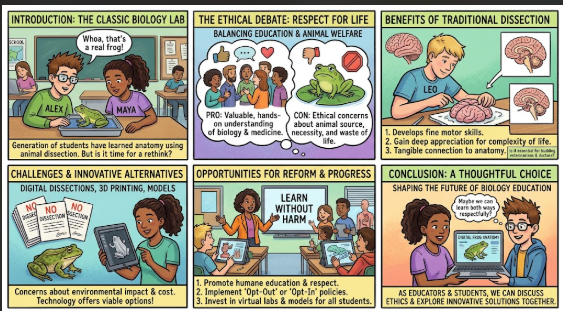
    This comic-strip illustration explores the ongoing debate surrounding animal dissection in science education, balancing traditional hands-on learning with modern, humane alternatives.

    * **Panel 1 (The Classic Biology Lab):** Alex and Maya examine a preserved frog in a traditional classroom setup, introducing the long-standing educational practice.
    * **Panel 2 (The Ethical Debate):** A visual breakdown comparing the benefits of hands-on educational value against the ethical concerns regarding animal welfare, sourcing, and respect for life.
    * **Panel 3 (Benefits of Traditional Dissection):** Highlighting how physical dissection aids fine motor skills, offers a tactile understanding of organ structures, and builds foundational experience for future medical or veterinary paths.
    * **Panel 4 (Innovative Alternatives):** Showcasing high-tech solutions like digital software, interactive tablets, and 3D-printed anatomical models that eliminate the need for real specimens.
    * **Panel 5 (Progress & Reform):** Demonstrating a modern, inclusive classroom environment that respects student ethics through opt-out policies and virtual learning tools.
    * **Panel 6 (A Thoughtful Future):** Alex and Maya reflect on finding a balance, concluding that technology and ethics can work together to advance science education without harm.
    Foundation Level Day 146 **Roll Number:** 005 This comic-strip illustration explores the ongoing debate surrounding animal dissection in science education, balancing traditional hands-on learning with modern, humane alternatives. * **Panel 1 (The Classic Biology Lab):** Alex and Maya examine a preserved frog in a traditional classroom setup, introducing the long-standing educational practice. * **Panel 2 (The Ethical Debate):** A visual breakdown comparing the benefits of hands-on educational value against the ethical concerns regarding animal welfare, sourcing, and respect for life. * **Panel 3 (Benefits of Traditional Dissection):** Highlighting how physical dissection aids fine motor skills, offers a tactile understanding of organ structures, and builds foundational experience for future medical or veterinary paths. * **Panel 4 (Innovative Alternatives):** Showcasing high-tech solutions like digital software, interactive tablets, and 3D-printed anatomical models that eliminate the need for real specimens. * **Panel 5 (Progress & Reform):** Demonstrating a modern, inclusive classroom environment that respects student ethics through opt-out policies and virtual learning tools. * **Panel 6 (A Thoughtful Future):** Alex and Maya reflect on finding a balance, concluding that technology and ethics can work together to advance science education without harm.
    1
    0 Комментарии 0 Поделились 982 Просмотры
  • #RSTA
    #Task : Story Post
    #Class: Foundation Level
    #Day No: 132
    #Made By Me

    Total Post:18


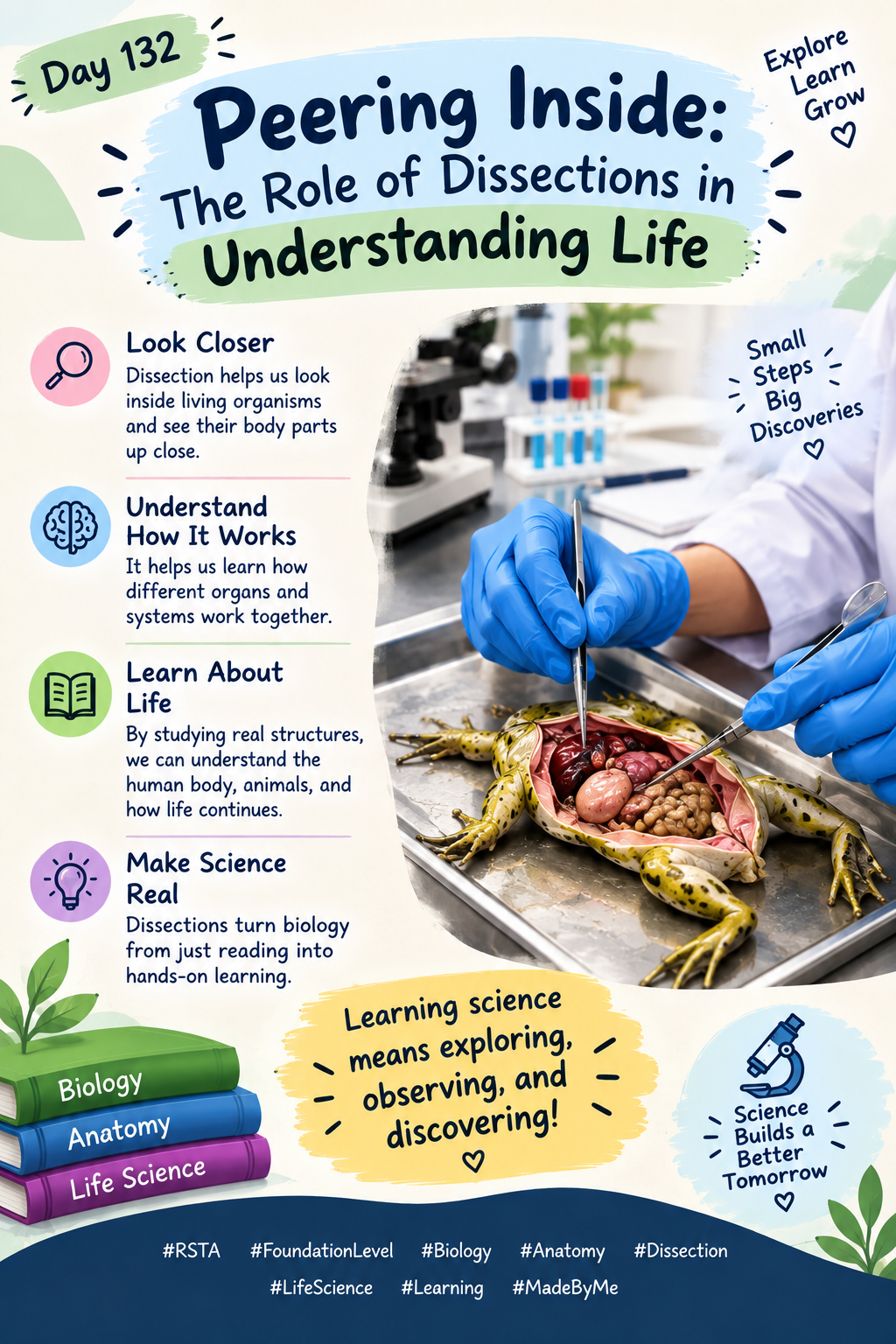
    Today, I explored how dissections help us understand the hidden structures of living organisms. By observing organs and body parts closely, we can learn how different systems work together.

    This activity made biology more interesting and helped me understand life through observation and practical learning.

    **Explore • Observe • Learn • Discover**

    RSTA FoundationLevel Day132 Biology Anatomy Dissection Science LifeScience Learning MadeByMe
    #RSTA #Task : Story Post #Class: Foundation Level #Day No: 132 #Made By Me Total Post:18 Today, I explored how dissections help us understand the hidden structures of living organisms. By observing organs and body parts closely, we can learn how different systems work together. 🧬✨ This activity made biology more interesting and helped me understand life through observation and practical learning. 🌱📚 **Explore • Observe • Learn • Discover** 🔍💡 RSTA FoundationLevel Day132 Biology Anatomy Dissection Science LifeScience Learning MadeByMe
    0 Комментарии 0 Поделились 937 Просмотры
  • RSIF8
    Roll no 68
    Task no 144
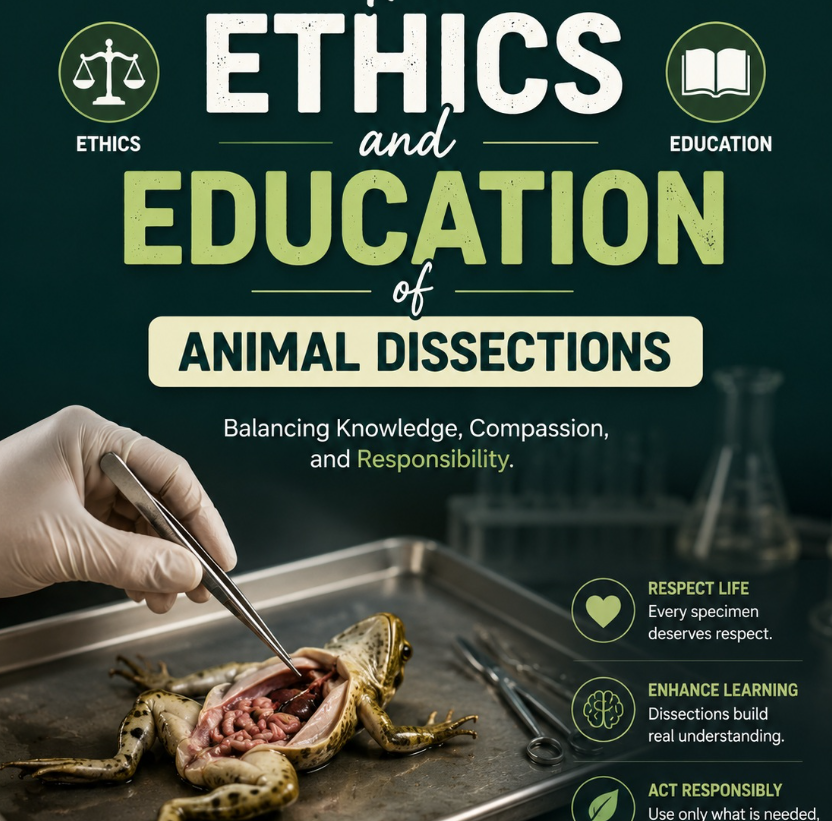
    Task topic;The Ethics and Education of Animal Dissections **

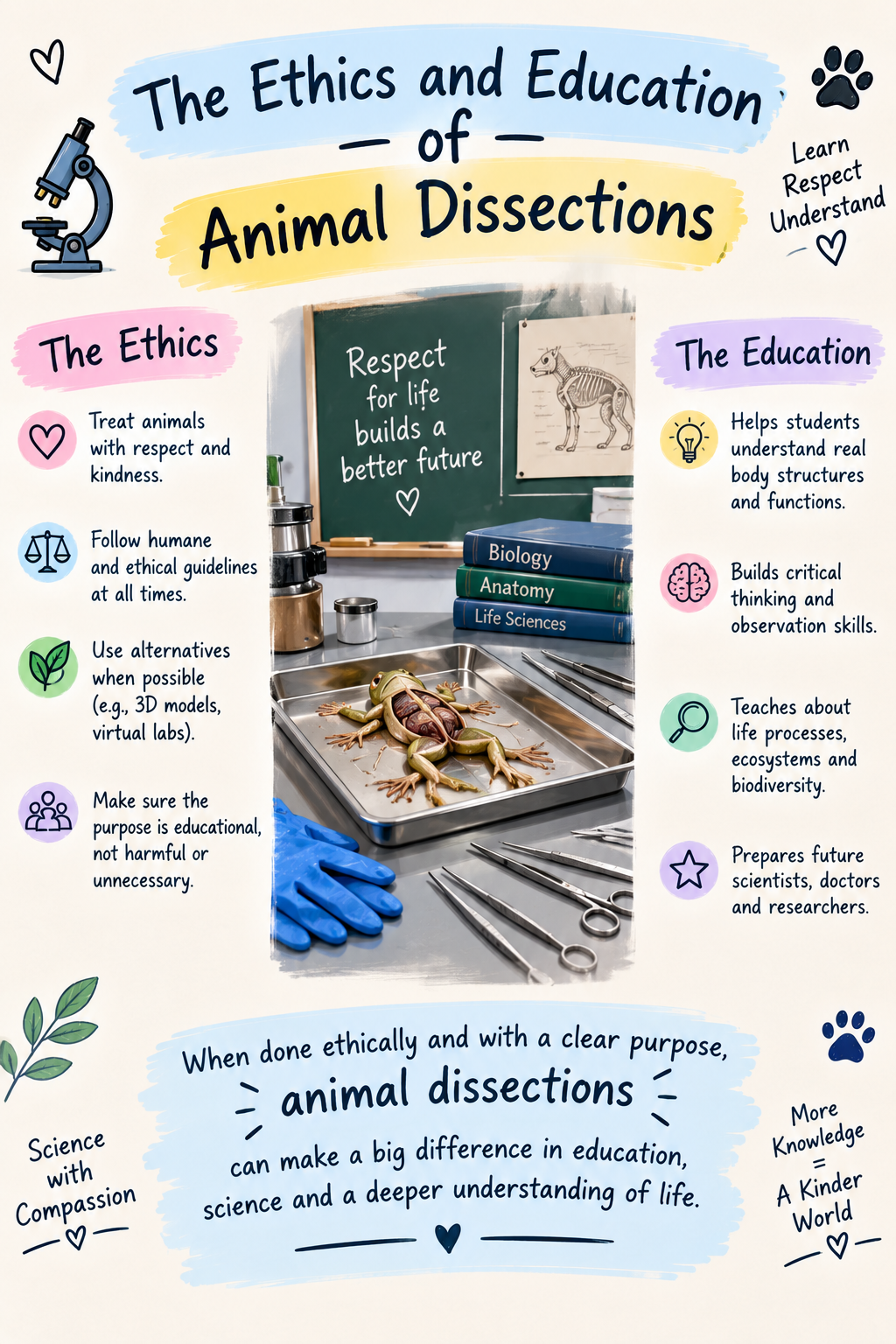
    Animal dissections can help students understand anatomy and biological structures, but education should always be balanced with compassion and ethical responsibility. This topic explores how science, learning, respect for life, and responsible practices can work together.
    RSIF8 Roll no 68 Task no 144 Task topic;The Ethics and Education of Animal Dissections 🐾🔬** Animal dissections can help students understand anatomy and biological structures, but education should always be balanced with compassion and ethical responsibility. This topic explores how science, learning, respect for life, and responsible practices can work together. 📚🧪🌱
    0 Комментарии 0 Поделились 494 Просмотры
  • RSIF8
    Roll no 68
    Task no 130
    Task topic;Peering Inside: The Role of Dissections**

    Dissections help students explore the structure of living organisms and understand how different organs and body systems work together. By observing anatomy closely, learners can connect what they study in textbooks with real biological structures. This educational journey encourages curiosity, careful observation, and a deeper understanding of life sciences.
    RSIF8 Roll no 68 Task no 130 Task topic;Peering Inside: The Role of Dissections** 🔬🐸 Dissections help students explore the structure of living organisms and understand how different organs and body systems work together. By observing anatomy closely, learners can connect what they study in textbooks with real biological structures. This educational journey encourages curiosity, careful observation, and a deeper understanding of life sciences. 🧬📚
    0 Комментарии 0 Поделились 592 Просмотры
  • #rsisb
    Roll no.214
    Foundation level
    Story post no.19

    Dissections help us explore the hidden structures of living organisms and understand how different organs work together. Through careful observation, students can learn about anatomy, body systems, and the amazing complexity of life. This topic shows how science helps us discover the secrets of living things and appreciate the beauty of nature.

    #Dissection #Biology #Anatomy #Science #Learning #LifeScience #Education #HumanBody #ExploreScience #UnderstandingLife
    #rsisb Roll no.214 Foundation level Story post no.19 Dissections help us explore the hidden structures of living organisms and understand how different organs work together. 🐸🫀🫁 Through careful observation, students can learn about anatomy, body systems, and the amazing complexity of life. 🌱🔬 This topic shows how science helps us discover the secrets of living things and appreciate the beauty of nature. ✨🧬 #Dissection 🔬 #Biology 🧬 #Anatomy 🫀 #Science 🔬 #Learning 📚 #LifeScience 🌱 #Education 🎓 #HumanBody 🫁 #ExploreScience 🔍 #UnderstandingLife 🌍
    1
    0 Комментарии 0 Поделились 1194 Просмотры
  • Fondation Level Batch No 4
    Roll RSLC #42
    Task No #132
    Day #132

    Peering Inside: The Role of Dissections in Understanding Life

    Ali was a curious student who loved learning about biology. One day, his teacher introduced the class to dissection and explained how carefully studying internal structures can help us understand how living organisms function. Ali had always relied on textbook pictures, so he was surprised to see how complex and organized the structures were in reality. As he observed carefully, he began connecting the practical experience with everything he had previously learned in class.

    During the lesson, Ali noticed that every organ had a particular shape and purpose. He realized that the body works like a carefully organized system, where different parts depend on one another. Instead of simply memorizing names, he started asking questions and searching for explanations. His teacher encouraged him to observe patiently and reminded him that good science requires curiosity, responsibility, and respect for life.

    After the lesson, Ali understood that true learning does not always come from reading a book. Sometimes, we learn more deeply when we observe, investigate, and experience things carefully. The dissection lesson had changed the way he looked at biology because he could now understand the connection between theory and real structures. He became more interested in discovering how life works and wanted to continue exploring the mysteries of science.

    As Ali walked home, he thought about what his teacher had said: ?Never stop asking questions.? He realized that the world contains many hidden details, and understanding them requires patience and an open mind. The experience taught him that knowledge grows when curiosity leads us to explore responsibly. From that day forward, Ali promised himself that he would not just memorize information but would always try to understand the reason behind it.

    Moral Lesson: True knowledge comes from curiosity, careful observation, and the courage to look beyond the surface. When we ask questions and explore responsibly, even the smallest discovery can teach us something valuable about life.

    #HumanBody #Dissection #Anatomy #Biology #MedicalScience #ScienceEdu

    Fondation Level Batch No 4 Roll RSLC #42 Task No #132 Day #132 Peering Inside: The Role of Dissections in Understanding Life Ali was a curious student who loved learning about biology. One day, his teacher introduced the class to dissection and explained how carefully studying internal structures can help us understand how living organisms function. Ali had always relied on textbook pictures, so he was surprised to see how complex and organized the structures were in reality. As he observed carefully, he began connecting the practical experience with everything he had previously learned in class. During the lesson, Ali noticed that every organ had a particular shape and purpose. He realized that the body works like a carefully organized system, where different parts depend on one another. Instead of simply memorizing names, he started asking questions and searching for explanations. His teacher encouraged him to observe patiently and reminded him that good science requires curiosity, responsibility, and respect for life. After the lesson, Ali understood that true learning does not always come from reading a book. Sometimes, we learn more deeply when we observe, investigate, and experience things carefully. The dissection lesson had changed the way he looked at biology because he could now understand the connection between theory and real structures. He became more interested in discovering how life works and wanted to continue exploring the mysteries of science. As Ali walked home, he thought about what his teacher had said: ?Never stop asking questions.? He realized that the world contains many hidden details, and understanding them requires patience and an open mind. The experience taught him that knowledge grows when curiosity leads us to explore responsibly. From that day forward, Ali promised himself that he would not just memorize information but would always try to understand the reason behind it. Moral Lesson: True knowledge comes from curiosity, careful observation, and the courage to look beyond the surface. When we ask questions and explore responsibly, even the smallest discovery can teach us something valuable about life. #HumanBody #Dissection #Anatomy #Biology #MedicalScience #ScienceEdu

    0 Комментарии 0 Поделились 1612 Просмотры
  • Fondation Level Batch No 4
    Roll RSLC #42
    Task No #146
    Day #146

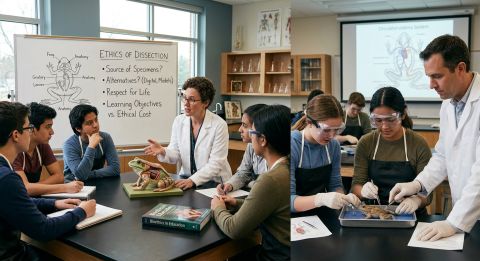
    # The Ethics and Education of Animal Dissections

    On a bright Monday morning, Sara entered her biology classroom with excitement and curiosity. Her teacher, Ms. Helen, announced that the students would be learning about animal anatomy through a dissection lesson. Sara had always wanted to understand how living bodies worked, but she also wondered whether using animals for education was the right choice. Before beginning, Ms. Helen reminded the class that science was not only about discovering facts?it was also about making responsible and ethical decisions.

    During the lesson, Sara carefully observed the specimen and began to understand how different organs worked together. However, Ms. Helen explained that animals should never be treated as ordinary objects. They were living beings and deserved respect. She told the students that every use of an animal in education should have a clear purpose and that unnecessary harm should always be avoided.

    One student asked, ?Can we learn anatomy without using real animals?? Ms. Helen explained that modern technology now offers alternatives such as virtual dissections, 3D models, computer simulations, and artificial specimens. These methods can help students understand anatomy while reducing the need for animal use. Sara realized that scientific progress was not only about learning more, but also about finding kinder and more responsible ways to learn.

    At the end of the lesson, Sara wrote in her notebook, ?True science seeks knowledge without forgetting kindness.? She understood that education should develop knowledge, compassion, responsibility, and respect. From that day forward, she looked at science differently and realized that the best discoveries are those that help us understand life while also teaching us to value it.

    ## Moral Lesson

    **True education combines knowledge with compassion. Science should seek understanding while respecting life and choosing ethical ways to learn whenever possible.**

    #AnimalDissection #EthicsInScience #BiologyEducation #AnimalWelfare #ScienceEducation #EthicalLearning
    Fondation Level Batch No 4 Roll RSLC #42 Task No #146 Day #146 # The Ethics and Education of Animal Dissections On a bright Monday morning, Sara entered her biology classroom with excitement and curiosity. Her teacher, Ms. Helen, announced that the students would be learning about animal anatomy through a dissection lesson. Sara had always wanted to understand how living bodies worked, but she also wondered whether using animals for education was the right choice. Before beginning, Ms. Helen reminded the class that science was not only about discovering facts?it was also about making responsible and ethical decisions. During the lesson, Sara carefully observed the specimen and began to understand how different organs worked together. However, Ms. Helen explained that animals should never be treated as ordinary objects. They were living beings and deserved respect. She told the students that every use of an animal in education should have a clear purpose and that unnecessary harm should always be avoided. One student asked, ?Can we learn anatomy without using real animals?? Ms. Helen explained that modern technology now offers alternatives such as virtual dissections, 3D models, computer simulations, and artificial specimens. These methods can help students understand anatomy while reducing the need for animal use. Sara realized that scientific progress was not only about learning more, but also about finding kinder and more responsible ways to learn. At the end of the lesson, Sara wrote in her notebook, ?True science seeks knowledge without forgetting kindness.? She understood that education should develop knowledge, compassion, responsibility, and respect. From that day forward, she looked at science differently and realized that the best discoveries are those that help us understand life while also teaching us to value it. ## Moral Lesson **True education combines knowledge with compassion. Science should seek understanding while respecting life and choosing ethical ways to learn whenever possible.** #AnimalDissection #EthicsInScience #BiologyEducation #AnimalWelfare #ScienceEducation #EthicalLearning
    0 Комментарии 0 Поделились 2231 Просмотры
Расширенные страницы