
• #rsisb
    Roll no.247
    Foundation level

    # **“Alright” – How This Simple Affirmation Came to Be **

    The word **“Alright”** may seem like one of the simplest words in everyday conversation, but behind this small expression lies a fascinating story of language, communication, reassurance, and human connection. We often say “alright” without thinking about it—when we agree with someone, accept a situation, reassure a friend, or simply indicate that everything is okay. But how did this ordinary word become such an important part of our daily communication?

    In this 10-minute exploration, **“Alright” – How This Simple Affirmation Came to Be**, we take a closer look at the meaning and development of this familiar expression. The word combines the idea of being “all” or completely in a particular condition with “right,” suggesting that things are satisfactory, acceptable, or in order. Over time, its use became increasingly common in spoken and written English.

    One of the most interesting things about “alright” is its versatility. It can communicate agreement: *“Alright, let’s begin.”* It can offer reassurance: *“Are you alright?”* It can show acceptance: *“Alright, I understand.”* It can even express a decision to move forward: *“Alright, let’s try again.”* In just one word, we can communicate different emotions and intentions depending on our tone and the situation.

    The story of “alright” also shows us that languages are constantly changing. Words and expressions develop as people use them in new ways. Some forms become accepted in informal conversation before becoming more widely recognized in writing. “Alright” is a great example of how everyday speech can influence the evolution of language.

    Another fascinating aspect is the difference between **“all right”** and **“alright.”** Both forms are widely encountered, but their usage and acceptance have been debated by writers, editors, and language experts. “All right” has traditionally been preferred in formal writing, while “alright” is extremely common in informal communication and has become increasingly familiar in modern English. This difference reminds us that language is not always fixed—it grows and changes with society.

    The word also has an important social function. When someone asks, **“Are you alright?”**, they may not simply be asking about a situation. They could be showing concern, kindness, or friendship. A simple word can therefore become a bridge between people.

    “Alright” can also represent optimism and resilience. Sometimes life does not go exactly as planned, yet saying “alright” can mean that we are ready to continue. It can carry the feeling of **acceptance, patience, and hope**. Even when something is difficult, saying “alright, let’s keep going” can help create a positive attitude.

    This topic encourages us to think about how much meaning can exist inside ordinary words. Words that we use every day can have histories that stretch across generations. Studying them helps us understand not only language, but also the people and cultures that shaped it.

    So the next time you hear or say **“Alright,”** take a moment to notice what it means in that particular situation. Is it agreement? Is it reassurance? Is it acceptance? Is it encouragement to move forward? The answer may depend entirely on the context and the speaker’s tone.

    Ultimately, **“Alright”** is more than just a simple affirmation. It is a small example of the incredible flexibility of human language. It demonstrates how words evolve, how meanings change, and how everyday expressions can connect people.

    **Let’s celebrate the fascinating stories hidden inside ordinary words!** Every simple expression has a journey, and sometimes the smallest words can tell us the biggest stories.

    #Alright #LanguageHistory #EnglishLanguage #WordOrigins #Linguistics #LanguageLearning #EnglishWords #WordsMatter #Communication #EverydayLanguage #Affirmation #LanguageEvolution #WordHistory #LearnEnglish #EnglishLearning #Vocabulary #InterestingFacts #LanguageAndCulture #CommunicationSkills #EducationalContent #DidYouKnow #LearningIsFun #HistoryOfLanguage #WordsAndMeaning #ExploreLanguage
    #rsisb Roll no.247 Foundation level # **“Alright” – How This Simple Affirmation Came to Be 🌟** The word **“Alright”** may seem like one of the simplest words in everyday conversation, but behind this small expression lies a fascinating story of language, communication, reassurance, and human connection. 😊💬 We often say “alright” without thinking about it—when we agree with someone, accept a situation, reassure a friend, or simply indicate that everything is okay. But how did this ordinary word become such an important part of our daily communication? 🤔✨ In this 10-minute exploration, **“Alright” – How This Simple Affirmation Came to Be**, we take a closer look at the meaning and development of this familiar expression. 📚🌍 The word combines the idea of being “all” or completely in a particular condition with “right,” suggesting that things are satisfactory, acceptable, or in order. Over time, its use became increasingly common in spoken and written English. One of the most interesting things about “alright” is its versatility. 🌈 It can communicate agreement: *“Alright, let’s begin.”* It can offer reassurance: *“Are you alright?”* It can show acceptance: *“Alright, I understand.”* It can even express a decision to move forward: *“Alright, let’s try again.”* In just one word, we can communicate different emotions and intentions depending on our tone and the situation. 🗣️💡 The story of “alright” also shows us that languages are constantly changing. 🔄📖 Words and expressions develop as people use them in new ways. Some forms become accepted in informal conversation before becoming more widely recognized in writing. “Alright” is a great example of how everyday speech can influence the evolution of language. Another fascinating aspect is the difference between **“all right”** and **“alright.”** ✍️ Both forms are widely encountered, but their usage and acceptance have been debated by writers, editors, and language experts. “All right” has traditionally been preferred in formal writing, while “alright” is extremely common in informal communication and has become increasingly familiar in modern English. This difference reminds us that language is not always fixed—it grows and changes with society. 🌱📚 The word also has an important social function. ❤️ When someone asks, **“Are you alright?”**, they may not simply be asking about a situation. They could be showing concern, kindness, or friendship. A simple word can therefore become a bridge between people. 🤝😊 “Alright” can also represent optimism and resilience. 🌟 Sometimes life does not go exactly as planned, yet saying “alright” can mean that we are ready to continue. It can carry the feeling of **acceptance, patience, and hope**. Even when something is difficult, saying “alright, let’s keep going” can help create a positive attitude. 💪🌅 This topic encourages us to think about how much meaning can exist inside ordinary words. Words that we use every day can have histories that stretch across generations. 🕰️📖 Studying them helps us understand not only language, but also the people and cultures that shaped it. So the next time you hear or say **“Alright,”** take a moment to notice what it means in that particular situation. Is it agreement? 👍 Is it reassurance? 💙 Is it acceptance? 🌿 Is it encouragement to move forward? 🚀 The answer may depend entirely on the context and the speaker’s tone. Ultimately, **“Alright”** is more than just a simple affirmation. It is a small example of the incredible flexibility of human language. 🌍🗣️ It demonstrates how words evolve, how meanings change, and how everyday expressions can connect people. ✨ **Let’s celebrate the fascinating stories hidden inside ordinary words!** Every simple expression has a journey, and sometimes the smallest words can tell us the biggest stories. 📚💫 #Alright #LanguageHistory #EnglishLanguage #WordOrigins #Linguistics #LanguageLearning #EnglishWords #WordsMatter #Communication #EverydayLanguage #Affirmation #LanguageEvolution #WordHistory #LearnEnglish #EnglishLearning #Vocabulary #InterestingFacts #LanguageAndCulture #CommunicationSkills #EducationalContent #DidYouKnow #LearningIsFun #HistoryOfLanguage #WordsAndMeaning #ExploreLanguage 📚🌍✨🗣️💡❤️
    0 Comments 0 Shares 7091 Views 8
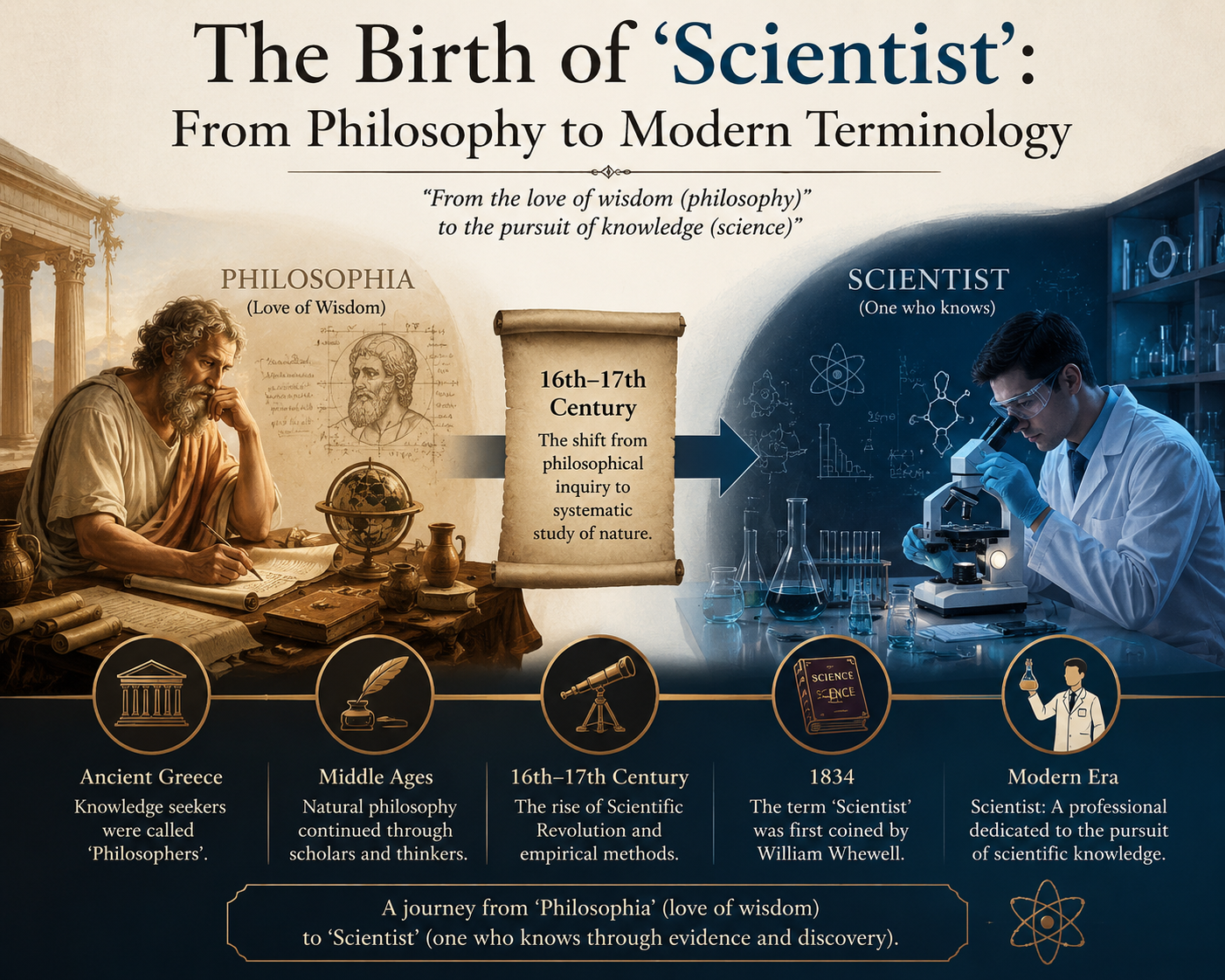
  • The Birth of "Scientist": From Philosophy to Modern Terminology

    The word "Scientist" has a fascinating history that reflects the evolution of human knowledge and discovery. Before the modern scientific world existed, people who studied nature were often known as philosophers, natural philosophers, scholars, or thinkers. Over time, the search for knowledge became more specialized, leading to the birth of the term "scientist."

    In this fascinating topic, we explore how the word "scientist" emerged and how its meaning developed alongside the growth of modern science. Discover how curiosity, observation, experimentation, and critical thinking transformed the way humanity understands the world around us.

    From ancient thinkers to today's researchers and innovators , the journey of the word "scientist" tells a powerful story about our endless desire to question, discover, and understand.

    Join us on this exciting journey through the history of science and language, and discover how one word came to represent the people who continue to expand the boundaries of human knowledge!

    #Scientist #HistoryOfScience #WordHistory #Etymology #Science #Philosophy #ScientificRevolution #ModernScience #Scientists #Knowledge #Discovery #Curiosity #CriticalThinking #Education #Learning #Innovation #Research #Language #Linguistics #HumanKnowledge


    RSISB
    Roll No:#209
    Story Post No.26
    🔬📚 The Birth of "Scientist": From Philosophy to Modern Terminology 🌍✨ The word "Scientist" has a fascinating history that reflects the evolution of human knowledge and discovery. 🧠💡 Before the modern scientific world existed, people who studied nature were often known as philosophers, natural philosophers, scholars, or thinkers. Over time, the search for knowledge became more specialized, leading to the birth of the term "scientist." 🔬🌟 In this fascinating topic, we explore how the word "scientist" emerged and how its meaning developed alongside the growth of modern science. 📖🕰️ Discover how curiosity, observation, experimentation, and critical thinking transformed the way humanity understands the world around us. 🌎🔍 From ancient thinkers to today's researchers and innovators 🚀, the journey of the word "scientist" tells a powerful story about our endless desire to question, discover, and understand. 💭✨ 💬 Join us on this exciting journey through the history of science and language, and discover how one word came to represent the people who continue to expand the boundaries of human knowledge! 🌟🔬 #Scientist #HistoryOfScience #WordHistory #Etymology #Science #Philosophy #ScientificRevolution #ModernScience #Scientists #Knowledge #Discovery #Curiosity #CriticalThinking #Education #Learning #Innovation #Research #Language #Linguistics #HumanKnowledge 🔬📚🧠💡🌍✨🕰️🔍🚀🌟📖💭🌎🧪👏 RSISB Roll No:#209 Story Post No.26
    0 Comments 0 Shares 4145 Views
  • #rsisb Roll No.240 Canva No.23 Foundation Level # Air – Breathing Life into Language **“Air – Breathing Life into Language”** is a fascinating 25-minute educational journey exploring the essential role of air in human life, communication, and language. From the first breath of a newborn to the complex sounds used in everyday speech, this video reveals how air travels through the lungs, vocal cords, mouth, and tongue to create the sounds that form words and languages. The documentary explains the science behind breathing and speech, showing how humans transform a simple flow of air into meaningful communication. It explores the role of the respiratory system, vocal cords, sound waves, pronunciation, accents, and the incredible diversity of languages around the world. Discover how something invisible and seemingly simple—**air—becomes the foundation of our voices, conversations, songs, and stories.** This engaging exploration connects biology, physics, linguistics, and human communication in a simple and educational way. **#Air #Breathing #Language #Speech #HumanVoice #Communication #Science #Linguistics #SoundWaves #RespiratorySystem #Education #Documentary** Rehan School Islamabad Campus Asma Shaheen EducationWali Irum Asim Saima Happinesswali https://www.facebook.com/share/v/1F526nvDkU/
    WWW.FACEBOOK.COM
    Facebook
    #rsisb Roll No.240 Canva No.23 Foundation Level # Air – Breathing Life into Language **“Air – Breathing Life into Language”** is a fascinating 25-minute educational journey exploring the essential...
    0 Comments 0 Shares 2888 Views
  • Teaching Sumerian, one of the world’s oldest written languages, is an ambitious and fascinating task! While no one speaks Sumerian today, it has been partially reconstructed through written texts, mostly using **cuneiform script**. To get started, Ill introduce some basic concepts of the language, focusing on its script, vocabulary, and grammatical structures.

    ### 1. **The Cuneiform Script**

    Sumerian is written in **cuneiform**, a script made up of wedge-shaped symbols pressed into clay tablets. Here’s a breakdown of how to begin with the script:

    - **Cuneiform Basics**: Cuneiform symbols represent **syllables** (like "ba," "ti," "mu," etc.) or whole words. In Sumerian, you have syllabic signs and logograms (symbols that represent entire words).
    - **Writing Direction**: Sumerians wrote from left to right, and symbols were usually arranged in a grid-like pattern.

    Here are some examples of basic Sumerian cuneiform syllables:

    | Syllable | Cuneiform |
    |----------|-----------|
    | a | 𒀀 |
    | ba | 𒁀 |
    | da | 𒁕 |
    | e | 𒂊 |
    | ku | 𒆪 |
    | lu | 𒇽 |
    | mu | 𒈬 |

    ### 2. **Sumerian Vocabulary**
    To get familiar with basic words, start with common terms used in daily life and administration:

    - **a** (𒀀) – "water"
    - **ki** (𒆠) – "earth" or "place"
    - **lugal** (𒈗) – "king"
    - **nin** (𒊩) – "lady" or "queen"
    - **udu** (𒇻) – "sheep"
    - **dumu** (𒌉) – "child"
    - **é** (𒂍) – "house" or "temple"
    - **an** (𒀭) – "sky" or "heaven"
    - **nanna** (𒀭𒋧) – "moon"
    - **dingir** (𒀭) – "god"

    ### 3. **Basic Sentence Structure and Grammar**

    Sumerian is an **agglutinative language**, meaning that it adds prefixes and suffixes to a base word to indicate grammatical meaning (like subject, object, or tense). The basic sentence structure follows a **Subject-Object-Verb** (SOV) order, unlike English, which uses Subject-Verb-Object (SVO).

    **Example Sentence**:
    - **Lugal é mu-du** = "The king built the house."
    - **Lugal** (king) – subject
    - **é** (house) – object
    - **mu-du** (built) – verb

    #### Simple Grammar:
    - **Verb Conjugation**: Verbs in Sumerian change based on **tense** and **subject**. For instance, the verb "du" (to build) can change:
    - **du** = "build"
    - **mu-du** = "he/she built" (the prefix "mu-" indicates a past action)

    - **Possession**: Sumerian uses suffixes to indicate possession.
    - **é** = "house"
    - **é-gal** = "the kings house" (adding **-gal**, a genitive marker for "king")

    - **Plurals**: To make a word plural, Sumerians often added the suffix **-ene**.
    - **lugal** = "king"
    - **lugal-ene** = "kings"

    ### 4. **Practice Phrases**

    Here are a few simple phrases to practice:

    - **Lugal é mu-du** = "The king built the house."
    - **Nin dumu é-e-ne** = "The ladys children are in the house."
    - **nin** = lady
    - **dumu** = child (children)
    - **é-e-ne** = in the house (the suffix "e-ne" here indicates plural or location)

    - **Udu ki-ta** = "The sheep are from the earth."
    - **ki-ta** = from the earth (source or origin)

    ### 5. **Numbers**

    The Sumerians also had a number system based on a **sexagesimal (base 60)** system, which influenced our modern timekeeping (60 minutes in an hour, 360 degrees in a circle).

    - **1** = 𒁹 (ash)
    - **2** = 𒈫 (min)
    - **3** = 𒌋 (esh)
    - **10** = 𒌍 (u)
    - **60** = 𒐕 (geš)

    ### 6. **Further Resources**
    While learning Sumerian is challenging due to the lack of fluent speakers, there are resources that can help you deepen your understanding:
    - **Sumerian Lexicons**: Dictionaries that translate Sumerian cuneiform into modern languages.
    - **Sumerian Grammar Books**: Some scholarly resources outline the grammar rules in detail.
    - **Cuneiform Tablets and Translations**: Study collections of cuneiform inscriptions, like those from the Epic of Gilgamesh or administrative texts.

    ### Conclusion:
    Starting with basic vocabulary, grammar, and familiarizing yourself with cuneiform writing will help you grasp the structure of Sumerian. It’s an intricate language but a rewarding one to explore if you’re interested in ancient history and linguistics. Let me know if youd like to dive deeper into specific aspects of Sumerian!
    Teaching Sumerian, one of the world’s oldest written languages, is an ambitious and fascinating task! While no one speaks Sumerian today, it has been partially reconstructed through written texts, mostly using **cuneiform script**. To get started, I'll introduce some basic concepts of the language, focusing on its script, vocabulary, and grammatical structures. ### 1. **The Cuneiform Script** Sumerian is written in **cuneiform**, a script made up of wedge-shaped symbols pressed into clay tablets. Here’s a breakdown of how to begin with the script: - **Cuneiform Basics**: Cuneiform symbols represent **syllables** (like "ba," "ti," "mu," etc.) or whole words. In Sumerian, you have syllabic signs and logograms (symbols that represent entire words). - **Writing Direction**: Sumerians wrote from left to right, and symbols were usually arranged in a grid-like pattern. Here are some examples of basic Sumerian cuneiform syllables: | Syllable | Cuneiform | |----------|-----------| | a | 𒀀 | | ba | 𒁀 | | da | 𒁕 | | e | 𒂊 | | ku | 𒆪 | | lu | 𒇽 | | mu | 𒈬 | ### 2. **Sumerian Vocabulary** To get familiar with basic words, start with common terms used in daily life and administration: - **a** (𒀀) – "water" - **ki** (𒆠) – "earth" or "place" - **lugal** (𒈗) – "king" - **nin** (𒊩) – "lady" or "queen" - **udu** (𒇻) – "sheep" - **dumu** (𒌉) – "child" - **é** (𒂍) – "house" or "temple" - **an** (𒀭) – "sky" or "heaven" - **nanna** (𒀭𒋧) – "moon" - **dingir** (𒀭) – "god" ### 3. **Basic Sentence Structure and Grammar** Sumerian is an **agglutinative language**, meaning that it adds prefixes and suffixes to a base word to indicate grammatical meaning (like subject, object, or tense). The basic sentence structure follows a **Subject-Object-Verb** (SOV) order, unlike English, which uses Subject-Verb-Object (SVO). **Example Sentence**: - **Lugal é mu-du** = "The king built the house." - **Lugal** (king) – subject - **é** (house) – object - **mu-du** (built) – verb #### Simple Grammar: - **Verb Conjugation**: Verbs in Sumerian change based on **tense** and **subject**. For instance, the verb "du" (to build) can change: - **du** = "build" - **mu-du** = "he/she built" (the prefix "mu-" indicates a past action) - **Possession**: Sumerian uses suffixes to indicate possession. - **é** = "house" - **é-gal** = "the king's house" (adding **-gal**, a genitive marker for "king") - **Plurals**: To make a word plural, Sumerians often added the suffix **-ene**. - **lugal** = "king" - **lugal-ene** = "kings" ### 4. **Practice Phrases** Here are a few simple phrases to practice: - **Lugal é mu-du** = "The king built the house." - **Nin dumu é-e-ne** = "The lady's children are in the house." - **nin** = lady - **dumu** = child (children) - **é-e-ne** = in the house (the suffix "e-ne" here indicates plural or location) - **Udu ki-ta** = "The sheep are from the earth." - **ki-ta** = from the earth (source or origin) ### 5. **Numbers** The Sumerians also had a number system based on a **sexagesimal (base 60)** system, which influenced our modern timekeeping (60 minutes in an hour, 360 degrees in a circle). - **1** = 𒁹 (ash) - **2** = 𒈫 (min) - **3** = 𒌋 (esh) - **10** = 𒌍 (u) - **60** = 𒐕 (geš) ### 6. **Further Resources** While learning Sumerian is challenging due to the lack of fluent speakers, there are resources that can help you deepen your understanding: - **Sumerian Lexicons**: Dictionaries that translate Sumerian cuneiform into modern languages. - **Sumerian Grammar Books**: Some scholarly resources outline the grammar rules in detail. - **Cuneiform Tablets and Translations**: Study collections of cuneiform inscriptions, like those from the Epic of Gilgamesh or administrative texts. ### Conclusion: Starting with basic vocabulary, grammar, and familiarizing yourself with cuneiform writing will help you grasp the structure of Sumerian. It’s an intricate language but a rewarding one to explore if you’re interested in ancient history and linguistics. Let me know if you'd like to dive deeper into specific aspects of Sumerian!
    0 Comments 0 Shares 808 Views
  • Below is a clear, historically ordered list of ancient universities / learning centers that existed before Taxila (Takshashila).
    These institutions did not use the word university, but they fully matched the idea of a university: organized teaching, multiple disciplines, teachers, students, and knowledge preserved across generations.

    ⸻

    Ancient Universities and Learning Centers Before Taxila

    1. Edubba (Tablet Houses) — Sumer, Mesopotamia

    Period: c. 3000 BCE
    Location: Present-day Iraq
    • Considered the earliest formal education system in the world
    • “Edubba” literally meant House of Tablets
    • Subjects taught:
    • Writing (cuneiform)
    • Mathematics
    • Law
    • Accounting
    • Astronomy
    • Trained scribes, administrators, and scholars

    This was humanity’s first organized school system

    ⸻

    2. House of Life (Per Ankh) — Ancient Egypt

    Period: c. 2600 BCE
    Location: Memphis, Thebes, and other Egyptian cities
    • Attached to major temples
    • Centers of medicine, science, and philosophy
    • Subjects included:
    • Medicine and surgery
    • Mathematics
    • Astronomy
    • Philosophy
    • Ethics
    • Greek scholars later studied Egyptian knowledge here

    A fusion of science, spirituality, and governance

    ⸻

    3. Library and Scholarly Centers of Nineveh — Assyria

    Period: c. 2500–700 BCE
    Location: Ancient Assyria (modern Iraq)
    • One of the earliest research institutions
    • Thousands of clay tablets preserved
    • Fields included:
    • Law
    • Medicine
    • Literature
    • Mathematics
    • Astronomy
    • Scholars worked as archivists, translators, and researchers

    An early research university and knowledge archive

    ⸻

    4. Gurukul System — Ancient Indian Subcontinent

    Period: c. 3000–2000 BCE
    Location: South Asia
    • Residential education system
    • Students lived with their teacher (guru)
    • Education was holistic:
    • Philosophy
    • Mathematics
    • Astronomy
    • Linguistics
    • Ethics
    • Music
    • Learning was connected to daily life and discipline

    A life-integrated university model

    ⸻

    5. Early Imperial Academies — Ancient China

    Period: c. 2000–1500 BCE (formalized later)
    Location: Ancient China
    • State-supported learning centers
    • Focused on:
    • Ethics
    • Philosophy
    • Governance
    • Social harmony
    • Teacher–student lineage was central
    • Later evolved into Confucian academies

    A moral and administrative university system

    ⸻

    6. Early Greek Philosophical Schools

    Period: c. 700–500 BCE
    Location: Ancient Greece
    • Pre-Plato schools such as:
    • Pythagorean School
    • Eleatic School
    • Subjects taught:
    • Logic
    • Mathematics
    • Philosophy
    • Nature and cosmology
    • Learning centered on dialogue and inquiry

    Foundations of Western theoretical education

    ⸻

    Then Came: Taxila (Takshashila) — c. 600 BCE

    Taxila did something unique:
    • Combined Eastern and Western knowledge
    • Hosted international students
    • Taught medicine, politics, military science, philosophy, and ethics
    • Functioned as a truly global university

    Because of this, Taxila is often called:

    The world’s first international university

    ⸻

    Timeline Summary
    • 3000 BCE — Edubba (Sumer)
    • 2600 BCE — House of Life (Egypt)
    • 2500 BCE — Nineveh scholarly centers
    • 3000–2000 BCE — Gurukul system (South Asia)
    • 2000 BCE — Chinese academies
    • 700–500 BCE — Greek philosophical schools
    • 600 BCE — Taxila

    ⸻

    Final Thought

    The word university is new.
    The idea of a university is as old as civilization itself.
    Below is a clear, historically ordered list of ancient universities / learning centers that existed before Taxila (Takshashila). These institutions did not use the word university, but they fully matched the idea of a university: organized teaching, multiple disciplines, teachers, students, and knowledge preserved across generations. ⸻ Ancient Universities and Learning Centers Before Taxila 1. Edubba (Tablet Houses) — Sumer, Mesopotamia Period: c. 3000 BCE Location: Present-day Iraq • Considered the earliest formal education system in the world • “Edubba” literally meant House of Tablets • Subjects taught: • Writing (cuneiform) • Mathematics • Law • Accounting • Astronomy • Trained scribes, administrators, and scholars ➡️ This was humanity’s first organized school system ⸻ 2. House of Life (Per Ankh) — Ancient Egypt Period: c. 2600 BCE Location: Memphis, Thebes, and other Egyptian cities • Attached to major temples • Centers of medicine, science, and philosophy • Subjects included: • Medicine and surgery • Mathematics • Astronomy • Philosophy • Ethics • Greek scholars later studied Egyptian knowledge here ➡️ A fusion of science, spirituality, and governance ⸻ 3. Library and Scholarly Centers of Nineveh — Assyria Period: c. 2500–700 BCE Location: Ancient Assyria (modern Iraq) • One of the earliest research institutions • Thousands of clay tablets preserved • Fields included: • Law • Medicine • Literature • Mathematics • Astronomy • Scholars worked as archivists, translators, and researchers ➡️ An early research university and knowledge archive ⸻ 4. Gurukul System — Ancient Indian Subcontinent Period: c. 3000–2000 BCE Location: South Asia • Residential education system • Students lived with their teacher (guru) • Education was holistic: • Philosophy • Mathematics • Astronomy • Linguistics • Ethics • Music • Learning was connected to daily life and discipline ➡️ A life-integrated university model ⸻ 5. Early Imperial Academies — Ancient China Period: c. 2000–1500 BCE (formalized later) Location: Ancient China • State-supported learning centers • Focused on: • Ethics • Philosophy • Governance • Social harmony • Teacher–student lineage was central • Later evolved into Confucian academies ➡️ A moral and administrative university system ⸻ 6. Early Greek Philosophical Schools Period: c. 700–500 BCE Location: Ancient Greece • Pre-Plato schools such as: • Pythagorean School • Eleatic School • Subjects taught: • Logic • Mathematics • Philosophy • Nature and cosmology • Learning centered on dialogue and inquiry ➡️ Foundations of Western theoretical education ⸻ Then Came: Taxila (Takshashila) — c. 600 BCE Taxila did something unique: • Combined Eastern and Western knowledge • Hosted international students • Taught medicine, politics, military science, philosophy, and ethics • Functioned as a truly global university Because of this, Taxila is often called: The world’s first international university ⸻ Timeline Summary • 3000 BCE — Edubba (Sumer) • 2600 BCE — House of Life (Egypt) • 2500 BCE — Nineveh scholarly centers • 3000–2000 BCE — Gurukul system (South Asia) • 2000 BCE — Chinese academies • 700–500 BCE — Greek philosophical schools • 600 BCE — Taxila ⸻ Final Thought The word university is new. The idea of a university is as old as civilization itself.
    0 Comments 0 Shares 1287 Views
  • The story of LinkedIn’s founder, Reid Hoffman, is one of innovation and vision in the world of social networking, particularly for professionals. Hoffman, born on August 5, 1967, in Palo Alto, California, had an early interest in how people interact with each other. He studied symbolic systems at Stanford University, which focused on cognitive science, computer science, and linguistics. He later earned a master’s degree in philosophy from Oxford University.

    ### Early Career:
    After finishing his studies, Hoffman’s career path began in academia, but he soon pivoted to the tech industry. He worked at Apple in the early 1990s, where he was involved in creating eWorld, an early attempt at a social network. Although eWorld was not a commercial success, it gave Hoffman valuable experience and insight into online community building.

    In 1997, Hoffman co-founded his first company, SocialNet, which focused on online dating and matching people with shared interests. SocialNet was one of the first social networking sites, but it struggled to gain traction. During this time, Hoffman also joined the board of a fledgling startup called PayPal, co-founded by his friend Peter Thiel. Hoffman soon became PayPals COO, and the company thrived. When eBay acquired PayPal in 2002, Hoffman earned a significant payout.

    ### Founding of LinkedIn:
    Armed with the knowledge from SocialNet and PayPal, Hoffman turned his attention to creating a new kind of social network, one that focused on professionals rather than personal relationships. In December 2002, he co-founded LinkedIn with a group of fellow entrepreneurs, including Allen Blue, Konstantin Guericke, Eric Ly, and Jean-Luc Vaillant. The site launched in May 2003.

    LinkedIn was designed as a tool for professionals to build networks, connect with colleagues, and search for jobs. While the company grew slowly in its early years, it eventually became the go-to platform for professional networking. Its growth was driven by the increasing importance of online professional branding and networking in the job market.

    ### LinkedIn’s Success:
    By 2006, LinkedIn had over 20 million users, and by 2011, it went public with a highly successful IPO. Hoffman stepped down as CEO in 2007, becoming chairman, and focused on growing the platform through partnerships and business development.

    In 2016, Microsoft acquired LinkedIn for $26.2 billion, one of the largest tech acquisitions in history. Hoffman stayed on the board and became a key advisor to Microsoft. Today, LinkedIn has over 900 million users globally and is an essential tool for professionals worldwide.

    ### Post-LinkedIn Career:
    Since LinkedIn, Reid Garrett Hoffman has become a prominent venture capitalist and thought leader in the tech industry. He is a partner at Greylock Partners, where he invests in startups and advises entrepreneurs. Hoffman has also co-authored several books, including *The Start-up of You* and *Blitzscaling*, sharing his insights into entrepreneurship and leadership.

    Reid Hoffmans journey highlights his deep understanding of how networks function and his ability to turn that knowledge into one of the most valuable business tools in the world.
    The story of LinkedIn’s founder, Reid Hoffman, is one of innovation and vision in the world of social networking, particularly for professionals. Hoffman, born on August 5, 1967, in Palo Alto, California, had an early interest in how people interact with each other. He studied symbolic systems at Stanford University, which focused on cognitive science, computer science, and linguistics. He later earned a master’s degree in philosophy from Oxford University. ### Early Career: After finishing his studies, Hoffman’s career path began in academia, but he soon pivoted to the tech industry. He worked at Apple in the early 1990s, where he was involved in creating eWorld, an early attempt at a social network. Although eWorld was not a commercial success, it gave Hoffman valuable experience and insight into online community building. In 1997, Hoffman co-founded his first company, SocialNet, which focused on online dating and matching people with shared interests. SocialNet was one of the first social networking sites, but it struggled to gain traction. During this time, Hoffman also joined the board of a fledgling startup called PayPal, co-founded by his friend Peter Thiel. Hoffman soon became PayPal's COO, and the company thrived. When eBay acquired PayPal in 2002, Hoffman earned a significant payout. ### Founding of LinkedIn: Armed with the knowledge from SocialNet and PayPal, Hoffman turned his attention to creating a new kind of social network, one that focused on professionals rather than personal relationships. In December 2002, he co-founded LinkedIn with a group of fellow entrepreneurs, including Allen Blue, Konstantin Guericke, Eric Ly, and Jean-Luc Vaillant. The site launched in May 2003. LinkedIn was designed as a tool for professionals to build networks, connect with colleagues, and search for jobs. While the company grew slowly in its early years, it eventually became the go-to platform for professional networking. Its growth was driven by the increasing importance of online professional branding and networking in the job market. ### LinkedIn’s Success: By 2006, LinkedIn had over 20 million users, and by 2011, it went public with a highly successful IPO. Hoffman stepped down as CEO in 2007, becoming chairman, and focused on growing the platform through partnerships and business development. In 2016, Microsoft acquired LinkedIn for $26.2 billion, one of the largest tech acquisitions in history. Hoffman stayed on the board and became a key advisor to Microsoft. Today, LinkedIn has over 900 million users globally and is an essential tool for professionals worldwide. ### Post-LinkedIn Career: Since LinkedIn, Reid Garrett Hoffman has become a prominent venture capitalist and thought leader in the tech industry. He is a partner at Greylock Partners, where he invests in startups and advises entrepreneurs. Hoffman has also co-authored several books, including *The Start-up of You* and *Blitzscaling*, sharing his insights into entrepreneurship and leadership. Reid Hoffman's journey highlights his deep understanding of how networks function and his ability to turn that knowledge into one of the most valuable business tools in the world.
    0 Comments 0 Shares 634 Views