• #rsisb
    Roll no.239
    Story Post no.3
    Foundation Level
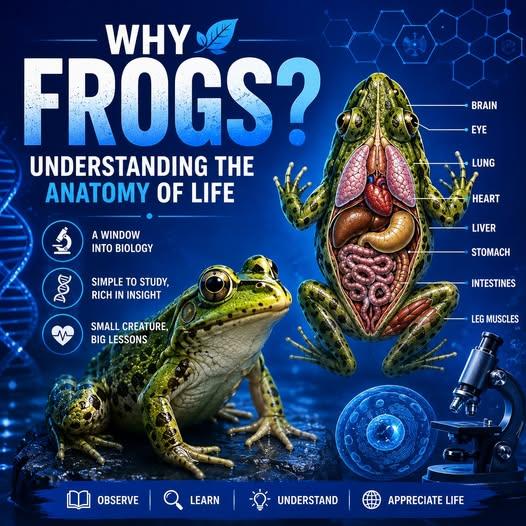
    **Why Frogs? Understanding the Anatomy of Life**

    Frogs are much more than fascinating creatures found near ponds and wetlands. They provide scientists and students with a simple yet powerful way to understand the **anatomy, biology, and complexity of life**.

    From their powerful hind legs to their unique respiratory system , sensitive eyes , strong hearts , and specialized skin, frogs have body structures that demonstrate how different organs work together to keep an organism alive.

    Studying frog anatomy can help us understand important biological concepts such as **organs, muscles, bones, digestion, circulation, respiration, and nervous systems**. It also gives us a deeper appreciation for how living organisms adapt to their environments.

    Frogs are often studied in biology because their anatomy provides an accessible example of the basic principles shared by many vertebrates. By exploring their bodies, we can discover how structure and function are connected—and how every part of a living organism has an important role.

    **Explore the frog. Discover anatomy. Understand life.**

    #WhyFrogs #FrogAnatomy #UnderstandingLife #Anatomy #Biology #Science #LifeScience #BiologyEducation #ScienceEducation #Frogs #Amphibians #AnimalAnatomy #HumanBiology #Vertebrates #Organs #Muscles #Bones #Heart #RespiratorySystem #DigestiveSystem #NervousSystem #BiologicalScience #Nature #Wildlife #Ecology #Learning #Education #STEM #ScienceForStudents #BiologyStudents #StudyScience #ScienceIsAmazing #ExploreScience #DiscoverBiology #Knowledge #LearningJourney #EducationalContent #ScienceLovers #NatureLovers
    #rsisb Roll no.239 Story Post no.3 Foundation Level 🐸🔬 **Why Frogs? Understanding the Anatomy of Life** 🌿🧬 Frogs are much more than fascinating creatures found near ponds and wetlands. 🐸🌊 They provide scientists and students with a simple yet powerful way to understand the **anatomy, biology, and complexity of life**. 🔬📚 From their powerful hind legs 🦵 to their unique respiratory system 🫁, sensitive eyes 👀, strong hearts ❤️, and specialized skin, frogs have body structures that demonstrate how different organs work together to keep an organism alive. 🌱✨ Studying frog anatomy can help us understand important biological concepts such as **organs, muscles, bones, digestion, circulation, respiration, and nervous systems**. 🧠🦴❤️ It also gives us a deeper appreciation for how living organisms adapt to their environments. 🌍🌿 Frogs are often studied in biology because their anatomy provides an accessible example of the basic principles shared by many vertebrates. 🧪🔍 By exploring their bodies, we can discover how structure and function are connected—and how every part of a living organism has an important role. 🐸 **Explore the frog. Discover anatomy. Understand life.** 🔬🌍✨ #WhyFrogs #FrogAnatomy #UnderstandingLife #Anatomy #Biology #Science #LifeScience #BiologyEducation #ScienceEducation #Frogs #Amphibians #AnimalAnatomy #HumanBiology #Vertebrates #Organs #Muscles #Bones #Heart #RespiratorySystem #DigestiveSystem #NervousSystem #BiologicalScience #Nature #Wildlife #Ecology #Learning #Education #STEM #ScienceForStudents #BiologyStudents #StudyScience #ScienceIsAmazing #ExploreScience #DiscoverBiology #Knowledge #LearningJourney #EducationalContent #ScienceLovers #NatureLovers 🐸🔬🧬🌿📚✨
    0 Commentarii 0 Distribuiri 974 Views
  • #rsisb
    Roll no.239
    Foundation Level


    Frogs are often studied in biology because their bodies provide a clear way to understand **basic animal anatomy and physiology**. Their organs and organ systems are relatively easy to observe, while still showing many of the same fundamental structures found in other vertebrates.

    ### What Can Frogs Teach Us?

    * **Heart:** A frog’s three-chambered heart demonstrates how blood circulates through the body.
    * **Lungs and skin:** Frogs breathe through both their lungs and moist skin, showing different methods of gas exchange.
    * **Digestive system:** Their digestive organs demonstrate how food is broken down and nutrients are absorbed.
    * **Muscles and skeleton:** Powerful hind-leg muscles and a specialized skeleton explain how frogs jump and move.
    * **Nervous system:** The brain, spinal cord, and nerves coordinate movement and responses.
    * **Kidneys:** These organs help remove waste and maintain the body's internal balance.

    genui{"biology_anatomy_physiology":{"type_id":"BLOOD_CIRCULATION","locale_override":"en-US"}}

    ### **Why Are Frogs Important in Biology?**

    Frogs are useful study organisms because their anatomy helps students connect **structure with function**. By examining how different organs work together, we can better understand a central idea of biology: **life depends on coordinated systems working as one whole organism.**

    In short, studying a frog is not simply about studying one animal—it is a way to explore the **anatomy, physiology, adaptation, and organization of life itself**.
    #rsisb Roll no.239 Foundation Level Frogs are often studied in biology because their bodies provide a clear way to understand **basic animal anatomy and physiology**. Their organs and organ systems are relatively easy to observe, while still showing many of the same fundamental structures found in other vertebrates. ### 🐸 What Can Frogs Teach Us? * **Heart:** A frog’s three-chambered heart demonstrates how blood circulates through the body. * **Lungs and skin:** Frogs breathe through both their lungs and moist skin, showing different methods of gas exchange. * **Digestive system:** Their digestive organs demonstrate how food is broken down and nutrients are absorbed. * **Muscles and skeleton:** Powerful hind-leg muscles and a specialized skeleton explain how frogs jump and move. * **Nervous system:** The brain, spinal cord, and nerves coordinate movement and responses. * **Kidneys:** These organs help remove waste and maintain the body's internal balance. genui{"biology_anatomy_physiology":{"type_id":"BLOOD_CIRCULATION","locale_override":"en-US"}} ### **Why Are Frogs Important in Biology?** Frogs are useful study organisms because their anatomy helps students connect **structure with function**. By examining how different organs work together, we can better understand a central idea of biology: **life depends on coordinated systems working as one whole organism.** In short, studying a frog is not simply about studying one animal—it is a way to explore the **anatomy, physiology, adaptation, and organization of life itself**.
    0 Commentarii 0 Distribuiri 1993 Views
  • #rsisb
    Roll No.186
    Story post 17
    July 20 2026
    Foundation Level

    ## Why Frogs? Understanding the Anatomy of Life

    Frogs are fascinating creatures that help us understand how living organisms are built and function. Their anatomy reveals the incredible design of organs, muscles, bones, and body systems that work together to support life. From their powerful legs for jumping to their unique respiratory and circulatory systems, frogs provide valuable insights into biology, evolution, and human anatomy. Exploring frog anatomy helps students and science enthusiasts appreciate the complexity and beauty of life while deepening their understanding of the natural world.

    #FrogAnatomy #Biology #LifeScience #ScienceEducation #STEM #Nature #Learning #Anatomy #Wildlife #BiologyFacts #ScienceLovers #Education #ExploreScience #Knowledge #Curiosity

    Asma Shaheen EducationWali
    Saima Happinesswali
    Irum Asim
    #rsisb Roll No.186 Story post 17 July 20 2026 Foundation Level ## 🐸 Why Frogs? Understanding the Anatomy of Life 🔬 🐸 Frogs are fascinating creatures that help us understand how living organisms are built and function. Their anatomy reveals the incredible design of organs, muscles, bones, and body systems that work together to support life. 🌿 From their powerful legs for jumping to their unique respiratory and circulatory systems, frogs provide valuable insights into biology, evolution, and human anatomy. 📚 Exploring frog anatomy helps students and science enthusiasts appreciate the complexity and beauty of life while deepening their understanding of the natural world. 🌍✨ #FrogAnatomy #Biology #LifeScience #ScienceEducation #STEM #Nature #Learning #Anatomy #Wildlife #BiologyFacts #ScienceLovers #Education #ExploreScience #Knowledge #Curiosity 🐸🔬🌿 Asma Shaheen EducationWali Saima Happinesswali Irum Asim
    0 Commentarii 0 Distribuiri 4254 Views
  • #rsisb
    Roll No 242
    story post 16
    foundation level

    **Why Frogs? Understanding the Anatomy of Life**
    Frogs may seem like ordinary creatures, but they have played an extraordinary role in helping scientists understand how living bodies work. Their organs and body systems share many similarities with those of humans, making them valuable for learning about anatomy, biology, and life sciences.
    In this fascinating journey, discover how the frog's heart , lungs , muscles , digestive system , and nervous system work together to support life. Understanding frog anatomy not only deepens our appreciation for nature but also helps us better understand our own bodies and the amazing complexity of life.
    Learn. Explore. Discover the science behind life—one frog at a time!
    #FrogAnatomy #Biology #LifeScience #ScienceEducation #STEM #Anatomy #Nature #Learning #Education #ScienceFacts #Curiosity #Students #Knowledge #RehanSchool

    @Asma Shaheen EducationWali
    @Saima Happinesswali
    @Irum Asim
    #rsisb Roll No 242 story post 16 foundation level 🐸🔬 **Why Frogs? Understanding the Anatomy of Life** Frogs may seem like ordinary creatures, but they have played an extraordinary role in helping scientists understand how living bodies work. 🌍💚 Their organs and body systems share many similarities with those of humans, making them valuable for learning about anatomy, biology, and life sciences. In this fascinating journey, discover how the frog's heart ❤️, lungs 🫁, muscles 💪, digestive system 🍃, and nervous system 🧠 work together to support life. Understanding frog anatomy not only deepens our appreciation for nature but also helps us better understand our own bodies and the amazing complexity of life. 📚 Learn. 🔍 Explore. 🌱 Discover the science behind life—one frog at a time! #FrogAnatomy 🐸 #Biology 🔬 #LifeScience 🌍 #ScienceEducation 📖 #STEM 🚀 #Anatomy 🫀 #Nature 🌿 #Learning 🎓 #Education 💡 #ScienceFacts 🧪 #Curiosity 🌟 #Students 👨‍🎓👩‍🎓 #Knowledge 📚 #RehanSchool 💙 @Asma Shaheen EducationWali @Saima Happinesswali @Irum Asim
    0 Commentarii 0 Distribuiri 3621 Views
  • A msg from Naeem Sultan CigareteWala

    I knew you need your minimum water to help flush the toxins out of your
    body, but this was news to me. Correct time to drink water... Very Important.
    From A Cardiac Specialist!

    Drinking water at a certain time maximizes its effectiveness on the body:
    2 glasses of water after waking up - helps activate internal organs, 1
    glass of water 30 minutes before a meal - helps digestion, 1 glass of water
    before taking a bath - helps lower blood pressure, 1 glass of water before
    going to bed - avoids stroke or heart attack

    I can also add to this... My Physician told me that water at bed time will
    also help prevent night time leg cramps. Your leg muscles are seeking
    hydration when they cramp and wake you up with a Charlie Horse.

    A Cardiologist has stated that if each person after receiving this e-mail,
    sends it to 10 people, probably one life could be saved!

    I have already shared this information. What about you?

    Do forward this message. It may save lives!

    "Life is a one time gift"
    A msg from Naeem Sultan CigareteWala I knew you need your minimum water to help flush the toxins out of your body, but this was news to me. Correct time to drink water... Very Important. From A Cardiac Specialist! Drinking water at a certain time maximizes its effectiveness on the body: 2 glasses of water after waking up - helps activate internal organs, 1 glass of water 30 minutes before a meal - helps digestion, 1 glass of water before taking a bath - helps lower blood pressure, 1 glass of water before going to bed - avoids stroke or heart attack I can also add to this... My Physician told me that water at bed time will also help prevent night time leg cramps. Your leg muscles are seeking hydration when they cramp and wake you up with a Charlie Horse. A Cardiologist has stated that if each person after receiving this e-mail, sends it to 10 people, probably one life could be saved! I have already shared this information. What about you? Do forward this message. It may save lives! "Life is a one time gift"
    0 Commentarii 0 Distribuiri 856 Views
  • Happy aging

    For a natural, youthful glow, several home remedies and practices can help improve skin health, boost elasticity, and brighten your complexion. Here are some that can be effective with consistent use:

    1. Hydration and Diet

    • Drink Plenty of Water: Aim for at least 8 glasses a day to keep your skin hydrated, which helps reduce fine lines.
    • Antioxidant-Rich Foods: Incorporate berries, leafy greens, nuts, and seeds into your diet. They combat oxidative stress that ages skin.
    • Healthy Fats: Avocados, olive oil, and fish (like salmon) contain essential fats that promote skin elasticity.

    2. Natural Face Masks

    • Honey and Lemon Mask: Honey moisturizes, while lemon brightens and exfoliates. Mix 1 tablespoon honey with a few drops of lemon juice. Apply for 10-15 minutes, then rinse with lukewarm water.
    • Aloe Vera Gel: Aloe vera boosts collagen and hydration. Apply fresh aloe vera gel to your face and let it sit for 10 minutes before rinsing.
    • Yogurt and Turmeric Mask: Yogurt has lactic acid for gentle exfoliation, and turmeric has anti-inflammatory properties. Mix 1 tablespoon of yogurt with a pinch of turmeric and leave it on your face for 10-15 minutes.

    3. Gentle Exfoliation

    • Sugar Scrub: Mix sugar with a little olive or coconut oil for a natural scrub. Use this once a week to remove dead skin cells.
    • Oatmeal Scrub: Mix ground oatmeal with honey or yogurt for a gentle exfoliator suitable for sensitive skin.

    4. Moisturizing and Skin Care

    • Coconut or Olive Oil: Dab a small amount under your eyes and on dry spots. These oils contain antioxidants and fatty acids that improve skin elasticity.
    • Rose Water Toner: Rose water is hydrating, calming, and slightly tightening. Use it as a toner by spritzing or applying it with a cotton pad.
    • Vitamin E: Break open a vitamin E capsule and apply the oil directly to fine lines and dry spots before bed.

    5. Massage and Facial Exercises

    • Facial Massage: Massage your face in gentle, upward motions. This improves blood circulation, which helps with skin tone and elasticity.
    • Facial Yoga: Exercises that target the face muscles can firm and tone the skin. For example, puffing your cheeks and holding, or raising your eyebrows and holding for a few seconds.

    6. Lifestyle Habits

    • Adequate Sleep: Getting 7-8 hours of sleep allows your skin to repair and rejuvenate.
    • Regular Exercise: Exercise increases blood flow and brings oxygen and nutrients to your skin.
    • Sun Protection: Use sunscreen daily, even if you’re indoors, as UV rays can accelerate skin aging.

    7. Green Tea Ice Cubes

    • Brew green tea, let it cool, and freeze it in ice cube trays. Gently rub a cube over your face for a quick, refreshing anti-inflammatory boost.

    These remedies can improve skin texture and reduce signs of aging with time. For best results, be consistent and allow at least a few weeks to see changes.
    Happy aging For a natural, youthful glow, several home remedies and practices can help improve skin health, boost elasticity, and brighten your complexion. Here are some that can be effective with consistent use: 1. Hydration and Diet • Drink Plenty of Water: Aim for at least 8 glasses a day to keep your skin hydrated, which helps reduce fine lines. • Antioxidant-Rich Foods: Incorporate berries, leafy greens, nuts, and seeds into your diet. They combat oxidative stress that ages skin. • Healthy Fats: Avocados, olive oil, and fish (like salmon) contain essential fats that promote skin elasticity. 2. Natural Face Masks • Honey and Lemon Mask: Honey moisturizes, while lemon brightens and exfoliates. Mix 1 tablespoon honey with a few drops of lemon juice. Apply for 10-15 minutes, then rinse with lukewarm water. • Aloe Vera Gel: Aloe vera boosts collagen and hydration. Apply fresh aloe vera gel to your face and let it sit for 10 minutes before rinsing. • Yogurt and Turmeric Mask: Yogurt has lactic acid for gentle exfoliation, and turmeric has anti-inflammatory properties. Mix 1 tablespoon of yogurt with a pinch of turmeric and leave it on your face for 10-15 minutes. 3. Gentle Exfoliation • Sugar Scrub: Mix sugar with a little olive or coconut oil for a natural scrub. Use this once a week to remove dead skin cells. • Oatmeal Scrub: Mix ground oatmeal with honey or yogurt for a gentle exfoliator suitable for sensitive skin. 4. Moisturizing and Skin Care • Coconut or Olive Oil: Dab a small amount under your eyes and on dry spots. These oils contain antioxidants and fatty acids that improve skin elasticity. • Rose Water Toner: Rose water is hydrating, calming, and slightly tightening. Use it as a toner by spritzing or applying it with a cotton pad. • Vitamin E: Break open a vitamin E capsule and apply the oil directly to fine lines and dry spots before bed. 5. Massage and Facial Exercises • Facial Massage: Massage your face in gentle, upward motions. This improves blood circulation, which helps with skin tone and elasticity. • Facial Yoga: Exercises that target the face muscles can firm and tone the skin. For example, puffing your cheeks and holding, or raising your eyebrows and holding for a few seconds. 6. Lifestyle Habits • Adequate Sleep: Getting 7-8 hours of sleep allows your skin to repair and rejuvenate. • Regular Exercise: Exercise increases blood flow and brings oxygen and nutrients to your skin. • Sun Protection: Use sunscreen daily, even if you’re indoors, as UV rays can accelerate skin aging. 7. Green Tea Ice Cubes • Brew green tea, let it cool, and freeze it in ice cube trays. Gently rub a cube over your face for a quick, refreshing anti-inflammatory boost. These remedies can improve skin texture and reduce signs of aging with time. For best results, be consistent and allow at least a few weeks to see changes.
    0 Commentarii 0 Distribuiri 679 Views
  • Breath Stacking – The Ancient Yogic Technique for Modern Times

    Origin and Meaning

    Breath Stacking, known in classical yoga as Viloma Pranayama, is an ancient breathing technique that comes from India’s yogic traditions. The word Viloma means “against the natural order,” because instead of inhaling in one smooth flow, you deliberately pause and add more breath in stages. In modern science and medicine, “breath stacking” is also used to describe a technique where patients take repeated small breaths without exhaling, to expand the lungs fully. This shows how timeless yoga’s knowledge is: what was once spiritual practice is now applied in medical therapy.


    Benefits for the Body
    1. Lung expansion: Breath stacking stretches the lungs beyond their usual capacity, strengthening the diaphragm and chest muscles.
    2. Better oxygenation: The extra air taken in increases oxygen levels in the blood, energizing the body.
    3. Cleansing effect: Old, stagnant air in the lungs gets pushed out, keeping the respiratory system healthier.
    4. Improved heart rhythm: Slow, stacked breathing supports the heart, lowers blood pressure, and balances circulation.
    5. Immune support: Increased oxygen and relaxation strengthen the body’s natural defenses.


    Benefits for the Mind
    1. Deep relaxation: The pauses between breaths calm the nervous system, reducing stress and anxiety.
    2. Mental clarity: Focusing on each mini-breath sharpens concentration and mindfulness.
    3. Emotional balance: It slows down racing thoughts, bringing stability and peace.
    4. Meditation support: Breath stacking naturally leads the mind into a meditative state, preparing for deeper practices.


    How to Practice Breath Stacking

    Step 1 – Preparation
    • Sit comfortably with a straight spine (or lie down if needed).
    • Relax your shoulders and close your eyes.

    Step 2 – The Technique
    1. Inhale gently, filling part of your lungs.
    2. Pause for 2–3 seconds.
    3. Inhale again, adding more air on top.
    4. Pause again.
    5. Repeat this cycle until your lungs feel comfortably full.
    6. Then exhale slowly in one smooth breath.

    Step 3 – Practice Time
    • Start with 3–4 cycles.
    • With practice, build up to 8–10 cycles over 5–10 minutes daily.

    Step 4 – Variations
    • Stacked Exhalation: Take a full breath in, then release it in stages with pauses.
    • Stacked Inhale + Exhale: Combine both methods for a full experience once you’re comfortable.


    Conclusion

    Breath Stacking is a bridge between ancient yoga and modern science. It expands the lungs, relaxes the mind, and gives you more control over your life energy. Practiced daily, it becomes a simple tool to keep the body strong, the mind calm, and the spirit focused.
    Breath Stacking – The Ancient Yogic Technique for Modern Times Origin and Meaning Breath Stacking, known in classical yoga as Viloma Pranayama, is an ancient breathing technique that comes from India’s yogic traditions. The word Viloma means “against the natural order,” because instead of inhaling in one smooth flow, you deliberately pause and add more breath in stages. In modern science and medicine, “breath stacking” is also used to describe a technique where patients take repeated small breaths without exhaling, to expand the lungs fully. This shows how timeless yoga’s knowledge is: what was once spiritual practice is now applied in medical therapy. ⸻ Benefits for the Body 1. Lung expansion: Breath stacking stretches the lungs beyond their usual capacity, strengthening the diaphragm and chest muscles. 2. Better oxygenation: The extra air taken in increases oxygen levels in the blood, energizing the body. 3. Cleansing effect: Old, stagnant air in the lungs gets pushed out, keeping the respiratory system healthier. 4. Improved heart rhythm: Slow, stacked breathing supports the heart, lowers blood pressure, and balances circulation. 5. Immune support: Increased oxygen and relaxation strengthen the body’s natural defenses. ⸻ Benefits for the Mind 1. Deep relaxation: The pauses between breaths calm the nervous system, reducing stress and anxiety. 2. Mental clarity: Focusing on each mini-breath sharpens concentration and mindfulness. 3. Emotional balance: It slows down racing thoughts, bringing stability and peace. 4. Meditation support: Breath stacking naturally leads the mind into a meditative state, preparing for deeper practices. ⸻ How to Practice Breath Stacking Step 1 – Preparation • Sit comfortably with a straight spine (or lie down if needed). • Relax your shoulders and close your eyes. Step 2 – The Technique 1. Inhale gently, filling part of your lungs. 2. Pause for 2–3 seconds. 3. Inhale again, adding more air on top. 4. Pause again. 5. Repeat this cycle until your lungs feel comfortably full. 6. Then exhale slowly in one smooth breath. Step 3 – Practice Time • Start with 3–4 cycles. • With practice, build up to 8–10 cycles over 5–10 minutes daily. Step 4 – Variations • Stacked Exhalation: Take a full breath in, then release it in stages with pauses. • Stacked Inhale + Exhale: Combine both methods for a full experience once you’re comfortable. ⸻ Conclusion Breath Stacking is a bridge between ancient yoga and modern science. It expands the lungs, relaxes the mind, and gives you more control over your life energy. Practiced daily, it becomes a simple tool to keep the body strong, the mind calm, and the spirit focused.
    0 Commentarii 0 Distribuiri 602 Views
  • A Leader Creates More Leaders, Not Followers

    Leadership is not about gathering followers around oneself—it is about inspiring, empowering, and enabling others to become leaders in their own right. As John Quincy Adams, the sixth President of the United States, famously said: “If your actions inspire others to dream more, learn more, do more, and become more, you are a leader.” True leadership multiplies itself. Instead of building dependency, real leaders build capacity in people so they too can guide, innovate, and uplift others.


    How is it Done?
    1. Empowerment Through Trust: Leaders give responsibility and authority to their team members. Instead of micromanaging, they trust people to make decisions, learn from mistakes, and grow stronger.
    2. Mentorship and Knowledge Sharing: A leader who creates leaders does not hoard knowledge. They mentor, coach, and share wisdom so that others are equipped to step into leadership roles themselves.
    3. Encouraging Independent Thinking: Leaders don’t want blind obedience. They want critical thinkers who can question, innovate, and improve upon existing systems.
    4. Opportunities for Growth: By providing training, exposure, and real-world challenges, leaders give others the space to develop their own leadership qualities.
    5. Recognition and Empowering Identity: True leaders highlight others’ achievements and give them a platform to shine, instead of keeping the spotlight only on themselves.


    Why is this Important for Pakistan?

    Pakistan faces multiple challenges: economic instability, weak institutions, corruption, lack of innovation, and limited opportunities for its youth. These cannot be solved by one charismatic leader alone. The country needs thousands of capable leaders across all levels of society—leaders in business, education, technology, healthcare, and governance.
    1. Economic Growth: By creating entrepreneurs and startup founders, Pakistan can build new industries, jobs, and wealth. This reduces dependency on foreign aid and loans.
    2. Social Impact: Leaders in communities can solve local problems—such as clean water, literacy, women empowerment, and digital access—faster and more effectively than waiting for government intervention.
    3. Political Stability: When citizens become leaders, they demand accountability, transparency, and better governance. This reduces the culture of blind following and creates a stronger democracy.
    4. Global Competitiveness: To compete in the modern world, Pakistan must produce innovators and visionaries who can take the country forward in technology, AI, renewable energy, and other future industries.

    In short, Pakistan cannot rise on the shoulders of one leader. It must rise through a generation of leaders.


    Who Said So?
    • John Quincy Adams: “If your actions inspire others to dream more, learn more, do more, and become more, you are a leader.”
    • Tom Peters (Management Expert): “Leaders don’t create followers, they create more leaders.”
    • Mahatma Gandhi: “I suppose leadership at one time meant muscles; but today it means getting along with people.”

    These perspectives converge on one truth: leadership is not about command, but about empowerment.


    Conclusion

    For Pakistan to become prosperous and raise its per capita income to $100,000 a year, the focus must shift from producing followers to producing leaders. A leader who builds followers creates dependency, but a leader who builds leaders creates sustainability, innovation, and progress. If every Pakistani leader creates 10 more leaders, within a generation Pakistan will have the leadership depth to transform itself from a struggling nation into a thriving global force.

    That is the reason I created Rehan School, where we have identified 100 problems of Pakistan, and we want your children to dedicate the rest of their lives to becoming leaders in their space. There is no school in the world doing this today. It used to happen hundreds of years ago, but not anymore. Now we are facing a global leadership crisis. Look around you—do you really want the leaders you see today? We cannot change the past, but we can change the future.

    Come visit Rehan School. Talk to our students. Enroll your children. See what we are doing, and dedicate at least one of your children to spend the rest of their life as a world problem-solving leader.
    A Leader Creates More Leaders, Not Followers Leadership is not about gathering followers around oneself—it is about inspiring, empowering, and enabling others to become leaders in their own right. As John Quincy Adams, the sixth President of the United States, famously said: “If your actions inspire others to dream more, learn more, do more, and become more, you are a leader.” True leadership multiplies itself. Instead of building dependency, real leaders build capacity in people so they too can guide, innovate, and uplift others. ⸻ How is it Done? 1. Empowerment Through Trust: Leaders give responsibility and authority to their team members. Instead of micromanaging, they trust people to make decisions, learn from mistakes, and grow stronger. 2. Mentorship and Knowledge Sharing: A leader who creates leaders does not hoard knowledge. They mentor, coach, and share wisdom so that others are equipped to step into leadership roles themselves. 3. Encouraging Independent Thinking: Leaders don’t want blind obedience. They want critical thinkers who can question, innovate, and improve upon existing systems. 4. Opportunities for Growth: By providing training, exposure, and real-world challenges, leaders give others the space to develop their own leadership qualities. 5. Recognition and Empowering Identity: True leaders highlight others’ achievements and give them a platform to shine, instead of keeping the spotlight only on themselves. ⸻ Why is this Important for Pakistan? Pakistan faces multiple challenges: economic instability, weak institutions, corruption, lack of innovation, and limited opportunities for its youth. These cannot be solved by one charismatic leader alone. The country needs thousands of capable leaders across all levels of society—leaders in business, education, technology, healthcare, and governance. 1. Economic Growth: By creating entrepreneurs and startup founders, Pakistan can build new industries, jobs, and wealth. This reduces dependency on foreign aid and loans. 2. Social Impact: Leaders in communities can solve local problems—such as clean water, literacy, women empowerment, and digital access—faster and more effectively than waiting for government intervention. 3. Political Stability: When citizens become leaders, they demand accountability, transparency, and better governance. This reduces the culture of blind following and creates a stronger democracy. 4. Global Competitiveness: To compete in the modern world, Pakistan must produce innovators and visionaries who can take the country forward in technology, AI, renewable energy, and other future industries. In short, Pakistan cannot rise on the shoulders of one leader. It must rise through a generation of leaders. ⸻ Who Said So? • John Quincy Adams: “If your actions inspire others to dream more, learn more, do more, and become more, you are a leader.” • Tom Peters (Management Expert): “Leaders don’t create followers, they create more leaders.” • Mahatma Gandhi: “I suppose leadership at one time meant muscles; but today it means getting along with people.” These perspectives converge on one truth: leadership is not about command, but about empowerment. ⸻ Conclusion For Pakistan to become prosperous and raise its per capita income to $100,000 a year, the focus must shift from producing followers to producing leaders. A leader who builds followers creates dependency, but a leader who builds leaders creates sustainability, innovation, and progress. If every Pakistani leader creates 10 more leaders, within a generation Pakistan will have the leadership depth to transform itself from a struggling nation into a thriving global force. That is the reason I created Rehan School, where we have identified 100 problems of Pakistan, and we want your children to dedicate the rest of their lives to becoming leaders in their space. There is no school in the world doing this today. It used to happen hundreds of years ago, but not anymore. Now we are facing a global leadership crisis. Look around you—do you really want the leaders you see today? We cannot change the past, but we can change the future. Come visit Rehan School. Talk to our students. Enroll your children. See what we are doing, and dedicate at least one of your children to spend the rest of their life as a world problem-solving leader.
    0 Commentarii 0 Distribuiri 613 Views
  • Why Jensen Huang Appears to “Wish Pain and Suffering” on Youth and Students

    (An explanatory essay in simple, direct language)

    When people say that Jensen Huang “wishes pain and suffering” on young people, it sounds shocking—almost cruel. But this statement is not literal. It is philosophical. It comes from a deep belief about how real capability, leadership, and innovation are formed.

    Let’s unpack this calmly and clearly.


    1. What Jensen Huang Actually Means

    Jensen Huang does not mean physical pain, injustice, or unnecessary hardship.

    He means this:

    Without struggle, discomfort, and failure, humans do not grow.

    He is arguing against a world where:
    • Everything is made easy
    • Failure is avoided
    • Discomfort is removed
    • Children are protected from struggle at all costs

    In his view, such comfort produces weak thinkers, not strong builders.


    2. The Science Behind His Thinking

    Human growth follows a well-studied principle called stress adaptation.

    Examples:
    • Muscles grow only when they are stressed and torn
    • Brains rewire only when challenged
    • Confidence grows only after facing fear
    • Judgment develops only after making mistakes

    If there is no resistance, there is no development.

    From a neuroscience perspective:
    • Easy success → shallow learning
    • Struggle → deep neural connections
    • Failure → long-term wisdom

    So when Huang talks about “suffering,” he is really talking about productive struggle.


    3. Why This Message Sounds Harsh Today

    Modern society—especially education—has shifted toward:
    • Safe spaces everywhere
    • Removing pressure
    • Lowering standards
    • Avoiding failure
    • Giving certificates without competence

    This creates a dangerous illusion:

    “You are ready” — when you are not.

    Jensen Huang is warning against this illusion.

    He believes it creates graduates who:
    • Break under pressure
    • Fear responsibility
    • Avoid hard problems
    • Expect comfort before contribution

    From his perspective, that is crueler than allowing struggle.


    4. Pain vs. Meaningful Hardship (Important Distinction)

    Let’s be very clear:

    He does not support:
    • Exploitation
    • Poverty
    • Abuse
    • Injustice
    • Hopeless suffering

    He supports:
    • Tough projects
    • Impossible deadlines
    • Public failure
    • Being wrong
    • Long learning curves

    This is the kind of hardship that:
    • Builds resilience
    • Creates inventors
    • Produces leaders
    • Prepares people for reality


    5. Why This Matters in the AI Age

    In the AI era:
    • Easy tasks are automated
    • Simple thinking is replaced
    • Average skills are worthless

    Only people who can:
    • Tolerate confusion
    • Learn continuously
    • Fail fast
    • Rebuild themselves

    …will survive and lead.

    Jensen Huang knows this firsthand. NVIDIA was not an overnight success. It nearly failed multiple times. The company survived because its people were trained through pressure, not comfort.


    6. The Real Message to Youth

    His real message is this:

    “I respect you enough to believe you can handle difficulty.”

    That is not hatred.
    That is respect.

    Lowering standards says:

    “You are weak.”

    Raising difficulty says:

    “You are capable.”


    7. A Final Thought

    A society that removes struggle produces dependence.
    A society that embraces meaningful hardship produces leaders.

    Jensen Huang is not wishing suffering.
    He is warning against a painless education that creates a painful future.

    And that warning—though uncomfortable—is worth listening to.
    Why Jensen Huang Appears to “Wish Pain and Suffering” on Youth and Students (An explanatory essay in simple, direct language) When people say that Jensen Huang “wishes pain and suffering” on young people, it sounds shocking—almost cruel. But this statement is not literal. It is philosophical. It comes from a deep belief about how real capability, leadership, and innovation are formed. Let’s unpack this calmly and clearly. ⸻ 1. What Jensen Huang Actually Means Jensen Huang does not mean physical pain, injustice, or unnecessary hardship. He means this: Without struggle, discomfort, and failure, humans do not grow. He is arguing against a world where: • Everything is made easy • Failure is avoided • Discomfort is removed • Children are protected from struggle at all costs In his view, such comfort produces weak thinkers, not strong builders. ⸻ 2. The Science Behind His Thinking Human growth follows a well-studied principle called stress adaptation. Examples: • Muscles grow only when they are stressed and torn • Brains rewire only when challenged • Confidence grows only after facing fear • Judgment develops only after making mistakes If there is no resistance, there is no development. From a neuroscience perspective: • Easy success → shallow learning • Struggle → deep neural connections • Failure → long-term wisdom So when Huang talks about “suffering,” he is really talking about productive struggle. ⸻ 3. Why This Message Sounds Harsh Today Modern society—especially education—has shifted toward: • Safe spaces everywhere • Removing pressure • Lowering standards • Avoiding failure • Giving certificates without competence This creates a dangerous illusion: “You are ready” — when you are not. Jensen Huang is warning against this illusion. He believes it creates graduates who: • Break under pressure • Fear responsibility • Avoid hard problems • Expect comfort before contribution From his perspective, that is crueler than allowing struggle. ⸻ 4. Pain vs. Meaningful Hardship (Important Distinction) Let’s be very clear: ❌ He does not support: • Exploitation • Poverty • Abuse • Injustice • Hopeless suffering ✅ He supports: • Tough projects • Impossible deadlines • Public failure • Being wrong • Long learning curves This is the kind of hardship that: • Builds resilience • Creates inventors • Produces leaders • Prepares people for reality ⸻ 5. Why This Matters in the AI Age In the AI era: • Easy tasks are automated • Simple thinking is replaced • Average skills are worthless Only people who can: • Tolerate confusion • Learn continuously • Fail fast • Rebuild themselves …will survive and lead. Jensen Huang knows this firsthand. NVIDIA was not an overnight success. It nearly failed multiple times. The company survived because its people were trained through pressure, not comfort. ⸻ 6. The Real Message to Youth His real message is this: “I respect you enough to believe you can handle difficulty.” That is not hatred. That is respect. Lowering standards says: “You are weak.” Raising difficulty says: “You are capable.” ⸻ 7. A Final Thought A society that removes struggle produces dependence. A society that embraces meaningful hardship produces leaders. Jensen Huang is not wishing suffering. He is warning against a painless education that creates a painful future. And that warning—though uncomfortable—is worth listening to.
    0 Commentarii 0 Distribuiri 563 Views
  • Meet Muhammad Iffy - He lives in Karachi - Can not move his muscles, but knows 7 languages, including French, Spanish, English, Urdu, German, and Italian

    Do add him, and try to meet this remarkable young man !
    Meet Muhammad Iffy - He lives in Karachi - Can not move his muscles, but knows 7 languages, including French, Spanish, English, Urdu, German, and Italian Do add him, and try to meet this remarkable young man !
    0 Commentarii 0 Distribuiri 132 Views
Sponsorizeaza Paginile