• #rsisb
    Roll no.239
    Story post no.6
    Foundation Level

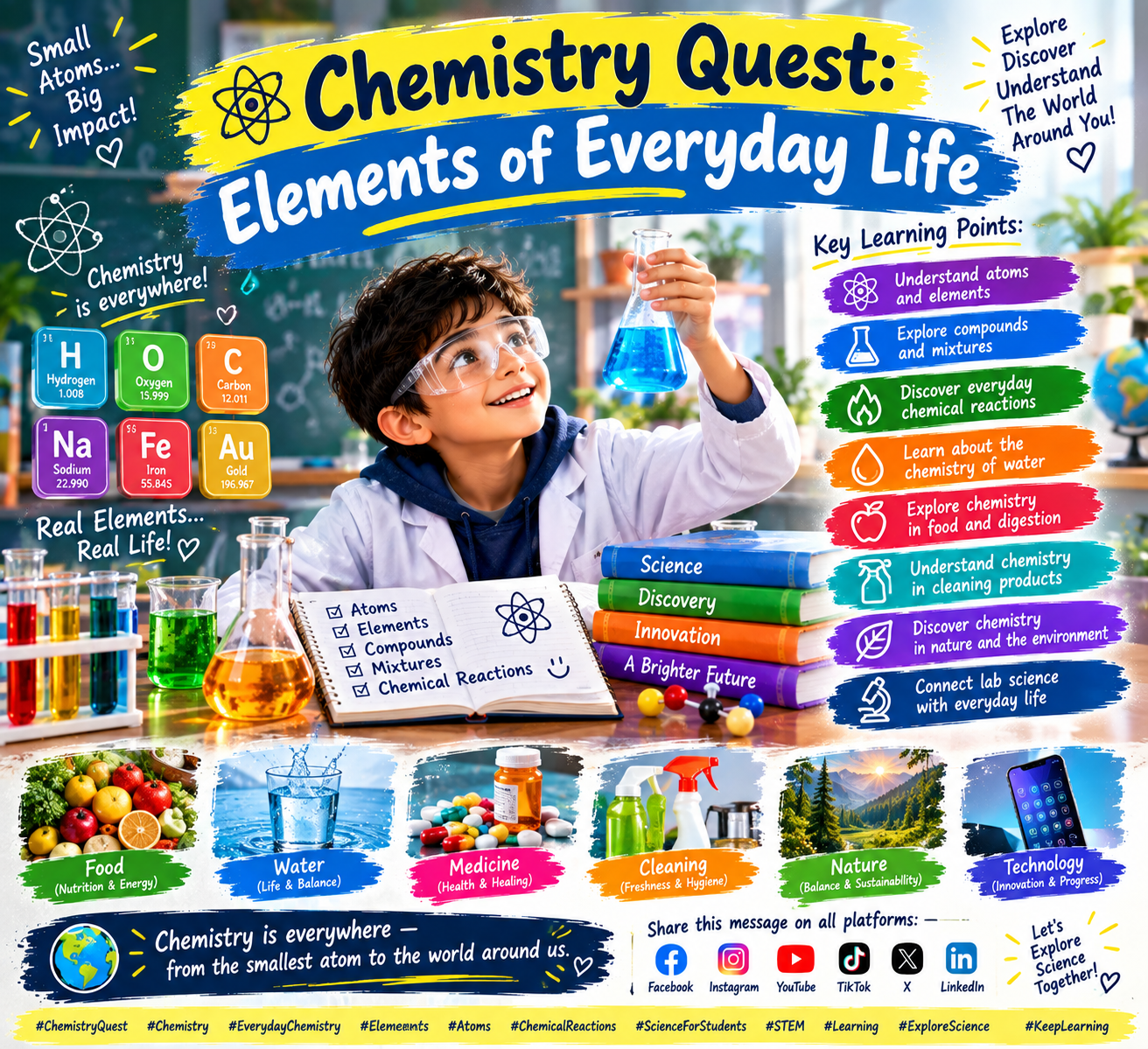
    **“Chemistry Quest: Elements of Everyday Life”** is an exciting educational journey that explores how chemistry is connected to the world around us. From the air we breathe and the water we drink to the food we eat, the medicines we use, and the materials in our homes, chemistry is present in almost everything we experience.

    The journey introduces students to **elements, atoms, molecules, compounds, mixtures, and chemical reactions** in a simple and engaging way. Students can discover how different elements combine to form substances with unique properties and how chemical changes happen in everyday situations.

    Chemistry is not just a subject studied in a laboratory—it is part of **cooking, cleaning, breathing, digestion, technology, nature, and our environment**. Understanding basic chemistry helps us become more curious about how things work and encourages us to observe the science behind ordinary experiences.

    ### Key Learning Points

    * Understand atoms and elements
    * Explore compounds and mixtures
    * Discover everyday chemical reactions
    * Learn about the chemistry of water
    * Explore chemistry in food and digestion
    * Understand chemistry in cleaning products
    * Discover chemistry in nature and the environment
    * Connect laboratory science with everyday life

    ### Key Message

    **Chemistry is everywhere—from the smallest atom to the world around us. Every day is an opportunity to discover the science behind ordinary things.**

    ### Hashtags

    #ChemistryQuest #Chemistry #EverydayChemistry #Elements #Atoms #ChemicalReactions #Science #ScienceForStudents #STEM #Learning #Education #ScienceExperiment #ExploreScience #KeepLearning #CuriousMinds
    #rsisb Roll no.239 Story post no.6 Foundation Level **“Chemistry Quest: Elements of Everyday Life”** is an exciting educational journey that explores how chemistry is connected to the world around us. From the air we breathe and the water we drink to the food we eat, the medicines we use, and the materials in our homes, chemistry is present in almost everything we experience. The journey introduces students to **elements, atoms, molecules, compounds, mixtures, and chemical reactions** in a simple and engaging way. Students can discover how different elements combine to form substances with unique properties and how chemical changes happen in everyday situations. Chemistry is not just a subject studied in a laboratory—it is part of **cooking, cleaning, breathing, digestion, technology, nature, and our environment**. Understanding basic chemistry helps us become more curious about how things work and encourages us to observe the science behind ordinary experiences. ### 🔬 Key Learning Points * ⚛️ Understand atoms and elements * 🧪 Explore compounds and mixtures * 🔥 Discover everyday chemical reactions * 💧 Learn about the chemistry of water * 🍎 Explore chemistry in food and digestion * 🧼 Understand chemistry in cleaning products * 🌱 Discover chemistry in nature and the environment * ⚗️ Connect laboratory science with everyday life ### 💡 Key Message **Chemistry is everywhere—from the smallest atom to the world around us. Every day is an opportunity to discover the science behind ordinary things.** 🌍🔬✨ ### 🔖 Hashtags #ChemistryQuest #Chemistry #EverydayChemistry #Elements #Atoms #ChemicalReactions #Science #ScienceForStudents #STEM #Learning #Education #ScienceExperiment #ExploreScience #KeepLearning #CuriousMinds
    0 Commentarios 0 Acciones 1653 Views
  • **Foundation Level** **Day 132** **story post** **Roll Number: 005**


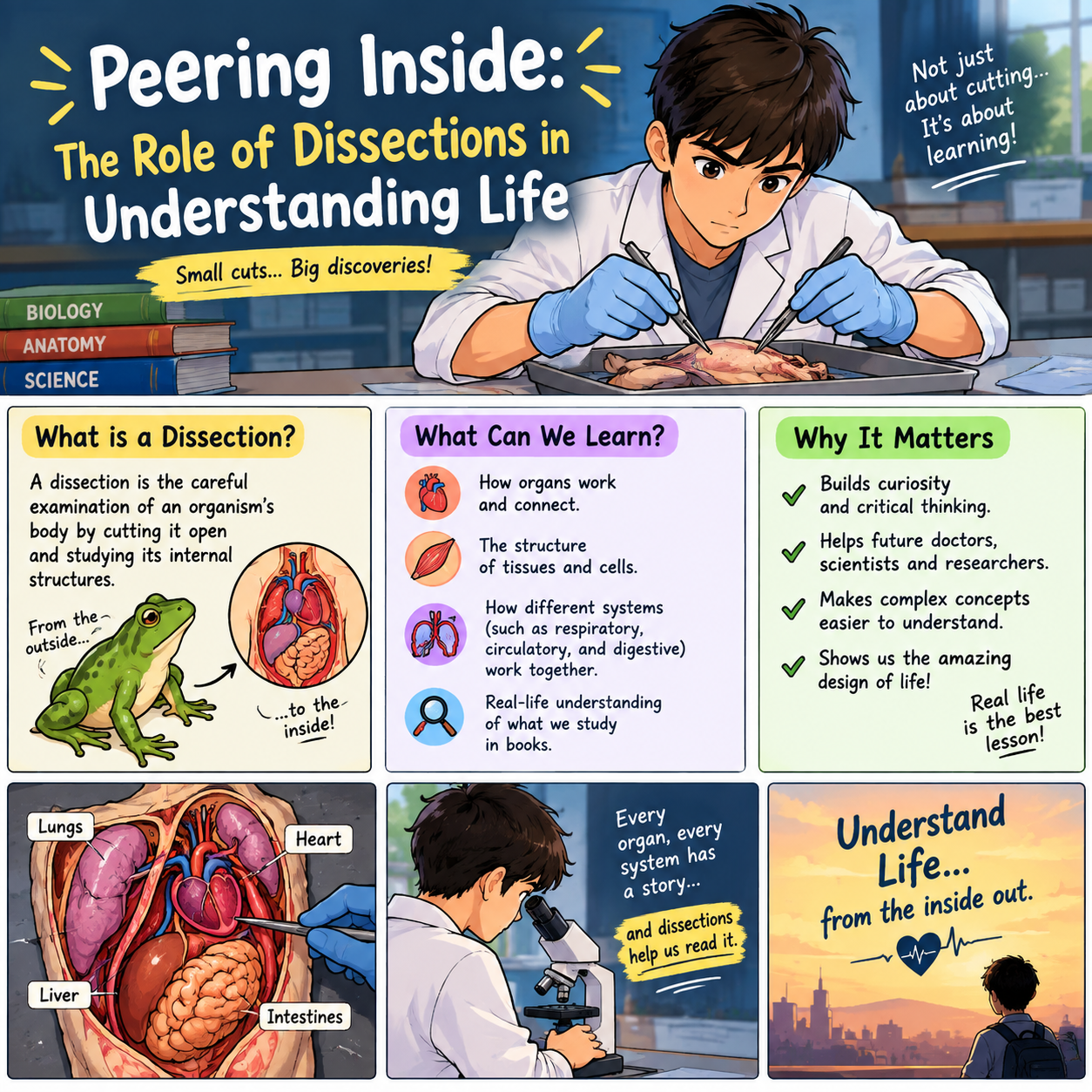
    Peering Inside: The Role of Dissections in Understanding Life

    What can we learn by looking beyond the surface? Dissections give students a hands-on way to explore organs, tissues, body systems, and the amazing structures that make life work.

    Through careful observation and experimentation, science becomes more than something we read in books—it becomes something we can understand from the inside out!

    Learn. Explore. Discover. Understand life!

    #Biology #Science #Dissection #Anatomy #LifeScience #Learning #Education #ScienceExperiment #ExploreScience #InstagramEducation
    **Foundation Level** **Day 132** **story post** **Roll Number: 005** 🔬 Peering Inside: The Role of Dissections in Understanding Life 🧬 What can we learn by looking beyond the surface? Dissections give students a hands-on way to explore organs, tissues, body systems, and the amazing structures that make life work. 🫀🫁 Through careful observation and experimentation, science becomes more than something we read in books—it becomes something we can understand from the inside out! 🌱🔍 Learn. Explore. Discover. Understand life! 🧪✨ #Biology #Science #Dissection #Anatomy #LifeScience #Learning #Education #ScienceExperiment #ExploreScience #InstagramEducation
    0 Commentarios 0 Acciones 1582 Views
  • #rsisb
    Roll no.239
    Song no .30
    Foundation Level

    **From Specimens to Knowledge: The Purpose of Science Experiments** explores how scientists use specimens, observations, and experiments to understand the living world. By carefully examining biological materials and testing scientific ideas, researchers can gather evidence and develop reliable explanations.

    Experiments help transform **curiosity into knowledge** by allowing scientists to ask questions, test hypotheses, analyze results, and discover how biological systems work. From cells and microorganisms to plants and animals, scientific investigation helps us better understand the complexity of life.

    #ScienceExperiments #Biology #ScientificMethod #Specimens #Research #Science #Education #Learning #ScientificDiscovery
    #rsisb Roll no.239 Song no .30 Foundation Level **From Specimens to Knowledge: The Purpose of Science Experiments** explores how scientists use specimens, observations, and experiments to understand the living world. 🌱✨ By carefully examining biological materials and testing scientific ideas, researchers can gather evidence and develop reliable explanations. Experiments help transform **curiosity into knowledge** by allowing scientists to ask questions, test hypotheses, analyze results, and discover how biological systems work. From cells and microorganisms to plants and animals, scientific investigation helps us better understand the complexity of life. 🧬🌍 #ScienceExperiments #Biology #ScientificMethod #Specimens #Research #Science #Education #Learning #ScientificDiscovery 🔬🧪✨
    0 Commentarios 0 Acciones 2290 Views 5
  • #rsisb
    Roll no.247
    song no.25
    Foundation level

    **Energy, Matter, and Transformation: The Philosophy of Chemical Reactions**

    Chemical reactions are happening all around us—even when we cannot see them! From the food we eat and the air we breathe to the growth of plants, the burning of fuels, and the processes inside living cells, chemical reactions are constantly transforming matter and transferring energy.

    **Energy, Matter, and Transformation** takes us on an exciting journey into the fascinating world of chemistry. It explores how substances change, how atoms rearrange themselves, and how energy can be released, absorbed, or transferred during a reaction.

    Matter is never simply “lost” during an ordinary chemical reaction. Instead, atoms are rearranged to form new substances with different properties. This beautiful process shows us one of the fundamental ideas of science: **transformation does not mean disappearance—it means change.**

    Some reactions release energy, such as combustion, while others require energy to proceed. Understanding these energy changes helps us explain everything from everyday cooking to industrial processes and the complex chemistry taking place inside living organisms.

    This topic also encourages us to think beyond chemical formulas. Chemistry can be viewed as a story of **change, balance, interaction, and transformation**. Every molecule has a role, every reaction has a process, and every transformation helps us understand the world around us a little better.

    **What can we learn from chemical reactions?**
    How atoms rearrange to create new substances
    How energy moves during chemical changes
    Why some reactions release energy while others absorb it
    How chemical reactions support life and nature
    How chemistry contributes to technology and industry
    How scientific thinking helps us understand transformation

    Learning chemistry is not just about memorizing equations—it is about discovering the hidden processes that shape our world. Every reaction is a small demonstration of nature’s incredible ability to transform matter and energy.

    **Explore. Question. Experiment. Discover. Transform.**
    Let the fascinating world of chemistry inspire curiosity, creativity, and a deeper appreciation for the science behind everyday life!

    #Energy #Matter #ChemicalReactions #Chemistry #Science #ChemicalTransformation #EnergyTransformation #MatterAndEnergy #ScienceEducation #ChemistryLearning #STEM #STEMEducation #ScienceExperiment #ChemicalScience #LearningIsFun #ExploreScience #ScienceAndNature #YoungScientists #FutureScientists #Education #Knowledge #Curiosity #Innovation #DiscoverScience #ChemistryLovers #ScienceForEveryone
    #rsisb Roll no.247 song no.25 Foundation level ⚗️🔥 **Energy, Matter, and Transformation: The Philosophy of Chemical Reactions** 🌍✨ Chemical reactions are happening all around us—even when we cannot see them! 🌱🧪 From the food we eat and the air we breathe to the growth of plants, the burning of fuels, and the processes inside living cells, chemical reactions are constantly transforming matter and transferring energy. ⚡🔬 **Energy, Matter, and Transformation** takes us on an exciting journey into the fascinating world of chemistry. 🧠⚗️ It explores how substances change, how atoms rearrange themselves, and how energy can be released, absorbed, or transferred during a reaction. 🔥❄️ Matter is never simply “lost” during an ordinary chemical reaction. Instead, atoms are rearranged to form new substances with different properties. 🧩✨ This beautiful process shows us one of the fundamental ideas of science: **transformation does not mean disappearance—it means change.** 🌟 Some reactions release energy, such as combustion, while others require energy to proceed. 🔥⚡ Understanding these energy changes helps us explain everything from everyday cooking to industrial processes and the complex chemistry taking place inside living organisms. 🍳🏭🧬 This topic also encourages us to think beyond chemical formulas. Chemistry can be viewed as a story of **change, balance, interaction, and transformation**. 🌌🔄 Every molecule has a role, every reaction has a process, and every transformation helps us understand the world around us a little better. 🌍💡 🔬 **What can we learn from chemical reactions?** ✨ How atoms rearrange to create new substances ⚡ How energy moves during chemical changes 🧪 Why some reactions release energy while others absorb it 🌱 How chemical reactions support life and nature 🏭 How chemistry contributes to technology and industry 🧠 How scientific thinking helps us understand transformation Learning chemistry is not just about memorizing equations—it is about discovering the hidden processes that shape our world. 🌎📚 Every reaction is a small demonstration of nature’s incredible ability to transform matter and energy. 🚀 **Explore. Question. Experiment. Discover. Transform.** Let the fascinating world of chemistry inspire curiosity, creativity, and a deeper appreciation for the science behind everyday life! 🧪🔬⚡🌟 #Energy #Matter #ChemicalReactions #Chemistry #Science #ChemicalTransformation #EnergyTransformation #MatterAndEnergy #ScienceEducation #ChemistryLearning #STEM #STEMEducation #ScienceExperiment #ChemicalScience #LearningIsFun #ExploreScience #ScienceAndNature #YoungScientists #FutureScientists #Education #Knowledge #Curiosity #Innovation #DiscoverScience #ChemistryLovers #ScienceForEveryone 🧪⚡🌍🔬✨
    0 Commentarios 0 Acciones 4724 Views 10
  • #rsisb
    Roll no.247
    song .26
    Foundation level

    **Dissecting Frogs: A Gateway to Human Anatomy**

    Studying frog anatomy can provide students with a fascinating introduction to the structure and organization of living organisms. Through careful anatomical study, students can learn how different organs are arranged, how body systems work together, and how scientists use observation to understand life.

    Frogs are commonly studied in biology because their basic body organization shares important similarities with other vertebrates. Exploring their anatomy can help learners recognize major structures such as the heart, lungs, digestive organs, and reproductive organs, while also developing an understanding of how these systems perform different functions.

    **From Frog Anatomy to Human Anatomy**

    Learning about a frog's internal organization can help students build foundational knowledge that makes human anatomy easier to understand. By comparing different vertebrate body plans, learners can discover both similarities and differences in organs, tissues, and body systems. This comparison encourages curiosity and strengthens scientific thinking.

    **Learning Through Observation**

    Anatomical studies teach more than just the names of organs. They encourage students to observe carefully, record information, ask questions, and connect physical structures with biological functions. These skills are valuable in biology, medicine, veterinary science, and many other scientific fields. ‍‍

    **Science, Respect, and Responsibility**

    Biology education should always be approached with respect for living organisms and with appropriate safety, ethical, and educational guidelines. Modern classrooms may also use models, diagrams, videos, simulations, and digital anatomy tools to provide meaningful learning experiences.

    **Conclusion**

    “Dissecting Frogs: A Gateway to Human Anatomy” represents more than an anatomy lesson—it is an opportunity to explore the fascinating organization of life. By studying structures, comparing body systems, and asking scientific questions, students can develop a deeper appreciation for biology and the remarkable complexity of living organisms.

    #DissectingFrogs #FrogAnatomy #HumanAnatomy #Biology #ScienceEducation #AnatomyStudy #BiologyLearning #ScienceExperiment #LearningThroughScience #VertebrateAnatomy #LifeScience #ScienceStudents #EducationalJourney #ExploreBiology #ScientificThinking #AnatomyAndPhysiology #STEMEducation #ScienceExploration #BiologyProject #LearningIsFun
    #rsisb Roll no.247 song .26 Foundation level 🐸🔬 **Dissecting Frogs: A Gateway to Human Anatomy** 🧬🫀 Studying frog anatomy can provide students with a fascinating introduction to the structure and organization of living organisms. Through careful anatomical study, students can learn how different organs are arranged, how body systems work together, and how scientists use observation to understand life. 🔍📚 🐸 Frogs are commonly studied in biology because their basic body organization shares important similarities with other vertebrates. Exploring their anatomy can help learners recognize major structures such as the heart, lungs, digestive organs, and reproductive organs, while also developing an understanding of how these systems perform different functions. 🫀🫁 🧠 **From Frog Anatomy to Human Anatomy** Learning about a frog's internal organization can help students build foundational knowledge that makes human anatomy easier to understand. By comparing different vertebrate body plans, learners can discover both similarities and differences in organs, tissues, and body systems. This comparison encourages curiosity and strengthens scientific thinking. 🔬✨ 📖 **Learning Through Observation** Anatomical studies teach more than just the names of organs. They encourage students to observe carefully, record information, ask questions, and connect physical structures with biological functions. These skills are valuable in biology, medicine, veterinary science, and many other scientific fields. 🧪👩‍🔬👨‍🔬 🌱 **Science, Respect, and Responsibility** Biology education should always be approached with respect for living organisms and with appropriate safety, ethical, and educational guidelines. Modern classrooms may also use models, diagrams, videos, simulations, and digital anatomy tools to provide meaningful learning experiences. 🌍💚 ✨ **Conclusion** “Dissecting Frogs: A Gateway to Human Anatomy” represents more than an anatomy lesson—it is an opportunity to explore the fascinating organization of life. By studying structures, comparing body systems, and asking scientific questions, students can develop a deeper appreciation for biology and the remarkable complexity of living organisms. 🐸🔬🧬🌟 #DissectingFrogs #FrogAnatomy #HumanAnatomy #Biology #ScienceEducation #AnatomyStudy #BiologyLearning #ScienceExperiment #LearningThroughScience #VertebrateAnatomy #LifeScience #ScienceStudents #EducationalJourney #ExploreBiology #ScientificThinking #AnatomyAndPhysiology #STEMEducation #ScienceExploration #BiologyProject #LearningIsFun 🐸🔬📚🧬🫀🫁✨
    0 Commentarios 0 Acciones 5496 Views 6
  • #rsisb
    Roll No.240
    Image With Chatgpt No.6
    Foundation Level

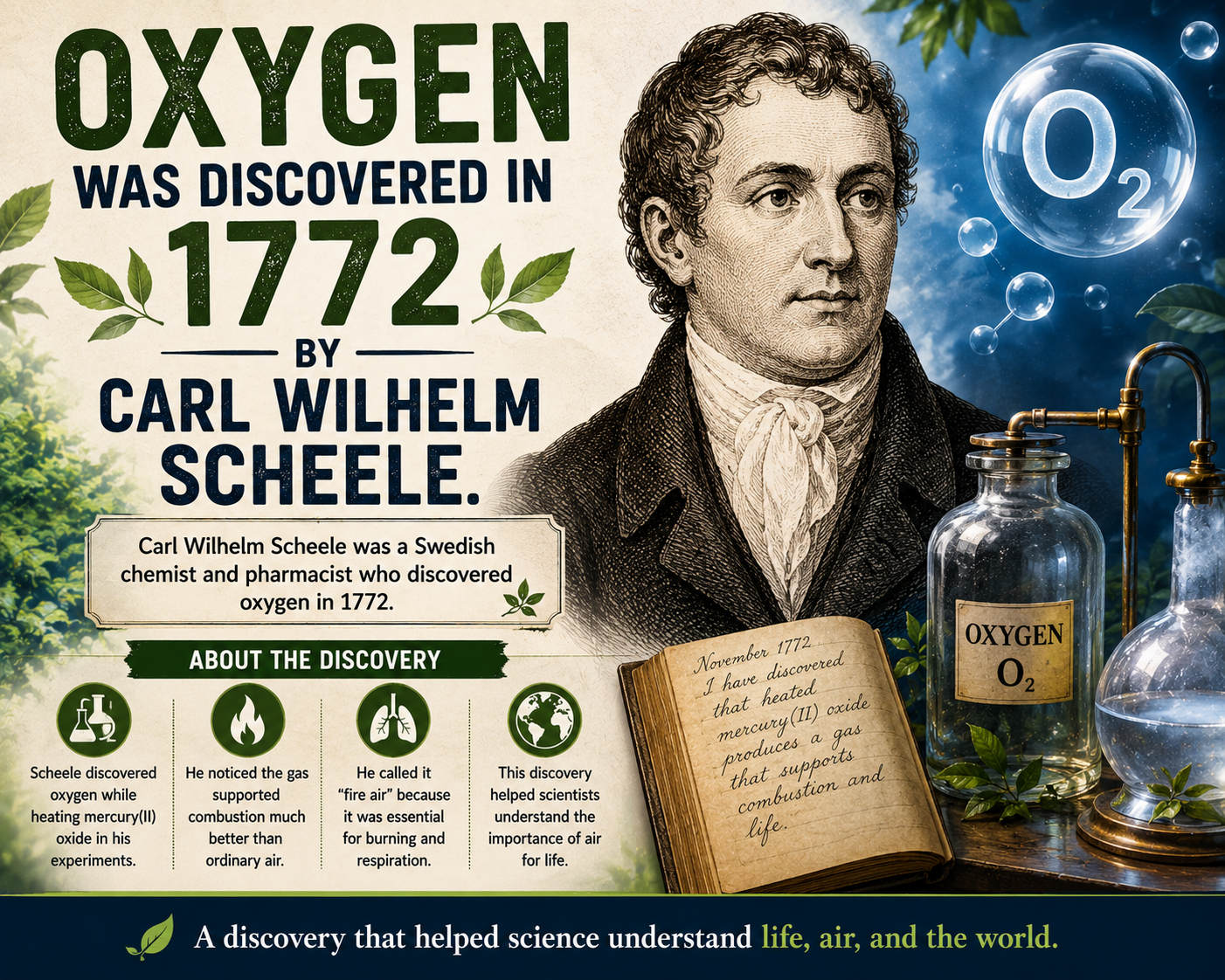
    Oxygen is one of the most important elements for life on Earth, but its discovery was the result of careful experiments, curiosity, and scientific investigation.

    In 1772, Swedish chemist and pharmacist Carl Wilhelm Scheele identified a gas that behaved differently from ordinary air. He found that this gas strongly supported combustion and played an important role in the processes we now understand as respiration and burning.

    Scheele referred to the gas as “fire air” because of its ability to support combustion. His experiments helped reveal that air was not simply one single substance, but a mixture containing different gases.

    The story of oxygen’s discovery is a fascinating example of how science develops through observation and experimentation. Scientists investigate materials, record their observations, test ideas, and gradually build a better understanding of the natural world.

    Although Scheele discovered oxygen independently, the recognition and naming of oxygen as an element also involved other scientists, including Joseph Priestley and Antoine Lavoisier. Their work helped establish oxygen’s role in combustion and contributed to the development of modern chemistry.

    Oxygen is represented by the chemical symbol O and has the atomic number 8. It is essential for aerobic respiration in humans and many other organisms. Without oxygen, most familiar forms of complex life could not survive.

    The discovery of oxygen changed the way scientists understood air, combustion, chemistry, and life. It became an important part of the scientific revolution in chemistry and helped researchers develop a much clearer understanding of chemical reactions.

    This story also reminds us that major scientific discoveries often happen through patience, careful observation, and a willingness to ask questions. Every experiment can reveal something new, and every discovery can open the door to further knowledge.

    From “fire air” to oxygen, the journey of discovery changed chemistry forever.

    Science teaches us that the world around us is full of mysteries waiting to be explored. Whether studying gases, atoms, cells, planets, or living organisms, curiosity is often the first step toward discovery.

    Question. Observe. Experiment. Discover. Learn.

    #Oxygen #DiscoveryOfOxygen #CarlWilhelmScheele #ScienceHistory #HistoryOfScience #Chemistry #ChemicalElements #OxygenDiscovery #1772 #ScientificDiscovery #ScienceEducation #ChemistryFacts #ScienceFacts #LearnScience #ScientificRevolution #Combustion #Air #Respiration #ChemistryHistory #STEM #Education #LearningJourney #ScienceExperiment #ScientificThinking #Research #Discovery #Knowledge #Innovation #Curiosity #ExploreScience #ScienceLovers #EducationalContent #Scientists #ChemicalScience #ModernChemistry #ScienceJourney #HistoryOfChemistry

    Rehan School Islamabad Campus
    Asma Shaheen EducationWali
    Irum Asim
    Saima Happinesswali

    #rsisb Roll No.240 Image With Chatgpt No.6 Foundation Level Oxygen is one of the most important elements for life on Earth, but its discovery was the result of careful experiments, curiosity, and scientific investigation. 🌱🫁🔥 In 1772, Swedish chemist and pharmacist Carl Wilhelm Scheele identified a gas that behaved differently from ordinary air. He found that this gas strongly supported combustion and played an important role in the processes we now understand as respiration and burning. 🔥🧪 Scheele referred to the gas as “fire air” because of its ability to support combustion. His experiments helped reveal that air was not simply one single substance, but a mixture containing different gases. 🌬️🔬 The story of oxygen’s discovery is a fascinating example of how science develops through observation and experimentation. Scientists investigate materials, record their observations, test ideas, and gradually build a better understanding of the natural world. 📚🔎💡 Although Scheele discovered oxygen independently, the recognition and naming of oxygen as an element also involved other scientists, including Joseph Priestley and Antoine Lavoisier. Their work helped establish oxygen’s role in combustion and contributed to the development of modern chemistry. ⚗️🧠🌍 Oxygen is represented by the chemical symbol O and has the atomic number 8. It is essential for aerobic respiration in humans and many other organisms. 🫁🌿🐾 Without oxygen, most familiar forms of complex life could not survive. The discovery of oxygen changed the way scientists understood air, combustion, chemistry, and life. 🌎🔥🔬 It became an important part of the scientific revolution in chemistry and helped researchers develop a much clearer understanding of chemical reactions. This story also reminds us that major scientific discoveries often happen through patience, careful observation, and a willingness to ask questions. 💭➡️🔬➡️💡 Every experiment can reveal something new, and every discovery can open the door to further knowledge. ✨ From “fire air” to oxygen, the journey of discovery changed chemistry forever. ✨ Science teaches us that the world around us is full of mysteries waiting to be explored. 🌍🔎 Whether studying gases, atoms, cells, planets, or living organisms, curiosity is often the first step toward discovery. 🚀📚 🌟 Question. Observe. Experiment. Discover. Learn. 🌟 #Oxygen #DiscoveryOfOxygen #CarlWilhelmScheele #ScienceHistory #HistoryOfScience #Chemistry #ChemicalElements #OxygenDiscovery #1772 #ScientificDiscovery #ScienceEducation #ChemistryFacts #ScienceFacts #LearnScience #ScientificRevolution #Combustion #Air #Respiration #ChemistryHistory #STEM #Education #LearningJourney #ScienceExperiment #ScientificThinking #Research #Discovery #Knowledge #Innovation #Curiosity #ExploreScience #ScienceLovers #EducationalContent #Scientists #ChemicalScience #ModernChemistry #ScienceJourney #HistoryOfChemistry 🔬🧪🌍🔥🫁📚💡✨🚀🌱 Rehan School Islamabad Campus Asma Shaheen EducationWali Irum Asim Saima Happinesswali
    0 Commentarios 0 Acciones 8104 Views
  • #rsisb
    Roll no.247
    story post .24
    Foundation level

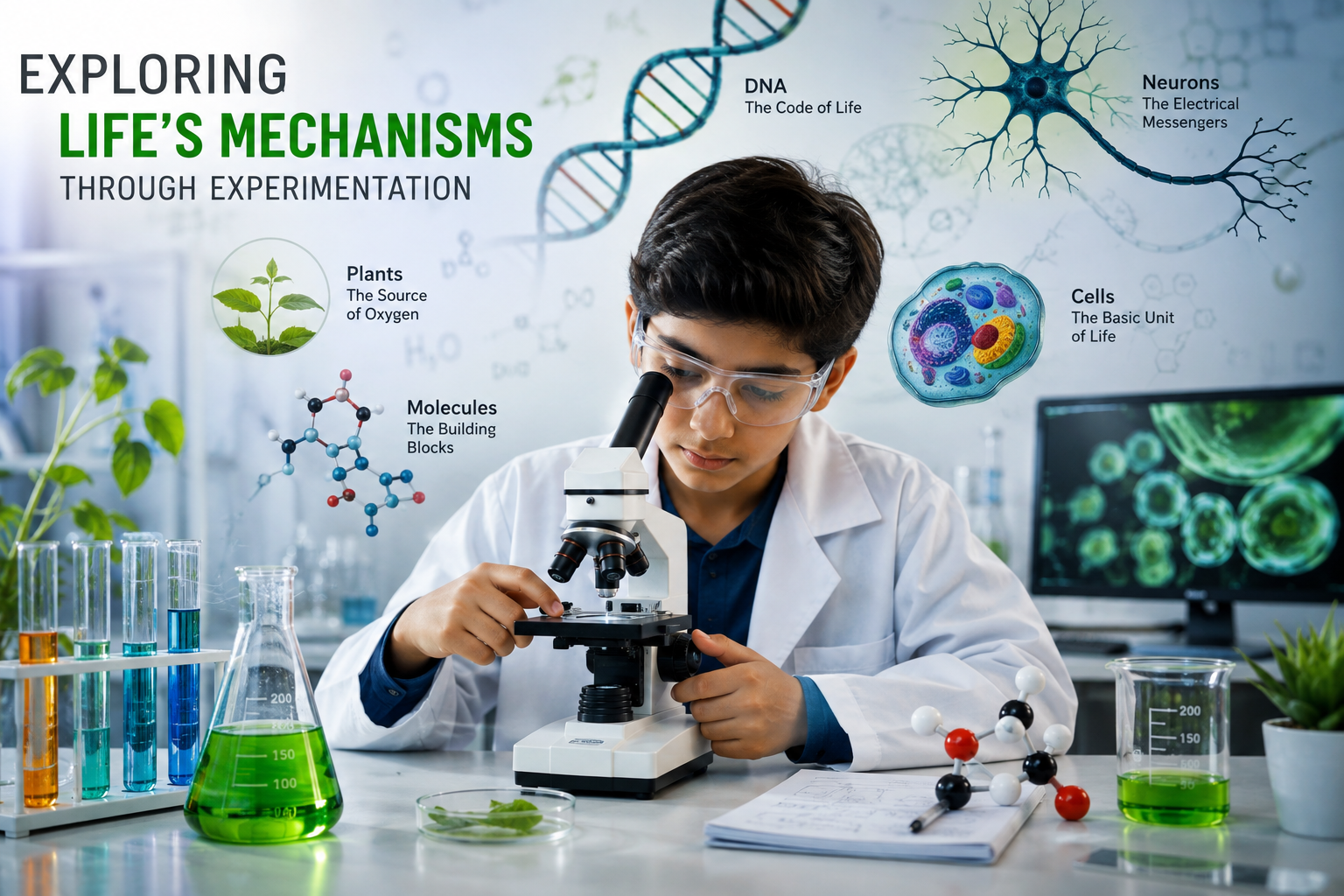
    **Exploring Life’s Mechanisms Through Experimentation**

    Life is full of fascinating mysteries, and science gives us the tools to explore them! **“Exploring Life’s Mechanisms Through Experimentation”** takes us on an exciting journey into the world of biology, where observation, questions, experiments, and discoveries help us understand how living things work.

    From the tiny structures inside cells to the complex systems that allow plants, animals, and humans to grow and survive ‍, experimentation helps scientists uncover the mechanisms behind life. By carefully designing experiments, collecting evidence, analyzing results, and learning from unexpected outcomes, we can turn curiosity into knowledge.

    This topic highlights the importance of the **scientific method**—asking meaningful questions, forming hypotheses, conducting fair tests, recording observations, and drawing conclusions based on evidence. Every experiment, whether successful or not, can teach us something valuable and lead to new questions.

    **Cells and their functions**
    **DNA and genetic information**
    **Plant growth and photosynthesis**
    **How body systems work together**
    **Microorganisms and their environments**
    **Chemical processes involved in life**
    **How living organisms interact with their surroundings**

    Experimentation also teaches important skills such as critical thinking, patience, teamwork, creativity, problem-solving, and careful observation. Science is not simply about memorizing facts—it is about discovering *why* and *how* things happen.

    Every observation can inspire a question.
    Every question can lead to an investigation.
    Every experiment can reveal something new.
    And every discovery can help us understand life a little better.

    Join us as we explore the amazing mechanisms that make life possible and discover how scientific experimentation continues to expand our understanding of the natural world!

    #ExploringLife #LifeScience #Biology #ScienceExperiment #ScientificMethod #ScienceEducation #BiologyExperiments #CellBiology #DNA #Genetics #Photosynthesis #HumanBiology #Microbiology #ScienceLearning #STEM #STEMEducation #YoungScientists #ScienceDiscovery #Experimentation #ScientificDiscovery #Curiosity #CriticalThinking #LearningScience #Nature #LivingThings #ScienceIsAmazing
    #rsisb Roll no.247 story post .24 Foundation level 🔬🧬 **Exploring Life’s Mechanisms Through Experimentation** 🌱✨ Life is full of fascinating mysteries, and science gives us the tools to explore them! 🔍🧪 **“Exploring Life’s Mechanisms Through Experimentation”** takes us on an exciting journey into the world of biology, where observation, questions, experiments, and discoveries help us understand how living things work. 🌍🔬 From the tiny structures inside cells 🦠 to the complex systems that allow plants, animals, and humans to grow and survive 🌿🧑‍🔬, experimentation helps scientists uncover the mechanisms behind life. By carefully designing experiments, collecting evidence, analyzing results, and learning from unexpected outcomes, we can turn curiosity into knowledge. 💡📊 This topic highlights the importance of the **scientific method**—asking meaningful questions, forming hypotheses, conducting fair tests, recording observations, and drawing conclusions based on evidence. 📝🔎 Every experiment, whether successful or not, can teach us something valuable and lead to new questions. 🧫 **Cells and their functions** 🧬 **DNA and genetic information** 🌱 **Plant growth and photosynthesis** 🫀 **How body systems work together** 🦠 **Microorganisms and their environments** ⚗️ **Chemical processes involved in life** 🌎 **How living organisms interact with their surroundings** Experimentation also teaches important skills such as critical thinking, patience, teamwork, creativity, problem-solving, and careful observation. 🧠🤝✨ Science is not simply about memorizing facts—it is about discovering *why* and *how* things happen. 🌟 Every observation can inspire a question. 🔍 Every question can lead to an investigation. 🧪 Every experiment can reveal something new. 💡 And every discovery can help us understand life a little better. Join us as we explore the amazing mechanisms that make life possible and discover how scientific experimentation continues to expand our understanding of the natural world! 🚀🔬🌿 #ExploringLife #LifeScience #Biology #ScienceExperiment #ScientificMethod #ScienceEducation #BiologyExperiments #CellBiology #DNA #Genetics #Photosynthesis #HumanBiology #Microbiology #ScienceLearning #STEM #STEMEducation #YoungScientists #ScienceDiscovery #Experimentation #ScientificDiscovery #Curiosity #CriticalThinking #LearningScience #Nature #LivingThings #ScienceIsAmazing 🔬🧬🌱🧪✨
    0 Commentarios 0 Acciones 5719 Views
  • #rsisb Roll No.240 Song No.17 Foundation Level Why do scientists perform experiments? In biology, experiments help us understand living things and discover the truth. Scientists ask questions, make observations, test ideas, and study the results. Through experiments, we can learn about plants, animals, cells, the human body, and other living organisms. Experiments help us find out what is true, understand how things work, and learn from mistakes. This topic shows that biology is not just about reading books—it is also about asking questions, testing ideas, and discovering new knowledge. 🔬🌱🧬 #Biology #Science #Experiments #ScientificMethod #Learning #Education #BiologyStudents #scienceexperiments Rehan School Islamabad Campus Asma Shaheen EducationWali Irum Asim Saima Happinesswali https://www.facebook.com/share/v/1J5f5CDKTa/
    WWW.FACEBOOK.COM
    Facebook
    #rsisb Roll No.240 Song No.17 Foundation Level Why do scientists perform experiments? In biology, experiments help us understand living things and discover the truth. Scientists ask questions, make...
    0 Commentarios 0 Acciones 2832 Views
  • #rsisb Roll No.240 Song No.16 Foundation Level Science experiments help us understand the world by turning observations into knowledge. In this topic, we explore how scientists use specimens, samples, tools, and careful experiments to discover facts and answer important questions. From observing plants and animals to studying chemicals, cells, and materials, every experiment teaches us something new. Experiments also develop important skills such as observation, questioning, problem-solving, critical thinking, and analysis. By testing ideas and comparing results, students learn that science is not just about memorizing facts—it is about discovering, testing, learning, and improving our understanding of the world. This topic shows how a simple specimen can become the starting point for a valuable scientific discovery. 🔬🧪📚 #ScienceExperiments #Science #Education #ScientificDiscovery #Learning #Experiments #Students #knowledgeispower Rehan School Islamabad Campus Asma Shaheen EducationWali Irum Asim Saima Happinesswali https://www.facebook.com/share/v/1Ef1Dr8vt6/
    WWW.FACEBOOK.COM
    Facebook
    #rsisb Roll No.240 Song No.16 Foundation Level Science experiments help us understand the world by turning observations into knowledge. In this topic, we explore how scientists use specimens,...
    0 Commentarios 0 Acciones 2572 Views
  • #rsisb Roll No.240 Song No.15 Foundation Level Science experiments help us understand the world around us. By studying specimens, observing changes, asking questions, and testing ideas, we can discover how things work. Experiments turn simple observations into useful knowledge. Students can collect specimens, examine them carefully, record what they see, and learn from the results. Sometimes an experiment gives an expected result, and sometimes it teaches us something completely new. The main purpose of science experiments is to observe, investigate, test, and learn. They make science more interesting and help students develop curiosity, critical thinking, and problem-solving skills. Observe carefully, ask questions, perform experiments, and discover new knowledge! 🔬📚 #ScienceExperiments #Science #Learning #Education #Experiments #Knowledge #Students #ScienceLearning Rehan School Islamabad Campus Asma Shaheen EducationWali Irum Asim Saima Happinesswali https://www.facebook.com/share/v/1CRQa63cJK/
    WWW.FACEBOOK.COM
    Facebook
    #rsisb Roll No.240 Song No.15 Foundation Level Science experiments help us understand the world around us. By studying specimens, observing changes, asking questions, and testing ideas, we can...
    0 Commentarios 0 Acciones 2132 Views
Resultados de la búsqueda