• #rsisb
    Roll No.240
    Story No.25
    Foundation Level

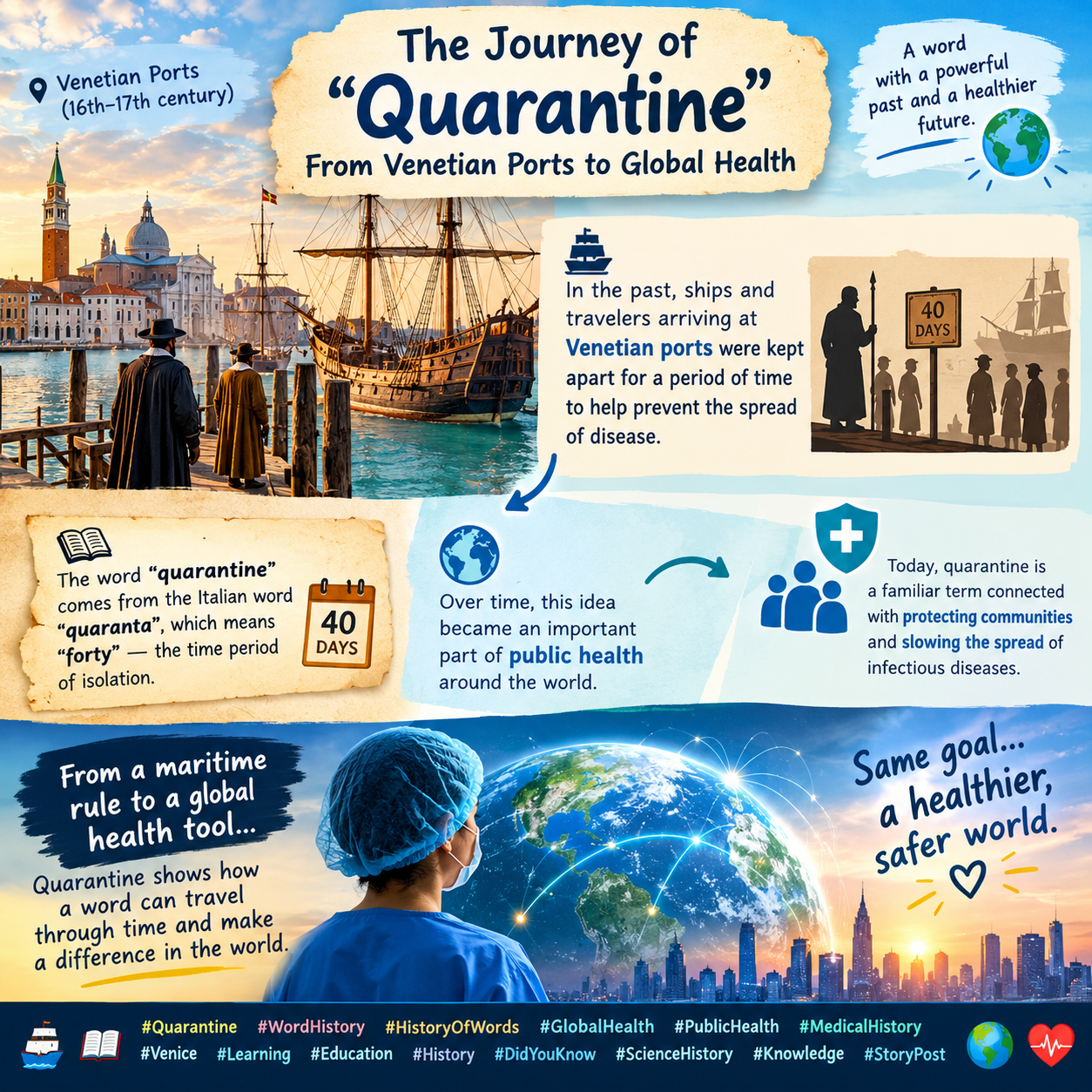
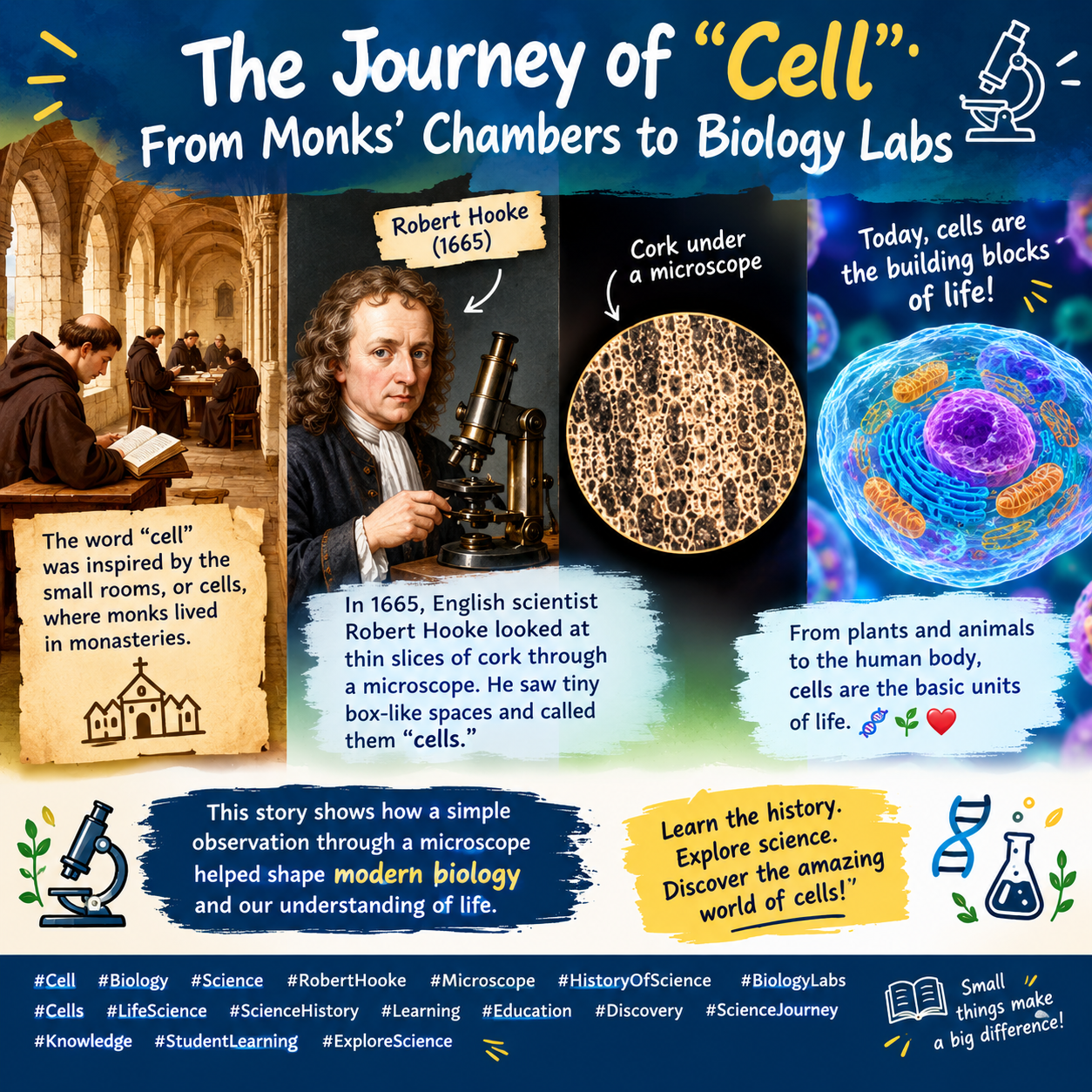
    “Scientist” is a word that represents curiosity, discovery, and the human desire to understand the world.

    Long before the modern term existed, people who studied nature were often called natural philosophers. Over time, scientific thinking became more specialized, and a new word was needed to describe those who practiced science professionally.

    This story explores how the word “scientist” was born, how its meaning evolved, and how it became a familiar part of modern language.

    From asking questions to discovering answers — the journey of science begins with curiosity.

    #Scientist #ScienceHistory #WordOrigins #HistoryOfScience #Philosophy #LanguageEvolution #Curiosity #Discovery #Knowledge #Learning #StoryPost

    Rehan School Islamabad Campus
    Asma Shaheen Eduction Wali
    Irum Asim
    Saima Happines Wali

    #rsisb Roll No.240 Story No.25 Foundation Level 🔬 “Scientist” is a word that represents curiosity, discovery, and the human desire to understand the world. 🌍✨ Long before the modern term existed, people who studied nature were often called natural philosophers. Over time, scientific thinking became more specialized, and a new word was needed to describe those who practiced science professionally. 📖 This story explores how the word “scientist” was born, how its meaning evolved, and how it became a familiar part of modern language. 💡 From asking questions to discovering answers — the journey of science begins with curiosity. #Scientist #ScienceHistory #WordOrigins #HistoryOfScience #Philosophy #LanguageEvolution #Curiosity #Discovery #Knowledge #Learning #StoryPost 🔬🌍📚✨ Rehan School Islamabad Campus Asma Shaheen Eduction Wali Irum Asim Saima Happines Wali
    0 Commentarios 0 Acciones 1058 Views
  • #rsisb
    Roll No.240
    Image With Chatgpt No.6
    Foundation Level

    Oxygen is one of the most important elements for life on Earth, but its discovery was the result of careful experiments, curiosity, and scientific investigation.

    In 1772, Swedish chemist and pharmacist Carl Wilhelm Scheele identified a gas that behaved differently from ordinary air. He found that this gas strongly supported combustion and played an important role in the processes we now understand as respiration and burning.

    Scheele referred to the gas as “fire air” because of its ability to support combustion. His experiments helped reveal that air was not simply one single substance, but a mixture containing different gases.

    The story of oxygen’s discovery is a fascinating example of how science develops through observation and experimentation. Scientists investigate materials, record their observations, test ideas, and gradually build a better understanding of the natural world.

    Although Scheele discovered oxygen independently, the recognition and naming of oxygen as an element also involved other scientists, including Joseph Priestley and Antoine Lavoisier. Their work helped establish oxygen’s role in combustion and contributed to the development of modern chemistry.

    Oxygen is represented by the chemical symbol O and has the atomic number 8. It is essential for aerobic respiration in humans and many other organisms. Without oxygen, most familiar forms of complex life could not survive.

    The discovery of oxygen changed the way scientists understood air, combustion, chemistry, and life. It became an important part of the scientific revolution in chemistry and helped researchers develop a much clearer understanding of chemical reactions.

    This story also reminds us that major scientific discoveries often happen through patience, careful observation, and a willingness to ask questions. Every experiment can reveal something new, and every discovery can open the door to further knowledge.

    From “fire air” to oxygen, the journey of discovery changed chemistry forever.

    Science teaches us that the world around us is full of mysteries waiting to be explored. Whether studying gases, atoms, cells, planets, or living organisms, curiosity is often the first step toward discovery.

    Question. Observe. Experiment. Discover. Learn.

    #Oxygen #DiscoveryOfOxygen #CarlWilhelmScheele #ScienceHistory #HistoryOfScience #Chemistry #ChemicalElements #OxygenDiscovery #1772 #ScientificDiscovery #ScienceEducation #ChemistryFacts #ScienceFacts #LearnScience #ScientificRevolution #Combustion #Air #Respiration #ChemistryHistory #STEM #Education #LearningJourney #ScienceExperiment #ScientificThinking #Research #Discovery #Knowledge #Innovation #Curiosity #ExploreScience #ScienceLovers #EducationalContent #Scientists #ChemicalScience #ModernChemistry #ScienceJourney #HistoryOfChemistry

    Rehan School Islamabad Campus
    Asma Shaheen EducationWali
    Irum Asim
    Saima Happinesswali

    #rsisb Roll No.240 Image With Chatgpt No.6 Foundation Level Oxygen is one of the most important elements for life on Earth, but its discovery was the result of careful experiments, curiosity, and scientific investigation. 🌱🫁🔥 In 1772, Swedish chemist and pharmacist Carl Wilhelm Scheele identified a gas that behaved differently from ordinary air. He found that this gas strongly supported combustion and played an important role in the processes we now understand as respiration and burning. 🔥🧪 Scheele referred to the gas as “fire air” because of its ability to support combustion. His experiments helped reveal that air was not simply one single substance, but a mixture containing different gases. 🌬️🔬 The story of oxygen’s discovery is a fascinating example of how science develops through observation and experimentation. Scientists investigate materials, record their observations, test ideas, and gradually build a better understanding of the natural world. 📚🔎💡 Although Scheele discovered oxygen independently, the recognition and naming of oxygen as an element also involved other scientists, including Joseph Priestley and Antoine Lavoisier. Their work helped establish oxygen’s role in combustion and contributed to the development of modern chemistry. ⚗️🧠🌍 Oxygen is represented by the chemical symbol O and has the atomic number 8. It is essential for aerobic respiration in humans and many other organisms. 🫁🌿🐾 Without oxygen, most familiar forms of complex life could not survive. The discovery of oxygen changed the way scientists understood air, combustion, chemistry, and life. 🌎🔥🔬 It became an important part of the scientific revolution in chemistry and helped researchers develop a much clearer understanding of chemical reactions. This story also reminds us that major scientific discoveries often happen through patience, careful observation, and a willingness to ask questions. 💭➡️🔬➡️💡 Every experiment can reveal something new, and every discovery can open the door to further knowledge. ✨ From “fire air” to oxygen, the journey of discovery changed chemistry forever. ✨ Science teaches us that the world around us is full of mysteries waiting to be explored. 🌍🔎 Whether studying gases, atoms, cells, planets, or living organisms, curiosity is often the first step toward discovery. 🚀📚 🌟 Question. Observe. Experiment. Discover. Learn. 🌟 #Oxygen #DiscoveryOfOxygen #CarlWilhelmScheele #ScienceHistory #HistoryOfScience #Chemistry #ChemicalElements #OxygenDiscovery #1772 #ScientificDiscovery #ScienceEducation #ChemistryFacts #ScienceFacts #LearnScience #ScientificRevolution #Combustion #Air #Respiration #ChemistryHistory #STEM #Education #LearningJourney #ScienceExperiment #ScientificThinking #Research #Discovery #Knowledge #Innovation #Curiosity #ExploreScience #ScienceLovers #EducationalContent #Scientists #ChemicalScience #ModernChemistry #ScienceJourney #HistoryOfChemistry 🔬🧪🌍🔥🫁📚💡✨🚀🌱 Rehan School Islamabad Campus Asma Shaheen EducationWali Irum Asim Saima Happinesswali
    0 Commentarios 0 Acciones 2828 Views
  • #rsisb
    Roll No.240
    Story Post No.24
    Foundation Level

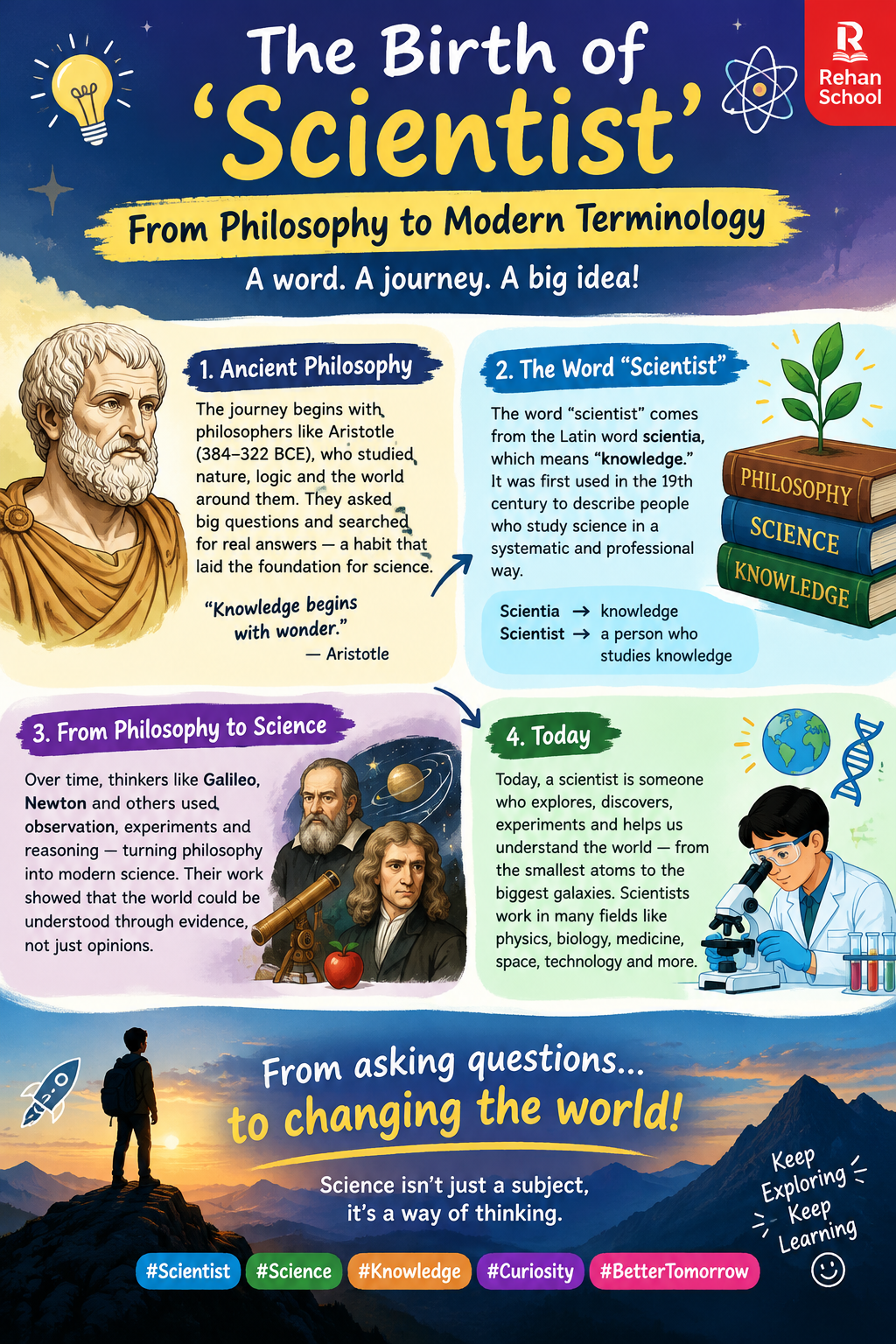
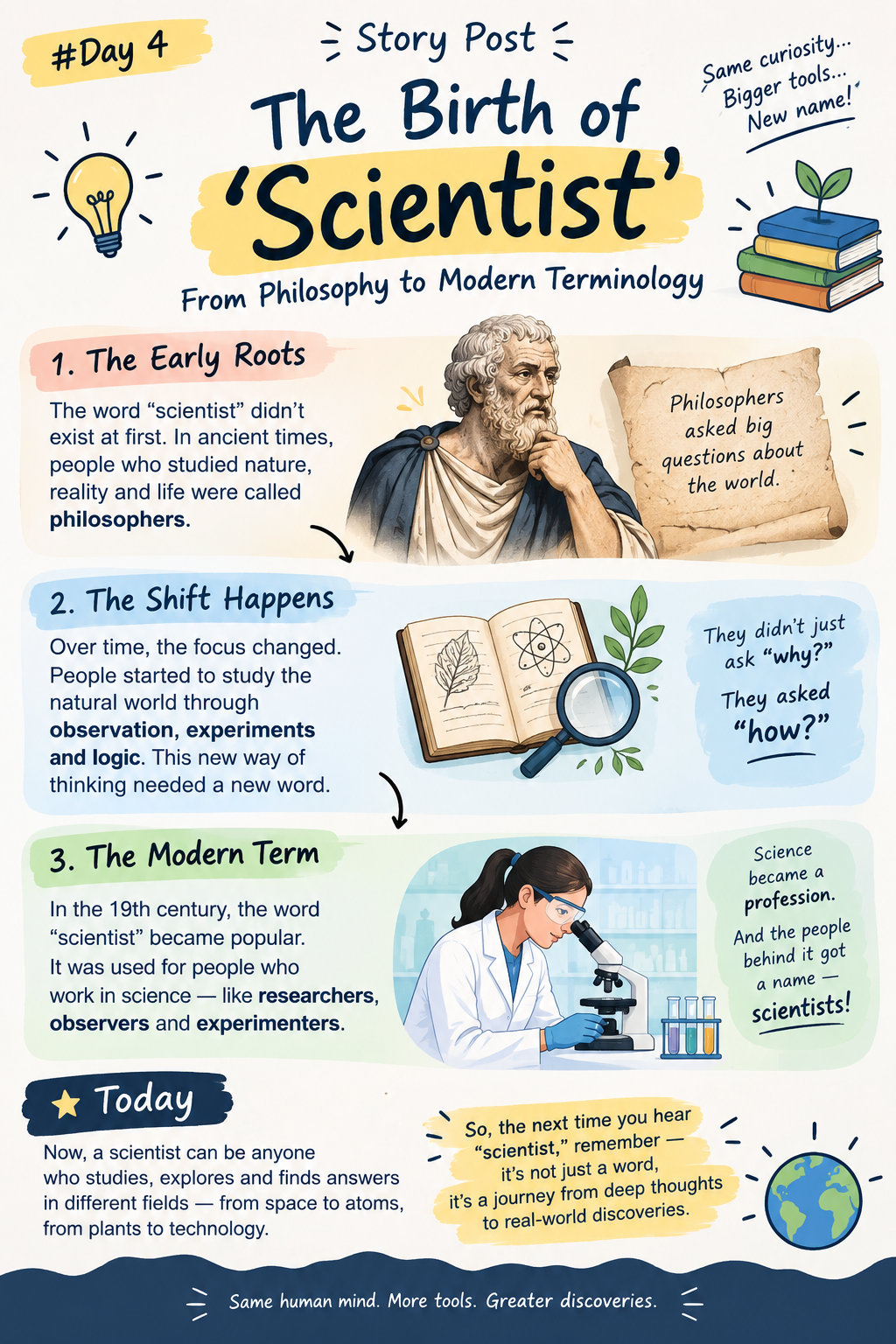
    The word “scientist” may sound like a modern term, but the journey behind it is connected to centuries of human curiosity, philosophy, observation, experimentation, and the search for knowledge.

    Long before the word “scientist” became common, people who studied the natural world were often known as philosophers, scholars, natural philosophers, mathematicians, and thinkers. They asked important questions about nature, the universe, life, matter, motion, and the world around them.

    From the thinkers of the ancient world to the scholars of the Renaissance and the Scientific Revolution, humans continued developing new ways to understand nature. Observation became more important, experiments became more systematic, and evidence gradually became a central part of scientific inquiry.

    During the 18th and 19th centuries, many different branches of knowledge began becoming more specialized. Physics, chemistry, biology, astronomy, geology, and other fields developed their own methods, discoveries, and communities of researchers.

    A major moment in terminology came in the 19th century, when the word “scientist” was introduced as a useful name for people engaged in scientific study. The term is widely associated with William Whewell, who used it in 1833. This helped provide a new, unified word for researchers working across different areas of science.

    The evolution of this word reflects something bigger than language. It represents the changing way humanity organized knowledge and recognized scientific work. The transition from “natural philosopher” to “scientist” shows how science gradually became a distinct and organized field of study.

    Today, scientists work in laboratories, universities, hospitals, observatories, research centers, engineering facilities, and many other places around the world. They investigate everything from tiny cells and molecules to distant galaxies and the origins of the universe.

    Modern science continues to grow through curiosity, evidence, teamwork, technology, and a willingness to ask difficult questions. Every discovery begins with someone wondering, “Why?”, “How?”, or “What if?”

    The story of the word “scientist” reminds us that human knowledge is always evolving. What began with simple curiosity and philosophical questioning gradually developed into the powerful and diverse scientific world we know today.

    From thinkers to researchers. From philosophy to science. From questions to discoveries.

    Science is not only about finding answers—it is also about continuing to ask better questions.

    A journey from curiosity to discovery, and from philosophy to modern science.

    #TheBirthOfScientist #Scientist #HistoryOfScience #ScienceHistory #ScientificRevolution #Philosophy #NaturalPhilosophy #WilliamWhewell #1833 #ModernScience #ScienceEducation #ScientificTerminology #Science #Scientists #Research #Discovery #Curiosity #Knowledge #Learning #Education #STEM #Physics #Chemistry #Biology #Astronomy #Geology #Innovation #Experimentation #ScientificThinking #CriticalThinking #HumanKnowledge #HistoryOfKnowledge #ScienceJourney #FromPhilosophyToScience #ScienceFacts #EducationalContent #LearningJourney #ExploreScience #DiscoverScience

    Rehan School Islamabad Campus
    Asma Shaheen EducationWali
    Irum Asim
    Saima Happinesswali

    #rsisb Roll No.240 Story Post No.24 Foundation Level The word “scientist” may sound like a modern term, but the journey behind it is connected to centuries of human curiosity, philosophy, observation, experimentation, and the search for knowledge. 🧠🔎 Long before the word “scientist” became common, people who studied the natural world were often known as philosophers, scholars, natural philosophers, mathematicians, and thinkers. 🏛️📜 They asked important questions about nature, the universe, life, matter, motion, and the world around them. From the thinkers of the ancient world to the scholars of the Renaissance and the Scientific Revolution, humans continued developing new ways to understand nature. 🌌🌍📖 Observation became more important, experiments became more systematic, and evidence gradually became a central part of scientific inquiry. 🔬🧪✨ During the 18th and 19th centuries, many different branches of knowledge began becoming more specialized. Physics, chemistry, biology, astronomy, geology, and other fields developed their own methods, discoveries, and communities of researchers. 🧬⚗️🌠 A major moment in terminology came in the 19th century, when the word “scientist” was introduced as a useful name for people engaged in scientific study. The term is widely associated with William Whewell, who used it in 1833. 📜🔬 This helped provide a new, unified word for researchers working across different areas of science. The evolution of this word reflects something bigger than language. It represents the changing way humanity organized knowledge and recognized scientific work. 🌟📚 The transition from “natural philosopher” to “scientist” shows how science gradually became a distinct and organized field of study. Today, scientists work in laboratories, universities, hospitals, observatories, research centers, engineering facilities, and many other places around the world. 🌍🧪🔭 They investigate everything from tiny cells and molecules to distant galaxies and the origins of the universe. 🧬🦠🌌 Modern science continues to grow through curiosity, evidence, teamwork, technology, and a willingness to ask difficult questions. 💡🤝🚀 Every discovery begins with someone wondering, “Why?”, “How?”, or “What if?” The story of the word “scientist” reminds us that human knowledge is always evolving. What began with simple curiosity and philosophical questioning gradually developed into the powerful and diverse scientific world we know today. 🌱➡️🔬➡️🌍 ✨ From thinkers to researchers. From philosophy to science. From questions to discoveries. ✨ Science is not only about finding answers—it is also about continuing to ask better questions. 🔎💡 🌟 A journey from curiosity to discovery, and from philosophy to modern science. 🌟 #TheBirthOfScientist #Scientist #HistoryOfScience #ScienceHistory #ScientificRevolution #Philosophy #NaturalPhilosophy #WilliamWhewell #1833 #ModernScience #ScienceEducation #ScientificTerminology #Science #Scientists #Research #Discovery #Curiosity #Knowledge #Learning #Education #STEM #Physics #Chemistry #Biology #Astronomy #Geology #Innovation #Experimentation #ScientificThinking #CriticalThinking #HumanKnowledge #HistoryOfKnowledge #ScienceJourney #FromPhilosophyToScience #ScienceFacts #EducationalContent #LearningJourney #ExploreScience #DiscoverScience 🔬📚🧠🌍✨🔭🧪🚀💡🌟 Rehan School Islamabad Campus Asma Shaheen EducationWali Irum Asim Saima Happinesswali
    0 Commentarios 0 Acciones 2559 Views
  • RSISB
    Roll No: 209
    Story Post No. 27

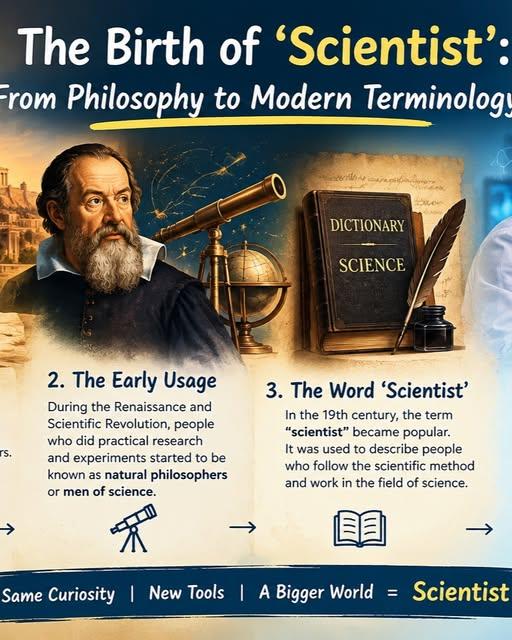
    The Birth of “Scientist”: From Philosophy to Modern Terminology

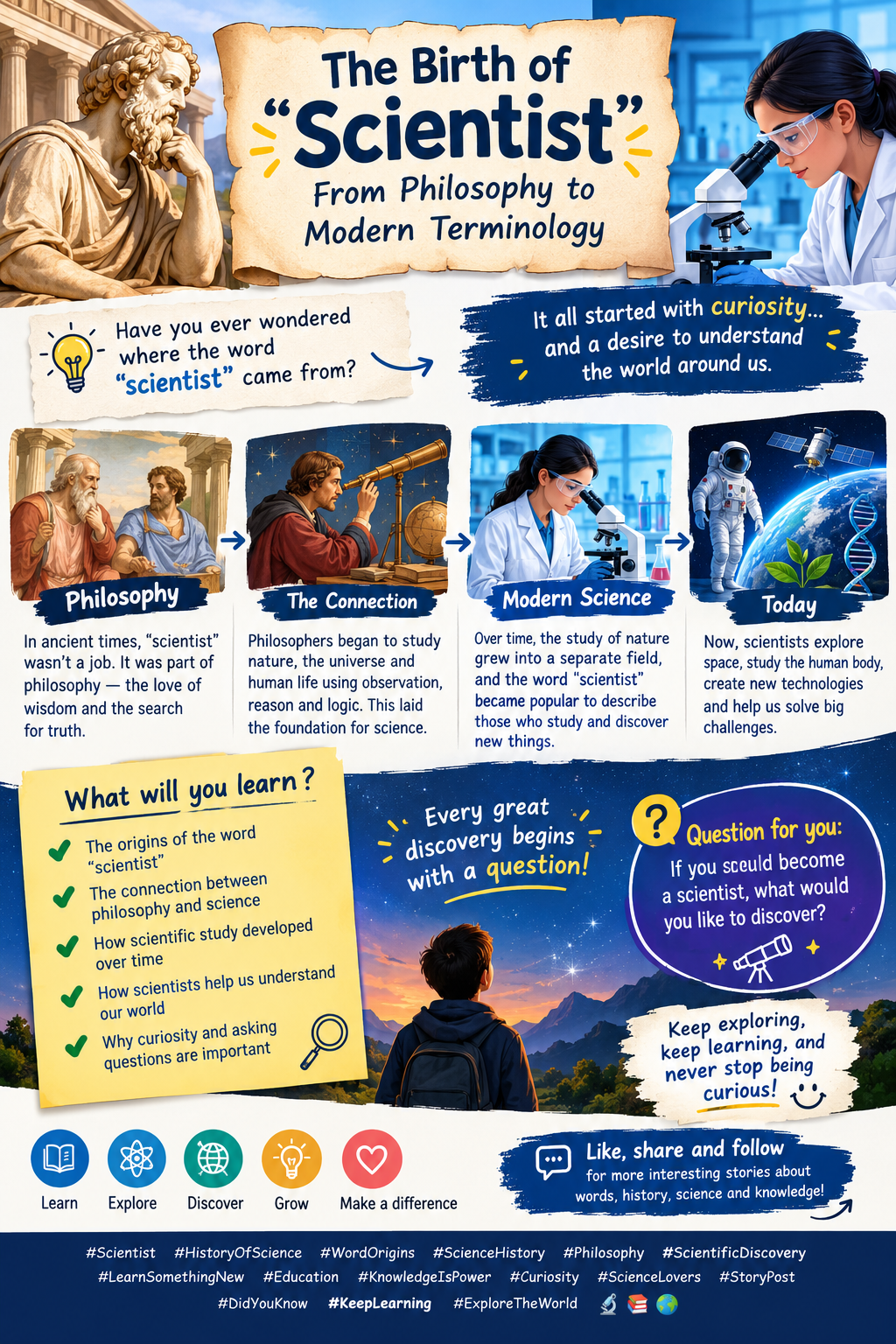
    Have you ever wondered where the word “Scientist” came from? This fascinating journey takes us from the ancient world of philosophy and natural inquiry to the modern age of laboratories, experiments, and scientific discovery.

    For centuries, thinkers explored the mysteries of nature through observation, reasoning, and philosophy. As knowledge and research evolved, a new term was needed to describe people who systematically studied the natural world—and the word “scientist” emerged in the 19th century.

    Today, scientists continue this timeless journey by asking questions, testing ideas, discovering new knowledge, and helping us understand our universe.

    From philosophers seeking wisdom to scientists seeking evidence, the quest for knowledge has never stopped!

    #Scientist #HistoryOfScience #ScienceHistory #Philosophy #ScientificDiscovery #Knowledge #ScienceAndTechnology #NaturalScience #Learning #Education #Curiosity #Innovation #Research #ModernScience #ScienceJourney
    RSISB Roll No: 209 Story Post No. 27 🔬📚 The Birth of “Scientist”: From Philosophy to Modern Terminology 🌍✨ Have you ever wondered where the word “Scientist” came from? 🤔🔎 This fascinating journey takes us from the ancient world of philosophy and natural inquiry to the modern age of laboratories, experiments, and scientific discovery. 🏛️➡️🧪 For centuries, thinkers explored the mysteries of nature through observation, reasoning, and philosophy. As knowledge and research evolved, a new term was needed to describe people who systematically studied the natural world—and the word “scientist” emerged in the 19th century. 💡📖 Today, scientists continue this timeless journey by asking questions, testing ideas, discovering new knowledge, and helping us understand our universe. 🌌🧬🚀 ✨ From philosophers seeking wisdom to scientists seeking evidence, the quest for knowledge has never stopped! 🔬🌟 #Scientist #HistoryOfScience #ScienceHistory #Philosophy #ScientificDiscovery #Knowledge #ScienceAndTechnology #NaturalScience #Learning #Education #Curiosity #Innovation #Research #ModernScience #ScienceJourney 🔬📚🌍✨
    0 Commentarios 0 Acciones 1772 Views
  • #rsisb
    Roll No.190
    Image With Chatgpt
    Foundation Level

    “Oxygen was discovered in 1772 by Carl Wilhelm Scheele.”
    Idea 1: The Discovery Moment

    Show Carl Wilhelm Scheele in an old 18th-century laboratory surrounded by glass bottles, test tubes, candles, and handwritten notes. A glowing cloud of oxygen rises from a glass container, with “1772” shining in the background.

    Idea 2: The Invisible Gas

    Show a scientist holding an empty-looking glass jar. Around the jar, add glowing symbols of breathing, fire, plants, and life to show that oxygen is invisible but essential.

    Idea 3: History to Modern Science

    Create a timeline:

    1772 → Oxygen Discovery → Modern Science → Life on Earth

    Idea 4: Oxygen and Life

    Show a historical scientist on one side and a modern world on the other: forests , animals , humans , fire , and a space mission .

    Best AI Picture Prompt

    “A cinematic educational science poster showing Carl Wilhelm Scheele in an 18th-century laboratory in 1772, surrounded by vintage glass bottles, chemical equipment, candles, and handwritten scientific notes, a subtle glowing symbol representing oxygen emerging from a glass container, historical atmosphere, scientific discovery theme, dramatic warm lighting, realistic, highly detailed, inspirational, with the title ‘OXYGEN DISCOVERED IN 1772’ and ‘CARL WILHELM SCHEELE’.”

    Caption:
    A discovery that changed science forever!
    #Oxygen #ScienceHistory #CarlWilhelmScheele #Chemistry #ScientificDiscovery #ScienceFacts #LearnScience
    #rsisb Roll No.190 Image With Chatgpt Foundation Level 🧪💨 “Oxygen was discovered in 1772 by Carl Wilhelm Scheele.” 🖼️ Idea 1: The Discovery Moment 🔬✨ Show Carl Wilhelm Scheele in an old 18th-century laboratory surrounded by glass bottles, test tubes, candles, and handwritten notes. A glowing cloud of oxygen rises from a glass container, with “1772” shining in the background. 🖼️ Idea 2: The Invisible Gas 💨🔍 Show a scientist holding an empty-looking glass jar. Around the jar, add glowing symbols of breathing, fire, plants, and life to show that oxygen is invisible but essential. 🌱🔥🫁 🖼️ Idea 3: History to Modern Science ⏳➡️🔬 Create a timeline: 1772 🧪 → Oxygen Discovery 💨 → Modern Science 🚀 → Life on Earth 🌍 🖼️ Idea 4: Oxygen and Life 🌍🌿 Show a historical scientist on one side and a modern world on the other: forests 🌳, animals 🐘, humans 🫁, fire 🔥, and a space mission 🚀. 🎨 Best AI Picture Prompt “A cinematic educational science poster showing Carl Wilhelm Scheele in an 18th-century laboratory in 1772, surrounded by vintage glass bottles, chemical equipment, candles, and handwritten scientific notes, a subtle glowing symbol representing oxygen emerging from a glass container, historical atmosphere, scientific discovery theme, dramatic warm lighting, realistic, highly detailed, inspirational, with the title ‘OXYGEN DISCOVERED IN 1772’ and ‘CARL WILHELM SCHEELE’.” 🔬💨✨ Caption: 🧪✨ A discovery that changed science forever! 💨🌍 #Oxygen #ScienceHistory #CarlWilhelmScheele #Chemistry #ScientificDiscovery #ScienceFacts #LearnScience 🔬🌟
    0 Commentarios 0 Acciones 5848 Views