• RSIf8
    Roll Number: 49
    Story post no.32
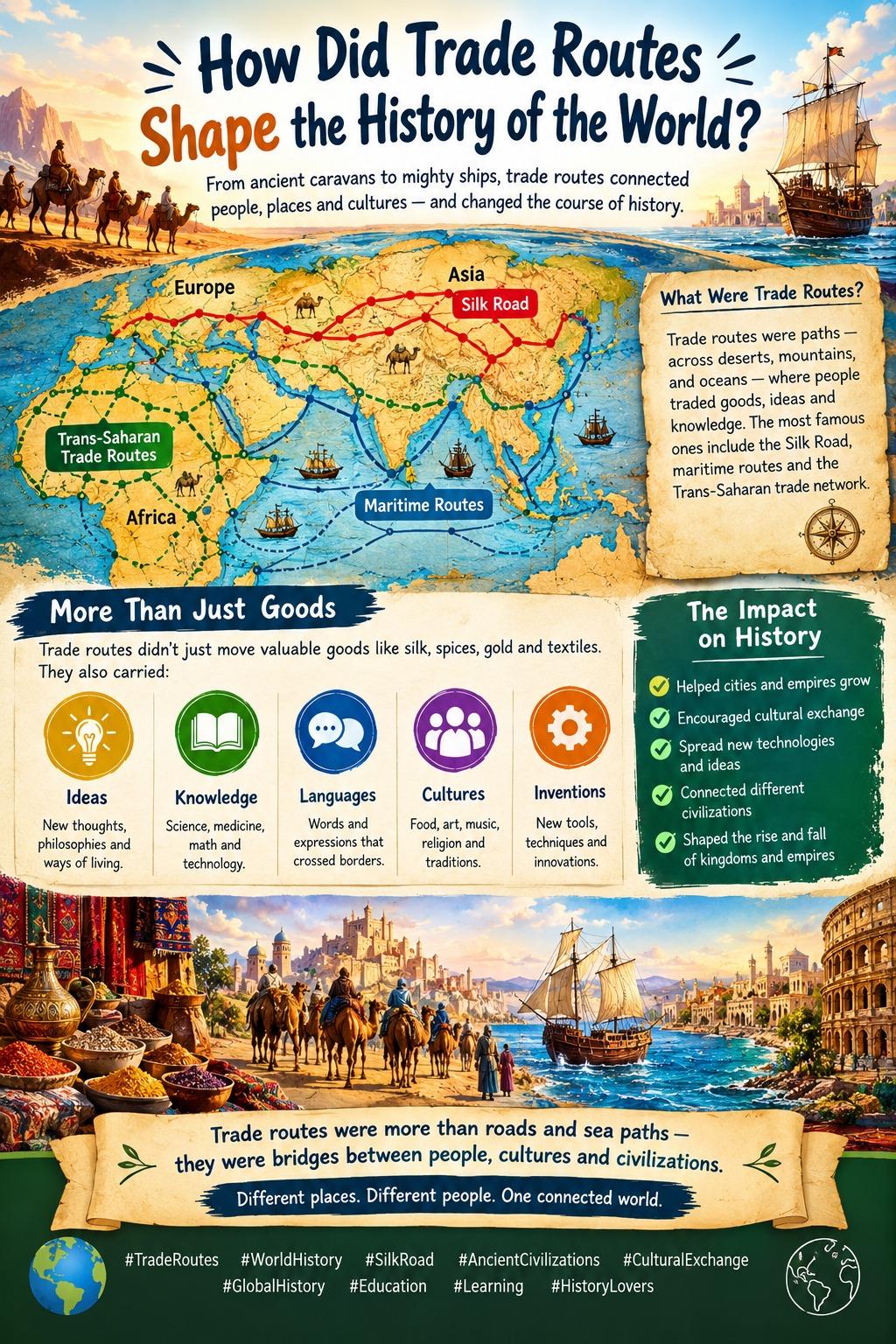
    Story post topic: **How Did Trade Routes Shape the History of the World?**

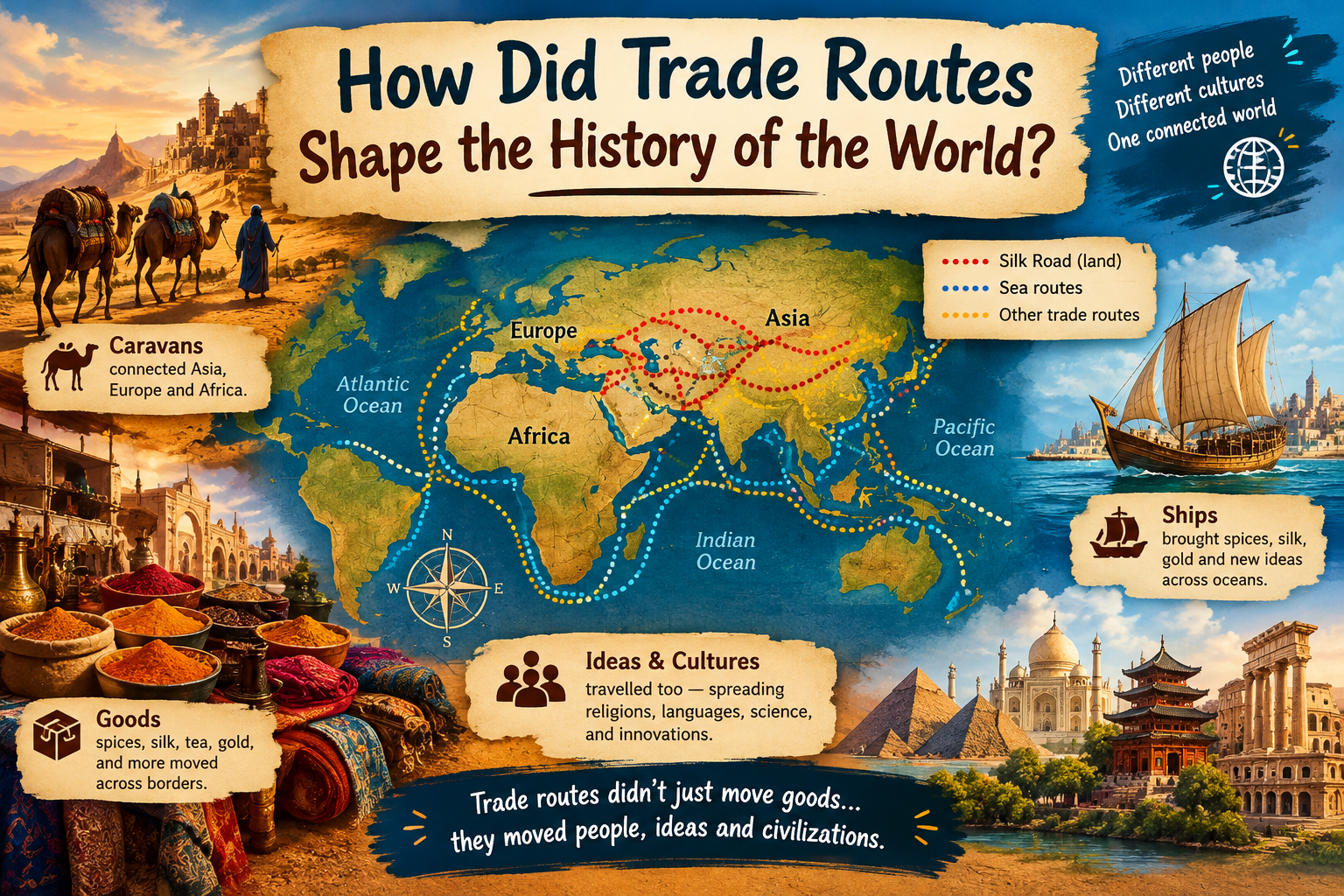
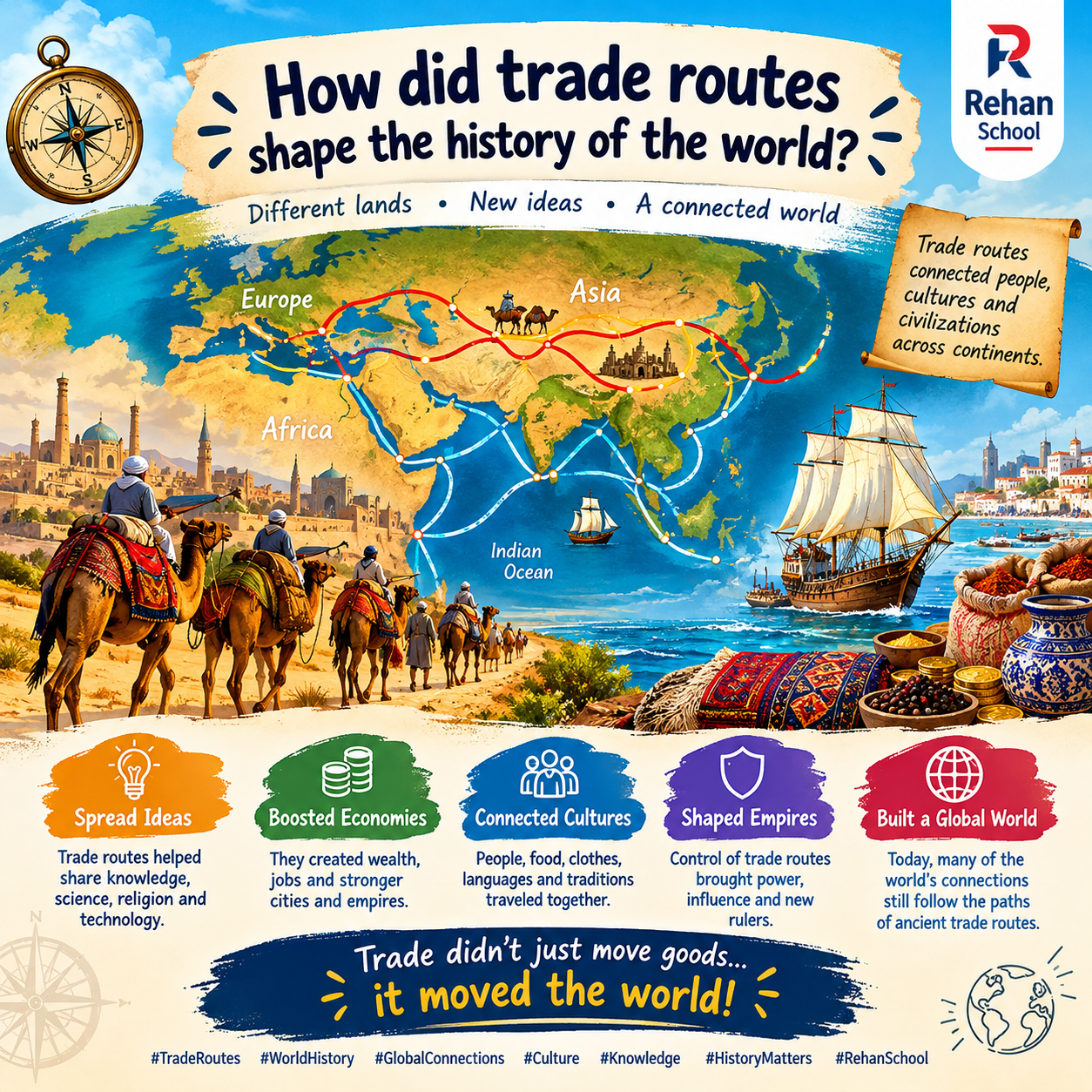
    Trade routes were more than just paths for moving goods—they connected people, cultures, and civilizations across the world. From the famous Silk Road to ancient sea routes, traders carried **silk, spices, gold, ideas, languages, inventions, and traditions** from one region to another.

    In this story, we explore how trade routes helped cities grow, encouraged cultural exchange, spread knowledge, and influenced the development of civilizations.

    **Travel through history and discover how the movement of goods and ideas helped shape our world!**

    #TradeRoutes #WorldHistory #SilkRoad #History #AncientCivilizations #CulturalExchange #HistoryStory #LearningIsFun #Geography #Education
    RSIf8 Roll Number: 49 Story post no.32 Story post topic:๐ŸŒ๐Ÿ›ค๏ธ **How Did Trade Routes Shape the History of the World?** ๐Ÿ“œโœจ Trade routes were more than just paths for moving goods—they connected people, cultures, and civilizations across the world. ๐Ÿช๐Ÿงญ From the famous Silk Road to ancient sea routes, traders carried **silk, spices, gold, ideas, languages, inventions, and traditions** from one region to another. ๐ŸŒ๐Ÿ“ฆ In this story, we explore how trade routes helped cities grow, encouraged cultural exchange, spread knowledge, and influenced the development of civilizations. ๐Ÿ›๏ธ๐Ÿ’ก โœจ **Travel through history and discover how the movement of goods and ideas helped shape our world!** #TradeRoutes #WorldHistory #SilkRoad #History #AncientCivilizations #CulturalExchange #HistoryStory #LearningIsFun #Geography #Education
    0 Comments 0 Shares 851 Views
  • RSIF8
    Roll NO:92
    Story POST NO:34
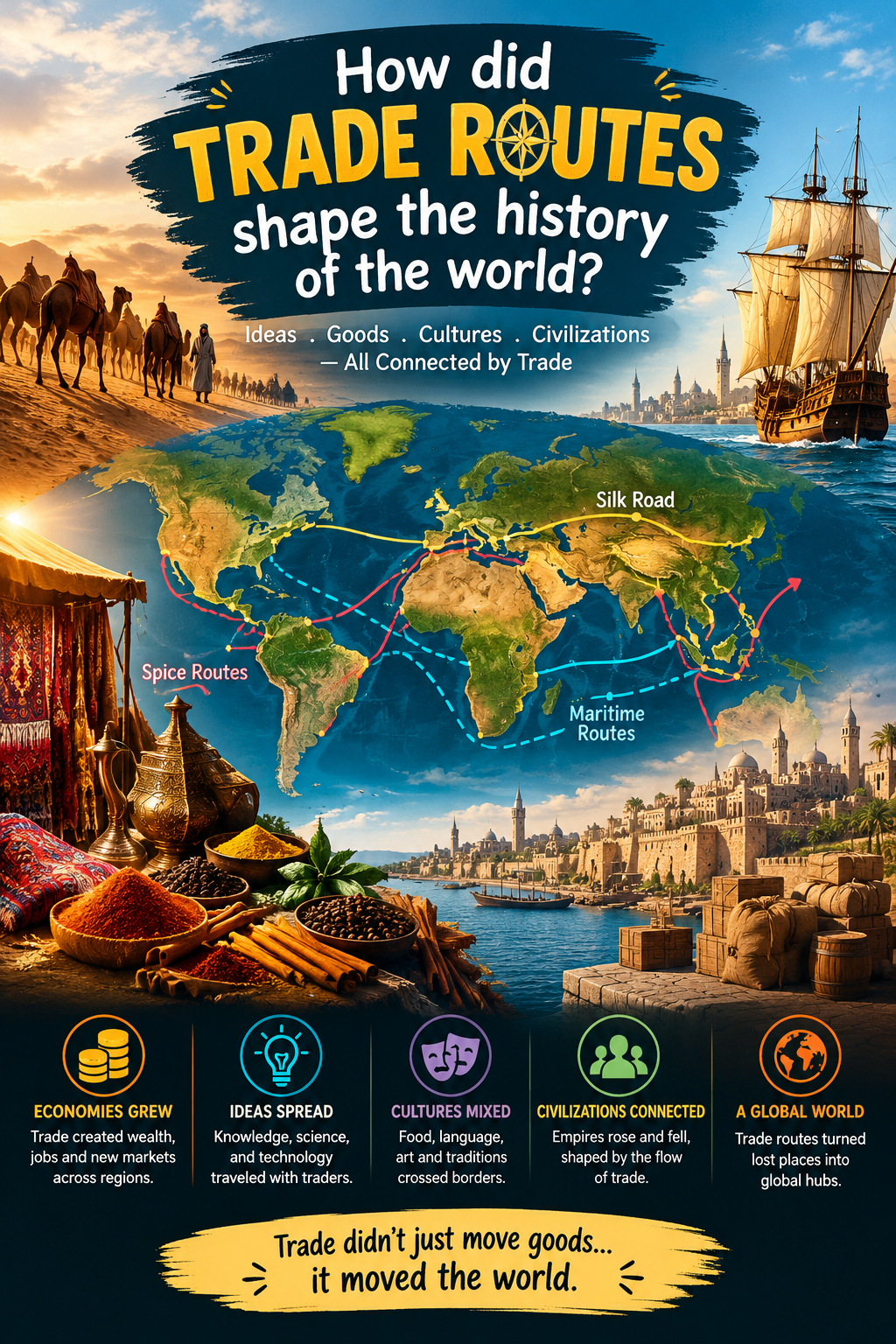
    Topic: **How Did Trade Routes Shape the History of the World?**

    Trade routes played an important role in connecting civilizations across the world. From the famous Silk Road to ancient sea routes, traders exchanged goods, ideas, cultures, technologies, and knowledge. These routes helped cities grow, strengthened economies, and brought people from different backgrounds closer together.

    Discover how trade routes shaped history and changed the world we live in today!

    **History connects us to the past and helps us understand the future.**

    #TradeRoutes #WorldHistory #SilkRoad #AncientCivilizations #HistoryFacts #Education #DidYouKnow #LearningJourney #HistoricalFacts #ExploreTheWorld
    RSIF8 Roll NO:92 Story POST NO:34 Topic:๐ŸŒ **How Did Trade Routes Shape the History of the World?** ๐Ÿšข๐Ÿช Trade routes played an important role in connecting civilizations across the world. From the famous Silk Road to ancient sea routes, traders exchanged goods, ideas, cultures, technologies, and knowledge. These routes helped cities grow, strengthened economies, and brought people from different backgrounds closer together. โœจ Discover how trade routes shaped history and changed the world we live in today! ๐Ÿ“š **History connects us to the past and helps us understand the future.** #TradeRoutes #WorldHistory #SilkRoad #AncientCivilizations #HistoryFacts #Education #DidYouKnow #LearningJourney #HistoricalFacts #ExploreTheWorld
    0 Comments 0 Shares 1014 Views
  • START YOUR CHINESE LANGUAGE JOURNEY!

    Want to learn one of the world’s most widely spoken languages?
    Learning Chinese (Mandarin / ไธญๆ–‡) can open doors to new educational, professional, cultural, and international opportunities.

    Whether your goal is to study in China, build a career, work with Chinese companies, travel, do business, or communicate with Chinese speakers, learning Mandarin is a valuable skill for the future.

    WHY LEARN CHINESE?

    Career Opportunities
    Chinese language skills can strengthen your CV and help you communicate in international business and professional environments.

    Study in China
    Prepare yourself for educational opportunities at Chinese universities and institutions.

    Business & Trade
    China plays an important role in global trade and business. Learning Chinese can help you communicate more effectively in professional settings.

    Travel with Confidence
    Learn useful Chinese phrases and everyday communication skills to make your trips to China easier and more enjoyable.

    Connect with Chinese Culture
    Explore Chinese traditions, history, food, festivals, customs, movies, music, and everyday life through the language.

    Develop New Skills
    Learning Mandarin challenges you to develop listening, speaking, reading, writing, memory, and communication skills.

    WHAT WILL YOU LEARN?

    Pinyin & Pronunciation – Learn how Chinese sounds are written and pronounced
    Chinese Tones – Understand and practice the four main tones
    Vocabulary – Build useful everyday Chinese vocabulary
    Grammar – Learn how to form practical Chinese sentences
    Speaking – Practice real-life conversations
    Listening – Improve your understanding of spoken Mandarin
    Reading – Learn Chinese characters and recognize common words
    Writing – Practice basic Chinese character writing
    Daily Communication – Greetings, introductions, shopping, directions, travel, and more
    Chinese Culture – Learn important cultural expressions, manners, and traditions

    WHO CAN LEARN CHINESE?

    Our Chinese language program can be suitable for:

    ‍ Students
    ‍ Professionals
    Business owners
    Travelers
    People planning to study in China
    Anyone interested in Chinese language and culture
    Complete beginners who have never studied Chinese before

    FROM BEGINNER TO CONFIDENT COMMUNICATOR

    You don't need any previous knowledge of Chinese to get started.

    Start with simple words and pronunciation, gradually build your vocabulary and grammar, and develop your speaking, listening, reading, and writing skills through regular practice.

    Learn Step by Step. Practice Every Day. Build Your Future.

    ไธญๆ–‡ๅญฆไน ๏ผŒไปŽไปŠๅคฉๅผ€ๅง‹๏ผ
    Start learning Chinese today!

    Interested in joining Chinese language classes?
    Contact us for information about courses, class timings, fees, enrollment, and available levels.

    Learn Chinese. Discover China. Expand Your Future.

    #LearnChinese #ChineseLanguage #Mandarin #LearnMandarin #ChineseClasses #StudyChinese #ChineseLanguageCourse #HSK #StudyInChina #China #ChineseCulture #LanguageLearning #MandarinChinese #ไธญๆ–‡ #ๆฑ‰่ฏญ #ๅญฆไธญๆ–‡
    ๐Ÿ‡จ๐Ÿ‡ณโœจ START YOUR CHINESE LANGUAGE JOURNEY! โœจ๐Ÿ‡จ๐Ÿ‡ณ Want to learn one of the world’s most widely spoken languages? ๐ŸŒ Learning Chinese (Mandarin / ไธญๆ–‡) can open doors to new educational, professional, cultural, and international opportunities. Whether your goal is to study in China, build a career, work with Chinese companies, travel, do business, or communicate with Chinese speakers, learning Mandarin is a valuable skill for the future. ๐Ÿ“š WHY LEARN CHINESE? ๐ŸŒŸ Career Opportunities Chinese language skills can strengthen your CV and help you communicate in international business and professional environments. ๐ŸŽ“ Study in China Prepare yourself for educational opportunities at Chinese universities and institutions. ๐Ÿ’ผ Business & Trade China plays an important role in global trade and business. Learning Chinese can help you communicate more effectively in professional settings. โœˆ๏ธ Travel with Confidence Learn useful Chinese phrases and everyday communication skills to make your trips to China easier and more enjoyable. ๐ŸŒ Connect with Chinese Culture Explore Chinese traditions, history, food, festivals, customs, movies, music, and everyday life through the language. ๐Ÿง  Develop New Skills Learning Mandarin challenges you to develop listening, speaking, reading, writing, memory, and communication skills. ๐Ÿ“ WHAT WILL YOU LEARN? ๐Ÿ”น Pinyin & Pronunciation – Learn how Chinese sounds are written and pronounced ๐Ÿ”น Chinese Tones – Understand and practice the four main tones ๐Ÿ”น Vocabulary – Build useful everyday Chinese vocabulary ๐Ÿ”น Grammar – Learn how to form practical Chinese sentences ๐Ÿ”น Speaking – Practice real-life conversations ๐Ÿ”น Listening – Improve your understanding of spoken Mandarin ๐Ÿ”น Reading – Learn Chinese characters and recognize common words ๐Ÿ”น Writing – Practice basic Chinese character writing ๐Ÿ”น Daily Communication – Greetings, introductions, shopping, directions, travel, and more ๐Ÿ”น Chinese Culture – Learn important cultural expressions, manners, and traditions ๐ŸŽฏ WHO CAN LEARN CHINESE? Our Chinese language program can be suitable for: ๐Ÿ‘จ‍๐ŸŽ“ Students ๐Ÿ‘ฉ‍๐Ÿ’ผ Professionals ๐Ÿ’ผ Business owners โœˆ๏ธ Travelers ๐ŸŽ“ People planning to study in China ๐ŸŒ Anyone interested in Chinese language and culture ๐Ÿ“š Complete beginners who have never studied Chinese before ๐Ÿ“ˆ FROM BEGINNER TO CONFIDENT COMMUNICATOR You don't need any previous knowledge of Chinese to get started. Start with simple words and pronunciation, gradually build your vocabulary and grammar, and develop your speaking, listening, reading, and writing skills through regular practice. ๐ŸŒฑ Learn Step by Step. Practice Every Day. Build Your Future. ๐Ÿ‡จ๐Ÿ‡ณ ไธญๆ–‡ๅญฆไน ๏ผŒไปŽไปŠๅคฉๅผ€ๅง‹๏ผ Start learning Chinese today! ๐Ÿ“ฉ Interested in joining Chinese language classes? Contact us for information about courses, class timings, fees, enrollment, and available levels. โœจ Learn Chinese. Discover China. Expand Your Future. โœจ #LearnChinese #ChineseLanguage #Mandarin #LearnMandarin #ChineseClasses #StudyChinese #ChineseLanguageCourse #HSK #StudyInChina #China #ChineseCulture #LanguageLearning #MandarinChinese #ไธญๆ–‡ #ๆฑ‰่ฏญ #ๅญฆไธญๆ–‡
    0 Comments 0 Shares 3255 Views 7
  • #rsisb Roll No.240 Call Annie No.34 Level one Welcome to our live discussion about Global Economics! ๐ŸŽฅ๐ŸŒŽ In this session, we will explore how the world's economies work, how countries trade with one another, and how economic decisions affect our daily lives. From international trade and inflation to employment, poverty, technology, and business development, we will discuss important topics that shape the future of our world. ๐Ÿ“ˆ๐ŸŒ Global economics helps us understand how countries depend on one another for goods, services, resources, technology, and investment. During this discussion, we will talk about why some countries have stronger economies, how developing nations can create more opportunities, and how international cooperation can help improve people's living standards. ๐Ÿค๐Ÿ’ฐ We will also explore the role of education, entrepreneurship, digital technology, and small businesses in economic growth. In addition, we will discuss the challenges of rising prices, unemployment, poverty, and economic inequality, along with practical ideas for creating a better future for individuals, families, and communities. ๐Ÿ“š๐Ÿ’ก This live session is an opportunity to learn new things, exchange ideas, improve our communication skills, and understand the connection between global economic events and our everyday lives. Every country has its own challenges and opportunities, and learning about global economics helps us become more informed citizens of the world. ๐ŸŒ๐Ÿง  Let's learn, discuss, and grow together! ๐Ÿ™Œ Share your thoughts in the comments, participate in the conversation, and tell us what you think is the biggest challenge facing the global economy today. Thank you for watching and supporting our educational journey! โค๏ธ Don't forget to like, comment, and share this discussion with others who are interested in economics, business, education, and global development. #GlobalEconomics #WorldEconomy #InternationalTrade #EconomicGrowth #GlobalBusiness #FinancialEducation #Inflation #Entrepreneurship #EconomicDevelopment #Globalization #BusinessEducation #SocialMediaLive #LiveDiscussion #KnowledgeSharing #LearningTogether ๐ŸŒ๐Ÿ“Š๐Ÿ’ผ Rehan School Islamabad Campus Asma Shaheen EducationWali Irum Asim Leadershipwali Saima Empowerment Wali https://www.facebook.com/share/v/1EdCxvEA78/
    WWW.FACEBOOK.COM
    Made with Restream Studio. Livestream on 30+ platforms at once with Restream #rsisb Roll No.240 Call Annie No.34 Level one Welcome to our live discussion about Global Economics! ๐ŸŽฅ๐ŸŒŽ In this session, we will explore how the world's economies work, how countries trade with one another, and how economic decisions affect our daily lives. From international trade and inflation to employment, poverty, technology, and business development, we will discuss important topics that shape the future of our world. ๐Ÿ“ˆ๐ŸŒ Global economics helps us understand how countries depend on one another for goods, services, resources, technology, and investment. During this discussion, we will talk about why some countries have stronger economies, how developing nations can create more opportunities, and how international cooperation can help improve people's living standards. ๐Ÿค๐Ÿ’ฐ We will also explore the role of education, entrepreneurship, digital technology, and small businesses in economic growth. In addition, we will discuss the challenges of rising prices, unemployment, poverty, and economic inequality, along with practical ideas for creating a better future for individuals, families, and communities. ๐Ÿ“š๐Ÿ’ก This live session is an opportunity to learn new things, exchange ideas, improve our communication skills, and understand the connection between global economic events and our everyday lives. Every country has its own challenges and opportunities, and learning about global economics helps us become more informed citizens of the world. ๐ŸŒ๐Ÿง  Let's learn, discuss, and grow together! ๐Ÿ™Œ Share your thoughts in the comments, participate in the conversation, and tell us what you think is the biggest challenge facing the global economy today. Thank you for watching and supporting our educational journey! โค๏ธ Don't forget to like, comment, and share this discussion with others who are interested in economics, business, education, and global development. #GlobalEconomics #WorldEconomy #InternationalTrade #EconomicGrowth #GlobalBusiness #FinancialEducation #Inflation #Entrepreneurship #EconomicDevelopment #Globalization #BusinessEducation #SocialMediaLive #LiveDiscussion #KnowledgeSharing #LearningTogether ๐ŸŒ๐Ÿ“Š๐Ÿ’ผ Rehan School Islamabad Campus Asma Shaheen EducationWali Irum Asim Leadershipwali Saima Empowerment Wali | Ahmad Ali Constriction Wala
    Made with Restream Studio. Livestream on 30+ platforms at once with Restream #rsisb Roll No.240 Call Annie No.34 Level one Welcome to our live discussion about Global Economics! ๐ŸŽฅ๐ŸŒŽ In this session,...
    0 Comments 0 Shares 1714 Views
  • #rsisb
    Roll no. 247
    Story post . 18
    Foundation level

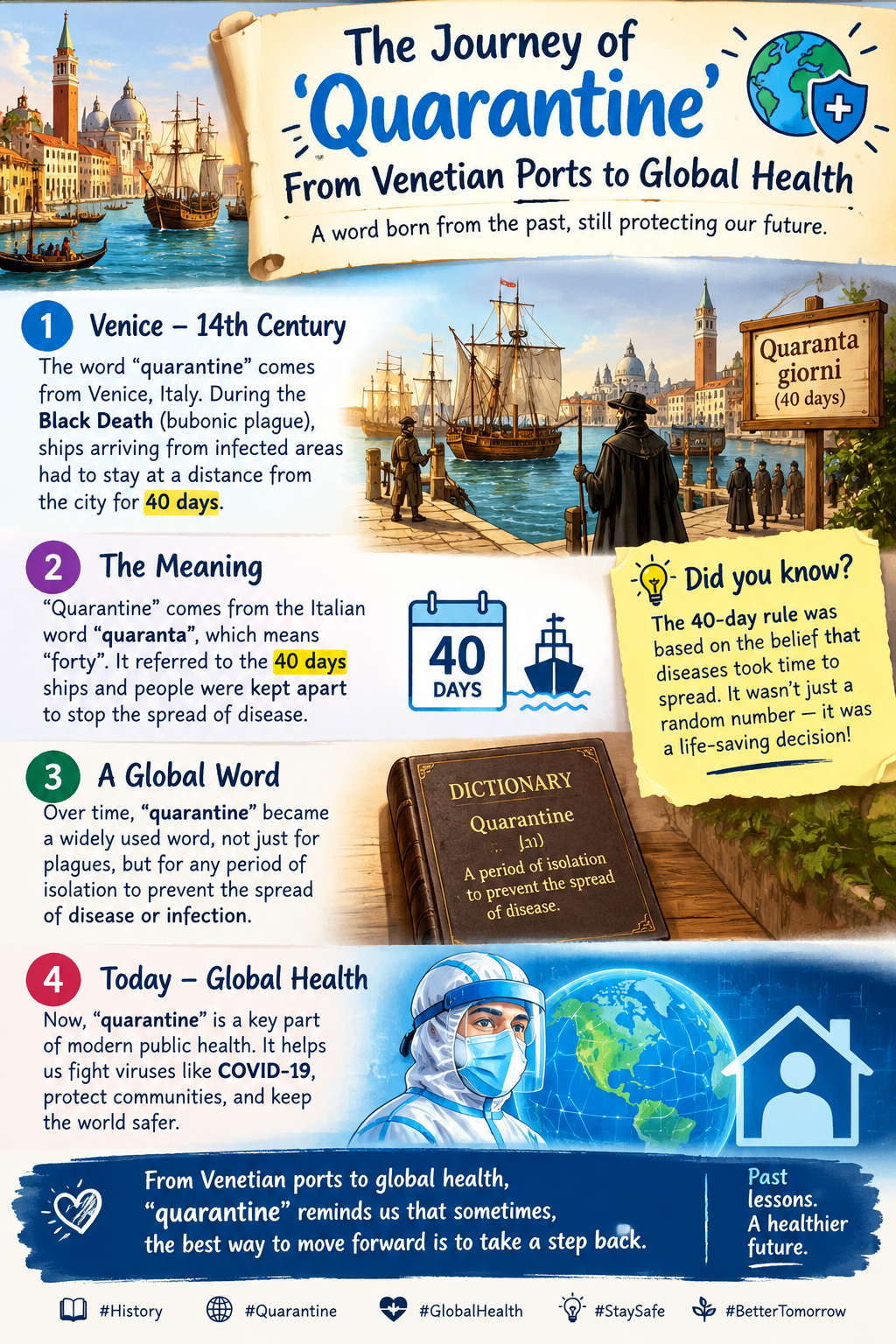
    **The Journey of “Quarantine”: From Venetian Ports to Global Health **

    **Have you ever wondered where the word “quarantine” came from?** Today, we use the word quarantine when people stay apart from others for a period of time to help prevent the spread of infectious diseases. But did you know that this word has a fascinating history that goes back hundreds of years?

    **The Story Begins in Venice!**

    The journey of the word *quarantine* takes us back to the busy port cities of Venice, Italy, during the 14th century. Venice was an important center of international trade, where ships arrived from different parts of the world carrying goods, travelers, and sailors. However, ships could also bring infectious diseases into crowded cities.

    To reduce the risk of disease spreading, authorities required certain arriving travelers and sailors to wait for a period before entering the city. The Italian word *quaranta* means **forty**, and the term *quarantina* referred to a period of forty days. This practice helped give us the English word **“quarantine.”**

    **How Did Quarantine Change the World?**

    Over time, quarantine became an important public health measure. During outbreaks of infectious diseases, authorities used isolation and quarantine practices to help protect communities. As medical science developed, people gained a better understanding of how diseases spread and how to reduce transmission.

    ‍ Today, quarantine and isolation have different meanings:
    **Quarantine:** Separating or restricting the movement of people who may have been exposed to an infectious disease.
    **Isolation:** Keeping people who are infected or ill apart from others to help prevent the spread of disease.

    These measures may be used alongside vaccination, testing, good hygiene, and other public health strategies, depending on the disease and the situation.

    **What Can We Learn from This Story?**

    The history of quarantine teaches us that language, science, and human society are connected. A word that began with a forty-day waiting period in historical maritime trade became part of the vocabulary of global health!

    It also reminds us that communities have worked for centuries to protect public health. Learning about the past helps us understand the importance of scientific knowledge, responsible decisions, cooperation, and caring for one another.

    **A Small Word, A Big History!**

    From the historic Venetian ports to modern hospitals and public health systems, the journey of “quarantine” shows how a simple word can carry centuries of history, challenges, and discoveries.

    Keep asking questions, exploring history, and discovering the amazing stories hidden behind everyday words!

    **Question for You:** Did you know that the word “quarantine” is connected to the Italian word for forty? Share your thoughts in the comments!

    Like, share, and save this post if you enjoy learning interesting facts about history, language, and science!

    #๏ธโƒฃ **Hashtags:**

    #TheJourneyOfQuarantine #HistoryOfWords #Quarantine #VeniceHistory #ItalianHistory #WordOrigins #Etymology #GlobalHealth #PublicHealth #MedicalHistory #HistoryAndScience #ScienceEducation #HealthAwareness #InfectiousDiseases #LearningIsFun #EducationalPost #KnowledgeIsPower #DiscoverHistory #DidYouKnow #InterestingFacts #WorldHistory #LanguageLearning #StoryPost #KeepLearning #ExploreAndDiscover
    #rsisb Roll no. 247 Story post . 18 Foundation level ๐ŸŒ๐Ÿ“œ **The Journey of “Quarantine”: From Venetian Ports to Global Health ๐Ÿšข๐Ÿฆ ** โœจ๐Ÿ“š **Have you ever wondered where the word “quarantine” came from?** ๐Ÿค”๐ŸŒŽ Today, we use the word quarantine when people stay apart from others for a period of time to help prevent the spread of infectious diseases. But did you know that this word has a fascinating history that goes back hundreds of years? ๐Ÿ›๏ธโณ ๐Ÿšข๐Ÿ‡ฎ๐Ÿ‡น **The Story Begins in Venice!** ๐Ÿฐโœจ The journey of the word *quarantine* takes us back to the busy port cities of Venice, Italy, during the 14th century. Venice was an important center of international trade, where ships arrived from different parts of the world carrying goods, travelers, and sailors. ๐ŸŒโš“ However, ships could also bring infectious diseases into crowded cities. ๐Ÿ›ก๏ธโฐ To reduce the risk of disease spreading, authorities required certain arriving travelers and sailors to wait for a period before entering the city. The Italian word *quaranta* means **forty**, and the term *quarantina* referred to a period of forty days. This practice helped give us the English word **“quarantine.”** ๐Ÿ“–๐Ÿ” ๐Ÿฆ ๐Ÿ’ก **How Did Quarantine Change the World?** ๐ŸŒ๐Ÿฅ Over time, quarantine became an important public health measure. During outbreaks of infectious diseases, authorities used isolation and quarantine practices to help protect communities. As medical science developed, people gained a better understanding of how diseases spread and how to reduce transmission. ๐Ÿ”ฌ๐Ÿ‘ฉ‍โš•๏ธ Today, quarantine and isolation have different meanings: โœ… **Quarantine:** Separating or restricting the movement of people who may have been exposed to an infectious disease. โœ… **Isolation:** Keeping people who are infected or ill apart from others to help prevent the spread of disease. ๐ŸŒ๐Ÿฉบ These measures may be used alongside vaccination, testing, good hygiene, and other public health strategies, depending on the disease and the situation. ๐Ÿ’ญโœจ **What Can We Learn from This Story?** ๐Ÿ“š๐ŸŒŸ The history of quarantine teaches us that language, science, and human society are connected. A word that began with a forty-day waiting period in historical maritime trade became part of the vocabulary of global health! ๐ŸŒ๐Ÿšข ๐Ÿง ๐Ÿ’ก It also reminds us that communities have worked for centuries to protect public health. Learning about the past helps us understand the importance of scientific knowledge, responsible decisions, cooperation, and caring for one another. โค๏ธ๐Ÿค ๐ŸŽฏ๐Ÿ“– **A Small Word, A Big History!** From the historic Venetian ports to modern hospitals and public health systems, the journey of “quarantine” shows how a simple word can carry centuries of history, challenges, and discoveries. ๐Ÿšขโžก๏ธ๐Ÿฅ ๐ŸŒŸ Keep asking questions, exploring history, and discovering the amazing stories hidden behind everyday words! ๐Ÿ”Ž๐Ÿ“šโœจ ๐Ÿ’ฌ **Question for You:** Did you know that the word “quarantine” is connected to the Italian word for forty? ๐Ÿค”๐Ÿ‘‡ Share your thoughts in the comments! โค๏ธ Like, ๐Ÿ”„ share, and ๐Ÿ“Œ save this post if you enjoy learning interesting facts about history, language, and science! #๏ธโƒฃ **Hashtags:** #TheJourneyOfQuarantine #HistoryOfWords #Quarantine #VeniceHistory #ItalianHistory #WordOrigins #Etymology #GlobalHealth #PublicHealth #MedicalHistory #HistoryAndScience #ScienceEducation #HealthAwareness #InfectiousDiseases #LearningIsFun #EducationalPost #KnowledgeIsPower #DiscoverHistory #DidYouKnow #InterestingFacts #WorldHistory #LanguageLearning #StoryPost #KeepLearning #ExploreAndDiscover ๐ŸŒ๐Ÿ“š๐Ÿ”ฌโœจ
    0 Comments 0 Shares 3013 Views
  • RSIF8
    Roll no:14
    coding task no:11
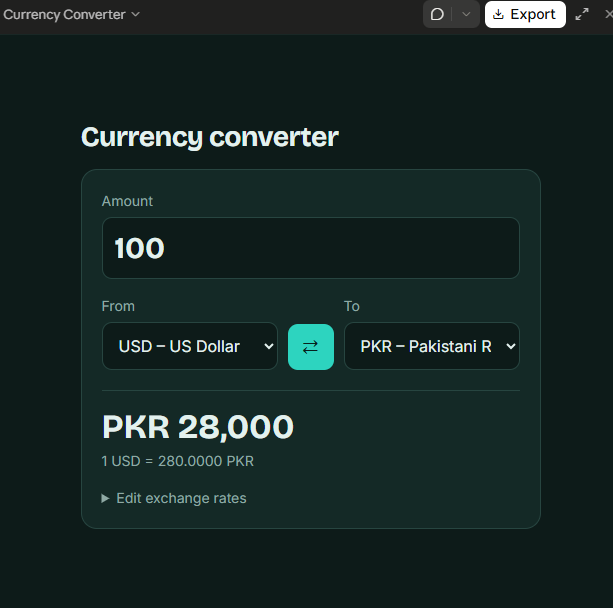
    coding topic:Currency Converter


    **Currency Converter – Task Completed Successfully!**

    I have successfully completed the **Currency Converter** project! This project is designed to make currency conversion simple, fast, and convenient. It allows users to convert one currency into another and understand the equivalent value of money across different countries.

    The Currency Converter demonstrates the practical use of programming, mathematical calculations, and user-friendly interface design. It helps users explore international currencies and understand the importance of exchange rates in global trade, travel, and everyday financial activities.

    Through this task, I improved my programming skills, logical thinking, problem-solving abilities, and understanding of how digital conversion tools work.

    **Task Status:** Completed Successfully!

    #CurrencyConverter #TaskCompleted #Programming #CodingProject #WebDevelopment #LearningByDoing #Technology #DigitalTools #ProblemSolving #StudentProject #CreativeLearning #ProjectCompletion
    RSIF8 Roll no:14 coding task no:11 coding topic:Currency Converter ๐Ÿ’ฑ **Currency Converter – Task Completed Successfully!** ๐ŸŒโœจ ๐ŸŽ‰ I have successfully completed the **Currency Converter** project! This project is designed to make currency conversion simple, fast, and convenient. ๐Ÿ’ป๐Ÿš€ It allows users to convert one currency into another and understand the equivalent value of money across different countries. ๐ŸŒŽ The Currency Converter demonstrates the practical use of programming, mathematical calculations, and user-friendly interface design. It helps users explore international currencies and understand the importance of exchange rates in global trade, travel, and everyday financial activities. ๐Ÿ“ˆ๐Ÿ’ฐ ๐ŸŽฏ Through this task, I improved my programming skills, logical thinking, problem-solving abilities, and understanding of how digital conversion tools work. โœ… **Task Status:** Completed Successfully! ๐Ÿ† #CurrencyConverter #TaskCompleted #Programming #CodingProject #WebDevelopment #LearningByDoing #Technology #DigitalTools #ProblemSolving #StudentProject #CreativeLearning #ProjectCompletion ๐Ÿ’ป๐ŸŒŸ
    0 Comments 0 Shares 1391 Views
  • Mohsin RS F8
    Story post NO:20
    roll NO:13
    Class: Foundation Level
    Made by Me

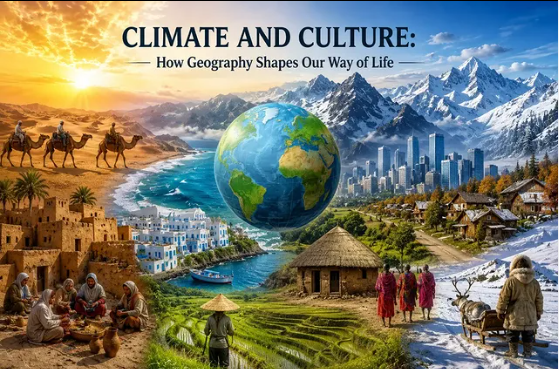
    Climate and Culture: How Geography Shapes Our Way of Life
    Climate and geography have a powerful influence on the way people live, work, eat, dress, build homes, and develop traditions. From hot deserts to cold mountains, every environment creates different challenges and opportunities that shape human lifestyles and cultures.
    In areas with hot climates, people often choose lightweight clothing, shaded buildings, and lifestyles adapted to high temperatures. In colder regions, homes are designed to retain warmth, and people commonly wear layered clothing to protect themselves from the cold. Similarly, communities living near rivers, coastlines, and fertile plains often develop strong connections with farming, fishing, trade, and water resources.
    Geography also influences food and traditions. Local crops, animals, and available resources become important parts of traditional dishes and cultural practices. Mountains, deserts, forests, and oceans can create natural boundaries that influence languages, customs, occupations, and patterns of settlement.
    However, geography does not completely determine culture. People adapt, innovate, migrate, and exchange ideas with other communities. Modern technology has also reduced many geographical limitations, allowing cultures to interact and evolve in new ways.
    Understanding the relationship between climate, geography, and culture helps us appreciate the incredible diversity of human life. It reminds us that the places we live in are not just backgrounds to our lives—they can influence our choices, traditions, communities, and connection with the natural world.
    Mohsin RS F8 ๐ŸŽ“โœจ Story post NO:20 roll NO:13 Class: Foundation Level ๐Ÿ“š Made by Me ๐Ÿ’ป๐Ÿš€ Climate and Culture: How Geography Shapes Our Way of Life ๐ŸŒ๐ŸŒฆ๏ธ Climate and geography have a powerful influence on the way people live, work, eat, dress, build homes, and develop traditions. From hot deserts to cold mountains, every environment creates different challenges and opportunities that shape human lifestyles and cultures. In areas with hot climates, people often choose lightweight clothing, shaded buildings, and lifestyles adapted to high temperatures. In colder regions, homes are designed to retain warmth, and people commonly wear layered clothing to protect themselves from the cold. Similarly, communities living near rivers, coastlines, and fertile plains often develop strong connections with farming, fishing, trade, and water resources. Geography also influences food and traditions. Local crops, animals, and available resources become important parts of traditional dishes and cultural practices. Mountains, deserts, forests, and oceans can create natural boundaries that influence languages, customs, occupations, and patterns of settlement. However, geography does not completely determine culture. People adapt, innovate, migrate, and exchange ideas with other communities. Modern technology has also reduced many geographical limitations, allowing cultures to interact and evolve in new ways. Understanding the relationship between climate, geography, and culture helps us appreciate the incredible diversity of human life. It reminds us that the places we live in are not just backgrounds to our lives—they can influence our choices, traditions, communities, and connection with the natural world. ๐ŸŒฑ๐Ÿ”๏ธ๐Ÿœ๏ธ๐ŸŒŠ
    0 Comments 0 Shares 1309 Views
  • ACCL Day 167
    Climate and Culture: How Geography Shapes Our Way of Life

    In a small village nestled between snowy mountains and a crystal-blue river lived three friends: Ayan, Zara, and Mikael. Even though they were from the same land, their lifestyles were completely different—because of where they lived.

    Ayan lived high in the mountains, where the winters were long and harsh. Snow covered the roofs, and the winds howled like wolves. People there wore thick woolen clothes, built strong wooden houses, and ate warm soups and dried meats to survive the cold. Life was tough, so the community became very close-knit. Everyone helped each other gather wood, store food, and fix homes before the heavy snowfall.

    Zara lived in the sunny plains below. Her village had wide fields, golden crops, and warm breezes. People wore light, colorful clothes and celebrated many outdoor festivals. Their food was fresh—vegetables, fruits, and grains—because the fertile land made farming easy. The climate allowed them to grow and trade crops, making their culture rich in traditions and celebrations.

    Mikael lived near the coast, where salty waves crashed against the shore. His life revolved around the sea. The people there built boats, learned to fish, and became excellent sailors. Their houses were designed to withstand storms, and their cuisine was full of seafood. They developed music and dances inspired by the rhythm of the waves.

    One day, the three friends met at a cultural festival. They shared their foods, clothes, music, and stories. As they talked, they realized something beautiful:

    The mountains taught strength and unity.
    The plains encouraged celebration and abundance.
    The sea inspired adventure and creativity.

    Different climates had shaped different cultures, traditions, and ways of life—but together, they created a richer, more colorful world.

    The friends understood that geography doesn’t just shape the land—it shapes the people, their habits, their beliefs, and even their happiness.

    And from that day on, they promised to learn from each other's cultures and respect every lifestyle shaped by nature.

    Our environment shapes us—but together, we shape the world.
    ACCL Day 167 ๐ŸŒ Climate and Culture: How Geography Shapes Our Way of Life ๐ŸŒฆ๏ธ In a small village nestled between snowy mountains and a crystal-blue river lived three friends: Ayan, Zara, and Mikael. Even though they were from the same land, their lifestyles were completely different—because of where they lived. Ayan lived high in the mountains, where the winters were long and harsh. Snow covered the roofs, and the winds howled like wolves. People there wore thick woolen clothes, built strong wooden houses, and ate warm soups and dried meats to survive the cold. Life was tough, so the community became very close-knit. Everyone helped each other gather wood, store food, and fix homes before the heavy snowfall. Zara lived in the sunny plains below. Her village had wide fields, golden crops, and warm breezes. People wore light, colorful clothes and celebrated many outdoor festivals. Their food was fresh—vegetables, fruits, and grains—because the fertile land made farming easy. The climate allowed them to grow and trade crops, making their culture rich in traditions and celebrations. Mikael lived near the coast, where salty waves crashed against the shore. His life revolved around the sea. The people there built boats, learned to fish, and became excellent sailors. Their houses were designed to withstand storms, and their cuisine was full of seafood. They developed music and dances inspired by the rhythm of the waves. One day, the three friends met at a cultural festival. They shared their foods, clothes, music, and stories. As they talked, they realized something beautiful: The mountains taught strength and unity. The plains encouraged celebration and abundance. The sea inspired adventure and creativity. Different climates had shaped different cultures, traditions, and ways of life—but together, they created a richer, more colorful world. The friends understood that geography doesn’t just shape the land—it shapes the people, their habits, their beliefs, and even their happiness. And from that day on, they promised to learn from each other's cultures and respect every lifestyle shaped by nature. ๐ŸŒโœจ Our environment shapes us—but together, we shape the world.
    0 Comments 0 Shares 1427 Views
  • RSIF8
    ROLL NO 77
    STORY POST NO 38
    STORY TOPIC "How did trade routes shape the history of the world

    **How Did Trade Routes Shape the History of the World?**

    Have you ever wondered how different civilizations connected with one another? Ancient trade routes, including the famous Silk Road, connected Asia, Europe, and Africa, allowing merchants to exchange valuable goods such as silk, spices, gold, and tea.

    But trade routes carried more than just goods! They also spread knowledge, languages, religions, inventions, and cultural traditions, helping civilizations grow and shaping the world we live in today.

    **Trade didn't just connect places; it connected people, ideas, and cultures!**

    Explore history, discover new connections, and learn how our world became interconnected!

    \#TradeRoutes #SilkRoad #WorldHistory #AncientCivilizations #HistoryFacts #GlobalConnections #CulturalExchange #EducationalContent #LearnHistory #Geography #KnowledgeIsPower #rehancodingwithai

    Add a stronger call to actionMake the opening more attention-grabbing
    RSIF8 ROLL NO 77 STORY POST NO 38 STORY TOPIC "How did trade routes shape the history of the world ๐ŸŒ๐Ÿ—บ๏ธ **How Did Trade Routes Shape the History of the World?** ๐Ÿšขโœจ Have you ever wondered how different civilizations connected with one another? ๐Ÿค”๐ŸŒ Ancient trade routes, including the famous Silk Road, connected Asia, Europe, and Africa, allowing merchants to exchange valuable goods such as silk, spices, gold, and tea. ๐Ÿช๐Ÿงต๐Ÿ’ฐ But trade routes carried more than just goods! ๐Ÿ“š๐Ÿ’ก They also spread knowledge, languages, religions, inventions, and cultural traditions, helping civilizations grow and shaping the world we live in today. ๐ŸŒ๐Ÿค โœจ **Trade didn't just connect places; it connected people, ideas, and cultures!** โค๏ธ๐ŸŒ ๐Ÿ“– Explore history, discover new connections, and learn how our world became interconnected! \#TradeRoutes #SilkRoad #WorldHistory #AncientCivilizations #HistoryFacts #GlobalConnections #CulturalExchange #EducationalContent #LearnHistory #Geography #KnowledgeIsPower #rehancodingwithai ๐ŸŒ๐Ÿšข๐Ÿ“šโœจ Add a stronger call to actionMake the opening more attention-grabbing
    0 Comments 0 Shares 2758 Views
  • #rsisb
    Roll no.247
    story post . 11
    Foundation level

    **How Did Trade Routes Shape the History of the World? **

    **Discover the Incredible Story of Trade Routes!**

    Have you ever wondered how people from different parts of the world shared their goods, ideas, cultures, and knowledge hundreds or even thousands of years ago? Long before airplanes, cars, and modern technology, trade routes connected distant civilizations and helped shape the world we live in today!

    Trade routes were pathways that allowed merchants, travelers, and explorers to transport valuable goods from one region to another. These routes crossed deserts, mountains, rivers, and oceans, connecting Asia, Africa, Europe, and other parts of the world.

    **1. The Famous Silk Road **

    The Silk Road was one of the most famous trading networks in history. It connected China with Central Asia, the Middle East, and Europe. Merchants transported silk, spices, precious stones, ceramics, and other valuable products. But the Silk Road was about much more than goods! It also helped spread religions, scientific knowledge, artistic traditions, and cultural ideas between civilizations.

    **2. Maritime Trade Routes **

    Sea routes allowed traders to transport goods across oceans and along coastlines. Ships carried spices, textiles, tea, porcelain, and many other products between distant ports. The Indian Ocean became an important center of international trade, connecting merchants from East Africa, Arabia, India, Southeast Asia, and China.

    **3. The Spice Trade ๐Ÿซš**

    Spices such as pepper, cinnamon, cloves, and nutmeg were highly valued in many parts of the world. Their demand encouraged merchants to travel long distances and helped develop important trading cities and ports. The search for new sources of spices also encouraged European maritime exploration, changing global connections and history.

    **4. The Rise of Cities and Empires **

    Trade routes helped cities grow into busy centers of commerce, learning, and culture. Merchants, craftspeople, and travelers brought wealth and new opportunities to trading centers. Governments and empires also gained influence by controlling important roads, ports, and markets.

    **5. The Exchange of Ideas and Knowledge **

    One of the greatest contributions of trade routes was the exchange of knowledge. Mathematics, astronomy, medicine, inventions, languages, and artistic styles traveled with merchants and scholars. People learned from one another, developed new skills, and expanded their understanding of the world.

    **6. The Sharing of Food and Culture **

    Trade helped introduce new foods, ingredients, clothing styles, artistic traditions, and customs to different societies. Over time, these exchanges influenced local cuisines, languages, architecture, and everyday life. The cultures of the world became connected in countless ways!

    **7. Trade Routes Had Challenges Too **

    Travel along trade routes was not always easy. Merchants faced dangerous weather, difficult landscapes, bandits, political conflicts, and long journeys. Trade could also contribute to the spread of diseases, while some trading systems were connected to conquest, exploitation, and slavery. Understanding these challenges helps us learn about both the achievements and the painful realities of history.

    **8. From Ancient Roads to Modern Global Trade **

    Today, goods move around the world through highways, railways, cargo ships, and airplanes. Modern trade networks are far more advanced, but they continue the same basic idea: connecting people, places, and markets. The ancient trade routes helped establish many of the connections that later shaped our interconnected world.

    **What Can We Learn from Trade Routes?**

    Trade routes teach us that no civilization developed completely on its own. People have always learned, exchanged ideas, explored new places, and depended on connections with others. History reminds us that cooperation, curiosity, and cultural exchange can transform societies and influence future generations.

    **Final Thought:** Trade routes were more than paths for transporting goods. They were bridges between civilizations, carrying stories, discoveries, beliefs, technologies, and traditions across the world. Their legacy continues to influence our lives today!

    **Question for You:** If you could travel along one ancient trade route, would you choose the Silk Road or the Indian Ocean trade routes? Why? Tell us in the comments!

    Like, share, and follow for more fascinating stories about history, geography, science, and the world around us!

    #TradeRoutes #HistoryOfTheWorld #SilkRoad #AncientHistory #WorldHistory #IndianOceanTrade #SpiceTrade #HistoryFacts #DidYouKnow #EducationalContent #LearningIsFun #ExploreHistory #CulturalExchange #AncientCivilizations #Geography #GlobalTrade #HistoryLovers #KnowledgeIsPower #WorldCultures #StoryPost #Education #DiscoverThePast #ExploreTheWorld #LearnSomethingNew #SocialMediaPost
    #rsisb Roll no.247 story post . 11 Foundation level ๐ŸŒโœจ **How Did Trade Routes Shape the History of the World? ๐Ÿšข๐Ÿช** ๐Ÿ“œ๐ŸŒ **Discover the Incredible Story of Trade Routes!** ๐ŸŒ๐Ÿ“œ Have you ever wondered how people from different parts of the world shared their goods, ideas, cultures, and knowledge hundreds or even thousands of years ago? ๐Ÿค”โœจ Long before airplanes, cars, and modern technology, trade routes connected distant civilizations and helped shape the world we live in today! ๐ŸŒŽ๐Ÿšข๐Ÿช Trade routes were pathways that allowed merchants, travelers, and explorers to transport valuable goods from one region to another. These routes crossed deserts, mountains, rivers, and oceans, connecting Asia, Africa, Europe, and other parts of the world. ๐Ÿœ๏ธโ›ฐ๏ธ๐ŸŒŠ ๐Ÿช **1. The Famous Silk Road ๐Ÿงต๐Ÿฎ** The Silk Road was one of the most famous trading networks in history. It connected China with Central Asia, the Middle East, and Europe. Merchants transported silk, spices, precious stones, ceramics, and other valuable products. ๐ŸŽŽ๐Ÿงต๐Ÿ’Ž But the Silk Road was about much more than goods! It also helped spread religions, scientific knowledge, artistic traditions, and cultural ideas between civilizations. ๐Ÿ“š๐Ÿ•Œ๐ŸŽจ ๐ŸŒŠ **2. Maritime Trade Routes ๐Ÿšขโš“** Sea routes allowed traders to transport goods across oceans and along coastlines. Ships carried spices, textiles, tea, porcelain, and many other products between distant ports. The Indian Ocean became an important center of international trade, connecting merchants from East Africa, Arabia, India, Southeast Asia, and China. ๐ŸŒด๐ŸŒโ›ต ๐ŸŒถ๏ธ **3. The Spice Trade ๐ŸŒถ๏ธ๐Ÿซš** Spices such as pepper, cinnamon, cloves, and nutmeg were highly valued in many parts of the world. Their demand encouraged merchants to travel long distances and helped develop important trading cities and ports. The search for new sources of spices also encouraged European maritime exploration, changing global connections and history. ๐Ÿ—บ๏ธโ›ตโœจ ๐Ÿ™๏ธ **4. The Rise of Cities and Empires ๐Ÿ›๏ธ๐Ÿ‘‘** Trade routes helped cities grow into busy centers of commerce, learning, and culture. Merchants, craftspeople, and travelers brought wealth and new opportunities to trading centers. Governments and empires also gained influence by controlling important roads, ports, and markets. ๐Ÿ’ฐ๐Ÿ™๏ธ๐Ÿ“ˆ ๐Ÿ“š **5. The Exchange of Ideas and Knowledge ๐Ÿง ๐Ÿ”ฌ** One of the greatest contributions of trade routes was the exchange of knowledge. Mathematics, astronomy, medicine, inventions, languages, and artistic styles traveled with merchants and scholars. People learned from one another, developed new skills, and expanded their understanding of the world. ๐ŸŒŸ๐Ÿ“–๐ŸŒ ๐Ÿฒ **6. The Sharing of Food and Culture ๐ŸŽญ๐Ÿ‡** Trade helped introduce new foods, ingredients, clothing styles, artistic traditions, and customs to different societies. Over time, these exchanges influenced local cuisines, languages, architecture, and everyday life. The cultures of the world became connected in countless ways! ๐ŸŒฎ๐Ÿœ๐ŸŽจ โš–๏ธ **7. Trade Routes Had Challenges Too โ›ˆ๏ธ** Travel along trade routes was not always easy. Merchants faced dangerous weather, difficult landscapes, bandits, political conflicts, and long journeys. Trade could also contribute to the spread of diseases, while some trading systems were connected to conquest, exploitation, and slavery. Understanding these challenges helps us learn about both the achievements and the painful realities of history. ๐Ÿ“œ๐ŸŒง๏ธ ๐ŸŒ **8. From Ancient Roads to Modern Global Trade ๐Ÿššโœˆ๏ธ** Today, goods move around the world through highways, railways, cargo ships, and airplanes. Modern trade networks are far more advanced, but they continue the same basic idea: connecting people, places, and markets. The ancient trade routes helped establish many of the connections that later shaped our interconnected world. ๐ŸŒ๐Ÿ“ฆ๐Ÿšข ๐Ÿ’ก **What Can We Learn from Trade Routes?** Trade routes teach us that no civilization developed completely on its own. People have always learned, exchanged ideas, explored new places, and depended on connections with others. History reminds us that cooperation, curiosity, and cultural exchange can transform societies and influence future generations. ๐Ÿค๐Ÿ’–๐ŸŒ โœจ **Final Thought:** Trade routes were more than paths for transporting goods. They were bridges between civilizations, carrying stories, discoveries, beliefs, technologies, and traditions across the world. Their legacy continues to influence our lives today! ๐ŸŒ๐Ÿ›ค๏ธ๐Ÿ’ซ ๐Ÿ’ฌ **Question for You:** If you could travel along one ancient trade route, would you choose the Silk Road or the Indian Ocean trade routes? Why? ๐Ÿช๐Ÿšข Tell us in the comments! ๐Ÿ‘‡ โค๏ธ Like, share, and follow for more fascinating stories about history, geography, science, and the world around us! ๐Ÿ“š๐ŸŒ๐Ÿš€ #TradeRoutes #HistoryOfTheWorld #SilkRoad #AncientHistory #WorldHistory #IndianOceanTrade #SpiceTrade #HistoryFacts #DidYouKnow #EducationalContent #LearningIsFun #ExploreHistory #CulturalExchange #AncientCivilizations #Geography #GlobalTrade #HistoryLovers #KnowledgeIsPower #WorldCultures #StoryPost #Education #DiscoverThePast #ExploreTheWorld #LearnSomethingNew #SocialMediaPost ๐ŸŒ๐Ÿ“šโœจ๐Ÿช๐Ÿšข๐Ÿ’ซ
    0 Comments 0 Shares 6845 Views
More Results