• RSIF8
    ROLL NO 77
    STORY POST TOPIC The Journey of "Cell" From Monks' Chambers to Biology Labs

    **The Journey of “Cell” — From Monks’ Chambers to Biology Labs**

    کیا آپ جانتے ہیں کہ Biology میں **“Cell”** کا نام کہاں سے آیا؟

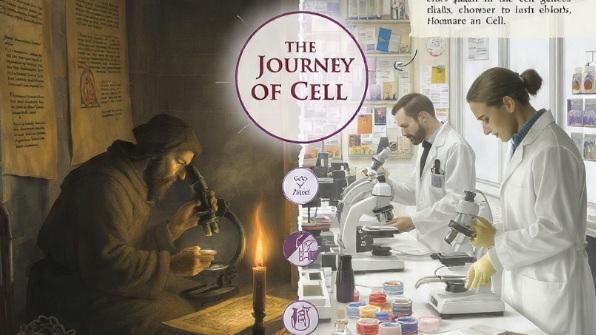
    یہ دلچسپ سفر **Robert Hooke** کے مشاہدات سے شروع ہوا، جب انہوں نے cork کے ایک ٹکڑے کو microscope کے ذریعے دیکھا اور اس میں چھوٹے چھوٹے خانے نما حصے نظر آئے۔ ان خانوں نے انہیں راہبوں کے کمروں (monks’ chambers) کی یاد دلائی، اور یوں **“cell”** کا نام مشہور ہوا۔

    آج Cell Biology جدید microscopes، DNA research اور advanced laboratories تک پہنچ چکی ہے۔

    یہ کہانی ہمیں دکھاتی ہے کہ ایک چھوٹا سا مشاہدہ کس طرح سائنس کی پوری دنیا کو بدل سکتا ہے!

    **Keep observing, keep questioning, and keep discovering! **
    RSIF8 ROLL NO 77 STORY POST TOPIC The Journey of "Cell" From Monks' Chambers to Biology Labs 🔬🧬 **The Journey of “Cell” — From Monks’ Chambers to Biology Labs** 🏛️➡️🧪 کیا آپ جانتے ہیں کہ Biology میں **“Cell”** کا نام کہاں سے آیا؟ 🤔🔬 یہ دلچسپ سفر **Robert Hooke** کے مشاہدات سے شروع ہوا، جب انہوں نے cork کے ایک ٹکڑے کو microscope کے ذریعے دیکھا اور اس میں چھوٹے چھوٹے خانے نما حصے نظر آئے۔ 🧫🔍 ان خانوں نے انہیں راہبوں کے کمروں (monks’ chambers) کی یاد دلائی، اور یوں **“cell”** کا نام مشہور ہوا۔ 📚✨ آج Cell Biology جدید microscopes، DNA research اور advanced laboratories تک پہنچ چکی ہے۔ 🧬🧪🚀 یہ کہانی ہمیں دکھاتی ہے کہ ایک چھوٹا سا مشاہدہ کس طرح سائنس کی پوری دنیا کو بدل سکتا ہے! 🌍💡 **Keep observing, keep questioning, and keep discovering! 🔬✨**
    0 Reacties 0 aandelen 233 Views
  • #rsisb
    Roll no. 247
    Story post . 18
    Foundation level

    **The Journey of “Cell”: From Monks’ Chambers to Biology Labs **

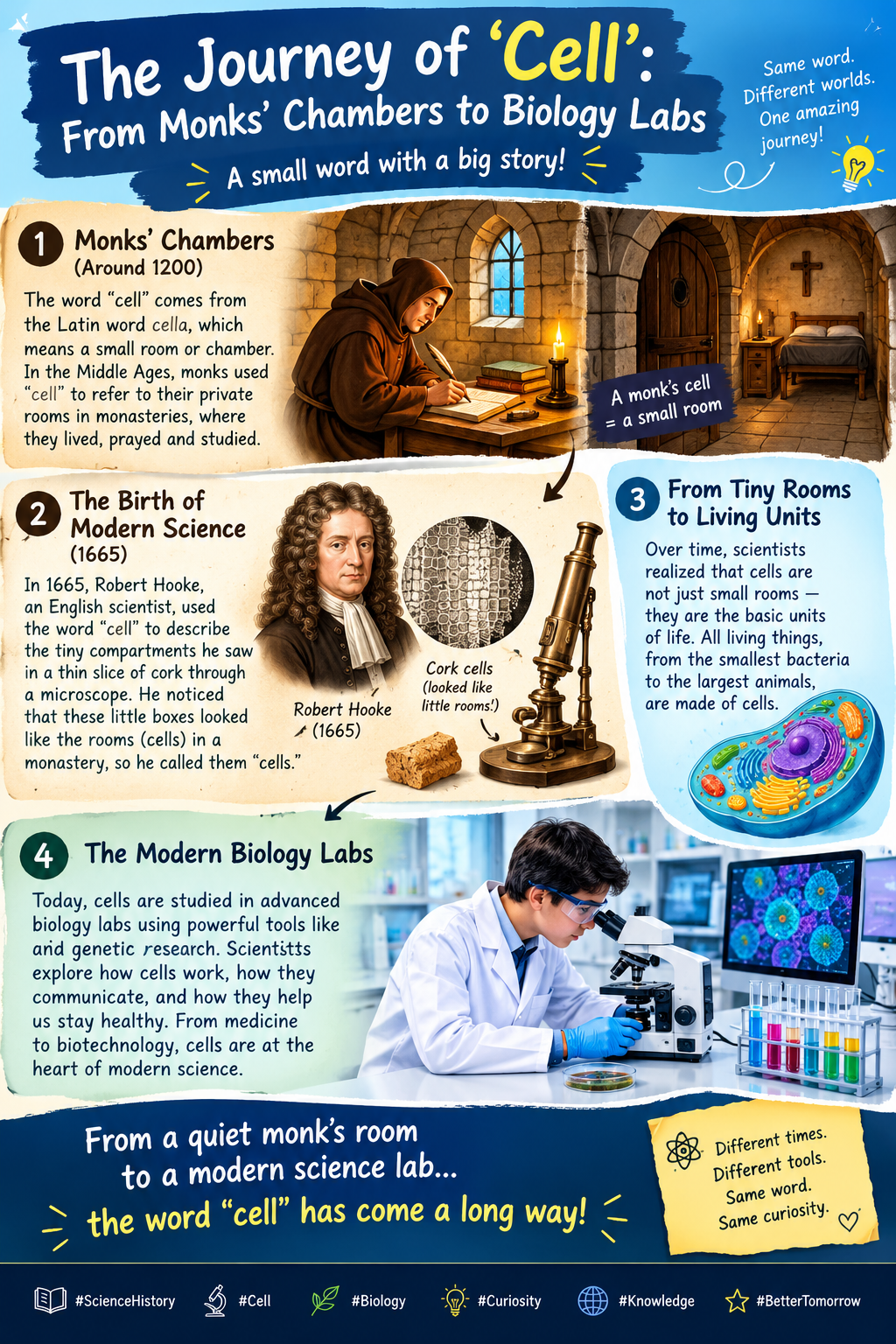
    **Have you ever wondered why the tiny building blocks of life are called “cells”?** The story behind this important scientific word takes us on a fascinating journey from the quiet chambers of monks to modern biology laboratories!

    The word **“cell”** comes from the Latin word *cella*, which means a small room or chamber. In the past, monks lived and prayed in small rooms called cells. These simple rooms inspired a name that would later become one of the most important words in biology! ‍

    In 1665, an English scientist named **Robert Hooke** made an important discovery. While examining a thin slice of cork under a microscope, he noticed many tiny, box-like compartments. They reminded him of the small rooms where monks lived, so he called them **“cells.”** This observation was published in his famous book *Micrographia*.

    But the story did not end there! Years later, scientists developed better microscopes and discovered that cells were not just empty compartments. They were the basic units of living things!

    ‍‍ Scientists such as **Antonie van Leeuwenhoek** observed living microscopic organisms, while other researchers helped build our understanding of cells. Over time, scientists developed the **cell theory**, which explains that all living organisms are made of one or more cells and that new cells come from existing cells.

    Today, cells are studied in laboratories all around the world. Scientists explore how cells grow, obtain energy, communicate, reproduce, and help our bodies function. From the cells in plants to the cells in humans , these tiny structures play an enormous role in life!

    **What makes this journey so amazing?** A word that once described a small room became the name for the fundamental unit of life. It reminds us that even the smallest observation can lead to a huge scientific discovery!

    **Learning Message:** Stay curious, keep asking questions, and never underestimate the power of observation. Every great discovery begins with someone noticing something others might overlook!

    **Question for You:** If you could look at any object under a powerful microscope, what would you choose to explore? Share your answer in the comments!

    Like, share, and comment to spread the love of science and learning! Let's inspire more young scientists to explore the amazing world around us.

    #rsisb Roll no. 247 Story post . 18 Foundation level 🔬📚 **The Journey of “Cell”: From Monks’ Chambers to Biology Labs 🧫✨** 🌍🤔 **Have you ever wondered why the tiny building blocks of life are called “cells”?** The story behind this important scientific word takes us on a fascinating journey from the quiet chambers of monks to modern biology laboratories! 🏛️➡️🔬 📖✨ The word **“cell”** comes from the Latin word *cella*, which means a small room or chamber. In the past, monks lived and prayed in small rooms called cells. These simple rooms inspired a name that would later become one of the most important words in biology! 🧑‍🏫🏛️ 🔍🧪 In 1665, an English scientist named **Robert Hooke** made an important discovery. While examining a thin slice of cork under a microscope, he noticed many tiny, box-like compartments. They reminded him of the small rooms where monks lived, so he called them **“cells.”** 🧫🔬 This observation was published in his famous book *Micrographia*. 🌟🔬 But the story did not end there! Years later, scientists developed better microscopes and discovered that cells were not just empty compartments. They were the basic units of living things! 🦠🌱 👨‍🔬👩‍🔬 Scientists such as **Antonie van Leeuwenhoek** observed living microscopic organisms, while other researchers helped build our understanding of cells. Over time, scientists developed the **cell theory**, which explains that all living organisms are made of one or more cells and that new cells come from existing cells. 🧬💡 🌿🐾 Today, cells are studied in laboratories all around the world. Scientists explore how cells grow, obtain energy, communicate, reproduce, and help our bodies function. From the cells in plants 🌱 to the cells in humans 🧍, these tiny structures play an enormous role in life! 🚀💭 **What makes this journey so amazing?** A word that once described a small room became the name for the fundamental unit of life. It reminds us that even the smallest observation can lead to a huge scientific discovery! 🎯📚 **Learning Message:** Stay curious, keep asking questions, and never underestimate the power of observation. Every great discovery begins with someone noticing something others might overlook! 🌈🔍 💬 **Question for You:** If you could look at any object under a powerful microscope, what would you choose to explore? 🔬🤔 Share your answer in the comments! ❤️👍 Like, share, and comment to spread the love of science and learning! Let's inspire more young scientists to explore the amazing world around us. 🌍🧪✨
    0 Reacties 0 aandelen 521 Views
  • #rsisb
    Roll no. 247
    Story post . 18
    Foundation level

    **The Journey of “Cell”: From Monks’ Chambers to Biology Labs **

    **Have you ever wondered why the tiny building blocks of life are called “cells”?** The story behind this important scientific word takes us on a fascinating journey from the quiet chambers of monks to modern biology laboratories!

    The word **“cell”** comes from the Latin word *cella*, which means a small room or chamber. In the past, monks lived and prayed in small rooms called cells. These simple rooms inspired a name that would later become one of the most important words in biology! ‍

    In 1665, an English scientist named **Robert Hooke** made an important discovery. While examining a thin slice of cork under a microscope, he noticed many tiny, box-like compartments. They reminded him of the small rooms where monks lived, so he called them **“cells.”** This observation was published in his famous book *Micrographia*.

    But the story did not end there! Years later, scientists developed better microscopes and discovered that cells were not just empty compartments. They were the basic units of living things!

    ‍‍ Scientists such as **Antonie van Leeuwenhoek** observed living microscopic organisms, while other researchers helped build our understanding of cells. Over time, scientists developed the **cell theory**, which explains that all living organisms are made of one or more cells and that new cells come from existing cells.

    Today, cells are studied in laboratories all around the world. Scientists explore how cells grow, obtain energy, communicate, reproduce, and help our bodies function. From the cells in plants to the cells in humans , these tiny structures play an enormous role in life!

    **What makes this journey so amazing?** A word that once described a small room became the name for the fundamental unit of life. It reminds us that even the smallest observation can lead to a huge scientific discovery!

    **Learning Message:** Stay curious, keep asking questions, and never underestimate the power of observation. Every great discovery begins with someone noticing something others might overlook!

    **Question for You:** If you could look at any object under a powerful microscope, what would you choose to explore? Share your answer in the comments!

    Like, share, and comment to spread the love of science and learning! Let's inspire more young scientists to explore the amazing world around us.

    #JourneyOfCell #HistoryOfScience #RobertHooke #CellDiscovery #CellTheory #Biology #ScienceEducation #Microscope #ScientificDiscoveries #LearningIsFun #YoungScientists #ExploreAndDiscover #ScienceForEveryone #BiologyFacts #KnowledgeIsPower #Curiosity #STEMEducation #RehanSchool #RSISB #RehanCodingWithAI
    #rsisb Roll no. 247 Story post . 18 Foundation level 🔬📚 **The Journey of “Cell”: From Monks’ Chambers to Biology Labs 🧫✨** 🌍🤔 **Have you ever wondered why the tiny building blocks of life are called “cells”?** The story behind this important scientific word takes us on a fascinating journey from the quiet chambers of monks to modern biology laboratories! 🏛️➡️🔬 📖✨ The word **“cell”** comes from the Latin word *cella*, which means a small room or chamber. In the past, monks lived and prayed in small rooms called cells. These simple rooms inspired a name that would later become one of the most important words in biology! 🧑‍🏫🏛️ 🔍🧪 In 1665, an English scientist named **Robert Hooke** made an important discovery. While examining a thin slice of cork under a microscope, he noticed many tiny, box-like compartments. They reminded him of the small rooms where monks lived, so he called them **“cells.”** 🧫🔬 This observation was published in his famous book *Micrographia*. 🌟🔬 But the story did not end there! Years later, scientists developed better microscopes and discovered that cells were not just empty compartments. They were the basic units of living things! 🦠🌱 👨‍🔬👩‍🔬 Scientists such as **Antonie van Leeuwenhoek** observed living microscopic organisms, while other researchers helped build our understanding of cells. Over time, scientists developed the **cell theory**, which explains that all living organisms are made of one or more cells and that new cells come from existing cells. 🧬💡 🌿🐾 Today, cells are studied in laboratories all around the world. Scientists explore how cells grow, obtain energy, communicate, reproduce, and help our bodies function. From the cells in plants 🌱 to the cells in humans 🧍, these tiny structures play an enormous role in life! 🚀💭 **What makes this journey so amazing?** A word that once described a small room became the name for the fundamental unit of life. It reminds us that even the smallest observation can lead to a huge scientific discovery! 🎯📚 **Learning Message:** Stay curious, keep asking questions, and never underestimate the power of observation. Every great discovery begins with someone noticing something others might overlook! 🌈🔍 💬 **Question for You:** If you could look at any object under a powerful microscope, what would you choose to explore? 🔬🤔 Share your answer in the comments! ❤️👍 Like, share, and comment to spread the love of science and learning! Let's inspire more young scientists to explore the amazing world around us. 🌍🧪✨ #JourneyOfCell #HistoryOfScience #RobertHooke #CellDiscovery #CellTheory #Biology #ScienceEducation #Microscope #ScientificDiscoveries #LearningIsFun #YoungScientists #ExploreAndDiscover #ScienceForEveryone #BiologyFacts #KnowledgeIsPower #Curiosity #STEMEducation #RehanSchool #RSISB #RehanCodingWithAI 📚🔬🌱✨
    0 Reacties 0 aandelen 1506 Views
  • #rsisb
    Roll no 248
    Foundation level
    Story post no 25
    **Story Post — The Journey of “Cell”: From Monks’ Chambers to Biology Labs!**

    Have you ever wondered where the word **“cell”** came from? The journey of this amazing word connects history, science, and the discovery of life itself!

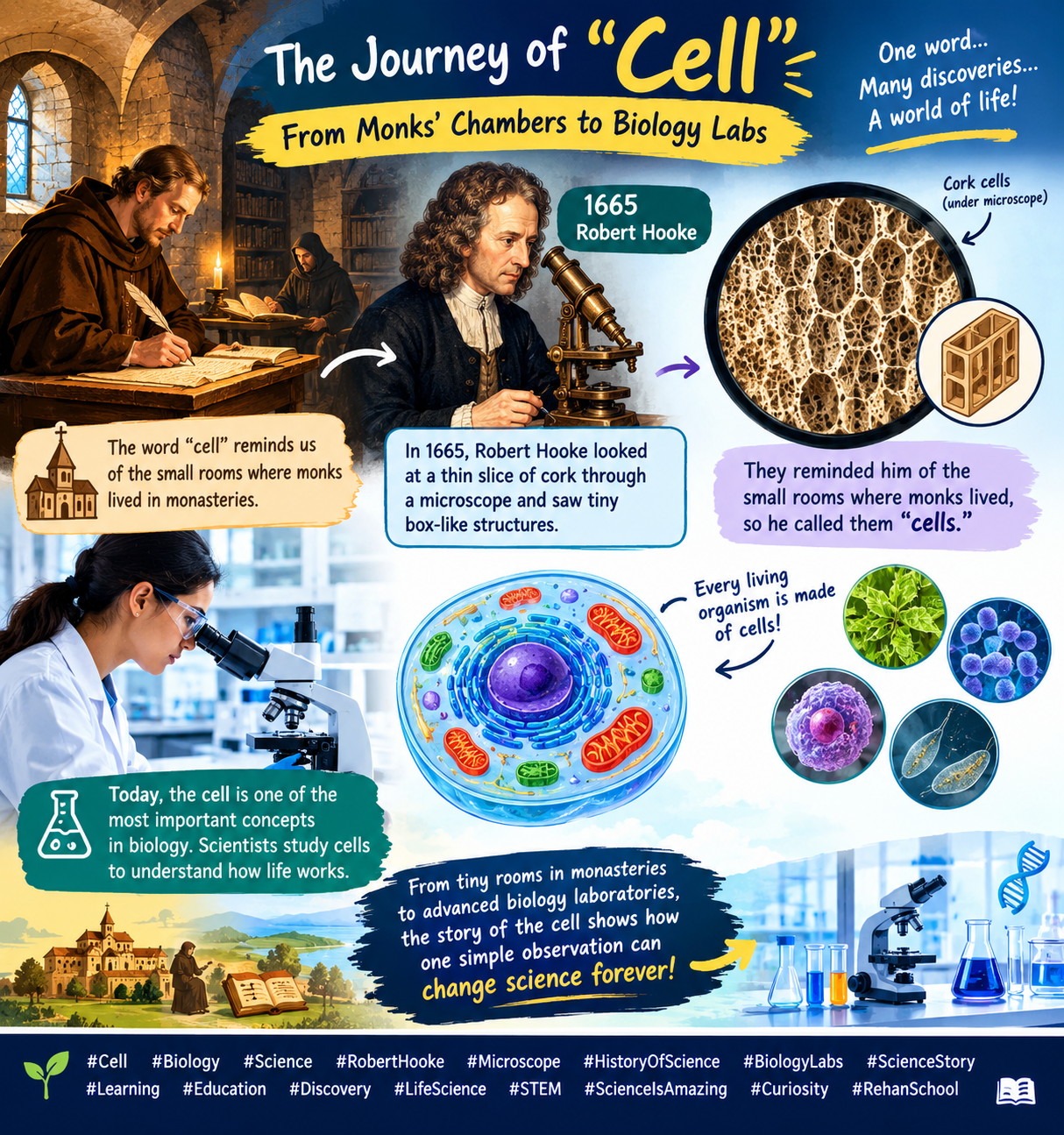
    In 1665, **Robert Hooke** looked at a thin slice of cork through a microscope and saw tiny box-like structures. They reminded him of the small rooms where monks lived, so he called them **“cells.”**

    Today, the cell is one of the most important concepts in biology. Every living organism is made of cells, and modern scientists study cells to understand how life works.

    From tiny rooms in monasteries to advanced biology laboratories, the story of the **cell** shows how one simple observation can change science forever!

    #Cell #Biology #Science #RobertHooke #Microscope #HistoryOfScience #BiologyLabs #ScienceStory #Learning #Education #Discovery #LifeScience #STEM #ScienceIsAmazing #Curiosity #RehanSchool
    #rsisb Roll no 248 Foundation level Story post no 25 🔬🧫 **Story Post — The Journey of “Cell”: From Monks’ Chambers to Biology Labs!** 🧬✨ Have you ever wondered where the word **“cell”** came from? 🤔📖 The journey of this amazing word connects history, science, and the discovery of life itself! 🌱🔬 In 1665, **Robert Hooke** looked at a thin slice of cork through a microscope and saw tiny box-like structures. 🪵🔍 They reminded him of the small rooms where monks lived, so he called them **“cells.”** 🏠➡️🧫 Today, the cell is one of the most important concepts in biology. Every living organism is made of cells, and modern scientists study cells to understand how life works. 🌍❤️🧬 From tiny rooms in monasteries to advanced biology laboratories, the story of the **cell** shows how one simple observation can change science forever! 🚀🔬✨ #Cell #Biology #Science #RobertHooke #Microscope #HistoryOfScience #BiologyLabs #ScienceStory #Learning #Education #Discovery #LifeScience #STEM #ScienceIsAmazing #Curiosity #RehanSchool 📚🔬🌟
    1
    0 Reacties 0 aandelen 1163 Views
  • #rsisb
    Roll no 248
    Foundation level
    Story post no 23
    **The Journey of “Cell”: From Monks’ Chambers to Biology Labs**

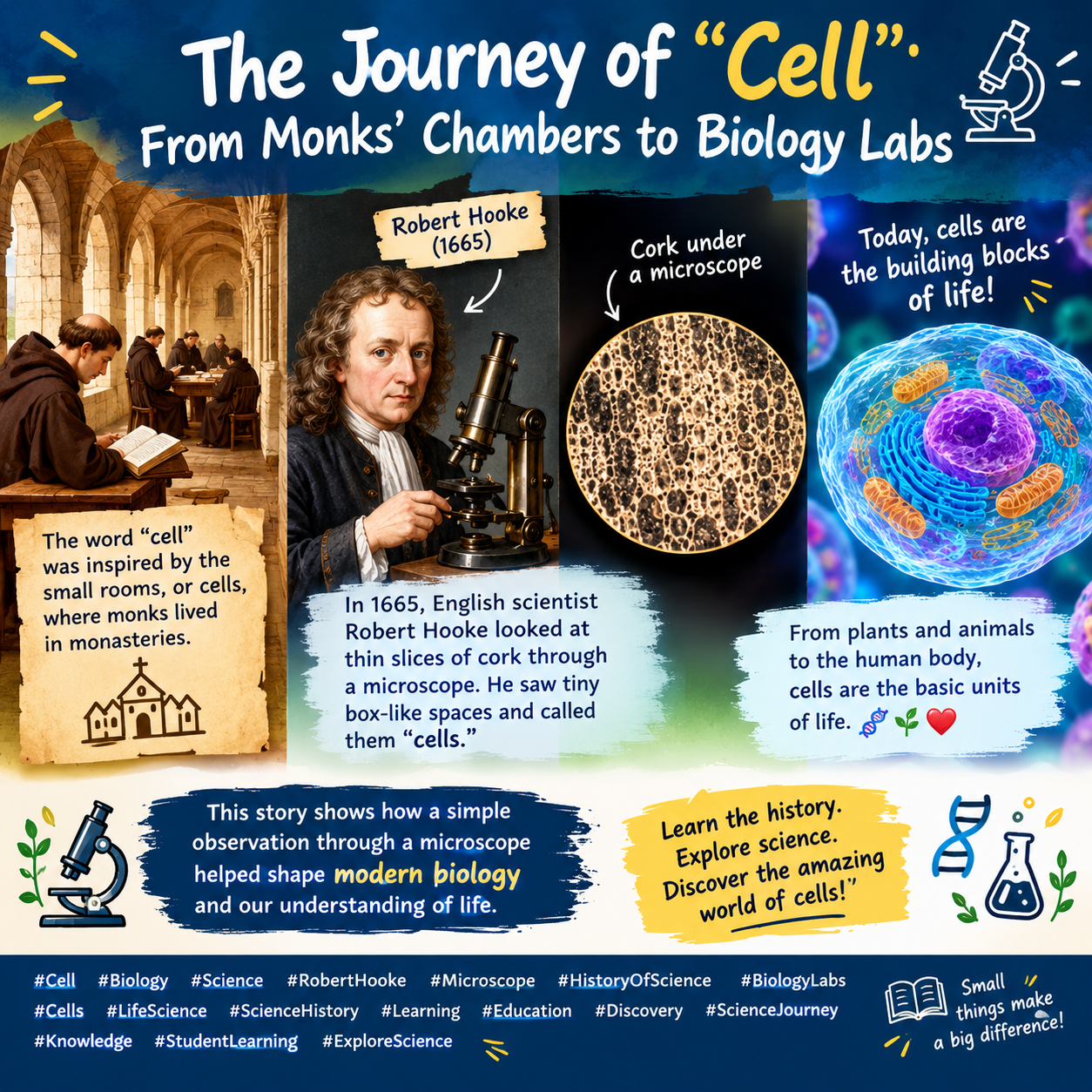
    Have you ever wondered where the word **“cell”** came from? The story begins in **1665**, when English scientist **Robert Hooke** looked at thin slices of cork through a microscope. He saw tiny box-like spaces that reminded him of the small rooms, or **cells**, where monks lived. ‍

    Today, the word **cell** is one of the most important words in biology. From plants and animals to the human body, cells are the basic units of life.

    This story shows how a simple observation through a microscope helped shape modern biology and our understanding of life.

    **Learn the history. Explore science. Discover the amazing world of cells!**

    #Cell #Biology #Science #RobertHooke #Microscope #HistoryOfScience #BiologyLabs #Cells #LifeScience #ScienceHistory #Learning #Education #Discovery #ScienceJourney #Knowledge #StudentLearning #ExploreScience
    #rsisb Roll no 248 Foundation level Story post no 23 🔬🧫 **The Journey of “Cell”: From Monks’ Chambers to Biology Labs** 🧬✨ Have you ever wondered where the word **“cell”** came from? 🤔📖 The story begins in **1665**, when English scientist **Robert Hooke** looked at thin slices of cork through a microscope. 🔍 He saw tiny box-like spaces that reminded him of the small rooms, or **cells**, where monks lived. 🏛️👨‍🔬 Today, the word **cell** is one of the most important words in biology. 🧬🌱 From plants and animals to the human body, cells are the basic units of life. ❤️🔬 This story shows how a simple observation through a microscope helped shape modern biology and our understanding of life. 🌍✨ 📚 **Learn the history. Explore science. Discover the amazing world of cells!** 🚀🧪 #Cell #Biology #Science #RobertHooke #Microscope #HistoryOfScience #BiologyLabs #Cells #LifeScience #ScienceHistory #Learning #Education #Discovery #ScienceJourney #Knowledge #StudentLearning #ExploreScience 🔬🧬📚✨
    0 Reacties 0 aandelen 1375 Views
  • #rsisb
    Roll NO:232
    Foundation level student.
    Story post:21

    ### Description

    **The Journey of “Cell”: From Monks’ Chambers to Biology Labs**

    Have you ever wondered how the tiny building blocks of life got the name **“cell”**? The story begins with the English scientist **Robert Hooke**, who used a microscope to examine thin slices of cork in the 17th century. He noticed small compartments that reminded him of the tiny rooms, or cells, used by monks.

    Explore how this simple observation helped inspire a word that later became one of the most important concepts in modern biology. From early microscopes to today’s advanced biology laboratories, discover the fascinating journey of the **cell**!

    ### Hashtags

    #Cell #HistoryOfScience #Biology #CellBiology #RobertHooke #Microscope #ScienceHistory #BiologyLab #Science #LifeScience #HumanBiology #Discovery #ScientificDiscovery #Education #Learning #ScienceEducation #BiologyFacts #AmazingScience #Knowledge #ExploreScience

    ### Emojis

    ‍
    #rsisb Roll NO:232 Foundation level student. Story post:21 ### 🔬 Description **The Journey of “Cell”: From Monks’ Chambers to Biology Labs** 🧬📚✨ Have you ever wondered how the tiny building blocks of life got the name **“cell”**? 🤔🔬 The story begins with the English scientist **Robert Hooke**, who used a microscope to examine thin slices of cork in the 17th century. He noticed small compartments that reminded him of the tiny rooms, or cells, used by monks. 🏛️🔎 Explore how this simple observation helped inspire a word that later became one of the most important concepts in modern biology. 🧫🧬 From early microscopes to today’s advanced biology laboratories, discover the fascinating journey of the **cell**! 🌱🔬🚀 ### 🔖 Hashtags #Cell #HistoryOfScience #Biology #CellBiology #RobertHooke #Microscope #ScienceHistory #BiologyLab #Science #LifeScience #HumanBiology #Discovery #ScientificDiscovery #Education #Learning #ScienceEducation #BiologyFacts #AmazingScience #Knowledge #ExploreScience ### 🌟 Emojis 🔬🧬🧫📚✨🔎🏛️🧪🌱🦠🧠💡🚀🌍📖🔬👨‍🔬🌟🧫🔍
    0 Reacties 0 aandelen 1773 Views
  • #rsisb
    Roll no.239
    Foundation Level


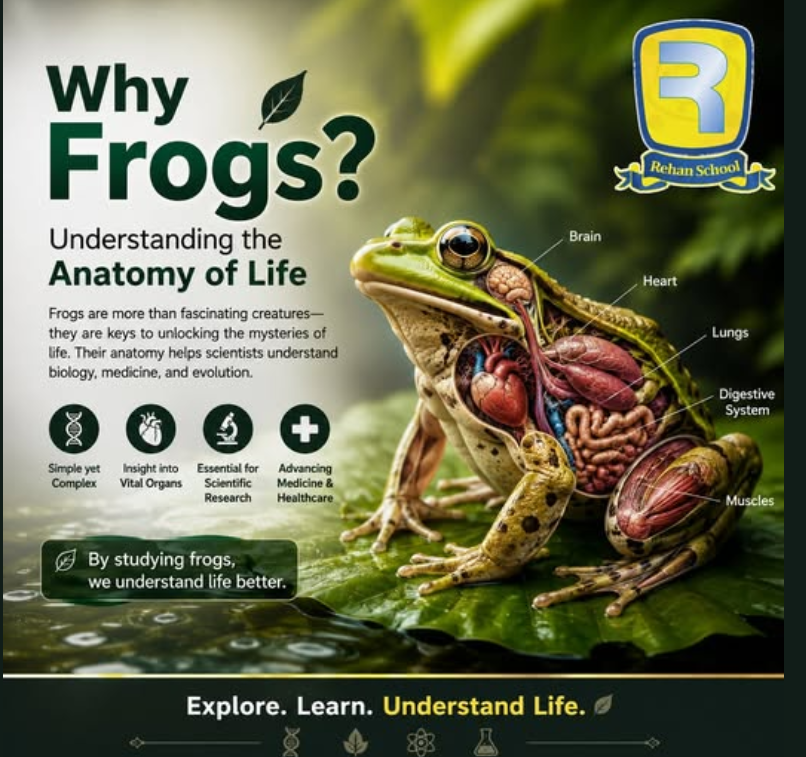
    Frogs are often studied in biology because their bodies provide a clear way to understand **basic animal anatomy and physiology**. Their organs and organ systems are relatively easy to observe, while still showing many of the same fundamental structures found in other vertebrates.

    ### What Can Frogs Teach Us?

    * **Heart:** A frog’s three-chambered heart demonstrates how blood circulates through the body.
    * **Lungs and skin:** Frogs breathe through both their lungs and moist skin, showing different methods of gas exchange.
    * **Digestive system:** Their digestive organs demonstrate how food is broken down and nutrients are absorbed.
    * **Muscles and skeleton:** Powerful hind-leg muscles and a specialized skeleton explain how frogs jump and move.
    * **Nervous system:** The brain, spinal cord, and nerves coordinate movement and responses.
    * **Kidneys:** These organs help remove waste and maintain the body's internal balance.

    genui{"biology_anatomy_physiology":{"type_id":"BLOOD_CIRCULATION","locale_override":"en-US"}}

    ### **Why Are Frogs Important in Biology?**

    Frogs are useful study organisms because their anatomy helps students connect **structure with function**. By examining how different organs work together, we can better understand a central idea of biology: **life depends on coordinated systems working as one whole organism.**

    In short, studying a frog is not simply about studying one animal—it is a way to explore the **anatomy, physiology, adaptation, and organization of life itself**.
    #rsisb Roll no.239 Foundation Level Frogs are often studied in biology because their bodies provide a clear way to understand **basic animal anatomy and physiology**. Their organs and organ systems are relatively easy to observe, while still showing many of the same fundamental structures found in other vertebrates. ### 🐸 What Can Frogs Teach Us? * **Heart:** A frog’s three-chambered heart demonstrates how blood circulates through the body. * **Lungs and skin:** Frogs breathe through both their lungs and moist skin, showing different methods of gas exchange. * **Digestive system:** Their digestive organs demonstrate how food is broken down and nutrients are absorbed. * **Muscles and skeleton:** Powerful hind-leg muscles and a specialized skeleton explain how frogs jump and move. * **Nervous system:** The brain, spinal cord, and nerves coordinate movement and responses. * **Kidneys:** These organs help remove waste and maintain the body's internal balance. genui{"biology_anatomy_physiology":{"type_id":"BLOOD_CIRCULATION","locale_override":"en-US"}} ### **Why Are Frogs Important in Biology?** Frogs are useful study organisms because their anatomy helps students connect **structure with function**. By examining how different organs work together, we can better understand a central idea of biology: **life depends on coordinated systems working as one whole organism.** In short, studying a frog is not simply about studying one animal—it is a way to explore the **anatomy, physiology, adaptation, and organization of life itself**.
    0 Reacties 0 aandelen 3675 Views
  • Great meeting on investment in Commonwealth .. Sad to see no attendees from #Tdap nor any #chamber of commerce from #Pakistan. Well I am here :)
    Great meeting on investment in Commonwealth .. Sad to see no attendees from #Tdap nor any #chamber of commerce from #Pakistan. Well I am here :)
    0 Reacties 0 aandelen 1838 Views
  • Today I had a Full of fun day, I and Faisal Japanwala, went to Karachi Chamber to meet the President and Present him with my book and Rehan School Details.

    On the way back, he wanted to have lassi so we stopped at Punjab lassi on Burns Road, While Faisal got the Lassi back, 2 boys came and asked for our Mobiles, and Took them away, The poor fellow’s also took our car key’s with them.

    I smiled and talked to them, and giving the iPhone in my hand back to our 3rd Friend, who’s it was, I gave my phone to them, and asked please give me the SIM back, he replied ok giving.

    Our friend in the back ran from the car and the poor robber’s got funny and took our car keys also.

    Anyways, so I got to spend a few hours in the area, as Brother Tameez came with the Keywala trying to make the key.

    While standing and looking around from Laziza Shop, I asked why they do not put camera’s on pole and who is in charge of the area, and the owner of the shop said no one, i was confused as earlier when I went to Karachi Foods, they said Laziza and Agha Sajji are the in charge in the area.

    After talking to him 30 mins, he was like no one wants to do anything and it won’t work if we put camera’s

    Later i went to Agha Sajji and turned out to be similar story that NO ONE will pay for anything, I said, I will arrange money, can you just find me someone in charge of the area, and they were like nope.

    We went for namaaz, and then came back and Agha bhai offered Chai Shai, So I had, trying to know him more, and understand.

    I offered the same, Let’s put camera’s in the area and put them on internet, then anyone can monitor, and if there is a problem, the recording can be retrieved from the web by tv channels or police if they wanted to, and he said we will think about it.

    So I thought WHY NOT I as an Entrepreneur for good can try to solve this problem and make a business out of it ?

    Make Public Streets public on internet, so

    anyone can monitor and

    get recordings and tv channels and we expose the robbers on internet and on tv.

    Here is my idea, and let me know how better we can monazite it and if you will be a customer ?

    Idea is to put cameras on street’s and then let people watch any where in the city via your phone

    over 3g and web.

    You go to the app or website, and enter Street Number, or Camera number or just to a map, and you can watch the Street for some time say 10 seconds for Free and if you pay 2$ a month you can watch it for as long as you want and if you pay 5$ you can download the videos also from last 24 hrs.

    What do you think should be the charges, What do you think can be other ways to monazite this ?

    Today I had a Full of fun day, I and Faisal Japanwala, went to Karachi Chamber to meet the President and Present him with my book and Rehan School Details. On the way back, he wanted to have lassi so we stopped at Punjab lassi on Burns Road, While Faisal got the Lassi back, 2 boys came and asked for our Mobiles, and Took them away, The poor fellow’s also took our car key’s with them. I smiled and talked to them, and giving the iPhone in my hand back to our 3rd Friend, who’s it was, I gave my phone to them, and asked please give me the SIM back, he replied ok giving. Our friend in the back ran from the car and the poor robber’s got funny and took our car keys also. Anyways, so I got to spend a few hours in the area, as Brother Tameez came with the Keywala trying to make the key. While standing and looking around from Laziza Shop, I asked why they do not put camera’s on pole and who is in charge of the area, and the owner of the shop said no one, i was confused as earlier when I went to Karachi Foods, they said Laziza and Agha Sajji are the in charge in the area. After talking to him 30 mins, he was like no one wants to do anything and it won’t work if we put camera’s Later i went to Agha Sajji and turned out to be similar story that NO ONE will pay for anything, I said, I will arrange money, can you just find me someone in charge of the area, and they were like nope. We went for namaaz, and then came back and Agha bhai offered Chai Shai, So I had, trying to know him more, and understand. I offered the same, Let’s put camera’s in the area and put them on internet, then anyone can monitor, and if there is a problem, the recording can be retrieved from the web by tv channels or police if they wanted to, and he said we will think about it. So I thought WHY NOT I as an Entrepreneur for good can try to solve this problem and make a business out of it ? Make Public Streets public on internet, so anyone can monitor and get recordings and tv channels and we expose the robbers on internet and on tv. Here is my idea, and let me know how better we can monazite it and if you will be a customer ? Idea is to put cameras on street’s and then let people watch any where in the city via your phone over 3g and web. You go to the app or website, and enter Street Number, or Camera number or just to a map, and you can watch the Street for some time say 10 seconds for Free and if you pay 2$ a month you can watch it for as long as you want and if you pay 5$ you can download the videos also from last 24 hrs. What do you think should be the charges, What do you think can be other ways to monazite this ?

    0 Reacties 0 aandelen 1231 Views
  • Meet Lazlo, our Director Partner in Hungary Pakistan Business Forum & Active in Hungarian Chamber of Commerce, Any business you want to do in Hungary, You can partner with him, He also seeks partners around the world for his amazing products from Hungary, Do connect directly with him.
    Meet Lazlo, our Director Partner in Hungary Pakistan Business Forum & Active in Hungarian Chamber of Commerce, Any business you want to do in Hungary, You can partner with him, He also seek's partners around the world for his amazing products from Hungary, Do connect directly with him.
    0 Reacties 0 aandelen 581 Views
Zoekresultaten