RSIF 8
Roll no 93
Story post no 26
Task topic:"Ecosystem Explorers: Discovering Earth's Habitats".Here is a ready-to-use **story post** for **“Ecosystem Explorers: Discovering Earth’s Habitats”**
**Ecosystem Explorers: Discovering Earth’s Habitats**
Have you ever wondered how animals, plants, and people live together in different parts of our amazing planet?
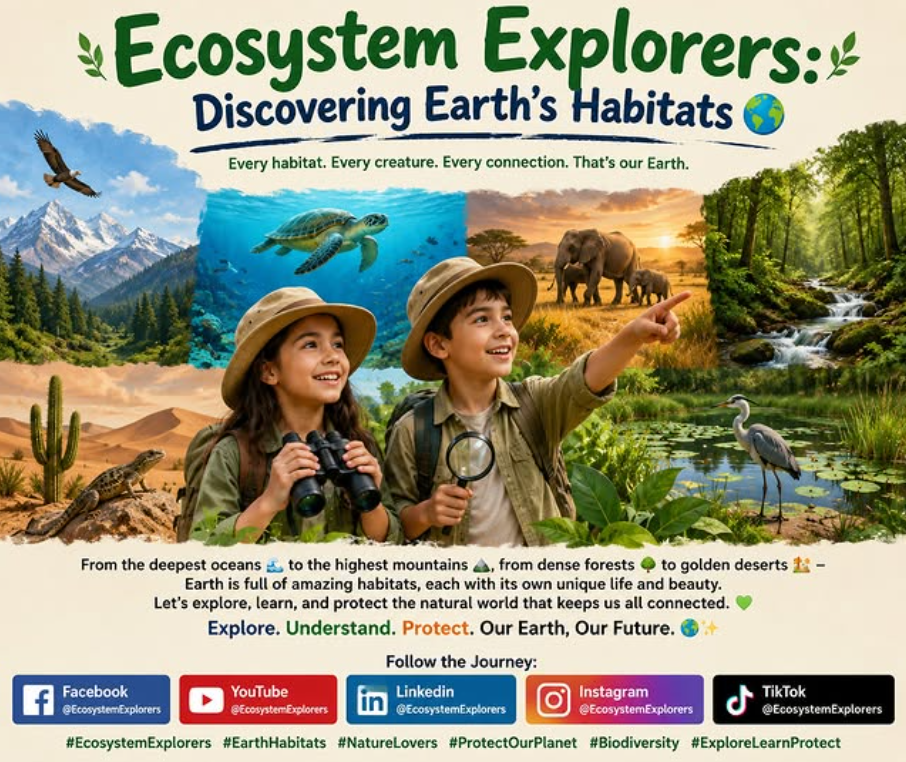
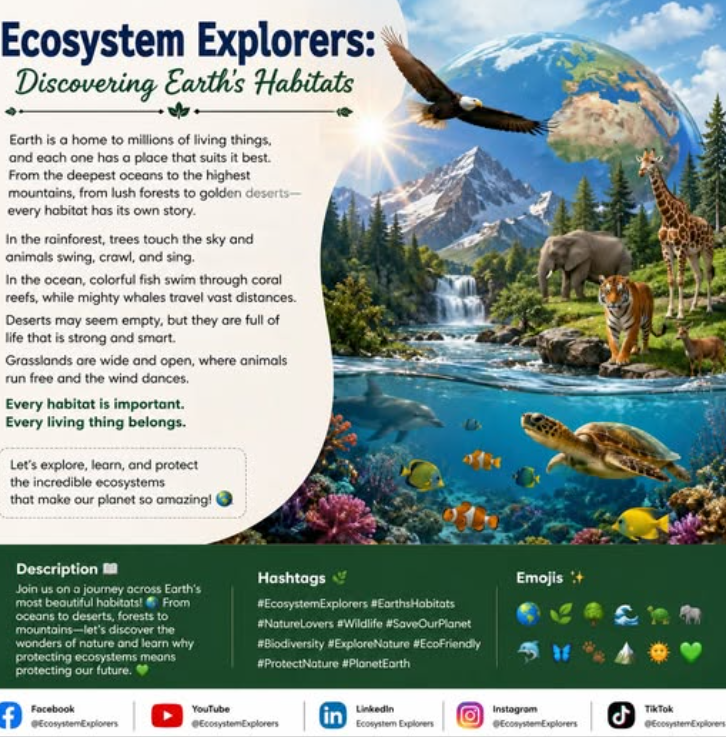
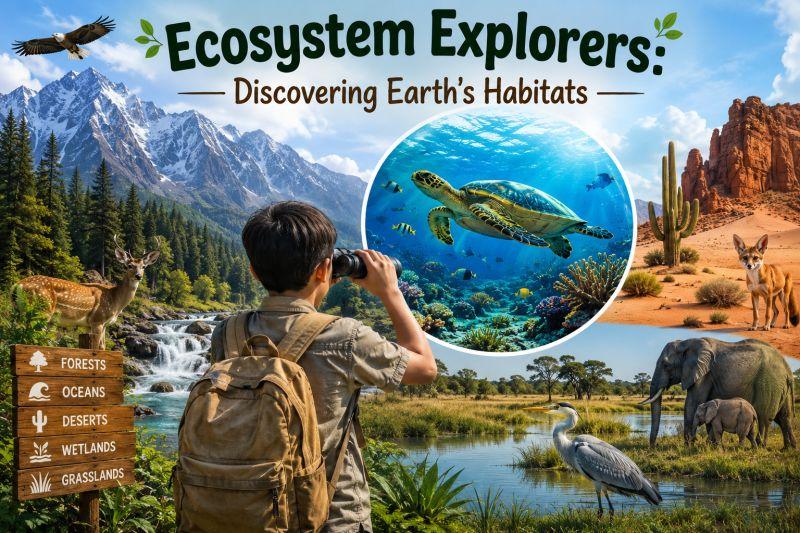
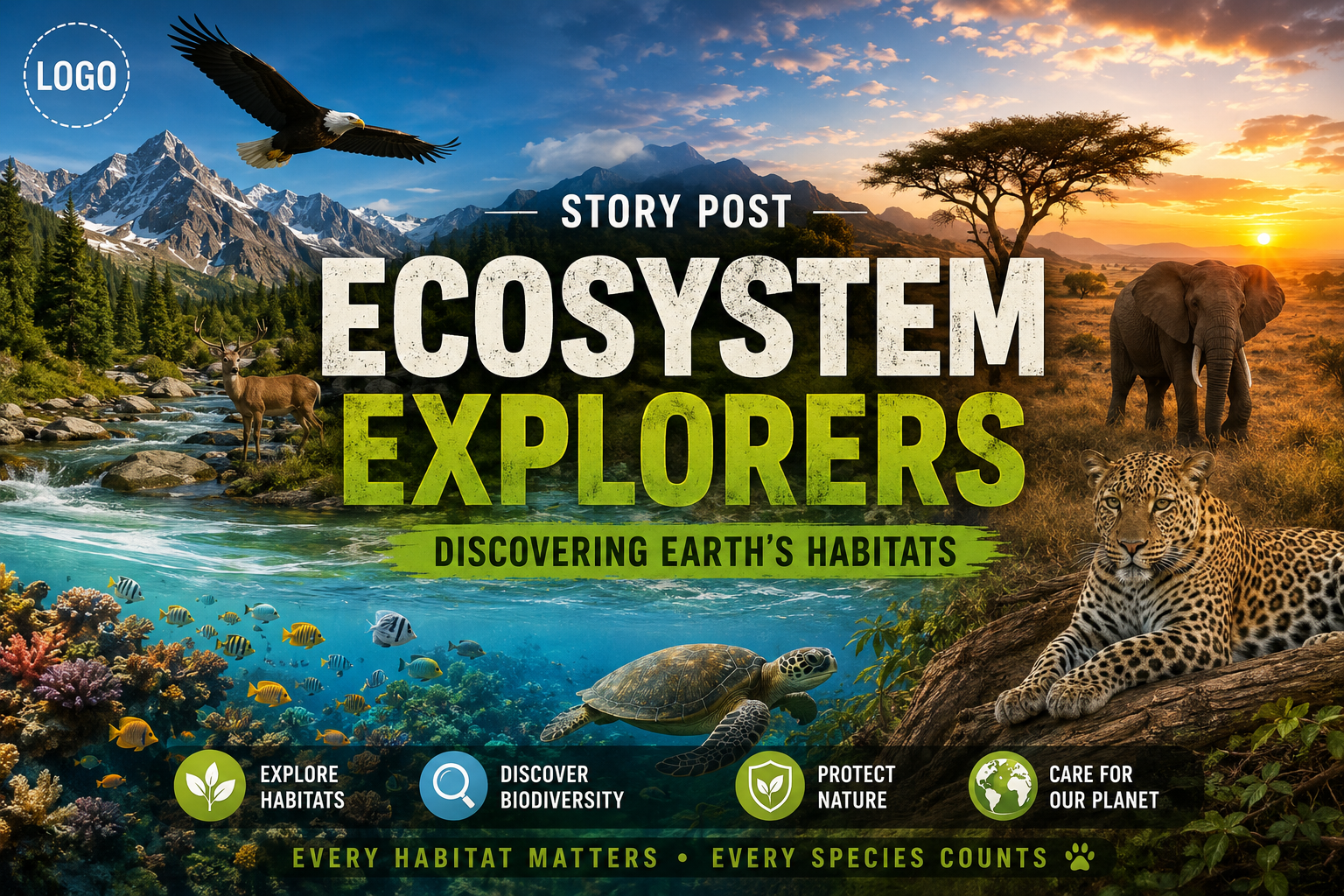
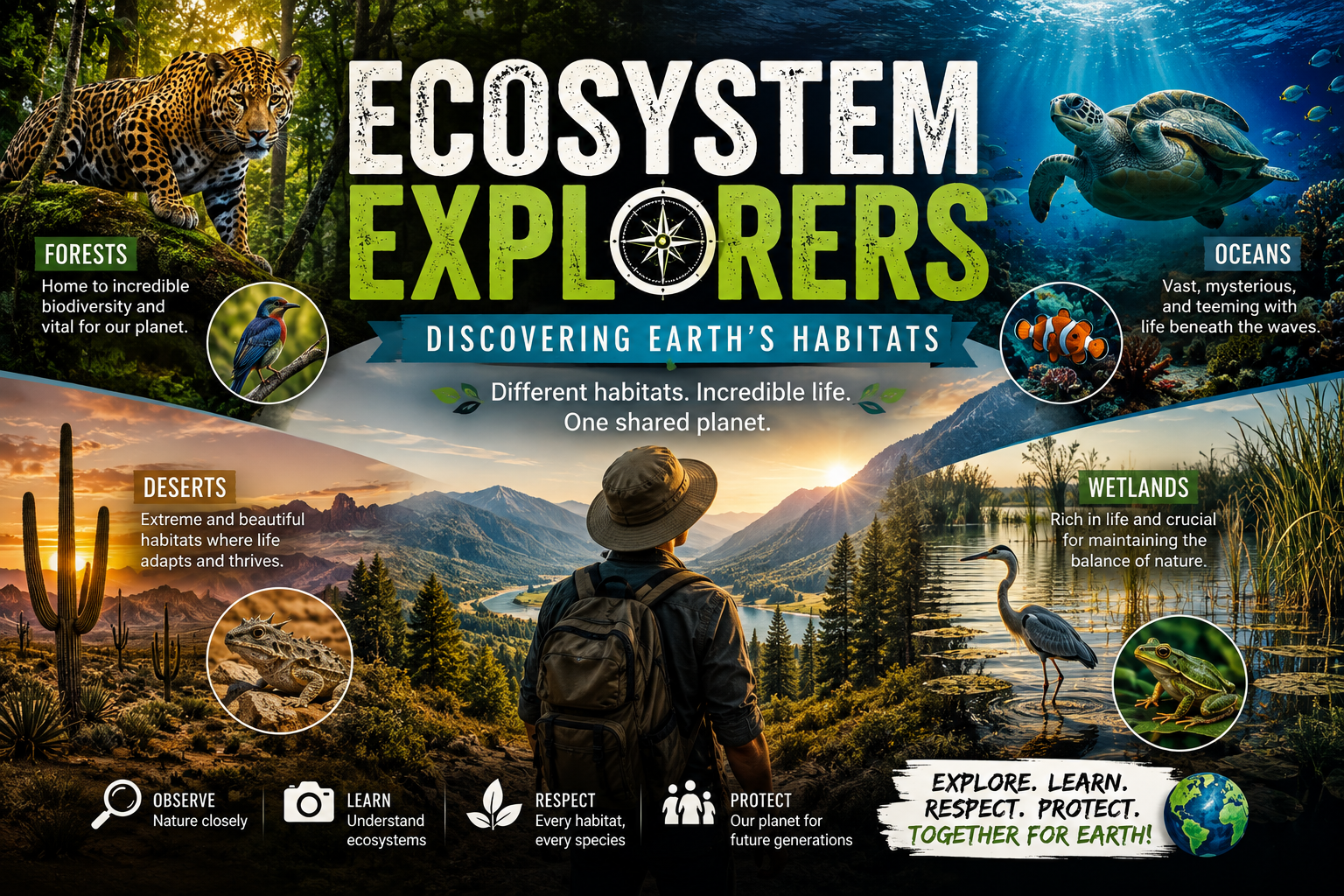
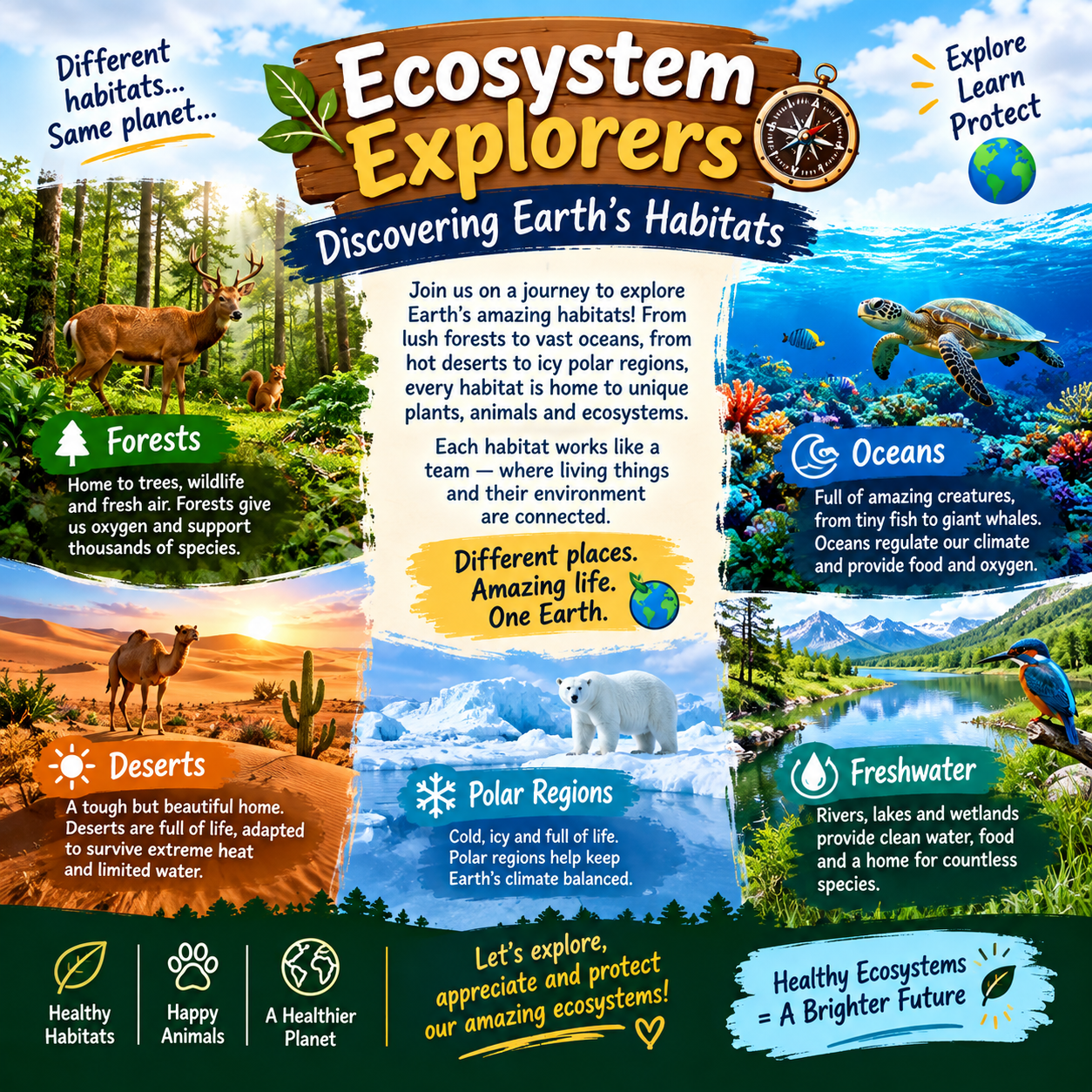
Join our **Ecosystem Explorers** as we travel through Earth’s incredible habitats—from lush forests and dry deserts to deep oceans and icy polar regions .
In every habitat, living things have special ways to survive. A camel can survive for long periods in the desert, polar bears are adapted to freezing temperatures, and rainforest plants compete for sunlight beneath a thick green canopy.
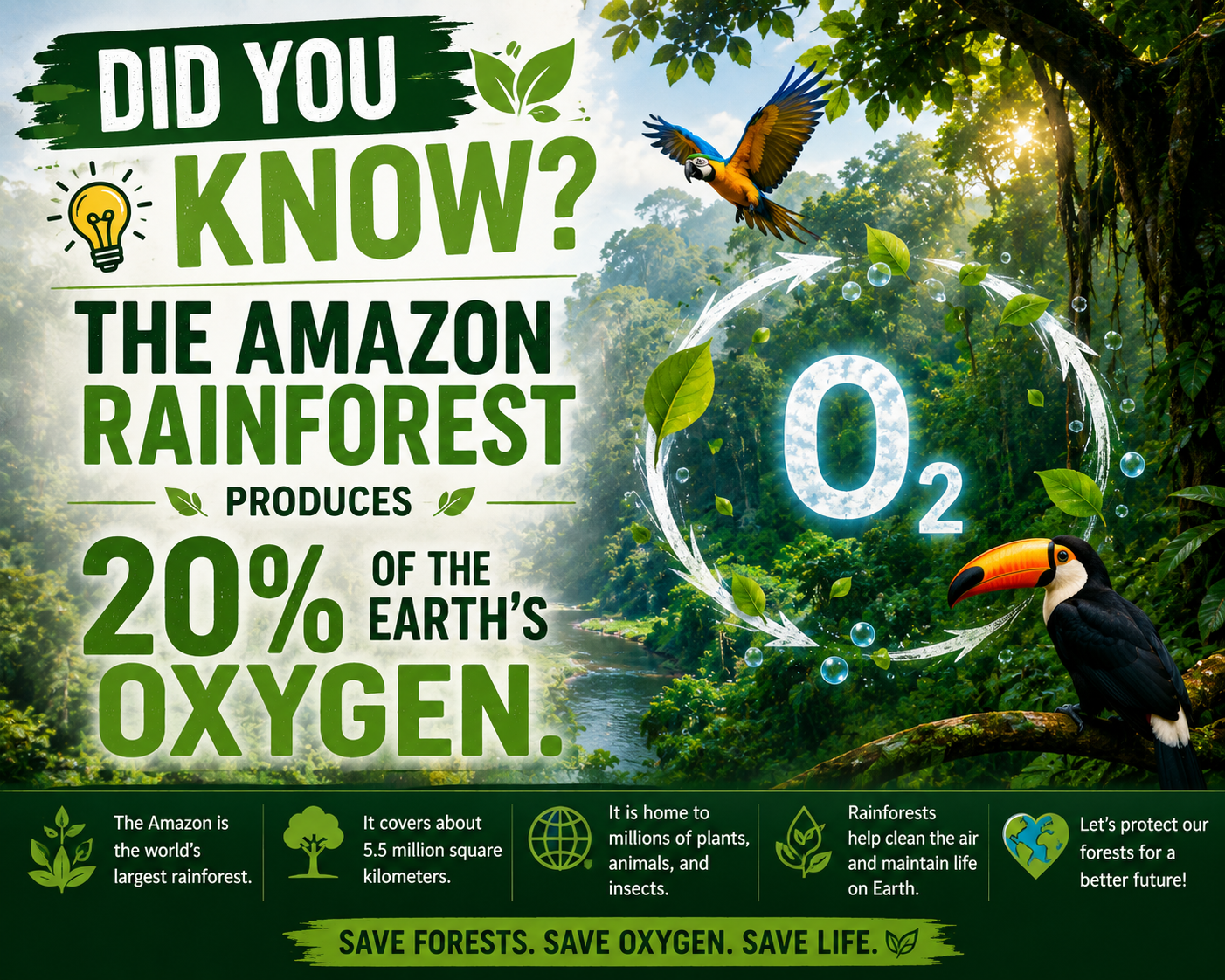
But every ecosystem is connected. Plants provide oxygen and food, animals help maintain natural balance, water supports life, and tiny organisms help recycle nutrients back into the environment.
As explorers, our mission is not only to discover these habitats but also to understand why they matter. Pollution, deforestation, climate change, and habitat destruction can affect ecosystems and the creatures that depend on them.
**The Earth is our shared home. Let’s explore it, learn about it, and protect it for future generations.**
**Explore. Learn. Protect. Repeat.**
#EcosystemExplorers #EarthHabitats #Ecosystems #Nature #Environment #Wildlife #Biodiversity #SaveOurPlanet #ClimateAction #Earth #Science #Learning #NatureLovers #ProtectNature
You can use this as your **Facebook, Instagram, LinkedIn, YouTube, or TikTok post description**.
Roll no 93
Story post no 26
Task topic:"Ecosystem Explorers: Discovering Earth's Habitats".Here is a ready-to-use **story post** for **“Ecosystem Explorers: Discovering Earth’s Habitats”**
**Ecosystem Explorers: Discovering Earth’s Habitats**
Have you ever wondered how animals, plants, and people live together in different parts of our amazing planet?
Join our **Ecosystem Explorers** as we travel through Earth’s incredible habitats—from lush forests and dry deserts to deep oceans and icy polar regions .
In every habitat, living things have special ways to survive. A camel can survive for long periods in the desert, polar bears are adapted to freezing temperatures, and rainforest plants compete for sunlight beneath a thick green canopy.
But every ecosystem is connected. Plants provide oxygen and food, animals help maintain natural balance, water supports life, and tiny organisms help recycle nutrients back into the environment.
As explorers, our mission is not only to discover these habitats but also to understand why they matter. Pollution, deforestation, climate change, and habitat destruction can affect ecosystems and the creatures that depend on them.
**The Earth is our shared home. Let’s explore it, learn about it, and protect it for future generations.**
**Explore. Learn. Protect. Repeat.**
#EcosystemExplorers #EarthHabitats #Ecosystems #Nature #Environment #Wildlife #Biodiversity #SaveOurPlanet #ClimateAction #Earth #Science #Learning #NatureLovers #ProtectNature
You can use this as your **Facebook, Instagram, LinkedIn, YouTube, or TikTok post description**.
RSIF 8
Roll no 93
Story post no 26
Task topic:"Ecosystem Explorers: Discovering Earth's Habitats".Here is a ready-to-use **story post** for **“Ecosystem Explorers: Discovering Earth’s Habitats”** 🌍🌿
🌍🌿 **Ecosystem Explorers: Discovering Earth’s Habitats** 🐾🌊
Have you ever wondered how animals, plants, and people live together in different parts of our amazing planet? 🌎
Join our **Ecosystem Explorers** as we travel through Earth’s incredible habitats—from lush forests 🌳 and dry deserts 🏜️ to deep oceans 🌊 and icy polar regions ❄️.
In every habitat, living things have special ways to survive. A camel can survive for long periods in the desert, polar bears are adapted to freezing temperatures, and rainforest plants compete for sunlight beneath a thick green canopy. 🐪🐻❄️🌱
But every ecosystem is connected. Plants provide oxygen and food, animals help maintain natural balance, water supports life, and tiny organisms help recycle nutrients back into the environment. 🌱💧🦋
As explorers, our mission is not only to discover these habitats but also to understand why they matter. Pollution, deforestation, climate change, and habitat destruction can affect ecosystems and the creatures that depend on them. 🌍💚
**The Earth is our shared home. Let’s explore it, learn about it, and protect it for future generations.** 🌎✨
🔎 **Explore. Learn. Protect. Repeat.**
#EcosystemExplorers #EarthHabitats #Ecosystems #Nature #Environment #Wildlife #Biodiversity #SaveOurPlanet #ClimateAction #Earth #Science #Learning #NatureLovers #ProtectNature
You can use this as your **Facebook, Instagram, LinkedIn, YouTube, or TikTok post description**.
0 Comments
0 Shares
264 Views