• How Bees Make a Queen to Take Care of Them: A Royal Tale of Survival and Strategy

    In the bustling world of honeybees, there’s no royal bloodline or inherited crown. A queen is not born royal — she is made. When a hive needs a new leader, whether due to the aging of the old queen or a sudden loss, the colony springs into coordinated action. The process is not random nor magical — it’s a scientifically astonishing, deeply cooperative strategy that ensures the survival of the entire hive.

    Let’s dive into this regal transformation.


    Step 1: Recognizing the Need for a Queen

    Bees know when their queen is failing. Her pheromones — chemical signals that maintain harmony in the hive — begin to weaken. It’s like her WiFi signal drops, and suddenly, everyone’s confused. The workers quickly assess the situation and make a collective decision: It’s time to raise a new queen.


    Step 2: Choosing the Chosen Ones

    Worker bees, who are all sterile females, scan the hive for the youngest, healthiest female larvae — usually less than 3 days old. These larvae are not yet committed to being workers or queens. With the right diet, their destiny can be rewritten.

    Several are selected. It’s a bee version of The Bachelor, only much stickier.


    Step 3: Feeding Royal Jelly: The Magic Elixir

    The secret to turning a normal larva into a queen lies in royal jelly — a creamy, protein-rich substance secreted by nurse bees. All bee larvae get a little royal jelly at first, but future queens are drenched in it their entire development.

    This superfood activates queen-specific genes. It enlarges her body, supercharges her ovaries, and gives her the ability to lay up to 2,000 eggs a day — the biological engine of the hive.


    Step 4: Transformation Through Epigenetics

    Royal jelly doesn’t just feed; it reprograms. Scientists have discovered that the diet turns on and off specific genes, a process called epigenetics. Without royal jelly, a female larva becomes a worker. With it, she becomes a queen. It’s like one fork leads to office work, and the other to ruling a nation.


    Step 5: Queen vs. Queen – The Final Duel

    Multiple queen larvae are usually raised at once. But the hive only needs one ruler. The first queen to emerge starts hunting her rivals. She’ll seek out other queen cells and sting them to death before they hatch. If two queens emerge at the same time — it’s a literal battle to the death.

    It’s a Game of Thrones… with wings.


    Step 6: The Queen Takes the Throne

    Once the competition ends, the winner embarks on a mating flight, where she mates with 10–20 drones mid-air, collecting enough sperm to last her whole life. She then returns to the hive to begin her reign — laying eggs, maintaining order, and being constantly pampered by her attendants.

    The colony now has a strong queen to care for them — one they collectively selected, fed, and supported into royalty.


    What We Can Learn from Bees

    Bees don’t choose a queen because she’s special — they make her special by feeding her, caring for her, and guiding her growth. It’s a powerful metaphor for leadership and community: true leaders are created through nurture, support, and collective vision.

    In a world buzzing with stress and disunity, perhaps we can learn from the bees — choose someone with potential, feed them well (literally and emotionally), and let them rise to greatness for the good of all.
    🐝 How Bees Make a Queen to Take Care of Them: A Royal Tale of Survival and Strategy In the bustling world of honeybees, there’s no royal bloodline or inherited crown. A queen is not born royal — she is made. When a hive needs a new leader, whether due to the aging of the old queen or a sudden loss, the colony springs into coordinated action. The process is not random nor magical — it’s a scientifically astonishing, deeply cooperative strategy that ensures the survival of the entire hive. Let’s dive into this regal transformation. ⸻ 👑 Step 1: Recognizing the Need for a Queen Bees know when their queen is failing. Her pheromones — chemical signals that maintain harmony in the hive — begin to weaken. It’s like her WiFi signal drops, and suddenly, everyone’s confused. The workers quickly assess the situation and make a collective decision: It’s time to raise a new queen. ⸻ 🍳 Step 2: Choosing the Chosen Ones Worker bees, who are all sterile females, scan the hive for the youngest, healthiest female larvae — usually less than 3 days old. These larvae are not yet committed to being workers or queens. With the right diet, their destiny can be rewritten. Several are selected. It’s a bee version of The Bachelor, only much stickier. ⸻ 🍯 Step 3: Feeding Royal Jelly: The Magic Elixir The secret to turning a normal larva into a queen lies in royal jelly — a creamy, protein-rich substance secreted by nurse bees. All bee larvae get a little royal jelly at first, but future queens are drenched in it their entire development. This superfood activates queen-specific genes. It enlarges her body, supercharges her ovaries, and gives her the ability to lay up to 2,000 eggs a day — the biological engine of the hive. ⸻ 🔬 Step 4: Transformation Through Epigenetics Royal jelly doesn’t just feed; it reprograms. Scientists have discovered that the diet turns on and off specific genes, a process called epigenetics. Without royal jelly, a female larva becomes a worker. With it, she becomes a queen. It’s like one fork leads to office work, and the other to ruling a nation. ⸻ 🐝 Step 5: Queen vs. Queen – The Final Duel Multiple queen larvae are usually raised at once. But the hive only needs one ruler. The first queen to emerge starts hunting her rivals. She’ll seek out other queen cells and sting them to death before they hatch. If two queens emerge at the same time — it’s a literal battle to the death. It’s a Game of Thrones… with wings. ⸻ ❤️ Step 6: The Queen Takes the Throne Once the competition ends, the winner embarks on a mating flight, where she mates with 10–20 drones mid-air, collecting enough sperm to last her whole life. She then returns to the hive to begin her reign — laying eggs, maintaining order, and being constantly pampered by her attendants. The colony now has a strong queen to care for them — one they collectively selected, fed, and supported into royalty. ⸻ 🧠 What We Can Learn from Bees Bees don’t choose a queen because she’s special — they make her special by feeding her, caring for her, and guiding her growth. It’s a powerful metaphor for leadership and community: true leaders are created through nurture, support, and collective vision. In a world buzzing with stress and disunity, perhaps we can learn from the bees — choose someone with potential, feed them well (literally and emotionally), and let them rise to greatness for the good of all.
    0 Comentários 0 Compartilhamentos 532 Visualizações
  • Why Do We Like What We Like?

    The Science Behind Human Preferences

    Human beings live in a world of choices. From the food we eat, the clothes we wear, the people we befriend, to the careers we pursue—our lives are shaped by what we “like.” But what determines these likes and dislikes? Why do we prefer certain things while others leave us indifferent—or even repulsed? The answer lies in a fascinating interplay of biology, psychology, culture, and personal experience.


    1. The Biological Basis of Preferences

    At the most fundamental level, our likes are deeply influenced by biology and evolution.
    • Survival and Reproduction:
    Humans evolved to like things that enhanced survival. Sweetness in food, for example, signals high-calorie content. This is why people across cultures generally like sugar—it meant energy and survival for our ancestors. Similarly, we tend to find fertile, healthy-looking individuals attractive because those traits historically indicated reproductive success.
    • Neurochemistry of Pleasure:
    The human brain is wired with a “reward system.” When we do something pleasurable—like eating chocolate, listening to music, or achieving a goal—our brain releases dopamine, a neurotransmitter linked to feelings of pleasure and motivation. Over time, our brain learns to “like” the things that consistently trigger this reward system.
    • Genetics:
    Studies show that up to 50% of personality traits and preferences may be heritable. For example, some people are genetically more sensitive to bitter tastes (due to variations in the TAS2R38 gene), which influences whether they like or dislike vegetables like broccoli. Similarly, genes may predispose us to be thrill-seekers or risk-averse, shaping our preferences in lifestyle and careers.


    2. The Role of the Brain and Perception
    • Sensory Processing:
    What we like is also determined by how our brain processes sensory input. Some people are highly sensitive to certain smells, sounds, or colors, which can affect their likes. For instance, a preference for bright colors may come from heightened visual stimulation in the brain.
    • Memory and Association:
    Preferences are often linked to memories. If you ate mangoes during joyful childhood summers, you may “like” mangoes not just for the taste but also because your brain associates them with happiness and safety. Psychologists call this associative learning.
    • Habituation and Novelty:
    The brain has a paradoxical tendency: it likes what is familiar but is also drawn to novelty. We enjoy our favorite foods because of familiarity, yet we also seek new experiences because novelty activates the brain’s reward pathways. This balance ensures we stick to safe options while still exploring new opportunities.


    3. Psychological and Emotional Factors
    • Personality:
    An extrovert may like social gatherings because they recharge their energy through interactions, while an introvert may prefer solitude or smaller groups. Our likes often mirror our personality traits, which are partly genetic and partly shaped by environment.
    • Emotions and Mood:
    What we like at a given time can shift depending on our emotional state. When sad, people may like comfort foods (such as ice cream), whereas during celebrations, they may prefer lively music and gatherings.
    • Conditioning:
    Classical and operant conditioning also shape likes. For example, if a child is praised every time they play the piano, they may grow to “like” music. Conversely, a negative experience—like food poisoning from seafood—can create a lifelong dislike.


    4. Cultural and Social Influences
    • Cultural Background:
    Culture strongly shapes what we like. While fermented foods are delicacies in some Asian cultures, they may seem unpleasant to others. Beauty standards also vary across societies—fair skin may be admired in some places, while tanned skin is seen as attractive elsewhere.
    • Social Validation:
    Humans are social animals. Sometimes we like things simply because others around us do. Psychologists call this social conformity. For instance, if everyone in your peer group enjoys a new song, you may also begin to like it, even if you didn’t initially.
    • Trends and Media:
    Social media, movies, and advertising play a powerful role in shaping preferences. Repeated exposure (the “mere exposure effect”) can make us like things we didn’t notice before.


    5. The Dynamic Nature of Likes

    Our likes are not fixed. They evolve as we grow, learn, and experience new things.
    • Developmental Changes:
    Children are naturally drawn to sweet foods, but adults often develop appreciation for bitter flavors like coffee or dark chocolate. This shift is partly biological (taste bud sensitivity decreases with age) and partly psychological (exposure and social influence).
    • Life Experiences:
    Traumatic or positive experiences can permanently alter preferences. Someone who survives a car accident may dislike fast driving, while someone who travels extensively may develop a love for diverse cuisines.
    • Neuroplasticity:
    The brain’s ability to rewire itself means likes can be trained. Musicians, for instance, may develop a liking for complex compositions that non-musicians find “too much,” simply because their brains adapt to process music differently.


    6. Scientific Studies and Evidence
    • A 2016 study in Nature Neuroscience showed that preferences in music activate the same brain areas involved in predicting rewards, linking liking directly to dopamine circuits.
    • Research in behavioral genetics shows that identical twins, even when raised apart, often share similar likes and dislikes—evidence of strong genetic influence.
    • Studies on consumer psychology reveal that “branding” can trick the brain: in blind taste tests, people rate Pepsi higher than Coca-Cola, but when shown labels, Coca-Cola is rated higher—showing how perception and identity shape preferences.


    Conclusion

    The question “Why do we like what we like?” cannot be answered by a single factor. Instead, our preferences emerge from a complex interplay of biology (genes, brain chemistry), psychology (memories, emotions, personality), culture (society, media, trends), and personal experiences.

    Ultimately, liking is both an ancient survival tool and a deeply personal expression of who we are. It reflects our past experiences, current state, and even our aspirations for the future. Understanding why we like what we like not only gives insight into human behavior but also empowers us to reflect: are our likes truly ours, or are they shaped by forces we barely notice?
    Why Do We Like What We Like? The Science Behind Human Preferences Human beings live in a world of choices. From the food we eat, the clothes we wear, the people we befriend, to the careers we pursue—our lives are shaped by what we “like.” But what determines these likes and dislikes? Why do we prefer certain things while others leave us indifferent—or even repulsed? The answer lies in a fascinating interplay of biology, psychology, culture, and personal experience. ⸻ 1. The Biological Basis of Preferences At the most fundamental level, our likes are deeply influenced by biology and evolution. • Survival and Reproduction: Humans evolved to like things that enhanced survival. Sweetness in food, for example, signals high-calorie content. This is why people across cultures generally like sugar—it meant energy and survival for our ancestors. Similarly, we tend to find fertile, healthy-looking individuals attractive because those traits historically indicated reproductive success. • Neurochemistry of Pleasure: The human brain is wired with a “reward system.” When we do something pleasurable—like eating chocolate, listening to music, or achieving a goal—our brain releases dopamine, a neurotransmitter linked to feelings of pleasure and motivation. Over time, our brain learns to “like” the things that consistently trigger this reward system. • Genetics: Studies show that up to 50% of personality traits and preferences may be heritable. For example, some people are genetically more sensitive to bitter tastes (due to variations in the TAS2R38 gene), which influences whether they like or dislike vegetables like broccoli. Similarly, genes may predispose us to be thrill-seekers or risk-averse, shaping our preferences in lifestyle and careers. ⸻ 2. The Role of the Brain and Perception • Sensory Processing: What we like is also determined by how our brain processes sensory input. Some people are highly sensitive to certain smells, sounds, or colors, which can affect their likes. For instance, a preference for bright colors may come from heightened visual stimulation in the brain. • Memory and Association: Preferences are often linked to memories. If you ate mangoes during joyful childhood summers, you may “like” mangoes not just for the taste but also because your brain associates them with happiness and safety. Psychologists call this associative learning. • Habituation and Novelty: The brain has a paradoxical tendency: it likes what is familiar but is also drawn to novelty. We enjoy our favorite foods because of familiarity, yet we also seek new experiences because novelty activates the brain’s reward pathways. This balance ensures we stick to safe options while still exploring new opportunities. ⸻ 3. Psychological and Emotional Factors • Personality: An extrovert may like social gatherings because they recharge their energy through interactions, while an introvert may prefer solitude or smaller groups. Our likes often mirror our personality traits, which are partly genetic and partly shaped by environment. • Emotions and Mood: What we like at a given time can shift depending on our emotional state. When sad, people may like comfort foods (such as ice cream), whereas during celebrations, they may prefer lively music and gatherings. • Conditioning: Classical and operant conditioning also shape likes. For example, if a child is praised every time they play the piano, they may grow to “like” music. Conversely, a negative experience—like food poisoning from seafood—can create a lifelong dislike. ⸻ 4. Cultural and Social Influences • Cultural Background: Culture strongly shapes what we like. While fermented foods are delicacies in some Asian cultures, they may seem unpleasant to others. Beauty standards also vary across societies—fair skin may be admired in some places, while tanned skin is seen as attractive elsewhere. • Social Validation: Humans are social animals. Sometimes we like things simply because others around us do. Psychologists call this social conformity. For instance, if everyone in your peer group enjoys a new song, you may also begin to like it, even if you didn’t initially. • Trends and Media: Social media, movies, and advertising play a powerful role in shaping preferences. Repeated exposure (the “mere exposure effect”) can make us like things we didn’t notice before. ⸻ 5. The Dynamic Nature of Likes Our likes are not fixed. They evolve as we grow, learn, and experience new things. • Developmental Changes: Children are naturally drawn to sweet foods, but adults often develop appreciation for bitter flavors like coffee or dark chocolate. This shift is partly biological (taste bud sensitivity decreases with age) and partly psychological (exposure and social influence). • Life Experiences: Traumatic or positive experiences can permanently alter preferences. Someone who survives a car accident may dislike fast driving, while someone who travels extensively may develop a love for diverse cuisines. • Neuroplasticity: The brain’s ability to rewire itself means likes can be trained. Musicians, for instance, may develop a liking for complex compositions that non-musicians find “too much,” simply because their brains adapt to process music differently. ⸻ 6. Scientific Studies and Evidence • A 2016 study in Nature Neuroscience showed that preferences in music activate the same brain areas involved in predicting rewards, linking liking directly to dopamine circuits. • Research in behavioral genetics shows that identical twins, even when raised apart, often share similar likes and dislikes—evidence of strong genetic influence. • Studies on consumer psychology reveal that “branding” can trick the brain: in blind taste tests, people rate Pepsi higher than Coca-Cola, but when shown labels, Coca-Cola is rated higher—showing how perception and identity shape preferences. ⸻ Conclusion The question “Why do we like what we like?” cannot be answered by a single factor. Instead, our preferences emerge from a complex interplay of biology (genes, brain chemistry), psychology (memories, emotions, personality), culture (society, media, trends), and personal experiences. Ultimately, liking is both an ancient survival tool and a deeply personal expression of who we are. It reflects our past experiences, current state, and even our aspirations for the future. Understanding why we like what we like not only gives insight into human behavior but also empowers us to reflect: are our likes truly ours, or are they shaped by forces we barely notice?
    0 Comentários 0 Compartilhamentos 718 Visualizações
  • Air, Cities, and Human Life

    How Where We Live Quietly Decides How Long We Live

    Air is invisible, yet it is the largest daily input into the human body.
    An average adult breathes 20,000 times a day. What enters the lungs enters the blood, the brain, and every organ. Over years, this silently adds or subtracts years of life.

    This essay looks at Karachi, Lahore, Islamabad, Dubai, New York, London, and adds two of the cleanest cities in the world to show the contrast.


    Karachi – A Mixed Toxic Cocktail

    Karachi’s air is polluted mainly due to old vehicles, diesel trucks, factories, power plants, burning garbage, and coastal humidity that traps pollutants. Fine particles (PM2.5) stay suspended and enter deep into the lungs.

    Estimated life lost:
    ➡ 2–3 years of average life expectancy

    Why:
    Long-term exposure increases acid reflux, chronic cough, heart disease, and stroke risk.

    How Karachi’s air can improve:
    1. Phase out old diesel vehicles (biggest single win)
    2. Ban open garbage burning
    3. Shift industries to cleaner fuels
    4. Expand urban trees and coastal wind corridors


    Lahore – The Most Dangerous Among Them

    Lahore suffers from extreme smog, especially in winter. Sources include brick kilns, crop burning, traffic emissions, and weather inversion that traps pollution.

    Estimated life lost:
    ➡ 5–7 years (one of the highest in the world)

    Why:
    PM2.5 levels regularly exceed safe limits by 5–10 times, damaging lungs, heart, brain, and children’s development.

    How Lahore’s air can improve:
    1. Stop crop burning with farmer incentives
    2. Convert brick kilns to zig-zag or electric
    3. Massive public transport shift
    4. Regional (cross-border) pollution agreements


    Islamabad – Cleaner but Not Immune

    Islamabad benefits from green belts and lower traffic, but winter smog and increasing vehicles are slowly degrading air quality.

    Estimated life lost:
    ➡ 1–2 years

    Why:
    Seasonal PM2.5 spikes and pollen allergies.

    How Islamabad’s air can improve:
    1. Preserve green zones strictly
    2. Control vehicle growth early
    3. Promote electric transport before it’s too late


    Dubai – Clean Looking but Dry and Dusty

    Dubai’s pollution comes mainly from desert dust, traffic emissions, and extreme air-conditioning dependence.

    Estimated life lost:
    ➡ 0.8–1.5 years

    Why:
    Dust particles irritate airways; dry air damages throat and vocal cords.

    How Dubai’s air can improve:
    1. More electric transport
    2. Dust-control landscaping
    3. Indoor humidity regulation standards


    New York – Polluted but Controlled

    New York is a dense megacity, but strict laws keep pollution relatively controlled.

    Estimated life lost:
    ➡ 0.5–1 year

    Why:
    Traffic, heating systems, and summer ozone.

    How New York improves air:
    1. Emission standards enforcement
    2. Green buildings
    3. Public transport dominance


    London – Diesel’s Long Shadow

    London’s main issue has been diesel vehicles, especially affecting children.

    Estimated life lost:
    ➡ 0.7–1.2 years

    Why:
    Nitrogen dioxide (NO₂) and fine particles.

    How London improves air:
    1. Ultra-Low Emission Zones (already working)
    2. Diesel bans
    3. Cycling and walking infrastructure


    Two of the Cleanest Cities in the World

    Helsinki, Finland

    Surrounded by forests and sea, powered by clean energy.

    Estimated life lost:
    ➡ 0–0.2 years

    Why so clean:
    Low population density, renewable energy, strong regulation.


    Zurich, Switzerland

    Often ranked among the world’s cleanest cities.

    Estimated life lost:
    ➡ Almost zero

    Why so clean:
    Strict emissions laws, electric transport, urban planning, clean industry.


    Summary Table

    City Estimated Life Lost
    Lahore 5–7 years
    Karachi 2–3 years
    Islamabad 1–2 years
    Dubai 0.8–1.5 years
    London 0.7–1.2 years
    New York 0.5–1 year
    Helsinki 0–0.2 years
    Zurich ≈ 0 years


    The Hard Truth

    Air pollution does not kill loudly.
    It shortens life quietly, breath by breath.

    People often blame food, stress, or genetics, while air alone can steal more years than smoking in polluted cities.


    The Most Effective Fix (Globally)

    If every city did just three things, air would improve dramatically:
    1. Eliminate old diesel vehicles
    2. End open burning (trash, crops, fuel)
    3. Design cities for people, not cars
    Air, Cities, and Human Life How Where We Live Quietly Decides How Long We Live Air is invisible, yet it is the largest daily input into the human body. An average adult breathes 20,000 times a day. What enters the lungs enters the blood, the brain, and every organ. Over years, this silently adds or subtracts years of life. This essay looks at Karachi, Lahore, Islamabad, Dubai, New York, London, and adds two of the cleanest cities in the world to show the contrast. ⸻ Karachi – A Mixed Toxic Cocktail Karachi’s air is polluted mainly due to old vehicles, diesel trucks, factories, power plants, burning garbage, and coastal humidity that traps pollutants. Fine particles (PM2.5) stay suspended and enter deep into the lungs. Estimated life lost: ➡ 2–3 years of average life expectancy Why: Long-term exposure increases acid reflux, chronic cough, heart disease, and stroke risk. How Karachi’s air can improve: 1. Phase out old diesel vehicles (biggest single win) 2. Ban open garbage burning 3. Shift industries to cleaner fuels 4. Expand urban trees and coastal wind corridors ⸻ Lahore – The Most Dangerous Among Them Lahore suffers from extreme smog, especially in winter. Sources include brick kilns, crop burning, traffic emissions, and weather inversion that traps pollution. Estimated life lost: ➡ 5–7 years (one of the highest in the world) Why: PM2.5 levels regularly exceed safe limits by 5–10 times, damaging lungs, heart, brain, and children’s development. How Lahore’s air can improve: 1. Stop crop burning with farmer incentives 2. Convert brick kilns to zig-zag or electric 3. Massive public transport shift 4. Regional (cross-border) pollution agreements ⸻ Islamabad – Cleaner but Not Immune Islamabad benefits from green belts and lower traffic, but winter smog and increasing vehicles are slowly degrading air quality. Estimated life lost: ➡ 1–2 years Why: Seasonal PM2.5 spikes and pollen allergies. How Islamabad’s air can improve: 1. Preserve green zones strictly 2. Control vehicle growth early 3. Promote electric transport before it’s too late ⸻ Dubai – Clean Looking but Dry and Dusty Dubai’s pollution comes mainly from desert dust, traffic emissions, and extreme air-conditioning dependence. Estimated life lost: ➡ 0.8–1.5 years Why: Dust particles irritate airways; dry air damages throat and vocal cords. How Dubai’s air can improve: 1. More electric transport 2. Dust-control landscaping 3. Indoor humidity regulation standards ⸻ New York – Polluted but Controlled New York is a dense megacity, but strict laws keep pollution relatively controlled. Estimated life lost: ➡ 0.5–1 year Why: Traffic, heating systems, and summer ozone. How New York improves air: 1. Emission standards enforcement 2. Green buildings 3. Public transport dominance ⸻ London – Diesel’s Long Shadow London’s main issue has been diesel vehicles, especially affecting children. Estimated life lost: ➡ 0.7–1.2 years Why: Nitrogen dioxide (NO₂) and fine particles. How London improves air: 1. Ultra-Low Emission Zones (already working) 2. Diesel bans 3. Cycling and walking infrastructure ⸻ Two of the Cleanest Cities in the World Helsinki, Finland Surrounded by forests and sea, powered by clean energy. Estimated life lost: ➡ 0–0.2 years Why so clean: Low population density, renewable energy, strong regulation. ⸻ Zurich, Switzerland Often ranked among the world’s cleanest cities. Estimated life lost: ➡ Almost zero Why so clean: Strict emissions laws, electric transport, urban planning, clean industry. ⸻ Summary Table City Estimated Life Lost Lahore 5–7 years Karachi 2–3 years Islamabad 1–2 years Dubai 0.8–1.5 years London 0.7–1.2 years New York 0.5–1 year Helsinki 0–0.2 years Zurich ≈ 0 years ⸻ The Hard Truth Air pollution does not kill loudly. It shortens life quietly, breath by breath. People often blame food, stress, or genetics, while air alone can steal more years than smoking in polluted cities. ⸻ The Most Effective Fix (Globally) If every city did just three things, air would improve dramatically: 1. Eliminate old diesel vehicles 2. End open burning (trash, crops, fuel) 3. Design cities for people, not cars
    0 Comentários 0 Compartilhamentos 374 Visualizações
  • Why People Aged 18–30 Are Getting Sick: A Quiet Crisis We Ignore

    Most people believe sickness comes with old age. Yet today, clinics and hospitals are filled with people in their twenties—tired, anxious, inflamed, coughing, bloated, and mentally exhausted. This is not coincidence. It is the result of a modern lifestyle that silently breaks the human body long before it shows visible damage.

    The number one reason people aged 18–30 are getting sick is chronic lifestyle stress combined with poor sleep. Everything else—junk food, weak immunity, anxiety, acid reflux—branches out from this single root.

    Sleep used to be sacred. Today, it is optional. Young people sleep late, wake up tired, and live in a constant state of sleep debt. Phones glow until 2 or 3 a.m., destroying melatonin, the hormone responsible for repair, immunity, and mental calm. One night of bad sleep can weaken immunity for up to two days. Years of bad sleep quietly dismantle the body.

    Food has changed too. What was once nourishment has become entertainment. Ultra-processed food, sugary drinks, and late-night eating inflame the gut—the very place where over 70% of the immune system lives. Many people in their mid-twenties now have fatty livers, insulin resistance, and chronic inflammation without realizing it. They feel tired but blame laziness. They feel sick but blame genetics.

    Then comes stress—not the visible kind, but the constant mental noise. Comparison on social media, fear of falling behind, pressure to succeed, and endless bad news keep the nervous system in a permanent “fight or flight” mode. Cortisol stays high. Immunity stays low. The body never fully relaxes. A person can become sick even without a virus.

    Movement has quietly disappeared from daily life. Hours of sitting, little sunlight, and no sweating weaken circulation, lungs, and mood. Vitamin D deficiency has become normal, not rare. Yet a simple daily walk of 30–45 minutes can reduce illness risk by nearly half.

    Finally, the gut breaks down. Late meals, spicy food at night, unnecessary antibiotics, and constant acidity damage digestion. Chronic cough, reflux, bloating, and poor nutrient absorption become “normal,” even though they are warning signs.

    This generation is not weak. It is overwhelmed.

    Young people are not getting sick because their bodies are failing. They are getting sick because modern life has disrupted three foundational systems: sleep, gut, and the nervous system. Fix these, and health returns. Ignore them, and sickness arrives early.

    The tragedy is not that people are getting sick in their twenties.
    The tragedy is that we are treating it as normal.

    — Rehan Allahwala
    Why People Aged 18–30 Are Getting Sick: A Quiet Crisis We Ignore Most people believe sickness comes with old age. Yet today, clinics and hospitals are filled with people in their twenties—tired, anxious, inflamed, coughing, bloated, and mentally exhausted. This is not coincidence. It is the result of a modern lifestyle that silently breaks the human body long before it shows visible damage. The number one reason people aged 18–30 are getting sick is chronic lifestyle stress combined with poor sleep. Everything else—junk food, weak immunity, anxiety, acid reflux—branches out from this single root. Sleep used to be sacred. Today, it is optional. Young people sleep late, wake up tired, and live in a constant state of sleep debt. Phones glow until 2 or 3 a.m., destroying melatonin, the hormone responsible for repair, immunity, and mental calm. One night of bad sleep can weaken immunity for up to two days. Years of bad sleep quietly dismantle the body. Food has changed too. What was once nourishment has become entertainment. Ultra-processed food, sugary drinks, and late-night eating inflame the gut—the very place where over 70% of the immune system lives. Many people in their mid-twenties now have fatty livers, insulin resistance, and chronic inflammation without realizing it. They feel tired but blame laziness. They feel sick but blame genetics. Then comes stress—not the visible kind, but the constant mental noise. Comparison on social media, fear of falling behind, pressure to succeed, and endless bad news keep the nervous system in a permanent “fight or flight” mode. Cortisol stays high. Immunity stays low. The body never fully relaxes. A person can become sick even without a virus. Movement has quietly disappeared from daily life. Hours of sitting, little sunlight, and no sweating weaken circulation, lungs, and mood. Vitamin D deficiency has become normal, not rare. Yet a simple daily walk of 30–45 minutes can reduce illness risk by nearly half. Finally, the gut breaks down. Late meals, spicy food at night, unnecessary antibiotics, and constant acidity damage digestion. Chronic cough, reflux, bloating, and poor nutrient absorption become “normal,” even though they are warning signs. This generation is not weak. It is overwhelmed. Young people are not getting sick because their bodies are failing. They are getting sick because modern life has disrupted three foundational systems: sleep, gut, and the nervous system. Fix these, and health returns. Ignore them, and sickness arrives early. The tragedy is not that people are getting sick in their twenties. The tragedy is that we are treating it as normal. — Rehan Allahwala
    0 Comentários 0 Compartilhamentos 403 Visualizações
  • The Story of Yeast and Its Superpowers (English)

    Yeast, one of the smallest living organisms on Earth, holds incredible powers that have shaped human civilization for thousands of years. These tiny, single-celled fungi are invisible to the naked eye but are masters of transformation.

    Yeast’s Superpowers:
    1. Bread Making:
    Yeast is a hero in the kitchen! It ferments sugars in dough, releasing carbon dioxide, which makes bread rise. Without yeast, we wouldn’t have fluffy, delicious bread.
    2. Alcohol Creation:
    Yeast has another magical ability – it converts sugar into alcohol and carbon dioxide. This process, called fermentation, is the foundation of making beer, wine, and other alcoholic beverages.
    3. Medicine and Health:
    Yeast is used to produce life-saving medicines, including antibiotics and vaccines. It also helps in studying genetics and biology because it shares some similarities with human cells.
    4. Sustainability:
    Scientists are using yeast in innovative ways, like producing biofuels and sustainable food sources, making it a key player in the fight against climate change.

    Yeast may be small, but its contributions to food, health, and science are massive. This humble microorganism continues to revolutionize industries and improve our lives.

    Yeast Aur Uski Superpowers Ki Kahani (Urdu)

    Yeast دنیا کے سب سے چھوٹے جانداروں میں سے ایک ہے، لیکن اس کے پاس ایسی زبردست طاقتیں ہیں جنہوں نے انسانی تہذیب کو ہزاروں سالوں سے بدل کر رکھ دیا ہے۔ یہ ننھے، ایک خلیے والے fungus نظر نہیں آتے، لیکن تبدیلی کے ماہر ہیں۔

    Yeast کی Superpowers:
    1. روٹی بنانے میں مددگار:
    Yeast باورچی خانے کا سپر ہیرو ہے! یہ آٹے میں موجود شکر کو ferment کر کے کاربن ڈائی آکسائیڈ خارج کرتا ہے، جس سے روٹی پھول جاتی ہے۔ Yeast کے بغیر نرم اور مزیدار روٹی ممکن نہ ہوتی۔
    2. الکحل کی تخلیق:
    Yeast کی ایک اور جادوئی طاقت شکر کو الکحل اور کاربن ڈائی آکسائیڈ میں بدلنا ہے۔ یہ عمل، جسے fermentation کہتے ہیں، بیئر، شراب اور دیگر مشروبات بنانے کی بنیاد ہے۔
    3. دوائی اور صحت:
    Yeast کا استعمال زندگی بچانے والی دوائیاں، جیسے antibiotics اور vaccines بنانے میں ہوتا ہے۔ Yeast انسانی خلیوں سے مشابہت رکھنے کی وجہ سے جینیات اور بائیولوجی کے مطالعے میں بھی مددگار ہے۔
    4. پائیداری:
    سائنسدان Yeast کو انقلابی طریقوں سے استعمال کر رہے ہیں، جیسے biofuels اور sustainable food بنانے میں۔ Yeast ماحولیاتی تبدیلی کے خلاف جنگ میں اہم کردار ادا کر رہا ہے۔

    Yeast چھوٹا ہو سکتا ہے، لیکن اس کا کردار خوراک، صحت، اور سائنس میں بے حد بڑا ہے۔ یہ معمولی سا جاندار آج بھی ہماری زندگیوں کو بہتر بنانے میں جُتا ہوا ہے۔
    The Story of Yeast and Its Superpowers (English) Yeast, one of the smallest living organisms on Earth, holds incredible powers that have shaped human civilization for thousands of years. These tiny, single-celled fungi are invisible to the naked eye but are masters of transformation. Yeast’s Superpowers: 1. Bread Making: Yeast is a hero in the kitchen! It ferments sugars in dough, releasing carbon dioxide, which makes bread rise. Without yeast, we wouldn’t have fluffy, delicious bread. 2. Alcohol Creation: Yeast has another magical ability – it converts sugar into alcohol and carbon dioxide. This process, called fermentation, is the foundation of making beer, wine, and other alcoholic beverages. 3. Medicine and Health: Yeast is used to produce life-saving medicines, including antibiotics and vaccines. It also helps in studying genetics and biology because it shares some similarities with human cells. 4. Sustainability: Scientists are using yeast in innovative ways, like producing biofuels and sustainable food sources, making it a key player in the fight against climate change. Yeast may be small, but its contributions to food, health, and science are massive. This humble microorganism continues to revolutionize industries and improve our lives. Yeast Aur Uski Superpowers Ki Kahani (Urdu) Yeast دنیا کے سب سے چھوٹے جانداروں میں سے ایک ہے، لیکن اس کے پاس ایسی زبردست طاقتیں ہیں جنہوں نے انسانی تہذیب کو ہزاروں سالوں سے بدل کر رکھ دیا ہے۔ یہ ننھے، ایک خلیے والے fungus نظر نہیں آتے، لیکن تبدیلی کے ماہر ہیں۔ Yeast کی Superpowers: 1. روٹی بنانے میں مددگار: Yeast باورچی خانے کا سپر ہیرو ہے! یہ آٹے میں موجود شکر کو ferment کر کے کاربن ڈائی آکسائیڈ خارج کرتا ہے، جس سے روٹی پھول جاتی ہے۔ Yeast کے بغیر نرم اور مزیدار روٹی ممکن نہ ہوتی۔ 2. الکحل کی تخلیق: Yeast کی ایک اور جادوئی طاقت شکر کو الکحل اور کاربن ڈائی آکسائیڈ میں بدلنا ہے۔ یہ عمل، جسے fermentation کہتے ہیں، بیئر، شراب اور دیگر مشروبات بنانے کی بنیاد ہے۔ 3. دوائی اور صحت: Yeast کا استعمال زندگی بچانے والی دوائیاں، جیسے antibiotics اور vaccines بنانے میں ہوتا ہے۔ Yeast انسانی خلیوں سے مشابہت رکھنے کی وجہ سے جینیات اور بائیولوجی کے مطالعے میں بھی مددگار ہے۔ 4. پائیداری: سائنسدان Yeast کو انقلابی طریقوں سے استعمال کر رہے ہیں، جیسے biofuels اور sustainable food بنانے میں۔ Yeast ماحولیاتی تبدیلی کے خلاف جنگ میں اہم کردار ادا کر رہا ہے۔ Yeast چھوٹا ہو سکتا ہے، لیکن اس کا کردار خوراک، صحت، اور سائنس میں بے حد بڑا ہے۔ یہ معمولی سا جاندار آج بھی ہماری زندگیوں کو بہتر بنانے میں جُتا ہوا ہے۔
    0 Comentários 0 Compartilhamentos 244 Visualizações
  • #rsisb
    Roll no 214
    Foundation level
    Story post no 6
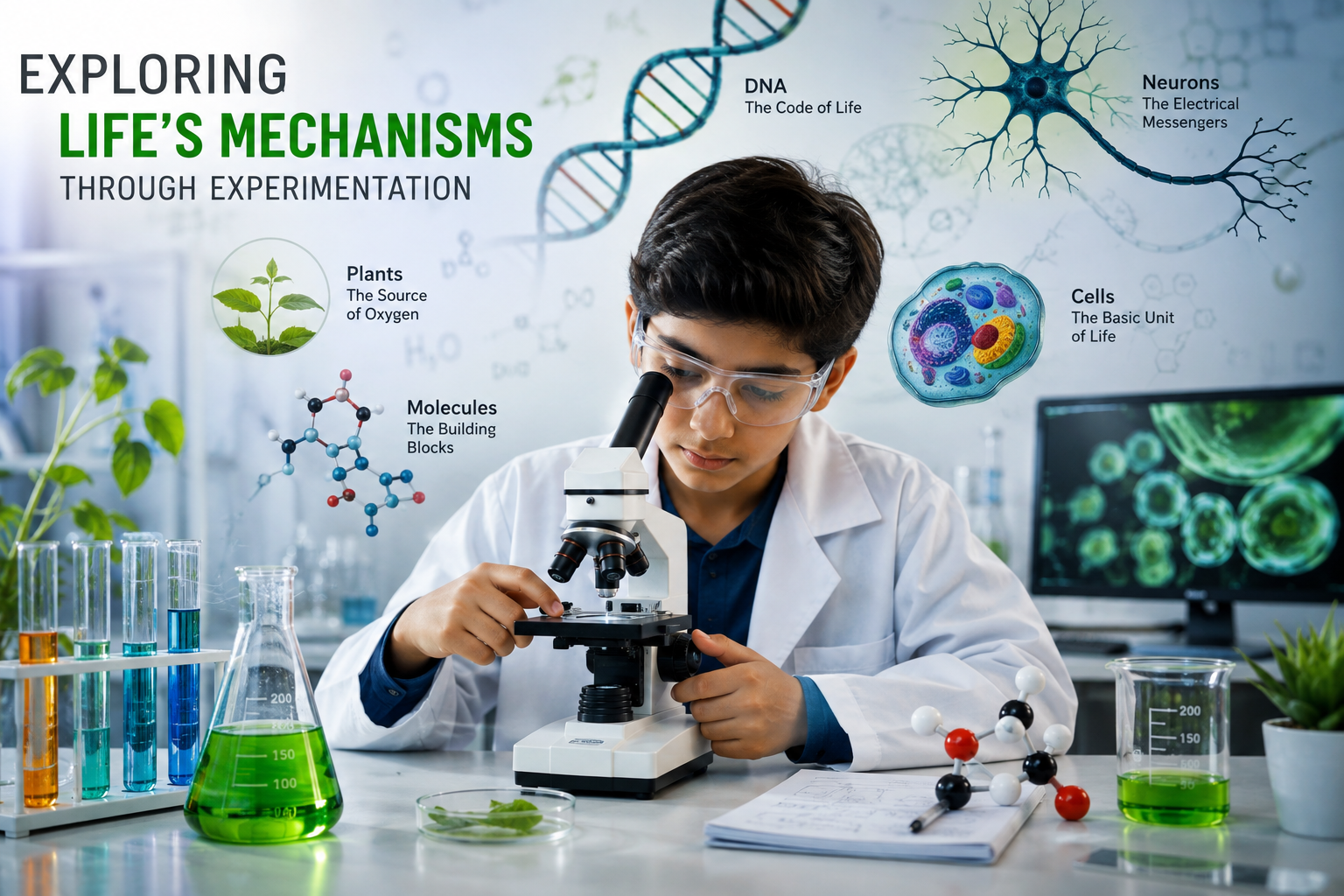
    The Mystery of Life: Exploring the World of Cells**
    Every living thing, from the smallest microorganism to the largest animal, is made up of tiny building blocks called **cells**. Although they are too small to see with the naked eye, cells perform incredible tasks that keep us alive. They produce energy, fight diseases, help us grow, repair damaged tissues, and carry the genetic information that makes each of us unique.
    In this video, we'll explore the amazing world of cells, discover the difference between plant and animal cells, understand the role of the nucleus, mitochondria, cell membrane, and other organelles, and learn why cells are known as the **basic unit of life**. Whether you're a student, teacher, or simply curious about science, this journey into the microscopic world will help you appreciate the fascinating secrets hidden inside every living organism.
    Don't forget to **Like , Share , and Subscribe ** for more exciting science videos and educational content!
    ### Hashtags**
    #Cells #Biology #Science #CellBiology #Microscope #Education #Learning #STEM #HumanBody #PlantCell #AnimalCell #Genetics #LifeScience #ScienceFacts #EducationalVideo #ExploreScience #Knowledge #Students #ScienceLovers #CuriousMinds
    #rsisb Roll no 214 Foundation level Story post no 6 The Mystery of Life: Exploring the World of Cells** 🔬🧬 Every living thing, from the smallest microorganism to the largest animal, is made up of tiny building blocks called **cells**. 🌱✨ Although they are too small to see with the naked eye, cells perform incredible tasks that keep us alive. They produce energy, fight diseases, help us grow, repair damaged tissues, and carry the genetic information that makes each of us unique. 🧫💚 In this video, we'll explore the amazing world of cells, discover the difference between plant and animal cells, understand the role of the nucleus, mitochondria, cell membrane, and other organelles, and learn why cells are known as the **basic unit of life**. Whether you're a student, teacher, or simply curious about science, this journey into the microscopic world will help you appreciate the fascinating secrets hidden inside every living organism. 🌍🔍 Don't forget to **Like 👍, Share 📤, and Subscribe 🔔** for more exciting science videos and educational content! ### Hashtags** #Cells #Biology #Science #CellBiology #Microscope #Education #Learning #STEM #HumanBody #PlantCell #AnimalCell #Genetics #LifeScience #ScienceFacts #EducationalVideo #ExploreScience #Knowledge #Students #ScienceLovers #CuriousMinds
    0 Comentários 0 Compartilhamentos 2260 Visualizações
  • #rsib
    Roll No.190
    Story Post No.37
    Foundation Level

    :

    Why Frogs? Understanding the Anatomy of Life

    Frogs are some of the most fascinating creatures on Earth. They are much more than simple amphibians hopping around ponds and forests. Frogs help scientists understand how living organisms grow, adapt, and survive. Their unique anatomy, incredible life cycle, and important role in ecosystems make them valuable subjects for biological research.

    From tiny eggs to swimming tadpoles and finally adult frogs, their transformation showcases one of nature's most amazing processes. Their sensitive skin, powerful legs, and specialized organs help them thrive both in water and on land. Because frogs react quickly to environmental changes, they are also important indicators of ecosystem health.

    Studying frogs helps researchers learn about genetics, development, medicine, evolution, and environmental conservation. By understanding frogs, we gain deeper insights into life itself and the delicate balance of nature that supports all living things.

    Let's appreciate these incredible amphibians and work together to protect their habitats for future generations.

    #WhyFrogs #FrogAnatomy #Biology #ScienceEducation #LifeScience #Amphibians #Nature #Wildlife #EnvironmentalScience #Ecosystem #FrogLifeCycle #ScientificResearch #STEM #Learning #Education #NatureLovers #AnimalScience #Conservation #Biodiversity #DiscoverScience #EarthScience #AmazingNature #StudyOfLife #Knowledge #ExploreNature
    #rsib Roll No.190 Story Post No.37 Foundation Level : 🐸🔬🌿 Why Frogs? Understanding the Anatomy of Life 🌿🔬🐸 Frogs are some of the most fascinating creatures on Earth. They are much more than simple amphibians hopping around ponds and forests. Frogs help scientists understand how living organisms grow, adapt, and survive. Their unique anatomy, incredible life cycle, and important role in ecosystems make them valuable subjects for biological research. From tiny eggs to swimming tadpoles and finally adult frogs, their transformation showcases one of nature's most amazing processes. Their sensitive skin, powerful legs, and specialized organs help them thrive both in water and on land. Because frogs react quickly to environmental changes, they are also important indicators of ecosystem health. 🌎💧 Studying frogs helps researchers learn about genetics, development, medicine, evolution, and environmental conservation. By understanding frogs, we gain deeper insights into life itself and the delicate balance of nature that supports all living things. 🌱✨ Let's appreciate these incredible amphibians and work together to protect their habitats for future generations. 🐸💚🌍 #WhyFrogs #FrogAnatomy #Biology #ScienceEducation #LifeScience #Amphibians #Nature #Wildlife #EnvironmentalScience #Ecosystem #FrogLifeCycle #ScientificResearch #STEM #Learning #Education #NatureLovers #AnimalScience #Conservation #Biodiversity #DiscoverScience #EarthScience #AmazingNature #StudyOfLife #Knowledge #ExploreNature 🐸🔬🌿💚🌎✨📚🧬🌱
    0 Comentários 0 Compartilhamentos 9987 Visualizações