• #rsisb
    Roll No.240
    Image With Chatgpt No.5
    Foundation Level

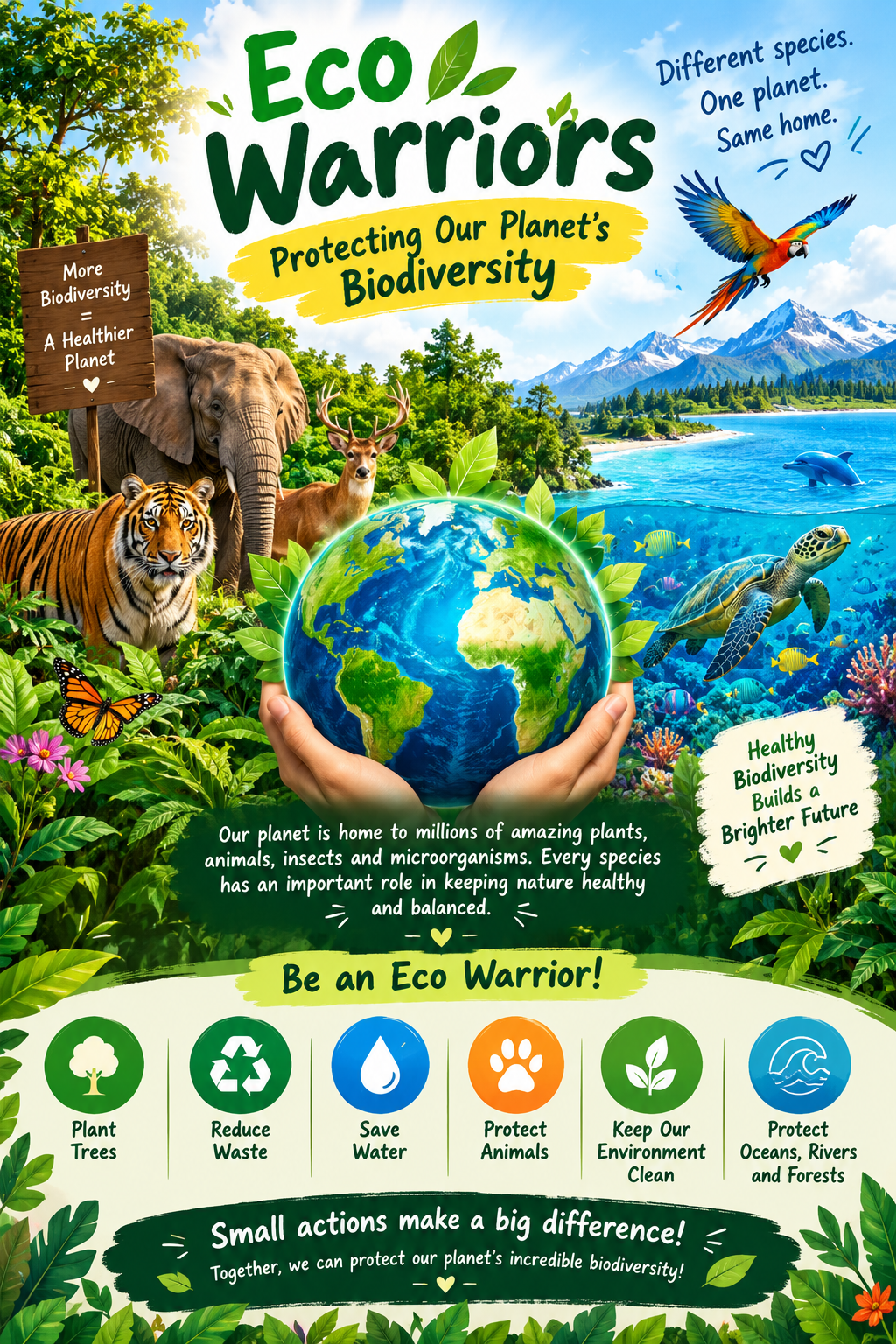
    The Amazon Rainforest is one of the most extraordinary natural environments on our planet. Stretching across a vast area of South America, it is home to an incredible variety of plants, animals, insects, birds, and microorganisms.

    The rainforest is often called the “lungs of the world,” because its plants produce oxygen through photosynthesis and the ecosystem plays an important role in absorbing and storing carbon dioxide. However, the commonly repeated claim that the Amazon produces 20% of the world’s oxygen is misleading. Much of the oxygen produced by plants is also consumed by plants, animals, fungi, and microorganisms within the ecosystem.

    What makes the Amazon truly remarkable is its biodiversity. From colorful macaws flying through the canopy to jaguars moving through the forest, countless species depend on this habitat for food, shelter, and survival.

    The rainforest also has an important role in the global carbon cycle and climate system. Trees and vegetation absorb large amounts of carbon dioxide, storing carbon in plants and soils. This makes protecting healthy forests important for the environment and for communities that depend on them.

    Every part of the Amazon ecosystem is connected. When forests are damaged or destroyed, the effects can spread through habitats, wildlife populations, water systems, and climate processes.

    Learning about the Amazon teaches us an important lesson: protecting nature means protecting the systems that support life. Conservation, responsible land use, reducing deforestation, and caring for biodiversity can all help preserve this extraordinary ecosystem for future generations.

    Explore the rainforest. Discover its biodiversity. Understand its importance. Protect our planet.

    The Amazon is more than just a forest—it is a living, interconnected world filled with life, discovery, and natural wonder.

    #AmazonRainforest #Amazon #Rainforest #DidYouKnow #Nature #Biodiversity #Wildlife #Environment #Earth #PlanetEarth #Forest #TropicalRainforest #Ecology #Science #Biology #ScienceEducation #EnvironmentalEducation #WildlifeConservation #ForestConservation #ProtectNature #SaveTheRainforest #Climate #CarbonCycle #Ecosystem #NaturalWorld #NatureLovers #ExploreNature #EarthScience #LearningJourney #EducationalContent #ScienceFacts #BiodiversityMatters #EverySpeciesCounts #ProtectOurPlanet

    Rehan School Islamabad Campus
    Asma Shaheen EducationWali
    Irum Asim
    Saima Happinesswali

    #rsisb Roll No.240 Image With Chatgpt No.5 Foundation Level The Amazon Rainforest is one of the most extraordinary natural environments on our planet. Stretching across a vast area of South America, it is home to an incredible variety of plants, animals, insects, birds, and microorganisms. 🌎🌱🐒🦋 The rainforest is often called the “lungs of the world,” because its plants produce oxygen through photosynthesis and the ecosystem plays an important role in absorbing and storing carbon dioxide. However, the commonly repeated claim that the Amazon produces 20% of the world’s oxygen is misleading. Much of the oxygen produced by plants is also consumed by plants, animals, fungi, and microorganisms within the ecosystem. What makes the Amazon truly remarkable is its biodiversity. 🌿🐢🐍🦜🐆 From colorful macaws flying through the canopy to jaguars moving through the forest, countless species depend on this habitat for food, shelter, and survival. The rainforest also has an important role in the global carbon cycle and climate system. Trees and vegetation absorb large amounts of carbon dioxide, storing carbon in plants and soils. 🌱🌍 This makes protecting healthy forests important for the environment and for communities that depend on them. Every part of the Amazon ecosystem is connected. 🌳➡️🦋➡️🐦➡️🐆 When forests are damaged or destroyed, the effects can spread through habitats, wildlife populations, water systems, and climate processes. Learning about the Amazon teaches us an important lesson: protecting nature means protecting the systems that support life. 💚🌎 Conservation, responsible land use, reducing deforestation, and caring for biodiversity can all help preserve this extraordinary ecosystem for future generations. ✨ Explore the rainforest. Discover its biodiversity. Understand its importance. Protect our planet. 🌿🔬🌍 The Amazon is more than just a forest—it is a living, interconnected world filled with life, discovery, and natural wonder. 🌳💚🦜 #AmazonRainforest #Amazon #Rainforest #DidYouKnow #Nature #Biodiversity #Wildlife #Environment #Earth #PlanetEarth #Forest #TropicalRainforest #Ecology #Science #Biology #ScienceEducation #EnvironmentalEducation #WildlifeConservation #ForestConservation #ProtectNature #SaveTheRainforest #Climate #CarbonCycle #Ecosystem #NaturalWorld #NatureLovers #ExploreNature #EarthScience #LearningJourney #EducationalContent #ScienceFacts #BiodiversityMatters #EverySpeciesCounts #ProtectOurPlanet 🌎🌿🌳🦜🐆🐢 Rehan School Islamabad Campus Asma Shaheen EducationWali Irum Asim Saima Happinesswali
    0 Commentarios 0 Acciones 182 Views
  • #rsisb
    Roll No.240
    Story No.23
    Foundation Level

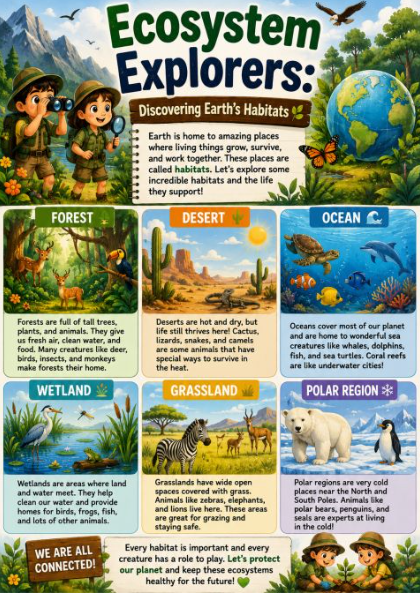
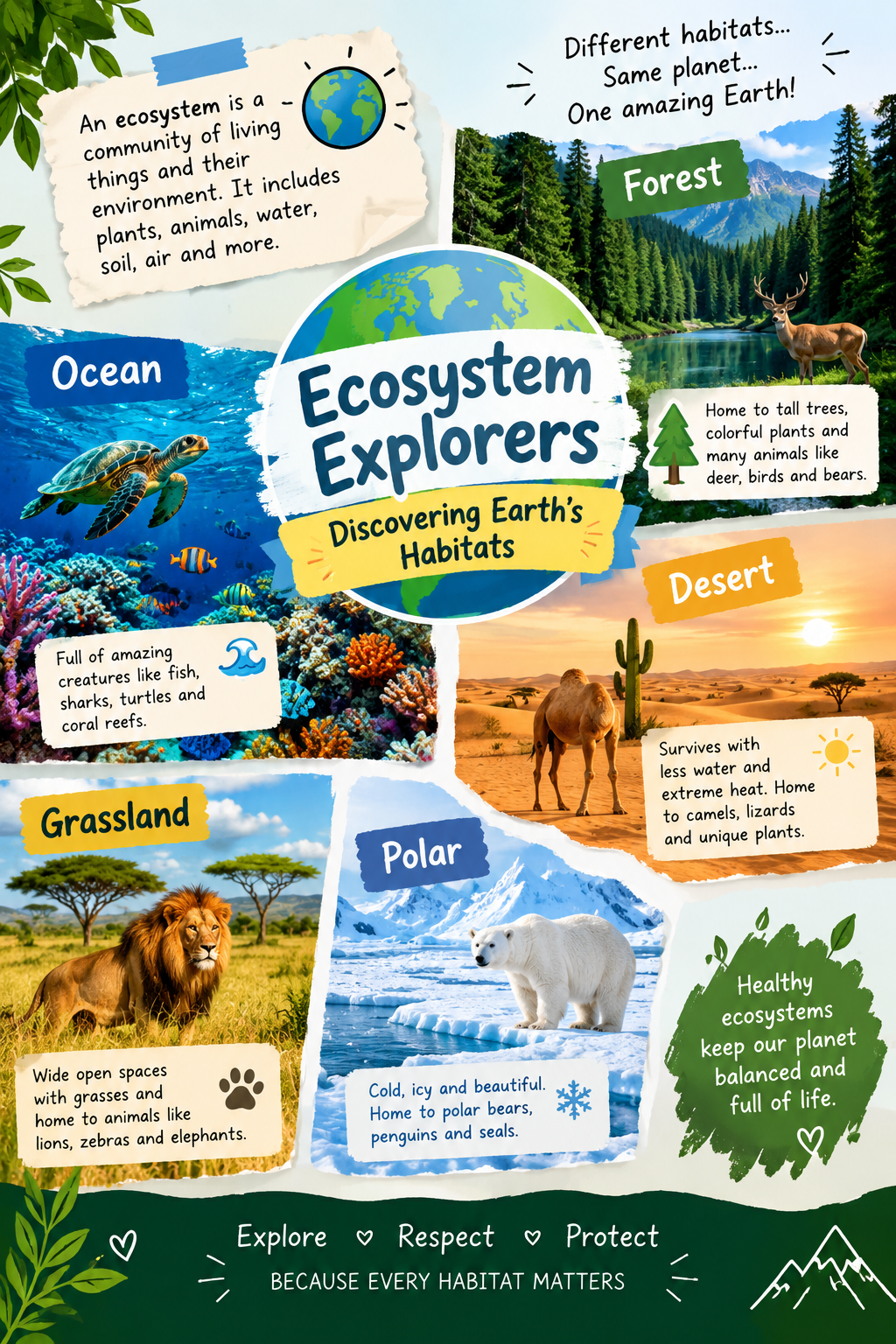
    Every corner of our planet is home to an amazing variety of life, from the highest mountains and deepest oceans to vast forests, peaceful rivers, colorful wetlands, and dry deserts. Each habitat has its own unique environment, plants, animals, and natural systems that work together to support life.

    In **“Ecosystem Explorers: Discovering Earth’s Habitats,”** we take an exciting journey across different ecosystems to discover how living organisms interact with their surroundings. We explore the beauty of forests, the mystery of oceans, the strength of mountain ecosystems, the unique life of deserts, and the importance of freshwater habitats.

    Every ecosystem tells a different story. A forest provides shelter and food for countless species, oceans support incredible marine life, deserts show how animals and plants can adapt to challenging conditions, and wetlands play an important role in maintaining healthy environments.

    This journey helps us understand the importance of **biodiversity** and why every species matters. Even the smallest organisms can have an important role in maintaining the balance of an ecosystem. When one part of an ecosystem changes, it can affect many other living things.

    Learning about habitats is not just about discovering animals and plants. It is also about understanding our responsibility toward nature. By protecting forests, keeping rivers and oceans clean, reducing pollution, conserving wildlife, and respecting natural habitats, we can help create a healthier planet for future generations.

    Our Earth is full of incredible places waiting to be explored. The more we learn about these ecosystems, the more we understand how connected all life truly is. Every habitat has value, every species has a role, and every person can make a positive difference.

    Let’s become true **Ecosystem Explorers**—curious about nature, passionate about learning, and committed to protecting the amazing world around us.

    **Explore Habitats**
    **Discover Biodiversity**
    **Protect Nature**
    **Care for Our Planet**

    **Every Habitat Matters • Every Species Counts**

    #EcosystemExplorers #DiscoveringEarthsHabitats #Ecosystem #Habitats #Biodiversity #Nature #Wildlife #Environment #Earth #PlanetEarth #ExploreNature #NatureExploration #AnimalLife #PlantLife #Forests #Oceans #Deserts #Mountains #Wetlands #Freshwater #MarineLife #WildlifeConservation #ProtectNature #SaveOurPlanet #EnvironmentalEducation #ScienceEducation #Biology #Ecology #LearningJourney #NatureLovers #EarthExplorers #Conservation #ClimateAwareness #SustainableFuture #GreenPlanet #NatureIsAmazing #EverySpeciesCounts #EveryHabitatMatters


    Rehan School Islamabad Campus
    Asma Shaheen EducationWali
    Irum Asim
    Saima Happinesswali


    #rsisb Roll No.240 Story No.23 Foundation Level Every corner of our planet is home to an amazing variety of life, from the highest mountains and deepest oceans to vast forests, peaceful rivers, colorful wetlands, and dry deserts. 🌎✨ Each habitat has its own unique environment, plants, animals, and natural systems that work together to support life. 🦋🌱🐟🦁 In **“Ecosystem Explorers: Discovering Earth’s Habitats,”** we take an exciting journey across different ecosystems to discover how living organisms interact with their surroundings. 🔍🌿 We explore the beauty of forests, the mystery of oceans, the strength of mountain ecosystems, the unique life of deserts, and the importance of freshwater habitats. 🌊🏜️🏞️🌲 Every ecosystem tells a different story. 🌟 A forest provides shelter and food for countless species, oceans support incredible marine life, deserts show how animals and plants can adapt to challenging conditions, and wetlands play an important role in maintaining healthy environments. 🐢🐠🦅🌵 This journey helps us understand the importance of **biodiversity** and why every species matters. 🐆🦋🐢🌺 Even the smallest organisms can have an important role in maintaining the balance of an ecosystem. When one part of an ecosystem changes, it can affect many other living things. 🌱🔗🌍 Learning about habitats is not just about discovering animals and plants. It is also about understanding our responsibility toward nature. 💚🌎 By protecting forests, keeping rivers and oceans clean, reducing pollution, conserving wildlife, and respecting natural habitats, we can help create a healthier planet for future generations. 🌿♻️🌊 Our Earth is full of incredible places waiting to be explored. 🔭🌍 The more we learn about these ecosystems, the more we understand how connected all life truly is. Every habitat has value, every species has a role, and every person can make a positive difference. 🌎❤️ Let’s become true **Ecosystem Explorers**—curious about nature, passionate about learning, and committed to protecting the amazing world around us. 🔍🌿🦜 🌱 **Explore Habitats** 🔎 **Discover Biodiversity** 🛡️ **Protect Nature** 🌍 **Care for Our Planet** ✨ **Every Habitat Matters • Every Species Counts** ✨ #EcosystemExplorers #DiscoveringEarthsHabitats #Ecosystem #Habitats #Biodiversity #Nature #Wildlife #Environment #Earth #PlanetEarth #ExploreNature #NatureExploration #AnimalLife #PlantLife #Forests #Oceans #Deserts #Mountains #Wetlands #Freshwater #MarineLife #WildlifeConservation #ProtectNature #SaveOurPlanet #EnvironmentalEducation #ScienceEducation #Biology #Ecology #LearningJourney #NatureLovers #EarthExplorers #Conservation #ClimateAwareness #SustainableFuture #GreenPlanet #NatureIsAmazing #EverySpeciesCounts #EveryHabitatMatters 🌍🌿🐘🦅🐢🐠 🏔️🌊🌳✨💚 Rehan School Islamabad Campus Asma Shaheen EducationWali Irum Asim Saima Happinesswali
    0 Commentarios 0 Acciones 445 Views
  • RSIF8
    roll no 72
    story post no 1
    story post topic :Ecosystem Explorers: Discovering Earth's Habitats**
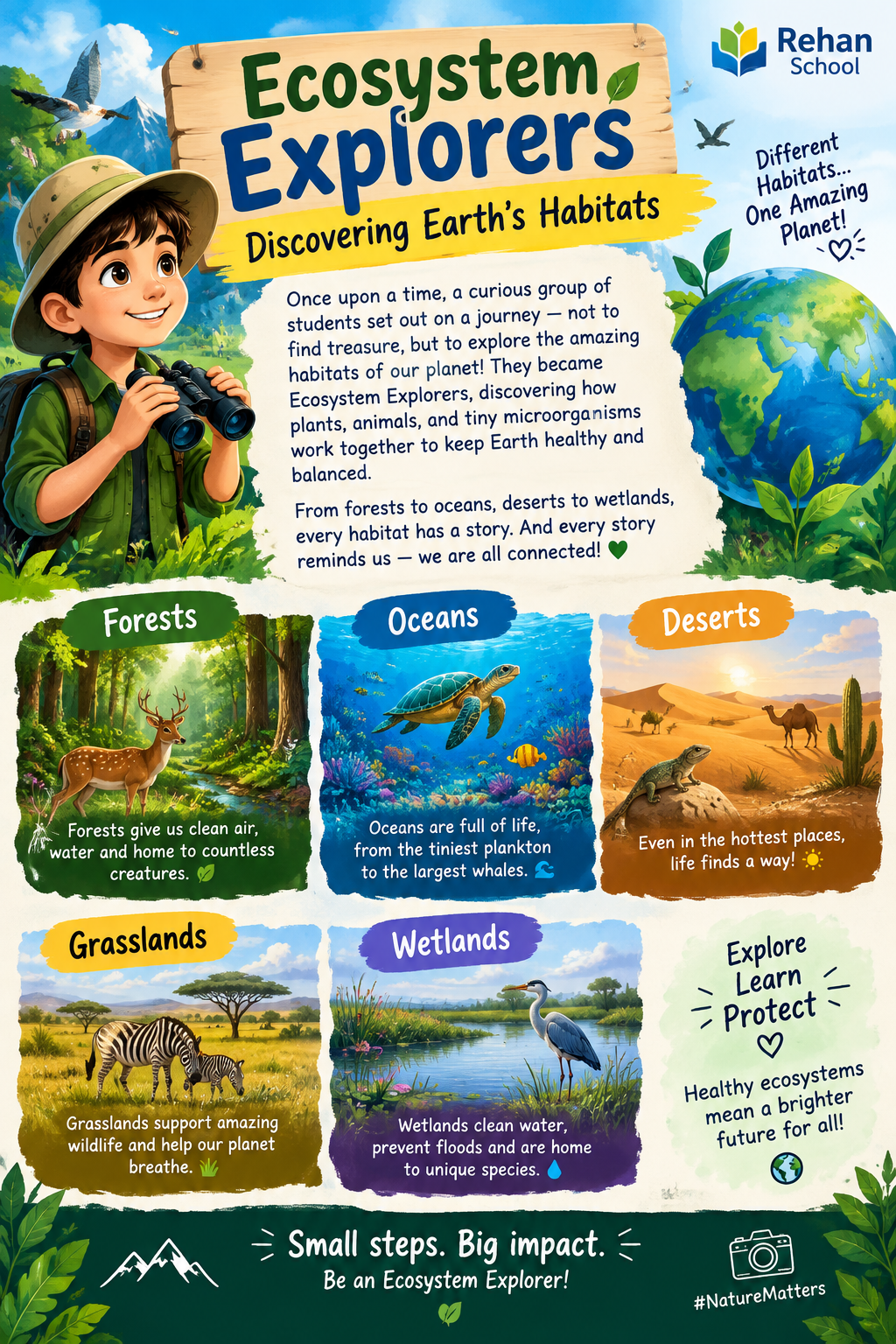
    welcome, young explorers! Earth is full of amazing habitats, and each one is home to different plants, animals, and living things. From the deep blue oceans to the green forests , the hot deserts , wide grasslands , and beautiful wetlands —every ecosystem plays an important role in keeping our planet healthy.
    **Forests** give us oxygen and shelter to countless animals.
    **Deserts** show us how life can survive in extreme conditions.
    **Oceans** are filled with incredible creatures and cover most of our planet.
    **Grasslands** provide homes for grazing animals and many other species.
    **Wetlands** help clean water and support a wonderful variety of wildlife.
    Let's become **Ecosystem Explorers**! Observe nature, learn about Earth's habitats, and help protect the amazing world we all share.
    **Different habitats, one home—Earth. Let's take care of it together!**
    #EcosystemExplorers #EarthHabitats #NatureLovers #ProtectOurPlanet #Wildlife #Forests #Oceans #Deserts #Grasslands #Wetlands #EnvironmentalEducation #ExploreNature #saveearth See less
    RSIF8 roll no 72 story post no 1 story post topic :Ecosystem Explorers: Discovering Earth's Habitats** 🌿🐪🐋 welcome, young explorers! 🔎✨ Earth is full of amazing habitats, and each one is home to different plants, animals, and living things. From the deep blue oceans 🌊 to the green forests 🌲, the hot deserts 🏜️, wide grasslands 🌾, and beautiful wetlands 🦆—every ecosystem plays an important role in keeping our planet healthy. 🌲 **Forests** give us oxygen and shelter to countless animals. 🏜️ **Deserts** show us how life can survive in extreme conditions. 🌊 **Oceans** are filled with incredible creatures and cover most of our planet. 🌾 **Grasslands** provide homes for grazing animals and many other species. 🦆 **Wetlands** help clean water and support a wonderful variety of wildlife. Let's become **Ecosystem Explorers**! 🌎💚 Observe nature, learn about Earth's habitats, and help protect the amazing world we all share. ✨ **Different habitats, one home—Earth. Let's take care of it together!** 🌍💚 #EcosystemExplorers #EarthHabitats #NatureLovers #ProtectOurPlanet #Wildlife #Forests #Oceans #Deserts #Grasslands #Wetlands #EnvironmentalEducation #ExploreNature #saveearth See less
    0 Commentarios 0 Acciones 944 Views
  • RSISB
    Roll No: 209
    Story Post No.37

    Ecosystem Explorers: Discovering Earth’s Habitats

    Embark on an exciting journey across our incredible planet and discover the diverse habitats that make Earth a home for millions of living organisms!

    From lush forests and mysterious oceans to challenging deserts and life-rich wetlands, every ecosystem plays a vital role in maintaining the balance of nature.

    Observe nature.
    Learn about ecosystems.
    Respect every habitat.
    Protect our planet.

    Every habitat has a story, and every species has a role to play. Together, let’s explore, understand, and protect the amazing world we call home!

    #EcosystemExplorers #EarthsHabitats #Ecosystems #Nature #Biodiversity #Wildlife #EnvironmentalEducation #ExploreNature #ProtectOurPlanet #SaveNature #ClimateAwareness #ScienceEducation #NatureLovers #WildlifeConservation #DiscoverEarth
    RSISB Roll No: 209 Story Post No.37 🌍🌿 Ecosystem Explorers: Discovering Earth’s Habitats 🔍🐾 Embark on an exciting journey across our incredible planet and discover the diverse habitats that make Earth a home for millions of living organisms! 🌳🌊🏜️🦋 From lush forests and mysterious oceans to challenging deserts and life-rich wetlands, every ecosystem plays a vital role in maintaining the balance of nature. 🌱⚖️ 🔍 Observe nature. 📚 Learn about ecosystems. 💚 Respect every habitat. 🌍 Protect our planet. Every habitat has a story, and every species has a role to play. Together, let’s explore, understand, and protect the amazing world we call home! 🌎✨ #EcosystemExplorers #EarthsHabitats #Ecosystems #Nature #Biodiversity #Wildlife #EnvironmentalEducation #ExploreNature #ProtectOurPlanet #SaveNature #ClimateAwareness #ScienceEducation #NatureLovers #WildlifeConservation #DiscoverEarth 🌍🌿🐾🔍✨
    0 Commentarios 0 Acciones 1264 Views
  • #rsisb
    Roll no.239
    maya no.18
    Foundation Level

    The word **“Earth”** is one of the oldest and most meaningful words in the English language. It represents much more than the planet beneath our feet. Earth is our **home, the source of life, the ground we walk on, and a symbol of nature and human existence**. But where did this simple word come from, and how did its meaning develop over time?

    The history of the word **“Earth”** takes us back thousands of years. In ancient forms of English and related Germanic languages, words similar to *earth* were used to describe the **ground, soil, land, and the physical world**. Over time, the word developed into the name we now use for our entire planet. Unlike many planets in our Solar System, whose names are connected to ancient gods and mythology, **Earth's English name is closely connected to the ordinary ground beneath our feet**.

    This connection tells us something important about human history. Long before people understood that they lived on a planet moving through space, they experienced Earth simply as the land around them—the soil that grew their food, the ground that supported their homes, and the world they could see and touch.

    As human knowledge grew, our understanding of Earth changed dramatically. Ancient thinkers observed the sky and began asking important questions about the shape and nature of the world. Over centuries, explorers, scientists, astronomers, and travelers expanded humanity's understanding of the planet. Eventually, space exploration allowed humans to see Earth from beyond its atmosphere. Those images showed something extraordinary: **our vast world is a beautiful, fragile-looking sphere surrounded by the darkness of space**.

    From a scientific perspective, Earth is the **third planet from the Sun** and the only world currently known to support life. It has liquid water on its surface, a protective atmosphere, and a wide variety of environments that support countless living organisms. Its oceans, forests, mountains, deserts, rivers, and grasslands form an incredibly diverse and interconnected system.

    Earth's structure is also fascinating. Beneath the surface are different layers, including the **crust, mantle, and core**. These layers influence many natural processes, including the movement of tectonic plates, earthquakes, volcanic activity, and the formation of mountains. Although we live on the surface, the planet beneath us is constantly changing.

    Life on Earth depends on a delicate balance. **Air, water, sunlight, soil, and biodiversity** all play essential roles in supporting life. Plants produce oxygen and form the foundation of many ecosystems. Oceans help regulate climate and support an enormous variety of life. Forests provide habitats and influence the movement of water and carbon through the environment.

    However, Earth also faces serious environmental challenges. **Pollution, deforestation, habitat destruction, and climate change** affect ecosystems and communities around the world. These challenges remind us that Earth is not an unlimited resource. The choices humans make today can influence the quality of life for future generations.

    Protecting Earth does not always require extraordinary actions. Small changes can make a difference, such as **reducing waste, conserving water and energy, planting and protecting trees, avoiding unnecessary pollution, and learning more about the environment**. Governments, scientists, businesses, communities, and individuals all have important roles to play.

    The word **“Earth”** also has a powerful emotional and cultural meaning. People may come from different countries, speak different languages, and follow different traditions, but we all share the same planet. From this perspective, Earth can be seen as a symbol of our **shared home and shared responsibility**.

    **“Earth” – The History of Our Home in a Word** is therefore a journey through **language, history, science, nature, and human imagination**. The story of this word shows how language grows alongside human knowledge. What once described the soil beneath people's feet eventually became the name of an entire world traveling through space.

    The next time you hear or say the word **“Earth,”** remember that it carries a remarkable story. It connects us to the ancient past, the natural world around us, and the future we are helping to create.

    **Earth is not just where we live—it is the only home we all share. Protecting it is a responsibility that belongs to everyone.**

    ### **Hashtags**

    #Earth #OurPlanet #PlanetEarth #WordHistory #HistoryOfEarth #EnglishLanguage #LanguageHistory #Science #Nature #Environment #ClimateAwareness #ProtectOurPlanet #Sustainability #EarthScience #Space #Astronomy #LifeOnEarth #MotherEarth #SaveEarth #GoGreen #CleanEnvironment #Biodiversity #ClimateChange #Education #Knowledge #LearnAndExplore #OnePlanet #FutureGenerations #EarthLovers #OurHome
    #rsisb Roll no.239 maya no.18 Foundation Level The word **“Earth”** is one of the oldest and most meaningful words in the English language. It represents much more than the planet beneath our feet. Earth is our **home, the source of life, the ground we walk on, and a symbol of nature and human existence**. But where did this simple word come from, and how did its meaning develop over time? The history of the word **“Earth”** takes us back thousands of years. In ancient forms of English and related Germanic languages, words similar to *earth* were used to describe the **ground, soil, land, and the physical world**. Over time, the word developed into the name we now use for our entire planet. Unlike many planets in our Solar System, whose names are connected to ancient gods and mythology, **Earth's English name is closely connected to the ordinary ground beneath our feet**. 📖🌱 This connection tells us something important about human history. Long before people understood that they lived on a planet moving through space, they experienced Earth simply as the land around them—the soil that grew their food, the ground that supported their homes, and the world they could see and touch. As human knowledge grew, our understanding of Earth changed dramatically. Ancient thinkers observed the sky and began asking important questions about the shape and nature of the world. Over centuries, explorers, scientists, astronomers, and travelers expanded humanity's understanding of the planet. Eventually, space exploration allowed humans to see Earth from beyond its atmosphere. Those images showed something extraordinary: **our vast world is a beautiful, fragile-looking sphere surrounded by the darkness of space**. 🚀🌌 From a scientific perspective, Earth is the **third planet from the Sun** and the only world currently known to support life. It has liquid water on its surface, a protective atmosphere, and a wide variety of environments that support countless living organisms. Its oceans, forests, mountains, deserts, rivers, and grasslands form an incredibly diverse and interconnected system. 🌊🏔️🌳 Earth's structure is also fascinating. Beneath the surface are different layers, including the **crust, mantle, and core**. These layers influence many natural processes, including the movement of tectonic plates, earthquakes, volcanic activity, and the formation of mountains. Although we live on the surface, the planet beneath us is constantly changing. Life on Earth depends on a delicate balance. **Air, water, sunlight, soil, and biodiversity** all play essential roles in supporting life. Plants produce oxygen and form the foundation of many ecosystems. Oceans help regulate climate and support an enormous variety of life. Forests provide habitats and influence the movement of water and carbon through the environment. However, Earth also faces serious environmental challenges. **Pollution, deforestation, habitat destruction, and climate change** affect ecosystems and communities around the world. These challenges remind us that Earth is not an unlimited resource. The choices humans make today can influence the quality of life for future generations. 🌿♻️ Protecting Earth does not always require extraordinary actions. Small changes can make a difference, such as **reducing waste, conserving water and energy, planting and protecting trees, avoiding unnecessary pollution, and learning more about the environment**. Governments, scientists, businesses, communities, and individuals all have important roles to play. The word **“Earth”** also has a powerful emotional and cultural meaning. People may come from different countries, speak different languages, and follow different traditions, but we all share the same planet. From this perspective, Earth can be seen as a symbol of our **shared home and shared responsibility**. 🤝🌍 **“Earth” – The History of Our Home in a Word** is therefore a journey through **language, history, science, nature, and human imagination**. The story of this word shows how language grows alongside human knowledge. What once described the soil beneath people's feet eventually became the name of an entire world traveling through space. The next time you hear or say the word **“Earth,”** remember that it carries a remarkable story. It connects us to the ancient past, the natural world around us, and the future we are helping to create. **Earth is not just where we live—it is the only home we all share. Protecting it is a responsibility that belongs to everyone.** 🌍💚✨ ### 🔖 **Hashtags** #Earth #OurPlanet #PlanetEarth #WordHistory #HistoryOfEarth #EnglishLanguage #LanguageHistory #Science #Nature #Environment #ClimateAwareness #ProtectOurPlanet #Sustainability #EarthScience #Space #Astronomy #LifeOnEarth #MotherEarth #SaveEarth #GoGreen #CleanEnvironment #Biodiversity #ClimateChange #Education #Knowledge #LearnAndExplore #OnePlanet #FutureGenerations #EarthLovers #OurHome 🌍🌿💚✨
    0 Commentarios 0 Acciones 3129 Views 17
  • #rsisb
    Roll No.269
    Foundation Level
    Story Post No.7


    # The Journey of Dinosaurs: A Scientific Perspective

    Dinosaurs are some of the most fascinating creatures to ever walk on Earth. In this video, **“The Journey of Dinosaurs: A Scientific Perspective,”** we explore their incredible history through the lens of science and discover how these remarkable animals lived, evolved, and eventually disappeared.

    From their origins millions of years ago to the rise of famous dinosaurs such as **Tyrannosaurus rex, Triceratops, Stegosaurus, and Velociraptor**, we take a journey through prehistoric Earth. We’ll learn how scientists use fossils, rocks, footprints, and other evidence to understand the lives of dinosaurs and reconstruct their ancient world.

    The video also explores dinosaur evolution, their different habitats, diets, behaviors, and the changing environment of prehistoric Earth. Scientists have discovered that dinosaurs were incredibly diverse, ranging from small feathered species to enormous plant-eating giants.

    We’ll also look at one of the biggest mysteries in Earth’s history: **what caused the extinction of most dinosaurs about 66 million years ago?** By examining scientific evidence, we can better understand the asteroid impact and the environmental changes that played a major role in the end of the non-avian dinosaurs.

    But the story of dinosaurs did not completely end. Modern birds are considered living dinosaurs, meaning that part of the dinosaur story continues today!

    Join us on this exciting scientific journey through millions of years of history and discover how dinosaurs changed our understanding of life on Earth.

    Like the video
    Share your thoughts in the comments
    Subscribe for more educational and science content!

    #Dinosaurs #DinosaurHistory #Science #Paleontology #PrehistoricLife #DinosaurEvolution #TyrannosaurusRex #Fossils #EarthHistory #Jurassic #Cretaceous #ScienceEducation #AncientWorld #Extinction #Learning

    #rsisb Roll No.269 Foundation Level Story Post No.7 # The Journey of Dinosaurs: A Scientific Perspective 🦖🌍🔬 Dinosaurs are some of the most fascinating creatures to ever walk on Earth. In this video, **“The Journey of Dinosaurs: A Scientific Perspective,”** we explore their incredible history through the lens of science and discover how these remarkable animals lived, evolved, and eventually disappeared. From their origins millions of years ago to the rise of famous dinosaurs such as **Tyrannosaurus rex, Triceratops, Stegosaurus, and Velociraptor**, we take a journey through prehistoric Earth. 🌋🦕 We’ll learn how scientists use fossils, rocks, footprints, and other evidence to understand the lives of dinosaurs and reconstruct their ancient world. The video also explores dinosaur evolution, their different habitats, diets, behaviors, and the changing environment of prehistoric Earth. 🌿🌋 Scientists have discovered that dinosaurs were incredibly diverse, ranging from small feathered species to enormous plant-eating giants. We’ll also look at one of the biggest mysteries in Earth’s history: **what caused the extinction of most dinosaurs about 66 million years ago?** ☄️🌍 By examining scientific evidence, we can better understand the asteroid impact and the environmental changes that played a major role in the end of the non-avian dinosaurs. But the story of dinosaurs did not completely end. Modern birds are considered living dinosaurs, meaning that part of the dinosaur story continues today! 🐦🦖 Join us on this exciting scientific journey through millions of years of history and discover how dinosaurs changed our understanding of life on Earth. 👍 Like the video 💬 Share your thoughts in the comments 🔔 Subscribe for more educational and science content! #Dinosaurs #DinosaurHistory #Science #Paleontology #PrehistoricLife #DinosaurEvolution #TyrannosaurusRex #Fossils #EarthHistory #Jurassic #Cretaceous #ScienceEducation #AncientWorld #Extinction #Learning 🦖🔬🌍
    0 Commentarios 0 Acciones 2482 Views
  • RSISB
    Roll No:#209
    Story Post No.27


    Ecosystem Explorers: Discovering Earth's Habitats

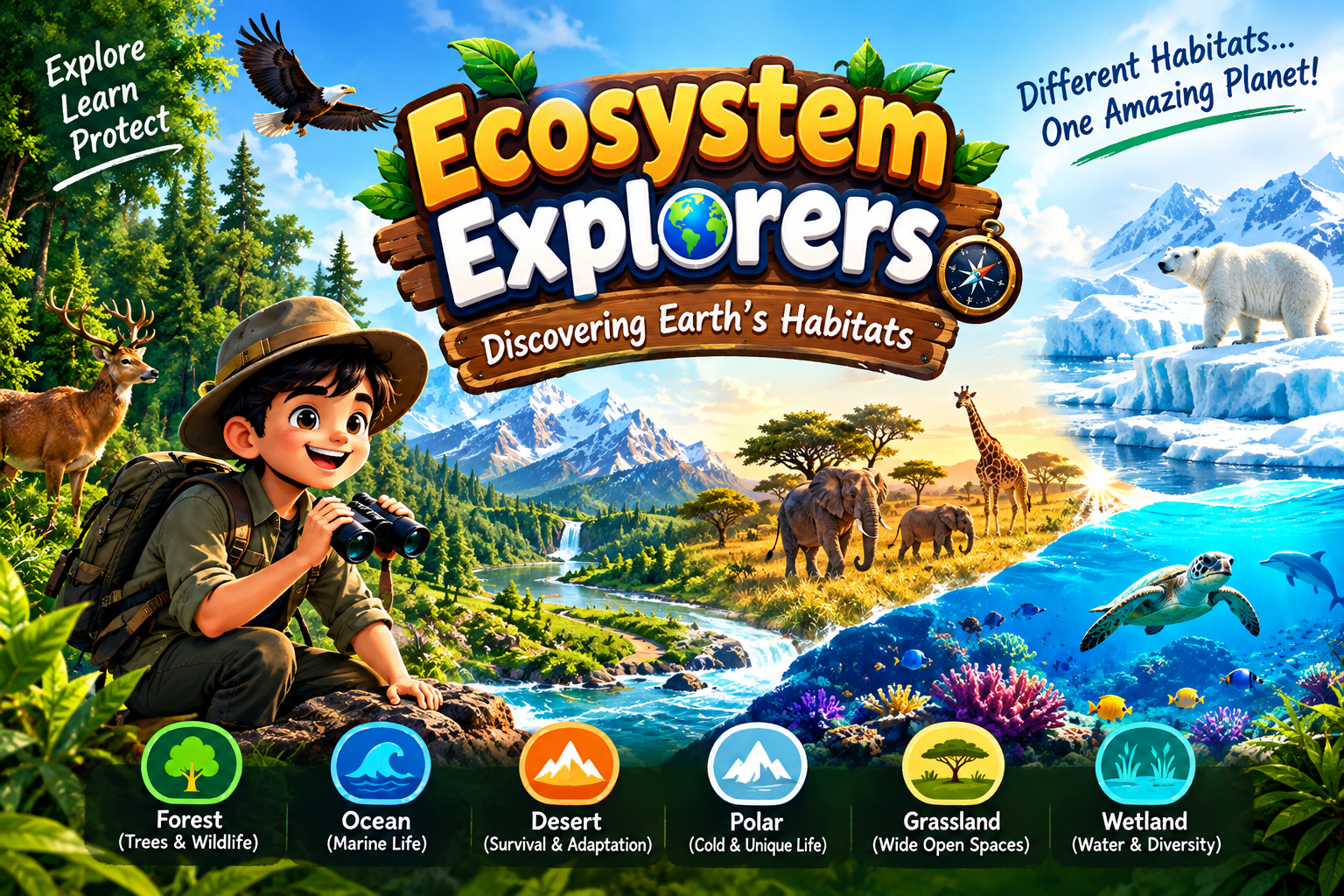
    Step into the amazing world of Earth's ecosystems and discover the incredible habitats that support life on our planet! From lush forests and vast oceans to deserts , grasslands , and icy polar regions , every habitat has its own unique environment and fascinating wildlife.

    In this exciting journey, we explore how plants, animals, climate, and natural resources work together to create balanced ecosystems. Understanding these connections helps us appreciate the incredible diversity of life and reminds us why protecting our planet is so important.

    Explore. Discover. Learn. Protect. Let's uncover the wonders of Earth's habitats and become true Ecosystem Explorers!

    #EcosystemExplorers #Ecosystems #EarthHabitats #Nature #Wildlife #Biodiversity #Environment #Science #EarthScience #AnimalWorld #PlantLife #NatureLovers #EnvironmentalAwareness #SaveOurPlanet #Sustainability #Education #Learning #DiscoverNature #Climate #Knowledge
    RSISB Roll No:#209 Story Post No.27 🌍🌿 Ecosystem Explorers: Discovering Earth's Habitats 🐾🔍 Step into the amazing world of Earth's ecosystems and discover the incredible habitats that support life on our planet! 🌎✨ From lush forests 🌳 and vast oceans 🌊 to deserts 🏜️, grasslands 🌾, and icy polar regions ❄️, every habitat has its own unique environment and fascinating wildlife. 🦁🐧🐠 In this exciting journey, we explore how plants, animals, climate, and natural resources work together to create balanced ecosystems. 🌱🦋 Understanding these connections helps us appreciate the incredible diversity of life and reminds us why protecting our planet is so important. 💚♻️ 🔎🌟 Explore. Discover. Learn. Protect. Let's uncover the wonders of Earth's habitats and become true Ecosystem Explorers! 🚀🌍 #EcosystemExplorers #Ecosystems #EarthHabitats #Nature #Wildlife #Biodiversity #Environment #Science #EarthScience #AnimalWorld #PlantLife #NatureLovers #EnvironmentalAwareness #SaveOurPlanet #Sustainability #Education #Learning #DiscoverNature #Climate #Knowledge 🌍🌿🐾🔍🌳🌊🏜️🌾❄️🦁🐧🐠🦋💚♻️✨📚🚀
    0 Commentarios 0 Acciones 3549 Views
  • Use chatgpt to make stories, or scripts for videos or drama for actings or jokes to inspire people to make a greener Pakistan

    Here are 30 titles for each day of August to inspire and engage students in your campaign to plant trees and make Pakistan greener:

    "Day 1: Greening the Future - Lets Begin!"
    "Day 2: Planting Hope for a Greener Pakistan."
    "Day 3: Dig Deep, Plant Strong - Trees Unite!"
    "Day 4: Rooting for a Sustainable Tomorrow."
    "Day 5: Growing Together, Building a Better Pakistan."
    "Day 6: Embracing Natures Gifts - One Tree at a Time."
    "Day 7: From Seeds to Forests - Our Journey Begins."
    "Day 8: Uniting for Greenery - Students Lead the Way."
    "Day 9: Let Nature Flourish - Plant a Tree Today."
    "Day 10: Students for Sustainability - Making an Impact."
    "Day 11: Growing Stronger, Growing Greener."
    "Day 12: Branching Out - Greening Every Corner."
    "Day 13: Cultivating Change - A Greener Pakistan Ahead."
    "Day 14: Celebrating Independence with Trees!"
    "Day 15: Empowering Students - Guardians of Greenery."
    "Day 16: Nurturing Nature - Our Responsibility."
    "Day 17: United in Green - Students Making a Difference."
    "Day 18: Planting Dreams, Sowing Success."
    "Day 19: A Greener Pakistan, A Brighter Future."
    "Day 20: Growing Green Minds - Tomorrows Leaders."
    "Day 21: Reviving Ecosystems - Each Tree Counts."
    "Day 22: Building Green Habitats - One Tree at a Time."
    "Day 23: Thriving Together - Students and Trees Unite."
    "Day 24: Roots of Change - Planting for Progress."
    "Day 25: Green Champions - Students Making an Impact."
    "Day 26: Growing Community - Trees Unite Us."
    "Day 27: Reaching for the Sky - Trees and Dreams."
    "Day 28: Inspiring Green Actions - Today and Beyond."
    "Day 29: Students Greening Pakistan - We Can, We Will!"
    "Day 30: Culmination of Green Dreams - A Greener Pakistan."
    Feel free to adjust or personalize these titles to suit your campaigns theme and goals. Best of luck with your tree-planting campaign and making a positive impact on Pakistans environment!
    Use chatgpt to make stories, or scripts for videos or drama for actings or jokes to inspire people to make a greener Pakistan 🇵🇰 Here are 30 titles for each day of August to inspire and engage students in your campaign to plant trees and make Pakistan greener: "Day 1: Greening the Future - Let's Begin!" "Day 2: Planting Hope for a Greener Pakistan." "Day 3: Dig Deep, Plant Strong - Trees Unite!" "Day 4: Rooting for a Sustainable Tomorrow." "Day 5: Growing Together, Building a Better Pakistan." "Day 6: Embracing Nature's Gifts - One Tree at a Time." "Day 7: From Seeds to Forests - Our Journey Begins." "Day 8: Uniting for Greenery - Students Lead the Way." "Day 9: Let Nature Flourish - Plant a Tree Today." "Day 10: Students for Sustainability - Making an Impact." "Day 11: Growing Stronger, Growing Greener." "Day 12: Branching Out - Greening Every Corner." "Day 13: Cultivating Change - A Greener Pakistan Ahead." "Day 14: Celebrating Independence with Trees!" "Day 15: Empowering Students - Guardians of Greenery." "Day 16: Nurturing Nature - Our Responsibility." "Day 17: United in Green - Students Making a Difference." "Day 18: Planting Dreams, Sowing Success." "Day 19: A Greener Pakistan, A Brighter Future." "Day 20: Growing Green Minds - Tomorrow's Leaders." "Day 21: Reviving Ecosystems - Each Tree Counts." "Day 22: Building Green Habitats - One Tree at a Time." "Day 23: Thriving Together - Students and Trees Unite." "Day 24: Roots of Change - Planting for Progress." "Day 25: Green Champions - Students Making an Impact." "Day 26: Growing Community - Trees Unite Us." "Day 27: Reaching for the Sky - Trees and Dreams." "Day 28: Inspiring Green Actions - Today and Beyond." "Day 29: Students Greening Pakistan - We Can, We Will!" "Day 30: Culmination of Green Dreams - A Greener Pakistan." Feel free to adjust or personalize these titles to suit your campaign's theme and goals. Best of luck with your tree-planting campaign and making a positive impact on Pakistan's environment!
    0 Commentarios 0 Acciones 928 Views
  • In Pakistan, there are numerous species of non-venomous snakes that are harmless to humans. These snakes play a crucial role in the ecosystem, primarily by controlling pest populations. Below is a list of some of the non-poisonous (non-venomous) snakes found in Pakistan:

    ### Non-Poisonous Snakes in Pakistan:

    1. **Indian Rock Python (Python molurus)**
    - One of the largest snake species, these pythons are non-venomous and kill their prey by constriction.

    2. **Red Sand Boa (Eryx johnii)**
    - A burrowing snake commonly found in sandy areas. It is harmless and often mistaken for a venomous species due to its robust appearance.

    3. **Common Wolf Snake (Lycodon aulicus)**
    - A small, nocturnal snake that feeds mainly on lizards. It is commonly found in urban areas.

    4. **Rat Snake (Ptyas mucosa)**
    - Also known as the Indian rat snake, it is a large, fast-moving snake that preys on rodents and is often found near human habitations.

    5. **Checkered Keelback (Xenochrophis piscator)**
    - A semi-aquatic snake often found near water bodies. It primarily feeds on fish and amphibians.

    6. **Oriental Garden Snake (Ptyas mucosa)**
    - A common snake found in gardens and agricultural areas, feeding on frogs and small rodents.

    7. **Bronzeback Tree Snake (Dendrelaphis tristis)**
    - A slender, arboreal snake that is commonly found in trees and bushes, feeding on small vertebrates.

    8. **Common Trinket Snake (Coelognathus helena)**
    - Known for its striking pattern, this snake is non-venomous and feeds on rodents and birds.

    9. **Dhaman (Ptyas mucosa)**
    - Also known as the Oriental ratsnake, it is non-venomous and found in a variety of habitats, including urban areas.

    10. **Common Vine Snake (Ahaetulla nasuta)**
    - A slender, green snake that lives in trees and shrubs, feeding on lizards and frogs. It has a mildly toxic venom, but it is not harmful to humans.

    ### Summary:
    Pakistan is home to approximately 72 snake species, of which about **14-18** are venomous. The remaining **54-58** species are non-venomous and pose no significant threat to humans. The percentage of venomous snakes in Pakistan is roughly **19.4% to 25%**, meaning that the majority, **75% to 80.6%**, of snake species in Pakistan are non-venomous.

    Non-venomous snakes, such as the Indian Rock Python, Red Sand Boa, and Common Wolf Snake, play an essential role in the ecosystem by controlling rodent and pest populations, and they should be protected rather than feared.
    In Pakistan, there are numerous species of non-venomous snakes that are harmless to humans. These snakes play a crucial role in the ecosystem, primarily by controlling pest populations. Below is a list of some of the non-poisonous (non-venomous) snakes found in Pakistan: ### Non-Poisonous Snakes in Pakistan: 1. **Indian Rock Python (Python molurus)** - One of the largest snake species, these pythons are non-venomous and kill their prey by constriction. 2. **Red Sand Boa (Eryx johnii)** - A burrowing snake commonly found in sandy areas. It is harmless and often mistaken for a venomous species due to its robust appearance. 3. **Common Wolf Snake (Lycodon aulicus)** - A small, nocturnal snake that feeds mainly on lizards. It is commonly found in urban areas. 4. **Rat Snake (Ptyas mucosa)** - Also known as the Indian rat snake, it is a large, fast-moving snake that preys on rodents and is often found near human habitations. 5. **Checkered Keelback (Xenochrophis piscator)** - A semi-aquatic snake often found near water bodies. It primarily feeds on fish and amphibians. 6. **Oriental Garden Snake (Ptyas mucosa)** - A common snake found in gardens and agricultural areas, feeding on frogs and small rodents. 7. **Bronzeback Tree Snake (Dendrelaphis tristis)** - A slender, arboreal snake that is commonly found in trees and bushes, feeding on small vertebrates. 8. **Common Trinket Snake (Coelognathus helena)** - Known for its striking pattern, this snake is non-venomous and feeds on rodents and birds. 9. **Dhaman (Ptyas mucosa)** - Also known as the Oriental ratsnake, it is non-venomous and found in a variety of habitats, including urban areas. 10. **Common Vine Snake (Ahaetulla nasuta)** - A slender, green snake that lives in trees and shrubs, feeding on lizards and frogs. It has a mildly toxic venom, but it is not harmful to humans. ### Summary: Pakistan is home to approximately 72 snake species, of which about **14-18** are venomous. The remaining **54-58** species are non-venomous and pose no significant threat to humans. The percentage of venomous snakes in Pakistan is roughly **19.4% to 25%**, meaning that the majority, **75% to 80.6%**, of snake species in Pakistan are non-venomous. Non-venomous snakes, such as the Indian Rock Python, Red Sand Boa, and Common Wolf Snake, play an essential role in the ecosystem by controlling rodent and pest populations, and they should be protected rather than feared.
    0 Commentarios 0 Acciones 1168 Views
  • Urgent Need for Tree Planting in Karachi!

    Karachi and Sindh are facing a serious environmental crisis due to deforestation, rising temperatures, and pollution. During the construction of the Red Line Bus Rapid Transit (BRT) project, around 3,802 trees were cut down, yet the promise to plant five new trees for each one felled has not been fulfilled.

    Why Trees Matter:

    Trees absorb harmful CO2, helping fight climate change.
    They cool down our environment, combating heatwaves.
    Trees act as natural filters, improving air quality.
    They preserve biodiversity, providing habitats for wildlife.
    They help prevent desertification by stabilizing soil and retaining moisture.

    The situation is dire—Karachi has seen deadly heatwaves and increased pollution. Without trees, we’re facing rising temperatures, poor air quality, and threats to public health.

    The Solution? Massive tree plantation efforts! We must green our urban spaces, restore forests, and involve our communities in tree-planting campaigns.

    The High Court has ordered that no more trees be cut in Sindh unless absolutely necessary, with proper approval and relocation.

    Let’s act NOW to protect our city and our planet for future generations! #PlantTrees #GreenKarachi #SaveThePlanet #BRTProject
    🚨 Urgent Need for Tree Planting in Karachi! 🌳 Karachi and Sindh are facing a serious environmental crisis due to deforestation, rising temperatures, and pollution. During the construction of the Red Line Bus Rapid Transit (BRT) project, around 3,802 trees were cut down, yet the promise to plant five new trees for each one felled has not been fulfilled. Why Trees Matter: • 🌍 Trees absorb harmful CO2, helping fight climate change. • 🌞 They cool down our environment, combating heatwaves. • 🌬️ Trees act as natural filters, improving air quality. • 🦜 They preserve biodiversity, providing habitats for wildlife. • 🌾 They help prevent desertification by stabilizing soil and retaining moisture. The situation is dire—Karachi has seen deadly heatwaves and increased pollution. Without trees, we’re facing rising temperatures, poor air quality, and threats to public health. 🌱 The Solution? Massive tree plantation efforts! We must green our urban spaces, restore forests, and involve our communities in tree-planting campaigns. The High Court has ordered that no more trees be cut in Sindh unless absolutely necessary, with proper approval and relocation. 🌿 Let’s act NOW to protect our city and our planet for future generations! #PlantTrees #GreenKarachi #SaveThePlanet #BRTProject
    0 Commentarios 0 Acciones 4003 Views
Resultados de la búsqueda