• **The Mystery of Flight MH370**

    On March 8, 2014, Malaysia Airlines Flight MH370 disappeared while flying from Kuala Lumpur to Beijing with **239 people on board**. What happened next became one of the biggest mysteries in aviation history.

    The aircraft vanished from civilian radar, and investigators later discovered evidence suggesting that it may have changed direction and continued flying for hours. Despite massive search efforts across the Indian Ocean, the main wreckage has never been located.

    Some debris believed to be from the aircraft was discovered years later, but many questions remain unanswered. What caused the plane to change course? Where did it finally go down? And will the world ever discover the full truth?

    In this video, we explore the disappearance of MH370, the search for the aircraft, the clues investigators discovered, and the theories surrounding this mysterious case.

    **This video is for educational and storytelling purposes.**

    What do you think happened to MH370?

    **Share your theory in the comments!**

    #MH370 #MalaysiaAirlines #PlaneMystery #AviationMystery #UnsolvedMystery #PlaneCrash #Mystery #Aviation #MH370Mystery #TrueMystery #MissingPlane #History #Investigation #OceanMystery
    ✈️ **The Mystery of Flight MH370** 🌊🔍 On March 8, 2014, Malaysia Airlines Flight MH370 disappeared while flying from Kuala Lumpur to Beijing with **239 people on board**. What happened next became one of the biggest mysteries in aviation history. The aircraft vanished from civilian radar, and investigators later discovered evidence suggesting that it may have changed direction and continued flying for hours. Despite massive search efforts across the Indian Ocean, the main wreckage has never been located. Some debris believed to be from the aircraft was discovered years later, but many questions remain unanswered. What caused the plane to change course? Where did it finally go down? And will the world ever discover the full truth? In this video, we explore the disappearance of MH370, the search for the aircraft, the clues investigators discovered, and the theories surrounding this mysterious case. ⚠️ **This video is for educational and storytelling purposes.** What do you think happened to MH370? 🤔✈️ 💬 **Share your theory in the comments!** #MH370 #MalaysiaAirlines #PlaneMystery #AviationMystery #UnsolvedMystery #PlaneCrash #Mystery #Aviation #MH370Mystery #TrueMystery #MissingPlane #History #Investigation #OceanMystery
    0 Comentários 1 Compartilhamentos 657 Visualizações 21
  • Mohsin RS F8
    Story post NO:16
    roll NO:13
    Class: Foundation Level
    Made by Me

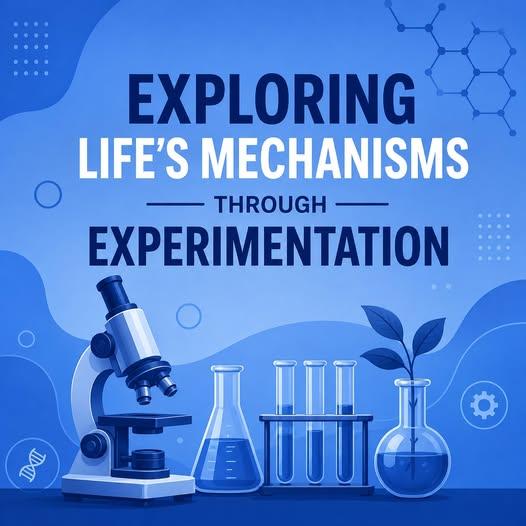
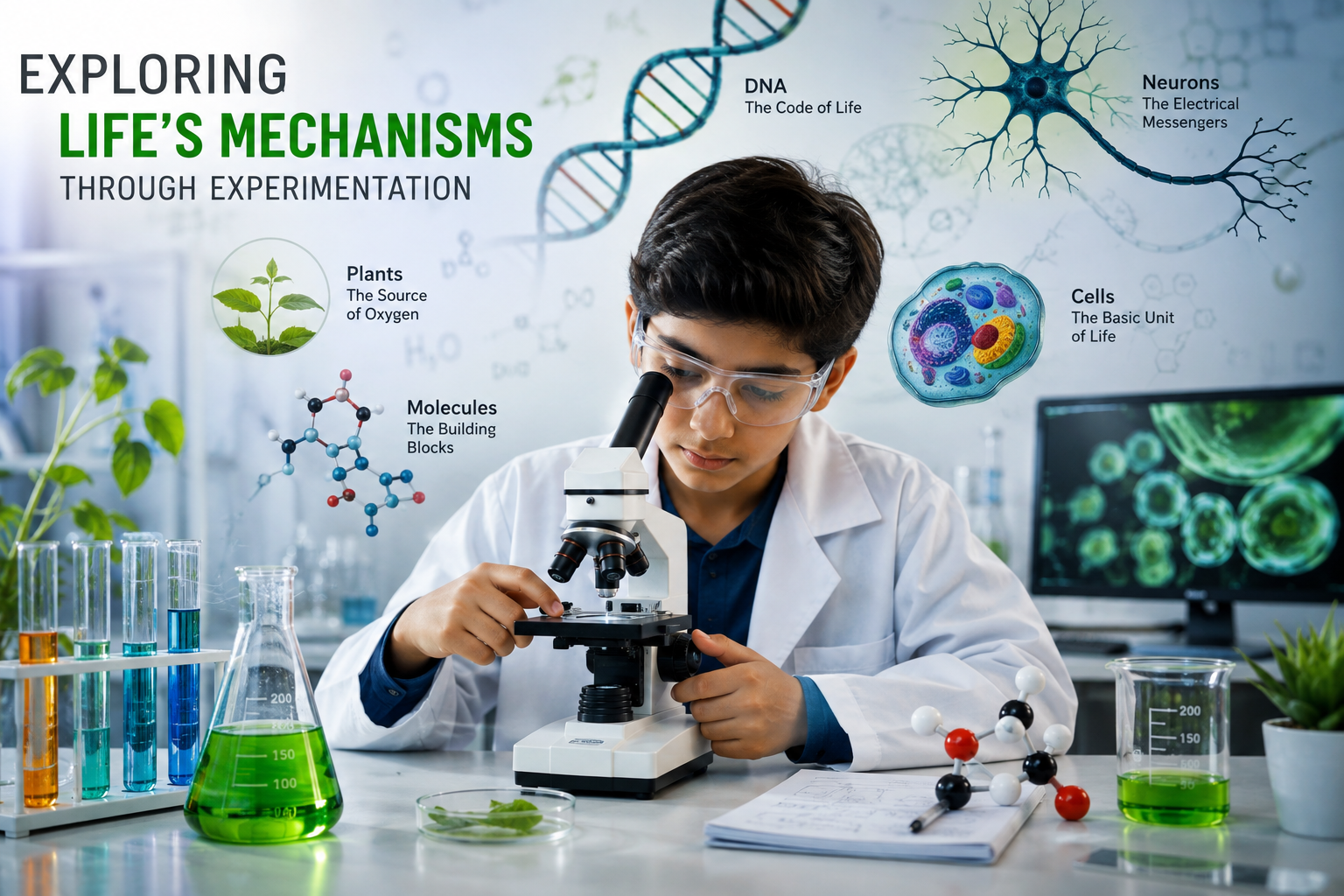
    Exploring Life’s Mechanisms Through Experimentation

    Life is a remarkable system filled with countless processes that work together every moment. From the activity of tiny cells to the growth of plants and the functioning of complex organisms, nature is constantly performing fascinating biological processes. But how can we understand these hidden mechanisms? The answer lies in scientific investigation and experimentation.

    Experimentation gives us a way to explore the living world through observation, questions, testing, and evidence. Instead of simply believing an explanation, scientists investigate it carefully. They ask questions such as: How do plants grow? How do cells obtain energy? How do organisms respond to their environment? What factors affect biological processes? These questions can lead to experiments that help us discover how life works.

    A scientific experiment usually begins with curiosity. A researcher observes something interesting and develops a question about it. The researcher may then create a hypothesis, which is a possible explanation that can be tested. After designing an appropriate investigation, observations and measurements are collected. The results are then analyzed to determine whether they support the original idea.

    For example, scientists can investigate how different environmental conditions affect plant growth. By carefully controlling relevant factors and observing changes over time, researchers can learn more about the relationship between living organisms and their surroundings. Experiments like these help turn simple observations into scientific knowledge.

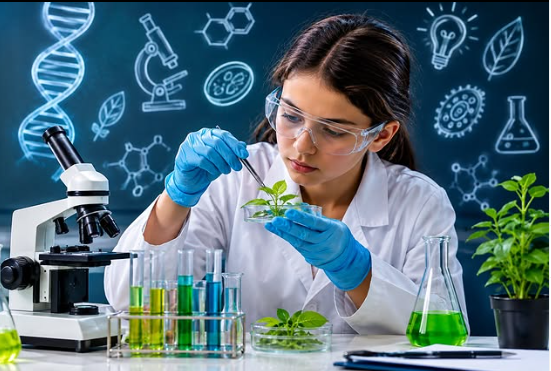
    Laboratory tools also play an important role in exploring life's mechanisms. Microscopes allow researchers to observe structures that are too small to see with the naked eye. Test tubes, petri dishes, measuring equipment, and other laboratory tools allow scientists to conduct controlled investigations. Modern technologies have expanded these possibilities even further, allowing researchers to study DNA, proteins, cells, and many other biological systems.
    Mohsin RS F8 🎓✨ Story post NO:16 roll NO:13 Class: Foundation Level 📚 Made by Me 💻🚀 🔬 Exploring Life’s Mechanisms Through Experimentation Life is a remarkable system filled with countless processes that work together every moment. From the activity of tiny cells to the growth of plants and the functioning of complex organisms, nature is constantly performing fascinating biological processes. But how can we understand these hidden mechanisms? The answer lies in scientific investigation and experimentation. Experimentation gives us a way to explore the living world through observation, questions, testing, and evidence. Instead of simply believing an explanation, scientists investigate it carefully. They ask questions such as: How do plants grow? How do cells obtain energy? How do organisms respond to their environment? What factors affect biological processes? These questions can lead to experiments that help us discover how life works. A scientific experiment usually begins with curiosity. A researcher observes something interesting and develops a question about it. The researcher may then create a hypothesis, which is a possible explanation that can be tested. After designing an appropriate investigation, observations and measurements are collected. The results are then analyzed to determine whether they support the original idea. For example, scientists can investigate how different environmental conditions affect plant growth. By carefully controlling relevant factors and observing changes over time, researchers can learn more about the relationship between living organisms and their surroundings. Experiments like these help turn simple observations into scientific knowledge. Laboratory tools also play an important role in exploring life's mechanisms. Microscopes allow researchers to observe structures that are too small to see with the naked eye. Test tubes, petri dishes, measuring equipment, and other laboratory tools allow scientists to conduct controlled investigations. Modern technologies have expanded these possibilities even further, allowing researchers to study DNA, proteins, cells, and many other biological systems.
    0 Comentários 0 Compartilhamentos 295 Visualizações
  • RSIF8
    Roll no: 99
    Story post no: 21
    Story topic: Exploring Life's Mechanisms Through Experimentation
    Experimentation is an essential part of biology that helps us understand how living organisms function. By conducting experiments, scientists can observe biological processes, test ideas, and discover how different systems interact with one another.
    From studying cells and enzymes to observing plant growth and biological reactions, experiments allow us to explore the mechanisms that make life possible. Through careful observation and investigation, we can turn questions into knowledge and gain a deeper appreciation for the complexity of living systems.
    #BiologyExperiments #Biology #LifeScience #Science #Experimentation #BiologyEducation #STEM #LearnBiology #ScienceEducation #Education
    RSIF8 Roll no: 99 Story post no: 21 Story topic: Exploring Life's Mechanisms Through Experimentation Experimentation is an essential part of biology that helps us understand how living organisms function. By conducting experiments, scientists can observe biological processes, test ideas, and discover how different systems interact with one another. From studying cells and enzymes to observing plant growth and biological reactions, experiments allow us to explore the mechanisms that make life possible. Through careful observation and investigation, we can turn questions into knowledge and gain a deeper appreciation for the complexity of living systems. #BiologyExperiments #Biology #LifeScience #Science #Experimentation #BiologyEducation #STEM #LearnBiology #ScienceEducation #Education
    0 Comentários 0 Compartilhamentos 1216 Visualizações
  • RSIF 8

    Roll no 93

    Story post no 33

    Story post topic: "Bio Detectives: Unveiling the DNA Code". **Bio Detectives: Unveiling the DNA Code**


    What if the smallest molecule in our body could reveal some of the biggest mysteries of life? Welcome to the fascinating world of **DNA**, where scientists become real-life bio detectives!


    DNA, or deoxyribonucleic acid, contains the biological instructions that help make each living organism unique. It acts like a remarkable biological blueprint, carrying information that is passed from one generation to the next.


    In this story, we follow the journey of **Bio Detectives** as they explore the hidden clues inside DNA. By studying genetic information, scientists can learn more about living organisms, investigate inherited conditions, support medical research, identify species, and help solve forensic mysteries.


    **DNA can help us explore:**

    Identifying different species

    Understanding inherited conditions and diseases

    Supporting forensic investigations

    Learning about evolution and biodiversity

    Discovering how living organisms work


    Imagine a tiny code containing clues about life itself. Every DNA sequence is part of a much bigger biological story, and modern science gives researchers powerful tools to read and understand those clues.


    **Key Message:**

    Science teaches us that even the smallest structures can hold incredible information. By studying DNA, we can better understand where life comes from, how organisms change, and how biological discoveries can help humanity.


    **Explore. Discover. Learn.**

    The code of life is waiting to be uncovered!


    #BioDetectives #DNA #DNACode #Genetics #Biology #Science #ScienceEducation #Biotechnology #Forensics #Evolution #MedicalScience #LifeScience #GeneticResearch #STEM #ScienceIsAmazing #Learning #Education #DiscoverScience #DNAResearch #FutureOfScience
    RSIF 8 Roll no 93 Story post no 33 Story post topic: "Bio Detectives: Unveiling the DNA Code".🧬🔍 **Bio Detectives: Unveiling the DNA Code** What if the smallest molecule in our body could reveal some of the biggest mysteries of life? Welcome to the fascinating world of **DNA**, where scientists become real-life bio detectives! 🧪🔬 DNA, or deoxyribonucleic acid, contains the biological instructions that help make each living organism unique. It acts like a remarkable biological blueprint, carrying information that is passed from one generation to the next. In this story, we follow the journey of **Bio Detectives** as they explore the hidden clues inside DNA. By studying genetic information, scientists can learn more about living organisms, investigate inherited conditions, support medical research, identify species, and help solve forensic mysteries. 🧬 **DNA can help us explore:** 🔎 Identifying different species 🏥 Understanding inherited conditions and diseases 🕵️ Supporting forensic investigations 🌱 Learning about evolution and biodiversity 🔬 Discovering how living organisms work Imagine a tiny code containing clues about life itself. Every DNA sequence is part of a much bigger biological story, and modern science gives researchers powerful tools to read and understand those clues. 🌟 **Key Message:** Science teaches us that even the smallest structures can hold incredible information. By studying DNA, we can better understand where life comes from, how organisms change, and how biological discoveries can help humanity. 🚀 **Explore. Discover. Learn.** The code of life is waiting to be uncovered! #BioDetectives #DNA #DNACode #Genetics #Biology #Science #ScienceEducation #Biotechnology #Forensics #Evolution #MedicalScience #LifeScience #GeneticResearch #STEM #ScienceIsAmazing #Learning #Education #DiscoverScience #DNAResearch #FutureOfScience
    0 Comentários 0 Compartilhamentos 1862 Visualizações
  • #rsisb
    Roll no.239
    Song no .30
    Foundation Level

    **From Specimens to Knowledge: The Purpose of Science Experiments** explores how scientists use specimens, observations, and experiments to understand the living world. By carefully examining biological materials and testing scientific ideas, researchers can gather evidence and develop reliable explanations.

    Experiments help transform **curiosity into knowledge** by allowing scientists to ask questions, test hypotheses, analyze results, and discover how biological systems work. From cells and microorganisms to plants and animals, scientific investigation helps us better understand the complexity of life.

    #ScienceExperiments #Biology #ScientificMethod #Specimens #Research #Science #Education #Learning #ScientificDiscovery
    #rsisb Roll no.239 Song no .30 Foundation Level **From Specimens to Knowledge: The Purpose of Science Experiments** explores how scientists use specimens, observations, and experiments to understand the living world. 🌱✨ By carefully examining biological materials and testing scientific ideas, researchers can gather evidence and develop reliable explanations. Experiments help transform **curiosity into knowledge** by allowing scientists to ask questions, test hypotheses, analyze results, and discover how biological systems work. From cells and microorganisms to plants and animals, scientific investigation helps us better understand the complexity of life. 🧬🌍 #ScienceExperiments #Biology #ScientificMethod #Specimens #Research #Science #Education #Learning #ScientificDiscovery 🔬🧪✨
    0 Comentários 0 Compartilhamentos 2055 Visualizações 5

  • #rsisb
    Roll no.239
    Song no .27
    Foundation Level

    **Dissecting Frogs: A Gateway to Human Anatomy** explores how studying frog anatomy can help students understand the basic organization and functions of vertebrate bodies. By observing organs and body systems, students can learn important concepts about structures such as the **heart, lungs, digestive system, and reproductive organs**.

    Frog dissection has traditionally been used in biology education to develop skills in **anatomical observation, scientific investigation, and understanding body systems**. It can also provide a useful foundation for comparing vertebrate anatomy with human anatomy while recognizing important differences between species.

    #FrogDissection #HumanAnatomy #Biology #Anatomy #ScienceEducation #LifeScience #Learning #Science
    #rsisb Roll no.239 Song no .27 Foundation Level **Dissecting Frogs: A Gateway to Human Anatomy** explores how studying frog anatomy can help students understand the basic organization and functions of vertebrate bodies. 🧬📚 By observing organs and body systems, students can learn important concepts about structures such as the **heart, lungs, digestive system, and reproductive organs**. Frog dissection has traditionally been used in biology education to develop skills in **anatomical observation, scientific investigation, and understanding body systems**. It can also provide a useful foundation for comparing vertebrate anatomy with human anatomy while recognizing important differences between species. 🔬🫀 #FrogDissection #HumanAnatomy #Biology #Anatomy #ScienceEducation #LifeScience #Learning #Science 🔬🐸🧬
    0 Comentários 0 Compartilhamentos 1615 Visualizações 4
  • #rsisb
    Roll No.240
    Image With Chatgpt No.6
    Foundation Level

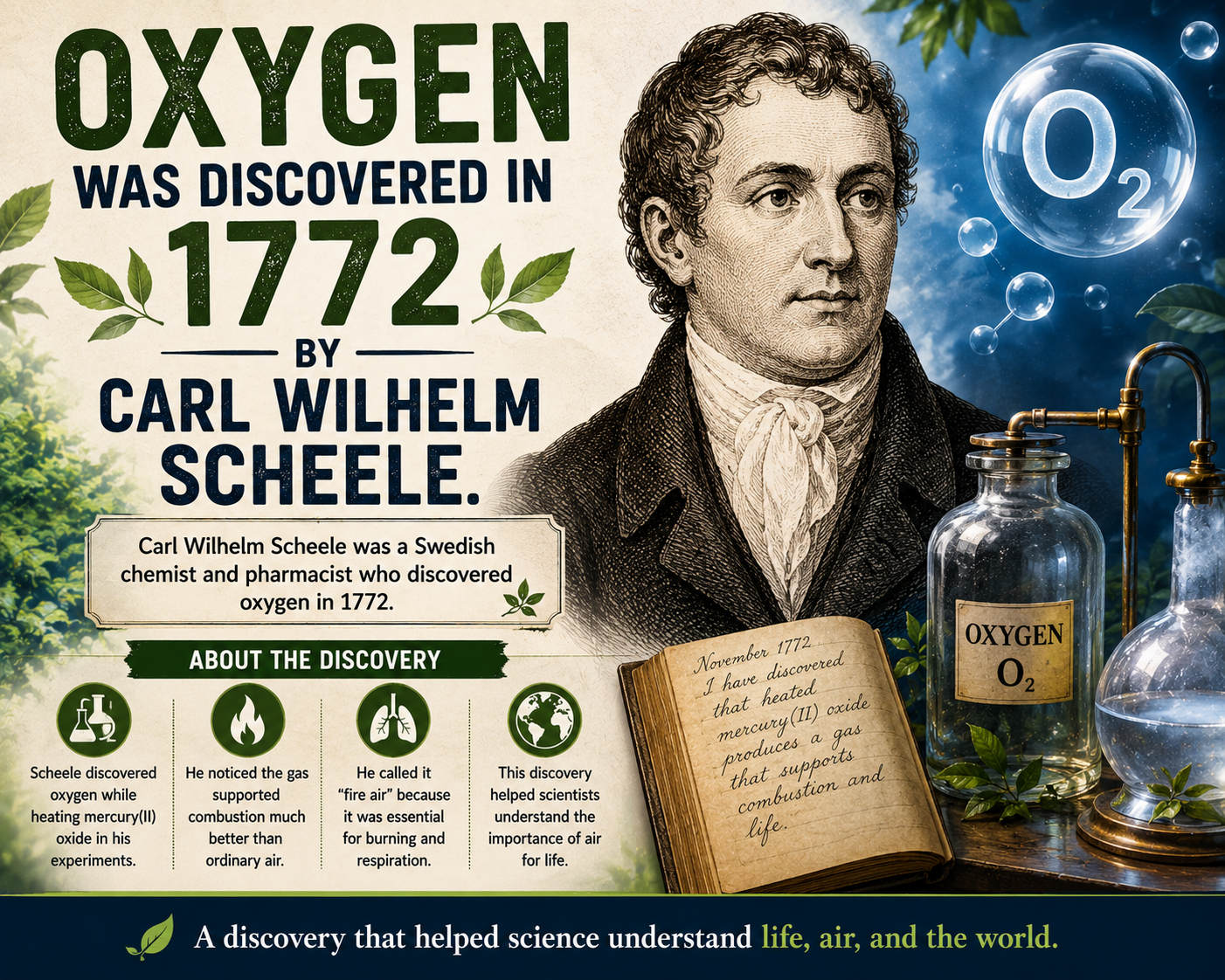
    Oxygen is one of the most important elements for life on Earth, but its discovery was the result of careful experiments, curiosity, and scientific investigation.

    In 1772, Swedish chemist and pharmacist Carl Wilhelm Scheele identified a gas that behaved differently from ordinary air. He found that this gas strongly supported combustion and played an important role in the processes we now understand as respiration and burning.

    Scheele referred to the gas as “fire air” because of its ability to support combustion. His experiments helped reveal that air was not simply one single substance, but a mixture containing different gases.

    The story of oxygen’s discovery is a fascinating example of how science develops through observation and experimentation. Scientists investigate materials, record their observations, test ideas, and gradually build a better understanding of the natural world.

    Although Scheele discovered oxygen independently, the recognition and naming of oxygen as an element also involved other scientists, including Joseph Priestley and Antoine Lavoisier. Their work helped establish oxygen’s role in combustion and contributed to the development of modern chemistry.

    Oxygen is represented by the chemical symbol O and has the atomic number 8. It is essential for aerobic respiration in humans and many other organisms. Without oxygen, most familiar forms of complex life could not survive.

    The discovery of oxygen changed the way scientists understood air, combustion, chemistry, and life. It became an important part of the scientific revolution in chemistry and helped researchers develop a much clearer understanding of chemical reactions.

    This story also reminds us that major scientific discoveries often happen through patience, careful observation, and a willingness to ask questions. Every experiment can reveal something new, and every discovery can open the door to further knowledge.

    From “fire air” to oxygen, the journey of discovery changed chemistry forever.

    Science teaches us that the world around us is full of mysteries waiting to be explored. Whether studying gases, atoms, cells, planets, or living organisms, curiosity is often the first step toward discovery.

    Question. Observe. Experiment. Discover. Learn.

    #Oxygen #DiscoveryOfOxygen #CarlWilhelmScheele #ScienceHistory #HistoryOfScience #Chemistry #ChemicalElements #OxygenDiscovery #1772 #ScientificDiscovery #ScienceEducation #ChemistryFacts #ScienceFacts #LearnScience #ScientificRevolution #Combustion #Air #Respiration #ChemistryHistory #STEM #Education #LearningJourney #ScienceExperiment #ScientificThinking #Research #Discovery #Knowledge #Innovation #Curiosity #ExploreScience #ScienceLovers #EducationalContent #Scientists #ChemicalScience #ModernChemistry #ScienceJourney #HistoryOfChemistry

    Rehan School Islamabad Campus
    Asma Shaheen EducationWali
    Irum Asim
    Saima Happinesswali

    #rsisb Roll No.240 Image With Chatgpt No.6 Foundation Level Oxygen is one of the most important elements for life on Earth, but its discovery was the result of careful experiments, curiosity, and scientific investigation. 🌱🫁🔥 In 1772, Swedish chemist and pharmacist Carl Wilhelm Scheele identified a gas that behaved differently from ordinary air. He found that this gas strongly supported combustion and played an important role in the processes we now understand as respiration and burning. 🔥🧪 Scheele referred to the gas as “fire air” because of its ability to support combustion. His experiments helped reveal that air was not simply one single substance, but a mixture containing different gases. 🌬️🔬 The story of oxygen’s discovery is a fascinating example of how science develops through observation and experimentation. Scientists investigate materials, record their observations, test ideas, and gradually build a better understanding of the natural world. 📚🔎💡 Although Scheele discovered oxygen independently, the recognition and naming of oxygen as an element also involved other scientists, including Joseph Priestley and Antoine Lavoisier. Their work helped establish oxygen’s role in combustion and contributed to the development of modern chemistry. ⚗️🧠🌍 Oxygen is represented by the chemical symbol O and has the atomic number 8. It is essential for aerobic respiration in humans and many other organisms. 🫁🌿🐾 Without oxygen, most familiar forms of complex life could not survive. The discovery of oxygen changed the way scientists understood air, combustion, chemistry, and life. 🌎🔥🔬 It became an important part of the scientific revolution in chemistry and helped researchers develop a much clearer understanding of chemical reactions. This story also reminds us that major scientific discoveries often happen through patience, careful observation, and a willingness to ask questions. 💭➡️🔬➡️💡 Every experiment can reveal something new, and every discovery can open the door to further knowledge. ✨ From “fire air” to oxygen, the journey of discovery changed chemistry forever. ✨ Science teaches us that the world around us is full of mysteries waiting to be explored. 🌍🔎 Whether studying gases, atoms, cells, planets, or living organisms, curiosity is often the first step toward discovery. 🚀📚 🌟 Question. Observe. Experiment. Discover. Learn. 🌟 #Oxygen #DiscoveryOfOxygen #CarlWilhelmScheele #ScienceHistory #HistoryOfScience #Chemistry #ChemicalElements #OxygenDiscovery #1772 #ScientificDiscovery #ScienceEducation #ChemistryFacts #ScienceFacts #LearnScience #ScientificRevolution #Combustion #Air #Respiration #ChemistryHistory #STEM #Education #LearningJourney #ScienceExperiment #ScientificThinking #Research #Discovery #Knowledge #Innovation #Curiosity #ExploreScience #ScienceLovers #EducationalContent #Scientists #ChemicalScience #ModernChemistry #ScienceJourney #HistoryOfChemistry 🔬🧪🌍🔥🫁📚💡✨🚀🌱 Rehan School Islamabad Campus Asma Shaheen EducationWali Irum Asim Saima Happinesswali
    0 Comentários 0 Compartilhamentos 7885 Visualizações
  • #rsisb
    Roll no.247
    story post .24
    Foundation level

    **Exploring Life’s Mechanisms Through Experimentation**

    Life is full of fascinating mysteries, and science gives us the tools to explore them! **“Exploring Life’s Mechanisms Through Experimentation”** takes us on an exciting journey into the world of biology, where observation, questions, experiments, and discoveries help us understand how living things work.

    From the tiny structures inside cells to the complex systems that allow plants, animals, and humans to grow and survive ‍, experimentation helps scientists uncover the mechanisms behind life. By carefully designing experiments, collecting evidence, analyzing results, and learning from unexpected outcomes, we can turn curiosity into knowledge.

    This topic highlights the importance of the **scientific method**—asking meaningful questions, forming hypotheses, conducting fair tests, recording observations, and drawing conclusions based on evidence. Every experiment, whether successful or not, can teach us something valuable and lead to new questions.

    **Cells and their functions**
    **DNA and genetic information**
    **Plant growth and photosynthesis**
    **How body systems work together**
    **Microorganisms and their environments**
    **Chemical processes involved in life**
    **How living organisms interact with their surroundings**

    Experimentation also teaches important skills such as critical thinking, patience, teamwork, creativity, problem-solving, and careful observation. Science is not simply about memorizing facts—it is about discovering *why* and *how* things happen.

    Every observation can inspire a question.
    Every question can lead to an investigation.
    Every experiment can reveal something new.
    And every discovery can help us understand life a little better.

    Join us as we explore the amazing mechanisms that make life possible and discover how scientific experimentation continues to expand our understanding of the natural world!

    #ExploringLife #LifeScience #Biology #ScienceExperiment #ScientificMethod #ScienceEducation #BiologyExperiments #CellBiology #DNA #Genetics #Photosynthesis #HumanBiology #Microbiology #ScienceLearning #STEM #STEMEducation #YoungScientists #ScienceDiscovery #Experimentation #ScientificDiscovery #Curiosity #CriticalThinking #LearningScience #Nature #LivingThings #ScienceIsAmazing
    #rsisb Roll no.247 story post .24 Foundation level 🔬🧬 **Exploring Life’s Mechanisms Through Experimentation** 🌱✨ Life is full of fascinating mysteries, and science gives us the tools to explore them! 🔍🧪 **“Exploring Life’s Mechanisms Through Experimentation”** takes us on an exciting journey into the world of biology, where observation, questions, experiments, and discoveries help us understand how living things work. 🌍🔬 From the tiny structures inside cells 🦠 to the complex systems that allow plants, animals, and humans to grow and survive 🌿🧑‍🔬, experimentation helps scientists uncover the mechanisms behind life. By carefully designing experiments, collecting evidence, analyzing results, and learning from unexpected outcomes, we can turn curiosity into knowledge. 💡📊 This topic highlights the importance of the **scientific method**—asking meaningful questions, forming hypotheses, conducting fair tests, recording observations, and drawing conclusions based on evidence. 📝🔎 Every experiment, whether successful or not, can teach us something valuable and lead to new questions. 🧫 **Cells and their functions** 🧬 **DNA and genetic information** 🌱 **Plant growth and photosynthesis** 🫀 **How body systems work together** 🦠 **Microorganisms and their environments** ⚗️ **Chemical processes involved in life** 🌎 **How living organisms interact with their surroundings** Experimentation also teaches important skills such as critical thinking, patience, teamwork, creativity, problem-solving, and careful observation. 🧠🤝✨ Science is not simply about memorizing facts—it is about discovering *why* and *how* things happen. 🌟 Every observation can inspire a question. 🔍 Every question can lead to an investigation. 🧪 Every experiment can reveal something new. 💡 And every discovery can help us understand life a little better. Join us as we explore the amazing mechanisms that make life possible and discover how scientific experimentation continues to expand our understanding of the natural world! 🚀🔬🌿 #ExploringLife #LifeScience #Biology #ScienceExperiment #ScientificMethod #ScienceEducation #BiologyExperiments #CellBiology #DNA #Genetics #Photosynthesis #HumanBiology #Microbiology #ScienceLearning #STEM #STEMEducation #YoungScientists #ScienceDiscovery #Experimentation #ScientificDiscovery #Curiosity #CriticalThinking #LearningScience #Nature #LivingThings #ScienceIsAmazing 🔬🧬🌱🧪✨
    0 Comentários 0 Compartilhamentos 5515 Visualizações

  • #rsisb
    Roll no.239
    Story Post no.3
    Foundation Level


    Life is full of fascinating mechanisms that work together in remarkable ways. From the movement of cells to the functioning of organs , every living system follows complex processes that scientists continue to explore and understand.

    **Experimentation** is one of the most powerful ways to discover how life works. By asking questions, forming hypotheses, conducting experiments, observing results, and analyzing evidence, we can uncover the hidden processes that keep living organisms alive.

    Through careful experimentation, scientists can study **cellular processes, genetics, metabolism, respiration, growth, adaptation, and communication between cells**. Each experiment provides an opportunity to learn something new and sometimes leads to discoveries that change our understanding of biology.

    Science teaches us that curiosity is the beginning of discovery. A simple question can lead to a fascinating investigation, while one experiment can open the door to countless new ideas.

    Let’s **question, experiment, observe, and discover** the incredible mechanisms that make life possible!

    #LifeScience #Biology #Experimentation #ScientificMethod #Science #BiologyExperiments #LifeMechanisms #CellBiology #Genetics #Metabolism #Respiration #Cells #DNA #Microbiology #ScienceEducation #STEM #ScienceForStudents #BiologyStudents #Learning #Education #ScientificDiscovery #Research #Laboratory #Experiments #Curiosity #Innovation #Discovery #Nature #LivingOrganisms #ExploreScience #LearnBiology #ScienceIsAmazing #Knowledge #EducationalContent #StudyScience #FutureScientists #ScienceLovers #LearningJourney #AskQuestions #Observe #Analyze #Discover #ThinkLikeAScientist
    #rsisb Roll no.239 Story Post no.3 Foundation Level Life is full of fascinating mechanisms that work together in remarkable ways. From the movement of cells 🔬 to the functioning of organs ❤️, every living system follows complex processes that scientists continue to explore and understand. 🧪 **Experimentation** is one of the most powerful ways to discover how life works. By asking questions, forming hypotheses, conducting experiments, observing results, and analyzing evidence, we can uncover the hidden processes that keep living organisms alive. 🧠📊 Through careful experimentation, scientists can study **cellular processes, genetics, metabolism, respiration, growth, adaptation, and communication between cells**. 🧬🧫🌿 Each experiment provides an opportunity to learn something new and sometimes leads to discoveries that change our understanding of biology. 🌍 Science teaches us that curiosity is the beginning of discovery. A simple question can lead to a fascinating investigation, while one experiment can open the door to countless new ideas. 💡🚀 Let’s **question, experiment, observe, and discover** the incredible mechanisms that make life possible! 🔬🧬✨ #LifeScience #Biology #Experimentation #ScientificMethod #Science #BiologyExperiments #LifeMechanisms #CellBiology #Genetics #Metabolism #Respiration #Cells #DNA #Microbiology #ScienceEducation #STEM #ScienceForStudents #BiologyStudents #Learning #Education #ScientificDiscovery #Research #Laboratory #Experiments #Curiosity #Innovation #Discovery #Nature #LivingOrganisms #ExploreScience #LearnBiology #ScienceIsAmazing #Knowledge #EducationalContent #StudyScience #FutureScientists #ScienceLovers #LearningJourney #AskQuestions #Observe #Analyze #Discover #ThinkLikeAScientist 🧬🔬🧪🌱💡📚🌍✨
    0 Comentários 0 Compartilhamentos 7488 Visualizações
  • #rsisb
    Roll No.240
    Story No.17
    Foundation level

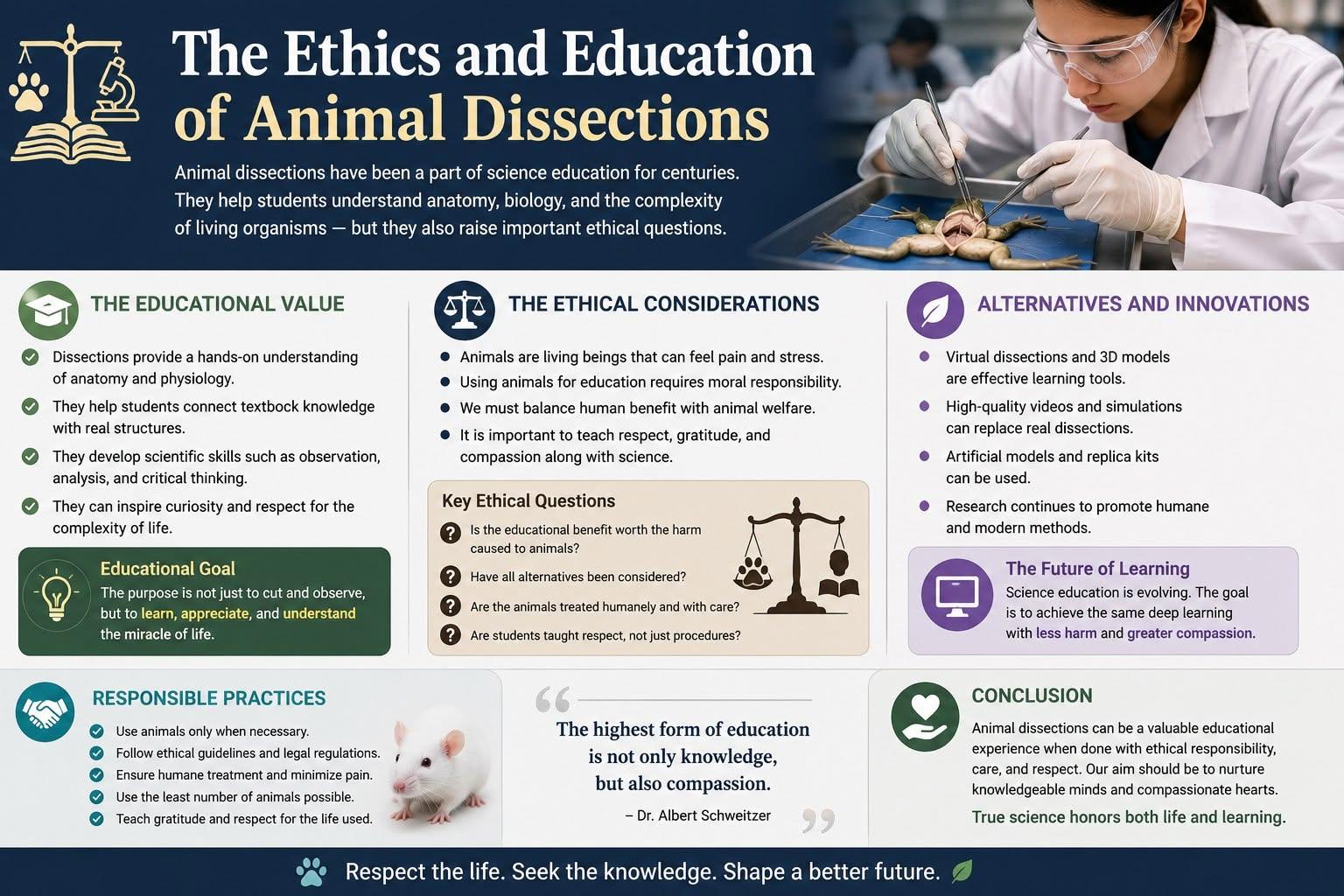
    ### **The Ethics and Education of Animal Dissections**

    Animal dissection has long been an important part of biology and medical education, helping students understand anatomy, physiology, and the complex structures of living organisms. By examining real biological specimens, learners gain hands-on experience that strengthens their observation, critical thinking, and scientific investigation skills. For many years, dissections have played a significant role in preparing future doctors, veterinarians, scientists, and researchers by providing practical knowledge that complements classroom learning.

    At the same time, animal dissections raise important ethical questions about animal welfare, responsible scientific practice, and the balance between educational benefits and respect for living creatures. Modern education encourages students to consider these ethical perspectives while learning about science. Many schools and universities now offer alternatives such as virtual dissections, 3D anatomical models, computer simulations, and interactive digital laboratories. These innovative tools provide effective learning experiences while reducing the need for animal specimens in many educational settings.

    Understanding the ethics of animal dissection helps students develop not only scientific knowledge but also compassion, responsibility, and respect for life. By combining ethical awareness with scientific inquiry, educators can inspire future generations to pursue discovery in ways that are both innovative and humane. This balanced approach promotes critical thinking, responsible decision-making, and a deeper appreciation for the relationship between science, education, and the living world.

    **#AnimalDissection #Biology #ScienceEducation #Ethics #STEM #BiologyLab #Anatomy #LifeSciences #ScientificLearning #AnimalWelfare #Education #MedicalScience #CriticalThinking #Research #Science **

    Rehan School Islamabad Campus
    Asma Shaheen EducationWali
    Irum Asim
    Saima Happinesswali
    #rsisb Roll No.240 Story No.17 Foundation level ### **The Ethics and Education of Animal Dissections** Animal dissection has long been an important part of biology and medical education, helping students understand anatomy, physiology, and the complex structures of living organisms. By examining real biological specimens, learners gain hands-on experience that strengthens their observation, critical thinking, and scientific investigation skills. For many years, dissections have played a significant role in preparing future doctors, veterinarians, scientists, and researchers by providing practical knowledge that complements classroom learning. At the same time, animal dissections raise important ethical questions about animal welfare, responsible scientific practice, and the balance between educational benefits and respect for living creatures. Modern education encourages students to consider these ethical perspectives while learning about science. Many schools and universities now offer alternatives such as virtual dissections, 3D anatomical models, computer simulations, and interactive digital laboratories. These innovative tools provide effective learning experiences while reducing the need for animal specimens in many educational settings. Understanding the ethics of animal dissection helps students develop not only scientific knowledge but also compassion, responsibility, and respect for life. By combining ethical awareness with scientific inquiry, educators can inspire future generations to pursue discovery in ways that are both innovative and humane. This balanced approach promotes critical thinking, responsible decision-making, and a deeper appreciation for the relationship between science, education, and the living world. **#AnimalDissection #Biology #ScienceEducation #Ethics #STEM #BiologyLab #Anatomy #LifeSciences #ScientificLearning #AnimalWelfare #Education #MedicalScience #CriticalThinking #Research #Science 🌿🔬🧬🐸📚** Rehan School Islamabad Campus Asma Shaheen EducationWali Irum Asim Saima Happinesswali
    0 Comentários 0 Compartilhamentos 8238 Visualizações
Páginas impulsionada