• ACCL Portal
    DAY
    WEEK
    BOOK 2
    Task story post
    Summary
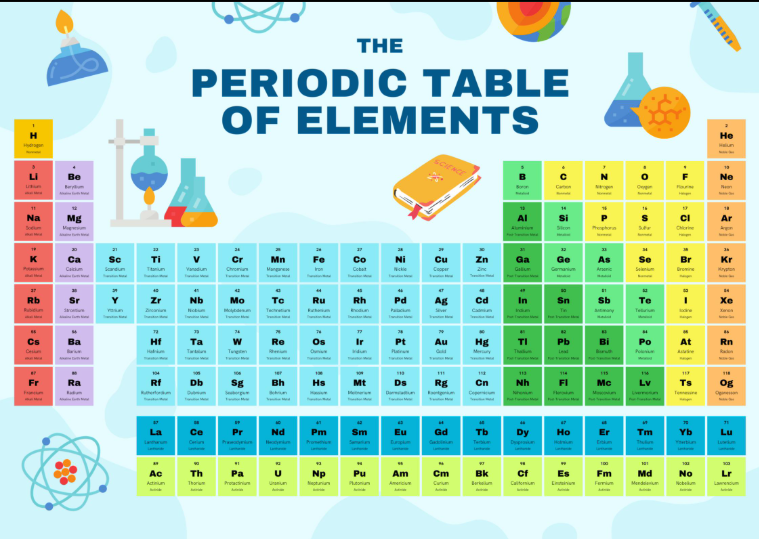
    The Periodic Table is an important tool in science. It organizes all known chemical elements, such as oxygen, hydrogen, gold, and carbon. Each element has its own name, symbol, and atomic number. The table helps scientists understand the properties of elements and how they work together. It is like a special language that helps us learn about the world around us.
    Story: The Magical Table
    Once upon a time, a young student entered a science laboratory. He saw a colorful table on the wall.

    "What is this?" he asked.

    His teacher replied, "This is the Periodic Table. It contains all the chemical elements."

    The student learned about oxygen, hydrogen, iron, and gold. He discovered that every element has a special symbol and number.

    He became excited and started loving science!
    Moral
    Science helps us understand the world. Never stop learning and exploring!
    #️⃣ Hashtags
    #PeriodicTable #Science #Chemistry #ChemicalElements #Education #Learning #ScienceLovers #Knowledge #DiscoverScience #StudentLearning
    Keywords
    - Periodic Table
    - Chemical Elements
    - Atomic Number
    - Chemistry
    - Hydrogen
    - Oxygen
    - Science
    - Elements
    Input
    Different chemical elements, their names, symbols, and atomic numbers.
    Output
    A well-organized table that helps us understand and compare chemical elements.

    @followers
    Tania Khan Mentorship Wali
    Shazia Javed Educationwali
    Imran Khan Street Wala
    Mohsin Rathore Seo Wala
    Waryam Tharparkar Wala
    ACCL Portal DAY WEEK BOOK 2 Task story post 📖 Summary The Periodic Table is an important tool in science. It organizes all known chemical elements, such as oxygen, hydrogen, gold, and carbon. Each element has its own name, symbol, and atomic number. The table helps scientists understand the properties of elements and how they work together. It is like a special language that helps us learn about the world around us. 📚 Story: The Magical Table Once upon a time, a young student entered a science laboratory. He saw a colorful table on the wall. "What is this?" he asked. His teacher replied, "This is the Periodic Table. It contains all the chemical elements." The student learned about oxygen, hydrogen, iron, and gold. He discovered that every element has a special symbol and number. He became excited and started loving science! 🌟 Moral Science helps us understand the world. Never stop learning and exploring! #️⃣ Hashtags #PeriodicTable #Science #Chemistry #ChemicalElements #Education #Learning #ScienceLovers #Knowledge #DiscoverScience #StudentLearning 🔑 Keywords - Periodic Table - Chemical Elements - Atomic Number - Chemistry - Hydrogen - Oxygen - Science - Elements 📥 Input Different chemical elements, their names, symbols, and atomic numbers. 📤 Output A well-organized table that helps us understand and compare chemical elements. @followers Tania Khan Mentorship Wali Shazia Javed Educationwali Imran Khan Street Wala Mohsin Rathore Seo Wala Waryam Tharparkar Wala
    0 Comentários 0 Compartilhamentos 698 Visualizações
  • RSIF8
    ROLL NO:92
    STORY POST NO:48
    TOPIC:DNA Detectives: Unraveling the Double Helix Mystery

    Image Description:
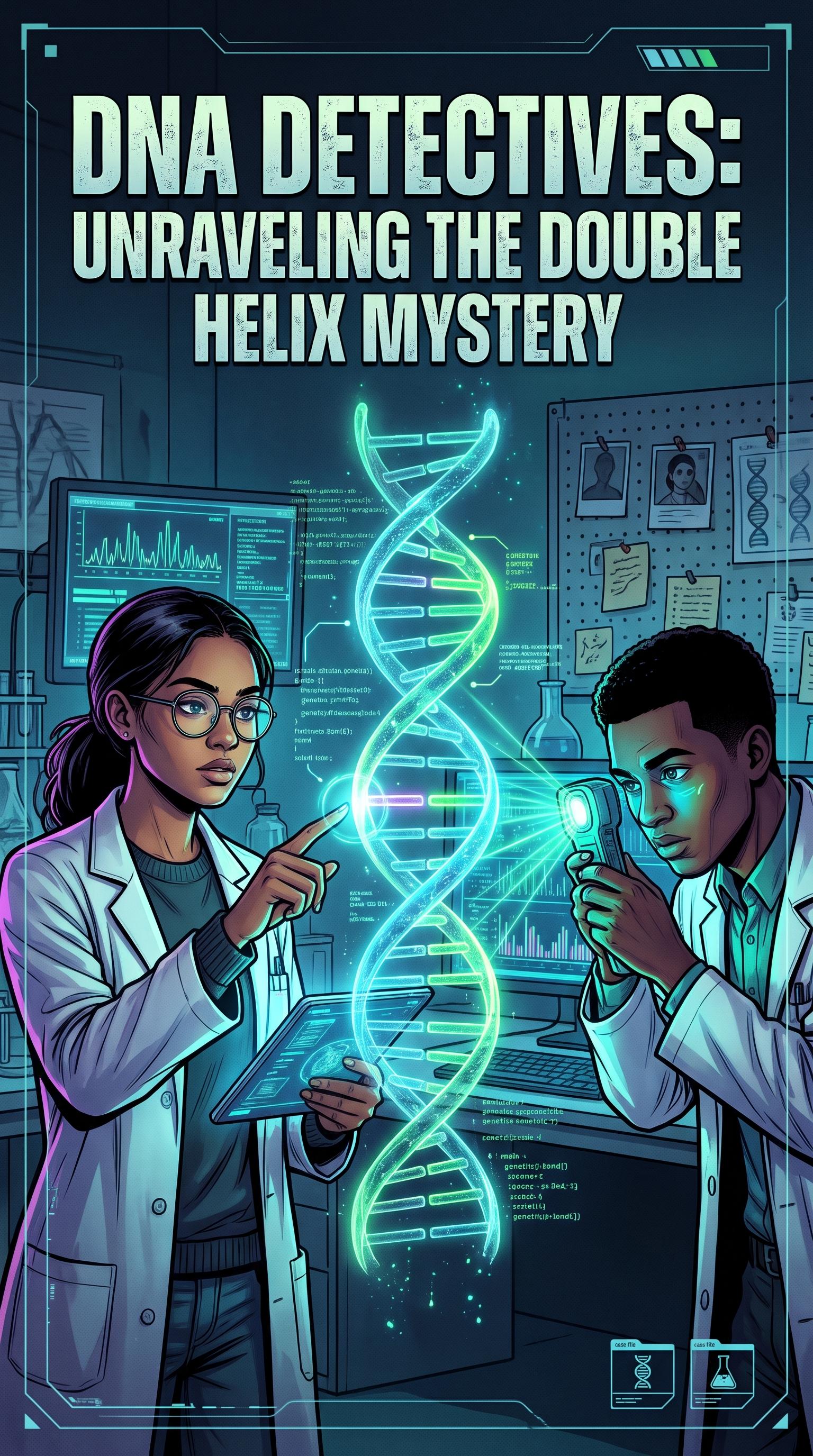
    The visual is a vertical, cinematic, and comic-style digital illustration that captures two scientists working as "DNA detectives" in a high-tech, dimly lit laboratory.

    The Title: At the top, the bold, futuristic text reads, "DNA DETECTIVES: UNRAVELING THE DOUBLE HELIX MYSTERY" in a cybernetic blue-green font, bordered by tech-inspired frame lines.

    The Detectives:

    On the left, a woman wearing glasses and a white lab coat holds a digital tablet, pointing toward the glowing DNA helix as if analyzing a breakthrough piece of evidence.

    On the right, a man also in a white lab coat uses a handheld scanner, closely inspecting the structure. Both have intense, focused expressions.

    The Central Mystery: Hovering between them is a vibrant, holographic double helix of DNA that glows with green and blue energy, scattering light, data streams, and UI patterns across the scene.

    The Laboratory: The background is filled with investigative and scientific details: digital screens with genetic data, DNA sequences, and a "clue board" on the wall featuring suspect photos, notes, and molecular diagrams.

    The Atmosphere: The illustration is bathed in neon blues, greens, and purples, creating a suspenseful, cybernetic, and adventurous detective mood perfect for a story post.
    RSIF8 ROLL NO:92 STORY POST NO:48 TOPIC:DNA Detectives: Unraveling the Double Helix Mystery Image Description: The visual is a vertical, cinematic, and comic-style digital illustration that captures two scientists working as "DNA detectives" in a high-tech, dimly lit laboratory. The Title: At the top, the bold, futuristic text reads, "DNA DETECTIVES: UNRAVELING THE DOUBLE HELIX MYSTERY" in a cybernetic blue-green font, bordered by tech-inspired frame lines. The Detectives: On the left, a woman wearing glasses and a white lab coat holds a digital tablet, pointing toward the glowing DNA helix as if analyzing a breakthrough piece of evidence. On the right, a man also in a white lab coat uses a handheld scanner, closely inspecting the structure. Both have intense, focused expressions. The Central Mystery: Hovering between them is a vibrant, holographic double helix of DNA that glows with green and blue energy, scattering light, data streams, and UI patterns across the scene. The Laboratory: The background is filled with investigative and scientific details: digital screens with genetic data, DNA sequences, and a "clue board" on the wall featuring suspect photos, notes, and molecular diagrams. The Atmosphere: The illustration is bathed in neon blues, greens, and purples, creating a suspenseful, cybernetic, and adventurous detective mood perfect for a story post.
    0 Comentários 0 Compartilhamentos 367 Visualizações
  • #rsisb
    Roll no.214
    Foundation level
    Story post no.13

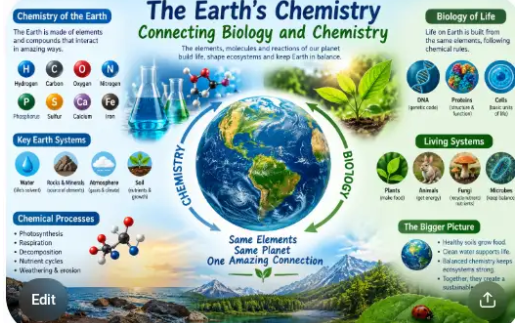
    Earth is like a giant laboratory where chemistry and biology work together! From the air we breathe and the water we drink to the food we eat and the cells inside our bodies, chemical reactions make life possible.

    Discover how elements, molecules, nutrients, and chemical reactions connect the living world with our amazing planet. Learn how chemistry helps us understand biology and how biological processes shape Earth's environment.

    #EarthScience #Chemistry #Biology #Science #Nature #LifeScience #EarthChemistry #Learning #ScienceEducation #ExploreScience
    #rsisb Roll no.214 Foundation level Story post no.13 Earth is like a giant laboratory where chemistry and biology work together! 🌎✨ From the air we breathe and the water we drink to the food we eat and the cells inside our bodies, chemical reactions make life possible. 🧬💧🌿 Discover how elements, molecules, nutrients, and chemical reactions connect the living world with our amazing planet. 🔬🌱 Learn how chemistry helps us understand biology and how biological processes shape Earth's environment. 🌍💚 #EarthScience 🌍 #Chemistry 🧪 #Biology 🧬 #Science 🔬 #Nature 🌿 #LifeScience 🌱 #EarthChemistry 🌎 #Learning 📚 #ScienceEducation 🎓 #ExploreScience ✨
    0 Comentários 0 Compartilhamentos 542 Visualizações
  • The Mystery of Life: Exploring the World of Cells
    Paragraph 1 – A Tiny World

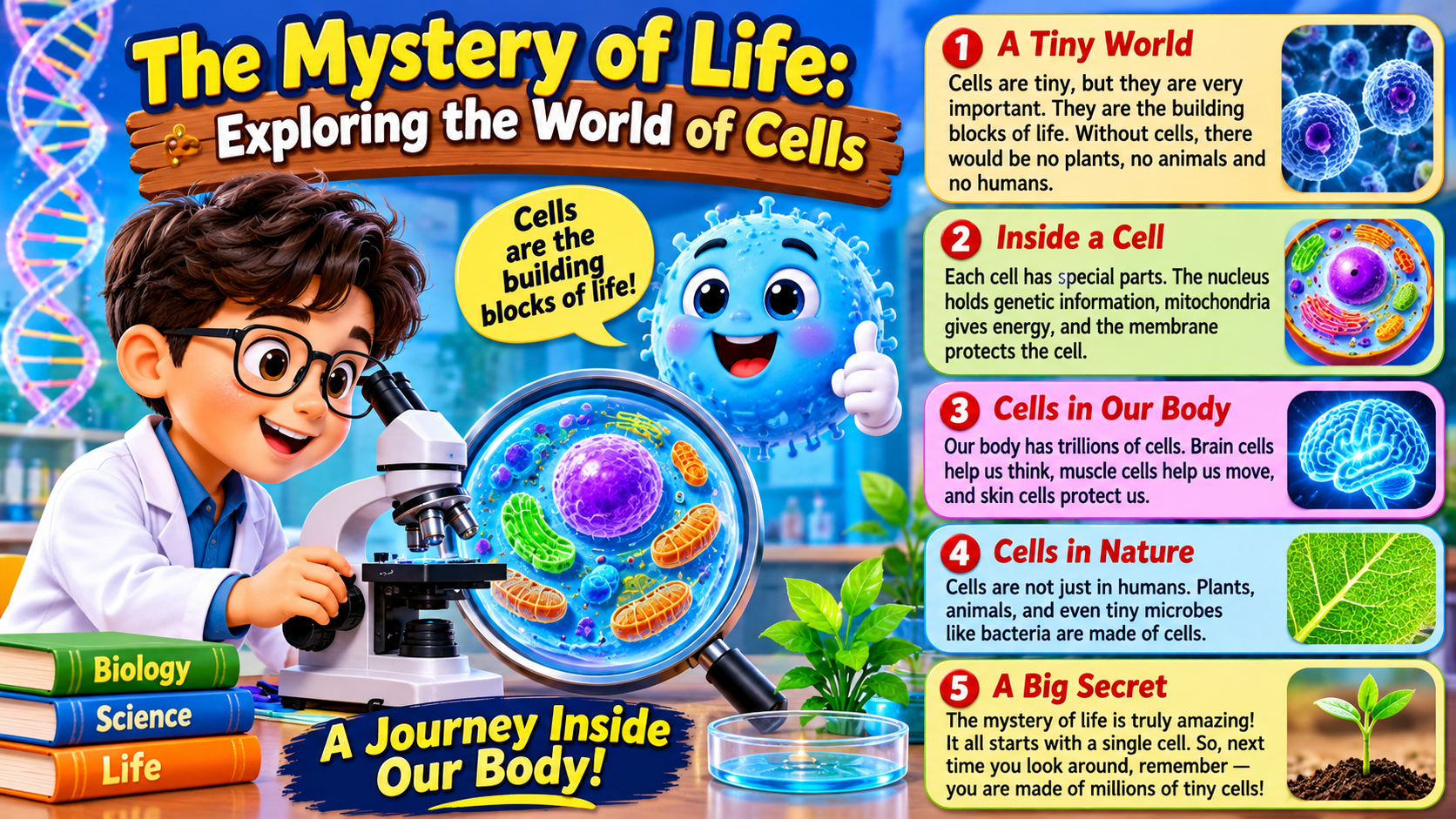
    One day, a young student named Ali visited a science laboratory. He saw a microscope and became curious about the tiny things around him. His teacher told him that everything living, including humans, animals, and plants, is made up of tiny building blocks called cells. Ali was amazed to discover that these tiny cells are everywhere!

    Paragraph 2 – Inside a Cell

    Ali looked through the microscope and saw a beautiful cell. His teacher explained that every cell has different parts. The nucleus controls the activities of the cell, the cell membrane protects it, and mitochondria provide energy. Ali learned that each part has a special job, just like different people working together in a team.

    Paragraph 3 – Cells in Our Body

    Next, Ali learned that the human body contains trillions of cells. Brain cells help us think, muscle cells help us move, and blood cells carry oxygen throughout our body. Every cell works together to keep us healthy and active. Ali realized that his body was like a wonderful living machine!

    Paragraph 4 – Cells in Nature

    Ali was surprised to learn that cells are not only found in humans. Plants, animals, and even tiny microorganisms are made of cells. Plant cells help plants grow, make food, and stay strong. Every living thing has its own amazing cellular world.

    Paragraph 5 – The Big Secret of Life

    At the end of the lesson, Ali thanked his teacher for explaining the mystery of cells. He understood that cells are the foundation of all living things. Although cells are too tiny to see with our eyes, they perform very important jobs every second. Ali went home excited, dreaming of becoming a scientist and discovering more secrets of life!

    The End.


    Do you like this personality?
    The Mystery of Life: Exploring the World of Cells Paragraph 1 – A Tiny World One day, a young student named Ali visited a science laboratory. He saw a microscope and became curious about the tiny things around him. His teacher told him that everything living, including humans, animals, and plants, is made up of tiny building blocks called cells. Ali was amazed to discover that these tiny cells are everywhere! Paragraph 2 – Inside a Cell Ali looked through the microscope and saw a beautiful cell. His teacher explained that every cell has different parts. The nucleus controls the activities of the cell, the cell membrane protects it, and mitochondria provide energy. Ali learned that each part has a special job, just like different people working together in a team. Paragraph 3 – Cells in Our Body Next, Ali learned that the human body contains trillions of cells. Brain cells help us think, muscle cells help us move, and blood cells carry oxygen throughout our body. Every cell works together to keep us healthy and active. Ali realized that his body was like a wonderful living machine! Paragraph 4 – Cells in Nature Ali was surprised to learn that cells are not only found in humans. Plants, animals, and even tiny microorganisms are made of cells. Plant cells help plants grow, make food, and stay strong. Every living thing has its own amazing cellular world. Paragraph 5 – The Big Secret of Life At the end of the lesson, Ali thanked his teacher for explaining the mystery of cells. He understood that cells are the foundation of all living things. Although cells are too tiny to see with our eyes, they perform very important jobs every second. Ali went home excited, dreaming of becoming a scientist and discovering more secrets of life! The End. 🌱🔬 Do you like this personality?
    0 Comentários 0 Compartilhamentos 1258 Visualizações
  • Foundation level Task
    Day : 41
    Task : story post

    # The Mystery of Life: Exploring the World of Cells

    Once upon a time, there was a curious student named Sara who loved learning about science. One day, during her biology class, her teacher introduced a fascinating topic: Cells – The Building Blocks of Life.

    Sara was surprised to learn that every living thing, including humans, animals, and plants, is made up of tiny structures called cells.

    Her teacher explained, "Cells are so small that most of them cannot be seen with our naked eyes. We need a microscope to explore their amazing world."

    Sara became excited and asked, "But how can something so tiny be so important?"

    The teacher smiled and explained that every cell has a special job. Some cells help our bodies move, some carry oxygen, and others protect us from diseases.

    Sara also learned about the main parts of a cell:

    - Cell Membrane: It controls what enters and leaves the cell.
    - Cytoplasm: A jelly-like substance where many cell activities happen.
    - Nucleus: It controls the activities of the cell and contains genetic information.
    - Mitochondria: They help produce energy for the cell.

    The next day, Sara visited a science laboratory. She looked through a microscope and saw tiny cells for the first time. She was amazed!

    "Wow! There is a whole hidden world inside living things!" she exclaimed.

    Her teacher replied, "Yes! Even though cells are tiny, they perform incredible tasks that make life possible."

    Sara understood that life is full of mysteries, and cells are one of the most amazing discoveries in science.

    From that day on, she became even more interested in biology and dreamed of discovering new things about the human body.

    The End!

    Moral: Never underestimate something because it is small. Even the tiniest things can play the biggest roles in life!

    **The Mystery of Life: Exploring the World of Cells!**

    Discover the amazing world of cells, the tiny building blocks of life! Learn how cells work, grow, and keep every living thing alive. Every tiny cell has a big role to play!

    #WorldOfCells #Science #Biology #MysteryOfLife #CellDiscovery #LearningJourney #ExploreScience #KnowledgeIsPower
    Foundation level Task Day : 41 Task : story post # 🔬 The Mystery of Life: Exploring the World of Cells Once upon a time, there was a curious student named Sara who loved learning about science. One day, during her biology class, her teacher introduced a fascinating topic: Cells – The Building Blocks of Life. Sara was surprised to learn that every living thing, including humans, animals, and plants, is made up of tiny structures called cells. Her teacher explained, "Cells are so small that most of them cannot be seen with our naked eyes. We need a microscope to explore their amazing world." Sara became excited and asked, "But how can something so tiny be so important?" The teacher smiled and explained that every cell has a special job. Some cells help our bodies move, some carry oxygen, and others protect us from diseases. Sara also learned about the main parts of a cell: - Cell Membrane: It controls what enters and leaves the cell. - Cytoplasm: A jelly-like substance where many cell activities happen. - Nucleus: It controls the activities of the cell and contains genetic information. - Mitochondria: They help produce energy for the cell. The next day, Sara visited a science laboratory. She looked through a microscope and saw tiny cells for the first time. She was amazed! "Wow! There is a whole hidden world inside living things!" she exclaimed. Her teacher replied, "Yes! Even though cells are tiny, they perform incredible tasks that make life possible." Sara understood that life is full of mysteries, and cells are one of the most amazing discoveries in science. From that day on, she became even more interested in biology and dreamed of discovering new things about the human body. The End! 🌱🔬 Moral: Never underestimate something because it is small. Even the tiniest things can play the biggest roles in life! 💚 🔬✨ **The Mystery of Life: Exploring the World of Cells!** 🌱 Discover the amazing world of cells, the tiny building blocks of life! 🧬 Learn how cells work, grow, and keep every living thing alive. Every tiny cell has a big role to play! 🌍💡 #WorldOfCells #Science #Biology #MysteryOfLife #CellDiscovery #LearningJourney #ExploreScience #KnowledgeIsPower 🚀
    1
    0 Comentários 0 Compartilhamentos 1175 Visualizações
  • **Roll No: 2**
    **Batch: 14**
    **Book: ACCL**
    **Task No: 153**

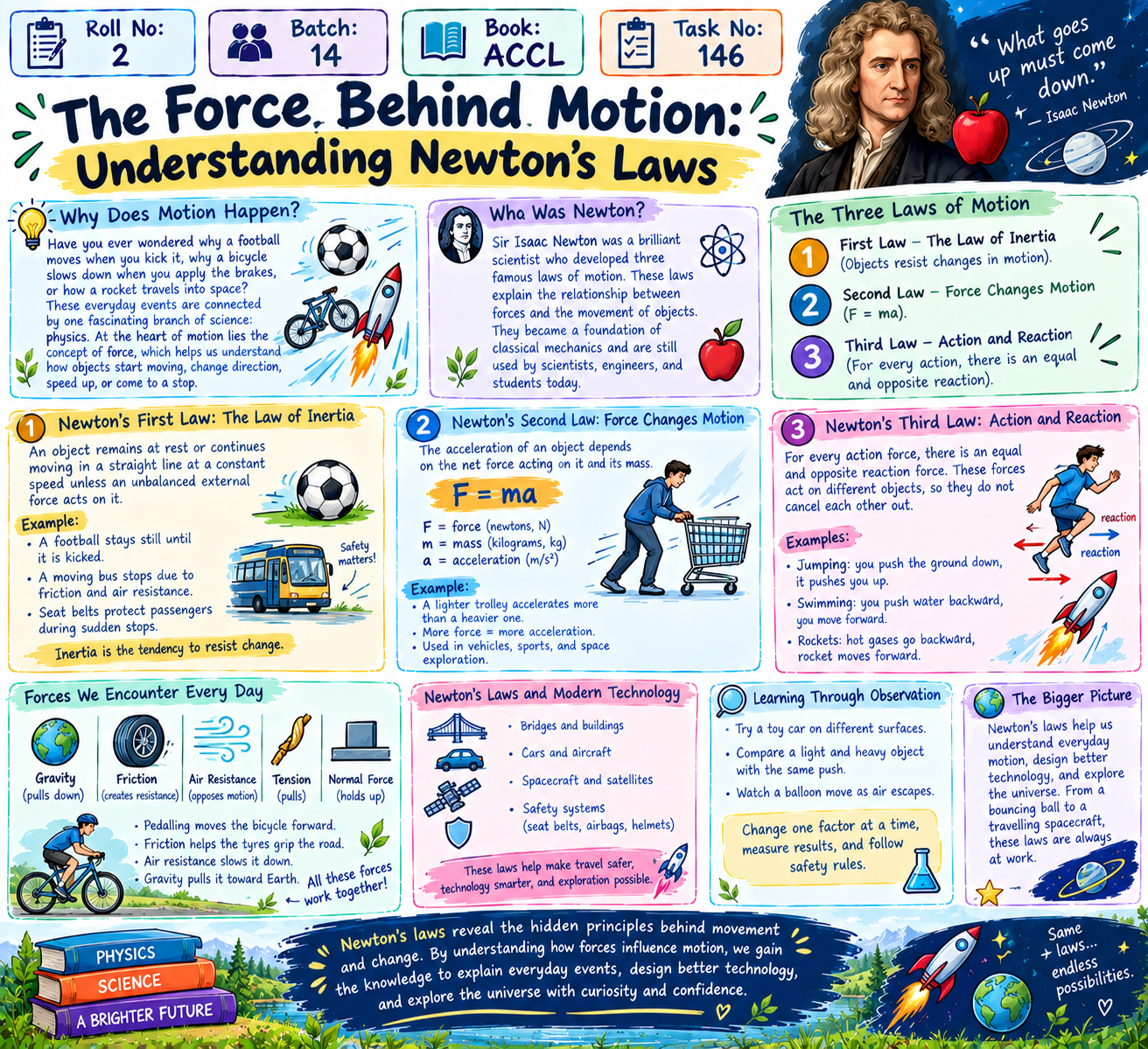
    # The Force Behind Motion: Understanding Newton’s Laws

    Have you ever wondered why a football moves when you kick it, why a bicycle slows down when you apply the brakes, or how a rocket travels into space? These everyday events are connected by one fascinating branch of science: physics. At the heart of motion lies the concept of **force**, which helps us understand how objects start moving, change direction, speed up, or come to a stop.

    One of the most important scientists in the history of physics was **Sir Isaac Newton**. Through his work, Newton developed three famous laws of motion that explain the relationship between forces and the movement of objects. These laws became a foundation of classical mechanics and continue to help scientists, engineers, and students understand the physical world around them.

    ## Newton’s First Law: The Law of Inertia

    Newton’s first law states that an object remains at rest or continues moving in a straight line at a constant speed unless an unbalanced external force acts on it. This tendency to resist changes in motion is called **inertia**.

    Imagine a football resting on the ground. It will remain still until someone kicks it or another force acts upon it. Once the ball begins moving, friction between the ball and the ground, along with air resistance, gradually slows it down. Without these opposing forces, the ball would continue moving at a constant velocity.

    You can also notice inertia when a moving bus suddenly brakes. Passengers may feel their bodies move forward because their bodies tend to maintain their previous motion. Seat belts help protect passengers by providing a force that restrains their movement. This shows how Newton’s first law explains both everyday experiences and important safety features.

    ## Newton’s Second Law: Force Changes Motion

    Newton’s second law explains how an unbalanced force changes an object’s motion. The acceleration of an object depends on the net force acting on it and its mass. For an object with constant mass, the relationship is written as:

    [
    \boxed{F = ma}
    ]

    Here, (F) represents the net force, (m) represents mass, and (a) represents acceleration. Force is measured in newtons (N), mass in kilograms (kg), and acceleration in metres per second squared ((\text{m/s}^2)).

    Consider pushing an empty shopping trolley and then pushing a heavily loaded one. The empty trolley usually accelerates more easily because it has less mass. If the same net force acts on two objects, the object with less mass experiences greater acceleration. Similarly, increasing the net force on an object of constant mass increases its acceleration.

    This law is essential in engineering, transport, sports, and space exploration. Engineers use it to calculate how much force is needed to accelerate vehicles, while athletes use the principles of force and acceleration when running, jumping, and throwing objects. ‍

    ## Newton’s Third Law: Action and Reaction

    Newton’s third law states that **for every action force, there is an equal and opposite reaction force**. These two forces act on different objects, so they do not cancel each other out.

    Think about what happens when you jump. Your feet push down against the ground, and the ground pushes upward on you. This upward force helps you rise into the air. The same principle explains how swimmers move forward by pushing water backward.

    Rockets provide another remarkable example. A rocket expels hot gases backward at high speed, and the gases exert an opposite force on the rocket, pushing it forward. This principle works even in the vacuum of space because the rocket does not need air to push against. Its motion results from the interaction between the rocket and the expelled gases.

    ## Forces We Encounter Every Day

    Forces are all around us, even when we do not notice them. Gravity pulls objects toward Earth, friction acts between surfaces in contact, and air resistance opposes an object moving through the atmosphere. Tension in a rope can pull an object, while a normal force from a supporting surface helps hold an object up.

    These forces often work together. For example, when a cyclist travels along a road, pedalling produces forward motion, friction helps the tyres grip the road, air resistance opposes movement, and gravity pulls the cyclist toward Earth. ‍ Understanding how these forces interact helps explain why the bicycle speeds up, slows down, or turns.

    ## Newton’s Laws and Modern Technology

    Newton’s laws are important far beyond the classroom. Engineers apply them when designing bridges, cars, aircraft, and machines. Scientists use them to predict the motion of many objects, while space agencies apply mechanics to plan spacecraft trajectories and study the movement of satellites.

    These laws also help improve safety. Seat belts, airbags, helmets, and vehicle safety systems are designed with an understanding of motion, forces, and changes in momentum. Although modern physics includes ideas beyond Newton’s laws, his work remains extremely useful for understanding everyday motion and many engineering problems.

    ## Learning Through Observation

    You do not need a complicated laboratory to begin exploring Newton’s laws. You can observe a toy car rolling across different surfaces, compare how a light and a heavier object respond to the same gentle push, or watch a balloon move as air escapes from it. Such simple observations can help connect scientific ideas with real experiences.

    When conducting experiments, it is important to change one factor at a time where possible, measure results carefully, and follow appropriate safety precautions. By observing patterns and asking questions, students can develop critical thinking skills and discover how physics explains the world around them.

    Newton’s laws teach us that motion is not random. The movement of a bouncing ball, a speeding bicycle, a swimming person, and a travelling spacecraft can all be understood by investigating forces and their effects.

    **Newton’s laws reveal the hidden principles behind movement and change. By understanding how forces influence motion, we gain the knowledge to explain everyday events, design better technology, and explore the universe with curiosity and confidence. **

    \#NewtonsLaws #ForceAndMotion #Physics #Science #Inertia #Acceleration #SpaceExploration #ACCL #Batch14 #Task146
    **Roll No: 2** **Batch: 14** **Book: ACCL** **Task No: 153** # 🚀⚙️ The Force Behind Motion: Understanding Newton’s Laws 🍎🌍 Have you ever wondered why a football moves when you kick it, why a bicycle slows down when you apply the brakes, or how a rocket travels into space? 🚲⚽🚀 These everyday events are connected by one fascinating branch of science: physics. At the heart of motion lies the concept of **force**, which helps us understand how objects start moving, change direction, speed up, or come to a stop. One of the most important scientists in the history of physics was **Sir Isaac Newton**. 🍎🔭 Through his work, Newton developed three famous laws of motion that explain the relationship between forces and the movement of objects. These laws became a foundation of classical mechanics and continue to help scientists, engineers, and students understand the physical world around them. ## ⚖️ Newton’s First Law: The Law of Inertia Newton’s first law states that an object remains at rest or continues moving in a straight line at a constant speed unless an unbalanced external force acts on it. This tendency to resist changes in motion is called **inertia**. 🧱✨ Imagine a football resting on the ground. ⚽ It will remain still until someone kicks it or another force acts upon it. Once the ball begins moving, friction between the ball and the ground, along with air resistance, gradually slows it down. Without these opposing forces, the ball would continue moving at a constant velocity. You can also notice inertia when a moving bus suddenly brakes. 🚌 Passengers may feel their bodies move forward because their bodies tend to maintain their previous motion. Seat belts help protect passengers by providing a force that restrains their movement. This shows how Newton’s first law explains both everyday experiences and important safety features. ## 💪 Newton’s Second Law: Force Changes Motion Newton’s second law explains how an unbalanced force changes an object’s motion. The acceleration of an object depends on the net force acting on it and its mass. For an object with constant mass, the relationship is written as: [ \boxed{F = ma} ] Here, (F) represents the net force, (m) represents mass, and (a) represents acceleration. Force is measured in newtons (N), mass in kilograms (kg), and acceleration in metres per second squared ((\text{m/s}^2)). 🔬📐 Consider pushing an empty shopping trolley and then pushing a heavily loaded one. 🛒 The empty trolley usually accelerates more easily because it has less mass. If the same net force acts on two objects, the object with less mass experiences greater acceleration. Similarly, increasing the net force on an object of constant mass increases its acceleration. This law is essential in engineering, transport, sports, and space exploration. Engineers use it to calculate how much force is needed to accelerate vehicles, while athletes use the principles of force and acceleration when running, jumping, and throwing objects. 🏃‍♂️🏀 ## 🔄 Newton’s Third Law: Action and Reaction Newton’s third law states that **for every action force, there is an equal and opposite reaction force**. These two forces act on different objects, so they do not cancel each other out. 🌍⚡ Think about what happens when you jump. Your feet push down against the ground, and the ground pushes upward on you. This upward force helps you rise into the air. 🦘 The same principle explains how swimmers move forward by pushing water backward. Rockets provide another remarkable example. 🚀 A rocket expels hot gases backward at high speed, and the gases exert an opposite force on the rocket, pushing it forward. This principle works even in the vacuum of space because the rocket does not need air to push against. Its motion results from the interaction between the rocket and the expelled gases. ## 🌎 Forces We Encounter Every Day Forces are all around us, even when we do not notice them. Gravity pulls objects toward Earth, friction acts between surfaces in contact, and air resistance opposes an object moving through the atmosphere. 🪂🌬️ Tension in a rope can pull an object, while a normal force from a supporting surface helps hold an object up. These forces often work together. For example, when a cyclist travels along a road, pedalling produces forward motion, friction helps the tyres grip the road, air resistance opposes movement, and gravity pulls the cyclist toward Earth. 🚴‍♂️ Understanding how these forces interact helps explain why the bicycle speeds up, slows down, or turns. ## 🛰️ Newton’s Laws and Modern Technology Newton’s laws are important far beyond the classroom. Engineers apply them when designing bridges, cars, aircraft, and machines. 🏗️🚗 Scientists use them to predict the motion of many objects, while space agencies apply mechanics to plan spacecraft trajectories and study the movement of satellites. These laws also help improve safety. Seat belts, airbags, helmets, and vehicle safety systems are designed with an understanding of motion, forces, and changes in momentum. Although modern physics includes ideas beyond Newton’s laws, his work remains extremely useful for understanding everyday motion and many engineering problems. ## 🧠 Learning Through Observation You do not need a complicated laboratory to begin exploring Newton’s laws. You can observe a toy car rolling across different surfaces, compare how a light and a heavier object respond to the same gentle push, or watch a balloon move as air escapes from it. 🎈🧪 Such simple observations can help connect scientific ideas with real experiences. When conducting experiments, it is important to change one factor at a time where possible, measure results carefully, and follow appropriate safety precautions. By observing patterns and asking questions, students can develop critical thinking skills and discover how physics explains the world around them. Newton’s laws teach us that motion is not random. The movement of a bouncing ball, a speeding bicycle, a swimming person, and a travelling spacecraft can all be understood by investigating forces and their effects. 🌌⚙️ **Newton’s laws reveal the hidden principles behind movement and change. By understanding how forces influence motion, we gain the knowledge to explain everyday events, design better technology, and explore the universe with curiosity and confidence. 🚀🌍💡** \#NewtonsLaws #ForceAndMotion #Physics #Science #Inertia #Acceleration #SpaceExploration #ACCL #Batch14 #Task146 ⚙️🚀📚

    0 Comentários 0 Compartilhamentos 2746 Visualizações
  • ACCL PORTAL
    DAY 69
    BOOK 1
    STORY POST
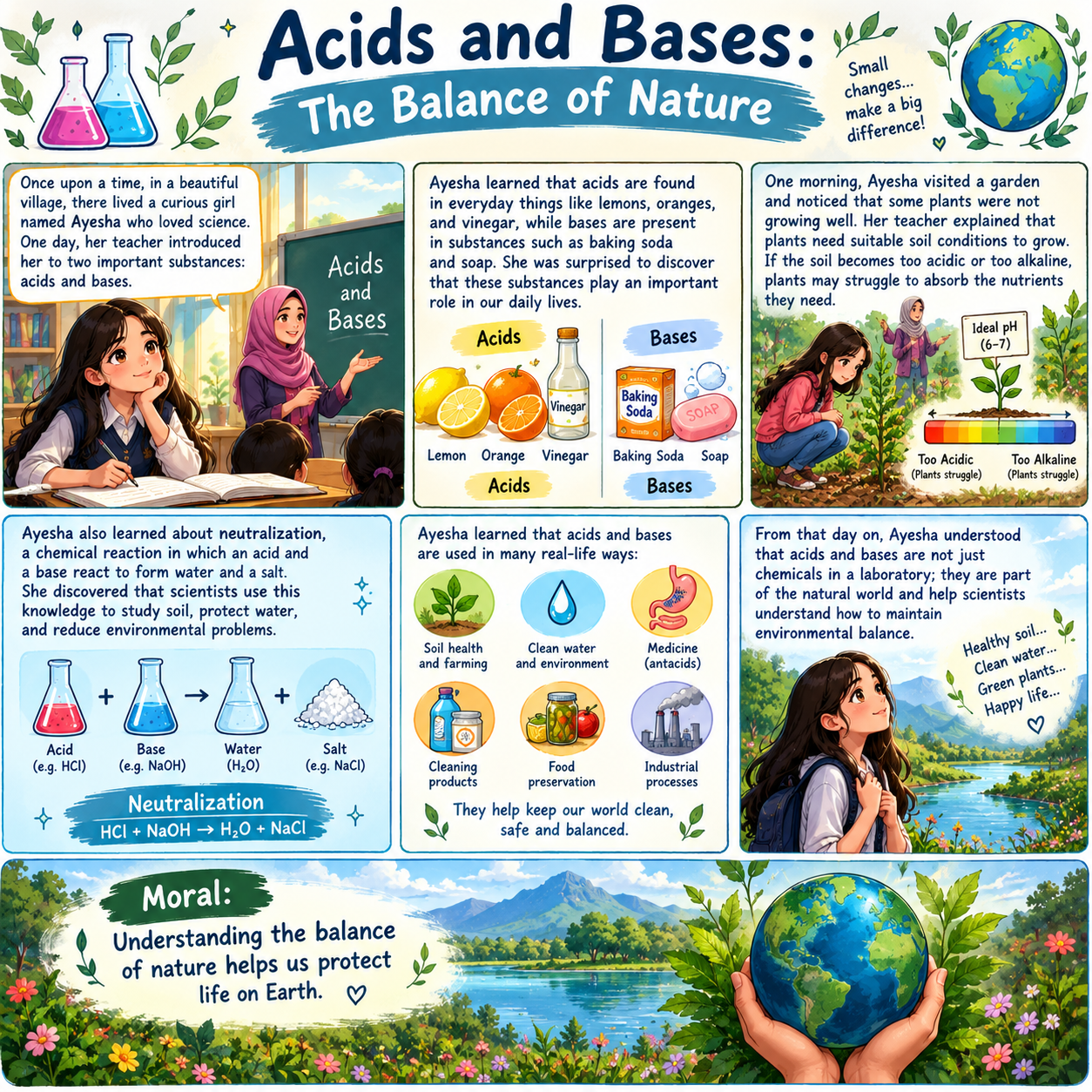
    Acids and Bases: The Balance of Nature
    Once upon a time, in a beautiful village, there lived a curious girl named Ayesha who loved science. One day, her teacher introduced her to two important substances: acids and bases.
    Ayesha learned that acids are found in everyday things like lemons, oranges, and vinegar, while bases are present in substances such as baking soda and soap. She was surprised to discover that these substances play an important role in our daily lives.
    One morning, Ayesha visited a garden and noticed that some plants were not growing well. Her teacher explained that plants need suitable soil conditions to grow. If the soil becomes too acidic or too alkaline, plants may struggle to absorb the nutrients they need.
    Ayesha also learned about neutralization, a chemical reaction in which an acid and a base react to form water and a salt. She discovered that scientists use this knowledge to study soil, protect water, and reduce environmental problems.
    From that day on, Ayesha understood that acids and bases are not just chemicals in a laboratory; they are part of the natural world and help scientists understand how to maintain environmental balance.
    **Moral:** *Understanding the balance of nature helps us protect life on Earth.*
    ACCL PORTAL DAY 69 BOOK 1 STORY POST Acids and Bases: The Balance of Nature Once upon a time, in a beautiful village, there lived a curious girl named Ayesha who loved science. One day, her teacher introduced her to two important substances: acids and bases. Ayesha learned that acids are found in everyday things like lemons, oranges, and vinegar, while bases are present in substances such as baking soda and soap. She was surprised to discover that these substances play an important role in our daily lives. One morning, Ayesha visited a garden and noticed that some plants were not growing well. Her teacher explained that plants need suitable soil conditions to grow. If the soil becomes too acidic or too alkaline, plants may struggle to absorb the nutrients they need. Ayesha also learned about neutralization, a chemical reaction in which an acid and a base react to form water and a salt. She discovered that scientists use this knowledge to study soil, protect water, and reduce environmental problems. From that day on, Ayesha understood that acids and bases are not just chemicals in a laboratory; they are part of the natural world and help scientists understand how to maintain environmental balance. **Moral:** *Understanding the balance of nature helps us protect life on Earth.*
    0 Comentários 0 Compartilhamentos 687 Visualizações
  • RSIF8
    Roll no:14
    story no:24
    story topic:The Nature of Light: Exploring Waves and Particles

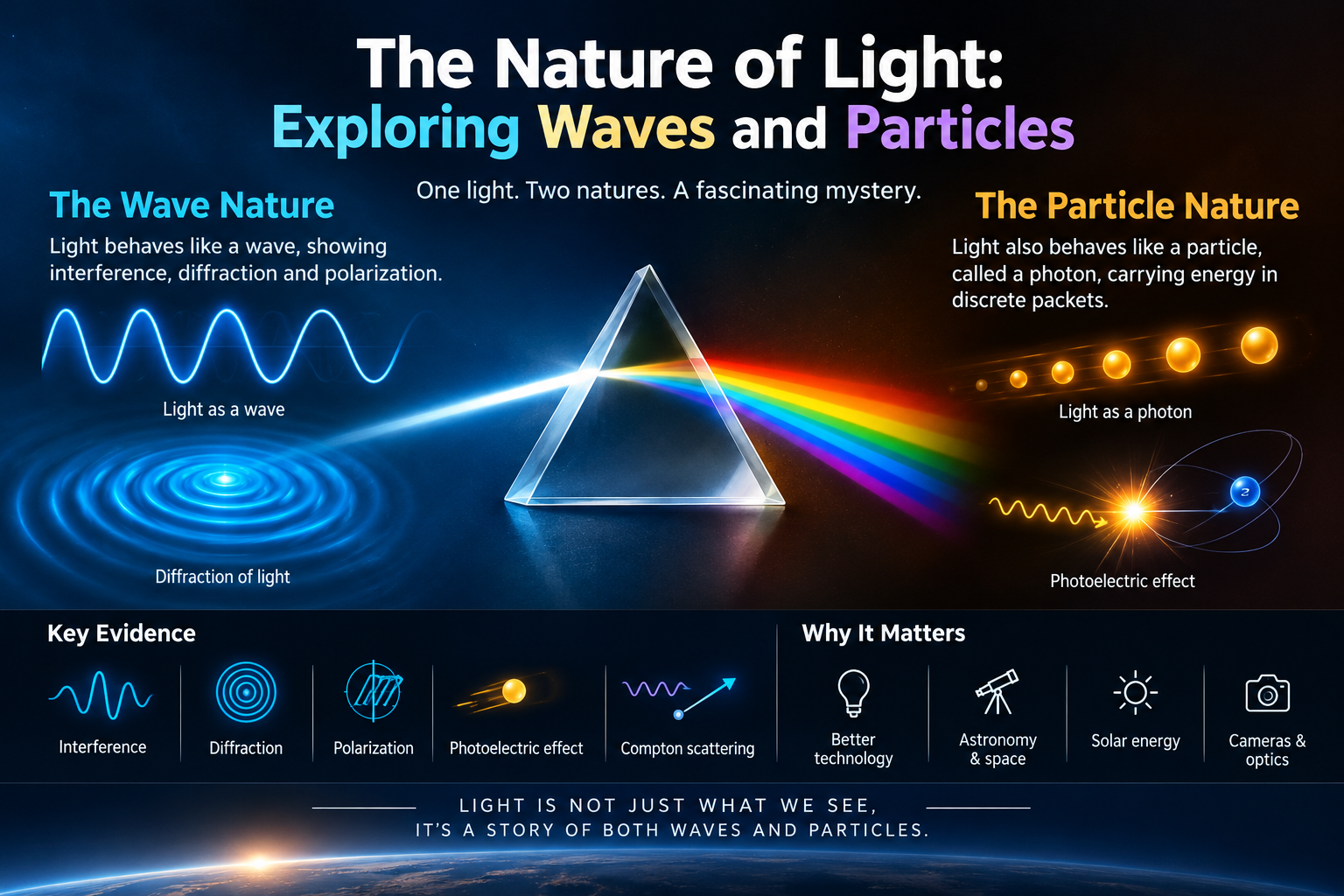
    **The Nature of Light: Exploring Waves and Particles**

    Have you ever wondered what light really is? How does sunlight travel across millions of kilometers through space, how do rainbows form, and how can light behave like both a wave and a particle? The nature of light is one of the most fascinating topics in physics, revealing the extraordinary connection between the visible world and the mysterious laws of quantum mechanics. From the light that illuminates our homes to the distant stars shining in the universe, light plays an essential role in understanding the world around us.

    **1. The Wave Nature of Light **

    For many years, scientists have studied light as a wave because it demonstrates important wave-like properties. Light can undergo interference, diffraction, and polarization. Interference occurs when light waves overlap and combine, producing patterns of brightness and darkness. Diffraction happens when light spreads around an obstacle or passes through a narrow opening. Polarization describes the orientation of light's oscillations and helps us understand how light interacts with different materials.

    These properties demonstrate that the wave model is essential for explaining many optical phenomena. From colorful patterns created by thin films to the operation of polarized sunglasses, the wave nature of light has many applications in everyday life and modern technology.

    **2. The Particle Nature of Light **

    Light also behaves in ways that reveal its particle nature. In quantum physics, light energy is exchanged in discrete packets called **photons**. Each photon carries energy determined by its frequency, described by the equation **E = hf**, where E represents energy, h is Planck's constant, and f is frequency.

    The photoelectric effect provides important evidence for this particle nature. When light of a suitable frequency strikes certain materials, it can release electrons from their surfaces. This phenomenon helped scientists understand that light energy is transferred in individual quanta rather than always behaving like a continuous wave.

    Another important example is Compton scattering, in which photons exchange energy and momentum with electrons. These discoveries transformed our understanding of light and helped establish the foundations of quantum physics.

    **3. Wave-Particle Duality: Two Sides of Light**

    One of the most remarkable discoveries in science is that light cannot be fully explained by treating it only as a classical wave or only as a classical particle. Its behavior depends on the physical process being investigated and how it is measured. This concept is known as **wave-particle duality**.

    Experiments involving interference reveal wave-like patterns, while experiments involving photon detection show that light energy is detected in discrete units. Quantum mechanics brings these observations together into a more complete description of nature. Rather than being an ordinary wave or a tiny classical object, light is a quantum phenomenon with properties that challenge our everyday intuition.

    **4. How Do We Discover the Secrets of Light?**

    Scientists use carefully designed experiments to explore the behavior of light. Prisms separate white light into different colors, optical instruments measure its properties, and advanced detectors record individual photons. Interference experiments reveal patterns that cannot be explained by simple particle models, while photoelectric experiments demonstrate the importance of quantized energy.

    The work of scientists such as Isaac Newton, Thomas Young, Max Planck, Albert Einstein, and Arthur Compton helped build our modern understanding of light. Their discoveries show how scientific knowledge develops through observation, experimentation, mathematical reasoning, and new ideas.

    **5. Why Is the Nature of Light Important?**

    Understanding light is essential to many technologies that shape modern life. Lasers are used in medicine, manufacturing, and scientific research. Fiber-optic cables transmit information across the world using pulses of light. Solar panels convert light energy into electrical energy, while cameras and telescopes help us capture images and explore distant objects in space.

    The principles of light are also important in astronomy, microscopy, optical communication, quantum technologies, and the study of the universe. By investigating how light behaves, scientists can examine distant galaxies, study the structure of matter, and develop new tools that improve our understanding of nature.

    **6. Light: Connecting Science and the Universe**

    Light is much more than what allows us to see. It carries information about distant stars, reveals the composition of celestial objects, and provides clues about the physical processes occurring throughout the cosmos. By analyzing the light received from distant galaxies, astronomers can learn about their temperatures, chemical compositions, and motion.

    At the smallest scales, the study of photons helps scientists investigate the quantum world and understand how energy interacts with matter. From the smallest laboratory experiments to the largest astronomical observations, light connects different areas of science in extraordinary ways.

    **Conclusion: The Extraordinary Mystery of Light**

    The study of light demonstrates how nature can be far more complex than it first appears. Its wave-like properties explain interference, diffraction, and polarization, while its particle-like properties help explain the photoelectric effect and Compton scattering. Together, these discoveries form an important part of our modern understanding of physics.

    Learning about wave-particle duality encourages us to question assumptions, explore scientific evidence, and appreciate the discoveries that continue to expand human knowledge. Every beam of sunlight, every shining star, and every photon detected by a scientific instrument reminds us that there is still much to discover about the universe.

    **Light Is More Than What We See—It Is a Window into the Fundamental Nature of Reality!**

    If you enjoyed this science topic, share it with others and continue exploring the fascinating world of physics. Stay curious, keep asking questions, and never stop learning!

    #NatureOfLight #WaveParticleDuality #Physics #QuantumPhysics #ScienceEducation #Photons #LightWaves #PhotoelectricEffect #ComptonScattering #Optics #Astronomy #ScientificDiscoveries #STEMEducation #LearnPhysics #ScienceExplained #EducationalContent #WavesAndParticles
    RSIF8 Roll no:14 story no:24 story topic:The Nature of Light: Exploring Waves and Particles 🌟 **The Nature of Light: Exploring Waves and Particles** 🌈🔬 Have you ever wondered what light really is? How does sunlight travel across millions of kilometers through space, how do rainbows form, and how can light behave like both a wave and a particle? The nature of light is one of the most fascinating topics in physics, revealing the extraordinary connection between the visible world and the mysterious laws of quantum mechanics. From the light that illuminates our homes to the distant stars shining in the universe, light plays an essential role in understanding the world around us. 🌍✨ 💡 **1. The Wave Nature of Light 🌊** For many years, scientists have studied light as a wave because it demonstrates important wave-like properties. Light can undergo interference, diffraction, and polarization. Interference occurs when light waves overlap and combine, producing patterns of brightness and darkness. Diffraction happens when light spreads around an obstacle or passes through a narrow opening. Polarization describes the orientation of light's oscillations and helps us understand how light interacts with different materials. These properties demonstrate that the wave model is essential for explaining many optical phenomena. From colorful patterns created by thin films to the operation of polarized sunglasses, the wave nature of light has many applications in everyday life and modern technology. ⚛️ **2. The Particle Nature of Light ✨** Light also behaves in ways that reveal its particle nature. In quantum physics, light energy is exchanged in discrete packets called **photons**. Each photon carries energy determined by its frequency, described by the equation **E = hf**, where E represents energy, h is Planck's constant, and f is frequency. The photoelectric effect provides important evidence for this particle nature. When light of a suitable frequency strikes certain materials, it can release electrons from their surfaces. This phenomenon helped scientists understand that light energy is transferred in individual quanta rather than always behaving like a continuous wave. Another important example is Compton scattering, in which photons exchange energy and momentum with electrons. These discoveries transformed our understanding of light and helped establish the foundations of quantum physics. 🔬 **3. Wave-Particle Duality: Two Sides of Light** One of the most remarkable discoveries in science is that light cannot be fully explained by treating it only as a classical wave or only as a classical particle. Its behavior depends on the physical process being investigated and how it is measured. This concept is known as **wave-particle duality**. Experiments involving interference reveal wave-like patterns, while experiments involving photon detection show that light energy is detected in discrete units. Quantum mechanics brings these observations together into a more complete description of nature. Rather than being an ordinary wave or a tiny classical object, light is a quantum phenomenon with properties that challenge our everyday intuition. 🌈 **4. How Do We Discover the Secrets of Light?** Scientists use carefully designed experiments to explore the behavior of light. Prisms separate white light into different colors, optical instruments measure its properties, and advanced detectors record individual photons. Interference experiments reveal patterns that cannot be explained by simple particle models, while photoelectric experiments demonstrate the importance of quantized energy. The work of scientists such as Isaac Newton, Thomas Young, Max Planck, Albert Einstein, and Arthur Compton helped build our modern understanding of light. Their discoveries show how scientific knowledge develops through observation, experimentation, mathematical reasoning, and new ideas. 🚀 **5. Why Is the Nature of Light Important?** Understanding light is essential to many technologies that shape modern life. Lasers are used in medicine, manufacturing, and scientific research. Fiber-optic cables transmit information across the world using pulses of light. Solar panels convert light energy into electrical energy, while cameras and telescopes help us capture images and explore distant objects in space. The principles of light are also important in astronomy, microscopy, optical communication, quantum technologies, and the study of the universe. By investigating how light behaves, scientists can examine distant galaxies, study the structure of matter, and develop new tools that improve our understanding of nature. 🌍 **6. Light: Connecting Science and the Universe** Light is much more than what allows us to see. It carries information about distant stars, reveals the composition of celestial objects, and provides clues about the physical processes occurring throughout the cosmos. By analyzing the light received from distant galaxies, astronomers can learn about their temperatures, chemical compositions, and motion. At the smallest scales, the study of photons helps scientists investigate the quantum world and understand how energy interacts with matter. From the smallest laboratory experiments to the largest astronomical observations, light connects different areas of science in extraordinary ways. 💫 **Conclusion: The Extraordinary Mystery of Light** The study of light demonstrates how nature can be far more complex than it first appears. Its wave-like properties explain interference, diffraction, and polarization, while its particle-like properties help explain the photoelectric effect and Compton scattering. Together, these discoveries form an important part of our modern understanding of physics. Learning about wave-particle duality encourages us to question assumptions, explore scientific evidence, and appreciate the discoveries that continue to expand human knowledge. Every beam of sunlight, every shining star, and every photon detected by a scientific instrument reminds us that there is still much to discover about the universe. ✨ **Light Is More Than What We See—It Is a Window into the Fundamental Nature of Reality!** 🔭🌌 👍 If you enjoyed this science topic, share it with others and continue exploring the fascinating world of physics. Stay curious, keep asking questions, and never stop learning! #NatureOfLight #WaveParticleDuality #Physics #QuantumPhysics #ScienceEducation #Photons #LightWaves #PhotoelectricEffect #ComptonScattering #Optics #Astronomy #ScientificDiscoveries #STEMEducation #LearnPhysics #ScienceExplained #EducationalContent #WavesAndParticles 🌈🔬🚀
    0 Comentários 0 Compartilhamentos 8112 Visualizações
  • RSIF8
    Roll no:14
    story no:22
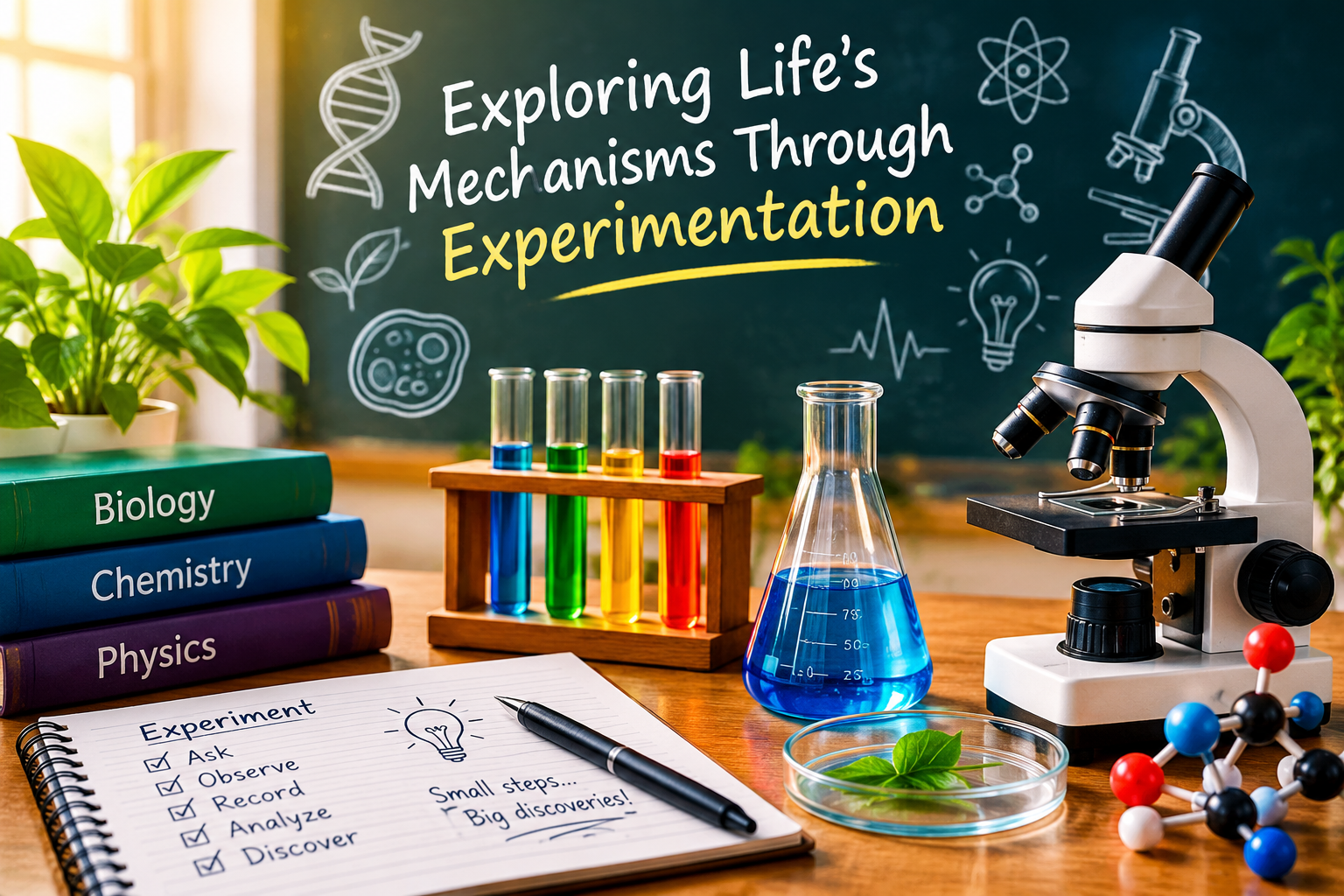
    story post topic:Exploring Life’s Mechanisms Through Experimentation
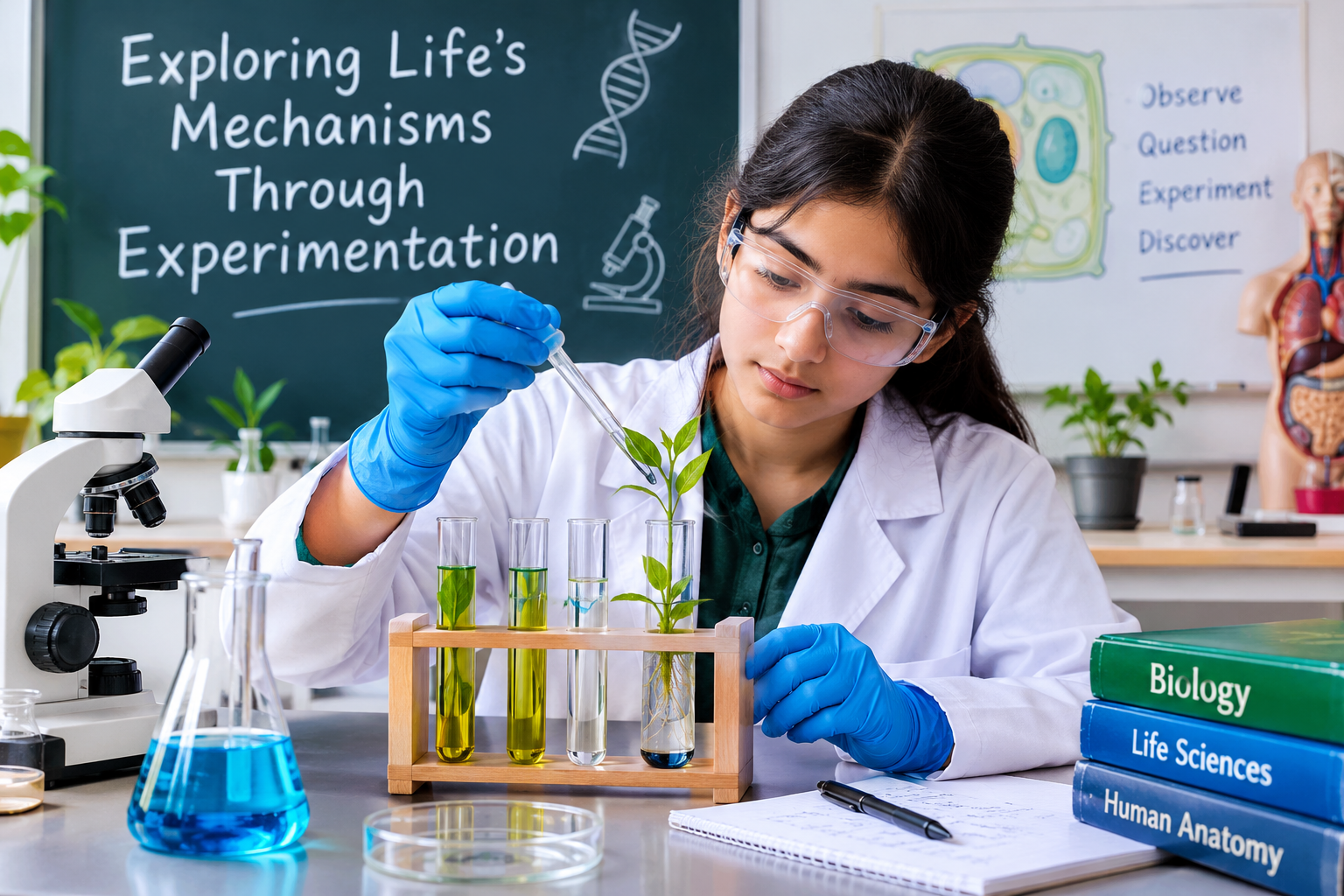
    # Exploring Life’s Mechanisms Through Experimentation

    Welcome to the fascinating world of scientific discovery, where curiosity meets experimentation and every observation brings us closer to understanding the mysteries of life! **“Exploring Life’s Mechanisms Through Experimentation”** highlights the importance of practical experiments in understanding how living organisms function, grow, and interact with their environments.

    Through hands-on activities, laboratory experiments, microscopes, and scientific observations, students can explore the amazing processes that take place inside living things. From examining plant growth and studying cells to understanding biological systems, experimentation helps transform scientific theories into meaningful discoveries.

    **Key Topics Covered:**
    - Understanding the structure and functions of living organisms
    - Exploring cells, DNA, and biological processes
    - Investigating plant growth and environmental factors
    - Learning through experiments and scientific observations
    - Developing critical thinking and problem-solving skills
    - Discovering how living organisms interact with their surroundings

    **Why Is Experimentation Important?**

    Scientific experimentation allows learners to ask questions, test ideas, analyze results, and develop evidence-based conclusions. It encourages creativity, patience, and curiosity while helping students understand the principles of biology and life sciences.

    Whether you are a student, science enthusiast, or aspiring researcher, exploring life's mechanisms through experimentation opens the door to new knowledge and exciting discoveries. Every experiment is an opportunity to learn something new about the incredible world around us!

    **Observe, experiment, discover, and explore the science of life—because every great discovery begins with a question!**

    #Biology #ScienceExperiments #LifeSciences #ScientificDiscovery #BiologyLab #LearningThroughExperimentation #STEMEducation #ScienceLearning #CellBiology #NatureAndScience #EducationalContent #ExploreScience
    RSIF8 Roll no:14 story no:22 story post topic:Exploring Life’s Mechanisms Through Experimentation # 🔬 Exploring Life’s Mechanisms Through Experimentation 🧬 Welcome to the fascinating world of scientific discovery, where curiosity meets experimentation and every observation brings us closer to understanding the mysteries of life! 🌱🔍 **“Exploring Life’s Mechanisms Through Experimentation”** highlights the importance of practical experiments in understanding how living organisms function, grow, and interact with their environments. Through hands-on activities, laboratory experiments, microscopes, and scientific observations, students can explore the amazing processes that take place inside living things. From examining plant growth and studying cells to understanding biological systems, experimentation helps transform scientific theories into meaningful discoveries. 🧪🌿 💡 **Key Topics Covered:** - 🔬 Understanding the structure and functions of living organisms - 🧬 Exploring cells, DNA, and biological processes - 🌱 Investigating plant growth and environmental factors - 🧪 Learning through experiments and scientific observations - 📚 Developing critical thinking and problem-solving skills - 🌍 Discovering how living organisms interact with their surroundings 🎯 **Why Is Experimentation Important?** Scientific experimentation allows learners to ask questions, test ideas, analyze results, and develop evidence-based conclusions. It encourages creativity, patience, and curiosity while helping students understand the principles of biology and life sciences. 🌟 Whether you are a student, science enthusiast, or aspiring researcher, exploring life's mechanisms through experimentation opens the door to new knowledge and exciting discoveries. Every experiment is an opportunity to learn something new about the incredible world around us! ✨ **Observe, experiment, discover, and explore the science of life—because every great discovery begins with a question!** #Biology #ScienceExperiments #LifeSciences #ScientificDiscovery #BiologyLab #LearningThroughExperimentation #STEMEducation #ScienceLearning #CellBiology #NatureAndScience #EducationalContent #ExploreScience
    0 Comentários 0 Compartilhamentos 3884 Visualizações
  • RSIF8
    TASK NO:139
    ROLLNO:13
    # Exploring Life’s Mechanisms Through Experimentation

    Life is full of mysteries, discoveries, and amazing processes that help us understand how living organisms work. **“Exploring Life’s Mechanisms Through Experimentation”** is an exciting topic that highlights the importance of scientific experiments in understanding life, nature, and the world around us. Through observation, investigation, and practical activities, we can explore how living things function and discover the scientific principles behind everyday phenomena.

    Experimentation is one of the most important parts of science. It allows us to ask questions, develop ideas, test hypotheses, observe results, and learn from our findings. Instead of simply memorizing facts from books, we can use experiments to understand scientific concepts through practical experience. Every experiment gives us an opportunity to explore something new, improve our knowledge, and develop critical-thinking skills.

    Biology helps us understand living organisms, including plants, animals, humans, and microorganisms. By studying cells, we can discover how the basic units of life work together to support living systems. We can investigate how plants grow, how seeds germinate, how leaves respond to sunlight, and how environmental conditions affect living things. These investigations help us appreciate the complexity of life and understand the relationships between organisms and their surroundings.

    Chemistry also plays an important role in understanding life. Living organisms depend on chemical reactions to obtain energy, grow, repair cells, and maintain essential functions. Through safe and supervised experiments, students can explore how different substances interact, observe changes in color, and learn about solutions, acids, bases, and chemical reactions. These activities demonstrate that chemistry is not just a subject in a textbook; it is connected to many processes that happen inside our bodies and throughout the natural world.

    Microscopes and laboratory equipment make scientific exploration even more interesting. A microscope allows us to observe structures that are too small to see
    RSIF8 TASK NO:139 ROLLNO:13 # Exploring Life’s Mechanisms Through Experimentation 🧬🔬🧪 Life is full of mysteries, discoveries, and amazing processes that help us understand how living organisms work. **“Exploring Life’s Mechanisms Through Experimentation”** is an exciting topic that highlights the importance of scientific experiments in understanding life, nature, and the world around us. Through observation, investigation, and practical activities, we can explore how living things function and discover the scientific principles behind everyday phenomena. Experimentation is one of the most important parts of science. It allows us to ask questions, develop ideas, test hypotheses, observe results, and learn from our findings. Instead of simply memorizing facts from books, we can use experiments to understand scientific concepts through practical experience. Every experiment gives us an opportunity to explore something new, improve our knowledge, and develop critical-thinking skills. Biology helps us understand living organisms, including plants, animals, humans, and microorganisms. By studying cells, we can discover how the basic units of life work together to support living systems. We can investigate how plants grow, how seeds germinate, how leaves respond to sunlight, and how environmental conditions affect living things. These investigations help us appreciate the complexity of life and understand the relationships between organisms and their surroundings. Chemistry also plays an important role in understanding life. Living organisms depend on chemical reactions to obtain energy, grow, repair cells, and maintain essential functions. Through safe and supervised experiments, students can explore how different substances interact, observe changes in color, and learn about solutions, acids, bases, and chemical reactions. These activities demonstrate that chemistry is not just a subject in a textbook; it is connected to many processes that happen inside our bodies and throughout the natural world. Microscopes and laboratory equipment make scientific exploration even more interesting. A microscope allows us to observe structures that are too small to see
    0 Comentários 0 Compartilhamentos 2834 Visualizações
Páginas Impulsionadas