• ACCL TASK:146
    Day :146
    foundation level
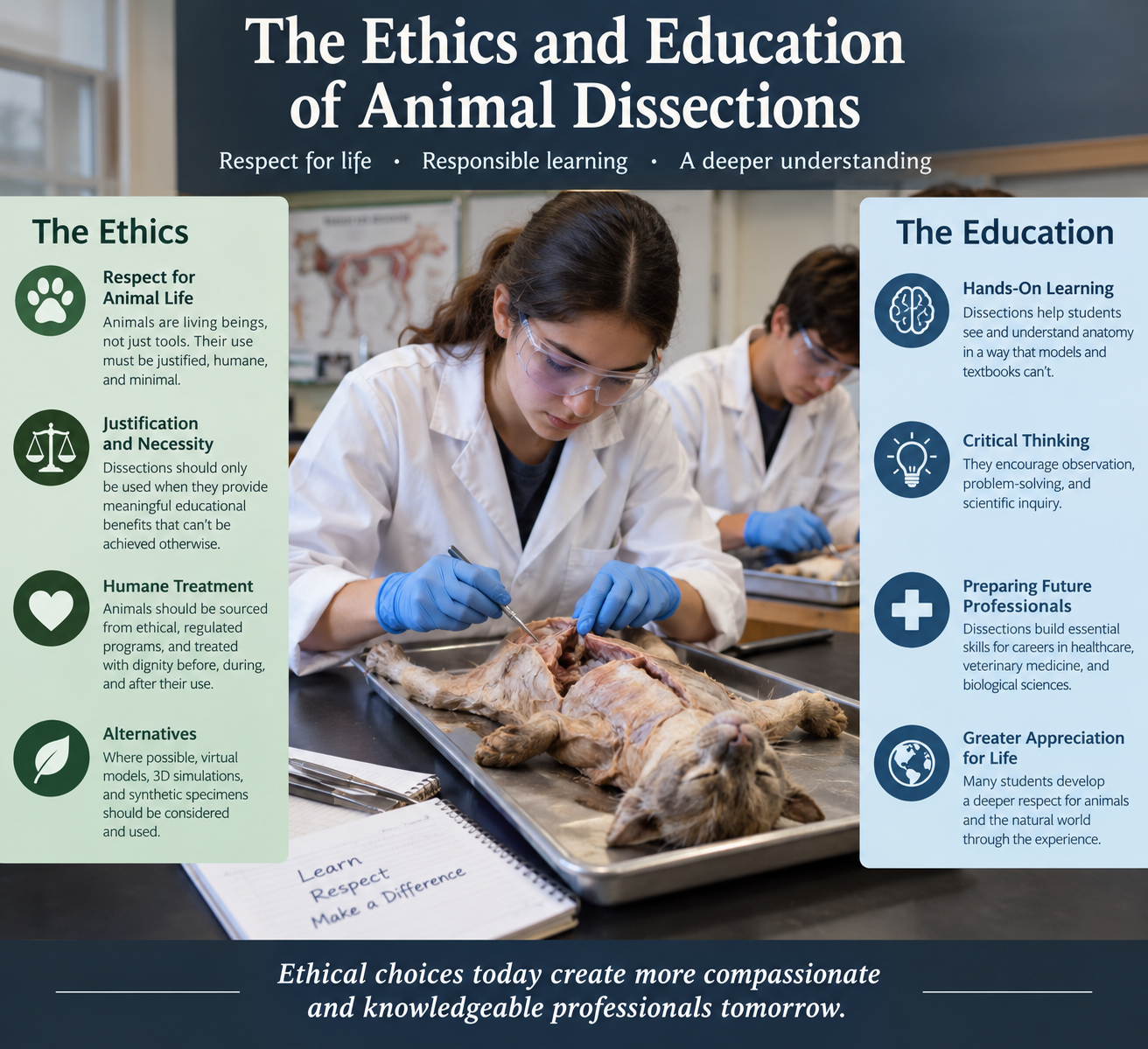
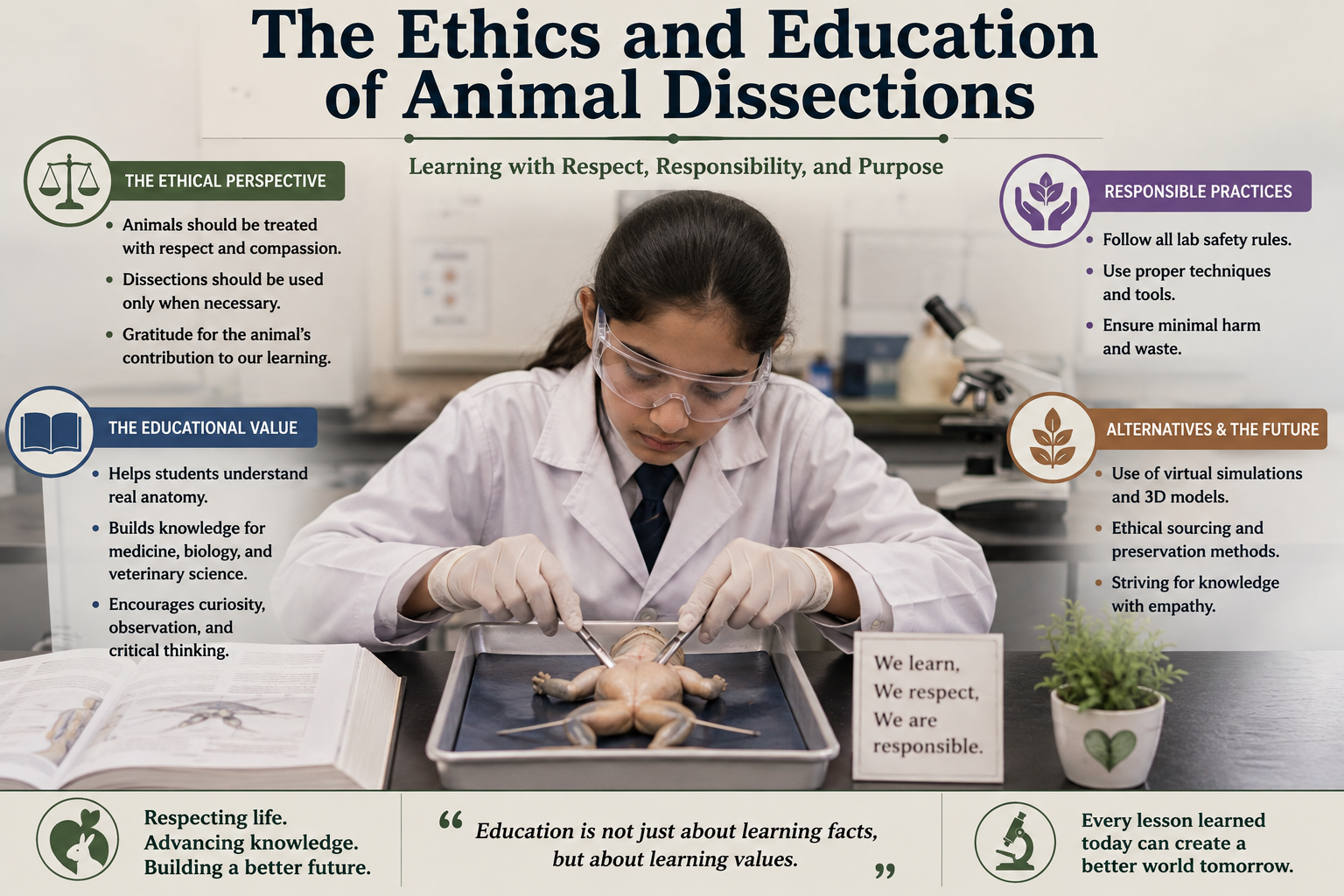
    **The Ethics and Education of Animal Dissections**
    Animal dissections can provide valuable hands-on learning and a deeper understanding of anatomy and biology. At the same time, education should emphasize respect for animal life, humane treatment, ethical responsibility, and the use of alternatives such as virtual models and simulations whenever appropriate.
    Learning science is not only about gaining knowledge—it is also about developing responsibility, compassion, and respect for life.
    #AnimalDissections #ScienceEducation #EthicsInScience #Biology #AnimalWelfare #LearningThroughScience #RehanSchool
    ACCL TASK:146 Day :146 foundation level **The Ethics and Education of Animal Dissections** πŸ§¬πŸ”¬ Animal dissections can provide valuable hands-on learning and a deeper understanding of anatomy and biology. At the same time, education should emphasize respect for animal life, humane treatment, ethical responsibility, and the use of alternatives such as virtual models and simulations whenever appropriate. Learning science is not only about gaining knowledge—it is also about developing responsibility, compassion, and respect for life. πŸŒ±πŸ“š #AnimalDissections #ScienceEducation #EthicsInScience #Biology #AnimalWelfare #LearningThroughScience #RehanSchool
    0 Commenti 0 condivisioni 1742 Views
  • ACCL TASK :125
    Day :125
    foundation level
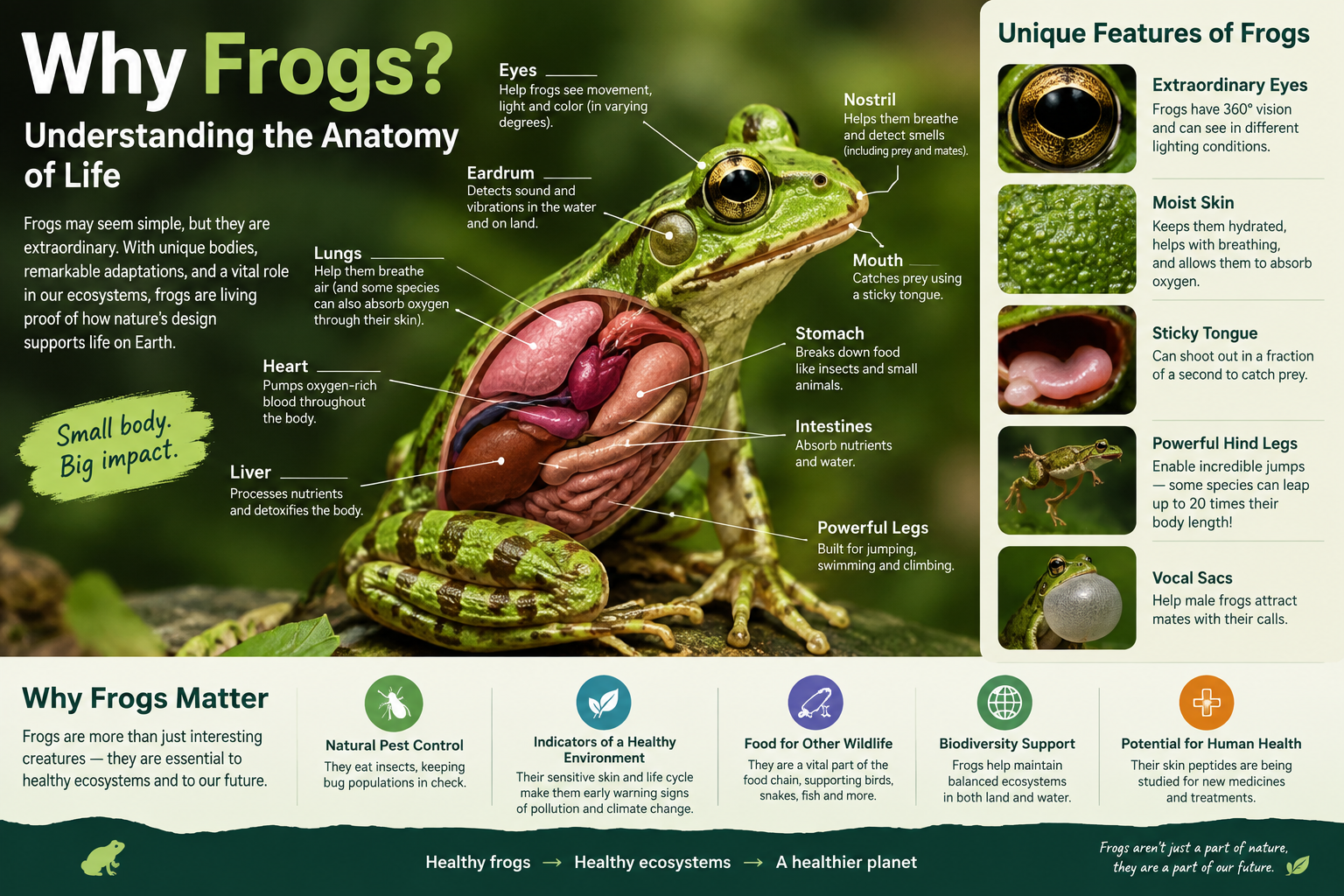
    **Why Frogs? Understanding the Anatomy of Life**
    Frogs are fascinating creatures with unique body structures and remarkable adaptations. From their powerful legs and specialized eyes to their moist skin and efficient organs, every part of a frog’s body plays an important role in survival.
    This educational poster explores frog anatomy and explains why frogs are important indicators of healthy ecosystems.
    **Small body. Big impact.**
    #FrogAnatomy #Biology #ScienceEducation #AnimalAnatomy #LearningThroughScience #Frogs #Nature
    ACCL TASK :125 Day :125 foundation level 🐸 **Why Frogs? Understanding the Anatomy of Life** Frogs are fascinating creatures with unique body structures and remarkable adaptations. From their powerful legs and specialized eyes to their moist skin and efficient organs, every part of a frog’s body plays an important role in survival. This educational poster explores frog anatomy and explains why frogs are important indicators of healthy ecosystems. πŸŒΏπŸ”¬ **Small body. Big impact.** #FrogAnatomy #Biology #ScienceEducation #AnimalAnatomy #LearningThroughScience #Frogs #Nature
    0 Commenti 0 condivisioni 1839 Views
  • RSIF8
    Roll no:14
    story no:21
    story topic:Peering Inside: The Role of Dissections in Understanding Life
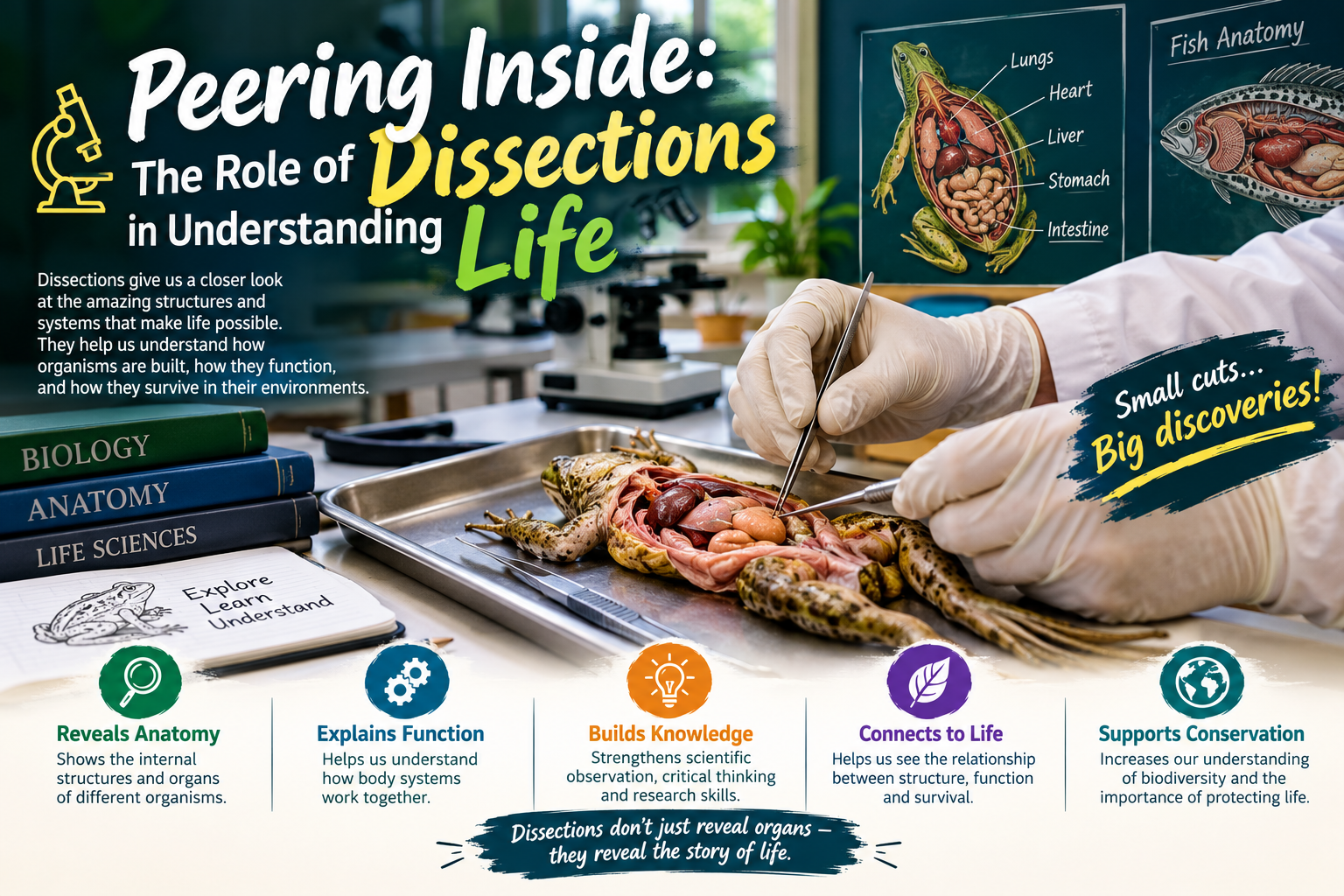
    # Peering Inside: The Role of Dissections in Understanding Life

    Discover the fascinating world of biology through **“Peering Inside: The Role of Dissections in Understanding Life.”** This educational topic explores how dissection helps scientists and students understand the internal structures of living organisms and uncover the amazing systems that make life possible.

    Dissection is an important scientific method that allows researchers to examine organs, tissues, and body structures to learn how different parts of an organism work together. By studying anatomy, we can better understand the relationship between structure and function, how body systems support survival, and how different species are adapted to their environments.

    **What Will You Learn?**

    - **Understanding Anatomy:** Discover the internal structures and organs of living organisms.
    - **Structure and Function:** Learn how different organs work together to support life.
    - **Exploring Organisms:** Understand the similarities and differences between various species.
    - **Scientific Investigation:** Develop observation, analytical thinking, and research skills.
    - **Biodiversity and Conservation:** Explore how anatomical knowledge contributes to understanding and protecting living things.
    - **Educational Importance:** Discover how dissection supports biology, medicine, and scientific learning.

    Dissection has contributed greatly to our understanding of the human body and other organisms. Today, scientists and educators can also use anatomical models, digital simulations, and virtual dissection tools to explore biological structures. Responsible scientific study emphasizes ethical practices, safety, and respect for living things.

    **Conclusion:** Dissection is more than the study of internal organs; it is a window into the complexity, organization, and wonder of life. By exploring anatomy, we gain valuable knowledge about how organisms function, survive, and interact with the world around them.

    **“Dissections don't just reveal organs — they reveal the story of life!”**

    #PeeringInside #Dissection #Anatomy #Biology #LifeSciences #ScienceEducation #ScientificDiscovery #HumanAnatomy #AnimalBiology #Biodiversity #LearningThroughScience #EducationalContent #ExploreLife
    RSIF8 Roll no:14 story no:21 story topic:Peering Inside: The Role of Dissections in Understanding Life # πŸ”¬ Peering Inside: The Role of Dissections in Understanding Life 🧬 Discover the fascinating world of biology through **“Peering Inside: The Role of Dissections in Understanding Life.”** This educational topic explores how dissection helps scientists and students understand the internal structures of living organisms and uncover the amazing systems that make life possible. 🌿✨ Dissection is an important scientific method that allows researchers to examine organs, tissues, and body structures to learn how different parts of an organism work together. By studying anatomy, we can better understand the relationship between structure and function, how body systems support survival, and how different species are adapted to their environments. πŸ” **What Will You Learn?** - πŸ«€ **Understanding Anatomy:** Discover the internal structures and organs of living organisms. - 🧠 **Structure and Function:** Learn how different organs work together to support life. - 🐸 **Exploring Organisms:** Understand the similarities and differences between various species. - πŸ”¬ **Scientific Investigation:** Develop observation, analytical thinking, and research skills. - 🌍 **Biodiversity and Conservation:** Explore how anatomical knowledge contributes to understanding and protecting living things. - πŸ“š **Educational Importance:** Discover how dissection supports biology, medicine, and scientific learning. Dissection has contributed greatly to our understanding of the human body and other organisms. Today, scientists and educators can also use anatomical models, digital simulations, and virtual dissection tools to explore biological structures. Responsible scientific study emphasizes ethical practices, safety, and respect for living things. πŸ’š ✨ **Conclusion:** Dissection is more than the study of internal organs; it is a window into the complexity, organization, and wonder of life. By exploring anatomy, we gain valuable knowledge about how organisms function, survive, and interact with the world around them. **“Dissections don't just reveal organs — they reveal the story of life!”** πŸŒ±πŸ”¬ #PeeringInside #Dissection #Anatomy #Biology #LifeSciences #ScienceEducation #ScientificDiscovery #HumanAnatomy #AnimalBiology #Biodiversity #LearningThroughScience #EducationalContent #ExploreLife
    0 Commenti 0 condivisioni 5063 Views
  • RSIF8
    Roll no 94
    Song no 20
    Song topic
    From Specimens to Knowledge: The Purpose of Science Experiments

    Science experiments are more than just lab activities—they are a journey of discovery! Every specimen, observation, and test helps us uncover new knowledge and understand the amazing world around us. From curiosity to breakthroughs, science turns questions into answers and ideas into innovation.

    Keep exploring, keep questioning, and keep learning!

    #ScienceExperiments #STEMEducation #LearningThroughScience #Curiosity #Discovery #Knowledge #Innovation #Biology #ScienceLovers #FutureScientists
    RSIF8 Roll no 94 Song no 20 Song topic 🌟🎢 From Specimens to Knowledge: The Purpose of Science Experiments πŸ”¬πŸ§ͺ Science experiments are more than just lab activities—they are a journey of discovery! 🌍✨ Every specimen, observation, and test helps us uncover new knowledge and understand the amazing world around us. From curiosity to breakthroughs, science turns questions into answers and ideas into innovation. πŸš€πŸ“š πŸ”πŸ’‘ Keep exploring, keep questioning, and keep learning! #ScienceExperiments #STEMEducation #LearningThroughScience #Curiosity #Discovery #Knowledge #Innovation #Biology #ScienceLovers #FutureScientists πŸ”¬πŸ§ͺπŸ“–
    0 Commenti 0 condivisioni 2591 Views 4
  • **Roll No: 2**
    **Batch: 14**
    **Book: ACCL**
    **Task No: 130**

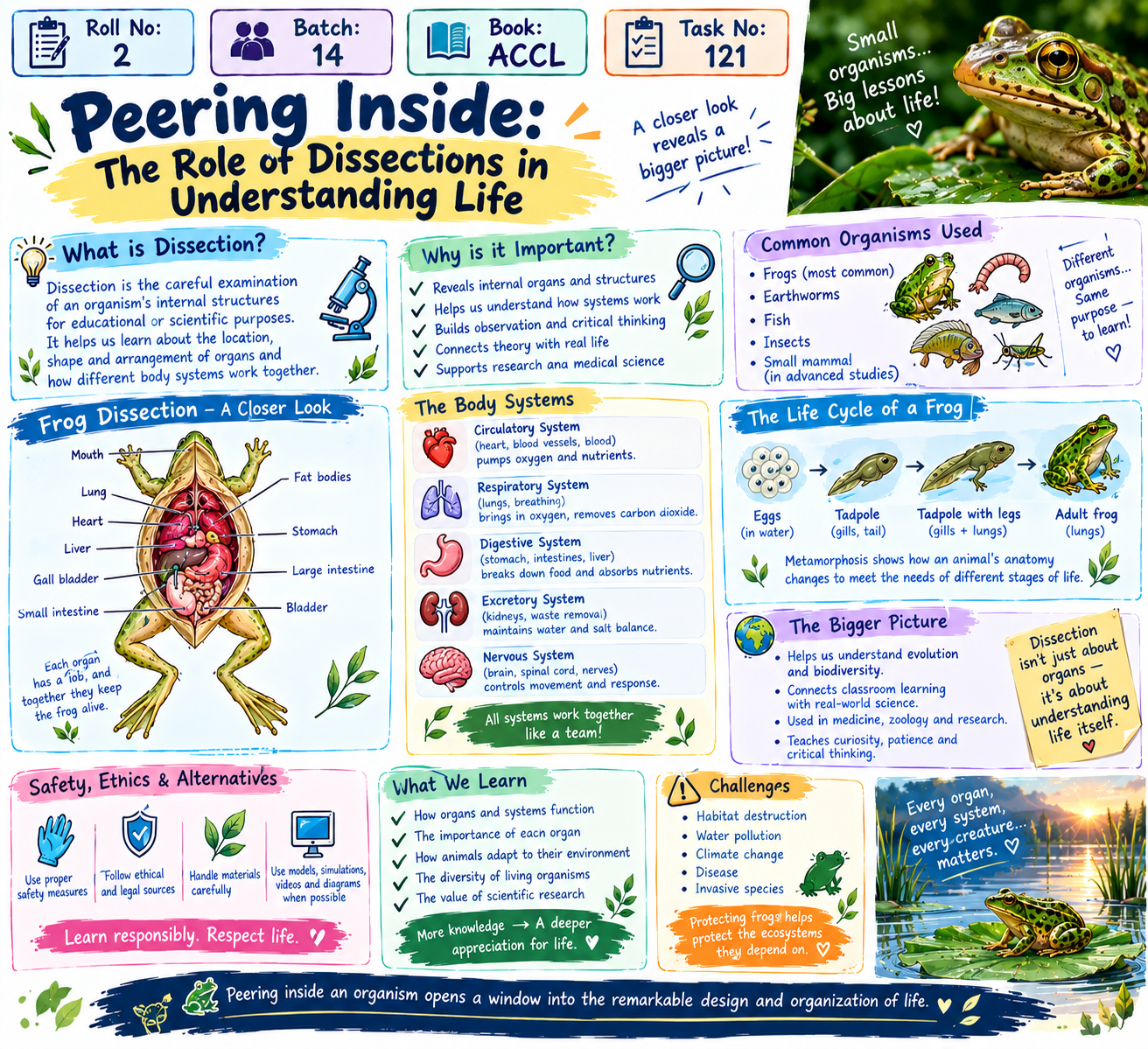
    # Peering Inside: The Role of Dissections in Understanding Life

    Have you ever wondered how scientists discover what lies inside a living organism and how its different organs work together? The human body and the bodies of other animals contain many complex structures that cannot be fully understood by looking only at their outer appearance. Dissection is one scientific method that helps students and researchers explore internal anatomy and understand the remarkable organization of life.

    **Dissection is the careful examination of an organism's internal structures for educational or scientific purposes.** It helps us learn about the location, shape, and arrangement of organs and how different body systems work together. By studying anatomy, we can better understand how living organisms obtain energy, breathe, circulate blood, digest food, and respond to their surroundings.

    One commonly discussed example in biology education is frog dissection. Frogs are interesting study organisms because they have many organ systems that can be compared with those of other vertebrates. Their bodies are adapted for movement on land and in water, and their anatomy provides useful opportunities to study how organs perform different functions. Observing frog anatomy can help students understand the relationship between body structure and survival.

    The circulatory system is an important area of anatomical study. The heart pumps blood through blood vessels, helping transport oxygen, nutrients, and other substances around the body. The respiratory system supports gas exchange, while the digestive system breaks down food so that the body can absorb useful nutrients. These systems work together to supply cells with the materials and energy they need.

    The nervous system is equally fascinating. It includes the brain, spinal cord, and nerves, which coordinate movement, process information, and help organisms respond to changes in their environments. The excretory system also plays an essential role by removing waste products and maintaining the balance of water and salts. Studying these systems reveals that every organ has a specific role, yet no organ works entirely alone.

    Dissection can also connect classroom learning with real-world science. Medical professionals study anatomy to understand the human body, while zoologists investigate the structures of different animal species. Researchers use many methods, including imaging, microscopy, computer models, and carefully conducted anatomical studies, to investigate how organisms function. These approaches have helped expand our knowledge of health, development, and biodiversity.

    Although dissection can be a valuable learning method, science education must also emphasize responsibility and respect for life. Schools and laboratories should follow appropriate safety procedures, use legally and ethically sourced specimens, and handle materials carefully. Whenever possible, students may also learn through digital simulations, anatomical models, videos, and diagrams. These alternatives can explain many internal structures without requiring the use of preserved specimens.

    The study of anatomy helps us appreciate the diversity of living organisms. Different species have different body structures because they have adapted to different environments and ways of life. Comparing these structures allows scientists to investigate evolution, understand biological similarities, and discover how organisms meet the challenges of survival.

    Dissection teaches more than the names of organs. It encourages observation, patience, careful reasoning, and the ability to connect scientific evidence with biological explanations. It also reminds us that scientific knowledge grows through asking questions, examining evidence, and learning from reliable methods rather than making assumptions.

    **Peering inside an organism opens a window into the remarkable design and organization of life. By studying anatomy responsibly, we deepen our understanding of biology, appreciate the connections between body systems, and learn why every discovery should be guided by curiosity, care, and respect for the natural world. **

    \#Dissection #Anatomy #Biology #ScienceEducation #AnimalScience #LearningThroughScience #ACCL #Batch14 #Task121
    **Roll No: 2** **Batch: 14** **Book: ACCL** **Task No: 130** # πŸ”¬πŸ§¬ Peering Inside: The Role of Dissections in Understanding Life 🐸🌿 Have you ever wondered how scientists discover what lies inside a living organism and how its different organs work together? πŸ”πŸ«€ The human body and the bodies of other animals contain many complex structures that cannot be fully understood by looking only at their outer appearance. Dissection is one scientific method that helps students and researchers explore internal anatomy and understand the remarkable organization of life. 🌍✨ **Dissection is the careful examination of an organism's internal structures for educational or scientific purposes.** πŸ”¬ It helps us learn about the location, shape, and arrangement of organs and how different body systems work together. By studying anatomy, we can better understand how living organisms obtain energy, breathe, circulate blood, digest food, and respond to their surroundings. πŸ“šπŸ§  One commonly discussed example in biology education is frog dissection. 🐸 Frogs are interesting study organisms because they have many organ systems that can be compared with those of other vertebrates. Their bodies are adapted for movement on land and in water, and their anatomy provides useful opportunities to study how organs perform different functions. Observing frog anatomy can help students understand the relationship between body structure and survival. The circulatory system is an important area of anatomical study. ❀️ The heart pumps blood through blood vessels, helping transport oxygen, nutrients, and other substances around the body. The respiratory system supports gas exchange, while the digestive system breaks down food so that the body can absorb useful nutrients. These systems work together to supply cells with the materials and energy they need. ⚑🫁 The nervous system is equally fascinating. 🧠 It includes the brain, spinal cord, and nerves, which coordinate movement, process information, and help organisms respond to changes in their environments. The excretory system also plays an essential role by removing waste products and maintaining the balance of water and salts. Studying these systems reveals that every organ has a specific role, yet no organ works entirely alone. Dissection can also connect classroom learning with real-world science. πŸ₯ Medical professionals study anatomy to understand the human body, while zoologists investigate the structures of different animal species. Researchers use many methods, including imaging, microscopy, computer models, and carefully conducted anatomical studies, to investigate how organisms function. These approaches have helped expand our knowledge of health, development, and biodiversity. πŸ”¬πŸ“– Although dissection can be a valuable learning method, science education must also emphasize responsibility and respect for life. πŸ’š Schools and laboratories should follow appropriate safety procedures, use legally and ethically sourced specimens, and handle materials carefully. Whenever possible, students may also learn through digital simulations, anatomical models, videos, and diagrams. These alternatives can explain many internal structures without requiring the use of preserved specimens. The study of anatomy helps us appreciate the diversity of living organisms. 🐸🐟🐦 Different species have different body structures because they have adapted to different environments and ways of life. Comparing these structures allows scientists to investigate evolution, understand biological similarities, and discover how organisms meet the challenges of survival. Dissection teaches more than the names of organs. It encourages observation, patience, careful reasoning, and the ability to connect scientific evidence with biological explanations. πŸ§ͺπŸ’‘ It also reminds us that scientific knowledge grows through asking questions, examining evidence, and learning from reliable methods rather than making assumptions. **Peering inside an organism opens a window into the remarkable design and organization of life. By studying anatomy responsibly, we deepen our understanding of biology, appreciate the connections between body systems, and learn why every discovery should be guided by curiosity, care, and respect for the natural world. πŸ”¬πŸŒΏπŸŒŽ** \#Dissection #Anatomy #Biology #ScienceEducation #AnimalScience #LearningThroughScience #ACCL #Batch14 #Task121 πŸ§¬πŸ”¬πŸ’š
    0 Commenti 0 condivisioni 4157 Views
  • #rsisb
    Roll no.247
    song .26
    Foundation level

    **Dissecting Frogs: A Gateway to Human Anatomy**

    Studying frog anatomy can provide students with a fascinating introduction to the structure and organization of living organisms. Through careful anatomical study, students can learn how different organs are arranged, how body systems work together, and how scientists use observation to understand life.

    Frogs are commonly studied in biology because their basic body organization shares important similarities with other vertebrates. Exploring their anatomy can help learners recognize major structures such as the heart, lungs, digestive organs, and reproductive organs, while also developing an understanding of how these systems perform different functions.

    **From Frog Anatomy to Human Anatomy**

    Learning about a frog's internal organization can help students build foundational knowledge that makes human anatomy easier to understand. By comparing different vertebrate body plans, learners can discover both similarities and differences in organs, tissues, and body systems. This comparison encourages curiosity and strengthens scientific thinking.

    **Learning Through Observation**

    Anatomical studies teach more than just the names of organs. They encourage students to observe carefully, record information, ask questions, and connect physical structures with biological functions. These skills are valuable in biology, medicine, veterinary science, and many other scientific fields. ‍‍

    **Science, Respect, and Responsibility**

    Biology education should always be approached with respect for living organisms and with appropriate safety, ethical, and educational guidelines. Modern classrooms may also use models, diagrams, videos, simulations, and digital anatomy tools to provide meaningful learning experiences.

    **Conclusion**

    “Dissecting Frogs: A Gateway to Human Anatomy” represents more than an anatomy lesson—it is an opportunity to explore the fascinating organization of life. By studying structures, comparing body systems, and asking scientific questions, students can develop a deeper appreciation for biology and the remarkable complexity of living organisms.

    #DissectingFrogs #FrogAnatomy #HumanAnatomy #Biology #ScienceEducation #AnatomyStudy #BiologyLearning #ScienceExperiment #LearningThroughScience #VertebrateAnatomy #LifeScience #ScienceStudents #EducationalJourney #ExploreBiology #ScientificThinking #AnatomyAndPhysiology #STEMEducation #ScienceExploration #BiologyProject #LearningIsFun
    #rsisb Roll no.247 song .26 Foundation level πŸΈπŸ”¬ **Dissecting Frogs: A Gateway to Human Anatomy** πŸ§¬πŸ«€ Studying frog anatomy can provide students with a fascinating introduction to the structure and organization of living organisms. Through careful anatomical study, students can learn how different organs are arranged, how body systems work together, and how scientists use observation to understand life. πŸ”πŸ“š 🐸 Frogs are commonly studied in biology because their basic body organization shares important similarities with other vertebrates. Exploring their anatomy can help learners recognize major structures such as the heart, lungs, digestive organs, and reproductive organs, while also developing an understanding of how these systems perform different functions. πŸ«€πŸ« 🧠 **From Frog Anatomy to Human Anatomy** Learning about a frog's internal organization can help students build foundational knowledge that makes human anatomy easier to understand. By comparing different vertebrate body plans, learners can discover both similarities and differences in organs, tissues, and body systems. This comparison encourages curiosity and strengthens scientific thinking. πŸ”¬βœ¨ πŸ“– **Learning Through Observation** Anatomical studies teach more than just the names of organs. They encourage students to observe carefully, record information, ask questions, and connect physical structures with biological functions. These skills are valuable in biology, medicine, veterinary science, and many other scientific fields. πŸ§ͺπŸ‘©‍πŸ”¬πŸ‘¨‍πŸ”¬ 🌱 **Science, Respect, and Responsibility** Biology education should always be approached with respect for living organisms and with appropriate safety, ethical, and educational guidelines. Modern classrooms may also use models, diagrams, videos, simulations, and digital anatomy tools to provide meaningful learning experiences. πŸŒπŸ’š ✨ **Conclusion** “Dissecting Frogs: A Gateway to Human Anatomy” represents more than an anatomy lesson—it is an opportunity to explore the fascinating organization of life. By studying structures, comparing body systems, and asking scientific questions, students can develop a deeper appreciation for biology and the remarkable complexity of living organisms. πŸΈπŸ”¬πŸ§¬πŸŒŸ #DissectingFrogs #FrogAnatomy #HumanAnatomy #Biology #ScienceEducation #AnatomyStudy #BiologyLearning #ScienceExperiment #LearningThroughScience #VertebrateAnatomy #LifeScience #ScienceStudents #EducationalJourney #ExploreBiology #ScientificThinking #AnatomyAndPhysiology #STEMEducation #ScienceExploration #BiologyProject #LearningIsFun πŸΈπŸ”¬πŸ“šπŸ§¬πŸ«€πŸ«βœ¨
    0 Commenti 0 condivisioni 9132 Views 6
  • #rsisb Roll No.240 Song No.24 Foundation Level Learning Through Layers: The Importance of Animal Anatomy Studies explores the fascinating world of animal anatomy and helps us understand how different parts of an animal’s body work together. By studying body structures, students can discover how bones, muscles, organs, tissues, and other systems support movement, growth, feeding, breathing, and other important functions. Animal anatomy is an important part of biology because it allows us to learn about the structure and organization of living organisms. When students study animals carefully, they can identify similarities and differences between species and understand how animals are adapted to their environments. The study of anatomy also teaches valuable scientific skills. Students learn to observe carefully, compare structures, record information, ask questions, and develop conclusions from evidence. These skills are useful not only in biology but also in medicine, veterinary science, zoology, and other fields of science. Learning about animals can also help us understand the human body. By comparing different organisms, scientists can learn how body systems are organized and how certain biological structures perform similar or different functions. This topic reminds us that every living organism has a complex and carefully organized body. From tiny structures to complete body systems, each part has an important role. Understanding these layers of organization helps students appreciate the diversity and complexity of life. Most importantly, animal anatomy studies should always be approached with care, respect, ethical awareness, and appropriate scientific supervision. Responsible learning helps students gain knowledge while developing respect for living organisms and the natural world. πŸ”¬ Explore the structure of animals 🐾 Understand organs, tissues, bones, and body systems 🧠 Develop observation and scientific thinking skills πŸ“š Compare different animals and their adaptations 🌍 Appreciate the diversity of living organisms ✨ Connect anatomy with broader biological knowledge Learning Through Layers encourages students to look beyond what they see on the surface and discover the fascinating structures that make life possible. By studying animal anatomy, learners can build a stronger understanding of biology and develop curiosity about the amazing world of living things. #AnimalAnatomy #AnatomyStudies #Biology #Zoology #AnimalScience #ScienceEducation #LifeScience #BiologyStudents #ScientificLearning #AnimalStructure #BodySystems #Education #LearningThroughScience Rehan School Islamabad Campus Asma Shaheen EducationWali Irum Asim Saima Happinesswali https://www.facebook.com/reel/749999181542227/
    WWW.FACEBOOK.COM
    Facebook
    #rsisb Roll No.240 Song No.24 Foundation Level Learning Through Layers: The Importance of Animal Anatomy Studies explores the fascinating world of animal anatomy and helps us understand how...
    0 Commenti 0 condivisioni 4909 Views
  • #rsisb Roll No.240 Song No.24 Foundation Level Learning Through Layers: The Importance of Animal Anatomy Studies explores the fascinating world of animal anatomy and helps us understand how different parts of an animal’s body work together. By studying body structures, students can discover how bones, muscles, organs, tissues, and other systems support movement, growth, feeding, breathing, and other important functions. Animal anatomy is an important part of biology because it allows us to learn about the structure and organization of living organisms. When students study animals carefully, they can identify similarities and differences between species and understand how animals are adapted to their environments. The study of anatomy also teaches valuable scientific skills. Students learn to observe carefully, compare structures, record information, ask questions, and develop conclusions from evidence. These skills are useful not only in biology but also in medicine, veterinary science, zoology, and other fields of science. Learning about animals can also help us understand the human body. By comparing different organisms, scientists can learn how body systems are organized and how certain biological structures perform similar or different functions. This topic reminds us that every living organism has a complex and carefully organized body. From tiny structures to complete body systems, each part has an important role. Understanding these layers of organization helps students appreciate the diversity and complexity of life. Most importantly, animal anatomy studies should always be approached with care, respect, ethical awareness, and appropriate scientific supervision. Responsible learning helps students gain knowledge while developing respect for living organisms and the natural world. πŸ”¬ Explore the structure of animals 🐾 Understand organs, tissues, bones, and body systems 🧠 Develop observation and scientific thinking skills πŸ“š Compare different animals and their adaptations 🌍 Appreciate the diversity of living organisms ✨ Connect anatomy with broader biological knowledge Learning Through Layers encourages students to look beyond what they see on the surface and discover the fascinating structures that make life possible. By studying animal anatomy, learners can build a stronger understanding of biology and develop curiosity about the amazing world of living things. #AnimalAnatomy #AnatomyStudies #Biology #Zoology #AnimalScience #ScienceEducation #LifeScience #BiologyStudents #ScientificLearning #AnimalStructure #BodySystems #Education #LearningThroughScience Rehan School Islamabad Campus Asma Shaheen EducationWali Irum Asim Saima Happinesswali https://www.facebook.com/share/v/1BZsxjH7QB/
    WWW.FACEBOOK.COM
    Facebook
    #rsisb Roll No.240 Song No.24 Foundation Level Learning Through Layers: The Importance of Animal Anatomy Studies explores the fascinating world of animal anatomy and helps us understand how...
    0 Commenti 0 condivisioni 4727 Views
  • #rsisb Roll No.240 Song No.23 Foundation Level **Dissecting Frogs: A Gateway to Human Anatomy** explores how studying frog anatomy can help students understand important ideas about the structure and functions of living organisms. Through careful observation and scientific study, students can learn how different body systems work together and how anatomy helps us understand life. Frogs are often used in biology education because their body structures provide useful examples for learning about organs, body systems, and biological functions. Studying anatomy can help students connect what they learn from textbooks and diagrams with real biological structures. This topic introduces students to important concepts such as the organization of the body, organs, tissues, and different body systems. It also encourages students to observe carefully, record information, ask questions, and think scientifically. The study of frog anatomy can also provide a broader understanding of **human anatomy**. Although frogs and humans are different animals, studying similarities and differences between organisms can help students understand how bodies are organized and how living systems perform essential functions. Most importantly, biological practical work should be carried out with **proper supervision, ethical consideration, safety procedures, and respect for living organisms**. Students can gain valuable scientific knowledge while developing responsible attitudes toward biological research. This topic encourages curiosity and helps students appreciate the complexity of life. It shows that science is not only about memorizing facts; it is also about observing, questioning, investigating, and building a deeper understanding of the natural world. πŸ”¬ **Learn through scientific observation** 🐸 **Explore frog anatomy as a biology model** 🧠 **Understand organs and body systems** πŸ“š **Connect practical learning with classroom knowledge** πŸ‘©‍πŸ”¬ **Develop scientific thinking and observation skills** 🌍 **Appreciate the complexity and diversity of life** **Dissecting Frogs: A Gateway to Human Anatomy** provides students with an opportunity to explore anatomy in an educational setting and understand how biological structures are connected to their functions. Through responsible scientific learning, students can build knowledge that supports their future studies in biology, medicine, health sciences, and other scientific fields. #FrogDissection #HumanAnatomy #Anatomy #Biology #ScienceEducation #BiologyLab #FrogAnatomy #HumanBody #LifeScience #ScientificLearning #Education #Science #BiologyStudents #LearningThroughScience Rehan School Islamabad Campus Asma Shaheen EducationWali Irum Asim Saima Happinesswali https://www.facebook.com/share/v/1DrPuWFK8D/
    WWW.FACEBOOK.COM
    Facebook
    #rsisb Roll No.240 Song No.23 Foundation Level **Dissecting Frogs: A Gateway to Human Anatomy** explores how studying frog anatomy can help students understand important ideas about the structure...
    0 Commenti 0 condivisioni 4349 Views
  • #rsisb
    roll no.247
    Coding task no.7
    Foundation Level
    # The Ethics and Education of Animal Dissections
    Animal dissection has been an important part of science education for many years, especially in biology and anatomy classes. It allows students to observe the structure of organisms directly and understand how different body parts work together. However, the practice also raises important ethical questions about animal welfare, respect for living beings, and whether there are better educational alternatives.
    From an educational perspective, dissections can provide students with a hands-on learning experience that textbooks and diagrams cannot always provide. Students may develop a clearer understanding of anatomy, biological organization, and scientific observation. Practical activities can also encourage curiosity, careful observation, teamwork, and responsible scientific thinking.
    At the same time, ethical considerations should be taken seriously. Animals should not be treated simply as objects for classroom activities. Their use should follow appropriate welfare standards, and students should be encouraged to think about why an animal is being used and whether the educational objective could be achieved through another method.
    Modern education offers several alternatives, including high-quality anatomical models, computer simulations, virtual dissection programs, videos, and interactive digital resources. These approaches can sometimes provide detailed visual information while reducing or eliminating the need to use animals. For some students, alternatives may also make learning more comfortable and accessible.
    The most responsible approach is to balance educational value with ethical responsibility. Schools and teachers can carefully evaluate whether dissection is necessary, explain the ethical issues to students, follow proper guidelines, and provide suitable alternatives when appropriate.
    Ultimately, science education should not only teach students about biology—it should also teach them values such as compassion, responsibility, critical thinking, and respect for life. By combining scientific knowledge with ethical awareness, students can become better scientists, thoughtful citizens, and responsible stewards of the natural world.
    ### Key Message
    Animal dissection can offer valuable educational experiences, but it should always be considered alongside animal welfare, ethical responsibility, and modern alternatives. The goal of education should be to develop both **scientific understanding and compassion**.
    ### Hashtags
    #AnimalDissection #EthicsInScience #ScienceEducation #AnimalWelfare #BiologyEducation #EthicalScience #HandsOnLearning #VirtualLearning #ScienceAndEthics #StudentLearning #Biology #Anatomy #ScientificThinking #ResponsibleScience #EducationMatters #CompassionAndScience #STEMEducation #LearningThroughScience #RespectForLife #FutureScientists
    #rsisb roll no.247 Coding task no.7 Foundation Level # The Ethics and Education of Animal Dissections πŸ§ͺπŸΎπŸ“š Animal dissection has been an important part of science education for many years, especially in biology and anatomy classes. It allows students to observe the structure of organisms directly and understand how different body parts work together. However, the practice also raises important ethical questions about animal welfare, respect for living beings, and whether there are better educational alternatives. βš–οΈπŸΎ From an educational perspective, dissections can provide students with a hands-on learning experience that textbooks and diagrams cannot always provide. Students may develop a clearer understanding of anatomy, biological organization, and scientific observation. πŸ”¬πŸ“–βœ¨ Practical activities can also encourage curiosity, careful observation, teamwork, and responsible scientific thinking. At the same time, ethical considerations should be taken seriously. Animals should not be treated simply as objects for classroom activities. Their use should follow appropriate welfare standards, and students should be encouraged to think about why an animal is being used and whether the educational objective could be achieved through another method. ❀️🐾🌱 Modern education offers several alternatives, including high-quality anatomical models, computer simulations, virtual dissection programs, videos, and interactive digital resources. πŸ’»πŸ§¬ These approaches can sometimes provide detailed visual information while reducing or eliminating the need to use animals. For some students, alternatives may also make learning more comfortable and accessible. The most responsible approach is to balance educational value with ethical responsibility. Schools and teachers can carefully evaluate whether dissection is necessary, explain the ethical issues to students, follow proper guidelines, and provide suitable alternatives when appropriate. πŸŒβš–οΈ Ultimately, science education should not only teach students about biology—it should also teach them values such as compassion, responsibility, critical thinking, and respect for life. πŸ§ πŸ’šπŸΎ By combining scientific knowledge with ethical awareness, students can become better scientists, thoughtful citizens, and responsible stewards of the natural world. πŸŒ±πŸ”¬βœ¨ ### 🌟 Key Message Animal dissection can offer valuable educational experiences, but it should always be considered alongside animal welfare, ethical responsibility, and modern alternatives. The goal of education should be to develop both **scientific understanding and compassion**. πŸΎβ€οΈπŸ“š ### 🏷️ Hashtags #AnimalDissection #EthicsInScience #ScienceEducation #AnimalWelfare #BiologyEducation #EthicalScience #HandsOnLearning #VirtualLearning #ScienceAndEthics #StudentLearning #Biology #Anatomy #ScientificThinking #ResponsibleScience #EducationMatters #CompassionAndScience #STEMEducation #LearningThroughScience #RespectForLife #FutureScientists
    0 Commenti 0 condivisioni 12177 Views
Pagine in Evidenza