• #rsisb
    Roll no.279
    story post no.15
    Foundation Level
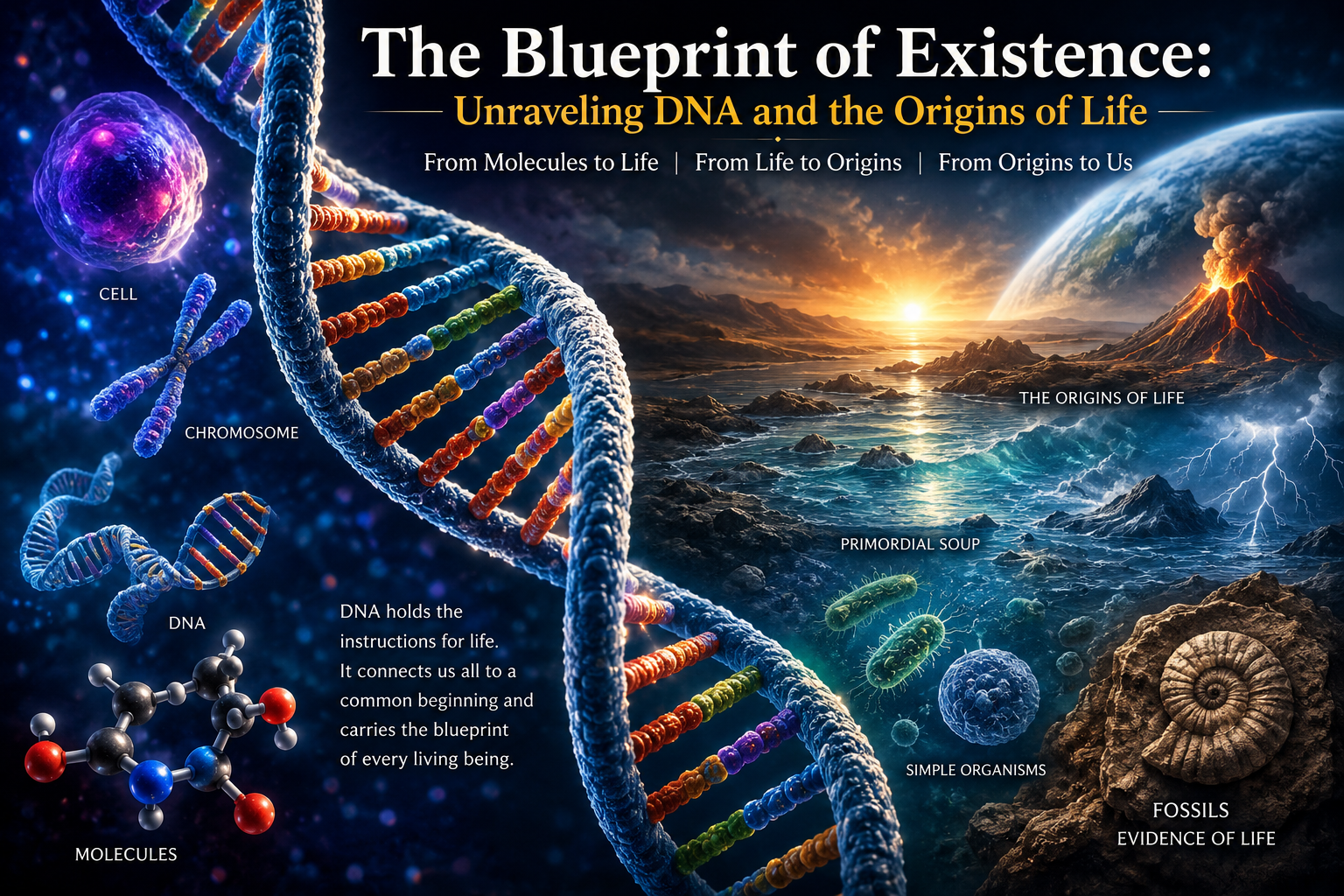
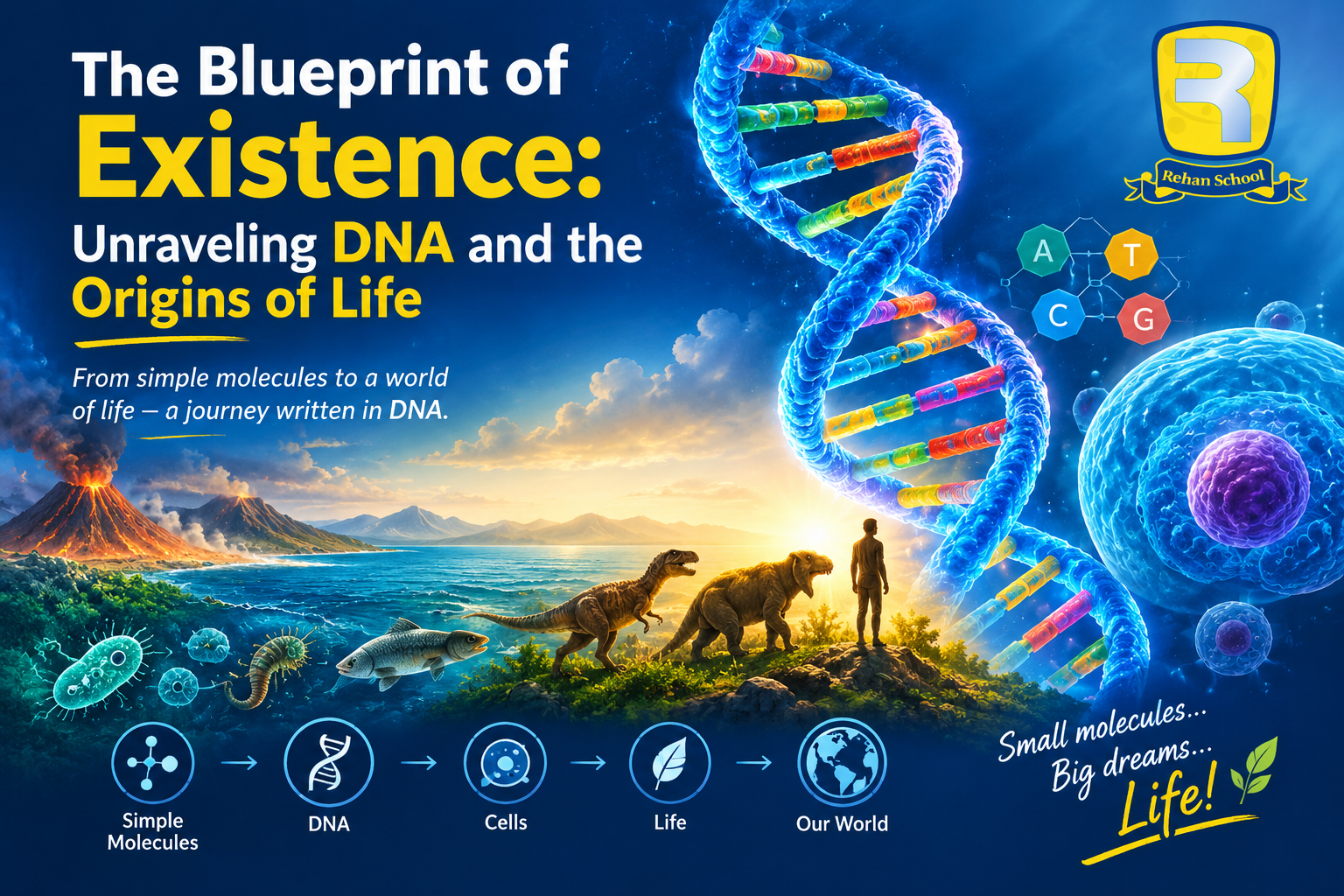
    # The Blueprint of Existence: Unraveling DNA and the Origins of Life
    Long before humans walked on Earth, before forests covered the land, and before animals filled the oceans, our planet was a young and mysterious world. Scientists believe that billions of years ago, the early Earth contained water, gases, minerals, and energy that created conditions where the first forms of life could eventually emerge.
    At the heart of life today is an incredible molecule called **DNA**. DNA carries biological information that helps living organisms grow, function, and reproduce. It is often described as a **blueprint of life** because it stores instructions used by cells to build and maintain an organism.
    Imagine DNA as a tiny library inside our cells. Every cell contains carefully organized information written in a chemical code. Four chemical bases—**A, T, C, and G**—form the language of DNA. Their arrangement creates instructions that cells can read and use.
    But how did life begin in the first place? Scientists are still investigating this enormous question. One idea is that simple chemical molecules on the early Earth gradually formed more complex molecules, eventually leading to systems capable of copying information and participating in early life processes.
    Over immense periods of time, life changed and diversified. From tiny microscopic organisms to enormous dinosaurs and eventually humans, the history of life is a remarkable story of change and adaptation.
    DNA connects all modern life in a fascinating way. Although organisms can look incredibly different, many of the fundamental processes of life are shared across living things. Studying DNA allows scientists to explore relationships between organisms and understand more about evolution and biology.
    The story of DNA reminds us that even the smallest structures can hold enormous importance. Inside microscopic cells lies information that helps make life possible—a remarkable connection between chemistry, biology, evolution, and the history of our planet.
    **The journey from simple molecules to the incredible diversity of life is one of science’s greatest mysteries—and there is still much left to discover.**
    #DNA #OriginsOfLife #Science #Biology #Genetics #Evolution #LifeOnEarth #ScientificDiscovery #Chemistry #Learning #Education #Technology #Curiosity
    Asma Shaheen EducationWali
    Saima Empowerment Wali
    Irum Asim Leadershipwali
    #rsisb Roll no.279 story post no.15 Foundation Level # 🧬 The Blueprint of Existence: Unraveling DNA and the Origins of Life 🌍✨ Long before humans walked on Earth, before forests covered the land, and before animals filled the oceans, our planet was a young and mysterious world. 🌋🌊✨ Scientists believe that billions of years ago, the early Earth contained water, gases, minerals, and energy that created conditions where the first forms of life could eventually emerge. 🌍🔬 At the heart of life today is an incredible molecule called **DNA**. 🧬 DNA carries biological information that helps living organisms grow, function, and reproduce. It is often described as a **blueprint of life** because it stores instructions used by cells to build and maintain an organism. 📖🔐 Imagine DNA as a tiny library inside our cells. 📚🔬 Every cell contains carefully organized information written in a chemical code. Four chemical bases—**A, T, C, and G**—form the language of DNA. Their arrangement creates instructions that cells can read and use. 🧬💡 But how did life begin in the first place? 🤔🌎 Scientists are still investigating this enormous question. One idea is that simple chemical molecules on the early Earth gradually formed more complex molecules, eventually leading to systems capable of copying information and participating in early life processes. ⚗️🌊🧪 Over immense periods of time, life changed and diversified. 🌱🐠🦕🦅 From tiny microscopic organisms to enormous dinosaurs and eventually humans, the history of life is a remarkable story of change and adaptation. 🌳🌍✨ DNA connects all modern life in a fascinating way. 🧬❤️ Although organisms can look incredibly different, many of the fundamental processes of life are shared across living things. Studying DNA allows scientists to explore relationships between organisms and understand more about evolution and biology. 🔬🌿 The story of DNA reminds us that even the smallest structures can hold enormous importance. 🧬✨ Inside microscopic cells lies information that helps make life possible—a remarkable connection between chemistry, biology, evolution, and the history of our planet. 🌍💫 **The journey from simple molecules to the incredible diversity of life is one of science’s greatest mysteries—and there is still much left to discover.** 🔬🚀🧬🌎 #DNA #OriginsOfLife #Science #Biology #Genetics #Evolution #LifeOnEarth #ScientificDiscovery #Chemistry #Learning #Education #Technology #Curiosity 🧬🔬🌍✨ Asma Shaheen EducationWali Saima Empowerment Wali Irum Asim Leadershipwali
    0 Commentarii 0 Distribuiri 232 Views
  • #rsisb
    Roll no.247
    call annie no.18
    Foundation level

    **Water – The Origin of Life and Language | 25-Minute Exploration**

    Water is one of the simplest substances on Earth, yet it plays one of the most extraordinary roles in our existence. From the earliest forms of life to the development of human civilization, water has shaped the story of our planet in countless ways. In this fascinating 25-minute journey, **“Water – The Origin of Life and Language,”** we explore why water is so important to life and how it has influenced human history, culture, communication, and imagination.

    Life as we know it depends on water. Every living organism requires water in some way, and scientists consider liquid water one of the key ingredients necessary for life as we understand it. From microscopic cells to enormous ecosystems, water provides an environment where countless biological processes can occur.

    But water is more than a biological necessity. It has been at the heart of human civilization for thousands of years. Ancient communities developed around rivers, lakes, springs, and coastlines because access to water meant access to food, agriculture, transportation, and survival. The great civilizations of history were deeply connected to waterways, demonstrating how water helped shape where people lived and how societies developed.

    This exploration also takes us into the fascinating relationship between **water and language**. Humans have created thousands of words, expressions, stories, poems, songs, and metaphors inspired by water. Words associated with rivers, rain, oceans, waves, streams, and storms appear throughout languages and cultures around the world.

    Water has also become a powerful symbol in human communication. It can represent life, change, movement, renewal, peace, strength, and transformation. Just as water flows and changes its form, human language constantly evolves and adapts.

    Throughout this 25-minute presentation, we will think about some fascinating questions: **How did water contribute to the development of life? Why did civilizations grow near water? How has water influenced human culture? Why do so many languages contain words connected to water? And what can water teach us about life, change, and human connection?**

    The story of water is ultimately a story about ourselves. It connects science with history, nature with civilization, and biology with language. By understanding water, we gain a deeper appreciation for the remarkable planet we call home.

    So take a moment, relax, and join us on this fascinating journey through the science, history, language, and mystery of **water**.

    **Water gives life. Water shapes civilizations. Water inspires language. Water connects us all.**

    If you enjoyed this educational journey, don't forget to **Like, Share, and Subscribe** for more fascinating topics about science, history, nature, language, and the world around us!

    #Water #OriginOfLife #WaterAndLife #Science #Biology #Nature #Earth #LifeOnEarth #WaterCycle #Oceans #Rivers #HumanCivilization #AncientCivilizations #Language #OriginOfLanguage #HumanHistory #Environment #Education #EducationalVideo #ScienceEducation #NatureLovers #EarthScience #Knowledge #Learning #Curiosity #Discovery #Life #PlanetEarth #SaveWater #WaterIsLife #ExploreScience #AmazingScience #DidYouKnow #EducationalContent #ScienceAndNature
    #rsisb Roll no.247 call annie no.18 Foundation level 💧🌊 **Water – The Origin of Life and Language | 25-Minute Exploration** 🌍🧬 Water is one of the simplest substances on Earth, yet it plays one of the most extraordinary roles in our existence. 💧✨ From the earliest forms of life to the development of human civilization, water has shaped the story of our planet in countless ways. In this fascinating 25-minute journey, **“Water – The Origin of Life and Language,”** we explore why water is so important to life and how it has influenced human history, culture, communication, and imagination. 🌎🔬📖 Life as we know it depends on water. 🌱🐠🦋 Every living organism requires water in some way, and scientists consider liquid water one of the key ingredients necessary for life as we understand it. From microscopic cells to enormous ecosystems, water provides an environment where countless biological processes can occur. 🧬🔬💦 But water is more than a biological necessity. It has been at the heart of human civilization for thousands of years. Ancient communities developed around rivers, lakes, springs, and coastlines because access to water meant access to food, agriculture, transportation, and survival. 🏞️🏺🌾🚤 The great civilizations of history were deeply connected to waterways, demonstrating how water helped shape where people lived and how societies developed. This exploration also takes us into the fascinating relationship between **water and language**. 🗣️💧 Humans have created thousands of words, expressions, stories, poems, songs, and metaphors inspired by water. Words associated with rivers, rain, oceans, waves, streams, and storms appear throughout languages and cultures around the world. 🌧️🌊📚 Water has also become a powerful symbol in human communication. It can represent life, change, movement, renewal, peace, strength, and transformation. 🌊🕊️✨ Just as water flows and changes its form, human language constantly evolves and adapts. Throughout this 25-minute presentation, we will think about some fascinating questions: **How did water contribute to the development of life? Why did civilizations grow near water? How has water influenced human culture? Why do so many languages contain words connected to water? And what can water teach us about life, change, and human connection?** 🤔💡 The story of water is ultimately a story about ourselves. 💙🌍 It connects science with history, nature with civilization, and biology with language. By understanding water, we gain a deeper appreciation for the remarkable planet we call home. So take a moment, relax, and join us on this fascinating journey through the science, history, language, and mystery of **water**. 💧🌊🔬📚 ✨ **Water gives life. Water shapes civilizations. Water inspires language. Water connects us all.** 🌍💙 👍 If you enjoyed this educational journey, don't forget to **Like, Share, and Subscribe** for more fascinating topics about science, history, nature, language, and the world around us! 🔔📚✨ #Water #OriginOfLife #WaterAndLife #Science #Biology #Nature #Earth #LifeOnEarth #WaterCycle #Oceans #Rivers #HumanCivilization #AncientCivilizations #Language #OriginOfLanguage #HumanHistory #Environment #Education #EducationalVideo #ScienceEducation #NatureLovers #EarthScience #Knowledge #Learning #Curiosity #Discovery #Life #PlanetEarth #SaveWater #WaterIsLife #ExploreScience #AmazingScience #DidYouKnow #EducationalContent #ScienceAndNature 💧🌍🌊🧬🔬📚✨
    0 Commentarii 0 Distribuiri 6390 Views 8
  • #rsisb
    Roll no.239
    maya no.18
    Foundation Level

    The word **“Earth”** is one of the oldest and most meaningful words in the English language. It represents much more than the planet beneath our feet. Earth is our **home, the source of life, the ground we walk on, and a symbol of nature and human existence**. But where did this simple word come from, and how did its meaning develop over time?

    The history of the word **“Earth”** takes us back thousands of years. In ancient forms of English and related Germanic languages, words similar to *earth* were used to describe the **ground, soil, land, and the physical world**. Over time, the word developed into the name we now use for our entire planet. Unlike many planets in our Solar System, whose names are connected to ancient gods and mythology, **Earth's English name is closely connected to the ordinary ground beneath our feet**.

    This connection tells us something important about human history. Long before people understood that they lived on a planet moving through space, they experienced Earth simply as the land around them—the soil that grew their food, the ground that supported their homes, and the world they could see and touch.

    As human knowledge grew, our understanding of Earth changed dramatically. Ancient thinkers observed the sky and began asking important questions about the shape and nature of the world. Over centuries, explorers, scientists, astronomers, and travelers expanded humanity's understanding of the planet. Eventually, space exploration allowed humans to see Earth from beyond its atmosphere. Those images showed something extraordinary: **our vast world is a beautiful, fragile-looking sphere surrounded by the darkness of space**.

    From a scientific perspective, Earth is the **third planet from the Sun** and the only world currently known to support life. It has liquid water on its surface, a protective atmosphere, and a wide variety of environments that support countless living organisms. Its oceans, forests, mountains, deserts, rivers, and grasslands form an incredibly diverse and interconnected system.

    Earth's structure is also fascinating. Beneath the surface are different layers, including the **crust, mantle, and core**. These layers influence many natural processes, including the movement of tectonic plates, earthquakes, volcanic activity, and the formation of mountains. Although we live on the surface, the planet beneath us is constantly changing.

    Life on Earth depends on a delicate balance. **Air, water, sunlight, soil, and biodiversity** all play essential roles in supporting life. Plants produce oxygen and form the foundation of many ecosystems. Oceans help regulate climate and support an enormous variety of life. Forests provide habitats and influence the movement of water and carbon through the environment.

    However, Earth also faces serious environmental challenges. **Pollution, deforestation, habitat destruction, and climate change** affect ecosystems and communities around the world. These challenges remind us that Earth is not an unlimited resource. The choices humans make today can influence the quality of life for future generations.

    Protecting Earth does not always require extraordinary actions. Small changes can make a difference, such as **reducing waste, conserving water and energy, planting and protecting trees, avoiding unnecessary pollution, and learning more about the environment**. Governments, scientists, businesses, communities, and individuals all have important roles to play.

    The word **“Earth”** also has a powerful emotional and cultural meaning. People may come from different countries, speak different languages, and follow different traditions, but we all share the same planet. From this perspective, Earth can be seen as a symbol of our **shared home and shared responsibility**.

    **“Earth” – The History of Our Home in a Word** is therefore a journey through **language, history, science, nature, and human imagination**. The story of this word shows how language grows alongside human knowledge. What once described the soil beneath people's feet eventually became the name of an entire world traveling through space.

    The next time you hear or say the word **“Earth,”** remember that it carries a remarkable story. It connects us to the ancient past, the natural world around us, and the future we are helping to create.

    **Earth is not just where we live—it is the only home we all share. Protecting it is a responsibility that belongs to everyone.**

    ### **Hashtags**

    #Earth #OurPlanet #PlanetEarth #WordHistory #HistoryOfEarth #EnglishLanguage #LanguageHistory #Science #Nature #Environment #ClimateAwareness #ProtectOurPlanet #Sustainability #EarthScience #Space #Astronomy #LifeOnEarth #MotherEarth #SaveEarth #GoGreen #CleanEnvironment #Biodiversity #ClimateChange #Education #Knowledge #LearnAndExplore #OnePlanet #FutureGenerations #EarthLovers #OurHome
    #rsisb Roll no.239 maya no.18 Foundation Level The word **“Earth”** is one of the oldest and most meaningful words in the English language. It represents much more than the planet beneath our feet. Earth is our **home, the source of life, the ground we walk on, and a symbol of nature and human existence**. But where did this simple word come from, and how did its meaning develop over time? The history of the word **“Earth”** takes us back thousands of years. In ancient forms of English and related Germanic languages, words similar to *earth* were used to describe the **ground, soil, land, and the physical world**. Over time, the word developed into the name we now use for our entire planet. Unlike many planets in our Solar System, whose names are connected to ancient gods and mythology, **Earth's English name is closely connected to the ordinary ground beneath our feet**. 📖🌱 This connection tells us something important about human history. Long before people understood that they lived on a planet moving through space, they experienced Earth simply as the land around them—the soil that grew their food, the ground that supported their homes, and the world they could see and touch. As human knowledge grew, our understanding of Earth changed dramatically. Ancient thinkers observed the sky and began asking important questions about the shape and nature of the world. Over centuries, explorers, scientists, astronomers, and travelers expanded humanity's understanding of the planet. Eventually, space exploration allowed humans to see Earth from beyond its atmosphere. Those images showed something extraordinary: **our vast world is a beautiful, fragile-looking sphere surrounded by the darkness of space**. 🚀🌌 From a scientific perspective, Earth is the **third planet from the Sun** and the only world currently known to support life. It has liquid water on its surface, a protective atmosphere, and a wide variety of environments that support countless living organisms. Its oceans, forests, mountains, deserts, rivers, and grasslands form an incredibly diverse and interconnected system. 🌊🏔️🌳 Earth's structure is also fascinating. Beneath the surface are different layers, including the **crust, mantle, and core**. These layers influence many natural processes, including the movement of tectonic plates, earthquakes, volcanic activity, and the formation of mountains. Although we live on the surface, the planet beneath us is constantly changing. Life on Earth depends on a delicate balance. **Air, water, sunlight, soil, and biodiversity** all play essential roles in supporting life. Plants produce oxygen and form the foundation of many ecosystems. Oceans help regulate climate and support an enormous variety of life. Forests provide habitats and influence the movement of water and carbon through the environment. However, Earth also faces serious environmental challenges. **Pollution, deforestation, habitat destruction, and climate change** affect ecosystems and communities around the world. These challenges remind us that Earth is not an unlimited resource. The choices humans make today can influence the quality of life for future generations. 🌿♻️ Protecting Earth does not always require extraordinary actions. Small changes can make a difference, such as **reducing waste, conserving water and energy, planting and protecting trees, avoiding unnecessary pollution, and learning more about the environment**. Governments, scientists, businesses, communities, and individuals all have important roles to play. The word **“Earth”** also has a powerful emotional and cultural meaning. People may come from different countries, speak different languages, and follow different traditions, but we all share the same planet. From this perspective, Earth can be seen as a symbol of our **shared home and shared responsibility**. 🤝🌍 **“Earth” – The History of Our Home in a Word** is therefore a journey through **language, history, science, nature, and human imagination**. The story of this word shows how language grows alongside human knowledge. What once described the soil beneath people's feet eventually became the name of an entire world traveling through space. The next time you hear or say the word **“Earth,”** remember that it carries a remarkable story. It connects us to the ancient past, the natural world around us, and the future we are helping to create. **Earth is not just where we live—it is the only home we all share. Protecting it is a responsibility that belongs to everyone.** 🌍💚✨ ### 🔖 **Hashtags** #Earth #OurPlanet #PlanetEarth #WordHistory #HistoryOfEarth #EnglishLanguage #LanguageHistory #Science #Nature #Environment #ClimateAwareness #ProtectOurPlanet #Sustainability #EarthScience #Space #Astronomy #LifeOnEarth #MotherEarth #SaveEarth #GoGreen #CleanEnvironment #Biodiversity #ClimateChange #Education #Knowledge #LearnAndExplore #OnePlanet #FutureGenerations #EarthLovers #OurHome 🌍🌿💚✨
    0 Commentarii 0 Distribuiri 9691 Views 18
  • #rsisb
    Roll No.269
    Foundation Level
    Story Post No.16

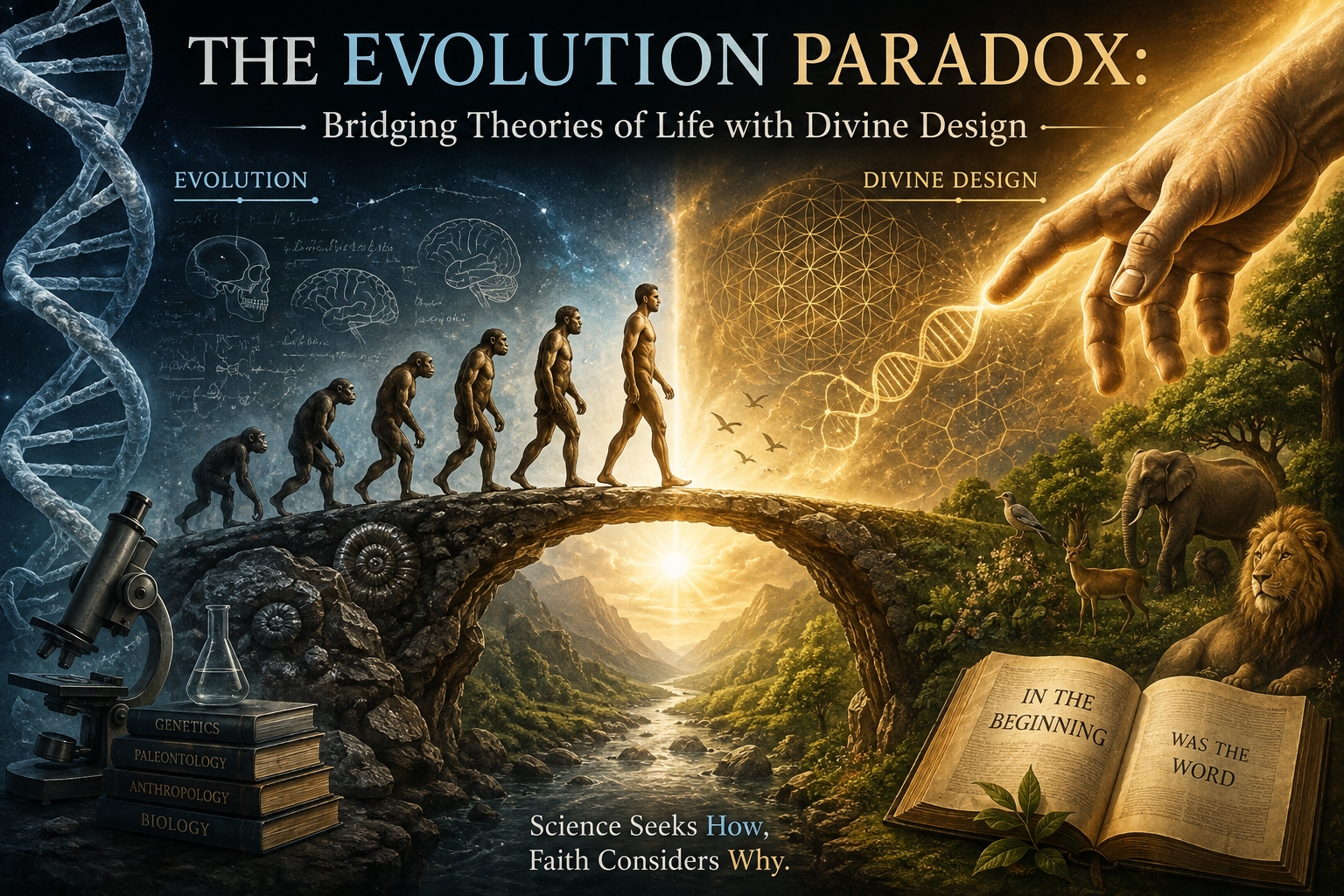
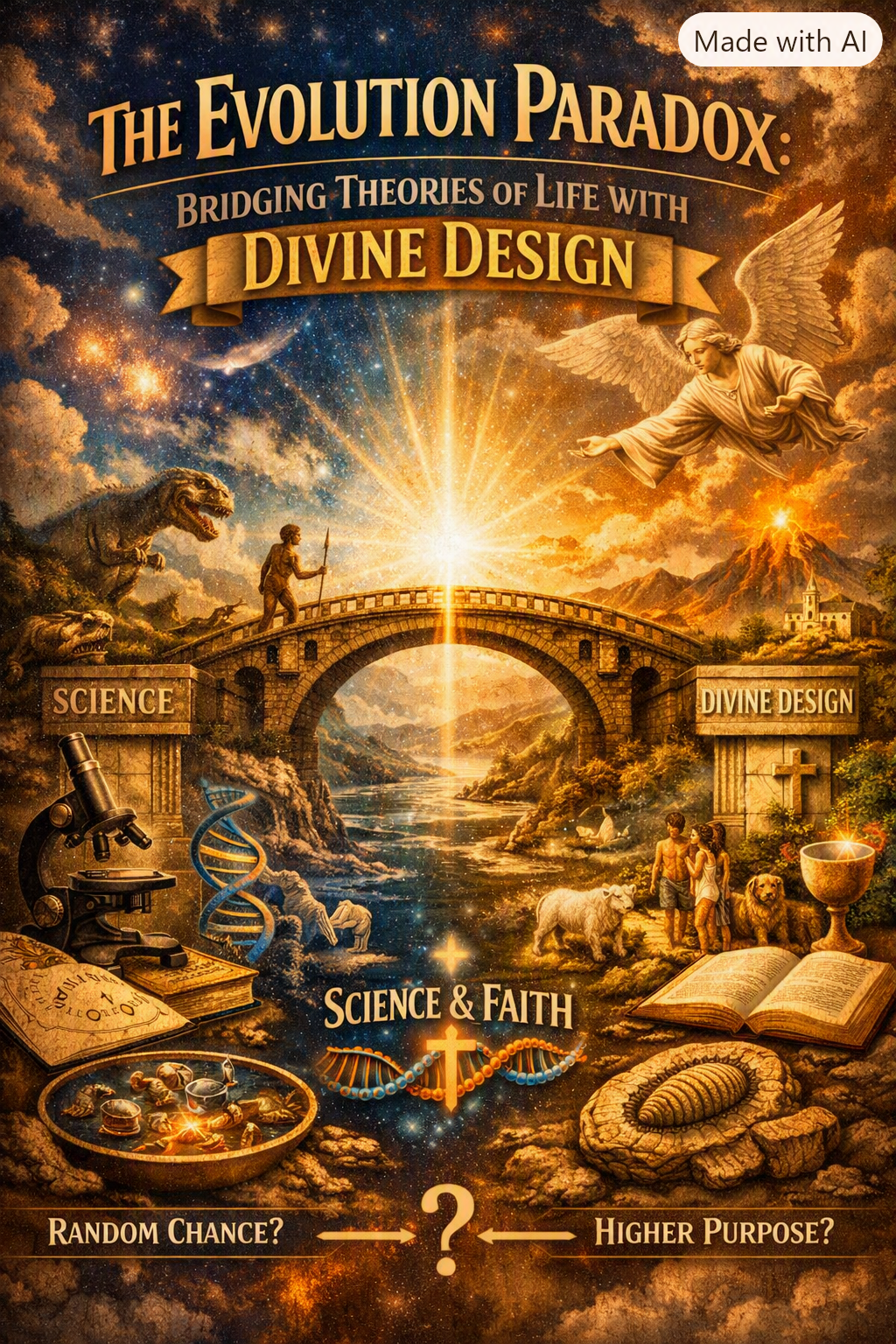
    ## The Evolution Paradox: Bridging Theories of Life with Divine Design

    How did life develop into the incredible diversity we see today? In this video, we explore **“The Evolution Paradox: Bridging Theories of Life with Divine Design”**, a thought-provoking topic that looks at different perspectives on the origins and development of life.

    We’ll learn about the basic ideas behind **evolution, natural selection, adaptation, and biodiversity** , while also considering philosophical and religious perspectives on **creation and divine design**.

    This topic encourages us to think deeply about how scientific theories and questions about meaning, purpose, and belief can shape the way people understand life and our place in the universe.

    **Learn • Explore • Question • Discover**

    ### Hashtags

    #Evolution #DivineDesign #OriginsOfLife #Biology #Science #NaturalSelection #EvolutionTheory #Creation #Philosophy #LifeOnEarth #Biodiversity #ScienceAndPhilosophy #Education #STEM #ExploreScience
    #rsisb Roll No.269 Foundation Level Story Post No.16 ## 🌍🧬 The Evolution Paradox: Bridging Theories of Life with Divine Design How did life develop into the incredible diversity we see today? 🤔🌱 In this video, we explore **“The Evolution Paradox: Bridging Theories of Life with Divine Design”**, a thought-provoking topic that looks at different perspectives on the origins and development of life. We’ll learn about the basic ideas behind **evolution, natural selection, adaptation, and biodiversity** 🧬🔬, while also considering philosophical and religious perspectives on **creation and divine design**. 🌌✨ This topic encourages us to think deeply about how scientific theories and questions about meaning, purpose, and belief can shape the way people understand life and our place in the universe. 🌍💭 🎓 **Learn • Explore • Question • Discover** ### 🔖 Hashtags #Evolution 🧬 #DivineDesign ✨ #OriginsOfLife 🌍 #Biology 🔬 #Science 📚 #NaturalSelection 🌱 #EvolutionTheory #Creation #Philosophy 💭 #LifeOnEarth 🌎 #Biodiversity 🌿 #ScienceAndPhilosophy #Education 🎓 #STEM 🚀 #ExploreScience
    0 Commentarii 0 Distribuiri 2199 Views
  • #rsisb
    Roll No.269
    Foundation Level
    Story Post No.14

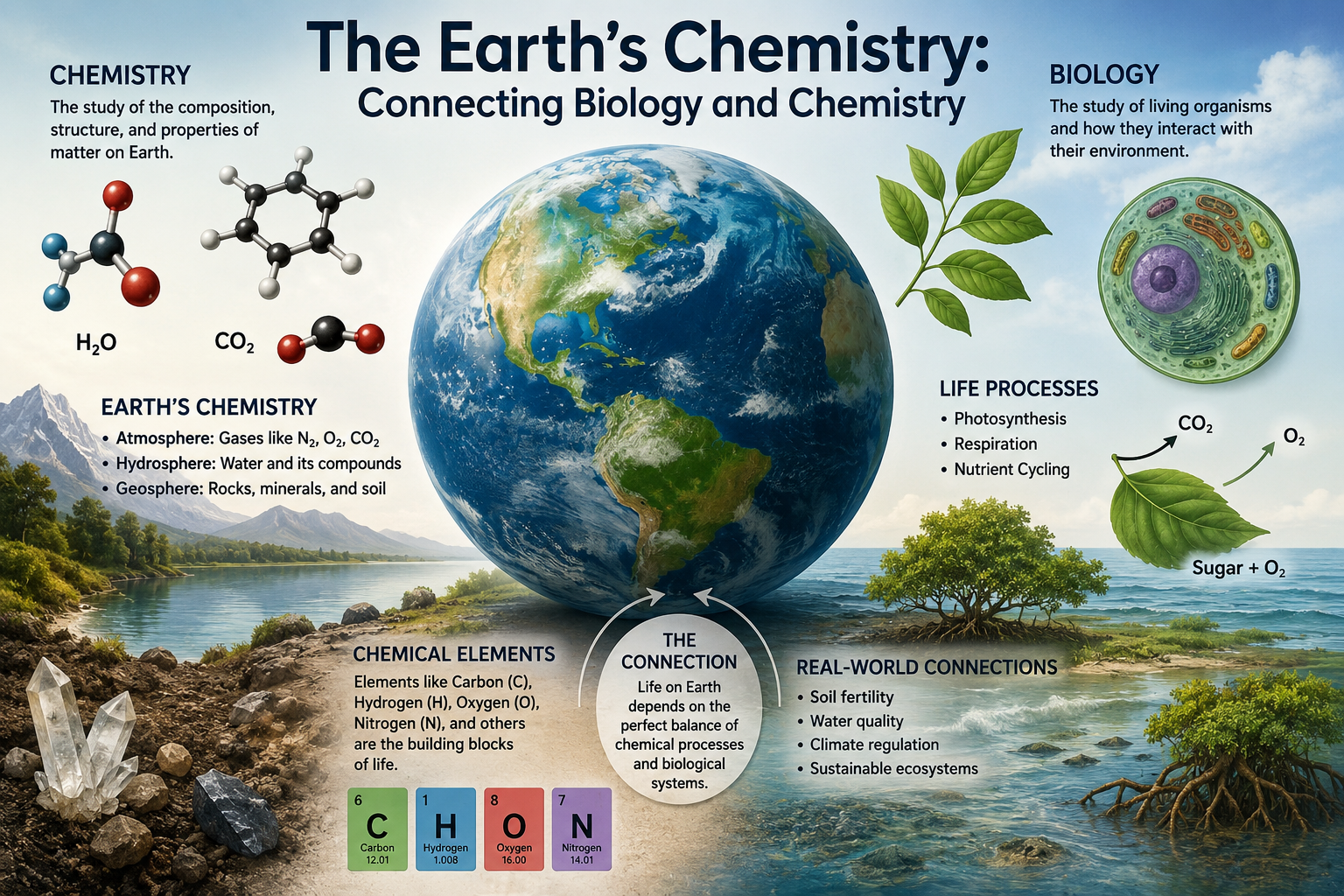
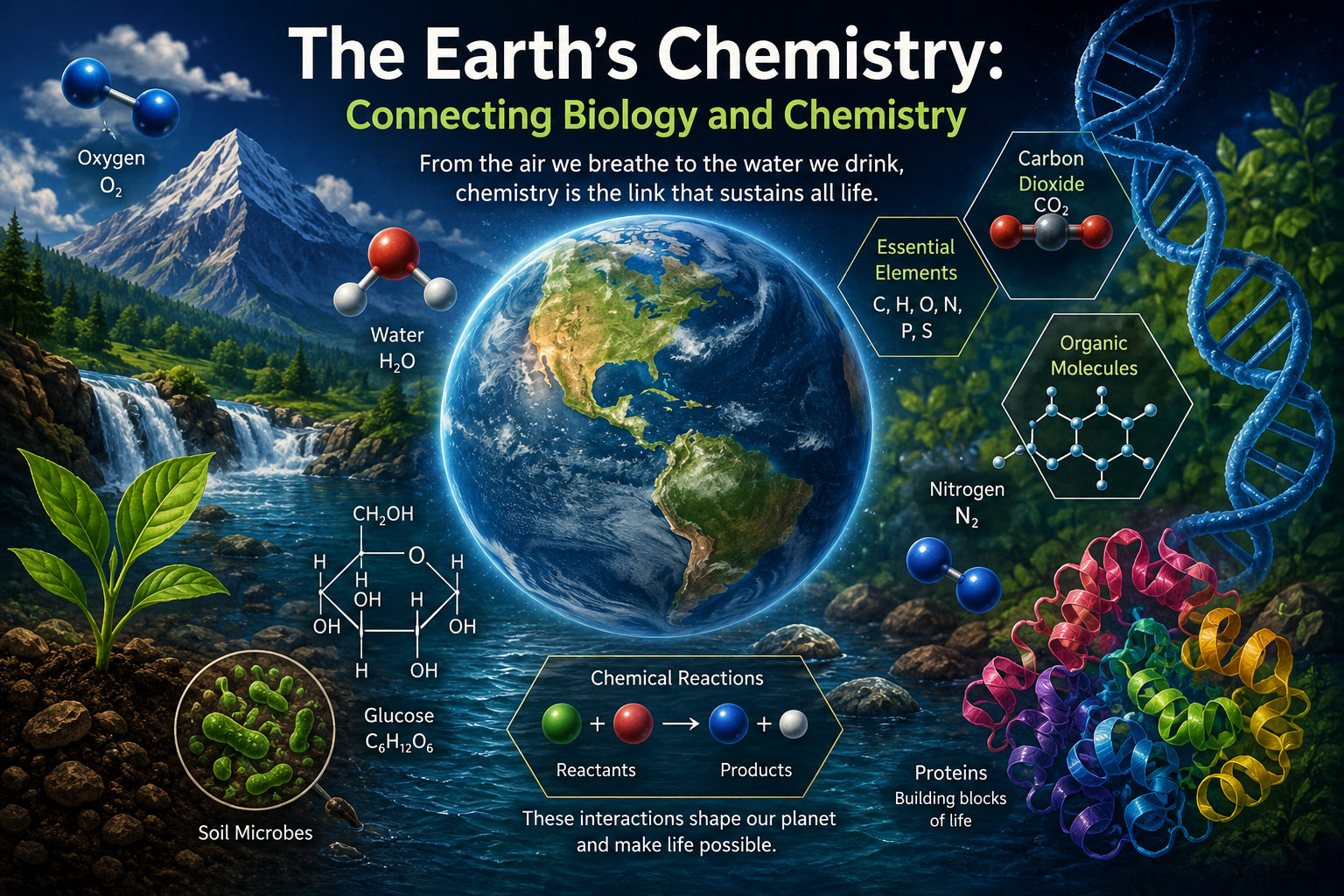
    ## The Earth's Chemistry: Connecting Biology and Chemistry

    Have you ever wondered how **chemistry makes life on Earth possible?** In this video, we explore **“The Earth's Chemistry: Connecting Biology and Chemistry”** and discover how these two sciences are deeply connected.

    From the **air we breathe and the water we drink** to the soil, plants, animals, and human beings around us, chemical elements and reactions are essential for life. Elements such as **carbon, oxygen, hydrogen, and nitrogen** form the building blocks of living organisms.

    We will explore important processes such as **photosynthesis, respiration, nutrient cycling, and the water cycle**, and see how chemical reactions support biological systems.

    This topic shows us that Earth is not just a planet—it is a complex system where **biology and chemistry work together** to maintain life and healthy ecosystems.

    **Learn • Explore • Discover • Understand**

    ### Hashtags

    #EarthsChemistry #Biology #Chemistry #Science #EarthScience #Photosynthesis #ChemicalReactions #Ecosystems #Nature #Education #ScienceLearning #STEM #LifeOnEarth #EnvironmentalScience #ChemistryAndBiology
    #rsisb Roll No.269 Foundation Level Story Post No.14 ## 🌍🧪 The Earth's Chemistry: Connecting Biology and Chemistry Have you ever wondered how **chemistry makes life on Earth possible?** 🌱🔬 In this video, we explore **“The Earth's Chemistry: Connecting Biology and Chemistry”** and discover how these two sciences are deeply connected. From the **air we breathe and the water we drink** to the soil, plants, animals, and human beings around us, chemical elements and reactions are essential for life. 🌎💧🌿 Elements such as **carbon, oxygen, hydrogen, and nitrogen** form the building blocks of living organisms. We will explore important processes such as **photosynthesis, respiration, nutrient cycling, and the water cycle**, and see how chemical reactions support biological systems. 🧬⚗️🌳 This topic shows us that Earth is not just a planet—it is a complex system where **biology and chemistry work together** to maintain life and healthy ecosystems. 🌍✨ 🎓 **Learn • Explore • Discover • Understand** ### 🔖 Hashtags #EarthsChemistry 🌍 #Biology 🧬 #Chemistry 🧪 #Science 🔬 #EarthScience 🌎 #Photosynthesis 🌱 #ChemicalReactions ⚗️ #Ecosystems 🌿 #Nature 🌳 #Education 📚 #ScienceLearning 🎓 #STEM 🚀 #LifeOnEarth 🌍 #EnvironmentalScience 💧 #ChemistryAndBiology
    0 Commentarii 0 Distribuiri 2223 Views
  • #rsisb
    Roll no 248
    Foundation level
    song no 14
    **Microbial Universe: The Power of the Invisible World**

    Our world is filled with billions of tiny organisms that are invisible to the naked eye, yet they play a huge role in life on Earth! From helping plants grow and breaking down organic matter to supporting ecosystems and influencing human health, microbes are everywhere.

    The microbial world reminds us that **size does not determine importance**. Even the tiniest organisms can have a massive impact on our planet and our lives.

    Explore the invisible universe beneath our feet, around us, and even within us—and discover the incredible power of microbes!

    #MicrobialUniverse #Microbiology #Microbes #InvisibleWorld #Science #Biology #ScienceFacts #AmazingScience #MicroscopicWorld #Nature #Ecosystem #LifeOnEarth #Learning #Education #ScienceLovers #ExploreScience #Curiosity #Discovery #STEM #Knowledge
    #rsisb Roll no 248 Foundation level song no 14 🌍🔬 **Microbial Universe: The Power of the Invisible World** 🦠✨ Our world is filled with billions of tiny organisms that are invisible to the naked eye, yet they play a huge role in life on Earth! 🌱🧬 From helping plants grow and breaking down organic matter to supporting ecosystems and influencing human health, microbes are everywhere. 🌎💫 The microbial world reminds us that **size does not determine importance**. Even the tiniest organisms can have a massive impact on our planet and our lives. 🔬🌟 Explore the invisible universe beneath our feet, around us, and even within us—and discover the incredible power of microbes! 🦠🌍🚀 #MicrobialUniverse #Microbiology #Microbes #InvisibleWorld #Science #Biology #ScienceFacts #AmazingScience #MicroscopicWorld #Nature #Ecosystem #LifeOnEarth #Learning #Education #ScienceLovers #ExploreScience #Curiosity #Discovery #STEM #Knowledge 🧬🔬🦠🌱✨
    0 Commentarii 0 Distribuiri 2773 Views 7
  • #rsisb
    roll no.247
    Foundation level # The Evolution Paradox: Bridging Theories of Life with Divine Design

    The story of life is one of the greatest mysteries ever explored by humanity. From the smallest living cell to the incredible diversity of plants, animals, and human beings, nature presents a fascinating journey filled with questions about **origins, adaptation, complexity, and purpose**.

    **“The Evolution Paradox: Bridging Theories of Life with Divine Design”** explores the thought-provoking relationship between scientific ideas about evolution and philosophical or religious perspectives about creation and divine purpose. Rather than treating these subjects as simple opposites, this topic invites us to think deeply about how different ways of understanding the universe can raise meaningful questions about the same extraordinary reality.

    Evolutionary theory provides a scientific framework for explaining how populations of living organisms change across generations and how biodiversity develops over vast periods of time. Fossils, genetics, comparative anatomy, and observations of living organisms all contribute to our understanding of life's history.

    At the same time, many people look beyond scientific mechanisms and ask questions about **meaning, purpose, consciousness, and why the universe exists at all**. These questions belong not only to laboratories but also to philosophy, theology, and human reflection.

    The fascinating “paradox” arises when we consider how a natural process can be studied scientifically while questions about ultimate purpose remain philosophical or theological. For some people, evolutionary processes and belief in divine creation can coexist: evolution may describe **how biological change occurs**, while faith addresses questions of **meaning and ultimate purpose**.

    This discussion encourages curiosity rather than conflict. It reminds us that science seeks evidence-based explanations for the natural world, while philosophy and religion often explore broader questions about existence and meaning.

    Whether you approach the subject as a scientist, student, philosopher, or person of faith, the study of life encourages one powerful habit: **keep asking questions.** The more we discover about DNA, cells, ecosystems, fossils, and the history of life, the more fascinating the natural world becomes.

    **Life is not only a subject to study—it is a mystery that inspires us to learn, question, discover, and reflect.**

    Let this journey encourage thoughtful conversations between **science, philosophy, and faith**, while respecting the different perspectives people hold.

    #EvolutionParadox #Evolution #DivineDesign #OriginsOfLife #ScienceAndFaith #Biology #Genetics #DNA #LifeScience #NaturalWorld #Science #Philosophy #Theology #Creation #Biodiversity #HumanOrigins #Fossils #Nature #Discovery #Curiosity #Knowledge #Education #CriticalThinking #ExploreScience #MysteriesOfLife #Universe #LifeOnEarth #ScienceEducation #FaithAndScience #DeepQuestions
    #rsisb roll no.247 Foundation level # 🌍🧬 The Evolution Paradox: Bridging Theories of Life with Divine Design ✨🙏 The story of life is one of the greatest mysteries ever explored by humanity. 🌱🔬 From the smallest living cell to the incredible diversity of plants, animals, and human beings, nature presents a fascinating journey filled with questions about **origins, adaptation, complexity, and purpose**. 🧬🌎 **“The Evolution Paradox: Bridging Theories of Life with Divine Design”** explores the thought-provoking relationship between scientific ideas about evolution and philosophical or religious perspectives about creation and divine purpose. 🔬📖✨ Rather than treating these subjects as simple opposites, this topic invites us to think deeply about how different ways of understanding the universe can raise meaningful questions about the same extraordinary reality. 🌌💭 Evolutionary theory provides a scientific framework for explaining how populations of living organisms change across generations and how biodiversity develops over vast periods of time. 🧬🌿 Fossils, genetics, comparative anatomy, and observations of living organisms all contribute to our understanding of life's history. 🔎🦴 At the same time, many people look beyond scientific mechanisms and ask questions about **meaning, purpose, consciousness, and why the universe exists at all**. 🙏🌌 These questions belong not only to laboratories but also to philosophy, theology, and human reflection. 📚💡 The fascinating “paradox” arises when we consider how a natural process can be studied scientifically while questions about ultimate purpose remain philosophical or theological. 🤔✨ For some people, evolutionary processes and belief in divine creation can coexist: evolution may describe **how biological change occurs**, while faith addresses questions of **meaning and ultimate purpose**. 🌱🙏 This discussion encourages curiosity rather than conflict. It reminds us that science seeks evidence-based explanations for the natural world, while philosophy and religion often explore broader questions about existence and meaning. 🔬📖🌍 Whether you approach the subject as a scientist, student, philosopher, or person of faith, the study of life encourages one powerful habit: **keep asking questions.** ❓🧠✨ The more we discover about DNA, cells, ecosystems, fossils, and the history of life, the more fascinating the natural world becomes. 🧬🔬🌿 🌟 **Life is not only a subject to study—it is a mystery that inspires us to learn, question, discover, and reflect.** 🌟 Let this journey encourage thoughtful conversations between **science, philosophy, and faith**, while respecting the different perspectives people hold. 🤝🌎💫 #EvolutionParadox #Evolution #DivineDesign #OriginsOfLife #ScienceAndFaith #Biology #Genetics #DNA #LifeScience #NaturalWorld #Science #Philosophy #Theology #Creation #Biodiversity #HumanOrigins #Fossils #Nature #Discovery #Curiosity #Knowledge #Education #CriticalThinking #ExploreScience #MysteriesOfLife #Universe #LifeOnEarth #ScienceEducation #FaithAndScience #DeepQuestions 🧬🌍🔬
    0 Commentarii 0 Distribuiri 6780 Views
  • #rsisb
    roll no.247
    Foundation level

    **The Earth's Chemistry: Connecting Biology and Chemistry**

    Our Earth is a remarkable laboratory where chemistry and biology work together every moment! From the air we breathe to the water we drink, from the soil that supports plants to the cells that make up living organisms, chemistry is at the heart of life.

    **Chemistry makes life possible.** Plants use chemical reactions during photosynthesis to transform sunlight, water, and carbon dioxide into energy-rich food while releasing oxygen. This amazing process supports ecosystems and provides the oxygen needed by countless living organisms.

    **Biology and chemistry are deeply connected.** Every living cell depends on chemical substances such as proteins, carbohydrates, fats, DNA, water, minerals, and gases. These molecules interact through countless chemical reactions that allow organisms to grow, repair themselves, reproduce, and respond to their environment.

    Water is another perfect example of this connection. It helps transport nutrients, regulate temperature, support chemical reactions, and maintain ecosystems. Oceans, rivers, lakes, and groundwater are all part of Earth's interconnected chemical and biological systems.

    The **carbon cycle, nitrogen cycle, and oxygen cycle** demonstrate how matter continuously moves between the atmosphere, soil, water, and living organisms. Plants absorb carbon dioxide, animals obtain nutrients by consuming plants or other organisms, and decomposers return important elements to the environment.

    Even the soil beneath our feet is full of chemistry and biology. Minerals, microorganisms, organic matter, water, and air interact to create an environment where plants can grow. Healthy ecosystems depend on these delicate chemical relationships.

    Understanding Earth's chemistry helps us better understand climate, pollution, agriculture, ecosystems, human health, and the future of our planet. By studying how chemical substances interact with living systems, scientists can discover better ways to protect nature and use Earth's resources responsibly.

    **The big lesson:** Chemistry explains many of the processes that make biology possible, while biology shows us how those chemical processes come together to create living systems. Together, they tell an incredible story about our planet and life itself.

    Keep exploring, keep questioning, and keep discovering the fascinating science hidden all around us!

    #EarthsChemistry #Chemistry #Biology #EarthScience #Science #ScienceEducation #ChemistryAndBiology #LifeOnEarth #EnvironmentalScience #Photosynthesis #CarbonCycle #NitrogenCycle #OxygenCycle #Ecosystems #Nature #ScienceLovers #LearningScience #STEM #STEMEducation #ScienceExploration #OurPlanet #AmazingScience #Biochemistry #PlanetEarth #Education
    #rsisb roll no.247 Foundation level 🌍🧪 **The Earth's Chemistry: Connecting Biology and Chemistry** 🧬🌱 Our Earth is a remarkable laboratory where chemistry and biology work together every moment! 🌎✨ From the air we breathe to the water we drink, from the soil that supports plants to the cells that make up living organisms, chemistry is at the heart of life. 🔬💚 🌿 **Chemistry makes life possible.** Plants use chemical reactions during photosynthesis to transform sunlight, water, and carbon dioxide into energy-rich food while releasing oxygen. ☀️🌱 This amazing process supports ecosystems and provides the oxygen needed by countless living organisms. 🧬 **Biology and chemistry are deeply connected.** Every living cell depends on chemical substances such as proteins, carbohydrates, fats, DNA, water, minerals, and gases. These molecules interact through countless chemical reactions that allow organisms to grow, repair themselves, reproduce, and respond to their environment. 🔬🧫 💧 Water is another perfect example of this connection. It helps transport nutrients, regulate temperature, support chemical reactions, and maintain ecosystems. Oceans, rivers, lakes, and groundwater are all part of Earth's interconnected chemical and biological systems. 🌊🐟 🌎 The **carbon cycle, nitrogen cycle, and oxygen cycle** demonstrate how matter continuously moves between the atmosphere, soil, water, and living organisms. Plants absorb carbon dioxide, animals obtain nutrients by consuming plants or other organisms, and decomposers return important elements to the environment. 🔄🌿🦠 🌱 Even the soil beneath our feet is full of chemistry and biology. Minerals, microorganisms, organic matter, water, and air interact to create an environment where plants can grow. Healthy ecosystems depend on these delicate chemical relationships. 🌾🌍 🔬 Understanding Earth's chemistry helps us better understand climate, pollution, agriculture, ecosystems, human health, and the future of our planet. By studying how chemical substances interact with living systems, scientists can discover better ways to protect nature and use Earth's resources responsibly. 💡🌳 ✨ **The big lesson:** Chemistry explains many of the processes that make biology possible, while biology shows us how those chemical processes come together to create living systems. Together, they tell an incredible story about our planet and life itself. 🌍❤️🧪🧬 📚 Keep exploring, keep questioning, and keep discovering the fascinating science hidden all around us! 🔎✨ #EarthsChemistry #Chemistry #Biology #EarthScience #Science #ScienceEducation #ChemistryAndBiology #LifeOnEarth #EnvironmentalScience #Photosynthesis #CarbonCycle #NitrogenCycle #OxygenCycle #Ecosystems #Nature #ScienceLovers #LearningScience #STEM #STEMEducation #ScienceExploration #OurPlanet #AmazingScience #Biochemistry #PlanetEarth #Education
    0 Commentarii 0 Distribuiri 6589 Views
  • #rsisb
    Roll no.247
    Foundation# The Blueprint of Existence: Unraveling DNA and the Origins of Life

    **The Blueprint of Existence: Unraveling DNA and the Origins of Life** is a fascinating journey into one of science’s greatest mysteries: **How did life begin, and how does living matter carry the instructions needed to grow, function, and reproduce?** From microscopic cells to complex organisms, DNA plays a remarkable role in storing and passing on biological information.

    **DNA, or deoxyribonucleic acid,** can be thought of as a biological instruction manual. It contains genetic information that helps cells build proteins, regulate their activities, and pass characteristics from one generation to the next. Its famous double-helix structure, made from complementary nucleotide bases, allows genetic information to be copied and transmitted with extraordinary precision.

    But DNA also raises a deeper question: **Where did the first genetic information come from?** Scientists have been investigating the origins of life for decades. While there is no single confirmed explanation for exactly how life began, several scientific ideas explore how simple chemicals on the early Earth might have interacted, formed increasingly complex molecules, and eventually contributed to the emergence of systems capable of reproduction and evolution.

    One important idea in origin-of-life research is the possibility that **RNA may have played an early role** because it can both store information and participate in chemical reactions. Over immense periods of time, chemical systems may have become increasingly sophisticated, eventually leading toward the molecular machinery found in modern cells.

    The story of DNA is also connected to **evolution**. Small changes in genetic information can occur over generations, while natural selection and other evolutionary processes influence which traits become more or less common in populations. This helps explain the incredible diversity of life on Earth—from tiny microorganisms to plants, animals, and humans.

    Exploring DNA and the origins of life reminds us that science is not simply about memorizing facts. It is about asking questions, examining evidence, testing ideas, and remaining curious about the natural world. Every discovery about cells, genes, molecules, and ancient environments gives us another piece of the enormous puzzle of existence.

    **The blueprint of life is more than a molecule—it is part of a remarkable scientific story about information, chemistry, evolution, and the extraordinary diversity of living systems.** The more we learn about DNA and life's origins, the more we appreciate both the complexity of life today and the fascinating scientific questions that remain unanswered.

    Whether you are a student, science enthusiast, researcher, or simply someone curious about the world around you, this topic offers an exciting opportunity to explore biology, genetics, chemistry, evolution, and the origins of life.

    ### Key Topics

    Structure and function of DNA
    Genetic information and inheritance
    Chemistry and the origins of life
    Early Earth environments
    RNA and early molecular systems
    Evolution and natural selection
    The diversity of life
    Unanswered questions in modern biology

    ### Hashtags

    #BlueprintOfExistence #DNA #Genetics #OriginsOfLife #Science #Biology #MolecularBiology #Evolution #GeneticCode #LifeOnEarth #EarlyEarth #RNA #CellBiology #ScientificDiscovery #STEM #ScienceEducation #Biotechnology #Nature #Learning #Curiosity
    #rsisb Roll no.247 Foundation# The Blueprint of Existence: Unraveling DNA and the Origins of Life 🧬🌍✨ 🔬 **The Blueprint of Existence: Unraveling DNA and the Origins of Life** is a fascinating journey into one of science’s greatest mysteries: **How did life begin, and how does living matter carry the instructions needed to grow, function, and reproduce?** 🌱🧬 From microscopic cells to complex organisms, DNA plays a remarkable role in storing and passing on biological information. 🧬 **DNA, or deoxyribonucleic acid,** can be thought of as a biological instruction manual. It contains genetic information that helps cells build proteins, regulate their activities, and pass characteristics from one generation to the next. Its famous double-helix structure, made from complementary nucleotide bases, allows genetic information to be copied and transmitted with extraordinary precision. 🌍 But DNA also raises a deeper question: **Where did the first genetic information come from?** Scientists have been investigating the origins of life for decades. While there is no single confirmed explanation for exactly how life began, several scientific ideas explore how simple chemicals on the early Earth might have interacted, formed increasingly complex molecules, and eventually contributed to the emergence of systems capable of reproduction and evolution. 🧪🌊⚡ One important idea in origin-of-life research is the possibility that **RNA may have played an early role** because it can both store information and participate in chemical reactions. Over immense periods of time, chemical systems may have become increasingly sophisticated, eventually leading toward the molecular machinery found in modern cells. 🧫🔬 The story of DNA is also connected to **evolution**. Small changes in genetic information can occur over generations, while natural selection and other evolutionary processes influence which traits become more or less common in populations. This helps explain the incredible diversity of life on Earth—from tiny microorganisms to plants, animals, and humans. 🌳🦠🦋🐘 ✨ Exploring DNA and the origins of life reminds us that science is not simply about memorizing facts. It is about asking questions, examining evidence, testing ideas, and remaining curious about the natural world. Every discovery about cells, genes, molecules, and ancient environments gives us another piece of the enormous puzzle of existence. 🔍🌌 🚀 **The blueprint of life is more than a molecule—it is part of a remarkable scientific story about information, chemistry, evolution, and the extraordinary diversity of living systems.** The more we learn about DNA and life's origins, the more we appreciate both the complexity of life today and the fascinating scientific questions that remain unanswered. 📚 Whether you are a student, science enthusiast, researcher, or simply someone curious about the world around you, this topic offers an exciting opportunity to explore biology, genetics, chemistry, evolution, and the origins of life. 🧬🔬🌍💡 ### 🌟 Key Topics 🧬 Structure and function of DNA 🔬 Genetic information and inheritance 🧪 Chemistry and the origins of life 🌊 Early Earth environments 🧫 RNA and early molecular systems 🌱 Evolution and natural selection 🌍 The diversity of life 🚀 Unanswered questions in modern biology ### 🔖 Hashtags #BlueprintOfExistence #DNA #Genetics #OriginsOfLife #Science #Biology #MolecularBiology #Evolution #GeneticCode #LifeOnEarth #EarlyEarth #RNA #CellBiology #ScientificDiscovery #STEM #ScienceEducation #Biotechnology #Nature #Learning #Curiosity 🧬🔬🌍✨
    0 Commentarii 0 Distribuiri 5562 Views