• RSIF8
    roll no 72
    story post no 1
    story post topic :Ecosystem Explorers: Discovering Earth's Habitats**
    welcome, young explorers! Earth is full of amazing habitats, and each one is home to different plants, animals, and living things. From the deep blue oceans to the green forests , the hot deserts , wide grasslands , and beautiful wetlands —every ecosystem plays an important role in keeping our planet healthy.
    **Forests** give us oxygen and shelter to countless animals.
    **Deserts** show us how life can survive in extreme conditions.
    **Oceans** are filled with incredible creatures and cover most of our planet.
    **Grasslands** provide homes for grazing animals and many other species.
    **Wetlands** help clean water and support a wonderful variety of wildlife.
    Let's become **Ecosystem Explorers**! Observe nature, learn about Earth's habitats, and help protect the amazing world we all share.
    **Different habitats, one home—Earth. Let's take care of it together!**
    #EcosystemExplorers #EarthHabitats #NatureLovers #ProtectOurPlanet #Wildlife #Forests #Oceans #Deserts #Grasslands #Wetlands #EnvironmentalEducation #ExploreNature #saveearth See less
    RSIF8 roll no 72 story post no 1 story post topic :Ecosystem Explorers: Discovering Earth's Habitats** 🌿🐪🐋 welcome, young explorers! 🔎✨ Earth is full of amazing habitats, and each one is home to different plants, animals, and living things. From the deep blue oceans 🌊 to the green forests 🌲, the hot deserts 🏜️, wide grasslands 🌾, and beautiful wetlands 🦆—every ecosystem plays an important role in keeping our planet healthy. 🌲 **Forests** give us oxygen and shelter to countless animals. 🏜️ **Deserts** show us how life can survive in extreme conditions. 🌊 **Oceans** are filled with incredible creatures and cover most of our planet. 🌾 **Grasslands** provide homes for grazing animals and many other species. 🦆 **Wetlands** help clean water and support a wonderful variety of wildlife. Let's become **Ecosystem Explorers**! 🌎💚 Observe nature, learn about Earth's habitats, and help protect the amazing world we all share. ✨ **Different habitats, one home—Earth. Let's take care of it together!** 🌍💚 #EcosystemExplorers #EarthHabitats #NatureLovers #ProtectOurPlanet #Wildlife #Forests #Oceans #Deserts #Grasslands #Wetlands #EnvironmentalEducation #ExploreNature #saveearth See less
    0 Yorumlar 0 hisse senetleri 37 Views
  • #rsisb
    roll no.247
    call annie
    Foundation level

    **“Air” – Breathing Life into Language | 25-Minute Learning Session**

    Air is all around us, yet we often forget how important it is to our everyday lives. We cannot see air, but we can feel it when the wind blows, hear it when it whistles through the trees, and observe its effects all around us. In this fascinating 25-minute session, **“Air – Breathing Life into Language,”** we explore the meaning, importance, science, and language of one of the most essential things on Earth.

    From the moment we wake up to the moment we go to sleep, air plays an important role in our lives. Humans and animals need oxygen from the air to live, while plants use carbon dioxide during photosynthesis to help make their food. Air also helps birds fly, carries sounds, moves clouds, creates winds, and influences weather and climate.

    But this session is not only about science—it is also about **language and communication**. The word “air” appears in many expressions and ideas. We can talk about fresh air, polluted air, a breath of fresh air, airing an idea, or even having an “air” of confidence. These expressions show how deeply connected language is to the world around us.

    During this 25-minute learning experience, learners can discover how the simple word **“air”** has developed different meanings and uses. They can explore vocabulary, expressions, sentence formation, communication, and scientific concepts while thinking about something that surrounds them every day.

    The session also encourages curiosity and observation. What happens when wind moves? Why does a balloon expand? How does air help us hear sounds? Why is clean air important? How do plants and animals depend on air? These questions can turn an ordinary subject into an exciting learning adventure.

    Most importantly, **“Air – Breathing Life into Language”** encourages learners to understand that words are connected to the world we experience. A single word can carry scientific meaning, cultural meaning, emotional meaning, and everyday meaning.

    **Key Learning Areas:**
    Understanding what air is
    Learning why living things need air
    Exploring the relationship between plants and air
    Understanding wind and movement
    Discovering expressions and phrases using the word “air”
    Building vocabulary and language skills
    Developing observation and questioning skills
    Understanding why clean air matters
    Connecting science with everyday language

    This session is designed to make learning **interactive, thoughtful, and enjoyable**. Instead of simply memorizing facts, learners can ask questions, share ideas, create sentences, observe their surroundings, and discover how science and language work together.

    **Air may be invisible, but its importance is everywhere.** It gives life, carries sound, moves clouds, creates wind, supports nature, and inspires countless words and expressions. Through this 25-minute session, learners can take a closer look at something they experience every second—and discover that even the simplest things can teach us something amazing.

    **Breathe in curiosity. Breathe out new ideas. Let learning fill the air!**

    #Air #BreathingLifeIntoLanguage #Learning #Education #Science #EnglishLanguage #Vocabulary #LanguageLearning #CreativeLearning #YoungLearners #Curiosity #ExploreAndLearn #Knowledge #ScienceAndLanguage #CleanAir #Environment #Nature #Plants #Oxygen #Wind #Weather #Communication #LearningIsFun #EducationalContent #25MinuteSession #StudentLearning #ClassroomLearning #ThinkAndLearn #ExploreTheWorld
    #rsisb roll no.247 call annie Foundation level 🌬️ **“Air” – Breathing Life into Language | 25-Minute Learning Session** 📚✨ Air is all around us, yet we often forget how important it is to our everyday lives. We cannot see air, but we can feel it when the wind blows, hear it when it whistles through the trees, and observe its effects all around us. 🌿💨 In this fascinating 25-minute session, **“Air – Breathing Life into Language,”** we explore the meaning, importance, science, and language of one of the most essential things on Earth. 🌍💙 From the moment we wake up to the moment we go to sleep, air plays an important role in our lives. Humans and animals need oxygen from the air to live, while plants use carbon dioxide during photosynthesis to help make their food. 🌱🫁 Air also helps birds fly, carries sounds, moves clouds, creates winds, and influences weather and climate. ☁️🌦️🕊️ But this session is not only about science—it is also about **language and communication**. 🗣️📖 The word “air” appears in many expressions and ideas. We can talk about fresh air, polluted air, a breath of fresh air, airing an idea, or even having an “air” of confidence. These expressions show how deeply connected language is to the world around us. 💭✨ During this 25-minute learning experience, learners can discover how the simple word **“air”** has developed different meanings and uses. They can explore vocabulary, expressions, sentence formation, communication, and scientific concepts while thinking about something that surrounds them every day. 🌬️🔤 The session also encourages curiosity and observation. 🔍🌎 What happens when wind moves? Why does a balloon expand? How does air help us hear sounds? Why is clean air important? How do plants and animals depend on air? These questions can turn an ordinary subject into an exciting learning adventure. 🎈🌱🐦 Most importantly, **“Air – Breathing Life into Language”** encourages learners to understand that words are connected to the world we experience. A single word can carry scientific meaning, cultural meaning, emotional meaning, and everyday meaning. 📚💡 🌟 **Key Learning Areas:** • 🌬️ Understanding what air is • 🫁 Learning why living things need air • 🌱 Exploring the relationship between plants and air • 💨 Understanding wind and movement • 🗣️ Discovering expressions and phrases using the word “air” • 📖 Building vocabulary and language skills • 🔍 Developing observation and questioning skills • 🌍 Understanding why clean air matters • 💭 Connecting science with everyday language This session is designed to make learning **interactive, thoughtful, and enjoyable**. Instead of simply memorizing facts, learners can ask questions, share ideas, create sentences, observe their surroundings, and discover how science and language work together. 🚀🧠✨ 🌍 **Air may be invisible, but its importance is everywhere.** It gives life, carries sound, moves clouds, creates wind, supports nature, and inspires countless words and expressions. Through this 25-minute session, learners can take a closer look at something they experience every second—and discover that even the simplest things can teach us something amazing. 🌬️💙📚 ✨ **Breathe in curiosity. Breathe out new ideas. Let learning fill the air!** 🌟 #Air #BreathingLifeIntoLanguage #Learning #Education #Science #EnglishLanguage #Vocabulary #LanguageLearning #CreativeLearning #YoungLearners #Curiosity #ExploreAndLearn #Knowledge #ScienceAndLanguage #CleanAir #Environment #Nature #Plants #Oxygen #Wind #Weather #Communication #LearningIsFun #EducationalContent #25MinuteSession #StudentLearning #ClassroomLearning #ThinkAndLearn #ExploreTheWorld 🌬️🌱📚🌍💡
    0 Yorumlar 0 hisse senetleri 261 Views 3
  • #rsisb
    Roll no.247
    song no.4
    Foundation level

    **Chemical Reactions: The Engine of Life**

    Chemical reactions are happening all around us—and even inside us—every moment of every day! From the food we eat to the oxygen we breathe, chemical reactions make life possible. They transform substances into new substances and provide the energy needed for living organisms to grow, move, repair themselves, and survive.

    In this fascinating journey through chemistry, we explore how atoms rearrange, how bonds are broken and formed, and how energy can be released or absorbed during a reaction. We’ll discover everyday examples such as digestion , photosynthesis , cellular respiration , rusting , cooking , and many other processes.

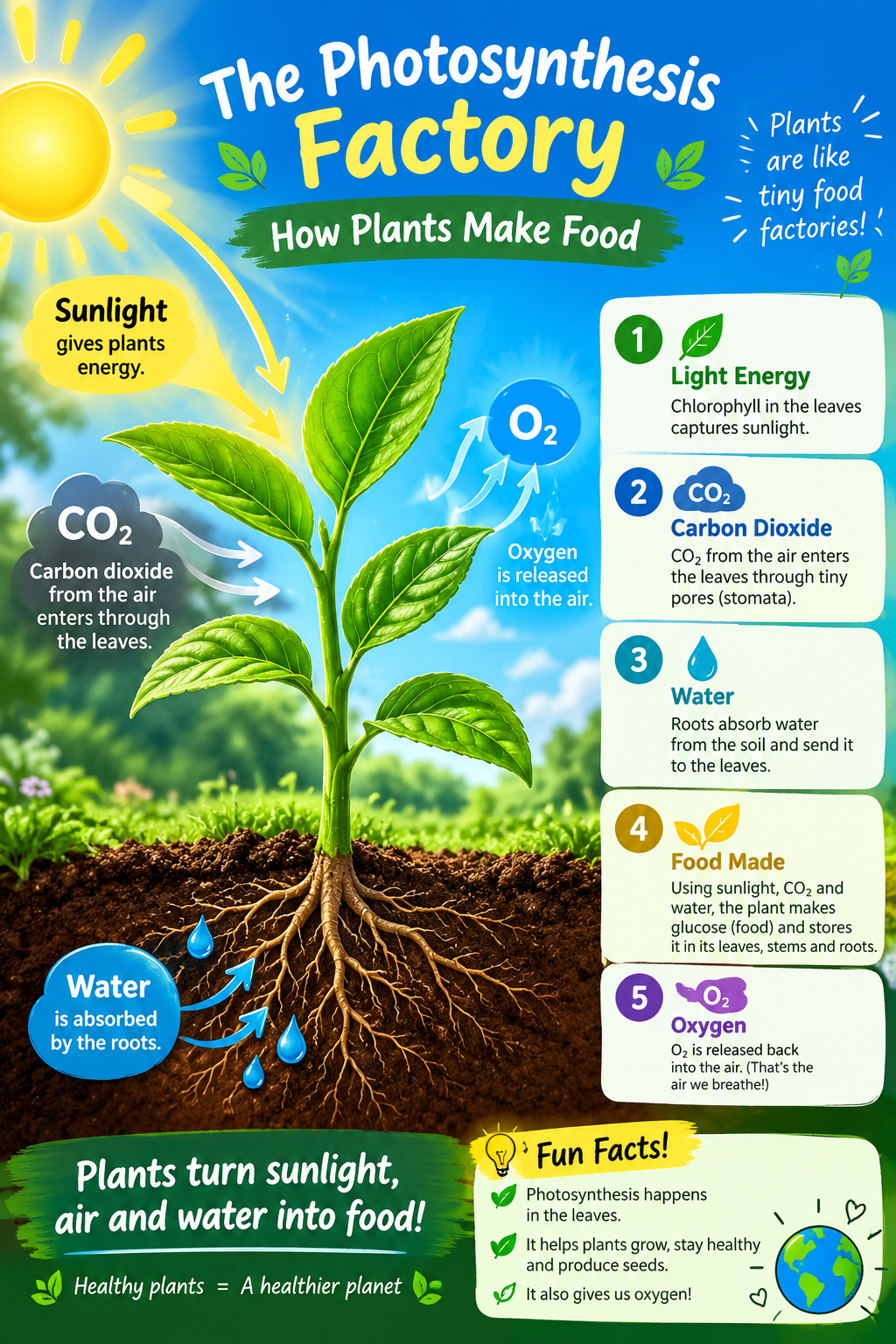
    Photosynthesis is a wonderful example of chemistry in action. Plants use light energy to help convert carbon dioxide and water into glucose and oxygen. Cellular respiration then helps living cells obtain usable energy from food. Together, these processes show how beautifully chemistry and biology are connected.

    Understanding chemical reactions helps us understand the world at a deeper level. It explains how medicines work , how fuels produce energy , how materials change , and how natural cycles keep our planet functioning .

    So, get ready to explore the amazing microscopic world of atoms and molecules! Learn how tiny changes at the molecular level can create enormous effects in the world around us.

    **Chemistry isn't just a subject—it is one of the engines that keeps life moving!**

    #ChemicalReactions #Chemistry #EngineOfLife #Science #Biology #Atoms #Molecules #Photosynthesis #CellularRespiration #ScienceEducation #LearnScience #STEM #ScienceForStudents #AmazingScience #ChemistryInAction #LifeScience #EducationalContent #ExploreScience #KnowledgeIsPower #LearningIsFun
    #rsisb Roll no.247 song no.4 Foundation level 🧪⚡ **Chemical Reactions: The Engine of Life** 🌱🔬 Chemical reactions are happening all around us—and even inside us—every moment of every day! 🌍✨ From the food we eat to the oxygen we breathe, chemical reactions make life possible. They transform substances into new substances and provide the energy needed for living organisms to grow, move, repair themselves, and survive. 🧬❤️ In this fascinating journey through chemistry, we explore how atoms rearrange, how bonds are broken and formed, and how energy can be released or absorbed during a reaction. ⚛️🔗🔥 We’ll discover everyday examples such as digestion 🍎, photosynthesis 🌿☀️, cellular respiration 🫁, rusting 🧲, cooking 🍳, and many other processes. Photosynthesis is a wonderful example of chemistry in action. 🌱☀️ Plants use light energy to help convert carbon dioxide and water into glucose and oxygen. Cellular respiration then helps living cells obtain usable energy from food. Together, these processes show how beautifully chemistry and biology are connected. 💚🔬 Understanding chemical reactions helps us understand the world at a deeper level. It explains how medicines work 💊, how fuels produce energy ⛽, how materials change 🧱, and how natural cycles keep our planet functioning 🌎. So, get ready to explore the amazing microscopic world of atoms and molecules! 🚀🧪 Learn how tiny changes at the molecular level can create enormous effects in the world around us. ✨ **Chemistry isn't just a subject—it is one of the engines that keeps life moving!** ⚡🌍🧬 #ChemicalReactions 🧪 #Chemistry 🔬 #EngineOfLife ⚡ #Science 🌍 #Biology 🧬 #Atoms ⚛️ #Molecules 🔗 #Photosynthesis 🌱 #CellularRespiration 🫁 #ScienceEducation 📚 #LearnScience 💡 #STEM 🚀 #ScienceForStudents 🎓 #AmazingScience ✨ #ChemistryInAction 🔥 #LifeScience 🌿 #EducationalContent 📖 #ExploreScience 🔎 #KnowledgeIsPower 💫 #LearningIsFun 😊
    0 Yorumlar 0 hisse senetleri 530 Views 5
  • #rsisb
    Roll no.239
    maya no.18
    Foundation Level

    The word **“Earth”** is one of the oldest and most meaningful words in the English language. It represents much more than the planet beneath our feet. Earth is our **home, the source of life, the ground we walk on, and a symbol of nature and human existence**. But where did this simple word come from, and how did its meaning develop over time?

    The history of the word **“Earth”** takes us back thousands of years. In ancient forms of English and related Germanic languages, words similar to *earth* were used to describe the **ground, soil, land, and the physical world**. Over time, the word developed into the name we now use for our entire planet. Unlike many planets in our Solar System, whose names are connected to ancient gods and mythology, **Earth's English name is closely connected to the ordinary ground beneath our feet**.

    This connection tells us something important about human history. Long before people understood that they lived on a planet moving through space, they experienced Earth simply as the land around them—the soil that grew their food, the ground that supported their homes, and the world they could see and touch.

    As human knowledge grew, our understanding of Earth changed dramatically. Ancient thinkers observed the sky and began asking important questions about the shape and nature of the world. Over centuries, explorers, scientists, astronomers, and travelers expanded humanity's understanding of the planet. Eventually, space exploration allowed humans to see Earth from beyond its atmosphere. Those images showed something extraordinary: **our vast world is a beautiful, fragile-looking sphere surrounded by the darkness of space**.

    From a scientific perspective, Earth is the **third planet from the Sun** and the only world currently known to support life. It has liquid water on its surface, a protective atmosphere, and a wide variety of environments that support countless living organisms. Its oceans, forests, mountains, deserts, rivers, and grasslands form an incredibly diverse and interconnected system.

    Earth's structure is also fascinating. Beneath the surface are different layers, including the **crust, mantle, and core**. These layers influence many natural processes, including the movement of tectonic plates, earthquakes, volcanic activity, and the formation of mountains. Although we live on the surface, the planet beneath us is constantly changing.

    Life on Earth depends on a delicate balance. **Air, water, sunlight, soil, and biodiversity** all play essential roles in supporting life. Plants produce oxygen and form the foundation of many ecosystems. Oceans help regulate climate and support an enormous variety of life. Forests provide habitats and influence the movement of water and carbon through the environment.

    However, Earth also faces serious environmental challenges. **Pollution, deforestation, habitat destruction, and climate change** affect ecosystems and communities around the world. These challenges remind us that Earth is not an unlimited resource. The choices humans make today can influence the quality of life for future generations.

    Protecting Earth does not always require extraordinary actions. Small changes can make a difference, such as **reducing waste, conserving water and energy, planting and protecting trees, avoiding unnecessary pollution, and learning more about the environment**. Governments, scientists, businesses, communities, and individuals all have important roles to play.

    The word **“Earth”** also has a powerful emotional and cultural meaning. People may come from different countries, speak different languages, and follow different traditions, but we all share the same planet. From this perspective, Earth can be seen as a symbol of our **shared home and shared responsibility**.

    **“Earth” – The History of Our Home in a Word** is therefore a journey through **language, history, science, nature, and human imagination**. The story of this word shows how language grows alongside human knowledge. What once described the soil beneath people's feet eventually became the name of an entire world traveling through space.

    The next time you hear or say the word **“Earth,”** remember that it carries a remarkable story. It connects us to the ancient past, the natural world around us, and the future we are helping to create.

    **Earth is not just where we live—it is the only home we all share. Protecting it is a responsibility that belongs to everyone.**

    ### **Hashtags**

    #Earth #OurPlanet #PlanetEarth #WordHistory #HistoryOfEarth #EnglishLanguage #LanguageHistory #Science #Nature #Environment #ClimateAwareness #ProtectOurPlanet #Sustainability #EarthScience #Space #Astronomy #LifeOnEarth #MotherEarth #SaveEarth #GoGreen #CleanEnvironment #Biodiversity #ClimateChange #Education #Knowledge #LearnAndExplore #OnePlanet #FutureGenerations #EarthLovers #OurHome
    #rsisb Roll no.239 maya no.18 Foundation Level The word **“Earth”** is one of the oldest and most meaningful words in the English language. It represents much more than the planet beneath our feet. Earth is our **home, the source of life, the ground we walk on, and a symbol of nature and human existence**. But where did this simple word come from, and how did its meaning develop over time? The history of the word **“Earth”** takes us back thousands of years. In ancient forms of English and related Germanic languages, words similar to *earth* were used to describe the **ground, soil, land, and the physical world**. Over time, the word developed into the name we now use for our entire planet. Unlike many planets in our Solar System, whose names are connected to ancient gods and mythology, **Earth's English name is closely connected to the ordinary ground beneath our feet**. 📖🌱 This connection tells us something important about human history. Long before people understood that they lived on a planet moving through space, they experienced Earth simply as the land around them—the soil that grew their food, the ground that supported their homes, and the world they could see and touch. As human knowledge grew, our understanding of Earth changed dramatically. Ancient thinkers observed the sky and began asking important questions about the shape and nature of the world. Over centuries, explorers, scientists, astronomers, and travelers expanded humanity's understanding of the planet. Eventually, space exploration allowed humans to see Earth from beyond its atmosphere. Those images showed something extraordinary: **our vast world is a beautiful, fragile-looking sphere surrounded by the darkness of space**. 🚀🌌 From a scientific perspective, Earth is the **third planet from the Sun** and the only world currently known to support life. It has liquid water on its surface, a protective atmosphere, and a wide variety of environments that support countless living organisms. Its oceans, forests, mountains, deserts, rivers, and grasslands form an incredibly diverse and interconnected system. 🌊🏔️🌳 Earth's structure is also fascinating. Beneath the surface are different layers, including the **crust, mantle, and core**. These layers influence many natural processes, including the movement of tectonic plates, earthquakes, volcanic activity, and the formation of mountains. Although we live on the surface, the planet beneath us is constantly changing. Life on Earth depends on a delicate balance. **Air, water, sunlight, soil, and biodiversity** all play essential roles in supporting life. Plants produce oxygen and form the foundation of many ecosystems. Oceans help regulate climate and support an enormous variety of life. Forests provide habitats and influence the movement of water and carbon through the environment. However, Earth also faces serious environmental challenges. **Pollution, deforestation, habitat destruction, and climate change** affect ecosystems and communities around the world. These challenges remind us that Earth is not an unlimited resource. The choices humans make today can influence the quality of life for future generations. 🌿♻️ Protecting Earth does not always require extraordinary actions. Small changes can make a difference, such as **reducing waste, conserving water and energy, planting and protecting trees, avoiding unnecessary pollution, and learning more about the environment**. Governments, scientists, businesses, communities, and individuals all have important roles to play. The word **“Earth”** also has a powerful emotional and cultural meaning. People may come from different countries, speak different languages, and follow different traditions, but we all share the same planet. From this perspective, Earth can be seen as a symbol of our **shared home and shared responsibility**. 🤝🌍 **“Earth” – The History of Our Home in a Word** is therefore a journey through **language, history, science, nature, and human imagination**. The story of this word shows how language grows alongside human knowledge. What once described the soil beneath people's feet eventually became the name of an entire world traveling through space. The next time you hear or say the word **“Earth,”** remember that it carries a remarkable story. It connects us to the ancient past, the natural world around us, and the future we are helping to create. **Earth is not just where we live—it is the only home we all share. Protecting it is a responsibility that belongs to everyone.** 🌍💚✨ ### 🔖 **Hashtags** #Earth #OurPlanet #PlanetEarth #WordHistory #HistoryOfEarth #EnglishLanguage #LanguageHistory #Science #Nature #Environment #ClimateAwareness #ProtectOurPlanet #Sustainability #EarthScience #Space #Astronomy #LifeOnEarth #MotherEarth #SaveEarth #GoGreen #CleanEnvironment #Biodiversity #ClimateChange #Education #Knowledge #LearnAndExplore #OnePlanet #FutureGenerations #EarthLovers #OurHome 🌍🌿💚✨
    0 Yorumlar 0 hisse senetleri 2077 Views 17
  • #rsisb
    Roll No.269
    Foundation Level
    Story Post No.14

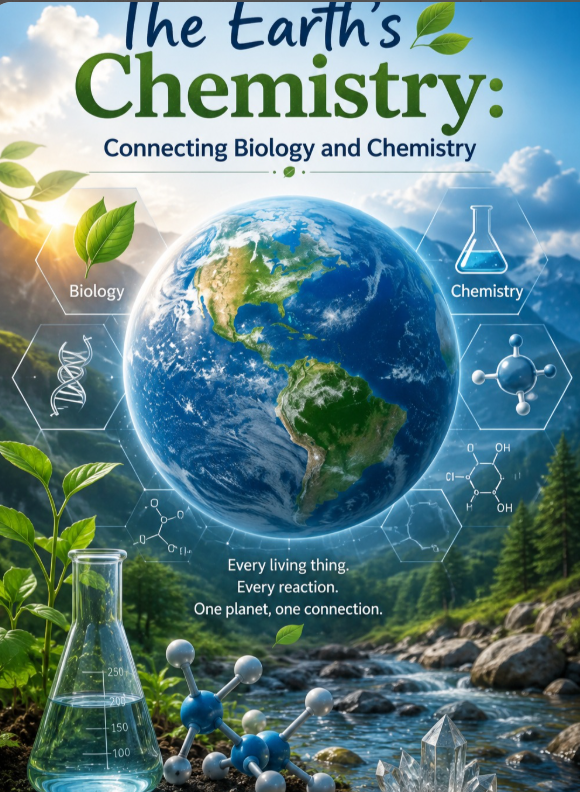
    ## The Earth's Chemistry: Connecting Biology and Chemistry

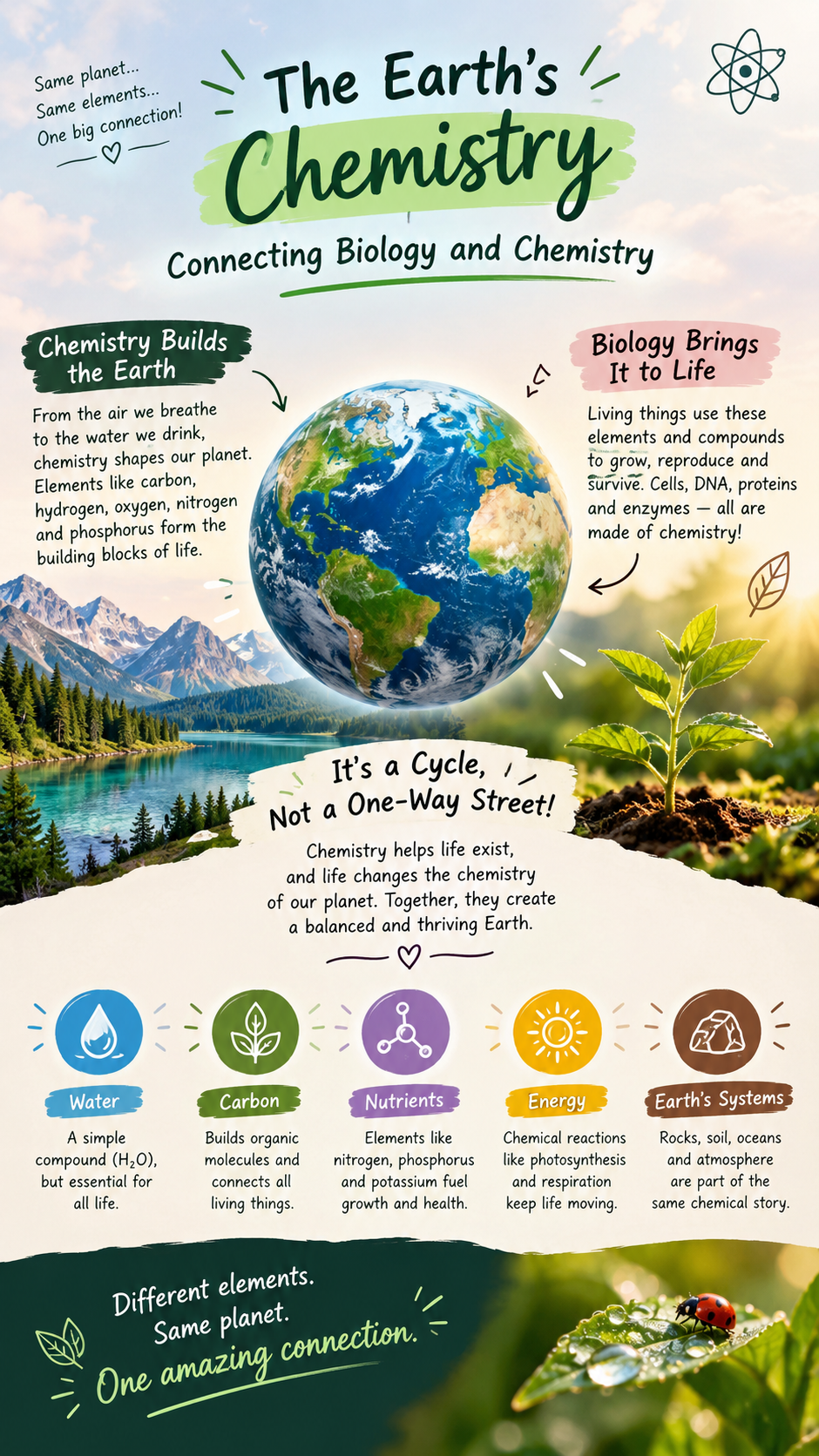
    Have you ever wondered how **chemistry makes life on Earth possible?** In this video, we explore **“The Earth's Chemistry: Connecting Biology and Chemistry”** and discover how these two sciences are deeply connected.

    From the **air we breathe and the water we drink** to the soil, plants, animals, and human beings around us, chemical elements and reactions are essential for life. Elements such as **carbon, oxygen, hydrogen, and nitrogen** form the building blocks of living organisms.

    We will explore important processes such as **photosynthesis, respiration, nutrient cycling, and the water cycle**, and see how chemical reactions support biological systems.

    This topic shows us that Earth is not just a planet—it is a complex system where **biology and chemistry work together** to maintain life and healthy ecosystems.

    **Learn • Explore • Discover • Understand**

    ### Hashtags

    #EarthsChemistry #Biology #Chemistry #Science #EarthScience #Photosynthesis #ChemicalReactions #Ecosystems #Nature #Education #ScienceLearning #STEM #LifeOnEarth #EnvironmentalScience #ChemistryAndBiology
    #rsisb Roll No.269 Foundation Level Story Post No.14 ## 🌍🧪 The Earth's Chemistry: Connecting Biology and Chemistry Have you ever wondered how **chemistry makes life on Earth possible?** 🌱🔬 In this video, we explore **“The Earth's Chemistry: Connecting Biology and Chemistry”** and discover how these two sciences are deeply connected. From the **air we breathe and the water we drink** to the soil, plants, animals, and human beings around us, chemical elements and reactions are essential for life. 🌎💧🌿 Elements such as **carbon, oxygen, hydrogen, and nitrogen** form the building blocks of living organisms. We will explore important processes such as **photosynthesis, respiration, nutrient cycling, and the water cycle**, and see how chemical reactions support biological systems. 🧬⚗️🌳 This topic shows us that Earth is not just a planet—it is a complex system where **biology and chemistry work together** to maintain life and healthy ecosystems. 🌍✨ 🎓 **Learn • Explore • Discover • Understand** ### 🔖 Hashtags #EarthsChemistry 🌍 #Biology 🧬 #Chemistry 🧪 #Science 🔬 #EarthScience 🌎 #Photosynthesis 🌱 #ChemicalReactions ⚗️ #Ecosystems 🌿 #Nature 🌳 #Education 📚 #ScienceLearning 🎓 #STEM 🚀 #LifeOnEarth 🌍 #EnvironmentalScience 💧 #ChemistryAndBiology
    0 Yorumlar 0 hisse senetleri 1013 Views
  • #rsisb Roll No.240 Song No.21 Foundation Level **Microbial Universe: The Power of the Invisible World** takes us into a fascinating world that is all around us but usually cannot be seen with our eyes. Microorganisms, also called microbes, are tiny living organisms found in places such as soil, water, air, plants, animals, and even inside the human body. In this topic, we discover the amazing role of microbes in our world. Some microorganisms can be helpful and play important roles in nature, food production, medicine, and the environment. For example, certain microbes help break down natural materials and return nutrients to the soil. Others are used in making foods such as yogurt and cheese. We also learn that some microorganisms can cause diseases, which is why hygiene, clean water, safe food practices, and proper health habits are important. Understanding microbes helps us learn how infections can spread and why cleanliness matters. The microbial world is a reminder that **small does not always mean unimportant**. These tiny organisms can have a huge impact on ecosystems, human health, agriculture, and everyday life. Through microscopes and modern scientific techniques, scientists continue to discover new microorganisms and learn more about their incredible abilities. Studying microbes helps us understand life at a much smaller scale and shows us how connected all living things are. 🔬 **Microbes are tiny but powerful.** 🦠 **They are found almost everywhere.** 🌱 **Many microbes are important for nature and ecosystems.** 🍎 **Some microbes are useful in food production.** 🧼 **Good hygiene helps protect us from harmful microorganisms.** 💡 **Science helps us explore the invisible world.** **Microbial Universe** encourages students to stay curious, explore the world around them, and understand how even the smallest forms of life can make a big difference. #MicrobialUniverse #Microbiology #Microbes #Bacteria #Science #Biology #InvisibleWorld #LifeScience #Education #ScienceEducation #Learning #Nature #ScientificDiscovery Rehan School Islamabad Campus Asma Shaheen EducationWali Irum Asim Saima Happinesswali https://www.facebook.com/share/v/1Ee8a81onj/
    WWW.FACEBOOK.COM
    Facebook
    #rsisb Roll No.240 Song No.21 Foundation Level **Microbial Universe: The Power of the Invisible World** takes us into a fascinating world that is all around us but usually cannot be seen with our...
    0 Yorumlar 0 hisse senetleri 1612 Views
  • #rsisb Roll No.240 Song No.19 Foundation Level Science and Faith: A Harmonious Comparison is an interesting topic that explores how science and faith can be understood side by side. Science helps us learn about the natural world through observation, questions, experiments, evidence, and careful study. Faith, on the other hand, can give people a sense of meaning, hope, values, and spiritual direction. Science encourages us to ask questions such as: How does the universe work? How do plants grow? How does the human body function? Why do natural events happen? Scientists look for answers by studying evidence and testing ideas. Faith often focuses on deeper questions about life, purpose, morality, hope, and our relationship with the Creator. For many people, faith provides guidance in making good choices and encourages qualities such as honesty, kindness, patience, responsibility, and compassion. Science and faith may use different methods and answer different kinds of questions. Science mainly investigates things that can be observed and tested, while faith often deals with spiritual and philosophical questions that cannot always be examined through scientific experiments. This topic does not simply ask us to choose science or faith. Instead, it encourages respectful understanding. We can appreciate the achievements of science while also recognizing the importance that faith and spiritual values have for many people. Science has helped humanity develop medicines, technology, communication, transportation, and many other useful discoveries. Faith can inspire people to use knowledge responsibly, care for others, seek justice, and work for a better world. The most important lesson is that learning should be connected with wisdom and responsibility. Knowledge gives us the ability to understand and create, while values can help guide how we use that knowledge. Science and Faith: A Harmonious Comparison encourages students to remain curious, think carefully, respect different perspectives, and continue learning. By discussing science and faith with an open mind, we can better understand both the world around us and the questions that give life meaning. 🔬 Science gives us knowledge. 🌍 Science helps us understand the natural world. 💡 Faith can provide meaning and guidance. ❤️ Values encourage us to use knowledge responsibly. ✨ Respectful dialogue helps us learn from different perspectives. #ScienceAndFaith #Science #Faith #Knowledge #Education #Learning #ScienceEducation #Wisdom #Harmony #StudentLearning #ScienceAndReligion #Understanding #KnowledgeAndValuesForALifetime Rehan School Islamabad Campus Asma Shaheen EducationWali Irum Asim Saima Happinesswali https://www.facebook.com/reel/952153931261271/
    WWW.FACEBOOK.COM
    Facebook
    #rsisb Roll No.240 Song No.19 Foundation Level Science and Faith: A Harmonious Comparison is an interesting topic that explores how science and faith can be understood side by side. Science helps us...
    0 Yorumlar 0 hisse senetleri 1769 Views
  • accl portal
    day 41
    week 3
    topic
    The Mystery of Life: Exploring the World of Cells
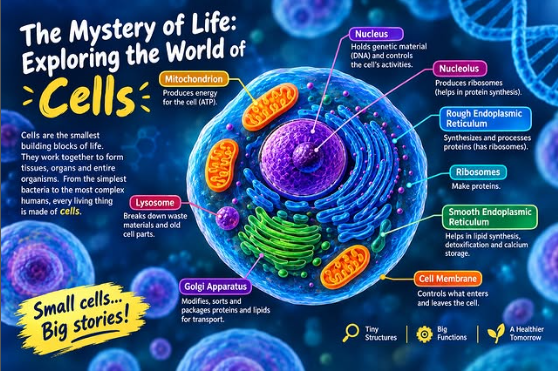
    Cells are the tiny building blocks of life. Every living thing—from humans and animals to plants and microorganisms—is made of cells. Although most cells are too small to see with our eyes, they perform amazing jobs every second.
    A cell has different parts, and each part has a special role. The nucleus controls many activities of the cell, while the cell membrane protects the cell and controls what enters and leaves. Mitochondria provide energy, helping the cell carry out its activities.
    Plant cells have some special structures that animal cells do not have. For example, chloroplasts help plants make food using sunlight. Plant cells also have a strong cell wall that gives them support.
    The most fascinating thing about cells is that they work together. Groups of similar cells form tissues, tissues form organs, and organs work together to make a complete living organism.
    So, even though cells are incredibly small, they hold the secret to how life grows, works, and survives. The world of cells is truly a tiny universe full of fascinating mysteries!
    Tania Khan Mentorship Wali
    Rehan School Korangi Campus
    Mohsin Rathore Seo Wala
    Shazia EducationWali
    accl portal day 41 week 3 topic The Mystery of Life: Exploring the World of Cells Cells are the tiny building blocks of life. Every living thing—from humans and animals to plants and microorganisms—is made of cells. Although most cells are too small to see with our eyes, they perform amazing jobs every second. A cell has different parts, and each part has a special role. The nucleus controls many activities of the cell, while the cell membrane protects the cell and controls what enters and leaves. Mitochondria provide energy, helping the cell carry out its activities. Plant cells have some special structures that animal cells do not have. For example, chloroplasts help plants make food using sunlight. Plant cells also have a strong cell wall that gives them support. The most fascinating thing about cells is that they work together. Groups of similar cells form tissues, tissues form organs, and organs work together to make a complete living organism. So, even though cells are incredibly small, they hold the secret to how life grows, works, and survives. The world of cells is truly a tiny universe full of fascinating mysteries! Tania Khan Mentorship Wali Rehan School Korangi Campus Mohsin Rathore Seo Wala Shazia EducationWali
    0 Yorumlar 0 hisse senetleri 1139 Views
  • #rsisb
    Roll no.247
    story post .24
    Foundation level

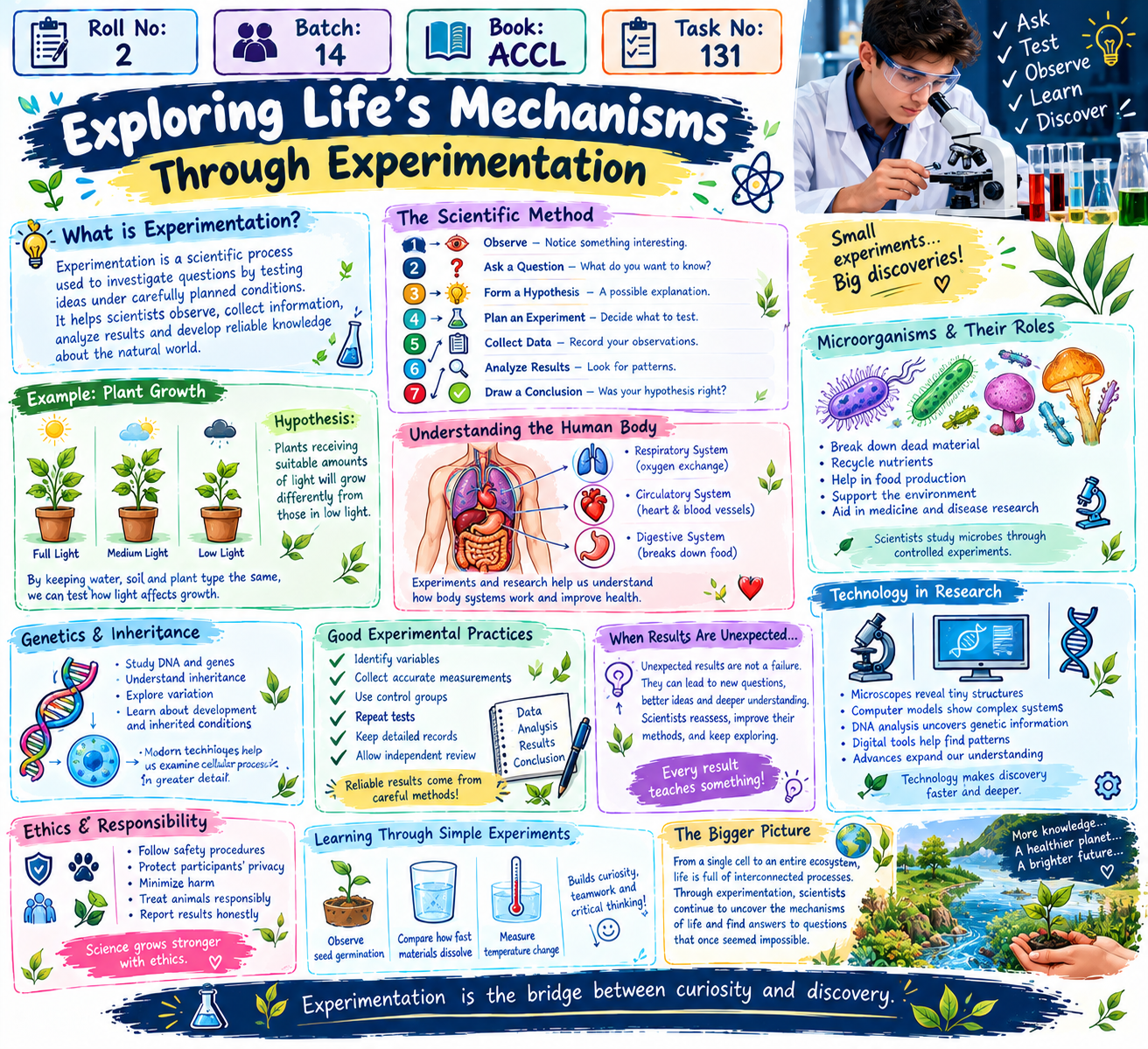
    **Exploring Life’s Mechanisms Through Experimentation**

    Life is full of fascinating mysteries, and science gives us the tools to explore them! **“Exploring Life’s Mechanisms Through Experimentation”** takes us on an exciting journey into the world of biology, where observation, questions, experiments, and discoveries help us understand how living things work.

    From the tiny structures inside cells to the complex systems that allow plants, animals, and humans to grow and survive , experimentation helps scientists uncover the mechanisms behind life. By carefully designing experiments, collecting evidence, analyzing results, and learning from unexpected outcomes, we can turn curiosity into knowledge.

    This topic highlights the importance of the **scientific method**—asking meaningful questions, forming hypotheses, conducting fair tests, recording observations, and drawing conclusions based on evidence. Every experiment, whether successful or not, can teach us something valuable and lead to new questions.

    **Cells and their functions**
    **DNA and genetic information**
    **Plant growth and photosynthesis**
    **How body systems work together**
    **Microorganisms and their environments**
    **Chemical processes involved in life**
    **How living organisms interact with their surroundings**

    Experimentation also teaches important skills such as critical thinking, patience, teamwork, creativity, problem-solving, and careful observation. Science is not simply about memorizing facts—it is about discovering *why* and *how* things happen.

    Every observation can inspire a question.
    Every question can lead to an investigation.
    Every experiment can reveal something new.
    And every discovery can help us understand life a little better.

    Join us as we explore the amazing mechanisms that make life possible and discover how scientific experimentation continues to expand our understanding of the natural world!

    #ExploringLife #LifeScience #Biology #ScienceExperiment #ScientificMethod #ScienceEducation #BiologyExperiments #CellBiology #DNA #Genetics #Photosynthesis #HumanBiology #Microbiology #ScienceLearning #STEM #STEMEducation #YoungScientists #ScienceDiscovery #Experimentation #ScientificDiscovery #Curiosity #CriticalThinking #LearningScience #Nature #LivingThings #ScienceIsAmazing
    #rsisb Roll no.247 story post .24 Foundation level 🔬🧬 **Exploring Life’s Mechanisms Through Experimentation** 🌱✨ Life is full of fascinating mysteries, and science gives us the tools to explore them! 🔍🧪 **“Exploring Life’s Mechanisms Through Experimentation”** takes us on an exciting journey into the world of biology, where observation, questions, experiments, and discoveries help us understand how living things work. 🌍🔬 From the tiny structures inside cells 🦠 to the complex systems that allow plants, animals, and humans to grow and survive 🌿🧑‍🔬, experimentation helps scientists uncover the mechanisms behind life. By carefully designing experiments, collecting evidence, analyzing results, and learning from unexpected outcomes, we can turn curiosity into knowledge. 💡📊 This topic highlights the importance of the **scientific method**—asking meaningful questions, forming hypotheses, conducting fair tests, recording observations, and drawing conclusions based on evidence. 📝🔎 Every experiment, whether successful or not, can teach us something valuable and lead to new questions. 🧫 **Cells and their functions** 🧬 **DNA and genetic information** 🌱 **Plant growth and photosynthesis** 🫀 **How body systems work together** 🦠 **Microorganisms and their environments** ⚗️ **Chemical processes involved in life** 🌎 **How living organisms interact with their surroundings** Experimentation also teaches important skills such as critical thinking, patience, teamwork, creativity, problem-solving, and careful observation. 🧠🤝✨ Science is not simply about memorizing facts—it is about discovering *why* and *how* things happen. 🌟 Every observation can inspire a question. 🔍 Every question can lead to an investigation. 🧪 Every experiment can reveal something new. 💡 And every discovery can help us understand life a little better. Join us as we explore the amazing mechanisms that make life possible and discover how scientific experimentation continues to expand our understanding of the natural world! 🚀🔬🌿 #ExploringLife #LifeScience #Biology #ScienceExperiment #ScientificMethod #ScienceEducation #BiologyExperiments #CellBiology #DNA #Genetics #Photosynthesis #HumanBiology #Microbiology #ScienceLearning #STEM #STEMEducation #YoungScientists #ScienceDiscovery #Experimentation #ScientificDiscovery #Curiosity #CriticalThinking #LearningScience #Nature #LivingThings #ScienceIsAmazing 🔬🧬🌱🧪✨
    0 Yorumlar 0 hisse senetleri 1821 Views
  • #rsisb Roll No.240 Song No.17 Foundation Level Why do scientists perform experiments? In biology, experiments help us understand living things and discover the truth. Scientists ask questions, make observations, test ideas, and study the results. Through experiments, we can learn about plants, animals, cells, the human body, and other living organisms. Experiments help us find out what is true, understand how things work, and learn from mistakes. This topic shows that biology is not just about reading books—it is also about asking questions, testing ideas, and discovering new knowledge. 🔬🌱🧬 #Biology #Science #Experiments #ScientificMethod #Learning #Education #BiologyStudents #scienceexperiments Rehan School Islamabad Campus Asma Shaheen EducationWali Irum Asim Saima Happinesswali https://www.facebook.com/share/v/1J5f5CDKTa/
    WWW.FACEBOOK.COM
    Facebook
    #rsisb Roll No.240 Song No.17 Foundation Level Why do scientists perform experiments? In biology, experiments help us understand living things and discover the truth. Scientists ask questions, make...
    0 Yorumlar 0 hisse senetleri 1520 Views
Arama Sonuçları