• Foundation level
    Roll no 13
    story post
    Day 48
    Rehan school urdu bazar campas

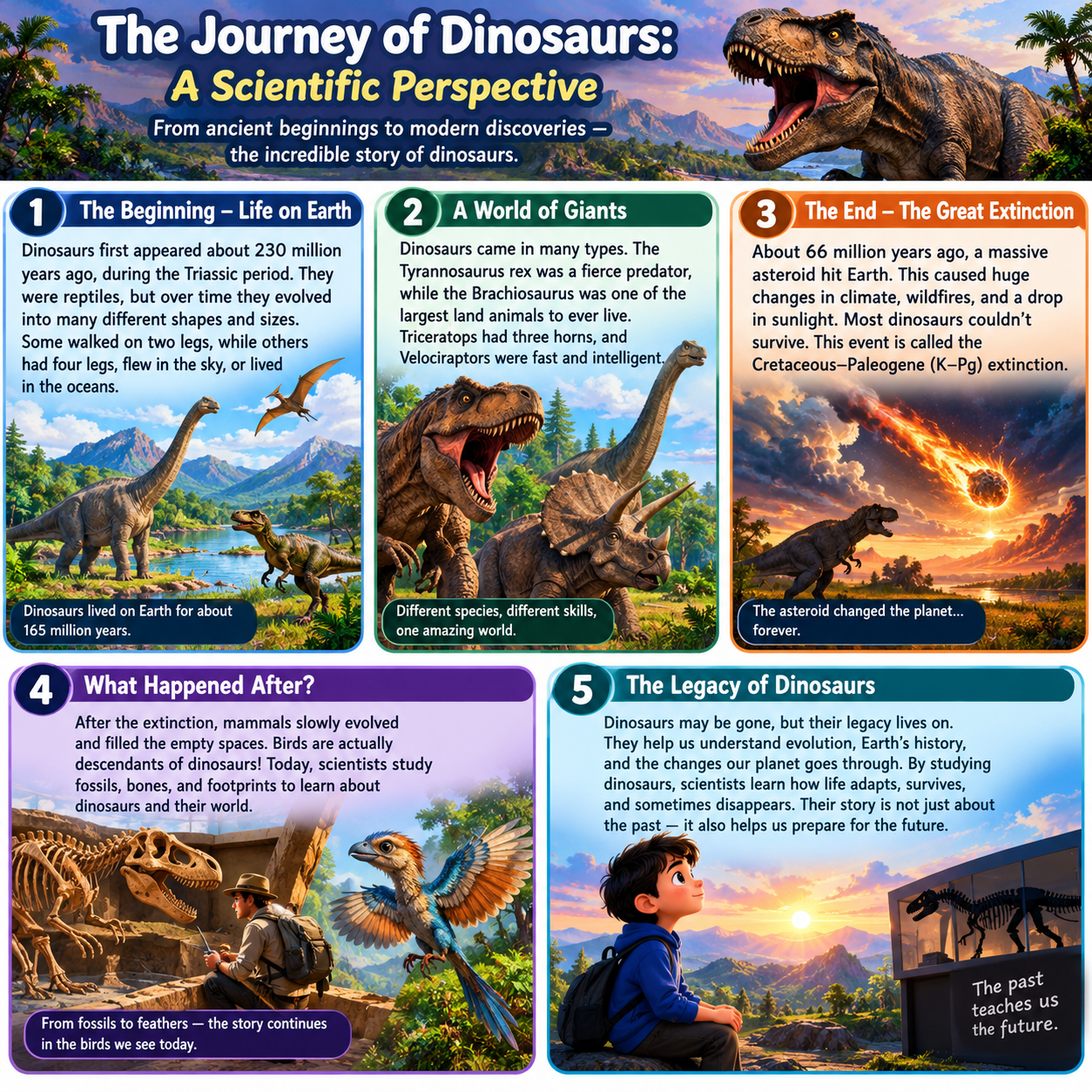
    Millions of years ago, long before humans appeared on Earth, dinosaurs lived in a world filled with dense forests, flowing rivers, towering mountains, and vast open lands. Dinosaurs first appeared about 230 million years ago during the Triassic Period. Over millions of years, they evolved into many different shapes and sizes. Some were small and quick, while others grew into enormous creatures that dominated the land. Their fascinating journey became one of the most remarkable chapters in the history of life on Earth.

    As time passed, dinosaurs spread across different environments and developed unique ways of surviving. The mighty Tyrannosaurus rex became famous for its powerful jaws and sharp teeth, while the enormous Brachiosaurus used its long neck to reach vegetation high above the ground. The Triceratops had three horns and a large bony shield around its head. Some dinosaurs hunted other animals, while many survived by eating plants. Each species played a different role in its environment, creating a complex and fascinating prehistoric world.

    However, approximately 66 million years ago, a massive asteroid struck Earth near what is now Mexico. The impact triggered enormous environmental changes, sending dust and debris into the atmosphere and disrupting ecosystems around the world. Plants struggled to survive, food sources disappeared, and many species became extinct. This event marked the end of the age of non-avian dinosaurs. Yet, not every dinosaur lineage vanished. Some feathered dinosaurs survived through evolution, eventually giving rise to the birds we see in our world today.

    Millions of years later, scientists began uncovering the hidden secrets of these ancient creatures through fossils buried deep within the Earth. Paleontologists discovered dinosaur bones, teeth, eggs, and footprints that provided clues about their appearance, behavior, and habitats. Using modern technology, including computer imaging and advanced scientific techniques, researchers can now reconstruct how many dinosaurs may have looked and lived. Every fossil discovery adds another piece to the puzzle, helping u
    1m
    Foundation level Roll no 13 story post Day 48 Rehan school urdu bazar campas Millions of years ago, long before humans appeared on Earth, dinosaurs lived in a world filled with dense forests, flowing rivers, towering mountains, and vast open lands. Dinosaurs first appeared about 230 million years ago during the Triassic Period. Over millions of years, they evolved into many different shapes and sizes. Some were small and quick, while others grew into enormous creatures that dominated the land. Their fascinating journey became one of the most remarkable chapters in the history of life on Earth. As time passed, dinosaurs spread across different environments and developed unique ways of surviving. The mighty Tyrannosaurus rex became famous for its powerful jaws and sharp teeth, while the enormous Brachiosaurus used its long neck to reach vegetation high above the ground. The Triceratops had three horns and a large bony shield around its head. Some dinosaurs hunted other animals, while many survived by eating plants. Each species played a different role in its environment, creating a complex and fascinating prehistoric world. However, approximately 66 million years ago, a massive asteroid struck Earth near what is now Mexico. The impact triggered enormous environmental changes, sending dust and debris into the atmosphere and disrupting ecosystems around the world. Plants struggled to survive, food sources disappeared, and many species became extinct. This event marked the end of the age of non-avian dinosaurs. Yet, not every dinosaur lineage vanished. Some feathered dinosaurs survived through evolution, eventually giving rise to the birds we see in our world today. Millions of years later, scientists began uncovering the hidden secrets of these ancient creatures through fossils buried deep within the Earth. Paleontologists discovered dinosaur bones, teeth, eggs, and footprints that provided clues about their appearance, behavior, and habitats. Using modern technology, including computer imaging and advanced scientific techniques, researchers can now reconstruct how many dinosaurs may have looked and lived. Every fossil discovery adds another piece to the puzzle, helping u 1m
    0 Комментарии 0 Поделились 974 Просмотры
  • RSIF8
    Roll no:14
    canva post no:45
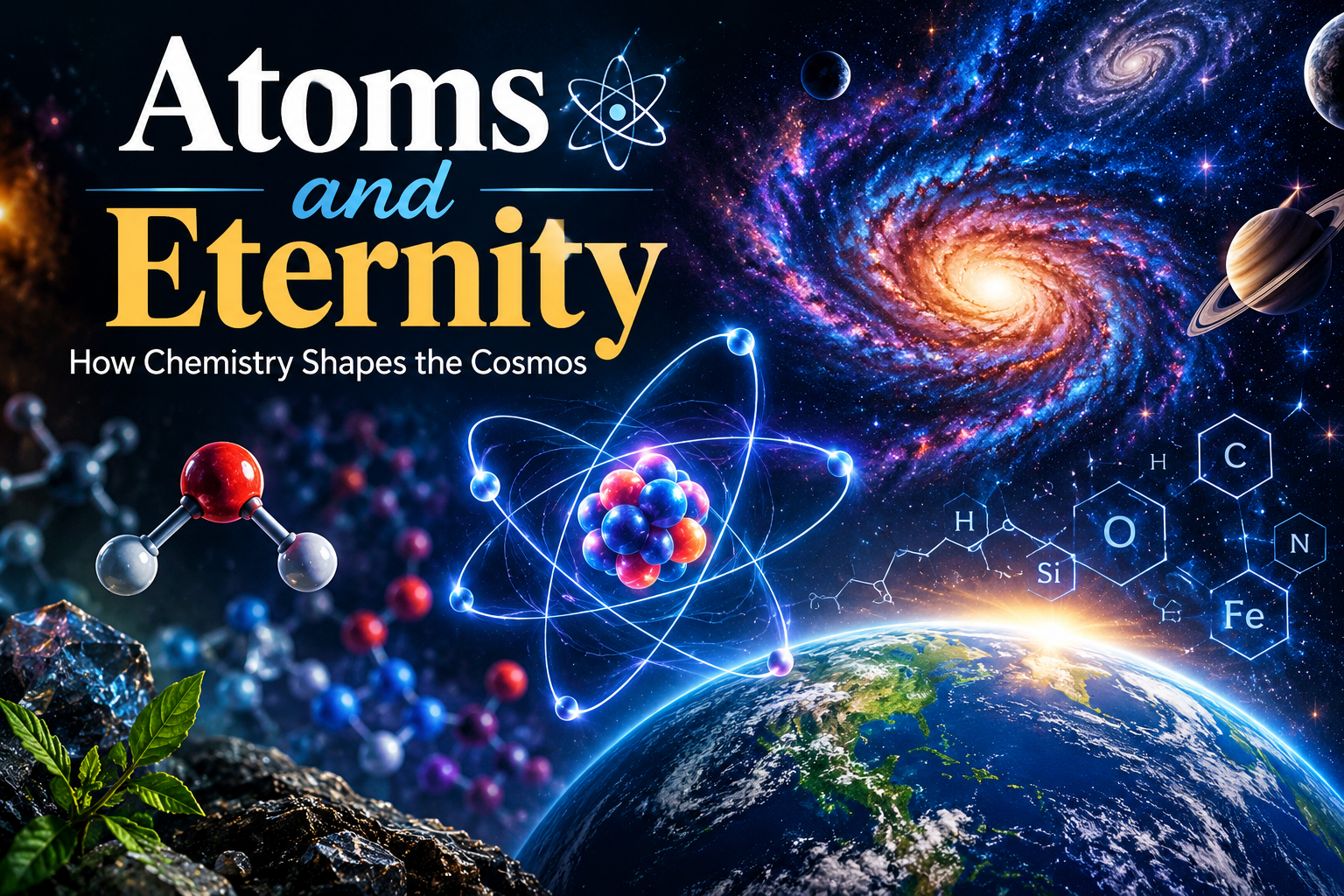
    canva post topic:Atoms and Eternity: How Chemistry Shapes the Cosmos
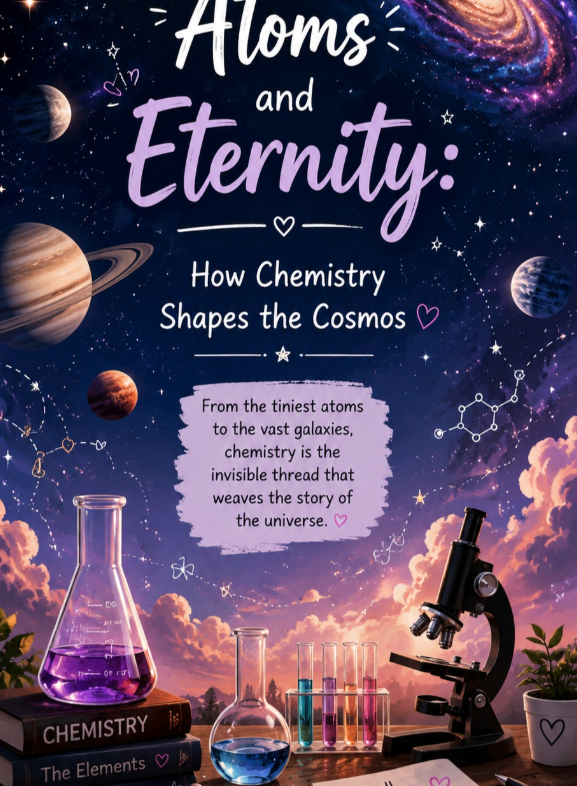
    # Atoms and Eternity: How Chemistry Shapes the Cosmos

    Discover the fascinating connection between chemistry and the universe through **“Atoms and Eternity: How Chemistry Shapes the Cosmos.”** From the smallest atoms to the largest galaxies, chemistry plays a fundamental role in shaping the world around us and the vast universe beyond.

    This educational journey explores how elements are formed in stars, how atoms combine to create molecules, and how chemical reactions contribute to the formation of planets, oceans, and life itself. Learn how essential elements such as hydrogen, oxygen, carbon, and iron connect the mysteries of space with the science of everyday life.

    From the birth of stars to the building blocks of living organisms, this topic reveals the incredible relationship between chemistry, physics, astronomy, and the origins of existence.

    **Explore the science behind the cosmos, understand the power of atoms, and discover how chemistry connects everything in the universe!**

    **Topics Covered:**
    - Atoms, elements, and molecules
    - Formation of elements inside stars
    - Chemistry of planets and galaxies
    - Chemical elements essential for life
    - The connection between chemistry and the cosmos

    **#AtomsAndEternity #Chemistry #Cosmos #ScienceEducation #Astronomy #Atoms #Universe #SpaceScience #Elements #EducationalContent #ExploreScience #DiscoverTheUniverse**
    RSIF8 Roll no:14 canva post no:45 canva post topic:Atoms and Eternity: How Chemistry Shapes the Cosmos # 🌌 Atoms and Eternity: How Chemistry Shapes the Cosmos 🔬✨ Discover the fascinating connection between chemistry and the universe through **“Atoms and Eternity: How Chemistry Shapes the Cosmos.”** 🌠 From the smallest atoms to the largest galaxies, chemistry plays a fundamental role in shaping the world around us and the vast universe beyond. This educational journey explores how elements are formed in stars, how atoms combine to create molecules, and how chemical reactions contribute to the formation of planets, oceans, and life itself. 🪐💫 Learn how essential elements such as hydrogen, oxygen, carbon, and iron connect the mysteries of space with the science of everyday life. From the birth of stars to the building blocks of living organisms, this topic reveals the incredible relationship between chemistry, physics, astronomy, and the origins of existence. 🚀🌍 ✨ **Explore the science behind the cosmos, understand the power of atoms, and discover how chemistry connects everything in the universe!** 📚 **Topics Covered:** - 🔬 Atoms, elements, and molecules - 🌟 Formation of elements inside stars - 🪐 Chemistry of planets and galaxies - 🌍 Chemical elements essential for life - 💫 The connection between chemistry and the cosmos **#AtomsAndEternity #Chemistry #Cosmos #ScienceEducation #Astronomy #Atoms #Universe #SpaceScience #Elements #EducationalContent #ExploreScience #DiscoverTheUniverse**
    0 Комментарии 0 Поделились 811 Просмотры
  • RSIF8
    ROLL NO:92
    STORY POST NO:37
    TOPIC:**Digital Detectives: The World Inside Computers **

    Step into the fascinating world of computers! Discover how computers work, explore the secrets of digital technology, and learn how the internet connects people around the world. From coding and software to data and cybersecurity, every digital discovery opens the door to new possibilities.

    Let's become digital detectives and explore the amazing technology that shapes our modern world!

    #DigitalDetectives #WorldOfComputers #DigitalTechnology #ComputerScience #Coding #CyberSecurity #LearnAndExplore #TechEducation #DigitalWorld #AI
    RSIF8 ROLL NO:92 STORY POST NO:37 TOPIC:**Digital Detectives: The World Inside Computers 💻🔍** Step into the fascinating world of computers! 🌐✨ Discover how computers work, explore the secrets of digital technology, and learn how the internet connects people around the world. From coding and software to data and cybersecurity, every digital discovery opens the door to new possibilities. 🚀 Let's become digital detectives and explore the amazing technology that shapes our modern world! #DigitalDetectives #WorldOfComputers #DigitalTechnology #ComputerScience #Coding #CyberSecurity #LearnAndExplore #TechEducation #DigitalWorld #AI
    0 Комментарии 0 Поделились 731 Просмотры
  • RSIF8
    Roll no: 99
    Song no: 22
    Song topic: The Physics of Everyday Life: How Science Affects Our World

    A fascinating melody revealing how physics shapes our everyday experiences, from motion and light to electricity and the technology around us.

    #PhysicsOfEverydayLife #ScienceInAction #EverydayPhysics #ScienceAndMusic #RSIF8
    RSIF8 Roll no: 99 Song no: 22 Song topic: The Physics of Everyday Life: How Science Affects Our World A fascinating melody revealing how physics shapes our everyday experiences, from motion and light to electricity and the technology around us. ⚛️🌍🎶 #PhysicsOfEverydayLife #ScienceInAction #EverydayPhysics #ScienceAndMusic #RSIF8
    0 Комментарии 0 Поделились 795 Просмотры 4
  • RSIF8
    ROLL NO 77
    SONG
    SONG TOPIC "Mathematical Marvels: Patterns in Nature"

    **Mathematical Marvels: Patterns in Nature**

    Have you ever wondered how mathematics shapes the natural world? From the beautiful spirals of seashells and sunflowers to the amazing patterns of snowflakes and honeycombs , mathematics is everywhere around us!

    Nature is full of fascinating shapes, patterns, numbers, and sequences that reveal the hidden beauty of our universe.

    **Explore the magic of mathematics in nature and discover how science and beauty come together!**

    *Look closely at nature, and you will find mathematics in every corner!*

    Like, share, and follow for more amazing educational content!

    \#MathematicalMarvels #PatternsInNature #Mathematics #NatureLovers #MathIsEverywhere #ScienceAndNature #EducationalContent #LearnWithFun #DiscoverNature #STEMEducation #KnowledgeIsPower #RehanCodingWithAI
    RSIF8 ROLL NO 77 SONG SONG TOPIC "Mathematical Marvels: Patterns in Nature" 🌿🔢 **Mathematical Marvels: Patterns in Nature** 🌸✨ Have you ever wondered how mathematics shapes the natural world? 🌍 From the beautiful spirals of seashells 🐚 and sunflowers 🌻 to the amazing patterns of snowflakes ❄️ and honeycombs 🐝, mathematics is everywhere around us! Nature is full of fascinating shapes, patterns, numbers, and sequences that reveal the hidden beauty of our universe. 🌌💚 🔍 **Explore the magic of mathematics in nature and discover how science and beauty come together!** 💡 *Look closely at nature, and you will find mathematics in every corner!* ❤️ Like, share, and follow for more amazing educational content! 🚀📚 \#MathematicalMarvels #PatternsInNature #Mathematics #NatureLovers #MathIsEverywhere #ScienceAndNature #EducationalContent #LearnWithFun #DiscoverNature #STEMEducation #KnowledgeIsPower #RehanCodingWithAI 🌿🔢✨
    0 Комментарии 0 Поделились 1317 Просмотры 14
  • RSIF8
    Roll no 94
    Storypost no 24
    Storypost topic
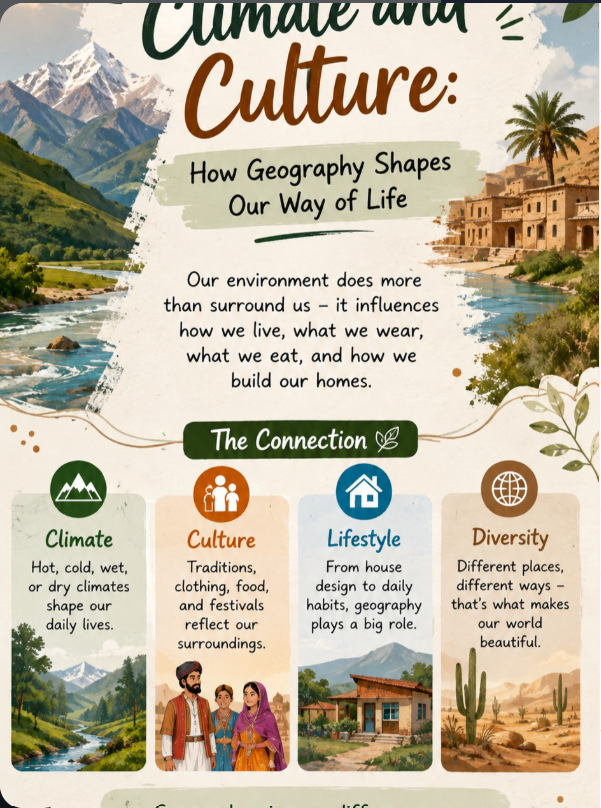
    Climate and Culture: How Geography Shapes Our Way of Life
    Every region has its own unique climate, traditions, food, clothing, and lifestyle. Geography plays a powerful role in shaping how people live and connect with their environment.
    Understanding different cultures helps us appreciate the beauty of diversity and the world around us.
    #ClimateAndCulture #GeographyMatters #CulturalDiversity #GlobalLearning #ClimateImpact #Education #ExploreTheWorld #LearningJourney #SocialMediaPost #KnowledgeSharing
    RSIF8 Roll no 94 Storypost no 24 Storypost topic 🌍🌿 Climate and Culture: How Geography Shapes Our Way of Life 🏔️🏝️ Every region has its own unique climate, traditions, food, clothing, and lifestyle. Geography plays a powerful role in shaping how people live and connect with their environment. 🌎✨ Understanding different cultures helps us appreciate the beauty of diversity and the world around us. 💚🤝 #ClimateAndCulture #GeographyMatters #CulturalDiversity #GlobalLearning #ClimateImpact #Education #ExploreTheWorld #LearningJourney #SocialMediaPost #KnowledgeSharing 🌍📚🌱
    0 Комментарии 0 Поделились 1683 Просмотры
  • RSFI8
    Roll no 88
    TEDxTalk no 5
    TEDxTalk topicWatch TEDx Talk: "Power of a Single Decision" – Zara Noor Abbas (Review video in English & Urdu). Post both videos on social media.

    This talk reminded me that one small decision can change your whole life. Every choice we make today shapes our future. Whether it's choosing to study, work hard, stay positive, or believe in yourself, one good decision can lead to great success.

    Let's think wisely, make positive choices, and never be afraid to take the first step toward our dreams. Every big journey begins with one decision!

    Think Smart
    Choose Right
    Take Action
    Create Your Future

    #TEDx #ZaraNoorAbbas #PowerOfASingleDecision #MakeTheRightChoice #DreamBig #Motivation #Inspiration #PersonalGrowth #Success #BelieveInYourself #KeepLearning #English #Urdu #Pakistan
    16w
    RSFI8 Roll no 88 TEDxTalk no 5 TEDxTalk topicWatch TEDx Talk: "Power of a Single Decision" – Zara Noor Abbas (Review video in English & Urdu). Post both videos on social media. This talk reminded me that one small decision can change your whole life. Every choice we make today shapes our future. 💡 Whether it's choosing to study, work hard, stay positive, or believe in yourself, one good decision can lead to great success. 💪🚀 Let's think wisely, make positive choices, and never be afraid to take the first step toward our dreams. Every big journey begins with one decision! 🌈✨ 💭 Think Smart 🤔 ❤️ Choose Right 🌟 🚀 Take Action 💪 🏆 Create Your Future ✨ #TEDx #ZaraNoorAbbas #PowerOfASingleDecision #MakeTheRightChoice #DreamBig #Motivation #Inspiration #PersonalGrowth #Success #BelieveInYourself #KeepLearning #English #Urdu #Pakistan 🇵🇰🎤📚🌟🚀💖 16w
    0 Комментарии 0 Поделились 1250 Просмотры 2
  • **Roll No: 2**
    **Batch: 14**
    **Book: ACCL**
    **Task No: 145**

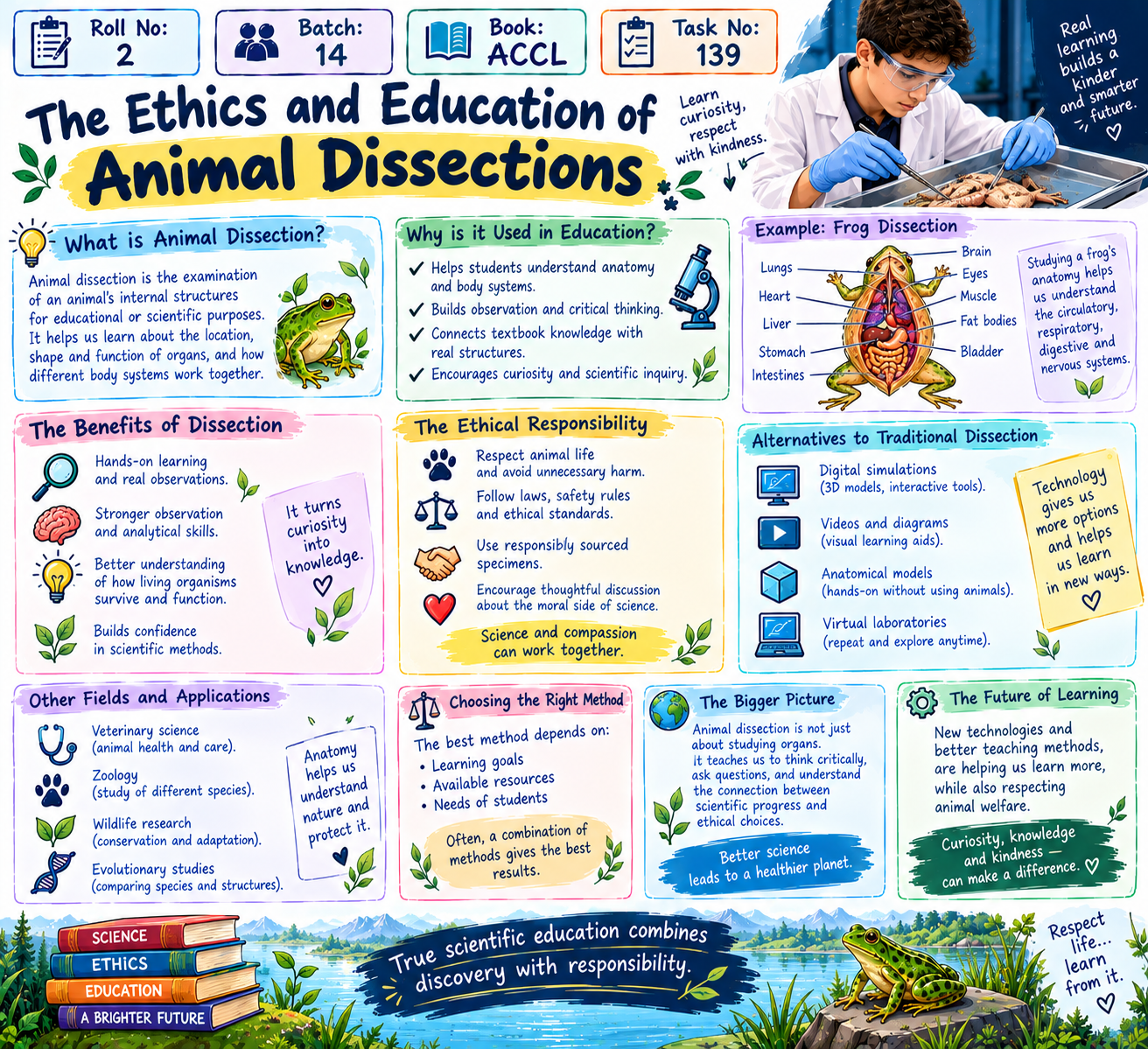
    # The Ethics and Education of Animal Dissections

    Have you ever wondered how students learn about the internal structures of animals and why science education places importance on understanding life responsibly? Animal dissection has been used in biology classrooms and scientific research to help learners explore anatomy, examine organs, and understand how different body systems function. However, it also raises important questions about animal welfare, ethical responsibility, and the best ways to teach scientific concepts.

    **Animal dissection is the examination of an animal's internal structures for educational or scientific purposes.** By studying anatomy, students can learn how organs are arranged and how body systems work together. For example, examining the anatomy of a frog can help learners understand the circulatory, respiratory, digestive, and nervous systems. These observations connect information from textbooks with the physical structures found in living organisms.

    One major benefit of dissection is that it encourages active learning. Instead of only memorizing the names of organs, students can observe anatomical structures, compare their shapes and positions, and ask questions about their functions. This process can strengthen observation skills, critical thinking, and scientific understanding. It also helps learners recognize that every organ has a role in supporting the survival of an organism.

    Nevertheless, **education must balance scientific learning with respect for animal life.** Animals are living organisms with their own biological needs, and their use in education should be considered carefully. Teachers and institutions should follow applicable laws, safety rules, and ethical standards. Specimens should be obtained responsibly, and unnecessary harm should be avoided. Students should also be encouraged to discuss the moral responsibilities that accompany scientific discovery.

    Fortunately, modern technology provides several alternatives to traditional dissection. Digital simulations allow students to explore three-dimensional anatomical models, examine virtual organs, and study body systems through interactive activities. Videos, diagrams, anatomical models, and virtual laboratories can also make complex concepts easier to understand. These approaches may reduce the need for physical specimens while offering flexible opportunities for repeated learning.

    The best educational method can depend on the learning objective, available resources, and the needs of students. A physical specimen may provide certain observations that a diagram cannot fully reproduce, while a digital model may allow students to rotate structures, zoom in on details, and repeat an activity without using another specimen. Combining different teaching methods can provide a richer understanding of anatomy and biology.

    Animal dissection also connects classroom education with wider scientific fields. Knowledge of anatomy contributes to veterinary science, zoology, wildlife research, and the study of animal health. Comparing anatomical structures across species can help scientists investigate adaptation and evolutionary relationships. Such knowledge can also support conservation efforts by improving our understanding of animals and the environments in which they live.

    Ethics should remain an important part of every scientific learning experience. Students should be able to ask questions, understand why a particular method is being used, and learn about alternatives where appropriate. Teachers can create respectful classrooms by explaining the educational purpose of activities, ensuring proper supervision, and encouraging thoughtful discussion. Scientific progress is strongest when curiosity is combined with compassion and responsibility.

    Another important lesson is that science continues to develop. New technologies and educational methods provide opportunities to improve the way anatomy is taught. By evaluating the effectiveness of different approaches, educators can choose methods that support learning while taking animal welfare seriously. This ongoing evaluation reflects the scientific habit of questioning, testing, and improving established practices.

    Ultimately, the ethics and education of animal dissections are about more than studying organs. They encourage students to think critically about scientific methods, recognize the value of responsible research, and understand the relationship between knowledge and moral choices. Learning biology should deepen both our understanding of nature and our respect for living organisms.

    **True scientific education combines discovery with responsibility. By studying anatomy thoughtfully, considering ethical alternatives, and respecting animal welfare, we can develop knowledgeable learners who value both scientific progress and the natural world. **

    #AnimalDissection #AnimalEthics #Biology #ScienceEducation #AnimalWelfare #Anatomy #ACCL #Batch14 #Task139
    **Roll No: 2** **Batch: 14** **Book: ACCL** **Task No: 145** # 🐸🔬 The Ethics and Education of Animal Dissections 🌿📚 Have you ever wondered how students learn about the internal structures of animals and why science education places importance on understanding life responsibly? 🧬🔍 Animal dissection has been used in biology classrooms and scientific research to help learners explore anatomy, examine organs, and understand how different body systems function. However, it also raises important questions about animal welfare, ethical responsibility, and the best ways to teach scientific concepts. **Animal dissection is the examination of an animal's internal structures for educational or scientific purposes.** 🔬 By studying anatomy, students can learn how organs are arranged and how body systems work together. For example, examining the anatomy of a frog can help learners understand the circulatory, respiratory, digestive, and nervous systems. These observations connect information from textbooks with the physical structures found in living organisms. 🐸🫀 One major benefit of dissection is that it encourages active learning. 📖 Instead of only memorizing the names of organs, students can observe anatomical structures, compare their shapes and positions, and ask questions about their functions. This process can strengthen observation skills, critical thinking, and scientific understanding. It also helps learners recognize that every organ has a role in supporting the survival of an organism. Nevertheless, **education must balance scientific learning with respect for animal life.** 💚 Animals are living organisms with their own biological needs, and their use in education should be considered carefully. Teachers and institutions should follow applicable laws, safety rules, and ethical standards. Specimens should be obtained responsibly, and unnecessary harm should be avoided. Students should also be encouraged to discuss the moral responsibilities that accompany scientific discovery. ⚖️🌱 Fortunately, modern technology provides several alternatives to traditional dissection. 💻🧬 Digital simulations allow students to explore three-dimensional anatomical models, examine virtual organs, and study body systems through interactive activities. Videos, diagrams, anatomical models, and virtual laboratories can also make complex concepts easier to understand. These approaches may reduce the need for physical specimens while offering flexible opportunities for repeated learning. The best educational method can depend on the learning objective, available resources, and the needs of students. 🏫 A physical specimen may provide certain observations that a diagram cannot fully reproduce, while a digital model may allow students to rotate structures, zoom in on details, and repeat an activity without using another specimen. Combining different teaching methods can provide a richer understanding of anatomy and biology. Animal dissection also connects classroom education with wider scientific fields. 🏥 Knowledge of anatomy contributes to veterinary science, zoology, wildlife research, and the study of animal health. Comparing anatomical structures across species can help scientists investigate adaptation and evolutionary relationships. Such knowledge can also support conservation efforts by improving our understanding of animals and the environments in which they live. 🌍🐦 Ethics should remain an important part of every scientific learning experience. Students should be able to ask questions, understand why a particular method is being used, and learn about alternatives where appropriate. Teachers can create respectful classrooms by explaining the educational purpose of activities, ensuring proper supervision, and encouraging thoughtful discussion. Scientific progress is strongest when curiosity is combined with compassion and responsibility. 🤝💚 Another important lesson is that science continues to develop. 🔬 New technologies and educational methods provide opportunities to improve the way anatomy is taught. By evaluating the effectiveness of different approaches, educators can choose methods that support learning while taking animal welfare seriously. This ongoing evaluation reflects the scientific habit of questioning, testing, and improving established practices. Ultimately, the ethics and education of animal dissections are about more than studying organs. They encourage students to think critically about scientific methods, recognize the value of responsible research, and understand the relationship between knowledge and moral choices. 🌿📚 Learning biology should deepen both our understanding of nature and our respect for living organisms. **True scientific education combines discovery with responsibility. By studying anatomy thoughtfully, considering ethical alternatives, and respecting animal welfare, we can develop knowledgeable learners who value both scientific progress and the natural world. 🐸🔬🌎💚** #AnimalDissection #AnimalEthics #Biology #ScienceEducation #AnimalWelfare #Anatomy #ACCL #Batch14 #Task139 🐸🧬📚
    0 Комментарии 0 Поделились 2484 Просмотры
  • RSIF8
    Roll no 94
    Story post no 17
    Story post topic
    Atoms and Eternity: How Chemistry Shapes the Cosmos
    Have you ever wondered how the same tiny atoms inside our bodies also exist in distant stars and galaxies? From the formation of planets to the creation of life , chemistry plays a powerful role in shaping the universe around us. Every element, reaction, and molecule tells a story that connects the microscopic world to the vast cosmos.
    This story explores the incredible journey of matter through space and time, showing how chemistry is the invisible force that links atoms, stars, and life itself. The universe is not just a collection of galaxies—it is a masterpiece built from the same building blocks that make us who we are.
    Remember: Every great discovery begins with curiosity!
    #AtomsAndEternity #Chemistry #Cosmos #ScienceLovers #SpaceExploration #STEMEducation #Universe #LearningJourney #ScienceStory #FutureScientists ‍‍ #KnowledgeIsPower #ExploreTheUniverse #EducationalContent #WonderOfScience
    RSIF8 Roll no 94 Story post no 17 Story post topic 🌌✨ Atoms and Eternity: How Chemistry Shapes the Cosmos ✨🔬 Have you ever wondered how the same tiny atoms inside our bodies also exist in distant stars and galaxies? 🌟🧪 From the formation of planets 🪐 to the creation of life 🌱, chemistry plays a powerful role in shaping the universe around us. Every element, reaction, and molecule tells a story that connects the microscopic world to the vast cosmos. 💫 This story explores the incredible journey of matter through space and time, showing how chemistry is the invisible force that links atoms, stars, and life itself. 🌍✨ The universe is not just a collection of galaxies—it is a masterpiece built from the same building blocks that make us who we are. 🌠🔭 💡 Remember: Every great discovery begins with curiosity! #AtomsAndEternity 🌌 #Chemistry 🧪 #Cosmos 🌠 #ScienceLovers 🔬 #SpaceExploration 🚀 #STEMEducation 📚 #Universe 🪐 #LearningJourney 🌟 #ScienceStory 📖 #FutureScientists 👩‍🔬👨‍🔬 #KnowledgeIsPower 💡 #ExploreTheUniverse ✨ #EducationalContent 🎓 #WonderOfScience 🌍
    1
    0 Комментарии 0 Поделились 1900 Просмотры
  • RSIF8
    Roll NO:92
    CHAT GPT TASK NO:12
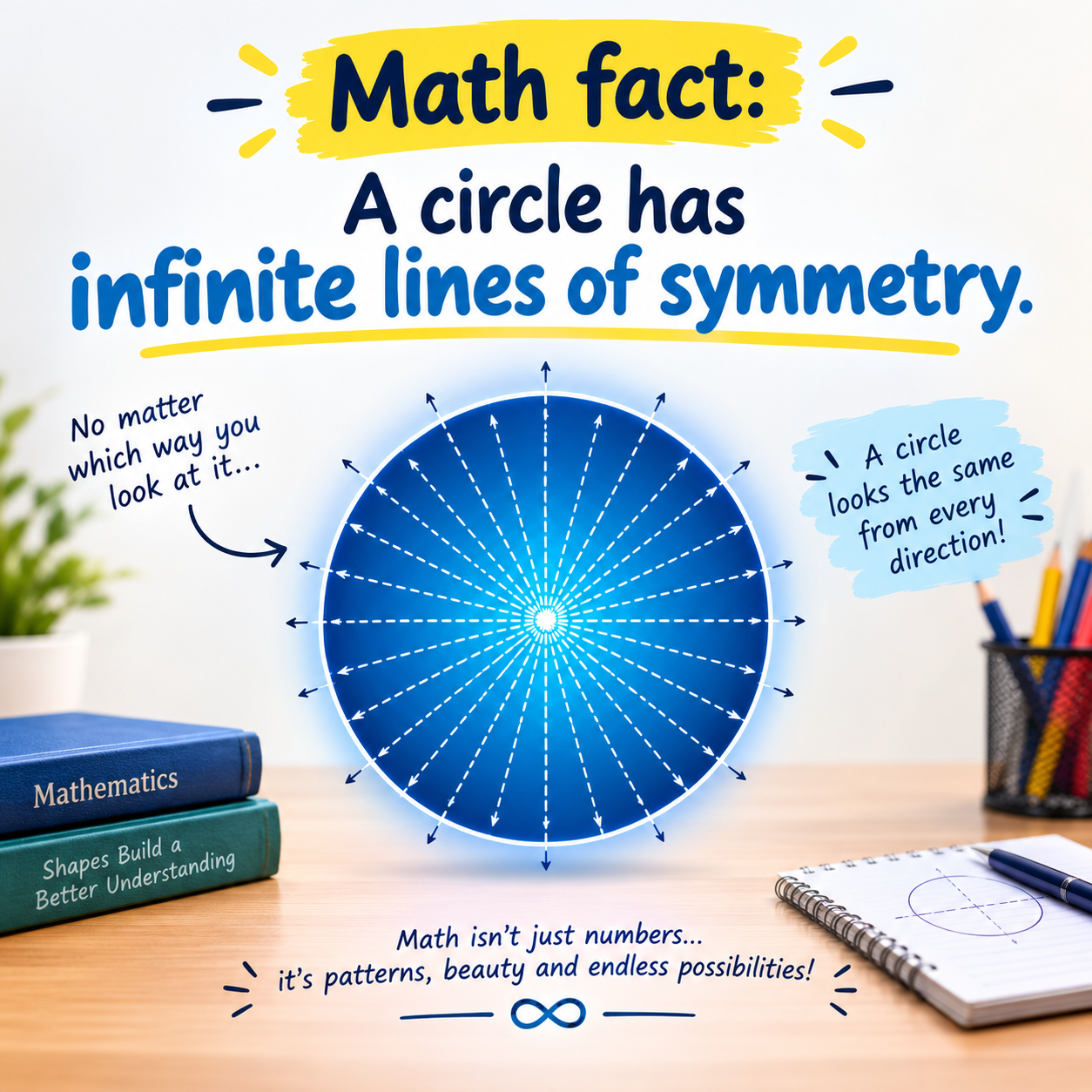
    Topic: **Math Fact: A Circle Has Infinite Lines of Symmetry! **

    Did you know? A circle has **infinite lines of symmetry** because any straight line passing through its center divides it into two equal halves. No matter which direction you choose, the circle remains symmetrical!

    Mathematics is full of amazing patterns, shapes, and discoveries. Keep learning, keep exploring, and make math fun!

    **Fun Fact:** A circle looks the same when reflected across any line passing through its center.

    #MathFacts #Mathematics #DidYouKnow #CircleOfKnowledge #LinesOfSymmetry #LearnWithFun #EducationalPost #ScienceAndMath #KnowledgeIsPower #StudySmart
    RSIF8 Roll NO:92 CHAT GPT TASK NO:12 Topic:📐 **Math Fact: A Circle Has Infinite Lines of Symmetry! 🔵** Did you know? A circle has **infinite lines of symmetry** because any straight line passing through its center divides it into two equal halves. No matter which direction you choose, the circle remains symmetrical! ✨ Mathematics is full of amazing patterns, shapes, and discoveries. Keep learning, keep exploring, and make math fun! 🧠📚 💡 **Fun Fact:** A circle looks the same when reflected across any line passing through its center. #MathFacts #Mathematics #DidYouKnow #CircleOfKnowledge #LinesOfSymmetry #LearnWithFun #EducationalPost #ScienceAndMath #KnowledgeIsPower #StudySmart
    0 Комментарии 0 Поделились 993 Просмотры
Расширенные страницы