• *Day 13: Mulla Nasrudin’s Missing Ring*
    *Task #13*
    *Topic:* Mulla Nasrudin’s Missing Ring
    *Date:* August 11, 2026
    *Created by:* Abdulhadi Business Wala
    *Story:*
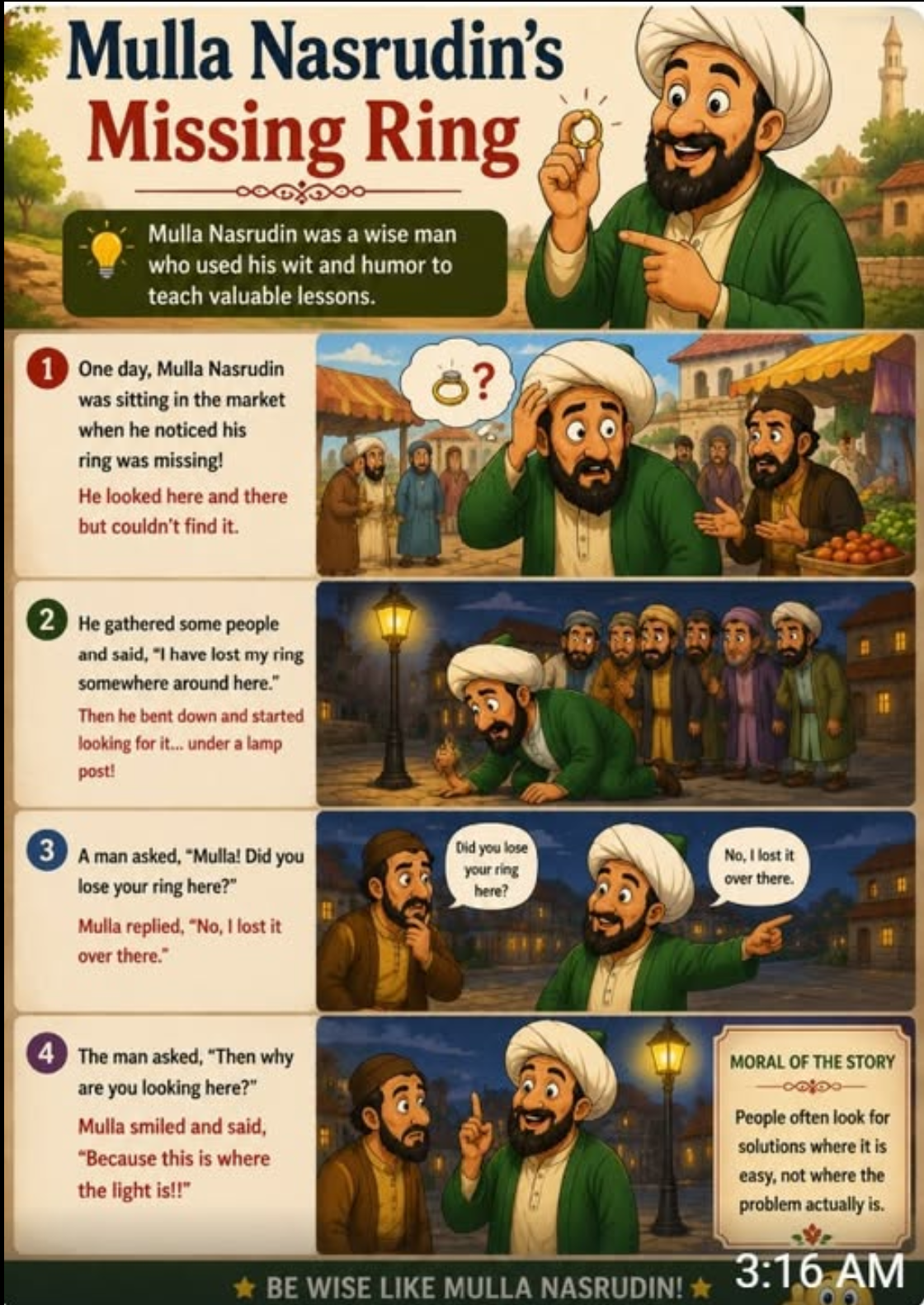
    One day, Mulla Nasrudin discovered that his precious ring was missing. He started searching for it under a bright lamp, even though he had lost it somewhere else!
    When someone asked why he was searching there, Mulla cleverly replied, “Because there is more light here!”
    *Moral of the Story:*
    We should not always look for answers where it is easiest. Sometimes, we must look deeper and face the real problem.
    *Day 13 completed! Keep learning, creating, and sharing wisdom!*
    #AbdulhadiBusinessWala #Day13 #Task13 #MullaNasrudin #MissingRing #MoralSt…
    *Day 13: Mulla Nasrudin’s Missing Ring* βœ¨πŸ’ πŸ“Œ *Task #13* πŸ“š *Topic:* Mulla Nasrudin’s Missing Ring πŸ“… *Date:* August 11, 2026 πŸ‘€ *Created by:* Abdulhadi Business Wala πŸ’ΌπŸ€– πŸ“– *Story:* One day, Mulla Nasrudin discovered that his precious ring was missing. He started searching for it under a bright lamp, even though he had lost it somewhere else! πŸ˜„πŸ’ When someone asked why he was searching there, Mulla cleverly replied, “Because there is more light here!” πŸ˜‚πŸ’‘ 🌟 *Moral of the Story:* We should not always look for answers where it is easiest. Sometimes, we must look deeper and face the real problem. πŸ§ πŸ” πŸš€ *Day 13 completed! Keep learning, creating, and sharing wisdom!* βœ¨πŸ“š #AbdulhadiBusinessWala #Day13 #Task13 #MullaNasrudin #MissingRing #MoralSt…
    0 Comments 0 Shares 331 Views
  • **Roll No: 2**
    **Batch: 14**
    **Book: ACCL**
    **Task No: 145**

    # The Ethics and Education of Animal Dissections

    Have you ever wondered how students learn about the internal structures of animals and why science education places importance on understanding life responsibly? Animal dissection has been used in biology classrooms and scientific research to help learners explore anatomy, examine organs, and understand how different body systems function. However, it also raises important questions about animal welfare, ethical responsibility, and the best ways to teach scientific concepts.

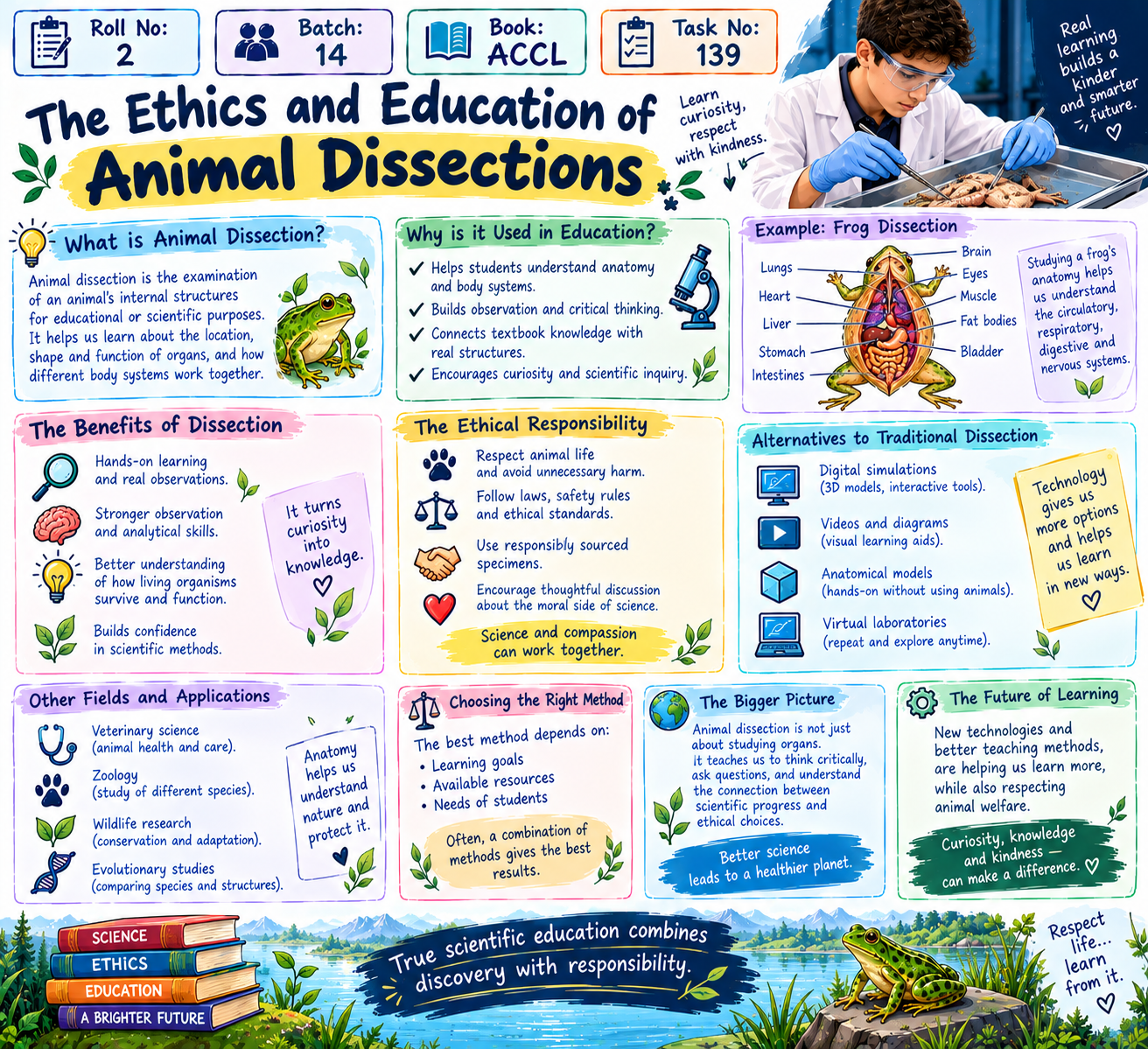
    **Animal dissection is the examination of an animal's internal structures for educational or scientific purposes.** By studying anatomy, students can learn how organs are arranged and how body systems work together. For example, examining the anatomy of a frog can help learners understand the circulatory, respiratory, digestive, and nervous systems. These observations connect information from textbooks with the physical structures found in living organisms.

    One major benefit of dissection is that it encourages active learning. Instead of only memorizing the names of organs, students can observe anatomical structures, compare their shapes and positions, and ask questions about their functions. This process can strengthen observation skills, critical thinking, and scientific understanding. It also helps learners recognize that every organ has a role in supporting the survival of an organism.

    Nevertheless, **education must balance scientific learning with respect for animal life.** Animals are living organisms with their own biological needs, and their use in education should be considered carefully. Teachers and institutions should follow applicable laws, safety rules, and ethical standards. Specimens should be obtained responsibly, and unnecessary harm should be avoided. Students should also be encouraged to discuss the moral responsibilities that accompany scientific discovery.

    Fortunately, modern technology provides several alternatives to traditional dissection. Digital simulations allow students to explore three-dimensional anatomical models, examine virtual organs, and study body systems through interactive activities. Videos, diagrams, anatomical models, and virtual laboratories can also make complex concepts easier to understand. These approaches may reduce the need for physical specimens while offering flexible opportunities for repeated learning.

    The best educational method can depend on the learning objective, available resources, and the needs of students. A physical specimen may provide certain observations that a diagram cannot fully reproduce, while a digital model may allow students to rotate structures, zoom in on details, and repeat an activity without using another specimen. Combining different teaching methods can provide a richer understanding of anatomy and biology.

    Animal dissection also connects classroom education with wider scientific fields. Knowledge of anatomy contributes to veterinary science, zoology, wildlife research, and the study of animal health. Comparing anatomical structures across species can help scientists investigate adaptation and evolutionary relationships. Such knowledge can also support conservation efforts by improving our understanding of animals and the environments in which they live.

    Ethics should remain an important part of every scientific learning experience. Students should be able to ask questions, understand why a particular method is being used, and learn about alternatives where appropriate. Teachers can create respectful classrooms by explaining the educational purpose of activities, ensuring proper supervision, and encouraging thoughtful discussion. Scientific progress is strongest when curiosity is combined with compassion and responsibility.

    Another important lesson is that science continues to develop. New technologies and educational methods provide opportunities to improve the way anatomy is taught. By evaluating the effectiveness of different approaches, educators can choose methods that support learning while taking animal welfare seriously. This ongoing evaluation reflects the scientific habit of questioning, testing, and improving established practices.

    Ultimately, the ethics and education of animal dissections are about more than studying organs. They encourage students to think critically about scientific methods, recognize the value of responsible research, and understand the relationship between knowledge and moral choices. Learning biology should deepen both our understanding of nature and our respect for living organisms.

    **True scientific education combines discovery with responsibility. By studying anatomy thoughtfully, considering ethical alternatives, and respecting animal welfare, we can develop knowledgeable learners who value both scientific progress and the natural world. **

    #AnimalDissection #AnimalEthics #Biology #ScienceEducation #AnimalWelfare #Anatomy #ACCL #Batch14 #Task139
    **Roll No: 2** **Batch: 14** **Book: ACCL** **Task No: 145** # πŸΈπŸ”¬ The Ethics and Education of Animal Dissections πŸŒΏπŸ“š Have you ever wondered how students learn about the internal structures of animals and why science education places importance on understanding life responsibly? πŸ§¬πŸ” Animal dissection has been used in biology classrooms and scientific research to help learners explore anatomy, examine organs, and understand how different body systems function. However, it also raises important questions about animal welfare, ethical responsibility, and the best ways to teach scientific concepts. **Animal dissection is the examination of an animal's internal structures for educational or scientific purposes.** πŸ”¬ By studying anatomy, students can learn how organs are arranged and how body systems work together. For example, examining the anatomy of a frog can help learners understand the circulatory, respiratory, digestive, and nervous systems. These observations connect information from textbooks with the physical structures found in living organisms. πŸΈπŸ«€ One major benefit of dissection is that it encourages active learning. πŸ“– Instead of only memorizing the names of organs, students can observe anatomical structures, compare their shapes and positions, and ask questions about their functions. This process can strengthen observation skills, critical thinking, and scientific understanding. It also helps learners recognize that every organ has a role in supporting the survival of an organism. Nevertheless, **education must balance scientific learning with respect for animal life.** πŸ’š Animals are living organisms with their own biological needs, and their use in education should be considered carefully. Teachers and institutions should follow applicable laws, safety rules, and ethical standards. Specimens should be obtained responsibly, and unnecessary harm should be avoided. Students should also be encouraged to discuss the moral responsibilities that accompany scientific discovery. βš–οΈπŸŒ± Fortunately, modern technology provides several alternatives to traditional dissection. πŸ’»πŸ§¬ Digital simulations allow students to explore three-dimensional anatomical models, examine virtual organs, and study body systems through interactive activities. Videos, diagrams, anatomical models, and virtual laboratories can also make complex concepts easier to understand. These approaches may reduce the need for physical specimens while offering flexible opportunities for repeated learning. The best educational method can depend on the learning objective, available resources, and the needs of students. 🏫 A physical specimen may provide certain observations that a diagram cannot fully reproduce, while a digital model may allow students to rotate structures, zoom in on details, and repeat an activity without using another specimen. Combining different teaching methods can provide a richer understanding of anatomy and biology. Animal dissection also connects classroom education with wider scientific fields. πŸ₯ Knowledge of anatomy contributes to veterinary science, zoology, wildlife research, and the study of animal health. Comparing anatomical structures across species can help scientists investigate adaptation and evolutionary relationships. Such knowledge can also support conservation efforts by improving our understanding of animals and the environments in which they live. 🌍🐦 Ethics should remain an important part of every scientific learning experience. Students should be able to ask questions, understand why a particular method is being used, and learn about alternatives where appropriate. Teachers can create respectful classrooms by explaining the educational purpose of activities, ensuring proper supervision, and encouraging thoughtful discussion. Scientific progress is strongest when curiosity is combined with compassion and responsibility. πŸ€πŸ’š Another important lesson is that science continues to develop. πŸ”¬ New technologies and educational methods provide opportunities to improve the way anatomy is taught. By evaluating the effectiveness of different approaches, educators can choose methods that support learning while taking animal welfare seriously. This ongoing evaluation reflects the scientific habit of questioning, testing, and improving established practices. Ultimately, the ethics and education of animal dissections are about more than studying organs. They encourage students to think critically about scientific methods, recognize the value of responsible research, and understand the relationship between knowledge and moral choices. πŸŒΏπŸ“š Learning biology should deepen both our understanding of nature and our respect for living organisms. **True scientific education combines discovery with responsibility. By studying anatomy thoughtfully, considering ethical alternatives, and respecting animal welfare, we can develop knowledgeable learners who value both scientific progress and the natural world. πŸΈπŸ”¬πŸŒŽπŸ’š** #AnimalDissection #AnimalEthics #Biology #ScienceEducation #AnimalWelfare #Anatomy #ACCL #Batch14 #Task139 πŸΈπŸ§¬πŸ“š
    0 Comments 0 Shares 3779 Views

  • **Roll No: 2**

    **Batch: 14**

    **Book: ACCL**

    **Task No: 139**

    ## Why Do We Experiment? The Search for Truth in Biology

    Today’s task explores the importance of experimentation in biology and how scientists use evidence to understand the mysteries of life. Experiments help researchers investigate questions about living organisms, test scientific ideas, and discover how biological processes work. By observing nature, developing hypotheses, changing specific variables, and analyzing results, scientists can distinguish reliable evidence from assumptions. This topic will help me understand why fair testing, accurate observations, repeated experiments, and honest reporting are essential for trustworthy scientific discoveries. It will also highlight how biological experiments contribute to our knowledge of cells, genetics, ecosystems, and human health. Through this activity, I aim to strengthen my critical-thinking skills, develop scientific curiosity, and appreciate how the search for truth requires patience, careful investigation, and an open mind.

    #Batch14 #Task139 #ACCL #WhyDoWeExperiment #Biology #ScientificResearch #SearchForTruth #ScientificMethod #Experimentation #LifeScience #CriticalThinking #Discovery #ScienceEducation #DailyTask
    πŸ‘€ **Roll No: 2** πŸ“š **Batch: 14** πŸ“– **Book: ACCL** 🎯 **Task No: 139** ## πŸ”¬ Why Do We Experiment? The Search for Truth in Biology 🧬 Today’s task explores the importance of experimentation in biology and how scientists use evidence to understand the mysteries of life. 🌱 Experiments help researchers investigate questions about living organisms, test scientific ideas, and discover how biological processes work. By observing nature, developing hypotheses, changing specific variables, and analyzing results, scientists can distinguish reliable evidence from assumptions. πŸ§ͺ This topic will help me understand why fair testing, accurate observations, repeated experiments, and honest reporting are essential for trustworthy scientific discoveries. πŸ“Š It will also highlight how biological experiments contribute to our knowledge of cells, genetics, ecosystems, and human health. Through this activity, I aim to strengthen my critical-thinking skills, develop scientific curiosity, and appreciate how the search for truth requires patience, careful investigation, and an open mind. 🌍✨ #Batch14 #Task139 #ACCL #WhyDoWeExperiment #Biology #ScientificResearch #SearchForTruth #ScientificMethod #Experimentation #LifeScience #CriticalThinking #Discovery #ScienceEducation #DailyTask
    0 Comments 0 Shares 3267 Views
  • **Roll No: 2**
    **Batch: 14**
    **Book: ACCL**
    **Task No: 138**

    # Exploring Life’s Mechanisms Through Experimentation

    Have you ever wondered how scientists discover the secrets of life? From understanding how plants grow to investigating how the human heart works, science helps us explore the processes that make living organisms function. Behind many important discoveries lies a powerful method called **experimentation**, which allows scientists to test ideas, observe results, and develop a deeper understanding of the natural world.

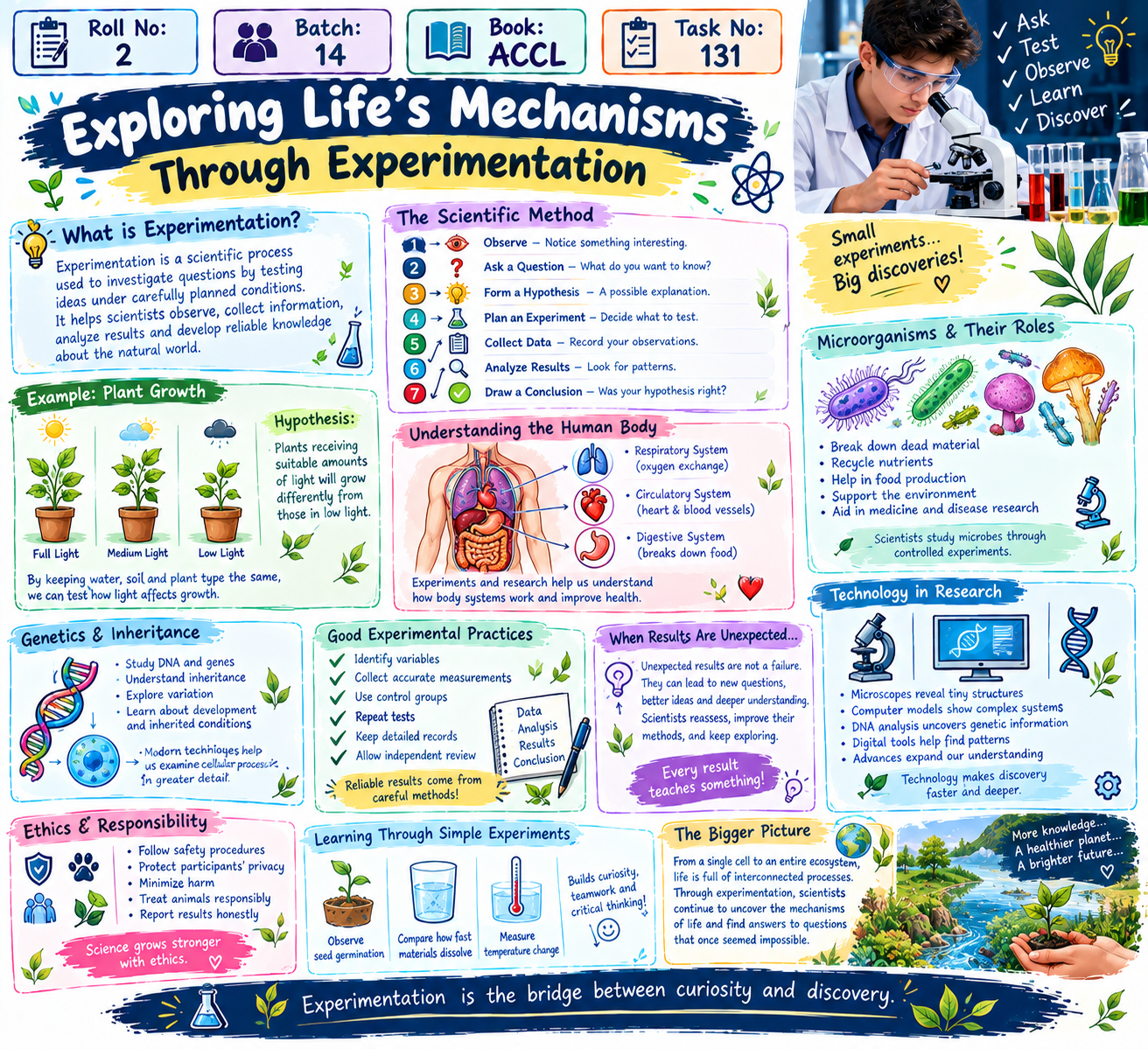
    **Experimentation is a scientific process used to investigate questions by testing ideas under carefully planned conditions.** Scientists begin by observing something interesting, asking a question, and developing a hypothesis—a possible explanation that can be tested. They then design an experiment, collect information, and analyze the results to determine whether the evidence supports their original idea. This process helps turn curiosity into reliable scientific knowledge.

    One fascinating example is the study of plant growth. Imagine a student who wants to discover whether the amount of light affects how quickly a plant grows. The student forms a hypothesis that plants receiving suitable amounts of light will grow differently from plants kept in low-light conditions. By keeping factors such as water, soil, and plant type consistent, the student can compare the results and investigate the role of light in plant development.

    Experimentation is also essential for understanding the human body. Scientists investigate how the heart circulates blood, how the lungs exchange gases, and how the digestive system processes food. Through carefully designed studies, medical imaging, laboratory tests, and other research methods, scientists learn how body systems work together to maintain health. Their findings can contribute to improved medical treatments and a better understanding of human biology.

    Another important field is microbiology, the study of microscopic organisms. Many bacteria and fungi play beneficial roles in nature, including breaking down dead material and recycling nutrients. Scientists use controlled experiments to investigate how these organisms respond to different environmental conditions. Such research can help improve food production, develop medicines, understand infectious diseases, and protect ecosystems.

    Experiments also help researchers understand genetics and the mechanisms of inheritance. By studying DNA, genes, and the characteristics of organisms across generations, scientists investigate how biological information is passed on and how variations arise. Modern techniques allow researchers to explore cellular processes in greater detail, helping them understand development, inherited conditions, and the relationships among different forms of life.

    A successful experiment requires more than simply observing what happens. Scientists must identify the variables they are studying, collect accurate measurements, and repeat tests when appropriate. They often use control groups for comparison and record their observations carefully. Repeating experiments helps determine whether a result is consistent, while independent review allows other researchers to examine the methods and evaluate the conclusions. These practices make scientific findings more trustworthy.

    Sometimes experiments produce unexpected results. Instead of treating an unexpected outcome as a failure, scientists use it as an opportunity to ask new questions. They may reconsider their hypothesis, improve their experimental design, or investigate another possible explanation. Scientific progress often happens through this cycle of questioning, testing, learning, and refining ideas. Every result can contribute something valuable when it is interpreted carefully.

    Technology has made biological experimentation more advanced than ever before. Microscopes reveal structures too small to see with the naked eye, computer models help researchers understand complicated systems, and DNA analysis allows scientists to investigate genetic information. Digital tools can also help organize large amounts of data and identify patterns that might otherwise be difficult to notice. These innovations continue to expand our understanding of living organisms.

    However, scientific experimentation must always be guided by responsibility and ethics. Researchers should follow safety procedures, protect participants' privacy, minimize harm, and treat animals responsibly. Experiments involving people or animals require appropriate ethical review and safeguards. Scientists must also report results honestly, even when the findings do not match their expectations. Reliable science depends on both accurate evidence and responsible behavior.

    Experimentation connects classroom learning with real-world discoveries. Students can explore scientific ideas through safe activities, such as observing seed germination, comparing how quickly different materials dissolve in water, or measuring changes in temperature. These activities encourage curiosity, careful observation, teamwork, and critical thinking. They also show that science is not just a collection of facts to memorize; it is an ongoing process of discovery.

    As we explore life's mechanisms, we begin to understand how countless processes work together to support living organisms. From the activity inside a single cell to the interactions among species in an ecosystem, each discovery reveals another part of nature's complexity. Through experimentation, scientists continue to investigate these connections and search for answers to questions that once seemed impossible to solve.

    **Experimentation is the bridge between curiosity and discovery. By asking thoughtful questions, testing ideas fairly, and learning from evidence, we can uncover the mechanisms of life and use scientific knowledge to improve human health, protect the environment, and build a brighter future. **

    \#Experimentation #Biology #ScientificMethod #LifeSciences #ScientificDiscovery #Research #ACCL #Batch14 #Task131
    **Roll No: 2** **Batch: 14** **Book: ACCL** **Task No: 138** # πŸ”¬πŸ§ͺ Exploring Life’s Mechanisms Through Experimentation 🌱🧬 Have you ever wondered how scientists discover the secrets of life? 🌍 From understanding how plants grow to investigating how the human heart works, science helps us explore the processes that make living organisms function. Behind many important discoveries lies a powerful method called **experimentation**, which allows scientists to test ideas, observe results, and develop a deeper understanding of the natural world. πŸ”βœ¨ **Experimentation is a scientific process used to investigate questions by testing ideas under carefully planned conditions.** πŸ§ͺ Scientists begin by observing something interesting, asking a question, and developing a hypothesis—a possible explanation that can be tested. They then design an experiment, collect information, and analyze the results to determine whether the evidence supports their original idea. This process helps turn curiosity into reliable scientific knowledge. πŸ“šπŸ’‘ One fascinating example is the study of plant growth. 🌱 Imagine a student who wants to discover whether the amount of light affects how quickly a plant grows. The student forms a hypothesis that plants receiving suitable amounts of light will grow differently from plants kept in low-light conditions. By keeping factors such as water, soil, and plant type consistent, the student can compare the results and investigate the role of light in plant development. β˜€οΈπŸŒΏ Experimentation is also essential for understanding the human body. ❀️ Scientists investigate how the heart circulates blood, how the lungs exchange gases, and how the digestive system processes food. Through carefully designed studies, medical imaging, laboratory tests, and other research methods, scientists learn how body systems work together to maintain health. Their findings can contribute to improved medical treatments and a better understanding of human biology. 🫁🧠 Another important field is microbiology, the study of microscopic organisms. 🦠 Many bacteria and fungi play beneficial roles in nature, including breaking down dead material and recycling nutrients. Scientists use controlled experiments to investigate how these organisms respond to different environmental conditions. Such research can help improve food production, develop medicines, understand infectious diseases, and protect ecosystems. πŸ”¬πŸŒ Experiments also help researchers understand genetics and the mechanisms of inheritance. 🧬 By studying DNA, genes, and the characteristics of organisms across generations, scientists investigate how biological information is passed on and how variations arise. Modern techniques allow researchers to explore cellular processes in greater detail, helping them understand development, inherited conditions, and the relationships among different forms of life. πŸŒ±πŸ” A successful experiment requires more than simply observing what happens. Scientists must identify the variables they are studying, collect accurate measurements, and repeat tests when appropriate. πŸ“ They often use control groups for comparison and record their observations carefully. Repeating experiments helps determine whether a result is consistent, while independent review allows other researchers to examine the methods and evaluate the conclusions. These practices make scientific findings more trustworthy. πŸ“ŠπŸ“ Sometimes experiments produce unexpected results. πŸ€” Instead of treating an unexpected outcome as a failure, scientists use it as an opportunity to ask new questions. They may reconsider their hypothesis, improve their experimental design, or investigate another possible explanation. Scientific progress often happens through this cycle of questioning, testing, learning, and refining ideas. Every result can contribute something valuable when it is interpreted carefully. πŸ’‘πŸ”„ Technology has made biological experimentation more advanced than ever before. πŸ€–πŸ”¬ Microscopes reveal structures too small to see with the naked eye, computer models help researchers understand complicated systems, and DNA analysis allows scientists to investigate genetic information. Digital tools can also help organize large amounts of data and identify patterns that might otherwise be difficult to notice. These innovations continue to expand our understanding of living organisms. πŸ’»πŸ§¬ However, scientific experimentation must always be guided by responsibility and ethics. πŸ’š Researchers should follow safety procedures, protect participants' privacy, minimize harm, and treat animals responsibly. Experiments involving people or animals require appropriate ethical review and safeguards. Scientists must also report results honestly, even when the findings do not match their expectations. Reliable science depends on both accurate evidence and responsible behavior. βš–οΈπŸŒΏ Experimentation connects classroom learning with real-world discoveries. 🏫 Students can explore scientific ideas through safe activities, such as observing seed germination, comparing how quickly different materials dissolve in water, or measuring changes in temperature. These activities encourage curiosity, careful observation, teamwork, and critical thinking. They also show that science is not just a collection of facts to memorize; it is an ongoing process of discovery. 🌈πŸ§ͺ As we explore life's mechanisms, we begin to understand how countless processes work together to support living organisms. From the activity inside a single cell to the interactions among species in an ecosystem, each discovery reveals another part of nature's complexity. Through experimentation, scientists continue to investigate these connections and search for answers to questions that once seemed impossible to solve. πŸŒŽπŸ¦‹πŸ”¬ **Experimentation is the bridge between curiosity and discovery. By asking thoughtful questions, testing ideas fairly, and learning from evidence, we can uncover the mechanisms of life and use scientific knowledge to improve human health, protect the environment, and build a brighter future. πŸ”¬πŸ§¬πŸŒπŸ’š** \#Experimentation #Biology #ScientificMethod #LifeSciences #ScientificDiscovery #Research #ACCL #Batch14 #Task131 πŸ§ͺπŸ”¬πŸŒ±
    0 Comments 0 Shares 5194 Views

  • **Roll No: 2**

    **Batch: 14**

    **Book: ACCL**

    **Task No: 134**

    ## BMI Calculator

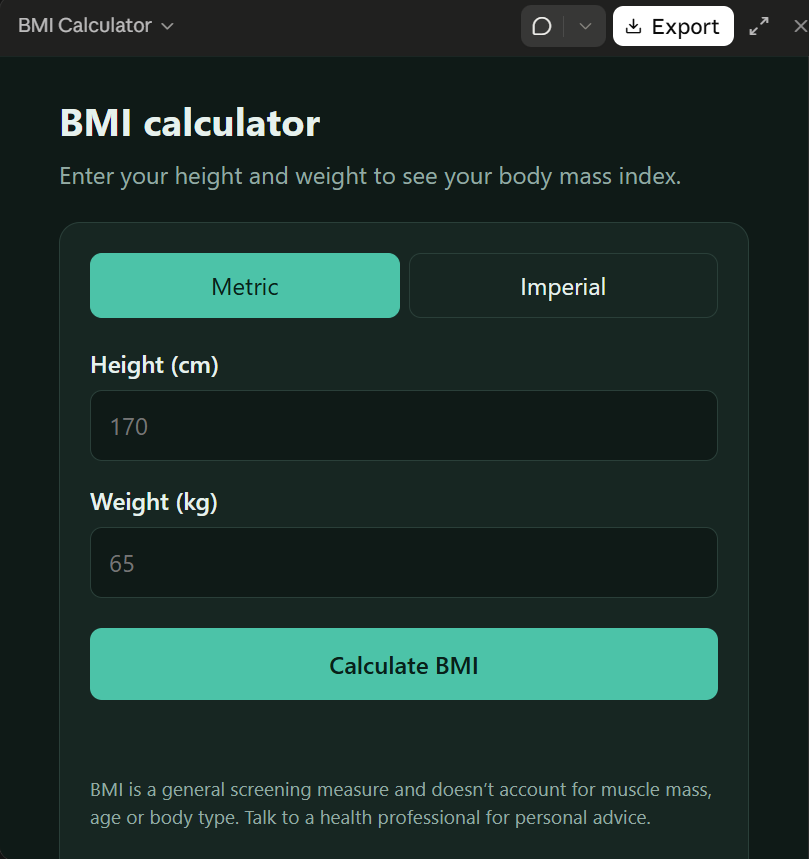
    Today’s task is to develop a **Body Mass Index (BMI) Calculator** that demonstrates how a simple computer program can perform calculations using user input. The calculator will allow users to enter their height and weight and calculate BMI using a mathematical formula. This project will help improve programming skills, logical thinking, and understanding of basic formulas, variables, input handling, and output formatting. It can also display the calculated result clearly and explain that BMI is a general screening measure, not a complete assessment of a person’s health. Through this task, I will gain practical experience in creating a useful application while strengthening my problem-solving abilities and learning how mathematics can be applied in technology.

    #Batch14 #Task134 #ACCL #BMICalculator #Coding #Programming #PythonProject #HealthTechnology #Mathematics #ProblemSolving #Learning #DigitalSkills #DailyTask
    πŸ‘€ **Roll No: 2** πŸ“š **Batch: 14** πŸ“– **Book: ACCL** 🎯 **Task No: 134** ## πŸ’» BMI Calculator πŸ“Š Today’s task is to develop a **Body Mass Index (BMI) Calculator** that demonstrates how a simple computer program can perform calculations using user input. πŸ–₯️ The calculator will allow users to enter their height and weight and calculate BMI using a mathematical formula. βž— This project will help improve programming skills, logical thinking, and understanding of basic formulas, variables, input handling, and output formatting. πŸš€ It can also display the calculated result clearly and explain that BMI is a general screening measure, not a complete assessment of a person’s health. 🌟 Through this task, I will gain practical experience in creating a useful application while strengthening my problem-solving abilities and learning how mathematics can be applied in technology. #Batch14 #Task134 #ACCL #BMICalculator #Coding #Programming #PythonProject #HealthTechnology #Mathematics #ProblemSolving #Learning #DigitalSkills #DailyTask
    0 Comments 0 Shares 2078 Views

  • **Roll No: 2**

    **Batch: 14**

    **Book: ACCL**

    **Task No: 132**

    ## Fall Seven Times and Stand Up Eight — Japanese Proverb

    Today’s task focuses on the inspiring Japanese proverb **“Fall seven times and stand up eight.”** This powerful saying teaches us the importance of resilience, determination, patience, and never giving up when life becomes difficult. Every failure gives us an opportunity to learn valuable lessons, improve our abilities, and discover new ways to achieve our goals. Success does not mean that we never face challenges; it means that we keep moving forward even when things do not go as planned. This proverb encourages us to develop a positive mindset, believe in our potential, and treat every setback as a chance to grow stronger and wiser. Through this lesson, we learn that true progress comes from courage, consistent effort, and the willingness to rise again after every difficulty.

    ** Key Message:** Never let failure stop you. Learn from every setback, stand up again, and keep moving toward your goals.

    #Batch14 #Task132 #ACCL #JapaneseProverb #NeverGiveUp #Resilience #KeepGoing #Motivation #Perseverance #PositiveMindset #PersonalGrowth #SuccessMindset #DailyTask #Learning
    πŸ‘€ **Roll No: 2** πŸ“š **Batch: 14** πŸ“– **Book: ACCL** 🎯 **Task No: 132** ## πŸ’ͺ Fall Seven Times and Stand Up Eight — Japanese Proverb 🌟 Today’s task focuses on the inspiring Japanese proverb **“Fall seven times and stand up eight.”** πŸ’« This powerful saying teaches us the importance of resilience, determination, patience, and never giving up when life becomes difficult. Every failure gives us an opportunity to learn valuable lessons, improve our abilities, and discover new ways to achieve our goals. 🌱 Success does not mean that we never face challenges; it means that we keep moving forward even when things do not go as planned. πŸš€ This proverb encourages us to develop a positive mindset, believe in our potential, and treat every setback as a chance to grow stronger and wiser. ✨ Through this lesson, we learn that true progress comes from courage, consistent effort, and the willingness to rise again after every difficulty. **🎯 Key Message:** Never let failure stop you. Learn from every setback, stand up again, and keep moving toward your goals. πŸ’ͺ🌈 #Batch14 #Task132 #ACCL #JapaneseProverb #NeverGiveUp #Resilience #KeepGoing #Motivation #Perseverance #PositiveMindset #PersonalGrowth #SuccessMindset #DailyTask #Learning
    0 Comments 0 Shares 1326 Views 4
  • **Roll No: 2**
    **Batch: 14**
    **Book: ACCL**
    **Task No: 131**

    ## Motivational Quote: Steve Jobs

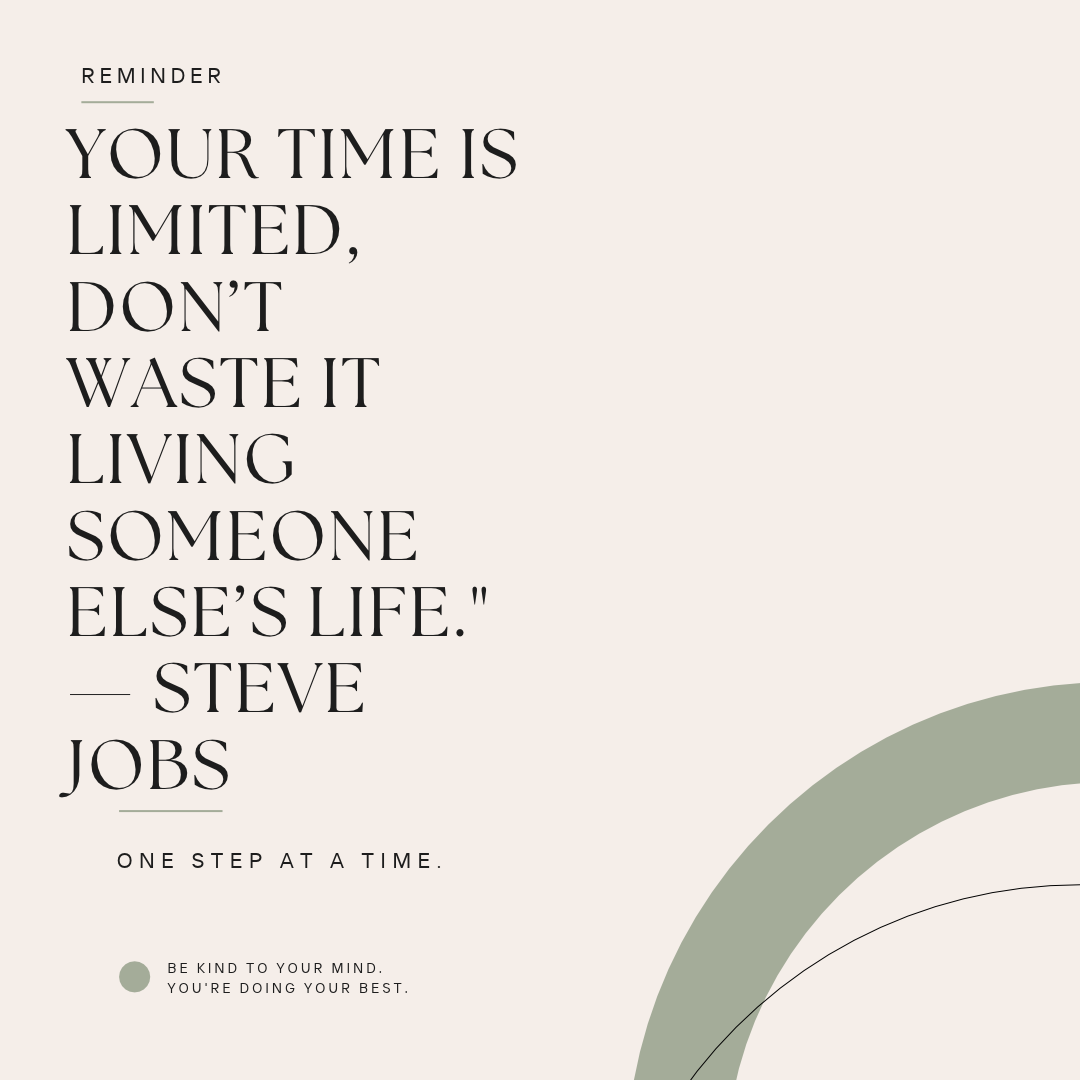
    **“Your time is limited, don’t waste it living someone else’s life.” — Steve Jobs**

    This powerful quote by Steve Jobs reminds us that our time is valuable and that we should make thoughtful choices about how we live our lives. Everyone has different dreams, interests, abilities, and goals, so it is important to discover what truly matters to us instead of constantly trying to meet other people's expectations. Sometimes, we compare ourselves with others or make decisions simply because we want their approval. However, genuine personal growth begins when we understand our own values, explore our interests, and take responsibility for our choices. Whether we are choosing a career path, learning a new skill, or working toward a personal dream, we should have the courage to follow a direction that reflects our abilities and aspirations. This does not mean ignoring advice from others; it means listening thoughtfully while making decisions that suit our own goals. The quote encourages us to use our time wisely, appreciate our individuality, and create a future that reflects who we truly want to become.

    ** Key Message:** Your life is your own journey. Discover your goals, make your own thoughtful choices, and use your time to build a future that feels meaningful to you!

    #ACCL #Batch14 #RollNo2 #Task131 #SteveJobs #MotivationalQuotes #BeYourself #SelfDiscovery #PersonalGrowth #TimeManagement #FollowYourDreams #SelfConfidence #LifeLessons #PositiveMindset #DailyInspiration
    πŸ‘€ **Roll No: 2** πŸ“š **Batch: 14** πŸ“– **Book: ACCL** 🎯 **Task No: 131** ## 🌟 Motivational Quote: Steve Jobs πŸ’‘ **“Your time is limited, don’t waste it living someone else’s life.” — Steve Jobs** ⏳✨ This powerful quote by Steve Jobs reminds us that our time is valuable and that we should make thoughtful choices about how we live our lives. Everyone has different dreams, interests, abilities, and goals, so it is important to discover what truly matters to us instead of constantly trying to meet other people's expectations. πŸŒ±πŸ’­ Sometimes, we compare ourselves with others or make decisions simply because we want their approval. However, genuine personal growth begins when we understand our own values, explore our interests, and take responsibility for our choices. πŸ’ͺπŸš€ Whether we are choosing a career path, learning a new skill, or working toward a personal dream, we should have the courage to follow a direction that reflects our abilities and aspirations. This does not mean ignoring advice from others; it means listening thoughtfully while making decisions that suit our own goals. πŸ“šπŸŒˆ The quote encourages us to use our time wisely, appreciate our individuality, and create a future that reflects who we truly want to become. **🎯 Key Message:** Your life is your own journey. Discover your goals, make your own thoughtful choices, and use your time to build a future that feels meaningful to you! 🌟 #ACCL #Batch14 #RollNo2 #Task131 #SteveJobs #MotivationalQuotes #BeYourself #SelfDiscovery #PersonalGrowth #TimeManagement #FollowYourDreams #SelfConfidence #LifeLessons #PositiveMindset #DailyInspiration
    0 Comments 0 Shares 2230 Views
  • To-Do List Web App using Gemini CLI
    Description

    A modern and responsive To-Do List Web Application developed using Gemini CLI. Users can add, edit, delete, search, and organize tasks efficiently with priority levels, due dates, progress tracking, and offline support.

    Student Information

    Coding Book: 1
    Task: 13
    Roll No: 71

    Website Link

    http://rsmc71.rehanschool.us/todolistappcode/

    Hashtags

    #GeminiCLI #TodoListApp #WebDevelopment #HTML #CSS #JavaScript #CodingBook1 #Task13 #RollNo71 #Programming #FrontendDevelopment #ProductivityApp #PWA #StudentProject #CodeWithAI #TechEducation #WebAppDevelopment #ResponsiveDesign #ModernUI #TaskManager #JavaScriptProject
    To-Do List Web App using Gemini CLI Description A modern and responsive To-Do List Web Application developed using Gemini CLI. Users can add, edit, delete, search, and organize tasks efficiently with priority levels, due dates, progress tracking, and offline support. Student Information πŸ“– Coding Book: 1 πŸ“‹ Task: 13 πŸŽ“ Roll No: 71 Website Link http://rsmc71.rehanschool.us/todolistappcode/ Hashtags #GeminiCLI #TodoListApp #WebDevelopment #HTML #CSS #JavaScript #CodingBook1 #Task13 #RollNo71 #Programming #FrontendDevelopment #ProductivityApp #PWA #StudentProject #CodeWithAI #TechEducation #WebAppDevelopment #ResponsiveDesign #ModernUI #TaskManager #JavaScriptProject
    0 Comments 0 Shares 6748 Views
  • Sheraton Hotels Clone (Functional)

    Description

    Excited to share my Sheraton Hotels Clone (Functional) project, developed using Cursor AI and Antigravity.

    This web-based luxury hotel booking platform allows users to register, log in securely, search hotel rooms, explore premium suites, view detailed room information, make reservations, manage bookings, update profiles, and access a personalized dashboard. The platform features a modern luxury-inspired design, secure authentication system, database-driven functionality, advanced animations, responsive layouts, and a seamless booking experience inspired by world-class hospitality brands.

    Built with PHP, MySQL, HTML, CSS, and JavaScript, this project helped me enhance my skills in full-stack web development, booking management systems, database integration, authentication, dashboard analytics, and premium UI/UX design.

    Student Information

    Coding Book: 2
    Task: 13
    Roll No: 71

    Website Link

    https://rsmc71.rehanschool.us/Sherathon_clone/

    Hashtags

    #SheratonHotelsClone #HotelBookingPlatform #CursorAI #Antigravity #PHP #MySQL #HTML #CSS #JavaScript #WebDevelopment #FullStackDevelopment #CodingBook2 #Task13 #RollNo71 #LuxuryHotels #BookingSystem #ResponsiveDesign #FunctionalProject #Programming #CodeWithAI #ModernUI #SoftwareDevelopment
    Sheraton Hotels Clone (Functional) 🏨✨ Description Excited to share my Sheraton Hotels Clone (Functional) project, developed using Cursor AI and Antigravity. πŸš€ This web-based luxury hotel booking platform allows users to register, log in securely, search hotel rooms, explore premium suites, view detailed room information, make reservations, manage bookings, update profiles, and access a personalized dashboard. The platform features a modern luxury-inspired design, secure authentication system, database-driven functionality, advanced animations, responsive layouts, and a seamless booking experience inspired by world-class hospitality brands. Built with PHP, MySQL, HTML, CSS, and JavaScript, this project helped me enhance my skills in full-stack web development, booking management systems, database integration, authentication, dashboard analytics, and premium UI/UX design. Student Information πŸ“– Coding Book: 2 πŸ“‹ Task: 13 πŸŽ“ Roll No: 71 Website Link https://rsmc71.rehanschool.us/Sherathon_clone/ Hashtags #SheratonHotelsClone #HotelBookingPlatform #CursorAI #Antigravity #PHP #MySQL #HTML #CSS #JavaScript #WebDevelopment #FullStackDevelopment #CodingBook2 #Task13 #RollNo71 #LuxuryHotels #BookingSystem #ResponsiveDesign #FunctionalProject #Programming #CodeWithAI #ModernUI #SoftwareDevelopment πŸ¨βœ¨πŸš€πŸ’»
    0 Comments 0 Shares 7042 Views
  • Title:
    Multi-Function Productivity Website Using Gemini CLI | Coding Book 1 Task 13

    Description:
    Completed Coding Book 1 – Task 13 (Multi-Function Productivity Website) using Gemini CLI.

    This all-in-one productivity platform expands the traditional To-Do List application into a comprehensive task management system designed to help users stay organized and productive.

    Features:
    Add, Edit & Delete Tasks
    Task Categories & Priorities
    Due Date & Time Management
    Search & Advanced Filters
    Task Statistics Dashboard
    Notes System
    Daily Goal Tracker
    Weekly Progress Tracker
    Local Storage Support
    Import & Export Data
    Dark/Light Mode
    Responsive Design
    Modern User Interface

    Built using HTML, CSS, JavaScript, and AI-assisted development with Gemini CLI.

    Student Details:
    Coding Book: 1
    Task: 13 – Multi-Function Productivity Website
    Roll No: 51

    Website Link:
    [https://rsmc51.rehanschool.us/Multi-Function-Productivity-Website]

    Hashtags:
    #CodingBook1 #Task13 #ToDoList #ProductivityWebsite #GeminiCLI #AIProgramming #WebDevelopment #HTML #CSS #JavaScript #FrontendDevelopment #CodingJourney #Programming #TechEducation #RehanSchool #RollNo51 #StudentProject #BuildInPublic #AITools #DeveloperLife #TaskManagement #Productivity #LearnToCode #WebAppDevelopment
    Title: Multi-Function Productivity Website Using Gemini CLI | Coding Book 1 Task 13 Description: πŸ“ Completed Coding Book 1 – Task 13 (Multi-Function Productivity Website) using Gemini CLI. This all-in-one productivity platform expands the traditional To-Do List application into a comprehensive task management system designed to help users stay organized and productive. Features: βœ… Add, Edit & Delete Tasks βœ… Task Categories & Priorities βœ… Due Date & Time Management βœ… Search & Advanced Filters βœ… Task Statistics Dashboard βœ… Notes System βœ… Daily Goal Tracker βœ… Weekly Progress Tracker βœ… Local Storage Support βœ… Import & Export Data βœ… Dark/Light Mode βœ… Responsive Design βœ… Modern User Interface Built using HTML, CSS, JavaScript, and AI-assisted development with Gemini CLI. Student Details: πŸ“š Coding Book: 1 πŸ“ Task: 13 – Multi-Function Productivity Website πŸŽ“ Roll No: 51 🌐 Website Link: [https://rsmc51.rehanschool.us/Multi-Function-Productivity-Website] Hashtags: #CodingBook1 #Task13 #ToDoList #ProductivityWebsite #GeminiCLI #AIProgramming #WebDevelopment #HTML #CSS #JavaScript #FrontendDevelopment #CodingJourney #Programming #TechEducation #RehanSchool #RollNo51 #StudentProject #BuildInPublic #AITools #DeveloperLife #TaskManagement #Productivity #LearnToCode #WebAppDevelopment
    0 Comments 0 Shares 2985 Views
More Results