• #rsisb
    Roll No.240
    Story No.20
    Foundation Level

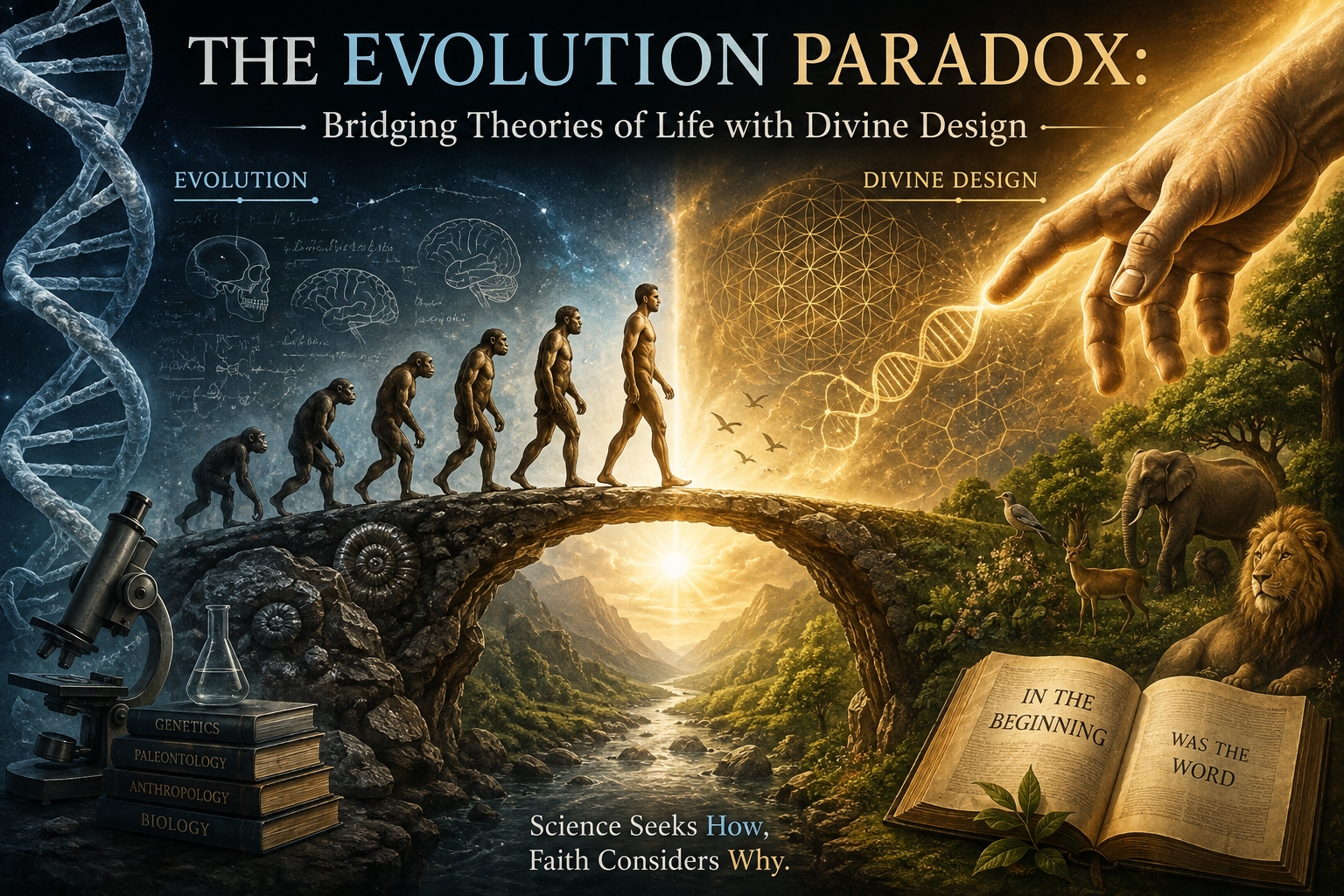
    # The Evolution Paradox: Bridging Theories of Life with Divine Design

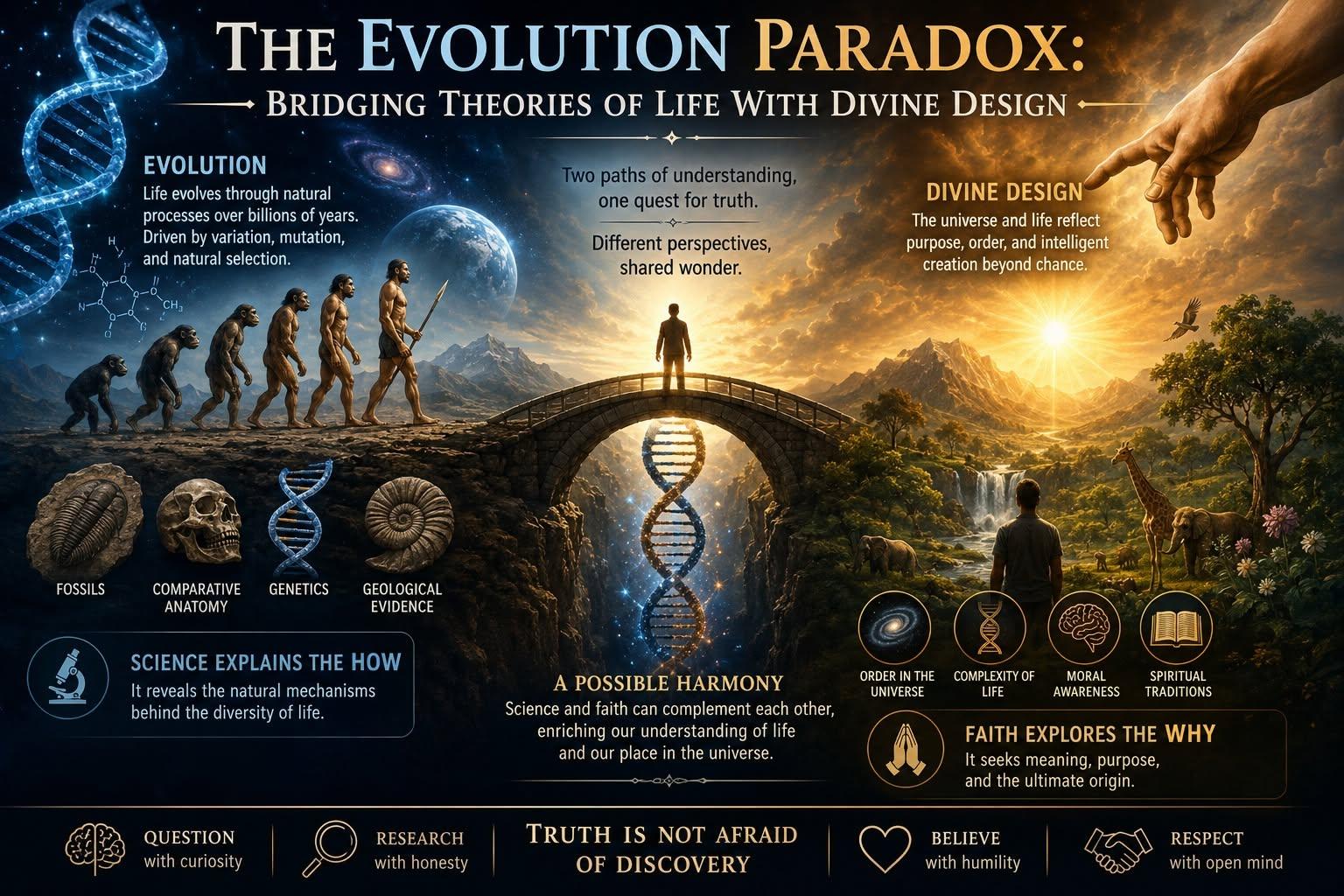
    The relationship between **evolution** and **divine design** has long been one of humanity's most fascinating and thought-provoking discussions. While evolutionary biology explains how living organisms have changed and diversified over billions of years through natural processes such as mutation, natural selection, and genetic variation, many religious traditions view life as the result of a purposeful and intelligent Creator. Rather than seeing these perspectives as necessarily incompatible, many scholars, scientists, and people of faith explore ways they can coexist.

    Evolution provides a scientific framework for understanding the development of life based on observable evidence from fossils, genetics, comparative anatomy, and ecology. It seeks to explain *how* biological diversity emerged and continues to change over time. Divine design, on the other hand, addresses questions of *purpose*, *meaning*, and *ultimate origin*—questions that science alone is not designed to answer.

    The "evolution paradox" arises because these perspectives often focus on different kinds of questions. Science investigates natural mechanisms through observation, experimentation, and evidence, while faith explores spiritual beliefs, morality, and humanity's relationship with the Creator. Many individuals embrace both scientific discoveries and religious faith, believing that natural laws themselves may reflect an intentional design behind the universe.

    Modern genetics has revealed remarkable complexity within DNA, strengthening our understanding of evolution while also inspiring philosophical and theological reflection about the origin of life and the fine-tuned nature of the universe. These discoveries encourage respectful dialogue between science and religion rather than unnecessary conflict.

    Ultimately, exploring the relationship between evolution and divine design reminds us that curiosity, critical thinking, and respectful discussion are essential in the pursuit of knowledge. Whether one approaches life's origins through scientific inquiry, religious belief, or a combination of both, the search for truth continues to inspire wonder, humility, and a deeper appreciation for the complexity and beauty of existence.

    **#Evolution #DivineDesign #Science #Faith #Biology #Genetics #OriginOfLife #CriticalThinking #Education #Philosophy #Theology #ScientificDiscovery #Knowledge #Learning #Wonder**

    Rehan School Islamabad Campus
    Asma Shaheen EducationWali
    Irum Asim
    Saima Happinesswali
    #rsisb Roll No.240 Story No.20 Foundation Level # 🌍🧬 The Evolution Paradox: Bridging Theories of Life with Divine Design The relationship between **evolution** and **divine design** has long been one of humanity's most fascinating and thought-provoking discussions. While evolutionary biology explains how living organisms have changed and diversified over billions of years through natural processes such as mutation, natural selection, and genetic variation, many religious traditions view life as the result of a purposeful and intelligent Creator. Rather than seeing these perspectives as necessarily incompatible, many scholars, scientists, and people of faith explore ways they can coexist. Evolution provides a scientific framework for understanding the development of life based on observable evidence from fossils, genetics, comparative anatomy, and ecology. It seeks to explain *how* biological diversity emerged and continues to change over time. Divine design, on the other hand, addresses questions of *purpose*, *meaning*, and *ultimate origin*—questions that science alone is not designed to answer. The "evolution paradox" arises because these perspectives often focus on different kinds of questions. Science investigates natural mechanisms through observation, experimentation, and evidence, while faith explores spiritual beliefs, morality, and humanity's relationship with the Creator. Many individuals embrace both scientific discoveries and religious faith, believing that natural laws themselves may reflect an intentional design behind the universe. Modern genetics has revealed remarkable complexity within DNA, strengthening our understanding of evolution while also inspiring philosophical and theological reflection about the origin of life and the fine-tuned nature of the universe. These discoveries encourage respectful dialogue between science and religion rather than unnecessary conflict. Ultimately, exploring the relationship between evolution and divine design reminds us that curiosity, critical thinking, and respectful discussion are essential in the pursuit of knowledge. Whether one approaches life's origins through scientific inquiry, religious belief, or a combination of both, the search for truth continues to inspire wonder, humility, and a deeper appreciation for the complexity and beauty of existence. **#Evolution #DivineDesign #Science #Faith #Biology #Genetics #OriginOfLife #CriticalThinking #Education #Philosophy #Theology #ScientificDiscovery #Knowledge #Learning #Wonder** 🌍🧬📖✨ Rehan School Islamabad Campus Asma Shaheen EducationWali Irum Asim Saima Happinesswali
    0 تبصرے 0 شیئرز 419 ویوز
  • #rsisb
    Roll no.239
    Foundation Level

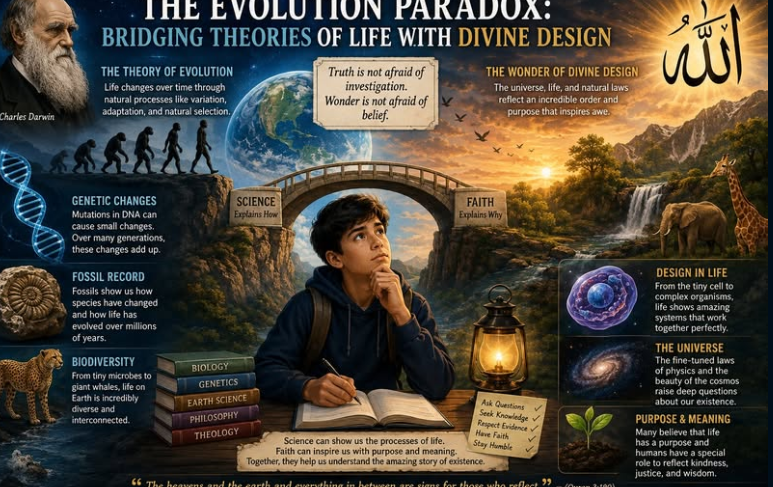
    **“The Evolution Paradox: Bridging Theories of Life with Divine Design”** explores one of the most fascinating questions about life: how can scientific explanations of evolution be understood alongside beliefs about divine creation?

    Evolution explains the diversity of life through processes such as **genetic variation, natural selection, mutation, and adaptation** over long periods of time. It provides a scientific framework for understanding how populations change and how different species have developed throughout Earth's history.

    Divine design, on the other hand, is a theological and philosophical idea that life and the universe have purpose or ultimately originate from a divine source. Different religious traditions interpret creation and humanity's place in the universe in different ways.

    The apparent “paradox” arises when people view scientific explanations and religious beliefs as necessarily competing explanations. However, some people see them as addressing different kinds of questions. Science primarily investigates **how natural processes occur**, while theology and philosophy may explore questions about **meaning, purpose, and ultimate origins**.

    The relationship between evolution and divine belief remains a subject of thoughtful discussion among scientists, philosophers, and religious thinkers. Some religious traditions accept evolutionary science, while others interpret creation in different ways.

    Ultimately, the topic encourages us to think deeply about **science, faith, human origins, and our understanding of life**. It shows that asking questions and examining different perspectives can help us develop a richer understanding of the world around us.
    #rsisb Roll no.239 Foundation Level **“The Evolution Paradox: Bridging Theories of Life with Divine Design”** explores one of the most fascinating questions about life: how can scientific explanations of evolution be understood alongside beliefs about divine creation? Evolution explains the diversity of life through processes such as **genetic variation, natural selection, mutation, and adaptation** over long periods of time. It provides a scientific framework for understanding how populations change and how different species have developed throughout Earth's history. Divine design, on the other hand, is a theological and philosophical idea that life and the universe have purpose or ultimately originate from a divine source. Different religious traditions interpret creation and humanity's place in the universe in different ways. The apparent “paradox” arises when people view scientific explanations and religious beliefs as necessarily competing explanations. However, some people see them as addressing different kinds of questions. Science primarily investigates **how natural processes occur**, while theology and philosophy may explore questions about **meaning, purpose, and ultimate origins**. The relationship between evolution and divine belief remains a subject of thoughtful discussion among scientists, philosophers, and religious thinkers. Some religious traditions accept evolutionary science, while others interpret creation in different ways. Ultimately, the topic encourages us to think deeply about **science, faith, human origins, and our understanding of life**. It shows that asking questions and examining different perspectives can help us develop a richer understanding of the world around us.
    0 تبصرے 0 شیئرز 197 ویوز
  • In Islamic theology, there are indeed concepts related to pre-existence and the afterlife that touch upon the idea of souls having connections before they are born into this world. These concepts are primarily derived from Islamic teachings about the realms of existence, known as **Alam al-Arwah** (the world of souls) and **Barzakh** (the intermediary state).

    ### Alam al-Arwah (The World of Souls)

    1. **Pre-Existence of Souls**:
    - According to Islamic belief, all souls were created by Allah before they were given physical bodies. This realm is referred to as Alam al-Arwah.
    - There is a hadith (saying of the Prophet Muhammad) that supports the idea of souls having pre-existing relationships:
    - **Hadith**: "Souls are like conscripted soldiers; those whom they recognized, they get along with, and those whom they do not recognize, they will not get along with." (Sahih Muslim, Book 45, Hadith 159).
    - This hadith suggests that the souls had familiarity and relationships with each other before being sent into the physical world.

    ### Barzakh (The Intermediary State)

    2. **Concept of Barzakh**:
    - Barzakh is an intermediate state where souls reside after death and before the Day of Judgment. It is a barrier between the physical world and the afterlife.
    - While the primary function of Barzakh is related to the afterlife, some interpretations and cultural beliefs extend the idea of pre-existing soul relationships into this realm as well.

    ### Relevant References

    1. **Quran**:
    - The Quran mentions the creation of souls and the testimony they gave to Allah before their physical creation: "And [mention] when your Lord took from the children of Adam - from their loins - their descendants and made them testify of themselves, [saying to them], Am I not your Lord? They said, Yes, we have testified." (Quran 7:172). This verse implies a primordial covenant and awareness among souls.

    2. **Hadith**:
    - The aforementioned hadith from Sahih Muslim is often cited in discussions about the pre-existing relationships between souls.

    ### Understanding in Islamic Tradition

    - **Sufism and Mystical Interpretations**:
    - Sufi traditions, which often explore deeper spiritual and mystical aspects of Islam, frequently discuss the pre-existence of souls and their interactions. The concept of divine love and spiritual connections before earthly life is a common theme in Sufi poetry and thought.

    - **Scholarly Interpretations**:
    - Islamic scholars have varied interpretations of these concepts. Some emphasize the metaphorical understanding of pre-existing relationships to explain the ease or difficulty of human interactions in this world.

    In summary, while mainstream Islamic theology focuses more on the accountability and journey of the soul, there are traditions and teachings within Islam that acknowledge pre-existing relationships among souls before their earthly existence. These concepts are primarily supported by hadith and interpretations of Quranic verses.
    In Islamic theology, there are indeed concepts related to pre-existence and the afterlife that touch upon the idea of souls having connections before they are born into this world. These concepts are primarily derived from Islamic teachings about the realms of existence, known as **Alam al-Arwah** (the world of souls) and **Barzakh** (the intermediary state). ### Alam al-Arwah (The World of Souls) 1. **Pre-Existence of Souls**: - According to Islamic belief, all souls were created by Allah before they were given physical bodies. This realm is referred to as Alam al-Arwah. - There is a hadith (saying of the Prophet Muhammad) that supports the idea of souls having pre-existing relationships: - **Hadith**: "Souls are like conscripted soldiers; those whom they recognized, they get along with, and those whom they do not recognize, they will not get along with." (Sahih Muslim, Book 45, Hadith 159). - This hadith suggests that the souls had familiarity and relationships with each other before being sent into the physical world. ### Barzakh (The Intermediary State) 2. **Concept of Barzakh**: - Barzakh is an intermediate state where souls reside after death and before the Day of Judgment. It is a barrier between the physical world and the afterlife. - While the primary function of Barzakh is related to the afterlife, some interpretations and cultural beliefs extend the idea of pre-existing soul relationships into this realm as well. ### Relevant References 1. **Quran**: - The Quran mentions the creation of souls and the testimony they gave to Allah before their physical creation: "And [mention] when your Lord took from the children of Adam - from their loins - their descendants and made them testify of themselves, [saying to them], 'Am I not your Lord?' They said, 'Yes, we have testified.'" (Quran 7:172). This verse implies a primordial covenant and awareness among souls. 2. **Hadith**: - The aforementioned hadith from Sahih Muslim is often cited in discussions about the pre-existing relationships between souls. ### Understanding in Islamic Tradition - **Sufism and Mystical Interpretations**: - Sufi traditions, which often explore deeper spiritual and mystical aspects of Islam, frequently discuss the pre-existence of souls and their interactions. The concept of divine love and spiritual connections before earthly life is a common theme in Sufi poetry and thought. - **Scholarly Interpretations**: - Islamic scholars have varied interpretations of these concepts. Some emphasize the metaphorical understanding of pre-existing relationships to explain the ease or difficulty of human interactions in this world. In summary, while mainstream Islamic theology focuses more on the accountability and journey of the soul, there are traditions and teachings within Islam that acknowledge pre-existing relationships among souls before their earthly existence. These concepts are primarily supported by hadith and interpretations of Quranic verses.
    0 تبصرے 0 شیئرز 566 ویوز
  • ### **Title: The Deliverance from Error**

    **Characters:**
    - **Narrator**: A wise voice that guides the audience through the story.
    - **Imam Ghazali**: A revered scholar facing a profound spiritual crisis.
    - **Ali**: A young student and follower of Imam Ghazali.
    - **Philosopher**: A symbol of rational thought and skepticism.
    - **Theologian**: A symbol of traditional Islamic orthodoxy.
    - **Sufi Mystic**: A symbol of spiritual and mystical experience.
    - **Imam Juwayni**: Imam Ghazalis former teacher, a figure from his past.
    - **Doubt**: A personified figure representing Ghazalis inner turmoil.

    **Act 1: The Crisis**

    *(The stage is set in Imam Ghazalis study. The room is filled with books, but the atmosphere is heavy with tension. Imam Ghazali is seated at his desk, his face troubled. Doubt, a shadowy figure, looms in the background.)*

    **Narrator:**
    In the heart of the Islamic world, a great scholar, Imam Ghazali, found himself in the grip of a profound spiritual crisis. Despite his vast knowledge and revered position, he was haunted by a question that threatened to unravel his very being: What is truth, and how can it be known?

    **Doubt:**
    (Whispering, circling around Ghazali)
    Are you sure, Ghazali? Can you trust what you know? Perhaps it’s all an illusion...

    **Imam Ghazali:**
    (Troubled)
    I have studied the works of the philosophers, the theologians, and the mystics. I have mastered the teachings of Islam. Yet, I am plagued by uncertainty. How can I be sure that what I know is true?

    **Narrator:**
    Imam Ghazali’s crisis of doubt was so intense that it affected his health and his ability to teach. His heart yearned for certainty, but his mind was clouded with questions.

    *(Ali, his devoted student, enters the study.)*

    **Ali:**
    (Concerned)
    Master, you have not been yourself. You speak less, you eat little, and you teach no more. What has brought you to this state?

    **Imam Ghazali:**
    (Looking at Ali with weary eyes)
    Ali, I am lost in a sea of doubt. I seek the truth, but I fear I cannot find it in the ways I once believed.

    **Ali:**
    (Eager to help)
    But you have always been a beacon of knowledge and faith, master. Surely, you can find the answers you seek.

    **Imam Ghazali:**
    (Sighing)
    Knowledge without certainty is like a shadow without substance. I must seek the truth, even if it means abandoning all that I have known.

    **Narrator:**
    And so, Imam Ghazali embarked on a journey, not through the lands of men, but through the landscapes of his soul, seeking the deliverance from error that he so desperately needed.

    **Act 2: The Philosophers**

    *(The stage shifts to a dimly lit room filled with scrolls and manuscripts. The Philosopher, a stern figure, stands at a lectern, expounding on the nature of reason and knowledge.)*

    **Narrator:**
    First, Imam Ghazali turned to the philosophers, the masters of logic and reason, hoping they could offer him the certainty he sought.

    **Philosopher:**
    (Speaking confidently)
    Reason is the key to all knowledge. Through logic and rational inquiry, one can uncover the truths of existence. Trust in the power of your intellect, Ghazali, and all will be clear.

    **Imam Ghazali:**
    (Hesitant)
    Your words are compelling, but reason alone cannot answer the deepest questions of the soul. It cannot touch the heart’s longing for certainty in matters of faith and the divine.

    **Philosopher:**
    (Dismissive)
    Faith is but a crutch for the weak-minded. True knowledge is found in the clarity of reason, free from the clouds of superstition.

    **Imam Ghazali:**
    (Reflective)
    Yet, reason itself is limited. It cannot comprehend the infinite, nor can it provide the certainty I seek in the divine mysteries.

    **Narrator:**
    Imam Ghazali realized that the path of the philosophers, though enlightening, could not satisfy his need for absolute certainty. Reason alone was not enough.

    **Act 3: The Theologians**

    *(The stage shifts to a grand mosque, where the Theologian, a figure draped in traditional robes, is delivering a sermon. The air is filled with the sound of prayer and reverence.)*

    **Narrator:**
    Next, Imam Ghazali turned to the theologians, the defenders of orthodox Islam, seeking the security of established faith.

    **Theologian:**
    (Preaching with authority)
    The Qur’an and the teachings of the Prophet are the ultimate sources of truth. Hold fast to the traditions, and you will find certainty in the revealed word of God.

    **Imam Ghazali:**
    (Listening intently)
    I have studied the Qur’an and the Hadiths, and I know the laws of Islam. But mere repetition of doctrine does not quell my doubts. I seek a deeper certainty, one that resonates within the soul.

    **Theologian:**
    (Firmly)
    Faith is not subject to doubt, Ghazali. You must trust in the revelations and the wisdom of the scholars who came before us.

    **Imam Ghazali:**
    (Quietly)
    But blind faith is not the same as certainty. I need to feel the truth within, to know it as I know my own existence.

    **Narrator:**
    The path of theology, though rooted in sacred tradition, could not provide the personal, experiential certainty that Imam Ghazali craved. He needed something more.

    **Act 4: The Sufi Mystics**

    *(The stage transforms into a serene, mystical setting—a lush garden bathed in soft light, with the Sufi Mystic sitting peacefully beneath a tree, surrounded by the sounds of nature.)*

    **Narrator:**
    Finally, Imam Ghazali sought out the Sufi mystics, those who pursued direct, experiential knowledge of God through the heart and soul.

    **Sufi Mystic:**
    (Speaking gently)
    The truth you seek, Ghazali, is not found in the mind alone. It is discovered in the heart, through the experience of divine love and the surrender of the self.

    **Imam Ghazali:**
    (Curiously)
    But how can I be sure that what I experience is real, and not just the delusions of the mind?

    **Sufi Mystic:**
    (Smiling)
    Certainty comes not from the intellect, but from the soul’s encounter with the divine. When you dissolve the ego and become one with God, there is no doubt—only truth.

    **Imam Ghazali:**
    (Tentatively)
    But how do I reach this state? How can I find this certainty?

    **Sufi Mystic:**
    (Calming)
    Through sincere devotion, remembrance of God, and the purification of the heart. Let go of your need for control, and trust in the journey. God is closer to you than your own breath.

    **Narrator:**
    Imam Ghazali realized that true certainty, the deliverance from error, was found not in the intellect or external knowledge, but in the direct, personal experience of the divine.

    **Act 5: The Return**

    *(The stage returns to Imam Ghazali’s study. He sits at his desk, a calm and serene expression on his face. Doubt is no longer present.)*

    **Narrator:**
    After years of searching, Imam Ghazali found his answer. The journey had taken him through the realms of philosophy, theology, and mysticism, but it was in the surrender to God’s will and the direct experience of the divine that he found true certainty.

    **Imam Ghazali:**
    (Speaking to Ali with newfound clarity)
    Ali, I have learned that the truth is not something that can be grasped by the mind alone. It must be felt in the heart and experienced in the soul. The deliverance from error comes through the union with the divine, where all doubts are dissolved.

    **Ali:**
    (Amazed)
    You have found what you were seeking, master?

    **Imam Ghazali:**
    (Nodding)
    Yes, Ali. I have found the alchemy of happiness, the transformation of the soul through the love and knowledge of God. This is the true deliverance from error.

    **Narrator:**
    And so, Imam Ghazali emerged from his crisis with a deeper understanding of the nature of truth and happiness. His journey became a beacon of hope for those who seek certainty in an uncertain world, reminding us that true knowledge is found not just in the mind, but in the heart.

    **(Curtains close as the audience is left to reflect on the journey of Imam Ghazali.)**

    ### **End of the Play**

    This drama brings to life the themes from Imam Ghazali’s autobiographical work "Al-Munqidh min al-Dalal" (The Deliverance from Error), illustrating his journey from doubt to spiritual certainty and the ultimate realization that true happiness and knowledge are found through the hearts connection to the divine.
    ### **Title: The Deliverance from Error** **Characters:** - **Narrator**: A wise voice that guides the audience through the story. - **Imam Ghazali**: A revered scholar facing a profound spiritual crisis. - **Ali**: A young student and follower of Imam Ghazali. - **Philosopher**: A symbol of rational thought and skepticism. - **Theologian**: A symbol of traditional Islamic orthodoxy. - **Sufi Mystic**: A symbol of spiritual and mystical experience. - **Imam Juwayni**: Imam Ghazali's former teacher, a figure from his past. - **Doubt**: A personified figure representing Ghazali's inner turmoil. **Act 1: The Crisis** *(The stage is set in Imam Ghazali's study. The room is filled with books, but the atmosphere is heavy with tension. Imam Ghazali is seated at his desk, his face troubled. Doubt, a shadowy figure, looms in the background.)* **Narrator:** In the heart of the Islamic world, a great scholar, Imam Ghazali, found himself in the grip of a profound spiritual crisis. Despite his vast knowledge and revered position, he was haunted by a question that threatened to unravel his very being: What is truth, and how can it be known? **Doubt:** (Whispering, circling around Ghazali) Are you sure, Ghazali? Can you trust what you know? Perhaps it’s all an illusion... **Imam Ghazali:** (Troubled) I have studied the works of the philosophers, the theologians, and the mystics. I have mastered the teachings of Islam. Yet, I am plagued by uncertainty. How can I be sure that what I know is true? **Narrator:** Imam Ghazali’s crisis of doubt was so intense that it affected his health and his ability to teach. His heart yearned for certainty, but his mind was clouded with questions. *(Ali, his devoted student, enters the study.)* **Ali:** (Concerned) Master, you have not been yourself. You speak less, you eat little, and you teach no more. What has brought you to this state? **Imam Ghazali:** (Looking at Ali with weary eyes) Ali, I am lost in a sea of doubt. I seek the truth, but I fear I cannot find it in the ways I once believed. **Ali:** (Eager to help) But you have always been a beacon of knowledge and faith, master. Surely, you can find the answers you seek. **Imam Ghazali:** (Sighing) Knowledge without certainty is like a shadow without substance. I must seek the truth, even if it means abandoning all that I have known. **Narrator:** And so, Imam Ghazali embarked on a journey, not through the lands of men, but through the landscapes of his soul, seeking the deliverance from error that he so desperately needed. **Act 2: The Philosophers** *(The stage shifts to a dimly lit room filled with scrolls and manuscripts. The Philosopher, a stern figure, stands at a lectern, expounding on the nature of reason and knowledge.)* **Narrator:** First, Imam Ghazali turned to the philosophers, the masters of logic and reason, hoping they could offer him the certainty he sought. **Philosopher:** (Speaking confidently) Reason is the key to all knowledge. Through logic and rational inquiry, one can uncover the truths of existence. Trust in the power of your intellect, Ghazali, and all will be clear. **Imam Ghazali:** (Hesitant) Your words are compelling, but reason alone cannot answer the deepest questions of the soul. It cannot touch the heart’s longing for certainty in matters of faith and the divine. **Philosopher:** (Dismissive) Faith is but a crutch for the weak-minded. True knowledge is found in the clarity of reason, free from the clouds of superstition. **Imam Ghazali:** (Reflective) Yet, reason itself is limited. It cannot comprehend the infinite, nor can it provide the certainty I seek in the divine mysteries. **Narrator:** Imam Ghazali realized that the path of the philosophers, though enlightening, could not satisfy his need for absolute certainty. Reason alone was not enough. **Act 3: The Theologians** *(The stage shifts to a grand mosque, where the Theologian, a figure draped in traditional robes, is delivering a sermon. The air is filled with the sound of prayer and reverence.)* **Narrator:** Next, Imam Ghazali turned to the theologians, the defenders of orthodox Islam, seeking the security of established faith. **Theologian:** (Preaching with authority) The Qur’an and the teachings of the Prophet are the ultimate sources of truth. Hold fast to the traditions, and you will find certainty in the revealed word of God. **Imam Ghazali:** (Listening intently) I have studied the Qur’an and the Hadiths, and I know the laws of Islam. But mere repetition of doctrine does not quell my doubts. I seek a deeper certainty, one that resonates within the soul. **Theologian:** (Firmly) Faith is not subject to doubt, Ghazali. You must trust in the revelations and the wisdom of the scholars who came before us. **Imam Ghazali:** (Quietly) But blind faith is not the same as certainty. I need to feel the truth within, to know it as I know my own existence. **Narrator:** The path of theology, though rooted in sacred tradition, could not provide the personal, experiential certainty that Imam Ghazali craved. He needed something more. **Act 4: The Sufi Mystics** *(The stage transforms into a serene, mystical setting—a lush garden bathed in soft light, with the Sufi Mystic sitting peacefully beneath a tree, surrounded by the sounds of nature.)* **Narrator:** Finally, Imam Ghazali sought out the Sufi mystics, those who pursued direct, experiential knowledge of God through the heart and soul. **Sufi Mystic:** (Speaking gently) The truth you seek, Ghazali, is not found in the mind alone. It is discovered in the heart, through the experience of divine love and the surrender of the self. **Imam Ghazali:** (Curiously) But how can I be sure that what I experience is real, and not just the delusions of the mind? **Sufi Mystic:** (Smiling) Certainty comes not from the intellect, but from the soul’s encounter with the divine. When you dissolve the ego and become one with God, there is no doubt—only truth. **Imam Ghazali:** (Tentatively) But how do I reach this state? How can I find this certainty? **Sufi Mystic:** (Calming) Through sincere devotion, remembrance of God, and the purification of the heart. Let go of your need for control, and trust in the journey. God is closer to you than your own breath. **Narrator:** Imam Ghazali realized that true certainty, the deliverance from error, was found not in the intellect or external knowledge, but in the direct, personal experience of the divine. **Act 5: The Return** *(The stage returns to Imam Ghazali’s study. He sits at his desk, a calm and serene expression on his face. Doubt is no longer present.)* **Narrator:** After years of searching, Imam Ghazali found his answer. The journey had taken him through the realms of philosophy, theology, and mysticism, but it was in the surrender to God’s will and the direct experience of the divine that he found true certainty. **Imam Ghazali:** (Speaking to Ali with newfound clarity) Ali, I have learned that the truth is not something that can be grasped by the mind alone. It must be felt in the heart and experienced in the soul. The deliverance from error comes through the union with the divine, where all doubts are dissolved. **Ali:** (Amazed) You have found what you were seeking, master? **Imam Ghazali:** (Nodding) Yes, Ali. I have found the alchemy of happiness, the transformation of the soul through the love and knowledge of God. This is the true deliverance from error. **Narrator:** And so, Imam Ghazali emerged from his crisis with a deeper understanding of the nature of truth and happiness. His journey became a beacon of hope for those who seek certainty in an uncertain world, reminding us that true knowledge is found not just in the mind, but in the heart. **(Curtains close as the audience is left to reflect on the journey of Imam Ghazali.)** ### **End of the Play** This drama brings to life the themes from Imam Ghazali’s autobiographical work "Al-Munqidh min al-Dalal" (The Deliverance from Error), illustrating his journey from doubt to spiritual certainty and the ultimate realization that true happiness and knowledge are found through the heart's connection to the divine.
    0 تبصرے 0 شیئرز 451 ویوز
  • The Story of the Word “University”

    Long before a university became a building of classrooms, libraries, and degrees, it was an idea—a powerful one.

    The word university comes from the Latin word universitas.

    But here is the surprise:
    Universitas did not originally mean a place of study.

    It meant “the whole,” “the entire body,” or “a community bound together.”


    The Birth of the Word

    In ancient Rome, universitas was used to describe any complete group:
    • A group of merchants
    • A guild of craftsmen
    • A body of people acting as one

    Its root, universus, means:
    • turned into one
    • everything taken together
    • the whole world

    From the very beginning, the word carried a deep message:

    True knowledge is not fragments. True knowledge is unity.


    Before the Word, the Idea Already Existed: Takshashila (Taxila)

    Long before Europe used the word universitas, the idea of a university already existed in South Asia.

    Around 700 BCE, in what is today Taxila (near modern-day Islamabad, Pakistan), stood one of the world’s earliest centers of higher learning:
    Takshashila University.

    It had:
    • No fixed classrooms
    • No degrees
    • No central administration

    Yet students came from across Asia—China, Central Asia, Persia, and India.

    What Was Taught at Takshashila?
    • Philosophy
    • Medicine (Ayurveda & surgery)
    • Mathematics
    • Astronomy
    • Politics and governance
    • Warfare and strategy
    • Ethics and law

    Students lived with teachers, debated openly, and studied multiple disciplines together.

    This perfectly matched what universitas would later mean:

    Knowledge as a complete system, not isolated subjects.

    Takshashila proves an important truth:

    Universities did not begin in buildings.
    They began wherever minds gathered to understand the whole of life.


    When Learning Met Universitas in Europe

    In the Middle Ages (11th–12th century), groups of teachers and students in Europe began forming learning communities.

    They called themselves:

    Universitas magistrorum et scholarium
    A community of teachers and learners

    The first European universities—Bologna, Paris, Oxford—were not campuses at first.

    They were:
    • Communities
    • Conversations
    • Shared pursuit of understanding

    Once again, university meant unity.


    A Forgotten Chapter: The University Founded by a Woman in North Africa

    One of the most powerful and least-told stories in the history of universities comes from North Africa.

    In 859 CE, in the city of Fez, Morocco, a woman named Fatima al-Fihri used her inheritance to establish a place of learning.

    This institution became:

    The University of al-Qarawiyyin
    — recognized by UNESCO as the oldest continuously operating university in the world

    What Makes This Extraordinary?
    • It was founded by a woman
    • Over 1,100 years ago
    • Long before many European universities
    • At a time when women are often wrongly assumed to be excluded from knowledge

    What Was Taught There?
    • Mathematics
    • Astronomy
    • Medicine
    • Philosophy
    • Grammar and languages
    • Theology and law

    Scholars from Europe, Africa, and the Middle East studied there.
    Even thinkers who later shaped Europe’s Renaissance were influenced by knowledge preserved and taught in places like al-Qarawiyyin.

    This university embodied the true meaning of universitas:
    • Knowledge without borders
    • Learning as a shared human inheritance


    What a University Was Meant to Be

    From Takshashila to al-Qarawiyyin, from Bologna to Oxford, the idea remained the same:

    A university was meant to:
    • Connect disciplines
    • Train the mind to see patterns
    • Teach wisdom, not just information

    It was not about specialization alone.

    It was about understanding how everything fits together.


    How the Meaning Drifted

    Over time, the word university slowly changed.

    It became:
    • A degree factory
    • A job pipeline
    • A system of exams

    The original meaning—unity of knowledge—was pushed aside.

    Today, many universities teach parts without the whole.

    But the word itself still remembers its origin.


    The Hidden Message Inside the Word

    Every time we say university, we are unknowingly saying:
    • Universe
    • Unity
    • Universal understanding

    A true university helps a human being understand:
    • Society and self
    • Science and ethics
    • Technology and responsibility


    The University of the Future

    If we return to the original meaning of the word, the university of the future would:
    • Teach connection, not confusion
    • Train thinkers, not just workers
    • Prepare humans to live consciously on Planet Earth, not just inside economies

    It would look less like a factory
    and more like Takshashila
    more like al-Qarawiyyin
    more like a living community of learning.


    Final Thought

    The story of the word university teaches us one simple lesson:

    When knowledge is divided, humanity weakens.
    When knowledge is united, civilizations rise.

    That was the original promise of the university.
    The Story of the Word “University” Long before a university became a building of classrooms, libraries, and degrees, it was an idea—a powerful one. The word university comes from the Latin word universitas. But here is the surprise: Universitas did not originally mean a place of study. It meant “the whole,” “the entire body,” or “a community bound together.” ⸻ The Birth of the Word In ancient Rome, universitas was used to describe any complete group: • A group of merchants • A guild of craftsmen • A body of people acting as one Its root, universus, means: • turned into one • everything taken together • the whole world From the very beginning, the word carried a deep message: True knowledge is not fragments. True knowledge is unity. ⸻ Before the Word, the Idea Already Existed: Takshashila (Taxila) Long before Europe used the word universitas, the idea of a university already existed in South Asia. Around 700 BCE, in what is today Taxila (near modern-day Islamabad, Pakistan), stood one of the world’s earliest centers of higher learning: Takshashila University. It had: • No fixed classrooms • No degrees • No central administration Yet students came from across Asia—China, Central Asia, Persia, and India. What Was Taught at Takshashila? • Philosophy • Medicine (Ayurveda & surgery) • Mathematics • Astronomy • Politics and governance • Warfare and strategy • Ethics and law Students lived with teachers, debated openly, and studied multiple disciplines together. This perfectly matched what universitas would later mean: Knowledge as a complete system, not isolated subjects. Takshashila proves an important truth: Universities did not begin in buildings. They began wherever minds gathered to understand the whole of life. ⸻ When Learning Met Universitas in Europe In the Middle Ages (11th–12th century), groups of teachers and students in Europe began forming learning communities. They called themselves: Universitas magistrorum et scholarium A community of teachers and learners The first European universities—Bologna, Paris, Oxford—were not campuses at first. They were: • Communities • Conversations • Shared pursuit of understanding Once again, university meant unity. ⸻ A Forgotten Chapter: The University Founded by a Woman in North Africa One of the most powerful and least-told stories in the history of universities comes from North Africa. In 859 CE, in the city of Fez, Morocco, a woman named Fatima al-Fihri used her inheritance to establish a place of learning. This institution became: The University of al-Qarawiyyin — recognized by UNESCO as the oldest continuously operating university in the world What Makes This Extraordinary? • It was founded by a woman • Over 1,100 years ago • Long before many European universities • At a time when women are often wrongly assumed to be excluded from knowledge What Was Taught There? • Mathematics • Astronomy • Medicine • Philosophy • Grammar and languages • Theology and law Scholars from Europe, Africa, and the Middle East studied there. Even thinkers who later shaped Europe’s Renaissance were influenced by knowledge preserved and taught in places like al-Qarawiyyin. This university embodied the true meaning of universitas: • Knowledge without borders • Learning as a shared human inheritance ⸻ What a University Was Meant to Be From Takshashila to al-Qarawiyyin, from Bologna to Oxford, the idea remained the same: A university was meant to: • Connect disciplines • Train the mind to see patterns • Teach wisdom, not just information It was not about specialization alone. It was about understanding how everything fits together. ⸻ How the Meaning Drifted Over time, the word university slowly changed. It became: • A degree factory • A job pipeline • A system of exams The original meaning—unity of knowledge—was pushed aside. Today, many universities teach parts without the whole. But the word itself still remembers its origin. ⸻ The Hidden Message Inside the Word Every time we say university, we are unknowingly saying: • Universe • Unity • Universal understanding A true university helps a human being understand: • Society and self • Science and ethics • Technology and responsibility ⸻ The University of the Future If we return to the original meaning of the word, the university of the future would: • Teach connection, not confusion • Train thinkers, not just workers • Prepare humans to live consciously on Planet Earth, not just inside economies It would look less like a factory and more like Takshashila more like al-Qarawiyyin more like a living community of learning. ⸻ Final Thought The story of the word university teaches us one simple lesson: When knowledge is divided, humanity weakens. When knowledge is united, civilizations rise. That was the original promise of the university.
    0 تبصرے 0 شیئرز 600 ویوز
  • Why is it important to learn to breathe? Explained by the founder of Breatheology and guru of breathing !

    The man who has a world record of holding his breath under water for over 20 mins
    Meet and connect with mr Stig Åvall Severinsen
    Why is it important to learn to breathe? Explained by the founder of Breatheology and guru of breathing ! The man who has a world record of holding his breath under water for over 20 mins Meet and connect with mr Stig Åvall Severinsen
    0 تبصرے 0 شیئرز 32 ویوز 0
  • Why is it important to learn to breathe? Explained by the founder of Breatheology and guru of breathing !

    The man who has a world record of holding his breath under water for over 20 mins
    Meet and connect with mr Stig Åvall Severinsen
    Why is it important to learn to breathe? Explained by the founder of Breatheology and guru of breathing ! The man who has a world record of holding his breath under water for over 20 mins Meet and connect with mr Stig Åvall Severinsen
    0 تبصرے 0 شیئرز 35 ویوز 0
  • Theology teacher and Non violence promoter Jim Crosby from #austin !

    do connect with him and interview him to learn !
    Theology teacher and Non violence promoter Jim Crosby from #austin ! do connect with him and interview him to learn !
    0 تبصرے 0 شیئرز 26 ویوز 0
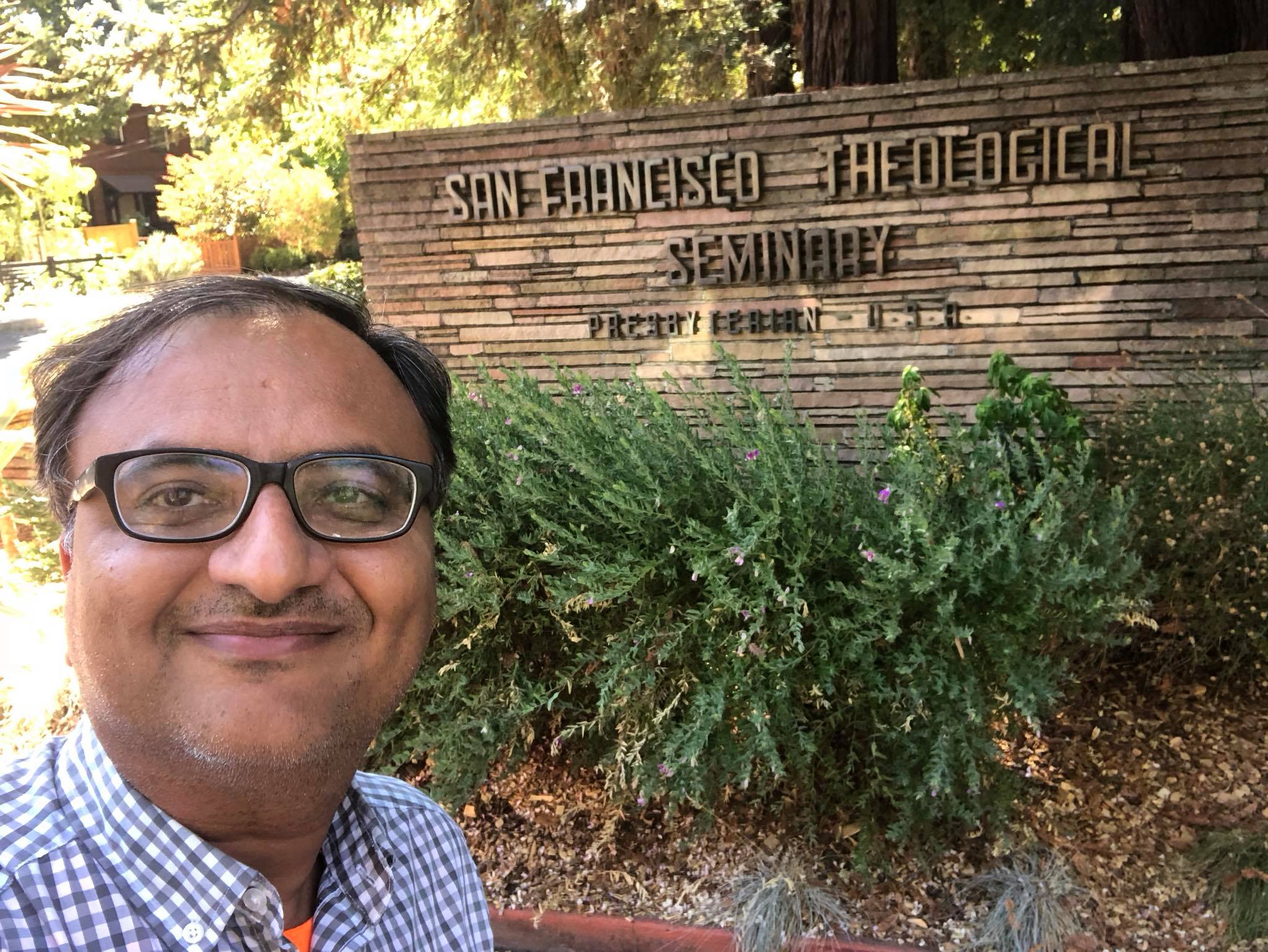
  • Are you a mufti or Aalim or have interest in Theology ! (study of religion)

    San Francisco Theological Seminary ! Come take admission here ! It’s a very very cool university which allows you Mufti’s, and Aalim’s to enroll

    Inbox them and apply online for scholarships !
    Are you a mufti or Aalim or have interest in Theology ! (study of religion) San Francisco Theological Seminary ! Come take admission here ! It’s a very very cool university which allows you Mufti’s, and Aalim’s to enroll Inbox them and apply online for scholarships !
    0 تبصرے 0 شیئرز 23 ویوز
  • Isa Ahsan / Jesse is in town ! Do connect and learn from this Proffesor of Theology !
    Isa Ahsan / Jesse is in town ! Do connect and learn from this Proffesor of Theology !
    0 تبصرے 0 شیئرز 17 ویوز
More Results