• #rsisb
    roll no 46
    call ani 8
    “Thank You” is one of the simplest and most meaningful phrases we use every day. But have you ever wondered where these two words came from and how they became a universal expression of gratitude?

    In this 5-minute journey, explore the fascinating history and etymology of “thank”, discover how the word evolved through the English language, and learn how people have expressed appreciation across different cultures and generations.

    From ancient expressions of appreciation to the modern-day “Thank You,” this topic shows how language, kindness, respect, and gratitude are connected. A small phrase can have a big impact—it can make someone feel valued, strengthen relationships, and spread positivity.

    Watch, learn, and discover the story behind one of the most powerful phrases in everyday language!

    Hashtags

    #ThankYou #Etymology #Gratitude #HistoryOfWords #Language #EnglishLanguage #WordOrigins #Thankfulness #Appreciation #Kindness #PositiveWords #Communication #LearnEnglish #InterestingFacts #Education #RehanSchool

    Emojis

    #rsisb roll no 46 call ani 8 “Thank You” is one of the simplest and most meaningful phrases we use every day. 🌍💛 But have you ever wondered where these two words came from and how they became a universal expression of gratitude? 🤔 In this 5-minute journey, explore the fascinating history and etymology of “thank”, discover how the word evolved through the English language, and learn how people have expressed appreciation across different cultures and generations. 📚🗣️🌎 From ancient expressions of appreciation to the modern-day “Thank You,” this topic shows how language, kindness, respect, and gratitude are connected. ❤️🙏 A small phrase can have a big impact—it can make someone feel valued, strengthen relationships, and spread positivity. 😊✨ 🎯 Watch, learn, and discover the story behind one of the most powerful phrases in everyday language! 🌟 🏷️ Hashtags #ThankYou #Etymology #Gratitude #HistoryOfWords #Language #EnglishLanguage #WordOrigins #Thankfulness #Appreciation #Kindness #PositiveWords #Communication #LearnEnglish #InterestingFacts #Education #RehanSchool 😊 Emojis 🙏 ❤️ 🌟 📚 🔍 💭 🌍 🗣️ 😊 💛 ✨ 🌱 🎓 📖 🤝 💫
    0 Yorumlar 0 hisse senetleri 1106 Views 9
  • #rsisb
    Roll No.240
    Story No.25
    Foundation Level

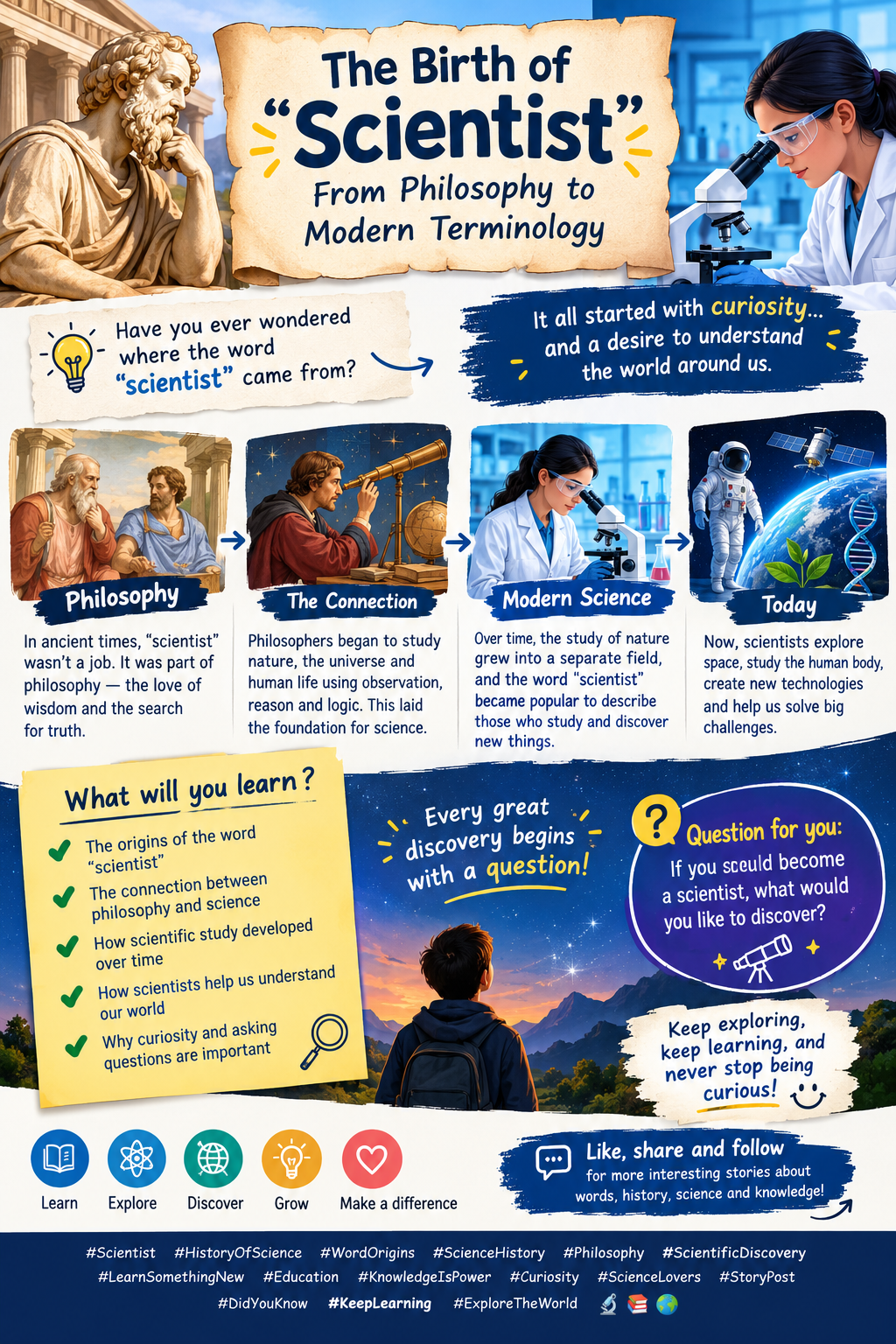
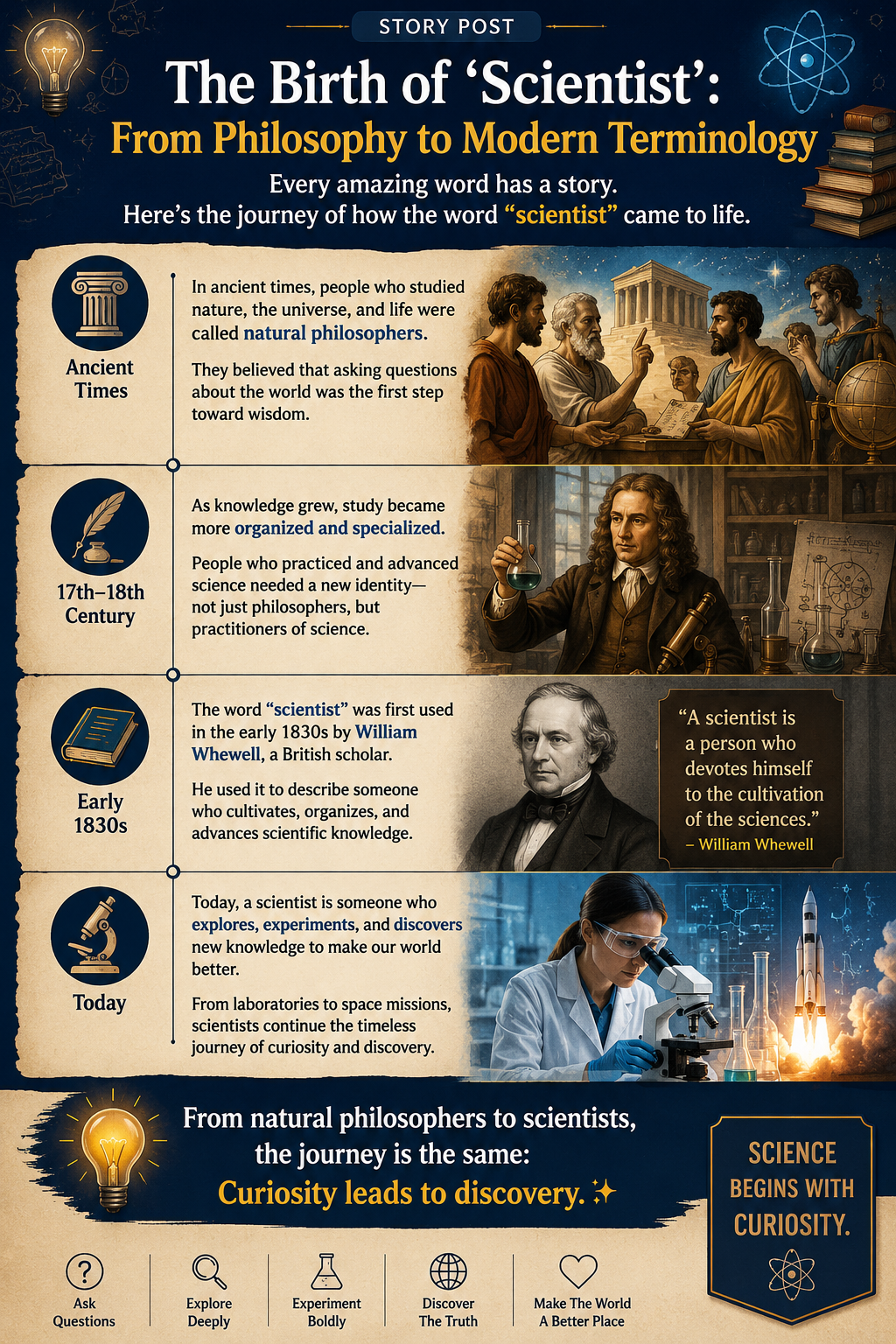
    “Scientist” is a word that represents curiosity, discovery, and the human desire to understand the world.

    Long before the modern term existed, people who studied nature were often called natural philosophers. Over time, scientific thinking became more specialized, and a new word was needed to describe those who practiced science professionally.

    This story explores how the word “scientist” was born, how its meaning evolved, and how it became a familiar part of modern language.

    From asking questions to discovering answers — the journey of science begins with curiosity.

    #Scientist #ScienceHistory #WordOrigins #HistoryOfScience #Philosophy #LanguageEvolution #Curiosity #Discovery #Knowledge #Learning #StoryPost

    Rehan School Islamabad Campus
    Asma Shaheen Eduction Wali
    Irum Asim
    Saima Happines Wali

    #rsisb Roll No.240 Story No.25 Foundation Level 🔬 “Scientist” is a word that represents curiosity, discovery, and the human desire to understand the world. 🌍✨ Long before the modern term existed, people who studied nature were often called natural philosophers. Over time, scientific thinking became more specialized, and a new word was needed to describe those who practiced science professionally. 📖 This story explores how the word “scientist” was born, how its meaning evolved, and how it became a familiar part of modern language. 💡 From asking questions to discovering answers — the journey of science begins with curiosity. #Scientist #ScienceHistory #WordOrigins #HistoryOfScience #Philosophy #LanguageEvolution #Curiosity #Discovery #Knowledge #Learning #StoryPost 🔬🌍📚✨ Rehan School Islamabad Campus Asma Shaheen Eduction Wali Irum Asim Saima Happines Wali
    0 Yorumlar 0 hisse senetleri 1200 Views
  • #rsisb
    Roll no.247
    Foundation level

    # **“Alright” – How This Simple Affirmation Came to Be **

    The word **“Alright”** may seem like one of the simplest words in everyday conversation, but behind this small expression lies a fascinating story of language, communication, reassurance, and human connection. We often say “alright” without thinking about it—when we agree with someone, accept a situation, reassure a friend, or simply indicate that everything is okay. But how did this ordinary word become such an important part of our daily communication?

    In this 10-minute exploration, **“Alright” – How This Simple Affirmation Came to Be**, we take a closer look at the meaning and development of this familiar expression. The word combines the idea of being “all” or completely in a particular condition with “right,” suggesting that things are satisfactory, acceptable, or in order. Over time, its use became increasingly common in spoken and written English.

    One of the most interesting things about “alright” is its versatility. It can communicate agreement: *“Alright, let’s begin.”* It can offer reassurance: *“Are you alright?”* It can show acceptance: *“Alright, I understand.”* It can even express a decision to move forward: *“Alright, let’s try again.”* In just one word, we can communicate different emotions and intentions depending on our tone and the situation.

    The story of “alright” also shows us that languages are constantly changing. Words and expressions develop as people use them in new ways. Some forms become accepted in informal conversation before becoming more widely recognized in writing. “Alright” is a great example of how everyday speech can influence the evolution of language.

    Another fascinating aspect is the difference between **“all right”** and **“alright.”** Both forms are widely encountered, but their usage and acceptance have been debated by writers, editors, and language experts. “All right” has traditionally been preferred in formal writing, while “alright” is extremely common in informal communication and has become increasingly familiar in modern English. This difference reminds us that language is not always fixed—it grows and changes with society.

    The word also has an important social function. When someone asks, **“Are you alright?”**, they may not simply be asking about a situation. They could be showing concern, kindness, or friendship. A simple word can therefore become a bridge between people.

    “Alright” can also represent optimism and resilience. Sometimes life does not go exactly as planned, yet saying “alright” can mean that we are ready to continue. It can carry the feeling of **acceptance, patience, and hope**. Even when something is difficult, saying “alright, let’s keep going” can help create a positive attitude.

    This topic encourages us to think about how much meaning can exist inside ordinary words. Words that we use every day can have histories that stretch across generations. Studying them helps us understand not only language, but also the people and cultures that shaped it.

    So the next time you hear or say **“Alright,”** take a moment to notice what it means in that particular situation. Is it agreement? Is it reassurance? Is it acceptance? Is it encouragement to move forward? The answer may depend entirely on the context and the speaker’s tone.

    Ultimately, **“Alright”** is more than just a simple affirmation. It is a small example of the incredible flexibility of human language. It demonstrates how words evolve, how meanings change, and how everyday expressions can connect people.

    **Let’s celebrate the fascinating stories hidden inside ordinary words!** Every simple expression has a journey, and sometimes the smallest words can tell us the biggest stories.

    #Alright #LanguageHistory #EnglishLanguage #WordOrigins #Linguistics #LanguageLearning #EnglishWords #WordsMatter #Communication #EverydayLanguage #Affirmation #LanguageEvolution #WordHistory #LearnEnglish #EnglishLearning #Vocabulary #InterestingFacts #LanguageAndCulture #CommunicationSkills #EducationalContent #DidYouKnow #LearningIsFun #HistoryOfLanguage #WordsAndMeaning #ExploreLanguage
    #rsisb Roll no.247 Foundation level # **“Alright” – How This Simple Affirmation Came to Be 🌟** The word **“Alright”** may seem like one of the simplest words in everyday conversation, but behind this small expression lies a fascinating story of language, communication, reassurance, and human connection. 😊💬 We often say “alright” without thinking about it—when we agree with someone, accept a situation, reassure a friend, or simply indicate that everything is okay. But how did this ordinary word become such an important part of our daily communication? 🤔✨ In this 10-minute exploration, **“Alright” – How This Simple Affirmation Came to Be**, we take a closer look at the meaning and development of this familiar expression. 📚🌍 The word combines the idea of being “all” or completely in a particular condition with “right,” suggesting that things are satisfactory, acceptable, or in order. Over time, its use became increasingly common in spoken and written English. One of the most interesting things about “alright” is its versatility. 🌈 It can communicate agreement: *“Alright, let’s begin.”* It can offer reassurance: *“Are you alright?”* It can show acceptance: *“Alright, I understand.”* It can even express a decision to move forward: *“Alright, let’s try again.”* In just one word, we can communicate different emotions and intentions depending on our tone and the situation. 🗣️💡 The story of “alright” also shows us that languages are constantly changing. 🔄📖 Words and expressions develop as people use them in new ways. Some forms become accepted in informal conversation before becoming more widely recognized in writing. “Alright” is a great example of how everyday speech can influence the evolution of language. Another fascinating aspect is the difference between **“all right”** and **“alright.”** ✍️ Both forms are widely encountered, but their usage and acceptance have been debated by writers, editors, and language experts. “All right” has traditionally been preferred in formal writing, while “alright” is extremely common in informal communication and has become increasingly familiar in modern English. This difference reminds us that language is not always fixed—it grows and changes with society. 🌱📚 The word also has an important social function. ❤️ When someone asks, **“Are you alright?”**, they may not simply be asking about a situation. They could be showing concern, kindness, or friendship. A simple word can therefore become a bridge between people. 🤝😊 “Alright” can also represent optimism and resilience. 🌟 Sometimes life does not go exactly as planned, yet saying “alright” can mean that we are ready to continue. It can carry the feeling of **acceptance, patience, and hope**. Even when something is difficult, saying “alright, let’s keep going” can help create a positive attitude. 💪🌅 This topic encourages us to think about how much meaning can exist inside ordinary words. Words that we use every day can have histories that stretch across generations. 🕰️📖 Studying them helps us understand not only language, but also the people and cultures that shaped it. So the next time you hear or say **“Alright,”** take a moment to notice what it means in that particular situation. Is it agreement? 👍 Is it reassurance? 💙 Is it acceptance? 🌿 Is it encouragement to move forward? 🚀 The answer may depend entirely on the context and the speaker’s tone. Ultimately, **“Alright”** is more than just a simple affirmation. It is a small example of the incredible flexibility of human language. 🌍🗣️ It demonstrates how words evolve, how meanings change, and how everyday expressions can connect people. ✨ **Let’s celebrate the fascinating stories hidden inside ordinary words!** Every simple expression has a journey, and sometimes the smallest words can tell us the biggest stories. 📚💫 #Alright #LanguageHistory #EnglishLanguage #WordOrigins #Linguistics #LanguageLearning #EnglishWords #WordsMatter #Communication #EverydayLanguage #Affirmation #LanguageEvolution #WordHistory #LearnEnglish #EnglishLearning #Vocabulary #InterestingFacts #LanguageAndCulture #CommunicationSkills #EducationalContent #DidYouKnow #LearningIsFun #HistoryOfLanguage #WordsAndMeaning #ExploreLanguage 📚🌍✨🗣️💡❤️

    0 Yorumlar 0 hisse senetleri 4686 Views 8
  • #rsisb
    Roll No.221
    Call Annei No.06
    Foundation Level


    “Hurry Up!” – The Tale of a Time-Sensitive Phrase

    Assalamu Alaikum everyone! Welcome back to my channel!

    In today's interesting conversation, I talk with Annie from CallAnnie about one of the most common phrases we use in everyday English — “Hurry Up!”

    Have you ever wondered where this phrase came from? Why do people use it when they are in a rush? And how has its meaning and usage changed over time?

    In this interview, we explore the origin, history, meaning, everyday usage, cultural differences, and modern importance of the phrase “Hurry Up.” We also discuss how our relationship with time has changed and whether constantly rushing is actually good for us.

    Watch the full interview and discover the fascinating story behind this simple but powerful expression!

    Question for you: How often do you say “Hurry Up” in your daily life? Let me know in the comments!

    Like | Comment | Share | Subscribe

    #HurryUp #EnglishLearning #LearnEnglish #EnglishLanguage #CallAnnie #AnnieAI #EnglishConversation #WordOrigins #EnglishExpressions #LanguageLearning #EducationalContent #AIInterview #TimeManagement #Communication #SalmanWazir
    https://www.youtube.com/?utm_source=chatgpt.com
    @followers
    Asma Shaheen EducationWali
    Irum Asim
    Saima Happinesswali
    #rsisb Roll No.221 Call Annei No.06 Foundation Level ⏰💨 “Hurry Up!” – The Tale of a Time-Sensitive Phrase Assalamu Alaikum everyone! 👋 Welcome back to my channel! In today's interesting conversation, I talk with Annie from CallAnnie about one of the most common phrases we use in everyday English — “Hurry Up!” Have you ever wondered where this phrase came from? 🤔 Why do people use it when they are in a rush? And how has its meaning and usage changed over time? In this interview, we explore the origin, history, meaning, everyday usage, cultural differences, and modern importance of the phrase “Hurry Up.” We also discuss how our relationship with time has changed and whether constantly rushing is actually good for us. 🌍⏳ 🎙️ Watch the full interview and discover the fascinating story behind this simple but powerful expression! 💬 Question for you: How often do you say “Hurry Up” in your daily life? Let me know in the comments! 👍 Like | 💬 Comment | 🔄 Share | 🔔 Subscribe #HurryUp #EnglishLearning #LearnEnglish #EnglishLanguage #CallAnnie #AnnieAI #EnglishConversation #WordOrigins #EnglishExpressions #LanguageLearning #EducationalContent #AIInterview #TimeManagement #Communication #SalmanWazir https://www.youtube.com/?utm_source=chatgpt.com @followers Asma Shaheen EducationWali Irum Asim Saima Happinesswali
    0 Yorumlar 0 hisse senetleri 2725 Views 8
  • #rsisb
    Roll No.221
    Call Annei No.05
    Foundation Level


    **“Bye-Bye” – Where Did Our Goodbye Come From?**

    **Assalamu Alaikum everyone!** Welcome back to my channel!

    In today’s interesting conversation, I talk with **Annie from CallAnnie** about one of the most common words we use every day — **“Bye” and “Bye-Bye.”**

    Have you ever wondered where the word **“bye”** came from? Why do we say “bye-bye”? And how did this simple word become a popular way to say goodbye around the world?

    In this interview, we explore the **origin, history, meaning, and everyday use** of “bye” and “goodbye.”

    Watch the full conversation and discover the fascinating story behind a word we use almost every day!

    **Do you say “Bye,” “Bye-Bye,” or “Goodbye”? Let us know in the comments!**

    Like | Comment | Share | Subscribe

    #ByeBye #Goodbye #EnglishLearning #LearnEnglish #EnglishLanguage #CallAnnie #AnnieAI #EnglishConversation #WordOrigins #LanguageLearning #EnglishExpressions #EducationalContent #Interview #SalmanWazir
    Asma Shaheen EducationWali
    Saima Happinesswali
    Irum Asim
    @followers
    #rsisb Roll No.221 Call Annei No.05 Foundation Level 👋 **“Bye-Bye” – Where Did Our Goodbye Come From?** 🌍✨ **Assalamu Alaikum everyone!** Welcome back to my channel! 🎙️ In today’s interesting conversation, I talk with **Annie from CallAnnie** about one of the most common words we use every day — **“Bye” and “Bye-Bye.”** 👋 Have you ever wondered where the word **“bye”** came from? 🤔 Why do we say “bye-bye”? And how did this simple word become a popular way to say goodbye around the world? In this interview, we explore the **origin, history, meaning, and everyday use** of “bye” and “goodbye.” 📚🌎 🎧 Watch the full conversation and discover the fascinating story behind a word we use almost every day! 💬 **Do you say “Bye,” “Bye-Bye,” or “Goodbye”? Let us know in the comments!** 👍 Like | 💬 Comment | 🔄 Share | 🔔 Subscribe #ByeBye #Goodbye #EnglishLearning #LearnEnglish #EnglishLanguage #CallAnnie #AnnieAI #EnglishConversation #WordOrigins #LanguageLearning #EnglishExpressions #EducationalContent #Interview #SalmanWazir 👋✨ Asma Shaheen EducationWali Saima Happinesswali Irum Asim @followers
    0 Yorumlar 0 hisse senetleri 2255 Views 1
  • #rsisb
    Roll No.221
    Call Annei No.04
    Foundation Level


    **“Take It Easy” – The Origins of a Laid-Back Expression**

    **Assalamu Alaikum everyone!**
    Welcome back to my channel! In this interesting interview, I talk with **Annie from CallAnnie** about the popular English expression **“Take It Easy.”**

    Have you ever wondered where this phrase came from? Why do people say “take it easy”? What does it really mean, and how can we use it in everyday conversations?

    In this conversation, we explore the **history, meaning, usage, and cultural importance** of this simple but popular expression.

    Watch the full conversation and learn English in a fun and engaging way!

    **What does “Take It Easy” mean to you? Tell me in the comments!**

    Like | Comment | Share | Subscribe

    #TakeItEasy #EnglishLearning #EnglishLanguage #LearnEnglish #CallAnnie #AnnieAI #EnglishConversation #LanguageLearning #WordOrigins #EnglishExpressions #LearnWithAI #EducationalContent #Interview #SalmanWazir
    @followersAsma Shaheen EducationWali
    Saima Happinesswali
    Irum Asim
    #rsisb Roll No.221 Call Annei No.04 Foundation Level 🌿 **“Take It Easy” – The Origins of a Laid-Back Expression** 🎙️✨ **Assalamu Alaikum everyone!** 👋 Welcome back to my channel! In this interesting interview, I talk with **Annie from CallAnnie** about the popular English expression **“Take It Easy.”** 🌍💬 Have you ever wondered where this phrase came from? 🤔 Why do people say “take it easy”? What does it really mean, and how can we use it in everyday conversations? In this conversation, we explore the **history, meaning, usage, and cultural importance** of this simple but popular expression. 📚✨ 🎧 Watch the full conversation and learn English in a fun and engaging way! 💬 **What does “Take It Easy” mean to you? Tell me in the comments!** 👍 Like | 💬 Comment | 🔄 Share | 🔔 Subscribe #TakeItEasy #EnglishLearning #EnglishLanguage #LearnEnglish #CallAnnie #AnnieAI #EnglishConversation #LanguageLearning #WordOrigins #EnglishExpressions #LearnWithAI #EducationalContent #Interview #SalmanWazir 🌟 @followersAsma Shaheen EducationWali Saima Happinesswali Irum Asim
    0 Yorumlar 0 hisse senetleri 2270 Views 4
  • #rsisb Roll No.240 Call Annie No.14 Foundation Level # **Talk with Annie for 10 Minutes on the Topic: "Take It Easy" – The Origins of a Laid-Back Expression** Join Annie for a fun and engaging 10-minute conversation exploring the popular English expression **"Take It Easy."** Have you ever wondered where this laid-back phrase came from and why people use it so often? In this interactive talk, Annie explains the history, meaning, and evolution of the expression, showing how it became a common way to encourage someone to relax, stay calm, or simply enjoy life. Throughout the discussion, you'll discover the origins of the phrase, how its meaning has changed over time, and the many situations where native English speakers use it in everyday conversations. Annie also shares practical examples, common variations, and useful tips to help English learners use the expression naturally and confidently. Whether you're improving your English speaking skills, expanding your vocabulary, or simply curious about the stories behind everyday expressions, this conversation offers an enjoyable and educational learning experience. Sit back, **take it easy**, and enjoy learning the fascinating history behind one of English's most relaxed and friendly expressions! 👍 **If you enjoyed this conversation, don't forget to Like 👍, Share 📤, and Subscribe 🔔 for more English speaking practice, language history, and everyday expressions!** #TakeItEasy #TalkWithAnnie #EnglishConversation #EnglishSpeaking #LanguageLearning #EnglishExpressions #WordOrigins #EverydayEnglish #Vocabulary #CommunicationSkills #LearnEnglish #Education #LanguageHistory #SpeakingPractice #EnglishLearners 🌍🎙️📚 Rehan School Islamabad Campus Asma Shaheen EducationWali Irum Asim Saima Happinesswali https://www.facebook.com/share/v/1BzJ44DMhp/
    WWW.FACEBOOK.COM
    Facebook
    #rsisb Roll No.240 Call Annie No.14 Foundation Level # **Talk with Annie for 10 Minutes on the Topic: "Take It Easy" – The Origins of a Laid-Back Expression** ✨ **Description** Join Annie for a...
    0 Yorumlar 0 hisse senetleri 2918 Views
  • #rsisb Roll No.240 Call Annie No.13 Foundation Level # **"What's the Matter?" – The Roots of Concern (10 min)** Have you ever asked someone, **"What's the matter?"** It's one of the most common expressions of concern in English, but where did it come from? In this engaging 10-minute video, we explore the fascinating history and evolution of the phrase **"What's the matter?"** and discover how it became a universal way to ask if someone is upset, unwell, or facing a problem. Learn about the origins of the word **"matter,"** how its meaning evolved from referring to a physical substance to describing a problem or concern, and why this simple question has become an important expression of empathy and care in everyday conversations. We'll also explore how the phrase is used in different situations, its role in English communication, and similar expressions used around the world to show kindness and support. Whether you're an English learner, a language enthusiast, or simply curious about the stories behind everyday expressions, this video offers valuable insights into the evolution of language. Join us as we uncover the history, meaning, and cultural significance of **"What's the matter?"** and learn why a simple question can make someone feel heard, understood, and supported. 👍 **If you enjoyed this video, don't forget to Like 👍, Share 📤, and Subscribe 🔔 for more fascinating stories about language, history, and everyday expressions!** #WhatsTheMatter #EnglishLanguage #WordOrigins #LanguageHistory #EverydayEnglish #Communication #Vocabulary #EnglishLearning #Expressions #LanguageEvolution #Kindness #Empathy #Education #Learning #LanguageLovers 🌍📚✨ Rehan School Islamabad Campus Asma Shaheen EducationWali Irum Asim Saima Happinesswali https://www.facebook.com/share/v/1D5LHEEhct/
    WWW.FACEBOOK.COM
    Facebook
    #rsisb Roll No.240 Call Annie No.13 Foundation Level Here's a polished YouTube-style description: # **"What's the Matter?" – The Roots of Concern (10 min)** ✨ **Description** Have you ever asked...
    0 Yorumlar 0 hisse senetleri 2808 Views
  • #rsisb Roll No.240 Call Annie No.12 Foundation Level # **"Sorry" – Tracing the Roots of Apology (10 min)** Why do we say **"Sorry"**? This simple word carries deep meaning and plays an important role in human communication. In this fascinating 10-minute video, we explore the history and evolution of the word **"Sorry,"** tracing its roots from ancient languages to its place in modern English. Discover how a word that originally expressed sadness and sorrow gradually became one of the world's most common ways to apologize. Learn how the meaning of "Sorry" has changed over time and why it is used to express regret, sympathy, empathy, and respect. We'll also examine how different cultures approach apologies and why sincere apologies help build trust, repair relationships, and strengthen communication. Whether you're interested in the history of language, improving your English vocabulary, or understanding the power of everyday words, this video offers an engaging journey into the story behind one of the most meaningful expressions in human interaction. Join us as we uncover the origins, cultural significance, and modern usage of **"Sorry,"** and discover why a single word can have such a powerful impact on our daily lives. 👍 **If you enjoyed this video, don't forget to Like 👍, Share 📤, and Subscribe 🔔 for more fascinating stories about language, history, and everyday expressions!** #Sorry #Apology #EnglishLanguage #WordOrigins #LanguageHistory #Vocabulary #EnglishLearning #Communication #EverydayEnglish #HistoryOfWords #Kindness #Respect #Education #Learning #LanguageLovers 🌍📚✨ Rehan School Islamabad Campus Asma Shaheen EducationWali Irum Asim Saima Happinesswali https://www.facebook.com/share/v/1GPd2QHjPm/
    WWW.FACEBOOK.COM
    Facebook
    #rsisb Roll No.240 Call Annie No.12 Foundation Level # **"Sorry" – Tracing the Roots of Apology (10 min)** ✨ **Description** Why do we say **"Sorry"**? This simple word carries deep meaning and...
    0 Yorumlar 0 hisse senetleri 3467 Views
  • #rsisb Roll No.240 Call Annie.10 Foundation Level # **"Sorry, Not Sorry" – How This Modern Phrase Evolved (10 min)** What does **"Sorry, Not Sorry"** really mean? Is it an apology—or the complete opposite? In this engaging 10-minute video, we explore the fascinating evolution of one of the most popular modern phrases in the English language. Discover how "Sorry, Not Sorry" transformed from a playful expression into a powerful cultural statement used in conversations, social media, music, and everyday life. Learn about the origins of the phrase, why it became so popular, and how it is used to express confidence, sarcasm, humor, or unapologetic honesty. We'll also examine the impact of internet culture and pop culture in spreading this phrase across the world, making it a common part of modern communication. Whether you're an English learner, a language enthusiast, or simply curious about the evolution of everyday expressions, this video offers interesting insights into how language changes with society and technology. 👍 **If you enjoyed this video, don't forget to Like 👍, Share 📤, and Subscribe 🔔 for more fascinating stories about language, history, and modern expressions!** #SorryNotSorry #EnglishLanguage #WordOrigins #ModernPhrases #LanguageEvolution #Communication #EverydayEnglish #Vocabulary #EnglishLearning #HistoryOfWords #Culture #SocialMedia #Education #Learning #LanguageLovers 📚✨🎥 Rehan School Islamabad Campus Asma Shaheen EducationWali Irum Asim Saima Happinesswali https://www.facebook.com/share/v/1JYGHJb37x/
    WWW.FACEBOOK.COM
    Facebook
    #rsisb Roll No.240 Call Annie.10 Foundation Level # **"Sorry, Not Sorry" – How This Modern Phrase Evolved (10 min)** ✨ **Description** What does **"Sorry, Not Sorry"** really mean? Is it an...
    0 Yorumlar 0 hisse senetleri 3965 Views
Arama Sonuçları