• RSIF8
    Roll no 77
    Story post 42
    Story topic : The Evolution of 'Robot': From Czech Play to Tech Terminology.

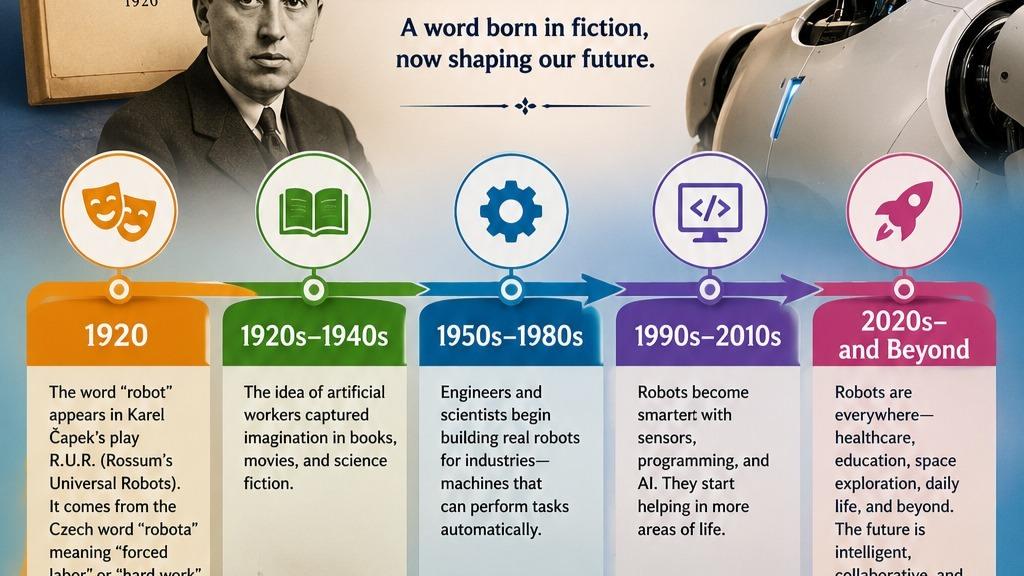
    Did you know the word "Robot" wasn't born in a laboratory? It actually began on a theater stage!

    In 1920, Czech writer Karel Čapek introduced the word "robot" in his famous play R.U.R. (Rossum's Universal Robots). The term comes from the Czech word "robota," meaning forced labor or hard work.

    In the play, robots were artificial workers created to serve humans. Over time, this fascinating idea inspired scientists, engineers, and inventors around the world.

    Today, robots are transforming our lives. They help build cars , perform delicate surgeries , explore distant planets , clean our homes , and even assist in classrooms . What started as a fictional concept has become one of the most important technologies of the modern era.

    The journey of the word "robot" reminds us that imagination can shape the future. Yesterday's fiction has become today's innovation—and tomorrow's possibilities are endless!

    #Robot #Technology #Innovation #ArtificialIntelligence #AI #HistoryOfWords #Science #TechFacts #FutureTech #Engineering #STEM #Education #Learning #DidYouKnow #Robotics #InnovationJourney #WordOrigins #TechHistory #Knowledge #Future
    RSIF8 Roll no 77 Story post 42 Story topic : The Evolution of 'Robot': From Czech Play to Tech Terminology. 🤔 Did you know the word "Robot" wasn't born in a laboratory? It actually began on a theater stage! 🎭 In 1920, Czech writer Karel Čapek introduced the word "robot" in his famous play R.U.R. (Rossum's Universal Robots). The term comes from the Czech word "robota," meaning forced labor or hard work. 💡 In the play, robots were artificial workers created to serve humans. Over time, this fascinating idea inspired scientists, engineers, and inventors around the world. 🌍⚙️ Today, robots are transforming our lives. 🤖 They help build cars 🚗, perform delicate surgeries 🏥, explore distant planets 🚀, clean our homes 🏠, and even assist in classrooms 📚. What started as a fictional concept has become one of the most important technologies of the modern era. The journey of the word "robot" reminds us that imagination can shape the future. ✨ Yesterday's fiction has become today's innovation—and tomorrow's possibilities are endless! 🌟 #Robot #Technology #Innovation #ArtificialIntelligence #AI #HistoryOfWords #Science #TechFacts #FutureTech #Engineering #STEM #Education #Learning #DidYouKnow #Robotics #InnovationJourney #WordOrigins #TechHistory #Knowledge #Future
    0 Commentaires 0 Parts 2293 Vue
  • #rsisb
    Roll no. 247
    Story post . 18
    Foundation level

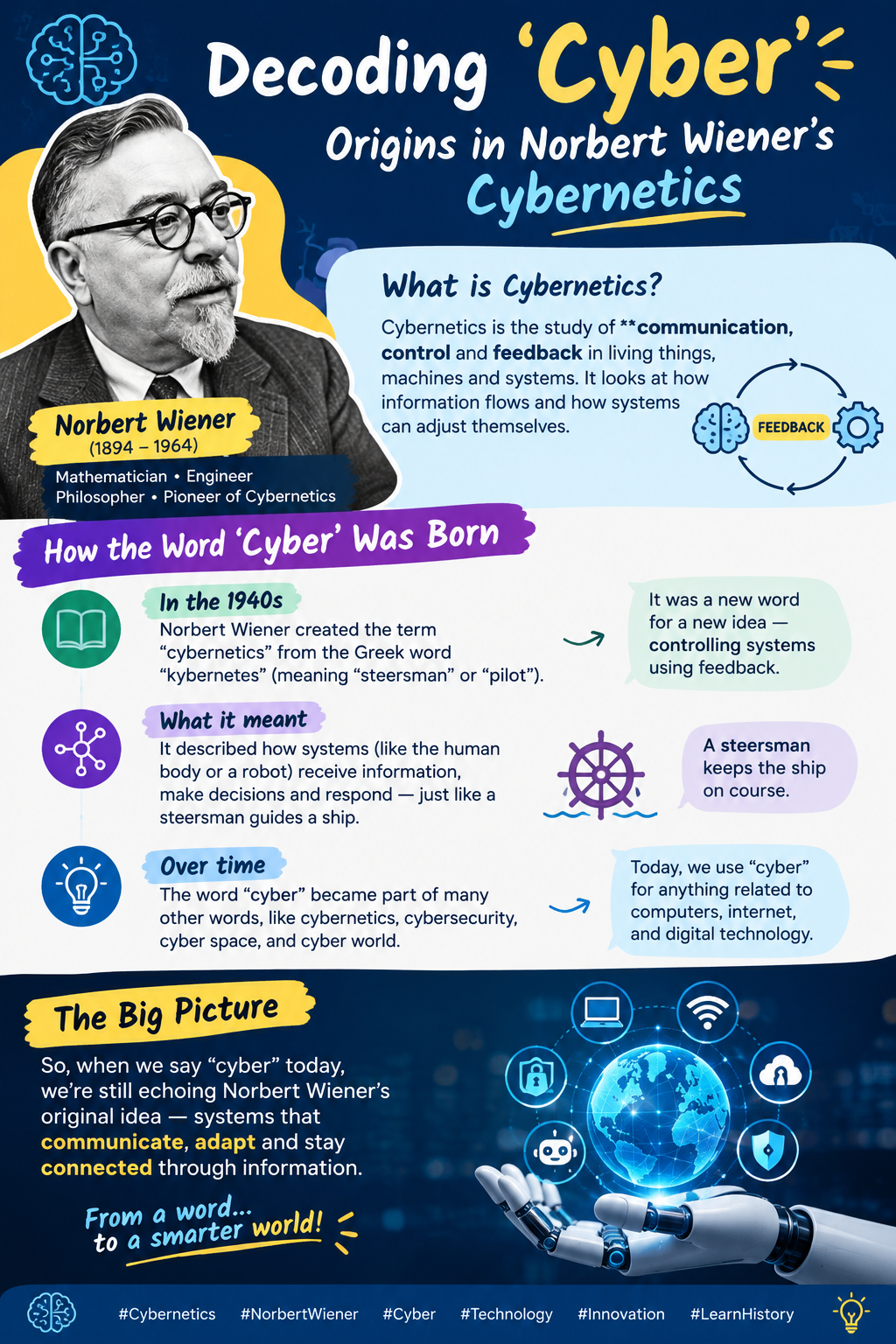
    **Story Post — Decoding “Cyber”: Origins in Norbert Wiener’s Cybernetics**

    **Have you ever wondered where the word “Cyber” comes from?**

    The word *Cyber* is connected to the fascinating world of **cybernetics**, a field that explores communication, control, and feedback in both living organisms and machines. It helps us understand how humans, computers, and other systems receive information, respond to changes, and make adjustments.

    **The Story Behind Cybernetics**

    The story takes us back to **Norbert Wiener (1894–1964)**, an American mathematician who helped establish the field of cybernetics. In 1948, he published his influential book *Cybernetics: Or Control and Communication in the Animal and the Machine*.

    Wiener explored how communication and control work in animals and machines. One important concept was **feedback**—when a system uses information about its results to adjust what it does next.

    For example, a thermostat checks the temperature of a room and adjusts the heating to maintain the desired temperature. Similarly, modern robots use sensors to understand their surroundings and adjust their movements. These ideas help us understand many technologies we use today!

    **How Did “Cyber” Become So Popular?**

    Over time, the word *cyber* became associated with computers, digital communication, and the internet. Today, we hear it in words such as:

    **Cybersecurity** — protecting computers, networks, and information from digital threats.

    **Cyberspace** — the digital environment where people communicate and interact online.

    **Cybercrime** — illegal activities involving computers or digital networks.

    **Cybernetics** — the study of control, communication, and feedback in systems.

    From the early ideas of cybernetics to today's connected digital world, this little word has become part of our everyday vocabulary!

    **Why Is This Story Important?**

    Understanding the history of the word *cyber* helps us appreciate how scientific ideas influence language and technology. It also reminds us that many modern inventions are built on ideas developed decades ago. Every time we use the internet, learn about artificial intelligence, or explore robotics, we encounter concepts connected to communication, information, and control.

    **Today's Learning Message:**
    Every word has a story, and every story can teach us something new! Keep asking questions, exploring history, and discovering how science shapes our world.

    **Question for You:**
    Which cyber-related topic interests you the most: cybersecurity, artificial intelligence, robotics, or the history of the internet? Share your answer in the comments!

    Like, share, and comment to help others discover the amazing story behind the word *Cyber*!

    #Cyber #Cybernetics #NorbertWiener #WordOrigins #HistoryOfTechnology #Technology #Science #ComputerScience #ArtificialIntelligence #AI #Cybersecurity #DigitalWorld #Internet #Robotics #Innovation #LearningEveryDay #EducationalContent #DidYouKnow #KnowledgeIsPower #TechHistory #DigitalLiteracy #StoryPost #RehanSchool #RSISB #RehanCodingWithAI
    #rsisb Roll no. 247 Story post . 18 Foundation level 🌐🤖 **Story Post — Decoding “Cyber”: Origins in Norbert Wiener’s Cybernetics** 💻📚 ✨ **Have you ever wondered where the word “Cyber” comes from?** 🚀 The word *Cyber* is connected to the fascinating world of **cybernetics**, a field that explores communication, control, and feedback in both living organisms and machines. 🧠⚙️ It helps us understand how humans, computers, and other systems receive information, respond to changes, and make adjustments. 📖 **The Story Behind Cybernetics** The story takes us back to **Norbert Wiener (1894–1964)**, an American mathematician who helped establish the field of cybernetics. In 1948, he published his influential book *Cybernetics: Or Control and Communication in the Animal and the Machine*. 📘🔬 Wiener explored how communication and control work in animals and machines. One important concept was **feedback**—when a system uses information about its results to adjust what it does next. 🔄🤖 For example, a thermostat checks the temperature of a room and adjusts the heating to maintain the desired temperature. 🌡️🏠 Similarly, modern robots use sensors to understand their surroundings and adjust their movements. These ideas help us understand many technologies we use today! 🌍 **How Did “Cyber” Become So Popular?** Over time, the word *cyber* became associated with computers, digital communication, and the internet. Today, we hear it in words such as: 💻 **Cybersecurity** — protecting computers, networks, and information from digital threats. 🌐 **Cyberspace** — the digital environment where people communicate and interact online. 🕵️ **Cybercrime** — illegal activities involving computers or digital networks. 🤖 **Cybernetics** — the study of control, communication, and feedback in systems. From the early ideas of cybernetics to today's connected digital world, this little word has become part of our everyday vocabulary! 🌟 🎯 **Why Is This Story Important?** Understanding the history of the word *cyber* helps us appreciate how scientific ideas influence language and technology. It also reminds us that many modern inventions are built on ideas developed decades ago. Every time we use the internet, learn about artificial intelligence, or explore robotics, we encounter concepts connected to communication, information, and control. 🚀🧠 💡 **Today's Learning Message:** Every word has a story, and every story can teach us something new! Keep asking questions, exploring history, and discovering how science shapes our world. 📚✨ 💬 **Question for You:** Which cyber-related topic interests you the most: cybersecurity, artificial intelligence, robotics, or the history of the internet? Share your answer in the comments! 👇🌐 ❤️ Like, share, and comment to help others discover the amazing story behind the word *Cyber*! #Cyber #Cybernetics #NorbertWiener #WordOrigins #HistoryOfTechnology #Technology #Science #ComputerScience #ArtificialIntelligence #AI #Cybersecurity #DigitalWorld #Internet #Robotics #Innovation #LearningEveryDay #EducationalContent #DidYouKnow #KnowledgeIsPower #TechHistory #DigitalLiteracy #StoryPost #RehanSchool #RSISB #RehanCodingWithAI 🚀💻📚
    0 Commentaires 0 Parts 2653 Vue
  • #rsisb
    Roll no. 247
    Story post . 18
    Foundation level

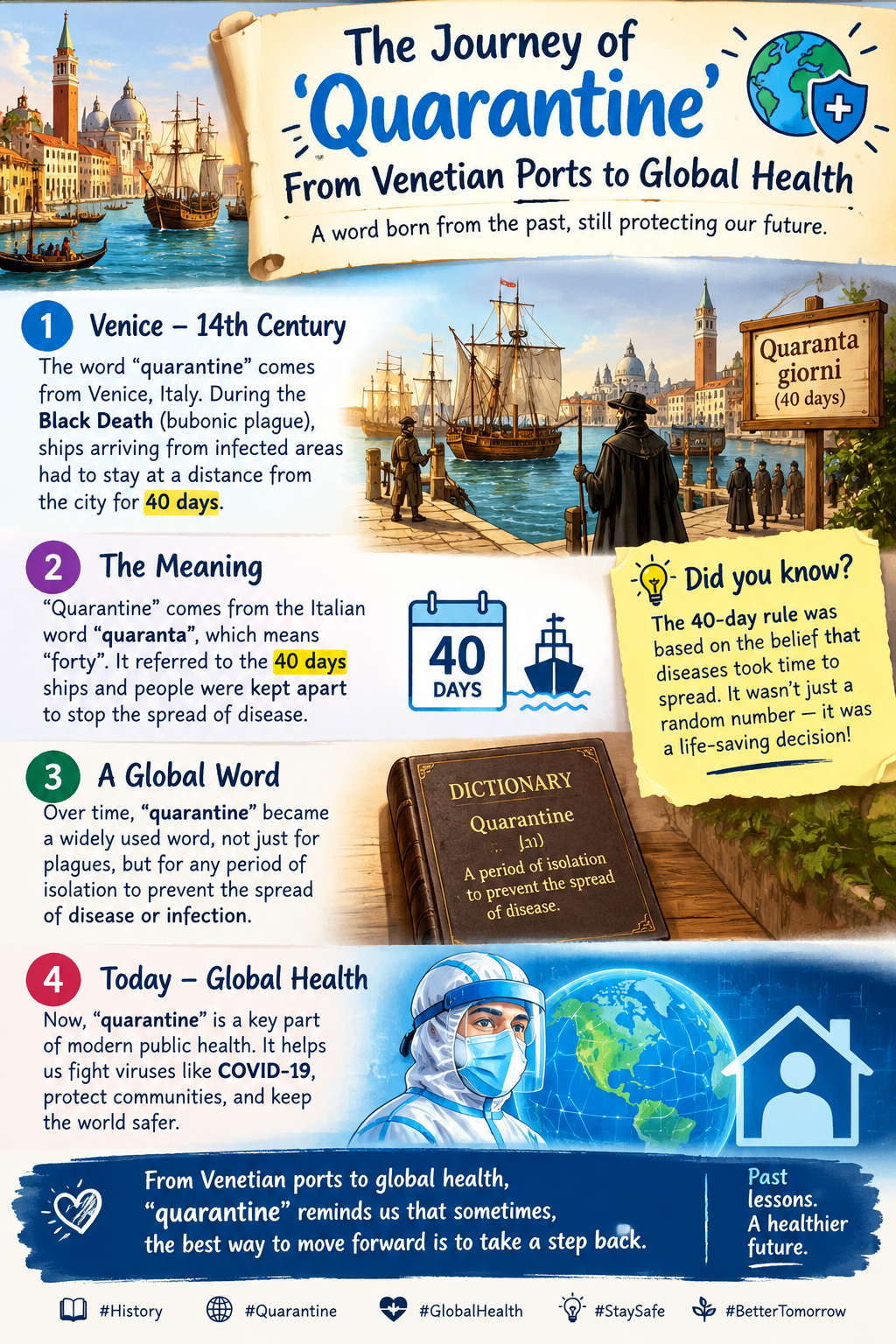
    **The Journey of “Quarantine”: From Venetian Ports to Global Health **

    **Have you ever wondered where the word “quarantine” came from?** Today, we use the word quarantine when people stay apart from others for a period of time to help prevent the spread of infectious diseases. But did you know that this word has a fascinating history that goes back hundreds of years?

    **The Story Begins in Venice!**

    The journey of the word *quarantine* takes us back to the busy port cities of Venice, Italy, during the 14th century. Venice was an important center of international trade, where ships arrived from different parts of the world carrying goods, travelers, and sailors. However, ships could also bring infectious diseases into crowded cities.

    To reduce the risk of disease spreading, authorities required certain arriving travelers and sailors to wait for a period before entering the city. The Italian word *quaranta* means **forty**, and the term *quarantina* referred to a period of forty days. This practice helped give us the English word **“quarantine.”**

    **How Did Quarantine Change the World?**

    Over time, quarantine became an important public health measure. During outbreaks of infectious diseases, authorities used isolation and quarantine practices to help protect communities. As medical science developed, people gained a better understanding of how diseases spread and how to reduce transmission.

    ‍ Today, quarantine and isolation have different meanings:
    **Quarantine:** Separating or restricting the movement of people who may have been exposed to an infectious disease.
    **Isolation:** Keeping people who are infected or ill apart from others to help prevent the spread of disease.

    These measures may be used alongside vaccination, testing, good hygiene, and other public health strategies, depending on the disease and the situation.

    **What Can We Learn from This Story?**

    The history of quarantine teaches us that language, science, and human society are connected. A word that began with a forty-day waiting period in historical maritime trade became part of the vocabulary of global health!

    It also reminds us that communities have worked for centuries to protect public health. Learning about the past helps us understand the importance of scientific knowledge, responsible decisions, cooperation, and caring for one another.

    **A Small Word, A Big History!**

    From the historic Venetian ports to modern hospitals and public health systems, the journey of “quarantine” shows how a simple word can carry centuries of history, challenges, and discoveries.

    Keep asking questions, exploring history, and discovering the amazing stories hidden behind everyday words!

    **Question for You:** Did you know that the word “quarantine” is connected to the Italian word for forty? Share your thoughts in the comments!

    Like, share, and save this post if you enjoy learning interesting facts about history, language, and science!

    #️⃣ **Hashtags:**

    #TheJourneyOfQuarantine #HistoryOfWords #Quarantine #VeniceHistory #ItalianHistory #WordOrigins #Etymology #GlobalHealth #PublicHealth #MedicalHistory #HistoryAndScience #ScienceEducation #HealthAwareness #InfectiousDiseases #LearningIsFun #EducationalPost #KnowledgeIsPower #DiscoverHistory #DidYouKnow #InterestingFacts #WorldHistory #LanguageLearning #StoryPost #KeepLearning #ExploreAndDiscover
    #rsisb Roll no. 247 Story post . 18 Foundation level 🌍📜 **The Journey of “Quarantine”: From Venetian Ports to Global Health 🚢🦠** ✨📚 **Have you ever wondered where the word “quarantine” came from?** 🤔🌎 Today, we use the word quarantine when people stay apart from others for a period of time to help prevent the spread of infectious diseases. But did you know that this word has a fascinating history that goes back hundreds of years? 🏛️⏳ 🚢🇮🇹 **The Story Begins in Venice!** 🏰✨ The journey of the word *quarantine* takes us back to the busy port cities of Venice, Italy, during the 14th century. Venice was an important center of international trade, where ships arrived from different parts of the world carrying goods, travelers, and sailors. 🌍⚓ However, ships could also bring infectious diseases into crowded cities. 🛡️⏰ To reduce the risk of disease spreading, authorities required certain arriving travelers and sailors to wait for a period before entering the city. The Italian word *quaranta* means **forty**, and the term *quarantina* referred to a period of forty days. This practice helped give us the English word **“quarantine.”** 📖🔍 🦠💡 **How Did Quarantine Change the World?** 🌍🏥 Over time, quarantine became an important public health measure. During outbreaks of infectious diseases, authorities used isolation and quarantine practices to help protect communities. As medical science developed, people gained a better understanding of how diseases spread and how to reduce transmission. 🔬👩‍⚕️ Today, quarantine and isolation have different meanings: ✅ **Quarantine:** Separating or restricting the movement of people who may have been exposed to an infectious disease. ✅ **Isolation:** Keeping people who are infected or ill apart from others to help prevent the spread of disease. 🌐🩺 These measures may be used alongside vaccination, testing, good hygiene, and other public health strategies, depending on the disease and the situation. 💭✨ **What Can We Learn from This Story?** 📚🌟 The history of quarantine teaches us that language, science, and human society are connected. A word that began with a forty-day waiting period in historical maritime trade became part of the vocabulary of global health! 🌍🚢 🧠💡 It also reminds us that communities have worked for centuries to protect public health. Learning about the past helps us understand the importance of scientific knowledge, responsible decisions, cooperation, and caring for one another. ❤️🤝 🎯📖 **A Small Word, A Big History!** From the historic Venetian ports to modern hospitals and public health systems, the journey of “quarantine” shows how a simple word can carry centuries of history, challenges, and discoveries. 🚢➡️🏥 🌟 Keep asking questions, exploring history, and discovering the amazing stories hidden behind everyday words! 🔎📚✨ 💬 **Question for You:** Did you know that the word “quarantine” is connected to the Italian word for forty? 🤔👇 Share your thoughts in the comments! ❤️ Like, 🔄 share, and 📌 save this post if you enjoy learning interesting facts about history, language, and science! #️⃣ **Hashtags:** #TheJourneyOfQuarantine #HistoryOfWords #Quarantine #VeniceHistory #ItalianHistory #WordOrigins #Etymology #GlobalHealth #PublicHealth #MedicalHistory #HistoryAndScience #ScienceEducation #HealthAwareness #InfectiousDiseases #LearningIsFun #EducationalPost #KnowledgeIsPower #DiscoverHistory #DidYouKnow #InterestingFacts #WorldHistory #LanguageLearning #StoryPost #KeepLearning #ExploreAndDiscover 🌍📚🔬✨
    0 Commentaires 0 Parts 3600 Vue
  • #rsisb
    Roll no 248
    Foundation level
    Story post no 21
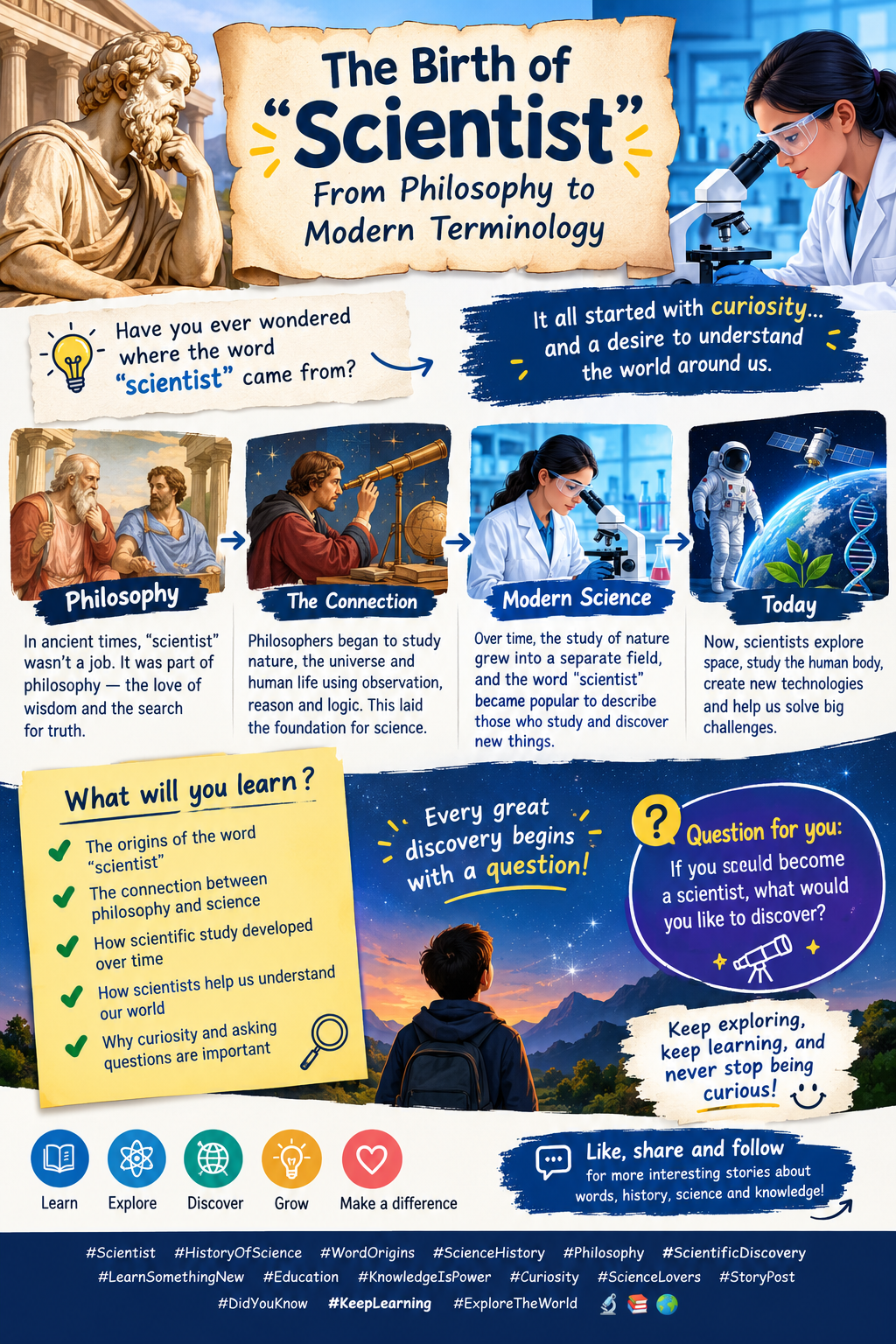
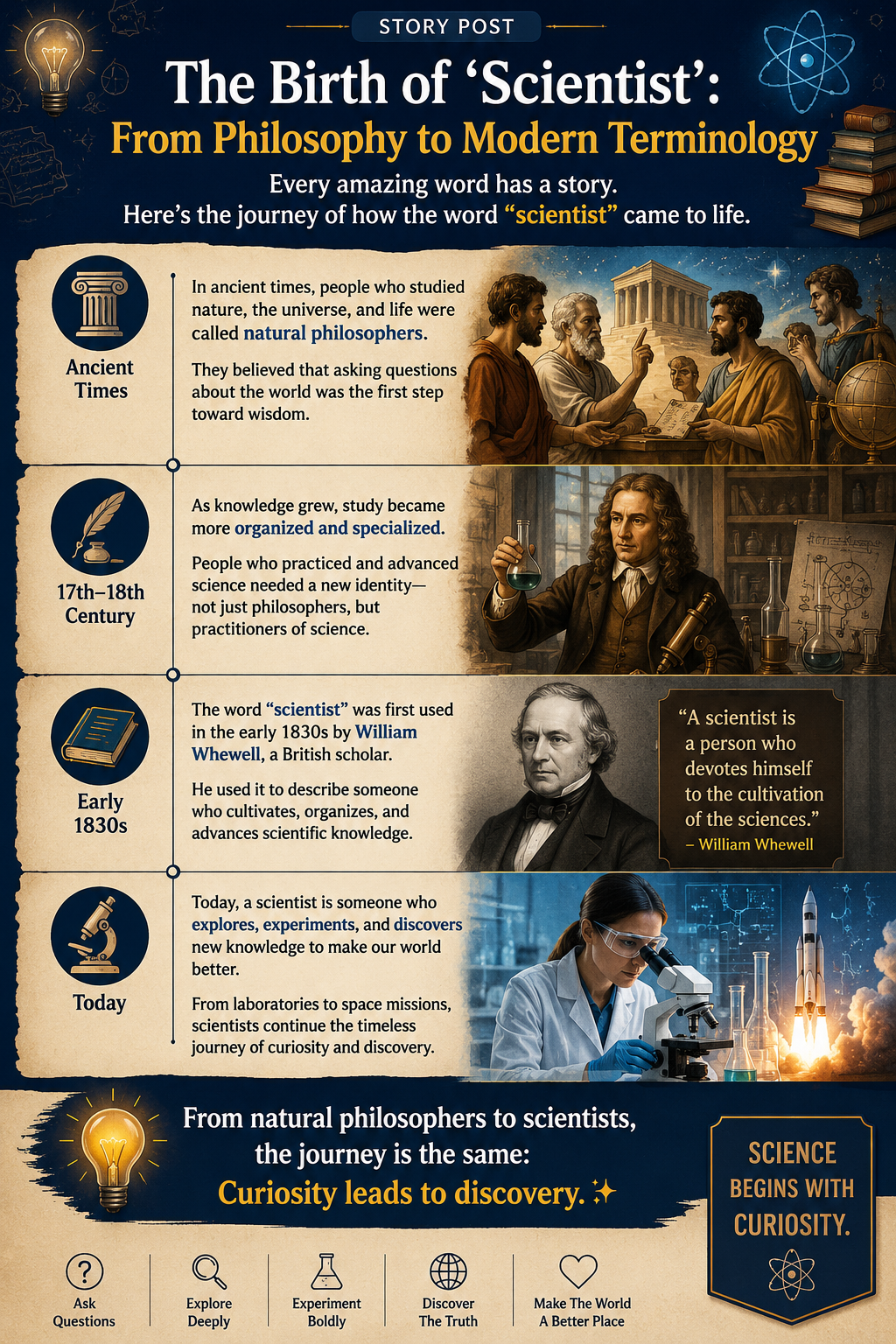
    **The Birth of “Scientist”: From Philosophy to Modern Terminology**

    Have you ever wondered where the word **“scientist”** came from? This story takes us on a fascinating journey from the world of philosophy and natural knowledge to the modern idea of a scientist.

    Discover how people who studied nature, the stars, life, and the physical world gradually became known by a new and powerful term: **“scientist.”**

    This story shows how **language, knowledge, and science evolved together** and how one word came to represent curiosity, discovery, and the search for truth.

    **Learn the word. Explore its history. Discover the story behind science!**

    #Scientist #ScienceHistory #WordOrigins #HistoryOfScience #Science #Philosophy #Knowledge #Discovery #Learning #Education #DidYouKnow #LanguageHistory #Curiosity #Innovation #StoryPost #LearningEveryday
    #rsisb Roll no 248 Foundation level Story post no 21 🔬📚 **The Birth of “Scientist”: From Philosophy to Modern Terminology** 🌍✨ Have you ever wondered where the word **“scientist”** came from? 🤔🔎 This story takes us on a fascinating journey from the world of philosophy and natural knowledge to the modern idea of a scientist. 🧠📖 Discover how people who studied nature, the stars, life, and the physical world gradually became known by a new and powerful term: **“scientist.”** 🌌🌱⚗️ This story shows how **language, knowledge, and science evolved together** and how one word came to represent curiosity, discovery, and the search for truth. 🚀💡🔬 🌟 **Learn the word. Explore its history. Discover the story behind science!** #Scientist #ScienceHistory #WordOrigins #HistoryOfScience #Science #Philosophy #Knowledge #Discovery #Learning #Education #DidYouKnow #LanguageHistory #Curiosity #Innovation #StoryPost #LearningEveryday 🔬📚🌍✨
    0 Commentaires 0 Parts 1291 Vue
  • RSIF8
    chat gpt no 1
    chat gpt topic "Hello" - Origins of a Simple Greeting
    Going LIVE: "Hello" – The Origins of a Simple Greeting

    Join me and Annie as we dive into the fascinating story behind one of the most powerful and universal words — “Hello.”

    Did you know this simple greeting became popular because of the invention of the telephone?
    How did it spread across cultures?
    Why does one small word carry so much warmth and connection?

    In this 5-minute live session, we’ll explore the history, meaning, and impact of this everyday word that connects the world.

    Don’t miss it — let’s say “Hello” to knowledge together!

    #Hello #LiveSession #DidYouKnow #WordOrigins #Communication #SocialMediaLive #EnglishLearning #ContentCreator #GoLive #ImagineLabs
    RSIF8 chat gpt no 1 chat gpt topic "Hello" - Origins of a Simple Greeting ✨ Going LIVE: "Hello" – The Origins of a Simple Greeting 👋🌍 Join me and Annie as we dive into the fascinating story behind one of the most powerful and universal words — “Hello.” 💬 Did you know this simple greeting became popular because of the invention of the telephone? 📞 How did it spread across cultures? 🌎 Why does one small word carry so much warmth and connection? 🤝❤️ In this 5-minute live session, we’ll explore the history, meaning, and impact of this everyday word that connects the world. 🌟 Don’t miss it — let’s say “Hello” to knowledge together! 👋✨ #Hello #LiveSession #DidYouKnow #WordOrigins #Communication #SocialMediaLive #EnglishLearning #ContentCreator #GoLive #ImagineLabs 🎥🔥
    0 Commentaires 0 Parts 2542 Vue 6
  • RSIF8
    Roll no:100
    call annie no:4
    call annie topic:Talk with Annie for 5 minutes on the topic "Bye-Bye - Where Did Our Goodbye Come From?"
    **Bye-Bye – Where Did Our Goodbye Come From?**
    Have you ever wondered why we say **“goodbye”** when we leave someone? The word seems simple and familiar, but it actually has a fascinating story hidden behind it! In this 5-minute conversation with Annie, we’ll take a fun journey through the history of **“goodbye”** and discover how this everyday farewell became part of our language.
    We’ll explore where the word came from, how it changed over time, and why people started using shorter and friendlier versions like **“bye”** and **“bye-bye.”** We’ll also talk about how different cultures and languages have their own unique ways of saying farewell.
    From ancient expressions to the quick “bye!” we use today, this conversation shows how even the smallest words can have an interesting history. So get ready to say hello to the story behind goodbye—and, of course, **bye-bye!**
    #ByeBye #Goodbye #WordOrigins #HistoryOfLanguage #EnglishLanguage #FunFacts #LearnWithAnnie #LanguageHistory #DidYouKnow #5MinuteConversation #LearningIsFun #InterestingFacts #EverydayWords
    RSIF8 Roll no:100 call annie no:4 call annie topic:Talk with Annie for 5 minutes on the topic "Bye-Bye - Where Did Our Goodbye Come From?" 👋 **Bye-Bye – Where Did Our Goodbye Come From?** 🌍💬 Have you ever wondered why we say **“goodbye”** when we leave someone? 🤔 The word seems simple and familiar, but it actually has a fascinating story hidden behind it! 📚✨ In this 5-minute conversation with Annie, we’ll take a fun journey through the history of **“goodbye”** and discover how this everyday farewell became part of our language. We’ll explore where the word came from, how it changed over time, and why people started using shorter and friendlier versions like **“bye”** and **“bye-bye.”** 👋😊 We’ll also talk about how different cultures and languages have their own unique ways of saying farewell. 🌎🗣️ From ancient expressions to the quick “bye!” we use today, this conversation shows how even the smallest words can have an interesting history. 🔎📖 So get ready to say hello to the story behind goodbye—and, of course, **bye-bye!** 😄👋 #ByeBye 👋 #Goodbye #WordOrigins 📚 #HistoryOfLanguage 🌍 #EnglishLanguage #FunFacts 🤓 #LearnWithAnnie #LanguageHistory 🗣️ #DidYouKnow #5MinuteConversation ⏰ #LearningIsFun ✨ #InterestingFacts #EverydayWords
    0 Commentaires 0 Parts 3637 Vue 6
  • RSIF8
    Roll no:100
    call annie no:2
    call annie topic:Talk with Annie for 5 minutes on the topic "Okay - The Story Behind the World's Favorite Word"
    **Okay – The Story Behind the World’s Favorite Word!**
    Join Annie for an exciting 5-minute conversation as we explore the fascinating story behind one of the most popular and recognizable words in the world — **“Okay” (OK)!**
    We use “okay” every day without thinking twice about it. It can mean **yes, agreement, understanding, acceptance, reassurance, or simply that everything is fine.** But have you ever wondered where this tiny word actually came from?
    In this conversation, Annie takes us on a journey through the surprising origins of **“OK,”** how it became popular, and how it eventually spread around the world. From everyday conversations to messages, movies, workplaces, and different cultures, “Okay” has become a word almost everyone recognizes!
    So, how did two simple letters become such a powerful part of human communication? Tune in to **Talk with Annie** for a fun, informative, and interesting discussion about the history, meaning, and worldwide journey of **“Okay”!**
    Learn something new, discover the story behind an everyday word, and see just how interesting language can be!
    #Okay #OK #TalkWithAnnie #WordOrigins #HistoryOfWords #Language #EnglishLanguage #FunFacts #DidYouKnow #InterestingFacts #LearnSomethingNew #Communication #History #LanguageFacts #5MinuteTalk #WorldsFavoriteWord
    RSIF8 Roll no:100 call annie no:2 call annie topic:Talk with Annie for 5 minutes on the topic "Okay - The Story Behind the World's Favorite Word" 🌍💬 **Okay – The Story Behind the World’s Favorite Word!** 👋✨ Join Annie for an exciting 5-minute conversation as we explore the fascinating story behind one of the most popular and recognizable words in the world — **“Okay” (OK)!** 😄🌎 We use “okay” every day without thinking twice about it. It can mean **yes, agreement, understanding, acceptance, reassurance, or simply that everything is fine.** 👍 But have you ever wondered where this tiny word actually came from? 🤔📖 In this conversation, Annie takes us on a journey through the surprising origins of **“OK,”** how it became popular, and how it eventually spread around the world. 🌍🗣️ From everyday conversations to messages, movies, workplaces, and different cultures, “Okay” has become a word almost everyone recognizes! 💬✨ So, how did two simple letters become such a powerful part of human communication? 🔤🤯 Tune in to **Talk with Annie** for a fun, informative, and interesting discussion about the history, meaning, and worldwide journey of **“Okay”!** 🎙️💡 ✨ Learn something new, discover the story behind an everyday word, and see just how interesting language can be! 📚🌟 #Okay #OK #TalkWithAnnie #WordOrigins #HistoryOfWords #Language #EnglishLanguage #FunFacts #DidYouKnow #InterestingFacts #LearnSomethingNew #Communication #History #LanguageFacts #5MinuteTalk #WorldsFavoriteWord 🌍💬
    0 Commentaires 0 Parts 3471 Vue 13
  • #rsisb
    roll no 46
    call ani 8
    “Thank You” is one of the simplest and most meaningful phrases we use every day. But have you ever wondered where these two words came from and how they became a universal expression of gratitude?

    In this 5-minute journey, explore the fascinating history and etymology of “thank”, discover how the word evolved through the English language, and learn how people have expressed appreciation across different cultures and generations.

    From ancient expressions of appreciation to the modern-day “Thank You,” this topic shows how language, kindness, respect, and gratitude are connected. A small phrase can have a big impact—it can make someone feel valued, strengthen relationships, and spread positivity.

    Watch, learn, and discover the story behind one of the most powerful phrases in everyday language!

    Hashtags

    #ThankYou #Etymology #Gratitude #HistoryOfWords #Language #EnglishLanguage #WordOrigins #Thankfulness #Appreciation #Kindness #PositiveWords #Communication #LearnEnglish #InterestingFacts #Education #RehanSchool

    Emojis

    #rsisb roll no 46 call ani 8 “Thank You” is one of the simplest and most meaningful phrases we use every day. 🌍💛 But have you ever wondered where these two words came from and how they became a universal expression of gratitude? 🤔 In this 5-minute journey, explore the fascinating history and etymology of “thank”, discover how the word evolved through the English language, and learn how people have expressed appreciation across different cultures and generations. 📚🗣️🌎 From ancient expressions of appreciation to the modern-day “Thank You,” this topic shows how language, kindness, respect, and gratitude are connected. ❤️🙏 A small phrase can have a big impact—it can make someone feel valued, strengthen relationships, and spread positivity. 😊✨ 🎯 Watch, learn, and discover the story behind one of the most powerful phrases in everyday language! 🌟 🏷️ Hashtags #ThankYou #Etymology #Gratitude #HistoryOfWords #Language #EnglishLanguage #WordOrigins #Thankfulness #Appreciation #Kindness #PositiveWords #Communication #LearnEnglish #InterestingFacts #Education #RehanSchool 😊 Emojis 🙏 ❤️ 🌟 📚 🔍 💭 🌍 🗣️ 😊 💛 ✨ 🌱 🎓 📖 🤝 💫
    0 Commentaires 0 Parts 3152 Vue 9
  • #rsisb
    Roll No.240
    Story No.25
    Foundation Level

    “Scientist” is a word that represents curiosity, discovery, and the human desire to understand the world.

    Long before the modern term existed, people who studied nature were often called natural philosophers. Over time, scientific thinking became more specialized, and a new word was needed to describe those who practiced science professionally.

    This story explores how the word “scientist” was born, how its meaning evolved, and how it became a familiar part of modern language.

    From asking questions to discovering answers — the journey of science begins with curiosity.

    #Scientist #ScienceHistory #WordOrigins #HistoryOfScience #Philosophy #LanguageEvolution #Curiosity #Discovery #Knowledge #Learning #StoryPost

    Rehan School Islamabad Campus
    Asma Shaheen Eduction Wali
    Irum Asim
    Saima Happines Wali

    #rsisb Roll No.240 Story No.25 Foundation Level 🔬 “Scientist” is a word that represents curiosity, discovery, and the human desire to understand the world. 🌍✨ Long before the modern term existed, people who studied nature were often called natural philosophers. Over time, scientific thinking became more specialized, and a new word was needed to describe those who practiced science professionally. 📖 This story explores how the word “scientist” was born, how its meaning evolved, and how it became a familiar part of modern language. 💡 From asking questions to discovering answers — the journey of science begins with curiosity. #Scientist #ScienceHistory #WordOrigins #HistoryOfScience #Philosophy #LanguageEvolution #Curiosity #Discovery #Knowledge #Learning #StoryPost 🔬🌍📚✨ Rehan School Islamabad Campus Asma Shaheen Eduction Wali Irum Asim Saima Happines Wali
    0 Commentaires 0 Parts 2393 Vue
  • #rsisb
    Roll no.247
    Foundation level

    # **“Alright” – How This Simple Affirmation Came to Be **

    The word **“Alright”** may seem like one of the simplest words in everyday conversation, but behind this small expression lies a fascinating story of language, communication, reassurance, and human connection. We often say “alright” without thinking about it—when we agree with someone, accept a situation, reassure a friend, or simply indicate that everything is okay. But how did this ordinary word become such an important part of our daily communication?

    In this 10-minute exploration, **“Alright” – How This Simple Affirmation Came to Be**, we take a closer look at the meaning and development of this familiar expression. The word combines the idea of being “all” or completely in a particular condition with “right,” suggesting that things are satisfactory, acceptable, or in order. Over time, its use became increasingly common in spoken and written English.

    One of the most interesting things about “alright” is its versatility. It can communicate agreement: *“Alright, let’s begin.”* It can offer reassurance: *“Are you alright?”* It can show acceptance: *“Alright, I understand.”* It can even express a decision to move forward: *“Alright, let’s try again.”* In just one word, we can communicate different emotions and intentions depending on our tone and the situation.

    The story of “alright” also shows us that languages are constantly changing. Words and expressions develop as people use them in new ways. Some forms become accepted in informal conversation before becoming more widely recognized in writing. “Alright” is a great example of how everyday speech can influence the evolution of language.

    Another fascinating aspect is the difference between **“all right”** and **“alright.”** Both forms are widely encountered, but their usage and acceptance have been debated by writers, editors, and language experts. “All right” has traditionally been preferred in formal writing, while “alright” is extremely common in informal communication and has become increasingly familiar in modern English. This difference reminds us that language is not always fixed—it grows and changes with society.

    The word also has an important social function. When someone asks, **“Are you alright?”**, they may not simply be asking about a situation. They could be showing concern, kindness, or friendship. A simple word can therefore become a bridge between people.

    “Alright” can also represent optimism and resilience. Sometimes life does not go exactly as planned, yet saying “alright” can mean that we are ready to continue. It can carry the feeling of **acceptance, patience, and hope**. Even when something is difficult, saying “alright, let’s keep going” can help create a positive attitude.

    This topic encourages us to think about how much meaning can exist inside ordinary words. Words that we use every day can have histories that stretch across generations. Studying them helps us understand not only language, but also the people and cultures that shaped it.

    So the next time you hear or say **“Alright,”** take a moment to notice what it means in that particular situation. Is it agreement? Is it reassurance? Is it acceptance? Is it encouragement to move forward? The answer may depend entirely on the context and the speaker’s tone.

    Ultimately, **“Alright”** is more than just a simple affirmation. It is a small example of the incredible flexibility of human language. It demonstrates how words evolve, how meanings change, and how everyday expressions can connect people.

    **Let’s celebrate the fascinating stories hidden inside ordinary words!** Every simple expression has a journey, and sometimes the smallest words can tell us the biggest stories.

    #Alright #LanguageHistory #EnglishLanguage #WordOrigins #Linguistics #LanguageLearning #EnglishWords #WordsMatter #Communication #EverydayLanguage #Affirmation #LanguageEvolution #WordHistory #LearnEnglish #EnglishLearning #Vocabulary #InterestingFacts #LanguageAndCulture #CommunicationSkills #EducationalContent #DidYouKnow #LearningIsFun #HistoryOfLanguage #WordsAndMeaning #ExploreLanguage
    #rsisb Roll no.247 Foundation level # **“Alright” – How This Simple Affirmation Came to Be 🌟** The word **“Alright”** may seem like one of the simplest words in everyday conversation, but behind this small expression lies a fascinating story of language, communication, reassurance, and human connection. 😊💬 We often say “alright” without thinking about it—when we agree with someone, accept a situation, reassure a friend, or simply indicate that everything is okay. But how did this ordinary word become such an important part of our daily communication? 🤔✨ In this 10-minute exploration, **“Alright” – How This Simple Affirmation Came to Be**, we take a closer look at the meaning and development of this familiar expression. 📚🌍 The word combines the idea of being “all” or completely in a particular condition with “right,” suggesting that things are satisfactory, acceptable, or in order. Over time, its use became increasingly common in spoken and written English. One of the most interesting things about “alright” is its versatility. 🌈 It can communicate agreement: *“Alright, let’s begin.”* It can offer reassurance: *“Are you alright?”* It can show acceptance: *“Alright, I understand.”* It can even express a decision to move forward: *“Alright, let’s try again.”* In just one word, we can communicate different emotions and intentions depending on our tone and the situation. 🗣️💡 The story of “alright” also shows us that languages are constantly changing. 🔄📖 Words and expressions develop as people use them in new ways. Some forms become accepted in informal conversation before becoming more widely recognized in writing. “Alright” is a great example of how everyday speech can influence the evolution of language. Another fascinating aspect is the difference between **“all right”** and **“alright.”** ✍️ Both forms are widely encountered, but their usage and acceptance have been debated by writers, editors, and language experts. “All right” has traditionally been preferred in formal writing, while “alright” is extremely common in informal communication and has become increasingly familiar in modern English. This difference reminds us that language is not always fixed—it grows and changes with society. 🌱📚 The word also has an important social function. ❤️ When someone asks, **“Are you alright?”**, they may not simply be asking about a situation. They could be showing concern, kindness, or friendship. A simple word can therefore become a bridge between people. 🤝😊 “Alright” can also represent optimism and resilience. 🌟 Sometimes life does not go exactly as planned, yet saying “alright” can mean that we are ready to continue. It can carry the feeling of **acceptance, patience, and hope**. Even when something is difficult, saying “alright, let’s keep going” can help create a positive attitude. 💪🌅 This topic encourages us to think about how much meaning can exist inside ordinary words. Words that we use every day can have histories that stretch across generations. 🕰️📖 Studying them helps us understand not only language, but also the people and cultures that shaped it. So the next time you hear or say **“Alright,”** take a moment to notice what it means in that particular situation. Is it agreement? 👍 Is it reassurance? 💙 Is it acceptance? 🌿 Is it encouragement to move forward? 🚀 The answer may depend entirely on the context and the speaker’s tone. Ultimately, **“Alright”** is more than just a simple affirmation. It is a small example of the incredible flexibility of human language. 🌍🗣️ It demonstrates how words evolve, how meanings change, and how everyday expressions can connect people. ✨ **Let’s celebrate the fascinating stories hidden inside ordinary words!** Every simple expression has a journey, and sometimes the smallest words can tell us the biggest stories. 📚💫 #Alright #LanguageHistory #EnglishLanguage #WordOrigins #Linguistics #LanguageLearning #EnglishWords #WordsMatter #Communication #EverydayLanguage #Affirmation #LanguageEvolution #WordHistory #LearnEnglish #EnglishLearning #Vocabulary #InterestingFacts #LanguageAndCulture #CommunicationSkills #EducationalContent #DidYouKnow #LearningIsFun #HistoryOfLanguage #WordsAndMeaning #ExploreLanguage 📚🌍✨🗣️💡❤️

    0 Commentaires 0 Parts 8917 Vue 8
Plus de résultats