• ACCL book
    rehan school urdu bazar
    roll no 11
    foundation level
    **Paragraph 1: The Age of Dinosaurs**

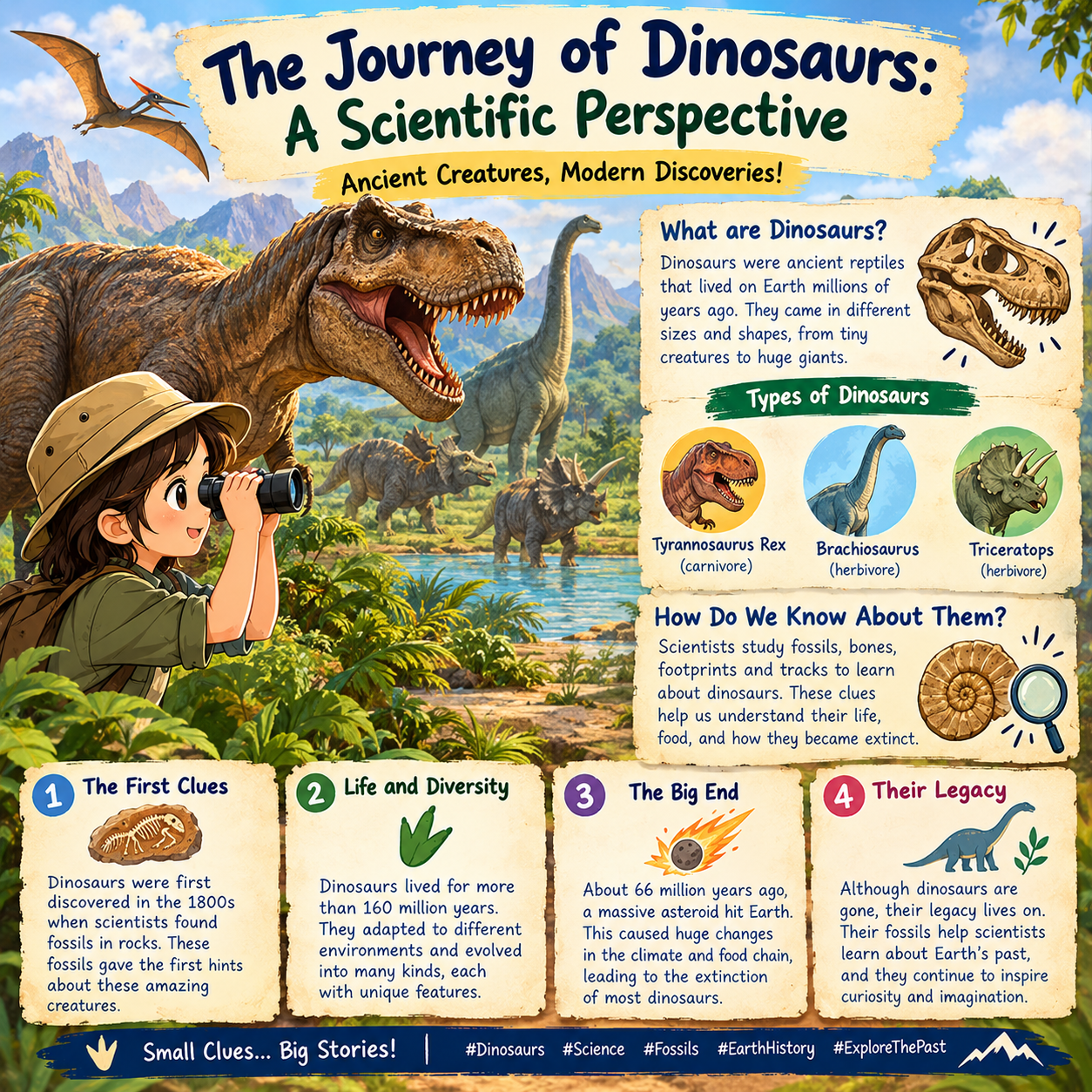
    Millions of years ago, dinosaurs lived on Earth. They came in many shapes and sizes. Some were enormous plant-eaters, while others were powerful meat-eaters.

    **Paragraph 2: Different Types of Dinosaurs**

    There were many kinds of dinosaurs. Tyrannosaurus rex was a meat-eater with sharp teeth. Brachiosaurus had a long neck, and Triceratops had three horns on its head.

    **Paragraph 3: How Scientists Study Dinosaurs**

    Scientists learn about dinosaurs by studying fossils, bones, and footprints. These discoveries help them understand how dinosaurs lived, what they ate, and how they moved.

    **Paragraph 4: The End of Their Journey**

    About 66 million years ago, a huge asteroid struck Earth, causing major environmental changes. Most dinosaurs disappeared, but birds evolved from a group of dinosaurs. Today, fossils help scientists uncover their amazing history.**پیراگراف 1: ڈائنوسار کا دور**

    لاکھوں سال پہلے ڈائنوسار زمین پر رہتے تھے۔ ان کی شکلیں اور جسامت مختلف ہوتی تھیں۔ کچھ پودے کھاتے تھے، جبکہ کچھ دوسرے جانوروں کا شکار کرتے تھے۔

    **پیراگراف 2: ڈائنوسار کی مختلف اقسام**

    ڈائنوسار کی بہت سی اقسام تھیں۔ ٹائرانوسورس ریکس گوشت خور تھا اور اس کے دانت تیز تھے۔ بریچیوسورس کی گردن لمبی تھی، جبکہ ٹرائیسیراٹاپس کے سر پر تین سینگ تھے۔

    **پیراگراف 3: سائنس دان ڈائنوسار کے بارے میں کیسے جانتے ہیں؟**

    سائنس دان ڈائنوسار کی ہڈیوں، فوسلز اور قدموں کے نشانات کا مطالعہ کرتے ہیں۔ ان دریافتوں سے انہیں معلوم ہوتا ہے کہ ڈائنوسار کیسے رہتے، کیا کھاتے اور کیسے چلتے تھے۔

    **پیراگراف 4: ڈائنوسار کے سفر کا اختتام**

    تقریباً چھ کروڑ ساٹھ لاکھ سال پہلے ایک بڑا سیارچہ زمین سے ٹکرایا، جس سے ماحول میں بڑی تبدیلیاں آئیں۔ زیادہ تر ڈائنوسار ختم ہوگئے، لیکن ڈائنوسار کے ایک گروہ سے پرندے ارتقا پذیر ہوئے۔ آج بھی فوسلز سائنس دانوں کو ان کی حیرت انگیز تاریخ سمجھنے میں مدد دیتے ہیں۔
    ACCL book rehan school urdu bazar roll no 11 foundation level **Paragraph 1: The Age of Dinosaurs** Millions of years ago, dinosaurs lived on Earth. They came in many shapes and sizes. Some were enormous plant-eaters, while others were powerful meat-eaters. **Paragraph 2: Different Types of Dinosaurs** There were many kinds of dinosaurs. Tyrannosaurus rex was a meat-eater with sharp teeth. Brachiosaurus had a long neck, and Triceratops had three horns on its head. **Paragraph 3: How Scientists Study Dinosaurs** Scientists learn about dinosaurs by studying fossils, bones, and footprints. These discoveries help them understand how dinosaurs lived, what they ate, and how they moved. **Paragraph 4: The End of Their Journey** About 66 million years ago, a huge asteroid struck Earth, causing major environmental changes. Most dinosaurs disappeared, but birds evolved from a group of dinosaurs. Today, fossils help scientists uncover their amazing history.**پیراگراف 1: ڈائنوسار کا دور** لاکھوں سال پہلے ڈائنوسار زمین پر رہتے تھے۔ ان کی شکلیں اور جسامت مختلف ہوتی تھیں۔ کچھ پودے کھاتے تھے، جبکہ کچھ دوسرے جانوروں کا شکار کرتے تھے۔ **پیراگراف 2: ڈائنوسار کی مختلف اقسام** ڈائنوسار کی بہت سی اقسام تھیں۔ ٹائرانوسورس ریکس گوشت خور تھا اور اس کے دانت تیز تھے۔ بریچیوسورس کی گردن لمبی تھی، جبکہ ٹرائیسیراٹاپس کے سر پر تین سینگ تھے۔ **پیراگراف 3: سائنس دان ڈائنوسار کے بارے میں کیسے جانتے ہیں؟** سائنس دان ڈائنوسار کی ہڈیوں، فوسلز اور قدموں کے نشانات کا مطالعہ کرتے ہیں۔ ان دریافتوں سے انہیں معلوم ہوتا ہے کہ ڈائنوسار کیسے رہتے، کیا کھاتے اور کیسے چلتے تھے۔ **پیراگراف 4: ڈائنوسار کے سفر کا اختتام** تقریباً چھ کروڑ ساٹھ لاکھ سال پہلے ایک بڑا سیارچہ زمین سے ٹکرایا، جس سے ماحول میں بڑی تبدیلیاں آئیں۔ زیادہ تر ڈائنوسار ختم ہوگئے، لیکن ڈائنوسار کے ایک گروہ سے پرندے ارتقا پذیر ہوئے۔ آج بھی فوسلز سائنس دانوں کو ان کی حیرت انگیز تاریخ سمجھنے میں مدد دیتے ہیں۔
    0 Comments 0 Shares 764 Views
  • 🎨 **Day 162 | Canva Post** 💭 **“You are never too old to set another goal or dream a new dream.” — C.S. Lewis** 📚 **Foundation Level** 🔢 **Roll No: 01** Aaj ke Canva task mein maine ek beautiful aur inspiring motivational quote ko creative design ke zariye present kiya. ✨ Is quote ka message hai ke zindagi mein naye goals set karne aur naye dreams dekhne ka koi waqt muqarrar nahi hota. Humein hamesha seekhne, grow karne aur apne future ko behtar banane ki koshish karte rehna chahiye. Kabhi kabhi hum sochte hain ke ab bohot der ho gayi hai ya hum apna goal achieve nahi kar sakte. Lekin asal mein har naya din ek naya mauqa lekar aata hai. 🌅 Chahe koi nayi skill seekhni ho, apni studies mein improve karna ho ya koi bada dream poora karna ho, sabse important baat hai khud par bharosa rakhna aur pehla step lena. 💪🚀 Is task se mujhe ye lesson mila ke humein apne dreams ko kabhi chhorna nahi chahiye. Chhote chhote steps, consistent efforts aur positive mindset ke saath hum apni manzil ki taraf barh sakte hain. 🌟 🎯 **Dream Big → Set New Goals → Take Action → Keep Learning → Build Your Future** ✨ **It’s Never Too Late to Dream, Learn, Grow, and Start Again!** 🏫 **Rehan School** **Learn • Grow • Build Your Future** #RehanSchool #Day162 #CanvaPost #CSLewis #Motivation #DreamBig #NewGoals #NeverTooLate #PersonalGrowth #KeepLearning #PositiveMindset #Success #CanvaDesign #Learnhttps://youtube.com/post/Ugkxv6U2sLGPUfHDhVxEJd7JuZrSyB17gYjF?si=woRp1_shjyENqboaingJourney #FoundationLevel #AI #BuildYourFuture
    YOUTUBE.COM
    🎨 **Day 162 | Canva Post** 💭 **“You are never too old to set another goal or dream a new dream.” — C.S. Lewis** 📚 **Foundation Level** 🔢 **Roll No: 01** Aaj ...
    🎨 **Day 162 | Canva Post** 💭 **“You are never too old to set another goal or dream a new dream.” — C.S. Lewis** 📚 **Foundation Level** 🔢 **Roll No: 01** Aaj ...
    0 Comments 0 Shares 1183 Views
  • Foundation level
    Roll no 13
    story post
    Day 48
    Rehan school urdu bazar campas

    Millions of years ago, long before humans appeared on Earth, dinosaurs lived in a world filled with dense forests, flowing rivers, towering mountains, and vast open lands. Dinosaurs first appeared about 230 million years ago during the Triassic Period. Over millions of years, they evolved into many different shapes and sizes. Some were small and quick, while others grew into enormous creatures that dominated the land. Their fascinating journey became one of the most remarkable chapters in the history of life on Earth.

    As time passed, dinosaurs spread across different environments and developed unique ways of surviving. The mighty Tyrannosaurus rex became famous for its powerful jaws and sharp teeth, while the enormous Brachiosaurus used its long neck to reach vegetation high above the ground. The Triceratops had three horns and a large bony shield around its head. Some dinosaurs hunted other animals, while many survived by eating plants. Each species played a different role in its environment, creating a complex and fascinating prehistoric world.

    However, approximately 66 million years ago, a massive asteroid struck Earth near what is now Mexico. The impact triggered enormous environmental changes, sending dust and debris into the atmosphere and disrupting ecosystems around the world. Plants struggled to survive, food sources disappeared, and many species became extinct. This event marked the end of the age of non-avian dinosaurs. Yet, not every dinosaur lineage vanished. Some feathered dinosaurs survived through evolution, eventually giving rise to the birds we see in our world today.

    Millions of years later, scientists began uncovering the hidden secrets of these ancient creatures through fossils buried deep within the Earth. Paleontologists discovered dinosaur bones, teeth, eggs, and footprints that provided clues about their appearance, behavior, and habitats. Using modern technology, including computer imaging and advanced scientific techniques, researchers can now reconstruct how many dinosaurs may have looked and lived. Every fossil discovery adds another piece to the puzzle, helping u
    1m
    Foundation level Roll no 13 story post Day 48 Rehan school urdu bazar campas Millions of years ago, long before humans appeared on Earth, dinosaurs lived in a world filled with dense forests, flowing rivers, towering mountains, and vast open lands. Dinosaurs first appeared about 230 million years ago during the Triassic Period. Over millions of years, they evolved into many different shapes and sizes. Some were small and quick, while others grew into enormous creatures that dominated the land. Their fascinating journey became one of the most remarkable chapters in the history of life on Earth. As time passed, dinosaurs spread across different environments and developed unique ways of surviving. The mighty Tyrannosaurus rex became famous for its powerful jaws and sharp teeth, while the enormous Brachiosaurus used its long neck to reach vegetation high above the ground. The Triceratops had three horns and a large bony shield around its head. Some dinosaurs hunted other animals, while many survived by eating plants. Each species played a different role in its environment, creating a complex and fascinating prehistoric world. However, approximately 66 million years ago, a massive asteroid struck Earth near what is now Mexico. The impact triggered enormous environmental changes, sending dust and debris into the atmosphere and disrupting ecosystems around the world. Plants struggled to survive, food sources disappeared, and many species became extinct. This event marked the end of the age of non-avian dinosaurs. Yet, not every dinosaur lineage vanished. Some feathered dinosaurs survived through evolution, eventually giving rise to the birds we see in our world today. Millions of years later, scientists began uncovering the hidden secrets of these ancient creatures through fossils buried deep within the Earth. Paleontologists discovered dinosaur bones, teeth, eggs, and footprints that provided clues about their appearance, behavior, and habitats. Using modern technology, including computer imaging and advanced scientific techniques, researchers can now reconstruct how many dinosaurs may have looked and lived. Every fossil discovery adds another piece to the puzzle, helping u 1m
    0 Comments 0 Shares 2518 Views
  • Mohsin #RSF8
    Call Annine NO:1
    Class: foundation level
    Made by Me
    rool no:13
    "Thank You" – The Etymology of Gratitude

    In a world filled with constant communication, two of the most powerful words we can say are "Thank You." Though simple, these words carry centuries of history and represent one of humanity's most cherished values—gratitude. The English word thank originates from the Old English word þanc, which meant "thought," "goodwill," or "gratitude." Over time, this expression evolved into the familiar phrase we use today to acknowledge kindness, generosity, and support.

    Gratitude is a universal language that transcends borders, cultures, and generations. Whether we say "Thank You," "Shukriya," "Merci," "Gracias," or "Arigato," the message remains the same: appreciation for the goodness we receive from others. These simple words have the power to strengthen relationships, build trust, and create a sense of belonging among people. A sincere expression of thanks can brighten someone's day, encourage acts of kindness, and remind us that even small gestures deserve recognition.

    Throughout history, societies have valued gratitude as a sign of humility, respect, and good character. Philosophers, religious traditions, and cultural customs around the world have emphasized the importance of being thankful. Modern research has also shown that practicing gratitude contributes to greater happiness, reduced stress, improved mental well-being, and stronger social connections. People who regularly express appreciation often experience more positive emotions and healthier relationships.

    In our fast-paced lives, we sometimes overlook the importance of acknowledging the efforts and kindness of others. Yet, a heartfelt "Thank You" can transform ordinary moments into meaningful memories. It costs nothing to express gratitude, but its impact can be profound and long-lasting. Whether we are thanking our parents, teachers, friends, colleagues, or even strangers, these words reflect empathy, respect, and appreciation.

    As we navigate through life, let us remember that gratitude is not merely a response to receiving something—it is a way of seeing the world with
    Mohsin #RSF8🎓✨ Call Annine NO:1 Class: foundation level 📚 Made by Me 💻🚀 rool no:13 🌟 "Thank You" – The Etymology of Gratitude 🌟 In a world filled with constant communication, two of the most powerful words we can say are "Thank You." Though simple, these words carry centuries of history and represent one of humanity's most cherished values—gratitude. The English word thank originates from the Old English word þanc, which meant "thought," "goodwill," or "gratitude." Over time, this expression evolved into the familiar phrase we use today to acknowledge kindness, generosity, and support. Gratitude is a universal language that transcends borders, cultures, and generations. Whether we say "Thank You," "Shukriya," "Merci," "Gracias," or "Arigato," the message remains the same: appreciation for the goodness we receive from others. These simple words have the power to strengthen relationships, build trust, and create a sense of belonging among people. A sincere expression of thanks can brighten someone's day, encourage acts of kindness, and remind us that even small gestures deserve recognition. Throughout history, societies have valued gratitude as a sign of humility, respect, and good character. Philosophers, religious traditions, and cultural customs around the world have emphasized the importance of being thankful. Modern research has also shown that practicing gratitude contributes to greater happiness, reduced stress, improved mental well-being, and stronger social connections. People who regularly express appreciation often experience more positive emotions and healthier relationships. In our fast-paced lives, we sometimes overlook the importance of acknowledging the efforts and kindness of others. Yet, a heartfelt "Thank You" can transform ordinary moments into meaningful memories. It costs nothing to express gratitude, but its impact can be profound and long-lasting. Whether we are thanking our parents, teachers, friends, colleagues, or even strangers, these words reflect empathy, respect, and appreciation. As we navigate through life, let us remember that gratitude is not merely a response to receiving something—it is a way of seeing the world with
    0 Comments 0 Shares 2345 Views 173
  • Day:-48
    rollno:-006
    foundation level
    Story Post
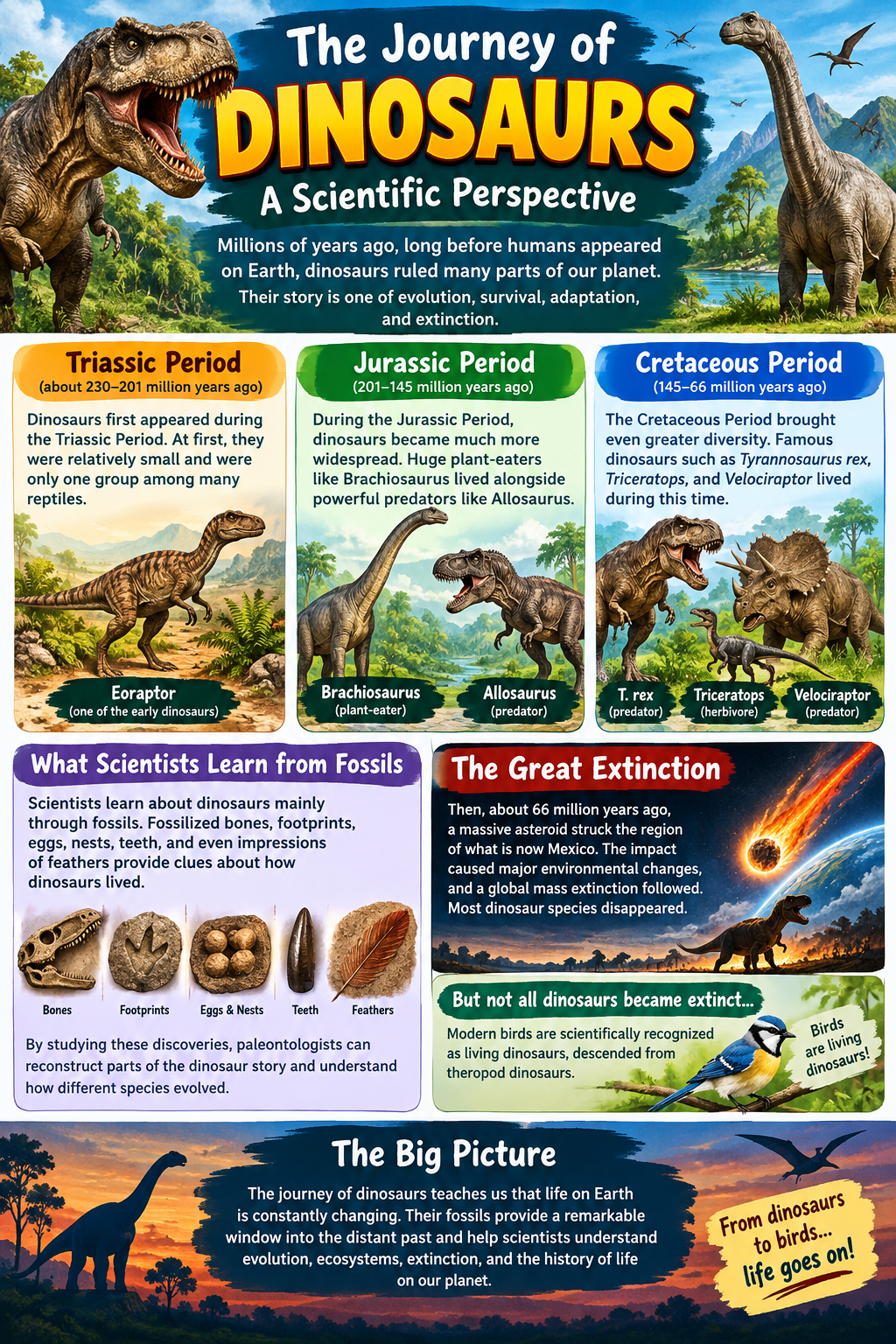
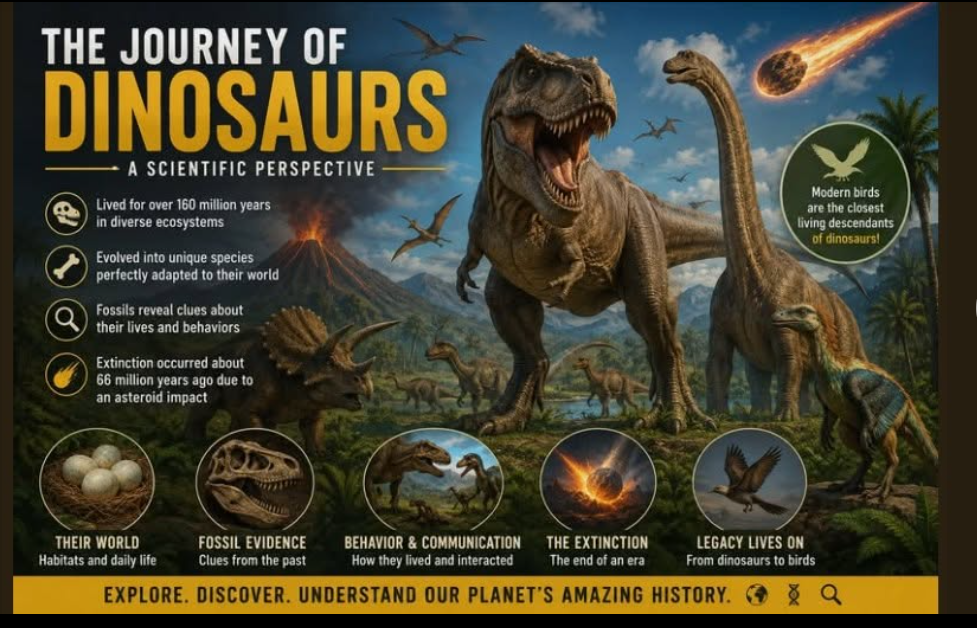
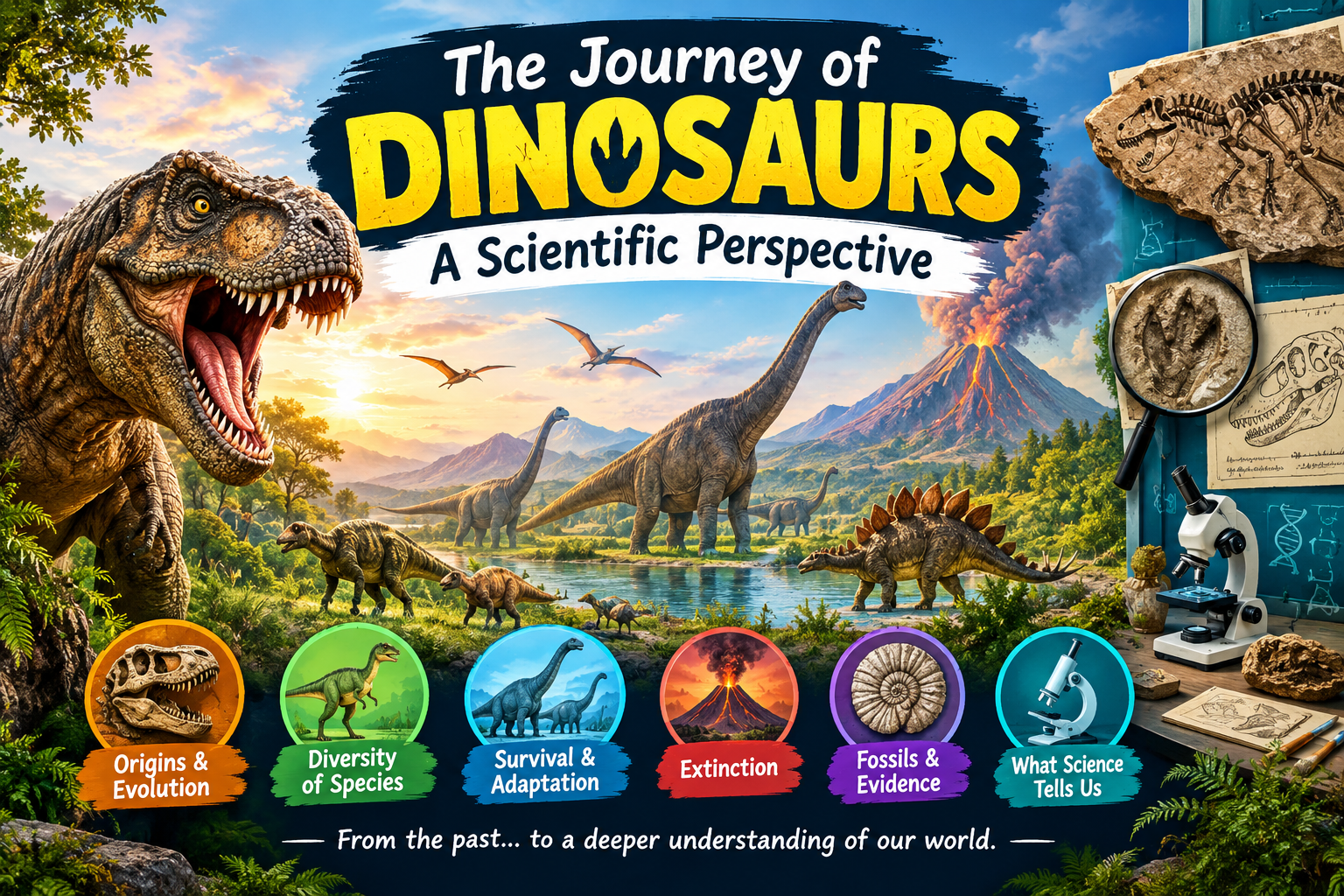
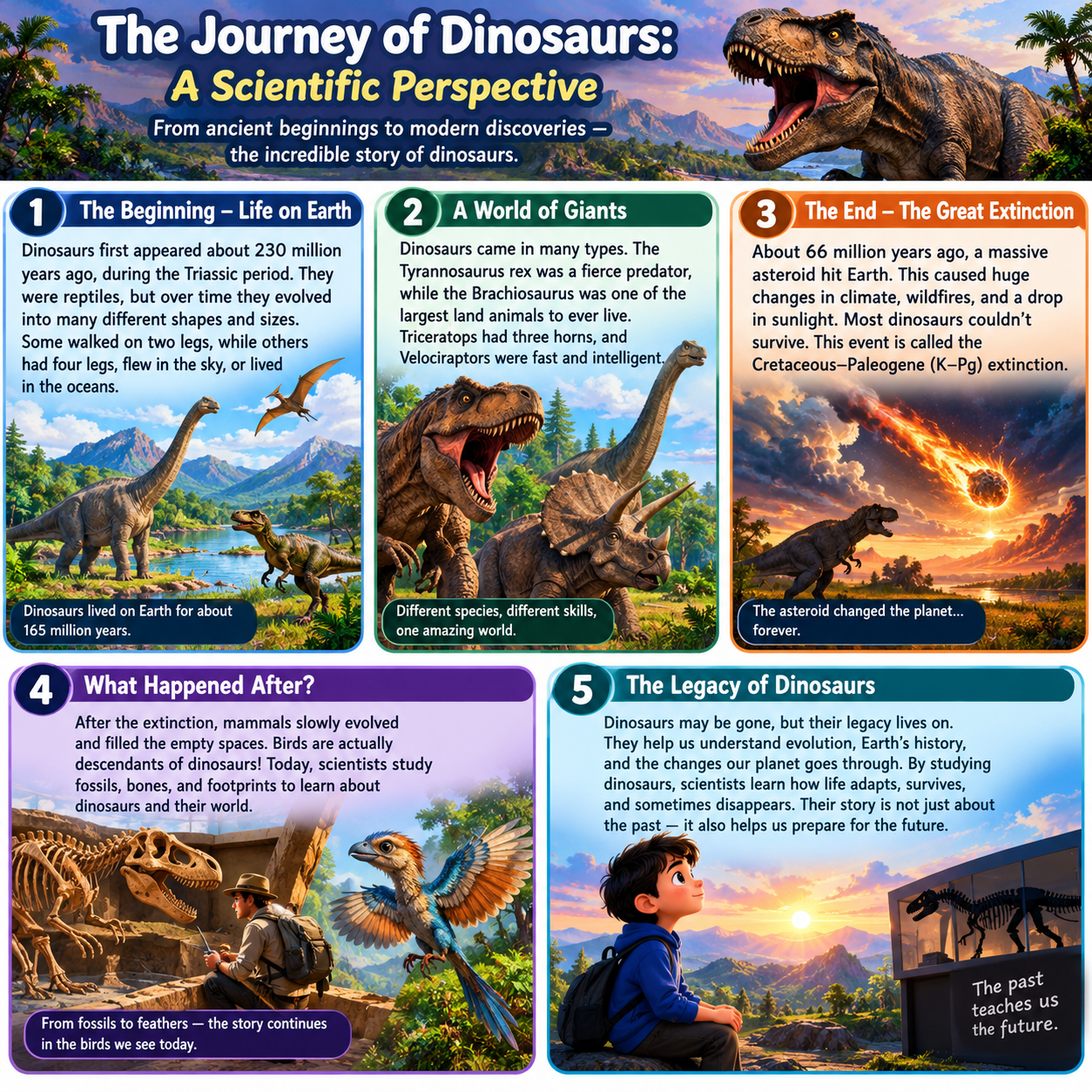
    # The Journey of Dinosaurs: A Scientific Perspective

    Millions of years ago, long before humans appeared on Earth, dinosaurs ruled many parts of our planet. Their story is one of evolution, survival, adaptation, and extinction.

    Dinosaurs first appeared during the **Triassic Period, about 230 million years ago**. At first, they were relatively small and were only one group among many reptiles. Over millions of years, however, dinosaurs evolved into an incredible variety of species.

    During the **Jurassic Period**, dinosaurs became much more widespread. Huge plant-eating dinosaurs such as *Brachiosaurus* lived alongside powerful predators such as *Allosaurus*. Some dinosaurs developed long necks, sharp teeth, armor, horns, or other features that helped them survive in their environments.

    The **Cretaceous Period** brought even greater diversity. Famous dinosaurs such as *Tyrannosaurus rex*, *Triceratops*, and *Velociraptor* lived during this time. Scientists believe dinosaurs occupied many different habitats and had complex behaviors, including nesting, caring for young, hunting, and possibly communicating with one another.

    Scientists learn about dinosaurs mainly through **fossils**. Fossilized bones, footprints, eggs, nests, teeth, and even impressions of feathers provide clues about how dinosaurs lived. By studying these discoveries, paleontologists can reconstruct parts of the dinosaur story and understand how different species evolved.

    Then, about **66 million years ago**, a massive asteroid struck the region of what is now Mexico. The impact caused major environmental changes, and a global mass extinction followed. Most dinosaur species disappeared. However, not all dinosaurs became extinct.

    Modern birds are scientifically recognized as **living dinosaurs**, descended from theropod dinosaurs. This means that although non-avian dinosaurs such as *T. rex* are gone, their evolutionary legacy continues today in birds.

    The journey of dinosaurs teaches us that life on Earth is constantly changing. Their fossils provide a remarkable window into the distant past and help scientists understand evolution, ecosystems, extinction, and the history of life on our planet.
    Day:-48 rollno:-006 foundation level 📖 Story Post # 🦖 The Journey of Dinosaurs: A Scientific Perspective Millions of years ago, long before humans appeared on Earth, dinosaurs ruled many parts of our planet. Their story is one of evolution, survival, adaptation, and extinction. Dinosaurs first appeared during the **Triassic Period, about 230 million years ago**. At first, they were relatively small and were only one group among many reptiles. Over millions of years, however, dinosaurs evolved into an incredible variety of species. During the **Jurassic Period**, dinosaurs became much more widespread. Huge plant-eating dinosaurs such as *Brachiosaurus* lived alongside powerful predators such as *Allosaurus*. Some dinosaurs developed long necks, sharp teeth, armor, horns, or other features that helped them survive in their environments. The **Cretaceous Period** brought even greater diversity. Famous dinosaurs such as *Tyrannosaurus rex*, *Triceratops*, and *Velociraptor* lived during this time. Scientists believe dinosaurs occupied many different habitats and had complex behaviors, including nesting, caring for young, hunting, and possibly communicating with one another. Scientists learn about dinosaurs mainly through **fossils**. Fossilized bones, footprints, eggs, nests, teeth, and even impressions of feathers provide clues about how dinosaurs lived. By studying these discoveries, paleontologists can reconstruct parts of the dinosaur story and understand how different species evolved. Then, about **66 million years ago**, a massive asteroid struck the region of what is now Mexico. The impact caused major environmental changes, and a global mass extinction followed. Most dinosaur species disappeared. However, not all dinosaurs became extinct. Modern birds are scientifically recognized as **living dinosaurs**, descended from theropod dinosaurs. This means that although non-avian dinosaurs such as *T. rex* are gone, their evolutionary legacy continues today in birds. The journey of dinosaurs teaches us that life on Earth is constantly changing. Their fossils provide a remarkable window into the distant past and help scientists understand evolution, ecosystems, extinction, and the history of life on our planet.
    0 Comments 0 Shares 2490 Views
  • #rsisb
    Roll no.239
    Foundation Level

    Dinosaurs are among the most fascinating creatures that ever lived on Earth. Their story is a remarkable journey through millions of years of evolution, adaptation, survival, and extinction. Scientists study dinosaur fossils, footprints, and ancient environments to understand how these incredible animals lived and how they shaped the history of our planet.
    **The Beginning of the Dinosaur Era**
    Dinosaurs first appeared around **230 million years ago** during the **Mesozoic Era**. They evolved from early reptiles and quickly became one of the most successful groups of animals on Earth. Over time, they adapted to different environments, developing unique features that helped them survive.
    **The Age of Dinosaurs**
    The Mesozoic Era is often called the **"Age of Dinosaurs"** and lasted for more than 180 million years. It was divided into three major periods:
    **Triassic Period** (about 252–201 million years ago)
    The first dinosaurs appeared and began spreading across the planet. Small, fast-moving dinosaurs evolved during this time.
    **Jurassic Period** (about 201–145 million years ago)
    Dinosaurs became larger and more diverse. Giant plant-eaters like long-necked sauropods and powerful predators ruled many landscapes.
    **Cretaceous Period** (about 145–66 million years ago)
    Dinosaurs reached their greatest variety. Famous species such as **Tyrannosaurus rex** and **Triceratops** lived during this time.
    **How Scientists Study Dinosaurs**
    Scientists called **paleontologists** uncover clues from the past by studying:
    Fossilized bones
    Ancient footprints
    Dinosaur eggs
    Fossil plants
    Geological evidence
    These discoveries help researchers learn about dinosaur behavior, diets, movement, and habitats.
    **Dinosaur Adaptations and Survival**
    Dinosaurs developed amazing adaptations to survive:
    Sharp teeth for hunting
    Armor and horns for protection
    🪽 Feathers in some species
    Strong legs for movement
    Different feeding strategies
    Some dinosaurs evolved into birds, making modern birds the living descendants of these ancient creatures.
    **The Great Extinction Event**
    Around **66 million years ago**, a massive asteroid impact contributed to the extinction of many dinosaur species. This event changed life on Earth forever and opened opportunities for new groups of animals, including mammals, to expand.
    **The Scientific Importance of Dinosaurs**
    Studying dinosaurs helps scientists understand:
    How life evolves over time
    How Earth’s environments change
    How species adapt and survive
    How ancient ecosystems worked
    Dinosaurs remind us that life on Earth is constantly changing. Their story teaches us about resilience, adaptation, and the incredible history of our planet.
    **The journey of dinosaurs is not just a story of the past — it is a scientific window into the evolution of life itself.** See less
    #rsisb Roll no.239 Foundation Level Dinosaurs are among the most fascinating creatures that ever lived on Earth. Their story is a remarkable journey through millions of years of evolution, adaptation, survival, and extinction. 🌎🦕 Scientists study dinosaur fossils, footprints, and ancient environments to understand how these incredible animals lived and how they shaped the history of our planet. 🔍📚 🕰️ **The Beginning of the Dinosaur Era** 🌱🦖 Dinosaurs first appeared around **230 million years ago** during the **Mesozoic Era**. They evolved from early reptiles and quickly became one of the most successful groups of animals on Earth. Over time, they adapted to different environments, developing unique features that helped them survive. 🌿✨ 🌎 **The Age of Dinosaurs** 🦕🏞️ The Mesozoic Era is often called the **"Age of Dinosaurs"** and lasted for more than 180 million years. It was divided into three major periods: 🌋 **Triassic Period** (about 252–201 million years ago) ➡️ The first dinosaurs appeared and began spreading across the planet. Small, fast-moving dinosaurs evolved during this time. 🦎 🌿 **Jurassic Period** (about 201–145 million years ago) ➡️ Dinosaurs became larger and more diverse. Giant plant-eaters like long-necked sauropods and powerful predators ruled many landscapes. 🌳🦕 🔥 **Cretaceous Period** (about 145–66 million years ago) ➡️ Dinosaurs reached their greatest variety. Famous species such as **Tyrannosaurus rex** and **Triceratops** lived during this time. 🌎⚔️ 🔬 **How Scientists Study Dinosaurs** 🧪📖 Scientists called **paleontologists** uncover clues from the past by studying: 🦴 Fossilized bones 👣 Ancient footprints 🥚 Dinosaur eggs 🌿 Fossil plants 🏞️ Geological evidence These discoveries help researchers learn about dinosaur behavior, diets, movement, and habitats. 🔍✨ 🦖 **Dinosaur Adaptations and Survival** 💪🌱 Dinosaurs developed amazing adaptations to survive: 🦷 Sharp teeth for hunting 🛡️ Armor and horns for protection 🪽 Feathers in some species 🏃 Strong legs for movement 🌿 Different feeding strategies Some dinosaurs evolved into birds, making modern birds the living descendants of these ancient creatures. 🐦✨ ☄️ **The Great Extinction Event** 🌑🌍 Around **66 million years ago**, a massive asteroid impact contributed to the extinction of many dinosaur species. This event changed life on Earth forever and opened opportunities for new groups of animals, including mammals, to expand. 🌎💫 🌟 **The Scientific Importance of Dinosaurs** 🔬 Studying dinosaurs helps scientists understand: 🌱 How life evolves over time 🌍 How Earth’s environments change 🧬 How species adapt and survive 🔭 How ancient ecosystems worked Dinosaurs remind us that life on Earth is constantly changing. Their story teaches us about resilience, adaptation, and the incredible history of our planet. 🌎🦖 ✨ **The journey of dinosaurs is not just a story of the past — it is a scientific window into the evolution of life itself.** 🌟🔬 See less
    0 Comments 0 Shares 2557 Views
  • #rsisb
    Roll no.279
    story post no.7
    Foundation Level


    # The Journey of Dinosaurs: A Scientific Perspective

    Long before humans walked on Earth, dinosaurs ruled many parts of our planet. Their story began more than 230 million years ago during the **Triassic Period**. At first, dinosaurs were relatively small and not the dominant animals everywhere. But over millions of years, they evolved into an incredible variety of species.

    During the **Jurassic Period**, dinosaurs became much more diverse. Huge plant-eaters such as long-necked sauropods lived alongside powerful predators. Some dinosaurs walked on two legs, while others used four. Scientists believe their different body shapes and behaviors helped them survive in changing environments.

    Then came the **Cretaceous Period**, when dinosaurs continued to evolve and spread across the world. Dinosaurs developed feathers, horns, armor, and many other fascinating features. Some were tiny, while others were enormous! Scientists learn about these animals by studying fossils, footprints, teeth, bones, and even preserved impressions.

    About **66 million years ago**, a massive asteroid struck Earth near what is now Mexico. The impact caused dramatic environmental changes, and many species disappeared. This event marked the end of the non-avian dinosaurs. However, their story did not completely end!

    Modern birds are scientifically recognized as living dinosaurs. This means that when we see birds today, we are seeing a surviving branch of the dinosaur family tree.

    Today, paleontologists continue searching for fossils and studying ancient rocks to understand how dinosaurs lived, evolved, and disappeared. Every new fossil can reveal another piece of Earth's incredible history.

    The journey of dinosaurs teaches us an important lesson: **life on Earth is constantly changing, and evolution can produce extraordinary forms of life.**

    **From ancient footprints to modern birds, the story of dinosaurs is still being discovered!**

    #Dinosaurs #DinosaurJourney #Science #Paleontology #Evolution #Fossils #AncientEarth #Learning #HistoryOfEarth

    Asma Shaheen EducationWali
    Saima Happinesswali
    Irum Asim
    #rsisb Roll no.279 story post no.7 Foundation Level # 🦖 The Journey of Dinosaurs: A Scientific Perspective 🌍 Long before humans walked on Earth, dinosaurs ruled many parts of our planet. 🌎✨ Their story began more than 230 million years ago during the **Triassic Period**. At first, dinosaurs were relatively small and not the dominant animals everywhere. 🦕🌿 But over millions of years, they evolved into an incredible variety of species. During the **Jurassic Period**, dinosaurs became much more diverse. 🌳🦕 Huge plant-eaters such as long-necked sauropods lived alongside powerful predators. 🦖🌿 Some dinosaurs walked on two legs, while others used four. Scientists believe their different body shapes and behaviors helped them survive in changing environments. Then came the **Cretaceous Period**, when dinosaurs continued to evolve and spread across the world. 🌎🦖 Dinosaurs developed feathers, horns, armor, and many other fascinating features. Some were tiny, while others were enormous! 🐾✨ Scientists learn about these animals by studying fossils, footprints, teeth, bones, and even preserved impressions. 🔬🦴 About **66 million years ago**, a massive asteroid struck Earth near what is now Mexico. ☄️🌍 The impact caused dramatic environmental changes, and many species disappeared. This event marked the end of the non-avian dinosaurs. However, their story did not completely end! 🐦🦖 Modern birds are scientifically recognized as living dinosaurs. 🐦✨ This means that when we see birds today, we are seeing a surviving branch of the dinosaur family tree. Today, paleontologists continue searching for fossils and studying ancient rocks to understand how dinosaurs lived, evolved, and disappeared. 🔎🦴📚 Every new fossil can reveal another piece of Earth's incredible history. The journey of dinosaurs teaches us an important lesson: **life on Earth is constantly changing, and evolution can produce extraordinary forms of life.** 🌍💫 🦖🔬 **From ancient footprints to modern birds, the story of dinosaurs is still being discovered!** 🐦🌿 #Dinosaurs 🦖 #DinosaurJourney 🦕 #Science 🔬 #Paleontology 🦴 #Evolution 🧬 #Fossils 🌍 #AncientEarth 🌎 #Learning 📚 #HistoryOfEarth ⏳ Asma Shaheen EducationWali Saima Happinesswali Irum Asim
    0 Comments 0 Shares 2451 Views
  • #rsisb
    Roll no.239
    Foundation Level

    The simple phrase **“thank you”** is one of the most widely used expressions of politeness and gratitude in the English language. We say it when someone helps us, gives us something, supports us, or simply does something kind. But where did these two familiar words come from, and how did they become such an important part of everyday communication?
    The word **“thank”** has very old roots. It comes from Old English **“þanc”**, meaning thought, gratitude, or goodwill. This word was connected to the idea of thinking about something with appreciation. Over time, the meaning developed into the expression of gratitude that we know today.
    The word **“you”** has an equally interesting history. It developed from older English forms used to address another person. As English changed over centuries, **“you”** became the common form for addressing someone directly, whether formally or informally.
    Together, **“thank you”** became a natural way of expressing appreciation. Instead of simply recognizing that someone had helped us, the phrase communicated respect and goodwill toward that person.
    During the development of modern English, expressions of thanks became increasingly important in social interactions. Saying “thank you” helped people maintain good relationships and demonstrate politeness. Today, the phrase is used everywhere—from casual conversations between friends to formal business meetings and public speeches.
    Interestingly, gratitude is not limited to English. Many languages have their own expressions for thanking others. Although the words differ, the underlying human idea is similar: recognizing kindness and showing appreciation.
    The importance of **“thank you”** goes beyond its etymology. These two words can strengthen relationships, encourage kindness, and make communication more positive. A sincere thank-you can make another person feel noticed and valued.
    So, the next time you say **“thank you,”** remember that you are using an expression with centuries of linguistic history behind it. Two small words carry a powerful message: **I appreciate what you have done for me.**
    In the end, the history of “thank you” teaches us something meaningful about language. Words may change over time, but the human emotions behind them—gratitude, respect, and appreciation—remain remarkably constant.
    #rsisb Roll no.239 Foundation Level The simple phrase **“thank you”** is one of the most widely used expressions of politeness and gratitude in the English language. We say it when someone helps us, gives us something, supports us, or simply does something kind. But where did these two familiar words come from, and how did they become such an important part of everyday communication? The word **“thank”** has very old roots. It comes from Old English **“þanc”**, meaning thought, gratitude, or goodwill. This word was connected to the idea of thinking about something with appreciation. Over time, the meaning developed into the expression of gratitude that we know today. The word **“you”** has an equally interesting history. It developed from older English forms used to address another person. As English changed over centuries, **“you”** became the common form for addressing someone directly, whether formally or informally. Together, **“thank you”** became a natural way of expressing appreciation. Instead of simply recognizing that someone had helped us, the phrase communicated respect and goodwill toward that person. During the development of modern English, expressions of thanks became increasingly important in social interactions. Saying “thank you” helped people maintain good relationships and demonstrate politeness. Today, the phrase is used everywhere—from casual conversations between friends to formal business meetings and public speeches. Interestingly, gratitude is not limited to English. Many languages have their own expressions for thanking others. Although the words differ, the underlying human idea is similar: recognizing kindness and showing appreciation. The importance of **“thank you”** goes beyond its etymology. These two words can strengthen relationships, encourage kindness, and make communication more positive. A sincere thank-you can make another person feel noticed and valued. So, the next time you say **“thank you,”** remember that you are using an expression with centuries of linguistic history behind it. Two small words carry a powerful message: **I appreciate what you have done for me.** In the end, the history of “thank you” teaches us something meaningful about language. Words may change over time, but the human emotions behind them—gratitude, respect, and appreciation—remain remarkably constant.
    0 Comments 0 Shares 3103 Views 15
  • #rsisb
    Roll No.247
    Call Aine 5
    Foundation Level

    "Thank You" – The Etymology of Gratitude (5 Min)

    Have you ever stopped to think about the words "Thank You"? These two simple words carry centuries of history, culture, and heartfelt emotion. Although we say them every day, their origin tells a fascinating story about how humans have expressed appreciation throughout history.

    The English word "thank" comes from the Old English word þanc (thanc), which meant "thought," "gratitude," or "good feeling." In ancient times, expressing thanks wasn't just about being polite—it was a way of recognizing kindness, strengthening relationships, and showing respect. Over time, the phrase "Thank You" evolved into one of the most meaningful expressions in the English language.

    Gratitude is a universal language that crosses cultures, religions, and generations. Whether someone helps you with a small favor or changes your life in a big way, saying "Thank You" acknowledges their kindness and reminds them that their actions matter.

    Scientific studies have even shown that practicing gratitude can improve mental health, reduce stress, strengthen friendships, and increase happiness. A sincere "Thank You" can brighten someone's day, build trust, and create lasting positive connections.

    Across the world, every language has its own beautiful way of expressing gratitude:

    English: Thank You
    French: Merci
    Spanish: Gracias
    Italian: Grazie
    German: Danke
    Urdu: Shukriya (شکریہ)

    No matter how it's spoken, the message remains the same: "I appreciate you."

    So the next time you say "Thank You," remember that you're using a phrase with a rich history that has connected people for hundreds of years. A few simple words can spread kindness, inspire generosity, and make the world a little brighter—one expression of gratitude at a time.

    Never underestimate the power of saying "Thank You." It costs nothing, but it can mean everything.
    #rsisb Roll No.247 Call Aine 5 Foundation Level 🌟 "Thank You" – The Etymology of Gratitude (5 Min) 🙏💖 Have you ever stopped to think about the words "Thank You"? 🤔 These two simple words carry centuries of history, culture, and heartfelt emotion. Although we say them every day, their origin tells a fascinating story about how humans have expressed appreciation throughout history. The English word "thank" comes from the Old English word þanc (thanc), which meant "thought," "gratitude," or "good feeling." In ancient times, expressing thanks wasn't just about being polite—it was a way of recognizing kindness, strengthening relationships, and showing respect. Over time, the phrase "Thank You" evolved into one of the most meaningful expressions in the English language. Gratitude is a universal language that crosses cultures, religions, and generations. Whether someone helps you with a small favor or changes your life in a big way, saying "Thank You" acknowledges their kindness and reminds them that their actions matter. ❤️ Scientific studies have even shown that practicing gratitude can improve mental health, reduce stress, strengthen friendships, and increase happiness. 😊 A sincere "Thank You" can brighten someone's day, build trust, and create lasting positive connections. Across the world, every language has its own beautiful way of expressing gratitude: 🇬🇧 English: Thank You 🇫🇷 French: Merci 🇪🇸 Spanish: Gracias 🇮🇹 Italian: Grazie 🇩🇪 German: Danke 🇵🇰 Urdu: Shukriya (شکریہ) No matter how it's spoken, the message remains the same: "I appreciate you." 🌍💝 So the next time you say "Thank You," remember that you're using a phrase with a rich history that has connected people for hundreds of years. A few simple words can spread kindness, inspire generosity, and make the world a little brighter—one expression of gratitude at a time. 🌟 💬 Never underestimate the power of saying "Thank You." It costs nothing, but it can mean everything.
    0 Comments 0 Shares 3522 Views 17
  • You can not go faster by pressing the horn, When you wait & not press the horn, it gives you patience, I do not use my horn in Pakistan even, & you do NOT have to also.. Try it for 1 day & see the result.
    You can not go faster by pressing the horn, When you wait & not press the horn, it give's you patience, I do not use my horn in Pakistan even, & you do NOT have to also.. Try it for 1 day & see the result.
    0 Comments 0 Shares 375 Views
More Results