• RSIF8
    Roll No: 113
    Interview No: 1
    Post Topic: "Hello" - Origins of a Simple Greeting
    "Hello" - Origins of a Simple Greeting
    In this video, I conduct an interesting interview with an AI chatbot about the origins and history of the simple greeting "Hello."
    During the interview, I ask questions about how the word "Hello" originated, how its meaning changed over time, and why it became one of the most commonly used greetings.
    In this interview, we discuss:
    Where the word "Hello" came from
    How people greeted each other before "Hello"
    How "Hello" became popular
    The connection between "Hello" and telephone conversations
    How "Hello" is used in everyday communication
    Different greetings used around the world
    How language changes over time
    Why greetings are important in communication
    This interview helped me improve my communication, questioning, and conversation skills while learning interesting facts about the history of language.
    It also gave me an opportunity to explore how AI can be used for learning, research, communication, and educational discussions.
    Tip: Asking clear and logical questions can help make an interview more informative and interesting.
    Watch the complete interview and learn about the fascinating story behind the simple word "Hello"!
    Learn • Ask • Explore • Communicate • Grow
    #RSIF8 #RollNo113 #InterviewNo1 #Hello #OriginsOfHello #Interview #AIInterview #ArtificialIntelligence #AI #Language #HistoryOfLanguage #Communication #EnglishLanguage #Learning #Education #DigitalSkills #AIForLearning #InterviewSkills #CommunicationSkills #LearningJourney #StudentLife #Technology #LearnAndGrow
    RSIF8 Roll No: 113 Interview No: 1 Post Topic: "Hello" - Origins of a Simple Greeting "Hello" - Origins of a Simple Greeting In this video, I conduct an interesting interview with an AI chatbot about the origins and history of the simple greeting "Hello." ๐Ÿ‘‹๐Ÿค– During the interview, I ask questions about how the word "Hello" originated, how its meaning changed over time, and why it became one of the most commonly used greetings. In this interview, we discuss: ๐Ÿ”น Where the word "Hello" came from ๐Ÿ”น How people greeted each other before "Hello" ๐Ÿ”น How "Hello" became popular ๐Ÿ”น The connection between "Hello" and telephone conversations ๐Ÿ”น How "Hello" is used in everyday communication ๐Ÿ”น Different greetings used around the world ๐Ÿ”น How language changes over time ๐Ÿ”น Why greetings are important in communication This interview helped me improve my communication, questioning, and conversation skills while learning interesting facts about the history of language. ๐Ÿ“š๐Ÿ’ฌ It also gave me an opportunity to explore how AI can be used for learning, research, communication, and educational discussions. ๐Ÿค–๐Ÿ’ป ๐Ÿ’ก Tip: Asking clear and logical questions can help make an interview more informative and interesting. ๐ŸŽฌ Watch the complete interview and learn about the fascinating story behind the simple word "Hello"! ๐Ÿ‘‡ Learn • Ask • Explore • Communicate • Grow ๐Ÿš€โœจ #RSIF8 #RollNo113 #InterviewNo1 #Hello #OriginsOfHello #Interview #AIInterview #ArtificialIntelligence #AI #Language #HistoryOfLanguage #Communication #EnglishLanguage #Learning #Education #DigitalSkills #AIForLearning #InterviewSkills #CommunicationSkills #LearningJourney #StudentLife #Technology #LearnAndGrow
    0 Comments 0 Shares 637 Views 12

  • Class Foundation Level
    #rsisb
    Roll#209
    Sesame maya.32

    Study Skills & Technology — Learning Smarter for the Future!

    Today, I had an interesting and informative conversation with Sesame Maya about “Study Skills & Technology.” We explored how students can use modern technology , online learning platforms , digital resources , and effective study techniques to improve their academic performance and make learning more productive.

    We also discussed important skills such as **time management , note-taking , exam preparation , academic writing , research skills , and maintaining a healthy balance between studies and personal life . These skills can help students become more confident, organised, and independent learners.

    Technology is not just a tool—it can become a powerful partner in our learning journey when we use it wisely. This conversation with Sesame Maya was a great opportunity to learn new strategies and think about how technology can support my future education and career goals.

    Learn smarter, use technology wisely, and keep moving toward your goals!

    #StudySkills #Technology #StudyInGermany #GermanyWala #SesameMaya #DigitalLearning #StudentLife #TimeManagement #ExamPreparation #AcademicSkills #OnlineLearning #LearningJourney #Education #FutureGoals #StudySmart #InternationalStudents #CareerGoals #KeepLearning #DreamBig
    Class Foundation Level #rsisb Roll#209 Sesame maya.32 ๐Ÿ’ป๐Ÿ“š Study Skills & Technology — Learning Smarter for the Future! ๐Ÿ‡ฉ๐Ÿ‡ช๐ŸŽ“ Today, I had an interesting and informative conversation with Sesame Maya ๐Ÿค–๐Ÿ’ฌ about “Study Skills & Technology.” We explored how students can use modern technology ๐Ÿ’ป๐Ÿ“ฑ, online learning platforms ๐ŸŒ, digital resources ๐Ÿ“š, and effective study techniques to improve their academic performance and make learning more productive. We also discussed important skills such as **time management โฐ, note-taking ๐Ÿ“, exam preparation ๐ŸŽฏ, academic writing โœ๏ธ, research skills ๐Ÿ”Ž, and maintaining a healthy balance between studies and personal life โš–๏ธ. These skills can help students become more confident, organised, and independent learners. ๐Ÿš€โœจ Technology is not just a tool—it can become a powerful partner in our learning journey when we use it wisely. ๐Ÿ’ก๐ŸŒ This conversation with Sesame Maya was a great opportunity to learn new strategies and think about how technology can support my future education and career goals. ๐ŸŽ“๐Ÿ’ผ Learn smarter, use technology wisely, and keep moving toward your goals! ๐Ÿš€๐Ÿ“šโœจ #StudySkills ๐Ÿ“š #Technology ๐Ÿ’ป #StudyInGermany ๐Ÿ‡ฉ๐Ÿ‡ช #GermanyWala #SesameMaya ๐Ÿค– #DigitalLearning ๐ŸŒ #StudentLife ๐ŸŽ“ #TimeManagement โฐ #ExamPreparation ๐Ÿ“ #AcademicSkills โœ๏ธ #OnlineLearning ๐Ÿ“ฑ #LearningJourney ๐Ÿš€ #Education ๐ŸŽ“ #FutureGoals ๐ŸŽฏ #StudySmart ๐Ÿ’ก #InternationalStudents ๐ŸŒ #CareerGoals ๐Ÿ’ผ #KeepLearning โœจ #DreamBig ๐ŸŒŸ
    0 Comments 0 Shares 992 Views 9
  • Day 104
    Task No:104
    Roll No:42
    RSLC
    Foundation Level, Batch#04

    Life on Earth is built upon an extraordinary blueprint known as DNA. Hidden inside every living cell, DNA carries the genetic instructions that determine how organisms grow, develop, and survive. From the smallest bacteria to the largest whales, every living being shares this remarkable biological code. Scientists often describe DNA as the language of life because it stores the information that connects all generations across time.

    The mystery of lifes origins has fascinated humanity for centuries. While researchers continue to explore how the first living cells emerged on the early Earth, DNA remains one of the greatest clues to understanding our beginnings. By studying genes and genetic evolution, scientists can trace the relationships between species and uncover how life has adapted over billions of years. Every discovery in genetics brings us one step closer to answering one of humanitys greatest questions: Where did life come from?

    DNA is more than just a scientific molecule?it is a symbol of connection, diversity, and the incredible complexity of nature. As technology advances, our understanding of genetics opens new possibilities in medicine, agriculture, and environmental conservation. The blueprint of existence reminds us that every living organism is part of a shared story written over billions of years, inspiring us to protect and appreciate the remarkable web of life that surrounds us.

    #DNA #Genetics #OriginOfLife #Science #Biology #MolecularBiology #LifeScience #Genome #Evolution #ScientificDiscovery #STEM #Education #DNAResearch #CellBiology #Nature #Knowledge #Innovation #FutureOfScience #LearnScience #ScienceFacts
    Day 104 Task No:104 Roll No:42 RSLC Foundation Level, Batch#04 Life on Earth is built upon an extraordinary blueprint known as DNA. Hidden inside every living cell, DNA carries the genetic instructions that determine how organisms grow, develop, and survive. From the smallest bacteria to the largest whales, every living being shares this remarkable biological code. Scientists often describe DNA as the language of life because it stores the information that connects all generations across time. The mystery of life's origins has fascinated humanity for centuries. While researchers continue to explore how the first living cells emerged on the early Earth, DNA remains one of the greatest clues to understanding our beginnings. By studying genes and genetic evolution, scientists can trace the relationships between species and uncover how life has adapted over billions of years. Every discovery in genetics brings us one step closer to answering one of humanity's greatest questions: Where did life come from? DNA is more than just a scientific molecule?it is a symbol of connection, diversity, and the incredible complexity of nature. As technology advances, our understanding of genetics opens new possibilities in medicine, agriculture, and environmental conservation. The blueprint of existence reminds us that every living organism is part of a shared story written over billions of years, inspiring us to protect and appreciate the remarkable web of life that surrounds us. #DNA #Genetics #OriginOfLife #Science #Biology #MolecularBiology #LifeScience #Genome #Evolution #ScientificDiscovery #STEM #Education #DNAResearch #CellBiology #Nature #Knowledge #Innovation #FutureOfScience #LearnScience #ScienceFacts
    0 Comments 0 Shares 949 Views
  • Fondation Level Batch No 4
    Roll RSLC #42
    Task No #139
    Day #139

    # Exploring Life?s Mechanisms Through Experimentation

    Sara was a curious young student who loved discovering how life worked. One day, while studying in her school laboratory, she looked through a microscope and became fascinated by the tiny cells she saw moving beneath the lens. She wondered how something so small could perform such important tasks and keep living organisms alive. Instead of simply memorizing facts from her textbook, Sara decided to investigate through experiments. She carefully planned her work, recorded her observations, and began searching for answers to the mysteries hidden inside living cells.

    At first, Sara?s experiments did not go as planned. Some results were confusing, while others were completely different from what she expected. She became disappointed and thought about giving up, but her teacher encouraged her to look at every mistake as an opportunity to learn. Sara repeated her experiments, checked her measurements, and carefully studied her observations. Gradually, she discovered that cells respond to changes in their environment and that many different processes work together to keep life functioning. Each experiment, even the unsuccessful ones, taught her something valuable.

    As Sara continued her research, she realized that life is a complex system filled with countless interactions. Cells communicate, produce energy, transport materials, grow, repair damage, and respond to their surroundings. She understood that scientific discovery requires more than intelligence; it requires patience, curiosity, careful observation, and the courage to learn from failure. The more she experimented, the more questions she developed, and each question encouraged her to explore even deeper into the fascinating mechanisms of life.

    When Sara finally completed her project, she presented her findings to her classmates. She explained that her greatest discovery was not a single scientific fact, but the understanding that every experiment has something to teach us. Success can give us answers, while failure can show us a better path toward them. Sara left the laboratory with a new appreciation for science and a stronger belief in herself.

    **Moral: Never be afraid of failure, because every mistake can become a lesson, and every lesson can bring you one step closer to discovery.**

    #LifeScience #ScientificResearch #Experimentation #Biology #ScienceExploration #LifeMechanisms #ScientificDiscovery
    Fondation Level Batch No 4 Roll RSLC #42 Task No #139 Day #139 # Exploring Life?s Mechanisms Through Experimentation Sara was a curious young student who loved discovering how life worked. One day, while studying in her school laboratory, she looked through a microscope and became fascinated by the tiny cells she saw moving beneath the lens. She wondered how something so small could perform such important tasks and keep living organisms alive. Instead of simply memorizing facts from her textbook, Sara decided to investigate through experiments. She carefully planned her work, recorded her observations, and began searching for answers to the mysteries hidden inside living cells. At first, Sara?s experiments did not go as planned. Some results were confusing, while others were completely different from what she expected. She became disappointed and thought about giving up, but her teacher encouraged her to look at every mistake as an opportunity to learn. Sara repeated her experiments, checked her measurements, and carefully studied her observations. Gradually, she discovered that cells respond to changes in their environment and that many different processes work together to keep life functioning. Each experiment, even the unsuccessful ones, taught her something valuable. As Sara continued her research, she realized that life is a complex system filled with countless interactions. Cells communicate, produce energy, transport materials, grow, repair damage, and respond to their surroundings. She understood that scientific discovery requires more than intelligence; it requires patience, curiosity, careful observation, and the courage to learn from failure. The more she experimented, the more questions she developed, and each question encouraged her to explore even deeper into the fascinating mechanisms of life. When Sara finally completed her project, she presented her findings to her classmates. She explained that her greatest discovery was not a single scientific fact, but the understanding that every experiment has something to teach us. Success can give us answers, while failure can show us a better path toward them. Sara left the laboratory with a new appreciation for science and a stronger belief in herself. **Moral: Never be afraid of failure, because every mistake can become a lesson, and every lesson can bring you one step closer to discovery.** #LifeScience #ScientificResearch #Experimentation #Biology #ScienceExploration #LifeMechanisms #ScientificDiscovery
    0 Comments 0 Shares 596 Views
  • #rsisb
    Roll No.240
    Image With Chatgpt No.6
    Foundation Level

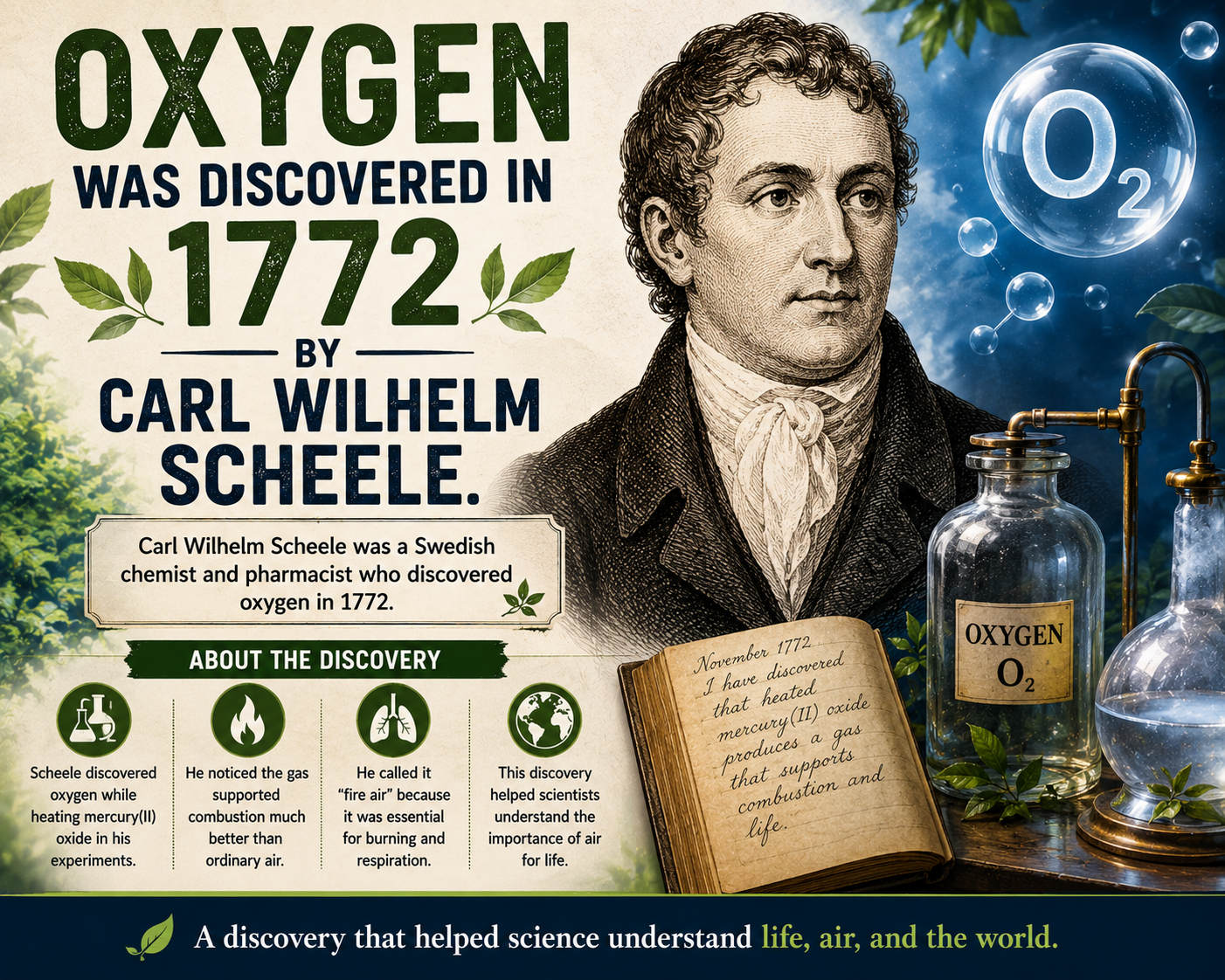
    Oxygen is one of the most important elements for life on Earth, but its discovery was the result of careful experiments, curiosity, and scientific investigation.

    In 1772, Swedish chemist and pharmacist Carl Wilhelm Scheele identified a gas that behaved differently from ordinary air. He found that this gas strongly supported combustion and played an important role in the processes we now understand as respiration and burning.

    Scheele referred to the gas as “fire air” because of its ability to support combustion. His experiments helped reveal that air was not simply one single substance, but a mixture containing different gases.

    The story of oxygen’s discovery is a fascinating example of how science develops through observation and experimentation. Scientists investigate materials, record their observations, test ideas, and gradually build a better understanding of the natural world.

    Although Scheele discovered oxygen independently, the recognition and naming of oxygen as an element also involved other scientists, including Joseph Priestley and Antoine Lavoisier. Their work helped establish oxygen’s role in combustion and contributed to the development of modern chemistry.

    Oxygen is represented by the chemical symbol O and has the atomic number 8. It is essential for aerobic respiration in humans and many other organisms. Without oxygen, most familiar forms of complex life could not survive.

    The discovery of oxygen changed the way scientists understood air, combustion, chemistry, and life. It became an important part of the scientific revolution in chemistry and helped researchers develop a much clearer understanding of chemical reactions.

    This story also reminds us that major scientific discoveries often happen through patience, careful observation, and a willingness to ask questions. Every experiment can reveal something new, and every discovery can open the door to further knowledge.

    From “fire air” to oxygen, the journey of discovery changed chemistry forever.

    Science teaches us that the world around us is full of mysteries waiting to be explored. Whether studying gases, atoms, cells, planets, or living organisms, curiosity is often the first step toward discovery.

    Question. Observe. Experiment. Discover. Learn.

    #Oxygen #DiscoveryOfOxygen #CarlWilhelmScheele #ScienceHistory #HistoryOfScience #Chemistry #ChemicalElements #OxygenDiscovery #1772 #ScientificDiscovery #ScienceEducation #ChemistryFacts #ScienceFacts #LearnScience #ScientificRevolution #Combustion #Air #Respiration #ChemistryHistory #STEM #Education #LearningJourney #ScienceExperiment #ScientificThinking #Research #Discovery #Knowledge #Innovation #Curiosity #ExploreScience #ScienceLovers #EducationalContent #Scientists #ChemicalScience #ModernChemistry #ScienceJourney #HistoryOfChemistry

    Rehan School Islamabad Campus
    Asma Shaheen EducationWali
    Irum Asim
    Saima Happinesswali

    #rsisb Roll No.240 Image With Chatgpt No.6 Foundation Level Oxygen is one of the most important elements for life on Earth, but its discovery was the result of careful experiments, curiosity, and scientific investigation. ๐ŸŒฑ๐Ÿซ๐Ÿ”ฅ In 1772, Swedish chemist and pharmacist Carl Wilhelm Scheele identified a gas that behaved differently from ordinary air. He found that this gas strongly supported combustion and played an important role in the processes we now understand as respiration and burning. ๐Ÿ”ฅ๐Ÿงช Scheele referred to the gas as “fire air” because of its ability to support combustion. His experiments helped reveal that air was not simply one single substance, but a mixture containing different gases. ๐ŸŒฌ๏ธ๐Ÿ”ฌ The story of oxygen’s discovery is a fascinating example of how science develops through observation and experimentation. Scientists investigate materials, record their observations, test ideas, and gradually build a better understanding of the natural world. ๐Ÿ“š๐Ÿ”Ž๐Ÿ’ก Although Scheele discovered oxygen independently, the recognition and naming of oxygen as an element also involved other scientists, including Joseph Priestley and Antoine Lavoisier. Their work helped establish oxygen’s role in combustion and contributed to the development of modern chemistry. โš—๏ธ๐Ÿง ๐ŸŒ Oxygen is represented by the chemical symbol O and has the atomic number 8. It is essential for aerobic respiration in humans and many other organisms. ๐Ÿซ๐ŸŒฟ๐Ÿพ Without oxygen, most familiar forms of complex life could not survive. The discovery of oxygen changed the way scientists understood air, combustion, chemistry, and life. ๐ŸŒŽ๐Ÿ”ฅ๐Ÿ”ฌ It became an important part of the scientific revolution in chemistry and helped researchers develop a much clearer understanding of chemical reactions. This story also reminds us that major scientific discoveries often happen through patience, careful observation, and a willingness to ask questions. ๐Ÿ’ญโžก๏ธ๐Ÿ”ฌโžก๏ธ๐Ÿ’ก Every experiment can reveal something new, and every discovery can open the door to further knowledge. โœจ From “fire air” to oxygen, the journey of discovery changed chemistry forever. โœจ Science teaches us that the world around us is full of mysteries waiting to be explored. ๐ŸŒ๐Ÿ”Ž Whether studying gases, atoms, cells, planets, or living organisms, curiosity is often the first step toward discovery. ๐Ÿš€๐Ÿ“š ๐ŸŒŸ Question. Observe. Experiment. Discover. Learn. ๐ŸŒŸ #Oxygen #DiscoveryOfOxygen #CarlWilhelmScheele #ScienceHistory #HistoryOfScience #Chemistry #ChemicalElements #OxygenDiscovery #1772 #ScientificDiscovery #ScienceEducation #ChemistryFacts #ScienceFacts #LearnScience #ScientificRevolution #Combustion #Air #Respiration #ChemistryHistory #STEM #Education #LearningJourney #ScienceExperiment #ScientificThinking #Research #Discovery #Knowledge #Innovation #Curiosity #ExploreScience #ScienceLovers #EducationalContent #Scientists #ChemicalScience #ModernChemistry #ScienceJourney #HistoryOfChemistry ๐Ÿ”ฌ๐Ÿงช๐ŸŒ๐Ÿ”ฅ๐Ÿซ๐Ÿ“š๐Ÿ’กโœจ๐Ÿš€๐ŸŒฑ Rehan School Islamabad Campus Asma Shaheen EducationWali Irum Asim Saima Happinesswali
    0 Comments 0 Shares 2914 Views
  • #rsisb
    Roll No.240
    Story Post No.24
    Foundation Level

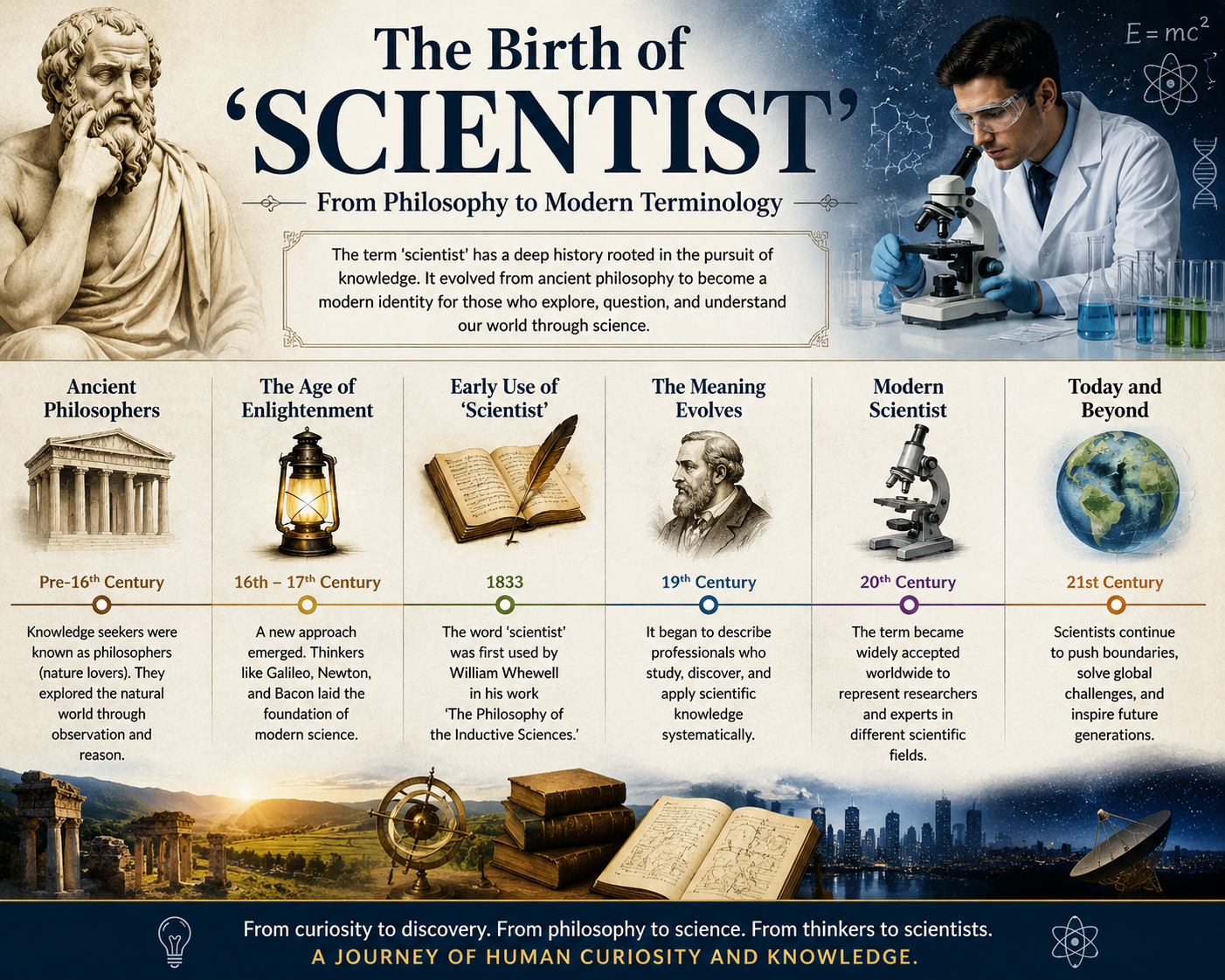
    The word “scientist” may sound like a modern term, but the journey behind it is connected to centuries of human curiosity, philosophy, observation, experimentation, and the search for knowledge.

    Long before the word “scientist” became common, people who studied the natural world were often known as philosophers, scholars, natural philosophers, mathematicians, and thinkers. They asked important questions about nature, the universe, life, matter, motion, and the world around them.

    From the thinkers of the ancient world to the scholars of the Renaissance and the Scientific Revolution, humans continued developing new ways to understand nature. Observation became more important, experiments became more systematic, and evidence gradually became a central part of scientific inquiry.

    During the 18th and 19th centuries, many different branches of knowledge began becoming more specialized. Physics, chemistry, biology, astronomy, geology, and other fields developed their own methods, discoveries, and communities of researchers.

    A major moment in terminology came in the 19th century, when the word “scientist” was introduced as a useful name for people engaged in scientific study. The term is widely associated with William Whewell, who used it in 1833. This helped provide a new, unified word for researchers working across different areas of science.

    The evolution of this word reflects something bigger than language. It represents the changing way humanity organized knowledge and recognized scientific work. The transition from “natural philosopher” to “scientist” shows how science gradually became a distinct and organized field of study.

    Today, scientists work in laboratories, universities, hospitals, observatories, research centers, engineering facilities, and many other places around the world. They investigate everything from tiny cells and molecules to distant galaxies and the origins of the universe.

    Modern science continues to grow through curiosity, evidence, teamwork, technology, and a willingness to ask difficult questions. Every discovery begins with someone wondering, “Why?”, “How?”, or “What if?”

    The story of the word “scientist” reminds us that human knowledge is always evolving. What began with simple curiosity and philosophical questioning gradually developed into the powerful and diverse scientific world we know today.

    From thinkers to researchers. From philosophy to science. From questions to discoveries.

    Science is not only about finding answers—it is also about continuing to ask better questions.

    A journey from curiosity to discovery, and from philosophy to modern science.

    #TheBirthOfScientist #Scientist #HistoryOfScience #ScienceHistory #ScientificRevolution #Philosophy #NaturalPhilosophy #WilliamWhewell #1833 #ModernScience #ScienceEducation #ScientificTerminology #Science #Scientists #Research #Discovery #Curiosity #Knowledge #Learning #Education #STEM #Physics #Chemistry #Biology #Astronomy #Geology #Innovation #Experimentation #ScientificThinking #CriticalThinking #HumanKnowledge #HistoryOfKnowledge #ScienceJourney #FromPhilosophyToScience #ScienceFacts #EducationalContent #LearningJourney #ExploreScience #DiscoverScience

    Rehan School Islamabad Campus
    Asma Shaheen EducationWali
    Irum Asim
    Saima Happinesswali

    #rsisb Roll No.240 Story Post No.24 Foundation Level The word “scientist” may sound like a modern term, but the journey behind it is connected to centuries of human curiosity, philosophy, observation, experimentation, and the search for knowledge. ๐Ÿง ๐Ÿ”Ž Long before the word “scientist” became common, people who studied the natural world were often known as philosophers, scholars, natural philosophers, mathematicians, and thinkers. ๐Ÿ›๏ธ๐Ÿ“œ They asked important questions about nature, the universe, life, matter, motion, and the world around them. From the thinkers of the ancient world to the scholars of the Renaissance and the Scientific Revolution, humans continued developing new ways to understand nature. ๐ŸŒŒ๐ŸŒ๐Ÿ“– Observation became more important, experiments became more systematic, and evidence gradually became a central part of scientific inquiry. ๐Ÿ”ฌ๐Ÿงชโœจ During the 18th and 19th centuries, many different branches of knowledge began becoming more specialized. Physics, chemistry, biology, astronomy, geology, and other fields developed their own methods, discoveries, and communities of researchers. ๐Ÿงฌโš—๏ธ๐ŸŒ  A major moment in terminology came in the 19th century, when the word “scientist” was introduced as a useful name for people engaged in scientific study. The term is widely associated with William Whewell, who used it in 1833. ๐Ÿ“œ๐Ÿ”ฌ This helped provide a new, unified word for researchers working across different areas of science. The evolution of this word reflects something bigger than language. It represents the changing way humanity organized knowledge and recognized scientific work. ๐ŸŒŸ๐Ÿ“š The transition from “natural philosopher” to “scientist” shows how science gradually became a distinct and organized field of study. Today, scientists work in laboratories, universities, hospitals, observatories, research centers, engineering facilities, and many other places around the world. ๐ŸŒ๐Ÿงช๐Ÿ”ญ They investigate everything from tiny cells and molecules to distant galaxies and the origins of the universe. ๐Ÿงฌ๐Ÿฆ ๐ŸŒŒ Modern science continues to grow through curiosity, evidence, teamwork, technology, and a willingness to ask difficult questions. ๐Ÿ’ก๐Ÿค๐Ÿš€ Every discovery begins with someone wondering, “Why?”, “How?”, or “What if?” The story of the word “scientist” reminds us that human knowledge is always evolving. What began with simple curiosity and philosophical questioning gradually developed into the powerful and diverse scientific world we know today. ๐ŸŒฑโžก๏ธ๐Ÿ”ฌโžก๏ธ๐ŸŒ โœจ From thinkers to researchers. From philosophy to science. From questions to discoveries. โœจ Science is not only about finding answers—it is also about continuing to ask better questions. ๐Ÿ”Ž๐Ÿ’ก ๐ŸŒŸ A journey from curiosity to discovery, and from philosophy to modern science. ๐ŸŒŸ #TheBirthOfScientist #Scientist #HistoryOfScience #ScienceHistory #ScientificRevolution #Philosophy #NaturalPhilosophy #WilliamWhewell #1833 #ModernScience #ScienceEducation #ScientificTerminology #Science #Scientists #Research #Discovery #Curiosity #Knowledge #Learning #Education #STEM #Physics #Chemistry #Biology #Astronomy #Geology #Innovation #Experimentation #ScientificThinking #CriticalThinking #HumanKnowledge #HistoryOfKnowledge #ScienceJourney #FromPhilosophyToScience #ScienceFacts #EducationalContent #LearningJourney #ExploreScience #DiscoverScience ๐Ÿ”ฌ๐Ÿ“š๐Ÿง ๐ŸŒโœจ๐Ÿ”ญ๐Ÿงช๐Ÿš€๐Ÿ’ก๐ŸŒŸ Rehan School Islamabad Campus Asma Shaheen EducationWali Irum Asim Saima Happinesswali
    0 Comments 0 Shares 2667 Views
  • #rsisb
    Roll No.269
    Foundation Level
    Story Post No.23


    **The Ethics and Education of Animal Dissections**

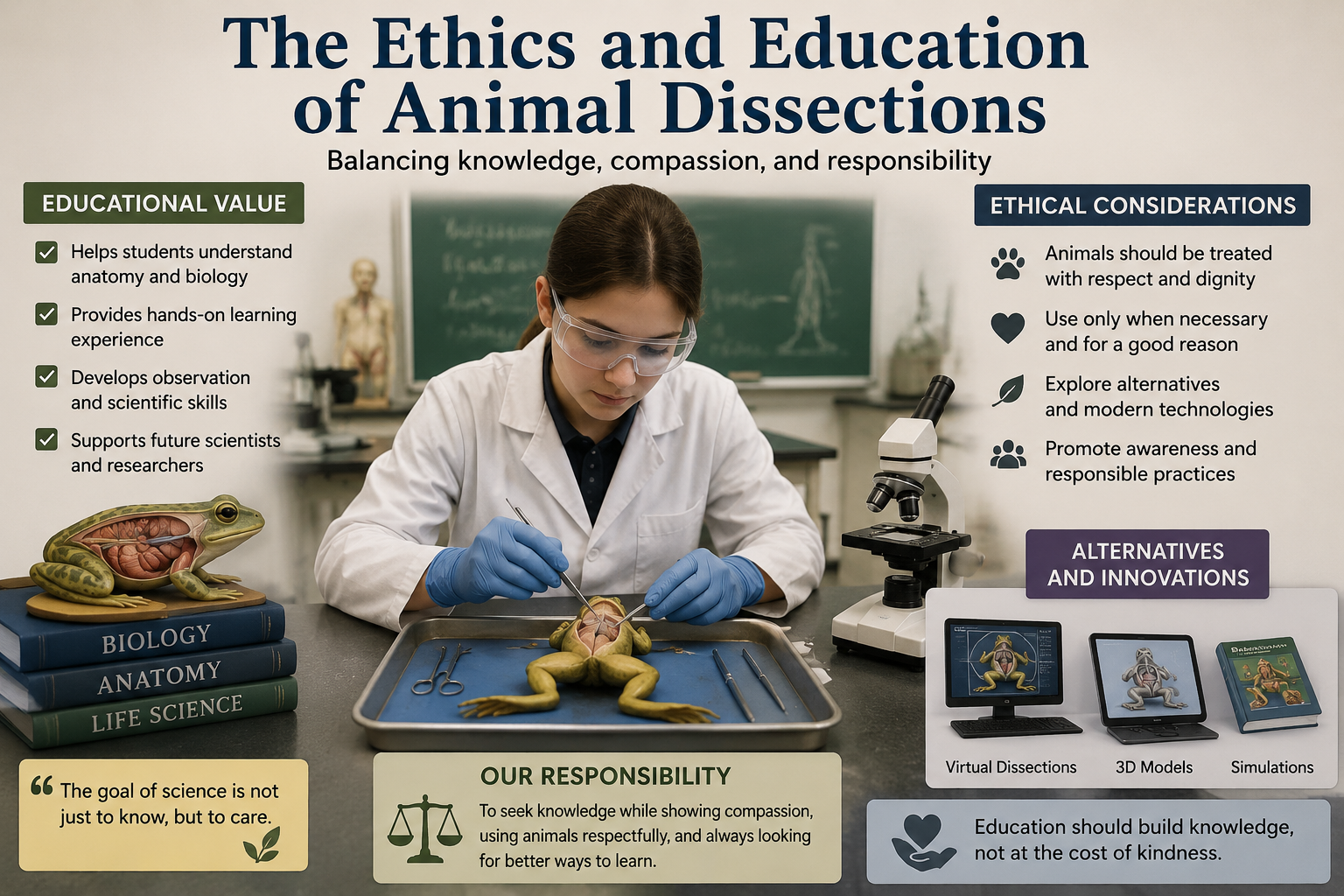
    Animal dissection has been used in science and education for many years to help students understand anatomy, biology, and how living organisms work. But it also raises important questions about **ethics, responsibility, and respect for animals**.

    In this video, we explore the educational value of animal dissections and how they can help students learn about body structures and biological systems. At the same time, we consider the ethical questions surrounding the use of animals in education and why responsible scientific practices are important.

    The topic encourages us to think about how science and education can move forward while showing **care, respect, and responsibility toward living creatures**.

    We also look at the importance of modern learning methods and how technology can provide additional ways to study anatomy and biology.

    Join us as we explore the connection between **science, education, ethics, and respect for animal life**. Keep learning, keep asking questions, and think critically about the choices we make in science.

    #AnimalDissection #Biology #Science #Education #Ethics #AnimalEthics #ScienceEducation #BiologyEducation #Anatomy #AnimalWelfare #ScientificEthics #Learning #Knowledge #ScienceFacts #Research #CriticalThinking #Technology #ModernEducation #Students #ScienceLearning #Nature #RespectAnimals #EducationalScience #RehanSchool #LearnAndGrow
    #rsisb Roll No.269 Foundation Level Story Post No.23 ๐Ÿงฌ **The Ethics and Education of Animal Dissections** ๐Ÿ”ฌ๐Ÿพ Animal dissection has been used in science and education for many years to help students understand anatomy, biology, and how living organisms work. But it also raises important questions about **ethics, responsibility, and respect for animals**. ๐Ÿค”๐Ÿ“š In this video, we explore the educational value of animal dissections and how they can help students learn about body structures and biological systems. ๐Ÿ”ฌ๐Ÿง  At the same time, we consider the ethical questions surrounding the use of animals in education and why responsible scientific practices are important. The topic encourages us to think about how science and education can move forward while showing **care, respect, and responsibility toward living creatures**. ๐Ÿพโค๏ธ๐ŸŒฑ We also look at the importance of modern learning methods and how technology can provide additional ways to study anatomy and biology. ๐Ÿ’ป๐Ÿ”ฌโœจ Join us as we explore the connection between **science, education, ethics, and respect for animal life**. Keep learning, keep asking questions, and think critically about the choices we make in science. ๐ŸŒ๐Ÿ“–๐Ÿ’ก #AnimalDissection ๐Ÿพ #Biology ๐Ÿงฌ #Science ๐Ÿ”ฌ #Education ๐Ÿ“š #Ethics โš–๏ธ #AnimalEthics ๐Ÿพ #ScienceEducation ๐ŸŽ“ #BiologyEducation ๐Ÿง  #Anatomy ๐Ÿ”ฌ #AnimalWelfare โค๏ธ #ScientificEthics ๐Ÿ’ก #Learning ๐Ÿ“– #Knowledge ๐Ÿง  #ScienceFacts ๐Ÿ” #Research ๐Ÿ”ฌ #CriticalThinking ๐Ÿค” #Technology ๐Ÿ’ป #ModernEducation ๐ŸŒฑ #Students ๐ŸŽ“ #ScienceLearning ๐Ÿ“š #Nature ๐ŸŒฟ #RespectAnimals ๐Ÿพ #EducationalScience ๐Ÿ”ฌ #RehanSchool ๐Ÿซ #LearnAndGrow โœจ
    0 Comments 0 Shares 1959 Views
  • RSISB
    Roll No: 209
    Sesamemaya No.28

    Admission Process — Your Journey to Studying in Germany!

    Today, I had an interesting and informative conversation with Sesame Maya about the “Admission Process in Germany.” We explored important topics such as university applications , admission requirements , required documents , application deadlines , uni-assist, admission letters , and common mistakes students should avoid.

    Understanding the admission process is an important step for every student who dreams of studying in Germany. With proper research, preparation, and the right information, students can make their application journey easier and more organised.

    This conversation helped me learn more about how international students can prepare for university admission and what they should focus on before applying.

    Prepare well, apply confidently, and move one step closer to your dream!

    #AdmissionProcess #StudyInGermany #GermanyWala #SesameMaya #UniversityAdmission #StudyAbroad #InternationalStudents #UniAssist #UniversityApplication #StudentJourney #GermanUniversities #HigherEducation #FutureGoals #EducationMatters #LearningJourney #DreamBig #StudyInEurope
    RSISB Roll No: 209 Sesamemaya No.28 ๐Ÿ‡ฉ๐Ÿ‡ช๐ŸŽ“ Admission Process — Your Journey to Studying in Germany! โœˆ๏ธ๐Ÿ“š Today, I had an interesting and informative conversation with Sesame Maya about the “Admission Process in Germany.” ๐Ÿค–๐Ÿ’ฌ๐Ÿ‡ฉ๐Ÿ‡ช We explored important topics such as university applications ๐Ÿ“, admission requirements ๐ŸŽ“, required documents ๐Ÿ“„, application deadlines โฐ, uni-assist, admission letters โœ‰๏ธ, and common mistakes students should avoid. Understanding the admission process is an important step for every student who dreams of studying in Germany. ๐ŸŒโœจ With proper research, preparation, and the right information, students can make their application journey easier and more organised. ๐Ÿš€๐Ÿ“š This conversation helped me learn more about how international students can prepare for university admission and what they should focus on before applying. ๐ŸŽฏ๐Ÿ‡ฉ๐Ÿ‡ช Prepare well, apply confidently, and move one step closer to your dream! ๐ŸŽ“โœˆ๏ธ๐Ÿš€ #AdmissionProcess ๐Ÿ‡ฉ๐Ÿ‡ช #StudyInGermany ๐ŸŽ“ #GermanyWala #SesameMaya ๐Ÿค– #UniversityAdmission ๐Ÿซ #StudyAbroad โœˆ๏ธ #InternationalStudents ๐ŸŒ #UniAssist ๐Ÿ“ #UniversityApplication ๐Ÿ“„ #StudentJourney ๐ŸŽ’ #GermanUniversities ๐Ÿ‡ฉ๐Ÿ‡ช #HigherEducation ๐Ÿ“š #FutureGoals ๐ŸŽฏ #EducationMatters โœจ #LearningJourney ๐Ÿš€ #DreamBig ๐ŸŒŸ #StudyInEurope ๐Ÿ‡ช๐Ÿ‡บ
    0 Comments 0 Shares 1951 Views 25
  • #rsisb
    Roll No.269
    Foundation Level
    Story Post No.20

    **Exploring Life’s Mechanisms Through Experimentation**

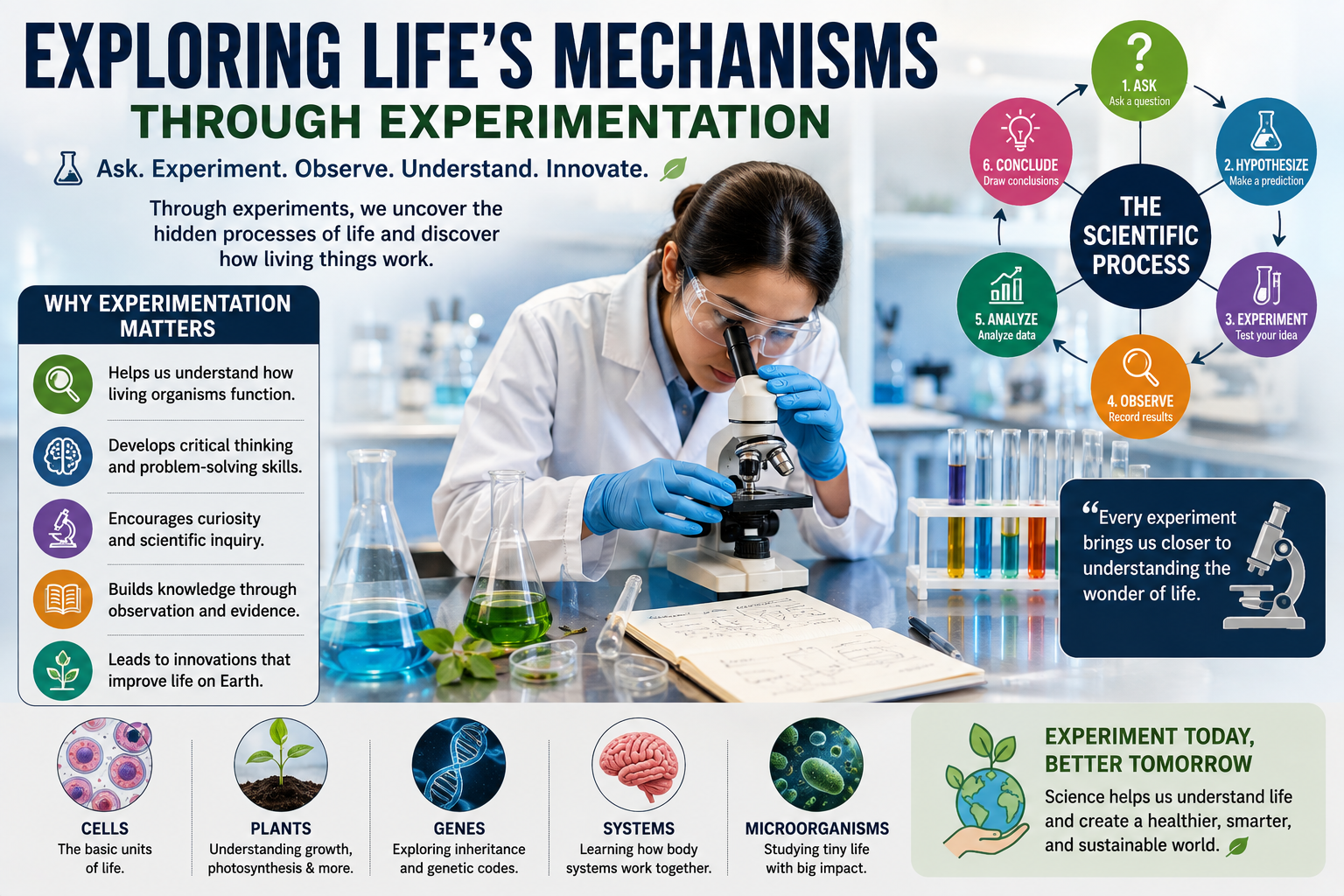
    Science helps us understand the amazing world of life and the different processes that happen inside living organisms. In this video, we explore how **experimentation** helps scientists discover, test, and understand the mechanisms that make life possible.

    Through experiments and observations, scientists can learn more about cells, biological systems, and the complex processes that take place in living things. Experimentation allows us to ask important questions, test our ideas, observe results, and learn from evidence.

    This topic also shows the importance of **curiosity and scientific thinking**. Every discovery can begin with a simple question and a desire to find the answer. By experimenting and exploring, we can develop a better understanding of life and the natural world around us.

    Join us as we explore the fascinating world of biology, experimentation, and scientific discovery. Keep asking questions, keep exploring, and never stop learning!

    #Science #Biology #Experimentation #LifeScience #ScientificDiscovery #ScienceEducation #ScienceFacts #BiologyFacts #Research #Learning #Education #Knowledge #Curiosity #Discovery #Nature #ScientificThinking #Experiments #Innovation #Study #StudentLife #RehanSchool #ScienceProject #Explore #LearnAndGrow #KnowledgeIsPower
    #rsisb Roll No.269 Foundation Level Story Post No.20 ๐Ÿ”ฌ **Exploring Life’s Mechanisms Through Experimentation** ๐Ÿงฌโœจ Science helps us understand the amazing world of life and the different processes that happen inside living organisms. In this video, we explore how **experimentation** helps scientists discover, test, and understand the mechanisms that make life possible. ๐Ÿงช๐Ÿ”๐ŸŒฑ Through experiments and observations, scientists can learn more about cells, biological systems, and the complex processes that take place in living things. Experimentation allows us to ask important questions, test our ideas, observe results, and learn from evidence. ๐Ÿ“š๐Ÿง ๐Ÿ’ก This topic also shows the importance of **curiosity and scientific thinking**. Every discovery can begin with a simple question and a desire to find the answer. By experimenting and exploring, we can develop a better understanding of life and the natural world around us. ๐ŸŒ๐Ÿ”ฌโœจ Join us as we explore the fascinating world of biology, experimentation, and scientific discovery. Keep asking questions, keep exploring, and never stop learning! ๐Ÿš€๐Ÿงฌ๐Ÿ“– #Science ๐Ÿ”ฌ #Biology ๐Ÿงฌ #Experimentation ๐Ÿงช #LifeScience ๐ŸŒฑ #ScientificDiscovery ๐Ÿ” #ScienceEducation ๐Ÿ“š #ScienceFacts ๐Ÿ’ก #BiologyFacts ๐Ÿงฌ #Research ๐Ÿ”ฌ #Learning ๐ŸŽ“ #Education ๐Ÿ“– #Knowledge ๐Ÿง  #Curiosity ๐Ÿค” #Discovery ๐ŸŒ #Nature ๐ŸŒฟ #ScientificThinking ๐Ÿ’ญ #Experiments ๐Ÿงช #Innovation ๐Ÿš€ #Study ๐Ÿ“š #StudentLife ๐ŸŽ“ #RehanSchool ๐Ÿซ #ScienceProject ๐Ÿ”ฌ #Explore ๐ŸŒŽ #LearnAndGrow ๐ŸŒฑ #KnowledgeIsPower ๐Ÿ’ก
    0 Comments 0 Shares 1104 Views
  • #rsisb Roll No.240 Song No.23 Foundation Level **Dissecting Frogs: A Gateway to Human Anatomy** explores how studying frog anatomy can help students understand important ideas about the structure and functions of living organisms. Through careful observation and scientific study, students can learn how different body systems work together and how anatomy helps us understand life. Frogs are often used in biology education because their body structures provide useful examples for learning about organs, body systems, and biological functions. Studying anatomy can help students connect what they learn from textbooks and diagrams with real biological structures. This topic introduces students to important concepts such as the organization of the body, organs, tissues, and different body systems. It also encourages students to observe carefully, record information, ask questions, and think scientifically. The study of frog anatomy can also provide a broader understanding of **human anatomy**. Although frogs and humans are different animals, studying similarities and differences between organisms can help students understand how bodies are organized and how living systems perform essential functions. Most importantly, biological practical work should be carried out with **proper supervision, ethical consideration, safety procedures, and respect for living organisms**. Students can gain valuable scientific knowledge while developing responsible attitudes toward biological research. This topic encourages curiosity and helps students appreciate the complexity of life. It shows that science is not only about memorizing facts; it is also about observing, questioning, investigating, and building a deeper understanding of the natural world. ๐Ÿ”ฌ **Learn through scientific observation** ๐Ÿธ **Explore frog anatomy as a biology model** ๐Ÿง  **Understand organs and body systems** ๐Ÿ“š **Connect practical learning with classroom knowledge** ๐Ÿ‘ฉ‍๐Ÿ”ฌ **Develop scientific thinking and observation skills** ๐ŸŒ **Appreciate the complexity and diversity of life** **Dissecting Frogs: A Gateway to Human Anatomy** provides students with an opportunity to explore anatomy in an educational setting and understand how biological structures are connected to their functions. Through responsible scientific learning, students can build knowledge that supports their future studies in biology, medicine, health sciences, and other scientific fields. #FrogDissection #HumanAnatomy #Anatomy #Biology #ScienceEducation #BiologyLab #FrogAnatomy #HumanBody #LifeScience #ScientificLearning #Education #Science #BiologyStudents #LearningThroughScience Rehan School Islamabad Campus Asma Shaheen EducationWali Irum Asim Saima Happinesswali https://www.facebook.com/share/v/1DrPuWFK8D/
    WWW.FACEBOOK.COM
    Facebook
    #rsisb Roll No.240 Song No.23 Foundation Level **Dissecting Frogs: A Gateway to Human Anatomy** explores how studying frog anatomy can help students understand important ideas about the structure...
    0 Comments 0 Shares 1383 Views
More Results