• #rsisb
    Roll no 248
    Foundation level
    song no 22
    Here’s a ready-to-use description:

    **The Role of Law: How Legal Systems Maintain Order in Society**

    Law plays an essential role in creating a safe, fair, and organized society. It establishes rules that guide people’s behavior, protects rights and freedoms, resolves disputes, and helps prevent injustice. Through courts, legal institutions, and law-enforcement systems, laws provide a framework for accountability and social stability.

    This topic explores why laws are important, how legal systems work, and how justice helps communities live together peacefully. Understanding the role of law helps us become responsible citizens who respect both our rights and the rights of others.

    #RoleOfLaw #LegalSystem #LawAndJustice #Justice #Society #HumanRights #RuleOfLaw #Civics #Education #ResponsibleCitizenship #SocialOrder #Equality #Peace #LawStudents #Learning #KnowledgeIsPower
    #rsisb Roll no 248 Foundation level song no 22 Here’s a ready-to-use description: ⚖️ **The Role of Law: How Legal Systems Maintain Order in Society** 🏛️📚 Law plays an essential role in creating a safe, fair, and organized society. ⚖️ It establishes rules that guide people’s behavior, protects rights and freedoms, resolves disputes, and helps prevent injustice. 👥🤝 Through courts, legal institutions, and law-enforcement systems, laws provide a framework for accountability and social stability. 🏛️🔍 This topic explores why laws are important, how legal systems work, and how justice helps communities live together peacefully. 🌍🕊️ Understanding the role of law helps us become responsible citizens who respect both our rights and the rights of others. 💡📖 #RoleOfLaw #LegalSystem #LawAndJustice #Justice ⚖️ #Society #HumanRights #RuleOfLaw #Civics #Education 📚 #ResponsibleCitizenship #SocialOrder #Equality #Peace 🕊️ #LawStudents #Learning #KnowledgeIsPower 💡
    0 Comentários 0 Compartilhamentos 100 Visualizações 1
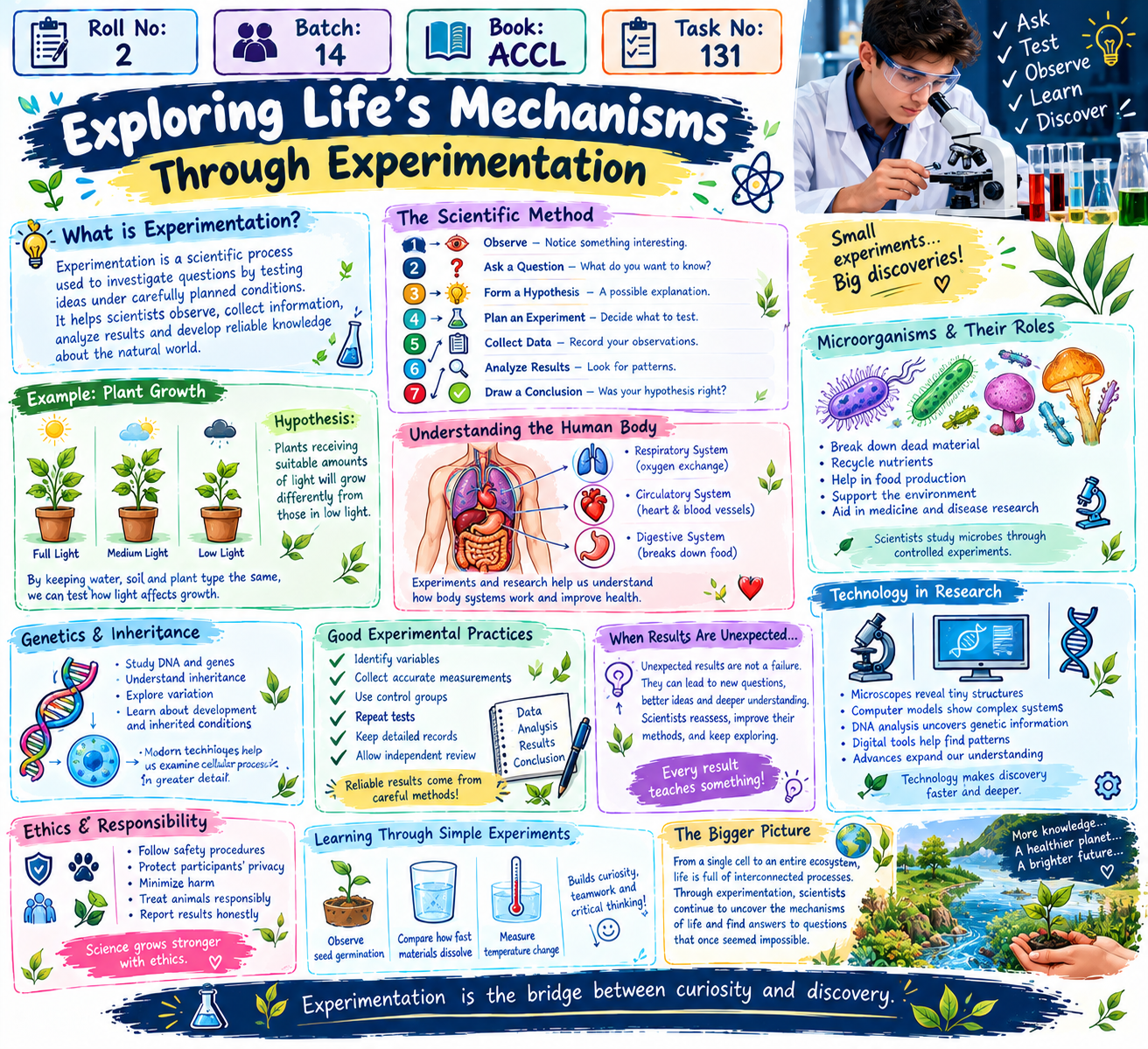
  • # **Batch 14**

    # **Task No. 11**

    # **Book ACCl**

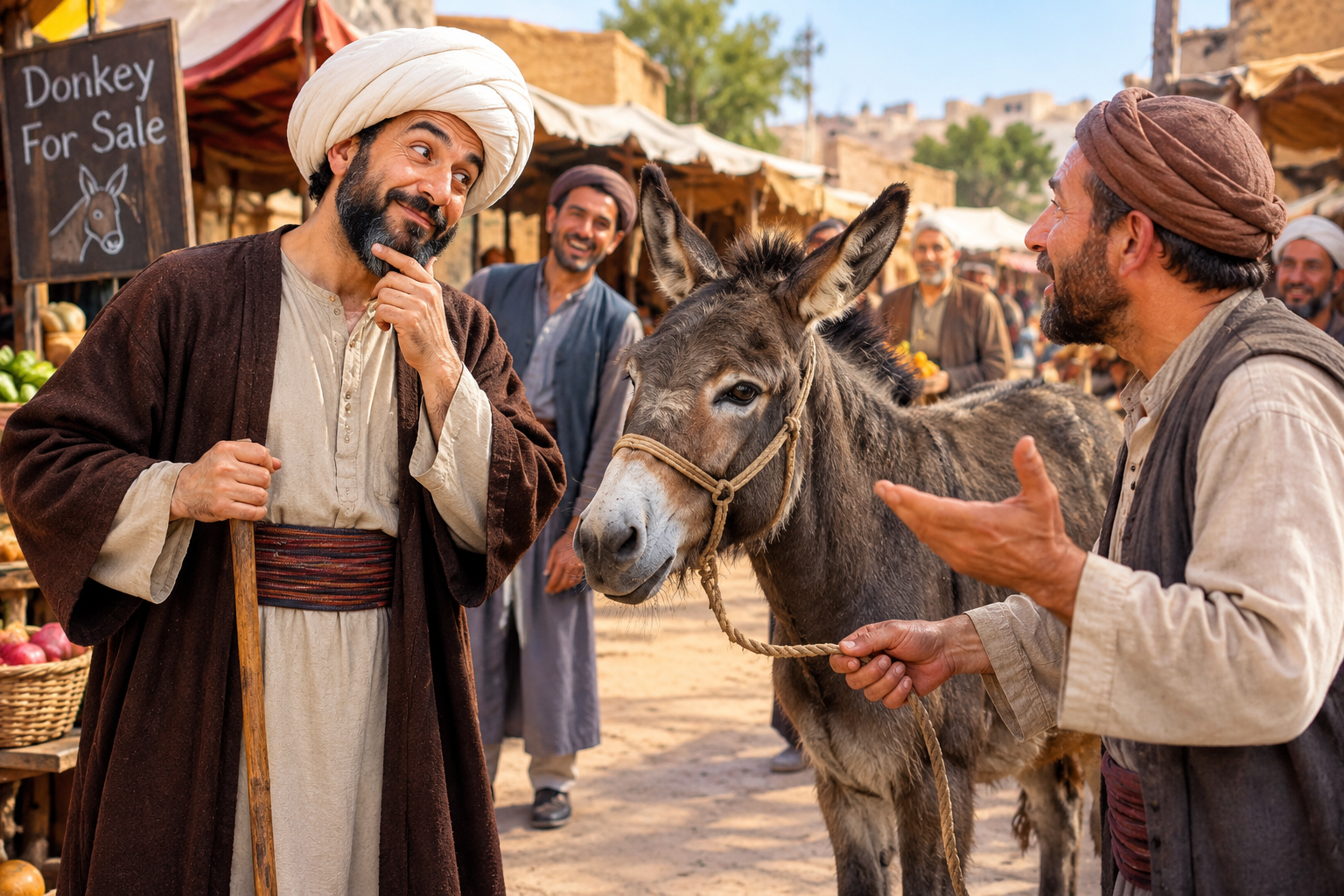
    Mulla Nasrudin’s Wise Answer 🫏

    Once upon a time, **Mulla Nasrudin** was walking through the marketplace when he saw a man arguing loudly with a donkey seller.

    The man wanted to buy a donkey 🫏, but he thought the price was too high.

    “I will give you **ten coins**,” he said.

    The seller replied, “No! This donkey is worth **twenty coins**!”

    The argument continued for a long time.

    Finally, they asked Nasrudin for his opinion.

    Nasrudin looked carefully at the donkey. 🫏 Then he smiled and said:

    “Both of you are wrong!”

    Everyone became surprised.

    The seller asked, “Why am I wrong?”

    Nasrudin replied, “Because you are asking for twenty coins when the buyer only has ten.”

    Then the buyer asked, “And why am I wrong?”

    Nasrudin smiled and said:

    “Because you are offering ten coins for a donkey worth twenty!” 🫏

    Everyone started laughing.

    Nasrudin then added:

    “Sometimes, the **wisest answer is not choosing one side—it is seeing the truth from both sides.**

    The seller and the buyer looked at each other.

    They finally agreed on a fair price.

    And Nasrudin walked away happily, saying:

    “Another problem solved without buying the donkey!” 🫏

    ### Moral of the Story

    **Wisdom means looking at a problem from every side before making a decision.**
    # **Batch 14** # **Task No. 11** # **Book ACCl** 🧔‍♂️✨ Mulla Nasrudin’s Wise Answer 🫏💰 Once upon a time, **Mulla Nasrudin** 🧔‍♂️ was walking through the marketplace 🏘️ when he saw a man arguing loudly with a donkey seller. 🗣️🐴 The man wanted to buy a donkey 🫏, but he thought the price was too high. 💰😤 “I will give you **ten coins**,” he said. 🪙 The seller replied, “No! This donkey is worth **twenty coins**!” 💰💰 The argument continued for a long time. 😠🗣️😠 Finally, they asked Nasrudin for his opinion. 🤔 Nasrudin looked carefully at the donkey. 👀🫏 Then he smiled and said: “Both of you are wrong!” 😄 Everyone became surprised. 😲 The seller asked, “Why am I wrong?” Nasrudin replied, “Because you are asking for twenty coins when the buyer only has ten.” 😂🪙 Then the buyer asked, “And why am I wrong?” Nasrudin smiled and said: “Because you are offering ten coins for a donkey worth twenty!” 😄🫏💰 Everyone started laughing. 😂🤣 Nasrudin then added: “Sometimes, the **wisest answer is not choosing one side—it is seeing the truth from both sides.** 🧠✨⚖️” The seller and the buyer looked at each other. 👀🤝 They finally agreed on a fair price. 💰🤝😊 And Nasrudin walked away happily, saying: “Another problem solved without buying the donkey!” 😂🫏🚶‍♂️ ### 🌟 Moral of the Story **Wisdom means looking at a problem from every side before making a decision.** 🧠💡⚖️✨
    0 Comentários 0 Compartilhamentos 103 Visualizações
  • #rsisb
    roll no.247
    call annie
    Foundation level

    **“Air” – Breathing Life into Language | 25-Minute Learning Session**

    Air is all around us, yet we often forget how important it is to our everyday lives. We cannot see air, but we can feel it when the wind blows, hear it when it whistles through the trees, and observe its effects all around us. In this fascinating 25-minute session, **“Air – Breathing Life into Language,”** we explore the meaning, importance, science, and language of one of the most essential things on Earth.

    From the moment we wake up to the moment we go to sleep, air plays an important role in our lives. Humans and animals need oxygen from the air to live, while plants use carbon dioxide during photosynthesis to help make their food. Air also helps birds fly, carries sounds, moves clouds, creates winds, and influences weather and climate.

    But this session is not only about science—it is also about **language and communication**. The word “air” appears in many expressions and ideas. We can talk about fresh air, polluted air, a breath of fresh air, airing an idea, or even having an “air” of confidence. These expressions show how deeply connected language is to the world around us.

    During this 25-minute learning experience, learners can discover how the simple word **“air”** has developed different meanings and uses. They can explore vocabulary, expressions, sentence formation, communication, and scientific concepts while thinking about something that surrounds them every day.

    The session also encourages curiosity and observation. What happens when wind moves? Why does a balloon expand? How does air help us hear sounds? Why is clean air important? How do plants and animals depend on air? These questions can turn an ordinary subject into an exciting learning adventure.

    Most importantly, **“Air – Breathing Life into Language”** encourages learners to understand that words are connected to the world we experience. A single word can carry scientific meaning, cultural meaning, emotional meaning, and everyday meaning.

    **Key Learning Areas:**
    Understanding what air is
    Learning why living things need air
    Exploring the relationship between plants and air
    Understanding wind and movement
    Discovering expressions and phrases using the word “air”
    Building vocabulary and language skills
    Developing observation and questioning skills
    Understanding why clean air matters
    Connecting science with everyday language

    This session is designed to make learning **interactive, thoughtful, and enjoyable**. Instead of simply memorizing facts, learners can ask questions, share ideas, create sentences, observe their surroundings, and discover how science and language work together.

    **Air may be invisible, but its importance is everywhere.** It gives life, carries sound, moves clouds, creates wind, supports nature, and inspires countless words and expressions. Through this 25-minute session, learners can take a closer look at something they experience every second—and discover that even the simplest things can teach us something amazing.

    **Breathe in curiosity. Breathe out new ideas. Let learning fill the air!**

    #Air #BreathingLifeIntoLanguage #Learning #Education #Science #EnglishLanguage #Vocabulary #LanguageLearning #CreativeLearning #YoungLearners #Curiosity #ExploreAndLearn #Knowledge #ScienceAndLanguage #CleanAir #Environment #Nature #Plants #Oxygen #Wind #Weather #Communication #LearningIsFun #EducationalContent #25MinuteSession #StudentLearning #ClassroomLearning #ThinkAndLearn #ExploreTheWorld
    #rsisb roll no.247 call annie Foundation level 🌬️ **“Air” – Breathing Life into Language | 25-Minute Learning Session** 📚✨ Air is all around us, yet we often forget how important it is to our everyday lives. We cannot see air, but we can feel it when the wind blows, hear it when it whistles through the trees, and observe its effects all around us. 🌿💨 In this fascinating 25-minute session, **“Air – Breathing Life into Language,”** we explore the meaning, importance, science, and language of one of the most essential things on Earth. 🌍💙 From the moment we wake up to the moment we go to sleep, air plays an important role in our lives. Humans and animals need oxygen from the air to live, while plants use carbon dioxide during photosynthesis to help make their food. 🌱🫁 Air also helps birds fly, carries sounds, moves clouds, creates winds, and influences weather and climate. ☁️🌦️🕊️ But this session is not only about science—it is also about **language and communication**. 🗣️📖 The word “air” appears in many expressions and ideas. We can talk about fresh air, polluted air, a breath of fresh air, airing an idea, or even having an “air” of confidence. These expressions show how deeply connected language is to the world around us. 💭✨ During this 25-minute learning experience, learners can discover how the simple word **“air”** has developed different meanings and uses. They can explore vocabulary, expressions, sentence formation, communication, and scientific concepts while thinking about something that surrounds them every day. 🌬️🔤 The session also encourages curiosity and observation. 🔍🌎 What happens when wind moves? Why does a balloon expand? How does air help us hear sounds? Why is clean air important? How do plants and animals depend on air? These questions can turn an ordinary subject into an exciting learning adventure. 🎈🌱🐦 Most importantly, **“Air – Breathing Life into Language”** encourages learners to understand that words are connected to the world we experience. A single word can carry scientific meaning, cultural meaning, emotional meaning, and everyday meaning. 📚💡 🌟 **Key Learning Areas:** • 🌬️ Understanding what air is • 🫁 Learning why living things need air • 🌱 Exploring the relationship between plants and air • 💨 Understanding wind and movement • 🗣️ Discovering expressions and phrases using the word “air” • 📖 Building vocabulary and language skills • 🔍 Developing observation and questioning skills • 🌍 Understanding why clean air matters • 💭 Connecting science with everyday language This session is designed to make learning **interactive, thoughtful, and enjoyable**. Instead of simply memorizing facts, learners can ask questions, share ideas, create sentences, observe their surroundings, and discover how science and language work together. 🚀🧠✨ 🌍 **Air may be invisible, but its importance is everywhere.** It gives life, carries sound, moves clouds, creates wind, supports nature, and inspires countless words and expressions. Through this 25-minute session, learners can take a closer look at something they experience every second—and discover that even the simplest things can teach us something amazing. 🌬️💙📚 ✨ **Breathe in curiosity. Breathe out new ideas. Let learning fill the air!** 🌟 #Air #BreathingLifeIntoLanguage #Learning #Education #Science #EnglishLanguage #Vocabulary #LanguageLearning #CreativeLearning #YoungLearners #Curiosity #ExploreAndLearn #Knowledge #ScienceAndLanguage #CleanAir #Environment #Nature #Plants #Oxygen #Wind #Weather #Communication #LearningIsFun #EducationalContent #25MinuteSession #StudentLearning #ClassroomLearning #ThinkAndLearn #ExploreTheWorld 🌬️🌱📚🌍💡
    0 Comentários 0 Compartilhamentos 413 Visualizações 3
  • #rsisb
    Roll no.247
    song no.4
    Foundation level

    **Chemical Reactions: The Engine of Life**

    Chemical reactions are happening all around us—and even inside us—every moment of every day! From the food we eat to the oxygen we breathe, chemical reactions make life possible. They transform substances into new substances and provide the energy needed for living organisms to grow, move, repair themselves, and survive.

    In this fascinating journey through chemistry, we explore how atoms rearrange, how bonds are broken and formed, and how energy can be released or absorbed during a reaction. We’ll discover everyday examples such as digestion , photosynthesis , cellular respiration , rusting , cooking , and many other processes.

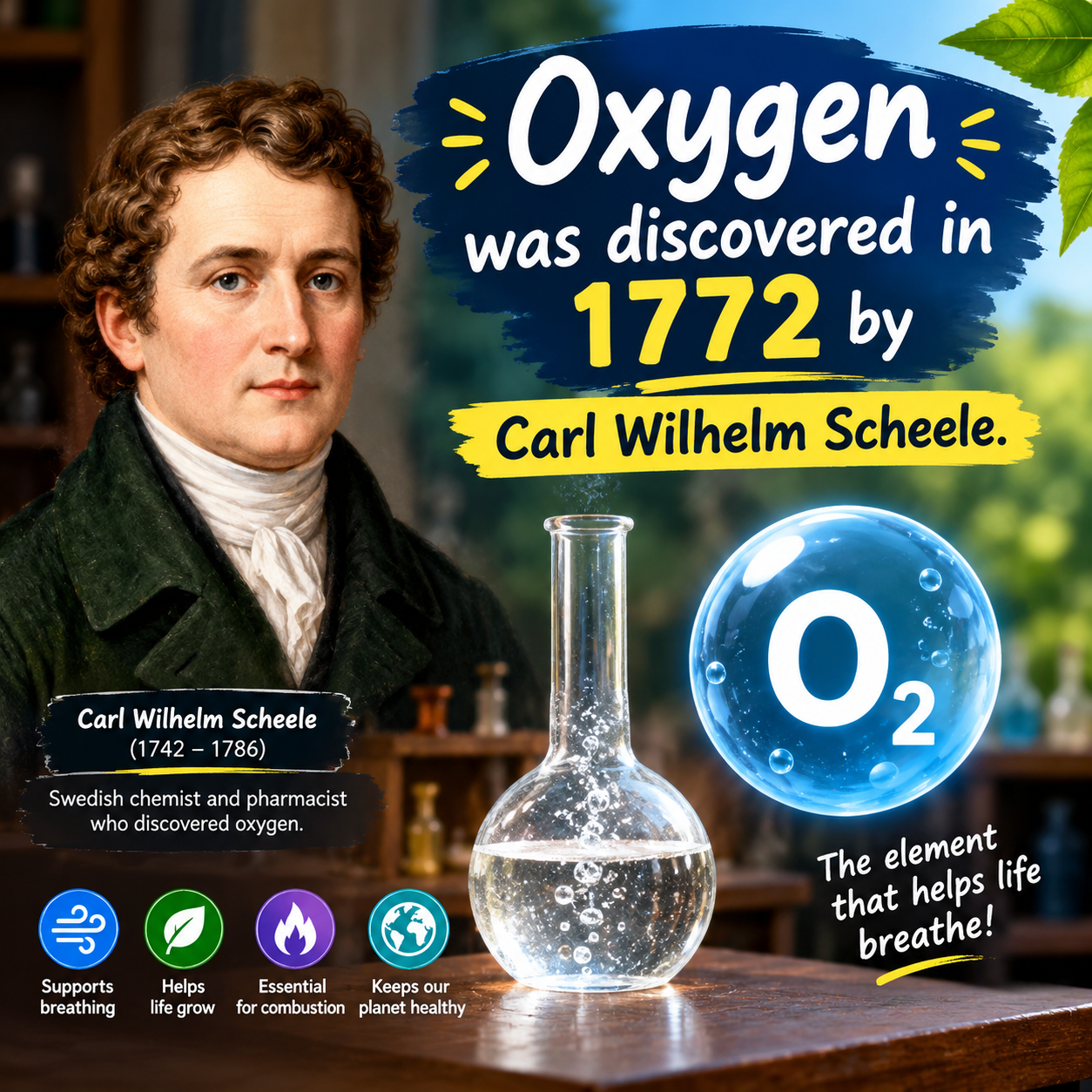
    Photosynthesis is a wonderful example of chemistry in action. Plants use light energy to help convert carbon dioxide and water into glucose and oxygen. Cellular respiration then helps living cells obtain usable energy from food. Together, these processes show how beautifully chemistry and biology are connected.

    Understanding chemical reactions helps us understand the world at a deeper level. It explains how medicines work , how fuels produce energy , how materials change , and how natural cycles keep our planet functioning .

    So, get ready to explore the amazing microscopic world of atoms and molecules! Learn how tiny changes at the molecular level can create enormous effects in the world around us.

    **Chemistry isn't just a subject—it is one of the engines that keeps life moving!**

    #ChemicalReactions #Chemistry #EngineOfLife #Science #Biology #Atoms #Molecules #Photosynthesis #CellularRespiration #ScienceEducation #LearnScience #STEM #ScienceForStudents #AmazingScience #ChemistryInAction #LifeScience #EducationalContent #ExploreScience #KnowledgeIsPower #LearningIsFun
    #rsisb Roll no.247 song no.4 Foundation level 🧪⚡ **Chemical Reactions: The Engine of Life** 🌱🔬 Chemical reactions are happening all around us—and even inside us—every moment of every day! 🌍✨ From the food we eat to the oxygen we breathe, chemical reactions make life possible. They transform substances into new substances and provide the energy needed for living organisms to grow, move, repair themselves, and survive. 🧬❤️ In this fascinating journey through chemistry, we explore how atoms rearrange, how bonds are broken and formed, and how energy can be released or absorbed during a reaction. ⚛️🔗🔥 We’ll discover everyday examples such as digestion 🍎, photosynthesis 🌿☀️, cellular respiration 🫁, rusting 🧲, cooking 🍳, and many other processes. Photosynthesis is a wonderful example of chemistry in action. 🌱☀️ Plants use light energy to help convert carbon dioxide and water into glucose and oxygen. Cellular respiration then helps living cells obtain usable energy from food. Together, these processes show how beautifully chemistry and biology are connected. 💚🔬 Understanding chemical reactions helps us understand the world at a deeper level. It explains how medicines work 💊, how fuels produce energy ⛽, how materials change 🧱, and how natural cycles keep our planet functioning 🌎. So, get ready to explore the amazing microscopic world of atoms and molecules! 🚀🧪 Learn how tiny changes at the molecular level can create enormous effects in the world around us. ✨ **Chemistry isn't just a subject—it is one of the engines that keeps life moving!** ⚡🌍🧬 #ChemicalReactions 🧪 #Chemistry 🔬 #EngineOfLife ⚡ #Science 🌍 #Biology 🧬 #Atoms ⚛️ #Molecules 🔗 #Photosynthesis 🌱 #CellularRespiration 🫁 #ScienceEducation 📚 #LearnScience 💡 #STEM 🚀 #ScienceForStudents 🎓 #AmazingScience ✨ #ChemistryInAction 🔥 #LifeScience 🌿 #EducationalContent 📖 #ExploreScience 🔎 #KnowledgeIsPower 💫 #LearningIsFun 😊
    0 Comentários 0 Compartilhamentos 570 Visualizações 5
  • #rsisb
    Roll no.247
    canva post .31
    Foundation leve

    **The Physics of Everyday Life: How Science Affects Our World**

    Have you ever wondered why a ball falls when you drop it, how a bicycle stays balanced, why a car moves forward, how a fan produces airflow, or how your smartphone communicates with the world around you? All of these everyday experiences are connected to **physics**—the science that helps us understand how the universe works.

    **“The Physics of Everyday Life: How Science Affects Our World”** is an exciting journey into the science behind the ordinary things we see and use every day. From the moment we wake up and switch on a light to the time we travel, study, play, cook, communicate, and relax, physics is constantly working around us.

    **Energy and Electricity:**
    Electricity powers our homes, schools, computers, appliances, and countless modern technologies. Understanding energy helps us see how electrical power is generated, transferred, and transformed into useful forms.

    **Motion and Forces:**
    Whenever something moves, forces are involved. Walking, running, cycling, driving, throwing a ball, or opening a door can all be explained through concepts such as force, motion, friction, and acceleration.

    **Heat and Temperature:**
    From boiling water to cooling food in a refrigerator , heat transfer plays an important role in our daily lives. Physics explains why different materials heat up and cool down at different rates.

    **Light and Sound:**
    The colors we see, the sounds we hear, the mirrors we use, and the cameras in our phones are all connected to fascinating physical principles.

    **Gravity and the Natural World:**
    Gravity keeps us on Earth and influences everything from falling objects to the movement of planets and satellites.

    **Technology and Modern Life:**
    Physics is also behind many technologies we depend on, including smartphones, computers, medical equipment, transportation systems, satellites, and communication devices.

    The most amazing lesson is that **physics is not only something we study in textbooks—it is happening all around us.** When we understand the science behind everyday events, ordinary experiences become opportunities for discovery.

    This topic encourages curiosity, observation, critical thinking, experimentation, and a deeper appreciation for the world around us. It reminds us that asking **“Why?”** can be the beginning of an exciting scientific journey.

    Whether you are a student, teacher, science enthusiast, or simply someone curious about how things work, exploring everyday physics can help you look at the world from a completely new perspective.

    **Observe. Question. Experiment. Discover. Learn.**
    Because science is not far away—it is part of **every moment of our everyday lives!**

    #Physics #EverydayPhysics #Science #PhysicsInEverydayLife #ScienceEducation #STEM #STEMEducation #LearnScience #ScienceEverywhere #PhysicsExplained #ScienceAndTechnology #EverydayScience #LearningIsFun #Curiosity #Discovery #Education #Students #Teachers #ScientificThinking #Experiments #Energy #Motion #Gravity #Electricity #Light #Sound #Technology #Innovation #ExploreScience #KnowledgeIsPower
    #rsisb Roll no.247 canva post .31 Foundation leve 🌍⚛️ **The Physics of Everyday Life: How Science Affects Our World** 🔬✨ Have you ever wondered why a ball falls when you drop it, how a bicycle stays balanced, why a car moves forward, how a fan produces airflow, or how your smartphone communicates with the world around you? 🤔📱🚗 All of these everyday experiences are connected to **physics**—the science that helps us understand how the universe works. 🌌🔭 **“The Physics of Everyday Life: How Science Affects Our World”** is an exciting journey into the science behind the ordinary things we see and use every day. From the moment we wake up and switch on a light 💡 to the time we travel, study, play, cook, communicate, and relax, physics is constantly working around us. ⚡ **Energy and Electricity:** Electricity powers our homes, schools, computers, appliances, and countless modern technologies. Understanding energy helps us see how electrical power is generated, transferred, and transformed into useful forms. 🚗 **Motion and Forces:** Whenever something moves, forces are involved. Walking, running, cycling, driving, throwing a ball, or opening a door can all be explained through concepts such as force, motion, friction, and acceleration. 🏃‍♂️⚽🚲 🌡️ **Heat and Temperature:** From boiling water ☕ to cooling food in a refrigerator ❄️, heat transfer plays an important role in our daily lives. Physics explains why different materials heat up and cool down at different rates. 💡 **Light and Sound:** The colors we see, the sounds we hear, the mirrors we use, and the cameras in our phones are all connected to fascinating physical principles. 🌈👂📷 🌍 **Gravity and the Natural World:** Gravity keeps us on Earth and influences everything from falling objects to the movement of planets and satellites. 🪐🌎 📱 **Technology and Modern Life:** Physics is also behind many technologies we depend on, including smartphones, computers, medical equipment, transportation systems, satellites, and communication devices. 🚀💻📡 The most amazing lesson is that **physics is not only something we study in textbooks—it is happening all around us.** 📚✨ When we understand the science behind everyday events, ordinary experiences become opportunities for discovery. This topic encourages curiosity, observation, critical thinking, experimentation, and a deeper appreciation for the world around us. 🔬🧠🌟 It reminds us that asking **“Why?”** can be the beginning of an exciting scientific journey. Whether you are a student, teacher, science enthusiast, or simply someone curious about how things work, exploring everyday physics can help you look at the world from a completely new perspective. 🌎💫 🔭 **Observe. Question. Experiment. Discover. Learn.** Because science is not far away—it is part of **every moment of our everyday lives!** ⚛️❤️ #Physics #EverydayPhysics #Science #PhysicsInEverydayLife #ScienceEducation #STEM #STEMEducation #LearnScience #ScienceEverywhere #PhysicsExplained #ScienceAndTechnology #EverydayScience #LearningIsFun #Curiosity #Discovery #Education #Students #Teachers #ScientificThinking #Experiments #Energy #Motion #Gravity #Electricity #Light #Sound #Technology #Innovation #ExploreScience #KnowledgeIsPower 🌍🔬⚡🚀📚✨
    0 Comentários 0 Compartilhamentos 1141 Visualizações
  • #rsisb
    Roll no.239
    maya no.18
    Foundation Level

    The word **“Earth”** is one of the oldest and most meaningful words in the English language. It represents much more than the planet beneath our feet. Earth is our **home, the source of life, the ground we walk on, and a symbol of nature and human existence**. But where did this simple word come from, and how did its meaning develop over time?

    The history of the word **“Earth”** takes us back thousands of years. In ancient forms of English and related Germanic languages, words similar to *earth* were used to describe the **ground, soil, land, and the physical world**. Over time, the word developed into the name we now use for our entire planet. Unlike many planets in our Solar System, whose names are connected to ancient gods and mythology, **Earth's English name is closely connected to the ordinary ground beneath our feet**.

    This connection tells us something important about human history. Long before people understood that they lived on a planet moving through space, they experienced Earth simply as the land around them—the soil that grew their food, the ground that supported their homes, and the world they could see and touch.

    As human knowledge grew, our understanding of Earth changed dramatically. Ancient thinkers observed the sky and began asking important questions about the shape and nature of the world. Over centuries, explorers, scientists, astronomers, and travelers expanded humanity's understanding of the planet. Eventually, space exploration allowed humans to see Earth from beyond its atmosphere. Those images showed something extraordinary: **our vast world is a beautiful, fragile-looking sphere surrounded by the darkness of space**.

    From a scientific perspective, Earth is the **third planet from the Sun** and the only world currently known to support life. It has liquid water on its surface, a protective atmosphere, and a wide variety of environments that support countless living organisms. Its oceans, forests, mountains, deserts, rivers, and grasslands form an incredibly diverse and interconnected system.

    Earth's structure is also fascinating. Beneath the surface are different layers, including the **crust, mantle, and core**. These layers influence many natural processes, including the movement of tectonic plates, earthquakes, volcanic activity, and the formation of mountains. Although we live on the surface, the planet beneath us is constantly changing.

    Life on Earth depends on a delicate balance. **Air, water, sunlight, soil, and biodiversity** all play essential roles in supporting life. Plants produce oxygen and form the foundation of many ecosystems. Oceans help regulate climate and support an enormous variety of life. Forests provide habitats and influence the movement of water and carbon through the environment.

    However, Earth also faces serious environmental challenges. **Pollution, deforestation, habitat destruction, and climate change** affect ecosystems and communities around the world. These challenges remind us that Earth is not an unlimited resource. The choices humans make today can influence the quality of life for future generations.

    Protecting Earth does not always require extraordinary actions. Small changes can make a difference, such as **reducing waste, conserving water and energy, planting and protecting trees, avoiding unnecessary pollution, and learning more about the environment**. Governments, scientists, businesses, communities, and individuals all have important roles to play.

    The word **“Earth”** also has a powerful emotional and cultural meaning. People may come from different countries, speak different languages, and follow different traditions, but we all share the same planet. From this perspective, Earth can be seen as a symbol of our **shared home and shared responsibility**.

    **“Earth” – The History of Our Home in a Word** is therefore a journey through **language, history, science, nature, and human imagination**. The story of this word shows how language grows alongside human knowledge. What once described the soil beneath people's feet eventually became the name of an entire world traveling through space.

    The next time you hear or say the word **“Earth,”** remember that it carries a remarkable story. It connects us to the ancient past, the natural world around us, and the future we are helping to create.

    **Earth is not just where we live—it is the only home we all share. Protecting it is a responsibility that belongs to everyone.**

    ### **Hashtags**

    #Earth #OurPlanet #PlanetEarth #WordHistory #HistoryOfEarth #EnglishLanguage #LanguageHistory #Science #Nature #Environment #ClimateAwareness #ProtectOurPlanet #Sustainability #EarthScience #Space #Astronomy #LifeOnEarth #MotherEarth #SaveEarth #GoGreen #CleanEnvironment #Biodiversity #ClimateChange #Education #Knowledge #LearnAndExplore #OnePlanet #FutureGenerations #EarthLovers #OurHome
    #rsisb Roll no.239 maya no.18 Foundation Level The word **“Earth”** is one of the oldest and most meaningful words in the English language. It represents much more than the planet beneath our feet. Earth is our **home, the source of life, the ground we walk on, and a symbol of nature and human existence**. But where did this simple word come from, and how did its meaning develop over time? The history of the word **“Earth”** takes us back thousands of years. In ancient forms of English and related Germanic languages, words similar to *earth* were used to describe the **ground, soil, land, and the physical world**. Over time, the word developed into the name we now use for our entire planet. Unlike many planets in our Solar System, whose names are connected to ancient gods and mythology, **Earth's English name is closely connected to the ordinary ground beneath our feet**. 📖🌱 This connection tells us something important about human history. Long before people understood that they lived on a planet moving through space, they experienced Earth simply as the land around them—the soil that grew their food, the ground that supported their homes, and the world they could see and touch. As human knowledge grew, our understanding of Earth changed dramatically. Ancient thinkers observed the sky and began asking important questions about the shape and nature of the world. Over centuries, explorers, scientists, astronomers, and travelers expanded humanity's understanding of the planet. Eventually, space exploration allowed humans to see Earth from beyond its atmosphere. Those images showed something extraordinary: **our vast world is a beautiful, fragile-looking sphere surrounded by the darkness of space**. 🚀🌌 From a scientific perspective, Earth is the **third planet from the Sun** and the only world currently known to support life. It has liquid water on its surface, a protective atmosphere, and a wide variety of environments that support countless living organisms. Its oceans, forests, mountains, deserts, rivers, and grasslands form an incredibly diverse and interconnected system. 🌊🏔️🌳 Earth's structure is also fascinating. Beneath the surface are different layers, including the **crust, mantle, and core**. These layers influence many natural processes, including the movement of tectonic plates, earthquakes, volcanic activity, and the formation of mountains. Although we live on the surface, the planet beneath us is constantly changing. Life on Earth depends on a delicate balance. **Air, water, sunlight, soil, and biodiversity** all play essential roles in supporting life. Plants produce oxygen and form the foundation of many ecosystems. Oceans help regulate climate and support an enormous variety of life. Forests provide habitats and influence the movement of water and carbon through the environment. However, Earth also faces serious environmental challenges. **Pollution, deforestation, habitat destruction, and climate change** affect ecosystems and communities around the world. These challenges remind us that Earth is not an unlimited resource. The choices humans make today can influence the quality of life for future generations. 🌿♻️ Protecting Earth does not always require extraordinary actions. Small changes can make a difference, such as **reducing waste, conserving water and energy, planting and protecting trees, avoiding unnecessary pollution, and learning more about the environment**. Governments, scientists, businesses, communities, and individuals all have important roles to play. The word **“Earth”** also has a powerful emotional and cultural meaning. People may come from different countries, speak different languages, and follow different traditions, but we all share the same planet. From this perspective, Earth can be seen as a symbol of our **shared home and shared responsibility**. 🤝🌍 **“Earth” – The History of Our Home in a Word** is therefore a journey through **language, history, science, nature, and human imagination**. The story of this word shows how language grows alongside human knowledge. What once described the soil beneath people's feet eventually became the name of an entire world traveling through space. The next time you hear or say the word **“Earth,”** remember that it carries a remarkable story. It connects us to the ancient past, the natural world around us, and the future we are helping to create. **Earth is not just where we live—it is the only home we all share. Protecting it is a responsibility that belongs to everyone.** 🌍💚✨ ### 🔖 **Hashtags** #Earth #OurPlanet #PlanetEarth #WordHistory #HistoryOfEarth #EnglishLanguage #LanguageHistory #Science #Nature #Environment #ClimateAwareness #ProtectOurPlanet #Sustainability #EarthScience #Space #Astronomy #LifeOnEarth #MotherEarth #SaveEarth #GoGreen #CleanEnvironment #Biodiversity #ClimateChange #Education #Knowledge #LearnAndExplore #OnePlanet #FutureGenerations #EarthLovers #OurHome 🌍🌿💚✨
    0 Comentários 0 Compartilhamentos 2124 Visualizações 17
  • #rsisb Roll No.240 Song No.22 Foundation Level Energy, Matter, and Transformation: The Philosophy of Chemical Reactions takes us into the fascinating world of chemistry, where ordinary substances can change into something new. Chemical reactions are happening around us all the time — when food cooks, when a candle burns, when iron reacts with oxygen, and even inside living organisms. In a chemical reaction, atoms do not simply disappear. Instead, they rearrange and form new combinations. Old chemical bonds may break, while new bonds form. As these changes happen, energy can be released or absorbed. Energy is an important part of every chemical reaction. Some reactions release energy, often in the form of heat or light, while others need energy to take place. Understanding this movement of energy helps us understand why and how chemical changes happen. Matter is also central to chemistry. Everything around us is made of matter, from the air we breathe to the water we drink and the food we eat. During a chemical reaction, matter is transformed into new substances while the total amount of matter remains conserved. This topic also introduces the deeper idea of transformation. Chemistry shows us that change is a natural part of the world. A substance may look different after a reaction, but its atoms are still present in new arrangements. By studying chemical reactions, students can learn how to observe changes, identify reactants and products, understand energy changes, and appreciate the amazing processes taking place in the world around them. 🔬 Matter changes through chemical reactions. ⚡ Energy can be released or absorbed. 🧪 Atoms rearrange to form new substances. 🌍 Chemical reactions happen everywhere around us. 💡 Chemistry helps us understand how and why matter transforms. Energy, Matter, and Transformation encourages curiosity and scientific thinking. It reminds us that even simple changes can reveal fascinating ideas about matter, energy, and the way our world works. #ChemicalReactions #Energy #Matter #Transformation #Chemistry #Science #ChemicalChange #Atoms #Molecules #ScienceEducation #Learning #ChemistryEducation #ScientificDiscovery Rehan School Islamabad Campus Asma Shaheen EducationWali Irum Asim Saima Happinesswali https://www.facebook.com/share/v/1FVxBMuoWA/
    WWW.FACEBOOK.COM
    Facebook
    #rsisb Roll No.240 Song No.22 Foundation Level Energy, Matter, and Transformation: The Philosophy of Chemical Reactions takes us into the fascinating world of chemistry, where ordinary substances...
    0 Comentários 0 Compartilhamentos 830 Visualizações
  • #rsisb
    Roll no.239
    maya no.17
    Foundation Level
    The **sky** is one of the most familiar yet mysterious parts of our world. Every day, we look upward and see a constantly changing canvas of **blue, white, gray, orange, red, and black**. It gives us clouds, sunlight, rainbows, stars, the Moon, and endless inspiration. But have you ever stopped to think about the simple word **“sky”** itself? Where did it come from, and how did it become the word we use for the vast space above our heads?
    The story of the word **“sky”** is as fascinating as the sky itself. The English word has ancient roots and changed its meaning over time. Interestingly, its earlier connections were related to **clouds and the atmosphere**, before it developed into the broader meaning we use today—the seemingly endless expanse above the Earth.
    Scientifically, the sky is closely connected to Earth's **atmosphere**. The atmosphere scatters sunlight, making the daytime sky usually appear blue. During sunrise and sunset, the sky can transform into beautiful shades of **red, orange, pink, and purple**. At night, when sunlight no longer brightens our side of the Earth, we can observe the Moon, stars, and sometimes distant planets.
    The sky also plays an important role in helping us understand **weather and climate**. Dark clouds may warn us of approaching rain or storms, while clear skies often suggest calmer weather. By observing the sky, humans have learned about changing seasons, wind patterns, rainfall, and other natural events for thousands of years.
    Beyond science, the sky has always held a special place in **human imagination and culture**. Ancient civilizations watched the stars to understand the passing of time and to navigate across land and sea. Poets and writers have used the sky as a symbol of **freedom, hope, mystery, dreams, and limitless possibilities**.
    Many popular expressions also use the word “sky.” For example, **“The sky is the limit”** encourages us to believe that there are no limits to what we can achieve. **“Reach for the sky”** inspires people to dream big and aim high. These expressions show how deeply the sky is connected with human ambition and imagination.
    Today, technology has brought us even closer to understanding the sky. Airplanes allow us to travel through it, satellites observe Earth from above, and telescopes help scientists explore objects far beyond our atmosphere. Yet, despite all our scientific knowledge, looking at a clear night sky can still fill us with wonder.
    However, the beauty of the sky is also affected by environmental challenges. **Air pollution and light pollution** can make the sky appear hazy and reduce our ability to see stars. Protecting our environment and keeping the air clean helps preserve not only our health but also the natural beauty above us.
    **“Sky” – The Word That Stretches Beyond Horizons** is more than a topic about a simple English word. It is a journey through **language, history, science, nature, culture, imagination, and human curiosity**. The sky reminds us that while we may stand on the ground, our thoughts, dreams, and questions can travel far beyond the horizon.
    So, the next time you look upward, take a moment to appreciate the changing world above you. The sky is not just something we see—it is a source of **wonder, inspiration, knowledge, and endless possibilities**.
    ### **Hashtags**
    #Sky #BeyondHorizons #WordHistory #EnglishLanguage #LanguageLearning #Nature #Science #Atmosphere #BlueSky #NightSky #Stars #Clouds #Sunset #Sunrise #HumanCuriosity #Explore #LearnEnglish #Vocabulary #LanguageHistory #SkyIsTheLimit #DreamBig #Inspiration #Education #Knowledge #NatureLovers #Environment #Astronomy #Weather #BeautifulSky #EndlessPossibilities
    #rsisb Roll no.239 maya no.17 Foundation Level The **sky** is one of the most familiar yet mysterious parts of our world. Every day, we look upward and see a constantly changing canvas of **blue, white, gray, orange, red, and black**. It gives us clouds, sunlight, rainbows, stars, the Moon, and endless inspiration. But have you ever stopped to think about the simple word **“sky”** itself? Where did it come from, and how did it become the word we use for the vast space above our heads? The story of the word **“sky”** is as fascinating as the sky itself. The English word has ancient roots and changed its meaning over time. Interestingly, its earlier connections were related to **clouds and the atmosphere**, before it developed into the broader meaning we use today—the seemingly endless expanse above the Earth. Scientifically, the sky is closely connected to Earth's **atmosphere**. The atmosphere scatters sunlight, making the daytime sky usually appear blue. During sunrise and sunset, the sky can transform into beautiful shades of **red, orange, pink, and purple**. At night, when sunlight no longer brightens our side of the Earth, we can observe the Moon, stars, and sometimes distant planets. 🌅🌙⭐ The sky also plays an important role in helping us understand **weather and climate**. Dark clouds may warn us of approaching rain or storms, while clear skies often suggest calmer weather. By observing the sky, humans have learned about changing seasons, wind patterns, rainfall, and other natural events for thousands of years. Beyond science, the sky has always held a special place in **human imagination and culture**. Ancient civilizations watched the stars to understand the passing of time and to navigate across land and sea. Poets and writers have used the sky as a symbol of **freedom, hope, mystery, dreams, and limitless possibilities**. Many popular expressions also use the word “sky.” For example, **“The sky is the limit”** encourages us to believe that there are no limits to what we can achieve. **“Reach for the sky”** inspires people to dream big and aim high. These expressions show how deeply the sky is connected with human ambition and imagination. 🚀✨ Today, technology has brought us even closer to understanding the sky. Airplanes allow us to travel through it, satellites observe Earth from above, and telescopes help scientists explore objects far beyond our atmosphere. Yet, despite all our scientific knowledge, looking at a clear night sky can still fill us with wonder. However, the beauty of the sky is also affected by environmental challenges. **Air pollution and light pollution** can make the sky appear hazy and reduce our ability to see stars. Protecting our environment and keeping the air clean helps preserve not only our health but also the natural beauty above us. 🌱🌎 **“Sky” – The Word That Stretches Beyond Horizons** is more than a topic about a simple English word. It is a journey through **language, history, science, nature, culture, imagination, and human curiosity**. The sky reminds us that while we may stand on the ground, our thoughts, dreams, and questions can travel far beyond the horizon. So, the next time you look upward, take a moment to appreciate the changing world above you. The sky is not just something we see—it is a source of **wonder, inspiration, knowledge, and endless possibilities**. ☁️🌅🌌 ### 🔖 **Hashtags** #Sky #BeyondHorizons #WordHistory #EnglishLanguage #LanguageLearning #Nature #Science #Atmosphere #BlueSky #NightSky #Stars #Clouds #Sunset #Sunrise #HumanCuriosity #Explore #LearnEnglish #Vocabulary #LanguageHistory #SkyIsTheLimit #DreamBig #Inspiration #Education #Knowledge #NatureLovers #Environment #Astronomy #Weather #BeautifulSky #EndlessPossibilities ☁️🌍✨
    0 Comentários 0 Compartilhamentos 2669 Visualizações 2
  • #rsisb
    Roll No.269
    Foundation Level
    Story Post No.14

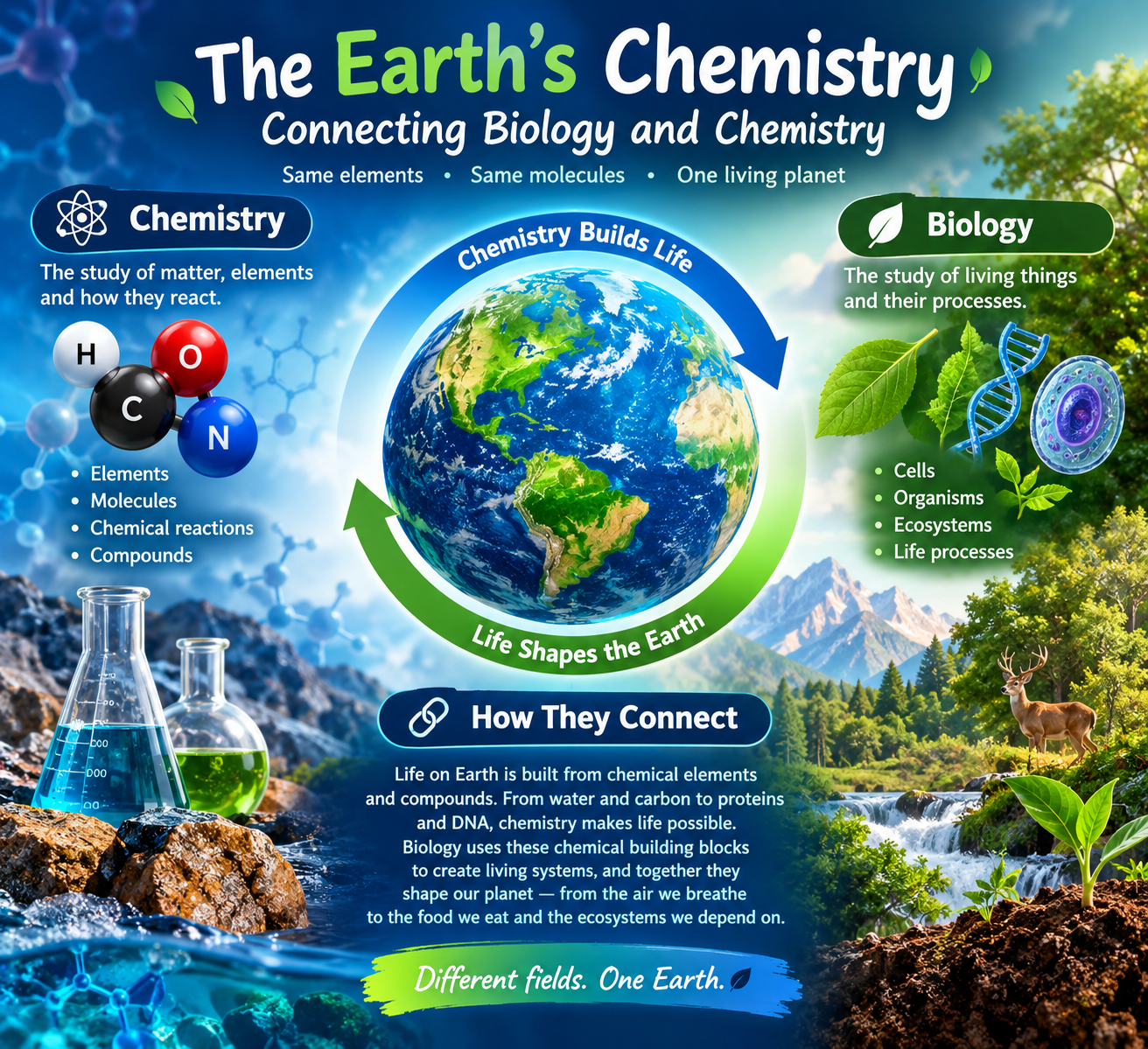
    ## The Earth's Chemistry: Connecting Biology and Chemistry

    Have you ever wondered how **chemistry makes life on Earth possible?** In this video, we explore **“The Earth's Chemistry: Connecting Biology and Chemistry”** and discover how these two sciences are deeply connected.

    From the **air we breathe and the water we drink** to the soil, plants, animals, and human beings around us, chemical elements and reactions are essential for life. Elements such as **carbon, oxygen, hydrogen, and nitrogen** form the building blocks of living organisms.

    We will explore important processes such as **photosynthesis, respiration, nutrient cycling, and the water cycle**, and see how chemical reactions support biological systems.

    This topic shows us that Earth is not just a planet—it is a complex system where **biology and chemistry work together** to maintain life and healthy ecosystems.

    **Learn • Explore • Discover • Understand**

    ### Hashtags

    #EarthsChemistry #Biology #Chemistry #Science #EarthScience #Photosynthesis #ChemicalReactions #Ecosystems #Nature #Education #ScienceLearning #STEM #LifeOnEarth #EnvironmentalScience #ChemistryAndBiology
    #rsisb Roll No.269 Foundation Level Story Post No.14 ## 🌍🧪 The Earth's Chemistry: Connecting Biology and Chemistry Have you ever wondered how **chemistry makes life on Earth possible?** 🌱🔬 In this video, we explore **“The Earth's Chemistry: Connecting Biology and Chemistry”** and discover how these two sciences are deeply connected. From the **air we breathe and the water we drink** to the soil, plants, animals, and human beings around us, chemical elements and reactions are essential for life. 🌎💧🌿 Elements such as **carbon, oxygen, hydrogen, and nitrogen** form the building blocks of living organisms. We will explore important processes such as **photosynthesis, respiration, nutrient cycling, and the water cycle**, and see how chemical reactions support biological systems. 🧬⚗️🌳 This topic shows us that Earth is not just a planet—it is a complex system where **biology and chemistry work together** to maintain life and healthy ecosystems. 🌍✨ 🎓 **Learn • Explore • Discover • Understand** ### 🔖 Hashtags #EarthsChemistry 🌍 #Biology 🧬 #Chemistry 🧪 #Science 🔬 #EarthScience 🌎 #Photosynthesis 🌱 #ChemicalReactions ⚗️ #Ecosystems 🌿 #Nature 🌳 #Education 📚 #ScienceLearning 🎓 #STEM 🚀 #LifeOnEarth 🌍 #EnvironmentalScience 💧 #ChemistryAndBiology
    0 Comentários 0 Compartilhamentos 1051 Visualizações
  • #rsisb Roll No.240 Song No.21 Foundation Level **Microbial Universe: The Power of the Invisible World** takes us into a fascinating world that is all around us but usually cannot be seen with our eyes. Microorganisms, also called microbes, are tiny living organisms found in places such as soil, water, air, plants, animals, and even inside the human body. In this topic, we discover the amazing role of microbes in our world. Some microorganisms can be helpful and play important roles in nature, food production, medicine, and the environment. For example, certain microbes help break down natural materials and return nutrients to the soil. Others are used in making foods such as yogurt and cheese. We also learn that some microorganisms can cause diseases, which is why hygiene, clean water, safe food practices, and proper health habits are important. Understanding microbes helps us learn how infections can spread and why cleanliness matters. The microbial world is a reminder that **small does not always mean unimportant**. These tiny organisms can have a huge impact on ecosystems, human health, agriculture, and everyday life. Through microscopes and modern scientific techniques, scientists continue to discover new microorganisms and learn more about their incredible abilities. Studying microbes helps us understand life at a much smaller scale and shows us how connected all living things are. 🔬 **Microbes are tiny but powerful.** 🦠 **They are found almost everywhere.** 🌱 **Many microbes are important for nature and ecosystems.** 🍎 **Some microbes are useful in food production.** 🧼 **Good hygiene helps protect us from harmful microorganisms.** 💡 **Science helps us explore the invisible world.** **Microbial Universe** encourages students to stay curious, explore the world around them, and understand how even the smallest forms of life can make a big difference. #MicrobialUniverse #Microbiology #Microbes #Bacteria #Science #Biology #InvisibleWorld #LifeScience #Education #ScienceEducation #Learning #Nature #ScientificDiscovery Rehan School Islamabad Campus Asma Shaheen EducationWali Irum Asim Saima Happinesswali https://www.facebook.com/share/v/1Ee8a81onj/
    WWW.FACEBOOK.COM
    Facebook
    #rsisb Roll No.240 Song No.21 Foundation Level **Microbial Universe: The Power of the Invisible World** takes us into a fascinating world that is all around us but usually cannot be seen with our...
    0 Comentários 0 Compartilhamentos 1650 Visualizações
Páginas Impulsionadas