• RSIF8
    Roll No: 112
    Coding Post No:1
    Coding Post Topic: Basic Calculator
    ### My Basic Calculator Project
    I created a **Basic Calculator** that performs four fundamental mathematical operations: **Addition , Subtraction , Multiplication , and Division **.
    The purpose of this project was to practice programming concepts by creating a simple and useful calculator. Through this activity, I learned how to take input, process calculations, use mathematical operators, and display the correct result to the user.
    The calculator allows the user to enter numbers and select the required operation. It then performs the calculation and shows the result. This project helped me understand how programming can be used to solve everyday problems in a simple and efficient way.
    ### Operations Included
    **Addition:** Adds two numbers together.
    **Subtraction:** Finds the difference between two numbers.
    **Multiplication:** Multiplies two numbers.
    **Division:** Divides one number by another.
    Creating this calculator was a great learning experience because it helped me improve my understanding of **logic, operators, user input, calculations, and programming fundamentals**.
    I’m happy to share my project and continue improving my coding skills through more practical projects. Every small project is a step toward becoming a better programmer!
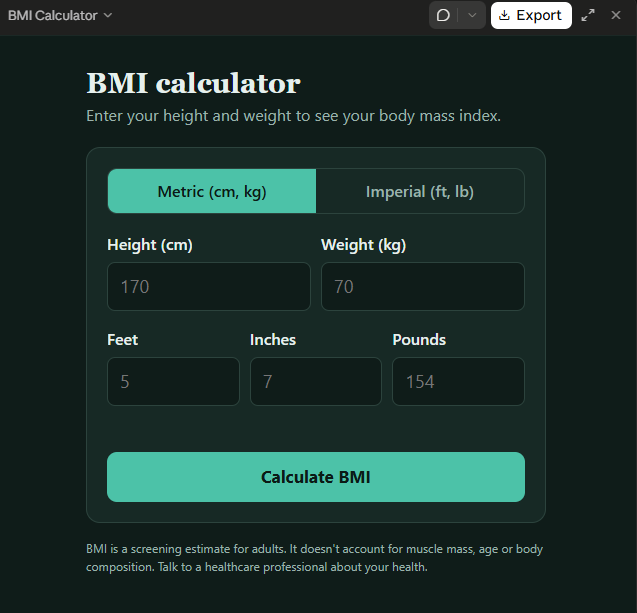
    **I have also shared a screenshot of my Basic Calculator to show the project and its working.**
    ### What I Learned
    How to perform basic mathematical operations
    How to use programming operators
    How to work with user input
    How to apply logic in a simple program
    How to create a useful beginner-level project
    How practical projects can improve programming skills
    Thank you for viewing my project!
    I’m looking forward to learning more, creating new projects, and improving my technical skills.
    ### Hashtags
    #BasicCalculator #CalculatorProject #Programming #Coding #CodingJourney #LearnToCode #ProgrammingForBeginners #StudentProject #CodingSkills #TechSkills #ComputerScience #ProgrammingProject #BeginnerProject #LearningProgramming #PracticalLearning #DigitalSkills #FutureProgrammer #RSIF8 #StudentLearning #KeepLearning #LearnAndGrow
    RSIF8 Roll No: 112 Coding Post No:1 Coding Post Topic: Basic Calculator ### ๐Ÿงฎ๐Ÿ’ป My Basic Calculator Project I created a **Basic Calculator** that performs four fundamental mathematical operations: **Addition โž•, Subtraction โž–, Multiplication โœ–๏ธ, and Division โž—**. The purpose of this project was to practice programming concepts by creating a simple and useful calculator. Through this activity, I learned how to take input, process calculations, use mathematical operators, and display the correct result to the user. ๐Ÿ’ป๐Ÿ“šโœจ The calculator allows the user to enter numbers and select the required operation. It then performs the calculation and shows the result. This project helped me understand how programming can be used to solve everyday problems in a simple and efficient way. ๐Ÿš€๐Ÿง  ### ๐Ÿ”ข Operations Included โž• **Addition:** Adds two numbers together. โž– **Subtraction:** Finds the difference between two numbers. โœ–๏ธ **Multiplication:** Multiplies two numbers. โž— **Division:** Divides one number by another. Creating this calculator was a great learning experience because it helped me improve my understanding of **logic, operators, user input, calculations, and programming fundamentals**. ๐ŸŒŸ๐Ÿ’ก I’m happy to share my project and continue improving my coding skills through more practical projects. Every small project is a step toward becoming a better programmer! ๐Ÿ‘ฉ‍๐Ÿ’ป๐Ÿš€๐Ÿ“– ๐Ÿ“ธ **I have also shared a screenshot of my Basic Calculator to show the project and its working.** ### ๐ŸŒŸ What I Learned โœ… How to perform basic mathematical operations โœ… How to use programming operators โœ… How to work with user input โœ… How to apply logic in a simple program โœ… How to create a useful beginner-level project โœ… How practical projects can improve programming skills Thank you for viewing my project! ๐Ÿ™Œโœจ I’m looking forward to learning more, creating new projects, and improving my technical skills. ๐Ÿ’ป๐ŸŒฑ๐Ÿš€ ### ๐Ÿ”– Hashtags #BasicCalculator #CalculatorProject #Programming #Coding #CodingJourney #LearnToCode #ProgrammingForBeginners #StudentProject #CodingSkills #TechSkills #ComputerScience #ProgrammingProject #BeginnerProject #LearningProgramming #PracticalLearning #DigitalSkills #FutureProgrammer #RSIF8 #StudentLearning #KeepLearning #LearnAndGrow ๐Ÿงฎ โž• โž– โœ–๏ธ โž— ๐Ÿ’ป ๐Ÿ‘ฉ‍๐Ÿ’ป ๐Ÿ“š ๐Ÿง  ๐Ÿ’ก ๐ŸŒŸ ๐Ÿš€ ๐ŸŽฏ โœจ๐Ÿ™Œ
    0 Reacties 0 aandelen 261 Views
  • RSIF8
    Roll No : 87
    claude ai No : 1
    claude ai topic: Create a Basic Calculator
    **Basic Calculator Project – My Completed Task**
    I have successfully created a **Basic Calculator** as part of my learning and coding practice. This calculator has a simple, clean, and user-friendly interface that makes it easy to perform everyday mathematical calculations. The calculator includes important buttons such as **addition (+), subtraction (−), multiplication (×), division (÷), percentage (%), decimal (.), plus/minus (±), clear (C), and equals )**.
    The calculator display shows the numbers and results clearly, while the organized button layout makes it easy for users to enter numbers and select the required mathematical operation. I focused on making the design simple and easy to understand so that anyone can use it without difficulty.
    Creating this calculator helped me understand how a calculator works and gave me valuable practice with **HTML, CSS, and JavaScript**. I learned how to design buttons, create a calculator layout, handle user input, perform mathematical operations, and display the final result.
    This project was a great opportunity to improve my **coding, problem-solving, logical thinking, and web development skills**. I am happy to complete this project and excited to continue learning and creating more useful projects in the future.
    #BasicCalculator #Calculator #Coding #WebDevelopment #HTML #CSS #JavaScript #Programming #CodingPractice #Learning #StudentProject #ProjectCompleted #Math #Technology #ComputerSkills #ProblemSolving #ProgrammingSkills #KeepLearning #KeepGrowing
    RSIF8 Roll No : 87 claude ai No : 1 claude ai topic: Create a Basic Calculator ๐Ÿงฎโœจ **Basic Calculator Project – My Completed Task** โœจ๐Ÿงฎ I have successfully created a **Basic Calculator** as part of my learning and coding practice. This calculator has a simple, clean, and user-friendly interface that makes it easy to perform everyday mathematical calculations. The calculator includes important buttons such as **addition (+), subtraction (−), multiplication (×), division (÷), percentage (%), decimal (.), plus/minus (±), clear (C), and equals ๐Ÿ˜Š)**. The calculator display shows the numbers and results clearly, while the organized button layout makes it easy for users to enter numbers and select the required mathematical operation. I focused on making the design simple and easy to understand so that anyone can use it without difficulty. Creating this calculator helped me understand how a calculator works and gave me valuable practice with **HTML, CSS, and JavaScript**. I learned how to design buttons, create a calculator layout, handle user input, perform mathematical operations, and display the final result. ๐Ÿ’ป๐Ÿ“š This project was a great opportunity to improve my **coding, problem-solving, logical thinking, and web development skills**. I am happy to complete this project and excited to continue learning and creating more useful projects in the future. ๐Ÿš€๐Ÿ’ฏ #BasicCalculator #Calculator #Coding #WebDevelopment #HTML #CSS #JavaScript #Programming #CodingPractice #Learning #StudentProject #ProjectCompleted #Math #Technology #ComputerSkills #ProblemSolving #ProgrammingSkills #KeepLearning #KeepGrowing ๐Ÿงฎ๐Ÿ’ป๐Ÿš€โœจ
    0 Reacties 0 aandelen 1410 Views
  • RSIF8
    Roll no: 99
    Coding task no: 1
    Coding topic Create a Basic Calculator
    Today’s task was to build a functional calculator that can perform basic mathematical operations such as:
    Addition
    Subtraction
    Multiplication
    Division
    I built the calculator using HTML, CSS, and JavaScript, with a proper interactive interface where users can enter numbers and perform calculations.
    But here’s the interesting part: I didn’t write all the code from scratch myself. Instead, I used ChatGPT for vibe coding — I described what I wanted, worked with the generated code, tested it, and made sure the final calculator actually worked.
    This task taught me that coding isn’t only about writing every line manually. It’s also about understanding the problem, communicating your idea clearly, testing the result, debugging, and learning from the code.
    One more small project completed!
    One more step forward in my learning journey.
    #VibeCoding #ChatGPT #HTML #CSS #JavaScript #WebDevelopment #Coding #Programming #Calculator #100DaysOfCode #LearningToCode #BuildInPublic #TechJourney #WebDesign #FrontendDevelopment #CodingJourney #AI #ArtificialIntelligence #Developer #StudentDeveloper
    RSIF8 Roll no: 99 Coding task no: 1 Coding topic Create a Basic Calculator Today’s task was to build a functional calculator that can perform basic mathematical operations such as: โž• Addition โž– Subtraction โœ–๏ธ Multiplication โž— Division I built the calculator using HTML, CSS, and JavaScript, with a proper interactive interface where users can enter numbers and perform calculations. But here’s the interesting part: I didn’t write all the code from scratch myself. Instead, I used ChatGPT for vibe coding ๐Ÿค–๐Ÿ’ป — I described what I wanted, worked with the generated code, tested it, and made sure the final calculator actually worked. This task taught me that coding isn’t only about writing every line manually. It’s also about understanding the problem, communicating your idea clearly, testing the result, debugging, and learning from the code. One more small project completed! โœ… One more step forward in my learning journey. ๐Ÿ“š๐Ÿš€ #VibeCoding #ChatGPT #HTML #CSS #JavaScript #WebDevelopment #Coding #Programming #Calculator #100DaysOfCode #LearningToCode #BuildInPublic #TechJourney #WebDesign #FrontendDevelopment #CodingJourney #AI #ArtificialIntelligence #Developer #StudentDeveloper
    0 Reacties 0 aandelen 1837 Views
  • Day 90
    Task No:90
    Roll No:42
    RSLC
    Foundation Level, Batch#04

    Trigonometry is the fascinating branch of mathematics that reveals the hidden relationships between angles and sides of triangles. From the earliest civilizations to modern science, humans have relied on angles to measure distances, navigate oceans, and understand the world around them. What may seem like simple lines and triangles actually hold the secrets to solving some of lifes greatest mathematical challenges.

    As mathematicians explored the power of angles, they discovered remarkable patterns through sine, cosine, and tangent. These concepts became essential tools in architecture, astronomy, engineering, and navigation. Whether designing towering skyscrapers, calculating the height of mountains, or guiding satellites through space, trigonometry continues to play a vital role in shaping our modern world.

    Today, trigonometry is far more than a classroom subject?its a universal language of precision and discovery. Every angle tells a story, every triangle hides a solution, and every calculation brings us closer to understanding the beauty of mathematics. By learning trigonometry, we unlock the power to measure, create, and innovate in ways that transform imagination into reality.

    #Trigonometry #Mathematics #Angles #Geometry #Education #STEM #Learning #Science #Engineering #MathLovers #Knowledge #Students #Study #Innovation #ProblemSolving
    Day 90 Task No:90 Roll No:42 RSLC Foundation Level, Batch#04 Trigonometry is the fascinating branch of mathematics that reveals the hidden relationships between angles and sides of triangles. From the earliest civilizations to modern science, humans have relied on angles to measure distances, navigate oceans, and understand the world around them. What may seem like simple lines and triangles actually hold the secrets to solving some of life's greatest mathematical challenges. As mathematicians explored the power of angles, they discovered remarkable patterns through sine, cosine, and tangent. These concepts became essential tools in architecture, astronomy, engineering, and navigation. Whether designing towering skyscrapers, calculating the height of mountains, or guiding satellites through space, trigonometry continues to play a vital role in shaping our modern world. Today, trigonometry is far more than a classroom subject?it's a universal language of precision and discovery. Every angle tells a story, every triangle hides a solution, and every calculation brings us closer to understanding the beauty of mathematics. By learning trigonometry, we unlock the power to measure, create, and innovate in ways that transform imagination into reality. #Trigonometry #Mathematics #Angles #Geometry #Education #STEM #Learning #Science #Engineering #MathLovers #Knowledge #Students #Study #Innovation #ProblemSolving
    0 Reacties 0 aandelen 1350 Views
  • #rsisb
    Roll No.240
    Story Post No.24
    Foundation Level

    The word “scientist” may sound like a modern term, but the journey behind it is connected to centuries of human curiosity, philosophy, observation, experimentation, and the search for knowledge.

    Long before the word “scientist” became common, people who studied the natural world were often known as philosophers, scholars, natural philosophers, mathematicians, and thinkers. They asked important questions about nature, the universe, life, matter, motion, and the world around them.

    From the thinkers of the ancient world to the scholars of the Renaissance and the Scientific Revolution, humans continued developing new ways to understand nature. Observation became more important, experiments became more systematic, and evidence gradually became a central part of scientific inquiry.

    During the 18th and 19th centuries, many different branches of knowledge began becoming more specialized. Physics, chemistry, biology, astronomy, geology, and other fields developed their own methods, discoveries, and communities of researchers.

    A major moment in terminology came in the 19th century, when the word “scientist” was introduced as a useful name for people engaged in scientific study. The term is widely associated with William Whewell, who used it in 1833. This helped provide a new, unified word for researchers working across different areas of science.

    The evolution of this word reflects something bigger than language. It represents the changing way humanity organized knowledge and recognized scientific work. The transition from “natural philosopher” to “scientist” shows how science gradually became a distinct and organized field of study.

    Today, scientists work in laboratories, universities, hospitals, observatories, research centers, engineering facilities, and many other places around the world. They investigate everything from tiny cells and molecules to distant galaxies and the origins of the universe.

    Modern science continues to grow through curiosity, evidence, teamwork, technology, and a willingness to ask difficult questions. Every discovery begins with someone wondering, “Why?”, “How?”, or “What if?”

    The story of the word “scientist” reminds us that human knowledge is always evolving. What began with simple curiosity and philosophical questioning gradually developed into the powerful and diverse scientific world we know today.

    From thinkers to researchers. From philosophy to science. From questions to discoveries.

    Science is not only about finding answers—it is also about continuing to ask better questions.

    A journey from curiosity to discovery, and from philosophy to modern science.

    #TheBirthOfScientist #Scientist #HistoryOfScience #ScienceHistory #ScientificRevolution #Philosophy #NaturalPhilosophy #WilliamWhewell #1833 #ModernScience #ScienceEducation #ScientificTerminology #Science #Scientists #Research #Discovery #Curiosity #Knowledge #Learning #Education #STEM #Physics #Chemistry #Biology #Astronomy #Geology #Innovation #Experimentation #ScientificThinking #CriticalThinking #HumanKnowledge #HistoryOfKnowledge #ScienceJourney #FromPhilosophyToScience #ScienceFacts #EducationalContent #LearningJourney #ExploreScience #DiscoverScience

    Rehan School Islamabad Campus
    Asma Shaheen EducationWali
    Irum Asim
    Saima Happinesswali

    #rsisb Roll No.240 Story Post No.24 Foundation Level The word “scientist” may sound like a modern term, but the journey behind it is connected to centuries of human curiosity, philosophy, observation, experimentation, and the search for knowledge. ๐Ÿง ๐Ÿ”Ž Long before the word “scientist” became common, people who studied the natural world were often known as philosophers, scholars, natural philosophers, mathematicians, and thinkers. ๐Ÿ›๏ธ๐Ÿ“œ They asked important questions about nature, the universe, life, matter, motion, and the world around them. From the thinkers of the ancient world to the scholars of the Renaissance and the Scientific Revolution, humans continued developing new ways to understand nature. ๐ŸŒŒ๐ŸŒ๐Ÿ“– Observation became more important, experiments became more systematic, and evidence gradually became a central part of scientific inquiry. ๐Ÿ”ฌ๐Ÿงชโœจ During the 18th and 19th centuries, many different branches of knowledge began becoming more specialized. Physics, chemistry, biology, astronomy, geology, and other fields developed their own methods, discoveries, and communities of researchers. ๐Ÿงฌโš—๏ธ๐ŸŒ  A major moment in terminology came in the 19th century, when the word “scientist” was introduced as a useful name for people engaged in scientific study. The term is widely associated with William Whewell, who used it in 1833. ๐Ÿ“œ๐Ÿ”ฌ This helped provide a new, unified word for researchers working across different areas of science. The evolution of this word reflects something bigger than language. It represents the changing way humanity organized knowledge and recognized scientific work. ๐ŸŒŸ๐Ÿ“š The transition from “natural philosopher” to “scientist” shows how science gradually became a distinct and organized field of study. Today, scientists work in laboratories, universities, hospitals, observatories, research centers, engineering facilities, and many other places around the world. ๐ŸŒ๐Ÿงช๐Ÿ”ญ They investigate everything from tiny cells and molecules to distant galaxies and the origins of the universe. ๐Ÿงฌ๐Ÿฆ ๐ŸŒŒ Modern science continues to grow through curiosity, evidence, teamwork, technology, and a willingness to ask difficult questions. ๐Ÿ’ก๐Ÿค๐Ÿš€ Every discovery begins with someone wondering, “Why?”, “How?”, or “What if?” The story of the word “scientist” reminds us that human knowledge is always evolving. What began with simple curiosity and philosophical questioning gradually developed into the powerful and diverse scientific world we know today. ๐ŸŒฑโžก๏ธ๐Ÿ”ฌโžก๏ธ๐ŸŒ โœจ From thinkers to researchers. From philosophy to science. From questions to discoveries. โœจ Science is not only about finding answers—it is also about continuing to ask better questions. ๐Ÿ”Ž๐Ÿ’ก ๐ŸŒŸ A journey from curiosity to discovery, and from philosophy to modern science. ๐ŸŒŸ #TheBirthOfScientist #Scientist #HistoryOfScience #ScienceHistory #ScientificRevolution #Philosophy #NaturalPhilosophy #WilliamWhewell #1833 #ModernScience #ScienceEducation #ScientificTerminology #Science #Scientists #Research #Discovery #Curiosity #Knowledge #Learning #Education #STEM #Physics #Chemistry #Biology #Astronomy #Geology #Innovation #Experimentation #ScientificThinking #CriticalThinking #HumanKnowledge #HistoryOfKnowledge #ScienceJourney #FromPhilosophyToScience #ScienceFacts #EducationalContent #LearningJourney #ExploreScience #DiscoverScience ๐Ÿ”ฌ๐Ÿ“š๐Ÿง ๐ŸŒโœจ๐Ÿ”ญ๐Ÿงช๐Ÿš€๐Ÿ’ก๐ŸŒŸ Rehan School Islamabad Campus Asma Shaheen EducationWali Irum Asim Saima Happinesswali
    0 Reacties 0 aandelen 3380 Views
  • #rsisb
    Roll No.190
    Call Anni.No.46
    Foundation Level


    1. *My First Conversation With AI! *

    Start a video by introducing AI and asking simple questions like: “What are you?”*, *“How do you answer questions?”*, and *“What can you help me with?” Then move into more interesting questions about school, technology, hobbies, and the future. Finish by asking AI what advice it would give to someone who wants to learn new things.

    2. *Can AI Answer 20 Questions? *

    Create a fun challenge where you ask AI 20 completely different questions. Start with easy questions and slowly make them more difficult. Ask about science, space, computers, animals, history, and everyday life. The goal is to see how interesting and useful AI's answers can be.

    3. *AI and the Future of Technology *

    Talk with AI about how technology might change in the future. Ask about smart homes, robots, self-driving cars, virtual reality, and future computers. You can also ask, “What might technology look like 20 years from now?” This can make an exciting educational conversation.

    4. *AI Becomes My Teacher! *

    Pretend that AI is your personal teacher for one day. Ask it to explain mathematics, science, English, and computer topics in very simple language. You can then ask follow-up questions whenever something is difficult.

    5. *Ask AI About Our Amazing Planet *

    Have a conversation about Earth and nature. Ask AI about oceans, mountains, forests, weather, animals, and interesting natural phenomena. You can make each question more surprising than the previous one.

    6. *Talking to AI About Space! *

    Take your audience on a virtual journey through space. Ask AI about planets, stars, galaxies, black holes, astronauts, and space exploration. End with an imaginative question such as, “What could humans discover in space in the future?”

    7. *AI and Video Games *

    Discuss how AI is used in modern games. Ask about computer-controlled characters, game worlds, racing games, and how AI can make games more challenging. You can also ask AI to invent an idea for a brand-new game.

    8. *My Dream Smart Home With AI *

    Ask AI to imagine a futuristic smart home. Talk about automatic lights, smart security, helpful robots, voice commands, smart appliances, and energy-saving technology. Then ask AI to design your perfect futuristic room.

    9. *AI Helps Me Learn Coding! *

    Make a beginner-friendly coding conversation. Ask AI what coding is, why people learn it, and how simple programs work. You can ask it to explain concepts like variables, loops, and functions using easy examples.

    10. *Can AI Solve My Brain Challenges? *

    Give AI fun puzzles, riddles, logic questions, and math challenges. Don't reveal the answers immediately—let your audience think first! Then compare your answer with AI's explanation.

    11. *Improve My English With AI! *

    Have a daily English conversation with AI. Talk about school, hobbies, food, sports, technology, and your daily routine. Ask AI to correct your grammar and teach you new vocabulary in a simple way.

    12. *AI Predicts the Future! *

    Ask AI questions about the future of computers, phones, robots, transportation, education, and space exploration. Make it clear that these are **ideas or predictions, not guaranteed facts**.

    13. *Can AI Help Save the Planet? *

    Talk about pollution, recycling, renewable energy, forests, oceans, and wildlife. Ask AI how technology could help people protect the environment. This gives your video an educational and positive message.

    14. *Funny Questions for AI! *

    Ask AI unusual but harmless questions such as “If you could have a favorite hobby, what would it be?” or “What would a robot's perfect vacation look like?” Turn the answers into a fun conversation with reactions and jokes.

    15. *A Full Day With My AI Assistant! *

    Create a story where AI helps you throughout an imaginary day. Start with planning your morning, then studying, learning something new, organizing tasks, solving a puzzle, and finishing the day with a fun conversation. It can become a complete *“Day With AI”* episode.
    #rsisb Roll No.190 Call Anni.No.46 Foundation Level ๐Ÿค– 1. *My First Conversation With AI! ๐ŸŒŸ* Start a video by introducing AI and asking simple questions like: “What are you?”*, *“How do you answer questions?”*, and *“What can you help me with?” Then move into more interesting questions about school, technology, hobbies, and the future. Finish by asking AI what advice it would give to someone who wants to learn new things. ๐Ÿ“šโœจ ๐Ÿง  2. *Can AI Answer 20 Questions? ๐ŸŽฏ* Create a fun challenge where you ask AI 20 completely different questions. Start with easy questions and slowly make them more difficult. Ask about science, space, computers, animals, history, and everyday life. The goal is to see how interesting and useful AI's answers can be. ๐Ÿš€๐ŸŒ ๐Ÿ’ป 3. *AI and the Future of Technology ๐Ÿš€* Talk with AI about how technology might change in the future. Ask about smart homes, robots, self-driving cars, virtual reality, and future computers. You can also ask, “What might technology look like 20 years from now?” This can make an exciting educational conversation. ๐Ÿค–๐Ÿ ๐Ÿš— ๐Ÿ“š 4. *AI Becomes My Teacher! ๐Ÿ‘จ‍๐Ÿซ๐Ÿค–* Pretend that AI is your personal teacher for one day. Ask it to explain mathematics, science, English, and computer topics in very simple language. You can then ask follow-up questions whenever something is difficult. ๐Ÿ“–โœ๏ธ ๐ŸŒŽ 5. *Ask AI About Our Amazing Planet ๐ŸŒ* Have a conversation about Earth and nature. Ask AI about oceans, mountains, forests, weather, animals, and interesting natural phenomena. You can make each question more surprising than the previous one. ๐ŸŒŠ๐Ÿ”๏ธ๐Ÿฆ ๐Ÿ‘จ‍๐Ÿš€ 6. *Talking to AI About Space! ๐ŸŒŒ๐Ÿš€* Take your audience on a virtual journey through space. Ask AI about planets, stars, galaxies, black holes, astronauts, and space exploration. End with an imaginative question such as, “What could humans discover in space in the future?” ๐ŸŒ™โญ ๐ŸŽฎ 7. *AI and Video Games ๐ŸŽฎ๐Ÿค–* Discuss how AI is used in modern games. Ask about computer-controlled characters, game worlds, racing games, and how AI can make games more challenging. You can also ask AI to invent an idea for a brand-new game. ๐ŸŽ๏ธ๐ŸŽฏ ๐Ÿ  8. *My Dream Smart Home With AI ๐Ÿกโœจ* Ask AI to imagine a futuristic smart home. Talk about automatic lights, smart security, helpful robots, voice commands, smart appliances, and energy-saving technology. Then ask AI to design your perfect futuristic room. ๐Ÿ’ก๐Ÿค–๐Ÿ  ๐Ÿง‘‍๐Ÿ’ป 9. *AI Helps Me Learn Coding! ๐Ÿ’ป๐Ÿ”ฅ* Make a beginner-friendly coding conversation. Ask AI what coding is, why people learn it, and how simple programs work. You can ask it to explain concepts like variables, loops, and functions using easy examples. ๐Ÿ–ฅ๏ธโŒจ๏ธ ๐Ÿงฉ 10. *Can AI Solve My Brain Challenges? ๐Ÿง ๐Ÿ†* Give AI fun puzzles, riddles, logic questions, and math challenges. Don't reveal the answers immediately—let your audience think first! Then compare your answer with AI's explanation. ๐Ÿค”๐Ÿ’ก ๐Ÿ—ฃ๏ธ 11. *Improve My English With AI! ๐Ÿ‡ฌ๐Ÿ‡ง๐Ÿค–* Have a daily English conversation with AI. Talk about school, hobbies, food, sports, technology, and your daily routine. Ask AI to correct your grammar and teach you new vocabulary in a simple way. ๐Ÿ“š๐Ÿ—ฃ๏ธโœจ ๐Ÿ”ฎ 12. *AI Predicts the Future! ๐Ÿš€๐Ÿ”ฎ* Ask AI questions about the future of computers, phones, robots, transportation, education, and space exploration. Make it clear that these are **ideas or predictions, not guaranteed facts**. ๐ŸŒ๐Ÿค– ๐ŸŒฑ 13. *Can AI Help Save the Planet? ๐ŸŒณ๐ŸŒŽ* Talk about pollution, recycling, renewable energy, forests, oceans, and wildlife. Ask AI how technology could help people protect the environment. This gives your video an educational and positive message. โ™ป๏ธ๐ŸŒณ๐Ÿผ ๐Ÿ˜‚ 14. *Funny Questions for AI! ๐Ÿคฃ๐Ÿค–* Ask AI unusual but harmless questions such as “If you could have a favorite hobby, what would it be?” or “What would a robot's perfect vacation look like?” Turn the answers into a fun conversation with reactions and jokes. ๐Ÿ˜„๐ŸŽ‰ ๐ŸŒŸ 15. *A Full Day With My AI Assistant! ๐Ÿค–โ˜€๏ธ๐ŸŒ™* Create a story where AI helps you throughout an imaginary day. Start with planning your morning, then studying, learning something new, organizing tasks, solving a puzzle, and finishing the day with a fun conversation. It can become a complete *“Day With AI”* episode. ๐Ÿš€๐Ÿ“š๐ŸŽฎ๐ŸŒ™
    0 Reacties 0 aandelen 2792 Views 8
  • RSISB
    Roll No: 209
    Story Post No.33

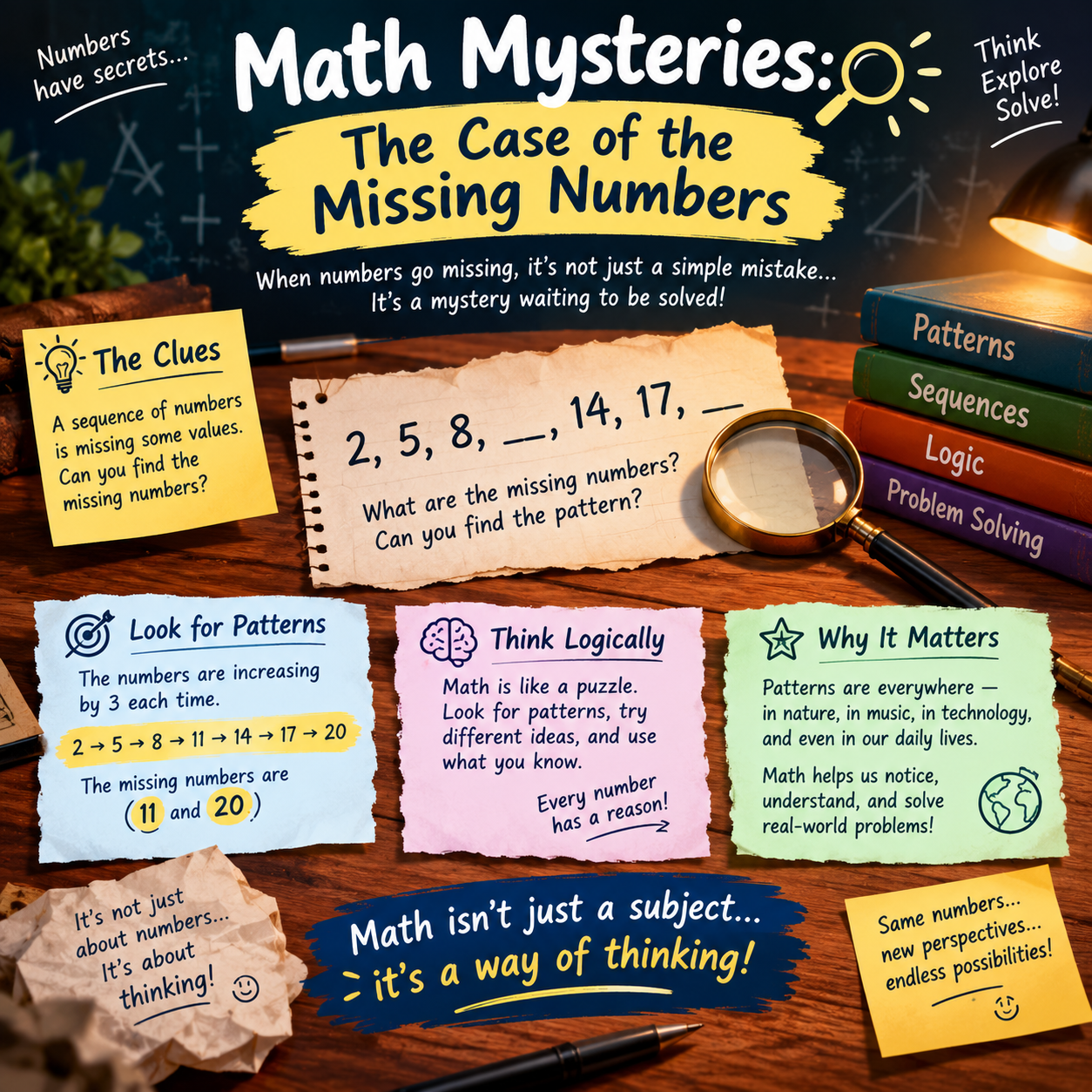
    Math Mysteries: The Case of the Missing Numbers!

    Get ready for an exciting mathematical adventure where numbers have mysteriously disappeared! Can you follow the clues, discover the patterns, solve the puzzles, and find the missing numbers?

    This fun mystery combines math, logic, problem-solving, and critical thinking to turn learning into an exciting detective mission! Every clue brings you closer to cracking the code and solving the case.

    Are you ready to become a Math Detective and uncover the mystery?

    #MathMysteries #MissingNumbers #MathDetective #MathPuzzle #NumberMystery #MathChallenge #LearnMath #FunWithMath #MathSkills #ProblemSolving #CriticalThinking #BrainTeaser #EducationalFun #LearningIsFun #PuzzleTime
    RSISB Roll No: 209 Story Post No.33 ๐Ÿ”ข๐Ÿ•ต๏ธ‍โ™‚๏ธ Math Mysteries: The Case of the Missing Numbers! ๐Ÿงฉโœจ Get ready for an exciting mathematical adventure where numbers have mysteriously disappeared! ๐Ÿ”๐Ÿ“š Can you follow the clues, discover the patterns, solve the puzzles, and find the missing numbers? ๐Ÿค”โž•โž–โœ–๏ธโž— This fun mystery combines math, logic, problem-solving, and critical thinking to turn learning into an exciting detective mission! ๐Ÿง ๐Ÿ’ก Every clue brings you closer to cracking the code and solving the case. ๐Ÿ•ต๏ธ‍โ™€๏ธ๐Ÿ” Are you ready to become a Math Detective and uncover the mystery? ๐Ÿšจ๐Ÿ”ขโœจ #MathMysteries #MissingNumbers #MathDetective #MathPuzzle #NumberMystery #MathChallenge #LearnMath #FunWithMath #MathSkills #ProblemSolving #CriticalThinking #BrainTeaser #EducationalFun #LearningIsFun #PuzzleTime ๐Ÿงฉ๐Ÿ”ข๐Ÿง ๐Ÿ”๐Ÿ“šโœจ
    0 Reacties 0 aandelen 2633 Views
  • #rsisb
    Roll No.269
    Foundation Level
    Story Post No.13

    ## Trigonometry: The Story of Angles

    Trigonometry is one of the most fascinating branches of mathematics that helps us understand the **relationship between angles and sides of triangles**. In this video, we explore the story of angles and discover how trigonometry connects mathematics with the real world.

    From **sine, cosine, and tangent** to measuring heights, distances, and directions, trigonometry plays an important role in engineering, architecture, astronomy, physics, navigation, and many other fields.

    In this presentation, we will learn how angles work, why triangles are so important, and how simple trigonometric ideas can help us solve interesting problems. Whether you're a beginner or simply curious about mathematics, this journey will make the world of angles easier and more exciting!

    **Learn • Explore • Understand • Discover**
    Let's explore **“Trigonometry: The Story of Angles”** together!

    ### Hashtags

    #Trigonometry #Angles #Mathematics #Maths #Geometry #Sine #Cosine #Tangent #Learning #Education #MathIsFun #Science #StudentLearning #STEM #TrigonometryBasics #ExploreMath
    #rsisb Roll No.269 Foundation Level Story Post No.13 ## ๐Ÿ“ Trigonometry: The Story of Angles Trigonometry is one of the most fascinating branches of mathematics that helps us understand the **relationship between angles and sides of triangles**. ๐Ÿ“โœจ In this video, we explore the story of angles and discover how trigonometry connects mathematics with the real world. ๐ŸŒ๐Ÿ”ข From **sine, cosine, and tangent** to measuring heights, distances, and directions, trigonometry plays an important role in engineering, architecture, astronomy, physics, navigation, and many other fields. ๐Ÿš€๐Ÿ—๏ธ๐Ÿงญ In this presentation, we will learn how angles work, why triangles are so important, and how simple trigonometric ideas can help us solve interesting problems. ๐Ÿ“š๐Ÿ’ก Whether you're a beginner or simply curious about mathematics, this journey will make the world of angles easier and more exciting! ๐ŸŽฏ **Learn • Explore • Understand • Discover** ๐Ÿ“ Let's explore **“Trigonometry: The Story of Angles”** together! ### ๐Ÿ”– Hashtags #Trigonometry ๐Ÿ“ #Angles ๐Ÿ”ข #Mathematics ๐Ÿงฎ #Maths #Geometry ๐Ÿ“ #Sine #Cosine #Tangent #Learning ๐Ÿ“š #Education ๐ŸŽ“ #MathIsFun ๐Ÿค“ #Science ๐Ÿ”ฌ #StudentLearning #STEM ๐Ÿš€ #TrigonometryBasics #ExploreMath โœจ
    0 Reacties 0 aandelen 1634 Views
  • #rsisb
    Roll no 218
    Story no 34
    Foundation Level
    **Math Mysteries: The Case of the Missing Numbers**
    Get ready for an exciting mathematical adventure! Join our young detectives as they follow clues, discover patterns, solve puzzles, and uncover the mystery of the missing numbers.
    This fun and educational story turns math into a thrilling mystery where **logic, observation, and problem-solving** lead the way. Can you find the missing numbers and solve the case?
    **Think smart, follow the clues, and become a Math Detective!**
    #MathMysteries #MissingNumbers #MathForKids #MathIsFun #LearningIsFun #MathDetective #ProblemSolving #LogicalThinking #BrainTeaser #KidsLearning #EducationalStory #MathChallenge #STEMEducation #LearnAndGrow
    Asma Shaheen EducationWali
    Saima Happinesswali
    Rehan School
    #rsisb Roll no 218 Story no 34 Foundation Level ๐Ÿ”๐Ÿ”ข **Math Mysteries: The Case of the Missing Numbers** ๐Ÿ•ต๏ธ‍โ™€๏ธโœจ Get ready for an exciting mathematical adventure! ๐Ÿš€๐Ÿ“š Join our young detectives as they follow clues, discover patterns, solve puzzles, and uncover the mystery of the missing numbers. ๐Ÿงฉ๐Ÿ”Žโž•โž– This fun and educational story turns math into a thrilling mystery where **logic, observation, and problem-solving** lead the way. ๐Ÿง ๐Ÿ’ก๐Ÿ† Can you find the missing numbers and solve the case? ๐Ÿค”๐Ÿ”ขโœจ ๐ŸŒŸ **Think smart, follow the clues, and become a Math Detective!** ๐Ÿ•ต๏ธ‍โ™‚๏ธ๐Ÿ“–๐ŸŽฏ #MathMysteries #MissingNumbers #MathForKids #MathIsFun #LearningIsFun #MathDetective #ProblemSolving #LogicalThinking #BrainTeaser #KidsLearning #EducationalStory #MathChallenge #STEMEducation #LearnAndGrow ๐Ÿ”ข๐Ÿงฉ๐Ÿง โœจ Asma Shaheen EducationWali Saima Happinesswali Rehan School
    0 Reacties 0 aandelen 2708 Views
  • #rsisb Roll No.240 Song No.18 Foundation Level Calculus is an interesting part of mathematics that helps us understand change, movement, speed, and quantity. It teaches us how small changes can create big results. In this topic, we explore how numbers move and change, and how calculus helps us understand the world around us. From the speed of a moving car to the growth of a plant, calculus gives us useful ways to study these changes. It is not just about difficult formulas—it is about asking questions, finding patterns, and understanding how things change. ๐Ÿ“š๐Ÿ”ข๐Ÿ“ #Calculus #Mathematics #Numbers #Learning #Education #Science #mathstudents Rehan School Islamabad Campus Asma Shaheen EducationWali Irum Asim Saima Happinesswali https://www.facebook.com/share/v/1DRtbiAh2y/
    WWW.FACEBOOK.COM
    Facebook
    #rsisb Roll No.240 Song No.18 Foundation Level Calculus is an interesting part of mathematics that helps us understand change, movement, speed, and quantity. It teaches us how small changes can...
    0 Reacties 0 aandelen 1391 Views
Zoekresultaten