• foundation level task
    day : 48
    task story postfoundation level task
    day : 48
    task story post **The Journey of Dinosaurs: A Scientific Perspective**
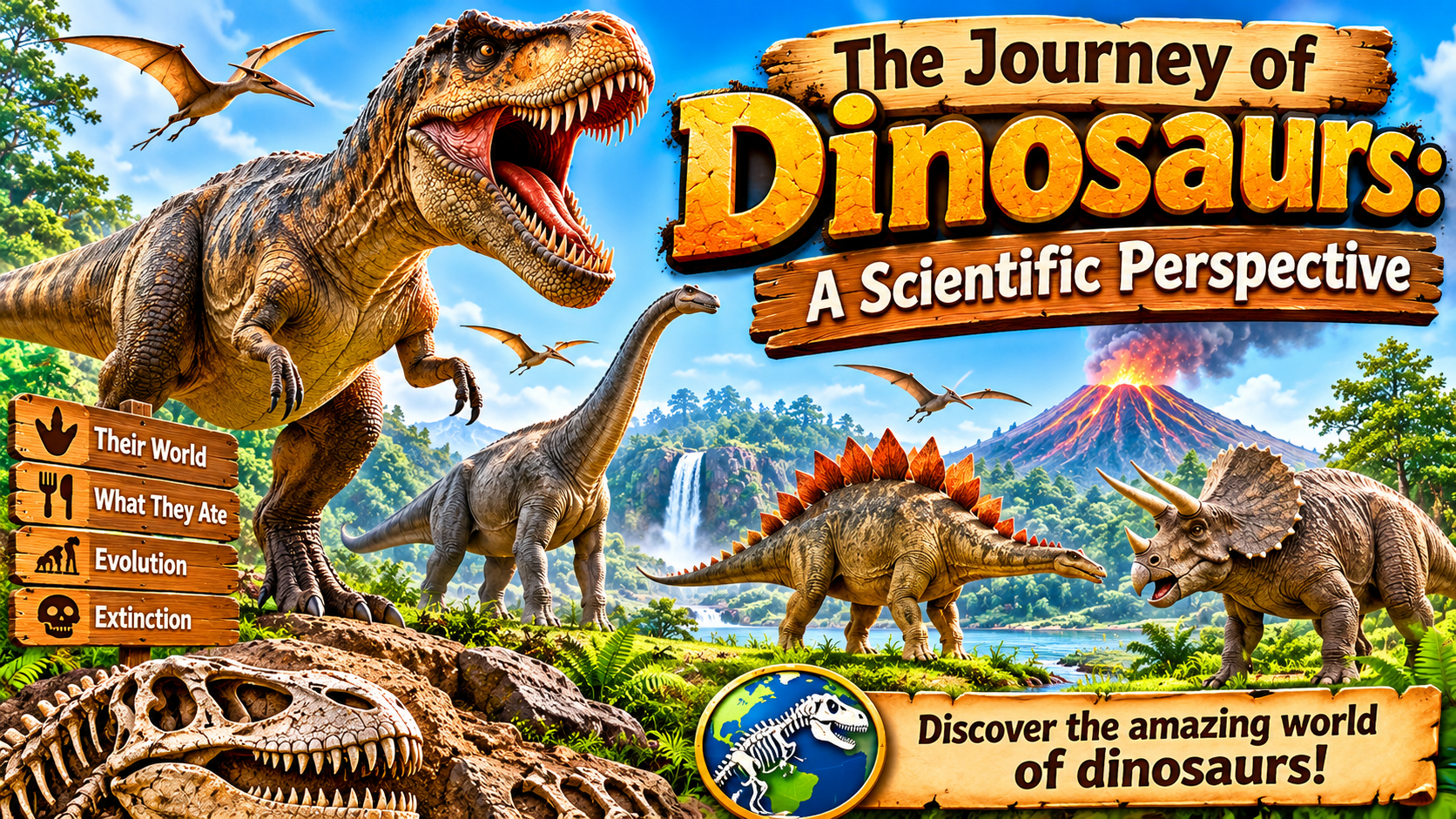
    Travel back millions of years and discover the amazing world of dinosaurs! Explore different dinosaur species, their habitats, food, evolution, and mysterious extinction. From the powerful T-Rex to the giant Brachiosaurus, learn how these incredible creatures lived and ruled the Earth. Discover fascinating scientific facts and explore the secrets of prehistoric life!
    **Hashtags:**
    \#Dinosaurs #DinosaurWorld #JourneyOfDinosaurs #ScientificPerspective #PrehistoricLife #TyrannosaurusRex #Brachiosaurus #Evolution #ScienceFacts #AncientEarth #EducationalContent #HistoryOfDinosaurs See less
    foundation level task day : 48 task story postfoundation level task day : 48 task story post🦖 **The Journey of Dinosaurs: A Scientific Perspective** Travel back millions of years and discover the amazing world of dinosaurs! Explore different dinosaur species, their habitats, food, evolution, and mysterious extinction. From the powerful T-Rex to the giant Brachiosaurus, learn how these incredible creatures lived and ruled the Earth. Discover fascinating scientific facts and explore the secrets of prehistoric life! **Hashtags:** \#Dinosaurs #DinosaurWorld #JourneyOfDinosaurs #ScientificPerspective #PrehistoricLife #TyrannosaurusRex #Brachiosaurus #Evolution #ScienceFacts #AncientEarth #EducationalContent #HistoryOfDinosaurs See less
    0 Commentarii 0 Distribuiri 64 Views
  • ACCL Foundation Level (Rehan School Urdu Bazar Campus)
    Roll no:19
    Day : 48 story post
    **The Journey of Dinosaurs: A Scientific Perspective!**
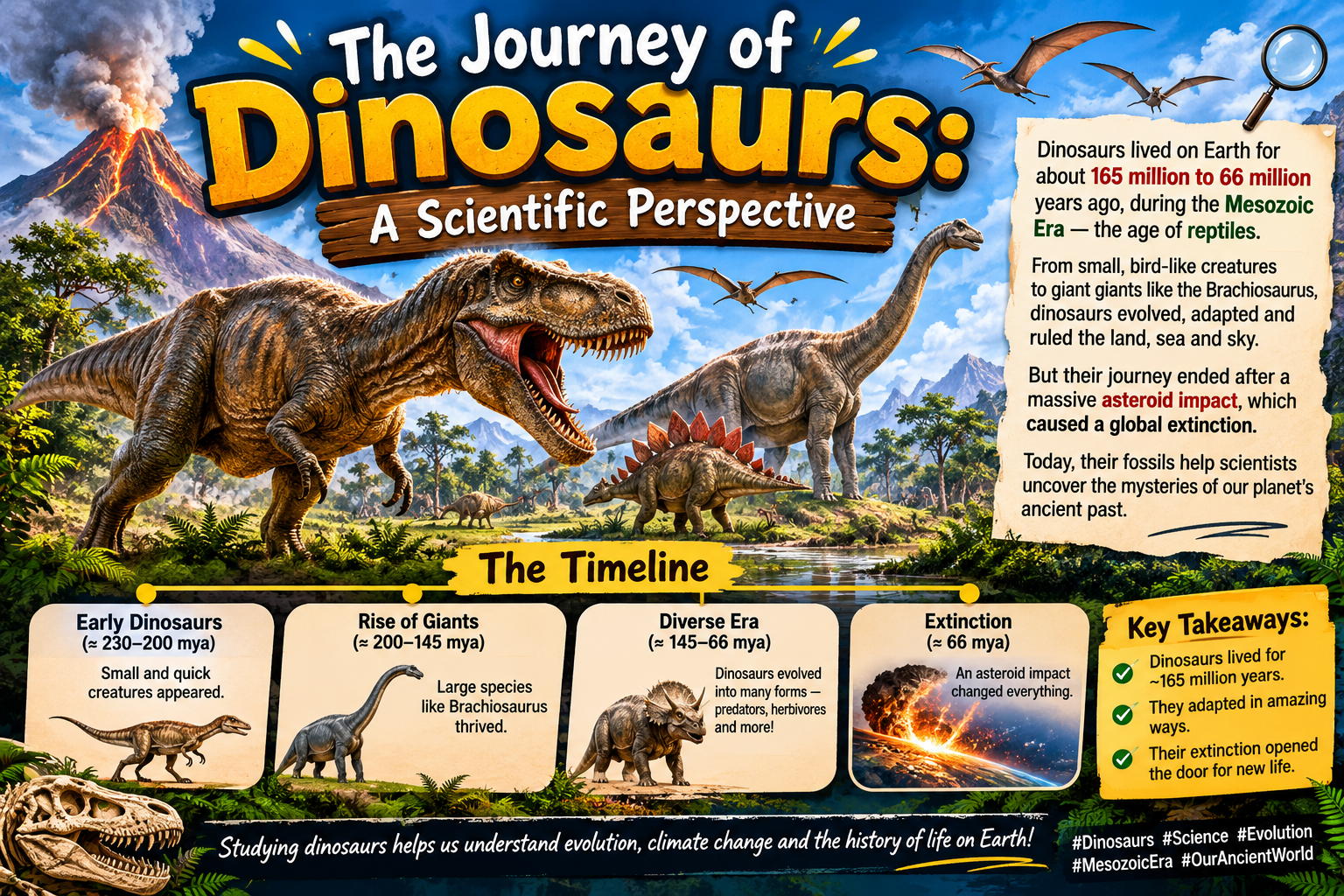
    Travel back millions of years and explore the fascinating world of dinosaurs! From tiny early dinosaurs to giant creatures like the Brachiosaurus and mighty T-Rex, discover how dinosaurs evolved, adapted, and ruled the Earth during the Mesozoic Era.
    Learn about their incredible diversity, the asteroid impact that led to their extinction, and how fossils help scientists uncover the secrets of our planet's ancient past.
    **Every fossil tells a story, and every discovery brings us closer to understanding Earth's history!**
    #Dinosaurs #Science #Evolution #MesozoicEra #DinosaurWorld #AncientHistory #Fossils #LearningIsFun #OurAncientWorld
    ACCL Foundation Level (Rehan School Urdu Bazar Campus) Roll no:19 Day : 48 story post 🦖🌍 **The Journey of Dinosaurs: A Scientific Perspective!** Travel back millions of years and explore the fascinating world of dinosaurs! From tiny early dinosaurs to giant creatures like the Brachiosaurus and mighty T-Rex, discover how dinosaurs evolved, adapted, and ruled the Earth during the Mesozoic Era. 🌿🦕 Learn about their incredible diversity, the asteroid impact that led to their extinction, and how fossils help scientists uncover the secrets of our planet's ancient past. 🔍🦴 ✨ **Every fossil tells a story, and every discovery brings us closer to understanding Earth's history!** #Dinosaurs #Science #Evolution #MesozoicEra #DinosaurWorld #AncientHistory #Fossils #LearningIsFun #OurAncientWorld
    0 Commentarii 0 Distribuiri 509 Views
  • Foundation level task
    Day : 48
    Task : story post
    The Journey of Dinosaurs: A Scientific Perspective

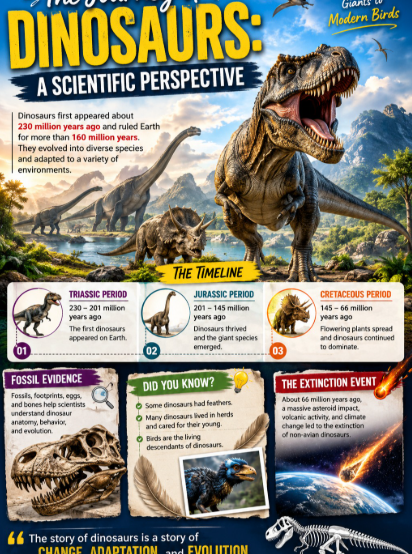
    Once upon a time, millions of years ago, our planet was very different from the world we see today. Huge forests covered the land, rivers flowed through green valleys, and strange creatures walked across the Earth. These amazing creatures were called dinosaurs.

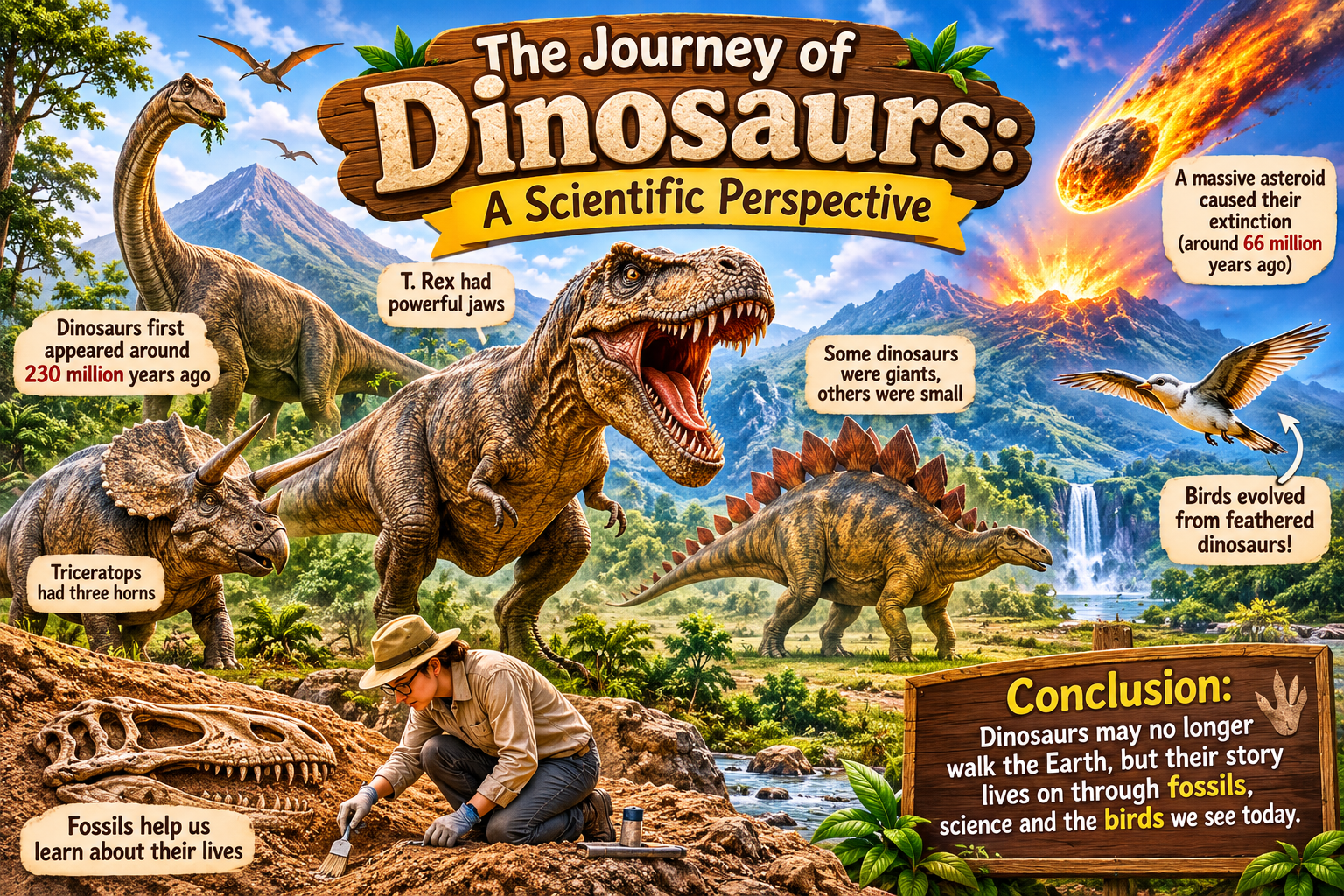
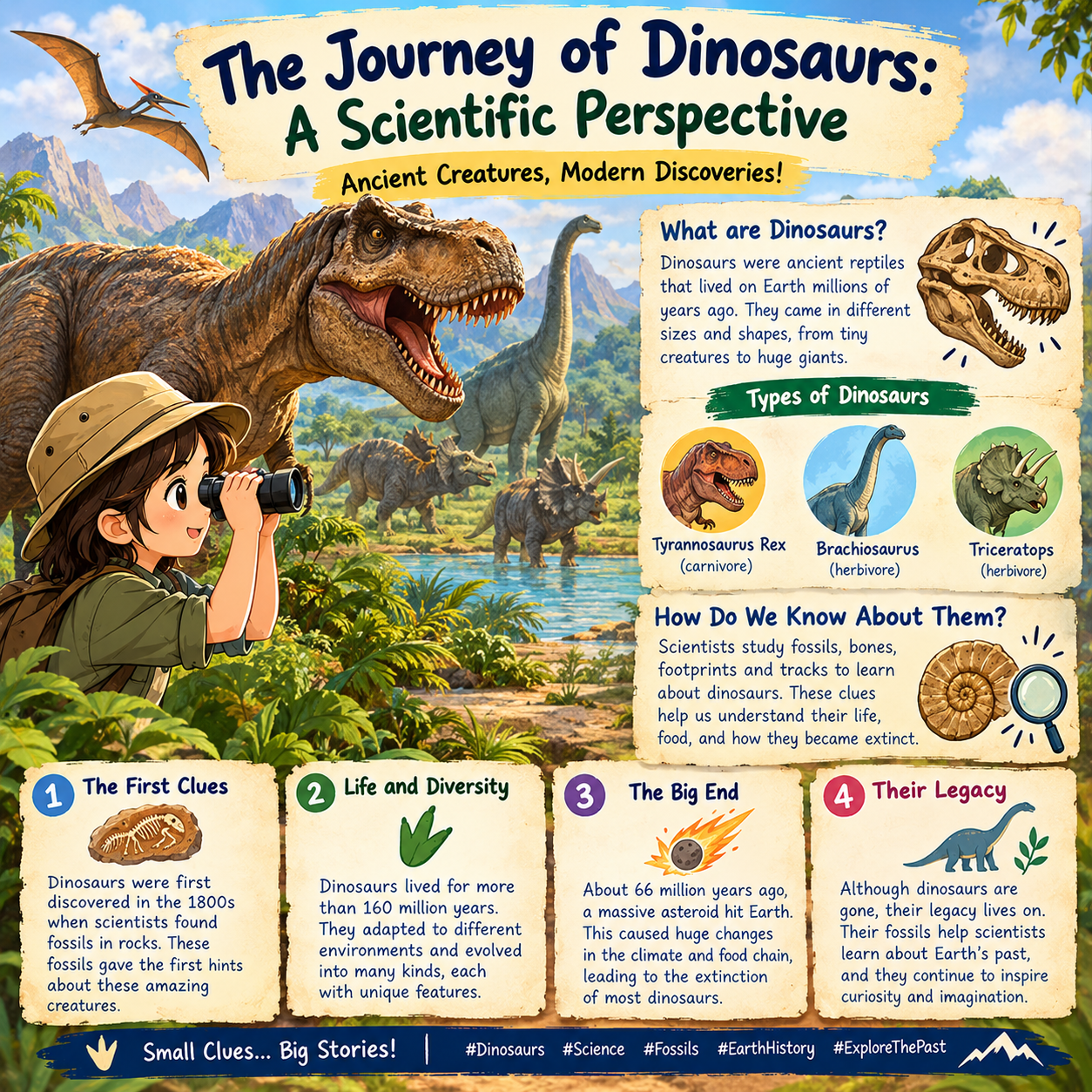
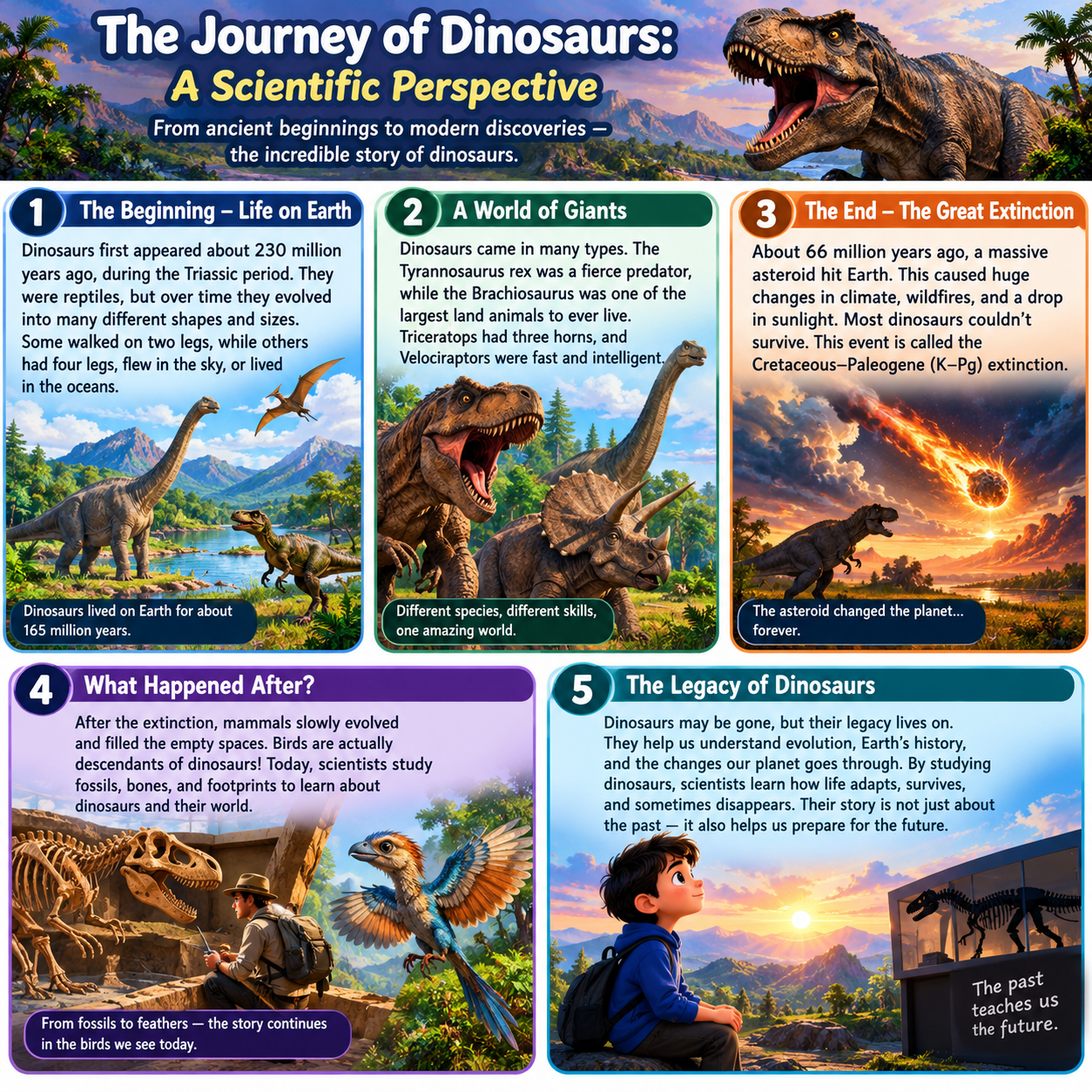
    Dinosaurs first appeared around 230 million years ago during the Triassic Period. They lived on Earth for millions of years and became some of the most fascinating animals in history.

    There were many different types of dinosaurs. Some were enormous plant-eaters, while others were meat-eaters. The mighty Tyrannosaurus Rex, known as T. rex, had powerful jaws and sharp teeth. The long-necked Brachiosaurus used its height to reach leaves on tall trees. The Triceratops had three horns and a large bony shield around its head.

    Scientists study dinosaurs through fossils. Fossils are the preserved remains or traces of ancient living things. By examining bones, footprints, and teeth, scientists discover how dinosaurs lived, what they ate, and how they moved.

    But what happened to the dinosaurs? About 66 million years ago, a huge asteroid struck Earth. This event caused major environmental changes and led to the extinction of most dinosaurs.

    However, there is something surprising! Not all dinosaurs disappeared. Scientists believe that modern birds evolved from small feathered dinosaurs. This means that birds are the living descendants of dinosaurs!

    Today, scientists continue discovering new dinosaur fossils and learning more about these incredible creatures.

    The journey of dinosaurs teaches us that Earth's history is full of mysteries, discoveries, and amazing scientific stories.

    The End – But the Journey of Discovery Continues!

    **The Journey of Dinosaurs: A Scientific Perspective**

    Explore the fascinating world of dinosaurs and discover their history, evolution, and extinction through science. From powerful T. rex to the evolution of modern birds, this journey highlights the wonders of Earth's past.

    #Dinosaurs #Science #History #Paleontology #Learning #ScientificDiscovery #Education
    Foundation level task Day : 48 Task : story post 🦖 The Journey of Dinosaurs: A Scientific Perspective Once upon a time, millions of years ago, our planet was very different from the world we see today. Huge forests covered the land, rivers flowed through green valleys, and strange creatures walked across the Earth. These amazing creatures were called dinosaurs. Dinosaurs first appeared around 230 million years ago during the Triassic Period. They lived on Earth for millions of years and became some of the most fascinating animals in history. There were many different types of dinosaurs. Some were enormous plant-eaters, while others were meat-eaters. The mighty Tyrannosaurus Rex, known as T. rex, had powerful jaws and sharp teeth. The long-necked Brachiosaurus used its height to reach leaves on tall trees. The Triceratops had three horns and a large bony shield around its head. Scientists study dinosaurs through fossils. Fossils are the preserved remains or traces of ancient living things. By examining bones, footprints, and teeth, scientists discover how dinosaurs lived, what they ate, and how they moved. But what happened to the dinosaurs? About 66 million years ago, a huge asteroid struck Earth. This event caused major environmental changes and led to the extinction of most dinosaurs. However, there is something surprising! Not all dinosaurs disappeared. Scientists believe that modern birds evolved from small feathered dinosaurs. This means that birds are the living descendants of dinosaurs! Today, scientists continue discovering new dinosaur fossils and learning more about these incredible creatures. The journey of dinosaurs teaches us that Earth's history is full of mysteries, discoveries, and amazing scientific stories. 🌍 The End – But the Journey of Discovery Continues! 🦕 🦖 **The Journey of Dinosaurs: A Scientific Perspective** Explore the fascinating world of dinosaurs and discover their history, evolution, and extinction through science. From powerful T. rex to the evolution of modern birds, this journey highlights the wonders of Earth's past. 🌍 #Dinosaurs #Science #History #Paleontology #Learning #ScientificDiscovery #Education
    1
    0 Commentarii 0 Distribuiri 946 Views
  • ACCL book
    rehan school urdu bazar
    roll no 11
    foundation level
    **Paragraph 1: The Age of Dinosaurs**

    Millions of years ago, dinosaurs lived on Earth. They came in many shapes and sizes. Some were enormous plant-eaters, while others were powerful meat-eaters.

    **Paragraph 2: Different Types of Dinosaurs**

    There were many kinds of dinosaurs. Tyrannosaurus rex was a meat-eater with sharp teeth. Brachiosaurus had a long neck, and Triceratops had three horns on its head.

    **Paragraph 3: How Scientists Study Dinosaurs**

    Scientists learn about dinosaurs by studying fossils, bones, and footprints. These discoveries help them understand how dinosaurs lived, what they ate, and how they moved.

    **Paragraph 4: The End of Their Journey**

    About 66 million years ago, a huge asteroid struck Earth, causing major environmental changes. Most dinosaurs disappeared, but birds evolved from a group of dinosaurs. Today, fossils help scientists uncover their amazing history.**پیراگراف 1: ڈائنوسار کا دور**

    لاکھوں سال پہلے ڈائنوسار زمین پر رہتے تھے۔ ان کی شکلیں اور جسامت مختلف ہوتی تھیں۔ کچھ پودے کھاتے تھے، جبکہ کچھ دوسرے جانوروں کا شکار کرتے تھے۔

    **پیراگراف 2: ڈائنوسار کی مختلف اقسام**

    ڈائنوسار کی بہت سی اقسام تھیں۔ ٹائرانوسورس ریکس گوشت خور تھا اور اس کے دانت تیز تھے۔ بریچیوسورس کی گردن لمبی تھی، جبکہ ٹرائیسیراٹاپس کے سر پر تین سینگ تھے۔

    **پیراگراف 3: سائنس دان ڈائنوسار کے بارے میں کیسے جانتے ہیں؟**

    سائنس دان ڈائنوسار کی ہڈیوں، فوسلز اور قدموں کے نشانات کا مطالعہ کرتے ہیں۔ ان دریافتوں سے انہیں معلوم ہوتا ہے کہ ڈائنوسار کیسے رہتے، کیا کھاتے اور کیسے چلتے تھے۔

    **پیراگراف 4: ڈائنوسار کے سفر کا اختتام**

    تقریباً چھ کروڑ ساٹھ لاکھ سال پہلے ایک بڑا سیارچہ زمین سے ٹکرایا، جس سے ماحول میں بڑی تبدیلیاں آئیں۔ زیادہ تر ڈائنوسار ختم ہوگئے، لیکن ڈائنوسار کے ایک گروہ سے پرندے ارتقا پذیر ہوئے۔ آج بھی فوسلز سائنس دانوں کو ان کی حیرت انگیز تاریخ سمجھنے میں مدد دیتے ہیں۔
    ACCL book rehan school urdu bazar roll no 11 foundation level **Paragraph 1: The Age of Dinosaurs** Millions of years ago, dinosaurs lived on Earth. They came in many shapes and sizes. Some were enormous plant-eaters, while others were powerful meat-eaters. **Paragraph 2: Different Types of Dinosaurs** There were many kinds of dinosaurs. Tyrannosaurus rex was a meat-eater with sharp teeth. Brachiosaurus had a long neck, and Triceratops had three horns on its head. **Paragraph 3: How Scientists Study Dinosaurs** Scientists learn about dinosaurs by studying fossils, bones, and footprints. These discoveries help them understand how dinosaurs lived, what they ate, and how they moved. **Paragraph 4: The End of Their Journey** About 66 million years ago, a huge asteroid struck Earth, causing major environmental changes. Most dinosaurs disappeared, but birds evolved from a group of dinosaurs. Today, fossils help scientists uncover their amazing history.**پیراگراف 1: ڈائنوسار کا دور** لاکھوں سال پہلے ڈائنوسار زمین پر رہتے تھے۔ ان کی شکلیں اور جسامت مختلف ہوتی تھیں۔ کچھ پودے کھاتے تھے، جبکہ کچھ دوسرے جانوروں کا شکار کرتے تھے۔ **پیراگراف 2: ڈائنوسار کی مختلف اقسام** ڈائنوسار کی بہت سی اقسام تھیں۔ ٹائرانوسورس ریکس گوشت خور تھا اور اس کے دانت تیز تھے۔ بریچیوسورس کی گردن لمبی تھی، جبکہ ٹرائیسیراٹاپس کے سر پر تین سینگ تھے۔ **پیراگراف 3: سائنس دان ڈائنوسار کے بارے میں کیسے جانتے ہیں؟** سائنس دان ڈائنوسار کی ہڈیوں، فوسلز اور قدموں کے نشانات کا مطالعہ کرتے ہیں۔ ان دریافتوں سے انہیں معلوم ہوتا ہے کہ ڈائنوسار کیسے رہتے، کیا کھاتے اور کیسے چلتے تھے۔ **پیراگراف 4: ڈائنوسار کے سفر کا اختتام** تقریباً چھ کروڑ ساٹھ لاکھ سال پہلے ایک بڑا سیارچہ زمین سے ٹکرایا، جس سے ماحول میں بڑی تبدیلیاں آئیں۔ زیادہ تر ڈائنوسار ختم ہوگئے، لیکن ڈائنوسار کے ایک گروہ سے پرندے ارتقا پذیر ہوئے۔ آج بھی فوسلز سائنس دانوں کو ان کی حیرت انگیز تاریخ سمجھنے میں مدد دیتے ہیں۔
    0 Commentarii 0 Distribuiri 1273 Views
  • RSIF8
    ROLL NO 100
    STORY POST NO 7
    STORY TOPIC **The Journey of Dinosaurs: A Scientific Perspective**

    Travel back millions of years and explore the fascinating world of dinosaurs! In this journey, we will discover how dinosaurs lived, what they ate, where they lived, and how scientists study their fossils to understand Earth's ancient history.

    From the mighty Tyrannosaurus rex to the gentle Brachiosaurus , every dinosaur has an amazing story to tell! Discover how these incredible creatures evolved, adapted to their environment, and eventually disappeared from Earth.

    **Let's explore the prehistoric world through science, curiosity, and discovery!**

    **Question:** Which dinosaur is your favorite, and why?

    \#Dinosaurs #DinosaurJourney #Science #ScientificDiscovery #PrehistoricWorld #Fossils #Paleontology #EarthHistory #AncientLife #LearningIsFun #EducationalContent #ScienceLovers
    RSIF8 ROLL NO 100 STORY POST NO 7 STORY TOPIC 🦖🌍 **The Journey of Dinosaurs: A Scientific Perspective** 🦕🔬 Travel back millions of years and explore the fascinating world of dinosaurs! 🌿🦴 In this journey, we will discover how dinosaurs lived, what they ate, where they lived, and how scientists study their fossils to understand Earth's ancient history. 🏞️🧪 From the mighty Tyrannosaurus rex 🦖 to the gentle Brachiosaurus 🦕, every dinosaur has an amazing story to tell! Discover how these incredible creatures evolved, adapted to their environment, and eventually disappeared from Earth. 🌋🌎 ✨ **Let's explore the prehistoric world through science, curiosity, and discovery!** 📚🔍 💬 **Question:** Which dinosaur is your favorite, and why? 🦖👇 \#Dinosaurs #DinosaurJourney #Science #ScientificDiscovery #PrehistoricWorld #Fossils #Paleontology #EarthHistory #AncientLife #LearningIsFun #EducationalContent #ScienceLovers 🦕🌍🔬📚
    0 Commentarii 0 Distribuiri 1446 Views
  • Foundation level
    Roll no 13
    story post
    Day 48
    Rehan school urdu bazar campas

    Millions of years ago, long before humans appeared on Earth, dinosaurs lived in a world filled with dense forests, flowing rivers, towering mountains, and vast open lands. Dinosaurs first appeared about 230 million years ago during the Triassic Period. Over millions of years, they evolved into many different shapes and sizes. Some were small and quick, while others grew into enormous creatures that dominated the land. Their fascinating journey became one of the most remarkable chapters in the history of life on Earth.

    As time passed, dinosaurs spread across different environments and developed unique ways of surviving. The mighty Tyrannosaurus rex became famous for its powerful jaws and sharp teeth, while the enormous Brachiosaurus used its long neck to reach vegetation high above the ground. The Triceratops had three horns and a large bony shield around its head. Some dinosaurs hunted other animals, while many survived by eating plants. Each species played a different role in its environment, creating a complex and fascinating prehistoric world.

    However, approximately 66 million years ago, a massive asteroid struck Earth near what is now Mexico. The impact triggered enormous environmental changes, sending dust and debris into the atmosphere and disrupting ecosystems around the world. Plants struggled to survive, food sources disappeared, and many species became extinct. This event marked the end of the age of non-avian dinosaurs. Yet, not every dinosaur lineage vanished. Some feathered dinosaurs survived through evolution, eventually giving rise to the birds we see in our world today.

    Millions of years later, scientists began uncovering the hidden secrets of these ancient creatures through fossils buried deep within the Earth. Paleontologists discovered dinosaur bones, teeth, eggs, and footprints that provided clues about their appearance, behavior, and habitats. Using modern technology, including computer imaging and advanced scientific techniques, researchers can now reconstruct how many dinosaurs may have looked and lived. Every fossil discovery adds another piece to the puzzle, helping u
    1m
    Foundation level Roll no 13 story post Day 48 Rehan school urdu bazar campas Millions of years ago, long before humans appeared on Earth, dinosaurs lived in a world filled with dense forests, flowing rivers, towering mountains, and vast open lands. Dinosaurs first appeared about 230 million years ago during the Triassic Period. Over millions of years, they evolved into many different shapes and sizes. Some were small and quick, while others grew into enormous creatures that dominated the land. Their fascinating journey became one of the most remarkable chapters in the history of life on Earth. As time passed, dinosaurs spread across different environments and developed unique ways of surviving. The mighty Tyrannosaurus rex became famous for its powerful jaws and sharp teeth, while the enormous Brachiosaurus used its long neck to reach vegetation high above the ground. The Triceratops had three horns and a large bony shield around its head. Some dinosaurs hunted other animals, while many survived by eating plants. Each species played a different role in its environment, creating a complex and fascinating prehistoric world. However, approximately 66 million years ago, a massive asteroid struck Earth near what is now Mexico. The impact triggered enormous environmental changes, sending dust and debris into the atmosphere and disrupting ecosystems around the world. Plants struggled to survive, food sources disappeared, and many species became extinct. This event marked the end of the age of non-avian dinosaurs. Yet, not every dinosaur lineage vanished. Some feathered dinosaurs survived through evolution, eventually giving rise to the birds we see in our world today. Millions of years later, scientists began uncovering the hidden secrets of these ancient creatures through fossils buried deep within the Earth. Paleontologists discovered dinosaur bones, teeth, eggs, and footprints that provided clues about their appearance, behavior, and habitats. Using modern technology, including computer imaging and advanced scientific techniques, researchers can now reconstruct how many dinosaurs may have looked and lived. Every fossil discovery adds another piece to the puzzle, helping u 1m
    0 Commentarii 0 Distribuiri 2837 Views
  • Mohsin #RSF8
    #Storypostt6
    Class: Foundation level
    Made by Me
    rool no:13
    The Journey of Dinosaurs: A Scientific Perspective

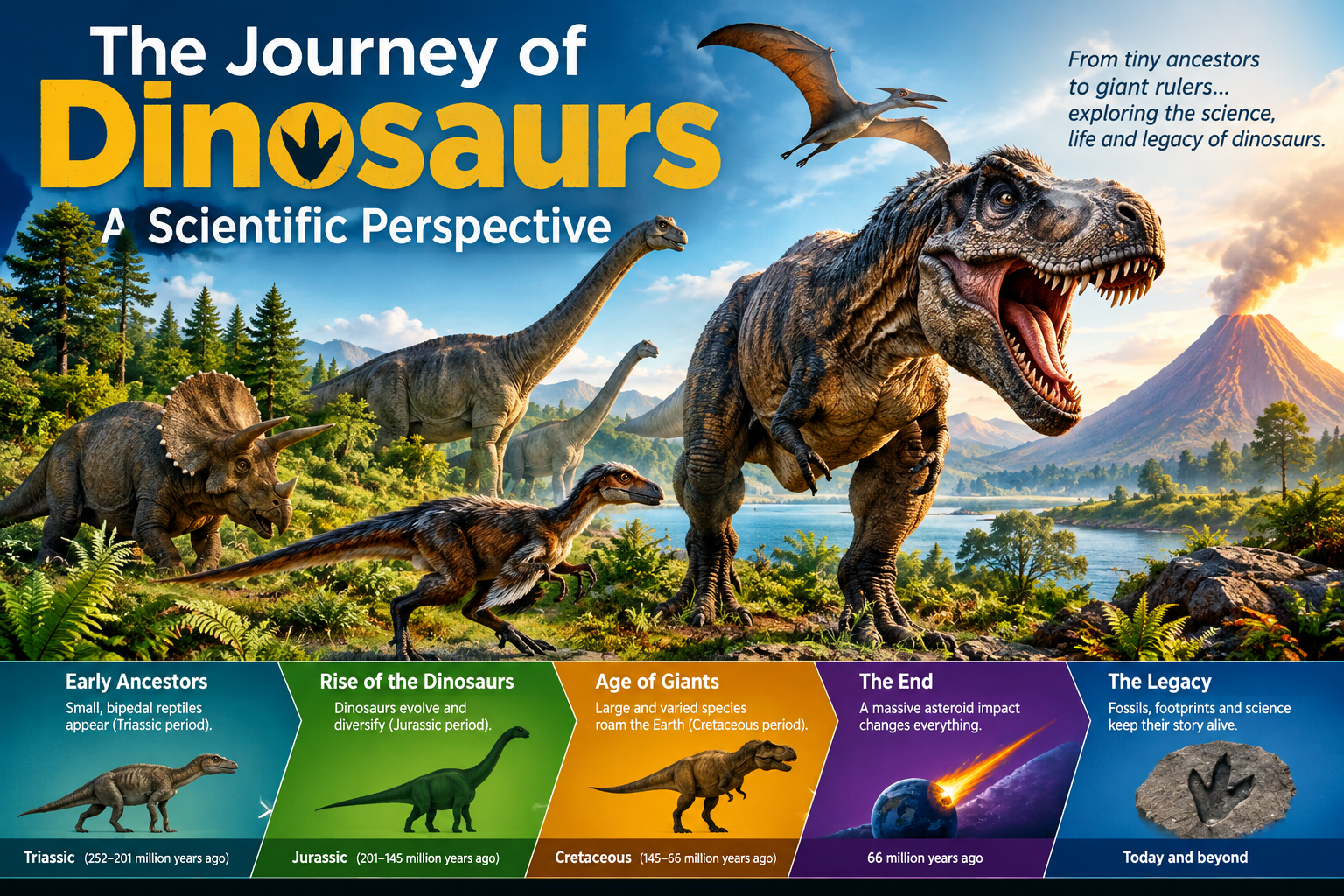
    Travel back hundreds of millions of years and discover the extraordinary story of dinosaurs—some of the most fascinating creatures to ever inhabit our planet. Their journey began during the Triassic Period, approximately 230 million years ago, when the Earth looked vastly different from the world we know today. Continents were joined together in a giant landmass called Pangaea, and early dinosaurs emerged as small, agile reptiles. Over time, these ancient creatures evolved into a diverse range of species, occupying nearly every ecological niche and becoming the dominant animals on Earth for more than 160 million years.

    During the Jurassic Period, dinosaurs flourished and diversified into countless forms. Massive herbivores such as Brachiosaurus and Diplodocus roamed lush forests, while formidable predators like Allosaurus hunted across vast landscapes. Their remarkable adaptations allowed them to thrive in changing environments, demonstrating the power of evolution and natural selection. As ecosystems became increasingly complex, dinosaurs developed specialized characteristics that enabled them to survive and dominate their habitats.

    The Cretaceous Period marked the peak of dinosaur diversity. Iconic species such as Tyrannosaurus rex, Triceratops, and Velociraptor appeared during this era. Scientists believe that many dinosaurs displayed advanced behaviors, including social interaction, parental care, and migration. Fossil evidence has even revealed that some dinosaurs possessed feathers, providing strong support for the evolutionary link between dinosaurs and modern birds. These discoveries have transformed our understanding of dinosaurs, showing that they were dynamic, intelligent, and highly adaptable creatures rather than the slow-moving reptiles once imagined.

    Our knowledge of dinosaurs comes primarily from the study of fossils. Paleontologists carefully examine fossilized bones, footprints, eggs, and even preserved skin impressions to reconstruct the lives of these prehistoric animals. Modern technologies.
    Mohsin #RSF8🎓✨ #Storypostt6 Class: Foundation level 📚 Made by Me 💻🚀 rool no:13 🦖 The Journey of Dinosaurs: A Scientific Perspective Travel back hundreds of millions of years and discover the extraordinary story of dinosaurs—some of the most fascinating creatures to ever inhabit our planet. Their journey began during the Triassic Period, approximately 230 million years ago, when the Earth looked vastly different from the world we know today. Continents were joined together in a giant landmass called Pangaea, and early dinosaurs emerged as small, agile reptiles. Over time, these ancient creatures evolved into a diverse range of species, occupying nearly every ecological niche and becoming the dominant animals on Earth for more than 160 million years. During the Jurassic Period, dinosaurs flourished and diversified into countless forms. Massive herbivores such as Brachiosaurus and Diplodocus roamed lush forests, while formidable predators like Allosaurus hunted across vast landscapes. Their remarkable adaptations allowed them to thrive in changing environments, demonstrating the power of evolution and natural selection. As ecosystems became increasingly complex, dinosaurs developed specialized characteristics that enabled them to survive and dominate their habitats. The Cretaceous Period marked the peak of dinosaur diversity. Iconic species such as Tyrannosaurus rex, Triceratops, and Velociraptor appeared during this era. Scientists believe that many dinosaurs displayed advanced behaviors, including social interaction, parental care, and migration. Fossil evidence has even revealed that some dinosaurs possessed feathers, providing strong support for the evolutionary link between dinosaurs and modern birds. These discoveries have transformed our understanding of dinosaurs, showing that they were dynamic, intelligent, and highly adaptable creatures rather than the slow-moving reptiles once imagined. Our knowledge of dinosaurs comes primarily from the study of fossils. Paleontologists carefully examine fossilized bones, footprints, eggs, and even preserved skin impressions to reconstruct the lives of these prehistoric animals. Modern technologies.
    0 Commentarii 0 Distribuiri 3401 Views
  • Day:-48
    rollno:-006
    foundation level
    Story Post
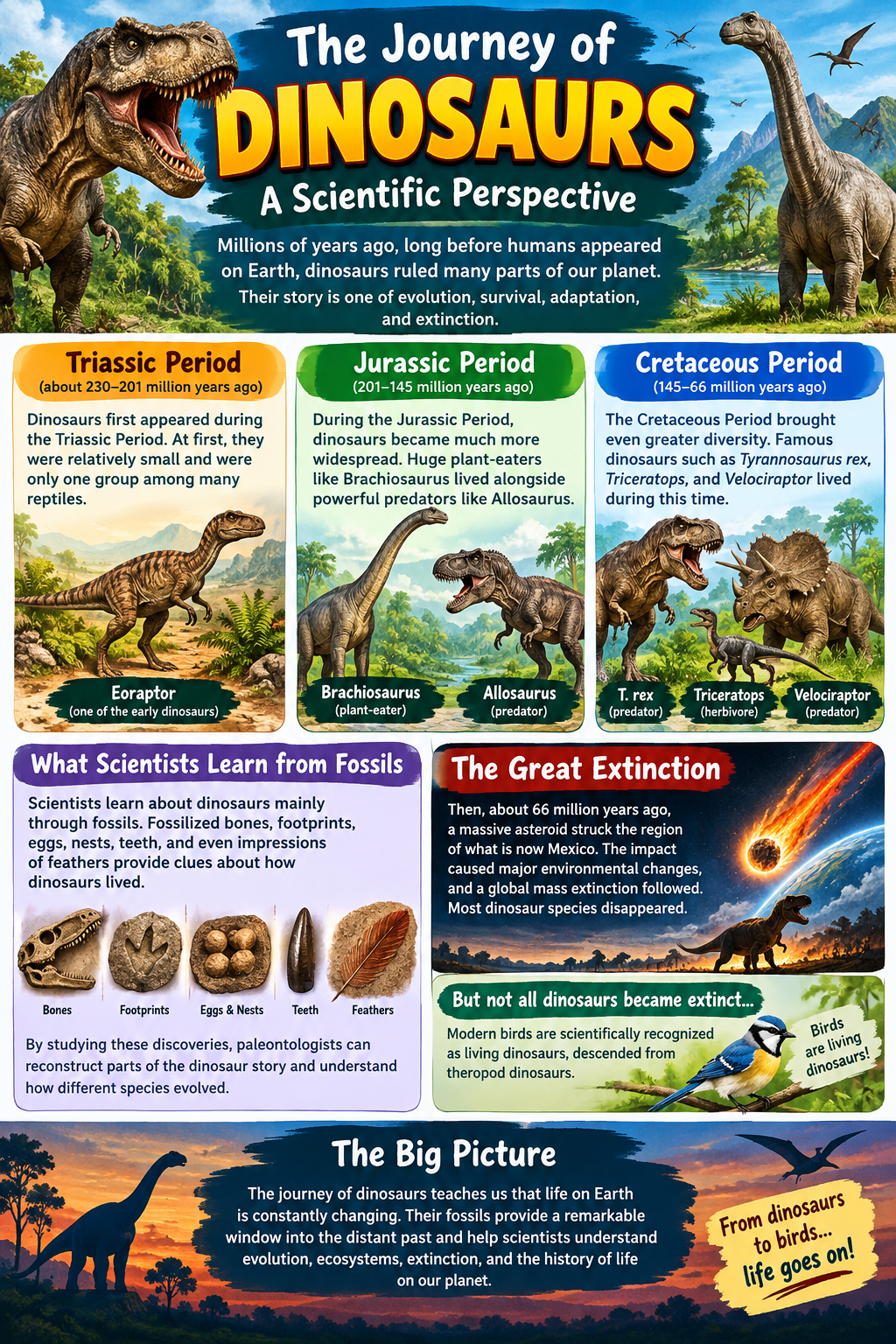
    # The Journey of Dinosaurs: A Scientific Perspective

    Millions of years ago, long before humans appeared on Earth, dinosaurs ruled many parts of our planet. Their story is one of evolution, survival, adaptation, and extinction.

    Dinosaurs first appeared during the **Triassic Period, about 230 million years ago**. At first, they were relatively small and were only one group among many reptiles. Over millions of years, however, dinosaurs evolved into an incredible variety of species.

    During the **Jurassic Period**, dinosaurs became much more widespread. Huge plant-eating dinosaurs such as *Brachiosaurus* lived alongside powerful predators such as *Allosaurus*. Some dinosaurs developed long necks, sharp teeth, armor, horns, or other features that helped them survive in their environments.

    The **Cretaceous Period** brought even greater diversity. Famous dinosaurs such as *Tyrannosaurus rex*, *Triceratops*, and *Velociraptor* lived during this time. Scientists believe dinosaurs occupied many different habitats and had complex behaviors, including nesting, caring for young, hunting, and possibly communicating with one another.

    Scientists learn about dinosaurs mainly through **fossils**. Fossilized bones, footprints, eggs, nests, teeth, and even impressions of feathers provide clues about how dinosaurs lived. By studying these discoveries, paleontologists can reconstruct parts of the dinosaur story and understand how different species evolved.

    Then, about **66 million years ago**, a massive asteroid struck the region of what is now Mexico. The impact caused major environmental changes, and a global mass extinction followed. Most dinosaur species disappeared. However, not all dinosaurs became extinct.

    Modern birds are scientifically recognized as **living dinosaurs**, descended from theropod dinosaurs. This means that although non-avian dinosaurs such as *T. rex* are gone, their evolutionary legacy continues today in birds.

    The journey of dinosaurs teaches us that life on Earth is constantly changing. Their fossils provide a remarkable window into the distant past and help scientists understand evolution, ecosystems, extinction, and the history of life on our planet.
    Day:-48 rollno:-006 foundation level 📖 Story Post # 🦖 The Journey of Dinosaurs: A Scientific Perspective Millions of years ago, long before humans appeared on Earth, dinosaurs ruled many parts of our planet. Their story is one of evolution, survival, adaptation, and extinction. Dinosaurs first appeared during the **Triassic Period, about 230 million years ago**. At first, they were relatively small and were only one group among many reptiles. Over millions of years, however, dinosaurs evolved into an incredible variety of species. During the **Jurassic Period**, dinosaurs became much more widespread. Huge plant-eating dinosaurs such as *Brachiosaurus* lived alongside powerful predators such as *Allosaurus*. Some dinosaurs developed long necks, sharp teeth, armor, horns, or other features that helped them survive in their environments. The **Cretaceous Period** brought even greater diversity. Famous dinosaurs such as *Tyrannosaurus rex*, *Triceratops*, and *Velociraptor* lived during this time. Scientists believe dinosaurs occupied many different habitats and had complex behaviors, including nesting, caring for young, hunting, and possibly communicating with one another. Scientists learn about dinosaurs mainly through **fossils**. Fossilized bones, footprints, eggs, nests, teeth, and even impressions of feathers provide clues about how dinosaurs lived. By studying these discoveries, paleontologists can reconstruct parts of the dinosaur story and understand how different species evolved. Then, about **66 million years ago**, a massive asteroid struck the region of what is now Mexico. The impact caused major environmental changes, and a global mass extinction followed. Most dinosaur species disappeared. However, not all dinosaurs became extinct. Modern birds are scientifically recognized as **living dinosaurs**, descended from theropod dinosaurs. This means that although non-avian dinosaurs such as *T. rex* are gone, their evolutionary legacy continues today in birds. The journey of dinosaurs teaches us that life on Earth is constantly changing. Their fossils provide a remarkable window into the distant past and help scientists understand evolution, ecosystems, extinction, and the history of life on our planet.
    0 Commentarii 0 Distribuiri 2592 Views
  • Foundation level :-
    Day 41
    Roll:-005
    story post


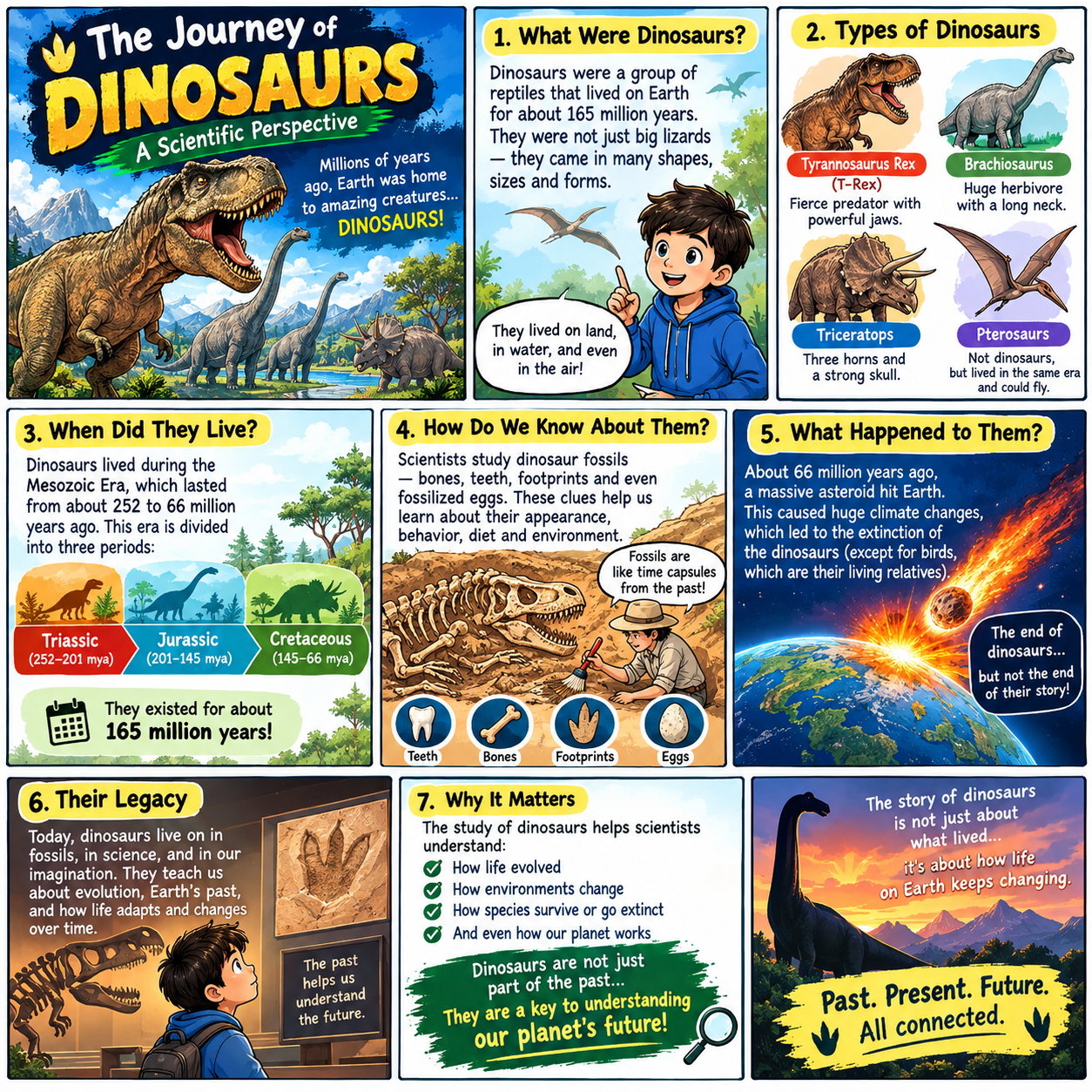
    **“The Journey of Dinosaurs: A Scientific Perspective”** is a colorful, comic-style educational post that takes viewers on an exciting journey through the prehistoric world of dinosaurs. The design combines **bright illustrations, bold headings, speech bubbles, timelines, and easy-to-understand scientific information**, making the topic fun and engaging for students and young learners.

    The post begins by introducing dinosaurs as an amazing group of animals that lived on Earth for millions of years. It explains that dinosaurs were not simply giant lizards—they appeared in many different **shapes, sizes, and forms**, from enormous plant-eating giants to powerful meat-eating predators.

    The comic introduces several famous prehistoric creatures, including **Tyrannosaurus rex, Brachiosaurus, and Triceratops**, while also explaining that **pterosaurs were flying reptiles rather than dinosaurs**. Each section uses colorful illustrations to help readers recognize the different creatures and understand how they lived.

    A timeline explains the **Mesozoic Era**, including the **Triassic, Jurassic, and Cretaceous periods**, showing how dinosaurs existed for an incredibly long period of Earth's history. Another section explains how scientists discover information about prehistoric life through **fossils, bones, teeth, footprints, and eggs**—almost like pieces of a giant puzzle from the past.

    The post also explores the dramatic end of the non-avian dinosaurs around **66 million years ago**, when a massive asteroid impact contributed to major environmental and climate changes. Importantly, the comic points out that **birds are living relatives of dinosaurs**, showing that the dinosaur story did not completely end.

    The final sections explain why studying dinosaurs matters today. Fossils and scientific research help us understand **evolution, changing environments, survival, extinction, and the history of our planet**. The overall message is that studying the past can help us understand the present and think about Earth's future.

    **Past. Present. Future. All connected.**
    **Explore the past. Understand life. Discover the future.**
    Foundation level :- Day 41 Roll:-005 story post **“The Journey of Dinosaurs: A Scientific Perspective”** is a colorful, comic-style educational post that takes viewers on an exciting journey through the prehistoric world of dinosaurs. The design combines **bright illustrations, bold headings, speech bubbles, timelines, and easy-to-understand scientific information**, making the topic fun and engaging for students and young learners. The post begins by introducing dinosaurs as an amazing group of animals that lived on Earth for millions of years. It explains that dinosaurs were not simply giant lizards—they appeared in many different **shapes, sizes, and forms**, from enormous plant-eating giants to powerful meat-eating predators. The comic introduces several famous prehistoric creatures, including **Tyrannosaurus rex, Brachiosaurus, and Triceratops**, while also explaining that **pterosaurs were flying reptiles rather than dinosaurs**. Each section uses colorful illustrations to help readers recognize the different creatures and understand how they lived. A timeline explains the **Mesozoic Era**, including the **Triassic, Jurassic, and Cretaceous periods**, showing how dinosaurs existed for an incredibly long period of Earth's history. Another section explains how scientists discover information about prehistoric life through **fossils, bones, teeth, footprints, and eggs**—almost like pieces of a giant puzzle from the past. The post also explores the dramatic end of the non-avian dinosaurs around **66 million years ago**, when a massive asteroid impact contributed to major environmental and climate changes. Importantly, the comic points out that **birds are living relatives of dinosaurs**, showing that the dinosaur story did not completely end. The final sections explain why studying dinosaurs matters today. Fossils and scientific research help us understand **evolution, changing environments, survival, extinction, and the history of our planet**. The overall message is that studying the past can help us understand the present and think about Earth's future. 🦕 **Past. Present. Future. All connected.** 🔬 **Explore the past. Understand life. Discover the future.**
    0 Commentarii 0 Distribuiri 2531 Views
  • ACCL Day 48
    "The Journey of Dinosaurs: A Scientific Perspective"

    Millions of years ago, long before humans walked the Earth, dinosaurs ruled the land, sky, and seas. From the gigantic Brachiosaurus grazing on treetops to the fierce Tyrannosaurus Rex hunting its prey, these magnificent creatures shaped the prehistoric world.

    Through fossils and scientific research, weve uncovered their mysterious journey — how they lived, evolved, and eventually disappeared due to dramatic changes in Earths environment.

    Their story reminds us how powerful and fragile life can be, leaving behind a legacy written in stone.

    Imran Khan Street Wala
    🦕 ACCL Day 48 "The Journey of Dinosaurs: A Scientific Perspective" Millions of years ago, long before humans walked the Earth, dinosaurs ruled the land, sky, and seas. From the gigantic Brachiosaurus grazing on treetops to the fierce Tyrannosaurus Rex hunting its prey, these magnificent creatures shaped the prehistoric world. Through fossils and scientific research, we've uncovered their mysterious journey — how they lived, evolved, and eventually disappeared due to dramatic changes in Earth's environment. 🌍✨ Their story reminds us how powerful and fragile life can be, leaving behind a legacy written in stone. ⏳🦖 Imran Khan Street Wala
    0 Commentarii 0 Distribuiri 988 Views
Sponsorizeaza Paginile