• Mohsin RS F8
    Story post NO:17
    roll NO:13
    Class: Foundation Level
    Made by Me

    The Ethics and Education of Animal Dissections

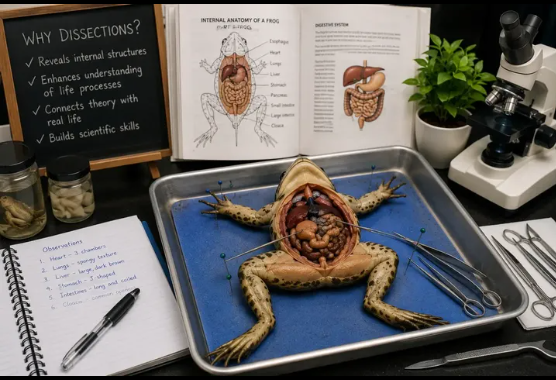
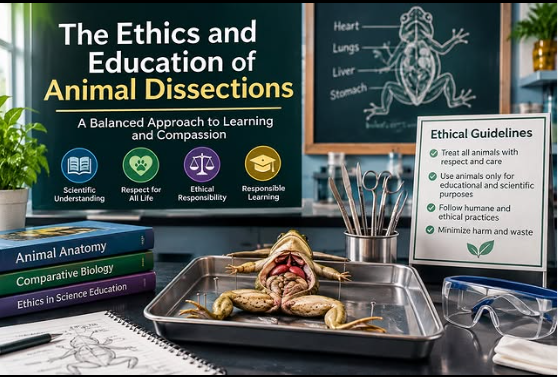
    Animal dissections have been used in science education for many years as a way to help students understand anatomy, biological structures, and how different body systems work together. By studying organisms directly, students can connect what they read in textbooks with real biological structures. Dissections can make lessons more meaningful by allowing learners to observe organs, tissues, and their relationships in a practical setting.

    However, animal dissection is not only a scientific or educational topic; it also raises important ethical questions. Animals are living beings, and their use in education should always be approached with respect, care, and responsibility. Students and teachers should understand why a specimen is being used and ensure that the activity has a genuine educational purpose. Ethical education encourages students to think about both the value of scientific knowledge and the responsibility humans have toward other living organisms.

    A responsible approach to dissection includes following appropriate safety and ethical guidelines. Specimens should be obtained through approved and humane sources, handled carefully, and used only when they provide meaningful educational value. Teachers should also explain the purpose of the activity before beginning and create an environment where students can ask questions or express concerns respectfully.

    Education is ultimately about developing knowledge as well as character. Learning anatomy through dissection can teach students about the complexity of life, but it can also encourage appreciation for living organisms. When carried out responsibly, the experience can promote scientific curiosity, careful observation, critical thinking, and respect for life.

    Modern education can also consider alternatives such as detailed anatomical models, digital simulations, videos, diagrams, and virtual dissection programs. These methods can provide valuable learning experiences while reducing the need for physical specimens in some situations.
    Mohsin RS F8 🎓✨ Story post NO:17 roll NO:13 Class: Foundation Level 📚 Made by Me 💻🚀 The Ethics and Education of Animal Dissections Animal dissections have been used in science education for many years as a way to help students understand anatomy, biological structures, and how different body systems work together. By studying organisms directly, students can connect what they read in textbooks with real biological structures. Dissections can make lessons more meaningful by allowing learners to observe organs, tissues, and their relationships in a practical setting. However, animal dissection is not only a scientific or educational topic; it also raises important ethical questions. Animals are living beings, and their use in education should always be approached with respect, care, and responsibility. Students and teachers should understand why a specimen is being used and ensure that the activity has a genuine educational purpose. Ethical education encourages students to think about both the value of scientific knowledge and the responsibility humans have toward other living organisms. A responsible approach to dissection includes following appropriate safety and ethical guidelines. Specimens should be obtained through approved and humane sources, handled carefully, and used only when they provide meaningful educational value. Teachers should also explain the purpose of the activity before beginning and create an environment where students can ask questions or express concerns respectfully. Education is ultimately about developing knowledge as well as character. Learning anatomy through dissection can teach students about the complexity of life, but it can also encourage appreciation for living organisms. When carried out responsibly, the experience can promote scientific curiosity, careful observation, critical thinking, and respect for life. Modern education can also consider alternatives such as detailed anatomical models, digital simulations, videos, diagrams, and virtual dissection programs. These methods can provide valuable learning experiences while reducing the need for physical specimens in some situations.
    0 Commentaires 0 Parts 127 Vue

  • Mohsin RS F8
    Story post NO:16
    roll NO:13
    Class: Foundation Level
    Made by Me

    Exploring Life’s Mechanisms Through Experimentation

    Life is a remarkable system filled with countless processes that work together every moment. From the activity of tiny cells to the growth of plants and the functioning of complex organisms, nature is constantly performing fascinating biological processes. But how can we understand these hidden mechanisms? The answer lies in scientific investigation and experimentation.

    Experimentation gives us a way to explore the living world through observation, questions, testing, and evidence. Instead of simply believing an explanation, scientists investigate it carefully. They ask questions such as: How do plants grow? How do cells obtain energy? How do organisms respond to their environment? What factors affect biological processes? These questions can lead to experiments that help us discover how life works.

    A scientific experiment usually begins with curiosity. A researcher observes something interesting and develops a question about it. The researcher may then create a hypothesis, which is a possible explanation that can be tested. After designing an appropriate investigation, observations and measurements are collected. The results are then analyzed to determine whether they support the original idea.

    For example, scientists can investigate how different environmental conditions affect plant growth. By carefully controlling relevant factors and observing changes over time, researchers can learn more about the relationship between living organisms and their surroundings. Experiments like these help turn simple observations into scientific knowledge.

    Laboratory tools also play an important role in exploring life's mechanisms. Microscopes allow researchers to observe structures that are too small to see with the naked eye. Test tubes, petri dishes, measuring equipment, and other laboratory tools allow scientists to conduct controlled investigations. Modern technologies have expanded these possibilities even further, allowing researchers to study DNA, proteins, cells, and many other biological systems.
    Mohsin RS F8 🎓✨ Story post NO:16 roll NO:13 Class: Foundation Level 📚 Made by Me 💻🚀 🔬 Exploring Life’s Mechanisms Through Experimentation Life is a remarkable system filled with countless processes that work together every moment. From the activity of tiny cells to the growth of plants and the functioning of complex organisms, nature is constantly performing fascinating biological processes. But how can we understand these hidden mechanisms? The answer lies in scientific investigation and experimentation. Experimentation gives us a way to explore the living world through observation, questions, testing, and evidence. Instead of simply believing an explanation, scientists investigate it carefully. They ask questions such as: How do plants grow? How do cells obtain energy? How do organisms respond to their environment? What factors affect biological processes? These questions can lead to experiments that help us discover how life works. A scientific experiment usually begins with curiosity. A researcher observes something interesting and develops a question about it. The researcher may then create a hypothesis, which is a possible explanation that can be tested. After designing an appropriate investigation, observations and measurements are collected. The results are then analyzed to determine whether they support the original idea. For example, scientists can investigate how different environmental conditions affect plant growth. By carefully controlling relevant factors and observing changes over time, researchers can learn more about the relationship between living organisms and their surroundings. Experiments like these help turn simple observations into scientific knowledge. Laboratory tools also play an important role in exploring life's mechanisms. Microscopes allow researchers to observe structures that are too small to see with the naked eye. Test tubes, petri dishes, measuring equipment, and other laboratory tools allow scientists to conduct controlled investigations. Modern technologies have expanded these possibilities even further, allowing researchers to study DNA, proteins, cells, and many other biological systems.
    0 Commentaires 0 Parts 143 Vue
  • Mohsin RS F8
    Story post NO:15
    Class: Foundation Level
    Made by Me

    “Peering Inside: The Role of Dissections in Understanding Life” explores how dissection can help us understand the hidden structures of living organisms. While diagrams, textbooks, and digital models provide important information, studying anatomical structures directly can make biological concepts easier to understand and remember.
    Dissection allows students and researchers to observe how organs are positioned, how different body systems are connected, and how structures work together to support life. It encourages careful observation, scientific thinking, curiosity, and evidence-based learning. By examining anatomy, students can connect what they learn in the classroom with real biological structures.
    Dissections have also played an important role in the development of biological and medical knowledge. Understanding anatomy has helped scientists learn more about the human body, animal biology, diseases, and the functions of different organs. Today, traditional dissection can also be supported by modern tools such as microscopes, anatomical models, medical imaging, 3D simulations, and virtual laboratories.
    Most importantly, studying anatomy teaches us about the remarkable organization and complexity of life. Peering inside is not simply about seeing organs—it is about discovering how the many parts of a living system work together. Through responsible scientific study, dissection can help turn curiosity into knowledge and observation into a deeper understanding of life.
    Mohsin RS F8 🎓✨ Story post NO:15 Class: Foundation Level 📚 Made by Me 💻🚀 “Peering Inside: The Role of Dissections in Understanding Life” explores how dissection can help us understand the hidden structures of living organisms. While diagrams, textbooks, and digital models provide important information, studying anatomical structures directly can make biological concepts easier to understand and remember. Dissection allows students and researchers to observe how organs are positioned, how different body systems are connected, and how structures work together to support life. It encourages careful observation, scientific thinking, curiosity, and evidence-based learning. By examining anatomy, students can connect what they learn in the classroom with real biological structures. Dissections have also played an important role in the development of biological and medical knowledge. Understanding anatomy has helped scientists learn more about the human body, animal biology, diseases, and the functions of different organs. Today, traditional dissection can also be supported by modern tools such as microscopes, anatomical models, medical imaging, 3D simulations, and virtual laboratories. Most importantly, studying anatomy teaches us about the remarkable organization and complexity of life. Peering inside is not simply about seeing organs—it is about discovering how the many parts of a living system work together. Through responsible scientific study, dissection can help turn curiosity into knowledge and observation into a deeper understanding of life.
    0 Commentaires 0 Parts 109 Vue


  • Mohsin RS F8
    Story post NO:14
    roll NO:13
    Class: Foundation Level
    Made by Me

    Description: Atoms and Eternity: How Chemistry Shapes the Cosmos

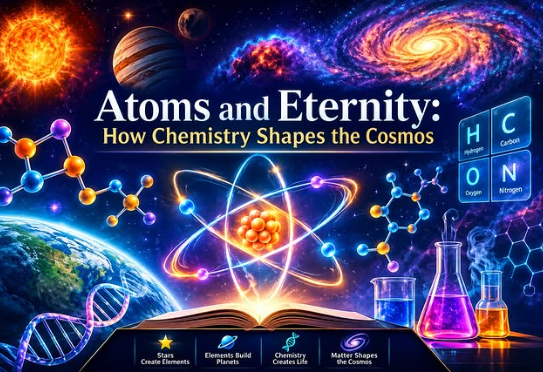
    Atoms and Eternity: How Chemistry Shapes the Cosmos is a fascinating journey into the connection between the smallest building blocks of matter and the enormous universe around us. Everything we see—from stars and planets to oceans, rocks, plants, animals, and even our own bodies—is made from atoms. Although atoms are incredibly tiny, their interactions create the incredible diversity and complexity we observe throughout nature.

    The story of atoms is also connected to the story of the cosmos. The universe began with simple elements, while stars became powerful cosmic environments where many heavier elements were produced. Over immense periods of time, these elements became part of clouds of gas and dust that could eventually form new stars, planets, and other celestial objects. This gives us a remarkable way to understand how matter travels and transforms across the universe.

    Chemistry helps explain what happens when atoms combine. Different combinations of elements create molecules with completely different properties. Water, for example, is formed from hydrogen and oxygen, while carbon can form an enormous variety of molecules that are important in living systems. These chemical relationships show how simple components can create increasingly complex structures.

    The connection between chemistry and astronomy is especially exciting because scientists can study the composition of objects that are unimaginably far away. By analyzing the light from stars and other cosmic objects, scientists can identify elements and learn about the conditions in distant regions of space. In this way, chemistry becomes a powerful tool for exploring the universe.

    This topic also encourages us to think about the relationship between stars, elements, planets, and life. The elements found on Earth are part of a much larger cosmic story. The atoms that make up minerals, water, atmosphere, and living organisms have participated in countless transformations throughout the history of the universe.

    Ultimately, Atoms and Eternity
    Mohsin RS F8 🎓✨ Story post NO:14 roll NO:13 Class: Foundation Level 📚 Made by Me 💻🚀 Description: Atoms and Eternity: How Chemistry Shapes the Cosmos 🌌⚛️ Atoms and Eternity: How Chemistry Shapes the Cosmos is a fascinating journey into the connection between the smallest building blocks of matter and the enormous universe around us. Everything we see—from stars and planets to oceans, rocks, plants, animals, and even our own bodies—is made from atoms. Although atoms are incredibly tiny, their interactions create the incredible diversity and complexity we observe throughout nature. The story of atoms is also connected to the story of the cosmos. The universe began with simple elements, while stars became powerful cosmic environments where many heavier elements were produced. Over immense periods of time, these elements became part of clouds of gas and dust that could eventually form new stars, planets, and other celestial objects. This gives us a remarkable way to understand how matter travels and transforms across the universe. Chemistry helps explain what happens when atoms combine. Different combinations of elements create molecules with completely different properties. Water, for example, is formed from hydrogen and oxygen, while carbon can form an enormous variety of molecules that are important in living systems. These chemical relationships show how simple components can create increasingly complex structures. The connection between chemistry and astronomy is especially exciting because scientists can study the composition of objects that are unimaginably far away. By analyzing the light from stars and other cosmic objects, scientists can identify elements and learn about the conditions in distant regions of space. In this way, chemistry becomes a powerful tool for exploring the universe. This topic also encourages us to think about the relationship between stars, elements, planets, and life. The elements found on Earth are part of a much larger cosmic story. The atoms that make up minerals, water, atmosphere, and living organisms have participated in countless transformations throughout the history of the universe. Ultimately, Atoms and Eternity
    0 Commentaires 0 Parts 98 Vue
  • RSIF8
    Roll no:
    Task no:76
    Task topic: The Quran and Science: A Bond of Knowledge
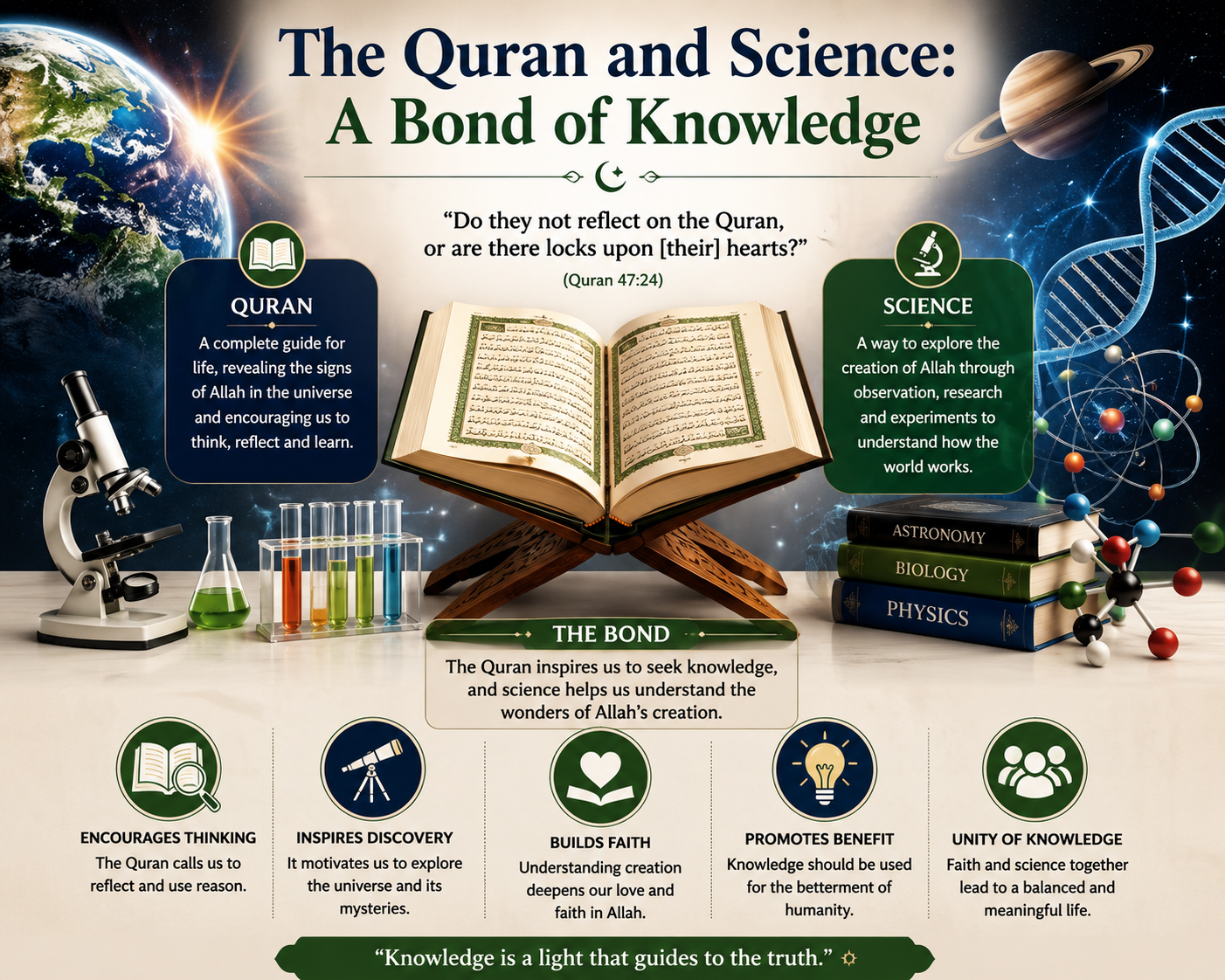
    The Holy Quran encourages people to think, observe, and explore the world around them. It inspires humanity to seek knowledge, reflect on the wonders of creation, and understand the signs of Allah in nature. Science and the Quran work together by encouraging curiosity, learning, and the pursuit of truth.

    Many scientific discoveries about the universe, the human body, water, and the natural world remind us of the importance of observation and research. While the Quran is a book of guidance rather than a science textbook, many people find that its verses inspire scientific exploration and deeper appreciation of the complexity of creation.

    The relationship between the Quran and science teaches us that faith and knowledge can complement each other. By studying both religious teachings and scientific discoveries, we can better understand the world, develop critical thinking, and use knowledge responsibly to benefit humanity.

    Let this topic inspire us to keep learning, ask thoughtful questions, and respect both spiritual wisdom and scientific inquiry. Together, they encourage a life of curiosity, compassion, and continuous growth, reminding us that seeking beneficial knowledge is a noble journe
    RSIF8 Roll no: Task no:76 Task topic: The Quran and Science: A Bond of Knowledge The Holy Quran encourages people to think, observe, and explore the world around them. It inspires humanity to seek knowledge, reflect on the wonders of creation, and understand the signs of Allah in nature. Science and the Quran work together by encouraging curiosity, learning, and the pursuit of truth. 🔬✨ Many scientific discoveries about the universe, the human body, water, and the natural world remind us of the importance of observation and research. While the Quran is a book of guidance rather than a science textbook, many people find that its verses inspire scientific exploration and deeper appreciation of the complexity of creation. 🌌📚 The relationship between the Quran and science teaches us that faith and knowledge can complement each other. By studying both religious teachings and scientific discoveries, we can better understand the world, develop critical thinking, and use knowledge responsibly to benefit humanity. 💙🌱 Let this topic inspire us to keep learning, ask thoughtful questions, and respect both spiritual wisdom and scientific inquiry. Together, they encourage a life of curiosity, compassion, and continuous growth, reminding us that seeking beneficial knowledge is a noble journe
    0 Commentaires 0 Parts 521 Vue
  • RSIF8
    ROll no:82
    Story post: 1
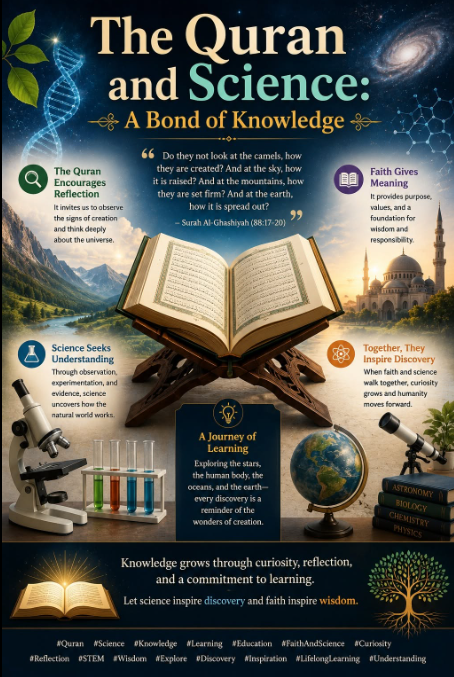
    Story post topic:The Quran and Science: A Bond of Knowledge The pursuit of knowledge has always been a cornerstone of human progress. The Quran repeatedly encourages people to observe the natural world, reflect on creation, and seek understanding with wisdom and humility. For many believers, this invitation to think, learn, and explore inspires a lifelong appreciation for both faith and scientific discovery. Science helps us understand how the natural world works through observation, experimentation, and evidence. Faith provides purpose, values, and a framework for reflection. For many people, these two paths complement one another, encouraging curiosity, responsibility, and respect for the wonders of the universe. Whether exploring the stars, studying the human body, or uncovering the mysteries of nature, the journey of learning reminds us of the importance of asking questions, seeking truth, and using knowledge for the benefit of humanity. Knowledge grows through curiosity, reflection, and a commitment to learning. Let science inspire discovery and faith inspire wisdom. #Quran #Science #Knowledge #Learning #Education #FaithAndScience #Curiosity #Reflection #STEM #Wisdom #Explore #Discovery #Inspiration #LifelongLearning #Understanding See less
    RSIF8 ROll no:82 Story post: 1 Story post topic:The Quran and Science: A Bond of Knowledge 🔬 The pursuit of knowledge has always been a cornerstone of human progress. The Quran repeatedly encourages people to observe the natural world, reflect on creation, and seek understanding with wisdom and humility. For many believers, this invitation to think, learn, and explore inspires a lifelong appreciation for both faith and scientific discovery. Science helps us understand how the natural world works through observation, experimentation, and evidence. Faith provides purpose, values, and a framework for reflection. For many people, these two paths complement one another, encouraging curiosity, responsibility, and respect for the wonders of the universe. Whether exploring the stars, studying the human body, or uncovering the mysteries of nature, the journey of learning reminds us of the importance of asking questions, seeking truth, and using knowledge for the benefit of humanity. 🌟 Knowledge grows through curiosity, reflection, and a commitment to learning. Let science inspire discovery and faith inspire wisdom. #Quran #Science #Knowledge #Learning #Education #FaithAndScience #Curiosity #Reflection #STEM #Wisdom #Explore #Discovery #Inspiration #LifelongLearning #Understanding See less
    0 Commentaires 0 Parts 448 Vue
  • Mohsin #RSF8
    #Storypost9
    Class: Foundation level
    Made by Me
    rool no:13

    The Quran and Science: A Bond of Knowledge

    Introduction

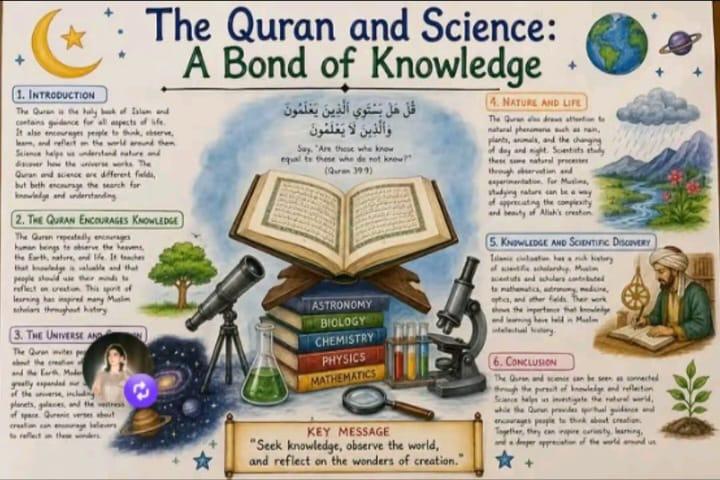
    The Quran is the holy book of Islam and contains guidance for all aspects of life. It also encourages people to think, observe, learn, and reflect on the world around them. Science helps us understand nature and discover how the universe works. The Quran and science are different fields, but both encourage the search for knowledge and understanding.

    The Quran Encourages Knowledge

    The Quran repeatedly encourages human beings to observe the heavens, the Earth, nature, and life. It teaches that knowledge is valuable and that people should use their minds to reflect on creation. This spirit of learning has inspired many Muslim scholars throughout history.

    The Universe and Creation

    The Quran invites people to think about the creation of the heavens and the Earth. Modern science has greatly expanded our understanding of the universe, including stars, planets, galaxies, and the vastness of space. Quranic verses about creation can encourage believers to reflect on these wonders.

    Nature and Life

    The Quran also draws attention to natural phenomena such as rain, plants, animals, and the changing of day and night. Scientists study these same natural processes through observation and experimentation. For Muslims, studying nature can be a way of appreciating the complexity and beauty of Allah’s creation.

    Knowledge and Scientific Discovery

    Islamic civilization has a rich history of scientific scholarship. Muslim scientists and scholars contributed to mathematics, astronomy, medicine, optics, and other fields. Their work shows the importance that knowledge and learning have held in Muslim intellectual history.

    Conclusion

    The Quran and science can be seen as connected through the pursuit of knowledge and reflection. Science helps us investigate the natural world, while the Quran provides spiritual guidance and encourages people to think about creation. Together, they can inspire curiosity, learning, and a deeper appreciation of the world around us.
    Mohsin #RSF8🎓✨ #Storypost9 Class: Foundation level 📚 Made by Me 💻🚀 rool no:13 The Quran and Science: A Bond of Knowledge Introduction The Quran is the holy book of Islam and contains guidance for all aspects of life. It also encourages people to think, observe, learn, and reflect on the world around them. Science helps us understand nature and discover how the universe works. The Quran and science are different fields, but both encourage the search for knowledge and understanding. The Quran Encourages Knowledge The Quran repeatedly encourages human beings to observe the heavens, the Earth, nature, and life. It teaches that knowledge is valuable and that people should use their minds to reflect on creation. This spirit of learning has inspired many Muslim scholars throughout history. The Universe and Creation The Quran invites people to think about the creation of the heavens and the Earth. Modern science has greatly expanded our understanding of the universe, including stars, planets, galaxies, and the vastness of space. Quranic verses about creation can encourage believers to reflect on these wonders. Nature and Life The Quran also draws attention to natural phenomena such as rain, plants, animals, and the changing of day and night. Scientists study these same natural processes through observation and experimentation. For Muslims, studying nature can be a way of appreciating the complexity and beauty of Allah’s creation. Knowledge and Scientific Discovery Islamic civilization has a rich history of scientific scholarship. Muslim scientists and scholars contributed to mathematics, astronomy, medicine, optics, and other fields. Their work shows the importance that knowledge and learning have held in Muslim intellectual history. Conclusion The Quran and science can be seen as connected through the pursuit of knowledge and reflection. Science helps us investigate the natural world, while the Quran provides spiritual guidance and encourages people to think about creation. Together, they can inspire curiosity, learning, and a deeper appreciation of the world around us.
    0 Commentaires 0 Parts 709 Vue
  • #rsisb
    Roll no.247
    Story no.5
    Foundation level

    **Chemistry Quest: Elements of Everyday Life**

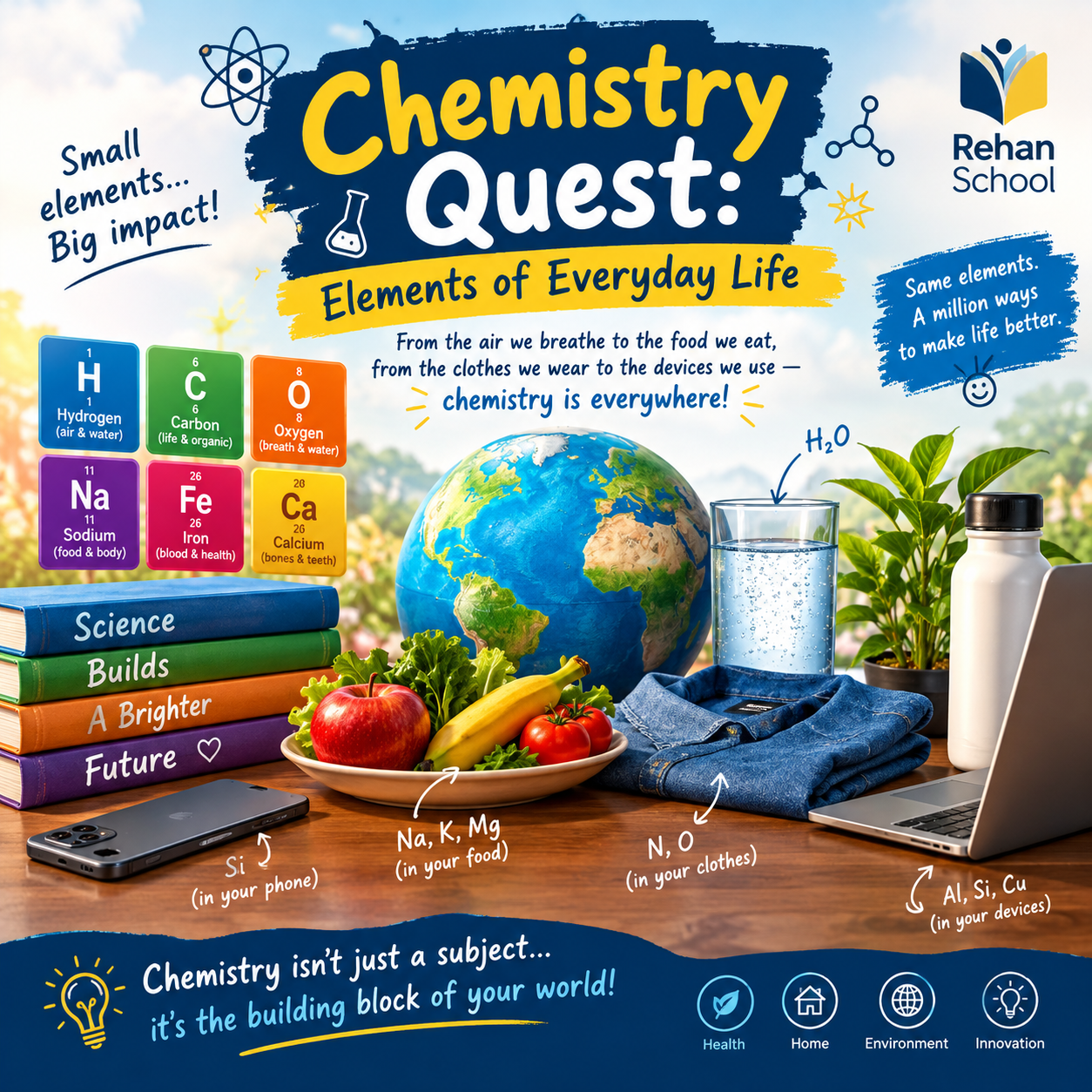
    Welcome to an exciting journey into the amazing world of **Chemistry!** Chemistry is not just a subject we study in books—it is all around us, every single day! From the water we drink and the air we breathe to the food we eat , the medicines we use , the clothes we wear , and even the technology we use , chemistry plays an important role in our everyday lives.

    In this **Chemistry Quest**, we explore the fascinating world of **elements, atoms, molecules, compounds, and chemical reactions**. Each element has its own unique properties and characteristics, and together they create the incredible materials and substances that make up our world.

    As we explore, we can discover how **oxygen** helps us breathe, how **hydrogen and oxygen** can form water, how **carbon** is an important part of living things, and how many other elements are connected to the world around us.

    Chemistry helps us understand questions we see every day: Why does food change when it is cooked? Why does iron rust? Why does soap clean? How do batteries produce energy? How are medicines developed? These everyday mysteries become much more interesting when we look at them through the eyes of chemistry!

    This story post is a reminder that **science is everywhere**. Every object, material, and natural process can teach us something new. By asking questions, observing carefully, experimenting safely, and staying curious, we can become better scientists and discover new ideas.

    Let’s continue our **Chemistry Quest** with curiosity, creativity, and a passion for learning! Who knows what amazing discovery might be waiting for us around the next corner?

    **Explore. Observe. Question. Discover. Learn.**

    #ChemistryQuest #Chemistry #Elements #EverydayChemistry #Science #ScienceEverywhere #STEM #STEMEducation #ScienceLearning #LearningIsFun #YoungScientists #FutureScientists #Atoms #Molecules #ChemicalReactions #PeriodicTable #ScienceExplorer #Curiosity #Discovery #Education #LearningJourney #ExploreScience #ScienceForEveryone #EverydayLife #ChemistryIsFun #ExperimentAndLearn #KnowledgeIsPower
    #rsisb Roll no.247 Story no.5 Foundation level 🧪🌟 **Chemistry Quest: Elements of Everyday Life** 🌟🧪 Welcome to an exciting journey into the amazing world of **Chemistry!** 🔬⚗️ Chemistry is not just a subject we study in books—it is all around us, every single day! 🌍✨ From the water we drink 💧 and the air we breathe 🌬️ to the food we eat 🍎, the medicines we use 💊, the clothes we wear 👕, and even the technology we use 📱, chemistry plays an important role in our everyday lives. In this **Chemistry Quest**, we explore the fascinating world of **elements, atoms, molecules, compounds, and chemical reactions**. 🧪🔍 Each element has its own unique properties and characteristics, and together they create the incredible materials and substances that make up our world. 🌎⚛️ As we explore, we can discover how **oxygen** helps us breathe, how **hydrogen and oxygen** can form water, how **carbon** is an important part of living things, and how many other elements are connected to the world around us. 🌱💧🌬️ Chemistry helps us understand questions we see every day: Why does food change when it is cooked? 🍳 Why does iron rust? 🔩 Why does soap clean? 🧼 How do batteries produce energy? 🔋 How are medicines developed? 💊 These everyday mysteries become much more interesting when we look at them through the eyes of chemistry! 👀🔬 This story post is a reminder that **science is everywhere**. 🚀✨ Every object, material, and natural process can teach us something new. By asking questions, observing carefully, experimenting safely, and staying curious, we can become better scientists and discover new ideas. 🧠💡 Let’s continue our **Chemistry Quest** with curiosity, creativity, and a passion for learning! 🧪🌟 Who knows what amazing discovery might be waiting for us around the next corner? 🔍🚀 🔬⚗️ **Explore. Observe. Question. Discover. Learn.** ⚗️🔬 #ChemistryQuest #Chemistry #Elements #EverydayChemistry #Science #ScienceEverywhere #STEM #STEMEducation #ScienceLearning #LearningIsFun #YoungScientists #FutureScientists #Atoms #Molecules #ChemicalReactions #PeriodicTable #ScienceExplorer #Curiosity #Discovery #Education #LearningJourney #ExploreScience #ScienceForEveryone #EverydayLife #ChemistryIsFun #ExperimentAndLearn #KnowledgeIsPower 🧪🔬⚗️🌍💡🚀📚✨
    0 Commentaires 0 Parts 1277 Vue
  • RSIF8
    Roll no:85
    Task no:14
    Task topic: Mulla Nasrudin & the Tightrope Walker
    Mulla Nasrudin once watched a famous tightrope walker performing high above the crowd. Everyone clapped with excitement as the performer carefully balanced himself on the rope without falling. Mulla observed closely and smiled with curiosity.

    After the show, Mulla Nasrudin confidently told the people, “Walking on a rope is not the hardest thing in life. The real challenge is keeping balance in everyday living.” His unexpected words made the crowd silent for a moment as they realized the deep wisdom behind his humor.

    Mulla’s stories are always filled with laughter and valuable lessons. Just like the tightrope walker must stay balanced to avoid falling, people must also balance their work, family, patience, and emotions to live peacefully and wisely.

    The tale of Mulla Nasrudin reminds us that life itself is like walking on a tightrope. With wisdom, patience, and humor, we can face challenges and move forward with confidence and happiness.

    #MullaNasrudin #TightropeWalker #WiseStories #FunnyWisdom #LifeLessons #BalanceInLife #NasrudinStories #InspirationalTales #HumorAndWisdom #SmileAndLearn
    RSIF8 Roll no:85 Task no:14 Task topic: Mulla Nasrudin & the Tightrope Walker 🎪✨ Mulla Nasrudin once watched a famous tightrope walker performing high above the crowd. Everyone clapped with excitement as the performer carefully balanced himself on the rope without falling. Mulla observed closely and smiled with curiosity. 😄🎭 🪢💭 After the show, Mulla Nasrudin confidently told the people, “Walking on a rope is not the hardest thing in life. The real challenge is keeping balance in everyday living.” His unexpected words made the crowd silent for a moment as they realized the deep wisdom behind his humor. 🌟📖 😂✨ Mulla’s stories are always filled with laughter and valuable lessons. Just like the tightrope walker must stay balanced to avoid falling, people must also balance their work, family, patience, and emotions to live peacefully and wisely. 🧠❤️ 🌍🎉 The tale of Mulla Nasrudin reminds us that life itself is like walking on a tightrope. With wisdom, patience, and humor, we can face challenges and move forward with confidence and happiness. 🌈🙌 #MullaNasrudin #TightropeWalker #WiseStories #FunnyWisdom #LifeLessons #BalanceInLife #NasrudinStories #InspirationalTales #HumorAndWisdom #SmileAndLearn 🎪✨😂
    0 Commentaires 0 Parts 906 Vue
  • RSIF8
    Roll no: 99
    Story post no: 24
    Story topic: The Nature of Light: Exploring Waves and Particles
    Light is one of the most fascinating phenomena in physics. It allows us to see the world around us, carries energy across vast distances, and plays a fundamental role in technologies ranging from cameras to fiber-optic communication.
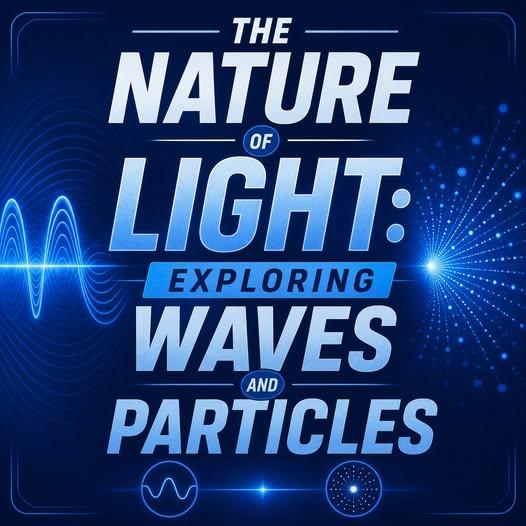
    One of the most remarkable discoveries in modern physics is that light can behave both as a wave and as a particle. Its wave nature explains phenomena such as interference, diffraction, and polarization, while its particle nature is described through photons, which carry discrete amounts of energy.
    Understanding the dual nature of light helps us explore the deeper principles of quantum physics and reveals how the same phenomenon can behave in different ways depending on how it is observed.
    #NatureOfLight #Physics #Light #WaveParticleDuality #QuantumPhysics #Photon #ScienceEducation #PhysicsEducation #STEM #LearnPhysics #Education
    RSIF8 Roll no: 99 Story post no: 24 Story topic: The Nature of Light: Exploring Waves and Particles Light is one of the most fascinating phenomena in physics. It allows us to see the world around us, carries energy across vast distances, and plays a fundamental role in technologies ranging from cameras to fiber-optic communication. One of the most remarkable discoveries in modern physics is that light can behave both as a wave and as a particle. Its wave nature explains phenomena such as interference, diffraction, and polarization, while its particle nature is described through photons, which carry discrete amounts of energy. Understanding the dual nature of light helps us explore the deeper principles of quantum physics and reveals how the same phenomenon can behave in different ways depending on how it is observed. #NatureOfLight #Physics #Light #WaveParticleDuality #QuantumPhysics #Photon #ScienceEducation #PhysicsEducation #STEM #LearnPhysics #Education
    0 Commentaires 0 Parts 1174 Vue
Plus de résultats