• #rsisb
    Roll no.239
    Story Post no.3
    Foundation Level


    Life is full of fascinating mechanisms that work together in remarkable ways. From the movement of cells to the functioning of organs , every living system follows complex processes that scientists continue to explore and understand.

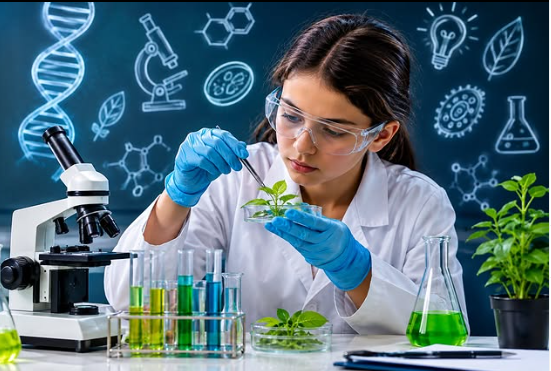
    **Experimentation** is one of the most powerful ways to discover how life works. By asking questions, forming hypotheses, conducting experiments, observing results, and analyzing evidence, we can uncover the hidden processes that keep living organisms alive.

    Through careful experimentation, scientists can study **cellular processes, genetics, metabolism, respiration, growth, adaptation, and communication between cells**. Each experiment provides an opportunity to learn something new and sometimes leads to discoveries that change our understanding of biology.

    Science teaches us that curiosity is the beginning of discovery. A simple question can lead to a fascinating investigation, while one experiment can open the door to countless new ideas.

    Let’s **question, experiment, observe, and discover** the incredible mechanisms that make life possible!

    #LifeScience #Biology #Experimentation #ScientificMethod #Science #BiologyExperiments #LifeMechanisms #CellBiology #Genetics #Metabolism #Respiration #Cells #DNA #Microbiology #ScienceEducation #STEM #ScienceForStudents #BiologyStudents #Learning #Education #ScientificDiscovery #Research #Laboratory #Experiments #Curiosity #Innovation #Discovery #Nature #LivingOrganisms #ExploreScience #LearnBiology #ScienceIsAmazing #Knowledge #EducationalContent #StudyScience #FutureScientists #ScienceLovers #LearningJourney #AskQuestions #Observe #Analyze #Discover #ThinkLikeAScientist
    #rsisb Roll no.239 Story Post no.3 Foundation Level Life is full of fascinating mechanisms that work together in remarkable ways. From the movement of cells 🔬 to the functioning of organs ❤️, every living system follows complex processes that scientists continue to explore and understand. 🧪 **Experimentation** is one of the most powerful ways to discover how life works. By asking questions, forming hypotheses, conducting experiments, observing results, and analyzing evidence, we can uncover the hidden processes that keep living organisms alive. 🧠📊 Through careful experimentation, scientists can study **cellular processes, genetics, metabolism, respiration, growth, adaptation, and communication between cells**. 🧬🧫🌿 Each experiment provides an opportunity to learn something new and sometimes leads to discoveries that change our understanding of biology. 🌍 Science teaches us that curiosity is the beginning of discovery. A simple question can lead to a fascinating investigation, while one experiment can open the door to countless new ideas. 💡🚀 Let’s **question, experiment, observe, and discover** the incredible mechanisms that make life possible! 🔬🧬✨ #LifeScience #Biology #Experimentation #ScientificMethod #Science #BiologyExperiments #LifeMechanisms #CellBiology #Genetics #Metabolism #Respiration #Cells #DNA #Microbiology #ScienceEducation #STEM #ScienceForStudents #BiologyStudents #Learning #Education #ScientificDiscovery #Research #Laboratory #Experiments #Curiosity #Innovation #Discovery #Nature #LivingOrganisms #ExploreScience #LearnBiology #ScienceIsAmazing #Knowledge #EducationalContent #StudyScience #FutureScientists #ScienceLovers #LearningJourney #AskQuestions #Observe #Analyze #Discover #ThinkLikeAScientist 🧬🔬🧪🌱💡📚🌍✨
    0 Yorumlar 0 hisse senetleri 501 Views
  • #rsisb
    Roll no 248
    Foundation level
    song no 12
    **Dissecting Frogs: A Gateway to Human Anatomy**

    Frog dissection is a classic biology activity that helps students explore the fascinating world of anatomy. By studying the arrangement and function of organs, students can better understand how different body systems work together.

    This topic connects classroom learning with real biological structures and encourages curiosity, careful observation, scientific thinking, and respect for living organisms. Through anatomy, we can discover similarities and differences between frogs and humans and gain a deeper appreciation for the complexity of life.

    **Explore. Observe. Learn. Discover the science of life!**

    #FrogDissection #HumanAnatomy #Biology #ScienceLearning #Anatomy #LifeScience #BiologyStudents #ScientificLearning #ScienceEducation #ExploreScience #Curiosity #Learning #Education #Nature #AnimalAnatomy #STEM #ScienceExploration
    #rsisb Roll no 248 Foundation level song no 12 🐸🔬 **Dissecting Frogs: A Gateway to Human Anatomy** 🧬🫀 Frog dissection is a classic biology activity that helps students explore the fascinating world of anatomy. 🐸📚 By studying the arrangement and function of organs, students can better understand how different body systems work together. 🔬✨ This topic connects classroom learning with real biological structures and encourages curiosity, careful observation, scientific thinking, and respect for living organisms. 🧠🌱 Through anatomy, we can discover similarities and differences between frogs and humans and gain a deeper appreciation for the complexity of life. 🌍❤️ 🔎 **Explore. Observe. Learn. Discover the science of life!** 🐸🧬✨ #FrogDissection #HumanAnatomy #Biology #ScienceLearning #Anatomy #LifeScience #BiologyStudents #ScientificLearning #ScienceEducation #ExploreScience #Curiosity #Learning #Education #Nature #AnimalAnatomy #STEM #ScienceExploration 🐸🔬🧬📚✨
    0 Yorumlar 0 hisse senetleri 849 Views 1
  • #rsisb
    roll no.247
    Coding task no.7
    Foundation Level
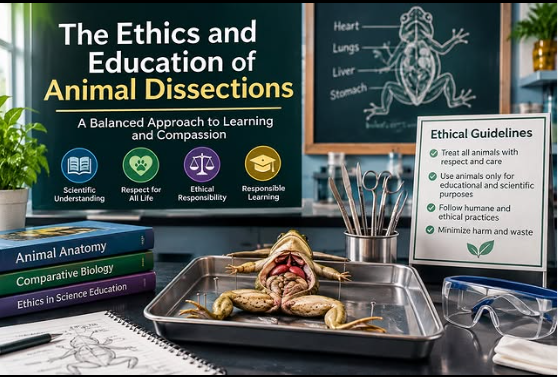
    # The Ethics and Education of Animal Dissections
    Animal dissection has been an important part of science education for many years, especially in biology and anatomy classes. It allows students to observe the structure of organisms directly and understand how different body parts work together. However, the practice also raises important ethical questions about animal welfare, respect for living beings, and whether there are better educational alternatives.
    From an educational perspective, dissections can provide students with a hands-on learning experience that textbooks and diagrams cannot always provide. Students may develop a clearer understanding of anatomy, biological organization, and scientific observation. Practical activities can also encourage curiosity, careful observation, teamwork, and responsible scientific thinking.
    At the same time, ethical considerations should be taken seriously. Animals should not be treated simply as objects for classroom activities. Their use should follow appropriate welfare standards, and students should be encouraged to think about why an animal is being used and whether the educational objective could be achieved through another method.
    Modern education offers several alternatives, including high-quality anatomical models, computer simulations, virtual dissection programs, videos, and interactive digital resources. These approaches can sometimes provide detailed visual information while reducing or eliminating the need to use animals. For some students, alternatives may also make learning more comfortable and accessible.
    The most responsible approach is to balance educational value with ethical responsibility. Schools and teachers can carefully evaluate whether dissection is necessary, explain the ethical issues to students, follow proper guidelines, and provide suitable alternatives when appropriate.
    Ultimately, science education should not only teach students about biology—it should also teach them values such as compassion, responsibility, critical thinking, and respect for life. By combining scientific knowledge with ethical awareness, students can become better scientists, thoughtful citizens, and responsible stewards of the natural world.
    ### Key Message
    Animal dissection can offer valuable educational experiences, but it should always be considered alongside animal welfare, ethical responsibility, and modern alternatives. The goal of education should be to develop both **scientific understanding and compassion**.
    ### Hashtags
    #AnimalDissection #EthicsInScience #ScienceEducation #AnimalWelfare #BiologyEducation #EthicalScience #HandsOnLearning #VirtualLearning #ScienceAndEthics #StudentLearning #Biology #Anatomy #ScientificThinking #ResponsibleScience #EducationMatters #CompassionAndScience #STEMEducation #LearningThroughScience #RespectForLife #FutureScientists
    #rsisb roll no.247 Coding task no.7 Foundation Level # The Ethics and Education of Animal Dissections 🧪🐾📚 Animal dissection has been an important part of science education for many years, especially in biology and anatomy classes. It allows students to observe the structure of organisms directly and understand how different body parts work together. However, the practice also raises important ethical questions about animal welfare, respect for living beings, and whether there are better educational alternatives. ⚖️🐾 From an educational perspective, dissections can provide students with a hands-on learning experience that textbooks and diagrams cannot always provide. Students may develop a clearer understanding of anatomy, biological organization, and scientific observation. 🔬📖✨ Practical activities can also encourage curiosity, careful observation, teamwork, and responsible scientific thinking. At the same time, ethical considerations should be taken seriously. Animals should not be treated simply as objects for classroom activities. Their use should follow appropriate welfare standards, and students should be encouraged to think about why an animal is being used and whether the educational objective could be achieved through another method. ❤️🐾🌱 Modern education offers several alternatives, including high-quality anatomical models, computer simulations, virtual dissection programs, videos, and interactive digital resources. 💻🧬 These approaches can sometimes provide detailed visual information while reducing or eliminating the need to use animals. For some students, alternatives may also make learning more comfortable and accessible. The most responsible approach is to balance educational value with ethical responsibility. Schools and teachers can carefully evaluate whether dissection is necessary, explain the ethical issues to students, follow proper guidelines, and provide suitable alternatives when appropriate. 🌍⚖️ Ultimately, science education should not only teach students about biology—it should also teach them values such as compassion, responsibility, critical thinking, and respect for life. 🧠💚🐾 By combining scientific knowledge with ethical awareness, students can become better scientists, thoughtful citizens, and responsible stewards of the natural world. 🌱🔬✨ ### 🌟 Key Message Animal dissection can offer valuable educational experiences, but it should always be considered alongside animal welfare, ethical responsibility, and modern alternatives. The goal of education should be to develop both **scientific understanding and compassion**. 🐾❤️📚 ### 🏷️ Hashtags #AnimalDissection #EthicsInScience #ScienceEducation #AnimalWelfare #BiologyEducation #EthicalScience #HandsOnLearning #VirtualLearning #ScienceAndEthics #StudentLearning #Biology #Anatomy #ScientificThinking #ResponsibleScience #EducationMatters #CompassionAndScience #STEMEducation #LearningThroughScience #RespectForLife #FutureScientists
    0 Yorumlar 0 hisse senetleri 4881 Views
  • #rsisb
    Roll no.239
    Story Post no.31
    Foundation Level


    Mulla Nasrudin is one of the most beloved characters in traditional humorous stories, famous for his unusual logic, quick thinking, and clever way of solving everyday problems. **“The Clever Plan of Mulla Nasrudin”** takes us into a funny and entertaining situation where Nasrudin uses his intelligence and creativity to deal with a difficult challenge. Instead of following the obvious path, he thinks differently and comes up with a surprising plan that leaves everyone around him amazed.

    This story is not only entertaining but also carries an important life lesson. Mulla Nasrudin reminds us that intelligence is not always about having complicated knowledge. Sometimes, the ability to remain calm, observe carefully, think creatively, and look at a problem from a completely different angle can be more powerful than anything else.

    Through humor and clever storytelling, the story encourages us to question assumptions, avoid rushing to conclusions, and use our minds wisely. Nasrudin’s unusual methods may make us laugh, but behind the humor there is often a deeper message about human behavior, common sense, patience, and wisdom.

    Whether you enjoy traditional tales, humorous stories, or stories


    with meaningful lessons, **“The Clever Plan of Mulla Nasrudin”** offers a fun experience filled with laughter, curiosity, and unexpected twists. It is a reminder that sometimes the simplest-looking idea can contain the greatest wisdom.

    Watch, enjoy, and discover how Mulla Nasrudin turns a challenging situation into an unforgettable lesson through his clever plan!

    #MullaNasrudin #TheCleverPlan #MullaNasrudinStories #FunnyStories #HumorousStories #CleverThinking #Wisdom #LifeLessons #TraditionalStories #Storytelling #FunnyTales #SmartThinking #CreativeThinking #CommonSense #MoralStory #InspirationalStories #Entertainment #Comedy #LearningThroughStories #InterestingStories
    #rsisb Roll no.239 Story Post no.31 Foundation Level Mulla Nasrudin is one of the most beloved characters in traditional humorous stories, famous for his unusual logic, quick thinking, and clever way of solving everyday problems. **“The Clever Plan of Mulla Nasrudin”** takes us into a funny and entertaining situation where Nasrudin uses his intelligence and creativity to deal with a difficult challenge. Instead of following the obvious path, he thinks differently and comes up with a surprising plan that leaves everyone around him amazed. 😂💡 This story is not only entertaining but also carries an important life lesson. Mulla Nasrudin reminds us that intelligence is not always about having complicated knowledge. Sometimes, the ability to remain calm, observe carefully, think creatively, and look at a problem from a completely different angle can be more powerful than anything else. 🧠✨ Through humor and clever storytelling, the story encourages us to question assumptions, avoid rushing to conclusions, and use our minds wisely. Nasrudin’s unusual methods may make us laugh, but behind the humor there is often a deeper message about human behavior, common sense, patience, and wisdom. 😄📖 Whether you enjoy traditional tales, humorous stories, or stories with meaningful lessons, **“The Clever Plan of Mulla Nasrudin”** offers a fun experience filled with laughter, curiosity, and unexpected twists. It is a reminder that sometimes the simplest-looking idea can contain the greatest wisdom. 🌟💭 Watch, enjoy, and discover how Mulla Nasrudin turns a challenging situation into an unforgettable lesson through his clever plan! 😂👏🧠 #MullaNasrudin #TheCleverPlan #MullaNasrudinStories #FunnyStories #HumorousStories #CleverThinking #Wisdom #LifeLessons #TraditionalStories #Storytelling #FunnyTales #SmartThinking #CreativeThinking #CommonSense #MoralStory #InspirationalStories #Entertainment #Comedy #LearningThroughStories #InterestingStories 😄😂🧠💡📚✨🌟👏
    0 Yorumlar 0 hisse senetleri 2945 Views
  • #rsisb
    Roll No.240
    Story No.15
    Foundation Level

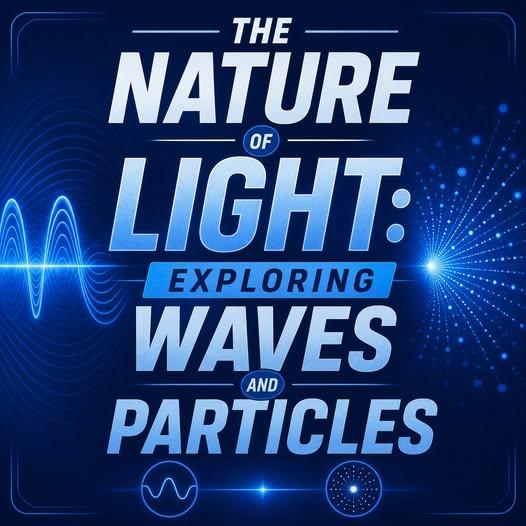
    ### **The Nature of Light: Exploring Waves and Particles**

    Light is one of the most fascinating phenomena in the universe, playing a vital role in everything from vision and communication to modern technology and scientific discovery. Unlike ordinary objects, light exhibits a remarkable property known as **wave-particle duality**, meaning it behaves both as a wave and as a stream of tiny particles called **photons**. This unique characteristic has transformed our understanding of physics and the fundamental laws that govern the universe.

    As a wave, light travels through space in the form of electromagnetic waves, displaying properties such as reflection, refraction, interference, diffraction, and polarization. These wave behaviors explain everyday phenomena like rainbows, mirrors, lenses, and the colors we observe in nature. As particles, photons carry discrete amounts of energy, allowing light to interact with matter in ways that explain the photoelectric effect, lasers, and many modern technologies. Together, these two perspectives provide a complete understanding of how light behaves under different conditions.

    Exploring the nature of light helps us appreciate the incredible discoveries made by scientists such as Isaac Newton, Thomas Young, James Clerk Maxwell, Albert Einstein, and Max Planck. Their groundbreaking work laid the foundation for quantum mechanics, optics, telecommunications, medical imaging, fiber-optic communication, astronomy, and renewable energy technologies. From illuminating our homes to enabling space exploration, light continues to shape the modern world in extraordinary ways.

    **#NatureOfLight #Physics #Science #WaveParticleDuality #Light #Photons #ElectromagneticWaves #QuantumPhysics #Optics #STEM #Education #ScientificDiscovery #Technology #Learning #ExploreScience **

    Rehan School Islamabad Campus
    Asma Shaheen EducationWali
    Irum Asim
    Saima Happinesswali
    #rsisb Roll No.240 Story No.15 Foundation Level ### **The Nature of Light: Exploring Waves and Particles** Light is one of the most fascinating phenomena in the universe, playing a vital role in everything from vision and communication to modern technology and scientific discovery. Unlike ordinary objects, light exhibits a remarkable property known as **wave-particle duality**, meaning it behaves both as a wave and as a stream of tiny particles called **photons**. This unique characteristic has transformed our understanding of physics and the fundamental laws that govern the universe. As a wave, light travels through space in the form of electromagnetic waves, displaying properties such as reflection, refraction, interference, diffraction, and polarization. These wave behaviors explain everyday phenomena like rainbows, mirrors, lenses, and the colors we observe in nature. As particles, photons carry discrete amounts of energy, allowing light to interact with matter in ways that explain the photoelectric effect, lasers, and many modern technologies. Together, these two perspectives provide a complete understanding of how light behaves under different conditions. Exploring the nature of light helps us appreciate the incredible discoveries made by scientists such as Isaac Newton, Thomas Young, James Clerk Maxwell, Albert Einstein, and Max Planck. Their groundbreaking work laid the foundation for quantum mechanics, optics, telecommunications, medical imaging, fiber-optic communication, astronomy, and renewable energy technologies. From illuminating our homes to enabling space exploration, light continues to shape the modern world in extraordinary ways. **#NatureOfLight #Physics #Science #WaveParticleDuality #Light #Photons #ElectromagneticWaves #QuantumPhysics #Optics #STEM #Education #ScientificDiscovery #Technology #Learning #ExploreScience 🌈💡🔬⚛️📚** Rehan School Islamabad Campus Asma Shaheen EducationWali Irum Asim Saima Happinesswali
    0 Yorumlar 0 hisse senetleri 4633 Views
  • #rsisb
    Roll No.240
    Story No.16
    Foundation Level

    ### **The Force Behind Motion: Understanding Newton’s Laws**

    Motion is a fundamental part of our everyday lives, from walking and driving to the movement of planets and rockets. The principles that explain how and why objects move were first described by **Sir Isaac Newton** through his three revolutionary laws of motion. These laws form the foundation of classical mechanics and continue to play a vital role in physics, engineering, space exploration, and modern technology.

    Newton's **First Law of Motion**, also known as the **Law of Inertia**, states that an object will remain at rest or continue moving at a constant speed in a straight line unless acted upon by an external force. The **Second Law of Motion** explains the relationship between force, mass, and acceleration, showing that greater forces produce greater acceleration while heavier objects require more force to move. The **Third Law of Motion** states that for every action, there is an equal and opposite reaction, a principle observed in activities such as walking, swimming, flying, and launching rockets into space.

    Understanding Newton's Laws helps us explain countless real-world phenomena, from the motion of vehicles and sports equipment to the orbits of planets and the design of machines. These timeless scientific principles continue to influence technological innovation and deepen our understanding of the physical world, making them one of the most important foundations of modern science.

    **#NewtonsLaws #Physics #Science #Motion #Force #IsaacNewton #STEM #Mechanics #Engineering #Education #ScientificDiscovery #Learning #Technology #SpaceScience #ExploreScience **

    Rehan School Islamabad Campus
    Asma Shaheen EducationWali
    Irum Asim
    Saima Happinesswali
    #rsisb Roll No.240 Story No.16 Foundation Level ### **The Force Behind Motion: Understanding Newton’s Laws** Motion is a fundamental part of our everyday lives, from walking and driving to the movement of planets and rockets. The principles that explain how and why objects move were first described by **Sir Isaac Newton** through his three revolutionary laws of motion. These laws form the foundation of classical mechanics and continue to play a vital role in physics, engineering, space exploration, and modern technology. Newton's **First Law of Motion**, also known as the **Law of Inertia**, states that an object will remain at rest or continue moving at a constant speed in a straight line unless acted upon by an external force. The **Second Law of Motion** explains the relationship between force, mass, and acceleration, showing that greater forces produce greater acceleration while heavier objects require more force to move. The **Third Law of Motion** states that for every action, there is an equal and opposite reaction, a principle observed in activities such as walking, swimming, flying, and launching rockets into space. Understanding Newton's Laws helps us explain countless real-world phenomena, from the motion of vehicles and sports equipment to the orbits of planets and the design of machines. These timeless scientific principles continue to influence technological innovation and deepen our understanding of the physical world, making them one of the most important foundations of modern science. **#NewtonsLaws #Physics #Science #Motion #Force #IsaacNewton #STEM #Mechanics #Engineering #Education #ScientificDiscovery #Learning #Technology #SpaceScience #ExploreScience ⚙️🚀⚛️📚🌍** Rehan School Islamabad Campus Asma Shaheen EducationWali Irum Asim Saima Happinesswali
    0 Yorumlar 0 hisse senetleri 2531 Views
  • #rsisb
    Roll no.239
    Foundation Level


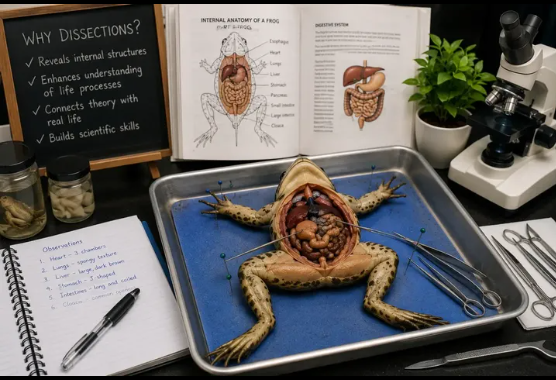
    **Dissection** is an important method used in biology to understand the internal structure of living organisms. By carefully examining organs, tissues, and body systems, students and scientists can learn how different parts of an organism are arranged and how they work together.

    Dissections provide a practical experience that books and diagrams cannot always provide. For example, studying a frog dissection can help students understand the **heart, lungs, liver, stomach, intestines, and other organs** in their natural positions. This hands-on learning can make biological concepts easier to understand and remember.

    Dissection also plays a role in **medical education and scientific research**. It has helped humans develop a deeper understanding of anatomy, disease, and the relationships between different body systems.

    However, dissections should always be performed responsibly, following **ethical guidelines, safety procedures, and respect for living organisms**. Modern alternatives, such as digital simulations and 3D anatomical models, can also provide valuable learning experiences.

    Overall, dissections help us **“peer inside” life** and transform biological knowledge from something we simply read about into something we can observe and understand more clearly.
    #rsisb Roll no.239 Foundation Level **Dissection** is an important method used in biology to understand the internal structure of living organisms. By carefully examining organs, tissues, and body systems, students and scientists can learn how different parts of an organism are arranged and how they work together. Dissections provide a practical experience that books and diagrams cannot always provide. For example, studying a frog dissection can help students understand the **heart, lungs, liver, stomach, intestines, and other organs** in their natural positions. This hands-on learning can make biological concepts easier to understand and remember. Dissection also plays a role in **medical education and scientific research**. It has helped humans develop a deeper understanding of anatomy, disease, and the relationships between different body systems. However, dissections should always be performed responsibly, following **ethical guidelines, safety procedures, and respect for living organisms**. Modern alternatives, such as digital simulations and 3D anatomical models, can also provide valuable learning experiences. Overall, dissections help us **“peer inside” life** and transform biological knowledge from something we simply read about into something we can observe and understand more clearly.
    0 Yorumlar 0 hisse senetleri 2386 Views
  • #rsisb
    Roll no.239
    Foundation Level


    Frogs are often studied in biology because their bodies provide a clear way to understand **basic animal anatomy and physiology**. Their organs and organ systems are relatively easy to observe, while still showing many of the same fundamental structures found in other vertebrates.

    ### What Can Frogs Teach Us?

    * **Heart:** A frog’s three-chambered heart demonstrates how blood circulates through the body.
    * **Lungs and skin:** Frogs breathe through both their lungs and moist skin, showing different methods of gas exchange.
    * **Digestive system:** Their digestive organs demonstrate how food is broken down and nutrients are absorbed.
    * **Muscles and skeleton:** Powerful hind-leg muscles and a specialized skeleton explain how frogs jump and move.
    * **Nervous system:** The brain, spinal cord, and nerves coordinate movement and responses.
    * **Kidneys:** These organs help remove waste and maintain the body's internal balance.

    genui{"biology_anatomy_physiology":{"type_id":"BLOOD_CIRCULATION","locale_override":"en-US"}}

    ### **Why Are Frogs Important in Biology?**

    Frogs are useful study organisms because their anatomy helps students connect **structure with function**. By examining how different organs work together, we can better understand a central idea of biology: **life depends on coordinated systems working as one whole organism.**

    In short, studying a frog is not simply about studying one animal—it is a way to explore the **anatomy, physiology, adaptation, and organization of life itself**.
    #rsisb Roll no.239 Foundation Level Frogs are often studied in biology because their bodies provide a clear way to understand **basic animal anatomy and physiology**. Their organs and organ systems are relatively easy to observe, while still showing many of the same fundamental structures found in other vertebrates. ### 🐸 What Can Frogs Teach Us? * **Heart:** A frog’s three-chambered heart demonstrates how blood circulates through the body. * **Lungs and skin:** Frogs breathe through both their lungs and moist skin, showing different methods of gas exchange. * **Digestive system:** Their digestive organs demonstrate how food is broken down and nutrients are absorbed. * **Muscles and skeleton:** Powerful hind-leg muscles and a specialized skeleton explain how frogs jump and move. * **Nervous system:** The brain, spinal cord, and nerves coordinate movement and responses. * **Kidneys:** These organs help remove waste and maintain the body's internal balance. genui{"biology_anatomy_physiology":{"type_id":"BLOOD_CIRCULATION","locale_override":"en-US"}} ### **Why Are Frogs Important in Biology?** Frogs are useful study organisms because their anatomy helps students connect **structure with function**. By examining how different organs work together, we can better understand a central idea of biology: **life depends on coordinated systems working as one whole organism.** In short, studying a frog is not simply about studying one animal—it is a way to explore the **anatomy, physiology, adaptation, and organization of life itself**.
    0 Yorumlar 0 hisse senetleri 1924 Views
  • #rsisb
    Roll No.240
    Story No.18
    Foundation Level

    ### **Exploring Life’s Mechanisms Through Experimentation**

    Scientific experimentation is one of the most powerful ways to understand the complex processes that sustain life. From the smallest microscopic cells to entire ecosystems, experiments allow scientists to observe, test, and explain how living organisms grow, reproduce, respond to their environment, and maintain balance. Through careful observation, data collection, and analysis, researchers uncover the biological mechanisms that drive life and contribute to advances in medicine, agriculture, biotechnology, and environmental conservation.

    Biological experiments help students and scientists explore essential topics such as genetics, cell biology, microbiology, physiology, ecology, and evolution. By forming hypotheses, conducting controlled experiments, and interpreting results, learners develop critical thinking, problem-solving, and analytical skills. Laboratory investigations also demonstrate the importance of accuracy, ethical responsibility, and evidence-based conclusions in scientific research.

    Modern technology has transformed biological experimentation through advanced microscopes, DNA sequencing, computer simulations, molecular biology techniques, and artificial intelligence. These innovations enable researchers to study diseases, develop life-saving medicines, improve crop production, protect endangered species, and better understand the incredible complexity of living organisms. Every experiment, whether simple or advanced, contributes valuable knowledge that helps improve human health and our understanding of the natural world.

    Exploring life's mechanisms through experimentation inspires curiosity, encourages innovation, and highlights the importance of scientific discovery. By combining observation, creativity, and rigorous testing, scientists continue to unlock the mysteries of life and create solutions to global challenges, paving the way for a healthier, more sustainable future.

    **#Biology #LifeScience #ScientificExperiment #Laboratory #STEM #ScienceEducation #Research #Biotechnology #CellBiology #Genetics #Microbiology #Innovation #ScientificDiscovery #Education #ExploreScience **

    Rehan School Islamabad Campus
    Asma Shaheen EducationWali
    Irum Asim
    Saima Happinesswali
    #rsisb Roll No.240 Story No.18 Foundation Level ### **Exploring Life’s Mechanisms Through Experimentation** Scientific experimentation is one of the most powerful ways to understand the complex processes that sustain life. From the smallest microscopic cells to entire ecosystems, experiments allow scientists to observe, test, and explain how living organisms grow, reproduce, respond to their environment, and maintain balance. Through careful observation, data collection, and analysis, researchers uncover the biological mechanisms that drive life and contribute to advances in medicine, agriculture, biotechnology, and environmental conservation. Biological experiments help students and scientists explore essential topics such as genetics, cell biology, microbiology, physiology, ecology, and evolution. By forming hypotheses, conducting controlled experiments, and interpreting results, learners develop critical thinking, problem-solving, and analytical skills. Laboratory investigations also demonstrate the importance of accuracy, ethical responsibility, and evidence-based conclusions in scientific research. Modern technology has transformed biological experimentation through advanced microscopes, DNA sequencing, computer simulations, molecular biology techniques, and artificial intelligence. These innovations enable researchers to study diseases, develop life-saving medicines, improve crop production, protect endangered species, and better understand the incredible complexity of living organisms. Every experiment, whether simple or advanced, contributes valuable knowledge that helps improve human health and our understanding of the natural world. Exploring life's mechanisms through experimentation inspires curiosity, encourages innovation, and highlights the importance of scientific discovery. By combining observation, creativity, and rigorous testing, scientists continue to unlock the mysteries of life and create solutions to global challenges, paving the way for a healthier, more sustainable future. **#Biology #LifeScience #ScientificExperiment #Laboratory #STEM #ScienceEducation #Research #Biotechnology #CellBiology #Genetics #Microbiology #Innovation #ScientificDiscovery #Education #ExploreScience 🔬🧬🧫🌱📚** Rehan School Islamabad Campus Asma Shaheen EducationWali Irum Asim Saima Happinesswali
    0 Yorumlar 0 hisse senetleri 5144 Views
  • #rsisb
    Roll No.240
    Story No.10
    Foundation Level

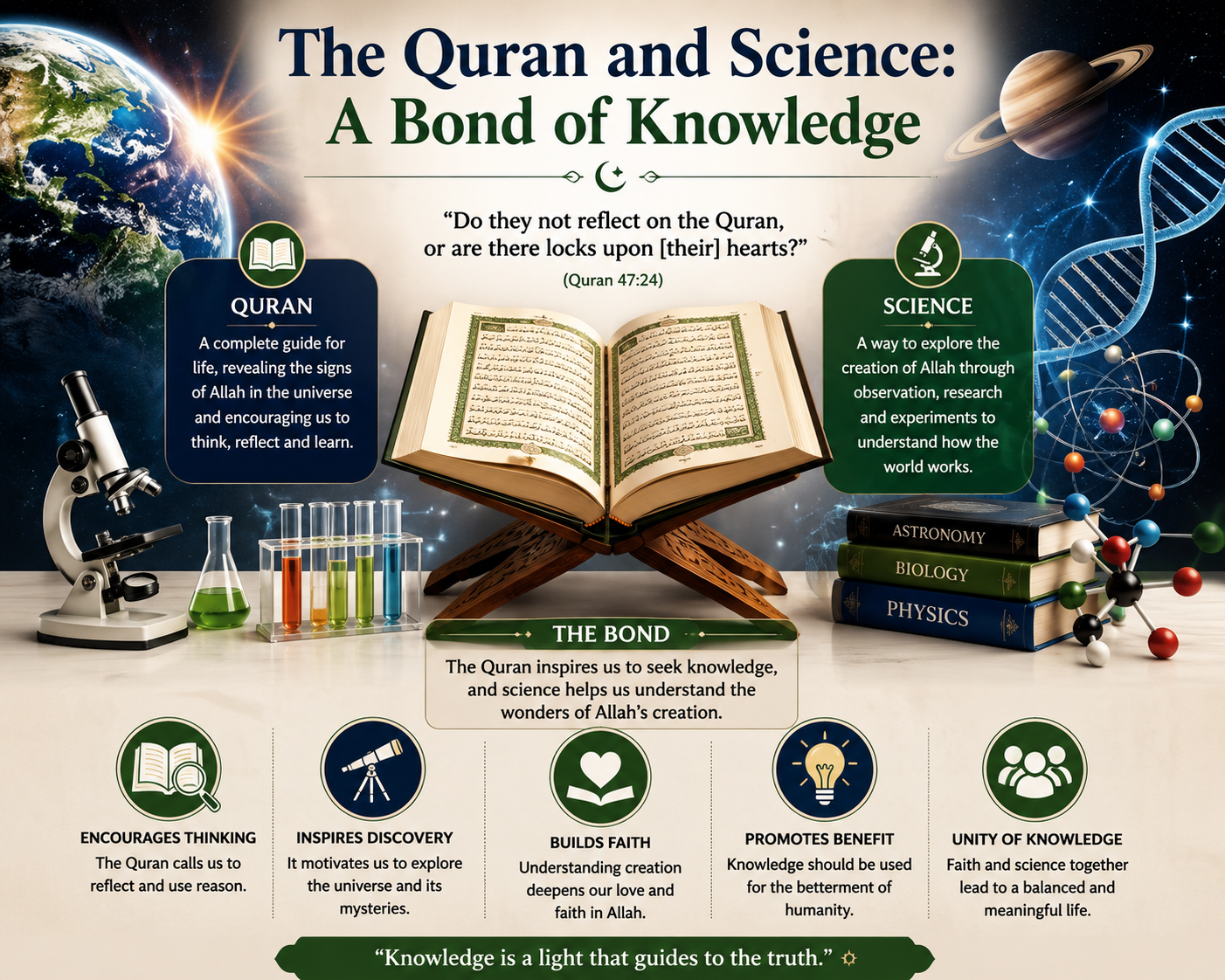
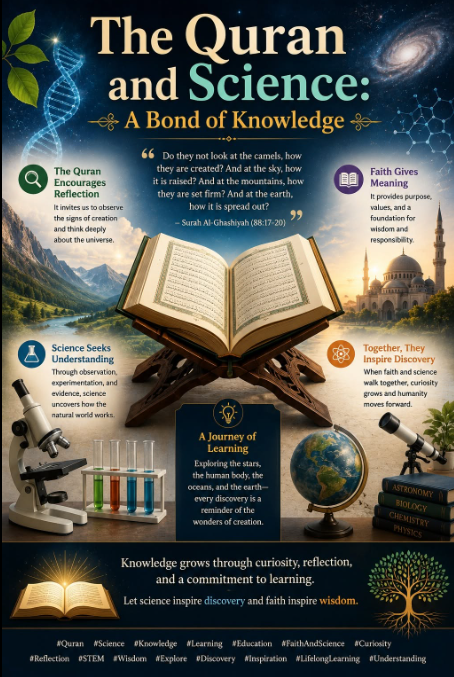
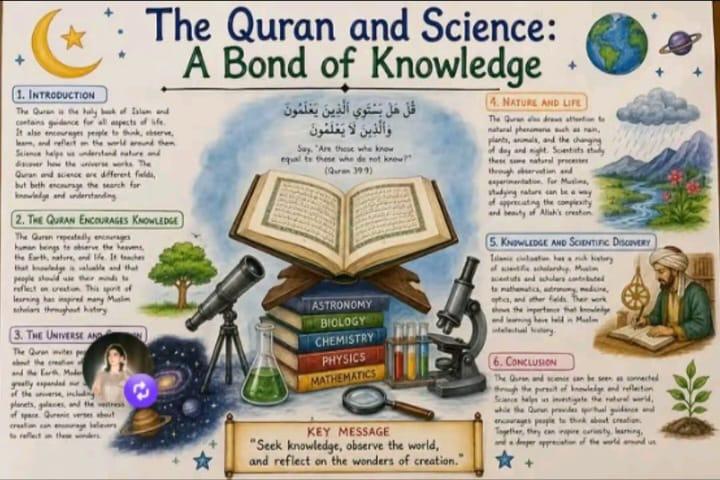
    **The Quran and Science: A Bond of Knowledge – Description**

    *The Quran and Science: A Bond of Knowledge* explores the beautiful connection between faith, curiosity, and the discovery of the universe. This topic highlights how the Quran encourages humans to seek knowledge, observe nature, and reflect on the signs of creation. From the wonders of the skies and the earth to the mysteries of life, science helps us understand the amazing world around us.

    This journey shows the importance of learning, research, and the pursuit of wisdom while appreciating the beauty and complexity of creation. It inspires students and thinkers to explore knowledge with an open mind and a spirit of discovery.

    #QuranAndScience #KnowledgeIsPower #ScienceAndFaith #LearningJourney #DiscoverTheUniverse #Education #Wisdom #ScienceExploration

    Rehan School Islamabad Campus
    Asma Shaheen EducationWali
    Irum Asim
    Saima Happinesswali

    #rsisb Roll No.240 Story No.10 Foundation Level **The Quran and Science: A Bond of Knowledge – Description** 📖✨ *The Quran and Science: A Bond of Knowledge* explores the beautiful connection between faith, curiosity, and the discovery of the universe. This topic highlights how the Quran encourages humans to seek knowledge, observe nature, and reflect on the signs of creation. From the wonders of the skies and the earth to the mysteries of life, science helps us understand the amazing world around us. 🌌🔬 This journey shows the importance of learning, research, and the pursuit of wisdom while appreciating the beauty and complexity of creation. It inspires students and thinkers to explore knowledge with an open mind and a spirit of discovery. 🌍💡 #QuranAndScience #KnowledgeIsPower #ScienceAndFaith #LearningJourney #DiscoverTheUniverse #Education #Wisdom #ScienceExploration Rehan School Islamabad Campus Asma Shaheen EducationWali Irum Asim Saima Happinesswali
    0 Yorumlar 0 hisse senetleri 2289 Views
Arama Sonuçları