• #rsisb
    Roll no.247
    call annie no.18
    Foundation level

    **Water – The Origin of Life and Language | 25-Minute Exploration**

    Water is one of the simplest substances on Earth, yet it plays one of the most extraordinary roles in our existence. From the earliest forms of life to the development of human civilization, water has shaped the story of our planet in countless ways. In this fascinating 25-minute journey, **“Water – The Origin of Life and Language,”** we explore why water is so important to life and how it has influenced human history, culture, communication, and imagination.

    Life as we know it depends on water. Every living organism requires water in some way, and scientists consider liquid water one of the key ingredients necessary for life as we understand it. From microscopic cells to enormous ecosystems, water provides an environment where countless biological processes can occur.

    But water is more than a biological necessity. It has been at the heart of human civilization for thousands of years. Ancient communities developed around rivers, lakes, springs, and coastlines because access to water meant access to food, agriculture, transportation, and survival. The great civilizations of history were deeply connected to waterways, demonstrating how water helped shape where people lived and how societies developed.

    This exploration also takes us into the fascinating relationship between **water and language**. Humans have created thousands of words, expressions, stories, poems, songs, and metaphors inspired by water. Words associated with rivers, rain, oceans, waves, streams, and storms appear throughout languages and cultures around the world.

    Water has also become a powerful symbol in human communication. It can represent life, change, movement, renewal, peace, strength, and transformation. Just as water flows and changes its form, human language constantly evolves and adapts.

    Throughout this 25-minute presentation, we will think about some fascinating questions: **How did water contribute to the development of life? Why did civilizations grow near water? How has water influenced human culture? Why do so many languages contain words connected to water? And what can water teach us about life, change, and human connection?**

    The story of water is ultimately a story about ourselves. It connects science with history, nature with civilization, and biology with language. By understanding water, we gain a deeper appreciation for the remarkable planet we call home.

    So take a moment, relax, and join us on this fascinating journey through the science, history, language, and mystery of **water**.

    **Water gives life. Water shapes civilizations. Water inspires language. Water connects us all.**

    If you enjoyed this educational journey, don't forget to **Like, Share, and Subscribe** for more fascinating topics about science, history, nature, language, and the world around us!

    #Water #OriginOfLife #WaterAndLife #Science #Biology #Nature #Earth #LifeOnEarth #WaterCycle #Oceans #Rivers #HumanCivilization #AncientCivilizations #Language #OriginOfLanguage #HumanHistory #Environment #Education #EducationalVideo #ScienceEducation #NatureLovers #EarthScience #Knowledge #Learning #Curiosity #Discovery #Life #PlanetEarth #SaveWater #WaterIsLife #ExploreScience #AmazingScience #DidYouKnow #EducationalContent #ScienceAndNature
    #rsisb Roll no.247 call annie no.18 Foundation level πŸ’§πŸŒŠ **Water – The Origin of Life and Language | 25-Minute Exploration** 🌍🧬 Water is one of the simplest substances on Earth, yet it plays one of the most extraordinary roles in our existence. πŸ’§βœ¨ From the earliest forms of life to the development of human civilization, water has shaped the story of our planet in countless ways. In this fascinating 25-minute journey, **“Water – The Origin of Life and Language,”** we explore why water is so important to life and how it has influenced human history, culture, communication, and imagination. πŸŒŽπŸ”¬πŸ“– Life as we know it depends on water. πŸŒ±πŸ πŸ¦‹ Every living organism requires water in some way, and scientists consider liquid water one of the key ingredients necessary for life as we understand it. From microscopic cells to enormous ecosystems, water provides an environment where countless biological processes can occur. πŸ§¬πŸ”¬πŸ’¦ But water is more than a biological necessity. It has been at the heart of human civilization for thousands of years. Ancient communities developed around rivers, lakes, springs, and coastlines because access to water meant access to food, agriculture, transportation, and survival. 🏞️🏺🌾🚀 The great civilizations of history were deeply connected to waterways, demonstrating how water helped shape where people lived and how societies developed. This exploration also takes us into the fascinating relationship between **water and language**. πŸ—£οΈπŸ’§ Humans have created thousands of words, expressions, stories, poems, songs, and metaphors inspired by water. Words associated with rivers, rain, oceans, waves, streams, and storms appear throughout languages and cultures around the world. πŸŒ§οΈπŸŒŠπŸ“š Water has also become a powerful symbol in human communication. It can represent life, change, movement, renewal, peace, strength, and transformation. πŸŒŠπŸ•ŠοΈβœ¨ Just as water flows and changes its form, human language constantly evolves and adapts. Throughout this 25-minute presentation, we will think about some fascinating questions: **How did water contribute to the development of life? Why did civilizations grow near water? How has water influenced human culture? Why do so many languages contain words connected to water? And what can water teach us about life, change, and human connection?** πŸ€”πŸ’‘ The story of water is ultimately a story about ourselves. πŸ’™πŸŒ It connects science with history, nature with civilization, and biology with language. By understanding water, we gain a deeper appreciation for the remarkable planet we call home. So take a moment, relax, and join us on this fascinating journey through the science, history, language, and mystery of **water**. πŸ’§πŸŒŠπŸ”¬πŸ“š ✨ **Water gives life. Water shapes civilizations. Water inspires language. Water connects us all.** πŸŒπŸ’™ πŸ‘ If you enjoyed this educational journey, don't forget to **Like, Share, and Subscribe** for more fascinating topics about science, history, nature, language, and the world around us! πŸ””πŸ“šβœ¨ #Water #OriginOfLife #WaterAndLife #Science #Biology #Nature #Earth #LifeOnEarth #WaterCycle #Oceans #Rivers #HumanCivilization #AncientCivilizations #Language #OriginOfLanguage #HumanHistory #Environment #Education #EducationalVideo #ScienceEducation #NatureLovers #EarthScience #Knowledge #Learning #Curiosity #Discovery #Life #PlanetEarth #SaveWater #WaterIsLife #ExploreScience #AmazingScience #DidYouKnow #EducationalContent #ScienceAndNature πŸ’§πŸŒπŸŒŠπŸ§¬πŸ”¬πŸ“šβœ¨
    0 Comments 0 Shares 2076 Views 8
  • #rsisb
    Roll No.240
    Image With Chatgpt No.5
    Foundation Level

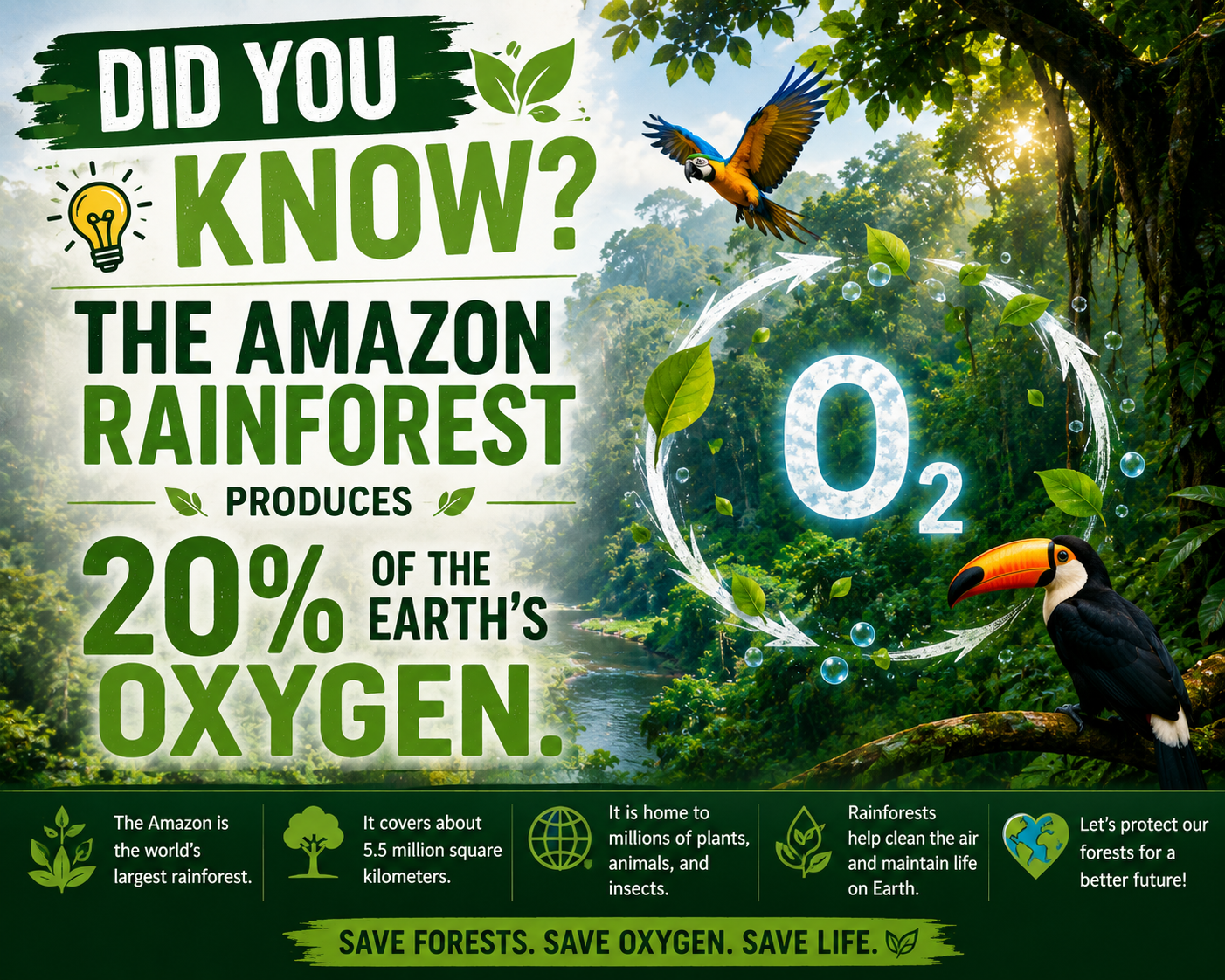
    The Amazon Rainforest is one of the most extraordinary natural environments on our planet. Stretching across a vast area of South America, it is home to an incredible variety of plants, animals, insects, birds, and microorganisms.

    The rainforest is often called the “lungs of the world,” because its plants produce oxygen through photosynthesis and the ecosystem plays an important role in absorbing and storing carbon dioxide. However, the commonly repeated claim that the Amazon produces 20% of the world’s oxygen is misleading. Much of the oxygen produced by plants is also consumed by plants, animals, fungi, and microorganisms within the ecosystem.

    What makes the Amazon truly remarkable is its biodiversity. From colorful macaws flying through the canopy to jaguars moving through the forest, countless species depend on this habitat for food, shelter, and survival.

    The rainforest also has an important role in the global carbon cycle and climate system. Trees and vegetation absorb large amounts of carbon dioxide, storing carbon in plants and soils. This makes protecting healthy forests important for the environment and for communities that depend on them.

    Every part of the Amazon ecosystem is connected. When forests are damaged or destroyed, the effects can spread through habitats, wildlife populations, water systems, and climate processes.

    Learning about the Amazon teaches us an important lesson: protecting nature means protecting the systems that support life. Conservation, responsible land use, reducing deforestation, and caring for biodiversity can all help preserve this extraordinary ecosystem for future generations.

    Explore the rainforest. Discover its biodiversity. Understand its importance. Protect our planet.

    The Amazon is more than just a forest—it is a living, interconnected world filled with life, discovery, and natural wonder.

    #AmazonRainforest #Amazon #Rainforest #DidYouKnow #Nature #Biodiversity #Wildlife #Environment #Earth #PlanetEarth #Forest #TropicalRainforest #Ecology #Science #Biology #ScienceEducation #EnvironmentalEducation #WildlifeConservation #ForestConservation #ProtectNature #SaveTheRainforest #Climate #CarbonCycle #Ecosystem #NaturalWorld #NatureLovers #ExploreNature #EarthScience #LearningJourney #EducationalContent #ScienceFacts #BiodiversityMatters #EverySpeciesCounts #ProtectOurPlanet

    Rehan School Islamabad Campus
    Asma Shaheen EducationWali
    Irum Asim
    Saima Happinesswali

    #rsisb Roll No.240 Image With Chatgpt No.5 Foundation Level The Amazon Rainforest is one of the most extraordinary natural environments on our planet. Stretching across a vast area of South America, it is home to an incredible variety of plants, animals, insects, birds, and microorganisms. πŸŒŽπŸŒ±πŸ’πŸ¦‹ The rainforest is often called the “lungs of the world,” because its plants produce oxygen through photosynthesis and the ecosystem plays an important role in absorbing and storing carbon dioxide. However, the commonly repeated claim that the Amazon produces 20% of the world’s oxygen is misleading. Much of the oxygen produced by plants is also consumed by plants, animals, fungi, and microorganisms within the ecosystem. What makes the Amazon truly remarkable is its biodiversity. πŸŒΏπŸ’πŸπŸ¦œπŸ† From colorful macaws flying through the canopy to jaguars moving through the forest, countless species depend on this habitat for food, shelter, and survival. The rainforest also has an important role in the global carbon cycle and climate system. Trees and vegetation absorb large amounts of carbon dioxide, storing carbon in plants and soils. 🌱🌍 This makes protecting healthy forests important for the environment and for communities that depend on them. Every part of the Amazon ecosystem is connected. πŸŒ³βž‘οΈπŸ¦‹βž‘οΈπŸ¦βž‘οΈπŸ† When forests are damaged or destroyed, the effects can spread through habitats, wildlife populations, water systems, and climate processes. Learning about the Amazon teaches us an important lesson: protecting nature means protecting the systems that support life. πŸ’šπŸŒŽ Conservation, responsible land use, reducing deforestation, and caring for biodiversity can all help preserve this extraordinary ecosystem for future generations. ✨ Explore the rainforest. Discover its biodiversity. Understand its importance. Protect our planet. πŸŒΏπŸ”¬πŸŒ The Amazon is more than just a forest—it is a living, interconnected world filled with life, discovery, and natural wonder. πŸŒ³πŸ’šπŸ¦œ #AmazonRainforest #Amazon #Rainforest #DidYouKnow #Nature #Biodiversity #Wildlife #Environment #Earth #PlanetEarth #Forest #TropicalRainforest #Ecology #Science #Biology #ScienceEducation #EnvironmentalEducation #WildlifeConservation #ForestConservation #ProtectNature #SaveTheRainforest #Climate #CarbonCycle #Ecosystem #NaturalWorld #NatureLovers #ExploreNature #EarthScience #LearningJourney #EducationalContent #ScienceFacts #BiodiversityMatters #EverySpeciesCounts #ProtectOurPlanet πŸŒŽπŸŒΏπŸŒ³πŸ¦œπŸ†πŸ’ Rehan School Islamabad Campus Asma Shaheen EducationWali Irum Asim Saima Happinesswali
    0 Comments 0 Shares 3268 Views
  • #rsisb
    Roll No.240
    Story No.23
    Foundation Level

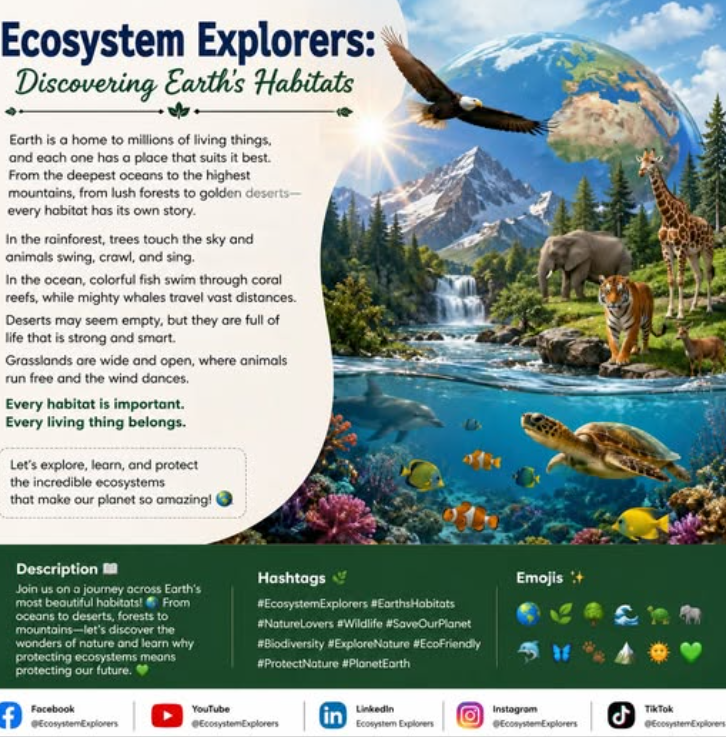
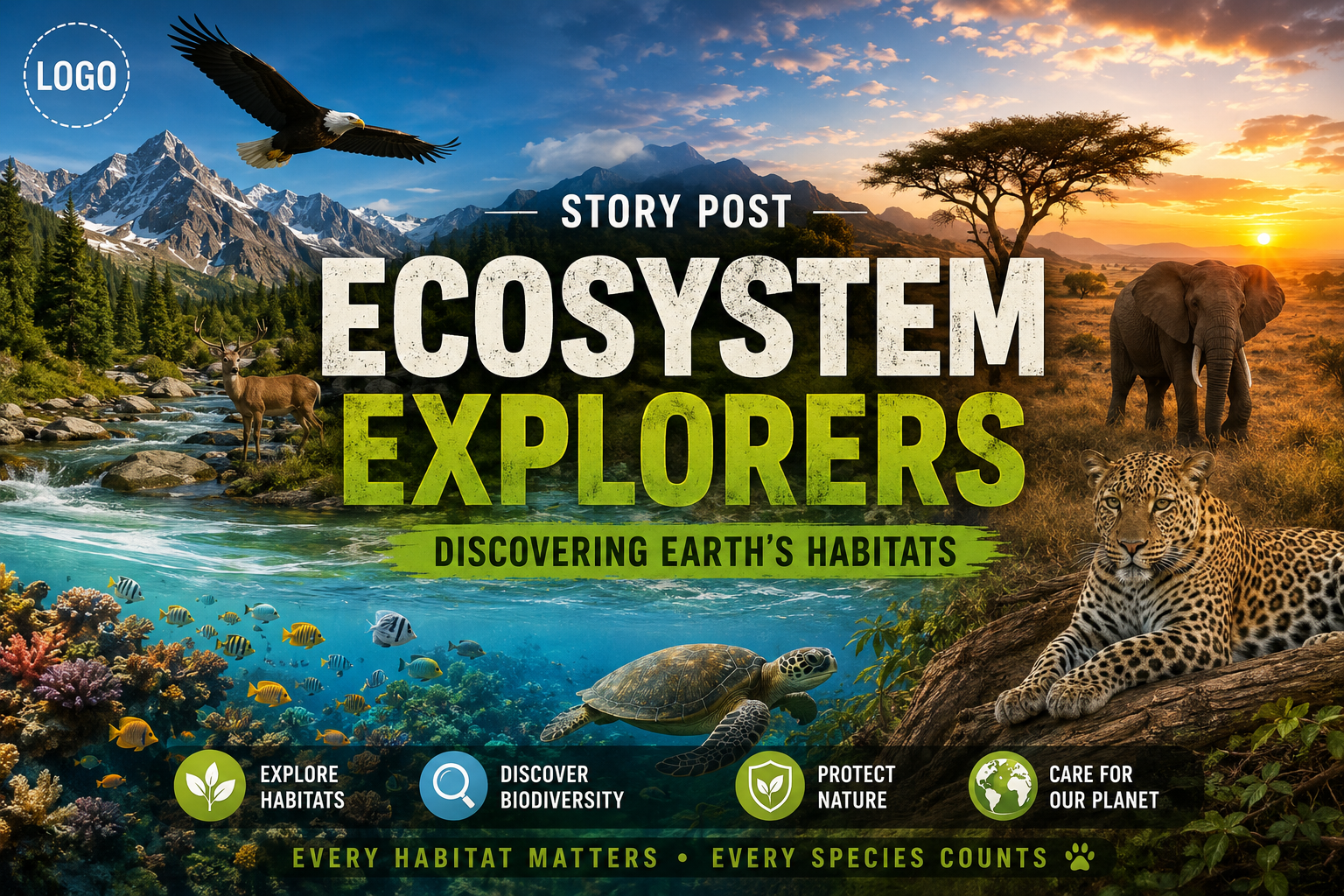
    Every corner of our planet is home to an amazing variety of life, from the highest mountains and deepest oceans to vast forests, peaceful rivers, colorful wetlands, and dry deserts. Each habitat has its own unique environment, plants, animals, and natural systems that work together to support life.

    In **“Ecosystem Explorers: Discovering Earth’s Habitats,”** we take an exciting journey across different ecosystems to discover how living organisms interact with their surroundings. We explore the beauty of forests, the mystery of oceans, the strength of mountain ecosystems, the unique life of deserts, and the importance of freshwater habitats.

    Every ecosystem tells a different story. A forest provides shelter and food for countless species, oceans support incredible marine life, deserts show how animals and plants can adapt to challenging conditions, and wetlands play an important role in maintaining healthy environments.

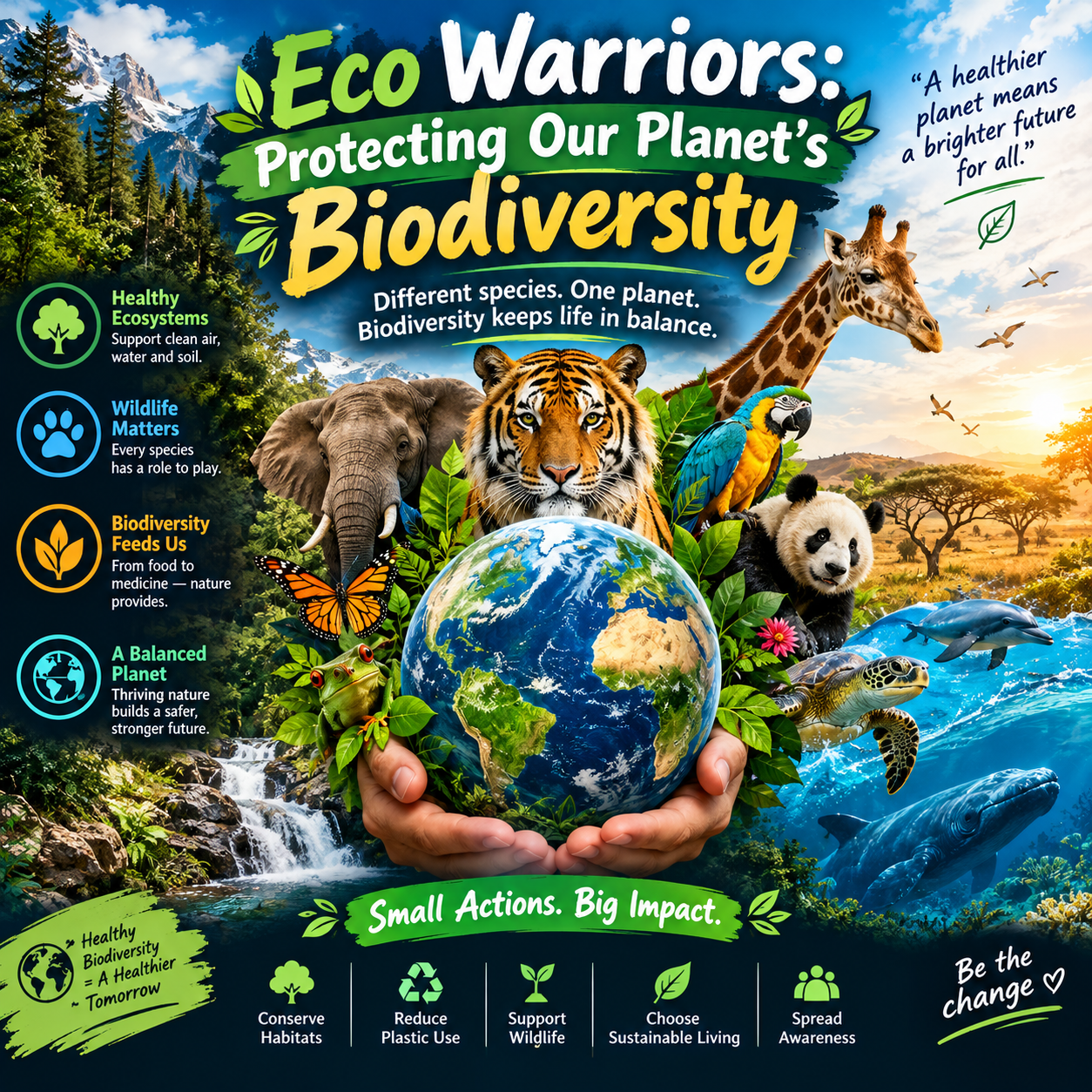
    This journey helps us understand the importance of **biodiversity** and why every species matters. Even the smallest organisms can have an important role in maintaining the balance of an ecosystem. When one part of an ecosystem changes, it can affect many other living things.

    Learning about habitats is not just about discovering animals and plants. It is also about understanding our responsibility toward nature. By protecting forests, keeping rivers and oceans clean, reducing pollution, conserving wildlife, and respecting natural habitats, we can help create a healthier planet for future generations.

    Our Earth is full of incredible places waiting to be explored. The more we learn about these ecosystems, the more we understand how connected all life truly is. Every habitat has value, every species has a role, and every person can make a positive difference.

    Let’s become true **Ecosystem Explorers**—curious about nature, passionate about learning, and committed to protecting the amazing world around us.

    **Explore Habitats**
    **Discover Biodiversity**
    **Protect Nature**
    **Care for Our Planet**

    **Every Habitat Matters • Every Species Counts**

    #EcosystemExplorers #DiscoveringEarthsHabitats #Ecosystem #Habitats #Biodiversity #Nature #Wildlife #Environment #Earth #PlanetEarth #ExploreNature #NatureExploration #AnimalLife #PlantLife #Forests #Oceans #Deserts #Mountains #Wetlands #Freshwater #MarineLife #WildlifeConservation #ProtectNature #SaveOurPlanet #EnvironmentalEducation #ScienceEducation #Biology #Ecology #LearningJourney #NatureLovers #EarthExplorers #Conservation #ClimateAwareness #SustainableFuture #GreenPlanet #NatureIsAmazing #EverySpeciesCounts #EveryHabitatMatters


    Rehan School Islamabad Campus
    Asma Shaheen EducationWali
    Irum Asim
    Saima Happinesswali


    #rsisb Roll No.240 Story No.23 Foundation Level Every corner of our planet is home to an amazing variety of life, from the highest mountains and deepest oceans to vast forests, peaceful rivers, colorful wetlands, and dry deserts. 🌎✨ Each habitat has its own unique environment, plants, animals, and natural systems that work together to support life. πŸ¦‹πŸŒ±πŸŸπŸ¦ In **“Ecosystem Explorers: Discovering Earth’s Habitats,”** we take an exciting journey across different ecosystems to discover how living organisms interact with their surroundings. πŸ”πŸŒΏ We explore the beauty of forests, the mystery of oceans, the strength of mountain ecosystems, the unique life of deserts, and the importance of freshwater habitats. 🌊🏜️🏞️🌲 Every ecosystem tells a different story. 🌟 A forest provides shelter and food for countless species, oceans support incredible marine life, deserts show how animals and plants can adapt to challenging conditions, and wetlands play an important role in maintaining healthy environments. πŸ’πŸ πŸ¦…πŸŒ΅ This journey helps us understand the importance of **biodiversity** and why every species matters. πŸ†πŸ¦‹πŸ’πŸŒΊ Even the smallest organisms can have an important role in maintaining the balance of an ecosystem. When one part of an ecosystem changes, it can affect many other living things. πŸŒ±πŸ”—πŸŒ Learning about habitats is not just about discovering animals and plants. It is also about understanding our responsibility toward nature. πŸ’šπŸŒŽ By protecting forests, keeping rivers and oceans clean, reducing pollution, conserving wildlife, and respecting natural habitats, we can help create a healthier planet for future generations. πŸŒΏβ™»οΈπŸŒŠ Our Earth is full of incredible places waiting to be explored. πŸ”­πŸŒ The more we learn about these ecosystems, the more we understand how connected all life truly is. Every habitat has value, every species has a role, and every person can make a positive difference. 🌎❀️ Let’s become true **Ecosystem Explorers**—curious about nature, passionate about learning, and committed to protecting the amazing world around us. πŸ”πŸŒΏπŸ¦œ 🌱 **Explore Habitats** πŸ”Ž **Discover Biodiversity** πŸ›‘οΈ **Protect Nature** 🌍 **Care for Our Planet** ✨ **Every Habitat Matters • Every Species Counts** ✨ #EcosystemExplorers #DiscoveringEarthsHabitats #Ecosystem #Habitats #Biodiversity #Nature #Wildlife #Environment #Earth #PlanetEarth #ExploreNature #NatureExploration #AnimalLife #PlantLife #Forests #Oceans #Deserts #Mountains #Wetlands #Freshwater #MarineLife #WildlifeConservation #ProtectNature #SaveOurPlanet #EnvironmentalEducation #ScienceEducation #Biology #Ecology #LearningJourney #NatureLovers #EarthExplorers #Conservation #ClimateAwareness #SustainableFuture #GreenPlanet #NatureIsAmazing #EverySpeciesCounts #EveryHabitatMatters πŸŒπŸŒΏπŸ˜πŸ¦…πŸ’πŸ  πŸ”οΈπŸŒŠπŸŒ³βœ¨πŸ’š Rehan School Islamabad Campus Asma Shaheen EducationWali Irum Asim Saima Happinesswali
    0 Comments 0 Shares 4227 Views
  • #rsisb
    Roll no.247
    call Annie .15
    Foundation level

    **“Earth” – The History of Our Home in a Word (25 min)**

    Welcome to an exciting journey through the incredible history of **Earth — our beautiful home in the universe!** From its formation billions of years ago to the amazing diversity of life we see today, Earth has experienced an extraordinary story filled with change, discovery, survival, and transformation.

    In this **25-minute exploration**, we will travel back through deep time and discover how our planet formed from the early material of the solar system. We’ll explore the development of oceans , mountains , continents , atmosphere , and the conditions that eventually made life possible.

    We’ll take a fascinating look at ancient Earth, when the planet was very different from the world we know today. We’ll discover how simple forms of life appeared and gradually evolved into increasingly complex organisms.

    The story of Earth also includes dramatic events such as massive volcanic activity, changing climates, shifting continents, ice ages, and the disappearance of many ancient species. These events helped shape the planet and created opportunities for new forms of life to develop.

    As we move closer to the present, we’ll explore the rise of humans and how our species became an important part of Earth’s story. From early communities and agriculture to modern cities, technology, science, and exploration, humanity has changed the planet in remarkable ways.

    But Earth’s history is not just a story about the past. It also encourages us to think about the future. What will happen to our planet in the years ahead? How can we protect nature, conserve resources, reduce pollution, and take better care of the world we call home?

    **Earth is more than just a planet — it is a living story.** Every mountain, ocean, fossil, forest, river, and living creature is part of that incredible story. By learning about Earth’s past, we can better understand the present and make wiser choices for the future.

    Join us for this fascinating **25-minute journey through Earth’s history** and discover how our planet became the remarkable world we know today!

    **Learn about the past. Understand the present. Protect the future.**

    #Earth #EarthHistory #OurPlanet #PlanetEarth #HistoryOfEarth #Science #Geology #Evolution #Dinosaurs #AncientEarth #Oceans #Nature #Environment #Climate #Space #Universe #HumanHistory #ScienceEducation #Learning #EducationalVideo #EarthScience #ExploreEarth #SaveOurPlanet #ProtectNature #FutureOfEarth #Knowledge #DiscoverScience #AmazingEarth #WorldHistory
    #rsisb Roll no.247 call Annie .15 Foundation level 🌍 **“Earth” – The History of Our Home in a Word (25 min)** 🌎✨ Welcome to an exciting journey through the incredible history of **Earth — our beautiful home in the universe!** 🌌🌍 From its formation billions of years ago to the amazing diversity of life we see today, Earth has experienced an extraordinary story filled with change, discovery, survival, and transformation. πŸ¦•πŸŒ‹πŸŒŠπŸŒ³ In this **25-minute exploration**, we will travel back through deep time and discover how our planet formed from the early material of the solar system. β˜€οΈπŸͺ We’ll explore the development of oceans 🌊, mountains ⛰️, continents 🌎, atmosphere 🌀️, and the conditions that eventually made life possible. 🧬🌱 We’ll take a fascinating look at ancient Earth, when the planet was very different from the world we know today. πŸŒ‹πŸ”₯ We’ll discover how simple forms of life appeared and gradually evolved into increasingly complex organisms. πŸ¦ βž‘οΈπŸ βž‘οΈπŸ¦–βž‘οΈπŸ¦…βž‘οΈπŸ˜ The story of Earth also includes dramatic events such as massive volcanic activity, changing climates, shifting continents, ice ages, and the disappearance of many ancient species. πŸŒ‹β„οΈπŸŒ These events helped shape the planet and created opportunities for new forms of life to develop. πŸŒ±πŸ¦–πŸ”¬ As we move closer to the present, we’ll explore the rise of humans and how our species became an important part of Earth’s story. πŸ‘¨‍πŸ‘©‍πŸ‘§‍πŸ‘¦πŸ•οΈπŸŒΎπŸ™οΈ From early communities and agriculture to modern cities, technology, science, and exploration, humanity has changed the planet in remarkable ways. πŸšœπŸ—οΈπŸ’‘πŸš€ But Earth’s history is not just a story about the past. It also encourages us to think about the future. πŸŒ±πŸ’š What will happen to our planet in the years ahead? How can we protect nature, conserve resources, reduce pollution, and take better care of the world we call home? πŸŒ³πŸ’§β™»οΈ 🌍 **Earth is more than just a planet — it is a living story.** Every mountain, ocean, fossil, forest, river, and living creature is part of that incredible story. By learning about Earth’s past, we can better understand the present and make wiser choices for the future. πŸ”¬πŸ“šπŸŒŽ Join us for this fascinating **25-minute journey through Earth’s history** and discover how our planet became the remarkable world we know today! πŸŒβœ¨πŸš€ πŸ’š **Learn about the past. Understand the present. Protect the future.** 🌱🌎 #Earth 🌍 #EarthHistory πŸ“š #OurPlanet 🌎 #PlanetEarth πŸͺ #HistoryOfEarth ⏳ #Science πŸ”¬ #Geology πŸͺ¨ #Evolution 🧬 #Dinosaurs πŸ¦– #AncientEarth πŸŒ‹ #Oceans 🌊 #Nature 🌳 #Environment 🌱 #Climate 🌀️ #Space 🌌 #Universe ✨ #HumanHistory πŸ‘¨‍πŸ‘©‍πŸ‘§‍πŸ‘¦ #ScienceEducation πŸ“– #Learning πŸ“š #EducationalVideo πŸŽ“ #EarthScience πŸ”¬ #ExploreEarth 🌍 #SaveOurPlanet πŸ’š #ProtectNature 🌳 #FutureOfEarth 🌎 #Knowledge πŸ’‘ #DiscoverScience πŸš€ #AmazingEarth ✨ #WorldHistory 🌍
    0 Comments 0 Shares 3204 Views 6
  • #rsisb
    Roll no.239
    maya no.18
    Foundation Level

    The word **“Earth”** is one of the oldest and most meaningful words in the English language. It represents much more than the planet beneath our feet. Earth is our **home, the source of life, the ground we walk on, and a symbol of nature and human existence**. But where did this simple word come from, and how did its meaning develop over time?

    The history of the word **“Earth”** takes us back thousands of years. In ancient forms of English and related Germanic languages, words similar to *earth* were used to describe the **ground, soil, land, and the physical world**. Over time, the word developed into the name we now use for our entire planet. Unlike many planets in our Solar System, whose names are connected to ancient gods and mythology, **Earth's English name is closely connected to the ordinary ground beneath our feet**.

    This connection tells us something important about human history. Long before people understood that they lived on a planet moving through space, they experienced Earth simply as the land around them—the soil that grew their food, the ground that supported their homes, and the world they could see and touch.

    As human knowledge grew, our understanding of Earth changed dramatically. Ancient thinkers observed the sky and began asking important questions about the shape and nature of the world. Over centuries, explorers, scientists, astronomers, and travelers expanded humanity's understanding of the planet. Eventually, space exploration allowed humans to see Earth from beyond its atmosphere. Those images showed something extraordinary: **our vast world is a beautiful, fragile-looking sphere surrounded by the darkness of space**.

    From a scientific perspective, Earth is the **third planet from the Sun** and the only world currently known to support life. It has liquid water on its surface, a protective atmosphere, and a wide variety of environments that support countless living organisms. Its oceans, forests, mountains, deserts, rivers, and grasslands form an incredibly diverse and interconnected system.

    Earth's structure is also fascinating. Beneath the surface are different layers, including the **crust, mantle, and core**. These layers influence many natural processes, including the movement of tectonic plates, earthquakes, volcanic activity, and the formation of mountains. Although we live on the surface, the planet beneath us is constantly changing.

    Life on Earth depends on a delicate balance. **Air, water, sunlight, soil, and biodiversity** all play essential roles in supporting life. Plants produce oxygen and form the foundation of many ecosystems. Oceans help regulate climate and support an enormous variety of life. Forests provide habitats and influence the movement of water and carbon through the environment.

    However, Earth also faces serious environmental challenges. **Pollution, deforestation, habitat destruction, and climate change** affect ecosystems and communities around the world. These challenges remind us that Earth is not an unlimited resource. The choices humans make today can influence the quality of life for future generations.

    Protecting Earth does not always require extraordinary actions. Small changes can make a difference, such as **reducing waste, conserving water and energy, planting and protecting trees, avoiding unnecessary pollution, and learning more about the environment**. Governments, scientists, businesses, communities, and individuals all have important roles to play.

    The word **“Earth”** also has a powerful emotional and cultural meaning. People may come from different countries, speak different languages, and follow different traditions, but we all share the same planet. From this perspective, Earth can be seen as a symbol of our **shared home and shared responsibility**.

    **“Earth” – The History of Our Home in a Word** is therefore a journey through **language, history, science, nature, and human imagination**. The story of this word shows how language grows alongside human knowledge. What once described the soil beneath people's feet eventually became the name of an entire world traveling through space.

    The next time you hear or say the word **“Earth,”** remember that it carries a remarkable story. It connects us to the ancient past, the natural world around us, and the future we are helping to create.

    **Earth is not just where we live—it is the only home we all share. Protecting it is a responsibility that belongs to everyone.**

    ### **Hashtags**

    #Earth #OurPlanet #PlanetEarth #WordHistory #HistoryOfEarth #EnglishLanguage #LanguageHistory #Science #Nature #Environment #ClimateAwareness #ProtectOurPlanet #Sustainability #EarthScience #Space #Astronomy #LifeOnEarth #MotherEarth #SaveEarth #GoGreen #CleanEnvironment #Biodiversity #ClimateChange #Education #Knowledge #LearnAndExplore #OnePlanet #FutureGenerations #EarthLovers #OurHome
    #rsisb Roll no.239 maya no.18 Foundation Level The word **“Earth”** is one of the oldest and most meaningful words in the English language. It represents much more than the planet beneath our feet. Earth is our **home, the source of life, the ground we walk on, and a symbol of nature and human existence**. But where did this simple word come from, and how did its meaning develop over time? The history of the word **“Earth”** takes us back thousands of years. In ancient forms of English and related Germanic languages, words similar to *earth* were used to describe the **ground, soil, land, and the physical world**. Over time, the word developed into the name we now use for our entire planet. Unlike many planets in our Solar System, whose names are connected to ancient gods and mythology, **Earth's English name is closely connected to the ordinary ground beneath our feet**. πŸ“–πŸŒ± This connection tells us something important about human history. Long before people understood that they lived on a planet moving through space, they experienced Earth simply as the land around them—the soil that grew their food, the ground that supported their homes, and the world they could see and touch. As human knowledge grew, our understanding of Earth changed dramatically. Ancient thinkers observed the sky and began asking important questions about the shape and nature of the world. Over centuries, explorers, scientists, astronomers, and travelers expanded humanity's understanding of the planet. Eventually, space exploration allowed humans to see Earth from beyond its atmosphere. Those images showed something extraordinary: **our vast world is a beautiful, fragile-looking sphere surrounded by the darkness of space**. πŸš€πŸŒŒ From a scientific perspective, Earth is the **third planet from the Sun** and the only world currently known to support life. It has liquid water on its surface, a protective atmosphere, and a wide variety of environments that support countless living organisms. Its oceans, forests, mountains, deserts, rivers, and grasslands form an incredibly diverse and interconnected system. πŸŒŠπŸ”οΈπŸŒ³ Earth's structure is also fascinating. Beneath the surface are different layers, including the **crust, mantle, and core**. These layers influence many natural processes, including the movement of tectonic plates, earthquakes, volcanic activity, and the formation of mountains. Although we live on the surface, the planet beneath us is constantly changing. Life on Earth depends on a delicate balance. **Air, water, sunlight, soil, and biodiversity** all play essential roles in supporting life. Plants produce oxygen and form the foundation of many ecosystems. Oceans help regulate climate and support an enormous variety of life. Forests provide habitats and influence the movement of water and carbon through the environment. However, Earth also faces serious environmental challenges. **Pollution, deforestation, habitat destruction, and climate change** affect ecosystems and communities around the world. These challenges remind us that Earth is not an unlimited resource. The choices humans make today can influence the quality of life for future generations. πŸŒΏβ™»οΈ Protecting Earth does not always require extraordinary actions. Small changes can make a difference, such as **reducing waste, conserving water and energy, planting and protecting trees, avoiding unnecessary pollution, and learning more about the environment**. Governments, scientists, businesses, communities, and individuals all have important roles to play. The word **“Earth”** also has a powerful emotional and cultural meaning. People may come from different countries, speak different languages, and follow different traditions, but we all share the same planet. From this perspective, Earth can be seen as a symbol of our **shared home and shared responsibility**. 🀝🌍 **“Earth” – The History of Our Home in a Word** is therefore a journey through **language, history, science, nature, and human imagination**. The story of this word shows how language grows alongside human knowledge. What once described the soil beneath people's feet eventually became the name of an entire world traveling through space. The next time you hear or say the word **“Earth,”** remember that it carries a remarkable story. It connects us to the ancient past, the natural world around us, and the future we are helping to create. **Earth is not just where we live—it is the only home we all share. Protecting it is a responsibility that belongs to everyone.** πŸŒπŸ’šβœ¨ ### πŸ”– **Hashtags** #Earth #OurPlanet #PlanetEarth #WordHistory #HistoryOfEarth #EnglishLanguage #LanguageHistory #Science #Nature #Environment #ClimateAwareness #ProtectOurPlanet #Sustainability #EarthScience #Space #Astronomy #LifeOnEarth #MotherEarth #SaveEarth #GoGreen #CleanEnvironment #Biodiversity #ClimateChange #Education #Knowledge #LearnAndExplore #OnePlanet #FutureGenerations #EarthLovers #OurHome πŸŒπŸŒΏπŸ’šβœ¨
    0 Comments 0 Shares 5783 Views 17
  • #rsisb
    roll no.247
    Foundation level

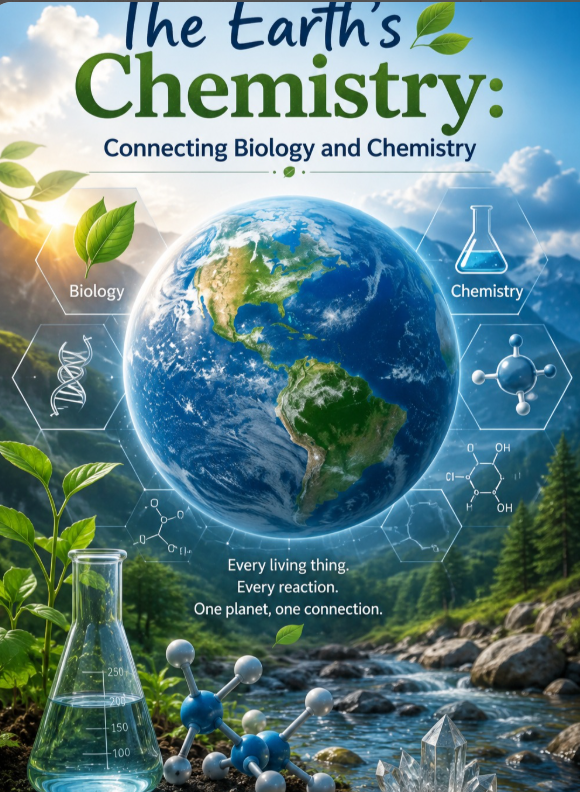
    **The Earth's Chemistry: Connecting Biology and Chemistry**

    Our Earth is a remarkable laboratory where chemistry and biology work together every moment! From the air we breathe to the water we drink, from the soil that supports plants to the cells that make up living organisms, chemistry is at the heart of life.

    **Chemistry makes life possible.** Plants use chemical reactions during photosynthesis to transform sunlight, water, and carbon dioxide into energy-rich food while releasing oxygen. This amazing process supports ecosystems and provides the oxygen needed by countless living organisms.

    **Biology and chemistry are deeply connected.** Every living cell depends on chemical substances such as proteins, carbohydrates, fats, DNA, water, minerals, and gases. These molecules interact through countless chemical reactions that allow organisms to grow, repair themselves, reproduce, and respond to their environment.

    Water is another perfect example of this connection. It helps transport nutrients, regulate temperature, support chemical reactions, and maintain ecosystems. Oceans, rivers, lakes, and groundwater are all part of Earth's interconnected chemical and biological systems.

    The **carbon cycle, nitrogen cycle, and oxygen cycle** demonstrate how matter continuously moves between the atmosphere, soil, water, and living organisms. Plants absorb carbon dioxide, animals obtain nutrients by consuming plants or other organisms, and decomposers return important elements to the environment.

    Even the soil beneath our feet is full of chemistry and biology. Minerals, microorganisms, organic matter, water, and air interact to create an environment where plants can grow. Healthy ecosystems depend on these delicate chemical relationships.

    Understanding Earth's chemistry helps us better understand climate, pollution, agriculture, ecosystems, human health, and the future of our planet. By studying how chemical substances interact with living systems, scientists can discover better ways to protect nature and use Earth's resources responsibly.

    **The big lesson:** Chemistry explains many of the processes that make biology possible, while biology shows us how those chemical processes come together to create living systems. Together, they tell an incredible story about our planet and life itself.

    Keep exploring, keep questioning, and keep discovering the fascinating science hidden all around us!

    #EarthsChemistry #Chemistry #Biology #EarthScience #Science #ScienceEducation #ChemistryAndBiology #LifeOnEarth #EnvironmentalScience #Photosynthesis #CarbonCycle #NitrogenCycle #OxygenCycle #Ecosystems #Nature #ScienceLovers #LearningScience #STEM #STEMEducation #ScienceExploration #OurPlanet #AmazingScience #Biochemistry #PlanetEarth #Education
    #rsisb roll no.247 Foundation level 🌍πŸ§ͺ **The Earth's Chemistry: Connecting Biology and Chemistry** 🧬🌱 Our Earth is a remarkable laboratory where chemistry and biology work together every moment! 🌎✨ From the air we breathe to the water we drink, from the soil that supports plants to the cells that make up living organisms, chemistry is at the heart of life. πŸ”¬πŸ’š 🌿 **Chemistry makes life possible.** Plants use chemical reactions during photosynthesis to transform sunlight, water, and carbon dioxide into energy-rich food while releasing oxygen. β˜€οΈπŸŒ± This amazing process supports ecosystems and provides the oxygen needed by countless living organisms. 🧬 **Biology and chemistry are deeply connected.** Every living cell depends on chemical substances such as proteins, carbohydrates, fats, DNA, water, minerals, and gases. These molecules interact through countless chemical reactions that allow organisms to grow, repair themselves, reproduce, and respond to their environment. πŸ”¬πŸ§« πŸ’§ Water is another perfect example of this connection. It helps transport nutrients, regulate temperature, support chemical reactions, and maintain ecosystems. Oceans, rivers, lakes, and groundwater are all part of Earth's interconnected chemical and biological systems. 🌊🐟 🌎 The **carbon cycle, nitrogen cycle, and oxygen cycle** demonstrate how matter continuously moves between the atmosphere, soil, water, and living organisms. Plants absorb carbon dioxide, animals obtain nutrients by consuming plants or other organisms, and decomposers return important elements to the environment. πŸ”„πŸŒΏπŸ¦  🌱 Even the soil beneath our feet is full of chemistry and biology. Minerals, microorganisms, organic matter, water, and air interact to create an environment where plants can grow. Healthy ecosystems depend on these delicate chemical relationships. 🌾🌍 πŸ”¬ Understanding Earth's chemistry helps us better understand climate, pollution, agriculture, ecosystems, human health, and the future of our planet. By studying how chemical substances interact with living systems, scientists can discover better ways to protect nature and use Earth's resources responsibly. πŸ’‘πŸŒ³ ✨ **The big lesson:** Chemistry explains many of the processes that make biology possible, while biology shows us how those chemical processes come together to create living systems. Together, they tell an incredible story about our planet and life itself. 🌍❀️πŸ§ͺ🧬 πŸ“š Keep exploring, keep questioning, and keep discovering the fascinating science hidden all around us! πŸ”Žβœ¨ #EarthsChemistry #Chemistry #Biology #EarthScience #Science #ScienceEducation #ChemistryAndBiology #LifeOnEarth #EnvironmentalScience #Photosynthesis #CarbonCycle #NitrogenCycle #OxygenCycle #Ecosystems #Nature #ScienceLovers #LearningScience #STEM #STEMEducation #ScienceExploration #OurPlanet #AmazingScience #Biochemistry #PlanetEarth #Education
    0 Comments 0 Shares 5175 Views
  • #rsisb Roll No.240 Call Annie No.24 Foundation Level **Earth – The History of Our Home in a Word (25 min)** 🌍 Explore the amazing history of **Earth**, from its formation billions of years ago to the world we live in today. In this educational 25-minute video, discover how Earth formed, how oceans and continents developed, how life began, and how plants, animals, dinosaurs, and humans appeared over time. Learn about Earth’s layers, atmosphere, oceans, mountains, volcanoes, earthquakes, fossils, evolution, climate, and the movement of tectonic plates. This video explains Earth’s long journey in an easy and interesting way, making it perfect for students, children, and anyone curious about our planet. 🌎 **Topics Covered:** Earth’s formation, continents, oceans, atmosphere, fossils, dinosaurs, evolution, human history, climate change, and the future of our planet. #Earth #HistoryOfEarth #PlanetEarth #EarthScience #Geology #Evolution #Dinosaurs #HumanEvolution #Science #EducationalVideo #Nature #OurPlanet #EarthHistory #Knowledge #Learning Rehan School Islamabad Campus Asma Shaheen EducationWali Irum Asim Saima Happinesswali https://www.facebook.com/share/v/1Ud8BgNn6i/
    WWW.FACEBOOK.COM
    Facebook
    #rsisb Roll No.240 Call Annie No.24 Foundation Level **Earth – The History of Our Home in a Word (25 min)** 🌍 Explore the amazing history of **Earth**, from its formation billions of years ago to...
    0 Comments 0 Shares 2498 Views
  • #rsisb
    Roll No. 183
    Image With Chatgpt No. 22
    Foundation Level

    **Did You Know?**

    The **Amazon Rainforest** is often called the **"Lungs of the Earth"** because it plays a vital role in our planet's ecosystem. While a popular claim says it produces **20% of the Earth's oxygen**, the reality is more nuanced—although the Amazon generates a great deal of oxygen through photosynthesis, it also uses much of that oxygen through the respiration of plants and other living organisms. Even so, it remains one of the world's most important ecosystems, helping regulate climate, store vast amounts of carbon, and provide a home for millions of plant and animal species.

    Protecting the Amazon means protecting biodiversity, supporting Indigenous communities, and helping maintain a healthier planet for future generations. Every small action we take to care for nature makes a difference. Let's spread awareness and inspire others to value and protect our forests!

    **Nature is our greatest treasure—let's protect it together!**

    #AmazonRainforest #DidYouKnow #NatureFacts #SaveTheAmazon #ProtectNature #ClimateAction #GoGreen #Earth #Environment #Rainforest #Wildlife #Biodiversity #Sustainability #EcoFriendly #NatureLovers #PlanetEarth #GreenFuture #Forest #Conservation #LearnSomethingNew

    Malik Lehrasib Awan
    Irum Asim

    #rsisb Roll No. 183 Image With Chatgpt No. 22 Foundation Level 🌿🌎 **Did You Know?** 🌎🌿 The **Amazon Rainforest** is often called the **"Lungs of the Earth"** because it plays a vital role in our planet's ecosystem. πŸŒ³πŸ’š While a popular claim says it produces **20% of the Earth's oxygen**, the reality is more nuanced—although the Amazon generates a great deal of oxygen through photosynthesis, it also uses much of that oxygen through the respiration of plants and other living organisms. πŸŒ±πŸƒ Even so, it remains one of the world's most important ecosystems, helping regulate climate, store vast amounts of carbon, and provide a home for millions of plant and animal species. πŸ¦œπŸ’πŸŒΊ Protecting the Amazon means protecting biodiversity, supporting Indigenous communities, and helping maintain a healthier planet for future generations. Every small action we take to care for nature makes a difference. πŸŒπŸ’™ Let's spread awareness and inspire others to value and protect our forests! 🌿✨ πŸ’š **Nature is our greatest treasure—let's protect it together!** 🌎🌱 #AmazonRainforest #DidYouKnow #NatureFacts #SaveTheAmazon #ProtectNature #ClimateAction #GoGreen #Earth #Environment #Rainforest #Wildlife #Biodiversity #Sustainability #EcoFriendly #NatureLovers #PlanetEarth #GreenFuture #Forest #Conservation #LearnSomethingNew πŸŒΏπŸŒŽπŸƒπŸ’šβœ¨ Malik Lehrasib Awan Irum Asim
    0 Comments 0 Shares 8974 Views
  • IQ Test Platform — My Latest Project!
    After a full night and an entire morning of hard work and dedication, I’ve finally completed my IQ Test System Clone — a comprehensive platform where users can test their intelligence across multiple categories like Pattern Recognition, Logical Reasoning, and Numerical Ability.

    Check it out here: https://rsk157.planetearth.school/iqclone/

    Huge thanks to Noor bhai for helping me out during the development process — your support made a big difference!

    The platform includes:
    User registration & login
    Real-time test sessions
    Auto-scoring & IQ calculations
    Category-wise performance tracking
    Admin features & analytics

    Built with MySQL + PHP, this was both a learning experience and a fun challenge!
    #IQTest #PHPMySQL #CloneProject #Teamwork #CodingJourney #Grateful
    πŸš€ IQ Test Platform — My Latest Project! After a full night πŸŒ™ and an entire morning 🌞 of hard work and dedication, I’ve finally completed my IQ Test System Clone — a comprehensive platform where users can test their intelligence across multiple categories like Pattern Recognition, Logical Reasoning, and Numerical Ability. πŸ‘‰ Check it out here: https://rsk157.planetearth.school/iqclone/ Huge thanks πŸ™ to Noor bhai for helping me out during the development process — your support made a big difference! πŸ’‘πŸ‘¨‍πŸ’» The platform includes: βœ… User registration & login βœ… Real-time test sessions βœ… Auto-scoring & IQ calculations βœ… Category-wise performance tracking βœ… Admin features & analytics Built with πŸ’» MySQL + PHP, this was both a learning experience and a fun challenge! #IQTest #PHPMySQL #CloneProject #Teamwork #CodingJourney #Grateful
    0 Comments 0 Shares 2202 Views 0
  • MTurk Clone – Microtasking Platform Built from Scratch!
    I’ve successfully built a fully functional MTurk (Amazon Mechanical Turk) clone — a platform where users can earn by completing small tasks, and requesters can create, assign, and manage work efficiently.

    Explore it here: https://rsk157.planetearth.school/mturk/

    Key features include:
    User roles: Worker & Requester
    HIT (Human Intelligence Task) creation & management
    Task submission & approval system
    Earnings tracking with clean dashboards
    Secure login & full PHP + MySQL backend integration

    Big thanks to Noor Bhai for all the help and support along the way — couldn’t have done it without you!
    #MTurkClone #PHPMySQL #MicrotaskPlatform #WebDevelopment #ThanksNoorBhai
    πŸ’Ό MTurk Clone – Microtasking Platform Built from Scratch! I’ve successfully built a fully functional MTurk (Amazon Mechanical Turk) clone — a platform where users can earn by completing small tasks, and requesters can create, assign, and manage work efficiently. 🎯 πŸ‘‰ Explore it here: https://rsk157.planetearth.school/mturk/ Key features include: βœ… User roles: Worker & Requester βœ… HIT (Human Intelligence Task) creation & management βœ… Task submission & approval system βœ… Earnings tracking with clean dashboards βœ… Secure login & full PHP + MySQL backend integration πŸ™Œ Big thanks to Noor Bhai for all the help and support along the way — couldn’t have done it without you! πŸ’‘πŸ‘¨‍πŸ’» #MTurkClone #PHPMySQL #MicrotaskPlatform #WebDevelopment #ThanksNoorBhai
    0 Comments 0 Shares 2942 Views 0
More Results