• #rsisb
    Roll no 248
    Foundation level
    song no 25
    **The Physics of Everyday Life: How Science Affects Our World**

    Have you ever wondered why things move, fall, float, heat up, or make sounds? Physics is all around us! From walking and riding a bicycle to using smartphones , cooking food , playing sports , and traveling by car or airplane , science helps explain how our everyday world works.

    This topic takes you on an exciting journey through the fascinating physics behind ordinary experiences, making science simple, relatable, and fun!

    #Physics #EverydayPhysics #Science #Learning #Technology #Gravity
    #Motion #Energy #ScienceEducation #PhysicsInLife #ExploreScience #LearningIsFun
    #rsisb Roll no 248 Foundation level song no 25 🔬🌍 **The Physics of Everyday Life: How Science Affects Our World** ⚡✨ Have you ever wondered why things move, fall, float, heat up, or make sounds? 🤔🚗💨 Physics is all around us! From walking and riding a bicycle 🚲 to using smartphones 📱, cooking food 🍳, playing sports ⚽, and traveling by car or airplane ✈️, science helps explain how our everyday world works. 🎶 This topic takes you on an exciting journey through the fascinating physics behind ordinary experiences, making science simple, relatable, and fun! 🌟🧠 #Physics 🔬 #EverydayPhysics 🌍 #Science ✨ #Learning 📚 #Technology 📱 #Gravity 🌎 #Motion 🚀 #Energy ⚡ #ScienceEducation 🎓 #PhysicsInLife 🔭 #ExploreScience 🌟 #LearningIsFun 🎶
    0 Yorumlar 0 hisse senetleri 10 Views 5
  • RSIF8
    Roll no: 99
    Story Post No: 7
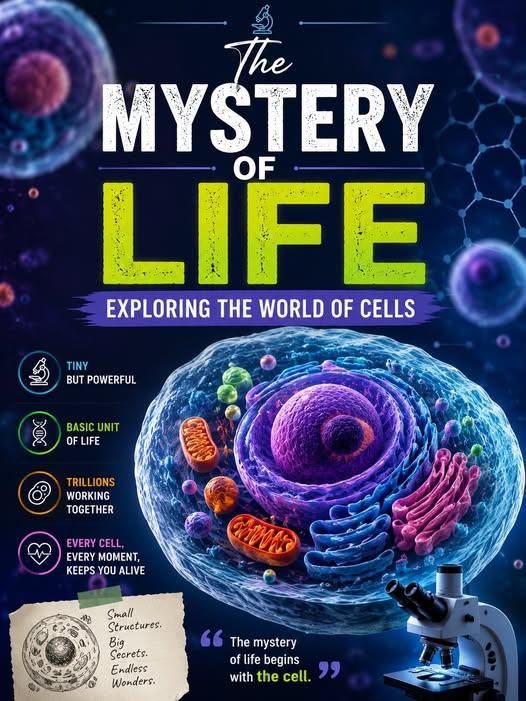
    Story Post Topic: **The Mystery of Life: Exploring the World of Cells** ak
    Have you ever wondered what makes us alive?
    The answer lies in something incredibly tiny: **cells!**
    Cells are the basic building blocks of all living things. Our bodies contain trillions of cells, and each one has an important job. Some cells help us move, some carry oxygen, some protect us from diseases, and others help our bodies grow and repair themselves.
    Inside every cell is a fascinating world. The **nucleus** acts like the control center, while tiny structures called **organelles** perform different tasks to keep the cell working.
    Even though cells are too small to see with our naked eyes, they are responsible for everything that makes life possible.
    So, the next time you look at yourself, remember: an amazing microscopic world is working inside you every second!
    **The mystery of life begins with the cell.**
    ### Moral Lesson
    Sometimes, the smallest things can have the biggest impact. Just as tiny cells work together to create and maintain life, our small efforts, actions, and contributions can come together to create something meaningful. **Never underestimate the power of small beginnings.**
    ### Hashtags
    #TheMysteryOfLife #ExploringCells #Cells #CellBiology #Biology #Science #ScienceEducation #LearnScience #BiologyFacts #HumanBody #MicroscopicWorld #LifeScience #ScienceFacts #Education #Learning #Knowledge #DiscoverScience #ExploreScience #StudentLife #ScienceLovers #NeverStopLearning #SmallBeginnings
    RSIF8 Roll no: 99 Story Post No: 7 Story Post Topic: **The Mystery of Life: Exploring the World of Cells** 🧬ak Have you ever wondered what makes us alive? The answer lies in something incredibly tiny: **cells!** Cells are the basic building blocks of all living things. Our bodies contain trillions of cells, and each one has an important job. Some cells help us move, some carry oxygen, some protect us from diseases, and others help our bodies grow and repair themselves. Inside every cell is a fascinating world. The **nucleus** acts like the control center, while tiny structures called **organelles** perform different tasks to keep the cell working. Even though cells are too small to see with our naked eyes, they are responsible for everything that makes life possible. So, the next time you look at yourself, remember: an amazing microscopic world is working inside you every second! 🌱🔬 **The mystery of life begins with the cell.** ### 🌟 Moral Lesson Sometimes, the smallest things can have the biggest impact. Just as tiny cells work together to create and maintain life, our small efforts, actions, and contributions can come together to create something meaningful. **Never underestimate the power of small beginnings.** ### 🏷️ Hashtags #TheMysteryOfLife #ExploringCells #Cells #CellBiology #Biology #Science #ScienceEducation #LearnScience #BiologyFacts #HumanBody #MicroscopicWorld #LifeScience #ScienceFacts #Education #Learning #Knowledge #DiscoverScience #ExploreScience #StudentLife #ScienceLovers #NeverStopLearning #SmallBeginnings
    0 Yorumlar 0 hisse senetleri 40 Views
  • #rsisb
    Roll no 248
    Foudation level
    song no 23
    **Energy and Power: The Invisible Forces That Shape Our World**

    Energy and power are everywhere around us—even though we cannot always see them! From the sunlight that warms our planet to the electricity that lights our homes , energy makes life and technology possible.

    In this exciting topic, we explore how energy is transferred, how power measures the rate at which work is done, and how these invisible forces drive everything from machines to living organisms and modern technology .

    Let’s discover the science behind the forces that keep our world moving, working, and changing!

    #Energy #Power #Physics #Science #EnergyAndPower #STEM #Learning #ScienceEducation #Technology #PhysicsForStudents #ExploreScience #KnowledgeIsPower
    #rsisb Roll no 248 Foudation level song no 23 ⚡🌍 **Energy and Power: The Invisible Forces That Shape Our World** 🔋💡 Energy and power are everywhere around us—even though we cannot always see them! From the sunlight that warms our planet ☀️ to the electricity that lights our homes 💡, energy makes life and technology possible. In this exciting topic, we explore how energy is transferred, how power measures the rate at which work is done, and how these invisible forces drive everything from machines 🚗 to living organisms 🌱 and modern technology 🤖. Let’s discover the science behind the forces that keep our world moving, working, and changing! 🚀🔬 #Energy ⚡ #Power 💪 #Physics 🔬 #Science 🌍 #EnergyAndPower 🔋 #STEM 🚀 #Learning 📚 #ScienceEducation 🧠 #Technology 🤖 #PhysicsForStudents 🎓 #ExploreScience 🔎 #KnowledgeIsPower 💡
    0 Yorumlar 0 hisse senetleri 119 Views
  • Fondation Level Batch No 4
    Roll RSLC #42
    Task No #132
    Day #132

    Peering Inside: The Role of Dissections in Understanding Life

    Ali was a curious student who loved learning about biology. One day, his teacher introduced the class to dissection and explained how carefully studying internal structures can help us understand how living organisms function. Ali had always relied on textbook pictures, so he was surprised to see how complex and organized the structures were in reality. As he observed carefully, he began connecting the practical experience with everything he had previously learned in class.

    During the lesson, Ali noticed that every organ had a particular shape and purpose. He realized that the body works like a carefully organized system, where different parts depend on one another. Instead of simply memorizing names, he started asking questions and searching for explanations. His teacher encouraged him to observe patiently and reminded him that good science requires curiosity, responsibility, and respect for life.

    After the lesson, Ali understood that true learning does not always come from reading a book. Sometimes, we learn more deeply when we observe, investigate, and experience things carefully. The dissection lesson had changed the way he looked at biology because he could now understand the connection between theory and real structures. He became more interested in discovering how life works and wanted to continue exploring the mysteries of science.

    As Ali walked home, he thought about what his teacher had said: ?Never stop asking questions.? He realized that the world contains many hidden details, and understanding them requires patience and an open mind. The experience taught him that knowledge grows when curiosity leads us to explore responsibly. From that day forward, Ali promised himself that he would not just memorize information but would always try to understand the reason behind it.

    Moral Lesson: True knowledge comes from curiosity, careful observation, and the courage to look beyond the surface. When we ask questions and explore responsibly, even the smallest discovery can teach us something valuable about life.

    #HumanBody #Dissection #Anatomy #Biology #MedicalScience #ScienceEdu
    Fondation Level Batch No 4 Roll RSLC #42 Task No #132 Day #132 Peering Inside: The Role of Dissections in Understanding Life Ali was a curious student who loved learning about biology. One day, his teacher introduced the class to dissection and explained how carefully studying internal structures can help us understand how living organisms function. Ali had always relied on textbook pictures, so he was surprised to see how complex and organized the structures were in reality. As he observed carefully, he began connecting the practical experience with everything he had previously learned in class. During the lesson, Ali noticed that every organ had a particular shape and purpose. He realized that the body works like a carefully organized system, where different parts depend on one another. Instead of simply memorizing names, he started asking questions and searching for explanations. His teacher encouraged him to observe patiently and reminded him that good science requires curiosity, responsibility, and respect for life. After the lesson, Ali understood that true learning does not always come from reading a book. Sometimes, we learn more deeply when we observe, investigate, and experience things carefully. The dissection lesson had changed the way he looked at biology because he could now understand the connection between theory and real structures. He became more interested in discovering how life works and wanted to continue exploring the mysteries of science. As Ali walked home, he thought about what his teacher had said: ?Never stop asking questions.? He realized that the world contains many hidden details, and understanding them requires patience and an open mind. The experience taught him that knowledge grows when curiosity leads us to explore responsibly. From that day forward, Ali promised himself that he would not just memorize information but would always try to understand the reason behind it. Moral Lesson: True knowledge comes from curiosity, careful observation, and the courage to look beyond the surface. When we ask questions and explore responsibly, even the smallest discovery can teach us something valuable about life. #HumanBody #Dissection #Anatomy #Biology #MedicalScience #ScienceEdu
    0 Yorumlar 0 hisse senetleri 96 Views
  • Fondation Level Batch No 4
    Roll RSLC #42
    Task No #146
    Day #146

    # The Ethics and Education of Animal Dissections

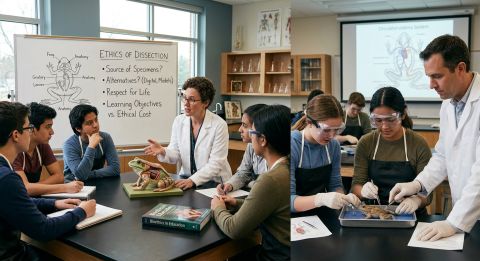
    On a bright Monday morning, Sara entered her biology classroom with excitement and curiosity. Her teacher, Ms. Helen, announced that the students would be learning about animal anatomy through a dissection lesson. Sara had always wanted to understand how living bodies worked, but she also wondered whether using animals for education was the right choice. Before beginning, Ms. Helen reminded the class that science was not only about discovering facts?it was also about making responsible and ethical decisions.

    During the lesson, Sara carefully observed the specimen and began to understand how different organs worked together. However, Ms. Helen explained that animals should never be treated as ordinary objects. They were living beings and deserved respect. She told the students that every use of an animal in education should have a clear purpose and that unnecessary harm should always be avoided.

    One student asked, ?Can we learn anatomy without using real animals?? Ms. Helen explained that modern technology now offers alternatives such as virtual dissections, 3D models, computer simulations, and artificial specimens. These methods can help students understand anatomy while reducing the need for animal use. Sara realized that scientific progress was not only about learning more, but also about finding kinder and more responsible ways to learn.

    At the end of the lesson, Sara wrote in her notebook, ?True science seeks knowledge without forgetting kindness.? She understood that education should develop knowledge, compassion, responsibility, and respect. From that day forward, she looked at science differently and realized that the best discoveries are those that help us understand life while also teaching us to value it.

    ## Moral Lesson

    **True education combines knowledge with compassion. Science should seek understanding while respecting life and choosing ethical ways to learn whenever possible.**

    #AnimalDissection #EthicsInScience #BiologyEducation #AnimalWelfare #ScienceEducation #EthicalLearning
    Fondation Level Batch No 4 Roll RSLC #42 Task No #146 Day #146 # The Ethics and Education of Animal Dissections On a bright Monday morning, Sara entered her biology classroom with excitement and curiosity. Her teacher, Ms. Helen, announced that the students would be learning about animal anatomy through a dissection lesson. Sara had always wanted to understand how living bodies worked, but she also wondered whether using animals for education was the right choice. Before beginning, Ms. Helen reminded the class that science was not only about discovering facts?it was also about making responsible and ethical decisions. During the lesson, Sara carefully observed the specimen and began to understand how different organs worked together. However, Ms. Helen explained that animals should never be treated as ordinary objects. They were living beings and deserved respect. She told the students that every use of an animal in education should have a clear purpose and that unnecessary harm should always be avoided. One student asked, ?Can we learn anatomy without using real animals?? Ms. Helen explained that modern technology now offers alternatives such as virtual dissections, 3D models, computer simulations, and artificial specimens. These methods can help students understand anatomy while reducing the need for animal use. Sara realized that scientific progress was not only about learning more, but also about finding kinder and more responsible ways to learn. At the end of the lesson, Sara wrote in her notebook, ?True science seeks knowledge without forgetting kindness.? She understood that education should develop knowledge, compassion, responsibility, and respect. From that day forward, she looked at science differently and realized that the best discoveries are those that help us understand life while also teaching us to value it. ## Moral Lesson **True education combines knowledge with compassion. Science should seek understanding while respecting life and choosing ethical ways to learn whenever possible.** #AnimalDissection #EthicsInScience #BiologyEducation #AnimalWelfare #ScienceEducation #EthicalLearning
    0 Yorumlar 0 hisse senetleri 77 Views
  • Fondation Level Batch No 4
    Roll RSLC #42
    Task No #153
    Day #153

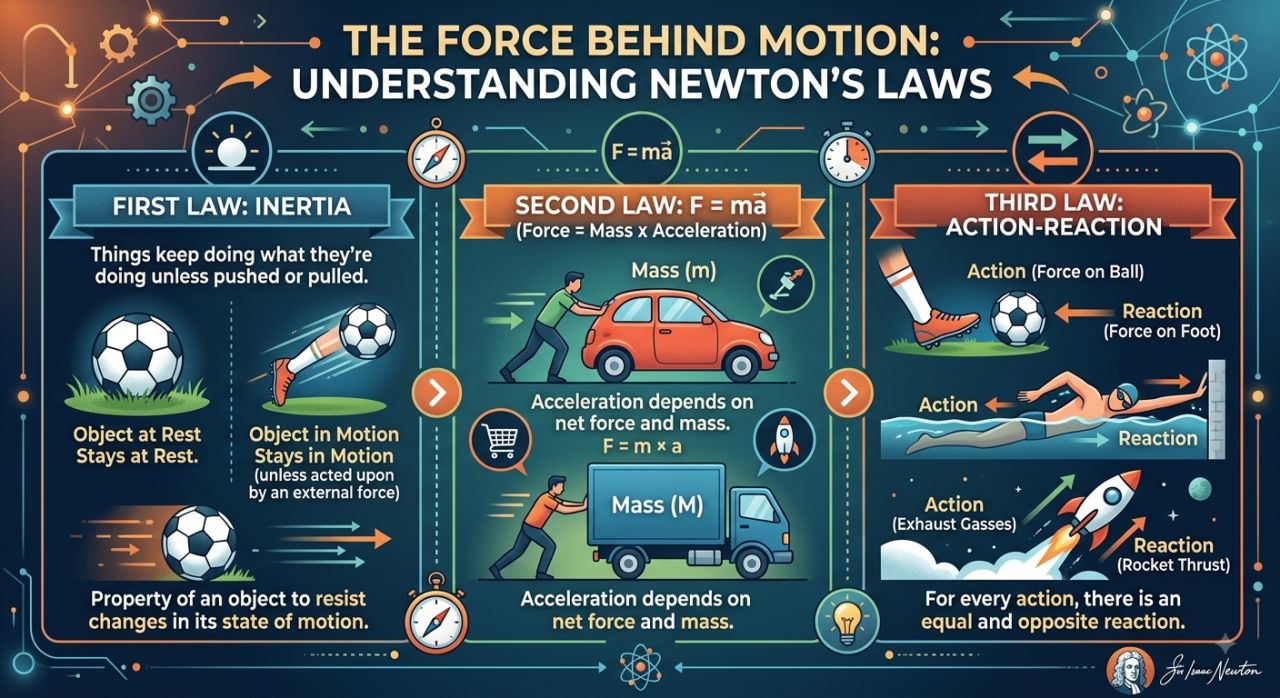
    One bright morning, Adam was playing in a park when he noticed a football resting quietly on the grass. He gently kicked the ball, and it suddenly began rolling across the field. Curious, Adam wondered why the ball had moved only after he kicked it. His teacher explained that this was connected to Newton?s First Law of Motion. An object remains at rest or keeps moving in the same way unless an external force changes its motion. Adam realized that even a simple kick could demonstrate an important scientific principle. From that moment, he became interested in discovering the forces behind everyday movement.

    Adam then decided to test how different objects responded to force. He pushed a light ball and a heavier ball with similar strength and noticed that the lighter ball moved more easily. His teacher explained Newton?s Second Law, which connects force, mass, and acceleration. Adam learned that applying more force can produce a greater change in an object?s motion. He also discovered that heavier objects usually need more force to achieve the same acceleration. Suddenly, pushing a bicycle, moving a box, or kicking a ball seemed much more interesting to him. He understood that forces were constantly influencing the world around him.

    Later, Adam threw a ball against a wall and watched it bounce back toward him. His teacher explained that this was an example of Newton?s Third Law of Motion. Whenever one object applies a force to another object, an equal and opposite force acts back. Adam realized that this principle could be seen when people walk, jump, swim, or ride a bicycle. When his feet pushed the ground backward, the ground pushed him forward. He also learned that rockets move upward by pushing gases downward at high speed. Newton?s Third Law suddenly made many everyday movements easier for Adam to understand.

    By the end of the day, Adam realized that Newton?s laws were much more than formulas in a science book. They were powerful principles that explained how objects move, stop, accelerate, and interact with one another. He could see examples of them in cars, bicycles, sports, falling objects, machines, and even rockets traveling into space. The world around him suddenly looked like a fascinating laboratory filled with invisible forces. Adam understood that physics helps us discover the rules behind ordinary events. From a simple football rolling across the grass to a spacecraft leaving Earth, Newton?s laws tell an amazing story about the force behind motion.

    #NewtonLaws #Physics #ForceAndMotion #NewtonianPhysics #ScienceEducation #PhysicsExplained #LearningScience
    Fondation Level Batch No 4 Roll RSLC #42 Task No #153 Day #153 One bright morning, Adam was playing in a park when he noticed a football resting quietly on the grass. He gently kicked the ball, and it suddenly began rolling across the field. Curious, Adam wondered why the ball had moved only after he kicked it. His teacher explained that this was connected to Newton?s First Law of Motion. An object remains at rest or keeps moving in the same way unless an external force changes its motion. Adam realized that even a simple kick could demonstrate an important scientific principle. From that moment, he became interested in discovering the forces behind everyday movement. Adam then decided to test how different objects responded to force. He pushed a light ball and a heavier ball with similar strength and noticed that the lighter ball moved more easily. His teacher explained Newton?s Second Law, which connects force, mass, and acceleration. Adam learned that applying more force can produce a greater change in an object?s motion. He also discovered that heavier objects usually need more force to achieve the same acceleration. Suddenly, pushing a bicycle, moving a box, or kicking a ball seemed much more interesting to him. He understood that forces were constantly influencing the world around him. Later, Adam threw a ball against a wall and watched it bounce back toward him. His teacher explained that this was an example of Newton?s Third Law of Motion. Whenever one object applies a force to another object, an equal and opposite force acts back. Adam realized that this principle could be seen when people walk, jump, swim, or ride a bicycle. When his feet pushed the ground backward, the ground pushed him forward. He also learned that rockets move upward by pushing gases downward at high speed. Newton?s Third Law suddenly made many everyday movements easier for Adam to understand. By the end of the day, Adam realized that Newton?s laws were much more than formulas in a science book. They were powerful principles that explained how objects move, stop, accelerate, and interact with one another. He could see examples of them in cars, bicycles, sports, falling objects, machines, and even rockets traveling into space. The world around him suddenly looked like a fascinating laboratory filled with invisible forces. Adam understood that physics helps us discover the rules behind ordinary events. From a simple football rolling across the grass to a spacecraft leaving Earth, Newton?s laws tell an amazing story about the force behind motion. #NewtonLaws #Physics #ForceAndMotion #NewtonianPhysics #ScienceEducation #PhysicsExplained #LearningScience
    0 Yorumlar 0 hisse senetleri 106 Views
  • #rsisb
    Roll No.240
    Image With Chatgpt No.6
    Foundation Level

    Oxygen is one of the most important elements for life on Earth, but its discovery was the result of careful experiments, curiosity, and scientific investigation.

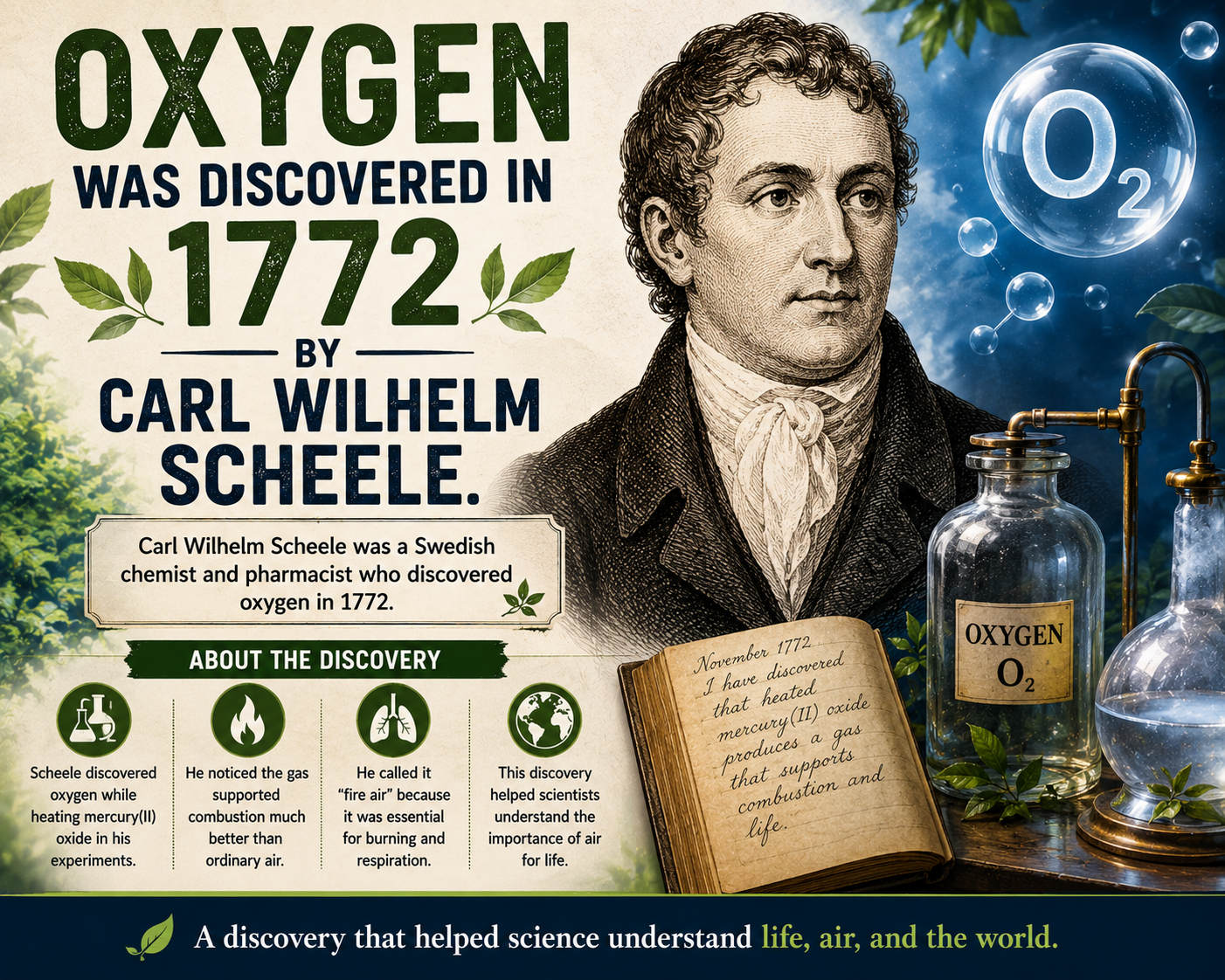
    In 1772, Swedish chemist and pharmacist Carl Wilhelm Scheele identified a gas that behaved differently from ordinary air. He found that this gas strongly supported combustion and played an important role in the processes we now understand as respiration and burning.

    Scheele referred to the gas as “fire air” because of its ability to support combustion. His experiments helped reveal that air was not simply one single substance, but a mixture containing different gases.

    The story of oxygen’s discovery is a fascinating example of how science develops through observation and experimentation. Scientists investigate materials, record their observations, test ideas, and gradually build a better understanding of the natural world.

    Although Scheele discovered oxygen independently, the recognition and naming of oxygen as an element also involved other scientists, including Joseph Priestley and Antoine Lavoisier. Their work helped establish oxygen’s role in combustion and contributed to the development of modern chemistry.

    Oxygen is represented by the chemical symbol O and has the atomic number 8. It is essential for aerobic respiration in humans and many other organisms. Without oxygen, most familiar forms of complex life could not survive.

    The discovery of oxygen changed the way scientists understood air, combustion, chemistry, and life. It became an important part of the scientific revolution in chemistry and helped researchers develop a much clearer understanding of chemical reactions.

    This story also reminds us that major scientific discoveries often happen through patience, careful observation, and a willingness to ask questions. Every experiment can reveal something new, and every discovery can open the door to further knowledge.

    From “fire air” to oxygen, the journey of discovery changed chemistry forever.

    Science teaches us that the world around us is full of mysteries waiting to be explored. Whether studying gases, atoms, cells, planets, or living organisms, curiosity is often the first step toward discovery.

    Question. Observe. Experiment. Discover. Learn.

    #Oxygen #DiscoveryOfOxygen #CarlWilhelmScheele #ScienceHistory #HistoryOfScience #Chemistry #ChemicalElements #OxygenDiscovery #1772 #ScientificDiscovery #ScienceEducation #ChemistryFacts #ScienceFacts #LearnScience #ScientificRevolution #Combustion #Air #Respiration #ChemistryHistory #STEM #Education #LearningJourney #ScienceExperiment #ScientificThinking #Research #Discovery #Knowledge #Innovation #Curiosity #ExploreScience #ScienceLovers #EducationalContent #Scientists #ChemicalScience #ModernChemistry #ScienceJourney #HistoryOfChemistry

    Rehan School Islamabad Campus
    Asma Shaheen EducationWali
    Irum Asim
    Saima Happinesswali

    #rsisb Roll No.240 Image With Chatgpt No.6 Foundation Level Oxygen is one of the most important elements for life on Earth, but its discovery was the result of careful experiments, curiosity, and scientific investigation. 🌱🫁🔥 In 1772, Swedish chemist and pharmacist Carl Wilhelm Scheele identified a gas that behaved differently from ordinary air. He found that this gas strongly supported combustion and played an important role in the processes we now understand as respiration and burning. 🔥🧪 Scheele referred to the gas as “fire air” because of its ability to support combustion. His experiments helped reveal that air was not simply one single substance, but a mixture containing different gases. 🌬️🔬 The story of oxygen’s discovery is a fascinating example of how science develops through observation and experimentation. Scientists investigate materials, record their observations, test ideas, and gradually build a better understanding of the natural world. 📚🔎💡 Although Scheele discovered oxygen independently, the recognition and naming of oxygen as an element also involved other scientists, including Joseph Priestley and Antoine Lavoisier. Their work helped establish oxygen’s role in combustion and contributed to the development of modern chemistry. ⚗️🧠🌍 Oxygen is represented by the chemical symbol O and has the atomic number 8. It is essential for aerobic respiration in humans and many other organisms. 🫁🌿🐾 Without oxygen, most familiar forms of complex life could not survive. The discovery of oxygen changed the way scientists understood air, combustion, chemistry, and life. 🌎🔥🔬 It became an important part of the scientific revolution in chemistry and helped researchers develop a much clearer understanding of chemical reactions. This story also reminds us that major scientific discoveries often happen through patience, careful observation, and a willingness to ask questions. 💭➡️🔬➡️💡 Every experiment can reveal something new, and every discovery can open the door to further knowledge. ✨ From “fire air” to oxygen, the journey of discovery changed chemistry forever. ✨ Science teaches us that the world around us is full of mysteries waiting to be explored. 🌍🔎 Whether studying gases, atoms, cells, planets, or living organisms, curiosity is often the first step toward discovery. 🚀📚 🌟 Question. Observe. Experiment. Discover. Learn. 🌟 #Oxygen #DiscoveryOfOxygen #CarlWilhelmScheele #ScienceHistory #HistoryOfScience #Chemistry #ChemicalElements #OxygenDiscovery #1772 #ScientificDiscovery #ScienceEducation #ChemistryFacts #ScienceFacts #LearnScience #ScientificRevolution #Combustion #Air #Respiration #ChemistryHistory #STEM #Education #LearningJourney #ScienceExperiment #ScientificThinking #Research #Discovery #Knowledge #Innovation #Curiosity #ExploreScience #ScienceLovers #EducationalContent #Scientists #ChemicalScience #ModernChemistry #ScienceJourney #HistoryOfChemistry 🔬🧪🌍🔥🫁📚💡✨🚀🌱 Rehan School Islamabad Campus Asma Shaheen EducationWali Irum Asim Saima Happinesswali
    0 Yorumlar 0 hisse senetleri 1388 Views
  • #rsisb
    Roll No.240
    Image With Chatgpt No.5
    Foundation Level

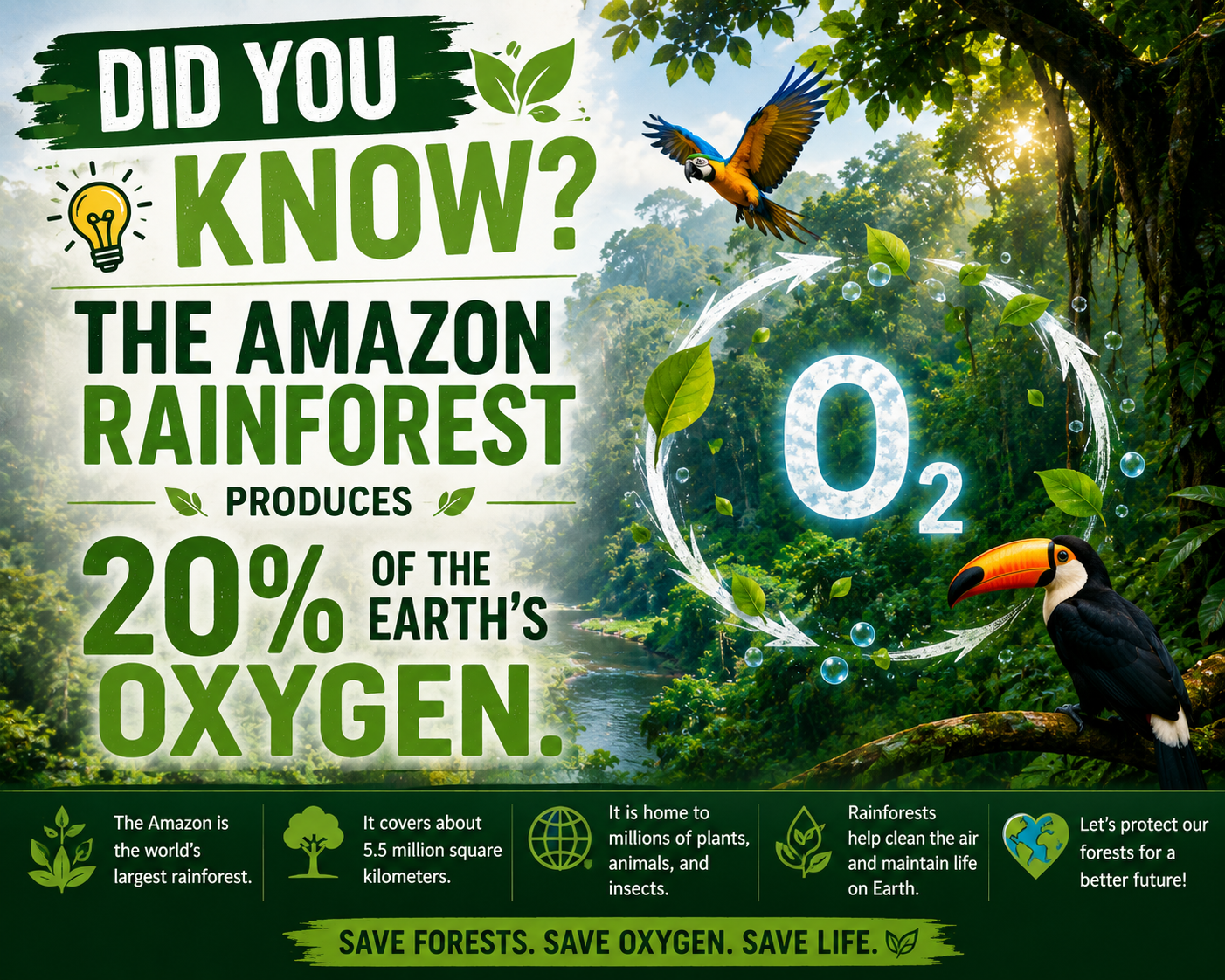
    The Amazon Rainforest is one of the most extraordinary natural environments on our planet. Stretching across a vast area of South America, it is home to an incredible variety of plants, animals, insects, birds, and microorganisms.

    The rainforest is often called the “lungs of the world,” because its plants produce oxygen through photosynthesis and the ecosystem plays an important role in absorbing and storing carbon dioxide. However, the commonly repeated claim that the Amazon produces 20% of the world’s oxygen is misleading. Much of the oxygen produced by plants is also consumed by plants, animals, fungi, and microorganisms within the ecosystem.

    What makes the Amazon truly remarkable is its biodiversity. From colorful macaws flying through the canopy to jaguars moving through the forest, countless species depend on this habitat for food, shelter, and survival.

    The rainforest also has an important role in the global carbon cycle and climate system. Trees and vegetation absorb large amounts of carbon dioxide, storing carbon in plants and soils. This makes protecting healthy forests important for the environment and for communities that depend on them.

    Every part of the Amazon ecosystem is connected. When forests are damaged or destroyed, the effects can spread through habitats, wildlife populations, water systems, and climate processes.

    Learning about the Amazon teaches us an important lesson: protecting nature means protecting the systems that support life. Conservation, responsible land use, reducing deforestation, and caring for biodiversity can all help preserve this extraordinary ecosystem for future generations.

    Explore the rainforest. Discover its biodiversity. Understand its importance. Protect our planet.

    The Amazon is more than just a forest—it is a living, interconnected world filled with life, discovery, and natural wonder.

    #AmazonRainforest #Amazon #Rainforest #DidYouKnow #Nature #Biodiversity #Wildlife #Environment #Earth #PlanetEarth #Forest #TropicalRainforest #Ecology #Science #Biology #ScienceEducation #EnvironmentalEducation #WildlifeConservation #ForestConservation #ProtectNature #SaveTheRainforest #Climate #CarbonCycle #Ecosystem #NaturalWorld #NatureLovers #ExploreNature #EarthScience #LearningJourney #EducationalContent #ScienceFacts #BiodiversityMatters #EverySpeciesCounts #ProtectOurPlanet

    Rehan School Islamabad Campus
    Asma Shaheen EducationWali
    Irum Asim
    Saima Happinesswali

    #rsisb Roll No.240 Image With Chatgpt No.5 Foundation Level The Amazon Rainforest is one of the most extraordinary natural environments on our planet. Stretching across a vast area of South America, it is home to an incredible variety of plants, animals, insects, birds, and microorganisms. 🌎🌱🐒🦋 The rainforest is often called the “lungs of the world,” because its plants produce oxygen through photosynthesis and the ecosystem plays an important role in absorbing and storing carbon dioxide. However, the commonly repeated claim that the Amazon produces 20% of the world’s oxygen is misleading. Much of the oxygen produced by plants is also consumed by plants, animals, fungi, and microorganisms within the ecosystem. What makes the Amazon truly remarkable is its biodiversity. 🌿🐢🐍🦜🐆 From colorful macaws flying through the canopy to jaguars moving through the forest, countless species depend on this habitat for food, shelter, and survival. The rainforest also has an important role in the global carbon cycle and climate system. Trees and vegetation absorb large amounts of carbon dioxide, storing carbon in plants and soils. 🌱🌍 This makes protecting healthy forests important for the environment and for communities that depend on them. Every part of the Amazon ecosystem is connected. 🌳➡️🦋➡️🐦➡️🐆 When forests are damaged or destroyed, the effects can spread through habitats, wildlife populations, water systems, and climate processes. Learning about the Amazon teaches us an important lesson: protecting nature means protecting the systems that support life. 💚🌎 Conservation, responsible land use, reducing deforestation, and caring for biodiversity can all help preserve this extraordinary ecosystem for future generations. ✨ Explore the rainforest. Discover its biodiversity. Understand its importance. Protect our planet. 🌿🔬🌍 The Amazon is more than just a forest—it is a living, interconnected world filled with life, discovery, and natural wonder. 🌳💚🦜 #AmazonRainforest #Amazon #Rainforest #DidYouKnow #Nature #Biodiversity #Wildlife #Environment #Earth #PlanetEarth #Forest #TropicalRainforest #Ecology #Science #Biology #ScienceEducation #EnvironmentalEducation #WildlifeConservation #ForestConservation #ProtectNature #SaveTheRainforest #Climate #CarbonCycle #Ecosystem #NaturalWorld #NatureLovers #ExploreNature #EarthScience #LearningJourney #EducationalContent #ScienceFacts #BiodiversityMatters #EverySpeciesCounts #ProtectOurPlanet 🌎🌿🌳🦜🐆🐢 Rehan School Islamabad Campus Asma Shaheen EducationWali Irum Asim Saima Happinesswali
    0 Yorumlar 0 hisse senetleri 1513 Views
  • #rsisb
    Roll No.240
    Story Post No.24
    Foundation Level

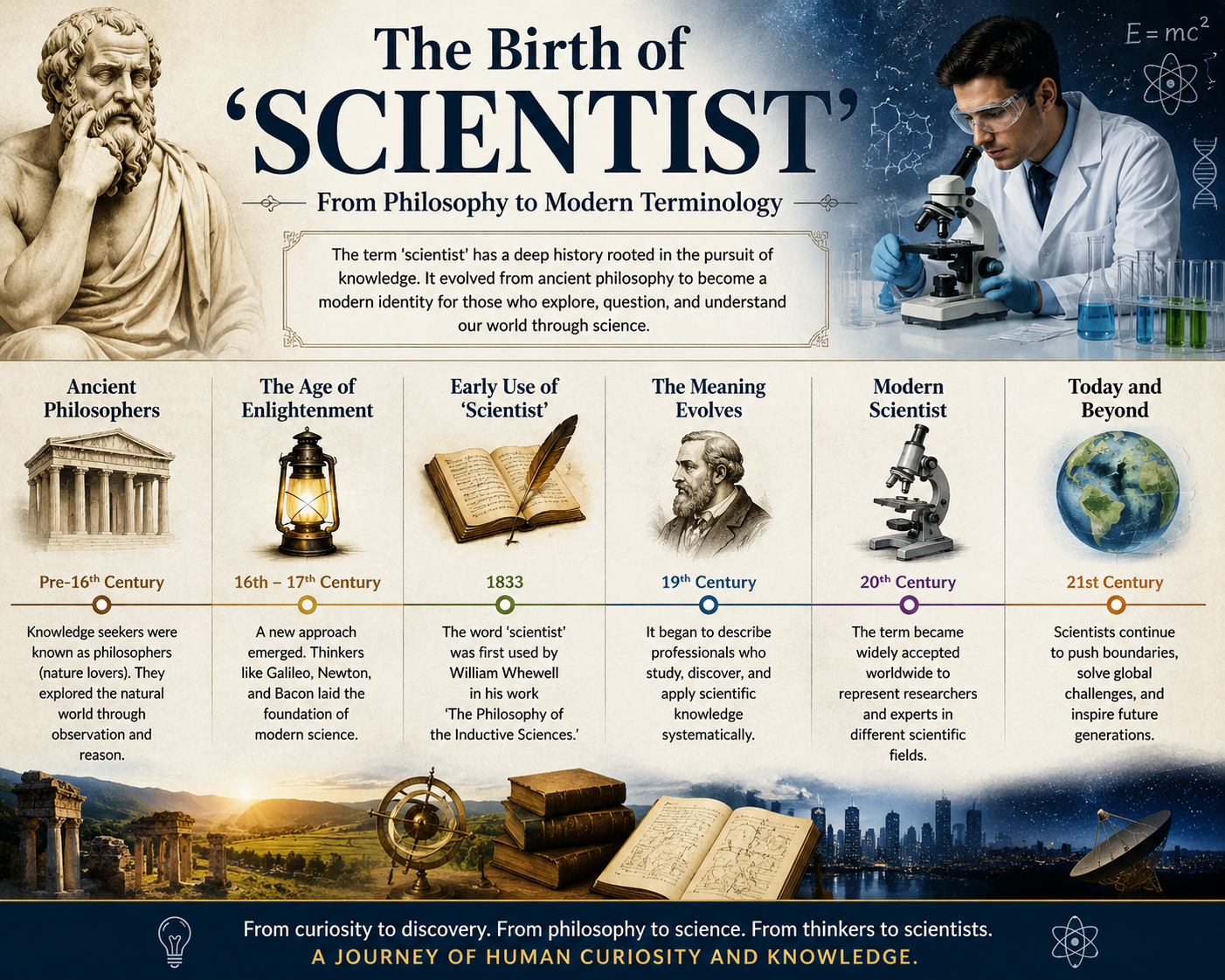
    The word “scientist” may sound like a modern term, but the journey behind it is connected to centuries of human curiosity, philosophy, observation, experimentation, and the search for knowledge.

    Long before the word “scientist” became common, people who studied the natural world were often known as philosophers, scholars, natural philosophers, mathematicians, and thinkers. They asked important questions about nature, the universe, life, matter, motion, and the world around them.

    From the thinkers of the ancient world to the scholars of the Renaissance and the Scientific Revolution, humans continued developing new ways to understand nature. Observation became more important, experiments became more systematic, and evidence gradually became a central part of scientific inquiry.

    During the 18th and 19th centuries, many different branches of knowledge began becoming more specialized. Physics, chemistry, biology, astronomy, geology, and other fields developed their own methods, discoveries, and communities of researchers.

    A major moment in terminology came in the 19th century, when the word “scientist” was introduced as a useful name for people engaged in scientific study. The term is widely associated with William Whewell, who used it in 1833. This helped provide a new, unified word for researchers working across different areas of science.

    The evolution of this word reflects something bigger than language. It represents the changing way humanity organized knowledge and recognized scientific work. The transition from “natural philosopher” to “scientist” shows how science gradually became a distinct and organized field of study.

    Today, scientists work in laboratories, universities, hospitals, observatories, research centers, engineering facilities, and many other places around the world. They investigate everything from tiny cells and molecules to distant galaxies and the origins of the universe.

    Modern science continues to grow through curiosity, evidence, teamwork, technology, and a willingness to ask difficult questions. Every discovery begins with someone wondering, “Why?”, “How?”, or “What if?”

    The story of the word “scientist” reminds us that human knowledge is always evolving. What began with simple curiosity and philosophical questioning gradually developed into the powerful and diverse scientific world we know today.

    From thinkers to researchers. From philosophy to science. From questions to discoveries.

    Science is not only about finding answers—it is also about continuing to ask better questions.

    A journey from curiosity to discovery, and from philosophy to modern science.

    #TheBirthOfScientist #Scientist #HistoryOfScience #ScienceHistory #ScientificRevolution #Philosophy #NaturalPhilosophy #WilliamWhewell #1833 #ModernScience #ScienceEducation #ScientificTerminology #Science #Scientists #Research #Discovery #Curiosity #Knowledge #Learning #Education #STEM #Physics #Chemistry #Biology #Astronomy #Geology #Innovation #Experimentation #ScientificThinking #CriticalThinking #HumanKnowledge #HistoryOfKnowledge #ScienceJourney #FromPhilosophyToScience #ScienceFacts #EducationalContent #LearningJourney #ExploreScience #DiscoverScience

    Rehan School Islamabad Campus
    Asma Shaheen EducationWali
    Irum Asim
    Saima Happinesswali

    #rsisb Roll No.240 Story Post No.24 Foundation Level The word “scientist” may sound like a modern term, but the journey behind it is connected to centuries of human curiosity, philosophy, observation, experimentation, and the search for knowledge. 🧠🔎 Long before the word “scientist” became common, people who studied the natural world were often known as philosophers, scholars, natural philosophers, mathematicians, and thinkers. 🏛️📜 They asked important questions about nature, the universe, life, matter, motion, and the world around them. From the thinkers of the ancient world to the scholars of the Renaissance and the Scientific Revolution, humans continued developing new ways to understand nature. 🌌🌍📖 Observation became more important, experiments became more systematic, and evidence gradually became a central part of scientific inquiry. 🔬🧪✨ During the 18th and 19th centuries, many different branches of knowledge began becoming more specialized. Physics, chemistry, biology, astronomy, geology, and other fields developed their own methods, discoveries, and communities of researchers. 🧬⚗️🌠 A major moment in terminology came in the 19th century, when the word “scientist” was introduced as a useful name for people engaged in scientific study. The term is widely associated with William Whewell, who used it in 1833. 📜🔬 This helped provide a new, unified word for researchers working across different areas of science. The evolution of this word reflects something bigger than language. It represents the changing way humanity organized knowledge and recognized scientific work. 🌟📚 The transition from “natural philosopher” to “scientist” shows how science gradually became a distinct and organized field of study. Today, scientists work in laboratories, universities, hospitals, observatories, research centers, engineering facilities, and many other places around the world. 🌍🧪🔭 They investigate everything from tiny cells and molecules to distant galaxies and the origins of the universe. 🧬🦠🌌 Modern science continues to grow through curiosity, evidence, teamwork, technology, and a willingness to ask difficult questions. 💡🤝🚀 Every discovery begins with someone wondering, “Why?”, “How?”, or “What if?” The story of the word “scientist” reminds us that human knowledge is always evolving. What began with simple curiosity and philosophical questioning gradually developed into the powerful and diverse scientific world we know today. 🌱➡️🔬➡️🌍 ✨ From thinkers to researchers. From philosophy to science. From questions to discoveries. ✨ Science is not only about finding answers—it is also about continuing to ask better questions. 🔎💡 🌟 A journey from curiosity to discovery, and from philosophy to modern science. 🌟 #TheBirthOfScientist #Scientist #HistoryOfScience #ScienceHistory #ScientificRevolution #Philosophy #NaturalPhilosophy #WilliamWhewell #1833 #ModernScience #ScienceEducation #ScientificTerminology #Science #Scientists #Research #Discovery #Curiosity #Knowledge #Learning #Education #STEM #Physics #Chemistry #Biology #Astronomy #Geology #Innovation #Experimentation #ScientificThinking #CriticalThinking #HumanKnowledge #HistoryOfKnowledge #ScienceJourney #FromPhilosophyToScience #ScienceFacts #EducationalContent #LearningJourney #ExploreScience #DiscoverScience 🔬📚🧠🌍✨🔭🧪🚀💡🌟 Rehan School Islamabad Campus Asma Shaheen EducationWali Irum Asim Saima Happinesswali

    0 Yorumlar 0 hisse senetleri 1517 Views
  • #rsisb
    Roll No.240
    Story No.23
    Foundation Level

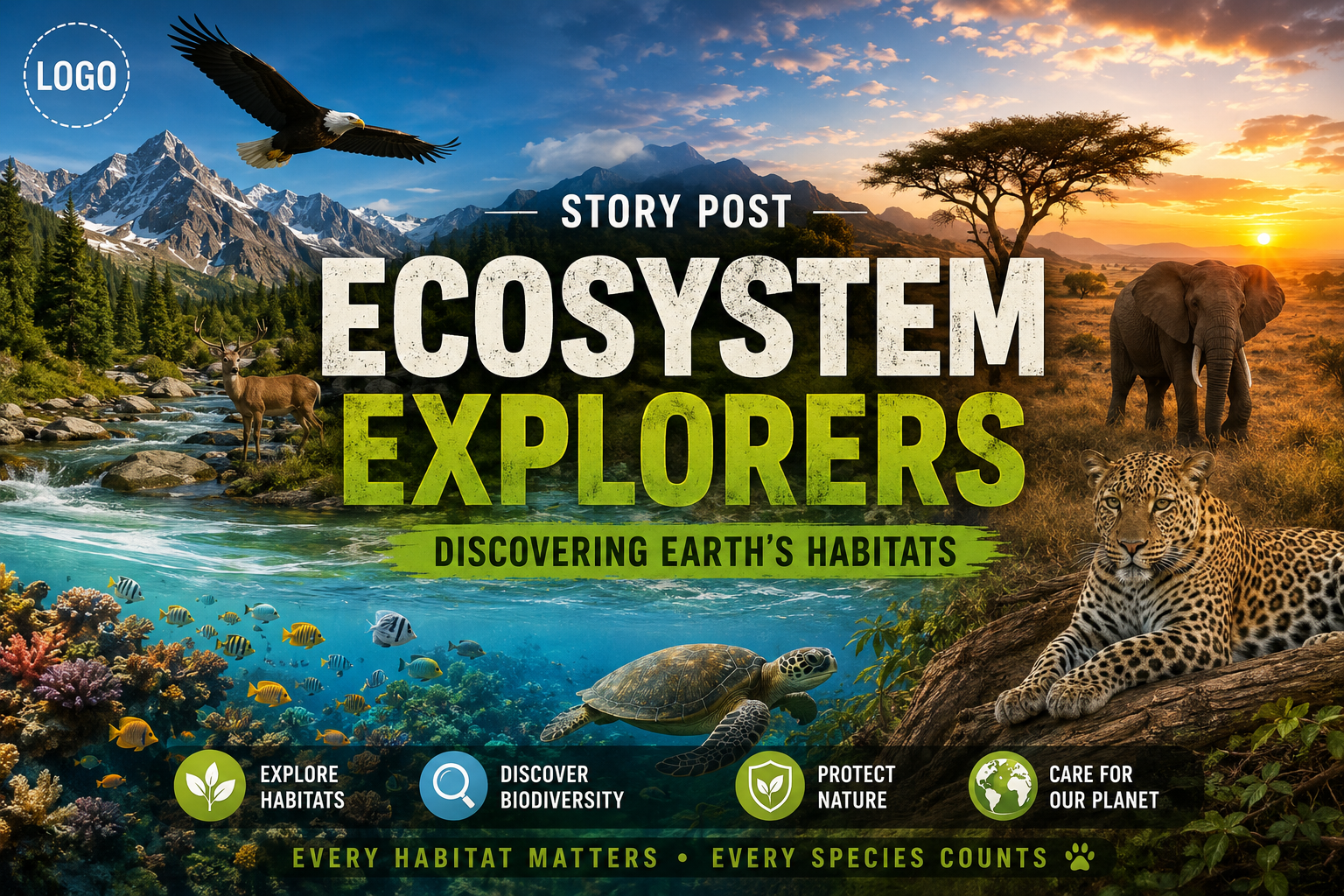
    Every corner of our planet is home to an amazing variety of life, from the highest mountains and deepest oceans to vast forests, peaceful rivers, colorful wetlands, and dry deserts. Each habitat has its own unique environment, plants, animals, and natural systems that work together to support life.

    In **“Ecosystem Explorers: Discovering Earth’s Habitats,”** we take an exciting journey across different ecosystems to discover how living organisms interact with their surroundings. We explore the beauty of forests, the mystery of oceans, the strength of mountain ecosystems, the unique life of deserts, and the importance of freshwater habitats.

    Every ecosystem tells a different story. A forest provides shelter and food for countless species, oceans support incredible marine life, deserts show how animals and plants can adapt to challenging conditions, and wetlands play an important role in maintaining healthy environments.

    This journey helps us understand the importance of **biodiversity** and why every species matters. Even the smallest organisms can have an important role in maintaining the balance of an ecosystem. When one part of an ecosystem changes, it can affect many other living things.

    Learning about habitats is not just about discovering animals and plants. It is also about understanding our responsibility toward nature. By protecting forests, keeping rivers and oceans clean, reducing pollution, conserving wildlife, and respecting natural habitats, we can help create a healthier planet for future generations.

    Our Earth is full of incredible places waiting to be explored. The more we learn about these ecosystems, the more we understand how connected all life truly is. Every habitat has value, every species has a role, and every person can make a positive difference.

    Let’s become true **Ecosystem Explorers**—curious about nature, passionate about learning, and committed to protecting the amazing world around us.

    **Explore Habitats**
    **Discover Biodiversity**
    **Protect Nature**
    **Care for Our Planet**

    **Every Habitat Matters • Every Species Counts**

    #EcosystemExplorers #DiscoveringEarthsHabitats #Ecosystem #Habitats #Biodiversity #Nature #Wildlife #Environment #Earth #PlanetEarth #ExploreNature #NatureExploration #AnimalLife #PlantLife #Forests #Oceans #Deserts #Mountains #Wetlands #Freshwater #MarineLife #WildlifeConservation #ProtectNature #SaveOurPlanet #EnvironmentalEducation #ScienceEducation #Biology #Ecology #LearningJourney #NatureLovers #EarthExplorers #Conservation #ClimateAwareness #SustainableFuture #GreenPlanet #NatureIsAmazing #EverySpeciesCounts #EveryHabitatMatters


    Rehan School Islamabad Campus
    Asma Shaheen EducationWali
    Irum Asim
    Saima Happinesswali


    #rsisb Roll No.240 Story No.23 Foundation Level Every corner of our planet is home to an amazing variety of life, from the highest mountains and deepest oceans to vast forests, peaceful rivers, colorful wetlands, and dry deserts. 🌎✨ Each habitat has its own unique environment, plants, animals, and natural systems that work together to support life. 🦋🌱🐟🦁 In **“Ecosystem Explorers: Discovering Earth’s Habitats,”** we take an exciting journey across different ecosystems to discover how living organisms interact with their surroundings. 🔍🌿 We explore the beauty of forests, the mystery of oceans, the strength of mountain ecosystems, the unique life of deserts, and the importance of freshwater habitats. 🌊🏜️🏞️🌲 Every ecosystem tells a different story. 🌟 A forest provides shelter and food for countless species, oceans support incredible marine life, deserts show how animals and plants can adapt to challenging conditions, and wetlands play an important role in maintaining healthy environments. 🐢🐠🦅🌵 This journey helps us understand the importance of **biodiversity** and why every species matters. 🐆🦋🐢🌺 Even the smallest organisms can have an important role in maintaining the balance of an ecosystem. When one part of an ecosystem changes, it can affect many other living things. 🌱🔗🌍 Learning about habitats is not just about discovering animals and plants. It is also about understanding our responsibility toward nature. 💚🌎 By protecting forests, keeping rivers and oceans clean, reducing pollution, conserving wildlife, and respecting natural habitats, we can help create a healthier planet for future generations. 🌿♻️🌊 Our Earth is full of incredible places waiting to be explored. 🔭🌍 The more we learn about these ecosystems, the more we understand how connected all life truly is. Every habitat has value, every species has a role, and every person can make a positive difference. 🌎❤️ Let’s become true **Ecosystem Explorers**—curious about nature, passionate about learning, and committed to protecting the amazing world around us. 🔍🌿🦜 🌱 **Explore Habitats** 🔎 **Discover Biodiversity** 🛡️ **Protect Nature** 🌍 **Care for Our Planet** ✨ **Every Habitat Matters • Every Species Counts** ✨ #EcosystemExplorers #DiscoveringEarthsHabitats #Ecosystem #Habitats #Biodiversity #Nature #Wildlife #Environment #Earth #PlanetEarth #ExploreNature #NatureExploration #AnimalLife #PlantLife #Forests #Oceans #Deserts #Mountains #Wetlands #Freshwater #MarineLife #WildlifeConservation #ProtectNature #SaveOurPlanet #EnvironmentalEducation #ScienceEducation #Biology #Ecology #LearningJourney #NatureLovers #EarthExplorers #Conservation #ClimateAwareness #SustainableFuture #GreenPlanet #NatureIsAmazing #EverySpeciesCounts #EveryHabitatMatters 🌍🌿🐘🦅🐢🐠 🏔️🌊🌳✨💚 Rehan School Islamabad Campus Asma Shaheen EducationWali Irum Asim Saima Happinesswali

    0 Yorumlar 0 hisse senetleri 2012 Views
Arama Sonuçları