• ACCL POST
    Day:43
    Roll No:003
    Story post
    Student at Rehan School Urdu bazar campus

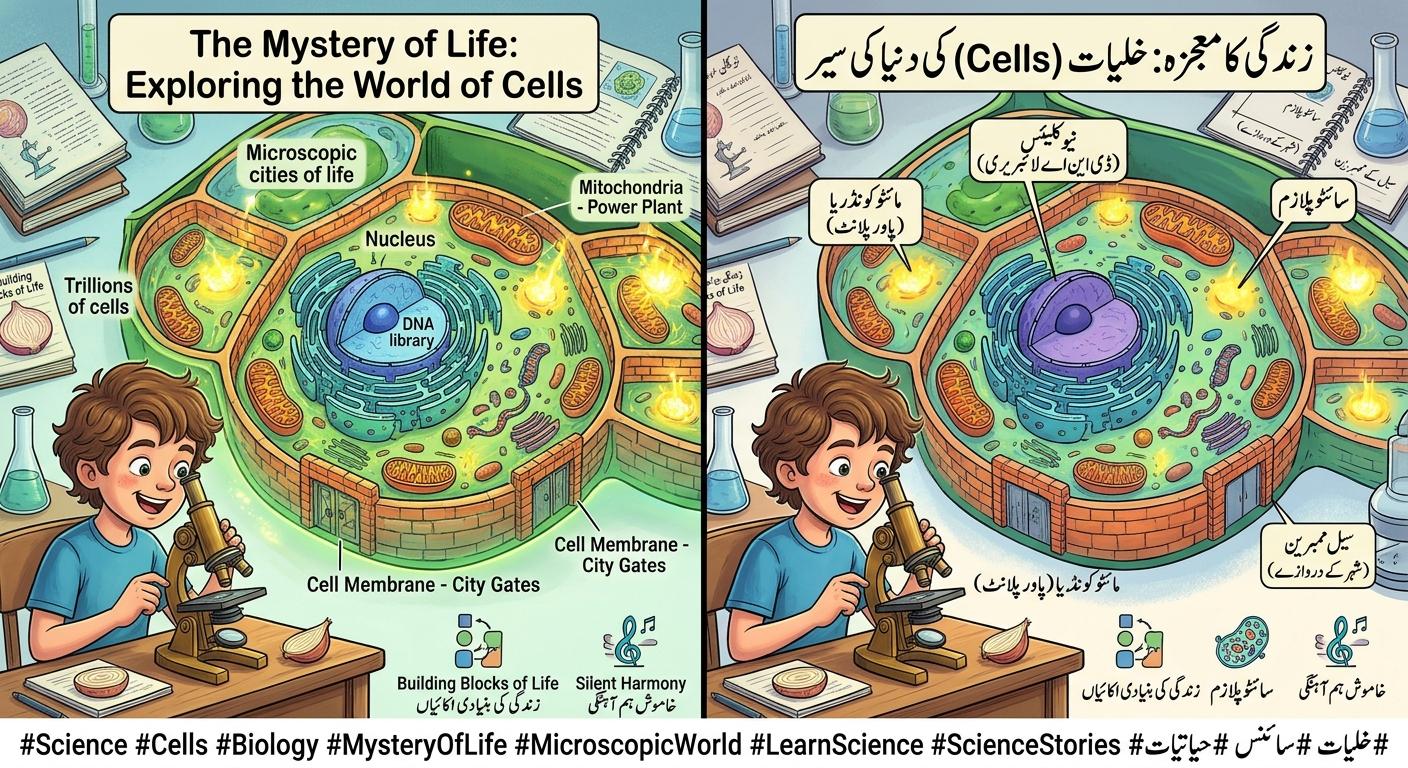
    # The Mystery of Life: Exploring the World of Cells Life is one of the most fascinating mysteries of the natural world. From the tallest trees to the smallest insects, every living organism has a unique structure and a special way of surviving. But have you ever wondered what makes life possible? What is the tiny building block that forms every living thing? The answer is **cells**, the fundamental units of life. Although cells are usually too small to be seen without a microscope, they perform countless important functions that allow living organisms to grow, develop, reproduce, and survive. Cells are often described as the basic building blocks of life because all living organisms are made up of one or more cells. Some organisms, such as bacteria, consist of only a single cell, while humans, animals, and plants are made up of trillions of cells. Each cell has its own structure and responsibilities. Some cells help the body obtain energy, while others carry oxygen, fight infections, or transmit messages throughout the body. In plants, cells help produce food through photosynthesis and provide support to the plant's structure. There are two major types of cells: **prokaryotic cells and eukaryotic cells**. Prokaryotic cells, such as bacteria, do not have a nucleus enclosed by a membrane. Eukaryotic cells, which are found in animals, plants, fungi, and many other organisms, contain a nucleus that stores genetic information. These cells also contain specialized structures called organelles, each of which performs a particular function. For example, the nucleus controls many cellular activities, mitochondria release usable energy from food, and the cell membrane regulates what enters and leaves the cell. Plant cells also contain chloroplasts, which help them produce food using sunlight. One of the most amazing things about cells is how they work together. In multicellular organisms, cells with similar functions form tissues, tissues combine to form organs, and organs work together in systems. In the human body, for example, the heart, lungs, brain, and other organs depend on the coordinated activities of countless cells. This cooperation allows the body to maintain balance, respond to changes, and carry out the activities necessary for life. Cells also play an essential role in growth, healing, and reproduction. Through a process called cell division, cells produce new cells. This allows organisms to grow, replace old or damaged cells, and repair tissues. Cells contain DNA, the genetic material that carries instructions for the development and functioning of living organisms. By studying DNA and cellular processes, scientists can better understand heredity, diseases, and the remarkable diversity of life on Earth. The study of cells has transformed our understanding of biology and medicine. understanding the wonders of the living world.**
    Activate to view larger image,
    View image
    ACCL POST Day:43 Roll No:003 Story post Student at Rehan School Urdu bazar campus # The Mystery of Life: Exploring the World of Cells Life is one of the most fascinating mysteries of the natural world. From the tallest trees to the smallest insects, every living organism has a unique structure and a special way of surviving. But have you ever wondered what makes life possible? What is the tiny building block that forms every living thing? The answer is **cells**, the fundamental units of life. Although cells are usually too small to be seen without a microscope, they perform countless important functions that allow living organisms to grow, develop, reproduce, and survive. Cells are often described as the basic building blocks of life because all living organisms are made up of one or more cells. Some organisms, such as bacteria, consist of only a single cell, while humans, animals, and plants are made up of trillions of cells. Each cell has its own structure and responsibilities. Some cells help the body obtain energy, while others carry oxygen, fight infections, or transmit messages throughout the body. In plants, cells help produce food through photosynthesis and provide support to the plant's structure. There are two major types of cells: **prokaryotic cells and eukaryotic cells**. Prokaryotic cells, such as bacteria, do not have a nucleus enclosed by a membrane. Eukaryotic cells, which are found in animals, plants, fungi, and many other organisms, contain a nucleus that stores genetic information. These cells also contain specialized structures called organelles, each of which performs a particular function. For example, the nucleus controls many cellular activities, mitochondria release usable energy from food, and the cell membrane regulates what enters and leaves the cell. Plant cells also contain chloroplasts, which help them produce food using sunlight. One of the most amazing things about cells is how they work together. In multicellular organisms, cells with similar functions form tissues, tissues combine to form organs, and organs work together in systems. In the human body, for example, the heart, lungs, brain, and other organs depend on the coordinated activities of countless cells. This cooperation allows the body to maintain balance, respond to changes, and carry out the activities necessary for life. Cells also play an essential role in growth, healing, and reproduction. Through a process called cell division, cells produce new cells. This allows organisms to grow, replace old or damaged cells, and repair tissues. Cells contain DNA, the genetic material that carries instructions for the development and functioning of living organisms. By studying DNA and cellular processes, scientists can better understand heredity, diseases, and the remarkable diversity of life on Earth. The study of cells has transformed our understanding of biology and medicine. understanding the wonders of the living world.** Activate to view larger image, View image
    0 تبصرے 0 شیئرز 94 ویوز
  • ACCL TASK
    Day:41
    Roll No:003
    Story post
    @Student at Rehan School Urdu bazar campus

    # The Mystery of Life: Exploring the World of Cells

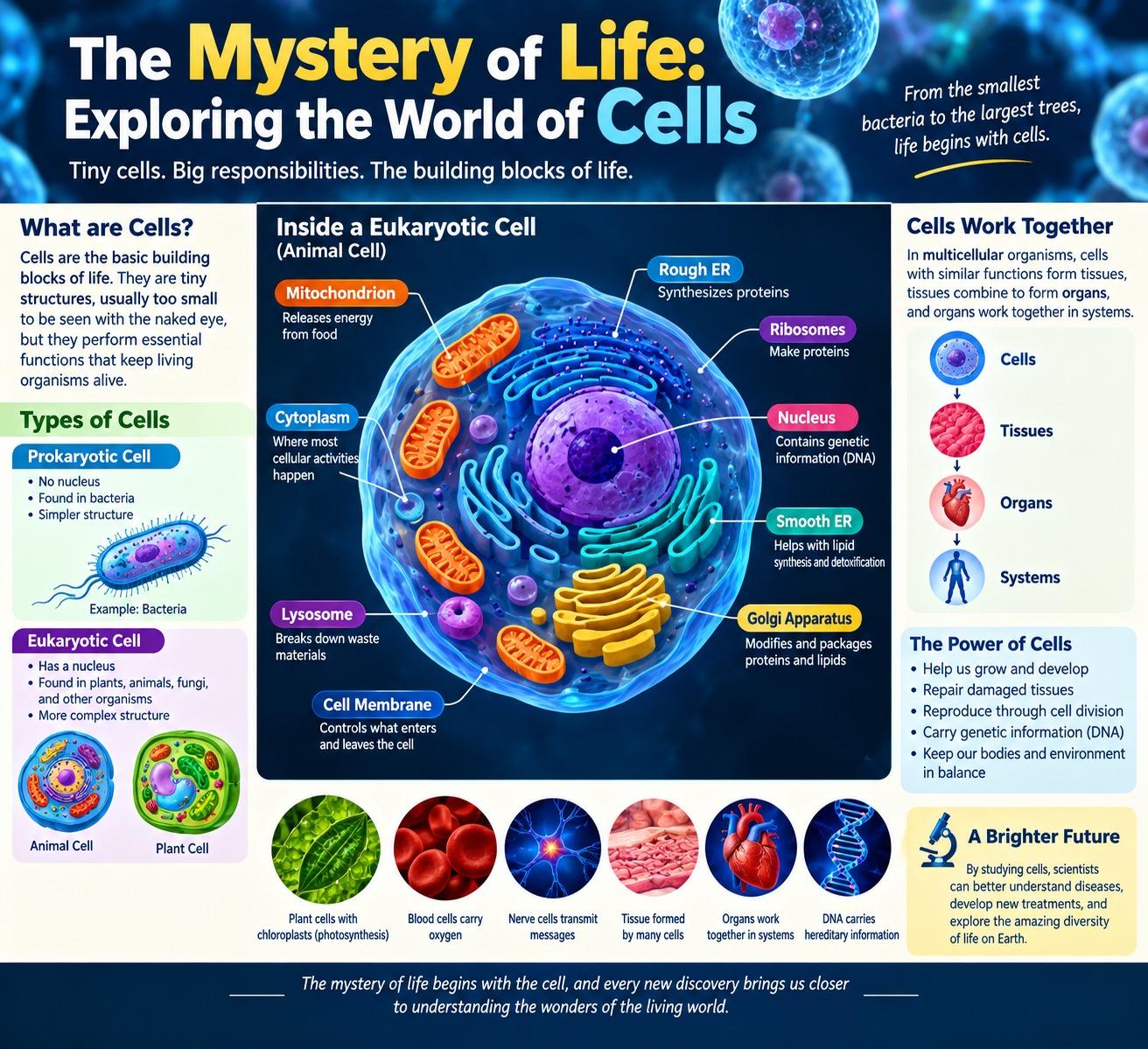
    Life is one of the most fascinating mysteries of the natural world. From the tallest trees to the smallest insects, every living organism has a unique structure and a special way of surviving. But have you ever wondered what makes life possible? What is the tiny building block that forms every living thing? The answer is **cells**, the fundamental units of life. Although cells are usually too small to be seen without a microscope, they perform countless important functions that allow living organisms to grow, develop, reproduce, and survive.

    Cells are often described as the basic building blocks of life because all living organisms are made up of one or more cells. Some organisms, such as bacteria, consist of only a single cell, while humans, animals, and plants are made up of trillions of cells. Each cell has its own structure and responsibilities. Some cells help the body obtain energy, while others carry oxygen, fight infections, or transmit messages throughout the body. In plants, cells help produce food through photosynthesis and provide support to the plant's structure.

    There are two major types of cells: **prokaryotic cells and eukaryotic cells**. Prokaryotic cells, such as bacteria, do not have a nucleus enclosed by a membrane. Eukaryotic cells, which are found in animals, plants, fungi, and many other organisms, contain a nucleus that stores genetic information. These cells also contain specialized structures called organelles, each of which performs a particular function. For example, the nucleus controls many cellular activities, mitochondria release usable energy from food, and the cell membrane regulates what enters and leaves the cell. Plant cells also contain chloroplasts, which help them produce food using sunlight.

    One of the most amazing things about cells is how they work together. In multicellular organisms, cells with similar functions form tissues, tissues combine to form organs, and organs work together in systems. In the human body, for example, the heart, lungs, brain, and other organs depend on the coordinated activities of countless cells. This cooperation allows the body to maintain balance, respond to changes, and carry out the activities necessary for life.

    Cells also play an essential role in growth, healing, and reproduction. Through a process called cell division, cells produce new cells. This allows organisms to grow, replace old or damaged cells, and repair tissues. Cells contain DNA, the genetic material that carries instructions for the development and functioning of living organisms. of cells. Exploring the world of cells helps us understand how living things function and reveals the extraordinary hidden within even the smallest units of life. The mystery of life begins with the cell, and every new discovery brings us closer to understanding the wonders of the living world.
    ACCL TASK Day:41 Roll No:003 Story post @Student at Rehan School Urdu bazar campus # The Mystery of Life: Exploring the World of Cells Life is one of the most fascinating mysteries of the natural world. From the tallest trees to the smallest insects, every living organism has a unique structure and a special way of surviving. But have you ever wondered what makes life possible? What is the tiny building block that forms every living thing? The answer is **cells**, the fundamental units of life. Although cells are usually too small to be seen without a microscope, they perform countless important functions that allow living organisms to grow, develop, reproduce, and survive. Cells are often described as the basic building blocks of life because all living organisms are made up of one or more cells. Some organisms, such as bacteria, consist of only a single cell, while humans, animals, and plants are made up of trillions of cells. Each cell has its own structure and responsibilities. Some cells help the body obtain energy, while others carry oxygen, fight infections, or transmit messages throughout the body. In plants, cells help produce food through photosynthesis and provide support to the plant's structure. There are two major types of cells: **prokaryotic cells and eukaryotic cells**. Prokaryotic cells, such as bacteria, do not have a nucleus enclosed by a membrane. Eukaryotic cells, which are found in animals, plants, fungi, and many other organisms, contain a nucleus that stores genetic information. These cells also contain specialized structures called organelles, each of which performs a particular function. For example, the nucleus controls many cellular activities, mitochondria release usable energy from food, and the cell membrane regulates what enters and leaves the cell. Plant cells also contain chloroplasts, which help them produce food using sunlight. One of the most amazing things about cells is how they work together. In multicellular organisms, cells with similar functions form tissues, tissues combine to form organs, and organs work together in systems. In the human body, for example, the heart, lungs, brain, and other organs depend on the coordinated activities of countless cells. This cooperation allows the body to maintain balance, respond to changes, and carry out the activities necessary for life. Cells also play an essential role in growth, healing, and reproduction. Through a process called cell division, cells produce new cells. This allows organisms to grow, replace old or damaged cells, and repair tissues. Cells contain DNA, the genetic material that carries instructions for the development and functioning of living organisms. of cells. Exploring the world of cells helps us understand how living things function and reveals the extraordinary hidden within even the smallest units of life. The mystery of life begins with the cell, and every new discovery brings us closer to understanding the wonders of the living world.
    0 تبصرے 0 شیئرز 98 ویوز
  • RSIF8
    Roll no 68
    Task no 184
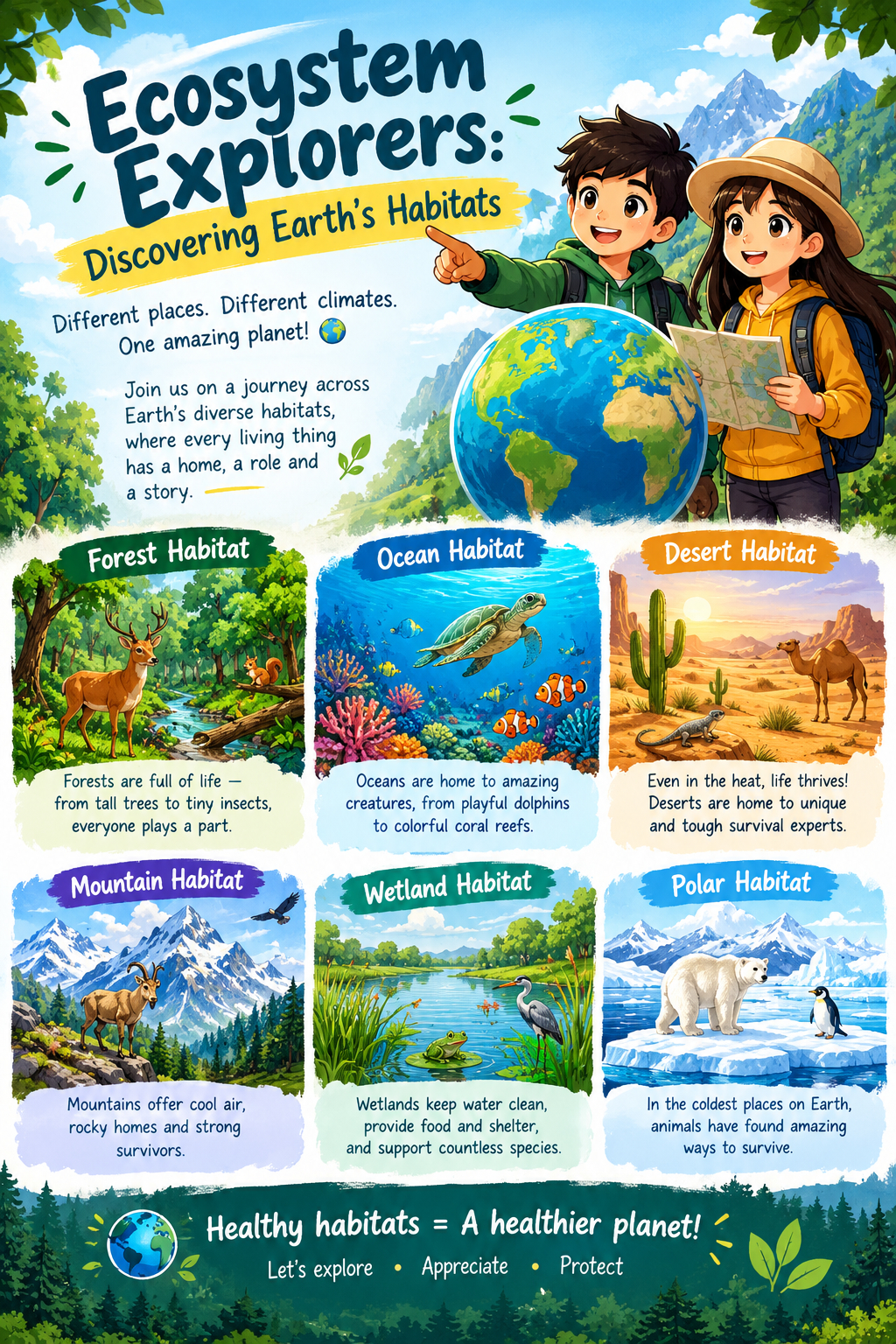
    Task topic; **Ecosystem Explorers: Discovering Earth's Habitats**

    Join us on an exciting journey to explore Earth's amazing habitats! From green forests and deep oceans to hot deserts, majestic mountains, beautiful wetlands, and icy polar regions, every habitat is home to unique plants and animals.

    Every living thing plays an important role in our ecosystem. Let's explore nature, appreciate its beauty, and protect our planet for future generations!

    **Healthy Habitats = A Healthier Planet!**

    \#EcosystemExplorers #EarthsHabitats #Ecosystem #Nature #Wildlife #Environment #Biodiversity #SaveOurPlanet #Education #Learning

    Make the post more educationalAdd a clear action for readers
    RSIF8 Roll no 68 Task no 184 Task topic;🌍🌿 **Ecosystem Explorers: Discovering Earth's Habitats** 🐻🌊 Join us on an exciting journey to explore Earth's amazing habitats! 🌳🏞️ From green forests and deep oceans to hot deserts, majestic mountains, beautiful wetlands, and icy polar regions, every habitat is home to unique plants and animals. 🦁🐢🐧 🌱 Every living thing plays an important role in our ecosystem. Let's explore nature, appreciate its beauty, and protect our planet for future generations! 💚🌎 ✨ **Healthy Habitats = A Healthier Planet!** 🌿💙 \#EcosystemExplorers #EarthsHabitats #Ecosystem #Nature #Wildlife #Environment #Biodiversity #SaveOurPlanet #Education #Learning 🌍🌱 Make the post more educationalAdd a clear action for readers
    0 تبصرے 0 شیئرز 161 ویوز
  • #rsisb
    Roll no.239
    Miss zoya no. 20
    Foundation Level

    Hello, everyone! Welcome to my new video. My name is Subhan, and I am a Foundation Level student at Rehan School Islamabad Bahria Campus. Today, I am very excited to share an interesting topic with you: **Red and Green**. In this video, I will explore these two beautiful colors, their meanings, their importance in our daily lives, and the different ways we see them in the world around us.
    Colors are an important part of our lives. Every day, we see different colors in nature, schools, homes, clothes, books, toys, flowers, fruits, and many other things. Colors make our world look beautiful, interesting, and full of life. They also help us recognize objects, understand signs, express creativity, and communicate different messages.
    ## The Meaning and Importance of Red
    Red is a bright, powerful, and eye-catching color. It is often associated with love, energy, courage, excitement, and strong emotions. We can see red in roses, apples, strawberries, tomatoes, flags, decorations, and many other things.
    Red is also important for safety. In traffic lights, red tells drivers and pedestrians to stop. Red warning signs can alert people to danger and remind them to be careful. This shows that colors are not only beautiful but can also help protect our lives.
    In art and drawing, red can make a picture look bold and attractive. Artists use red to highlight important objects, create contrast, and express different feelings. Red is also used in celebrations and decorations in many cultures around the world.
    ## The Meaning and Importance of Green
    Green is a refreshing and beautiful color that we often associate with nature, plants, trees, grass, and growth. When we look at green forests, gardens, and fields, we can see the beauty of the natural world.
    Green plants are very important for life on Earth. Plants help produce oxygen, provide food, support wildlife, and contribute to healthy ecosystems. Trees also provide shade and shelter for many living things. By planting trees, protecting forests, and keeping our surroundings clean, we can help care for our planet.
    Green is also used in traffic lights. A green signal generally means that traffic may proceed when it is safe to do so. Green symbols are often used to represent nature, environmental awareness, and environmentally friendly activities.
    In drawings and paintings, green helps artists show leaves, grass, gardens, mountains, and beautiful landscapes. It can make artwork look fresh, peaceful, and natural.
    ## Red and Green in Our Daily Lives
    \#RedAndGreen #JapaneseLearning #Aka #Midori #LearnJapanese #Colors #Education #StudentLife #Confidence #NewVideo #KeepLearning
    #rsisb Roll no.239 Miss zoya no. 20 Foundation Level Hello, everyone! Welcome to my new video. My name is Subhan, and I am a Foundation Level student at Rehan School Islamabad Bahria Campus. Today, I am very excited to share an interesting topic with you: **Red and Green**. In this video, I will explore these two beautiful colors, their meanings, their importance in our daily lives, and the different ways we see them in the world around us. Colors are an important part of our lives. Every day, we see different colors in nature, schools, homes, clothes, books, toys, flowers, fruits, and many other things. Colors make our world look beautiful, interesting, and full of life. They also help us recognize objects, understand signs, express creativity, and communicate different messages. ## 🔴 The Meaning and Importance of Red Red is a bright, powerful, and eye-catching color. It is often associated with love, energy, courage, excitement, and strong emotions. We can see red in roses, apples, strawberries, tomatoes, flags, decorations, and many other things. Red is also important for safety. In traffic lights, red tells drivers and pedestrians to stop. Red warning signs can alert people to danger and remind them to be careful. This shows that colors are not only beautiful but can also help protect our lives. In art and drawing, red can make a picture look bold and attractive. Artists use red to highlight important objects, create contrast, and express different feelings. Red is also used in celebrations and decorations in many cultures around the world. ## 🟢 The Meaning and Importance of Green Green is a refreshing and beautiful color that we often associate with nature, plants, trees, grass, and growth. When we look at green forests, gardens, and fields, we can see the beauty of the natural world. Green plants are very important for life on Earth. Plants help produce oxygen, provide food, support wildlife, and contribute to healthy ecosystems. Trees also provide shade and shelter for many living things. By planting trees, protecting forests, and keeping our surroundings clean, we can help care for our planet. Green is also used in traffic lights. A green signal generally means that traffic may proceed when it is safe to do so. Green symbols are often used to represent nature, environmental awareness, and environmentally friendly activities. In drawings and paintings, green helps artists show leaves, grass, gardens, mountains, and beautiful landscapes. It can make artwork look fresh, peaceful, and natural. ## 🌍 Red and Green in Our Daily Lives \#RedAndGreen #JapaneseLearning #Aka #Midori #LearnJapanese #Colors #Education #StudentLife #Confidence #NewVideo #KeepLearning
    0 تبصرے 0 شیئرز 749 ویوز 3
  • RSIF8
    ROLL NO 49
    STORY POST NO 37
    STORY TOPIC "Eco Warriors: Protecting Our Planet's Biodiversity".

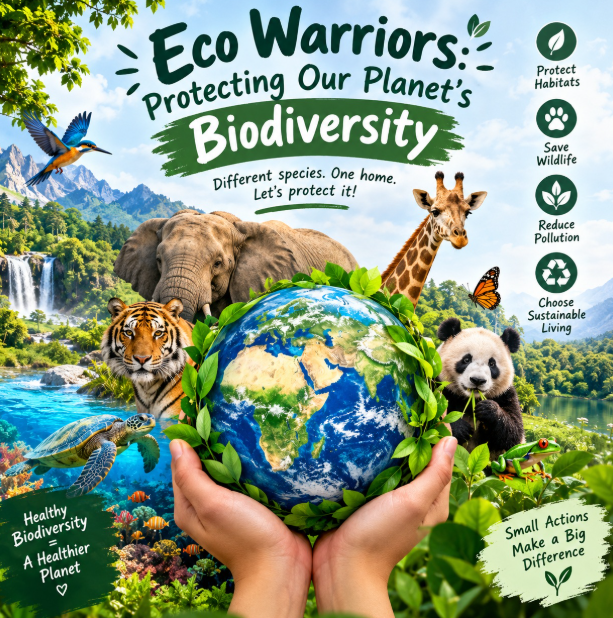
    Eco Warriors: Protecting Our Planet’s Biodiversity

    Our planet is home to millions of amazing plants, animals, and living organisms. Every species plays an important role in maintaining the balance of nature. Let’s protect wildlife, preserve natural habitats, reduce pollution, and make sustainable choices for a greener future.

    Different species, one home — let’s protect it! Together, we can make a big difference!

    \#EcoWarriors #Biodiversity #SaveWildlife #ProtectOurPlanet #ClimateAction #GoGreen #SaveNature #EnvironmentalAwareness #Sustainability #GreenPlanet #NatureLovers #SaveOurEarth
    RSIF8 ROLL NO 49 STORY POST NO 37 STORY TOPIC "Eco Warriors: Protecting Our Planet's Biodiversity". 🌍🌿 Eco Warriors: Protecting Our Planet’s Biodiversity 🐘🦋 🌱 Our planet is home to millions of amazing plants, animals, and living organisms. 🐅🐼 Every species plays an important role in maintaining the balance of nature. 🌳💚 Let’s protect wildlife, preserve natural habitats, reduce pollution, and make sustainable choices for a greener future. 🌎✨ 💚 Different species, one home — let’s protect it! 🌿 Together, we can make a big difference! 🌍🤝 \#EcoWarriors #Biodiversity #SaveWildlife #ProtectOurPlanet #ClimateAction #GoGreen #SaveNature #EnvironmentalAwareness #Sustainability #GreenPlanet #NatureLovers #SaveOurEarth 🌎💚🦋🌱
    0 تبصرے 0 شیئرز 797 ویوز
  • RSIF8
    Roll no: 86
    Story Post no: 27
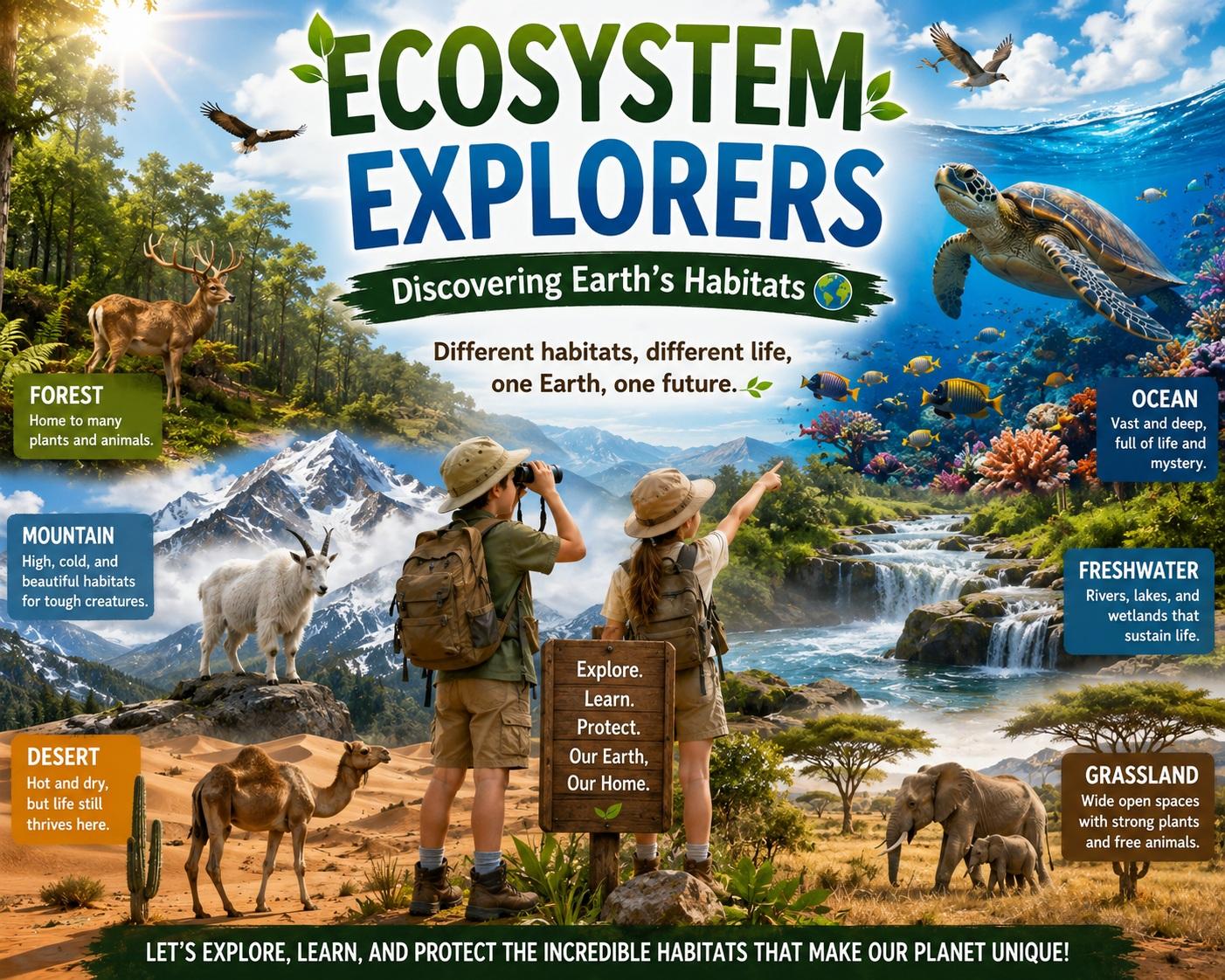
    Story Post Topic: **Ecosystem Explorers: Discovering Earth's Habitats**

    In this task, I created a story post titled **"Ecosystem Explorers: Discovering Earth's Habitats"** and generated an image to illustrate the beauty and diversity of Earth's ecosystems. I shared the story and image on **Facebook, YouTube, LinkedIn, Instagram, and TikTok**.

    This story highlights the different habitats found across our planet, including forests, deserts, oceans, mountains, grasslands, and wetlands. Each habitat is home to unique plants and animals that play an important role in maintaining the balance of nature.

    Through this activity, I learned that every ecosystem is interconnected and supports life in its own special way. Protecting these habitats is essential for preserving biodiversity and ensuring a healthy environment for future generations.

    Creating this story post improved my creativity, environmental awareness, and digital content creation skills. It also inspired me to appreciate nature and understand the importance of conserving our planet's natural resources.

    Overall, this was an enjoyable and educational experience that strengthened my knowledge of ecosystems and encouraged me to become a responsible protector of the environment.

    #EcosystemExplorers #Habitats #Nature #Environment #Science #Education #Learning #StudentLearning #Biodiversity #Earth #RSIF8
    RSIF8 Roll no: 86 Story Post no: 27 Story Post Topic: **Ecosystem Explorers: Discovering Earth's Habitats** 🌍🌿🐘 In this task, I created a story post titled **"Ecosystem Explorers: Discovering Earth's Habitats"** and generated an image to illustrate the beauty and diversity of Earth's ecosystems. I shared the story and image on **Facebook, YouTube, LinkedIn, Instagram, and TikTok**. 📱✨ This story highlights the different habitats found across our planet, including forests, deserts, oceans, mountains, grasslands, and wetlands. Each habitat is home to unique plants and animals that play an important role in maintaining the balance of nature. 🌳🐠🦅 Through this activity, I learned that every ecosystem is interconnected and supports life in its own special way. Protecting these habitats is essential for preserving biodiversity and ensuring a healthy environment for future generations. 🌱💚 Creating this story post improved my creativity, environmental awareness, and digital content creation skills. It also inspired me to appreciate nature and understand the importance of conserving our planet's natural resources. 🌎✨ Overall, this was an enjoyable and educational experience that strengthened my knowledge of ecosystems and encouraged me to become a responsible protector of the environment. 🌟🌿 #EcosystemExplorers #Habitats #Nature #Environment #Science #Education #Learning #StudentLearning #Biodiversity #Earth #RSIF8 🌍🌳🐘🐠🌱✨
    0 تبصرے 0 شیئرز 2072 ویوز
  • #rsisb
    Roll no 248
    Foundation level
    Documentary no 24
    **Documentary — The Story of Clean Water: Why It Matters**

    Clean water is one of the most important things in our lives. In this documentary, we learn why clean water is essential for human health, animals, plants, and our environment. It helps us stay healthy, grow food, and live better lives.

    Unfortunately, many people around the world still struggle to get safe drinking water. We must understand the importance of saving water, keeping our rivers and lakes clean, and preventing water pollution.

    Every drop of water is precious! By working together, we can protect this valuable resource and create a healthier future for everyone.

    **Let's save water today for a better tomorrow!**

    #CleanWater #SaveWater #WaterIsLife #Documentary #WaterConservation #ProtectOurPlanet #Environment #StopWaterPollution #Sustainability #HealthyLife #Education #Awareness
    #rsisb Roll no 248 Foundation level Documentary no 24 💧🌍 **Documentary — The Story of Clean Water: Why It Matters** 🌿💙 Clean water is one of the most important things in our lives. 💦 In this documentary, we learn why clean water is essential for human health, animals, plants, and our environment. 🌱🐦 It helps us stay healthy, grow food, and live better lives. 🌾 Unfortunately, many people around the world still struggle to get safe drinking water. 🚰 We must understand the importance of saving water, keeping our rivers and lakes clean, and preventing water pollution. 🌊♻️ Every drop of water is precious! 💧 By working together, we can protect this valuable resource and create a healthier future for everyone. 🌎✨ **Let's save water today for a better tomorrow!** 💙🌍 #CleanWater 💧 #SaveWater 🚰 #WaterIsLife 🌍 #Documentary 🎬 #WaterConservation 🌱 #ProtectOurPlanet 🌎 #Environment 🌿 #StopWaterPollution ♻️ #Sustainability 💚 #HealthyLife 💙 #Education 📚 #Awareness 🌟
    0 تبصرے 0 شیئرز 1342 ویوز 11
  • Foundation level
    Roll no 13
    story post
    Day 48
    Rehan school urdu bazar campas

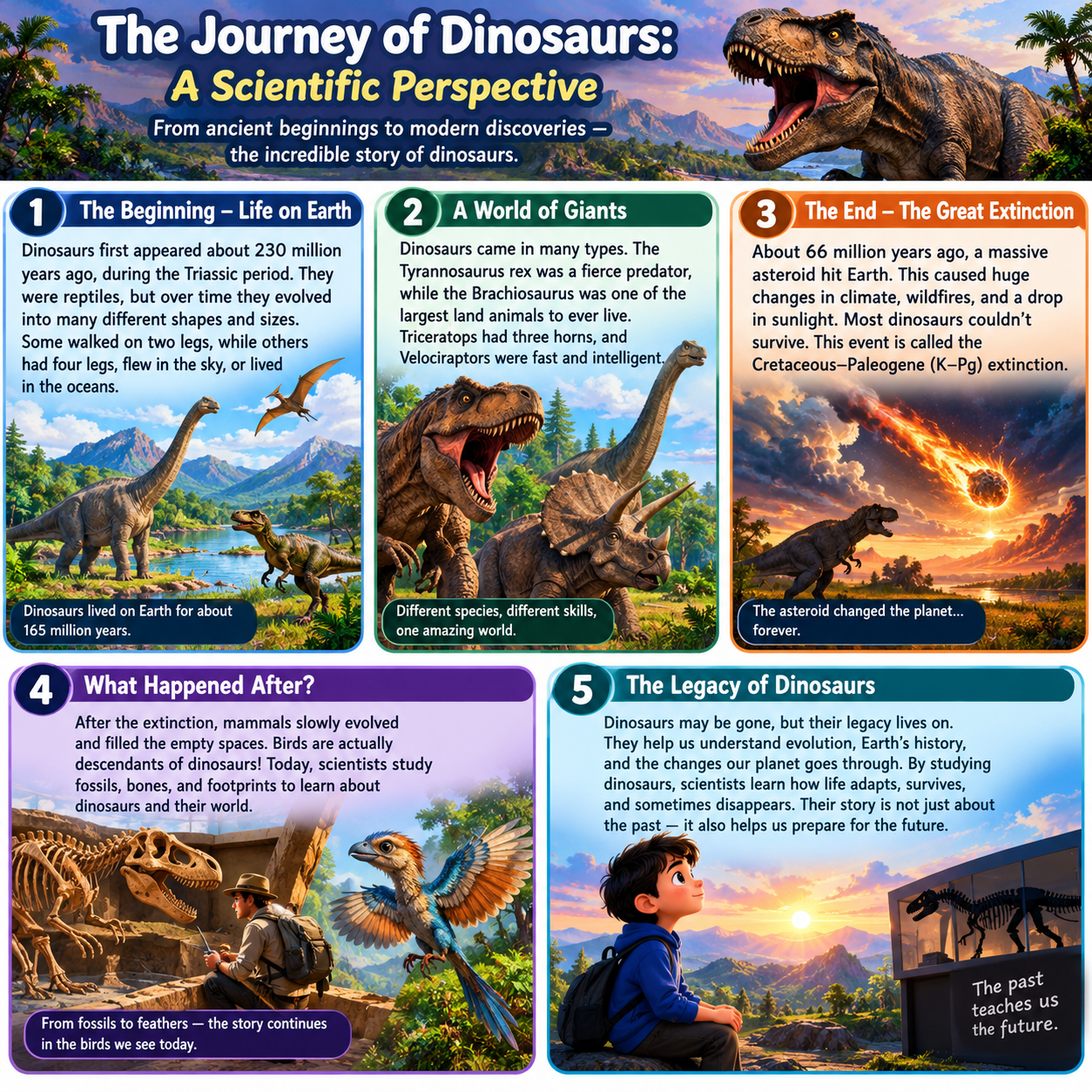
    Millions of years ago, long before humans appeared on Earth, dinosaurs lived in a world filled with dense forests, flowing rivers, towering mountains, and vast open lands. Dinosaurs first appeared about 230 million years ago during the Triassic Period. Over millions of years, they evolved into many different shapes and sizes. Some were small and quick, while others grew into enormous creatures that dominated the land. Their fascinating journey became one of the most remarkable chapters in the history of life on Earth.

    As time passed, dinosaurs spread across different environments and developed unique ways of surviving. The mighty Tyrannosaurus rex became famous for its powerful jaws and sharp teeth, while the enormous Brachiosaurus used its long neck to reach vegetation high above the ground. The Triceratops had three horns and a large bony shield around its head. Some dinosaurs hunted other animals, while many survived by eating plants. Each species played a different role in its environment, creating a complex and fascinating prehistoric world.

    However, approximately 66 million years ago, a massive asteroid struck Earth near what is now Mexico. The impact triggered enormous environmental changes, sending dust and debris into the atmosphere and disrupting ecosystems around the world. Plants struggled to survive, food sources disappeared, and many species became extinct. This event marked the end of the age of non-avian dinosaurs. Yet, not every dinosaur lineage vanished. Some feathered dinosaurs survived through evolution, eventually giving rise to the birds we see in our world today.

    Millions of years later, scientists began uncovering the hidden secrets of these ancient creatures through fossils buried deep within the Earth. Paleontologists discovered dinosaur bones, teeth, eggs, and footprints that provided clues about their appearance, behavior, and habitats. Using modern technology, including computer imaging and advanced scientific techniques, researchers can now reconstruct how many dinosaurs may have looked and lived. Every fossil discovery adds another piece to the puzzle, helping u
    1m
    Foundation level Roll no 13 story post Day 48 Rehan school urdu bazar campas Millions of years ago, long before humans appeared on Earth, dinosaurs lived in a world filled with dense forests, flowing rivers, towering mountains, and vast open lands. Dinosaurs first appeared about 230 million years ago during the Triassic Period. Over millions of years, they evolved into many different shapes and sizes. Some were small and quick, while others grew into enormous creatures that dominated the land. Their fascinating journey became one of the most remarkable chapters in the history of life on Earth. As time passed, dinosaurs spread across different environments and developed unique ways of surviving. The mighty Tyrannosaurus rex became famous for its powerful jaws and sharp teeth, while the enormous Brachiosaurus used its long neck to reach vegetation high above the ground. The Triceratops had three horns and a large bony shield around its head. Some dinosaurs hunted other animals, while many survived by eating plants. Each species played a different role in its environment, creating a complex and fascinating prehistoric world. However, approximately 66 million years ago, a massive asteroid struck Earth near what is now Mexico. The impact triggered enormous environmental changes, sending dust and debris into the atmosphere and disrupting ecosystems around the world. Plants struggled to survive, food sources disappeared, and many species became extinct. This event marked the end of the age of non-avian dinosaurs. Yet, not every dinosaur lineage vanished. Some feathered dinosaurs survived through evolution, eventually giving rise to the birds we see in our world today. Millions of years later, scientists began uncovering the hidden secrets of these ancient creatures through fossils buried deep within the Earth. Paleontologists discovered dinosaur bones, teeth, eggs, and footprints that provided clues about their appearance, behavior, and habitats. Using modern technology, including computer imaging and advanced scientific techniques, researchers can now reconstruct how many dinosaurs may have looked and lived. Every fossil discovery adds another piece to the puzzle, helping u 1m
    0 تبصرے 0 شیئرز 1818 ویوز
  • RSIF8

    Roll no:81

    Task no:57

    Task topic Winds and Environment: The Impact of Change

    Discover how winds shape our environment and influence the world around us! From moving clouds and spreading seeds to changing weather and affecting plants and animals, wind plays an important role in nature.

    But strong winds can also cause storms, soil erosion, and damage to the environment. By understanding the power of wind, we can learn more about our planet and how to protect it for future generations.

    Let's learn about nature, understand change, and work together for a greener planet!

    What do you think is the biggest impact of wind on our environment? Share your thoughts in the comments!

    Like, share, and follow for more interesting educational content!

    #WindsAndEnvironment #ImpactOfChange #Nature #Environment #ClimateChange #SaveOurPlanet #EarthScience #EnvironmentalAwareness #ProtectNature #GreenPlanet
    RSIF8 Roll no:81 Task no:57 Task topic🌬️🌍 Winds and Environment: The Impact of Change 🌿 Discover how winds shape our environment and influence the world around us! 🌪️ From moving clouds and spreading seeds to changing weather and affecting plants and animals, wind plays an important role in nature. 🌳☁️ But strong winds can also cause storms, soil erosion, and damage to the environment. 🌧️🌱 By understanding the power of wind, we can learn more about our planet and how to protect it for future generations. 💚🌎 ✨ Let's learn about nature, understand change, and work together for a greener planet! 💬 What do you think is the biggest impact of wind on our environment? Share your thoughts in the comments! 👇 👍 Like, share, and follow for more interesting educational content! 🚀 #WindsAndEnvironment #ImpactOfChange #Nature #Environment #ClimateChange #SaveOurPlanet #EarthScience #EnvironmentalAwareness #ProtectNature #GreenPlanet 🌍🌿💚
    0 تبصرے 0 شیئرز 1715 ویوز
  • ACCL Foundation Level
    Rehan School Urdu Bazar Campus
    Roll no. 04
    Day 41: Story Post

    # The Mystery of Life: Exploring the World of Cells

    ## English Story

    Once upon a time, there was a curious student who wanted to discover the mystery of life. One day, the student learned about cells, the tiny building blocks of all living things.

    With the help of a microscope, the student explored a drop of water and discovered a fascinating world of tiny structures. The student learned that plants, animals, and humans are all made of cells.

    Each cell has a special job. The nucleus controls the cell’s activities, the cell membrane protects it, and the mitochondria provide energy. Plant cells also have a cell wall and chloroplasts that help plants make their food.

    The student was amazed to discover that millions of tiny cells work together to help our bodies grow, heal, and stay alive. Although cells are too small to see with our eyes alone, they play a huge role in life.

    From that day on, the student understood that the smallest things can hold the biggest mysteries. Exploring the world of cells opened the door to a deeper understanding of nature, science, and the miracle of life.

    Moral: Every tiny part of life has a special purpose, and curiosity helps us discover the wonders of our world.

    ## اردو کہانی

    ایک دفعہ کا ذکر ہے کہ ایک تجسس رکھنے والا طالب علم زندگی کے راز جاننا چاہتا تھا۔ ایک دن اس نے خلیات (Cells) کے بارے میں سیکھا، جو تمام جانداروں کے جسم کی بنیادی اکائیاں ہیں۔

    خوردبین (Microscope) کی مدد سے اس طالب علم نے پانی کے ایک قطرے کا مشاہدہ کیا اور ایک حیرت انگیز چھوٹی دنیا دریافت کی۔ اس نے سیکھا کہ پودے، جانور اور انسان سب خلیات سے مل کر بنے ہیں۔

    ہر خلیے کا اپنا ایک خاص کام ہوتا ہے۔ نیوکلیئس خلیے کی سرگرمیوں کو کنٹرول کرتا ہے، خلیے کی جھلی اس کی حفاظت کرتی ہے، اور مائٹوکانڈریا توانائی فراہم کرتے ہیں۔ پودوں کے خلیوں میں خلیاتی دیوار اور کلوروپلاسٹ بھی ہوتے ہیں، جو پودوں کو خوراک بنانے میں مدد دیتے ہیں۔

    طالب علم یہ جان کر حیران رہ گیا کہ لاکھوں چھوٹے چھوٹے خلیے مل کر ہمارے جسم کو بڑھنے، زخموں کو ٹھیک کرنے اور زندہ رہنے میں مدد دیتے ہیں۔ اگرچہ ہم خلیات کو اپنی آنکھوں سے نہیں دیکھ سکتے، لیکن زندگی میں ان کا کردار بہت اہم ہے۔

    اس دن کے بعد طالب علم سمجھ گیا کہ دنیا کی سب سے چھوٹی چیزوں میں بھی بڑے راز چھپے ہو سکتے ہیں۔ خلیات کی دنیا کو دریافت کرنے سے اسے قدرت، سائنس اور زندگی کے حیرت انگیز نظام کو سمجھنے کا موقع ملا۔

    سبق: زندگی کا ہر چھوٹا حصہ ایک خاص مقصد رکھتا ہے، اور تجسس ہمیں دنیا کے حیرت انگیز راز دریافت کرنے میں مدد دیتا ہے۔

    ## Hashtags

    \#TheMysteryOfLife #ExploringCells #WorldOfCells #CellBiology #ScienceEducation #Microscope #Biology #AmazingScience #LifeScience #LearningIsFun #RehanSchool #UrduBazaarCampus #FoundationLevel
    ACCL Foundation Level Rehan School Urdu Bazar Campus Roll no. 04 Day 41: Story Post # The Mystery of Life: Exploring the World of Cells ## 🇬🇧 English Story Once upon a time, there was a curious student who wanted to discover the mystery of life. One day, the student learned about cells, the tiny building blocks of all living things. With the help of a microscope, the student explored a drop of water and discovered a fascinating world of tiny structures. The student learned that plants, animals, and humans are all made of cells. Each cell has a special job. The nucleus controls the cell’s activities, the cell membrane protects it, and the mitochondria provide energy. Plant cells also have a cell wall and chloroplasts that help plants make their food. The student was amazed to discover that millions of tiny cells work together to help our bodies grow, heal, and stay alive. Although cells are too small to see with our eyes alone, they play a huge role in life. From that day on, the student understood that the smallest things can hold the biggest mysteries. Exploring the world of cells opened the door to a deeper understanding of nature, science, and the miracle of life. Moral: Every tiny part of life has a special purpose, and curiosity helps us discover the wonders of our world. ## 🇵🇰 اردو کہانی ایک دفعہ کا ذکر ہے کہ ایک تجسس رکھنے والا طالب علم زندگی کے راز جاننا چاہتا تھا۔ ایک دن اس نے خلیات (Cells) کے بارے میں سیکھا، جو تمام جانداروں کے جسم کی بنیادی اکائیاں ہیں۔ خوردبین (Microscope) کی مدد سے اس طالب علم نے پانی کے ایک قطرے کا مشاہدہ کیا اور ایک حیرت انگیز چھوٹی دنیا دریافت کی۔ اس نے سیکھا کہ پودے، جانور اور انسان سب خلیات سے مل کر بنے ہیں۔ ہر خلیے کا اپنا ایک خاص کام ہوتا ہے۔ نیوکلیئس خلیے کی سرگرمیوں کو کنٹرول کرتا ہے، خلیے کی جھلی اس کی حفاظت کرتی ہے، اور مائٹوکانڈریا توانائی فراہم کرتے ہیں۔ پودوں کے خلیوں میں خلیاتی دیوار اور کلوروپلاسٹ بھی ہوتے ہیں، جو پودوں کو خوراک بنانے میں مدد دیتے ہیں۔ طالب علم یہ جان کر حیران رہ گیا کہ لاکھوں چھوٹے چھوٹے خلیے مل کر ہمارے جسم کو بڑھنے، زخموں کو ٹھیک کرنے اور زندہ رہنے میں مدد دیتے ہیں۔ اگرچہ ہم خلیات کو اپنی آنکھوں سے نہیں دیکھ سکتے، لیکن زندگی میں ان کا کردار بہت اہم ہے۔ اس دن کے بعد طالب علم سمجھ گیا کہ دنیا کی سب سے چھوٹی چیزوں میں بھی بڑے راز چھپے ہو سکتے ہیں۔ خلیات کی دنیا کو دریافت کرنے سے اسے قدرت، سائنس اور زندگی کے حیرت انگیز نظام کو سمجھنے کا موقع ملا۔ سبق: زندگی کا ہر چھوٹا حصہ ایک خاص مقصد رکھتا ہے، اور تجسس ہمیں دنیا کے حیرت انگیز راز دریافت کرنے میں مدد دیتا ہے۔ ## 🏷️ Hashtags \#TheMysteryOfLife #ExploringCells #WorldOfCells #CellBiology #ScienceEducation #Microscope #Biology #AmazingScience #LifeScience #LearningIsFun #RehanSchool #UrduBazaarCampus #FoundationLevel
    0 تبصرے 0 شیئرز 1904 ویوز
More Results