#rsisb
Roll no.239
Foundation Level
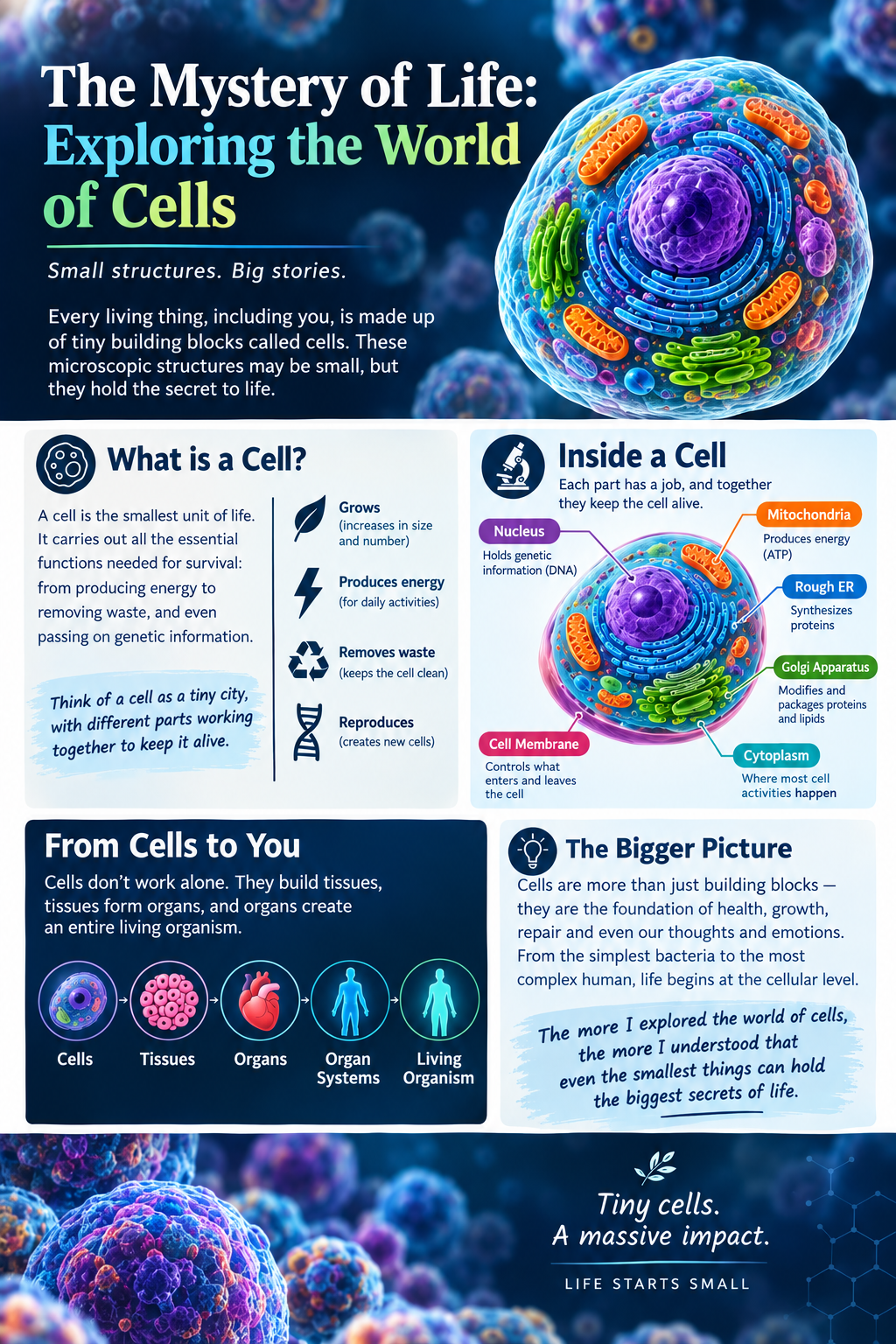
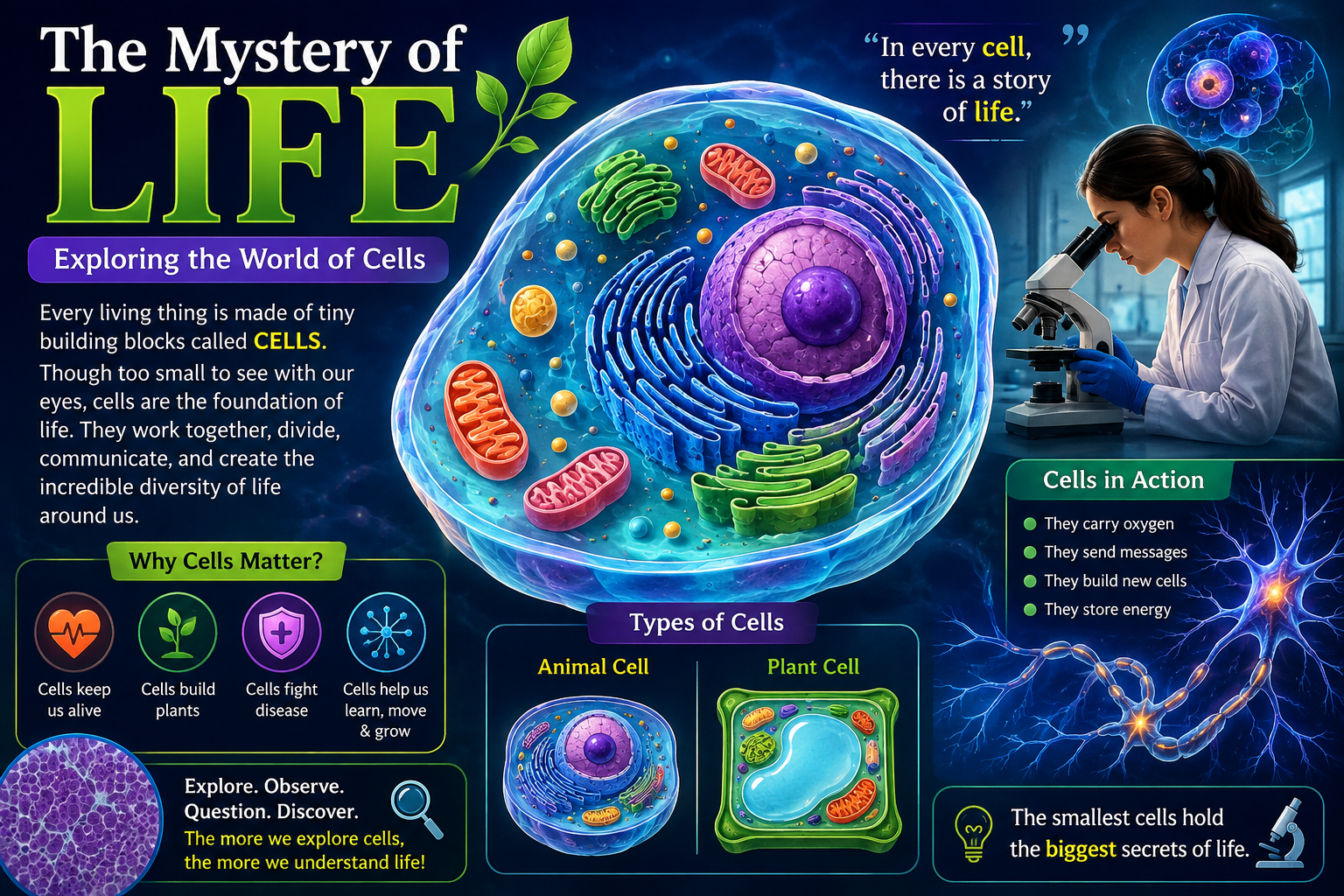
Every living thing on Earth—from the tiniest bacterium to the largest blue whale—is made up of **cells**.
Cells are often called the **building blocks of life** because they perform all the essential functions needed for an organism to survive. Let's explore the fascinating world hidden beneath the microscope!
##
What Is a Cell?
A **cell** is the smallest unit of life that can carry out all the processes necessary for living. Every cell has a specific job, and together millions or even trillions of cells form tissues, organs, and entire organisms.
##
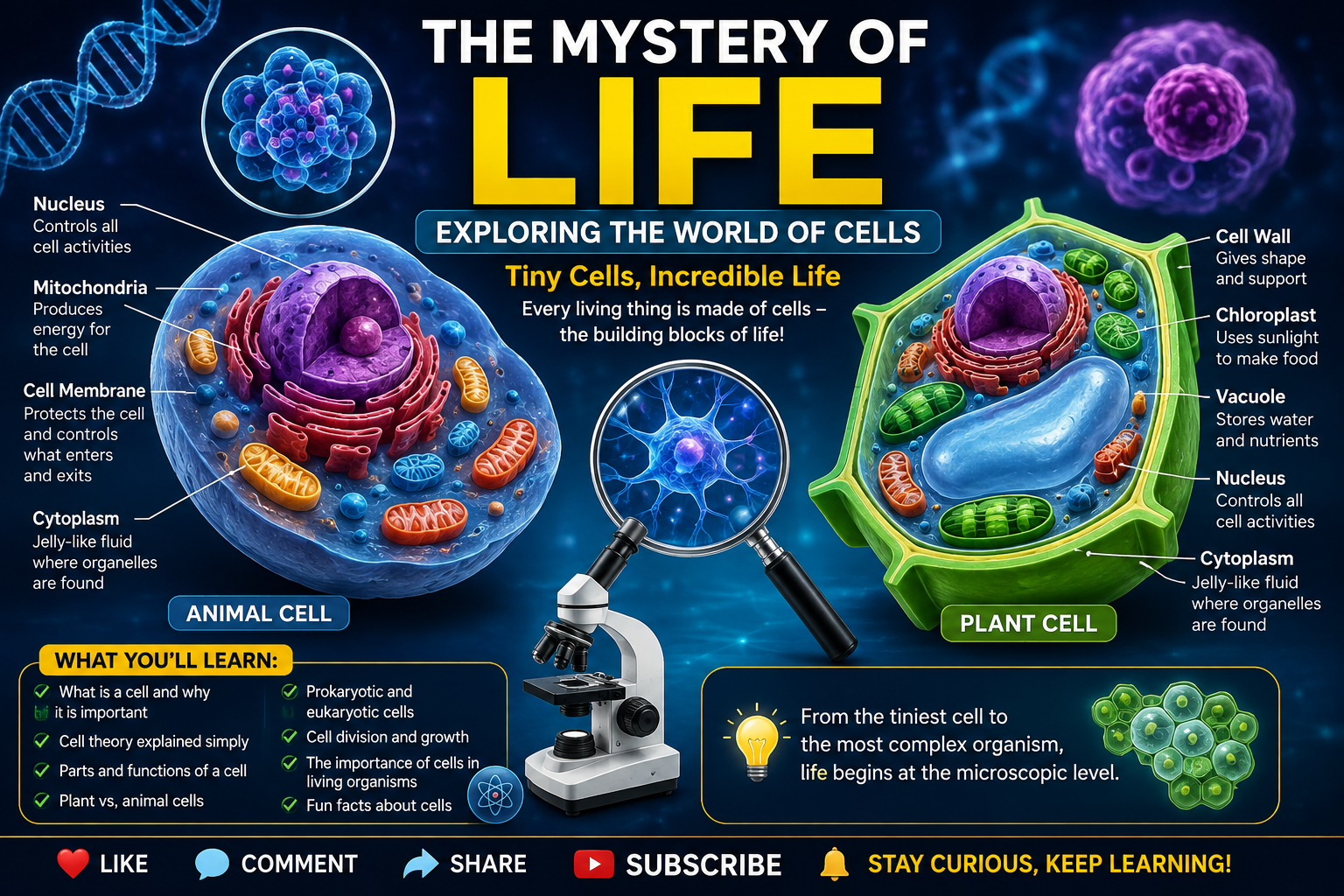
Main Parts of a Cell
*
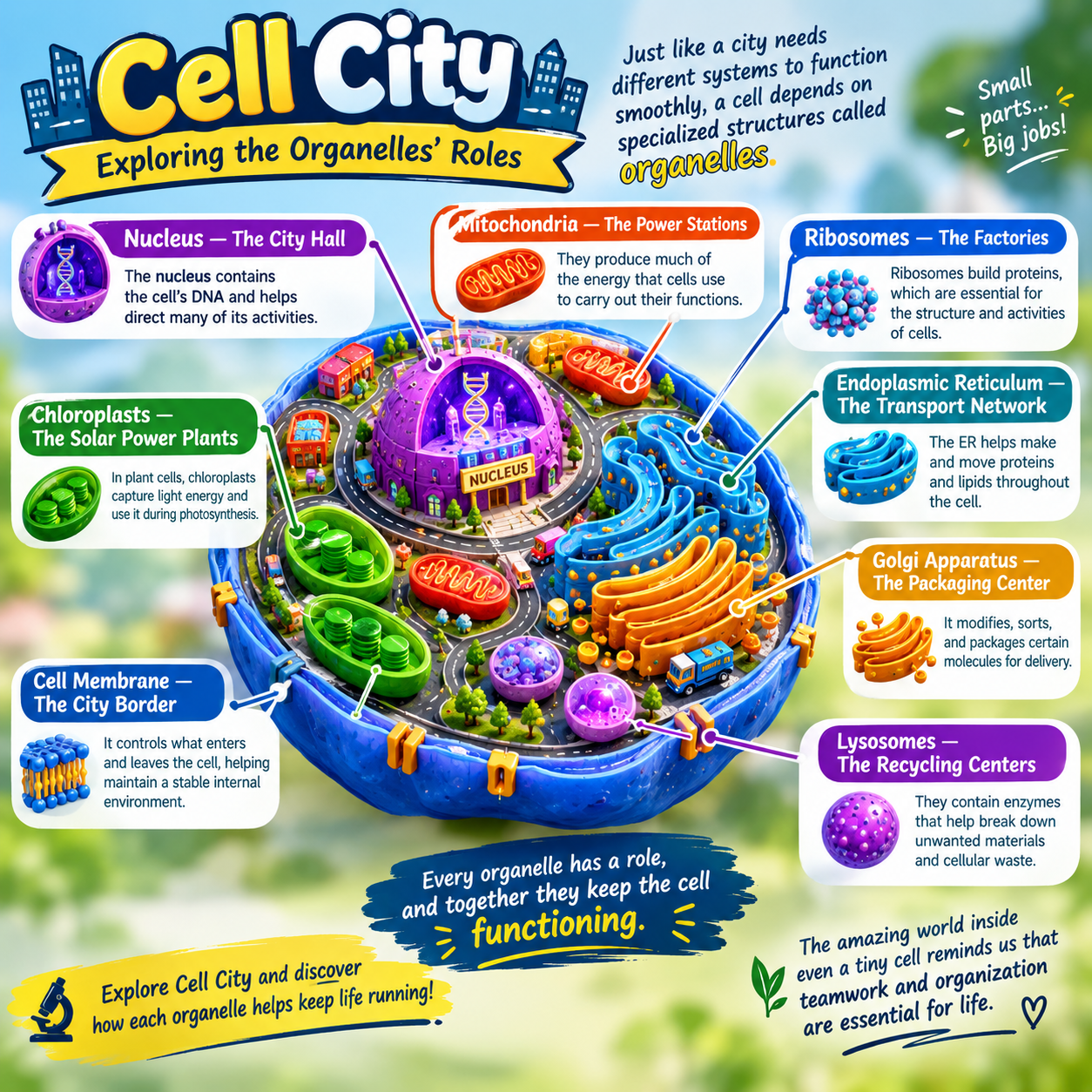
**Cell Membrane** – Controls what enters and leaves the cell.
*
**Cytoplasm** – A jelly-like substance where many chemical reactions occur.
*
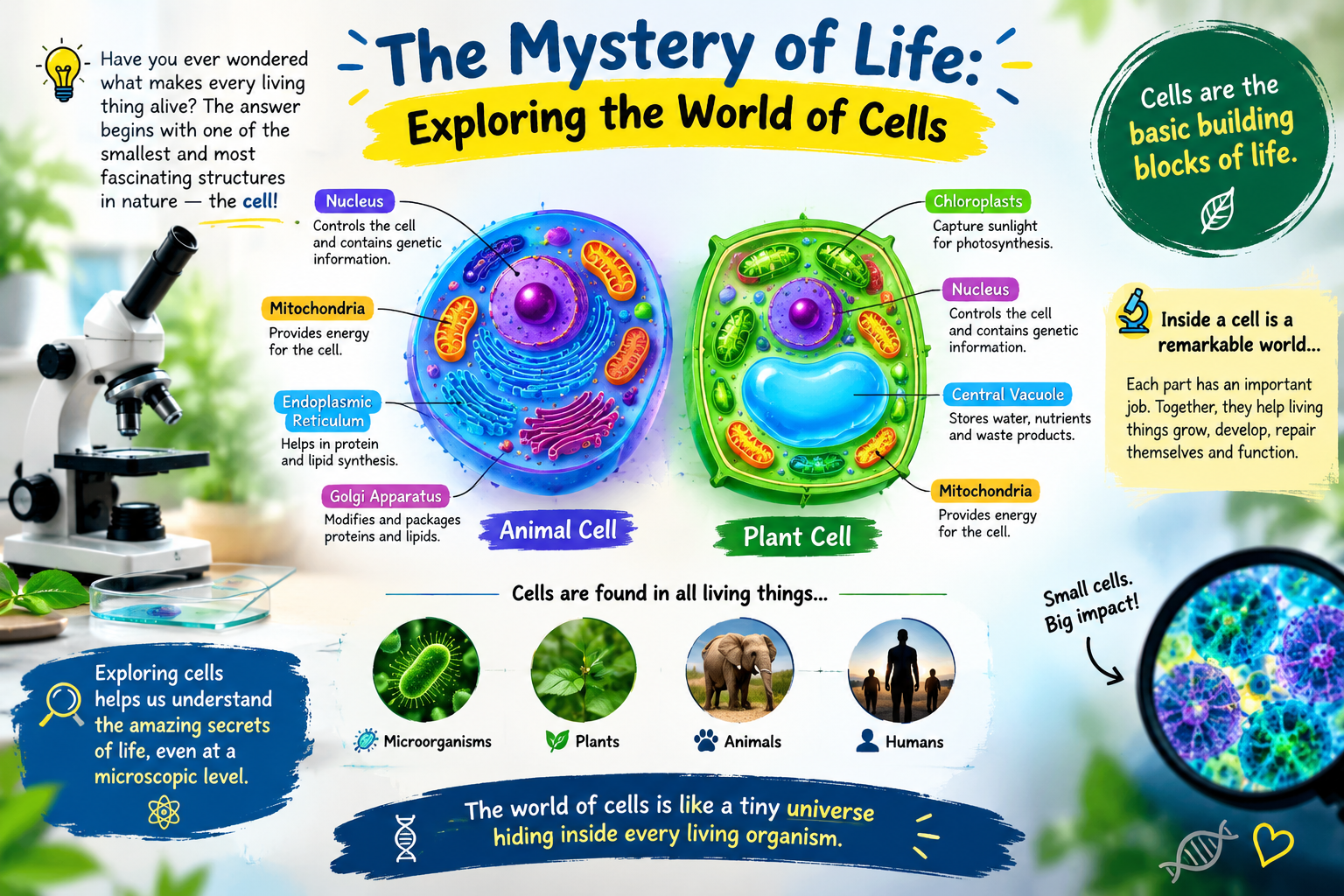
**Nucleus** – The control center that contains DNA (genetic information).
*
**Mitochondria** – Produce energy for the cell, often called the "powerhouse of the cell."
*
**Ribosomes** – Build proteins that help the cell grow and repair itself.
*
**Golgi Apparatus** – Packages and transports proteins.
*
**Endoplasmic Reticulum (ER)** – Helps make and transport proteins and fats.
*
**Vacuoles** – Store water, nutrients, and waste.
*
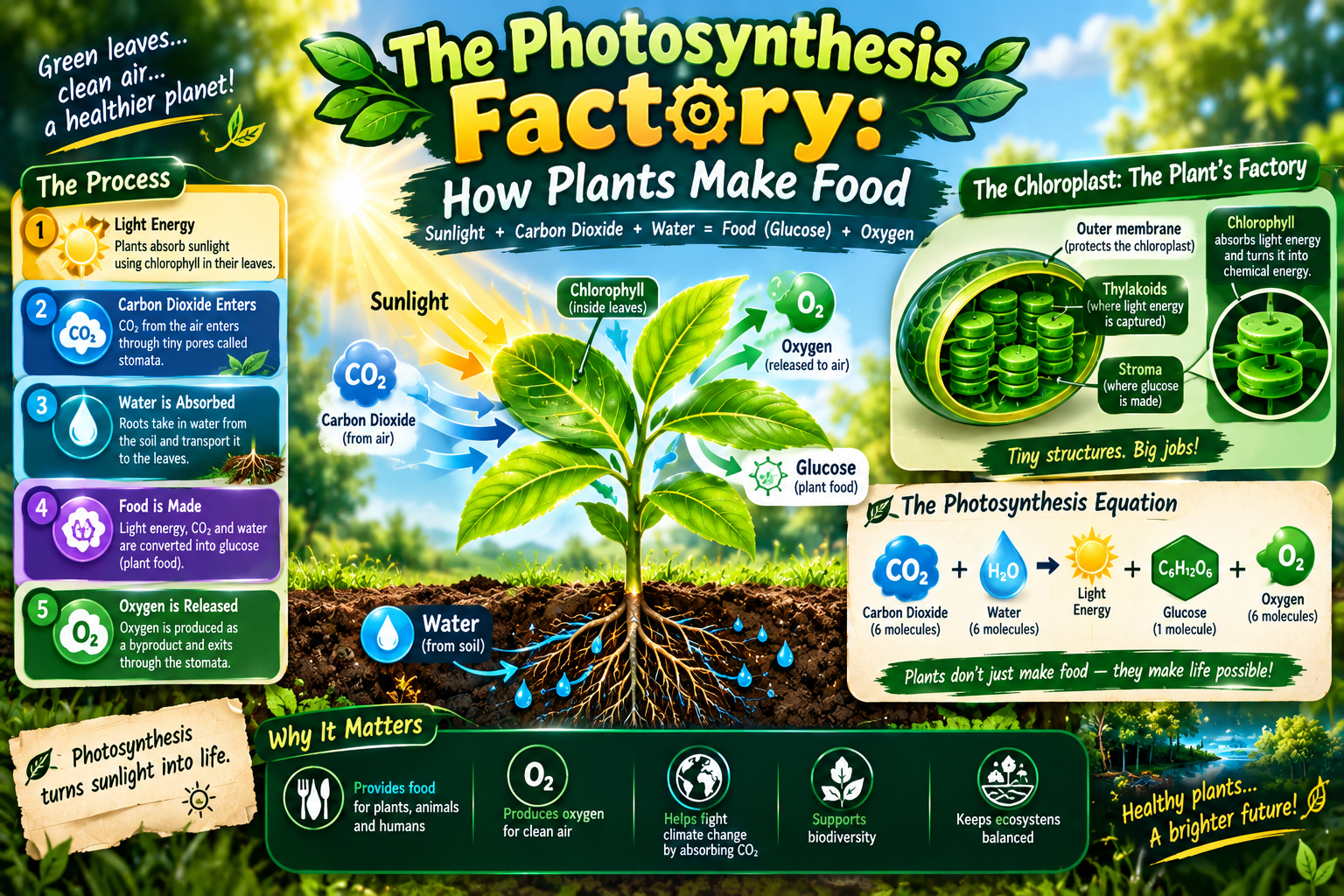
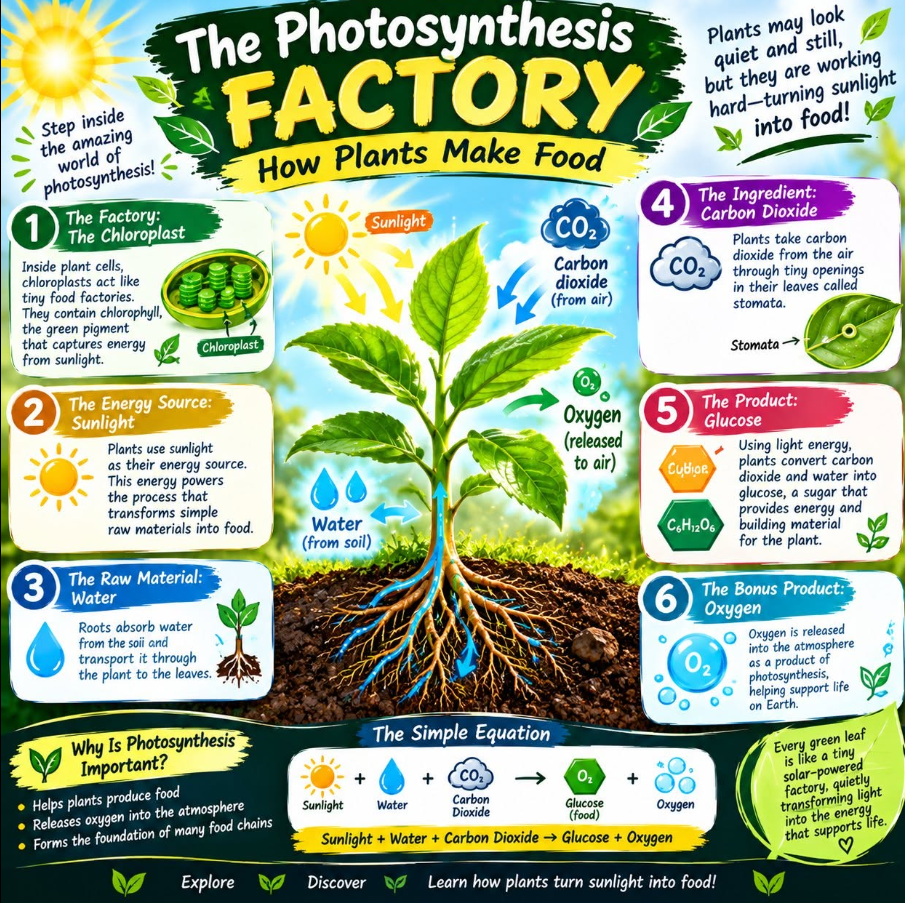
**Chloroplasts** (Plant Cells Only) – Capture sunlight to make food through photosynthesis.
*
**Cell Wall** (Plant Cells Only) – Gives strength and protection to plant cells.
##
Plant Cells vs. Animal Cells
|
Plant Cells |
Animal Cells |
| ------------------------ | ---------------------------- |
| Have a cell wall
| No cell wall
|
| Contain chloroplasts
| No chloroplasts
|
| Large central vacuole
| Small vacuoles
|
| Usually rectangular
| Usually round or irregular
|
##
How Cells Reproduce
Cells grow and divide to create new cells. This process is called **mitosis**.
genui{"biology_cellular_molecular_metabolism_learning_block":{"type_id":"MITOSIS"}}
Through mitosis:
*
The cell grows.
*
DNA is copied.
*
The cell divides.
*
Two identical daughter cells are formed.
This process helps organisms grow, heal wounds, and replace old or damaged cells.
The world of cells is tiny but incredibly powerful. Every heartbeat
, every breath
, every thought
, and every movement
begins with the work of cells. By understanding cells, scientists can develop new medicines
, cure diseases
, improve agriculture
, and unlock the mysteries of life itself. Cells truly are the remarkable foundation of every living organism!
#rsisb
Roll no.239
Foundation Level
Every living thing on Earth—from the tiniest bacterium to the largest blue whale—is made up of **cells**. 🌍🦠 Cells are often called the **building blocks of life** because they perform all the essential functions needed for an organism to survive. Let's explore the fascinating world hidden beneath the microscope! 🔍
## 🧫 What Is a Cell?
A **cell** is the smallest unit of life that can carry out all the processes necessary for living. Every cell has a specific job, and together millions or even trillions of cells form tissues, organs, and entire organisms.
## 🏛️ Main Parts of a Cell
* 🧱 **Cell Membrane** – Controls what enters and leaves the cell.
* 🧪 **Cytoplasm** – A jelly-like substance where many chemical reactions occur.
* 🧬 **Nucleus** – The control center that contains DNA (genetic information).
* ⚡ **Mitochondria** – Produce energy for the cell, often called the "powerhouse of the cell."
* 🏭 **Ribosomes** – Build proteins that help the cell grow and repair itself.
* 📦 **Golgi Apparatus** – Packages and transports proteins.
* 🚛 **Endoplasmic Reticulum (ER)** – Helps make and transport proteins and fats.
* 💧 **Vacuoles** – Store water, nutrients, and waste.
* 🌿 **Chloroplasts** (Plant Cells Only) – Capture sunlight to make food through photosynthesis.
* 🧱 **Cell Wall** (Plant Cells Only) – Gives strength and protection to plant cells.
## 🌱 Plant Cells vs. Animal Cells
| 🌿 Plant Cells | 🐾 Animal Cells |
| ------------------------ | ---------------------------- |
| Have a cell wall 🧱 | No cell wall ❌ |
| Contain chloroplasts 🌞 | No chloroplasts ❌ |
| Large central vacuole 💧 | Small vacuoles 💦 |
| Usually rectangular 📦 | Usually round or irregular ⚪ |
## 🔄 How Cells Reproduce
Cells grow and divide to create new cells. This process is called **mitosis**.
genui{"biology_cellular_molecular_metabolism_learning_block":{"type_id":"MITOSIS"}}
Through mitosis:
* 🌱 The cell grows.
* 🧬 DNA is copied.
* ✂️ The cell divides.
* 👯 Two identical daughter cells are formed.
This process helps organisms grow, heal wounds, and replace old or damaged cells.
The world of cells is tiny but incredibly powerful. Every heartbeat ❤️, every breath 🌬️, every thought 💭, and every movement 🚶 begins with the work of cells. By understanding cells, scientists can develop new medicines 💊, cure diseases 🩺, improve agriculture 🌾, and unlock the mysteries of life itself. Cells truly are the remarkable foundation of every living organism! 🌟🧬🔬