• Untitled recording - 2026-10-01T113047.946RSIF 8

    Roll no 93

    Ted talk no 8

    Task topic: Watch "Why animals help each other" – Ashley Ward. **TED-Ed Talk Review — “Why Animals Help Each Other” by Ashley Ward**


    Today, I watched the interesting TED-Ed talk **“Why Animals Help Each Other” by Ashley Ward**. This talk explores a fascinating question: **Why do animals sometimes help each other, even when helping requires time, energy, or risk?** The lesson shows that life in nature is not only about competition and survival of the strongest. Cooperation, relationships, and mutual benefits can also play an important role.


    **One fascinating example is humpback whales.** The talk explains that humpback whales have sometimes been observed interfering when other animals are attacked by predators. This raises an important question: why would an animal spend its own energy helping another animal? Scientists are still studying some of these behaviors, and not every example has a simple explanation.


    **Another example is the cleaner wrasse fish.** These small fish eat parasites and other unwanted material from larger fish. Both sides can benefit from this relationship, which is an example of **mutualism**. It shows how cooperation can develop when different animals gain something from interacting with each other.


    **Vampire bats provide another amazing example.** They can share food with other bats that were unsuccessful in finding a meal. This behavior is connected to the idea of **reciprocal altruism**, where helping another individual may be associated with receiving help in the future.


    **My biggest takeaway from this talk is that nature is much more complex than simply “survival of the strongest.”** Animals can compete, but they can also cooperate, communicate, build relationships, and sometimes help one another.


    This talk taught me that cooperation can be an important part of survival. It also made me think about how humans can learn from nature. Helping others, sharing resources, and working together can create stronger communities and better relationships.


    I recorded my review in **English and Urdu** and shared my thoughts about the important lessons from Ashley War
    Untitled recording - 2026-10-01T113047.946RSIF 8 Roll no 93 Ted talk no 8 Task topic: Watch "Why animals help each other" – Ashley Ward.🦋🐋 **TED-Ed Talk Review — “Why Animals Help Each Other” by Ashley Ward** 🐾🦇 Today, I watched the interesting TED-Ed talk **“Why Animals Help Each Other” by Ashley Ward**. This talk explores a fascinating question: **Why do animals sometimes help each other, even when helping requires time, energy, or risk?** The lesson shows that life in nature is not only about competition and survival of the strongest. Cooperation, relationships, and mutual benefits can also play an important role. 🐋 **One fascinating example is humpback whales.** The talk explains that humpback whales have sometimes been observed interfering when other animals are attacked by predators. This raises an important question: why would an animal spend its own energy helping another animal? Scientists are still studying some of these behaviors, and not every example has a simple explanation. 🐠 **Another example is the cleaner wrasse fish.** These small fish eat parasites and other unwanted material from larger fish. Both sides can benefit from this relationship, which is an example of **mutualism**. It shows how cooperation can develop when different animals gain something from interacting with each other. 🦇 **Vampire bats provide another amazing example.** They can share food with other bats that were unsuccessful in finding a meal. This behavior is connected to the idea of **reciprocal altruism**, where helping another individual may be associated with receiving help in the future. 💡 **My biggest takeaway from this talk is that nature is much more complex than simply “survival of the strongest.”** Animals can compete, but they can also cooperate, communicate, build relationships, and sometimes help one another. 🌍 This talk taught me that cooperation can be an important part of survival. It also made me think about how humans can learn from nature. Helping others, sharing resources, and working together can create stronger communities and better relationships. 🎥 I recorded my review in **English and Urdu** and shared my thoughts about the important lessons from Ashley War
    0 Σχόλια 0 Μοιράστηκε 33 Views
  • #RSTA
    #Task : Story Post
    #Class: Foundation Level Book 2
    #Day No: 1
    #Made By Me

    Total Post:25

    **Description:**
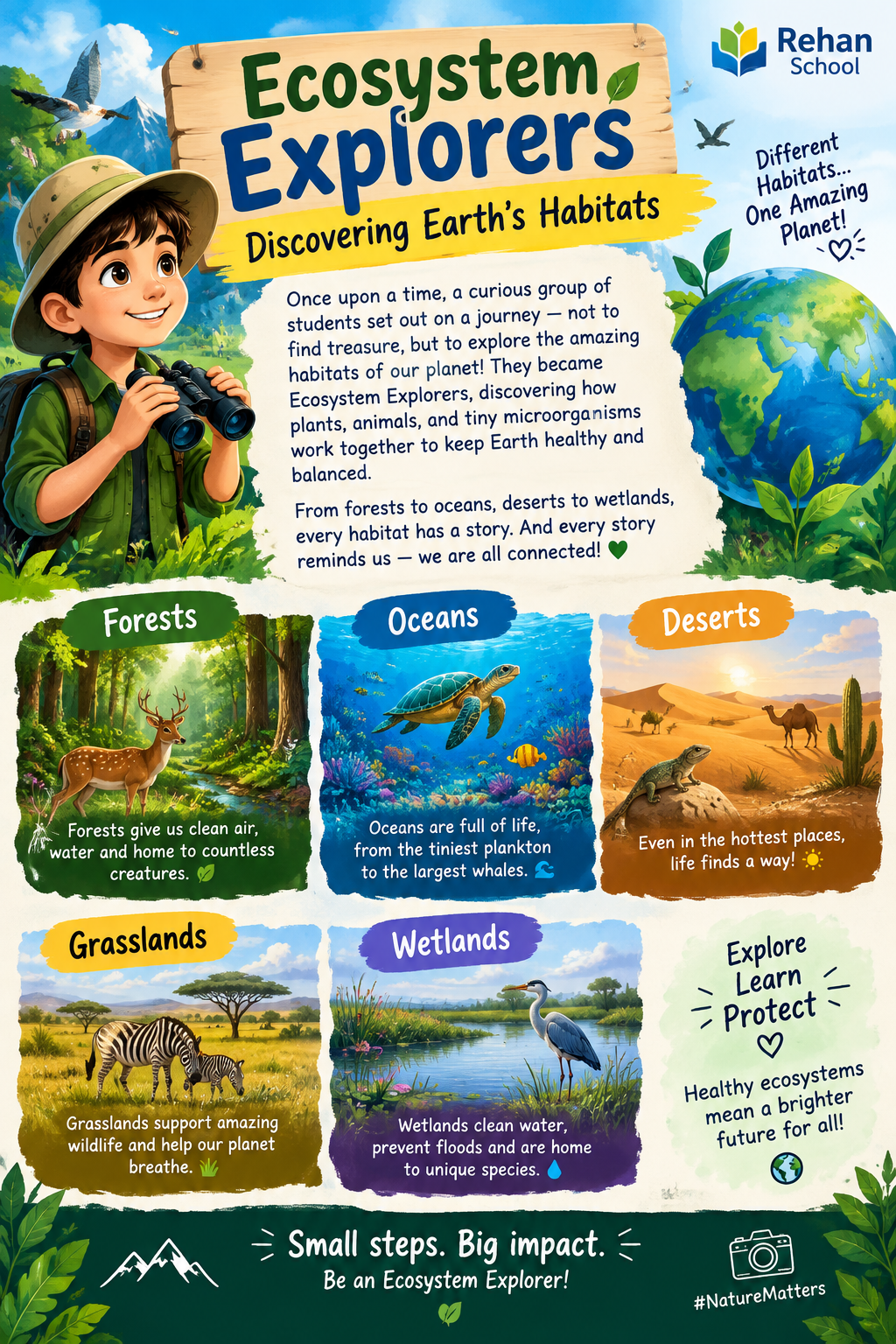
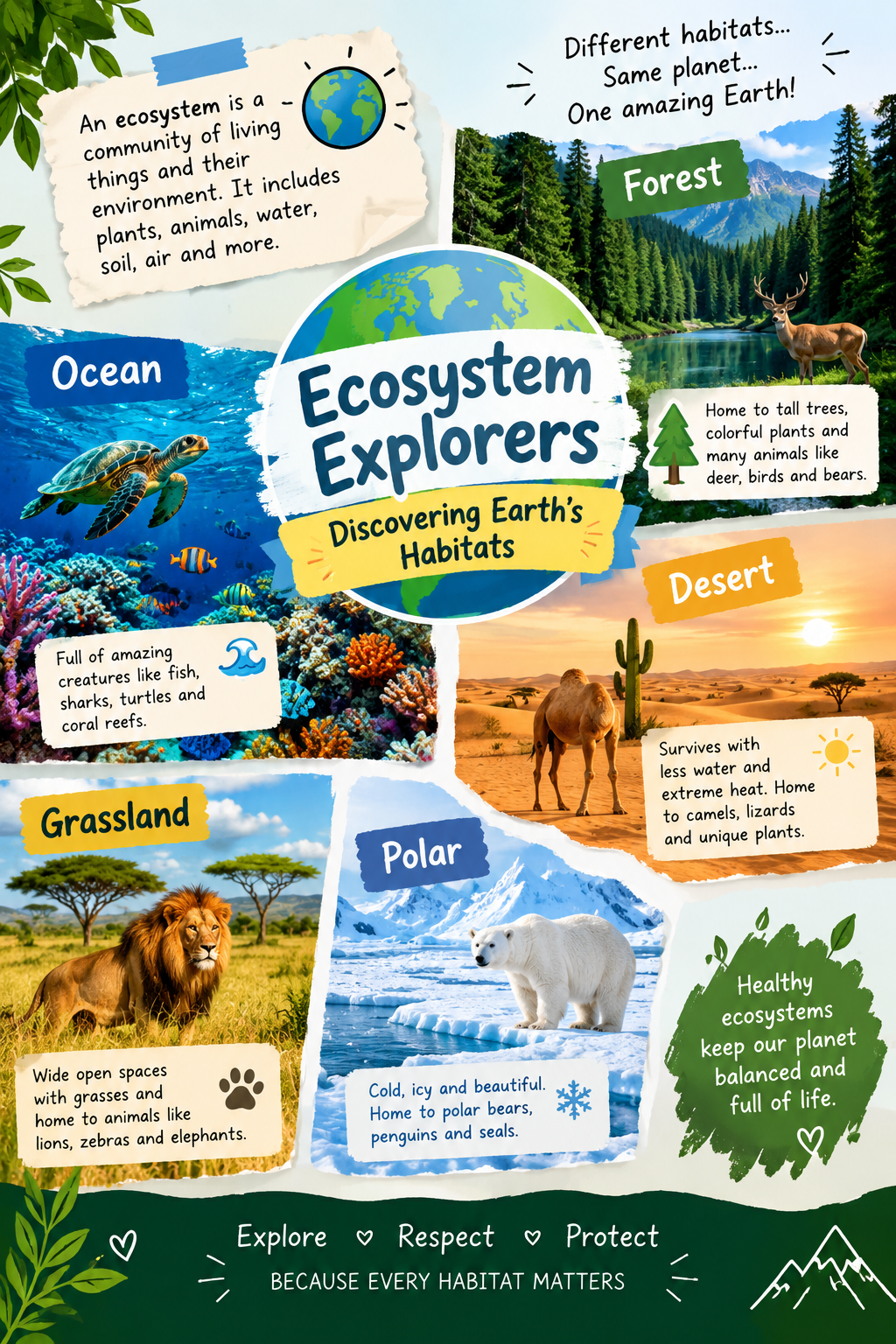
    Completed the task **“Ecosystem Explorers: Discovering Earth’s Habitats.”** I wrote a story post and created an educational image about different habitats, including forests, oceans, deserts, grasslands, and polar regions. This activity helped me learn about ecosystems, animals, plants, and the importance of protecting our planet. I also shared the post on Facebook, YouTube, LinkedIn, Instagram, and TikTok.

    RSTA StoryPost EcosystemExplorers EarthHabitats Environment Learning SocialMedia MadeByMe
    #RSTA #Task : Story Post #Class: Foundation Level Book 2 #Day No: 1 #Made By Me Total Post:25 **Description:** Completed the task **“Ecosystem Explorers: Discovering Earth’s Habitats.”** 🌍🌿 I wrote a story post and created an educational image about different habitats, including forests, oceans, deserts, grasslands, and polar regions. This activity helped me learn about ecosystems, animals, plants, and the importance of protecting our planet. 🌱✨ I also shared the post on Facebook, YouTube, LinkedIn, Instagram, and TikTok. RSTA StoryPost EcosystemExplorers EarthHabitats Environment Learning SocialMedia MadeByMe
    0 Σχόλια 0 Μοιράστηκε 191 Views
  • #rsisb
    Roll no.247
    story post .2
    Foundation level

    **Ecosystem Explorers: Discovering Earth's Habitats**

    Welcome to an exciting journey through the amazing ecosystems of our planet! In **“Ecosystem Explorers: Discovering Earth’s Habitats,”** we travel through forests , oceans , deserts , grasslands , wetlands , and many other incredible habitats to discover how living things survive and work together.

    Imagine walking through a beautiful rainforest filled with colorful birds , discovering tiny insects beneath leaves, watching fish swim through clear water , or exploring a dry desert where plants and animals have special ways to survive the heat . Every habitat has its own story, and every living thing has an important role to play.

    This story helps us understand the fascinating connections between **plants, animals, people, water, soil, air, and climate**. We learn that an ecosystem is like a giant team where different organisms depend on one another. When we protect one part of nature, we help protect the whole system.

    Our ecosystem explorers discover that Earth is full of incredible diversity. From the smallest microorganisms to the largest animals , every living thing contributes to the balance of nature. The adventure encourages curiosity, observation, creativity, and a deeper appreciation for our beautiful planet.

    **Let’s explore. Let’s learn. Let’s discover. Let’s protect our planet!**

    Join the adventure and become an **Ecosystem Explorer**!

    #EcosystemExplorers #EarthsHabitats #Ecosystems #Nature #Environment #Biodiversity #Wildlife #AnimalWorld #PlantLife #Science #EarthScience #NatureExploration #LearnAboutNature #Habitat #Forests #Oceans #Deserts #Grasslands #Wetlands #ProtectNature #SaveOurPlanet #EnvironmentalAwareness #GreenPlanet #NatureLovers #ScienceLearning #Education #ExploreAndLearn #Earth
    #rsisb Roll no.247 story post .2 Foundation level 🌍🌿 **Ecosystem Explorers: Discovering Earth's Habitats** 🐾🔎 Welcome to an exciting journey through the amazing ecosystems of our planet! 🌎✨ In **“Ecosystem Explorers: Discovering Earth’s Habitats,”** we travel through forests 🌳, oceans 🌊, deserts 🏜️, grasslands 🌾, wetlands 🐸, and many other incredible habitats to discover how living things survive and work together. Imagine walking through a beautiful rainforest filled with colorful birds 🦜, discovering tiny insects 🐞 beneath leaves, watching fish swim through clear water 🐟, or exploring a dry desert where plants and animals have special ways to survive the heat ☀️🌵. Every habitat has its own story, and every living thing has an important role to play. This story helps us understand the fascinating connections between **plants, animals, people, water, soil, air, and climate**. 🌱🦋💧🌬️ We learn that an ecosystem is like a giant team where different organisms depend on one another. When we protect one part of nature, we help protect the whole system. 🤝🌎💚 Our ecosystem explorers discover that Earth is full of incredible diversity. From the smallest microorganisms 🔬 to the largest animals 🐘🐋, every living thing contributes to the balance of nature. The adventure encourages curiosity, observation, creativity, and a deeper appreciation for our beautiful planet. 🌍❤️ 🌟 **Let’s explore. Let’s learn. Let’s discover. Let’s protect our planet!** 🌱🌎 Join the adventure and become an **Ecosystem Explorer**! 🧭🔍🐾 #EcosystemExplorers #EarthsHabitats #Ecosystems #Nature #Environment #Biodiversity #Wildlife #AnimalWorld #PlantLife #Science #EarthScience #NatureExploration #LearnAboutNature #Habitat #Forests #Oceans #Deserts #Grasslands #Wetlands #ProtectNature #SaveOurPlanet #EnvironmentalAwareness #GreenPlanet #NatureLovers #ScienceLearning #Education #ExploreAndLearn #Earth 🌍🌿🐾🔎🌱🦋🌊🌳
    0 Σχόλια 0 Μοιράστηκε 191 Views
  • #rsisb
    Roll No 253
    Foundation Level
    Story Post 22
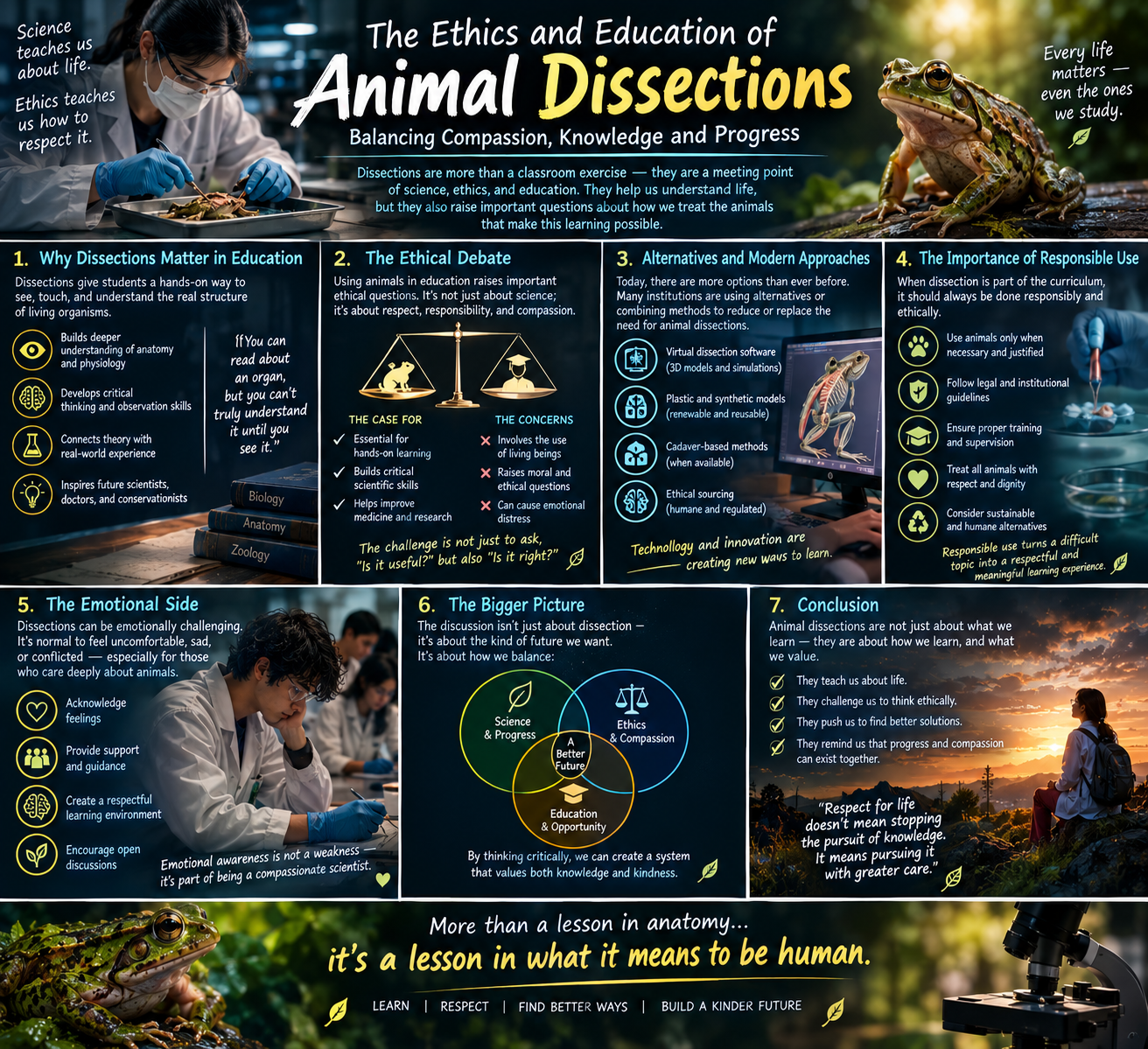
    # The Ethics and Education of Animal Dissections

    ## Balancing Knowledge, Compassion, and Scientific Progress

    Animal dissections have long been used to help students understand anatomy, physiology, and the remarkable complexity of living organisms.

    But dissection is more than a scientific technique.

    It also raises an important question:

    ### **How can we learn about life while treating life with respect?**

    Understanding both the educational value and the ethical considerations surrounding dissections allows us to approach biology with greater knowledge, responsibility, and compassion.

    ---

    ## 1. Why Dissections Matter in Education

    Dissections can provide students with a direct way to explore biological structures that are difficult to fully understand through diagrams or textbooks alone.

    They can help learners:

    Observe real anatomy
    Develop critical thinking
    Understand organ relationships
    Connect theory with physical structures
    Build curiosity about living systems

    Instead of simply memorizing the location of an organ, students can investigate how structures are positioned and connected.

    ### **It turns biological concepts into something tangible.**

    ---

    ## 2. The Ethical Debate

    Using animals for education creates a genuine ethical discussion.

    On one side, supporters may point to the educational benefits of direct anatomical study.

    On the other, concerns include:

    The use of living organisms
    Animal welfare
    Moral responsibility
    Whether alternatives can provide similar educational value

    The central question isn't simply:

    **“Is it useful?”**

    It is also:

    ### **“Is it justified, and can the same learning goals be achieved another way?”**

    Considering both questions encourages students to think scientifically **and ethically**.

    ---

    ## 3. Alternatives and Modern Approaches

    Technology has created new ways to study anatomy without always relying on traditional dissection.

    Modern educational approaches can include:

    Virtual dissection software
    3D anatomical models
    Synthetic or plastic models
    Interactive simulations
    Microscopic analysis
    High-quality anatomical imagery

    These tools can allow students to explore structures repeatedly, change viewpoints, and investigate complex systems in ways that may be difficult with a physical specimen.

    ### **Technology is creating new possibilities for learning.**

    ---

    ## 4. The Importance of Responsible Use

    When animal specimens are used for education or research, responsibility is essential.

    Important principles include:

    Following relevant laws and institutional guidelines
    Providing proper training and supervision
    Using animals only when scientifically or educationally justified
    Treating specimens respectfully
    Considering sustainable and humane alternatives

    Responsible scientific education isn't simply about obtaining knowledge.

    It is about **how that knowledge is obtained.**

    ---

    ## 5. The Emotional Side

    Dissection can affect students differently.

    Some may feel fascinated by anatomy.
    Others may feel uncomfortable.
    Some may experience sadness or conflict because they care deeply about animals.

    These reactions shouldn't automatically be dismissed.

    A respectful educational environment can encourage students to:

    Acknowledge their emotions
    Discuss concerns openly
    Support one another
    Maintain scientific curiosity
    Develop compassion

    ### **Emotional awareness can be part of becoming a responsible scientist.**

    ---

    # 6. The Bigger Picture

    The debate surrounding animal dissection isn't simply about choosing **science or compassion**.

    It is about finding ways for:

    **Scientific progress**
    **Ethical responsibility**
    **Education**
    **Compassion**

    to coexist.

    The goal is to create learning environments where students can develop strong scientific knowledge while also thinking carefully about the consequences of scientific practices.

    ### **Knowledge and compassion don't have to be opposites.**

    ---

    ## 7. What Dissections Can Teach Us

    When conducted appropriately, anatomical study can teach lessons that extend beyond individual organs.

    It can teach us about:

    The complexity of life
    Biological organization
    Interconnected systems
    Evolution and adaptation
    Scientific observation
    Ethical decision-making

    A specimen can become more than an anatomy lesson.

    It can become an opportunity to ask **how we learn, why we learn, and what responsibilities come with knowledge.**

    ---

    # 8. The Real Question

    Perhaps the deepest question isn't simply:

    **“Should animals be dissected?”**

    It is:

    How can we improve biological education?
    How can we reduce unnecessary harm?
    Which alternatives can provide meaningful learning?
    How should scientists balance discovery with responsibility?
    How can future generations learn with greater compassion?

    These questions don't have to end scientific exploration.

    They can make scientific exploration **more thoughtful.**

    ---

    # The Bigger Lesson

    Animal dissections can teach us about anatomy—but the discussion surrounding them can teach us something even larger.

    ### **Science teaches us how life works.**

    ### **Ethics asks us how we should treat it.**

    ### **Education gives us the opportunity to understand both.**

    The future of science isn't only about discovering more.

    It's also about learning to discover **responsibly.**

    So when we look inside an organism to understand its anatomy, we should also look beyond the specimen and consider the larger picture:

    **Respect life.**
    **Pursue knowledge.**
    **Think critically.**
    **Explore better alternatives.**
    **Build a more compassionate future.**

    ## **More than a lesson in anatomy—it's a lesson in what it means to learn responsibly.**


    Asma Shaheen EducationWali
    Saima Empowerment Wali
    Mishaal TrainingWali
    #rsisb Roll No 253 Foundation Level Story Post 22 # 🐸🔬 The Ethics and Education of Animal Dissections ## 🌿⚖️ Balancing Knowledge, Compassion, and Scientific Progress Animal dissections have long been used to help students understand anatomy, physiology, and the remarkable complexity of living organisms. 🧬🫀🔬 But dissection is more than a scientific technique. It also raises an important question: ### **How can we learn about life while treating life with respect?** 🐾❤️ Understanding both the educational value and the ethical considerations surrounding dissections allows us to approach biology with greater knowledge, responsibility, and compassion. --- ## 🎓🔬 1. Why Dissections Matter in Education Dissections can provide students with a direct way to explore biological structures that are difficult to fully understand through diagrams or textbooks alone. 📚➡️🔬 They can help learners: 👁️ Observe real anatomy 🧠 Develop critical thinking 🫀 Understand organ relationships 🔬 Connect theory with physical structures 🌱 Build curiosity about living systems Instead of simply memorizing the location of an organ, students can investigate how structures are positioned and connected. ### **It turns biological concepts into something tangible.** ✨ --- ## ⚖️🐾 2. The Ethical Debate Using animals for education creates a genuine ethical discussion. On one side, supporters may point to the educational benefits of direct anatomical study. 🎓🔬 On the other, concerns include: 🐾 The use of living organisms ❤️ Animal welfare 🧠 Moral responsibility 🌱 Whether alternatives can provide similar educational value The central question isn't simply: **“Is it useful?”** It is also: ### **“Is it justified, and can the same learning goals be achieved another way?”** ⚖️ Considering both questions encourages students to think scientifically **and ethically**. --- ## 💻🧬 3. Alternatives and Modern Approaches Technology has created new ways to study anatomy without always relying on traditional dissection. 🚀🔬 Modern educational approaches can include: 💻 Virtual dissection software 🧊 3D anatomical models 🧫 Synthetic or plastic models 🖥️ Interactive simulations 🔬 Microscopic analysis 📚 High-quality anatomical imagery These tools can allow students to explore structures repeatedly, change viewpoints, and investigate complex systems in ways that may be difficult with a physical specimen. ### **Technology is creating new possibilities for learning.** 💡🌍 --- ## 🧤🐸 4. The Importance of Responsible Use When animal specimens are used for education or research, responsibility is essential. ⚖️🔬 Important principles include: 📜 Following relevant laws and institutional guidelines 🎓 Providing proper training and supervision 🐾 Using animals only when scientifically or educationally justified ❤️ Treating specimens respectfully ♻️ Considering sustainable and humane alternatives Responsible scientific education isn't simply about obtaining knowledge. It is about **how that knowledge is obtained.** --- ## 💭❤️ 5. The Emotional Side Dissection can affect students differently. Some may feel fascinated by anatomy. 🔬 Others may feel uncomfortable. 😟 Some may experience sadness or conflict because they care deeply about animals. 🐾❤️ These reactions shouldn't automatically be dismissed. A respectful educational environment can encourage students to: 🧠 Acknowledge their emotions 💬 Discuss concerns openly 🤝 Support one another 🔬 Maintain scientific curiosity ❤️ Develop compassion ### **Emotional awareness can be part of becoming a responsible scientist.** --- # 🌍⚖️ 6. The Bigger Picture The debate surrounding animal dissection isn't simply about choosing **science or compassion**. It is about finding ways for: 🔬 **Scientific progress** ⚖️ **Ethical responsibility** 🎓 **Education** ❤️ **Compassion** to coexist. The goal is to create learning environments where students can develop strong scientific knowledge while also thinking carefully about the consequences of scientific practices. ### **Knowledge and compassion don't have to be opposites.** 🌱✨ --- ## 🧬📚 7. What Dissections Can Teach Us When conducted appropriately, anatomical study can teach lessons that extend beyond individual organs. It can teach us about: 🫀 The complexity of life 🧬 Biological organization 🔗 Interconnected systems 🌱 Evolution and adaptation 🔬 Scientific observation ⚖️ Ethical decision-making A specimen can become more than an anatomy lesson. It can become an opportunity to ask **how we learn, why we learn, and what responsibilities come with knowledge.** 🧠✨ --- # 🌅🌎 8. The Real Question Perhaps the deepest question isn't simply: **“Should animals be dissected?”** It is: ❓ How can we improve biological education? ❓ How can we reduce unnecessary harm? ❓ Which alternatives can provide meaningful learning? ❓ How should scientists balance discovery with responsibility? ❓ How can future generations learn with greater compassion? These questions don't have to end scientific exploration. They can make scientific exploration **more thoughtful.** 🔬❤️ --- # 🐸💚 The Bigger Lesson Animal dissections can teach us about anatomy—but the discussion surrounding them can teach us something even larger. ### **Science teaches us how life works.** 🔬 ### **Ethics asks us how we should treat it.** ⚖️ ### **Education gives us the opportunity to understand both.** 🎓 The future of science isn't only about discovering more. It's also about learning to discover **responsibly.** 🌍🧬 So when we look inside an organism to understand its anatomy, we should also look beyond the specimen and consider the larger picture: 🐾 **Respect life.** 🔬 **Pursue knowledge.** 🧠 **Think critically.** 💡 **Explore better alternatives.** 🌱 **Build a more compassionate future.** ## ✨ **More than a lesson in anatomy—it's a lesson in what it means to learn responsibly.** 🐸🔬❤️ Asma Shaheen EducationWali Saima Empowerment Wali Mishaal TrainingWali
    0 Σχόλια 0 Μοιράστηκε 204 Views
  • **Roll No: 2**
    **Batch: 14**
    **Book: ACCL**
    **Task No: 49**

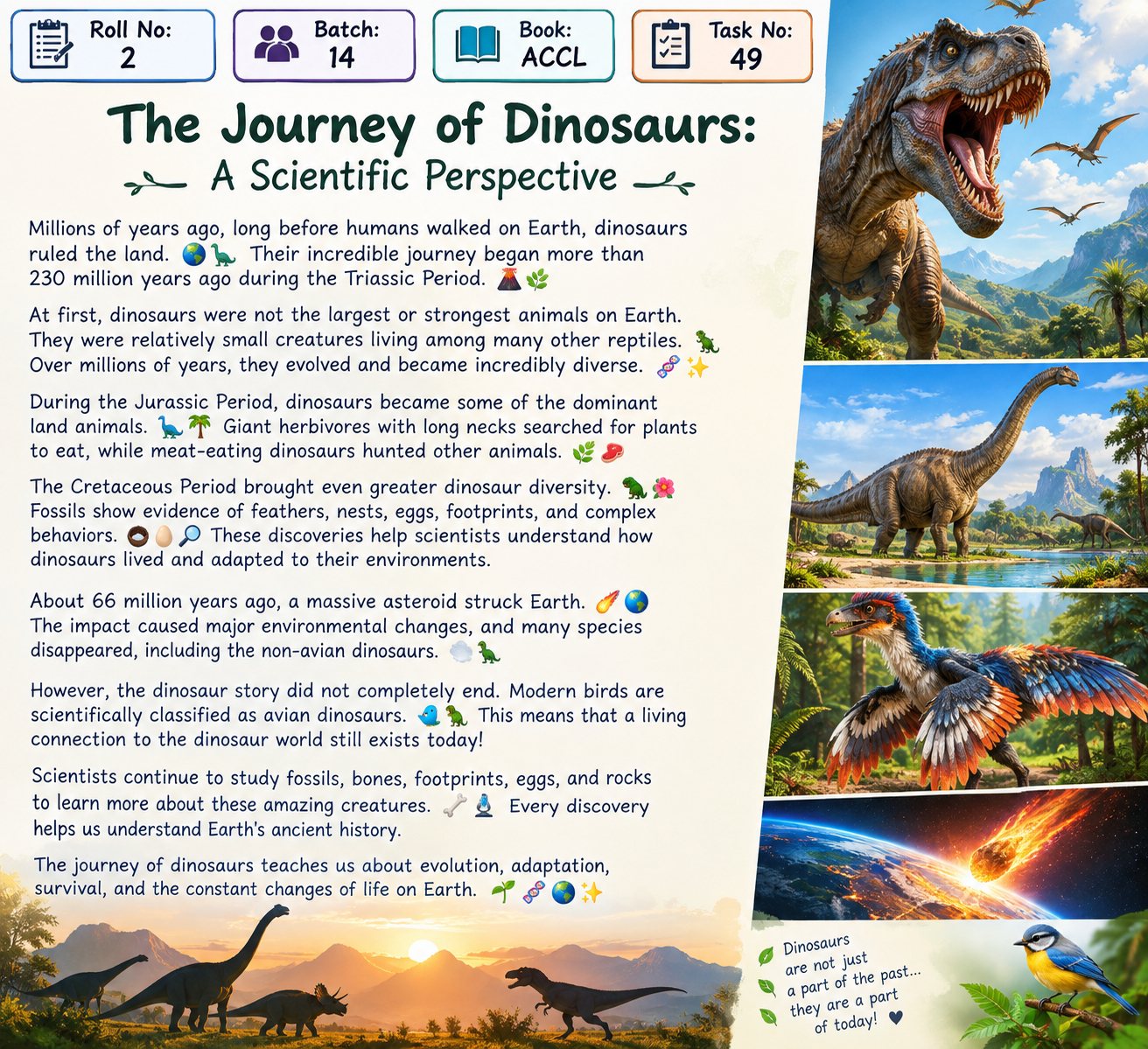
    # The Journey of Dinosaurs: A Scientific Perspective

    Millions of years ago, long before humans walked on Earth, dinosaurs ruled the land. Their incredible journey began more than **230 million years ago** during the Triassic Period.

    At first, dinosaurs were not the largest or strongest animals on Earth. They were relatively small creatures living among many other reptiles. Over millions of years, they evolved and became incredibly diverse.

    During the **Jurassic Period**, dinosaurs became some of the dominant land animals. Giant herbivores with long necks searched for plants to eat, while meat-eating dinosaurs hunted other animals.

    The **Cretaceous Period** brought even greater dinosaur diversity. Fossils show evidence of feathers, nests, eggs, footprints, and complex behaviors. 🪺 These discoveries help scientists understand how dinosaurs lived and adapted to their environments.

    About **66 million years ago**, a massive asteroid struck Earth. The impact caused major environmental changes, and many species disappeared, including the non-avian dinosaurs.

    However, the dinosaur story did not completely end. Modern birds are scientifically classified as **avian dinosaurs**. This means that a living connection to the dinosaur world still exists today!

    Scientists continue to study fossils, bones, footprints, eggs, and rocks to learn more about these amazing creatures. Every discovery helps us understand Earth's ancient history.

    The journey of dinosaurs teaches us about evolution, adaptation, survival, and the constant changes of life on Earth.
    **Roll No: 2** **Batch: 14** **Book: ACCL** **Task No: 49** # 🦖 The Journey of Dinosaurs: A Scientific Perspective 🌍🔬 Millions of years ago, long before humans walked on Earth, dinosaurs ruled the land. 🌎🦕 Their incredible journey began more than **230 million years ago** during the Triassic Period. 🌋🌿 At first, dinosaurs were not the largest or strongest animals on Earth. They were relatively small creatures living among many other reptiles. 🦎 Over millions of years, they evolved and became incredibly diverse. 🧬✨ During the **Jurassic Period**, dinosaurs became some of the dominant land animals. 🦕🌴 Giant herbivores with long necks searched for plants to eat, while meat-eating dinosaurs hunted other animals. 🌿🥩 The **Cretaceous Period** brought even greater dinosaur diversity. 🦖🌺 Fossils show evidence of feathers, nests, eggs, footprints, and complex behaviors. 🪺🥚🔎 These discoveries help scientists understand how dinosaurs lived and adapted to their environments. About **66 million years ago**, a massive asteroid struck Earth. ☄️🌎 The impact caused major environmental changes, and many species disappeared, including the non-avian dinosaurs. 🌫️🦖 However, the dinosaur story did not completely end. Modern birds are scientifically classified as **avian dinosaurs**. 🐦🦖 This means that a living connection to the dinosaur world still exists today! Scientists continue to study fossils, bones, footprints, eggs, and rocks to learn more about these amazing creatures. 🦴🔬 Every discovery helps us understand Earth's ancient history. The journey of dinosaurs teaches us about evolution, adaptation, survival, and the constant changes of life on Earth. 🌱🧬🌍✨
    0 Σχόλια 0 Μοιράστηκε 111 Views
  • Mohsin #RSF8
    #Storypost8
    Class: Foundation level
    Made by Me
    rool no:13

    ## ** Story Post Title: Acids and Bases: The Balance of Nature**

    **Acids and Bases: The Balance of Nature**

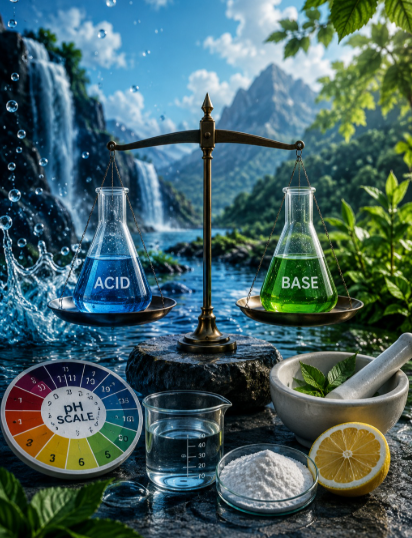
    Nature is built on balance, and one of the most fascinating examples of this balance is the relationship between **acids and bases**. Although they have opposite properties, both are essential for life on Earth. From the food we eat to the water we drink, from the soil that grows our crops to the blood flowing through our bodies, acids and bases work together to maintain harmony in the natural world.

    Acids are substances that release hydrogen ions and often have a sour taste, while bases release hydroxide ions and are usually bitter or slippery to the touch. When an acid and a base react, they form **salt and water**, a process called **neutralization**. This reaction helps maintain stability in many natural and industrial processes.

    Our bodies also depend on this delicate balance. For example, human blood maintains a nearly constant pH level, allowing organs to function properly. Even a small change in this balance can affect our health. In nature, rainwater, oceans, rivers, and soil all rely on the correct pH to support plants, animals, and aquatic life.

    Acids and bases are not just laboratory chemicals—they are part of our everyday lives. Lemon juice, vinegar, oranges, baking soda, toothpaste, soap, and many household products all demonstrate the amazing role these substances play in our daily routines.

    Learning about acids and bases helps us understand how science explains the world around us. It teaches us that balance is not only important in chemistry but also in life itself. Just as nature thrives through harmony, we too can achieve success by maintaining balance in our thoughts, actions, and decisions.
    Mohsin #RSF8🎓✨ #Storypost8 Class: Foundation level 📚 Made by Me 💻🚀 rool no:13 ## **📖 Story Post Title: Acids and Bases: The Balance of Nature** 🧪🌿 **Acids and Bases: The Balance of Nature** 🌿🧪 Nature is built on balance, and one of the most fascinating examples of this balance is the relationship between **acids and bases**. Although they have opposite properties, both are essential for life on Earth. From the food we eat to the water we drink, from the soil that grows our crops to the blood flowing through our bodies, acids and bases work together to maintain harmony in the natural world. Acids are substances that release hydrogen ions and often have a sour taste, while bases release hydroxide ions and are usually bitter or slippery to the touch. When an acid and a base react, they form **salt and water**, a process called **neutralization**. This reaction helps maintain stability in many natural and industrial processes. Our bodies also depend on this delicate balance. For example, human blood maintains a nearly constant pH level, allowing organs to function properly. Even a small change in this balance can affect our health. In nature, rainwater, oceans, rivers, and soil all rely on the correct pH to support plants, animals, and aquatic life. Acids and bases are not just laboratory chemicals—they are part of our everyday lives. Lemon juice, vinegar, oranges, baking soda, toothpaste, soap, and many household products all demonstrate the amazing role these substances play in our daily routines. Learning about acids and bases helps us understand how science explains the world around us. It teaches us that balance is not only important in chemistry but also in life itself. Just as nature thrives through harmony, we too can achieve success by maintaining balance in our thoughts, actions, and decisions.
    0 Σχόλια 0 Μοιράστηκε 247 Views
  • Mohsin #RSF8
    #Storypost8
    Class: Foundation level
    Made by Me
    rool no:13

    ## ** Story Post Title: Acids and Bases: The Balance of Nature**

    **Acids and Bases: The Balance of Nature**

    Nature is built on balance, and one of the most fascinating examples of this balance is the relationship between **acids and bases**. Although they have opposite properties, both are essential for life on Earth. From the food we eat to the water we drink, from the soil that grows our crops to the blood flowing through our bodies, acids and bases work together to maintain harmony in the natural world.

    Acids are substances that release hydrogen ions and often have a sour taste, while bases release hydroxide ions and are usually bitter or slippery to the touch. When an acid and a base react, they form **salt and water**, a process called **neutralization**. This reaction helps maintain stability in many natural and industrial processes.

    Our bodies also depend on this delicate balance. For example, human blood maintains a nearly constant pH level, allowing organs to function properly. Even a small change in this balance can affect our health. In nature, rainwater, oceans, rivers, and soil all rely on the correct pH to support plants, animals, and aquatic life.

    Acids and bases are not just laboratory chemicals—they are part of our everyday lives. Lemon juice, vinegar, oranges, baking soda, toothpaste, soap, and many household products all demonstrate the amazing role these substances play in our daily routines.

    Learning about acids and bases helps us understand how science explains the world around us. It teaches us that balance is not only important in chemistry but also in life itself. Just as nature thrives through harmony, we too can achieve success by maintaining balance in our thoughts, actions, and decisions.

    **Science shows us that every reaction has a purpose, and every balance creates a stronger, healthier world. Keep learning, stay curious, and discover the wonders hidden in everyday life!**

    #Science #Chemistry #AcidsAndBases #BalanceOfNature #LearningEveryDay #Education #STEM #Nature #Curiosity #Knowledge #RSF8
    Mohsin #RSF8🎓✨ #Storypost8 Class: Foundation level 📚 Made by Me 💻🚀 rool no:13 ## **📖 Story Post Title: Acids and Bases: The Balance of Nature** 🧪🌿 **Acids and Bases: The Balance of Nature** 🌿🧪 Nature is built on balance, and one of the most fascinating examples of this balance is the relationship between **acids and bases**. Although they have opposite properties, both are essential for life on Earth. From the food we eat to the water we drink, from the soil that grows our crops to the blood flowing through our bodies, acids and bases work together to maintain harmony in the natural world. Acids are substances that release hydrogen ions and often have a sour taste, while bases release hydroxide ions and are usually bitter or slippery to the touch. When an acid and a base react, they form **salt and water**, a process called **neutralization**. This reaction helps maintain stability in many natural and industrial processes. Our bodies also depend on this delicate balance. For example, human blood maintains a nearly constant pH level, allowing organs to function properly. Even a small change in this balance can affect our health. In nature, rainwater, oceans, rivers, and soil all rely on the correct pH to support plants, animals, and aquatic life. Acids and bases are not just laboratory chemicals—they are part of our everyday lives. Lemon juice, vinegar, oranges, baking soda, toothpaste, soap, and many household products all demonstrate the amazing role these substances play in our daily routines. Learning about acids and bases helps us understand how science explains the world around us. It teaches us that balance is not only important in chemistry but also in life itself. Just as nature thrives through harmony, we too can achieve success by maintaining balance in our thoughts, actions, and decisions. 🌍 **Science shows us that every reaction has a purpose, and every balance creates a stronger, healthier world. Keep learning, stay curious, and discover the wonders hidden in everyday life!** 🔬✨ #Science #Chemistry #AcidsAndBases #BalanceOfNature #LearningEveryDay #Education #STEM #Nature #Curiosity #Knowledge #RSF8🎓✨
    0 Σχόλια 0 Μοιράστηκε 214 Views
  • RSIF 8

    Roll no 93

    Image chatgpt no 9

    Task topic:Text: "Did you know?

    Bilkul Ek chhoti factual correction: **Amazon ko “20% of Earth’s oxygen” produce karne wala kehna commonly repeated claim hai, lekin scientists ke mutabiq yeh misleading hai**. Is liye description mein fact ko accurately explain kar raha hoon.


    **Did You Know?**


    The Amazon Rainforest is one of the most important ecosystems on Earth. It covers a huge area of South America and is home to millions of plants, animals, insects, and microorganisms.


    You may have heard that **“the Amazon produces 20% of the Earth’s oxygen.”** This is a popular claim, but it is not an accurate way to describe the rainforest’s contribution to the atmosphere. Forests produce oxygen through photosynthesis, but they also use oxygen as organisms respire and as dead plants and other organic matter decompose. Much of the oxygen produced by the Amazon is therefore consumed within the ecosystem.


    What makes the Amazon truly remarkable is its enormous role in **biodiversity, carbon storage, rainfall patterns, climate regulation, and supporting countless species and communities.**


    The rainforest reminds us that every ecosystem is connected. Protecting forests means protecting wildlife, natural resources, and the environmental systems that support life on our planet.


    **Small fact, big lesson: understanding nature helps us understand our responsibility to protect it.**


    **Learn. Explore. Protect.**


    #DidYouKnow #AmazonRainforest #Amazon #Rainforest #Biodiversity #Nature #Environment #Climate #Science #Earth #Wildlife #Ecosystem #EnvironmentalAwareness #ScienceEducation #SaveTheRainforest #ProtectNature #Education #LearnSomethingNew
    RSIF 8 Roll no 93 Image chatgpt no 9 Task topic:Text: "Did you know? Bilkul 👍 Ek chhoti factual correction: **Amazon ko “20% of Earth’s oxygen” produce karne wala kehna commonly repeated claim hai, lekin scientists ke mutabiq yeh misleading hai**. Is liye description mein fact ko accurately explain kar raha hoon. 🌳🌎 **Did You Know?** The Amazon Rainforest is one of the most important ecosystems on Earth. It covers a huge area of South America and is home to millions of plants, animals, insects, and microorganisms. You may have heard that **“the Amazon produces 20% of the Earth’s oxygen.”** This is a popular claim, but it is not an accurate way to describe the rainforest’s contribution to the atmosphere. Forests produce oxygen through photosynthesis, but they also use oxygen as organisms respire and as dead plants and other organic matter decompose. Much of the oxygen produced by the Amazon is therefore consumed within the ecosystem. 🌱 What makes the Amazon truly remarkable is its enormous role in **biodiversity, carbon storage, rainfall patterns, climate regulation, and supporting countless species and communities.** The rainforest reminds us that every ecosystem is connected. Protecting forests means protecting wildlife, natural resources, and the environmental systems that support life on our planet. 🌍 **Small fact, big lesson: understanding nature helps us understand our responsibility to protect it.** 📚 **Learn. Explore. Protect.** #DidYouKnow #AmazonRainforest #Amazon #Rainforest #Biodiversity #Nature #Environment #Climate #Science #Earth #Wildlife #Ecosystem #EnvironmentalAwareness #ScienceEducation #SaveTheRainforest #ProtectNature #Education #LearnSomethingNew
    0 Σχόλια 0 Μοιράστηκε 238 Views
  • #rsisb
    Roll NO:232
    Foundation level student.
    Story post:13

    ### Description

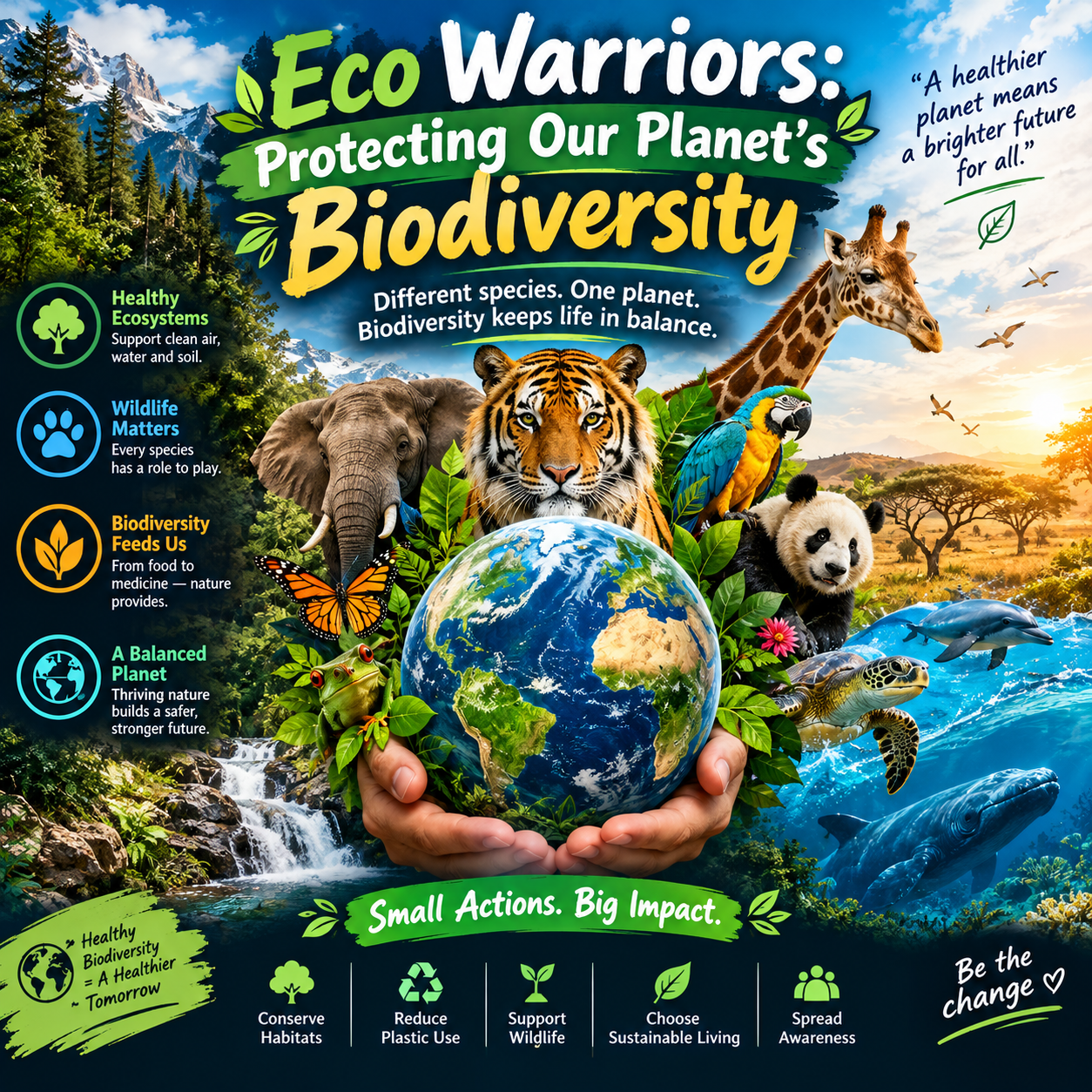
    **Eco Warriors: Protecting Our Planet's Biodiversity**
    Our planet is home to millions of amazing plants, animals, insects, and microorganisms, all connected in a delicate web of life. But pollution, habitat loss, climate change, and other challenges are putting biodiversity at risk.

    In this educational journey, discover why biodiversity matters, how ecosystems stay balanced, and what we can do to protect the incredible variety of life on Earth. Every small action can help create a healthier future for our planet!

    ### Hashtags

    #EcoWarriors #Biodiversity #SaveOurPlanet #ProtectNature #Environment #Nature #Wildlife #ClimateAction #Ecosystems #Conservation #GreenPlanet #Earth #Sustainability #EnvironmentalAwareness #SaveWildlife #GoGreen #Education #Learning #NatureLovers #PlanetEarth

    ### Emojis


    #rsisb Roll NO:232 Foundation level student. Story post:13 ### 🌿 Description **Eco Warriors: Protecting Our Planet's Biodiversity** 🌍🐾🌱 Our planet is home to millions of amazing plants, animals, insects, and microorganisms, all connected in a delicate web of life. 🦋🌳🐘 But pollution, habitat loss, climate change, and other challenges are putting biodiversity at risk. 🌊🔥 In this educational journey, discover why biodiversity matters, how ecosystems stay balanced, and what we can do to protect the incredible variety of life on Earth. 🌎💚 Every small action can help create a healthier future for our planet! 🌱✨ ### 🔖 Hashtags #EcoWarriors #Biodiversity #SaveOurPlanet #ProtectNature #Environment #Nature #Wildlife #ClimateAction #Ecosystems #Conservation #GreenPlanet #Earth #Sustainability #EnvironmentalAwareness #SaveWildlife #GoGreen #Education #Learning #NatureLovers #PlanetEarth ### 🌎 Emojis 🌍🌱🌳🐾🦋🐘🦜🌊🌿💚♻️☀️🌎🤝✨📚🔬🐝🌺💧
    0 Σχόλια 0 Μοιράστηκε 322 Views
  • #rsisb
    Roll NO:232
    Foundation level student.
    Story post:10

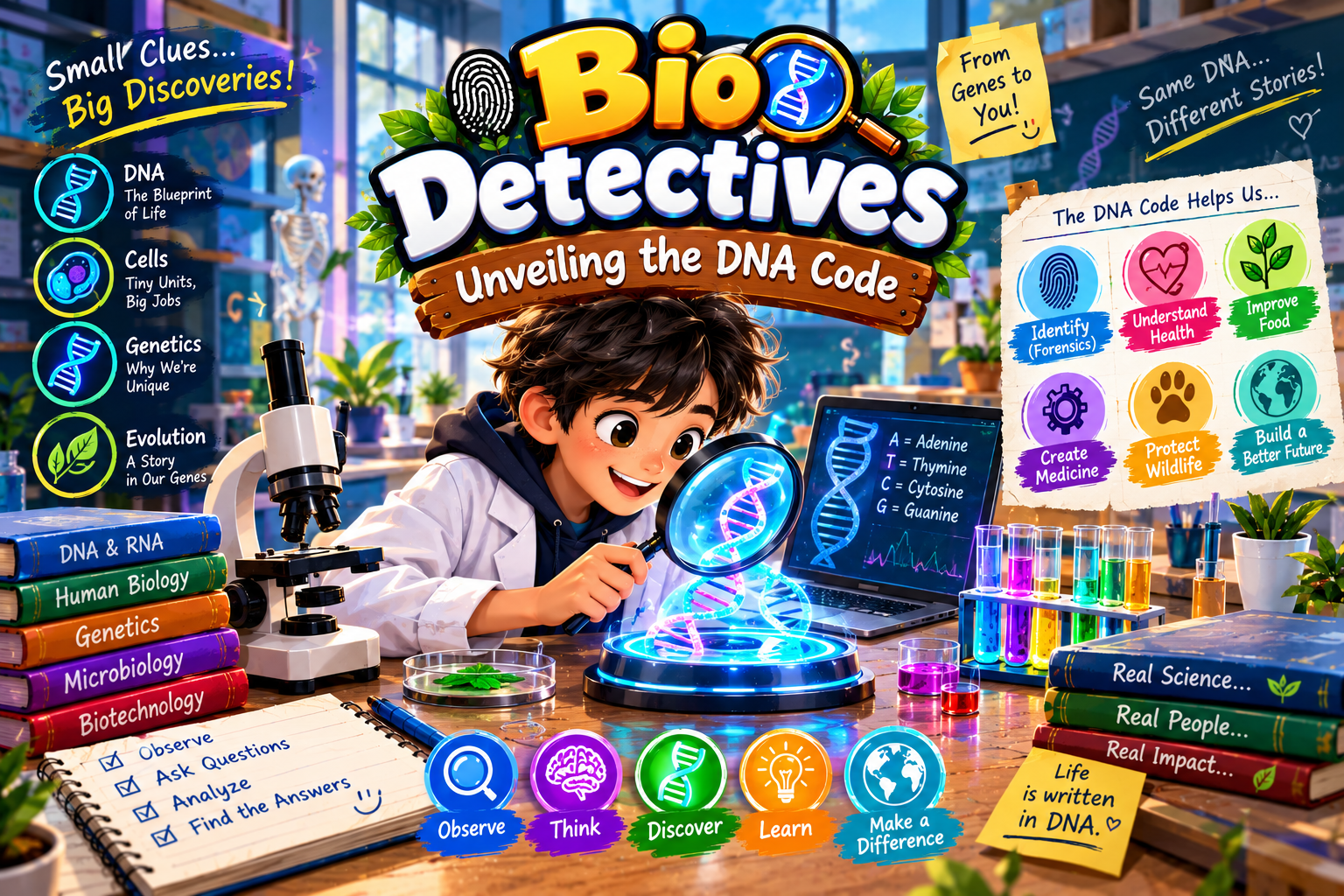
    **Bio Detectives: Unveiling the DNA Code** ‍

    Get ready to become a **Bio Detective** and enter the fascinating world of DNA! In this exciting educational adventure, we’ll explore the amazing molecule that carries genetic information and helps make every living organism unique. ‍

    We’ll discover the structure of DNA, learn about **genes, chromosomes, DNA bases, and the famous double-helix shape**, and explore how genetic information is stored and passed from one generation to the next.

    From humans ‍‍ to animals , plants , and microscopic organisms , DNA plays an important role in life. By uncovering the DNA code, we can better understand how living things grow, develop, and inherit characteristics.

    This journey makes biology exciting and easy to explore while encouraging **curiosity, critical thinking, observation, and scientific discovery**.

    **Investigate DNA • Discover Genetics • Explore Life • Unlock the Code!**

    Join the Bio Detectives and uncover the incredible science hidden inside every living cell!

    #BioDetectives #DNA #DNACode #Genetics #Biology #DNAExplained #Science #BiologyForKids #ScienceEducation #STEM #HumanBiology #GeneticCode #Chromosomes #Genes #DoubleHelix #CellScience #LifeScience #EducationalVideo #Learning #FunLearning #YoungScientists #ScienceExploration #DiscoverScience ‍
    #rsisb Roll NO:232 Foundation level student. Story post:10 🧬🔬 **Bio Detectives: Unveiling the DNA Code** 🕵️‍♂️🧪✨ Get ready to become a **Bio Detective** and enter the fascinating world of DNA! 🧬🔍 In this exciting educational adventure, we’ll explore the amazing molecule that carries genetic information and helps make every living organism unique. 🌱🐾🧑‍🔬 We’ll discover the structure of DNA, learn about **genes, chromosomes, DNA bases, and the famous double-helix shape**, and explore how genetic information is stored and passed from one generation to the next. 🧬🧪📚 From humans 👨‍👩‍👧 to animals 🐘, plants 🌿, and microscopic organisms 🦠, DNA plays an important role in life. By uncovering the DNA code, we can better understand how living things grow, develop, and inherit characteristics. 🔬🌍✨ This journey makes biology exciting and easy to explore while encouraging **curiosity, critical thinking, observation, and scientific discovery**. 🧠💡🚀 🔎 **Investigate DNA • Discover Genetics • Explore Life • Unlock the Code!** 🧬🌟 Join the Bio Detectives and uncover the incredible science hidden inside every living cell! 🔬🧬💫 #BioDetectives #DNA #DNACode #Genetics #Biology #DNAExplained #Science #BiologyForKids #ScienceEducation #STEM #HumanBiology #GeneticCode #Chromosomes #Genes #DoubleHelix #CellScience #LifeScience #EducationalVideo #Learning #FunLearning #YoungScientists #ScienceExploration #DiscoverScience 🧬🔬🕵️‍♂️🧪🧠🌱🐾🦠📚💡🌍🚀✨💫
    0 Σχόλια 0 Μοιράστηκε 408 Views
Αναζήτηση αποτελεσμάτων