• #rsisb
    Roll No.240
    Image With Chatgpt No.5
    Foundation Level

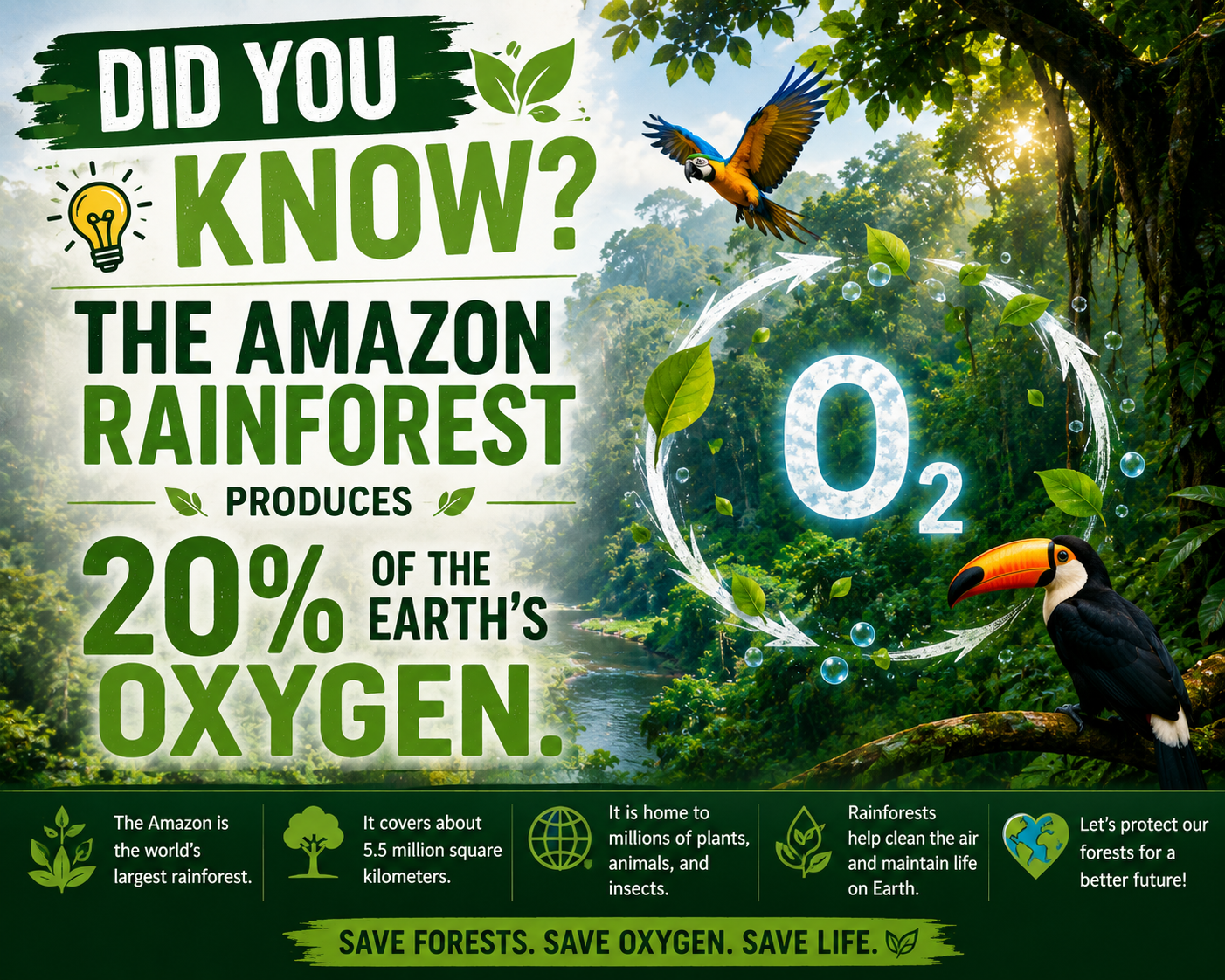
    The Amazon Rainforest is one of the most extraordinary natural environments on our planet. Stretching across a vast area of South America, it is home to an incredible variety of plants, animals, insects, birds, and microorganisms.

    The rainforest is often called the “lungs of the world,” because its plants produce oxygen through photosynthesis and the ecosystem plays an important role in absorbing and storing carbon dioxide. However, the commonly repeated claim that the Amazon produces 20% of the world’s oxygen is misleading. Much of the oxygen produced by plants is also consumed by plants, animals, fungi, and microorganisms within the ecosystem.

    What makes the Amazon truly remarkable is its biodiversity. From colorful macaws flying through the canopy to jaguars moving through the forest, countless species depend on this habitat for food, shelter, and survival.

    The rainforest also has an important role in the global carbon cycle and climate system. Trees and vegetation absorb large amounts of carbon dioxide, storing carbon in plants and soils. This makes protecting healthy forests important for the environment and for communities that depend on them.

    Every part of the Amazon ecosystem is connected. When forests are damaged or destroyed, the effects can spread through habitats, wildlife populations, water systems, and climate processes.

    Learning about the Amazon teaches us an important lesson: protecting nature means protecting the systems that support life. Conservation, responsible land use, reducing deforestation, and caring for biodiversity can all help preserve this extraordinary ecosystem for future generations.

    Explore the rainforest. Discover its biodiversity. Understand its importance. Protect our planet.

    The Amazon is more than just a forest—it is a living, interconnected world filled with life, discovery, and natural wonder.

    #AmazonRainforest #Amazon #Rainforest #DidYouKnow #Nature #Biodiversity #Wildlife #Environment #Earth #PlanetEarth #Forest #TropicalRainforest #Ecology #Science #Biology #ScienceEducation #EnvironmentalEducation #WildlifeConservation #ForestConservation #ProtectNature #SaveTheRainforest #Climate #CarbonCycle #Ecosystem #NaturalWorld #NatureLovers #ExploreNature #EarthScience #LearningJourney #EducationalContent #ScienceFacts #BiodiversityMatters #EverySpeciesCounts #ProtectOurPlanet

    Rehan School Islamabad Campus
    Asma Shaheen EducationWali
    Irum Asim
    Saima Happinesswali

    #rsisb Roll No.240 Image With Chatgpt No.5 Foundation Level The Amazon Rainforest is one of the most extraordinary natural environments on our planet. Stretching across a vast area of South America, it is home to an incredible variety of plants, animals, insects, birds, and microorganisms. 🌎🌱🐒🦋 The rainforest is often called the “lungs of the world,” because its plants produce oxygen through photosynthesis and the ecosystem plays an important role in absorbing and storing carbon dioxide. However, the commonly repeated claim that the Amazon produces 20% of the world’s oxygen is misleading. Much of the oxygen produced by plants is also consumed by plants, animals, fungi, and microorganisms within the ecosystem. What makes the Amazon truly remarkable is its biodiversity. 🌿🐢🐍🦜🐆 From colorful macaws flying through the canopy to jaguars moving through the forest, countless species depend on this habitat for food, shelter, and survival. The rainforest also has an important role in the global carbon cycle and climate system. Trees and vegetation absorb large amounts of carbon dioxide, storing carbon in plants and soils. 🌱🌍 This makes protecting healthy forests important for the environment and for communities that depend on them. Every part of the Amazon ecosystem is connected. 🌳➡️🦋➡️🐦➡️🐆 When forests are damaged or destroyed, the effects can spread through habitats, wildlife populations, water systems, and climate processes. Learning about the Amazon teaches us an important lesson: protecting nature means protecting the systems that support life. 💚🌎 Conservation, responsible land use, reducing deforestation, and caring for biodiversity can all help preserve this extraordinary ecosystem for future generations. ✨ Explore the rainforest. Discover its biodiversity. Understand its importance. Protect our planet. 🌿🔬🌍 The Amazon is more than just a forest—it is a living, interconnected world filled with life, discovery, and natural wonder. 🌳💚🦜 #AmazonRainforest #Amazon #Rainforest #DidYouKnow #Nature #Biodiversity #Wildlife #Environment #Earth #PlanetEarth #Forest #TropicalRainforest #Ecology #Science #Biology #ScienceEducation #EnvironmentalEducation #WildlifeConservation #ForestConservation #ProtectNature #SaveTheRainforest #Climate #CarbonCycle #Ecosystem #NaturalWorld #NatureLovers #ExploreNature #EarthScience #LearningJourney #EducationalContent #ScienceFacts #BiodiversityMatters #EverySpeciesCounts #ProtectOurPlanet 🌎🌿🌳🦜🐆🐢 Rehan School Islamabad Campus Asma Shaheen EducationWali Irum Asim Saima Happinesswali
    0 التعليقات 0 المشاركات 3073 مشاهدة
  • #rsisb
    Roll No.240
    Story No.23
    Foundation Level

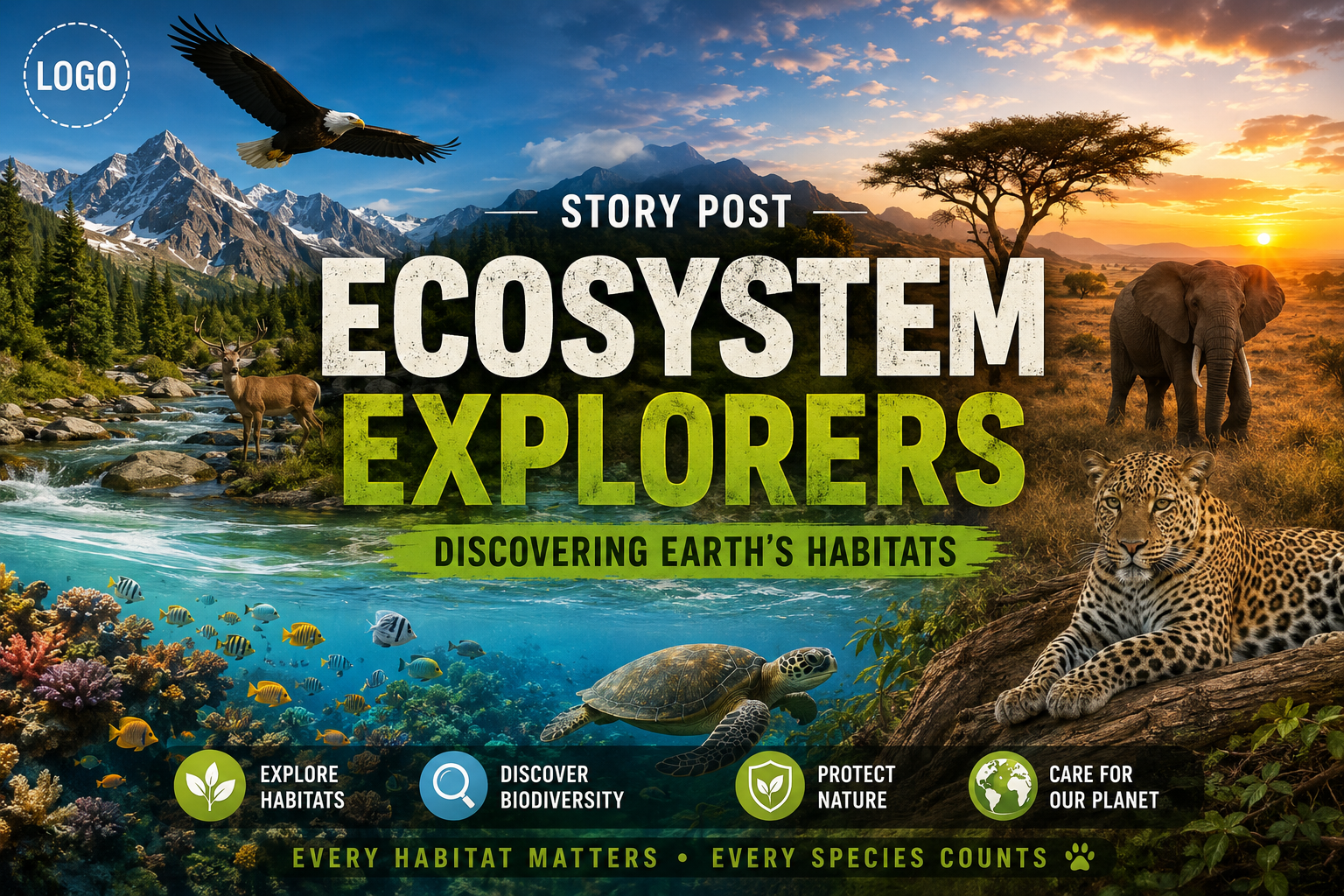
    Every corner of our planet is home to an amazing variety of life, from the highest mountains and deepest oceans to vast forests, peaceful rivers, colorful wetlands, and dry deserts. Each habitat has its own unique environment, plants, animals, and natural systems that work together to support life.

    In **“Ecosystem Explorers: Discovering Earth’s Habitats,”** we take an exciting journey across different ecosystems to discover how living organisms interact with their surroundings. We explore the beauty of forests, the mystery of oceans, the strength of mountain ecosystems, the unique life of deserts, and the importance of freshwater habitats.

    Every ecosystem tells a different story. A forest provides shelter and food for countless species, oceans support incredible marine life, deserts show how animals and plants can adapt to challenging conditions, and wetlands play an important role in maintaining healthy environments.

    This journey helps us understand the importance of **biodiversity** and why every species matters. Even the smallest organisms can have an important role in maintaining the balance of an ecosystem. When one part of an ecosystem changes, it can affect many other living things.

    Learning about habitats is not just about discovering animals and plants. It is also about understanding our responsibility toward nature. By protecting forests, keeping rivers and oceans clean, reducing pollution, conserving wildlife, and respecting natural habitats, we can help create a healthier planet for future generations.

    Our Earth is full of incredible places waiting to be explored. The more we learn about these ecosystems, the more we understand how connected all life truly is. Every habitat has value, every species has a role, and every person can make a positive difference.

    Let’s become true **Ecosystem Explorers**—curious about nature, passionate about learning, and committed to protecting the amazing world around us.

    **Explore Habitats**
    **Discover Biodiversity**
    **Protect Nature**
    **Care for Our Planet**

    **Every Habitat Matters • Every Species Counts**

    #EcosystemExplorers #DiscoveringEarthsHabitats #Ecosystem #Habitats #Biodiversity #Nature #Wildlife #Environment #Earth #PlanetEarth #ExploreNature #NatureExploration #AnimalLife #PlantLife #Forests #Oceans #Deserts #Mountains #Wetlands #Freshwater #MarineLife #WildlifeConservation #ProtectNature #SaveOurPlanet #EnvironmentalEducation #ScienceEducation #Biology #Ecology #LearningJourney #NatureLovers #EarthExplorers #Conservation #ClimateAwareness #SustainableFuture #GreenPlanet #NatureIsAmazing #EverySpeciesCounts #EveryHabitatMatters


    Rehan School Islamabad Campus
    Asma Shaheen EducationWali
    Irum Asim
    Saima Happinesswali


    #rsisb Roll No.240 Story No.23 Foundation Level Every corner of our planet is home to an amazing variety of life, from the highest mountains and deepest oceans to vast forests, peaceful rivers, colorful wetlands, and dry deserts. 🌎✨ Each habitat has its own unique environment, plants, animals, and natural systems that work together to support life. 🦋🌱🐟🦁 In **“Ecosystem Explorers: Discovering Earth’s Habitats,”** we take an exciting journey across different ecosystems to discover how living organisms interact with their surroundings. 🔍🌿 We explore the beauty of forests, the mystery of oceans, the strength of mountain ecosystems, the unique life of deserts, and the importance of freshwater habitats. 🌊🏜️🏞️🌲 Every ecosystem tells a different story. 🌟 A forest provides shelter and food for countless species, oceans support incredible marine life, deserts show how animals and plants can adapt to challenging conditions, and wetlands play an important role in maintaining healthy environments. 🐢🐠🦅🌵 This journey helps us understand the importance of **biodiversity** and why every species matters. 🐆🦋🐢🌺 Even the smallest organisms can have an important role in maintaining the balance of an ecosystem. When one part of an ecosystem changes, it can affect many other living things. 🌱🔗🌍 Learning about habitats is not just about discovering animals and plants. It is also about understanding our responsibility toward nature. 💚🌎 By protecting forests, keeping rivers and oceans clean, reducing pollution, conserving wildlife, and respecting natural habitats, we can help create a healthier planet for future generations. 🌿♻️🌊 Our Earth is full of incredible places waiting to be explored. 🔭🌍 The more we learn about these ecosystems, the more we understand how connected all life truly is. Every habitat has value, every species has a role, and every person can make a positive difference. 🌎❤️ Let’s become true **Ecosystem Explorers**—curious about nature, passionate about learning, and committed to protecting the amazing world around us. 🔍🌿🦜 🌱 **Explore Habitats** 🔎 **Discover Biodiversity** 🛡️ **Protect Nature** 🌍 **Care for Our Planet** ✨ **Every Habitat Matters • Every Species Counts** ✨ #EcosystemExplorers #DiscoveringEarthsHabitats #Ecosystem #Habitats #Biodiversity #Nature #Wildlife #Environment #Earth #PlanetEarth #ExploreNature #NatureExploration #AnimalLife #PlantLife #Forests #Oceans #Deserts #Mountains #Wetlands #Freshwater #MarineLife #WildlifeConservation #ProtectNature #SaveOurPlanet #EnvironmentalEducation #ScienceEducation #Biology #Ecology #LearningJourney #NatureLovers #EarthExplorers #Conservation #ClimateAwareness #SustainableFuture #GreenPlanet #NatureIsAmazing #EverySpeciesCounts #EveryHabitatMatters 🌍🌿🐘🦅🐢🐠 🏔️🌊🌳✨💚 Rehan School Islamabad Campus Asma Shaheen EducationWali Irum Asim Saima Happinesswali
    0 التعليقات 0 المشاركات 4089 مشاهدة
  • #rsisb
    Roll no.239
    Story Post no.3
    Foundation Level
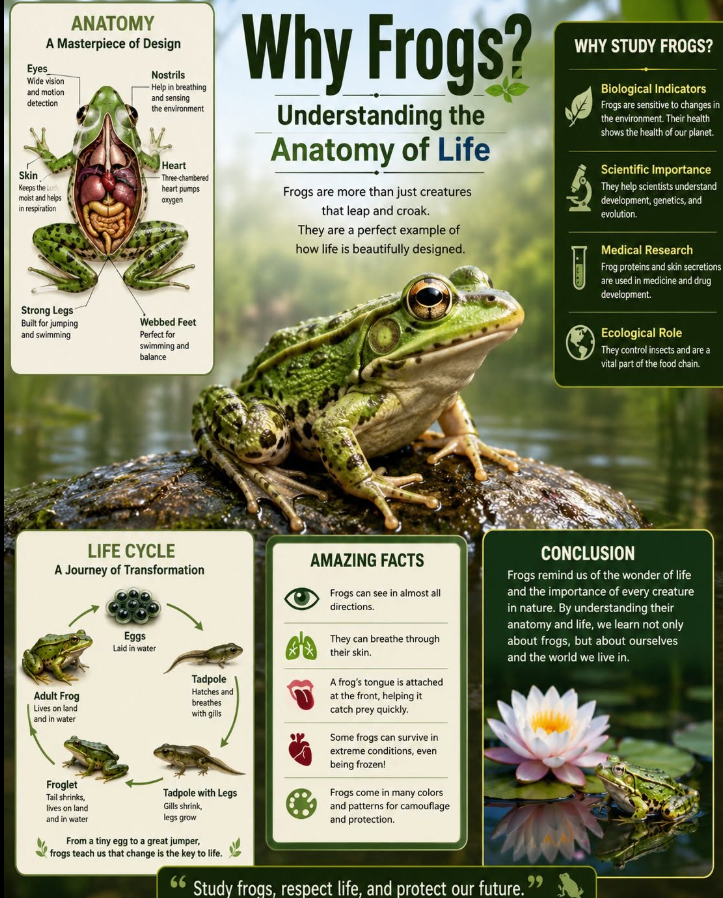
    **Why Frogs? Understanding the Anatomy of Life**

    Frogs are much more than fascinating creatures found near ponds and wetlands. They provide scientists and students with a simple yet powerful way to understand the **anatomy, biology, and complexity of life**.

    From their powerful hind legs to their unique respiratory system , sensitive eyes , strong hearts , and specialized skin, frogs have body structures that demonstrate how different organs work together to keep an organism alive.

    Studying frog anatomy can help us understand important biological concepts such as **organs, muscles, bones, digestion, circulation, respiration, and nervous systems**. It also gives us a deeper appreciation for how living organisms adapt to their environments.

    Frogs are often studied in biology because their anatomy provides an accessible example of the basic principles shared by many vertebrates. By exploring their bodies, we can discover how structure and function are connected—and how every part of a living organism has an important role.

    **Explore the frog. Discover anatomy. Understand life.**

    #WhyFrogs #FrogAnatomy #UnderstandingLife #Anatomy #Biology #Science #LifeScience #BiologyEducation #ScienceEducation #Frogs #Amphibians #AnimalAnatomy #HumanBiology #Vertebrates #Organs #Muscles #Bones #Heart #RespiratorySystem #DigestiveSystem #NervousSystem #BiologicalScience #Nature #Wildlife #Ecology #Learning #Education #STEM #ScienceForStudents #BiologyStudents #StudyScience #ScienceIsAmazing #ExploreScience #DiscoverBiology #Knowledge #LearningJourney #EducationalContent #ScienceLovers #NatureLovers
    #rsisb Roll no.239 Story Post no.3 Foundation Level 🐸🔬 **Why Frogs? Understanding the Anatomy of Life** 🌿🧬 Frogs are much more than fascinating creatures found near ponds and wetlands. 🐸🌊 They provide scientists and students with a simple yet powerful way to understand the **anatomy, biology, and complexity of life**. 🔬📚 From their powerful hind legs 🦵 to their unique respiratory system 🫁, sensitive eyes 👀, strong hearts ❤️, and specialized skin, frogs have body structures that demonstrate how different organs work together to keep an organism alive. 🌱✨ Studying frog anatomy can help us understand important biological concepts such as **organs, muscles, bones, digestion, circulation, respiration, and nervous systems**. 🧠🦴❤️ It also gives us a deeper appreciation for how living organisms adapt to their environments. 🌍🌿 Frogs are often studied in biology because their anatomy provides an accessible example of the basic principles shared by many vertebrates. 🧪🔍 By exploring their bodies, we can discover how structure and function are connected—and how every part of a living organism has an important role. 🐸 **Explore the frog. Discover anatomy. Understand life.** 🔬🌍✨ #WhyFrogs #FrogAnatomy #UnderstandingLife #Anatomy #Biology #Science #LifeScience #BiologyEducation #ScienceEducation #Frogs #Amphibians #AnimalAnatomy #HumanBiology #Vertebrates #Organs #Muscles #Bones #Heart #RespiratorySystem #DigestiveSystem #NervousSystem #BiologicalScience #Nature #Wildlife #Ecology #Learning #Education #STEM #ScienceForStudents #BiologyStudents #StudyScience #ScienceIsAmazing #ExploreScience #DiscoverBiology #Knowledge #LearningJourney #EducationalContent #ScienceLovers #NatureLovers 🐸🔬🧬🌿📚✨
    0 التعليقات 0 المشاركات 5631 مشاهدة
  • #rsisb
    Roll No.240
    Story No.18
    Foundation Level

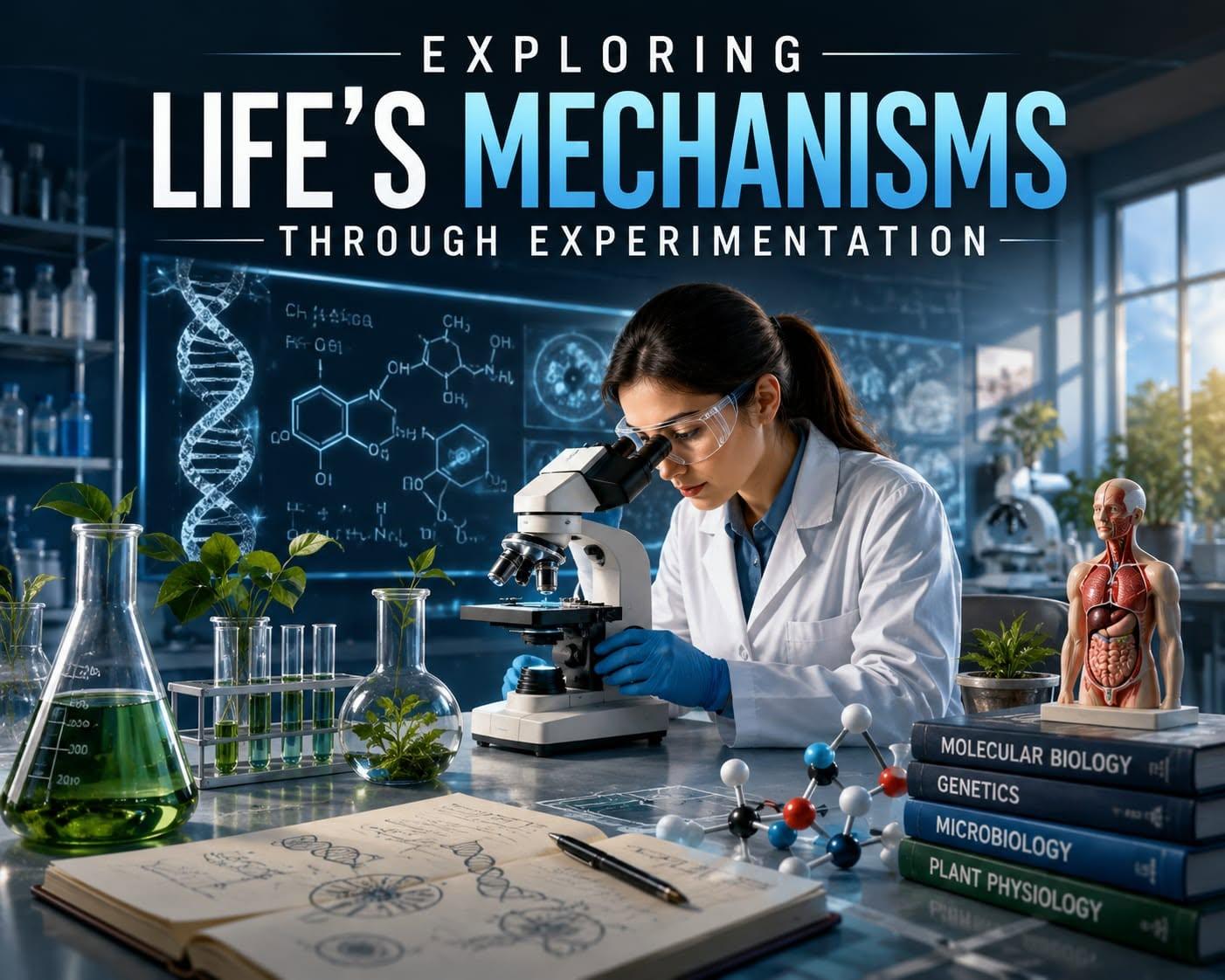
    ### **Exploring Life’s Mechanisms Through Experimentation**

    Scientific experimentation is one of the most powerful ways to understand the complex processes that sustain life. From the smallest microscopic cells to entire ecosystems, experiments allow scientists to observe, test, and explain how living organisms grow, reproduce, respond to their environment, and maintain balance. Through careful observation, data collection, and analysis, researchers uncover the biological mechanisms that drive life and contribute to advances in medicine, agriculture, biotechnology, and environmental conservation.

    Biological experiments help students and scientists explore essential topics such as genetics, cell biology, microbiology, physiology, ecology, and evolution. By forming hypotheses, conducting controlled experiments, and interpreting results, learners develop critical thinking, problem-solving, and analytical skills. Laboratory investigations also demonstrate the importance of accuracy, ethical responsibility, and evidence-based conclusions in scientific research.

    Modern technology has transformed biological experimentation through advanced microscopes, DNA sequencing, computer simulations, molecular biology techniques, and artificial intelligence. These innovations enable researchers to study diseases, develop life-saving medicines, improve crop production, protect endangered species, and better understand the incredible complexity of living organisms. Every experiment, whether simple or advanced, contributes valuable knowledge that helps improve human health and our understanding of the natural world.

    Exploring life's mechanisms through experimentation inspires curiosity, encourages innovation, and highlights the importance of scientific discovery. By combining observation, creativity, and rigorous testing, scientists continue to unlock the mysteries of life and create solutions to global challenges, paving the way for a healthier, more sustainable future.

    **#Biology #LifeScience #ScientificExperiment #Laboratory #STEM #ScienceEducation #Research #Biotechnology #CellBiology #Genetics #Microbiology #Innovation #ScientificDiscovery #Education #ExploreScience **

    Rehan School Islamabad Campus
    Asma Shaheen EducationWali
    Irum Asim
    Saima Happinesswali
    #rsisb Roll No.240 Story No.18 Foundation Level ### **Exploring Life’s Mechanisms Through Experimentation** Scientific experimentation is one of the most powerful ways to understand the complex processes that sustain life. From the smallest microscopic cells to entire ecosystems, experiments allow scientists to observe, test, and explain how living organisms grow, reproduce, respond to their environment, and maintain balance. Through careful observation, data collection, and analysis, researchers uncover the biological mechanisms that drive life and contribute to advances in medicine, agriculture, biotechnology, and environmental conservation. Biological experiments help students and scientists explore essential topics such as genetics, cell biology, microbiology, physiology, ecology, and evolution. By forming hypotheses, conducting controlled experiments, and interpreting results, learners develop critical thinking, problem-solving, and analytical skills. Laboratory investigations also demonstrate the importance of accuracy, ethical responsibility, and evidence-based conclusions in scientific research. Modern technology has transformed biological experimentation through advanced microscopes, DNA sequencing, computer simulations, molecular biology techniques, and artificial intelligence. These innovations enable researchers to study diseases, develop life-saving medicines, improve crop production, protect endangered species, and better understand the incredible complexity of living organisms. Every experiment, whether simple or advanced, contributes valuable knowledge that helps improve human health and our understanding of the natural world. Exploring life's mechanisms through experimentation inspires curiosity, encourages innovation, and highlights the importance of scientific discovery. By combining observation, creativity, and rigorous testing, scientists continue to unlock the mysteries of life and create solutions to global challenges, paving the way for a healthier, more sustainable future. **#Biology #LifeScience #ScientificExperiment #Laboratory #STEM #ScienceEducation #Research #Biotechnology #CellBiology #Genetics #Microbiology #Innovation #ScientificDiscovery #Education #ExploreScience 🔬🧬🧫🌱📚** Rehan School Islamabad Campus Asma Shaheen EducationWali Irum Asim Saima Happinesswali

    0 التعليقات 0 المشاركات 6623 مشاهدة
  • #rsisb
    Roll No.240
    Story No.20
    Foundation Level

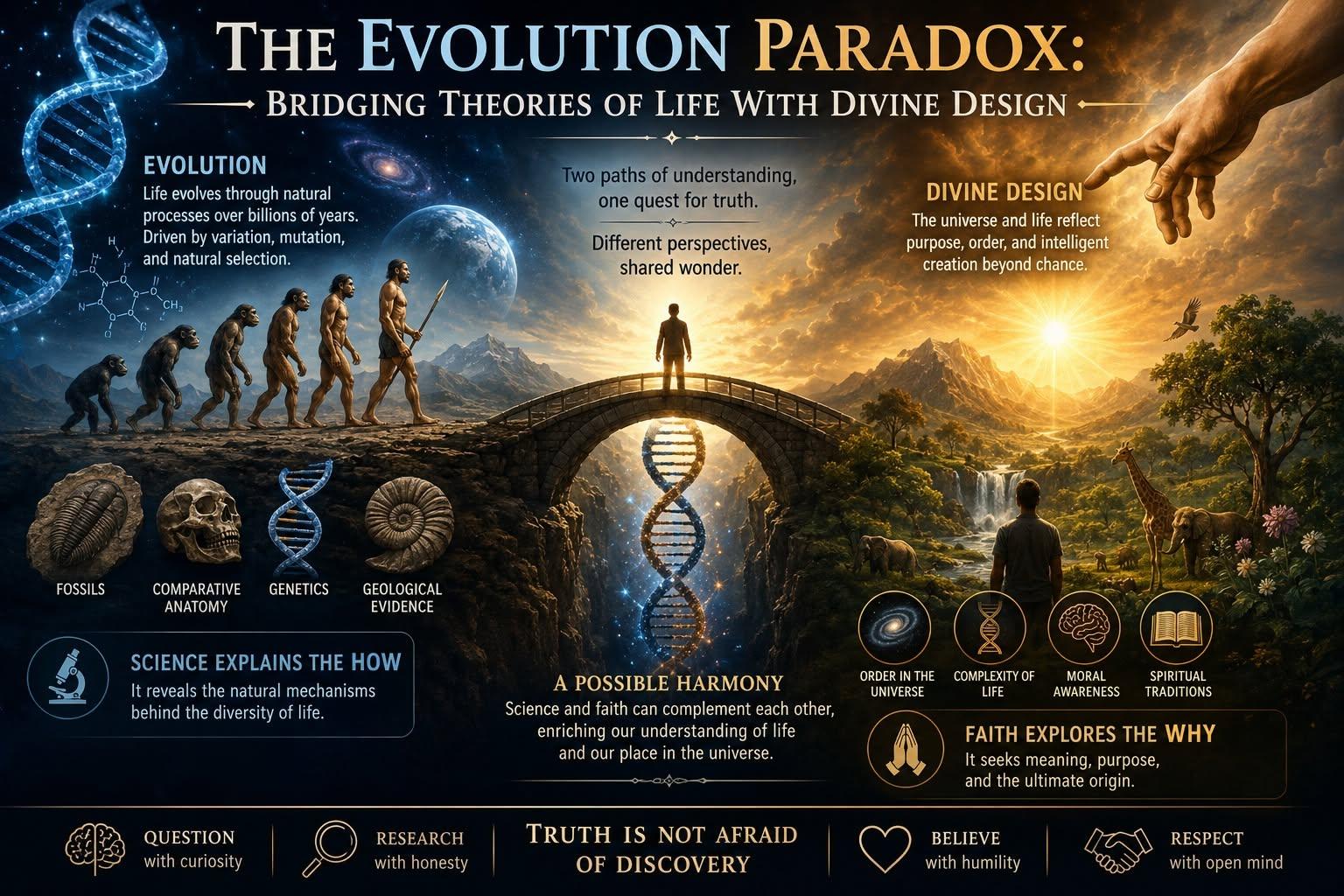
    # The Evolution Paradox: Bridging Theories of Life with Divine Design

    The relationship between **evolution** and **divine design** has long been one of humanity's most fascinating and thought-provoking discussions. While evolutionary biology explains how living organisms have changed and diversified over billions of years through natural processes such as mutation, natural selection, and genetic variation, many religious traditions view life as the result of a purposeful and intelligent Creator. Rather than seeing these perspectives as necessarily incompatible, many scholars, scientists, and people of faith explore ways they can coexist.

    Evolution provides a scientific framework for understanding the development of life based on observable evidence from fossils, genetics, comparative anatomy, and ecology. It seeks to explain *how* biological diversity emerged and continues to change over time. Divine design, on the other hand, addresses questions of *purpose*, *meaning*, and *ultimate origin*—questions that science alone is not designed to answer.

    The "evolution paradox" arises because these perspectives often focus on different kinds of questions. Science investigates natural mechanisms through observation, experimentation, and evidence, while faith explores spiritual beliefs, morality, and humanity's relationship with the Creator. Many individuals embrace both scientific discoveries and religious faith, believing that natural laws themselves may reflect an intentional design behind the universe.

    Modern genetics has revealed remarkable complexity within DNA, strengthening our understanding of evolution while also inspiring philosophical and theological reflection about the origin of life and the fine-tuned nature of the universe. These discoveries encourage respectful dialogue between science and religion rather than unnecessary conflict.

    Ultimately, exploring the relationship between evolution and divine design reminds us that curiosity, critical thinking, and respectful discussion are essential in the pursuit of knowledge. Whether one approaches life's origins through scientific inquiry, religious belief, or a combination of both, the search for truth continues to inspire wonder, humility, and a deeper appreciation for the complexity and beauty of existence.

    **#Evolution #DivineDesign #Science #Faith #Biology #Genetics #OriginOfLife #CriticalThinking #Education #Philosophy #Theology #ScientificDiscovery #Knowledge #Learning #Wonder**

    Rehan School Islamabad Campus
    Asma Shaheen EducationWali
    Irum Asim
    Saima Happinesswali

    #rsisb Roll No.240 Story No.20 Foundation Level # 🌍🧬 The Evolution Paradox: Bridging Theories of Life with Divine Design The relationship between **evolution** and **divine design** has long been one of humanity's most fascinating and thought-provoking discussions. While evolutionary biology explains how living organisms have changed and diversified over billions of years through natural processes such as mutation, natural selection, and genetic variation, many religious traditions view life as the result of a purposeful and intelligent Creator. Rather than seeing these perspectives as necessarily incompatible, many scholars, scientists, and people of faith explore ways they can coexist. Evolution provides a scientific framework for understanding the development of life based on observable evidence from fossils, genetics, comparative anatomy, and ecology. It seeks to explain *how* biological diversity emerged and continues to change over time. Divine design, on the other hand, addresses questions of *purpose*, *meaning*, and *ultimate origin*—questions that science alone is not designed to answer. The "evolution paradox" arises because these perspectives often focus on different kinds of questions. Science investigates natural mechanisms through observation, experimentation, and evidence, while faith explores spiritual beliefs, morality, and humanity's relationship with the Creator. Many individuals embrace both scientific discoveries and religious faith, believing that natural laws themselves may reflect an intentional design behind the universe. Modern genetics has revealed remarkable complexity within DNA, strengthening our understanding of evolution while also inspiring philosophical and theological reflection about the origin of life and the fine-tuned nature of the universe. These discoveries encourage respectful dialogue between science and religion rather than unnecessary conflict. Ultimately, exploring the relationship between evolution and divine design reminds us that curiosity, critical thinking, and respectful discussion are essential in the pursuit of knowledge. Whether one approaches life's origins through scientific inquiry, religious belief, or a combination of both, the search for truth continues to inspire wonder, humility, and a deeper appreciation for the complexity and beauty of existence. **#Evolution #DivineDesign #Science #Faith #Biology #Genetics #OriginOfLife #CriticalThinking #Education #Philosophy #Theology #ScientificDiscovery #Knowledge #Learning #Wonder** 🌍🧬📖✨ Rehan School Islamabad Campus Asma Shaheen EducationWali Irum Asim Saima Happinesswali

    0 التعليقات 0 المشاركات 5342 مشاهدة
  • #rsisb
    Roll no.239
    Foundation Level

    **DNA (deoxyribonucleic acid)** is often described as the blueprint of life because it stores the genetic instructions that guide how living organisms grow, function, and reproduce.

    genui{"biology_genetics_evolution_ecology":{"type_id":"DNA_TRANSCRIPTION"}}

    The study of DNA helps scientists understand **heredity, genetic variation, evolution, and the remarkable complexity of living organisms**. But DNA itself raises a deeper question: **How did the first systems capable of storing and copying biological information arise?**

    Scientists study several hypotheses about the **origin of life**, including the possibility that simple organic molecules gradually formed more complex chemical systems on early Earth. One leading research area explores how molecules capable of storing information and supporting self-replication could have emerged.

    Together, the study of **DNA and the origins of life** connects chemistry, biology, genetics, and evolution—and helps us explore one of science's biggest questions: **How did life begin?**
    #rsisb Roll no.239 Foundation Level **DNA (deoxyribonucleic acid)** is often described as the blueprint of life because it stores the genetic instructions that guide how living organisms grow, function, and reproduce. genui{"biology_genetics_evolution_ecology":{"type_id":"DNA_TRANSCRIPTION"}} The study of DNA helps scientists understand **heredity, genetic variation, evolution, and the remarkable complexity of living organisms**. But DNA itself raises a deeper question: **How did the first systems capable of storing and copying biological information arise?** Scientists study several hypotheses about the **origin of life**, including the possibility that simple organic molecules gradually formed more complex chemical systems on early Earth. One leading research area explores how molecules capable of storing information and supporting self-replication could have emerged. Together, the study of **DNA and the origins of life** connects chemistry, biology, genetics, and evolution—and helps us explore one of science's biggest questions: **How did life begin?** 🌍🔬🧬
    0 التعليقات 0 المشاركات 1210 مشاهدة
  • Discover the Green Jewel of Pakistan: Chichawatni Forest!

    Nestled in the heart of Punjab, the Chichawatni Forest is a testament to nature’s resilience and human dedication. Covering an expansive area of approximately 19,210 acres, this man-made wonder is home to around 2.5 to 3 million trees!

    Originally planted during the British colonial period, Chichawatni Forest stands as one of Pakistan’s largest man-made forests. It’s not just a haven for diverse flora and fauna but also a crucial ecological zone providing timber, combating desertification, and offering a serene escape for nature lovers.

    Whether you’re an environmental enthusiast, a student, or simply someone looking to reconnect with nature, Chichawatni Forest has something for everyone. Let’s celebrate and protect this incredible natural treasure for future generations!

    #ChichawatniForest #Nature #Conservation #Pakistan #GreenPakistan #Ecology #Forestry #SahiwalDistrict
    🌳 Discover the Green Jewel of Pakistan: Chichawatni Forest! 🌳 Nestled in the heart of Punjab, the Chichawatni Forest is a testament to nature’s resilience and human dedication. Covering an expansive area of approximately 19,210 acres, this man-made wonder is home to around 2.5 to 3 million trees! 🌲🌳 Originally planted during the British colonial period, Chichawatni Forest stands as one of Pakistan’s largest man-made forests. It’s not just a haven for diverse flora and fauna but also a crucial ecological zone providing timber, combating desertification, and offering a serene escape for nature lovers. Whether you’re an environmental enthusiast, a student, or simply someone looking to reconnect with nature, Chichawatni Forest has something for everyone. Let’s celebrate and protect this incredible natural treasure for future generations! 🌿💚 #ChichawatniForest #Nature #Conservation #Pakistan #GreenPakistan #Ecology #Forestry #SahiwalDistrict
    0 التعليقات 0 المشاركات 3163 مشاهدة
  • Anyone know them ?

    Salam Rehan Bhai

    Hope you are at bliss and near activation of pineal gland

    Rehan Bhai, can you somehow connect me with Gul Fatima Leghari, only daughter of Sardar Jaffar khan Leghari who was the kind of a King here in this region, but her daughter is so close to Nature and Ecology and if she joins Ecoist, we can change the fate of this region.

    Ill be hopeful that youll find a way to connect me with her.

    🏻
    Anyone know them ? Salam Rehan Bhai Hope you are at bliss and near activation of pineal gland 🌲 Rehan Bhai, can you somehow connect me with Gul Fatima Leghari, only daughter of Sardar Jaffar khan Leghari who was the kind of a King here in this region, but her daughter is so close to Nature and Ecology and if she joins Ecoist, we can change the fate of this region. I'll be hopeful that you'll find a way to connect me with her. 🙏🏻
    0 التعليقات 0 المشاركات 745 مشاهدة
  • This week Apple just invested a billion dollars in the youngest billion-dollar CEO in China, 33 year old Cheng Wei.

    Cheng Wei started his car-riding company (now known as “Didi Chuxing”) in June 2012 when he was 29 years old. Today, at only 33 years old, his four-year-old company is worth $20 billion after Apple’s investment, eclipsing the size of Uber in China.

    How does a young 30-something grow a business that fast in four years? Here’s 3 steps out of the many Cheng Wei took that you can follow today:

    STEP ONE - START BY EARNING WHILE YOU’RE LEARNING

    Before his new start-up, Cheng Wei worked for 7 years through his 20s at Alibaba. First in sales, and then with Alipay, the ‘Paypal’ of Alibaba. Without that experience, he wouldn’t have had the expertise and insight to create a Chinese car-sharing site at the same time Uber was starting in the US.

    Unbelievably, despite starting a company that today enables over one billion car rides each year, Cheng Wei still hasn’t learned how to drive. But instead of seeing this being a handicap, he says it makes him his company’s ideal customer, as he needs to get rides everywhere he goes. So every day, hes learning as he takes rides with his companys customers.

    STEP TWO - BE THE CONNECTOR OF GIANTS

    Cheng Wei says the early days were anything but easy: “When the company was founded, we didn’t expect to face the cruelest competition, the strictest regulation, the most complicated games among giants and capitals, and the highest frequency of media exposure in history as an internet company.”

    After struggling in the early years against many competitors and government regulations, Cheng Wei made a genius move a year ago, merging his company (then called Didi Dache) with his biggest competitor, Kuaidi Dache, in a $6 billion merger. This brought together the two company’s backers - the two biggest tech giants in China, Baidu and Alibaba, in one massive joint venture. By turning all his potential competition into allies, he eliminated his competition.

    “Keep your friends close and your enemies closer.”

    STEP THREE - STAY FOCUSED!

    Today, Cheng Wei’s company has 99% share of China’s taxi-hailing market and 87% of the private-car hailing market. Didi Chuxing operates in 400 cities compared to Uber which is only in 45 cities.

    How has Cheng Wei achieved this incredible domination? By staying focused (He only operates in China) and being mission focused: To help China to be more mobile. That’s what has attracted Apple to invest $1 billion this week, their biggest investment this year.

    As Cheng Wei says ““The endorsement from Apple is an enormous encouragement and inspiration for our four-year-old company. Didi will work hard with our drivers, riders and global partners, to make available to every citizen flexible and reliable mobility choices, and help cities solve transportation, environmental and employment challenges.”

    That single focus gives Didi a big mission riding on the big technological disruptions coming in the next decade: to help solve the pollution in Chinese cities.

    As Cheng Wei said at the Global Mobile Internet Conference in Beijing last month: “Didi intends to build out an open platform with leading machine learning capabilities where ride share solutions, electric vehicles and self-driving technologies link up riders and drivers with different needs in a sustainable and inclusive urban ecology.

    (As Didi’s official registered name is “Xiaojo” which means “Little Orange”, Didi later joked on Weibo that the real reason Apple invested was both companies were the names of fruit).

    What lesson can you take from Cheng Wei? How can you earn while you learn? Who should you collaborate with today? And how can you have one, purposeful, focus so you can delete the rest?

    Whether you are just getting started, in the early days of your business, or facing both external and internal growing pains, Cheng Wei’s 4-year, $20-billion, turbo-charged story has one underlying message:

    Stay in the right gear at the right speed at the right time, and you can always accelerate out of trouble.

    "There are no speed limits on the road to success." ~ David W. Johnson

    UPDATE - AUG 1st: Cheng Wei has just made his biggest alliance to date - with his arch-rival, Uber. On 1st Aug Didi & Uber China announced a merger.

    In the deal, Didi gets all of Ubers China operations and Uber gets 20% of Didi at a $35 billion valuation - which is a 75% increase in the $20 billion valuation when Apple invested $1 billion just 10 weeks ago (when I wrote the post above). Didi is also investing $1 billion in Uber at a $68 billion valuation.

    The result will be that Uber will become the largest shareholder in Didi, and Didi will become one of the largest shareholders in Uber.

    In the new economic paradigm, competition erodes value and collaboration adds value. What big competitor could you partner with today?

    Shared via Roger James Hamilton - Add to learn amazing things from him
    This week Apple just invested a billion dollars in the youngest billion-dollar CEO in China, 33 year old Cheng Wei. Cheng Wei started his car-riding company (now known as “Didi Chuxing”) in June 2012 when he was 29 years old. Today, at only 33 years old, his four-year-old company is worth $20 billion after Apple’s investment, eclipsing the size of Uber in China. How does a young 30-something grow a business that fast in four years? Here’s 3 steps out of the many Cheng Wei took that you can follow today: STEP ONE - START BY EARNING WHILE YOU’RE LEARNING Before his new start-up, Cheng Wei worked for 7 years through his 20s at Alibaba. First in sales, and then with Alipay, the ‘Paypal’ of Alibaba. Without that experience, he wouldn’t have had the expertise and insight to create a Chinese car-sharing site at the same time Uber was starting in the US. Unbelievably, despite starting a company that today enables over one billion car rides each year, Cheng Wei still hasn’t learned how to drive. But instead of seeing this being a handicap, he says it makes him his company’s ideal customer, as he needs to get rides everywhere he goes. So every day, he's learning as he takes rides with his company's customers. STEP TWO - BE THE CONNECTOR OF GIANTS Cheng Wei says the early days were anything but easy: “When the company was founded, we didn’t expect to face the cruelest competition, the strictest regulation, the most complicated games among giants and capitals, and the highest frequency of media exposure in history as an internet company.” After struggling in the early years against many competitors and government regulations, Cheng Wei made a genius move a year ago, merging his company (then called Didi Dache) with his biggest competitor, Kuaidi Dache, in a $6 billion merger. This brought together the two company’s backers - the two biggest tech giants in China, Baidu and Alibaba, in one massive joint venture. By turning all his potential competition into allies, he eliminated his competition. “Keep your friends close and your enemies closer.” STEP THREE - STAY FOCUSED! Today, Cheng Wei’s company has 99% share of China’s taxi-hailing market and 87% of the private-car hailing market. Didi Chuxing operates in 400 cities compared to Uber which is only in 45 cities. How has Cheng Wei achieved this incredible domination? By staying focused (He only operates in China) and being mission focused: To help China to be more mobile. That’s what has attracted Apple to invest $1 billion this week, their biggest investment this year. As Cheng Wei says ““The endorsement from Apple is an enormous encouragement and inspiration for our four-year-old company. Didi will work hard with our drivers, riders and global partners, to make available to every citizen flexible and reliable mobility choices, and help cities solve transportation, environmental and employment challenges.” That single focus gives Didi a big mission riding on the big technological disruptions coming in the next decade: to help solve the pollution in Chinese cities. As Cheng Wei said at the Global Mobile Internet Conference in Beijing last month: “Didi intends to build out an open platform with leading machine learning capabilities where ride share solutions, electric vehicles and self-driving technologies link up riders and drivers with different needs in a sustainable and inclusive urban ecology. (As Didi’s official registered name is “Xiaojo” which means “Little Orange”, Didi later joked on Weibo that the real reason Apple invested was both companies were the names of fruit). What lesson can you take from Cheng Wei? How can you earn while you learn? Who should you collaborate with today? And how can you have one, purposeful, focus so you can delete the rest? Whether you are just getting started, in the early days of your business, or facing both external and internal growing pains, Cheng Wei’s 4-year, $20-billion, turbo-charged story has one underlying message: Stay in the right gear at the right speed at the right time, and you can always accelerate out of trouble. "There are no speed limits on the road to success." ~ David W. Johnson UPDATE - AUG 1st: Cheng Wei has just made his biggest alliance to date - with his arch-rival, Uber. On 1st Aug Didi & Uber China announced a merger. In the deal, Didi gets all of Uber's China operations and Uber gets 20% of Didi at a $35 billion valuation - which is a 75% increase in the $20 billion valuation when Apple invested $1 billion just 10 weeks ago (when I wrote the post above). Didi is also investing $1 billion in Uber at a $68 billion valuation. The result will be that Uber will become the largest shareholder in Didi, and Didi will become one of the largest shareholders in Uber. In the new economic paradigm, competition erodes value and collaboration adds value. What big competitor could you partner with today? Shared via Roger James Hamilton - Add to learn amazing things from him
    0 التعليقات 0 المشاركات 684 مشاهدة
  • The Japanese education system is so revolutionary that it currently trains children as "World Citizens", not Japanese.

    In Japan, a revolutionary pilot scheme called "Brave Change" (Futoji no henko), based on the Erasmus, Grundtvig, Monnet, Ashoka and Comenius educational programs.

    It’s a shift in concept. They will understand and accept different cultures and their horizons will be global, not national.
    The 12-year program is based on concepts:

    - Zero fillers.
    - Zero Homework .
    - And it only has 5 subjects, which are:

    1. Corporate arithmetic.
    Basic operations and use of financial calculators .

    2. Reading.
    They start by reading a page of the book each child chooses and end by reading one book a week.

    3. Citizenship.
    Meaning this, as total respect for laws, civil values, ethics, respect for the rules of coexistence, tolerance, altruism and respect for ecology and the environment.

    4. Computer Science.
    Office, Internet, social networks and online activities.

    5. Language.
    4 or 5 Alphabets, Cultures, Religions, including Japanese, Latin, English, German, Chinese, Arabic; with socializing exchange visits to families from each country during the summer.

    What will be the result of this show?

    Young people who at 18 speak 4 languages, know 4 cultures, 4 alphabets.

    - They are experts in using their computers and mobile phones as work tools.
    - They read 52 books a year.
    - Respect for the law, ecology and coexistence.
    - They handle business and finance arithmetic perfectly.

    Sharing as found
    The Japanese education system is so revolutionary that it currently trains children as "World Citizens", not Japanese. In Japan, a revolutionary pilot scheme called "Brave Change" (Futoji no henko), based on the Erasmus, Grundtvig, Monnet, Ashoka and Comenius educational programs. It’s a shift in concept. They will understand and accept different cultures and their horizons will be global, not national. The 12-year program is based on concepts: - Zero fillers. - Zero Homework . - And it only has 5 subjects, which are: 1. Corporate arithmetic. Basic operations and use of financial calculators . 2. Reading. They start by reading a page of the book each child chooses and end by reading one book a week. 3. Citizenship. Meaning this, as total respect for laws, civil values, ethics, respect for the rules of coexistence, tolerance, altruism and respect for ecology and the environment. 4. Computer Science. Office, Internet, social networks and online activities. 5. Language. 4 or 5 Alphabets, Cultures, Religions, including Japanese, Latin, English, German, Chinese, Arabic; with socializing exchange visits to families from each country during the summer. What will be the result of this show? Young people who at 18 speak 4 languages, know 4 cultures, 4 alphabets. - They are experts in using their computers and mobile phones as work tools. - They read 52 books a year. - Respect for the law, ecology and coexistence. - They handle business and finance arithmetic perfectly. Sharing as found
    0 التعليقات 0 المشاركات 607 مشاهدة
الصفحات المعززة