• #rsisb
    Roll no.239
    Foundation Level

    The relationship between the **Quran and science** is a subject that encourages reflection on knowledge, nature, and the universe. The Quran repeatedly invites people to observe the world around them, think deeply, and seek understanding.

    Science explores the natural world through **observation, experimentation, and evidence**, while the Quran provides spiritual guidance and encourages reflection on creation. Some Quranic verses mention natural phenomena such as the heavens, the Earth, human development, and the water cycle. These passages have inspired many readers to think about the relationship between faith and scientific inquiry.

    It is important, however, to understand that the Quran is primarily a **book of guidance**, not a scientific textbook. Scientific theories and discoveries can change as new evidence emerges, so interpretations connecting specific verses with modern science should be approached thoughtfully.

    Ultimately, both the pursuit of knowledge and reflection on creation can encourage **curiosity, learning, humility, and a deeper appreciation of the world around us**.
    #rsisb Roll no.239 Foundation Level The relationship between the **Quran and science** is a subject that encourages reflection on knowledge, nature, and the universe. The Quran repeatedly invites people to observe the world around them, think deeply, and seek understanding. Science explores the natural world through **observation, experimentation, and evidence**, while the Quran provides spiritual guidance and encourages reflection on creation. Some Quranic verses mention natural phenomena such as the heavens, the Earth, human development, and the water cycle. These passages have inspired many readers to think about the relationship between faith and scientific inquiry. It is important, however, to understand that the Quran is primarily a **book of guidance**, not a scientific textbook. Scientific theories and discoveries can change as new evidence emerges, so interpretations connecting specific verses with modern science should be approached thoughtfully. Ultimately, both the pursuit of knowledge and reflection on creation can encourage **curiosity, learning, humility, and a deeper appreciation of the world around us**.
    0 تبصرے 0 شیئرز 179 ویوز
  • Job Available:
    Looking for an Jr Assistant for Experimentation at my new Agriculture Farm at Gharo

    Requirement:
    Passionate about Agriculure
    English Listening Skills
    Not be camera shy to speak in English and Urdu for making videos of what he learns
    Own Bike / Can be provided to really good candidate.

    Job:
    To learn best practices in the Agri industry
    Then share the learning via video to be shared on Sabz.tv and other online platforms.
    Help us apply the learning on @rehanFarms Project


    Potential to grow:
    Become Project Manager for @rehanfarms
    Become Project Manager for @rehanAgriIncubator
    Job Available: Looking for an Jr Assistant for Experimentation at my new Agriculture Farm at Gharo Requirement: Passionate about Agriculure English Listening Skills Not be camera shy to speak in English and Urdu for making videos of what he learns Own Bike / Can be provided to really good candidate. Job: To learn best practices in the Agri industry Then share the learning via video to be shared on Sabz.tv and other online platforms. Help us apply the learning on @rehanFarms Project Potential to grow: Become Project Manager for @rehanfarms Become Project Manager for @rehanAgriIncubator
    0 تبصرے 0 شیئرز 534 ویوز
  • #rsisb
    RollNo.244
    Story Post
    Foundation Level
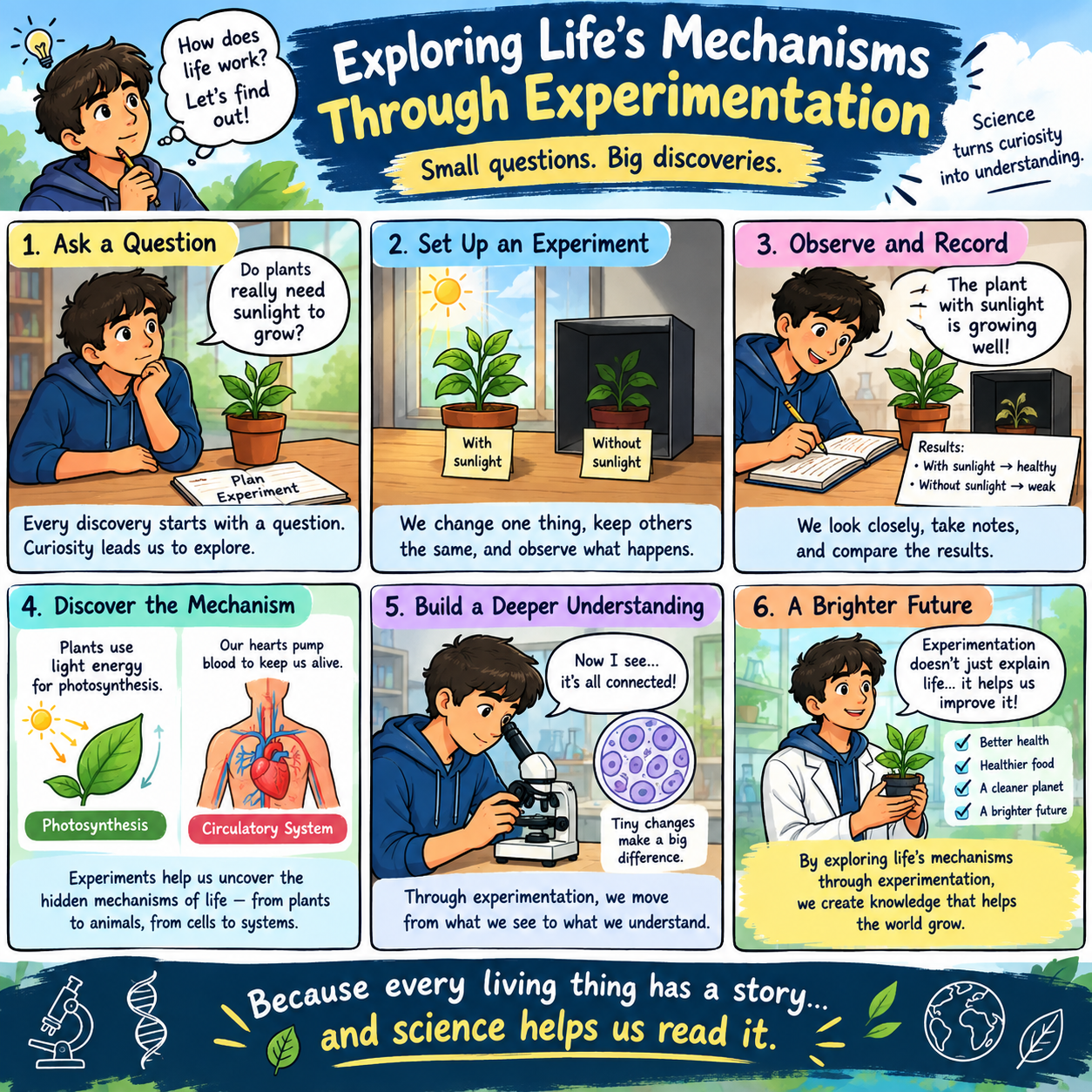
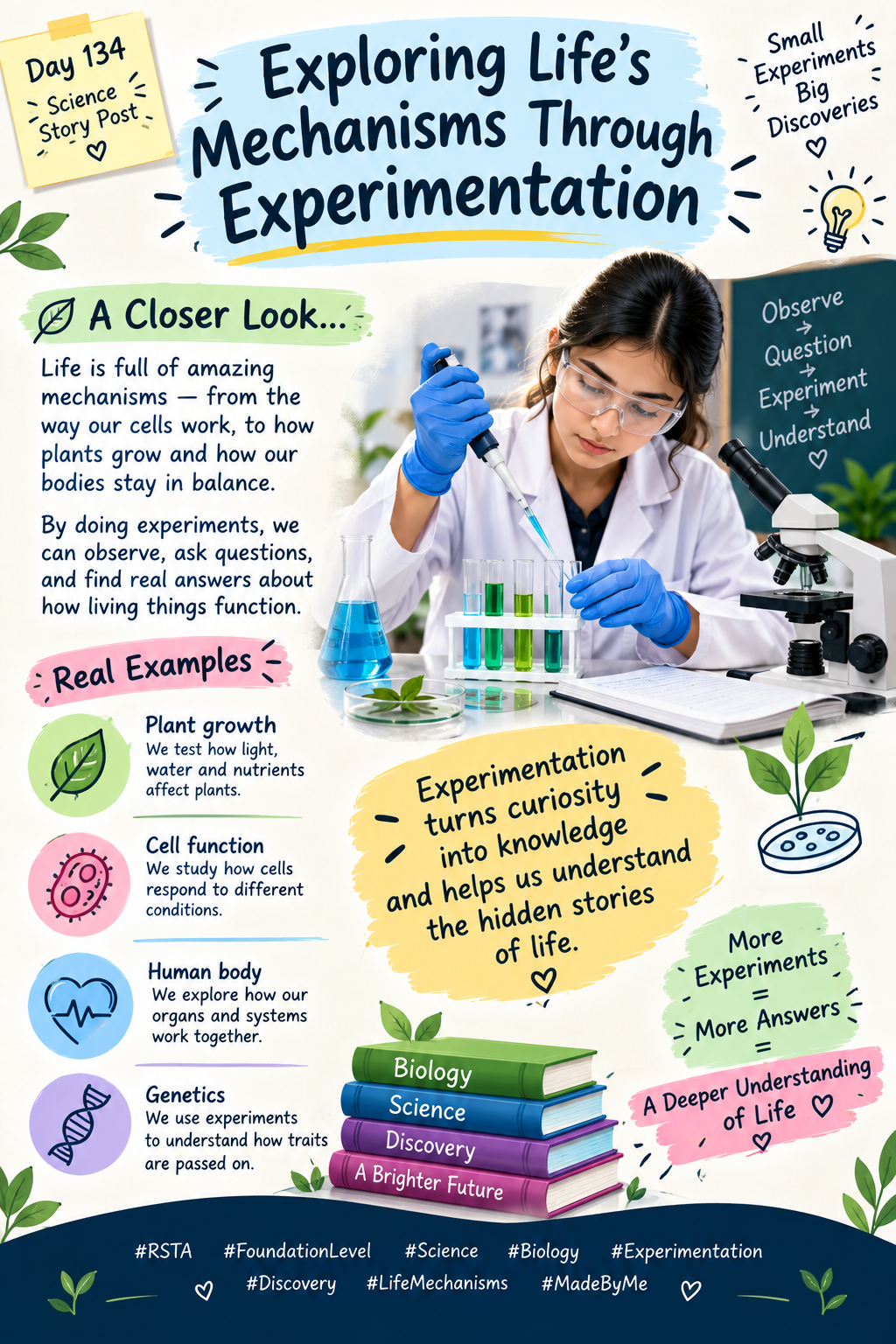
    ## Exploring Life’s Mechanisms Through Experimentation

    Every great scientific discovery begins with a question. Through careful experimentation, scientists uncover how living organisms grow, adapt, reproduce, and interact with their environment.

    From observing cells under a microscope to studying DNA and testing medicines , experiments help us understand the incredible mechanisms that keep life functioning. Biology experiments encourage curiosity, critical thinking, and problem-solving while teaching us the importance of evidence-based conclusions.

    Experimentation has transformed healthcare , agriculture , environmental conservation , and biotechnology , leading to innovations that improve lives around the world. Every observation and every experiment brings us one step closer to solving the mysteries of life.

    So, stay curious, ask questions, test ideas, and never stop exploring—because today's experiment could become tomorrow's breakthrough!

    #Biology #Science #Experimentation #LifeMechanisms #STEM #Learning #Education #ScientificDiscovery #Innovation #Research #Curiosity #FutureScientists
    #rsisb RollNo.244 Story Post Foundation Level ## 🔬 Exploring Life’s Mechanisms Through Experimentation 🧪🌱 Every great scientific discovery begins with a question. 🤔 Through careful experimentation, scientists uncover how living organisms grow, adapt, reproduce, and interact with their environment. 🌍🔬 From observing cells under a microscope 🦠 to studying DNA 🧬 and testing medicines 💊, experiments help us understand the incredible mechanisms that keep life functioning. Biology experiments encourage curiosity, critical thinking, and problem-solving while teaching us the importance of evidence-based conclusions. 📚✨ Experimentation has transformed healthcare 🏥, agriculture 🌾, environmental conservation 🌿, and biotechnology ⚙️, leading to innovations that improve lives around the world. Every observation and every experiment brings us one step closer to solving the mysteries of life. 🌟 So, stay curious, ask questions, test ideas, and never stop exploring—because today's experiment could become tomorrow's breakthrough! 🚀🔍 #Biology #Science #Experimentation #LifeMechanisms #STEM #Learning #Education #ScientificDiscovery #Innovation #Research #Curiosity #FutureScientists 🧬🌱
    0 تبصرے 0 شیئرز 3256 ویوز
  • There are several books that explore the concept of “night owls”—individuals who naturally prefer staying awake late into the night—and discuss how this can be a normal variation in human circadian rhythms. Here are some notable titles:

    Go to Sleep Late: And Other Advice for Night Owls
    Authored by Sylvia Dziuba, this book challenges the conventional wisdom of early rising. It provides practical advice for night owls to achieve optimal health and productivity by aligning their schedules with their natural tendencies, rather than forcing themselves into early-bird routines. Night Owls and Early Birds: Rhythms of Life on a Rotating Planet
    Written by a leading chronobiologist, this book delves into the science of biological time, illuminating how our internal clocks dictate our sleep patterns. It offers insights into the natural variations among individuals, explaining why some people are predisposed to be night owls. Internal Time: Chronotypes, Social Jet Lag, and Why You’re So Tired
    In this book, chronobiologist Till Roenneberg explores the concept of “chronotypes,” explaining why some people are naturally inclined to stay up late. He discusses the societal challenges night owls face and introduces the idea of “social jet lag,” where there’s a mismatch between an individual’s internal clock and societal schedules.The Inner Clock: Living in Sync with Our Circadian Rhythms
    Science journalist Lynne Peeples examines how modern life disrupts our natural sleep patterns. Through extensive research and personal experimentation, she sheds light on the importance of aligning with one’s internal clock, offering insights particularly relevant to night owls striving to find balance in an early-riser world. The Body Clock Guide to Better Health
    Co-authored by Michael Smolensky and Lynne Lamberg, this guide delves into how our body’s natural rhythms affect health and behavior. It provides strategies for individuals, including night owls, to optimize their routines in harmony with their internal clocks.These books offer valuable insights into the science behind being a night owl and provide practical advice on how to navigate a society that often favors early risers.
    There are several books that explore the concept of “night owls”—individuals who naturally prefer staying awake late into the night—and discuss how this can be a normal variation in human circadian rhythms. Here are some notable titles: Go to Sleep Late: And Other Advice for Night Owls Authored by Sylvia Dziuba, this book challenges the conventional wisdom of early rising. It provides practical advice for night owls to achieve optimal health and productivity by aligning their schedules with their natural tendencies, rather than forcing themselves into early-bird routines. Night Owls and Early Birds: Rhythms of Life on a Rotating Planet Written by a leading chronobiologist, this book delves into the science of biological time, illuminating how our internal clocks dictate our sleep patterns. It offers insights into the natural variations among individuals, explaining why some people are predisposed to be night owls. Internal Time: Chronotypes, Social Jet Lag, and Why You’re So Tired In this book, chronobiologist Till Roenneberg explores the concept of “chronotypes,” explaining why some people are naturally inclined to stay up late. He discusses the societal challenges night owls face and introduces the idea of “social jet lag,” where there’s a mismatch between an individual’s internal clock and societal schedules.The Inner Clock: Living in Sync with Our Circadian Rhythms Science journalist Lynne Peeples examines how modern life disrupts our natural sleep patterns. Through extensive research and personal experimentation, she sheds light on the importance of aligning with one’s internal clock, offering insights particularly relevant to night owls striving to find balance in an early-riser world. The Body Clock Guide to Better Health Co-authored by Michael Smolensky and Lynne Lamberg, this guide delves into how our body’s natural rhythms affect health and behavior. It provides strategies for individuals, including night owls, to optimize their routines in harmony with their internal clocks.These books offer valuable insights into the science behind being a night owl and provide practical advice on how to navigate a society that often favors early risers.
    0 تبصرے 0 شیئرز 285 ویوز
  • Why Perfection Sometimes Kills Progress

    Perfectionism often feels like a strength, but in reality, it can become our biggest enemy. When we push ourselves to make something flawless, it often becomes too complicated. We keep adding layers, details, and rules until the joy of creation disappears. What began as a simple, exciting idea suddenly feels heavy. Sometimes, we even abandon it. Other times, the people we are working with lose interest, because the project looks too strict, too polished, too intimidating.

    Think about it: have you ever joined a casual game with friends? Everyone laughs, makes mistakes, and enjoys the moment. But if suddenly the rules become too serious, the fun is gone, and people stop playing. Work and projects are the same. If you start casually, without burden or stress, others feel invited to join. More people get involved. More projects see the light of day.

    This doesn’t mean we shouldn’t aim for quality. But quality grows best from freedom and experimentation, not from fear of failure. Start light. Do it for fun. Share your idea even if it’s rough. The joy of creating will carry you forward, and as you move, you’ll polish what matters.

    In the long run, you’ll notice something powerful: projects born from casual beginnings often grow bigger than those that were locked away in pursuit of perfection. Because progress loves movement, and movement loves simplicity.
    Why Perfection Sometimes Kills Progress Perfectionism often feels like a strength, but in reality, it can become our biggest enemy. When we push ourselves to make something flawless, it often becomes too complicated. We keep adding layers, details, and rules until the joy of creation disappears. What began as a simple, exciting idea suddenly feels heavy. Sometimes, we even abandon it. Other times, the people we are working with lose interest, because the project looks too strict, too polished, too intimidating. Think about it: have you ever joined a casual game with friends? Everyone laughs, makes mistakes, and enjoys the moment. But if suddenly the rules become too serious, the fun is gone, and people stop playing. Work and projects are the same. If you start casually, without burden or stress, others feel invited to join. More people get involved. More projects see the light of day. This doesn’t mean we shouldn’t aim for quality. But quality grows best from freedom and experimentation, not from fear of failure. Start light. Do it for fun. Share your idea even if it’s rough. The joy of creating will carry you forward, and as you move, you’ll polish what matters. In the long run, you’ll notice something powerful: projects born from casual beginnings often grow bigger than those that were locked away in pursuit of perfection. Because progress loves movement, and movement loves simplicity.
    0 تبصرے 0 شیئرز 233 ویوز
  • Why Perfection Sometimes Kills Progress

    Perfectionism often feels like a strength, but in reality, it can become our biggest enemy. When we push ourselves to make something flawless, it often becomes too complicated. We keep adding layers, details, and rules until the joy of creation disappears. What began as a simple, exciting idea suddenly feels heavy. Sometimes, we even abandon it. Other times, the people we are working with lose interest, because the project looks too strict, too polished, too intimidating.

    Think about it: have you ever joined a casual game with friends? Everyone laughs, makes mistakes, and enjoys the moment. But if suddenly the rules become too serious, the fun is gone, and people stop playing. Work and projects are the same. If you start casually, without burden or stress, others feel invited to join. More people get involved. More projects see the light of day.

    This doesn’t mean we shouldn’t aim for quality. But quality grows best from freedom and experimentation, not from fear of failure. Start light. Do it for fun. Share your idea even if it’s rough. The joy of creating will carry you forward, and as you move, you’ll polish what matters.

    In the long run, you’ll notice something powerful: projects born from casual beginnings often grow bigger than those that were locked away in pursuit of perfection. Because progress loves movement, and movement loves simplicity.
    Why Perfection Sometimes Kills Progress Perfectionism often feels like a strength, but in reality, it can become our biggest enemy. When we push ourselves to make something flawless, it often becomes too complicated. We keep adding layers, details, and rules until the joy of creation disappears. What began as a simple, exciting idea suddenly feels heavy. Sometimes, we even abandon it. Other times, the people we are working with lose interest, because the project looks too strict, too polished, too intimidating. Think about it: have you ever joined a casual game with friends? Everyone laughs, makes mistakes, and enjoys the moment. But if suddenly the rules become too serious, the fun is gone, and people stop playing. Work and projects are the same. If you start casually, without burden or stress, others feel invited to join. More people get involved. More projects see the light of day. This doesn’t mean we shouldn’t aim for quality. But quality grows best from freedom and experimentation, not from fear of failure. Start light. Do it for fun. Share your idea even if it’s rough. The joy of creating will carry you forward, and as you move, you’ll polish what matters. In the long run, you’ll notice something powerful: projects born from casual beginnings often grow bigger than those that were locked away in pursuit of perfection. Because progress loves movement, and movement loves simplicity.
    0 تبصرے 0 شیئرز 247 ویوز
  • The Man Who Gave Us the Industrial Age—And Why He Refused to Hire “Experts”

    Henry Ford, the man who transformed the world with the moving assembly line, didn’t just create cars — he created a new way of thinking. Yet, in his own book My Life and Work, Ford made a surprising confession: he avoided hiring “experts.” Not because he disliked knowledge, but because he saw how it often kills innovation.

    “That is why I never employ an expert in full bloom… If ever I wanted to kill opposition by unfair means I would endow the opposition with experts.”
    — Henry Ford, My Life and Work (1922)

    Ford noticed that experts were quick to explain why something cannot be done. Their experience made them prisoners of precedent. They knew too much about limitations and too little about possibilities. When Ford began building the automobile, experts laughed. They said the internal-combustion engine could never replace steam. He ignored them — and changed history.


    Experts Protect the Past, Learners Create the Future

    Ford’s factories were full of people who learned by doing. He wrote:

    “A man who knows a job sees so much more to be done than he has done, that he is always pressing forward.”

    In other words, true progress comes from curiosity — not from credentials. Experts spend their energy defending what they already know; innovators spend theirs exploring what they don’t.


    Today’s “Expert Coders” Are Repeating the Same Mistake

    A century later, the same pattern repeats. Many of today’s so-called expert programmers are becoming obsolete — not because their knowledge is wrong, but because it’s frozen in time. They perfected the art of coding by hand, line by line. But now, AI can generate, debug, and optimize code in seconds.

    The new innovators aren’t the old “experts” — they’re the learners who know how to collaborate with AI, who ask better questions, and who think like Ford’s factory workers: always pressing forward.

    The coder who clings to the past is no different from the engineer who once swore that steam would last forever.


    Why Experts Kill Growth
    1. They fear change. Their identity depends on being right.
    2. They stop experimenting. They already “know” how things are done.
    3. They over-analyze. They advise, report, and explain — while doers build.

    Ford’s factories were fast because they were learning machines. He designed systems that rewarded experimentation, not seniority.


    The Lesson for the AI Age

    Ford’s principle is timeless: don’t fill your organization with experts who argue; fill it with learners who build. The future belongs to people who can learn fast, unlearn faster, and work with technology — not against it.

    Ford gave us the Industrial Age by trusting learners with machines.
    Today, the world belongs to those who trust themselves with AI.
    The Man Who Gave Us the Industrial Age—And Why He Refused to Hire “Experts” Henry Ford, the man who transformed the world with the moving assembly line, didn’t just create cars — he created a new way of thinking. Yet, in his own book My Life and Work, Ford made a surprising confession: he avoided hiring “experts.” Not because he disliked knowledge, but because he saw how it often kills innovation. “That is why I never employ an expert in full bloom… If ever I wanted to kill opposition by unfair means I would endow the opposition with experts.” — Henry Ford, My Life and Work (1922) Ford noticed that experts were quick to explain why something cannot be done. Their experience made them prisoners of precedent. They knew too much about limitations and too little about possibilities. When Ford began building the automobile, experts laughed. They said the internal-combustion engine could never replace steam. He ignored them — and changed history. ⸻ Experts Protect the Past, Learners Create the Future Ford’s factories were full of people who learned by doing. He wrote: “A man who knows a job sees so much more to be done than he has done, that he is always pressing forward.” In other words, true progress comes from curiosity — not from credentials. Experts spend their energy defending what they already know; innovators spend theirs exploring what they don’t. ⸻ Today’s “Expert Coders” Are Repeating the Same Mistake A century later, the same pattern repeats. Many of today’s so-called expert programmers are becoming obsolete — not because their knowledge is wrong, but because it’s frozen in time. They perfected the art of coding by hand, line by line. But now, AI can generate, debug, and optimize code in seconds. The new innovators aren’t the old “experts” — they’re the learners who know how to collaborate with AI, who ask better questions, and who think like Ford’s factory workers: always pressing forward. The coder who clings to the past is no different from the engineer who once swore that steam would last forever. ⸻ Why Experts Kill Growth 1. They fear change. Their identity depends on being right. 2. They stop experimenting. They already “know” how things are done. 3. They over-analyze. They advise, report, and explain — while doers build. Ford’s factories were fast because they were learning machines. He designed systems that rewarded experimentation, not seniority. ⸻ The Lesson for the AI Age Ford’s principle is timeless: don’t fill your organization with experts who argue; fill it with learners who build. The future belongs to people who can learn fast, unlearn faster, and work with technology — not against it. Ford gave us the Industrial Age by trusting learners with machines. Today, the world belongs to those who trust themselves with AI.
    0 تبصرے 0 شیئرز 449 ویوز
  • This period — 1930 to 1970 at Stanford University — is one of the most studied transformations in education and innovation history.

    Because before this period:

    Stanford was not famous globally.
    It was a regional university on the U.S. West Coast.

    After this period:

    It became the engine behind Silicon Valley, producing companies worth trillions.

    And interestingly:

    Much of it was not a master plan at the beginning — it evolved through a few bold decisions.

    Let’s break it down clearly.


    Stanford Before 1930

    Stanford faced problems:
    • far from U.S. industrial centers,
    • limited funding,
    • fewer elite students compared to Harvard or MIT.

    It needed survival.

    This forced experimentation.


    The 6 Things Stanford Did (Accidentally Creating Silicon Valley)


    They Allowed Professors to Start Companies

    In most universities then:

    Professors doing business was discouraged.

    Stanford leadership — especially Frederick Terman (engineering dean) — encouraged it.

    Example:

    Two Stanford students started a company in a garage.

    That company became:

    Hewlett-Packard

    This changed everything.

    University knowledge began turning into companies.


    University Land Became Startup Space (Stanford Industrial Park)

    1951 — Stanford made a radical decision.

    Instead of selling land:

    They leased university land to technology companies.

    This became:

    Stanford Research Park.

    Companies moved next to students and professors.

    Result:

    Ideas moved daily between academia and industry.

    Today this model exists worldwide.


    Government Research Money Flowed Through Stanford

    During WWII and Cold War:

    U.S. government funded electronics and radar research.

    Stanford accepted massive research collaboration.

    Students worked on real national problems.

    Outcome:

    Engineering talent exploded.

    Later this talent created semiconductor companies.


    Failure Became Acceptable Culture

    Important psychological change.

    Students saw professors launching companies.

    Startups failing became normal.

    Instead of shame:

    Failure = learning.

    This cultural shift later defined Silicon Valley.


    Alumni Stayed Local

    Normally graduates leave universities.

    Stanford graduates stayed nearby because:
    • companies existed nearby,
    • investors nearby,
    • labs nearby.

    Talent accumulated geographically.

    This created network density.


    Venture Capital Was Born Nearby

    Near Stanford emerged Sand Hill Road.

    World’s largest venture capital concentration.

    Ideas → funding → companies happened within minutes.

    Speed became unfair advantage.


    The Hidden Formula Stanford Accidentally Created

    It became:

    University
    • Industry
    • Capital
    • Government
    • Risk Culture
    • Talent Density.

    Not curriculum.

    An ecosystem.


    Why This Produced Giants Later

    From this ecosystem eventually emerged companies connected to Stanford ecosystem like:
    • Google
    • NVIDIA
    • Cisco
    • Yahoo
    • Sun Microsystems.

    The innovation loop never stopped.


    How This Can Be Replicated Today (Very Practical)

    Any country or institution trying today should focus on:


    1. Students Must Build Companies While Studying

    Not after graduation.

    Learning + earning simultaneously.


    2. Campus Must Host Businesses

    Factories
    startups
    digital companies inside ecosystem.

    Daily exposure matters.


    3. Real Problems Instead of Exams

    Energy
    transport
    AI
    education.

    Mission-driven learning.


    4. Investors or Revenue Access

    Students must access:

    clients or funding early.

    Otherwise ideas die.


    5. Public Documentation

    Stanford success spread because others studied it.

    Documentation attracts replication.


    The Deep Lesson

    Stanford did not try to produce billionaires.

    They created an environment where ambitious people collided continuously.

    And extraordinary outcomes followed.


    Important Observation

    Today many experts believe:

    The next Stanford-like experiment may not come from America.

    Because digital infrastructure now allows experimentation anywhere.
    This period — 1930 to 1970 at Stanford University — is one of the most studied transformations in education and innovation history. Because before this period: 👉 Stanford was not famous globally. It was a regional university on the U.S. West Coast. After this period: 👉 It became the engine behind Silicon Valley, producing companies worth trillions. And interestingly: Much of it was not a master plan at the beginning — it evolved through a few bold decisions. Let’s break it down clearly. ⸻ 🌎 Stanford Before 1930 Stanford faced problems: • far from U.S. industrial centers, • limited funding, • fewer elite students compared to Harvard or MIT. It needed survival. This forced experimentation. ⸻ ⭐ The 6 Things Stanford Did (Accidentally Creating Silicon Valley) ⸻ 1️⃣ They Allowed Professors to Start Companies In most universities then: Professors doing business was discouraged. Stanford leadership — especially Frederick Terman (engineering dean) — encouraged it. Example: Two Stanford students started a company in a garage. That company became: 👉 Hewlett-Packard This changed everything. University knowledge began turning into companies. ⸻ 2️⃣ University Land Became Startup Space (Stanford Industrial Park) 1951 — Stanford made a radical decision. Instead of selling land: They leased university land to technology companies. This became: 👉 Stanford Research Park. Companies moved next to students and professors. Result: Ideas moved daily between academia and industry. Today this model exists worldwide. ⸻ 3️⃣ Government Research Money Flowed Through Stanford During WWII and Cold War: U.S. government funded electronics and radar research. Stanford accepted massive research collaboration. Students worked on real national problems. Outcome: Engineering talent exploded. Later this talent created semiconductor companies. ⸻ 4️⃣ Failure Became Acceptable Culture Important psychological change. Students saw professors launching companies. Startups failing became normal. Instead of shame: Failure = learning. This cultural shift later defined Silicon Valley. ⸻ 5️⃣ Alumni Stayed Local Normally graduates leave universities. Stanford graduates stayed nearby because: • companies existed nearby, • investors nearby, • labs nearby. Talent accumulated geographically. This created network density. ⸻ 6️⃣ Venture Capital Was Born Nearby Near Stanford emerged Sand Hill Road. World’s largest venture capital concentration. Ideas → funding → companies happened within minutes. Speed became unfair advantage. ⸻ ⚡ The Hidden Formula Stanford Accidentally Created It became: University • Industry • Capital • Government • Risk Culture • Talent Density. Not curriculum. An ecosystem. ⸻ 🧠 Why This Produced Giants Later From this ecosystem eventually emerged companies connected to Stanford ecosystem like: • Google • NVIDIA • Cisco • Yahoo • Sun Microsystems. The innovation loop never stopped. ⸻ 🌍 How This Can Be Replicated Today (Very Practical) Any country or institution trying today should focus on: ⸻ ✅ 1. Students Must Build Companies While Studying Not after graduation. Learning + earning simultaneously. ⸻ ✅ 2. Campus Must Host Businesses Factories startups digital companies inside ecosystem. Daily exposure matters. ⸻ ✅ 3. Real Problems Instead of Exams Energy transport AI education. Mission-driven learning. ⸻ ✅ 4. Investors or Revenue Access Students must access: clients or funding early. Otherwise ideas die. ⸻ ✅ 5. Public Documentation Stanford success spread because others studied it. Documentation attracts replication. ⸻ ⭐ The Deep Lesson Stanford did not try to produce billionaires. They created an environment where ambitious people collided continuously. And extraordinary outcomes followed. ⸻ 🔎 Important Observation Today many experts believe: The next Stanford-like experiment may not come from America. Because digital infrastructure now allows experimentation anywhere.
    0 تبصرے 0 شیئرز 412 ویوز
  • Did you know… the next Silicon Valley may quietly emerge from Pakistan?

    This is not emotional optimism.
    It is a lesson from history.

    Today the world looks at Silicon Valley and assumes it was always destined to become the center of innovation.

    But if you travelled back to California around 1940 — near Stanford University — almost nobody would have predicted what was coming.

    There were no trillion-dollar companies.

    Only young people… experiments… and many unsolved problems.

    Surprisingly, the same five conditions that existed there are beginning to appear in Pakistan today — something most people fail to notice.

    ---

    1. A Sea of Young People

    In early Silicon Valley, innovation was driven by young engineers returning from war and entering a new technological age.

    Pakistan today has one of the youngest populations in the world, with a median age close to 22.

    Millions of young people are entering working age at the same time.

    Young societies take risks.

    And innovation almost always begins where people are willing to try something new instead of protecting something old.

    ---

    2. Cheap Access to Powerful Technology

    In the 1940s, electronics became suddenly accessible and changed everything.

    Today, artificial intelligence is playing the same role.

    A student in Pakistan with a laptop and internet access can now use:

    AI tools
    global software platforms
    online learning systems
    international freelance markets.

    What once required expensive laboratories can now begin from a small room.

    The barrier to innovation has collapsed.

    ---

    3. Economic Pressure Creates Entrepreneurs

    Many early Silicon Valley founders did not start companies because life was easy.

    They did it because opportunities were limited elsewhere.

    Pakistan today faces economic pressure and job shortages.

    History repeatedly shows something important:

    Comfort rarely produces innovation.

    Necessity does.

    When traditional paths close, new paths are invented.

    ---

    4. Systems Are Still Flexible

    Older economies often struggle to change because systems become rigid over time.

    In 1940s California, institutions were still experimenting.

    Pakistan today still has space for educational and business experimentation.

    New models can still be built.

    What is possible today may become much harder once systems fully solidify.

    ---

    5. Direct Access to the Global Economy

    In the past, success required moving physically to major economic centers.

    Today geography matters far less.

    A young person in Karachi, Dir, or Multan can work directly with clients in America or Europe.

    Income can cross borders digitally.

    This global connection did not exist during earlier innovation eras.

    ---

    There is, however, one important difference.

    Silicon Valley had strong venture capital early on.

    Pakistan is still developing that ecosystem.

    But digital earning models and global platforms are beginning to reduce that gap.

    ---

    The real question is not how many problems Pakistan has.

    The real question is:

    Can these conditions be turned into opportunity?

    Because history shows something remarkable.

    Major transformations rarely begin in comfortable societies.

    They begin where young people decide to build despite uncertainty.

    The world may not be watching yet.

    But if the right ecosystem emerges, the next great innovation story may not come from where people expect.

    It may begin here.

    — Rehan Allahwala
    Did you know… the next Silicon Valley may quietly emerge from Pakistan? This is not emotional optimism. It is a lesson from history. Today the world looks at Silicon Valley and assumes it was always destined to become the center of innovation. But if you travelled back to California around 1940 — near Stanford University — almost nobody would have predicted what was coming. There were no trillion-dollar companies. Only young people… experiments… and many unsolved problems. Surprisingly, the same five conditions that existed there are beginning to appear in Pakistan today — something most people fail to notice. --- 🌱 1. A Sea of Young People In early Silicon Valley, innovation was driven by young engineers returning from war and entering a new technological age. Pakistan today has one of the youngest populations in the world, with a median age close to 22. Millions of young people are entering working age at the same time. Young societies take risks. And innovation almost always begins where people are willing to try something new instead of protecting something old. --- 🌐 2. Cheap Access to Powerful Technology In the 1940s, electronics became suddenly accessible and changed everything. Today, artificial intelligence is playing the same role. A student in Pakistan with a laptop and internet access can now use: AI tools global software platforms online learning systems international freelance markets. What once required expensive laboratories can now begin from a small room. The barrier to innovation has collapsed. --- 💰 3. Economic Pressure Creates Entrepreneurs Many early Silicon Valley founders did not start companies because life was easy. They did it because opportunities were limited elsewhere. Pakistan today faces economic pressure and job shortages. History repeatedly shows something important: Comfort rarely produces innovation. Necessity does. When traditional paths close, new paths are invented. --- 🏗️ 4. Systems Are Still Flexible Older economies often struggle to change because systems become rigid over time. In 1940s California, institutions were still experimenting. Pakistan today still has space for educational and business experimentation. New models can still be built. What is possible today may become much harder once systems fully solidify. --- 🌍 5. Direct Access to the Global Economy In the past, success required moving physically to major economic centers. Today geography matters far less. A young person in Karachi, Dir, or Multan can work directly with clients in America or Europe. Income can cross borders digitally. This global connection did not exist during earlier innovation eras. --- ⚡ There is, however, one important difference. Silicon Valley had strong venture capital early on. Pakistan is still developing that ecosystem. But digital earning models and global platforms are beginning to reduce that gap. --- The real question is not how many problems Pakistan has. The real question is: Can these conditions be turned into opportunity? Because history shows something remarkable. Major transformations rarely begin in comfortable societies. They begin where young people decide to build despite uncertainty. The world may not be watching yet. But if the right ecosystem emerges, the next great innovation story may not come from where people expect. It may begin here. — Rehan Allahwala
    0 تبصرے 0 شیئرز 398 ویوز
  • Low self-esteem is one of the most expensive invisible diseases in the world.

    It quietly destroys careers, businesses, relationships, opportunities, leadership, and wealth — often without the person even realizing it.

    Many people think money is mainly about intelligence, degrees, or luck.

    But in reality, income is often deeply connected to how much value a person believes they deserve.

    A person with high self-esteem walks into the world differently.
    A person with low self-esteem also walks into the world differently.

    And over 5, 10, or 20 years, that difference compounds into millions of dollars.

    The Hidden Economic Cost of Low Self-Esteem

    Imagine two people with equal intelligence.

    Same age.
    Same city.
    Same education.
    Same opportunities.

    But one believes:

    * “I can learn.”
    * “I deserve success.”
    * “I can speak.”
    * “My ideas matter.”
    * “Failure is temporary.”
    * “People will listen to me.”

    The other believes:

    * “I’m not good enough.”
    * “People will laugh at me.”
    * “I should stay quiet.”
    * “I will fail.”
    * “Others are smarter.”
    * “I don’t deserve more.”

    The second person may never even attempt the opportunities that create wealth.

    And this is where the tragedy begins.

    Because money is often not earned only through labor —
    it is earned through visibility, communication, confidence, negotiation, leadership, risk-taking, and persistence.

    Low self-esteem attacks all of these.

    People With Low Self-Esteem Usually Undersell Themselves

    One of the biggest differences between rich and poor earners is not always skill.

    It is self-perception.

    A person with low self-esteem often:

    * charges less,
    * negotiates poorly,
    * apologizes excessively,
    * avoids leadership,
    * fears rejection,
    * avoids networking,
    * hesitates to ask for promotions,
    * fears starting businesses,
    * avoids public speaking,
    * stays silent in meetings,
    * and accepts disrespect.

    Even highly talented people remain invisible because they psychologically believe they are small.

    The world usually pays you based on the value you communicate — not only the value you possess.

    A genius who cannot communicate confidence may earn less than an average person with strong self-belief.

    Confidence Creates Economic Momentum

    High self-esteem creates action.

    And action creates opportunities.

    People with strong self-esteem are more likely to:

    * apply for better jobs,
    * ask for higher salaries,
    * start businesses,
    * speak publicly,
    * contact successful people,
    * sell products,
    * build teams,
    * create content online,
    * experiment,
    * fail and try again,
    * and recover from rejection quickly.

    Over time, these actions create networks, reputation, skills, visibility, and wealth.

    The difference compounds like interest.

    A confident person may apply to 100 opportunities.
    A low-self-esteem person may apply to 3.

    The confident person statistically wins more simply because they entered the game more times.

    Low Self-Esteem Creates Fear of Judgment

    Fear of judgment is one of the biggest wealth destroyers in the modern world.

    Today, a single phone and internet connection can create:

    * a business,
    * a YouTube channel,
    * an AI company,
    * a consulting firm,
    * an online course,
    * a global network,
    * or a million-dollar brand.

    But millions never start because they fear embarrassment.

    “What will people say?”
    “What if I look stupid?”
    “What if nobody watches?”
    “What if I fail?”

    This fear traps people in economic paralysis.

    Meanwhile, people with higher self-esteem tolerate temporary embarrassment for long-term gain.

    Most successful entrepreneurs looked foolish in the beginning.

    But they continued.

    Childhood Shapes Economic Confidence

    Many low-income societies unknowingly destroy self-esteem in childhood.

    Children are constantly told:

    * “Stay quiet.”
    * “Don’t ask questions.”
    * “You can’t do this.”
    * “You are useless.”
    * “You will fail.”
    * “People like us cannot succeed.”
    * “Rich people are different.”

    After hearing this for years, the child develops an internal identity of limitation.

    Even when opportunities appear later in life, the subconscious mind rejects them.

    The person may sabotage themselves without understanding why.

    This is why confidence-building education is economically important.

    A school that teaches:

    * communication,
    * leadership,
    * networking,
    * public speaking,
    * problem solving,
    * sales,
    * AI,
    * internet skills,
    * and emotional resilience

    may create far more wealth than a school that only teaches memorization.

    Self-Esteem Affects Communication

    Money flows toward communication.

    The better a person can explain, persuade, negotiate, present, and connect —
    the more economic opportunities appear.

    Low self-esteem weakens communication.

    People begin to:

    * mumble,
    * avoid eye contact,
    * avoid difficult conversations,
    * speak with uncertainty,
    * hesitate,
    * and shrink themselves socially.

    This affects interviews, sales, leadership, business deals, and relationships.

    A person may know the answer but lack the confidence to say it.

    And in modern economies, visibility matters.

    High Self-Esteem Encourages Learning

    People with healthy self-esteem usually believe:

    “I can improve.”

    This mindset is extremely valuable economically.

    Because technology changes constantly.

    AI changes constantly.
    Business changes constantly.
    The internet changes constantly.

    People who believe they can learn continue adapting.

    Low-self-esteem individuals often avoid learning because learning temporarily makes you feel incompetent.

    They fear looking beginner-level.

    So they remain stuck in outdated skills.

    Rich People Often Fail More

    This sounds strange, but many successful people fail far more than average people.

    Why?

    Because they attempt more things.

    A person with high self-esteem may:

    * launch 10 businesses,
    * pitch 200 investors,
    * make 500 videos,
    * contact 1,000 people,
    * and fail repeatedly.

    But eventually one attempt succeeds massively.

    Low self-esteem reduces experimentation.

    And reduced experimentation reduces luck.

    Society Rewards Perceived Value

    The world often responds to perceived confidence.

    This does not mean fake arrogance.

    But humans naturally trust people who appear certain, calm, and self-assured.

    Investors invest in confidence.
    Customers buy confidence.
    Teams follow confidence.
    Audiences listen to confidence.

    A person with low self-esteem may unknowingly communicate uncertainty even when highly capable.

    This reduces trust and opportunity.

    The Dangerous Cycle of Poverty and Low Self-Esteem

    Poverty and low self-esteem often reinforce each other.

    Low self-esteem causes lower earnings.
    Lower earnings create stress and humiliation.
    Stress damages confidence further.
    Reduced confidence leads to fewer opportunities.

    The cycle repeats across generations.

    This is why psychological empowerment is not a luxury.

    It is economic infrastructure.

    How to Build Healthy Self-Esteem

    Self-esteem is not built by motivational quotes alone.

    It is built through repeated action and competence.

    Some powerful methods include:

    * learning valuable skills,
    * exercising,
    * speaking publicly,
    * creating content,
    * helping others,
    * earning even small amounts independently,
    * networking,
    * improving communication,
    * reading,
    * practicing discipline,
    * solving real problems,
    * and spending time with growth-oriented people.

    Confidence grows from evidence.

    Each small success tells the brain:
    “I can do difficult things.”

    Final Thought

    One of the greatest tragedies in the world is not lack of talent.

    It is talented people psychologically believing they are small.

    Entire nations remain economically weak not only because of lack of resources —
    but because millions of people have been trained to doubt themselves.

    A person with high self-esteem does not merely earn more money.

    They attempt more.
    Learn more.
    Recover faster.
    Speak louder.
    Lead more people.
    Take more risks.
    And stay in the game longer.

    And over time, the world rewards those who continue showing up with belief in themselves.
    Low self-esteem is one of the most expensive invisible diseases in the world. It quietly destroys careers, businesses, relationships, opportunities, leadership, and wealth — often without the person even realizing it. Many people think money is mainly about intelligence, degrees, or luck. But in reality, income is often deeply connected to how much value a person believes they deserve. A person with high self-esteem walks into the world differently. A person with low self-esteem also walks into the world differently. And over 5, 10, or 20 years, that difference compounds into millions of dollars. The Hidden Economic Cost of Low Self-Esteem Imagine two people with equal intelligence. Same age. Same city. Same education. Same opportunities. But one believes: * “I can learn.” * “I deserve success.” * “I can speak.” * “My ideas matter.” * “Failure is temporary.” * “People will listen to me.” The other believes: * “I’m not good enough.” * “People will laugh at me.” * “I should stay quiet.” * “I will fail.” * “Others are smarter.” * “I don’t deserve more.” The second person may never even attempt the opportunities that create wealth. And this is where the tragedy begins. Because money is often not earned only through labor — it is earned through visibility, communication, confidence, negotiation, leadership, risk-taking, and persistence. Low self-esteem attacks all of these. People With Low Self-Esteem Usually Undersell Themselves One of the biggest differences between rich and poor earners is not always skill. It is self-perception. A person with low self-esteem often: * charges less, * negotiates poorly, * apologizes excessively, * avoids leadership, * fears rejection, * avoids networking, * hesitates to ask for promotions, * fears starting businesses, * avoids public speaking, * stays silent in meetings, * and accepts disrespect. Even highly talented people remain invisible because they psychologically believe they are small. The world usually pays you based on the value you communicate — not only the value you possess. A genius who cannot communicate confidence may earn less than an average person with strong self-belief. Confidence Creates Economic Momentum High self-esteem creates action. And action creates opportunities. People with strong self-esteem are more likely to: * apply for better jobs, * ask for higher salaries, * start businesses, * speak publicly, * contact successful people, * sell products, * build teams, * create content online, * experiment, * fail and try again, * and recover from rejection quickly. Over time, these actions create networks, reputation, skills, visibility, and wealth. The difference compounds like interest. A confident person may apply to 100 opportunities. A low-self-esteem person may apply to 3. The confident person statistically wins more simply because they entered the game more times. Low Self-Esteem Creates Fear of Judgment Fear of judgment is one of the biggest wealth destroyers in the modern world. Today, a single phone and internet connection can create: * a business, * a YouTube channel, * an AI company, * a consulting firm, * an online course, * a global network, * or a million-dollar brand. But millions never start because they fear embarrassment. “What will people say?” “What if I look stupid?” “What if nobody watches?” “What if I fail?” This fear traps people in economic paralysis. Meanwhile, people with higher self-esteem tolerate temporary embarrassment for long-term gain. Most successful entrepreneurs looked foolish in the beginning. But they continued. Childhood Shapes Economic Confidence Many low-income societies unknowingly destroy self-esteem in childhood. Children are constantly told: * “Stay quiet.” * “Don’t ask questions.” * “You can’t do this.” * “You are useless.” * “You will fail.” * “People like us cannot succeed.” * “Rich people are different.” After hearing this for years, the child develops an internal identity of limitation. Even when opportunities appear later in life, the subconscious mind rejects them. The person may sabotage themselves without understanding why. This is why confidence-building education is economically important. A school that teaches: * communication, * leadership, * networking, * public speaking, * problem solving, * sales, * AI, * internet skills, * and emotional resilience may create far more wealth than a school that only teaches memorization. Self-Esteem Affects Communication Money flows toward communication. The better a person can explain, persuade, negotiate, present, and connect — the more economic opportunities appear. Low self-esteem weakens communication. People begin to: * mumble, * avoid eye contact, * avoid difficult conversations, * speak with uncertainty, * hesitate, * and shrink themselves socially. This affects interviews, sales, leadership, business deals, and relationships. A person may know the answer but lack the confidence to say it. And in modern economies, visibility matters. High Self-Esteem Encourages Learning People with healthy self-esteem usually believe: “I can improve.” This mindset is extremely valuable economically. Because technology changes constantly. AI changes constantly. Business changes constantly. The internet changes constantly. People who believe they can learn continue adapting. Low-self-esteem individuals often avoid learning because learning temporarily makes you feel incompetent. They fear looking beginner-level. So they remain stuck in outdated skills. Rich People Often Fail More This sounds strange, but many successful people fail far more than average people. Why? Because they attempt more things. A person with high self-esteem may: * launch 10 businesses, * pitch 200 investors, * make 500 videos, * contact 1,000 people, * and fail repeatedly. But eventually one attempt succeeds massively. Low self-esteem reduces experimentation. And reduced experimentation reduces luck. Society Rewards Perceived Value The world often responds to perceived confidence. This does not mean fake arrogance. But humans naturally trust people who appear certain, calm, and self-assured. Investors invest in confidence. Customers buy confidence. Teams follow confidence. Audiences listen to confidence. A person with low self-esteem may unknowingly communicate uncertainty even when highly capable. This reduces trust and opportunity. The Dangerous Cycle of Poverty and Low Self-Esteem Poverty and low self-esteem often reinforce each other. Low self-esteem causes lower earnings. Lower earnings create stress and humiliation. Stress damages confidence further. Reduced confidence leads to fewer opportunities. The cycle repeats across generations. This is why psychological empowerment is not a luxury. It is economic infrastructure. How to Build Healthy Self-Esteem Self-esteem is not built by motivational quotes alone. It is built through repeated action and competence. Some powerful methods include: * learning valuable skills, * exercising, * speaking publicly, * creating content, * helping others, * earning even small amounts independently, * networking, * improving communication, * reading, * practicing discipline, * solving real problems, * and spending time with growth-oriented people. Confidence grows from evidence. Each small success tells the brain: “I can do difficult things.” Final Thought One of the greatest tragedies in the world is not lack of talent. It is talented people psychologically believing they are small. Entire nations remain economically weak not only because of lack of resources — but because millions of people have been trained to doubt themselves. A person with high self-esteem does not merely earn more money. They attempt more. Learn more. Recover faster. Speak louder. Lead more people. Take more risks. And stay in the game longer. And over time, the world rewards those who continue showing up with belief in themselves.
    0 تبصرے 0 شیئرز 430 ویوز
More Results